•     By Mark Chael

    Lillylogo
    Eli Lilly and Co.
    (NYSE: LLY) announced today that it will acquire Hypnion, Inc. of Lexington, MA., a privately held CNS drug discovery company investigating sleep and wakefulness-alertness disorders as well as circadian rhythm abnormalities.  Financial terms of the deal, which is expected to close in 2007, were not disclosed.

    Hypnion is listed as the assignee on at least three published U.S. patent applications, all dealing with CNS disorders and CNS target modulators.  In addition, about fifteen published U.S. patent applications list Dale Edgar, one of Hypnion’s founders, as an inventor.

    Hyp_logo_new
    On January 5, 2007, Hypnion announced positive results from a Phase II trial for its proprietary insomnia drug, HY10275.  According to Hypnion, the drug was well tolerated by the trial’s participants, it achieved its primary and secondary efficacy endpoints with statistically significant results, and the drug’s novel H1/5HT2a mechanisms of action were validated.  Additional information about the histamine H1 receptor can be found here and here, while information about the serotonin 5-HT2a receptor can be found here and here.

  •     By Sherri Oslick

    Gavel About Court Report:  Each week we will report briefly on recently filed biotech and pharma cases, and a few interesting cases will be selected for periodic monitoring.

    Abbott Laboratories v. ImClone Systems, Inc.
    1:07-cv-10216; filed February 5, 2007 in the District
    Court of Massachusetts

    Infringement of U.S. Patent No. 5,665,578 ("Vector
    and Method for Achieving High Level of Expression in Eukaryotic Cells,"
    issued September 9, 1997) based on defendant's manufacture and sale of its
    Erbitux® (cetuximab, a recombinant human/mouse chimeric monoclonal antibody
    to EGFR, used to treat cancer).  View the
    complaint here.


    Sanofi-Aventis v. Synthon Holdings BV et. al.

    1:07-cv-00086; filed February 5, 2007-03-03 in the Middle
    District of North Carolina

    Infringement of U.S. Patent No. 6,514,531
    ("Controlled-release Dosage Forms Comprising Zolpidem or a Salt
    Thereof," issued February 4, 2003) following a paragraph IV certification
    as part of Synthon's filing of an ANDA to manufacture a generic version of
    Sanofi-Aventis' Ambien CR® (controlled release zolpidem tartrate, used to
    treat insomnia).  View the complaint here.


    Teva Pharmacuetical Industries Ltd. et. al. v. Aurobindo
    Pharma Ltd. et. al.

    2:07-cv-00621; filed February 5, 2007 in the District
    Court of New Jersey

    Declaratory judgment of validity and infringement of U.S.
    Patent No. 6,495,721 ("Sertraline Hydrochloride Form II and Methods for the
    Preparation Thereof," issued December 17, 2002), directed to methods of
    manufacturing crystalline forms of sertraline hydrochloride (the API in
    Pfizer's Zoloft®, used to treat depression) based on defendants' anticipated
    sale of generic Zoloft® following final FDA approval of defendants' ANDA (at
    the end of Teva's exclusivity period).  View the complaint here.


    Teva Pharmaceutical Industries Ltd. et al v. Mutual
    Pharmaceutical Co. et. al.

    2:07-cv-00514; filed February 6, 2007 in the Eastern
    District of Pennsylvania

    Declaratory judgment of validity and infringement of U.S.
    Patent Nos. 6,600,073 ("Methods for Preparation of Sertraline
    Hydrochloride Polymorphs," issued July 29, 2003), 6,500,987
    ("Sertraline Hydrochloride Polymorphs," issued December 31, 2002),
    6,495,721 ("Sertraline Hydrochloride Form II and Methods for the
    Preparation Thereof," issued December 17, 2002), and 6,897,340
    ("Processes for Preparation of Polymorphic Form II of Sertraline
    Hydrochloride," issued May 24, 2005), all directed to methods of
    manufacturing crystalline forms of sertraline hydrochloride (the API in
    Pfizer's Zoloft®, used to treat depression) based on defendant's anticipated
    sale of generic Zoloft® following final FDA approval of defendants' ANDA (at
    the end of Teva's exclusivity period).  View the complaint here.


    Monsanto Co. et. al. v. Parr

    4:07-cv-00008; filed February 9, 2007 in the Northern
    District of Indiana

    Infringement of U.S. Patent Nos. 5,352,605
    ("Chimeric Genes for Transforming Plant Cells Using Viral Promoters,"
    issued October 4, 1994) and RE39,247 ("Glyphosate-tolerant
    5-enolpyruvylshikimate-3-phosphate Synthases," issued August 22, 2006)
    based on defendant's encouragement of others to clean and plant soybean seed
    produced from earlier planted Roundup Ready® soybean seed.  View the complaint here.


    Purdue Pharma LP et. al. v. KV Pharmaceuticals Co.

    1:07-cv-00077; filed February 12, 2007 in the District
    Court of Delaware

    Infringement of U.S. Patent Nos. 5,508,042
    ("Controlled Release Oxycodone Compositions," issued April 16, 1996),
    5,549,912 (same title, issued August 27, 1996), and 5,656,295 (same title,
    issued August 12, 1997) following a paragraph IV certification as part of KV's
    filing of an ANDA to manufacture a generic version of Purdue Pharma's
    OxyContin® (controlled release oxycodone hydrochloride, used to treat
    pain).  View the complaint here.  As we reported here, Purdue filed suit
    against KV and Actavis on the same matter, and in the same court, on January
    16.

  • Calendar March 21-22, 2007 – Complex IP & Technology Transactions Conference (Law Seminars International) – Chicago, IL

    March 25-29, 2007 – American Chemical Society National Meeting – Chicago, IL

    April 16-18, 2007 – Biotechnology: Patent Prosecution, Licensing, Litigation &
    Hatch-Waxman
    (Patent Resources Group) – Orlando, FL

    April 27, 2007 – Patent Claim Construction Workshop (Law Seminars International) – Atlanta, GA

    May 6-9, 2007 – BIO International Convention – Boston, MA

  •     By Donald Zuhn

    Pwc_logo1
    Last Monday, PricewaterhouseCoopers announced the release of its 2007 Patent and Trademark Damages Study.  According to the study, while the number of patent infringement actions increased every year between 1991 and 2004, the number of filed patent cases dropped in 2005 – constituting the first decline in sixteen years.  In particular, patent actions dropped more than 11% from 3,075 in 2004 to 2,720 in 2005.  Among the factors responsible for the decrease in patent cases, the study lists alternate dispute resolutions, recent Supreme Court rulings, the increased cost of litigation, and reduced damage awards.

    The study also found that:

    • Since 1995, plaintiffs have posted an overall win rate of only 34%.

    • Between 1995 and 2005, the most favorable district for plaintiffs has been the Western District of Wisconsin, where plaintiffs enjoy an overall win rate of 63% and a win rate of 91% after summary judgment. Other plaintiff-friendly districts include the Eastern District of Texas, the Eastern District of Virginia, the Central District of California, and the District of Delaware.

    • Between 1995 and 2005, the least favorable district for plaintiffs has been the Eastern District of Michigan, where plaintiffs can expect to win a mere 12% of all cases and only 33% of cases that make it past summary judgment.  Other plaintiff-unfriendly districts include the District of Kansas, the Southern District of Florida, the Southern District of New York, and the U.S. Court of Federal Claims.

    • Over this time period, plaintiffs have been awarded damages in 35% of all cases filed and in 61% of all cases that are not decided at the summary judgment stage.

    • The average damages award dropped from $31 million in 2004 to $5 million in 2005.

    • More patent cases are being brought before juries, which tend to award higher damages.  In particular, juries decided 19% of damage awards in patent cases in the 1980’s, 38% in the 1990’s, and 53% between 2000 and 2005.  In addition, the median jury award between 2000 and 2005 ($8 million) was more than five times higher than the median award in bench trials ($1.6 million).

    • Filed patent cases have been climbing at a higher rate than patent grants over the past fifteen years.

    • The downward trend in patent cases may be transitory, particularly in view of the Supreme Court’s decision in Medimmune v. Genentech.

    According to PricewaterhouseCoopers, the 2007 study was prepared by analyzing the results of 2,193 U.S. Federal District Court cases – including 1,367 patent cases, 797 trademark cases, and 29 cases having both patent and trademark issues – and 350 Federal Circuit cases – including 273 patent cases, 70 trademark cases, and 7 cases having both patent and trademark issues.

    The 2006 Patent and Trademark Damages Study can be obtained at no charge here.

  •     By Donald Zuhn

    As noted by Patent Docs earlier this week, a recent article at BusinessWeek.com has issued a poor prognosis for biotech IPO’s.  If the events of the past week are any indication, rumors of the "demise" of biotech IPO’s may have been greatly exaggerated.

    Rosetta_genomics
    On Tuesday, Rosetta Genomics announced that its initial public offering of 3,750,000 ordinary shares, priced at $7.00 per share, would begin trading on the Nasdaq Global Market under the symbol "ROSG."  Although Rosetta began offering its shares on a day when the market saw its worst single-day drop since 2001, Rosetta’s shares were up $0.50 by market close on Tuesday, and were up to $8.80 by market close on Thursday.

    Rosetta Genomics focuses on diagnostic and therapeutic product development based on microRNA – small, single-stranded forms of RNA generated from endogenous hairpin-shaped transcripts that regulate protein production.  A complete description of microRNAs (as well as a very cool animation) can be found at Rosetta’s website.

    Helicos_logo
    On Wednesday, Helicos Biosciences announced that it had filed a registration statement with the Securities and Exchange Commission (SEC) for a proposed initial public offering of its common stock.  According to Helicos’ press release, neither the number of shares nor the offering price had yet been determined.  MarketWatch, however, has reported that Helicos is looking to raise $100 million in the IPO.

    Helicos Biosciences develops instruments for high-speed sequencing of individual molecules of DNA or RNA (i.e., without amplification).  A description of Helicos’ technology can be found at its website.

    MarketWatch also reported that EndoCeutics had filed a registration statement with the SEC on Wednesday to raise $75 million in its own initial public offering.  EndoCeutics is a biopharmaceutical company that develops hormone therapies for the treatment and prevention of breast cancer.

    Finally, on Thursday, Sirtris Pharmaceuticals announced that it had also filed for a proposed initial public offering of its common stock.  According to Sirtris’ press release, neither the number of shares nor the price range for the offering had yet been determined.  MarketWatch has reported that Sirtris expects to raise $60 million in the IPO.

    Sirtrislogo5
    Sirtris Pharmaceuticals is a biopharmaceutical company that focuses on identifying and developing small molecule drugs to treat diseases associated with aging, including metabolic diseases such as Type 2 Diabetes.  According to Sirtris’ website, by activating the enzyme SIRT1, Sirtris’ drug candidates are designed to mimic the beneficial health effects of calorie restriction, without requiring a change in one’s eating habits.

  •     By Donald Zuhn

    Daniscologo
    Danisco A/S has announced that as a result of a finding of willful infringement by the District Court of Delaware, it would have to pay Novozymes A/S $8.2 million in damages, as well as a share of Novozymes’ legal fees.  Patent Docs reported on the Novozymes case last month (Defendant Genencor International is a Danisco subsidiary).

    According to Danisco’s press release, the company is currently assessing the District Court’s decision and has reserved further comment.  Danisco has until March 16th to appeal the District Court’s decision.

    Genencor_danisco_logo

  •     By Kevin E. Noonan

    Cirm_banner
    A state appeals court in San Francisco upheld the California Institute for Regenerative Medicine (CIRM), the result of passage (by a referendum vote of 59% of California voters) of Proposition 71 in 2004.  The CIRM and California’s legal capacity to fund the Institute under Proposition 71 were challenged by an alliance of anti-abortion and anti-tax groups, on the grounds that the program violated state laws limiting spending, and that Proposition 71 contravened ballot initiatives and conflicts of interest laws.

    Building
    The appellate court unanimously ruled that Proposition 71 "suffers from no constitutional or other legal infirmity."  The court also noted that although the purpose of the Proposition was to fund research designed to find therapies "as speedily as possible," the litigation had "interfered with implementation for more than two years."

    This decision, unless appealed to the California Supreme Court, will release a $3 billion research budget for stem cell research, and California will be able to both issue bonds to fund the research and distribute grant monies already awarded but awaiting this decision.  Nearly $45 million has already been spent on California universities and research institutes, but this money was either obtained from private philanthropists or through state loans.

    Plaintiffs in the case were the People’s Advocate and the National Tax Limitation Foundation, anti-tax groups, joined by the California Family Bioethics Council, which is affiliated with minister James C. Dobson’s Focus on the Family.  Among the lawyers representing the plaintiffs was Dana Cody, executive director of the Life Legal Defense Foundation, an anti-abortion group.

    The appellate court ruled that the program satisfied state law requiring governmental oversight, since a majority of the program’s board was appointed by state officials and the program was subject to state audit.  The court also rejected challenges on technical requirements of voter propositions and conflict-of-interest rules.

    Although further legal challenges are possible, it appears for now that California will be able to initiate the largest stem cell program in the nation, one that is serving as a model for other states.  Perhaps such efforts will stem the tide resulting from restrictive Federal government prohibitions and the Bush administration’s ill-conceived stem cell policies, and prevent the U.S. from falling further behind the rest of the world in stem cell research.

  •     By Kevin E. Noonan

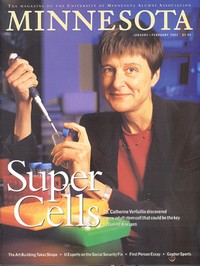
    Five years ago, reports from the University of Minnesota promised to reconcile the budding science of human stem cell biology with the restrictive regulations the Bush administration had imposed on federally funded embryonic stem cell research.  These reports indicated that adult stem cells, specifically hematopoietic stem cells that are among the most plentiful and easily harvested, could be induced to grow into a variety of different tissues, including nerve, heart, lung, and liver tissue.

    6273ec7bf0a94f06bf80d6d3a24f1008_web
    This early promise seems to have evaporated in the face of further research.  Indeed, a panel of scientific experts comprised of Minnesota faculty has concluded that the initial studies were "significantly flawed" and their conclusions incorrect.  The work was performed by Dr. Catherine Verfaillie when she was on the Minnesota faculty.  Although Dr. Verfaillie, now at the Catholic University of Leuven in Belgium, maintains that the basic conclusions of the work are sound (and there has been no allegations of misconduct), others are less sure.  And even Dr. Verfaillie acknowledges that there were flaws in how the early studies were performed.

    These criticisms of the work are bolstered by the failure of others to replicate Dr. Verfaillie’s results.  However, adult stem cells are notoriously difficult to work with, which would account for these negative results.  Dr. Verfaillie’s reputation as an "impeccable" and "careful" scientist, according to Dr. Diane Krause of Yale University, have convinced many in the stem cell community that her work will ultimately be vindicated.

    For now, however, the only reliable source of stem cells for a wide variety of different tissues are those derived from the inner cell mass of human embryos.  In the face of the continuing restrictions on federal funding for this research (President Bush having vetoed a bill that would have lifted these restrictions less than a year ago), states such as California and private entities such as Stanford University have mounted extensive efforts to fund embryonic stem cell research.  It is indisputable that the federal restrictions have retarded stem cell research in the U.S., driven scientists and technology overseas, and injured American competitiveness in this new biotechnology frontier.  These recent conclusions reduce the possibility that a politically safe "middle ground" may exist that could reverse some of these negative trends in a way acceptable to the more dogmatic of our political leaders and their constituencies.

  •     By Sherri Oslick

    Gavel A note to our readers:  Patent Docs apologizes to our
    readers for the recent Court Report hiatus.  This Court Reporter was deeply immersed in very intensive preliminary
    injunction proceedings and has just now been able to come up for air.  We will catch our readers up in the next few
    postings.  Patent Docs thanks our readers
    for their patience.

    Purdue Pharma LP et. al. v. KV Pharmaceuticals Co. and Actavis Totowa LLC
    1:07-cv-00032; filed January 16, 2007 in the District Court of Delaware

    Infringement of U.S. Patent Nos. 5,508,042 ("Controlled Release Oxycodone Compositions," issued April 16, 1996), 5,549,912 (same title, issued August 27, 1996), and 5,656,295 (same title, issued August 12, 1997) following a paragraph IV certification as part of KV's and Actavis' filing of an ANDA to manufacture a generic version of Purdue Pharma's OxyContin® (controlled release oxycodone hydrochloride, used to treat pain).  View the complaint here.


    Celgene Corp. v. Barr Laboratories, Inc. et. al.

    2:07-cv-00286; filed January 18, 2007 in the District Court of New Jersey

    Infringement of U.S. Patent Nos. 6,045,501 ("Methods for Delivering a Drug to a Patient While Preventing the Exposure of a Foetus or Other Contraindicated Individual to the Drug," issued April 4, 2000), 6,561,976 (same title, issued May 13, 2003), 6,315,720 ("Methods for Delivering a Drug to a Patient While Avoiding the Occurrence of an Adverse Side Effect Known or Suspected of Being Caused by the Drug," issued November 13, 2001), 6,561,977 ("Methods for Delivering a Drug to a Patient While Restricting Access to the Drug by Patients for Whom the Drug May be Contraindicated," issued May 13, 2003), 6,755,784 (same title, issued June 29, 2004), 6,869,399 (same title, issued March 22, 2005), and 7,141,018 (same title, issued November 28, 2006) following a paragraph IV certification as part of Barr's filing of an ANDA to manufacture a generic version of Celgene's Thalomid® (thalidomide, used to treat multiple myeloma and erythema nodosum leprosum).  View the complaint here.


    Syngenta Biotechnology, Inc. et. al. v. DeKalb Genetics Corporation et. al.

    1:07-cv-00038; filed January 19, 2007 in the District Court of Delaware

    Declaratory judgment of invalidity and noninfringement of U.S. Patent No. 5,554,798 ("Fertile Glyphosate-Resistant Transgenic Corn Plants," issued September 10, 1996).  The '798 patent covers a genetically modified corn line exhibiting glyphosate resistance.  View the complaint here.


    Monsanto Co. et. al. v. Jarrell

    4:07-cv-00118; filed January 19, 2007 in the Eastern District of Missouri

    Monsanto Co. et. al. v. Dorris
    1:07-cv-00012; filed January 22, 2007 in the Eastern District of Missouri

    The complaints in these two cases are quite comparable.  Infringement of U.S. Patent Nos. 5,352,605 ("Chimeric Genes for Transforming Plant Cells Using Viral Promoters," issued October 4, 1994) and RE39,247 ("Glyphosate-tolerant 5-enolpyruvylshikimate-3-phosphate Synthases," issued August 22, 2006) based on defendant's use of soybean seed produced from earlier planted Roundup Ready® soybean seed.  View the Jarrell complaint here.


    Shire LLC v. Sandoz, Inc.

    1:07-cv-00197; filed January 26, 2007 in the District Court of Colorado

    Infringement of U.S. Patent Nos. 6,322,819 ("Oral pulsed dose drug delivery system," issued November 27, 2001) and 6,605,300 (same title, issued August 12, 2003) following a paragraph IV certification as part of Sandoz's filing of an ANDA to manufacture a generic version of Shire's Adderall XR® (a combination of dextroamphetamine saccharate, amphetamine aspartate monohydrate, dextroamphetamine sulfate, and amphetamine sulfate, used to treat attention deficit hyperactivity disorder).  View the complaint here.


    Sanofi-Aventis et. al. v. Watson Pharmaceuticals, Inc. et. al.

    2:07-cv-00443; filed January 26, 2007 in the District Court of New Jersey

    Infringement of U.S. Patent No. 6,514,531 ("Controlled-release Dosage Forms Comprising Zolpidem or a Salt Thereof," issued February 4, 2003) following a paragraph IV certification as part of Watson's filing of an ANDA to manufacture a generic version of Sanofi-Aventis' Ambien CR® (controlled release zolpidem tartrate, used to treat insomnia).  View the complaint here.

  •     By Kevin E. Noonan

    Many have noted the recent trend in U.S. Supreme Court review, and disagreement with, Federal Circuit decisions.  Indeed, only two Federal Circuit decisions have been affirmed by the Supreme Court since 1995.  Some have questioned whether this level of negative review might tend to diminish the Federal Circuit’s role in harmonizing U.S. patent law – the express purpose of Congress when the Federal Circuit was instituted in 1982.

    On the other hand, the Supreme Court’s recent increase in oversight on the Federal Circuit coincides with the criticism that the CAFC, far from harmonizing patent law, has no consistent philosophy amongst the judges, and that the result a litigant obtains depends more on the panel it draws than on the merits, legal and equitable, of its claims.  The recent decision in Hakim v. Canon Advent Group illustrates the problem.  This case involved a patent for a cup with a closure that prevented accidental spills but permitted liquid to be drawn from an opening in the cup when suction was applied by sipping.  One of the patents in suit recited broadly that the functional portion of the cup comprised an "opening" that was occluded when suction was not applied.  In an earlier parent case, the claim had read that the opening was a "slit," and the patentee distinguished the claims in that application from the cited prior art based on the presence of a slit.

    That patent was not in suit, however.  The patent in suit was a continuation, and the patentee had explicitly put the Examiner on notice that the claims had been "broadened" when filing the claims reciting an "opening" rather than a "slit," although the patentee did not direct the Examiner’s attention to this change as the basis for "broadening."  The patent was granted with no further objection by the Examiner.

    The district court construed the term "opening" to require the opening be a slit.  The court held that "because Hakim did not retract any of his arguments distinguishing the prior art, he is held to the restrictive claim construction he argued during prosecution of the patent."  The inconsistency in this reasoning, of course, is that the patentee did not make these arguments during prosecution of the patent-in-suit; rather, these arguments were made in the parent application.  Before the Federal Circuit, Hakim argued that the district court erred, because by refiling his broader claims he had avoided any restriction on claim scope created by his arguments in the parent application.  Moreover, Hakim pointed out that he had affirmatively notified the Examiner that the claims in his continuation application were broader.  It is, Hakim argued, settled law that an Examiner is presumed to have performed his duties properly, and that by allowing the claims without further objection, he was entitled to a broader construction of the term "opening" than he had obtained in the narrower claims in his earlier patent.

    Newman05
    Somewhat incredibly, the Federal Circuit affirmed.  In a unanimous decision authored by Judge Pauline Newman, the Court acknowledged that Hakim had the right to file a continuation with broader claims.  However, the Court then said that an applicant could not "recapture" claim scope that had been surrendered or disclaimed.  The Court affirmed the district court’s finding that the Examiner had allowed the claims of the patent-in-suit "without further prosecution" based on the prosecution argument in the parent application.  The Court further acknowledged that an applicant had the right to rescind such surrender or disclaimer, but the panel held that an applicant must do more than Hakim had to evince the intention to rescind.

    The flaw in the Federal Circuit’s reasoning is that the case law cited in support of the proposition that an applicant could not recapture claim scope surrendered or disclaimed without a more explicit declaration of her intentions, all concerns prosecution of a single application.  In this context the rule makes sense, since an unscrupulous applicant could recapture claim scope late in prosecution that had been surrendered to overcome art asserted against her claims early in prosecution, and without the rule an examiner would be tasked with reviewing the entire prosecution history for every amendment made throughout prosecution.  The law reasonably places an affirmative duty on an applicant who wishes to recapture surrendered claim scope under these circumstances to inform the examiner with sufficient particularity that she understands the extent of the recaptured claim scope.

    These considerations are, of course, non-existent when considering a continuation application.  It is well-established practice that claims of broader scope may be pursued in a continuation while claims of narrower scope grant as a patent.  The risks and consequences of this strategy have been highlighted in the Johnson & Johnston opinion, where the Court opined that claim scope disclosed but disclaimed (by accepting narrower claims) is "dedicated to the public," at least until a continuation having broader claims is obtained.  The Federal Circuit in Hakim appears to be expanding the scope of this doctrine even more broadly, where an applicant’s right to pursue broader claim scope can depend on how or whether the applicant notifies the examiner of the continuation application of any narrowing amendments or arguments made in the parent case.

    Hakim has serious implications for patent prosecution, particularly in the biotechnology arts.  Due to the complexity of the subject matter and the manner in which the Patent Office examines biotechnology patent applications, applicants frequently accept claims of narrower scope than filed and pursue the broader claims in continuation applications.  Hakim imposes a serious burden on applicants to assess all amendments and arguments made in a narrowly-issued parent application and identify all those that must be explicitly rescinded with notice provided to the Examiner.  The Hakim decision, however,  does not explicate the extent of the notice that would be sufficient to support rescission.  Unless Hakim requests, and the Court grants, reconsideration en banc, this decision has the capacity to make much mischief.  However, the Court has in the past shown the capacity to recognize, and correct, panel decisions that misstate the law (see Enzo Biochem, Inc. v. Gen-Probe Inc., 296 F.3d 1316
    (Fed. Cir. 2002)).  We can only hope that the Court recognizes the errors in this decision and acts swiftly to correct them.

        Additional information regarding this case can be found at Patently-O.