•     By Jason Derry —

    Macroarray_technologies
    MacroArray Technologies, LLC
    has announced that it has licensed its PCADM-1 antibody test to Abbott.  The PCADM-1 protein is a prostate specific protein that can be detected in the urine.  The protein is overexpressed in malignant prostate tumors.  Under the terms of the agreement, Abbott will develop and market the PCADM-1 test.  Specific terms were not disclosed in the press release.

    Logo_abbott_1

  •     By Sherri Oslick

    Gavel About
    Court Report:  Each week we will report briefly on recently filed
    biotech and pharma cases, and a few interesting cases will be selected
    for periodic monitoring.

    Cypress Pharmaceutical, Inc. v. Tiber Laboratories, LLC
    3:07-cv-00108; filed February 20, 2007 in the Southern
    District of Mississipi

    Declaratory judgment of noninfringement and invalidity of
    U.S. Patent No. 6,979,689 ("Compositions and Methods for Treating Upper
    Respiratory Congestion," issued December 27, 2005) stemming from Cypress's
    manufacture and sale of its Hydro-DP (diphenhydramine hydrochloride,
    phenylephrine hydrochloride, and hydrocodone bitartrate, used to treat
    congestion and cough).  View the
    complaint here.


    Tiber Laboratories, LLC et al v. Cypress Pharmaceuticals,
    Inc.

    2:07-cv-00014; filed February 21, 2007 in the Northern
    District of Georgia

    Infringement of U.S. Patent No. 6,979,689
    ("Compositions and Methods for Treating Upper Respiratory
    Congestion," issued December 27, 2005) based on Cypress's manufacture and
    sale of its Hydro-DP (diphenhydramine hydrochloride, phenylephrine
    hydrochloride, and hydrocodone bitartrate, used to treat congestion and cough).  View the complaint here.


    Caraco Pharmaceutical Laboratories, Ltd. v. Forest
    Laboratories, Inc. et. al.

    2:07-cv-10737; filed February 20, 2007 in the Eastern
    District of Michigan

    Declaratory judgment of noninfringement of U.S. Patent
    No. 6,916,941 ("Crystalline Composition Containing Escitalopram,"
    issued July 12, 2005) in conjunction with Caraco's filing of an ANDA seeking
    approval to manufacture and sell a generic version of Forest's Lexapro®
    (escitalopram oxalate, used to treat depression and generalized anxiety disorder).  View the complaint here.


    Monsanto Co. et. al. v. Krone

    4:07-cv-00345; filed February 20, 2007 in the Eastern
    District of Missouri

    Monsanto Co.
    et. al. v. Trivette

    4:07-cv-00343; filed February 20, 2007 in the Eastern
    District of Missouri

    Monsanto Co.
    et. al. v. Allison

    1:07-cv-00029; filed February 20, 2007 in the Eastern
    District of Missouri

    The complaints in these cases are substantially
    identical.  Infringement of U.S. Patent
    Nos. 5,352,605 ("Chimeric Genes for Transforming Plant Cells Using Viral
    Promoters," issued October 4, 1994) and RE39,247
    ("Glyphosate-tolerant 5-enolpyruvylshikimate-3-phosphate Synthases,"
    issued August 22, 2006) based on defendant's use of soybean seed produced from
    earlier planted Roundup Ready® soybean seed.  View the Krone complaint here.


    Cima Labs, Inc. et. al. v. Actavis Group HF et. al.

    2:07-cv-00893; filed February 23, 2007 in the District
    Court of New Jersey

    Infringement of U.S. Patent Nos. 6,024,981 ("Rapidly
    Dissolving Robust Dosage Form," issued February 15, 2000) and 6,221,392
    (same title, issued April 24, 2001) (both assigned to Cima and licensed
    exclusively to Schwarz Pharma in certain fields of use) following a paragraph
    IV certification as part of Actavis's filing of an ANDA to manufacture a
    generic version of Schwarz's NIRAVAM® (alprazolam orally disintegrating
    tablets, used to treat anxiety).  View
    the complaint here.


    Otsuka Pharmaceutical Co., Ltd. v. Sandoz, Inc.

    3:07-cv-01000; filed March 2, 2007 in the District Court of
    New Jersey

    Infringement of U.S. Patent No. 5,006,528
    ("Carbostyril Derivatives," issued April 9, 1991) following a
    paragraph IV certification as part of Sandoz's filing of an ANDA to manufacture
    a generic version of Otsuka's Abilify® (aripiprazole, used to treat bipolar
    disorder and schizophrenia).  View the
    complaint here.

  • Calendar March 21-22, 2007 – Complex IP & Technology Transactions Conference (Law Seminars International) – Chicago, IL

    March 25-29, 2007 – American Chemical Society National Meeting – Chicago, IL

    April 16-18, 2007 – Biotechnology: Patent Prosecution, Licensing, Litigation &
    Hatch-Waxman
    (Patent Resources Group) – Orlando, FL

    April 27, 2007 – Patent Claim Construction Workshop (Law Seminars International) – Atlanta, GA

    May 6-9, 2007 – BIO International Convention – Boston, MA

  •     By Donald Zuhn

    Logo1
    On March 9, 2007, Innogenetics announced that the Federal Circuit reinstated a permanent injunction issued by the District Court for the Western District of Wisconsin against Abbott Laboratories.

    In September 2005, Innogenetics sued Abbott Laboratories for infringement of U.S. Patent No. 5,846,704, which covers a method of genotyping hepatitis C virus (HCV).  At trial, the District Court determined that the ‘704 patent was infringed as a matter of law, and on September 1, 2006, a jury found the ‘704 patent to be valid.  One week later, the same jury found Abbott’s infringement to be willful and awarded $7 million in damages to Innogenetics.  As reported on Patent Docs (see January 8 and January 12), the District Court upheld the jury’s $7 million damages award on January 3, 2007, and one week later, issued a permanent injunction in favor of Innogenetics, halting sales of Abbott’s HCV genotyping test kits.

    In response to the District Court’s decision, Abbott sought an emergency motion to stay the injunction pending its appeal to the Federal Circuit.  On January 19, the Federal Circuit temporarily stayed the injunction.  However, on March 8, that temporary stay was lifted.

        Additional information regarding this case can be found here.

  • Court Finds That HDI’s Glucometer Does Not Infringe Roche Patent

        By Robert Dailey

    Roche_1
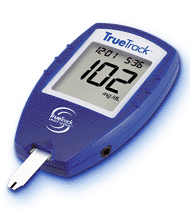
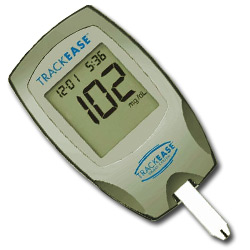
    A District Court in Indianapolis ruled last week that Home Diagnostics’ TrueTrack® and TrackEASE® blood glucose monitoring systems do not infringe U.S. Patent No. 5,366,609, owned by Roche.  The lawsuit had pitted Roche, one of the leaders in the medical diagnostics industry, against a discount seller of competing products.

    Fig1_1
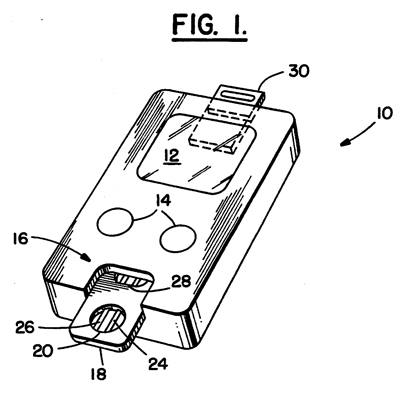
    The Roche patent is directed to a biosensing meter that has a pluggable ROM key.  The pluggable key contains data that enable the meter to perform certain test functions.  The asserted claim contained several means-plus-function elements.  The case largely turned on the District Court’s construction of these elements (see Court’s Order on Claim Construction).

    In typical claim construction, courts should resist reading limitations from the specification into the claims.  The text of the claims establishes their scope.  If the accused device falls within the scope of the claim’s periphery, the device infringes.

    Hpright_01
    But the infringement analysis differs for means-plus-function claims.  "Literal infringement of a means-plus-function claim limitation requires that the relevant structure in the accused device perform the identical function recited in the claim and be identical or equivalent to the corresponding structure in the specification."  Even for doctrine of equivalents (DOE) infringement of a means-plus-function limitation, the accused device must "perform the identical function in substantially the same way, with substantially the same result."

    014663800_1145455194_trackease_
    Means-plus-function claims can ease some of the headaches of patent prosecution, but they can come back to bite patentees when they try to enforce the claims against an accused infringer.  In drafting means-plus-function claims, patentees should be careful to:  (i) define the function very broadly, and (ii) provide a wealth of embodiments that can serve as corresponding structures.  Otherwise, would-be licensees may find little difficulty designing around the claimed invention.

    In this instance, the Court’s claim construction left Roche with relatively narrow claims that had little power to exclude potential infringers.

        Roche Diagnostics Corp. v. Home Diagnostics, Inc., 04-cv-1187-LJM-JMS (S.D. Ind. 2007).

        Robert Dailey, Ph.D., is a physical chemist and a third-year law
    student at the University of North Carolina at Chapel Hill.  Dr. Dailey
    was a member of MBHB’s 2006 class of summer associates, and is a
    regular Patent Docs contributor.

  •     By Jason Derry

    Graylogo
    ARIUS Research Inc. has announced that two new U.S. patents relating to its anti-cancer antibody program have issued.  U.S. Patent No. 7,175,846 specifically relates to methods of treating cancer using antibodies that destroy melanoma, breast, and prostate cancer cells while ignoring normal cells.  Representative independent claim 2 recites:

    2.  A method of treating a human breast or prostate tumor in a mammal, comprising administering to said mammal an isolated monoclonal antibody or antigen binding fragment thereof which binds to the same epitope as the monoclonal antibody produced by the hybridoma deposited with the ATCC as accession number PTA-4890, wherein said administration is in an amount effective to induce cytotoxicity and thereby reduce said mammal’s tumor burden.

    U.S. Patent No. 7,186,808 encompasses a particular antibody that destroys breast and prostate cancer cells, as well as a method for treating breast cancer.  Representative independent claims 1 and 10 recite:

    1.  The isolated monoclonal antibody produced by the hybridoma deposited with the ATCC as Accession Number PTA-4889.

    10.  A method of treating a breast tumor in a mammal, comprising administering to said mammal the isolated monoclonal antibody produced by the hybridoma deposited with the ATCC as accession number PTA-4889 or an antigen binding fragment produced from said isolated monoclonal antibody, in an amount effective to reduce said mammal’s tumor burden.

    ARIUS discovers antibodies using its proprietary FunctionFIRST® platform, which involves high-throughput functional screening for antibodies that bind to cancer cell antigens and that selectively kill or inhibit growth of the cancer cells.

  •     By Donald Zuhn

    Inex
    On March 7, 2007, INEX Pharmaceuticals Corp. and Alnylam Pharmaceuticals, Inc. announced that the United States Patent and Trademark Office (USPTO) issued a Notice of Allowance for U.S. Application No. 09/431,594, which covers nucleic acid-lipid compositions.  According to the statement released by INEX, the allowed claims "cover[] cationic liposome compositions that contain oligonucleotides, including double-stranded RNAs such as siRNAs."  INEX and Alnylam will be adding the new patent to previously issued U.S. Patent Nos. 5,976,567; 6,815,432; and 6,858,225, which INEX states cover the "delivery of oligonucleotides with cationic liposomes."  Alnylam
    In an identical release issued by Alnylam, Chief Intellectual Property Counsel Dr. Robert Millman stated that "[g]iven both the newly allowed claims and previously issued patents, we believe that the Wheeler and Semple patent series represent the broadest intellectual property estate covering lipid-based delivery technologies for RNAi therapeutics."  Information about RNA interference (RNAi) can be found here.

    The patent issuing from the ‘594 application will contain 28 claims.  The sole independent claim reads as follows:

        A nucleic acid-lipid particle for introducing a nucleic acid into a cell, said particle comprising a cationic lipid, a non-cationic lipid, a conjugated lipid that inhibits aggregations of particles, and a nucleic acid, wherein said nucleic acid is encapsulated in the lipid of said particle and is resistant in aqueous solution to degradation with a nuclease, wherein said particle has a charge ratio of cationic lipid to anionic nucleic acid of 1:1 to 8:1, and wherein:

        said cationic lipid is a member selected from the group consisting of N,N-dioleyl-
    N,N-dimethylammonium chloride (DODAC), N,N-distearyl-N,N-dimethylammonium bromide (DDAB), N-(1-(2,3-dioleoyloxy)propyl)-N,N,N-trimethylammonium chloride (DOTAP), N-(1-(2,3-dioleyloxy)propyl)-N,N,N-trimethylammonium chloride (DOTMA), and N,N-dimethyl-2,3-dioleyloxy)propvylamine (DODMA), and a mixture of two or more of the above;

        said non-cationic lipid is selected from the group consisting of DOPE, POPC, and EPC; and

        said conjugated lipid is a PEG-lipid.

  •     By Christopher P. Singer

    Merck_logo_2
    Avalon Pharmaceuticals® announced in a March 7, 2007 press release a collaboration with Merck & Co., Inc. for drug discovery, development, and commercialization of inhibitors of a target that is important in cancer development.  Avalon brings its AvalonRx® screening technology platform to the collaboration and will screen a number of candidate compounds from Merck’s proprietary compound library.  Avalon will identify potential inhibitor compounds of the unmentioned target which has, according to the release, proven difficult to inhibit.  Avalon will select and optimize compounds to the preclinical stage, where Merck will assume responsibility for clinical development, regulatory approval, and commercialization of any candidate inhibitor compound.

    Avalon has the potential to receive milestone payments in excess of $200 million as well as royalty payments on any marketed drug products.

    Avalon_pharma

  •     By Donald Zuhn

    Logo_6
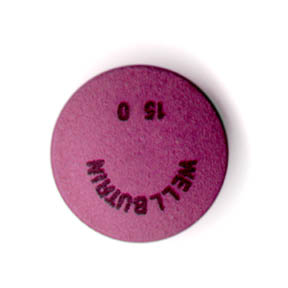
    On Monday, Canadian pharmaceutical company Biovail (NYSE: BVF) announced that it had reached a comprehensive settlement with Anchen Pharmaceuticals, Impax Laboratories, Teva Pharmaceutical Industries, and Watson Pharmaceuticals with respect to Wellbutrin XL® (bupropion HCl), a once-daily antidepressant which has a low incidence of sexual dysfunction, weight gain, and somnolence, and which is believed to act on norepinephrine and dopamine.

    Wellbutrin
    In December 2004, Biovail filed a patent infringement suit in the Central District of California against Anchen Pharmaceuticals, which had filed an abbreviated new drug application (ANDA) for generic 150 mg and 300 mg versions of Wellbutrin XL®.  At that time, Biovail also filed suit in the Southern District of Florida against Abrika Pharmaceuticals, which had filed an ANDA for a generic 150 mg version of Wellbutrin XL®.  Biovail contended that in filing their ANDA’s, Anchen and Abrika had infringed U.S. Patent Nos. 6,143,327 and 6,096,341.  In March 2005, Biovail filed suit in the Eastern District of Pennsylvania against Impax in response to Impax’ submission of an ANDA for generic 150 mg and 300 mg versions of Wellbutrin XL®.

    While Biovail noted that certain aspects of the settlement would remain confidential, it did release the following terms of the agreement:

    • Biovail’s pending actions against Impax and Watson would be dismissed.
    • Biovail had granted an exclusive license to Anchen, Impax, and Teva to market a generic 300 mg version of Wellbutrin XL® from December 13, 2006 until June 13, 2007.
    • Anchen, Impax, Teva, and Watson will not market a generic 150 mg version of Wellbutrin XL® until 2008.
    • Biovail had granted an exclusive license to Anchen, Impax, and Teva to market a generic 150 mg version of Wellbutrin XL® for 180 days following market entry.

    The agreement did not have any impact on Biovail’s infringement action against Abrika, which remains pending.

    Additional information regarding this settlement can be found in a release issued by Anchen Pharmaceuticals and a release issued by Impax Laboratories.

  •     By Mark Chael

    Novartis announced today that the U.S. Food and Drug Administration approved the use of Tekturna® (aliskiren) for the treatment of high blood pressure as a single therapy or in combination with other high blood pressure medications.  Apparently, the FDA had previously indicated that it would need more time to review the Tekturna® new drug application (NDA); causing some to speculate that the drug would not be approved or that the approval would be limited.  Novartis developed Tekturna® in collaboration with Speedel, a biopharmaceutical company specializing in cardiovascular and metabolic diseases.

    It is estimated that high blood pressure occurs in almost one billion people worldwide and is not adequately controlled in about 70% of those affected.  Tekturna® (aliskiren) is the first in a new class of drugs called "direct renin inhibitors."  Renin is a circulating enzyme involved in the biochemical pathway that regulates blood volume, sodium chloride concentrations in the blood, and blood pressure.  More information about renin can be found here.

    Novartis says that Tekturna® will be available this month in once-daily oral tablets at 150 mg and 300 mg dose strengths.  Also, Tekturna® is under review in the European Medicines Agency for approval throughout the European Union, where it will be called Rasilez® if approved.

    Additional information regarding the FDA’s approval of Tekturna® (aliskiren) for the treatment of high blood pressure can be found here.