•     By Donald Zuhn

    Dow_logo
    On the heels of last weekend’s report that a consortium of Middle Eastern investors and American buyout firms was preparing to pull off the world’s biggest leveraged buyout – a $50 billion buyout of Dow Chemical Co., Dow countered today that it has had no discussions concerning a leveraged buyout.

    The report of the leveraged buyout first appeared in The Sunday Express, a London tabloid known more for its coverage of conspiracy theories regarding the death of Princess Diana than for its business reporting.  According to the Express, investors from Saudi Arabia, Kuwait, Bahrain, Qatar, United Arab Emirates, and Oman, in conjunction with a number of U.S. buyout firms includingKohlberg Kravis Roberts had assembled a financing package for a break-up bid of between $52 and $58 per share.

    On Monday, Dow denied the Express buyout report, with Dow spokesman Chris Huntley stating that "a friendly takeover [of Dow] is not going to happen," and that a hostile takeover was unlikely given Dow’s size.

    Sunday_express

  •     By Donald Zuhn

    Oncolytics_biotech
    Last month, Oncolytics Biotech Inc. announced that it had been granted U.S. Patent No. 7,186,542.  The ‘542 patent, which relates to methods of producing reovirus from a cultured cells, was the nineteenth U.S. patent to be awarded to the Calgary-based biotech company.  As we reported last week, Oncolytics was recently awarded its twentieth patent, which is directed to methods of sensitizing neoplastic cells to irradiation by using reoviruses.

    According to the statement released by Oncolytics, the ‘542 patent "expands on similar manufacturing patents secured by the Company."  Oncolytics currently has an ongoing clinical program related to the use of REOLYSIN®, Oncolytics’ proprietary formulation of the human reovirus, alone or in combination with radiation or chemotherapy, for the treatment of a number of human cancers, including colorectal, prostate, pancreatic, non-small cell lung, melanoma, and ovarian cancer.

    Reovirus (Respiratory Enteric Orphan virus) is found naturally in sewage and water supplies and inhabits human respiratory and bowel systems.  Because tumor cells bearing an activated Ras pathway lack dsRNA-activated protein kinase (PKR – protein kinase dsRNA), they are unable to activate a PKR-mediated anti-viral response.  As a result, such cells are susceptible to reovirus infection and subsequent cell death.  Normal cells, however, do not possess activating mutations of Ras, and thus, are able to terminate reovirus infection through normal PKR activity.

    The ‘542 patent issued from U.S. Application No. 10/916,378 and claims the benefit of U.S. Application No. 10/097,183, filed March 14, 2002, and U.S. Provisional Application No. 60/276,734, filed March 16, 2001.  Representative independent claims 1 and 2 of the ‘783 patent recite:

    1.  A method of producing reovirus from a culture of cells, comprising the steps of:
        (a)  providing a culture of human embryo kidney (HEK) cells which has been infected by the reovirus;
        (b)  extracting the reovirus from the cells by adding a detergent to the culture of HEK cells and incubating for a period of time; and
        (c)  collecting the reovirus.

    2.  A method of producing infectious reovirus, comprising:
        (a)  providing a culture of human embryo kidney (HEK) 293 cells which has been infected by reovirus;
        (b)  extracting the virus from the cells by adding octoxynol-9 to 10 to the culture and incubating at about 25ºC. to about 37ºC. for about 10 minutes; and
        (c)  collecting the reovirus.

  •     By Kevin E. Noonan

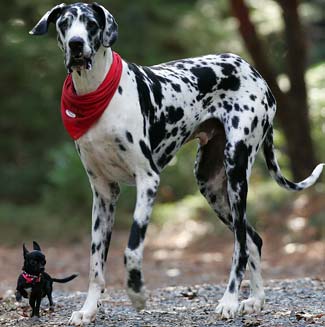
    0405dogs
    Single nucleotide polymorphisms (SNPs) have been detected since the beginning of the third revolution in genetics characterized by cloning, sequencing, and the various organismal genome projects (rediscovery of Mendel’s laws being the first and Watson and Crick’s elucidation of the structure of DNA being the second).  SNPs were first associated with restriction length fragment polymorphisms, a technique developed for chromosomal gene mapping (particularly for disease genes) and disease trait genealogy in the days before the entire human genome had been sequenced.  One well-known use of the technique was Mary Clare King‘s identification of Central American death squad victims from their remains found in mass graves, and the existence of SNPs has been predicted to be the key to the new world of personalized medicine.

    One of the more interesting SNPs, and one having global consequences, was reported in Science last week.  Nathan Sutter and his colleagues at the National Human Genome Research Institute (a part of the National Institutes of Health) and several other university and corporate research centers reported that a SNP in the insulin-like growth factor 1 gene (IGF-1) in dogs is responsible for the vast differences in size between different breeds.  Using both traditional genetic tools and the products of the dog genome project, these workers found an SNP shared by all "miniature" dog breeds and absent from all larger breeds.  The group’s work was facilitated by the great range in size between breeds (the largest among terrestrial vertebrates), the well-established delineation of breeds and maintenance of breed standards by international dog breeding societies, and the completion of the dog genome project.  The genetic results were supported by biochemical studies showing lower IGF-1 levels in blood serum from small dogs than large dogs.

    Since all domestic dogs are descendants of the common grey wolf found throughout Eurasia, the existence of this trait is the consequence of at least 15,000 years of human selective breeding (although the great majority of dog breeds have been developed over the past few hundred years).  It is readily apparent why this trait was selected for during domestication, producing breeds that are smaller than the wolf, and thus less of a threat to man, as well as improving characteristics of domesticated breeds such as reduced food (and water) requirements.  The persistence of the mutation in the almost 15,000 years between initial domestication and active human selection for miniature dog breeds suggests that the variant gene containing the SNP is important for inter alia maintaining the tendency for dog breeds smaller than the size of the original grey wolf stock.

    Interestingly, until the publication of these results, there was no consensus on the genetic causes of the great diversity in breed size, with researchers positing such variables as increased mutation or recombination rates, distribution of short repeat sequences in the dog genome, differences in regulatory genes, and readily-altered developmental programming.

    The implications for human development are unclear, but suggest that human size variation may also be influenced by such polymorphisms.  Dissection of SNP variant frequency in humans or other mammalian species at IGF-1 can be expected in view of the Sutter team’s results.

    Sutter et al., 2007, Science 316(5821): 112-115 (April 6, 2007)

  •     By Sherri Oslick

    Gavel About
    Court Report:  Each week we will report briefly on recently filed
    biotech and pharma cases, and a few interesting cases will be selected
    for periodic monitoring.

    Bayer Healthcare AG et. al. v. Teva Pharmaceuticals U.S.A., Inc.
    1:07-cv-00195; filed April 5, 2007 in the District Court of Delaware

    Infringement of U.S. Patent Nos. 4,990,517 ("7-(1-pyrrolidinyl)-3-Quinolone- and -Naphthyridonecarboxylic Acid Derivatives as Antibacterial Agents and Feed Additives," issued February 5, 1991) and 5,607,942 (same title, issued March 4, 1997) following a paragraph IV certification as part of Teva's filing of an ANDA to manufacture a generic version of Bayer's Avelox® (moxifloxacin hydrochloride, an antibiotic used to treat infection).  View the complaint here.


    Sanofi-Aventis et. al. v. Barr Laboratories Inc.

    2:07-cv-01605; filed April 5, 2007 in the District Court of New Jersey

    Infringement of U.S. Patent No. 6,514,531 ("Controlled-release Dosage Forms Comprising Zolpidem or a Salt Thereof," issued February 4, 2003) following Barr's filing of an ANDA to manufacture a generic version of Sanofi-Aventis' Ambien CR® (controlled release zolpidem tartrate, used to treat insomnia).  View the complaint here.


    Merial Ltd. et. al. v. Intervet, Inc.

    1:07-cv-00630; filed April 4, 2007 in the District Court of the District of Columbia

    Infringement of U.S. Patent No. 7,192,594 ("Postweaning Multisystemic Wasting Syndrome and Porcine Circovirus from Pigs," issued March 20, 2007) based on Intervet's manufacture and sale of its Porcine Circovirus Vaccine Type 2.  View the complaint here.


    Otsuka Pharmaceutical Co., Ltd. v. Sun Pharmaceutical Industries Ltd.

    3:07-cv-01516; filed March 30, 2007 in the District Court of New Jersey

    Infringement of U.S. Patent No. 5,006,528 ("Carbostyril Derivatives," issued April 9, 1991) following a paragraph IV certification as part of Sun's filing of an ANDA to manufacture a generic version of Otsuka's Abilify® (aripiprazole, used to treat bipolar disorder and schizophrenia).  View the complaint here.


    Janssen L.P. et. al. v. Barr Laboratories Inc. et. al.

    3:07-cv-01515; filed March 30, 2007 in the District Court of New Jersey

    Infringement of U.S. Patent No. 7,160,559 ("Controlled Release Galantamine Composition," issued January 9, 2007) following a paragraph IV certification as part of Barr's filing of an ANDA to manufacture a generic version of Janssen's Razadyne ER® (formerly Reminyl®) (galantamine hydrobromide, used to treat mild to moderate dementia of the Alzheimer's type).  View the complaint here.

  • Calendar April 13, 2007 – "Of Brics & Mortar: Technological Drivers in Booming Economies" Symposium (Northwestern Journal of Technology and Intellectual Property) – Chicago, IL

    April 16-18, 2007 – Biotechnology: Patent Prosecution, Licensing, Litigation &
    Hatch-Waxman
    (Patent Resources Group) – Orlando, FL

    April 19-20, 2007 – "Litigation and Enforcement in the Biotech and Pharmaceutical Industry" (GTCbio) – San Francisco, CA

    April 27, 2007 – Patent Claim Construction Workshop (Law Seminars International) – Atlanta, GA

    May 6-9, 2007 – BIO International Convention – Boston, MA

    June 26-28, 2007 – Euro-Biotech Forum 2007 – Paris, France

  •     By Donald Zuhn

    Simcerelogo
    On March 23, 2007, Simcere Pharmaceuticals filed a registration statement with the Securities and Exchange Commission (SEC) for a proposed initial public offering of its common stock.  According to a MarketWatch report, the Chinese generic drug maker is seeking to raise $120 million in the IPO.  Simcere’s shares will be listed on the New York Stock Exchange under the symbol "SCR."  On Thursday, Forbes.com reported that Simcere would be offering 15.6 million American Depositary Shares at an estimated price range of between $12.50 to $14.50 per share.  According to a Centient Biotech Investor report, Simcere posted a net profit of $22 million in 2006.

    Simcere Pharma promotes itself as the leading manufacturer and supplier of branded generic pharmaceuticals in China.  Its product portfolio currently includes 35 drugs for the treatment of cancer, cerebrovascular and cardiovascular diseases, infections, arthritis, diarrhea, allergies, respiratory conditions, and urinary conditions.  Simcere plans to spend almost half of the expected IPO proceeds to fund its research and development efforts.

    Novacardia
    On March 29, 2007, NovaCardia Inc. announced that it filed a registration statement with the SEC for a proposed initial public offering of its common stock.  According to a StreetInsider.com report, the San Diego-based company is seeking to raise $86.3 million in the IPO.  NovaCardia’s shares will be listed on the Nasdaq Global Market under the symbol "NCAR."

    NovaCardia is a clinical-stage pharmaceutical company focused on developing drugs to treat major cardiovascular diseases.  NovaCardia has two compounds in clinical development: KW-3902, a selective adenosine A1 receptor antagonist for use in treating congestive heart failure, and K-201 (JTV-519), a compound NovaCardia licenses from Aetas Pharma Co. and which is used to treat atrial fibrillation.

    Logo
    On March 30, 2007, Quark Biotech Inc. filed a registration statement with the SEC for a proposed initial public offering of its common stock.  According to a MarketWatch report, while neither the number of shares in the offering nor the offering price have been determined, the pharmaceutical company is seeking to raise $86.25 in the IPO.  Quark’s shares will be listed on the Nasdaq Global Market under the symbol "QURK."  Forbes.com has reported that Quark posted losses of $7.5 million in 2005 and $17 million in 2006.

    Quark Biotech, based in Freemont, California, focuses on the development of synthetic short-interfering RNA therapeutics for the treatment of cancer and fibrotic diseases.  Among Quark’s products are siRNA-based therapeutics for the treatment of neovascular (wet) Age-related Macular Degeneration (RTP801i-14, which inhibits expression of the hypoxia-inducible gene RTP801), acute renal failure  (AKIi-5, which temporarily inhibits expression of human p53), acute hearing loss (AHLi-11, which temporarily inhibits expression of human p53), and chronic obstructive pulmonary disease (CTi-1, which inhibits RTP801).  The company’s patent portfolio includes thirteen U.S. patents and at least nine U.S. patent application publications.

    For additional information about the rash of recent biotech and pharmaceutical IPO’s, please see:

  •     By Donald Zuhn

    Oncy
    On April 3, 2007, Oncolytics Biotech Inc. announced that it had been granted U.S. Patent No. 7,198,783.  The ‘783 patent, which relates to methods of sensitizing neoplastic cells to irradiation by using reoviruses, is the twentieth U.S. patent to be awarded to the Calgary-based biotech company.

    According to the statement released by Oncolytics Biotech, the allowed claims "describe a method of using reovirus to sensitize Ras-activated cancer cells that are resistant to radiation therapy."  Chief Scientific Officer Dr. Matt Coffey characterized the ‘783 patent as "an important piece of intellectual property that supports our ongoing Phase II clinical program" using REOLYSIN®, Oncolytics’ proprietary formulation of the human reovirus, in combination with radiation.

    Reovirus (Respiratory Enteric Orphan virus) is found naturally in sewage and water supplies and inhabits human respiratory and bowel systems.  Because tumor cells bearing an activated Ras pathway lack dsRNA-activated protein kinase (PKR – protein kinase dsRNA), they are unable to activate a PKR-mediated anti-viral response.  As a result, such cells are susceptible to reovirus infection and subsequent cell death.  Normal cells, however, do not possess activating mutations of Ras, and thus, are able to terminate reovirus infection through normal PKR activity.

    The ‘783 patent issued from U.S. Application No. 10/431,579 and claims the benefit of U.S. Provisional Application Nos. 60/378,948, filed May 10, 2002, and 60/443,189, filed January 29, 2003.  Representative independent claims 1 and 23 of the ‘783 patent recite:

    1.  A method of sensitizing a ras-activated neoplastic cell to irradiation, wherein the neoplastic cell is resistant to an irradiating agent in the absence of reovirus, comprising:
        (a) determining whether the neoplastic cell is resistant to an irradiating agent in the absence of reovirus, wherein the determination indicates that the neoplastic cell is resistant to the irradiating agent in the absence of reovirus;
        (b) administering to said neoplastic cell an effective amount of a reovirus under conditions that result in infection of the cells by the reovirus; and
        (c) then subjecting said cell to an effective dose of the irradiating agent, whereby the sensitivity of the neoplastic cell to the irradiating agent is increased by the reovirus.

    23.  A method of treating or ameliorating a tumor comprising ras-activated cells in a subject, comprising:
        (a) determining whether the tumor is resistant to an irradiating agent in the absence of reovirus, wherein the determination indicates that the tumor is resistant to the irradiating agent in the absence of reovirus;
        (b) administering to the subject an effective amount of a reovirus under conditions that result in infection of cells of the tumor by the reovirus; and
        (c) then irradiating the subject with an effective dose of an irradiating agent.

  •     By Mark Chael

    Lilly
    As we reported previously, Eli Lilly & Co. had been in the process of acquiring Hypnion, Inc. and its pipeline of insomnia drug candidates.  On Tuesday, Lilly announced that it had completed the acquisition, which has been valued at around $315 million.  With this acquisition, Lilly enhances its Hypnion_2
    drug pipeline with HY10275, an insomnia drug candidate in Phase II trials, as well as several other early-stage candidates.

    Unlike other insomnia drugs that target the GABA receptor, HY10275 acts on the histamine H1 and the serotonin 5HT2a receptors.  Drugs that affect the GABA receptor have a potential for abuse and are therefore classified as controlled substances, which therefore limits, in some respects, a physician’s ability to prescribe such drugs.  It is unclear at present whether the U.S. Food and Drug Administration (FDA) will classify HY10275, and other drugs that target the H1 and 5HT2a receptors, as controlled substances.

    Additional information regarding this story, including links to related patents and patent applications, prior press releases, and scientific information about the relevant receptors, can be found here.

  •     By Jason Derry —

    3090740m
    On Wednesday, Roche announced that it would acquire BioVeris Corporation for about $600 million.  The purchase of BioVeris will allow Roche to expand its immunochemistry business into the life science research and development, drug discovery, and clinical research areas.

    Bio_therapeuticlogo_2
    Roche’s announcement that it would be acquiring BioVeris came two days after the company announced that it had acquired Therapeutic Human Polyclonals, Inc. for $56.5 million.  Therapeutic Human Polyclonals
    has developed transgenic rabbits in which human polyclonal antibodies
    can be developed, allowing Roche to expand its therapeutic antibody
    discovery and development program to include human polyclonal
    antibodies.

    Roche_2

  •     By Donald Zuhn

    Logo
    On March 21, 2007, Aegerion Pharmaceuticals Inc. filed a registration statement with the Securities and Exchange Commission (SEC) for a proposed initial public offering of its common stock.  According to a Reuters report, while neither the number of shares in the offering nor the offering price have been determined, Aegerion is seeking to raise $86.25 million in the IPO.  Aegerion’s shares will be listed on the Nasdaq Global Market under the symbol "AEGR."  According to a TradingMarkets.com article, Aegerion posted losses of $1.4 million in 2005 – its first year of operation – and $6.2 million in 2006.

    Aegerion Pharmaceuticals is a Bridgewater, New Jersey-based biopharmaceutical company focusing on the development of small-molecule therapeutics to treat cardiovascular and metabolic disease, and in particular, on inhibitors of microsomal triglyceride transfer protein (MTP).

    On Monday, Merrion Pharmaceuticals Ltd. announced that it filed a registration statement with the SEC for a proposed initial public offering of its ordinary shares in the form of American Depositary Shares and ordinary shares.  The Dublin-based pharmaceutical company has applied to list its American Depositary Shares on the Nasdaq Global Market and its ordinary shares on the Irish Enterprise Exchange in Dublin, Ireland.  According to a Forbes.com article, Merrion is seeking to list both its American Depositary Shares and ordinary shares under the symbol "MERR."  According to a Reuters Merrion_pharmaceuticals_3
    report
    , Merrion is looking to raise $46 million in the IPO.

    Merrion Pharmaceuticals, established in 2004, develops oral therapeutics that can replace injectable drugs.  Merrion’s primary focus is on its Gastrointestinal Permeation Enhancement Technology (GIPET) for oral delivery of poorly permeable drugs, and Gastrointestinal Retention System (GIRES) for the delivery of drugs having short half-lives and requiring extended local delivery to the gastrointestinal tract.  The company’s patent portfolio includes two U.S. patents and U.S. Patent Application Publication No. 2006/0191239.