•     By Kevin E. Noonan

    Warf_logo_sm
    The Wisconsin Alumni Research Foundation (WARF) owns the most significant U.S. patents protecting human embryonic stem cell technology.  These patents, U.S. Patent Nos. 5,843,780 (claiming primate embryonic stem (pES) cells); 6,200,806 (claiming human embryonic stem cell (hES) cells); and 7,029,913 (hES) (collectively, the Thomson patents) were challenged in a re-examination petition filed July 17, 2006 and granted by the U.S. Patent and Trademark Office on September 29, 2006.  The ‘708 and ‘806 patents are undergoing re-examination under the conventional (35 U.S.C. § 302-307) ex parte re-examination proceedings (under Serial Nos. 90/008102 and 90/008139, respectively), while the ‘913 patent is being re-examined inter partes (35 U.S.C. § 311-318), a more recent procedure that permits significantly more participation by a third party re-examination requestor (under Serial No. 95/000154).

    Not surprisingly, the Patent Office has rejected all the claims in all the patents in all the re-examinations, in Actions mailed simultaneously on Friday, March 30th.  This was not unexpected, since most re-examinations result in rejection of all or some of the claims; indeed, unless the Patent Office is convinced that there is a "substantial question of patentability" raised by the request, re-examination is not permitted.

    090606ravicherkintisch
    The third-party requestors, including Dan Ravicher of the Public Patent Foundation (PUBPAT) and The Foundation for Taxpayer and Consumer Rights (FTCR), a California taxpayer group, had cited four prior art references in their re-examination request, including U.S. Patent No. 5,166,065 to Williams.  In addition, the requestors included a declaration from Dr. Jeanne F. Loring in the inter partes re-examination.  These references, as well as two prior art patents to Hogan (U.S. Patent Nos. 5,453,357 and 5,690,926), formed the basis for rejection under 35 U.S.C. §§ 102 (anticipation) and 103 (obviousness) in each of the Actions mailed on Friday.

    The Actions assert that the Hogan patents disclose human embryonic stem cells, although they acknowledge that the methods for producing these cells are different from the Thomson methods.  The Actions also assert that the Williams patent discloses both human stem cells and methods for making them that are "identical" to the Thomson methods.  These anticipation rejections are all based on the prior art cells "inherently" possessing the properties of "true" embryonic stem cells, as defined in the Thomson patents.

    The law of inherent anticipation requires that the claimed composition be produced consistently using the methods disclosed in the art.  This means that if the art teaches methods that may or may not produce the claimed composition, or if the composition produced by the art may or may not have the cited properties, then there is no inherent anticipation because the art did not disclose the claimed composition having said properties.

    At least one key requirement for the patentee to overcome these grounds of rejection will be to show that the cited prior art was non-enabling.  This should require not just that human embryonic stem cells were not produced using the prior art methods, but that they could not be so produced.  The characteristics used by Thomson to define hES are considered by the Office to be inherent properties of all hES, including those "disclosed" in the cited prior art.  Thus, unless Thomson can show that at least one of these properties would not be inherently possessed by the cells of the cited art, it will be difficult to distinguish the claimed hES cells from those of the cited art.  Alternatively, either the way the cells were produced or the way they are maintained may be relevant distinctions.  The Office recognizes that the ‘926 patent teaches different methods for making hES, but characterizes the ‘065 method for producing hES as being "identical" to the method taught in the Thomson patent.

    The rejections based on obviousness utilize the art cited by the re-examination requestor, which art the Office asserts would have provided sufficient motivation to produce primate or human embryonic stem cells to satisfy the requirements of the Federal Circuit’s current (but under Supreme Court review) "teaching-suggestion-motivation" test.  The Office gives less attention to the second prong of the test, that there must be a reasonable expectation of success in order for the teaching, suggestion, or motivation to render the invention obvious.  Thus, there is an opportunity for Thomson to demonstrate that, no matter the motivation provided by the art, the claimed results, primate or human embryonic stem cells, would not have been obvious because the skilled worker would not have had a reasonable expectation of being able to produce them.

    Loring__2
    An interesting aspect of the inter partes re-examination concerns Dr. Loring’s declaration.  In her declaration, Dr. Loring opined not only on the prior art but on the legal conclusions regarding the art (i.e., that it rendered the claims obvious) as well as the "public injury" occasioned by the Thomson patents.  This declaration produced a patina of expertise for the requestors’ public statements regarding the basis for their re-examination requests.  In addition, it provided a public-interest rationale for the attempt to garner great economic benefit for at least some of the requestors by eliminating the royalties required by WARF for the type of commercial activity contemplated by California and others.  The Examiner handling the inter partes re-examination explicitly condemned this declaration as being improper in a re-examination, which is limited by statute to prior art publications.  Such an affidavit can be used to "explain the contents or pertinent dates" of a reference, but does not provide a basis for rejecting a claim during re-examination, according to the Examiner.  While undoubtedly true, the Loring affidavit no doubt raised the temperature of the considerations in the Patent Office concerning the original re-examination requests, and thus most likely served its intended purpose.

    The patentee has two months to respond to these Actions, and the requestor has another month to reply in the inter partes proceedings.  Since re-examinations are conducted with special dispatch in the Office, it can be expected that the Office’s next Action will issue by autumn.  A final determination is thus foreseeable by the end of this year.

    For additional Patent Docs coverage concerning stem cells, please see:

  •     By Christopher P. Singer

    Elan_logo_2
    Transition Therapeutics, Inc.
    announced in an April 3, 2007 press release that its investigational Alzheimer’s disease drug, AZD-103/ELND005, developed in collaboration with Elan Corporation, plc has received Fast Track designation from the FDA.  The drug is currently undergoing Phase I clinical trials, and is expected to enter Phase II trials near the end of 2007.  The Fast Track designation falls under the FDA Modernization Act of 1997, and facilitates the development and review of a candidate chemical or biologic drug if it is planned to be used in the treatment of a serious and/or life-threatening condition, and shows potential to address an unmet need for such condition.

    Transition_therapeutics
    According to Transition’s website, AZD-103/ELND005 breaks down fibrils that are involved in the formation of the amyloid plaques associated with Alzheimer’s disease.  In early animal model studies, AZD-103/ELND005 was able to prevent onset of Alzheimer’s, in addition to being able to slow, stop, and reverse disease progression.

  •     By Kevin E. Noonan

    The institutional history of the Court of Appeals for the Federal Circuit (CAFC) in recent years has been one of constant reversal by the U.S. Supreme Court.  In procedural matters (eBay Inc. v. MercExchange, LLC), the Federal Circuit’s prerogatives on the standard of review (Dickinson v. Zurko), and even in the CAFC’s explication of patent law (Warner-Jenkinson Co. v. Hilton Davis Chem. Co., Festo Corp. v. Shoketsu Kinzoku Kogyo Kabushiki Co., Merck KGAA v. Integra Lifesciences I, Ltd.), the Supreme Court has reversed or modified almost every action by the Federal Circuit.  This trend threatens to be extended in KSR Int’l Co. v. Teleflex, Inc. and, should the Supreme Court grant certiorari, in Amgen Inc. v. Hoechst Marion Roussel, Inc. 

    Federal_circuit_seal
    This trend has not gone unnoticed by the Federal Circuit.  Ever since the Supreme Court granted certiorari in KSR, the CAFC has gone to great pains in its precedential decisions on obviousness to address some of the criticisms raised by the petitioner in the KSR case.  This trend may have culminated in Pfizer, Inc. v. Apotex, Inc., where the Federal Circuit invalidated as obvious a patent that had been found valid in three separate district court cases (see "The Federal Circuit Backpedals on Obviousness" and "Pfizer, Inc. v. Apotex, Inc. (Fed Cir. 2007)").

    The trend can also be seen in the Federal Circuit’s recent decisions on declaratory judgment jurisdiction in the wake of the Supreme Court’s MedImmune, Inc. v. Genentech, Inc. decision.  Although generally critical of the CAFC’s "reasonable apprehension" test for finding an Article III case or controversy when a licensee sought to challenge the validity of a licensed patent, the decision was actually a narrow one of jurisdiction, and the Supreme Court scrupulously avoided reaching the merits.  In response, the Federal Circuit has apparently abandoned a decade of its own jurisprudence, as evidenced by two recent cases:  SanDisk Corp. v. STMicroelectronics, Inc. and Teva Pharmaceuticals USA, Inc. v. Novartis Pharmaceuticals Corp.  In the SanDisk case, STMicroelectronics aggressively approached SanDisk with a cross-licensing proposal wrapped around explicit threats to sue on its patents.  This included writing the initial cross-licensing proposal involving eight of its patents, followed in short order by a further letter adding four more patents that it characterized as possibly being "of interest" to SanDisk.  These letters were followed by a meeting, at STMicroelectronics’ insistence, at which STMicroelectronics made both legal and technical presentations purporting to show how specific products sold by SanDisk infringed specific claims in the twelve STMicroelectronics’ patents.  Moreover, STMicroelectronics’ counsel insisted that these discussions be held under the Federal Rules of Evidence 408 – the provision relating to the admissibility of settlement discussions in litigation. 

    The Federal Circuit (Judge Linn writing for the court) opined that the Supreme Court’s opinion in MedImmune represents a rejection of the "reasonable apprehension of suit" test (while acknowledging that this criticism comprised dicta in a footnote).  A close reading of the MedImmune opinion, however, clearly limits the scope of this rejection to the facts in that case – that declaratory judgment jurisdiction lies for a non-repudiating licensee, in view of the repercussions of repudiation.  In SanDisk, the Federal Circuit not only went much further than the Supreme Court, they abrogated their responsibility to define the scope of their actions:

    Article III jurisdiction may be met where the patentee takes a position that puts the declaratory judgment plaintiff in the position of either pursuing arguably illegal behavior or abandoning that which he claims a right to do.  We need not define the outer boundaries of declaratory judgment jurisdiction, which will depend on the application of the principles of declaratory judgment jurisdiction to the facts and circumstances of each case.  We hold only that where a patentee asserts rights under a patent based on certain identified ongoing or planned activity of another party, and where that party contends that it has the right to engage in the accused activity without license, an Article III case or controversy will arise and the party need not risk a suit for infringement by engaging in the identified activity before seeking a declaration of its legal rights.

    The CAFC in SanDisk thus moved from the Supreme Court’s calculus involving a licensee; here, the Federal Circuit made a declaratory judgment available to even a potential licensee.  This result is not mandated by the Supreme Court’s MedImmune decision, and the Federal Circuit’s reasoning, or lack of it, suggests that the CAFC is tiptoeing around this issue for fear of further criticism from the Supreme Court.  The Federal Circuit’s decision was amply supported by STMicroelectronics’ series of aggressive acts that clearly suggested an imminent apprehension of suit (indeed, it is likely that a declaratory judgment action would lie under the Federal Circuit’s pre-MedImmune jurisprudence on these facts).  The fact that the CAFC bolstered its holding by citing other Circuit Courts of Appeal decisions only reinforces the impression that the Federal Circuit expects further scrutiny of its decisions in this area. 

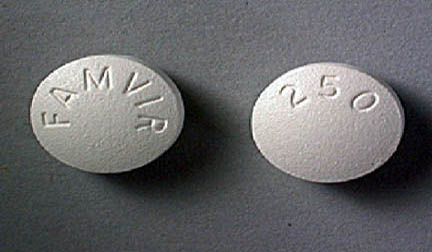
    The Federal Circuit continued this trend in Teva Pharmaceuticals (see Patent Docs coverage of this case).  In this case, the CAFC overturned a district court dismissal of Teva’s declaratory judgment action based on the Federal Circuit’s earlier "reasonable apprehension of imminent suit" test.  Teva sued on four of five patents listed in the Orange Book relating to Novartis’ FAMVIR® genital herpes drug.  The fifth, U.S. Patent No. 5,246,937 (the ‘937 patent) protected the drug product itself, and Novartis sued Teva on the ‘937 patent under 35 U.S.C. § 271(e)(2) in view of Teva’s Paragraph IV certification, but did not assert the other four patents.  Nothing in the statute prevented Novartis from suing Teva on any of these four patents should Teva prevail in the ‘937 lawsuit and launch under its ANDA, bringing Teva squarely within the "bet the farm" risk the Supreme Court had used as the basis for its holding in MedImmune – that a licensee was not required to repudiate its license in order to have standing to prosecute a declaratory judgment action of invalidity.

    The Federal Circuit did not make this analogy, however.  Instead, the CAFC opined that its earlier jurisdictional precedent had been "overruled by . . . an intervening . . . Supreme Court decision," on the basis of the dicta found in footnote 11 of the MedImmune decision.  On that basis, the Federal Circuit analyzed the jurisdictional facts before the district court, explicitly applying the "all the circumstances" test of Maryland Casualty Co. v. Pacific Coal & Oil Co., one of the cases cited by the Supreme Court in its precedent-setting footnote.  After a long and painstaking analysis solidly grounded in Supreme Court precedent, the Federal Circuit found that there was an actual controversy between the parties and that Teva had demonstrated an injury-in-fact sufficient to support declaratory judgment jurisdiction.  Senior Judge Friedman arrived at the identical conclusion in a much simpler fashion in a concurring opinion.  According to Judge Friedman, Novartis’ listing of its five patents in the Orange Book and Teva’s Paragraph IV certification of non-infringement or invalidity were enough to raise an actual controversy between the parties.

    The Federal Circuit’s current (and perhaps justifiable) obsession with the Supreme Court’s exercise in its supervisory role over CAFC decisions has been applauded by some who have been frustrated by the Federal Circuit’s inconsistent application of "settled" patent law principles.  This inconsistency has been viewed as being contrary to Congressional purposes in instituting the Court:  to promote greater uniformity in certain areas of federal jurisdiction and relieve the pressure on the dockets of the Supreme Court and the Courts of Appeals for the regional circuits.  See "An Act To establish a United States Court of Appeals for the Federal Circuit, to establish a United States Claims Court, and for other purposes, 96 Stat. 25 (April 2, 1982).  The Supreme Court’s relative inactivity in reviewing Federal Circuit decisions over the first decade of its existence was consistent with this purpose, and permitted the Federal Circuit to establish its jurisprudence and institutional integrity.

    While not proposing that the Federal Circuit is outside the scope of Supreme Court review, it is possible that the Supreme Court’s prior restraint in reviewing CAFC decisions was the better path, to promote the goals enunciated by Congress and to permit the Federal Circuit to bring the desired harmony to patent law that was so sadly absent prior to its creation.  There can be little doubt that the Federal Circuit has brought some of this increased scrutiny upon itself, particularly in areas where it has become so dominated by doctrinal factionalism as to create disharmony in the law (for example, with regard to the issues of deference under Cybor Corp. v. FAS Technologies, Inc. and written description under Regents of the University of California v. Eli Lilly & Co.).  However, there is as much danger in too much Supreme Court review as there would be in too little.  The Supreme Court has an opportunity to permit the Federal Circuit to clean its own house with regard to at least one issue – deference – by permitting the CAFC the time it needs to decide to reconsider the Cybor doctrine en banc before it decides whether to grant certiorari on the issue in Amgen Inc. v. Hoechst Marion Roussel, Inc.

    For additional information, please see:

  •     By Mark Chael

    Cephalon
    On March 30, 2007, Cephalon, Inc. announced that it had received an approvable letter from the U.S. Food and Drug Administration (FDA) regarding Cephalon’s Nuvigil® (armodafinil) new drug application (NDA).  The approvable letter was accompanied by draft labeling that includes a proposed warning section in bold type describing a potential occurrence of skin rash and hypersensitivity.  In the approvable letter, the FDA requested the standard safety update from clinical trials (the previous update was provided in June, 2006) as well as samples of introductory marketing materials for Nuvigil® tablets.  Importantly, the FDA has not required any additional clinical or scientific studies for final approval.

    Once finally approved, Nuvigil® will be a C-IV controlled substance prescribed for the treatment of excessive sleepiness associated with narcolepsy, obstructive sleep apnea/hypopnea syndrome (OSAHS), and shift work sleep disorder (SWSD).  Armodafinil is an optically active enantiomer of modafinil, which is the active ingredient in Provigil®, Cephalon’s currently marketed drug for the same condition.  Apparently, at least one advantage of armodafinil over modafinil is its longer duration of effect.  U.S. Patent No. 7,132,570, assigned to Cephalon, discloses crystalline forms of optical enantiomers of modafinil and methods for their production.  Also, U.S. Patent Publication No. 2006/0086667, assigned to Cephalon, discloses methods for the separation of enantiomeric sulfinylacetamides (e.g., armodafinil).

    Cepholon’s March 31, 2005 press release announcing the filing of the Nuvigil® NDA can be found here.

  •     By Christopher P. Singer

    Wipo
    As previously reported on Patent Docs, the PCT has amended portions of its Regulations, effective on April 1, 2007.  Most notably, the amendments provide: (a) a way for an applicant to request that the right to claim priority be restored in applications that meet specific requirements; (b) a way to insert a missing portion of an international application without losing the international filing date; and (c) a clarification about the circumstances in which an obvious error in an international application can be corrected.  The U.S. Patent and Trademark Office (USPTO) also proposed amendments to 37 C.F.R. that conform with these changes to the PCT Regulations.  However, because the changes to the PCT Regulations take effect prior to the effective date of the proposed rule changes in the U.S., the USPTO has announced the interim procedures it will follow until the rule changes are final.

    Uspto_seal_2
    In a March 30, 2007 Official Gazette (OG) Notice, the USPTO announced that it will use the general authority granted under 35 U.S.C. 364(a) to implement the changes relating to inserting a missing portion of an international application without the loss of the international filing date and the circumstances and procedures for correcting an obvious mistake.  The USPTO will use 37 CFR 1.182 for requests relating to the restoration of the right of priority.  Anyone wishing to attempt to make a request for restoration of the right of priority is urged to carefully review the requirements for a grantable petition (including timeliness, fees, notices, and required statements).

    Practitioners with questions regarding the notice and these procedures are directed to contact Mr. Richard R. Cole, Senior Legal Examiner with the Office of PCT Legal Administration by telephone (571.272.3281) or fax (571.273.0459).

  • The Federal Circuit Continues Its Capitulation on Declaratory Judgment Actions

        By Kevin E. Noonan

    In its MedImmune, Inc. v. Genentech, Inc. decision, the Supreme Court suggested in dicta that the Federal Circuit’s "reasonable apprehension of (imminent) suit" test was in conflict with Supreme Court precedent, but limited this dicta to a footnote.  The Federal Circuit, feeling the lash once again from a Court that has reversed its decisions in whole or in part in all but one instance since Markman v. Westview Instruments, Inc., has responded by wholesale abandonment of its earlier jurisprudence, a trend that continues in Teva Pharmaceuticals USA, Inc. v. Novatis Pharmaceuticals Corp.

    Tevalogo
    In this case, Teva appealed dismissal of its declaratory judgment action before the District Court, which had used the Federal Circuit’s pre-MedImmune holding in Teva Pharmaceuticals USA, Inc. v. Pfizer Inc. as its basis for dismissing the suit.  The dispute is over Novartis’ FAMVIR® genital herpes drug.  Novartis listed five patents in the FDA "Orange Book" for this drug, four of which have claims for therapeutic uses that expire 4-to-5 years after the drug product patent itself.  Teva filed an ANDA with a Paragraph IV certification, claiming that its generic famciclovir product either did not infringe Novartis
    or that the patents Novartis listed in the Orange Book are invalid.  Although Novartis brought suit within the statutory 45-day period, it did so solely on the product patent, U.S. Patent No. 5,246,937 (the ‘937 patent) that expires in 2010.  Teva responded by filing a declaratory judgment action against Novartis over the four remaining Orange Book-listed patents.  Teva based this action on the provisions of the Hatch-Waxman Act, as amended in 2003 regarding "patent certainty," that permitted an ANDA applicant to file a declaratory judgment action against a patentee who did not file suit within 45 days of the Paragraph IV certification.  21 U.S.C. § 355(j)(5)(C) and 35 U.S.C. § 271(e)(5).  The district court dismissed this lawsuit, based on the Federal Circuit’s pre-MedImmune "reasonable apprehension of (imminent) suit" test.

    The Federal Circuit explicitly stated its conclusion that its earlier jurisdictional precedent had been "overruled by . . . an intervening . . . Supreme Court decision," on the basis of the dicta found in footnote 11 of the MedImmune decision.  On that basis, the Court analyzed the jurisdictional facts before the district court, explicitly applying the "all the circumstances" test of Maryland Casualty Co. v. Pacific Coal & Oil Co., one of the cases cited by the Supreme Court in its precedent-setting footnote.  Using this test, the Federal Circuit determined that the facts in this case devolve to the question of whether Teva asserted an injury in fact.  The Court found that Teva had done so, citing affirmative actions by Teva or Novartis.  First, Novartis listed the four method patents in the Orange Book, which provides affirmative Fig18n_3
    notice of the risk of a patent infringement lawsuit by practice of the patent claims.  21 U.S.C. § 355(b)(1).  Second, Teva filed its ANDA containing a Paragraph IV certification that all the listed patents are invalid or not infringed, which is defined as an infringing act by statute.  35 U.S.C. § 271(e)(2).

    The Court also considered the language and purpose of the Hatch-Waxman act itself (explicitly including 35 U.S.C. § 271(e)(5)) and the 2003 amendments (21 U.S.C. § 355(j)(5)(C)).  In its view, the Court believed Novartis was attempting to "game" the Hatch-Waxman system, stating:

    By filing a lawsuit on only one its five patents certified under paragraph IV in Teva’s ANDA, Novartis has tried to simultaneously leverage the benefits provided to a patentee under the Hatch-Waxman Act and avoid the patentee’s accompanying responsibilities.  Novartis’ ‘937 patent suit against Teva has invoked the statutory automatic 30-month stay and is concurrently insulating the four method patents from a validity challenge.

    Preventing this type of activity was the motivation behind the 2003 Amendments, according to the Court:

    The mere fact that neither the patent owner nor the brand drug company has brought a patent infringement suit within 45 days against a generic applicant does not mean there is no "case or controversy."  The sole purpose of requiring the passage of 45 days is to provide the patent owner and brand-name drug company the first opportunity to begin patent litigation.  Inaction within the 45-day period proves nothing, as there are tactical reasons why a patent owner or brand drug company might refrain from bringing suit on a patent within 45 days.

    For example, the brand drug company might have several patents listed in the Food and Drug Administration’s Orange Book with respect to a particular drug.  It could be in the company’s interest to bring suit within 45 days on one patent and to hold the others in reserve.  149 Cong. Rec. S15885 (Nov. 25, 2003; Senator Kennedy’s comments)

    (emphasis in the Court’s opinion).  A fourth consideration was the already-pending litigation between the parties on the ‘937 patent as a factor in favor of its determination that Teva had an injury-in-fact sufficient to support declaratory judgment jurisdiction.  The Court cited the 30-month statutory stay resulting from his lawsuit as an injury, since Teva was thus prohibited from entering the marketplace by statute once Novartis filed its infringement action under the ‘937 patent.  Finally, the Damoclean sword of future patent infringement liability created by Novartis when it chose to sue on only the ‘937 patent was a factor considered by the Court to raise declaratory judgment jurisdiction, analogous to the "bet the farm" risks cited by the Supreme Court in its MedImmune decision.

    This result is consistent with the Court’s determination that footnote 11 in MedImmune recited the death knell to its "reasonable apprehension of imminent suit" test for declaratory judgment jurisdiction.  Writing in concurrence, Judge Friedman arrived at the majority’s outcome by a much simpler calculus:  he considered Novartis’s listing of its five patents in the Orange Book, and Teva’s Paragraph IV certification of non-infringement or invalidity, to be sufficient to raise an actual controversy between the parties.  The Federal Circuit’s efforts in the majority opinion illustrate the lengths to which it now appears ready, willing, and indeed anxious to go to affirmatively demonstrate that its jurisprudence is in compliance with relevant Supreme Court precedent.

    Teva Pharm. USA, Inc. v. Novatis Pharm. Corp (Fed. Cir. 2007)
    Panel: Circuit Judge Mayer, Senior Circuit Judge Friedman, and Circuit Judge Gajarsa
    Opinion by Circuit Judge Gajarsa
    Concurring opinion by Senior Circuit Judge Friedman

    Additional information regarding this case can be found at the Orange Book Blog and Patently-O.

  •     By Sherri Oslick

    Gavel About
    Court Report:  Each week we will report briefly on recently filed
    biotech and pharma cases, and a few interesting cases will be selected
    for periodic monitoring.

    Abbott Laboratories et. al. v. Sandoz, Inc. et. al.
    1:07-cv-01721; filed March 28, 2007 in the Northern District of Illinois Infringement of U.S. Patent No. 4,935,507 ("Crystalline 7-(2-(2-Aminothiazol-4-yl)-2-Hydroxyiminoacetamido)-3-Vinyl-3-Cephem-4-C Arboxylic Acid (Syn Isomer)," issued June 19, 1990) following Defendants' filing of an ANDA to manufacture a generic version of Abbott's Omnicef® (cefdinir, an antibiotic used to treat infection).  View the complaint here.


    Otsuka Pharmaceutical Co., Ltd. v. Synthon Holding BV et. al.

    1:07-cv-00236; filed March 28, 2007 in the Middle District of North Carolina

    Otsuka Pharmaceutical Co., Ltd. v. Apotex Corp. et. al.
    3:07-cv-01346; filed March 23, 2007 in the District Court of New Jersey

    The complaints in these two cases are substantially identical.  Infringement of U.S. Patent No. 5,006,528 ("Carbostyril Derivatives," issued April 9, 1991) following a paragraph IV certification as part of Synthon's and Apotex' filing of an ANDA to manufacture a generic version of Otsuka's Abilify® (aripiprazole, used to treat bipolar disorder and schizophrenia).  View the Synthon complaint here.

    As reported here last week, Otsuka Pharmaceutical asserted the '528 patent against Teva Pharmaceuticals on March 9, 2007 and against Barr Laboratories on March 16, 2007.


    Schering Corporation et. al. v. Glenmark Pharmaceuticals, Inc. USA et. al.

    2:07-cv-01334; filed March 22, 2007 in the District Court of New Jersey

    Infringement of U.S. Patent No. RE37,721 ("Hydroxy-substituted Azetidinone Compounds Useful as Hypocholesterolemic Agents," issued May 8, 2002) following a paragraph IV certification as part of Glenmark's filing of an ANDA to manufacture a generic version of Plaintiffs' Zetia® (ezetimib, used to treat elevated cholesterol levels).  View the complaint here.


    Tyco Healthcare Group LP et. al. v. Pharmaceutical Holdings Corp. et. al.

    2:07-cv-01162; filed March 22, 2007 in the Eastern District of Pennsylvania

    Infringement of U.S. Patent Nos. 5,030,632 ("Low Dose Temazepam," issued July 9, 1991), 5,211,954 (same title, issued May 18, 1993), 5,326,758 (same title, issued July 5, 1994), and 5,629,310 (same title, issued May 13, 1997) following a paragraph IV certification as part of defendants' filing of an ANDA to manufacture a generic version of plaintiff's Restoril® (temazepam, used to treat transient insomnia).  View the complaint here.


    Intervet, Inc. v. Merial Ltd. et. al.

    1:07-cv-00559; filed March 20, 2007 in the District Court of the District of Columbia

    Declaratory judgment of noninfringement and invalidity of U.S. Patent No. 7,192,594 ("Postweaning Multisystemic Wasting Syndrome and Porcine Circovirus from Pigs," issued March 20, 2007) based on Intervet's manufacture and sale of its Porcine Circovirus Vaccine Type 2.  View the complaint here.

  • Calendar April 13, 2007 – "Of Brics & Mortar: Technological Drivers in Booming Economies" Symposium (Northwestern Journal of Technology and Intellectual Property) – Chicago, IL

    April 16-18, 2007 – Biotechnology: Patent Prosecution, Licensing, Litigation &
    Hatch-Waxman
    (Patent Resources Group) – Orlando, FL

    April 19-20, 2007 – "Litigation and Enforcement in the Biotech and Pharmaceutical Industry" (GTCbio) – San Francisco, CA

    April 27, 2007 – Patent Claim Construction Workshop (Law Seminars International) – Atlanta, GA

    May 6-9, 2007 – BIO International Convention – Boston, MA

    June 26-28, 2007 – Euro-Biotech Forum 2007 – Paris, France

  •     By Donald Zuhn

    Logo_cst_home
    On Wednesday, Cell Signaling Technology, Inc. announced that the United States Patent and Trademark Office has issued a Notice of Allowance for its application entitled "Immunoaffinity Isolation of Modified Peptides from Complex Mixtures."  A search of Public PAIR indicates that U.S. Application No. 10/175,486 will issue as Patent No. 7,198,896.  The ‘896 patent will be the fourth U.S. patent to be awarded to the Danvers, Massachusetts-based biotech company.

    According to the statement released by Cell Signaling Technology, the allowed claims "cover[] the selective isolation of a target population of post-translationally modified peptides from a complex mixture of peptides by using immobilized modification-specific antibodies, followed by mass spectrometric determination of modification sites and parent protein identification."  The company’s release also states that the patented technology is commercialized under the trademarks PhosphoScan®, which enables the discovery of cell and tissue phospho-profiles, and AcetylScan®, for acetylation profiling.

    The ‘896 patent claims the benefit of U.S. Provisional Application Nos. 60/299,893, filed June 21, 2001, and 60/337,012, filed November 8, 2001, as well as continuation-in-part Application Nos. 09/535,364, filed March 24, 2000, and 09/148,712, filed September 4, 1998.  Representative independent claim 1 of the ‘486 application recites:

    1.    A method for isolating a target population of naturally-occurring post-translationally
    modified peptides from a complex mixture of peptides, said method comprising the
    steps of:
        (a)    obtaining a digested proteinaceous preparation from an organism, wherein said digested proteinaceous preparation comprises a complex mixture of peptides comprising naturally-occurring post-translationally modified peptides from two or more different proteins;
        (b)    contacting said digested proteinaceous preparation with at least one immobilized post-translational modification-specific antibody; and
        (c)    isolating said target population of naturally-occurring post-translationally modified peptides specifically bound by said immobilized modification-specific antibody in step (b).

    According to Cell Signaling Technology’s statement, the patented technology was first described in Rush et al., 2005, Nat. Biotechnol. 23:94-101, and is the subject of collaborative projects with AstraZeneca, Bristol-Myers Squibb & Co., Novartis, and Dr. Brian Druker of Oregon Health Sciences University.

    Merck
    Cell Signaling Technology also announced on Wednesday that it had formed an alliance with Merck in which Cell Signaling Technology would provide its patented PhosphoScan® technology for use in Merck’s oncology therapeutic research programs.

  • The folks at FedCirc.us have announced that a new search feature was implemented at the FedCirc.us site this morning. The new search feature gives readers access to FedCirc.us’ own Federal Circuit case summaries as well
    as to commentary and summaries from leading online commentators.

    We are flattered that FedCirc.us has decided
    to add the Patent Docs authors to its list of leading commentators.