• Practising Law Institute (PLI) #2 Practising Law Institute (PLI) will be holding five sessions of its Patent Litigation 2009 seminar this fall in San Francisco (September 21-22), McLean, VA (October 5-6), Chicago (October 15-16), Atlanta (November 9-10), and New York (November 16-17).  Each session of the Patent Litigation 2009 seminar will offer presentations on the following topics:

    • Recent developments in patent law and their impact on patent litigation;
    • Managing patent litigation, part 1:  Successful results at reasonable cost;
    • Managing patent litigation, part 2:  Effective settlement;
    • Discovery issues;
    • Injunctions;
    • Parallel patent reexaminations;
    • In the aftermath of In re Bilski;
    • Opinion letters;
    • Entire market value, apportionment, Quanta, and use damages;
    • Dealing with experts;
    • Expert direct/cross demonstration on Section 112 defenses; and
    • Ethical issues in patent litigation.

    A full program for the Patent Litigation 2008 seminar can be found at one of the following links:  San Francisco, McLean, VA, Chicago, Atlanta, and New York.  The registration fee for the seminar is $1,495. Those interested in registering for the conference can do at one of the following links:  San Francisco, McLean, VA, Chicago, Atlanta, and New York.

  •     By Kevin E. Noonan

    Biotechnology Industry Organization (BIO) The Biotechnology Industry Organization (BIO) filed an amicus brief with the Supreme Court last week in Bilski v. Doll, the appeal from the Federal Circuit's en banc decision establishing the "machine or transformation" test as the exclusive test for patent eligibility of process claims.  BIO was joined on the brief by the Advanced Medical Technology Association (AdvaMed, a medical device industry group), the Wisconsin Alumni Research Foundation (WARF) and the Regents of the University of California.

    The brief bases its legal argument on the assertion that the Bilski "machine or transformation" test is "inconsistent with the broad standard for patent eligibility in §101 and this court's precedent."  It cites contrary Supreme Court precedent to counter the Bilski majority's apparent reliance on the same case law (much like Judge Newman did in her spirited dissent in Bilski).  The brief reminds the Court that its precedent supports a broad interpretation of the term "any" in the statute, and its exclusions from patent eligibility have been limited to laws of nature, abstract ideas, and natural phenomena, exemplified by Einstein's law of mass and energy, Newton's law of gravity, "a new mineral discovered in the earth or new plant found in the wild."  On the other hand, the brief argues, applications of the laws of nature "can be patented as part of a process" and "all inventions can be reduced to underlying principles of nature," citing Diamond v. Diehr; the brief even cites to this principle as enunciated by Justice Breyer in his Laboratory Corp. v. Metabolite Labs., Inc. ("LabCorp") dissent.

    The amici argue that any difficulties attendant upon applying these precepts, of drawing the "line between a patentable 'process' and an unpatentable 'principle'" do not justify a bright-line test like the "machine or transformation" test in Bilski.  The brief asserts that the Court has rejected such bright-line tests of patent ineligibility; specifically citing the Court's statement in Gottschalk v. Benson that "[w]e do not so hold" that a patentable process must be tied to a particular machine or change articles to a different state or thing.

    The brief characterizes the Court's earlier decisions that a process is patent-eligible if it is tied to a particular machine or of it transforms an article to a different state or thing as a "safe harbor," and that the Federal Circuit in Bilski transformed this safe harbor into a "rigid exclusionary rule" (no doubt in homage to the Supreme Court's displeasure with the rigid application of the Federal Circuit's "teaching-suggestion-motivation" test for obviousness in KSR International Co. v. Teleflex Inc.).  The brief discusses the KSR decision as well as Warner Jenkinson and Festo with regard to bright line rules, and with the consequences of "disrupting settled expectations of the inventing community."  Quoting from Judge Newman's dissent, the brief states:

    Uncertainty is the enemy of innovation.  These new uncertainties not only diminish the incentives available to new enterprise, but disrupt the settled expectations of those who relied on the law as it existed [before Bilski].

    The brief addresses prior Supreme Court precedent particularly relevant for biotechnology inventions, specifically Diamond v. Chakrabarty, J.E.M. Ag Supply, Inc. v. Pioneer Hi-Bred International, Inc., and Funk Bros. Seed Co. v. Kalo Inoculant Co., saying that each of these cases stands for the proposition that while a law of nature or a natural phenomenon is not patentable per se, applications of laws of nature or natural phenomena are patentable subject matter.  "While these cases involved claims to products rather than processes, 'the same principle applies' when analyzing process claims for patent eligibility" the brief asserts, citing Diamond v. Diehr.  The Federal Circuit's Bilski decision is contrary to this precedent, according to the brief, insofar as the lower court has applied the "machine or transformation" test outside the business methods or computer arts, specifically citing Classen Immunotherapeutics, Inc. v. Biogen Idec.

    BIO and its fellow amici also ask the Court to abrogate secondary tests, like "preemption" and "post solution activity."  Whether a claim "preempts" an unpatentable natural law, abstract idea, or natural phenomenon asks the wrong question, the brief asserts, citing the patentable claims in the Telegraph cases (O'Reilly v. Morse) as an example of process claims that do not preempt all uses of electromagnetism; the issue is not patent eligibility but the scope of the claim and whether it is adequately supported by the disclosure, which is a matter for § 112, not § 101.  The brief also argues that the way the Federal Circuit uses the concept of preemption risks conflation with the patentee's ability to "preempt" others from infringing its claims.  Similarly, the brief argues that the "post-solution activity" test encourages "dissecting the claims and ignoring certain claim language," contrary to the principle that the claims should be read as a whole in determining whether an invention is patent-eligible.  This is because such an analysis risks conflating patentability with patent eligibility (a distinction made with great clarity by Judge Rich in In re Bergy).

    The greater portion of the brief sets out policy considerations of paramount concern to these groups.  The brief points out that many of the inventions made by their members involve "[p]reviously unknown biological correlations" (which they characterize as 'natural laws or principles' discovered through molecular biology techniques) that are "increasingly used to guide biotechnological product development."  Patentability of these inventions is necessary so that investors can "recoup vast development expenses incurred during the decade-long product development" that are made based on these correlations.  According to the brief, current and future developments in the biotechnology area may be precluded from patentability by the Federal Circuit's "rigid and constricted patent-eligibility test."

    "Because these technologies require investment in unusually high-risk, expensive research and development," what is needed are "broad, well-established eligibility standards," the brief asserts.
      In addition, the amici remind the Court that the Bilski rule would preclude from patentability not only current but already-patented technology, and would "deter critical investment in the biotechnology and medical technology industries."

    The brief recites a wealth of beneficial effects in the biotechnology industry that resulted from the Court's expansive reading of § 101 in Diamond v. Chakrabarty (neglecting to mention that this was a 5-4 decision); the decision "paved the way for biotechnology discoveries" (Humulin, hGH, tPA, and IFN, for example).  The brief argues that the biotechnology industry is responsible for more than 200 new drugs and vaccines, with more than 400 new drugs in clinical trials, directed to more than 200 diseases, (including cystic fibrosis, AIDS, cancer, heart disease, MS, Alzheimer's, Parkinson's, and diabetes).  This requires investment:  more than $30 billion annually, "[v]irtually all of this investment . . . through private funding.  . . . ("98% of R&D investment comes from the private sector)."  The brief justifies this expense by citing Masi & Grabowski for statistics that it costs more than $600 million to bring "a biologic from the laboratory to human clinical trials," and that "FDA-mandated human testing consumes another $624 million."  And this investment is risky; the brief cites "thousands" of candidate biologic drugs that are tested and rejected "after large investments have been made" (1 in 5,000 according to a HHS study from 2004).  If the failure rate was reduced by a mere 10%, $100 million in development costs per drug could be saved, according to the FDA.  (In addition, the brief cites $9 billion in annual research and development costs for AdvaMed's members.)  Specifically regarding diagnostics companies, the brief sites a 35% investment of revenue into R&D, and for companies having less than $5 million in annual sales, investment equal to 200% of revenue.  The good news is that this investment has paid off, with the number of diagnostic tests on the market increasing by 60% between 1989 and 2004, with an estimated increase in life expectancy of half a year.

    The brief then connects these achievements with the question before the Court:

    [R]aising funds to support product research and development requires the expectation of reasonable financial returns from commercial products and services that are successful.  That expectation rests on the understanding that novel, useful, and unobvious biotechnological innovations will be patent-eligible under the principles established by Chakrabarty.

    The brief cites as an example of the effects of uncertainty in patent eligibility the 13% decline in the NASDAQ biotech index after President Clinton and British Prime Minister Blair suggested that these governments might act to limit patent protection for human genes.

    The brief characterizes as "havoc" the consequences of assessing patent-eligibility of biotechnological process claims under the Bilski machine or transformation test, because this would "create new uncertainty":

    Requiring biotechnology and medical technology process claims to be coupled to a physical transformation of matter or tied to a specific machine will exclude from patent eligibility inventions directed to new and useful methods which are of great value to society – inventions that also are specific and concrete (are not abstract ideas), that result from human intervention (are not natural phenomena) and that are applications yielding a new and useful end (are not laws of nature).

    These principles are illustrated in the brief with hypothetical claims to methods for diagnosing a disease by detecting a metabolite in a bodily fluid (a LabCorp–type claim) and a method for identifying drug susceptibility of a malignant tumor by detecting expression of a particular gene.  The brief concedes that neither claim satisfies the Bilski test, but maintains that neither claim is directed to a natural phenomenon, a law of nature, or an abstract idea, and thus should be patentable under the Court's precedent.

    The brief also discusses biomarkers in some detail, defining "biomarker" as "a characteristic that is objectively measured and evaluated as an indicator of normal biological processes, pathogenic processes or pharmacological responses to a therapeutic intervention" (citing Biomarkers and Surrogate Endpoints, 69 Clinical Pharmacology & Therapeutics 89, 91 (2001)).  The brief recognizes that the utility of biomarkers is in making a "correlation" between the marker and a disease or organism status, "performed through mental operations or otherwise."  These types of inventions are illustrated using U.S. Patent No. 5,674,680 for "predicting the time of onset of the development of immunodeficiency associated with disease progression" by "determining a level of expression of HIV messenger RNA . . . in peripheral blood cells" and "correlating the level of expression of HIV messenger RNA with the time of onset of the development of clinical signs of immunodeficiency," with a high expression levels correlating with a high likelihood and low expression levels with a low likelihood of the development of clinical signs of immunodeficiency.  The brief cites this invention as contributing to the development of combination therapies.

    Also cited with regard to biomarkers and personalized medicine are claims to methods for detecting expression levels of human genes relating to susceptibility to the anticancer drug Camptosar®.  Specifically, expression levels of an enzyme, UGT1A1 can vary as a genetic polymorphism, and the different expression levels can affect the activity of the drug (leading to the possibility of overdose); this is claimed in U.S. Patent No. 6,395,481 as a screening method.  Also cited is the role that recognition of varying expression levels of HER-2 in breast cancer patients played in development of Herceptin® for treating breast cancer, and how this marker is used for screening patients (citing U.S. Patent No. 4,968,603 for identifying HER-2 as a marker for these breast cancers).

    Finally, the brief discusses the usefulness of these markers for drug development, citing FDA reports and NIH programs aimed at facilitating drug development using biomarkers.  Research on K-ras mutations enables "tailor[ing] such therapy to the genetic status of the individual patients and to identify patients who are likely to respond" to a particular therapy.  As a result, "[p]atients who formerly would have undergone needless, ineffective treatment now can be redirected immediately to alternative therapies."

    The brief then states in conclusion that:

    Innovations in the fields of biomarkers and medical devices show great promise of revolutionizing medicine in the coming decades, allowing for personalized medicine and a higher standard of patient care.  The Bilski
    "machine or transformation" test would stifle investment and innovation in these fields, and is not an appropriate standard for determining patent eligibility under §101.

    The brief makes its arguments strongly and cogently based on these legitimate and important policy considerations.  For anyone familiar with this area, however, reading the brief brings to mind another Court with other amici making policy-based arguments on the wisdom of biotechnology patenting:

    To buttress his argument, the petitioner, with the support of amicus, points to grave risks that may be generated by research endeavors such as respondent's.  The briefs present a gruesome parade of horribles.  Scientists, among them Nobel laureates, are quoted suggesting that genetic research may pose a serious threat to the human race, or, at the very least, that the dangers are far too substantial to permit such research to proceed apace at this time.  We are told that genetic research and related technological developments may spread pollution and disease, that it may result in a loss of genetic diversity, and that its practice may tend to depreciate the value of human life.  These arguments are forcefully, even passionately, presented; they remind us that, at times, human ingenuity seems unable to control fully the forces it creates — that, with Hamlet, it is sometimes better "to bear those ills we have than fly to others that we know not of."

    It is argued that this Court should weigh these potential hazards in considering whether respondent's invention is patentable subject matter under § 101.  We disagree.  The grant or denial of patents on micro-organisms is not likely to put an end to genetic research or to its attendant risks.  The large amount of research that has already occurred when no researcher had sure knowledge that patent protection would be available suggests that legislative or judicial fiat as to patentability will not deter the scientific mind from probing into the unknown any more than Canute could command the tides.  Whether respondent's claims are patentable may determine whether research efforts are accelerated by the hope of reward or slowed by want of incentives, but that is all.

    Chakrabarty.  That other Court in another time declined to limit patent eligibility and in doing so opened the biotechnology era.  It is fervently to be hoped (in view of Justices Breyer and Stevens antipathy voiced in the LabCorp dissent, and the unknown views of Chief Justice Roberts and new Associate Justice Sotomayor) that this Court in our time does not succumb to the temptation to close the doorway to innovation represented by biotechnology, by limiting patent eligibility under Bilski.

  •     By Donald Zuhn

    Kappos, David The U.S. Patent and Trademark Office has announced that on Thursday at 12:30 pm (EST), U.S. Secretary of Commerce Gary Locke will administer the oath of office to David Kappos (at right), the new Under Secretary of Commerce for Intellectual Property and Director of the USPTO.  The new USPTO Director was confirmed by the U.S. Senate last Friday.  According to the USPTO announcement, the ceremony, which will take place at USPTO headquarters in Alexandria, VA, "will highlight Mr. Kappos' leadership role and recognize the vital role that the USPTO plays in promoting American innovation."

  •     By Donald Zuhn

    It has not been a great year for the biotech/pharma industry.  In February, BIO President and CEO Jim Greenwood noted that almost a third of BIO's membership had less than six months of cash on hand, 45% had less than one year of cash remaining, and only 10% of the 370 publicly-traded biotechnology companies reported a positive income (see "BIO Meets the Press").  In April, the National Venture Capital Association (NVCA) and PricewaterhouseCoopers announced that venture capitalists had invested $3.0 billion in 549 deals in the first quarter of 2009, a 47% decrease in terms of dollars invested and a 37% decrease in terms of the number of deals as compared with the fourth quarter of 2008 (see "First Quarter Venture Capital Funding at 12-Year Low").  The NVCA noted that venture funding had dropped to levels not seen since 1997.  The first quarter drop followed a 2008 drop in venture funding, the first yearly decline in total investments since 2003 (see "NVCA Study Shows Decline in 2008 Investment; BIO Study Predicts Biotech Rebound in 2009").  However, all of these negative indicators may be giving way to some more positive signs.

    Cumberland Pharmaceuticals On Monday, Nashville-based Cumberland Pharmaceuticals announced that 5,000,000 shares of its common stock would begin trading on the NASDAQ Global Select Market on Tuesday.  Cumberland's stock opened at $17 per share — about $2 lower than earlier projections — and closed at $16.83 on the first day of trading.  Despite the lower opening price, Cumberland CEO AJ Kazimi said the company was "delighted to be able to lead the reopening of the IPO market."  According to a report in the Nashville Business Journal, Cumberland became the first U.S. drug company to go public in nearly two years.  And it appears that Cumberland will soon be joined by a number of other biotech and pharma companies. 

    Seattle Genetics On Monday, Seattle Genetics, of Bothell, WA, announced a proposed public offering of its common stock.  On Tuesday, the biotech company announced that on or about August 17th, 11,000,000 shares of its common stock would be made available at an opening price of $10.75 per share.  Seattle Genetics expects the gross proceeds of the sale to be approximately $118.2 million.

    Inspire Pharmaceuticals Earlier this month, Inspire Pharmaceuticals announced that it had filed a registration statement with the Securities and Exchange Commission (SEC) for a public offering of its stock.  The biopharmaceutical company, based in Durham, NC, intends to offer $80 million of its common stock in the IPO.  According to a report in the Charlotte Observer, another North Carolina biotech company, Talecris Biotherapeutics, is also thinking about an IPO — this one for $1 billion.  Talecris first filed for its IPO in Talecris Biotherapeutics June 2007, but called off the offering due to the economic slowdown and a $3.1 billion merger offer from Australia's CSL (the deal subsequently ran into trouble with U.S. regulators).

    In addition to the recent rise in biotech/pharma IPOs, venture funding also appears to be in recovery mode.  Last month, FierceBiotech noted that a VentureSource study showed a rebound in second quarter venture funding.  In particular, the study determined that biopharmecutical investing jumped from $709 million in the first quarter to $1.22 billion in the second quarter, a 72% increase.

  •     By Suresh Pillai

    Jury Finds AGA Guilty of Infringement in Medtronic Dispute

    Medtronic A jury in the U.S. District Court for the Northern District of California has ruled that AGA Medical Corp. infringed Medtronic Inc.'s patents for blood vessel occlusion devices, and has ordered AGA to pay Medtronic $57 million.  This award is based upon the calculated amount of past damages as well as an 11 percent royalty for future sales of the products until 2018.  The suit originated in 2007 with Medtronic asserting that three AGA products infringed U.S. Patent Nos. 6,306,141 and 5,067,957.  The patents cover both metal alloy medical devices used to alleviate blood vessel occlusions and methods of treatment that utilize these devices.  In an earlier ruling, the District Court granted AGA summary judgment of noninfringement on a third patent asserted by Medtronic, U.S. Patent No. 5,190,546.

    AGA Medical Corp The case will now proceed to a non-jury phase in order for the District Court to resolve other issues of invalidity and unenforceability.  For more information on the decision, please see Medtronic's press release.  Medtronic is currently asserting the same patents-in-suit against W.L. Gore & Associates in another pending Northern District of California case.

    Court Denies Covidien Motion to Enjoin URL In Restoril® Suit

    Covidien The U.S. District Court for the District of New Jersey denied Covidien's bid to enjoin URL Pharma from marketing or manufacturing a generic version of Restoril®, Covidien's sleep disorder drug.  Covidien's patent-in suit, U.S. Patent No. 5,211,954, is directed to a low-dose temazepam composition.  The original suit, filed by Covidien's predecessor Tyco Healthcare Group LP against URL predecessor Mutual Pharmaceuticals Co. Inc. and its parent company, Pharmaceutical Holdings Corp., was filed in 2007 and alleged patent infringement on the part of Mutual as a result of Mutual's filing of an Abbreviated New Drug Application covering generic Restoril® (see "Court Report," March 26, 2007),  One year later, Covidien began marketing and manufacturing an unbranded version of Restoril®.  Meanwhile, URL awaited the expiration of the 30-month stay on its FDA approval before launching its own generic version.

    URL Pharma Covidien's motion seeking an injunction was filed along with a motion seeking an extension of the 30-month stay.  Having already denied Covidien's motion for extension, the District Court also denied Covidien's motion for an injunction, granting instead URL's motion for an entry of a judgment of noninfringement on partial findings.  The District Court ruled that URL's generic formulation would not literally infringe the claims of the patent-in-suit.


    Daiichi Prevails in Benicar® Infringement Suit Against Mylan

    Daiichi Sankyo The U.S. District Court for the District of New Jersey has ruled that Mylan Pharmaceuticals Inc. is liable for infringement of Daiichi Sankyo Co. Ltd.'s U.S. Patent No. 5,616,599, which covers the active ingredient of the hypertension drug Benicar®.  Daiichi Sankyo originally filed suit in 2007, alleging that Mylan, through the filing of an Abbreviated New Drug Application directed towards generic formulations of Benicar®, infringed the '599 patent (see "Court Report," July 9, 2007).  Mylan countered with a claim of invalidity based on obviousness.

    Mylan The District Court disagreed with Mylan, however, finding the '599 patent to be nonobvious.  The Court based its nonobviousness finding on the demonstrated commercial success of Benicar®.  Daiichi Sankyo has issued a press release with more information on the decision.

  •     By Mark Chael

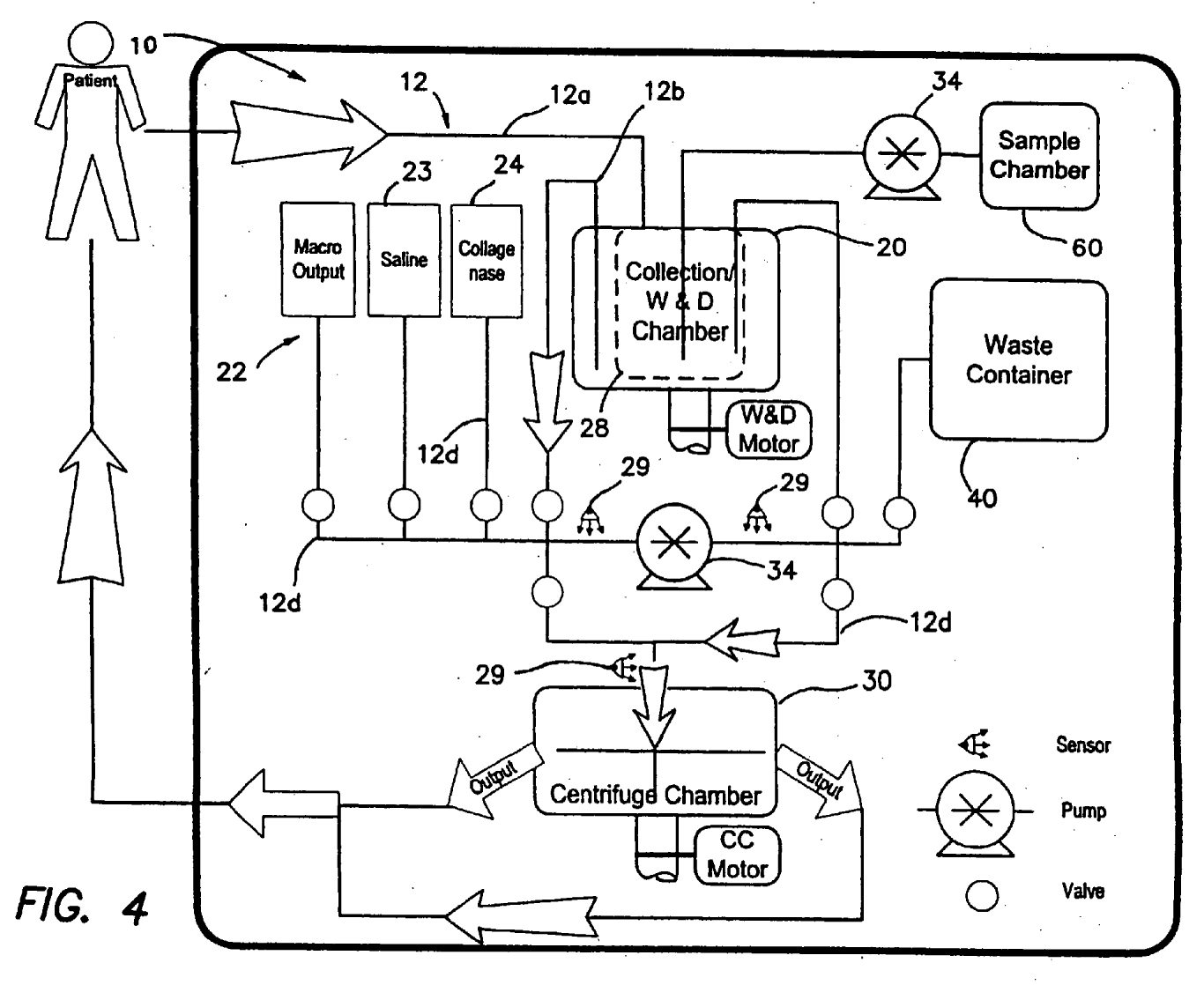
    Cytori Recently, Cytori Therapeutics, Inc. announced that the U.S. Patent and Trademark Office had issued a Notice of Allowance for claims directed to prosthetic devices seeded with adipose-derived stem cells.  According to the press release, these claims are related to the use of Cytori's Celution® System for the treatment of bone diseases.

    Although not specified in Cytori's recent press release, a quick review of the online databases at the USPTO indicates that on June 23, 2009, a Notice of Allowance was issued in U.S. Patent App. No. 10/885,293 (U.S. Patent App. Pub. No. 2005/0058632) in response to the applicants' filing of amended claims, which included the following:

    1.  A method of processing adipose tissue that comprises a population of cells comprising adipose-derived stem cells for reintroduction into a patient, comprising:
        removing unprocessed adipose tissue that comprises a cell population comprising adipose-derived stem cells from said patient;
        introducing the removed adipose tissue into a self-contained adipose-derived stem cell processing unit configured to maintain a closed system where said self contained adipose-derived stem cells processing unit comprises

       a tissue collection chamber that is configured to receive unprocessed adipose tissue that is removed from said patient, wherein the tissue collection chamber is defined by a closed system;
        a first filter that is disposed within said tissue collection chamber, wherein said first filter is configured to retain a first component of said unprocessed adipose tissue and pass a second component of said unprocessed adipose tissue, such that said first filter separates said first component from said second component, and wherein said first component comprises a cell population comprising adipose-derived stem cells and said second component comprises lipid, mature adipocytes, and saline;
        a processing chamber, which is configured to receive said first component comprising said population of cells comprising adipose-derived stem cells from said tissue collection chamber, wherein said processing chamber is within said closed system;
        a conduit configured to allow passage of said first component comprising said cell population comprising adipose-derived stem cells from said tissue collection chamber to said processing chamber while maintaining a closed system;
        a cell concentrator disposed with said processing chamber, which is configured to facilitate the concentration of said first component comprising said cell population comprising adipose-derived stem cell so as to obtain a concentrated population of cells comprising adipose-derived stem cells, wherein said cell concentrator comprises a centrifuge or a filter; and
        an outlet configured to allow the aseptic removal of said concentrated population of cells comprising adipose-derived stem cells;
        processing said removed, unprocessed adipose tissue to obtain said concentrated population cell comprising adipose-derived stem cells; and
        introducing said concentrated population of cells that comprises adipose-derived stem cells into a prosthetic device, wherein said prosthetic device comprises a cell carrier portion and a cell carrier containment portion, and wherein said concentrated population of cells comprising adipose-derived stem cells is introduced into said cell carrier portion of said prosthetic device.

    3.  The method of claim 1, wherein said patient has a bone related disorder.

    Adipose Tissue Cytori and its proprietary system were profiled in 2006 by the San Diego Union Tribune.  Also, as Patent Docs reported previously, Cytori is assembling a significant portfolio of patents and patent applications covering various uses of adipose-derived stem cells and methods for their isolation.

    According to information available from Cytori's website, the Celution® System consists of a cell processing device, single use consumables and related instrumentation and reagents.  The cell processing device "rapidly and reliably delivers a clinical grade, mixed population of non-cultured adipose derived stem and regenerative cells at the patient's beside."  Cytori does not sell these cells as a pharmaceutical product, unlike other stem cell commercialization enterprises, but rather commercializes the cell processing device, related instruments, consumables, and other reagents.

    FIG_4

  •     By Donald Zuhn

    Alnylam Last month, Alnylam Pharmaceuticals announced that it would contribute more than 1,500 of its RNA interference (RNAi) patents to the patent pool established by GlaxoSmithKline earlier this year.  Alnylam is known for the development of therapeutics based on RNAi for the treatment of respiratory syncytial virus (RSV) infection, liver cancer, hypercholesterolemia, Huntington's disease, and TTR amyloidosis.

    GlaxoSmithKline - GSKThe biopharmaceutical company, based in Cambridge, MA, becomes the first company other than GSK to add patents to the pool.  The pool, which was formed to aid in the discovery and development of new medicines for the treatment of sixteen neglected tropical diseases (as defined by the U.S. Food and Drug Administration), was established by GSK in March with an initial contribution of about 800 GSK patents.  GSK CEO Andrew Witty stated that GSK was delighted by Alnylam's donation, noting that "[t]he key objective of the pool is to make it easier for researchers across the world to access intellectual property that may be useful in the search for new medicines to treat neglected tropical diseases," and adding that "[t]he more companies, academic institutions and foundations that join the pool, the more effective it will be."  Alnylam CEO Dr. John Maraganore stated that Alnylam is "committed to the innovation of medicines for patients, so we cannot ignore the potential of our technology to make a difference in the discovery of important new medicines for neglected diseases that afflict millions of people each year."  He added that Alnylam was "very proud to be joining GSK in this unique and bold vision of social responsibility for some of the world's poorest nations."

    The patents in the pool will be provided on a royalty-free, non-profit basis in Least Developed Countries (as identified by the United Nations, and including much of western and central Africa and several countries in Southeast Asia) via licensing agreements with qualified third parties.  The sixteen neglected tropical diseases being targeted by the pool are:  tuberculosis, malaria, blinding trachoma, buruli ulcer, cholera, dengue/dengue haemorrhagic fever, racunculiasis, fascioliasis, human African trypanosomiasis, leishmaniasis, leprosy, lymphatic filariasis, onchocerciasis, schistosomiasis, soil transmitted helminthiasis, and yaws.

  •     By Mark Chael

    USPTO Seal For the benefit of our readers, we would like to remind you that the Office of PCT Legal Administration at the U.S. Patent and Trademark Office maintains a mailing list "to notify PCT customers, via e-mail, of updates to the forms and other information on [its] pages."  In order to be placed on the mailing list, all you need to do is send an email to "pctupdates-request@uspto.gov" (without the quotes) asking to be added to the list.

    Also, according to a member of the PCT Issues Committee at the American Intellectual Property Law Association (AIPLA), even if you signed up for this list in the past (that is, if you have received notices from the Office of PCT Legal Administration regarding updates), you should sign up again, perhaps indicating in your request that you signed up previously.

  • Common Sense, Perhaps, But Whose?

        By Kevin E. Noonan

    The Supreme Court in KSR International Co. v. Teleflex Inc. established a standard (such as it is) of "common sense" in evaluating whether an invention is obvious.  If the Court had been careful to follow the statute, it might have stressed more carefully that the answer to the question "whose common sense" must be the person of ordinary skill in the art.  Perhaps it was the contempt they obviously felt for the invention at issue — an electronic controller for adjusting the position of a gas pedal in a vehicle — but as a consequence of the KSR decision the "common sense" at issue is all too frequently a lay judge's view of what would be obvious.

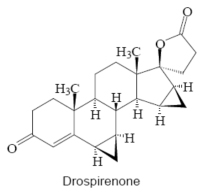
    Bayer This is what happened at the District Court in Bayer's suit against Barr for filing an ANDA on Bayer's Yasmin® contraceptive.  Bayer's patent-in-suit, U.S. Patent No. 6,787,531, claims a pharmaceutical composition of an oral contraceptive comprising a combination of drospirenone and ethinylestradiol.  Claim 1 of the '531 patent is representative of the claimed formulation:

    1.  A pharmaceutical composition comprising from about 2 mg to about 4 mg of micronized drospirenone particles, about 0.01 mg to about 0.05 mg of 17-alpha-ethinylestradiol, and one or more pharmaceutically acceptable carriers, the composition being in an oral dose form exposed to the gastric environment upon dissolution, and the composition being effective for oral contraception in a human female.

    Drospirenone This combination as an oral contraceptive was not new; the formulation was.  Bayer found that, despite the fact that drospirenone was known to be acid labile and to isomerize into an inactive form under acidic conditions (such as those encountered in the stomach), the combination could be advantageously formulated using micronized drospirenone (which increased absorbsion of the drug but was expected to also increase the rate of isomerization) and by not coating the drospirenone with an enteric coating (the conventional way of protecting an acid-labile compound from stomach acid in oral drug formulations).  Barr's position was that the use of micronization to improve drug absorbsion and the use of enteric coatings to protect acid-labile drugs were "routinely considered" by drug formulators in making drugs for oral administration, and that Bayer's claims were thus obvious.

    Bayer introduced testimony relating to how the invention was made, specifically relating to the surprising findings that formulating the drug in ways that should have increased isomerization (micronizing the acid-labile drospirenone and dispensing with the enteric coating) in fact had the opposite effect.  According to this testimony, the reason for this paradoxical result is that the micronized drug was absorbed more rapidly than it isomerized in vivo, and enteric coatings made the effectiveness of the drug more variable; it was uncontested that the drug had to be 99% effective to be useful as a contraceptive.  This testimony (supported by documentary evidence) established that Bayer scientists had originally prepared formulations that were unmicronized and enterically-coated, and that they were successful only when they changed direction and prepared the formulation that was the subject of the '531 patent.  In short, the entirety of Bayer's evidence from the scientists that developed the formulation was that the results were surprising and unexpected, circumstances that traditionally have been sufficient to overcome a prima facie obviousness determination.

    The District Court Judge, the Honorable Peter Sheridan, disregarded this evidence on the grounds that it was not reasonable to him that Bayer's scientists would have changed direction as abruptly as they purportedly did in their formulation work.  Moreover, the Court relied on a prior art treatise not particularly directed to oral contraceptives (Aulton, 1988, Pharmaceutics: The Science of Dosage Form Design) and a number of scientific journal articles relating to in vitro and in vivo acid-lability of spirenone (not drospirenone but a related compound), in deciding that the invention would have been obvious.  In addition, the Court cited three studies (including both in vitro and in vivo arms) with the related drug spirenone that purported to show the absence of spirenone isomers in blood samples from experimental animals or human volunteers administered tableted spirenone.  In vitro studies on drospirenone, on the other hand, showed that 80% of the drug had isomerized in a 0.1N HCl solution at room temperature.  The Court found that spirenone and drospirenone were related "as close[ly] as fraternal twins" and thus imputed the behavior of spirenone to drospirenone despite the evidence that they differed at least in their in vitro properties.

    The District Court explained its reasoning as follows:

    The prior art states the in vitro studies are unreliable unless they are correlated to in vivo testing (Aulton, McGilveray).  Unlike Nickisch, a person of ordinary skill in the art would conduct such testing.  Decisions about drug dose form are then made based upon the in vitro/in vivo testing.  That is, the decision whether to micronize and/or enteric coat comes second.  In this case, Bayer argues that the person of ordinary skill in the art would reverse this process ("put the cart before the horse").  This does not make sense.  Justice Kennedy in KSR observed that in analyzing an obviousness defense, the court must use its common sense.  KSR, 127 S. Ct. at 1732.  In this instance, Bayer's alleged exception to the in vitro/in vivo correlation rule (that it does not apply to acid sensitive drugs) does not ring true.  A person of ordinary skill in the art must precisely know and verify the characteristics and chemical reactions of a drug in order to evaluate its therapeutic value in humans.  To follow McGinity's alleged exception for acid-sensitive drugs can only lead to sketchy, imprecise formulation results and an increased risk of injury to users.

    Federal Circuit Seal The Federal Circuit affirmed, in a decision by Judge Mayer joined by Judge Friedman
    ; Judge Newman dissented.  The majority based its decision on the portion of the KSR opinion regarding when an invention that is obvious to try is also obvious:

    When there is a design need or market pressure to solve a problem and there are a finite number of identified, predictable solutions, a person of ordinary skill has good reason to pursue the known options within his or her technical grasp.  If this leads to the anticipated success, it is likely the product not of innovation but of ordinary skill and common sense.  In that instance the fact that a combination was obvious to try might show that it was obvious under § 103.

    As these principles have been explicated by the Federal Circuit (most recently in In re Kubin), the proper analysis is to be found in In re O'Farrell, and moreover the two O'Farrell scenarios constitute the only way that something that is obvious to try is not also obvious:

    First, an invention would not have been obvious to try when the inventor would have had to try all possibilities in a field unreduced by direction of the prior art.  When "what would have been 'obvious to try' would have been to vary all parameters or try each of numerous possible choices until one possibly arrived at a successful result, where the prior art gave either no indication of which parameters were critical or no direction as to which of many possible choices is likely to be successful" an invention would not have been obvious.  O'Farrell, 853 F.2d at 903.  This is another way to express the KSR prong requiring the field of search to be among a "finite number of identified" solutions.  550 U.S. at 421; see also Procter & Gamble, 566 F.3d at 996; Kubin, 561 F.3d at 1359.  It is also consistent with our interpretation that KSR requires the number of options to be "small or easily traversed."  Ortho-McNeil Pharm., Inc. v. Mylan Labs., Inc., 520 F.3d 1358, 1364 (Fed. Cir. 2008).

    Second, an invention is not obvious to try where vague prior art does not guide an inventor toward a particular solution.  A finding of obviousness would not obtain where "what was 'obvious to try' was to explore a new technology or general approach that seemed to be a promising field of experimentation, where the prior art gave only general guidance as to the particular form of the claimed invention or how to achieve it."  O'Farrell, 853 F.2d at 903.  This expresses the same idea as the KSR requirement that the identified solutions be "predictable."  550 U.S. at 421; see also Procter & Gamble, 566 F.3d at 996-97; Kubin, 561 F.3d at 1359-60.

    Here, the majority analyzed the facts as found by the District Court to arrive at this application of the O'Farrell tests:

    At this point, a person having ordinary skill in the art has reached a crossroads where he must choose between two known options:  delivery of micronized drospirenone by a normal pill following the spirorenone analogy in the Krause series, or delivery of drospirenone by an enteric-coated pill following the Nickisch teaching that the drug needs to be protected from the stomach.  This is a finite number of identified, predictable solutions.  See KSR, 550 U.S. at 421.  The prior art would have funneled the formulator toward these two options; he would not have been required to try all possibilities in a field unreduced by the prior art, thus avoiding the first pitfall of O'Farrell, 853 F.2d at 903.  Additionally, the prior art was not vague in pointing toward a general approach or area of exploration, but rather guided the formulator precisely to the use of either a normal pill or an enteric-coated pill, thus avoiding the second pitfall of O'FarrellId.  Because the selection of micronized drospirenone in a normal pill led to the result anticipated by the Krause series, the invention would have been obvious.  See KSR, 550 U.S. at 421.

    This is not on its face an unreasonable assessment of the prior art.  However, like the District Court, it ignores, indeed it disregards, the affirmative evidence of what did happen in favor of the majority's reconstruction of what could have happened.  While this might be an acceptable analytic method in the absence of the kind of evidence asserted by Bayer, in this case it results in the substitution of the Court's "common sense" for the facts.

    Judge Newman's dissent focused on this error (emphasis added):

    I do not share their view that it would have been obvious to do that which was indisputably unobvious to the experienced formulation scientists whose assignment was to formulate the known product drospirenone.  The evidence showed, without contradiction, that it was known that micronized drospirenone rapidly degraded at the acidity of stomach acid.  The evidence showed, without contradiction, that the Bayer scientists working in this field believed that the product required an enteric coating in order to prevent degradation in the stomach, upon ingestion as an oral contraceptive.  Yet my colleagues, employing their own expertise, hold that since the scientists working in this field turned out to be mistaken, it would have been obvious that it was not necessary to take steps to prevent acid degradation.  The court discounts the testimony of the scientists themselves, ignores the knowledge concerning this product and its instability in acid, ignores the textbook teachings, and finds that this unlikely process obviously should have been tried.  That is not the law of obviousness.

    Unfortunately, it is what the law of obviousness has become.  Judge Newman also pointed out that even KSR requires a reasonable expectation of success, whereas what the majority thought would be obvious was actually an experiment that the prior art taught should fail:

    The law does not hold it "obvious to try" experiments that contravene conventional knowledge, and that are not deemed reasonably likely to succeed.  . . .  The Court in KSR International Co. v. Teleflex Inc., 550 U.S. 398 (2007) explained that the standard for "obvious to try" is whether there was a "reasonable expectation of success" at the time.  It was undisputed that there was not.

                                                * * *

    The district court stated that
    micronization was a "viable" option, and that although success was "uncertain," the invention was obvious to try.  However, "viability" is not the standard.  "Viability" implies that the experiment may or may not succeed.  What the law requires is not guesswork, not dumb luck, but a reasonable degree of predictability of success.  My colleagues depart from the statutory standard, in ruling that persons of ordinary skill would have conducted experiments that were expected to fail.

                                                          * * *

    The exercise of judicial expertise to override the clear evidence of how persons of skill in this field actually behaved, is inappropriate.

    Judge Newman is too polite to say it, but decisions such as these are not only contrary to the statute, but are a form of judicial tyranny, where the law is what the court says it is (despite undisputed evidence to the contrary and a statutory standard for assessing such evidence).  The Supreme Court's KSR decision let loose this avenue for judges rather than scientists having the common sense that matters in deciding obviousness.  While a judge's judgment may be sufficient or even necessary in some circumstances, obviousness has a statutory basis and requirements for satisfying the statute.  Judges substituting their common sense for the common sense of the person of ordinary skill in the art is not a result required by the KSR decision but it has certainly been encouraged by the Federal Circuit's jurisprudence since KSR.  Only a return to a faithful interpretation of the statute and the exercise of the Federal Circuit's expertise in applying patent law to the scientific facts can reverse this current trend.  It cannot happen too soon.

    Bayer Schering Pharma AG v. Barr Laboratories, Inc. (Fed. Cir. 2009)
    Panel: Circuit Judges Newman, Frieman, and Mayer
    Opinion by Circuit Judge Mayer; dissenting opinion by Circuit Judge Newman

  •     By Sherri Oslick

    Gavel_2About
    Court Report:  Each week we will report briefly on recently filed
    biotech and pharma cases, and a few interesting cases will be selected
    for periodic monitoring.


    Sandoz Inc. v. Boehringer Ingelheim Pharma GmbH & Co. KG et al.

    1:09-cv-01444; filed July 31, 2009 in the District Court of the District of Columbia

    • Plaintiff: Sandoz Inc.
    • Defendants: Boehringer Ingelheim Pharma GmbH & Co. KG; Boehringer Ingelheim International GmbH

    Declaratory judgment of invalidity, unenforceability, and non-infringement of U.S. Patent No. 7,429,602 ("Treating Conjunctivitis by Topically Administering An Epinastine Solution to the Conjunctiva," issued September 30, 2008), licensed to Allergan, based on Sandoz's filing of an ANDA to manufacture a generic version of Allergan's Elestat® (epinastine hydrochloride ophthalmic solution, used to prevent itching associated with allergic conjunctivitis).  View the complaint here.

    Genzyme Corp. v. Roxane Laboratories Inc.
    1:09-cv-00567; filed July 31, 2009 in the District Court of Delaware

    Infringement of U.S. Patent No. 5,602,116 ("Method for Treating and Preventing Secondary Hyperparathyroidism," issued February 11, 1997) following Roxane's filing of an ANDA to manufacture a generic version of plaintiffs' Hectorol® (doxercalciferol, used to treat secondary hyperparathyroidism in patients with chronic kidney disease).  View the complaint here.

    Paddock Laboratories, Inc. v. Ethypharm S.A.
    3:09-cv-03779; filed July 30, 2009 in the District Court of New Jersey

    Declaratory judgment of non-infringement of U.S. Patent No. 7,101,574 ("Pharmaceutical Composition Containing Fenofibrate and the Preparation Method," issued September 5, 2006), licensed to Oscient, based on Paddock's filing of an ANDA to manufacture a generic version of Oscient's Antara® (fenofibrate, used to treat hypercholesterolemia).  View the complaint here.