• CalendarAugust 17-18, 2009 – Advanced Patent Prosecution Workshop 2009: Claim Drafting & Amendment Writing (Practising Law Institute) – San Francisco, CA

    September 1, 2009 – Prior Art & Obviousness 2009: The PTO & CAFC Perspective on Patent Law Sections 102 & 103 (Practising Law Institute) – San Francisco, CA

    September 13-15, 2009 – 2009 Annual Meeting (Intellectual Property Owners Association) – Chicago, IL

    September 14-15, 2009 – 3rd Summit on Biosimilars and Follow-on Biologics*** (Center for Business Intelligence) – National Harbor, MD

    September 15-16, 2009 – FDA Boot Camp*** (American Conference Institute) – Boston, MA

    September 17, 2009 – Developments in Pharmaceutical and Biotech Patent Law (Practising Law Institute) – New York, NY

    September 21-22, 2009 – 2009 World Stem Cell Summit*** – Baltimore, MD

    September 30-October 1, 2009 – Biotech Patents*** (American Conference Institute) – Boston, MA

    October 7-8, 2009 – Maximizing Pharmaceutical Patent Lifecycles*** (American Conference Institute) – New York, NY

    October 14, 2009 – Developments in Pharmaceutical and Biotech Patent Law (Practising Law Institute) – San Francisco, CA

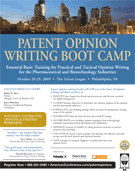
    October 28-29, 2009 – Patent Opinion Writing Boot Camp*** (American Conference Institute) – Philadelphia, PA

    ***Patent Docs is a media partner of this conference or CLE

  • Independence Hall American Conference Institute (ACI) will be holding its Patent Opinion Writing Boot Camp on October 28-29, 2009 in Philadelphia, PA.  The conference will allow attendees to:

    • Identify how Seagate has altered opinion practice and the new standard for willful infringement;
    • Clarify business objectives to determine the ultimate purpose of the opinion and the anticipated audiences;
    • Formulate a pre-drafting strategy which accounts for the preparation, timing, and scope of the opinion;
    • Understand how the opinion letter fits into the overall IP strategy;
    • Incorporate new invalidity opinion strategies from evolving legal standards concerning written description and enablement;
    • Minimize exposure to liability by taking proactive measures to protect attorney-client privilege;
    • Uncover the newest search strategies and develop cost-effective and time saving ways for both biotech and chemical searches; and
    • Gain strategies to integrate litigation considerations into your opinion letters.

    In particular, ACI's faculty will offer presentations on the following topics:

    848L10-PHI • Reevaluating the current use and demand for patent opinions after In re Seagate;
    • From the in-house counsel's desk:  Clarifying the business objectives and understanding how companies use the opinion;
    • Developing a cohesive strategy prior to drafting the opinion:  Preparation, timing, and determining the type of opinion needed;
    • Case law and Congressional update:  Factoring patent reform and evolving legal standards into your opinion;
    • Critical ethics considerations:  Protecting attorney-client privilege and minimizing exposure to liability;
    • Optimizing biotech and chemical search strategies — to be presented by Patent Docs author Donald Zuhn;
    • Playing devil's advocate:  Honing your search analyses;
    • Identifying ways to strategically incorporate litigation considerations into your opinion writing;
    • Essential elements of drafting a legally sound non-infringement opinion;
    • Assumption of infringement and the elements of an invalidity opinion.

    The agenda for the Patent Opinion Writing Boot Camp can be found here.  A complete brochure for this conference, including an agenda, list of speakers, and registration form can be obtained here.

    ACI - American Conference Institute The registration fee for this conference is $2,195.  Those registering on or before October 2, 2009 will receive a $200 discount, and those registering on or before August 28, 2009 will receive a $300 discount.  ACI will also provide a $400 discount off the standard price to all Patent Docs readers who reference the discount code "The Media Partner Discount" when registering.  Those interested in registering for the conference can do so here, by calling 1-888-224-2480, or by faxing a registration form to 1-877-927-1563.

    Patent Docs is a media partner of ACI's Patent Opinion Writing Boot Camp.

    Photograph of Independence Hall (above) by Dan Smith, from the  Wikipedia Commons under the Creative Commons license.

  • Has Inequitable Conduct Met Its Match?

        By Kevin E. Noonan

    Judge Rader There have been clear indications for some time that certain members of the Federal Circuit believe that the Court's inequitable conduct jurisprudence has gone astray from the "a high bar" Judge Rader (at right) believes the Court's earlier case law requires for establishing this affirmative defense.  (See his opinion is Eisai Co. v. Dr. Reddy's Laboratories, Inc., citing Kingsdown Medical Consultants, Ltd. v. Hollister Inc., 863 F.2d 867, 876 (Fed. Cir. 1988)).  Evidence of such straying can be found in recent decisions that expanded the conduct deemed by certain panels of the court to be inequitable, including improperly claiming small entity status (Nilssen v. Osram Sylvania, Inc.), improperly filing a petition to make special (General Electro Music Corp. v. Samick Music Corp.), failing to disclose that a declarant had been a paid consultant prior to filing an expert declaration under 37 C.F.R. § 1.132 (Ferring B.V. v. Barr Laboratories, Inc.), misjoinder of inventorship (PerSeptive Biosystems, Inc. v. Pharmacia Biotech, Inc.), and inaccuracies in an expert declaration (Aventis Pharma S.A. v Amphastar Pharma, Inc.).  A determination of inequitable conduct, according to Judge Rader in the Eisai decision, should include evidence of affirmative instances of "culpable conduct" rather that mere omissions, citing the greater evidentiary difficulties that should attach when intent must be discerned from negligent conduct.  Similar sentiments have been echoed by Chief Judge Michel and Judges Schall and Dyk in Star Scientific, Inc. v. R.J. Reynolds Tobacco Co.

    Exergen However, there remains a varying and inconsistent standard governing inequitable conduct (see, for example, McKesson Info. Solutions, Inc. v. Bridge Med., Inc.).  The Federal Circuit, and perhaps district court judges savvy enough to recognize the "plague" the inequitable conduct defense has become, seem to be fashioning an Alexandrian solution to this knotty problem.  This approach, which uses Federal Rule of Civil Procedure 9 as its tool, is nicely illustrated by the Court's decision in Exergen Corp. v. Wal-Mart Stores, Inc., handed down on Tuesday.  Rule 9 reads as follows:

    Pleading Special Matters

    (a) Capacity or Authority to Sue; Legal Existence.

                            * * *

        (2) Raising Those Issues.

        To raise any of those issues, a party must do so by a specific denial, which must state any supporting facts that are peculiarly within the party's knowledge.

    (b) Fraud or Mistake; Condition of Mind.

    In alleging fraud or mistake, a party must state with particularity the circumstances constituting fraud or mistake. Malice, intent, knowledge, and other conditions of a person's mind may be alleged generally.

    About 14 months after Exergen filed its complaint, defendant-appellant S.A.A.T. Systems Application of Advanced Technology Ltd. ("SAAT") moved under Fed. R. Civ. P. 15(a) for leave to amend its answer to assert inequitable conduct as an affirmative defense.  SAAT made the following allegations in its pleadings:

        40. The '685 patent is unenforceable due to inequitable conduct by Exergen, its agents and/or attorneys during the prosecution of the application for the '685 patent before the PTO.

        41. Prior to the filing of the '685 patent application, Exergen filed a patent application that ultimately issued as U.S. Patent No. 4,566,808 (hereinafter referred to as "the '808 patent") on January 28, 1986.  Thus, Exergen was aware of the '808 patent well before the '685 patent issued on September 18, 2001.  The '808 patent was material to the patentability of the '685 patent because it discloses a technique of scanning a radiation detector across a target to measure the maximum emitted radiation, and it is not cumulative to the information already of record in the prosecution history of the '685 patent.

        42. In addition, U.S. Patent No. 4,317,998 (hereinafter referred to as "the '998 patent") was cited in a Supplemental Information Disclosure Statement filed by Exergen on October 17, 1997 in connection with the prosecution of the '205 patent.  Thus, Exergen was aware of the '998 patent well before the '685 patent issued on September 18, 2001.  The '998 patent was material to the patentability of the '685 patent because it discloses a technique of swiping a radiation detector across a target, and it is not cumulative to the information already of record in the prosecution history of the '685 patent.

        43. Because Exergen was aware of the '808 patent and the '998 patent prior to the issuance of the '685 patent, Exergen had an opportunity to disclose each of these patents to the PTO during the prosecution of the '685 patent.  Moreover, because the '808 patent and the '998 patent were material to the patentability of the '685 patent, Exergen had an obligation to disclose each of these patents to the PTO.  Nevertheless, Exergen failed to cite either of these patents to the PTO during the prosecution of the '685 patent.  SAAT is informed and believes, and therefore alleges, that Exergen, its agents and/or attorneys intentionally withheld the '808 patent and the '998 patent from the PTO with the intent to deceive the PTO to issue the '685 patent.

        44. In addition, during the prosecution of the '685 patent application, Exergen made a number of arguments to the PTO to overcome rejections of the pending claims based upon various prior art references related to tympanic temperature detectors.  For example, in an Amendment filed on July 31, 2000, the following statements were made to the PTO:

    What was nonobvious . . . was that reliable temperature measurements could be obtained from the forehead by extending techniques initially developed for the tympanic membrane.  What had not been generally appreciated by those skilled in the art of temperature measurement was that the superficial temporal artery . . . provides an exceptionally reliable temperature reading.

        45. These arguments made to the PTO were contradicted by statements from Exergen's own website, such as the following statement which appeared on the website at the time of the July 31, 2000 Amendment:

    The temporal artery area has a long history of temperature measurement, dating back to the early centuries before Christ with the first recorded references to palpation of the head for fever assessment.

        46. Thus, while Exergen acknowledged on its website that the temporal artery has a long history of temperature measurement, Exergen misrepresented to the PTO that no such history existed and omitted any reference to the website.  The misrepresentation and omission were material to the patentability of the '685 patent because the information was not cumulative to the information already of record in the prosecution history of the '685 patent, and it refutes, or is inconsistent with, a position taken by Exergen in asserting an argument of patentability.  SAAT is informed and believes, and therefore alleges, that the misrepresentation and omission were made with the intent to deceive the PTO to issue the '685 patent.

    The District Court denied this motion, on the grounds that the pleading "failed to allege inequitable conduct with particularity under Rule 9(b).

    Federal Circuit Seal The Federal Circuit affirmed, in an opinion by Judge Linn joined by Chief Judge Michel and Judge Amy St. Eve (N.D. Ill.) sitting by designation.  SAAT's appeal on the inequitable conduct issue was directed to only one of the patents in suit, U.S. Patent No. 6,292,685; the defense was asserted against one of the other patents in suit (U.S. Patent No. 5,012,813) at trial but not another one (U.S. Patent No. 6,047,205).  The Court first asserted that Federal Circuit law, rather than 1st Circuit law, governed the pleading standard for inequitable conduct.  The panel then explicated the proper test, requiring the pleading to identify the "who, what, where, when and how" of inequitable conduct, which must be plead "with particularity" under Rule 9(b), citing Ferguson Beauregard/Logic Controls, Div. of Dover Resources, Inc. v. Mega Sys., LLC, 350 F.3d 1327, 1344 (Fed. Cir. 2003).  "A pleading that simply avers the substantive elements of inequitable conduct, without setting forth the particularized factual bases for the allegation, does not satisfy Rule 9(b).  See King Auto., Inc. v. Speedy Muffler King, Inc., 667 F.2d 1008, 1010 (CCPA 1981)."  The required scienter of "'[m]alice, intent, knowledge and other conditions of mind of a person may be averred generally," according to the panel.  However, the "pleadings [must] allege sufficient underlying facts from which a court may reasonably infer that a party acted with the requisite state of mind."  (Curiously, the Court cited various precedents of regional circuits but none of its own for this proposition.)

    The Court then set forth its reasons for finding SAAT's pleading to be insufficient against this standard.  First, the panel faulted SAAT for referring generally to "Exergen, it agents and/or attorneys" without naming the specific individual "associated with the filing or prosecution of the application issuing as the '685 patent, who both knew of the material information and deliberately withheld or misrepresented it."  The panel decision also faulted SAAT for failing to "identify which claims, and which limitations in those claims, the withheld references are relevant to, and where in those references the material information is found – i.e. the 'what' and 'where' of the material admissions," citing Regents of Univ. of Cal. v. Eli Lilly & Co., 119 F.3d 1559, 1570 (Fed. Cir. 1997).  Also falling within the panel's objections to SAAT's pleadings are bald assertions that the withheld references were material and not cumulative, without identifying "the particular claim limitations, or combination of claim limitations, that are supposedly absent from the information of record.  Such allegations are necessary to explain both 'why' the withheld information is material and not cumulative, and 'how' an examiner would have used this information in assessing the patentability of the claims.  See Larson Mfg. Co. v. Aluminart Prods. Ltd., 559 F.3d 1317, 1333 (Fed. Cir. 2009)."

    The Court also found deficient the allegations of scienter, because they could not give rise to a reasonable inference as required by the Rule.  In this regard, assertions in SAAT's pleadings that Exergen "was aware" of the references were not enough:  not only did the pleading fail to identify anyone with a Rule 56 duty that had withheld the information, what information was withheld and its materiality to patentability was not plead or supported by factual allegations.  "A reference may be many pages long, and its various teachings may be relevant to different applications for different reasons.  Thus, one cannot assume that an individual, who generally knew that a reference existed, also knew of the specific material information contained in that reference.  See FMC Corp. v. Manitowoc Co., Inc., 835 F.2d 1411, 1415 (Fed. Cir. 1987) (emphasis in original)."

    SAAT had plead deceptive intent "on information and belief," and in rendering its decision the opinion states that, while this form of pleading is permitted,
    the pleading must "set forth specific facts upon which the belief is reasonably based" (again, citing a plethora of precedent devoid of any of the Court's own).  However, in making this determination the opinion states:

    SAAT's purported basis for inferring deceptive intent is that Exergen had cited the '998 patent when prosecuting the '205 patent but then failed to cite it when prosecuting the '685 patent.  The mere fact that an applicant disclosed a reference during prosecution of one application, but did not disclose it during prosecution of a related application, is insufficient to meet the threshold level of deceptive intent required to support an allegation of inequitable conduct.  Indeed, SAAT's pleading does not contain specific factual allegations to show that the individual who had previously cited the '998 patent knew of the specific information that is alleged to be material to the '685 patent and then decided to deliberately withhold it from the relevant examiner.  In the absence of such allegations, the district court was correct not to draw any permissive inference of deceptive intent with regard to the '998 patent, lest inequitable conduct devolve into "a magic incantation to be asserted against every patentee" and its "allegation established upon a mere showing that art or information having some degree of materiality was not disclosed."  FMC Corp. v. Manitowoc Co., Inc., 835 F.2d 1411, 1415 (Fed. Cir. 1987)

    (emphasis added).  While reasonable on its face, this portion of the opinion seems directly at odds with the Court's decision in McKesson Info. Solutions, Inc. v. Bridge Med., Inc.  Specifically, in McKesson, the Court held that patentees' counsel "knew or should have known" of the materiality of a reference cited by one examiner and thus was under an affirmative obligation to disclose the reference to another examiner in a related application.  Failure to do so evinced an intent to deceive.  Indeed, the Court in McKesson appeared to impose a requirement that an applicant was under a Rule 56 obligation to disclose not only the existence but the course of prosecution of related applications.  These inconsistencies merely complicate any calculus of how any particular panel can be expected to judge the substantive questions of materiality and intent, and insert additional uncertainty to patent litigation.

    Perfectly clear, however, is the trend requiring an accused infringer to "connect the dots" in making its allegations of inequitable conduct in its pleadings.  This requirement may create real hardship for defendants, and will certainly foster a life cycle of patent litigation where assertions of the inequitable conduct defense will occur after substantial discovery and require amended pleadings (which fortunately are typically liberally granted by district courts).  It also shifts the leverage each party in a patent infringement lawsuit wields in favor of the patentee (who already may have the threat of a preliminary injunction early in the lawsuit).  It remains to be seen whether the heightened pleadings requirement will reduce the frequency with which the affirmative defense of inequitable conduct is plead.

    Exergen Corp. v. Wal-Mart Stores, Inc. (Fed. Cir. 2009)
    Panel: Chief Judge Michel, Circuit Judge Linn, and District Judge St. Eve
    Opinion by Circuit Judge Linn

  •     By Donald Zuhn

    California Healthcare Institute Applauds Eshoo-Inslee-Barton Amendment

    Last Friday, the House Committee on Energy and Commerce passed a health care reform bill by a close 31-28 vote (see "House Committee Approves Health Care Reform Bill Calling for 12-Year Exclusivity Period").  One of the mark-ups to the bill was an amendment offered by Representatives Anna Eshoo (D-CA), Jay Inslee (D-WA), and Joe Barton (R-TX), which provides a licensure pathway for biosimilar biological products that includes a provision preventing the FDA from approving a biosimilar application until 12 years after the date on which the reference product (i.e., the innovator biologic) was first licensed.  The amendment, in contrast with the bill as a whole, was passed by a comfortable 41-11 margin.

    California Health Institute In a statement issued on the day the House bill passed out of Committee, the California Healthcare Institute (CHI), an independent organization comprising more than 250 biomedical companies and academic and research institutions involved in researching and advocating policy to forward the interests of California's biomedical community, applauded the approval of the Eshoo-Inslee-Barton amendment.  In particular, the organization said it "supported the development of a science-based biosimilars approval pathway that employs the best science to make sure that products are safe for patients, that encourages price competition among manufacturers, and provides ample incentives to encourage continued private-sector investment in the next generation of breakthroughs," and that the Eshoo-Inslee-Barton amendment met these objectives.  Noting that the Senate Health, Education, Labor and Pensions (HELP) Committee had also recently approved an amendment providing a 12-year exclusivity period for biologic drug makers (see "Senators Hatch and Enzi Champion 12-Year Data Exclusivity in Senate"), the CHI stated that it was "pleased the amendment approved today similarly provides for 12 years of data exclusivity as well as the identical FDA regulatory pathway framework from the HELP measure."  The CHI was "also pleased that the amendment includes important patent dispute resolution provisions from HR 1548 that would establish an equitable framework for exchanging information among innovator manufacturers, biosimilar manufacturers and third-party patent holders, such as universities and private research institutes whose scientific breakthroughs are often licensed to the private sector for commercial development."

    New York Times Says Data Exclusivity Period May Not Matter Much 

    New York Times In an article published last month, New York Times reporter Andrew Pollack contends that the data exclusivity period being debated in Congress "may ultimately not matter as much as the most vitriolic debaters insist."  On one side of the debate, innovator drug companies argue that if the exclusivity period is too short, innovation will be harmed.  On the other side of the debate, generic drug companies and consumers (as well as employers and insurers) argue that if the exclusivity period is too long, potential cost savings will be wiped out.  Mr. Pollack, however, suggests that "neither the threats to innovation nor the potential savings from generic competition are as great as claimed."

    In support of this assertion, Mr. Pollack points first to the patent system, since "whatever the exclusivity period, biologic drugs would also continue to be protected from copycats by patents," adding that "in many cases, the patent protection would last longer than the exclusivity period, making the Congressionally mandated exclusivity a moot point."  He lists Genentech's Avastin and Heceptin as two good examples, since according to Mr. Pollack, both drugs are patent protected until 2019, which is 15 years after Avastin's 2004 FDA approval date and 21 years after Heceptin's 1998 FDA approval date.  Mr. Pollack contends that "[w]here the exclusivity period might matter most would be in the cases of drugs whose patents were nearing expiration by the time the developer succeeded in winning F.D.A. approval," but he argues that this "seldom happens."

    As for cost savings, Mr. Pollack notes that based on Congressional Budget Office (CBA) estimates, generic biologics might save the government "only about $10 billion in the next 10 years," which he argues is "a relative drop in the bucket when it comes to paying for health care reform, which is expected to cost about $1 trillion over 10 years."  This smaller-than-expected impact is due in part to the amount of health care spending that is dedicated to drugs, with biologics accounting for only 16% of total prescription drug spending and pharmaceuticals representing only 10% of overall health care spending.  Mr. Pollack predicts that biologic cost savings will also be impacted by greater regulatory scrutiny, stating that "[b]ecause even small changes might affect the drug's safety or activity, it is likely that makers of biosimilars will have to conduct at least some clinical trials to win F.D.A. approval of their drugs."


    Washington Post Backs Shorter Exclusivity Period

    Washington Post An editorial in last week's Washington Post said the Senate HELP Committee's passage of a 12-year data exclusivity period "would drive costs to consumers above even current levels, making the title [of the bill — the Affordable Health Choices Act –] little more than a mockery."  The Post remarked that one would have thought that a bill so named "would have made an effort to provide affordable health choices."  The Post also noted that last year, sales of biologic drugs "comprise[d] approximately 25 percent of new drugs."  (While this number seems to b
    e at odds with the N.Y. Times figure of 16%, the Post refers to "new" drugs, albeit without defining what it means by "new" drugs.)

    The Post editorial also questions the claim by "[b]ig pharmaceutical companies" that a "lengthy" exclusivity period is needed to encourage continued innovation, citing the Federal Trade Commission report which "suggested the opposite — that the biotech industry's patents on its biologic innovations are so strong that no added exclusivity period is necessary" (see "No One Seems Happy with Follow-on Biologics According to the FTC").  The Post argues that while biologic drugs involve a more complicated manufacturing process, "the flip side is that many stages of the process can be patented — from the drug products themselves to the genes that produce them to the cells in which they are made."  According to the editorial, "[t]his makes entry into the market by follow-on-biologics, or 'biosimilars,' more difficult because multiple patents are harder to design around."

    Instead of a 12-year exclusivity period, the Post finds favor with the Obama Administration's "generous compromise" of a 7-year period (see "Follow-on Biologics News Briefs – No. 4").  Calling any additional protection "not only unnecessary but harmful," the Post asserts that a longer period would create "[a]n extended monopoly [that] would delay the entry of biogenerics and drive costs even higher."  In fact, the Post goes even further by supporting Rep. Waxman's 5-year exclusivity period, which the editorial argues better "balances incentives for innovation against the need for price competition."

  •     By Donald Zuhn

    Gene Gene patenting.  It's a topic that Public Radio just can't seem to get enough of this summer.  In June, Dr. Hans Sauer, the Associate General Counsel for Intellectual Property for the Biotechnology Industry Organization (BIO); Joshua Sarnoff, Professor of the Practice of Law at American University's Washington College of Law; and Shobita Parthasarathy, Co-Director of the Science, Technology and Public Policy Program at the Ford School of Public Policy at the University of Michigan discussed the topic on WAMU, Washington, DC's leading public radio station (see "Gene Patenting Debate Continues").  And last week, San Diego's KPBS tackled the topic in a roundtable discussion entitled "Who Owns Your Genes?" on its "These Days" program.  The discussion, hosted by Maureen Cavanaugh, featured Kevin Keenan, Executive Director of the ACLU for San Diego and Imperial Counties; Stacey Taylor, a partner at DLA Piper; and Dr. Leonard Deftos, Professor of Medicine in Residence at the University of California, San Diego, and Adjunct Professor of Law at California Western School of Law.

    Keenan, Kevin After a primer on patenting from Dr. Deftos and Ms. Taylor, Mr. Keenan (at left) turned the discussion towards the recent lawsuit filed by his organization (on behalf of twenty plaintiffs) against the U.S. Patent and Trademark Office, Myriad Genetics, and the Directors of the University of Utah Research Foundation (see "Association for Molecular Pathology v. U.S. Patent and Trademark Office").  According to Mr. Keenan, the ACLU believes "the [Myriad] patent went too far, that it restricts not only the use of the gene information to develop tests and treatments but the sequence itself and any mutation that's arrived therefrom," adding that "whereas the patent system was set up to encourage science and progress, this patent has restricted that and limited scientific inquiry which, at its essence, is part of the First Amendment right to freedom of expression."  He characterized the patent system, which is "mostly set up in a good way to protect and encourage scientific inquiry and invention," as having "gone awry in this case." 

    Surprisingly, Mr. Keenan contended that "the huge amount of investment that goes into this field is not necessarily at stake here," predicting that if the twenty plaintiffs in the Myriad case were to prevail, only the Myriad patent on the BRCA gene sequences, and not "all the tests and the treatments that come out of it," would be affected.  Mr. Keenan argued that the latter should be "the place where patents should be issued and where discovery and invention should be focused, not on limiting who can actually look at and use the gene and gene sequence itself."  To gene patenting proponents, who argue that patented gene sequences are not found in nature, Mr. Keenan said that the ACLU "would argue that the, for example in the BRCA1 and 2, that merely removing the junk DNA introns and purifying it does not sufficiently remove it or take it away from something that exists in all our bodies to merit a patent."

    Deftos, Leonard Addressing the argument, advanced by some gene patenting opponents, that such patents inhibit research, Dr. Deftos (at right) countered that:

    The view that patent law somehow inhibits research is not well founded by attempts to look at that question in a non-anecdotal way.  For example, the National Association of Science had two studies in 2003, 2005, to try to address that question by actually interviewing scientists and the results of both of those studies were that there were really very, very few instances where scientists themselves felt that the patent law was inhibiting research.  So that's not a well-founded notion.  But there are many dramatic and anecdotal episodes where that seems to occur and I think that the breast cancer patents are examples of that.

    Taylor, Stacey Echoing comments made by Dr. Sauer during the gene patenting discussion in June, Ms. Taylor (at right) noted that because patentees are "looking at upwards of a $2 million or more cost to take someone to trial for patent infringement," biotech companies holding gene patents would be reluctant to sue university researchers (such as a number of the plaintiffs in the Myriad case).  Thus, she concluded that "the number of cases that actually have resulted in scientists really being either sued for patent infringement or put in legitimate fear of being sued for patent infringement is very small."  At the conclusion of the program, Ms. Taylor pointed out a dilemma facing those who seek to prohibit gene patents:

    If we say that all materials that were naturally occurring at some point can't be patented, then we're creating, I think, some very unintended results.  Some of these same patients, the breast cancer patients, might no longer have the drugs that are used to treat them.

    A complete transcript and audio webcast of the broadcast can be found here.  The "Who Owns Your Genes?" discussion was part of a series of science and ethics forums jointly sponsored by The Center for Ethics in Science & Technology and the Reuben H. Fleet Science Center.  The discussion on this topic is scheduled to continue on Wednesday, August 5th from 5:30 to 7:00 pm (Pacific time) at the Reuben H. Fleet Science Center.  Details and resources can be found here.

    For additional information regarding this and other related topics, please see:
    • "The Unwanted Consequences of Banning Gene Patenting," June 16, 2009
    • "Falsehoods, Distortions and Outright Lies in the Gene Patenting Debate," June 15, 2009
    • "Gene Patenting Debate Continues," June 9, 2009
    • "Association for Molecular Pathology v. U.S. Patent and Trademark Office," May 17, 2009
    • "Gene Patenting and the Wisdom of Judge Lourie," April 12, 2009
    • "Science Article Should Help Allay Gene Patenting Fears," December 17, 2008

  •     By Suresh Pillai

    Settlement Announced in Ethyol® Infringement Suit

    Medimmune #1 Sun Pharmaceutical Industries, Ltd. and Medimmune LLC have announced a settlement of their patent dispute regarding Sun's manufacture and marketing of a generic version of the Medimmune drug Ethyol®, a cancer therapy drug.  Medimmune first filed suit in 2004, alleging that Sun and its U.S. affiliate, Caraco Pharmaceutical Laboratories Ltd., had infringed Medimmune's patents covering Ethyol®, U.S. Patent Nos. 5,424,471 and 5,591,731.  The U.S. District Court for the District of Maryland, having noted that Medimmune stated that Sun and Caraco had not infringed any of the process claims of the '471 patent, granted summary judgment of noninfringement with respect to the '471 patent alone but denied Sun's motion for a finding of noninfringement with respect to the '731 patent.  Medimune subsequently refiled suit in February 2009 in order to preserve the right to appeal an earlier ruling of noninfringement (see "Court Report," March 1, 2009).

    Sun Pharma Sun and Caraco have been marketing and selling their generic version of Ethyol® since 2008 following FDA approval.  Under the terms of the settlement, Medimmune has agreed to grant a license that would allow Sun and Caraco to continue to market their generic version of the drug.  The terms of the settlement are confidential, but both companies have stated that the settlement resolves all litigation over the patents-in-suit.

    Settlement Announced in Ortho Tri-Cyclen® Patent Dispute

    Teva Teva Pharmaceutical Industries, Inc. and Ortho-McNeil Pharmaceuticals have announced a settlement in their long running patent suit over the birth control pill Ortho-TriCyclen®.  This settlement comes on the heels of the District Court's granting of Ortho's request for a preliminary injunction barring Barr from marketing or selling its generic version of Ortho-TriCyclen® Lo.  Both parties now await action from the U.S. District Court for the District of New Jersey, as the settlement will not take effect until the Court enters judgment upholding the validity and enforceability of the patent-in-suit, U.S. Patent No. 6,214,815.  Ortho originally filed suit in October 2003, claiming that Barr Pharmaceuticals, which has since been acquired by Teva, had infringed Ortho's patent rights upon Barr's filing of an ANDA in which Barr sought permission to sell a generic version of Ortho-TriCyclen®.  Barr's ANDA also included a Paragraph IV certification stating that Ortho's patents were invalid, unenforceable, or would not be infringed.

    Ortho-McNeil Under the terms of the settlement, Ortho will grant Teva a release for past sales by Barr in exchange for a royalty payment based upon sales.  Ortho would also grant Teva a license to sell its generic version of the drug in 2015 (or earlier provided certain conditions are met).

    Solvay and Watson Seek to Overturn FTC Ruling on AndroGel®

    Solvay Solvay Pharmaceuticals Inc. and Watson Pharmaceuticals Inc. have jointly filed a motion in the U.S. District Court for the Northern District of Georgia seeking to overturn the FTC's findings that patent settlements over AndroGel® were illegal.  In the original litigation, Solvay sued Watson, Par Pharmaceuticals, and Paddock Laboratories, Inc. for infringement of its patented testosterone supplement, AndroGel®.  The litigation was terminated by a settlement agreement among the parties that provided, among other things, that the generic companies refrain from bringing a generic version of AndroGel® to the market until at least 2015.  Solvay also agreed to pay Par and Paddock $60 million.  Following the settlement of this litigation, the FTC filed suit against all parties involved in the original litigation, alleging that the settlement agreement was the foundation of an anticompetitive scheme to illegally maintain Solvay's monopoly.

    Federal Trade Commission (FTC) Seal In their motion seeking to overturn the FTC complaint, the companies contend that the FTC's complaint failed to allege that the patent-in-suit was procured by fraud or that the conduct of the parties under the settlement agreements extended beyond the patent's exclusionary scope.  The companies also claim that the settlements are legal under Eleventh Circuit law, which, in the past, has validated other reverse payment agreements between patent holders and generic pharmaceutical manufacturers.

    Medtronic and Abbott Announce Settlement in Stent Patent Infringement Suits

    Medtronic Medtronic announced that it has reached a settlement with Abbott Laboratories to resolve all litigation related to coronary stent and stent delivery systems.  Under the terms of the settlement, Medtronic has agreed to pay Abbott $400 million dollars and another $42 million dollars to evYsio, from whom Medtronic licenses key stent patents.  In its original complaint, Medtronic alleged that Abbott's Promus® stent infringed upon two patents from the evYsio patent family, U.S. Patent Nos. 6,858,037 and 7,094,255.

    Abbott A Under the terms of the agreement, the companies have also agreed to a 10-year moratorium on filing suit over current and future coronary stent and stent delivery systems, provided that certain confidential conditions are met.

  •     By Kevin E. Noonan

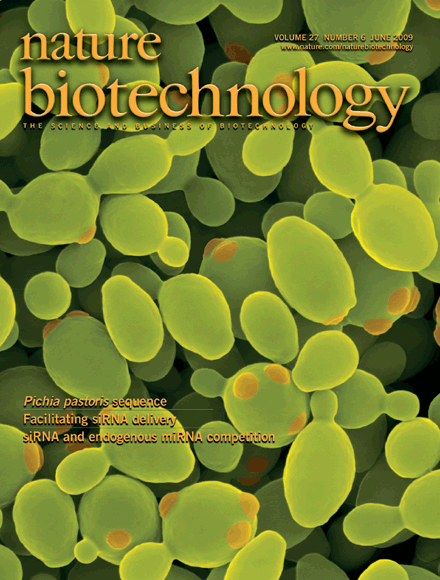
    Nature Biotechnology June 2009 A research paper in the June 2009 edition of Nature Biotechnology (Eguchi et al., 2009, "Efficient siRNA delivery into primary cells by a peptide transduction domain–dsRNA binding domain fusion protein," Nature Biotechnology 27: 567-71) describes a new system for introducing short interfering RNAs (siRNAs) into mammalian cells that may help this technology become practicable for therapeutic uses.  The promise of RNA interference, mediated by siRNAs, has revolutionized the prospects for modulating gene expression as a way to achieve therapeutic aims in disease treatment.  First identified in worms (Fire et al., 1998, "Potent and specific genetic interference by double-stranded RNA in Caenorhabditis elegans," Nature 391: 806–11), plants (Hamilton et al., 1999, "A species of small antisense RNA in posttranscriptional gene silencing in plants," Science 286: 950–52) and then in mammalian cells (Elbashir et al., 2001, "Duplexes of 21-nucleotide RNAs mediate RNA interference in cultured mammalian cells," Nature 411: 494–98), siRNAs form the basis for 81 U.S. patents and 2,125 published patent applications.  Their benefits reside principally in their ability to specifically reduce or even enhance (Li, 2008, "Small RNA-Mediated Gene Activation," In: RNA and the Regulation of Gene Expression: A Hidden Layer of Complexity, Caister Academic Press) gene expression in mammalian cells.

    However, a serious impediment to further development of siRNA, particularly for therapeutic uses, is that it is difficult to effectively introduce these molecules into mammalian cells.  siRNAs are double-stranded RNA molecules, typically 21 nucleotides in length and having a 2 nucleotide overhang at the 3' end of each strand.  These molecules are thus large (> 14,000 kDa) and highly negatively charged, and cannot cross the cellular plasma membrane.  Methods for introducing siRNAs have included encapsulation in liposome, complexing with cationic lipids, cholesterol, and condensing polymers, or conjugation with antibodies.  While these methods have proven effective with adherent tumor cells in vitro, they have been less effective in the types of cells that are attractive cellular targets in vivo (such as lymphocytes).  One approach, conjugation with cell-penetrating peptides (PTD) like TAT protein from human immunodeficiency virus or poly(Arg), resulted in cytotoxicity associated with limited siRNA delivery into target cells (Meade et al., 2008, "Enhancing the cellular uptake of siRNA duplexes following noncovalent packaging with protein transduction domain peptides," Adv. Drug Deliv. Rev. 60: 530-36), despite the effectiveness of such PTD carriers in other contexts (Gump et al., 2007, TAT transduction: The molecular mechanism and therapeutic prospects," Trends Molec. Med. 13: 443-48).

    The Nature Biotechnology paper is from a group at the Howard Hughes Institute at the University of California, San Diego School of Medicine headed by Steven F. Dowdy.  The paper describes complexes of siRNAs with a fusion protein comprising a TAT-derived PTD conjugated to a double-stranded (ds) RNA-binding domain (DRBD) that binds to siRNA with an avidity of KD ~ 10-9.  A canonical example of such a sequence is the following (provided on-line in supplementary materials):

    MGRKKRRQRRRGHSGRKKRRQRRRGHIYPYDVPVPDYAGDPGRKKRRQRRRGDP
    AGDLSAGFFMEELNTYRQKQGVVLKYQELPNSGPPHDRRFTFQVIIDGREFPEG
    EGRSKKEAKNAAAKLAVEILNE
    KKAAALEHHHHHH

    (where single-underlined sequences are PTD sequences from TAT, the underlined and italicized sequence is an HA-tag, and the boldface sequence is the DRBD from RNA-dependent eIF-2 alpha protein kinase (PKR) protein).  The DRBD sequence non-covalently complexes with siRNA in a way that is distinct from the PTD sequences, which remain competent to mediate transit of the complex through the plasma membrane.

    Figure_1

    Image obtained from Traversa Therapeutics website.

    These complexes were tested in several systems, including human H1299 lung adenocarcinoma cells expressing green fluorescent protein (GFP) and red fluorescent protein, which were used to show specific RNA interference of GFP that was obtained at greater levels than with conventional lipofection techniques.  These results were confirmed by single cell flow cytometry that showed that the entirety of the cell population contained siRNA with no alteration of cellular viability (in contrast with significant cytotoxicity associated with siRNA lipofection).  These results were also confirmed with other cell types, including "primary human fibroblasts, keratinocytes, macrophages and melanoma and glioma cells containing integrated GFP reporter genes."  Substantially similar results were obtained with these cells using siRNAs for glyceraldehyde phosphate dehydrogenase (GAPDH), a housekeeping enzyme.  In these experiments, the effects of the GAPDH siRNAs on the cellular transcriptome were assessed, and were shown to be significantly smaller than the effects of these same siRNAs introduced using lipofection.  In particular, the complexed siRNAs did not activate cellular genes associated with immunogenicity, including interferon-regulated genes, in contrast to lipofected siRNAs.  (siRNA introduction using these complexes did not induce interferon or tumor necrosis factor expression in peripheral blood mononuclear cells, an effect observed with siRNA lipofection.)

    In another set of experiments, GFP expression was suppressed in Jurkett T cells, primary murine T cells, and human umbilical vein endothelial cells (HUVEC).  The primary T-cell experiments used siRNAs for CD4 and CD8, and showed specific suppression of each gene by its cognate siRNA and not by the non-cognate siRNA.  (The experiments also showed that expression of an unrelated cell surface marker, CD90, was not affected by siRNA introduction.)  HUVEC cells were treated with GAPDH siRNA and showed significantly lower (essentially undetectable) cytotoxicity and greater delivery than when siRNA were introduced into these cells by lipofection.  Finally, human embryonic stem cells were treated with a number of siRNAs that affected proliferation and differentiation.  Specifically, introduction of complexes of siRNAs for OCT4 caused cell cycle exit and differentiation.

    In the most dramatic series of experime
    nts, transgenic mice expressing luciferase in nasal and tracheal passages were treated with luciferase siRNAs complexed with PTD-DRBD.  These experiments showed that luciferase expression could be drastically reduced by these siRNA/PTD-DRBD complexes in vivo.

    These results also provide the basis for patent applications in the U.S. and abroad.  The U.S. application is Serial No. 12/278,739, filed August 7, 2008.  Entitled "Transducible Delivery of siRNA by dsRNA Binding Domain Fusions to PTD/CPPS," the application published on April 9, 2009 as U.S. Patent Application Publication No. 2009/0093026, naming Steven F. Dowdy, Jehangir S. Wadia, Bryan Meade, and Akiko Eguchi as inventors.  This application is a U.S. national phase application of International Application No. PCT/US07/03641, filed February 9, 2007 and in turn claiming priority to two U.S. provisional applications (USSN 60/772,787, filed February 10, 2006, and USSN 60/775,638, filed February 21, 2006).  In addition to the experiments disclosed in the research paper, the application also shows EGFR-specific siRNA introduction using PTD-DRBD complexes into EGFR-expressing glioblastoma in mice.  The application also discloses alternative embodiments of PTD and DRBD sequences that can be used in the complexes.

    The significance of these results is expressed by the authors as follows:

    siRNA delivery has become the rate-limiting barrier to efficient cell culture and preclinical and clinical usage of siRNA therapeutics . . . .  Although current siRNA delivery approaches have merit, they generally do not target the entire population or even a high percentage of cells, especially primary cells, and often result in some degree of cytotoxicity and alternations in cell biology.  In contrast, the PTD-DRBD siRNA delivery approach described here fulfills many of the criteria for and efficient siRNA delivery system for primary cells.  . . .  Because DRBDs bind to dsRNAs (siRNAs) independent of sequence composition, PTD-DRBD could in theory deliver any siRNA into cells.  Lastly, the intranasal knockdown of luciferase demonstrates the in vivo potential of PTD-DRBD-mediated siRNA delivery.

    Traversa The application is assigned to the Regents of the University of California, but Professor Dowdy is reported to have a start-up biotechnology company, Traversa Therapeutics of La Jolla, CA, and a researcher from Ambion is named on the research paper (but not the patent application).  A serious commitment to commercial development is also evidenced by applicants' recently changing the application status to large entity.

  •     By Kevin E. Noonan

    The most troublesome point of contention in the follow-in biologics (FOBs) debate has undoubtedly revolved around the term for data exclusivity.  In a subject so complex, it may be understandable that there are differing views about the importance of data exclusivity, and whether this is "much ado about nothing" or a vitally-important part of any follow-on biologics regime.

    Federal Trade Commission (FTC) Seal Whether the data exclusivity provisions are of almost supreme importance depends, in part, on the significance of patent protection in biologics and the extent of protection patenting can be expected to give biologic drugs.  The Federal Trade Commission thinks patents in this area (as well as other factors) are sufficiently robust that its recent report concluded that no data exclusivity period is needed (see "No One Seems Happy with Follow-on Biologics According to the FTC").  In its report, the FTC asserts that patent protection may be sufficient protection, particularly because biologic drugs "are covered by more and varied patents compared with conventional small molecule drugs."  The report opines that data exclusivity would be in addition to the incentives provided by patent protection and market-based pricing, and thus data exclusivity would provide no additional incentives to developing biologics drugs.  The report concedes that data exclusivity might be necessary "to the extent that there are new biologic molecules that cannot obtain patent protection," but sees no evidence for such an eventuality.  The FTC report also declined to foresee any need for an ANDA-like mechanism to resolve patent disputes between pioneer biologic drug manufacturers and FOB producers prior to FDA approval of FOBs.  The report contends that patent infringement litigation, or the threat thereof, will be a sufficient disincentive to inhibit FOB companies from entering the market prior to patent expiry, even if they have obtained FDA approval.  Paradoxically, the reasoning behind this conclusion seems to reside in the Commission's belief that the Hatch-Waxman ANDA scheme has resulted in "extensive litigation, unintended consequences and delayed generic entry," which could with equal force suggest that there will be a need for a mechanism in FOB legislation to address patent issues (albeit with the benefit of 25 years of ANDA litigation experience).  The report also bases its conclusions on the lack of need for ANDA provisions in FOB legislation (particularly the 30-month stay of FDA approval) on the grounds that these provisions in the Hatch-Waxman regime were required to protect innovator drug companies from "judgment-proof" generics companies, because the market share (and revenues) lost by the innovator would be impossible to recover from a generic infringer even if the innovator prevailed in litigation.  The report's conclusion, that only established biologics drug manufacturers will be able to enter the FOB space, renders these considerations less important if not entirely moot for FOBs, and hence the report concludes there is no need for protection over and above the threat of patent infringement liability.

    BioWorld Today Other writers, such as Karl Thiel writing last month in BioWorld Today, have based their argument that the White House proposal of seven years of data exclusivity is sufficient on the grounds that "we require less exclusivity here [than in Europe, which has 8-10 years of data exclusivity] because our patent system is stronger and fills the gap more effectively" (see "Follow-on Biologics News Briefs – No. 6").  He further contends that data exclusivity is "an issue that's frankly been blown out of proportion," because "[e]xclusivity runs concurrent to patent life after all . . . [I]in most cases, it's not going to matter whether it's five or seven or 12 years, because the patent protection will supersede the exclusivity period, at least if you have good lawyers."

    These sentiments are in stark contrast to other analyses based on what appear to be a more analytic approach to the problem weighed down by fewer unproven assumptions.  As reported earlier on Patent Docs, Dr. Gregory Glover of the Pharmaceutical Law Group spoke at a Super Session on patent reform entitled "Biotechnology Intellectual Property at the Crossroads" at BIO's International Meeting in Atlanta this year (see "Docs at BIO: Patent Reform Super Session").  Dr. Glover's presentation focused on the interaction between patent protection and regulatory (almost exclusively FDA) requirements, and how the differing "exclusivities" can interact in ways that protect innovation sufficiently or not.  The Hatch-Waxman regime is the paradigm, including the abbreviated approval pathway, permitting a generic company to use the innovator's safety and efficacy data, the data exclusivity period, and patent litigation provisions (specifically, the 30-month stay) that extend innovator protection.

    In making this comparison, Dr. Glover discussed what he termed the RS/PS anomaly, i.e., the difference between the scope of regulatory protection (such as data exclusivity) and the scope of patent protection available for small molecule drugs as compared with biologics drugs.  In short, RS and PS "align" for small molecule drugs but do not for FOBs.

    He illustrated this situation by comparing the protection periods for the two types of drugs.  For small molecule drugs, new chemical entities (NCEs) have a 5-year period in which the FDA will not accept an application for generic version of an approved drug, coupled with the 30-month stay in approving a generic drug that is imposed when an innovator files suit in response to a Paragraph IV certification from the generic drugmaker that an Orange Book-listed patent on the innovator's approved drug is invalid or unenforceable.  These timelines line up well with the timeline for a new drug according to Dr. Glover's hypothetical.  An innovator company files a provisional patent application followed by a utility application that issues within 3 years.  The company also filed an IND followed by a NDA, which is approved by the FDA within 5 years of the IND filing date.  For an NCE, the Hatch-Waxman Act provides 5 years of data protection, independent of patent protection.  In addition, the innovator has up to 5 years of patent term extension.  This results in the regulatory scope being restricted to about the same extent as the patent scope for traditional small molecule dr
    ugs:  the innovator's safety and efficacy data available to the generic drugmaker is restricted to molecules that are substantially identical; similarly, the innovator's patent protection is limited to substantially identical molecules.  Thus, Dr. Glover showed that the extent of regulatory protection (RS) was about equal to the extent of patent protection (PS) for small molecule drugs.

    These periods of patent protection and data exclusivity thus provide sufficient protection for conventional drugs, since the periods overlap and there is rarely a situation where the innovator's drug is not protected during the term of patents listed in the Orange Book.

    Mircera For follow-on biologics, however, the situation is very different.  First, the regulatory standard is much more loosely applied for FOBs, since they are not required to be identical to the innovator biologic drug.  (The regulatory standard for small molecules is "identity" whereas the standard for FOBs is "similarity," as a result of complexities in the molecules themselves and methods — chemical versus biological — for making them.)  For biologics, the regulatory scope is much broader, according to Dr. Glover, because it includes not only substantially identical molecules but also bio-"similars."  Thus, generic competition can be faced by the innovator for molecules other than identical copies of the biologic drug; one example of such an occurrence under the current regulatory scheme is Hoffman-LaRoche's Mircera® drug, which is a pegylated version of erythropoietin (EPO).  While Mircera® has been the subject of continuing litigation between Roche and the EPO innovator, Amgen, the FDA approved Mircera® in November, 2008 (see "Amgen v. Hoffmann-LaRoche: Remaining Issues").

    In contrast to this broader scope of generic competition to be faced by biologic drugs, patents on such drugs remain restricted to molecules that are substantially identical to the innovators biologic drug itself.  Thus, the scope of patent protection is substantially narrower than the scope of generic competition for biologic drugs, a situation very different from traditional generic drug competition for small molecule drugs.

    Because all pending FOB legislation will permit the FDA to grant regulatory approval to biosimilar as well as bioidentical compounds, the possibility exists for a generic competitor to use the innovator's safety and efficacy data to obtain approval of a biosimilar drug that does not infringe the innovator's patent protection.  This eventuality elevates the importance of data exclusivity for biologic drugs, which may not have sufficient patent protection to prevent marketing of a biosimilar drug that is different enough to satisfy regulatory requirements while falling outside the scope of patent protection.  This is not a case of whether or not the innovator biologic drug companies have clever-enough lawyers; considering how the U.S. Patent and Trademark Office, and the courts, have interpreted the written description requirement, protein-based biologic drugs having even conservative substitutions are likely not within the literal scope of most patent claims.

    House of Representatives Seal These considerations remain relevant even in the face of recent approval by Congressional committees of follow-on biologics legislation having 12-year data exclusivity provisions.  As reported on Patent Docs, on Friday the House Committee on Energy and Commerce approved a health care reform bill entitled "America's Affordable Health Choices Act" (H.R. 3200) by a narrow margin (31-28) (see "House Committee Approves Health Care Reform Bill Calling for 12-Year Exclusivity Period").  This bill included an amendment offered by Representatives Anna Eshoo (D-CA), Jay Inslee (D-WA), and Joe Barton (R-TX) that prevents the FDA from approving a biosimilar application until 12 years after the date on which the reference product (i.e., the innovator biologic) was first licensed.  The amendment was passed by the Committee by a comfortable 41-11 margin.  However, ten of the committee's Democratic members voted against the amendment, including Committee Chairman Henry Waxman (D-CA), whose bill on a follow-on biologics regulatory pathway (H.R. 1427) provides only up to 5.5 years of data exclusivity.  A Senate bill, S. 726, was earlier amended to include a 12-year data exclusivity provision and passed by a 16-7 vote from the Senate Health, Education, Labor and Pensions (HELP) Committee on July 14th (see "Senators Hatch and Enzi Champion 12-Year Data Exclusivity in Senate").  While these bills are in agreement on the data exclusivity term, many groups have an interest in reducing the length of the term.  Since these groups include the AARP, Consumers Union, the Coalition for a Competitive Pharmaceutical Market (CCPM; "an organization of large national employers, health plans, PBM's, chain pharmacies, generic drug manufacturers, biopharmaceutical companies and others representing more than 200 million beneficiaries"), the National Coalition on Health Care (NCHC), their influence cannot be ignored.  Moreover, there is sufficient disparity among commentators on the "right" term length for data exclusivity to give members of Congress "factual cover" for following public perceptions on the benefits of biosimilars to support a lower data exclusivity term.  The decisions by the key Congressional committees in recent weeks have been encouraging to innovator biopharmaceutical and biotechnology companies; it remains to be seen whether these victories can be maintained in the final bill sent to President Obama for his signature.

  •     By Sherri Oslick

    Gavel_2About
    Court Report:  Each week we will report briefly on recently filed
    biotech and pharma cases, and a few interesting cases will be selected
    for periodic monitoring.


    Juridical Foundation The Chemo-Sero-Therapeutic Research Institute v. Doll

    1:09-cv-01383; filed July 27, 2009 in the District Court of the District of Columbia

    Review and correction of the patent term adjustment calculation made by the U.S. Patent and Trademark Office for U.S. Patent No. 7,482,436 ("Human Antihuman Interleukin-6 Antibody and Fragment of Antibody,"  issued January 27, 2009).  View the complaint here.

    Bayer Schering Pharma AG et al. v. Teva Pharmaceuticals USA Inc. et al.
    1:09-cv-00536; filed July 24, 2009 in the District court of New Jersey

    • Plaintiffs: Bayer Schering Pharma AG; Bayer HealthCare Pharmaceuticals Inc.; Schering Corp.
    • Defendants: Teva Pharmaceuticals USA Inc.; Teva Pharmaceutical Industries Ltd.

    Infringement of U.S. Patent No. 6,362,178 ("2-phenyl Substituted Imidazotriazinones as Phosphodiesterase Inhibitors," issued March 26, 2002) following a Paragraph IV certification as part of Teva's filing of an ANDA to manufacture a generic version of plaintiffs' Levitra® (vardenafil hydrochloride, used to treat erectile dysfunction).  View the complaint here.

  • CalendarAugust 4, 2009 – Venue in Patent Litigation:  New Strategies after Genetech and TS Tech USA (Strafford) – 1:00-2:30 PM (EST)

    August 17-18, 2009 – Advanced Patent Prosecution Workshop 2009: Claim Drafting & Amendment Writing (Practising Law Institute) – San Francisco, CA

    September 1, 2009 – Prior Art & Obviousness 2009: The PTO & CAFC Perspective on Patent Law Sections 102 & 103 (Practising Law Institute) – San Francisco, CA

    September 13-15, 2009 – 2009 Annual Meeting (Intellectual Property Owners Association) – Chicago, IL

    September 14-15, 2009 – 3rd Summit on Biosimilars and Follow-on Biologics*** (Center for Business Intelligence) – National Harbor, MD

    September 15-16, 2009 – FDA Boot Camp*** (American Conference Institute) – Boston, MA

    September 17, 2009 – Developments in Pharmaceutical and Biotech Patent Law (Practising Law Institute) – New York, NY

    September 21-22, 2009 – 2009 World Stem Cell Summit*** – Baltimore, MD

    September 30-October 1, 2009 – Biotech Patents*** (American Conference Institute) – Boston, MA

    October 7-8, 2009 – Maximizing Pharmaceutical Patent Lifecycles*** (American Conference Institute) – New York, NY

    October 14, 2009 – Developments in Pharmaceutical and Biotech Patent Law (Practising Law Institute) – San Francisco, CA

    ***Patent Docs is a media partner of this conference or CLE