•     By
    Donald Zuhn

    American Enterprise Institute In
    a report originally published by the American Enterprise Institute for Public
    Policy Research (AEI) late last year, the nonpartisan public policy group advocated
    for a 12 to 14-year exclusivity period, concluding that "the social losses
    from providing for fairly long exclusivity periods (twelve to fourteen years)
    would be small compared to what are likely to be substantial social gains from
    exclusivity."  The report,
    which was authored by AEI Resident Scholar Dr. John Calfee,
    was one of 58 past articles that the AEI collected as part of its Health Policy
    Outlook series
    (see "AEI Believes Advantages of
    Longer Data Exclusivity Period Outweigh Disadvantages
    ").  Today, we focus on another article in
    that series, "Facing Reality on Follow-On Biologics,"
    which was also written by Dr. Calfee.

    Calfee, John For
    those suggesting that significant health care cost savings can be obtained through
    the implementation of a follow-on biologics regulatory pathway, Dr. Calfee (at left) counters
    that "[t]here is no reason to expect a reasonable follow-on biologic law
    to bring dramatic cuts in health-care spending as claimed," and warns that
    if Congress is not careful, "it will interrupt long-term drug research
    programs and reduce incentives to develop new biologics."  Dr. Calfee explains that the factor
    that allowed generic small molecule drugs to go from less than 20% of the prescription
    market in 1984, when the Hatch-Waxman Act was passed, to more than 50% by 2000,
    does not apply to biologic drugs.  That
    factor is "interchangeability based on bioequivalence."  Because biologics are more complex than
    small molecule therapeutics, "the 'generic' that comes from a new biologic
    manufacturing facility may not work the same way as drugs that patients have
    been using for years."  As a
    result, a follow-on biologic "will have to be supported by far more data
    than is required for small-molecule generics."

    In
    addition to issues regarding interchangeability, Dr. Calfee notes that "doctors
    have always been the toughest sell for generic drugs," explaining that
    "[w]hen choosing between a branded pioneer biologic and a quasi-generic of
    uncertain bioequivalence, doctors have been exceptionally reluctant to
    switch."  Other factors that
    Dr. Calfee believes will preclude large cost savings include higher
    manufacturing costs, fewer generic versions of a particular biologic, and
    modestly reduced biosimilar pricing. 
    Dr. Calfee therefore predicts that "[g]iven the vast differences
    between traditional generics and FOBs, there is little reason to think that
    legislation to create a new regulatory pathway for biologics will significantly
    cut health-care costs in the near future."

    Dr.
    Calfee concludes the report with a discussion of intellectual property
    issues.  Noting that the small
    molecule regulatory schemes in the U.S. and EU provide 5 and 10 years of data
    exclusivity, respectively, he contends that "[i]n both cases, the data
    exclusivity clause is an escape valve designed to preserve research and
    development (R&D) incentives in case patents do not do the job."  Dr. Calfee argues that such an
    "escape valve" would be relevant for follow-on biologics, since the patents
    that protect biologics are, like the drugs themselves, more complex than their
    small molecule counterparts, and therefore, "may also be more susceptible
    to challenge than traditional small-molecule patents."

  •     By Kevin E. Noonan

    Milwaukee Journal Sentinel Published articles in
    the popular press rarely report accurately about patents and the patent
    system.  That's why it is
    unexpected, remarkable, and incredibly timely that the Milwaukee Journal
    Sentinel
    published not one but two in-depth articles about patents and the U.S.
    Patent and Trademark Office this week.  Written
    by John Schmid and Ben Poston, the articles, "Patent backlog clogs
    recovery
    "
    and "Patent rejections soar as pressure on
    agency rises
    "
    document the current (parlous) conditions for
    patenting in the U.S.  Most
    importantly, t
    he articles recognize the importance of innovation
    in pulling the country out of the current economic crisis.

    The authors cite statistics familiar to anyone
    involved in the patent system:  that Congress spent almost two decades raiding Patent Office coffers to
    fund other programs, to the tune of $752 million during that time (accounting
    for about 7% of the Office's budget) and reducing its ability to hire new
    examiners.  That while that trend
    ended in 2005, and the Office added 1,200 new examiners per year from
    2006-2008, attrition is a serious problem, with one examiner leaving the Office
    for every two that are hired.  And
    that the current budget crisis has frozen new hiring, exacerbating the problem
    of a 1.2 million application backlog facing the Office and an average pendency
    of 3.5 years.

    USPTO Building Facade But beyond the statistics, the articles outline how
    ill-considered (or at least ill-fated) policies have contributed to these problems.  One of these policies is the
    increased rates of rejection; the article states that "[a]fter
    consistently rejecting applications at a rate of about 35% since 1975, the
    Patent Office — faced with a growing backlog — underwent a convulsive shift around
    2004 and now turns down well over half.  In the quarter that ended June 30, it denied more than 59%."  This is something that John Doll, who until
    last Thursday was the Acting USPTO Director, has been touting as
    a desirable result for the past few years:  "[i]f the allowance rate is falling because we are
    improving quality, then that's a good thing."  The article pointedly characterizes this as the "culture
    of rejection," which it attributes to the rise of business method patents
    in the late 1990's and some unfortunately trivial patent grants (including the
    laser cat exercising method patent (
    U.S.
    Patent No. 5,443,036
    ) and the children's swing patent (U.S. Patent No. 6,368,227)
    that became lightening rods for those (like Josh Lerner) who argued that the
    patent system was "broken" (see "Once again, The New Yorker Gets It Wrong on Patents").

    Lehman, Bruce The response to these developments was that "[t]he
    Patent Office starting running scared," according to former USPTO Director Bruce Lehman (at right), by setting up a "second pair of
    eyes" review of a random sampling of newly issued (more accurately,
    allowed) patents to "double check that they have merit."  The article described the consequences
    for the examiner responsible for applications deemed to have been improvidently
    granted:

    Those that turn out to have been strong
    candidates for rejection can count as errors in the performance reviews of the
    examiner.  Errors whittle down examiners' bonuses.  . . .  Close calls became
    rejections.  And rejections, according to critics, became the path of least resistance
    to meeting in-house work quotas, which also are used to grade examiners.

    As a consequence, patent examiners exclaim that "We're
    the ones who put 'no' in 'innovation," according to a current PTO joke.  As the authors recognize, it's not
    funny.  As a further consequence,
    "a culture of fear" has taken hold, a
    feeling that, "If I make the wrong step, I could lose my job,"
    according to Robert Budens, president of the examiners' trade union.

    Judge Michel These developments have not gone unnoticed, most
    pointedly by Judge Paul Michel (at left), Chief Judge of the Court of Appeals for the
    Federal Circuit.  Judge Michel is
    quoted as characterizing the increased rejection rates as "suspicious"
    and as saying the agency is "practically dysfunctional."

    The authors clearly believe that a dysfunctional
    Patent Office is not in the best interests of the country, particularly during
    times of economic crisis.  While
    conceding that most patents "have little or no economic impact," the
    articles cite a Research-Technology Management report from 1997 for the
    proposition that 5-10% have "potential market relevance."  But:

    [T]hat
    includes those with the potency to build and help maintain the U.S. economy.  These represent advances in science, technology and human creativity, from
    Robert Fulton's steamboat to Orville and Wilbur Wright's flying machine to
    Google's search engine.

    The articles also
    quote a 2005 Federal Reserve Bank study found that the largest factor in a
    state's income growth is the volume of patents each state generates.  (As a local
    newspaper, the article notes that Wisconsin is 12% above the national average
    and ranked 14th nationally with regard to patents per capita.Mr. Lehman is quoted as saying patents "are
    essential instruments for an innovation-based economy," and that neither
    Silicon Valley nor the Madison biotechnology industry would exist without
    patent protection.  "To
    advance science in a market economy, you have to have a system that permits you
    to capture property rights in inventions so investors will invest and the
    public gets the benefit," according to Mr. Lehman.

    The article notes further consequences of a "dysfunctional"
    agency unable to meet its responsibilities.  "
    In many cases,
    applications languish so long that the technology they seek to protect becomes obsolete,
    or a product loses the interest of investors who could give it a chance at
    commercial success."  In
    addition:

    Under
    a practice that Congress authorized a decade ago, the Patent Office publishes
    applications on its Web site 18 months after the inventor files them, outlining
    each innovation in detail regardless of whether an examiner has begun
    considering the application.  The system invites competitors anywhere in the
    world to steal ideas.

    The authors also recognize that the significance of
    delay is particularly important for the U.S., and why:

    Garage
    entrepreneurialism, the type that created Hewlett-Packard and Harley-Davidson,
    is more influential in the United States than in most other countries, said
    Lehman, the former Patent Office director.  "Investments in technology in
    the United States are to a much greater extent than elsewhere financed by
    venture capitalists, who require the certainty of patent protection as a
    precondition," he wrote this year in a policy paper.  "Companies like
    Google didn't exist 10 years ago."

    Carl Gulbrandsen, the
    Wisconsin Alumni Research Foundation's managing director, is given the last
    word in the article (and we can't improve on them):

    This
    [the application backlog] is a time bomb that will bring the whole system down,"
    Gulbrandsen said.  "If we want to be a leader of innovation in this country
    and the world, we have to get patents issued.

  •     By
    Donald Zuhn

    President
    Obama Wants to Speed Up Introduction of Generic Drugs

    Obama, Barack #2 In
    a health care town hall meeting held in Portsmouth, NH last week, President
    Obama told attendees
    that he wanted to speed up the introduction of generic drugs into the
    marketplace.  His comment came
    during an exchange with a man who complained about being forced to try two
    different generic versions of Lipitor after taking the brand drug for ten
    years.  After noting that "in
    nine out of 10 cases, the generic might work as well or better than the brand
    name," the President stated that "it makes sense for us to make sure
    that we're getting the best deal possible and not just giving drug makers or
    insurers more money than they should be getting."  Before calling on the next questioner,
    the President added:

    [O]ne
    of the things I want to do is to speed up generics getting introduced to the
    marketplace, because right now drug companies — right now drug companies are
    fighting so that they can keep essentially their patents on their brand-name
    drugs a lot longer.  And if we can
    make those patents a little bit shorter, generics get on the market sooner,
    ultimately you as consumers will save money.

    According
    to a
    report in The New York Times, President
    Obama's comment about speeding up the introduction of generic drugs was met
    with applause from those in attendance. 
    Given the new Administration's support for a 7-year data exclusivity
    period, the President's comment about speeding up generic drug entry was not too
    surprising (see "White House
    Recommends 7-Year Data Exclusivity Period for Follow-on Biologics
    ")
    — although the President seemed to be confusing patent term for data
    exclusivity.


    Biosimilars
    Pose "Limited Threat"

    European Union (EU) Flag A
    recent Dow Jones article ("European
    Biosimilars Market May Hint At Limited US Threat
    ")
    suggests that Europe's experience with biosimilars "may reveal that their
    effects [in the U.S.] will be limited."  The article states that biosimilars (also known as follow-on
    biologics or biogenerics) "haven't gained traction in Europe because of
    limited cost savings and worries that they aren't exact copies."  Both explanations call to mind the report
    on follow-on biologics issued by the Federal Trade Commission in June (see "No One Seems Happy with
    Follow-on Biologics According to the FTC
    ").  With regard to cost savings, the Dow
    Jones
    article contends that the "struggles [faced by biosimilars] in the
    more cost-conscious European market hints that lucrative U.S. biologic drugs
    may be able to defend their turf." 
    The article notes that while some European biosimilars have been on the
    market for 18 months, these drugs have managed to capture only 5-10% of the market, while small molecule generics frequently
    capture 80% of the market.


    Amgen
    CEO Says Biologic Manufacturers Will Likely Retain Market Share

    Sharer, Kevin A
    Thomson Reuters article ("Amgen
    CEO says threat from biosimilars not absolute
    ") last
    May noted that Amgen CEO Kevin Sharer (at right) believed that "smart" biotech
    companies would be able to retain half of their biologic sales even after market
    entry of follow-on biologics.  During
    Deutsche Bank AG's annual healthcare conference, Mr. Sharer told attendees that
    some biotech companies would be able to "sustain 30 percent to 50 percent
    of cash flow from products if they're smart competitors."  The FTC's follow-on biologics report,
    which was released one month later, suggested that biologic drug manufacturers
    would likely retain 70-90% of their market share following biosimilar market
    entry.  While the FTC's and
    Mr. Sharer's ranges differ, both are much higher than typically seen for small
    molecule drugs.


    PhRMA
    VP Says 12 Years of Exclusivity Is Needed

    PhRMA #2 In
    a USA Today op-ed piece
    last week, Pharmaceutical Research and Manufacturers of America (PhRMA) senior
    vice president Ken Johnson stated that "America's biopharmaceutical
    research companies support an approval pathway for biosimilars that balances
    patient safety and competition with strong incentives for the investment needed
    to develop new, life-saving medicines."  However, Mr. Johnson argued that "if an approval
    pathway for biosimilars fails to provide at least 12 years of data protection,
    much of U.S.-based research and development (R&D) will be stymied, drying
    up investment needed to develop new medicines and create jobs."

    USA Today Noting
    that the development of a biologic drug can take more than 15 years and cost
    more than $1.2 billion, Mr. Johnson contended that "patents provide an
    unclear level of certainty to biologics innovators, which means that all [of a
    innovator's] work and investment could be unprotected."  According to Mr. Johnson, this
    uncertainty is the result of the very nature of biosimilars, which "will
    be similar — not identical — to innovator biologics," and therefore,
    will allow generic drug manufacturers to "make biosimilars [that] could
    potentially circumvent an innovator's patents, rendering its
    rightful patent protection ineffective."  He concluded that "robust data and patent protection
    are complementary and essential to help protect and drive innovation in the
    U.S., where the vast majority of biologic research is conducted."

  •     By Suresh Pillai

    Settlement Announced in University of Iowa Dispute with
    Amgen

    UIRF The University of Iowa Research Foundation
    (UIRF) has announced a settlement in its
    dispute with Amgen Inc. over alleged patent infringement of
    two UIRF patents covering a cytomegalovirus promoter used in the design and
    manufacture of a number of marketed vaccines and therapeutics.  The two patents-in-suit, U.S. Patent Nos.
    5,168,062
    and 5,385,839, are collectively known as the Stinski patents after inventor Dr. Mark Stinski, an IU
    Carver College of Medicine professor of microbiology.  UIRF originally filed suit in September 2008 (see "Court Report,"
    September 14, 2008) in
    the U.S. District Court for the Southern District of Iowa, claiming
    that Amgen, through its manufacture and marketing of the drugs Enbrel® and Vectibex®, infringed the Stinski patents.

    Amgen Although UIRF filed dismissal papers with the court in
    March, the terms of the settlement have not been made public.  At least one news source, the Iowa
    Press-Citizen
    , has reported that the
    settlement was for an aggregate amount of $19 million, but this amount has been neither confirmed nor denied by representatives for either party.  UIRF's only statement has been an
    e-mail to the Biotech Transfer Week newsletter stating that UIRF
    would have no comment on the settlement due to a confidentiality agreement in
    place between the parties.

    Abbott A In June, UIRF filed a similar lawsuit against Abbott Labs, alleging that Abbott's manufacture of the
    blockbuster drug Humira® also infringed the
    Stinski patents (see "Court Report," June 28, 2009).  UIRF's litigation with Abbott is still pending.


    Judge Grants Schering's Motion for Summary Judgment in
    Merial Suit

    Intervet The U.S. District Court for the District of
    Columbia has granted Schering-Plough Corp.
    subsidiary Intervet Inc.'s  motion for summary judgment of noninfringement in its suit
    against Merial, Inc.  Merial originally filed suit against Invervet in 2005,
    claiming that Intervet infringed U.S. Patent
    No. 6,368,601,
    for which Merial was granted an exclusive license.  The '601 patent covers porcine viruses related to post-weaning multisystemic wasting
    syndrome.  Intervet filed its
    declaratory judgment action soon after the inventors filed the '601 patent
    application.  The U.S. District
    Court for the Northern District of Georgia, where Merial filed its infringement
    suit, dismissed the suit soon after Intervet filed the action.

    Merial In its ruling, the District Court rejected claims by Merial that
    the term "strain" as used in the claims encompassed more than the
    viruses at issue.  The Court found
    that such an interpretation was overbroad and would not help in the proper
    classification of PCV-2 porcine viruses.  The Court also did not find the Intervet viruses to be encompassed
    under the doctrine of equivalents, holding that Merial was barred from claiming
    equivalents due to prosecution history estoppel.

    The previously announced call option agreement among Merck, sanofi-aventis, and Schering-Plough,
    however, may put an end to further litigation between the parties, since
    sanofi-aventis, as part of that deal, now holds an option to combine Intervet
    with Merial at some future date.


    Court Rules That Ultram® Patents Are Invalid

    Par Pharmaceutical The U.S. District Court for the District of Delaware has
    ruled that the patents-in-suit in the litigation between Par
    Pharmaceutical Inc.
    and Purdue Pharma
    Products L.P.
    are invalid.  Purdue originally filed suit against
    Par in May 2007 (see "Court Report," May 13, 2007)
    following Par's filing of an Abbreviated New Drug Application with the FDA, alleging
    patent infringement.  The
    patents-in-suit, U.S. Patent Nos. 7,074,430
    and 6,254,887,
    cover an extended release version of tramadol.

    Purdue Pharma In its ruling, the District Court dismissed Par's arguments that
    the patents were unenforceable due to inequitable conduct.  However, on the issue of obviousness, the Court found in
    favor of Par, ruling that the patents were invalid under both pre- and post-KSR
    analyses.  The Court reasoned that
    the selection of tramadol as an active ingredient for a controlled released
    drug would have been obvious at the time the invention was made.

    Numerous pharmaceutical manufacturers are affected by the
    outcome of this suit.  Through its
    affiliate Napp Pharmaceutical Group Ltd., Purdue holds both patents in suit.  Through an agreement with Labopharm,
    Inc.
    , Purdue also markets slow-release tramadol
    under the trade name Ryzolt®.  Biovail Corp. also markets its own slow-release tramadol, Ultram®, in
    Canada.  Its partner, PriCara (a division of
    Ortho-McNeil-Janssen Pharmaceuticals Inc.) markets Ryzolt® in the United
    States.

  •     By Donald Zuhn

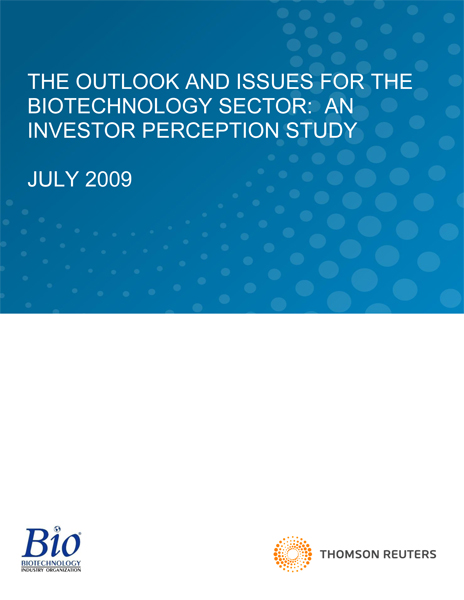
    BIO_ThomsonReuters09_study Last week, the Biotechnology Industry Organization (BIO) and Thomson Reuters released the results of an investor perception study conducted earlier this year that correctly forecast a rebound for the biotech industry.  A 37-page report outlining the result of the study can be obtained herePatent Docs initially reported on this study back in February, before BIO and Thomson Reuters made the report available (see "NVCA Study Shows Decline in 2008 Investment; BIO Study Predicts Biotech Rebound in 2009").

    Biotechnology Industry Organization (BIO) In announcing the results of the study, which was conducted between December 1, 2008 and January 31, 2009, BIO noted that while survey participants accurately forecast the current rebound, they actually "underestimated the degree to which positive clinical trial data would drive the sector higher."  John Craighead, Managing Director of Investor Relations and Business Development at BIO, said that while investors surveyed for the study "had forecasted a 15% rise for biotech stocks by mid-year," this prediction turned out to be "quite short of the impressive gains that we have seen in the last several weeks."  Mr. Craighead also asserted that "to the extent . . . this rally has been driven by positive trial results, it is a better sign for the long-term vitality of the biotechnology industry than the other catalysts investors had cited, such as mergers and acquisitions or an improvement in general market sentiment."

    Thomson Reuters In conudcting the study, Thomson Reuters interviewed 80 biotechnology analysts, investors, and portfolio managers representing firms with $2.3 trillion in assets under management, including $266 billion in healthcare and $76 billion in biotech.  BIO stated that the study shows that investors remain bullish about biotechnology — 64% of study participants stated that now (meaning the beginning of the year) is a "good" or "very good" time to invest in biotech, and 70% of participants expected biotech to outperform the rest of the market in 2009.  In a year that has already seen a number of major biotech mergers and acquisitions, more than two-thirds of participants expected greater M&A activity in 2009, with major pharmaceutical companies buying biotech companies of all sizes and large biotech companies buying smaller biotech companies.  Investors also saw the best opportunities coming from investments in smaller companies that are still in the early stages of R&D.  The study also showed that market uncertainty has lowered investors' tolerance for risk.

    For additional information regarding this and other related topics, please see:
    • "Is Biotech/Pharma Beginning to Bounce Back?" August 12, 2009
    • "Docs at BIO: Steve Burrill's State of the Biotechnology Industry Report 2009," May 19, 2009
    • "Docs at BIO: Ernst & Young Hosts Super Session Addressing Financial Performance of Biotech Industry," May 19, 2009
    • "First Quarter Venture Capital Funding at 12-Year Low," April 23, 2009
    • "BIO Meets the Press," February 26, 2009
    • "NVCA Study Shows Decline in 2008 Investment; BIO Study Predicts Biotech Rebound in 2009," February 16, 2009
    • "NVCA Predicts Another Slow Year for Venture-backed Businesses in 2009," December 18, 2008

  •     By
    Donald Zuhn

    Squawk Box Last
    week, CNBC anchor Joe Kernen challenged Biotechnology Industry Organization
    (BIO) President and CEO Jim Greenwood over the wisdom of implementing a
    follow-on biologics (FOB) regulatory pathway that provides innovator biologics
    manufacturers with 12 years of exclusivity.  Mr. Greenwood, however, was up to the challenge, as he
    explained why a 12-year exclusivity period is not only necessary for the
    biotech industry, but good for patients. 
    The discussion took place on CNBC's "Squawk Box," which
    devoted a portion of its show last Thursday to the topic of fixing
    America's health care system (a video of the discussion can be found here).  Appearing with Mr. Greenwood on the
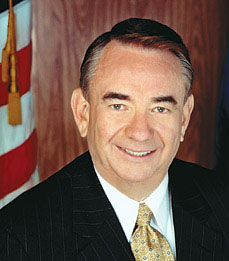
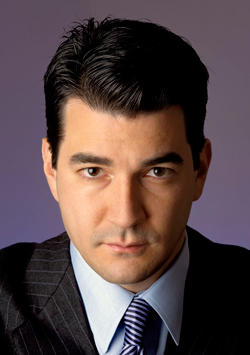
    healthcare "Squawk Summit" were former Secretary of Health and Human
    Services Tommy Thompson, former Food and Drug Administration (FDA) Commissioner
    Dr. Scott Gottlieb, and CNBC co-anchors Becky Quirk and Carl Quintanilla.

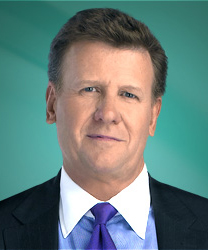
    Kernen, Joe Mr.
    Kernen (at left) kicked off the discussion by saying that he felt "biotech got a
    pretty good deal" when it convinced both the Senate Health, Education,
    Labor and Pensions (HELP) Committee and the House Committee on Energy and
    Commerce to adopt 12-year exclusivity periods (see "House Committee Approves Health Care Reform Bill Calling
    for 12-Year Exclusivity Period
    "
    and "Senators Hatch and Enzi Champion 12-Year Data Exclusivity in Senate").  Mr. Kernen then asked the BIO CEO how
    the biotech industry was able to secure the 12-year period, stating that "there's this notion that people were bought off," and
    then inquiring why biotech should be excluded "from the cost pressures
    that everyone else is going to have to live under?"  Mr. Greenwood responded that no one had
    been "bought off," and that BIO had instead spent three and a half
    years "carefully explaining to one member of Congress at a time what the
    science is."  He also noted
    that while BIO wanted to have competition from generic companies, "you
    have to above all else make sure that the incentives for innovation
    remain."  And Mr. Greenwood
    explained that for the biotech industry, such incentives could only be
    maintained by providing innovators with 12-14 years of data exclusivity
    "before the generics can come in and use our [clinical] data that we pay
    hundreds of millions of dollars to gather."

    Greenwood, Jim Mr.
    Kernen then argued that in view of the high cost of biologic drugs, the biotech
    industry had opened itself up to a lot of criticism by lobbying for such a
    lengthy exclusivity period — becoming a "poster child for the exorbitant
    costs of treatment."  Mr.
    Greenwood (at right) agreed that some biologics are indeed very expensive, but noted that they
    are also extraordinarily expensive to manufacture, with biologic drug
    manufacturing plants costing between $400 and $500 million to build.  Mr. Greenwood also noted that because "most
    of the products that we try to create fail," one has to take those costs
    into consideration as well.  He
    then returned to the issue of competition, saying that the biotech industry "was
    not afraid of competition," and that "competition will bring
    [biologic drug] prices down." 
    However, Mr. Greenwood reiterated that "if the competition comes
    too soon, . . . no one will invest the billions of dollars that it takes to
    make a new drug, and there won't be anything for the generic companies to copy
    at the end of the day anyway."

    Thompson, Tommy Mr.
    Kernen then inquired whether Europe's experience with biosimilars confirmed Mr.
    Greenwood's fears, asking if there had been "a loss of innovation in
    Europe because of . . . not protecting patents."  Mr. Greenwood responded that "Europeans used to control
    the biotechnology world, they used to lead in innovation in
    biotechnology," but that "over time, because of their price controls,
    because they have put so much of their focus on squeezing out the profitability
    of these companies in order to pay for their public system, there's been little
    left to invest in innovation, and people don't want to invest in those
    companies, and so it's moved here." 
    Mr. Thompson (at left) concurred, noting that while 50-60% of drugs used to be produced
    in Europe, 75-80% of drugs were now being produced in America, which he said "shows
    what a free enterprise system will do to encourage new innovation."  Dr. Gottlieb contended that the
    "biotech industry won this debate, so far, on the merits of the
    argument," adding that "people on Capitol Hill do care about real
    innovation — and real innovation is coming out of the biotech
    sector."  In contrast, Dr.
    Gottlieb believed that the pharmaceutical industry was "trying to win the
    argument on lobbying."

    Gottlieb, Scott Returning
    to the exclusivity debate, Mr. Kernen asked "how is 12 year exclusivity
    not fighting competition"? 
    Mr. Greenwood replied that "no competition means we don't have a bill,"
    arguing that "our strategy could have been, let's block a bill, we'll have
    no competition forever."  Instead,
    he said, the biotech industry fought for a 12-year period that "is not a random
    number," but rather is "based on very sound data done in
    peer-reviewed, published articles about how long it takes to recover the
    investment that you make in these products."  Mr. Kernen then helped make Mr. Greenwood's case, saying
    that "it's almost a metaphor for the delivery of health care, because
    people would like to separate the profit motive completely from health care,
    but this is an example of how a profit motive is essential to raise
    private capital to get the work done that eventually results in a new
    drug."  Dr. Gottlieb (at right) reminded
    the panel that "the average patent life on a small molecule drug is about
    12 years — it's actually more than 12 years — so the idea of a drug
    being protected for 12 years isn't extraordinary."

    Defending
    the work done by the biotech sector, Mr. Greenwood noted that:

    [T]he
    American taxpayer spends $30 billion a year on NIH, and that funds basic
    research.  It doesn't make drugs —
    it makes good academic papers.  And
    then we rely upon my 1,250 little biotech companies and middle-sized biotech
    companies to try to take that basic knowledge and turn it into something that
    prevents a couple from having to bury its child, that prevents somebody from
    forgetting who his wife is because of his Alzheimer's . . . and that only
    happens if the American taxpayer — whether it's a mutual fund or some day
    trader — says "I'm going to put my money into this.  I want to bet on this."  And I keep telling all my liberal
    friends in the Congress, if you want to cure all of these diseases . . . don't
    you want this industry to be the biggest private sector, at-risk capital, money
    magnet in the world?

    On
    the topic of research costs, Dr. Gottlieb noted that the size of clinical
    trials had risen in the past eight years from a couple hundred patients to tens
    of thousands of patients.  He then
    offered that an analysis of research costs in the current issue of Nature "made the argument that the
    rate of return on drugs is less than the cost of capital — that [drug
    manufacturers] are actually losing money by investing their capital in drugs,"
    a situation he said "can't continue."

    Mr.
    Kernen argued that despite all of the talk about American innovation, "our
    outcomes are worse . . . than anywhere else in the world, where they spend much
    less money on it."  He
    followed by asking Mr. Greenwood whether the government, as opposed to the
    private sector, could innovate. 
    Mr. Greenwood bluntly responded that "[t]he government cannot
    innovate," asking Mr. Kernen "[w]hen has the government ever
    innovated successfully?" 
    Instead, Mr. Greenwood argued that "[t]he government can spur
    innovation," and "it's
    at-risk capital that actually makes the bets on what's going to work and what's
    not going to work."  Mr.
    Thompson, however, disagreed, noting that 85% of the NIH's $35 billion annual budget goes
    to universities, researchers, and foundations to conduct research, and that
    this money constitutes the "stimulus to encourage innovation."

  •     By Sherri Oslick

    Gavel_2About
    Court Report:  Each week we will report briefly on recently filed
    biotech and pharma cases, and a few interesting cases will be selected
    for periodic monitoring.


    Astrazeneca LP et al. v. Breath Ltd.

    1:09-cv-04115; filed August 12, 2009 in the District
    Court of New Jersey

    • Plaintiffs: Astrazeneca LP; Astrazeneca AB
    Defendant: Breath Ltd.

    Infringement of U.S. Patent No. 7,524,834 ("Sterile
    Powders, Formulations, and Methods for Producing the Same," issued April
    28, 2009) following a paragraph IV certification as part of Breath's filing of
    an ANDA to manufacture a generic version of Astrazeneca's Pulmicort Respules®
    (budesonide inhalation suspension, used to treat asthma).  View the complaint here.

    Abbott GmbH & Co., KG et al. v. Centocor Ortho
    Biotech, Inc.

    4:09-cv-11340; filed August 10, 2009 in the District
    Court of Massachusetts

    • Plaintiffs: Abbott GmbH & Co., KG; Abbott
    Bioresearch Center, Inc.
    Defendant: Centocor Ortho Biotech, Inc.

    Infringement of U.S. Patent Nos. 6,914,128 ("Human
    Antibodies that Bind Human IL-12 and Methods for Producing," issued July
    5, 2005) and 7,504,485 ("Human Antibodies that Bind Human IL-12," issued March 17, 2009) based
    on Centocor's manufacture, use, and sale of its Stelara product (ustekinumab,
    anti-IL-12 antibody).  View the
    complaint here.

  • CalendarAugust 17-18, 2009 – Advanced Patent Prosecution Workshop 2009: Claim Drafting & Amendment Writing (Practising Law Institute) – San Francisco, CA

    September 1, 2009 – Prior Art & Obviousness 2009: The PTO & CAFC Perspective on Patent Law Sections 102 & 103 (Practising Law Institute) – San Francisco, CA

    September 13-15, 2009 – 2009 Annual Meeting (Intellectual Property Owners Association) – Chicago, IL

    September 14-15, 2009 – 3rd Summit on Biosimilars and Follow-on Biologics*** (Center for Business Intelligence) – National Harbor, MD

    September 15-16, 2009 – FDA Boot Camp*** (American Conference Institute) – Boston, MA

    September 17, 2009 – Developments in Pharmaceutical and Biotech Patent Law (Practising Law Institute) – New York, NY

    September 21-22, 2009 – 2009 World Stem Cell Summit*** – Baltimore, MD

    September 21-22, 2009 – Patent Litigation 2009 (Practising Law Institute) – San Francisco, CA

    September 30-October 1, 2009 – Biotech Patents*** (American Conference Institute) – Boston, MA

    October 5-6, 2009 – Patent Litigation 2009 (Practising Law Institute) – McLean, VA

    October 7-8, 2009 – Maximizing Pharmaceutical Patent Lifecycles*** (American Conference Institute) – New York, NY

    October 14, 2009 – Developments in Pharmaceutical and Biotech Patent Law (Practising Law Institute) – San Francisco, CA

    October 15-16, 2009 – Patent Litigation 2009 (Practising Law Institute) – Chicago, IL

    October 22-23, 2009 – Pharmaceutical Congress on Paragraph IV Disputes*** (Center for Business Intelligence) – Philadelphia, PA

    October 26-28, 2009 – Intellectual Property Counsels' Committee (IPCC) Fall Conference & Meeting (Biotechnology Industry Organization) – Washington, DC

    October 28-29, 2009 – Patent Opinion Writing Boot Camp*** (American Conference Institute) – Philadelphia, PA

    November 9-10, 2009 – Patent Litigation 2009 (Practising Law Institute) – Atlanta, GA

    November 16-17, 2009 – Patent Litigation 2009 (Practising Law Institute) – New York, NY

    ***Patent Docs is a media partner of this conference or CLE

  • Independence Hall The Center for Business Intelligence (CBI) will be holding its 2nd Annual Pharmaceutical Congress on Paragraph IV Disputes and Settlements on October 22-23, 2009 in Philadelphia, PA.  The conference will cover issues relevant to both brand and generic companies during two days of presentations and panel discussions on litigation strategies, statutory guidelines, current cases, and their landmark decisions.  CBI's faculty will offer presentations on the following topics:

    • State of the industry address — Identify patent dispute and resolution trends to optimize Paragraph IV strategies;
    • Early generic considerations for achieving favorable litigation results;
    • Brand preparedness strategies for Paragraph IV certifications;
    • Assess the implications of patent reform on pharma and Paragraph IV litigation (panel discussion);
    • Understand the FDA's role in Paragraph IV disputes and enforcing Hatch-Waxman regulations;
    • Leverage FDA law for Paragraph IV patent strategies;
    • Generic perspective;
    • Gain insight on biosimilars legislation and what it means for industry;
    • Analyze FTC enforcement activity and reverse payment policy initiatives (FTC address);
    • Structuring settlements without raising red flags and suffering FTC sanctions (panel discussion);
    • Inequitable conduct and exceptional cases — What does recent case law tell us?
    • Differences of opinion on NCEs — What are the scope and limits?

    An additional in-conference workshop entitled:  "Mock Litigation — Develop Paragraph IV Litigation Strategies through Case Law Analysis and Best Practice Utilization" will be offered on October 23, 2009.  The in-conference workshop will break attendees into two groups to match their product offering — brand or generic — and work through preparatory activities, develop litigation strategies and evaluate current, and/or future changes to the law and market that could affect the current dynamic.

    The agenda for the Pharmaceutical Congress on Paragraph IV Disputes and Settlements can be found here (Day 1) and here (Day 2).  A brochure for this conference can be requested here.

    Center for Business Intelligence (CBI) The registration fee for the conference is $1,995.  Attendees registering on or before August 21, 2009 will receive a $300 discount off the registration fee, and attendees registering a group of three individuals will receive a fourth registration for free.  Those interested in registering for the conference can do so here.

    Patent Docs is a media sponsor of CBI's Pharmaceutical Congress on Paragraph IV Disputes.

    Photograph of Independence Hall (above) by Dan Smith, from the  Wikipedia Commons under the Creative Commons license.

  • Washington Mall The Biotechnology Industry Organization (BIO) will be holding its Intellectual Property Counsels' Committee (IPCC) Fall Conference & Meeting on October 26-28, 2009 in Washington, DC.  The semi-annual IPCC conference will once again be open to the public.

    The conference will offer presentations on the following topics:

    Tuesday, October 27:

    • Patent re-examination;
    • Federal Circuit case law, 2008-2009 — The clerk's perspective;
    • Luncheon Speaker — The Honorable Judge Randall R. Rader will discuss recent Federal Circuit cases and their potential impact on biotechnology;
    Bilski arguments before the U.S. Supreme Court; and
    • Legal constraints on claiming:  Lessons from recent precedent of the Federal Circuit.

    Wednesday, October 28:

    • The vanishing injunction and other remedies challenges facing patent;
    • Protecting pharmaceutical products in the U.S. vs. the EP; and
    • Patent pools:  Design, efficiency and innovation.

    Biotechnology Industry Organization (BIO) In addition, there will be a meet & greet welcome reception on Monday, October 26 from 5:15 pm to 7:00 pm, and a dinner reception and exclusive tour of the International Spy Museum from 5:00 pm to 9:00 pm on Tuesday, October 27.

    The registration fee for the conference ranges from $400 for BIO members to $700 for non-members.  Those registering on or before August 26, 2009 will receive a $25 discount.  Those interested in registering can do so here or by faxing a registration form to 1-202-488-0650.  Additional information can be found at the conference website.