• By Sherri Oslick —

    Gavel About Court Report:  Each week we will report briefly on recently filed biotech and pharma cases.

    Cellectis S.A. v. Precision Biosciences Inc.
    1:12-cv-00204; filed February 21, 2012 in the District Court of Delaware

    Declaratory judgment of invalidity and non-infringement of U.S. Patent Nos. 8,119,361 ("Methods of Cleaving DNA with Rationally-Designed Meganucleases," issued February 21, 2012) and 8,119,381 ("Rationally Designed Meganucleases with Altered Sequence Specificity and DNA-Binding Affinity," issued February 21, 2012).  View the complaint here.


    Precision BioSciences, Inc. v. Cellectis SA et al.

    5:12-cv-00076; filed February 20, 2012 in the Eastern District of North Carolina

    • Plaintiff:  Precision BioSciences, Inc.
    • Defendants:  Cellectis SA; Cellectis bioresearch; Cellectis bioresearch Inc.

    Infringement of U.S. Patent No. 8,119,361 ("Methods of Cleaving DNA with Rationally-Designed Meganucleases," issued February 21, 2012) based on Cellectis' manufacture, use, and sale of certain products, including meganucleases targeting the HIV1 genome.  View the complaint here.


    Precision BioSciences, Inc. v. Cellectis SA et al.

    5:12-cv-00077; filed February 20, 2012 in the Eastern District of North Carolina

    • Plaintiff:  Precision BioSciences, Inc.
    • Defendants:  Cellectis SA; Cellectis bioresearch; Cellectis bioresearch Inc.

    Infringement of U.S. Patent No. 8,119,381 ("Rationally Designed Meganucleases with Altered Sequence Specificity and DNA-Binding Affinity," issued February 21, 2012) based on Cellectis' manufacture, use, and sale of certain products, including meganucleases targeting the HIV1 genome and meganucleases targeting the GS gene in Chinese Hamster Ovary cells.  View the complaint here.


    Spectrum Pharmaceuticals, Inc. et al. v. InnoPharma Inc
    .
    2:12-cv-00265; filed February 17, 2012 in the District Court of Nevada

    • Plaintiffs:  Spectrum Pharmaceuticals, Inc.; University of Strathclyde
    • Defendant:  InnoPharma Inc.

    Infringement of U.S. Patent No. 6,500,829 ("Substantially Pure Diastereoisomers of Tetrahydrofolate Derivatives," issued December 31, 2002) following a Paragraph IV certification as part of InnoPharma's filing of an ANDA to manufacture a generic version of Spectrum's Fusilev® (levoleucovorin, used to treat advanced metastatic colorectal cancer).  View the complaint here.


    Novo Nordisk Inc. et al. v. Aurobindo Pharma Ltd. et al.

    3:12-cv-01026; filed February 16, 2012 in the District Court of New Jersey

    • Plaintiffs:  Novo Nordisk Inc.; Novo Nordisk A/S
    • Defendants:  Aurobindo Pharma Ltd.; Aurobindo Pharma USA, Inc.

    Infringement of U.S. Patent No. 6,677,358 ("NIDDM Regimen," issued January 13, 2004) following a Paragraph IV certification as part of Aurobindo's filing of an ANDA to manufacture a generic version of Novo Nordisk's Prandin® (repaglinide, used to treat non-insulin dependent diabetes mellitus in combination with metformin).  View the complaint here.

  • Calendar

    February 27-29, 2012 – Life Sciences Collaborative Agreements and Acquisitions*** (American Conference Institute) – New York, NY

    February 28-29, 2012 – Medical Device Patents*** (American Conference Institute) – Boston, MA

    March 6, 2012 – Biotechnology/Chemical/Pharmaceutical (BCP) Customer Partnership Meeting (U.S. Patent and Trademark Office) – 9:30 am – 4:00 pm (ET)

    March 14-15, 2012 – Biotech Patenting (C5) – Munich, Germany

    March 20-21, 2012 – FDA Boot Camp*** (American Conference Institute) – New York, NY

    March 26-27, 2012 – PTO Procedures under the America Invents Act*** (American Conference Institute) – New York, NY

    March 28-30, 2012 – 27th Annual Intellectual Property Law Conference (American Bar Association (ABA) Section of Intellectual Property Law) – Arlington, VA

    April 17, 2012 – 28th Annual Joint Patent Practice Seminar (Connecticut, New Jersey, New York, and Philadelphia Intellectual Property Law Associations) – New York, NY

    April 24-25, 2012 – Paragraph IV Disputes*** (American Conference Institute) – New York, NY

    ***Patent Docs is a media partner of this conference or CLE

  • Logo

    The Connecticut, New Jersey, New York, and Philadelphia Intellectual Property Law Associations will be holding their 28th Annual Joint Patent Practice Seminar on April 17, 2012 in New York, NY.  The seminar will consist of five panels:  America Invents Act and USPTO Practice, Pharmaceuticals/Life Sciences, Licensing/Foreign Practice/ITC, Ethics, and Litigation with each panel addressing a series of cases and topics.  In particular, the panels will focus on the following cases and topics:

    Panel I — America Invents Act and USPTO Practice (9:05 to 10:20 am)

    • America Invents Act and the USPTO implementation of first to file
    • Derived patents and derivation proceedings: AIA creates new issues in litigation and PTO proceedings
    • America Invents Act, new PTAB duties and the umbrella rules for PTO contested case litigation
    • America Invents Act and the implementation of inter partes review
    • America Invents Act and the implementation of post grant review
    • America Invents Act and the implementation of preissue submissions by third parties
    • Q&A — 15 minutes

    Panel II — Pharmaceuticals/Life Sciences (10:35 to 11:35 am)

    • Update on pay to delay generic market entry: Litigations by FTC and private plaintiffs
    • Boston Scientific v. Johnson & Johnson, Cordis and Wyeth (Fed. Cir. June 7, 2011): Patents claims held invalid for lack of support in specification
    • In re Klein (Fed. Cir. June 2011): Prior art must be analogous to make obvious
    • Teva v. Astrazeneca (Fed. Cir. Dec. 2011): First inventor is not required to appreciate why his invention works.  Is this case the final development on 102(g)?
    • Patentable subject matter post-Bilski?  A review of Federal Circuit decisions on Section 101 after Bilski and the Supreme Court in Mayo v. Prometheus
    • Q&A — 10 minutes

    Panel III — Licensing/Foreign Practice/ITC (11:35 am to 12:35 pm)

    • China utility models: Cheap, easy to register, and increasingly used in litigation against holders of invention patents
    • Australia and other new faces along the Patent Prosecution Highway
    • John Mezzalingua Assocs. v. ITC (Fed. Cir. 2011): Litigation costs not tied to licensing do not create a domestic industry
    • General Protecht Group, Inc. v. Leviton Mfg. Co., Inc. (Fed. Cir. July 8, 2011): Settlement choices — a covenant not to sue or a non-exclusive license?
    • Justice Department review of large patent portfolios for handheld devices
    • Q&A –- 10 minutes

    Panel IV — Ethics (1:50 to 3:15 pm)

    • Inventor's oath and new Section 118: Solution to the problem of a missing or uncooperative inventor
    • Direct contact with other parties in the context of licensing and other negotiations
    • Powell v. The Home Depot U.S.A., Inc. (Fed. Cir. 2011): The objective and subjective prongs of willful intent
    • Advice of counsel after the America Invents Act: What effect will new 35 USC 298 have on the rendering and defensive use of non-infringement and invalidity opinions?
    • Inequitable conduct cases post-Therasense: Has the claim gone away with the sliding scale?
    • America Invents Act and the implementation of supplemental examination and the fraud exceptions
    • Disqualification issues in patent litigation: A review of recent decisions concerning motions to disqualify lawyers or law firm employees from representing a party in patent litigation
    • Q&A — 15 minutes

    Panel V — Litigation (3:30 to 4:30 pm)

    • Kappos v. Hyatt: Supreme Court decision and AIA's avoidance of Section 145 litigation
    • Marine Polymer Technologies, Inc. v. Hemcon, Inc., 2010-1548 (Fed. Cir. Sept. 26, 2011): Injunction and damages award vacated due to intervening rights from reissue — Will post grant amendments under AIA have the same effect?
    • E-discovery: Are sanctions for document discovery changing in view of Micron Technology Inc., et. al v. Rambus Inc. (Fed. Cir. May 2011)?
    • Choice of patent venue after the America Invents Act: Restrictions on multi-defendant infringement actions and the diminished significance of state of incorporation under In re Link_A_Media Devices (Fed. Cir. Dec. 2011)
    • Global-Tech v. SEB (Supreme Court May 2011): What changes may be coming for joint infringement?
    • Q&A — 10 minutes

    A featured morning address will be given between 8:15 and 9:05 am by Director David Kappos of the U.S. Patent and Trademark office.  The lunch keynote speaker will by Circuit Judge Sharon Prost of the U.S. Court of Appeals for the Federal Circuit.

    A preliminary program preview for the seminar can be found here.

    The registration fee for the conference is $440 (for those registering by April 4, 2012) or $470 (for those registering after April 4, 2012).  Those interested in registering for the conference can do so here or by submitting a reservation form that can be obtained here.

  • By Andrew Williams —

    AstraZeneca_small

    Last week, in AstraZeneca Pharmaceutical LP v. Intellipharmaceutics Corp., Civil Action No. 11-2973 (JAP), Judge Pisano of the U.S. District Court for the District of New Jersey dismissed a Hatch-Waxman Act patent infringement action based on a lack of personal jurisdiction because the ANDA filer did not have the requisite minimum contacts with the state to establish either general or specific jurisdiction.  In this particular case, AstraZeneca Pharmaceutical LP and AstraZeneca UK Limited (together, "Astra") had filed suit against Intellipharmaceutics Corp. ("IPC") and Intellipharmaceutics International Inc. ("IPCI") in New Jersey because IPC had filed an ANDA to seek approval to market a generic version of Astra's Seroquel XR product.  Both IPC and IPCI are Canadian companies.  IPC and IPCI subsequently filed their motion to dismiss pursuant to Federal Rule of Civil Procedure 12(b)(2) (lack of personal jurisdiction), or in the alternative, pursuant to 28 U.S.C. § 1406(a) to transfer to the Southern District of New York.  Astra followed-up by also filing suit in New York to preserve its right to the statutory 30-month stay, but that action was stayed pending the outcome in the New Jersey Court.
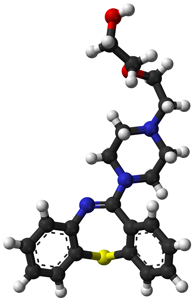
    Quetiapine

    For those readers who have not had the pleasure of a first-year Civil Procedure course, due process requires that a defendant have minimum contacts with a state before that state can exercise jurisdiction over them.  This is because "traditional notions of fair play and substantial justice" prevent a plaintiff from hauling a defendant to court in a state in which that defendant does not have at least minimum contacts.  There are two types of jurisdiction — (1) general jurisdiction, in which the defendant has "continuous and systematic" contacts with a state such that a court can exercise jurisdiction for any action, and (2) specific jurisdiction, for cases in which general jurisdiction cannot be established, but there are sufficient limited contacts with the state that relate to the claims of the suit.

    In the present case, the Judge first looked to whether IPC and IPCI were subject to general jurisdiction in New Jersey.  Astra had claimed that IPC and IPCI had continuous and systematic contacts with New Jersey because they (1) had "repeatedly partnered" with New Jersey companies to develop pharmaceuticals, (2) had engaged a consultant in the state, (3) had used a New Jersey Transfer Agent, (4) had sourced materials and equipment from the state, (5) had paid more taxes in New Jersey than most, if not all, other states, (6) had entered into confidentiality agreements with entities in the state, and (7) had asserted counterclaims in the New Jersey Court in an unrelated matter.  After jurisdictional discovery, the Court concluded that these contacts were not sufficient to establish general jurisdictional.  IPC had in fact entered into drug development agreements in the past with New Jersey companies, but these were found to be inadequate to support jurisdiction.  One of these agreements was with Elite Laboratories and Elite Pharmaceuticals to develop a generic Prevacid product.  However, this agreement was in 2005, and no drug development actually commenced.  IPC also entered into three agreements with Par Pharmaceuticals, Inc. ("Par") to develop generic Focalin XR, generic Coreg CR, and a third undisclosed generic product.  The work for these agreements, however, was performed primarily in Canada.  The Judge did note that all of these agreements were unrelated to the present ANDA product, but such a fact should be irrelevant to general jurisdiction analysis.

    Intellipharmaceutics

    As for the other factors, the Judge noted that IPC had made "relatively random purchases" from companies located in New Jersey, and that these were insufficient, alone and with other contacts, to confer general jurisdiction (quoting the Supreme Court's 1984 Helicopteros opinion ("mere purchases, even if occurring at regular intervals, are not enough to warrant a State's assertion of in personam jurisdiction over a nonresident corporation in a cause of action not related to those purchase transcations").  As for the tax payments, IPCI did pay $26.95 to New Jersey in 2010 and $10.13 in 2009.  However, even though these amounts "dwarfed" the single penny IPCI paid in taxes in Wyoming in 2009, the Court found that Astra's tax argument was "a bit overstated."  Finally, the confidentiality agreements were with regard to "potential" or "possible" business relationships, with no evidence that they were ever consummated, and the litigation in question in which counterclaims had been filed was controlled by Par, not IPC.  When viewed in their totality, the Court found that these contacts were insufficient to establish the continuous and systematic contacts with New Jersey necessary to establish general jurisdiction.

    To establish specific jurisdiction, it is necessary to focus on the relationship between the claims and contacts.  Of course, in a Hatch-Waxman action, the technical act of infringement is the filing of an ANDA.  Astra pointed to three activities related to IPC's ANDA filing that were allegedly "purposefully directed" at New Jersey.  First, Astra alleged that IPC sourced its magnesium stearate for the ANDA product from a New Jersey company.  The evidence was to the contrary, however, showing that the dealings were with a Missouri office, and that the magnesium stearate was produced in St. Louis.  Second, Astra pointed out that the packaging for the ANDA product was obtained from a New Jersey company.  Even if this were true, however, the claim of the litigation arose from the quetiapine tablets themselves, not the packaging.  Finally, Astra claimed that IPC relied on a Drug Master File held by Hetero Labs Ltd., which itself used a New Jersey Company, Pharm Q, Inc., as its U.S. Regulatory agent.  However, the DMF relied upon by IPC in its ANDA filing was from a company located in Massachusetts, not Herero Labs.  The Court, therefore, found that this case had nothing to do with the state of New Jersey, and that therefore Astra could not establish specific jurisdiction.

    This brings up the question as to where an NDA holder can bring a Hatch-Waxman action when the ANDA filer conducts most, if not all, of its activities outside the U.S. (other than the filing of the ANDA, of course).  The present opinion had no need to opine on this issue.  In fact, in this case, IPC and IPCI had already consented to personal jurisdiction in New York, and had sought in the alternative a transfer of the New Jersey action to New York.  The reason that IPC and IPCI believed that they were continuously and systematically doing business in New York was because IPCI was listed on the NASDAQ exchange, executives from both companies regularly travelled to New York for business, both companies used numerous New York companies to handle their affairs, and the companies worked with Par in New York.  The problem is that it is the ANDA filing that is the act of infringement, and such a filing seeks approval to market an ANDA product throughout the United States, including New Jersey.  By dismissing the case, the New Jersey Court was essentially allowing IPC and IPCI to select its own forum, thereby depriving Astra, the NDA holder, of one of the benefits of bringing suit.  Nevertheless, IPC and IPCI's contacts with New Jersey were tenuous at best, and Astra could have selected a more appropriate forum in the first place.

    AstraZeneca Pharmaceutical LP v. Intellipharmaceutics Corp. (D.N.J. 2012)

  • By Donald Zuhn —

    PPH Logo

    Earlier this month, the U.S. Patent and Trademark Office announced that the Office and eight other patent offices had agreed to implement an enhanced Patent Prosecution Highway (PPH) pilot program.  The new pilot builds off an enhanced PPH framework that went into effect in July (see "USPTO Expands Patent Prosecution Highway").

    The enhanced PPH pilot program implemented last summer has been called PPH MOTTAINAI, for the Japanese term meaning "a sense of regret concerning waste when the intrinsic value of an object or resource is not properly utilized."  Under the PPH MOTTAINAI pilot program, eight patent offices — the USPTO, Canadian Intellectual Property Office (CIPO), Japan Patent Office (JPO), IPAustralia, National Board of Patents and Registration of Finland (NBPR), Federal Service on Intellectual Property, Patents & Trademarks of Russia (Rospatent), Spanish Patent and Trademark Office (SPTO), and United Kingdom Intellectual Property Office (UKIPO) — implemented enhanced PPH programs in which the requirements for participation were modified to make the programs easier to use and more widely available to a greater number of applicants.  In particular, participation in the PPH MOTTAINAI program could be requested on the basis of results available on any patent family member from any office participating in the pilot, regardless of whether it was the office where the priority application was filed.  In addition, the enhanced program utilized a new definition of claim correspondence, which the USPTO indicated would make the system more flexible and user-friendly without compromising efficiency or quality.

    Under the new version of the PPH MOTTAINAI program, which is being called PPH 2.0, the European Patent Office (EPO) has joined the original MOTTAINAI offices, bringing the total number of participating offices to nine.  The PPH 2,0 program, which commenced on January 29, will run until January 28, 2013 (although the program could be extended for one additional year, if needed, or terminated early if, for example, the volume of participation were to exceed a manageable level).

    In order to participate in the PPH 2.0 program in the USPTO, applicants must satisfy the following requirements:

    1.  One of the other PPH 2.0 participating offices has determined that at least one claim is allowable/patentable (under the PPH 2.0 program, applicants no longer need to submit a copy of the allowed claim or any English translation thereof).

    2.  The application before the PPH 2.0 participating office (i.e., containing the allowable/patentable claim) and the U.S. application for which participation in the PPH 2.0 program is being requested must have the same priority/filing date (the Annex to the USPTO's notice on the PPH 2.0 program provides fifteen schematics outlining situations in which this requirement would be satisfied).

    3.  All claims on file, as originally filed, or as amended in the U.S. application must sufficiently correspond to one or more of the claims indicated as allowable in the application filed in the PPH 2.0 participating office (the USPTO notice states that "[a] claim is considered to 'sufficiently correspond' where, accounting for differences due to translations and claim format, the claim in the U.S. application is of the same or similar scope as a claim indicated as allowable in the application filed in the PPH 2.0 participating office").  Under the PPH 2.0 program, applicants must submit a claims correspondence table (in English), indicating how all the claims in the U.S. application correspond to the allowable/patentable claims in the application filed in the PPH 2.0 participating office.

    4.  Examination of the U.S. application for which participation in the PPH 2.0 program is being requested has not yet begun.

    5.  The applicant has filed a request to participate in the PPH 2.0 program.

    6.  The applicant must submit a copy of the office action issued just prior to the "Decision to Grant a Patent" (along with an English translation, which may be a machine translation) for the application before the PPH 2.0 participating office (under the PPH 2.0 program, applicants no longer need to submit a statement that the English translation is accurate).

    7.  The applicant must submit an information disclosure statement listing all documents cited in the office action of the PPH 2.0 participating office.

    8.  All of the documents described above must be filed via the EFS-Web and indexed using the document description:  "Petition to make special under Patent Pros Hwy."

    Additional information regarding the enhanced framework may be found here.

  • By Donald Zuhn —

    Seal-presidential

    Last week, President Obama unveiled his 2013 budget, and at least with respect to aspects of the budget proposal that would impact drugmakers, the President's 2013 proposal looks a lot like his 2012 proposal.  In a section of the budget proposal entitled "Health Savings," the Administration sets forth eighteen proposals, the final two of which concern pay-for-delay agreements and the biosimilar regulatory pathway.  With respect to pay-for-delay agreements, the budget seeks to:

    Prohibit "Pay for Delay" Agreements to Increase the Availability of Generic Drugs and Biologics.  The high cost of prescription drugs places a significant burden on Americans today, causing many to skip doses, split pills, or forgo needed medications altogether.  The Administration proposes to increase the availability of generic drugs and biologics by authorizing the Federal Trade Commission to stop companies from entering into anti-competitive deals, known also as "pay for delay" agreements, intended to block consumer access to safe and effective ge­nerics.  Such deals can cost consumers billions of dollars because generic drugs are typically priced significantly less than their branded counter­parts.  These agreements reduce competition and raise the cost of care for patients both directly, through higher drug and biologic prices, and indi­rectly through higher health care premiums.  The Administration's proposal facilitates greater ac­cess to lower-cost generics and will generate $11 billion over 10 years in savings to Federal health programs including Medicare and Medicaid.

    As for biosimilars, the budget proposes to: 

    Modify the Length of Exclusivity to Facili­tate Faster Development of Generic Biolog­ics.  Access to affordable lifesaving medicines is essential to improving the quality and efficiency of health care.  The Administration’s proposal ac­celerates access to affordable generic biologics by modifying the length of exclusivity on brand name biologics.  Beginning in 2013, this proposal would award brand biologic manufacturers seven years of exclusivity rather than 12 years under current law and prohibit additional periods of ex­clusivity for brand biologics due to minor changes in product formulations, a practice often referred to as "evergreening."  Reducing the exclusivity pe­riod increases the availability of generic biolog­ics by encouraging faster development of generic biologics while retaining appropriate incentives for research and development for the innovation of breakthrough products.  The Administration's proposal strikes a balance between promoting affordable access to medications and encourag­ing innovation to develop needed therapies.  The proposal will result in $4 billion in savings over 10 years to Federal health programs including Medicare and Medicaid.

    The Administration's 2013 proposals remain unchanged from its 2012 proposals (see "President's Budget Proposal Increases Funding for Basic Research But Seeks to 'Trim' Data Exclusivity Period and Pay-for-Delay Agreements").  Of the 2012 budget, a document posted on the White House website at the time noted that:

    The Administration is proposing to give consumers more access to affordable pharmaceuticals by: 1) reducing the exclusivity period for brand biologics to encourage faster development of generic biologics; and 2) giving the Federal Trade Commission the authority to prohibit brand and generic drug companies from entering into anticompetitive or "pay-for-delay" agreements intended to keep more generics off the market.

    The Administration attempted to justify its proposals as follows: 

    Generic Biologics.  Under current law, innovator brand biologics have 12 years of exclusivity and broad "evergreening" authority, whereby innovator manufacturers are able to make relatively minor changes to the "potency, purity, and safety" of their products to receive an additional 12 years of exclusivity.

    Under the Administration proposal, beginning in 2012, innovator brand biologic manufacturers would have 7 years of exclusivity and would be prohibited from receiving additional exclusivity by "evergreening" their products.  According to the Federal Trade Commission, 12-year exclusivity is unnecessary to promote innovation by brand biologic drug manufacturers and can potentially harm consumers by directing scarce research and development funding toward developing low-risk clinical data for drug products with proven mechanisms of action rather than toward new products to address unmet medical needs.  The Administration policy strikes a balance between promoting affordable access to medication while at the same time encouraging innovation to develop needed therapies.

    Pay-for-Delay.  In these agreements, a brand name company settles its patent law suit by paying the generic firm to delay entering the market.  Such deals can cost consumers billions of dollars because generic drugs are typically priced significantly less than their branded counterparts.  The Administration proposal would give the Federal Trade Commission the authority to prohibit pay-for-delay agreements in order to facilitate access to lower-cost generics.

    With respect to the specific savings that would be derived from each of the renewed proposals, the Administration predicts in the 2013 budget that by "[p]rohibiting brand and generic drug companies from delaying the availability of new generic drugs and biologics," $4.333 billion and $10.991 billion would be saved over the next five and ten years, and that if the Administration were to "[m]odify [the] length of exclusivity to facilitate faster development of generic biologics," $667 million and $3.825 billion would be saved over the next five and ten years.  The Administration's predicted cost savings this time around are higher than its 2012 budget projections — when it estimated 10-year savings of $8.79 billion for eliminating pay-for-delay agreements and $2.34 billion for reducing the data exclusivity period — which is perhaps not too surprising given that the Administration was unable to realize either objective last year.

  • By Kwame Mensah —

    Castle Biosciences

    Last month, Castle Biosciences Inc., a Friendswood, Texas-based corporation specializing in rare cancer molecular diagnostics, announced that it had acquired an exclusive worldwide license to intellectual property covering a gene expression profiling test for thymoma, which is a rare tumor derived from the epithelial cells of the thymus gland.  Castle Biosciences acquired intellectual property rights from Indiana University Research and Technology Corp., a non-profit technology transfer group associated with the university which discovered the gene profile signature that facilitates Castle Biosciences' DecisionDx-Thymoma test.

    Castle Biosciences stated that the test has displayed accurate prediction of metastatic risk in patients with thymoma, while also accurately confirming the disease stage at diagnosis.  Castle Biosciences continues to work with Indiana University to complete clinical validation and is aiming to have the test clinically available by the end of this quarter.  Patrick Loehrer, director of the Indiana University Melvin and Bren Simon Cancer Center in Indianapolis, stated that "[t]he ability to accurately assess metastatic risk based upon the thymoma's molecular signature will enable personalizing therapeutic options and assist in deciding which patients should receive post-operative therapy."

    In addition to its new DecisionDx-Thymoma test, Castle Biosciences also markets tests for diagnosis of uveal melanoma, gliomas and glioblastoma.

  • By Kevin E. Noonan —

    Dr. Ellen Jorgensen of Genspace, one of the witnesses at the U.S. Patent and Trademark Office's first hearing regarding the advisability of permitting "second opinions" for patented genetic diagnostic tests without patent infringement liability, advocated "at-home" or "do-it-yourself" DNA testing as a solution (see "USPTO Holds First Hearing on 'Second Opinion' Genetic Testing").  This proposal raises a significant number of questions, particularly with regard to the potential for harm to the public due to errors that might arise from such "at-home" genetic diagnostic testing or whether precautions in interpreting results would be taken concerning the emotional consequences of finding a genetic mutation in an individual's BRCA genes.

    image from www.nanotech-now.com

    However, the saliency of any technical objections to the idea must be considered to be significantly reduced by an announcement from Oxford Nanopore Technologies at the Advances in Genome Biology and Technology Conference at Marco Island, FL last week:  a disposable gene sequencing machine the size of a standard USB thumb drive and capable of providing a complete genomic sequence for about $900.  Terming the business model for the device "pay-as-you-go" sequencing, the chief technology officer of the company, Clive G. Brown stated that the new device eliminates the need for expensive ($50,000 – $750,000) machines currently in use for gene sequencing, and touted the use of the device for bedside genetic testing, biological field work, and food safety (e.g., for identifying pathogens in situ in real time).

    Images

    The basis of the device is so-called "nanopore" sequencing (explained in greater detail for the interested in "The $1,000 Genome: The revolution in DNA sequencing and the new era of personalized medicine" by Kevin Davies).  Briefly, the technology employs alpha-hemolysin, a bacterial membrane "pore" protein, stabilized with cyclodextrin, to measure changes in electrical current as each base moves through the pore after exonuclease cleavage.  The devices take advantage of parallel processing on a chip and computer analysis of the data to create the linear sequence.  Initially each chip will contain 2,000 pores with machines using chips having 8,000 pored being developed for release in 2013.  While the sequencing capacity ("tens of thousands bases per read") is higher than with competing machines, so is its error rate (4%).  This level of error would preclude use of the device for genetic diagnostic sequencing, for example.

    But machines and methodologies will get better, which raises the possibility that DNA sequencing soon may be within the reach of the consumer (much like accurate blood glucose determinations are now done with devices requiring nothing more than a pinprick of blood).  Under these circumstances, much of the current patent protection (and the IP protection model underlying it) for genetic diagnostic testing may become obsolete.  First, determination of an entire sequence does not per se infringe gene-specific DNA or method claims unless gene-specific primers are used (and even these claims are subject to some reevaluation; see "Caught in a Time Warp: the (In)validity of BRCA1 Oligonucleotide Claims").  This is one reason why the majority of the claims at issue in the Myriad case (i.e., claims to isolated genes) are not infringed by the practice of genetic diagnostic methods and why even if the plaintiffs and their ACLU masters prevail, the women will have no remedy.  Thus, the only direct infringer using these "mini-sequencer" devices would be the consumer, and unlike situations where suing consumers has been successful (like music file-sharing), the individual damage from any specific consumer defendant's infringement would be minimal.  While the damage to the patent-holder might be large cumulatively, it is unlikely that a patentee could successfully sue consumers as a class.  Inducement to infringe might also be challenging to prove since it is unlikely that Oxford Nanopore Technologies will provide instructions relating to any particular gene with specificity.  In any event, the identity of disease-related mutations is (and might continue to be) in the public record and so the consumer herself would remain the only infringer.

    It may also be expected that Oxford Nanopore Technologies will provide information on genetic counselors to be consulted to assist the consumer to interpret the meaning of her deduced nucleotide sequence.  These genetic counselors will be practicing a method involving comparing the deduced consumer sequence with the canonical "normal" sequence, and should not be infringing any valid claims.  This is because the Federal Circuit unanimously held in AMP v. USPTO (the "Myriad" case) that mere "comparison" claims do not satisfy the Bilski test and are thus invalid.  In addition, under this scenario the issue of "joint infringement" would arise, because the consumer would produce the sequence and its interpretation relating to inherited propensity for disease would be performed by the genetic counselor.  Unless the Federal Circuit dramatically changes the jurisprudential landscape in deciding the McKesson and Akamai cases en banc, infringement would not lie against either Oxford Nanopore Technologies or the genetic counselors.

    The development of such an eventuality provides yet one more impetus for genetic diagnostic testing to avoid patents as a protection for the technology, and to use instead trade secret protection and other means that avoid disclosure.  These prospects make it even more imperative, perhaps, that whatever actions are taken by the Office, Congress, or the courts regarding genetic diagnostic testing be done cautiously and in a limited fashion.  Otherwise, we may find that we have imposed impediments to future technologies, just as progress in the technologies we intend to regulate make the regulation obsolete.  Certainly this can't be the kind of progress the Founders had in mind.

    An Oxford Nanopore Technologies video showing on the company's technology works can be viewed below:


  • By Donald Zuhn —

    USPTO Leadership to Host Webinar on Tuesday

    image from patentdocs.typepad.com

    The U.S. Patent and Trademark Office announced last week that senior agency officials would be hosting a free public webinar on Tuesday, February 21 at 4:30 pm (ET).  The webinar will be moderated by Peter Pappas, Chief of Staff for the Office of the Director, and will feature Director David Kappos, Deputy Director Teresa Stanek Rea, Commissioner for Patents Peggy Focarino, USPTO General Counsel Bernard Knight, and BPAI Chief Administrative Patent Judge James D. Smith.  The agency leaders will outline proposals for new patent fees and discuss other issues related to implementation of the Leahy-Smith America Invents Act.  In addition, the group will answer selected questions, which may be submitted in advance to webinar@uspto.gov.  The webinar can be viewed here (the event number is 998 930 187, and the event password is 123456).  Those wishing to listen in can do so by calling 408-600-3600, and using the access code 998 930 187.


    Webcast for First PPAC Fees Hearing Now Available

    The U.S. Patent and Trademark Office has made the webcast for the first of two public hearings on fees available.  As the Office indicated in a Federal Register notice issued last month, the Patent Public Advisory Committee (PPAC) is to hold two public hearings this month regarding proposed patent fees (see "PPAC to Hold Public Hearings on Proposed Fee Schedule").  The first hearing took place on February 15 in Alexandria, Virginia, and the second is scheduled to take place from 8:00 am to 3:00 pm (PST) on February 23 at the Sunnyvale Public Library, 665 W. Olive Avenue, Sunnyvale, California 94086.

    The public hearings are being held pursuant to § 10 of the Leahy-Smith America Invents Act, which concerns the Office's fee setting authority.  Under that section, the Director is permitted to set or adjust any fee established, authorized, or charged under Title 35 (but "only to recover the aggregate estimated costs to the Office for processing, activities, services, and materials relating to patents").  Pursuant to § 10 of the AIA, the Director must submit a proposed fee change to the PPAC not less than 45 days before publishing the proposed fee in the Federal Register, after which the PPAC shall have 30 days to deliberate, consider, and comment on the proposal as well as hold a public hearing on the proposal.  The Director shall then consider and analyze the PPAC's comments, advice, or recommendations before setting or adjusting the fee.  AIA § 10 also requires that the Director provide the public with a 45-day period in which to comment on any fee change, and specifies that fee changes shall not become effective until 45 days after the final rule regarding such change is published in the Federal Register (in order to give Congress an opportunity to enact a law disapproving of the fee change).

    The first hearing, which ran for 2 hours and 11 minutes, can be viewed or downloaded here.


    House Prior User Rights Testimony Available

    On February 1, U.S. Patent and Trademark Office Director David Kappos appeared before the Subcommittee on Intellectual Property, Competition and the Internet of the House of Representatives Committee on the Judiciary to give testimony on prior user rights.  A webcast of the hearing on "Prior User Rights: Strengthening U.S. Manufacturing and Innovation" has been made available at the House Judiciary Committee website.  The written testimony for the five witnesses that appeared before the Subcommittee has also been made available on the website.  In addition to Director Kappos, the witnesses included Robert A. Armitage, Senior Vice President and General Counsel for Eli Lilly and Company; Dan Lang, Vice President, Intellectual Property for Cisco Systems; Dr. John C. Vaughn, Executive Vice President for the Association of American Universities; and Prof. Dennis Crouch, Associate Professor of Law at the University of Missouri School of Law (the written testimony for each witness can be obtained by clicking on the witness' name).

  • By Sherri Oslick —

    Gavel About Court Report:  Each week we will report briefly on recently filed biotech and pharma cases.

    Merck & Cie et al. v. Watson Pharmaceuticals, Inc. et al.
    2:12-cv-00223; filed February 13, 2012 in the District Court of Nevada

    • Plaintiffs:  Merck & Cie; Bayer Pharma AG; Bayer Healthcare Pharmaceuticals Inc.
    • Defendants:  Watson Pharmaceuticals, Inc.; Watson Laboratories Inc.

    Merck & Cie et al. v. Watson Pharmaceuticals Inc. et al.
    1:12-cv-00161; filed February 10, 2012 in the District Court of Delaware

    • Plaintiffs:  Merck & Cie; Bayer Pharma AG; Bayer HealthCare Pharmaceuticals Inc.
    • Defendants:  Watson Pharmaceuticals Inc.; Watson Laboratories Inc.

    The complaints in these cases are substantially identical.  Infringement of U.S. Patent No. 6,441,168 ("Stable Crystalline Salts of 5-methyltetrahydrofolic Acid," issued August 27, 2002) following a Paragraph IV certification as part of Watson's filing of an ANDA to manufacture a generic version of Merck's Beyaz® (drospirenone, 17α-ethinyl estradiol, and levomefolate calcium, used for oral contraception).  View the Delaware complaint here.


    Senju Pharmaceutical Co. Ltd. et al. v. Apotex Inc. et al.

    1:12-cv-00159; filed February 10, 2012 in the District Court of Delaware

    • Plaintiffs:  Senju Pharmaceutical Co. Ltd.; Kyorin Pharmaceutical Co. Ltd.; Allergan Inc.
    • Defendants:  Apotex Inc.; Apotex Corp.

    Infringement of U.S. Patent Nos. 6,333,045 ("Aqueous Liquid Pharmaceutical Composition Comprised of Gatifloxacin," issued December 25, 2001) and 5,880,283 ("8-Alkoxyquinolonecarboxylic Acid Hydrate With Excellent Stability and Process for Producing the Same," issued March 9, 1999) following a Paragraph IV certification as part of Apotex's filing of an ANDA to manufacture a generic version of Allergan's Zymaxid® (gatifloxacin ophthalmic solution, used to treat bacterial conjunctivitis).  View the complaint here.


    Panagene, Inc. v. Bio-Synthesis, Inc.

    2:12-cv-00067; filed February 10, 2012 in the Eastern District of Texas

    Infringement of U.S. Patent Nos. 6,395,474 ("Peptide Nucleic Acids," was issued May 28, 2002) and 7,378,485 ("Peptide Nucleic Acids with Polyamide-Containing Backbones," issued May 27, 2008) based on Biosyn's manufacture, use, and sale of  Peptide Nucleic Acid compounds.  View the complaint here.