• Calendar

    February 21, 2012 – The New Inter Partes Proceedings at the USPTO — The Preliminary Phase: Filing a Petition, the Preliminary Response, and Institution of Review (Intellectual Property Owners Association) – 2:00 – 3:00 pm (ET)

    February 21-22, 2012 – Biotech & Pharmaceutical Patenting*** (IBC Legal) – Munich, Germany

    February 21, 2012 – The New Inter Partes Proceedings at the USPTO — The Trial Phase: Discovery, Testimony, Challenging Testimony, Use of Experts, Estoppel (Intellectual Property Owners Association) – 2:00 – 3:00 pm (ET)

    February 22-23, 2012 – EU Pharma Law & Regulation*** (C5) – London, England

    February 22-24, 2012 – Intensive Patent Law Training Seminar (Chisum Patent Academy) – New York, NY

    February 23, 2012 – Impact of the America Invents Act on Patent Litigation Strategy (McDonnell Boehnen Hulbert & Berghoff LLP) – 10:00 – 11:15 am (CT)

    February 23, 2012 – Gene Patenting in the U.S. after Myriad (Navigant) – Chicago, IL

    February 24, 2012 – 56th Annual Intellectual Property Law Conference (John Marshall Law School Center for Intellectual Property Law) – Chicago, IL

    February 27-29, 2012 – Life Sciences Collaborative Agreements and Acquisitions*** (American Conference Institute) – New York, NY

    February 28-29, 2012 – Medical Device Patents*** (American Conference Institute) – Boston, MA

    March 6, 2012 – Biotechnology/Chemical/Pharmaceutical (BCP) Customer Partnership Meeting (U.S. Patent and Trademark Office) – 9:30 am – 4:00 pm (ET)

    March 14-15, 2012 – Biotech Patenting (C5) – Munich, Germany

    March 20-21, 2012 – FDA Boot Camp*** (American Conference Institute) – New York, NY

    March 26-27, 2012 – PTO Procedures under the America Invents Act*** (American Conference Institute) – New York, NY

    March 28-30, 2012 – 27th Annual Intellectual Property Law Conference (American Bar Association (ABA) Section of Intellectual Property Law) – Arlington, VA

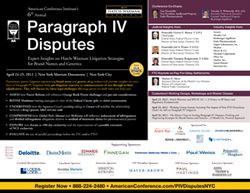
    April 24-25, 2012 – Paragraph IV Disputes*** (American Conference Institute) – New York, NY

    ***Patent Docs is a media partner of this conference or CLE

  • New York #1

    American Conference Institute (ACI) will be holding its next Paragraph IV Disputes conference on April 24-25, 2012 in New York, NY.  The conference will allow attendees to:

    • Assess how Patent Reform will influence Orange Book Patent challenges and pre-suit considerations;
    • Refine Markman hearing strategies in view of the Federal Circuit split on claim construction;
    • Understand how the Supreme Court's pending ruling in Caraco will redefine the relationship between a drug's patent, label and use code;
    • Comprehend how Global Tech, Akamai and McKesson will influence inducement of infringement and divided infringement allegations relative to method of treatment claims for pharmaceutical patents;
    • Explore new threats to 180-day exclusivity and the repercussions of a possible extension of NCE exclusivity; and
    • Evaluate the use of parallel proceedings before the ITC and/or PTO.

    870L12-NYC-1

    In particular, ACI's faculty will offer presentations on the following topics:

    • Anticipating and reassessing Paragraph IV challenges in the era of the patent cliff;
    • Invalidity and non-infringement post-Microsoft: Reaffirmation of the ANDA applicant's pre-litigation obligations and assertions;
    • The throwing of the gauntlet: The Paragraph IV notice letter;
    • New claim construction considerations in Paragraph IV litigation;
    • Prior art obviousness and obvious-type double patenting: Legal analysis and practical applications for brand names and generics;
    • And they're off: The start of the Paragraph IV law suit — pleadings and other initial considerations and analyses;
    • A view from the bench;
    • Of labels, patents and use codes: The significance and possible repercussions of Novo Nordisk v. Caraco to Hatch-Waxman challenges;
    • Reassessing Paragraph IV strategies for method treatment patents in view of recent and pending decisions regarding inducement and divided infringement;
    • Exclusivities and forfeitures: New developments, controversies and concerns relative to Paragraph IV litigation;
    • Pay-for-delay update;
    • New standards in inequitable conduct post-Therasense: Ethical considerations for Paragraph IV cases;
    • New controversies surrounding damages and injunctions relative to at risk launches; and
    • Parallel proceedings in Paragraph IV disputes: Strategies for balancing and streamlining proceedings before the federal courts, PTO and ITC.

    In addition, two pre-conference workshops will be offered on April 23, 2012.  The first, entitled "Hatch-Waxman and BPCIA 101 — A Primer on IP Basics and regulatory Fundamentals" will take place from 9:00 am to 12:30 pm, and the second, entitled "Working Group Session: Assessing The Impact of new PTO Procedures Under the AIA on Paragraph IV Litigation" will take place from 2:00 pm to 5:30 pm.  A post-conference master class entitled "The Master Class on Settling Paragraph IV Disputes: Drafting and Negotiating Strategies for Brand-Names and Generic — A Hands-On, Practical Approach" will be offered from 9:00 am to 12:30 pm on April 26, 2012.

    The agenda for the Paragraph IV Disputes conference can be found here.  More information regarding the workshops and master class can be found here.  A complete brochure for this conference, including an agenda, detailed descriptions of conference sessions, list of speakers, and registration form can be obtained here.

    ACI - American Conference Institute

    The registration fee for the conference is $2,395 (conference alone), $2,995 (conference and one workshop/master class), $3,595 (conference and two workshops/master class), or $4,195 (conference, both workshops, and master class).  Those registering by March 2, 2012 will receive a $400 discount and those registering by April 5, 2012 will receive a $200 discount.  Patent Docs readers who reference the discount code "PD 200" will receive $200 off the current price tier when registering.  Those interested in registering for the conference can do so here, by calling 1-888-224-2480, or by faxing a registration form to 1-877-927-1563.

    Patent Docs is a media partner of the Paragraph IV Disputes conference.

  • IPO #2

    The Intellectual Property Owners Association (IPO) will offer a two one-hour webinars on "The New Inter Partes Proceedings at the USPTO" on Wednesday, February 21, 2012 and Thursday, February 22, 2012, with each session beginning at 2:00 pm (ET).  On February 21, a panel consisting of the Hon. Michael Tierney of the U.S. Patent & Trademark Office; Jack Barufka of Pillsbury Winthrop Shaw Pittman, LLP; and W. Karl Renner of Fish & Richardson, PC will give a presentation on "The Preliminary Phase: Filing a Petition, the Preliminary Response, and Institution of Review," and on February 22, a panel consisting of the Hon. Michael Tierney; Scott Daniels of Westerman, Hattori, Daniels & Adrian, LLP, and Anthony Gutowski of Finnegan, Henderson, Farabow, Garrett & Dunner, LLP will give a presentation on "The Trial Phase: Discovery, Testimony, Challenging Testimony, Use of Experts, Estoppel."

    The two webinars will focus on the two new proceedings that are expected to be the most widely used:  Post-Grant Review and Inter Partes Review.  The first webinar will deal with the preliminary phase of the proceedings that ends when the USPTO either grants or denies review.  The second webinar will examine the rules for trial at the Patent Trial and Appeal Board (PTAB), a hybrid of district court and USPTO practice.

    The registration fee for each webinar is $120 (government and academic rates are available upon request).  Those interested in registering for the webinar can do so here.

  •     By Kevin E. Noonan —

    USPTO Seal

    The U.S. Patent and Trademark Office held the first of two planned hearings aimed at fulfilling one of the reporting provisions of the Leahy-Smith America Invents Act (see "USPTO to Hold Hearing on Genetic Diagnostic Testing").  Section 27 of the Act requires the Office to conduct a study regarding the advisability of permitting "second opinions" for patented genetic diagnostic tests without patent infringement liability:

    SEC. 27. STUDY ON GENETIC TESTING.

    (a) IN GENERAL.—The Director shall conduct a study on effective ways to provide independent, confirming genetic diagnostic test activity where gene patents and exclusive licensing for primary genetic diagnostic tests exist.

    (b) ITEMS INCLUDED IN STUDY.—The study shall include an examination of at least the following:

    (1) The impact that the current lack of independent second opinion testing has had on the ability to provide the highest level of medical care to patients and recipients of genetic diagnostic testing, and on inhibiting innovation to existing testing and diagnoses.

    (2) The effect that providing independent second opinion genetic diagnostic testing would have on the existing patent and license holders of an exclusive genetic test.

    (3) The impact that current exclusive licensing and patents on genetic testing activity has on the practice of medicine, including but not limited to: the interpretation of testing results and performance of testing procedures.

    (4) The role that cost and insurance coverage have on access to and provision of genetic diagnostic tests.

    (c) CONFIRMING GENETIC DIAGNOSTIC TEST ACTIVITY DEFINED.—For purposes of this section, the term ''confirming genetic diagnostic test activity'' means the performance of a genetic diagnostic test, by a genetic diagnostic test provider, on an individual solely for the purpose of providing the individual with an independent confirmation of results obtained from another test provider's prior performance of the test on the individual.

    (d) REPORT.—Not later than 9 months after the date of enact- ment of this Act, the Director shall report to the Committee on the Judiciary of the Senate and the Committee on the Judiciary of the House of Representatives on the findings of the study and provide recommendations for establishing the availability of such independent confirming genetic diagnostic test activity.

    In acting to satisfy this Congressional mandate, the Office invited public testimony and published in the Federal Register a list of questions to be addressed by such testimony (77 Fed. Reg. 3748).

    At the hearing, the Patent Office was represented by Deputy Director Teresa Stanek Rea; Janet Gongola, Patent Reform coordinator; Stuart Graham, Chief Economist (who has taken responsibility for preparing the Report) and George Elliot, Group 1600 (Biotechnology) Director.  Deputy Director Rea opened the proceedings, setting forth the overarching goal of the undertaking:  trying to find a balance between protecting innovation through the patent system and providing the "best" patient care possible.  Janet Gongola next explained the structure of the meeting, and introduced a video welcome from Congresswoman Debbie Wasserman Schultz (D-FL), the author of the AIA provision introduced in lieu of a more extensive draft provision she introduced and then withdrew after furious opposition by the ACLU and others (see "House Judiciary Committee Approves H.R. 1249").  Rep. Wasserman Schultz explained her personal involvement with this issue, being both a cancer survivor and someone who bears one of the BRCA2 mutations.  Although for her the test was definitive, in doing her research Rep. Wasserman Schultz became aware that not all instances of the Myriad test were as unambiguous as her mutation, and because of its patent position, Myriad could (and generally did) prevent any other testing lab from performing its patented test.  The significance of BRCA gene mutation detection (and the extensive surgical prophylaxis recommended for BRCA mutation bearers) convinced Rep. Wasserman Schultz that women should have the opportunity to obtain a "second opinion."  (While generally not an unreasonable position, it is unclear whether the basis for any diagnostic ambiguity is how Myriad performs the test or that certain mutations/variants found in the BRCA gene sequence are "polymorphisms of uncertain significance," i.e., nucleotide sequence polymorphisms not yet unambiguously associated with disease — in the latter case, of course, no number of "second," "third," or "nth" opinions would provide any greater degree of diagnostic certainty.)

    After Rep. Wasserman Schultz's video, the first witness offering testimony was Thomas Kowalski of Vedder Price LLP.  Mr. Kowalski provided the most extensive testimony, referencing the AMP v. USPTO (Myriad) case and the deficiencies in the plaintiffs' arguments (and the wisdom of the Federal Circuit's opinion), saying that the study mandated by § 27 of the AIA was in the nature of a "do-over," a legislative attempt to avoid patent infringement for BRCA testing that the plaintiffs had not been able to obtain in the lawsuit.  He also contended that any legislative action to provide a patent infringement exemption for "second opinion" genetic diagnostic testing would be an "unconstitutional, unrecompensed taking" of the patentee's property right.  It perhaps goes without saying that Mr. Kowalski urged the Office to provide Congress with a report that did not recommend such an exemption.

    The panel next heard from Mercedes Meyer, a member of the Board of Directors of the American Intellectual Property Law Association.  Like Mr. Kowalski, Dr. Meyer urged the Office to carefully consider the risks to innovation that could arise from passage of an patent infringement exemption for "second opinion" testing.

    The first witness to speak in favor of such an exemption was Mary Williams, Executive Director of the Association of Molecular Pathologists.  Ms. Williams repeated most of the arguments advanced by the ACLU in the Myriad case, reminding the Office that her Association was the lead plaintiff in the case; these arguments included AMP's position that neither genes nor genetic diagnostic tests should be patented.  She also noted that the Secretary's Advisory Committee on Genetics, Health and Society (SACGHS) of the Department of Health and Human Services had produced an extensive (~400 page) Report in April 2010 (see "BIO Comes out Swinging against SACGHS Report").  She urged the Office to consider that Report in preparing its own, citing the four years the Committee spent in producing the Report and the limited time Congress provided the Office to do its work.  She also urged the Office to adopt the SACGHS Report's recommendation, failing to mention that the recommendations of the SACGHS Report were in many instances either unsupported by or contradictory to the evidence set forth in the body of the Report.

    Lori Pressman, an independent technology transfer consultant testified next.  She referenced her own studies on the effects of patents on technology transfer and providing diagnostic testing to patients, and suggested that patent protection would be more important for future testing that it had been in the past.  Like other witnesses, she did not recommend legislation providing an infringement liability exemption for "second opinion" genetic diagnostic testing.

    Hans Sauer, Associate General Counsel for IP for the Biotechnology Industry Organization (BIO) spoke next.  Dr. Sauer provided the Office with some demographic information about BIO (including the fact that Myriad is not a member) and explained the frustration of BIO's members who see a threat to their intellectual property (in agricultural genetics, for example) in the ACLU's lawsuit that many feel was prompted (and has been somewhat successful if only in the court of public opinion) due to Myriad's aggressive assertion of its patent rights.  Interestingly, Dr. Sauer told the Office panel that anecdotal reports from physicians were that patients don't want a "second opinion" on the test as much as they want a second opinion on their medical options (which of course is not impacted by the Myriad patents).

    Lisa Schlager, Vice President for Community Affairs and Public Policy of FORCE, a cancer patient advocacy group, testified regarding the need for patient access to their genetic information and opposed patents on human genes, genetic information (which is not patented), and genetic diagnostic testing.

    The next witness, Kristin Neuman, Executive Director of Librassay™, a division of MPEG LA, testified that MPEG LA (which began in response to establishment of the MPEG2 video program/playback standard) has established a "clearinghouse" for licensing rights to patented genetic sequences.  This clearinghouse, named Librassay™, will provide a "one stop shop" for obtaining rights to include patented sequences, for example, on a gene chip.  She said the Internet interface was undergoing beta testing and that the company was working to obtain sublicensing rights for university-owned gene sequence IP.

    Ellen Jorgensen then testified regarding her organization, Genspace.  She advocated "at-home" or "do-it-yourself" DNA testing, asserting that individuals could perform their own testing much more inexpensively.  Genspace provides the technology and the lab space for performing such tests, and she suggested that soon performing whole genome sequencing would be as common in high school laboratories as dissecting a frog had been in earlier, simpler times.  She did not discuss any dangers in errors that might arise from such "at-home" genetic diagnostic testing, nor precautions in interpreting results (especially concerning the emotional consequences of finding a genetic mutation in an individual's BRCA genes).

    [Patent Docs author Kevin Noonan of McDonnell Boehnen Hulbert & Berghoff LLP concluded the scheduled testimony portion of the hearing.  Dr. Noonan's testimony can be found here.  Ed.]

    After taking one comment from the audience (from another patient advocacy group opposed to gene patenting and patented genetic diagnostic assays), Ms. Gongola thanked the witnesses and informed the audience that a transcript of the hearing would be available on the USPTO AIA microsite.  The second hearing on genetic diagnostic testing will be held in San Diego on March 9, 2012.  The Office will accept written comments until March 26, 2012, and the Report is due on June 16, 2012.

    Although this was just the first hearing, the panel of Office officials and their questions provided a few indications of the direction of their inquiry.  First, Stuart Graham is in charge of the exercise, and asked many of the witnesses for further information, statistics and other evidence supporting their testimony.  His questions seemed directed to garnering hard evidence (which may not exist in some instances) on the effects of patents on innovation and patient access to testing.  Several witnesses mentioned the interaction with the healthcare system and the role of public and private insurance in promoting or hindering access to genetic diagnostic testing (and the likelihood that second opinion testing would not be reimbursed in many cases because it would be deemed to be duplicative).  But it may be safe to presume that Dr. Graham will bring an economist's objectivity to his work, and thus that the testimony and written comments should include as much evidence as possible in support of the advocated position.  It would be prudent that those who advocate the position that patenting supports innovation in genetic diagnostic testing make the Office aware not only of their views but the factual grounds for them.

    It is also reasonable to presume that the Office will be sensitive to Rep. Wasserman Schultz's passion for this issue and will be certain that whatever its recommendations they include the possibility for some accommodation to "second opinion" genetic diagnostic test providers.  The form and extent of this accommodation will depend on the strength of the evidence pro and con regarding the need and wisdom of "second opinion" genetic diagnostic testing.

  • Noonan, Kevin

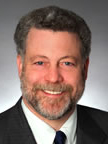
    Patent Docs author Dr. Kevin Noonan (at right) gave the following testimony at today's USPTO hearing on genetic diagnostic testing:

    I want to thank the organizers for inviting me to testify today.

    This study by the PTO is important because it should give the Office the opportunity to determine whether there is any evidence that "patents are the problem" with regard to patient access to genetic diagnostic testing.  It has become fashionable in some quarters (mostly the medical and legal academies) and in some industries to question the value of patenting in promoting innovation.  Those that do so analogize patents to a tax on innovation and even contend that patenting can retard innovation.  Judges and even some Justices have proposed that there needs to be a balance between patenting; like a judicial Goldilocks, there is abroad the idea that we need just the right amount of patenting, and that steps, like the "second opinion" exemption we are discussing today are ways to achieve that golden mean.
    These ideas are current under circumstances where there is little evidence that patents are responsible for preventing patients from enjoying the benefits of the new genetic technology.  There is also little evidence that current genetic diagnostic test providers are beset by rampant error in the test results they provide.  It isn't as if no one has looked for these effects, but in every case the reports and studies are forced to begrudgingly admit that there is no apparent effect of patents on either access or quality, even while remaining steadfast that there could be or might be in the future.  This includes many academic studies as well as official U.S. government agencies including the Department of Health and Human Services SACGHS report.  I know of no study showing that limitations on patient access are not the consequence of behaviors and policies of private and government insurers, payors and providers rather than patents.  After all, in America, the one right patients don't have when it comes to medical treatment or diagnosis is an economic one.  Healthcare in this country depends on what each individual patient can afford, or if they have benefits through their employer, what their employer provides.  If an insurer won't pay for a genetic diagnostic test, it doesn't mean the test is too expensive — it means the insurer has decided that it, and its insureds, can wait until the price comes down.  The patent system didn't create this situation and weakening patenting won't solve it.

    So we are left again with a discussion of what might be done with patents, that supporters contend will facilitate patient access and diagnostic reassurance even in view of a dearth of evidence that patents are the problem.  I propose that if we are willing to do that, we would be remiss if we didn't consider all of the consequences of such actions and to inquire whether patient access or test quality would improve or not (particularly if our efforts are not taken in parallel with reforms in other areas of healthcare system).

    It is unlikely that the future will resemble the past, but it would also be a mistake to ignore the past.  And the record of the past 30 years is that biotechnology has been an extraordinarily fruitful and successful industry.  This is remarkable, if you remember that the industry is only about 30 years old.  As Judge Rader noted in his "additional views" in the Classen case, and Judge Moore in her concurring opinion in the Myriad case, biotechnology has prospered in large part because it was supported by the U.S. patent system.  And the reasons for that outcome are two-fold:  technology transfer from university research under the Bayh-Dole Act, and investment in the technology because of the existence of patent protection.

    As an example of the importance of university tech transfer, since the passage of the Bayh-Dole Act, 6,000 new companies were founded on university inventions, more than 4,000 new products came on the market (including 153 new drugs, vaccines, or medical devices), at least 279,000 new jobs were created just in the period between 1996 and 2007, and over $457 billion was added to the country's gross national product.

    Universities and research institutes have performed the basic scientific research, and the potential to protect the practical applications of that research through patenting have provided the incentives (and the economic benefits to those universities and research institutes) for companies to commercialize them.  This partnership has propelled the U.S. to the forefront of biomedicine, providing biologic drugs and diagnostic methods for important and previously intractable diseases.

    These foundations of success may be negatively influenced by proposals that permit unfettered (and uncompensated) "second opinion" testing.  This is because of another reality:  while the Human Genome Project created the largest amount of scientific information in the shortest time in human history, in many ways it was what Bob Weinberg of MIT has called "the race to the beginning of the road."  The next 50-100 years will be consumed with a much more difficult task — understanding how this genetic information interacts with environmental factors to cause disease.  And in doing this we will be faced with another reality:  there will be very little "low hanging fruit" of unrecognized single-gene genetic mutations associated with human disease.  Most common diseases like cancer and diabetes involve genetic and other changes in multiple genes, unlike Myriad's BRCA test and other existing genetic tests.

    In other words, complexity will be the rule.  And when something is complex, it is harder to reverse engineer.  That reality produces the danger of proposals to weaken patent protection for genetic diagnostic testing.  I haven't picked up a pipette in 25 years, but even I can envision ways for a company to produce a genetic diagnostic test for a multivariate disease that can be protected without patenting.  Simply identify the genetic variants from the 6-12 genes involved and put diagnostic sequences on a gene chip along with probes for 10,000 other genes.  Encrypt each chip so that the diagnostic patterns — the diagnostically informative positions — cannot be identified without the encryption key, and then provide the public with the test.  No patents, no problem — and no disclosure and no end to the ability to charge whatever a provider wants, limited only by the time it takes for someone to independently make the same discovery.

    But in such a world the partnership between universities and business that fueled the biotechnology revolution is broken, because universities cannot — and should not — fail to disclose the results of their research.  While not everything that university research has produced over the past 30 years has been patented, it has been disclosed (whether patented or not).  And support for some of that research has been provided by investors and companies translating that technology from the lab bench to the clinic, and the basis for that support will be diminished if not extinguished if genetic diagnostic methods lose the ability to be fully protected.

    While such a scenario could also arise under present law, there is little incentive for it to do so, since the public can eat its cake and have it too — basic university research can proceed as it always has, being directed to science instead of technology.  Important technologies have resulted from such basic research, from Cohen and Boyer's identification of restriction enzymes to Fire and Mello's siRNA; these inventions arose unexpectedly from basic scientific research based on new biological discoveries.  Such discoveries don't always have clinically or commercially useful applications, but where they do they can be protected by patenting.  If that is changed, investment behavior may change, and it may not take a dramatic change in the scope of patent protection to change the incentives that exist today.  Permitting "second opinion" genetic diagnostic testing for some applications of biotechnology may be enough to make patenting less attractive compared with the effort necessary to protect genetic diagnostic methods by non-disclosure.

    If there were no alternatives to legislating some sort of exemption from patent infringement liability for "second opinion" genetic diagnostic tests, then perhaps public policy concerns would tip the scales in favor of some form of the legislation as has been proposed.  But there are at least the following possible ways to prevent this outcome in the patent arena (and I'm sure many unexplored ways in the insurance and general healthcare space).

    First, we can recognize that under Federal Circuit case law and PTO practice the written description and enablement requirements have limited the scope of medical and genetic diagnostic claims over the past decade or so — it is unlikely that a broad claim to detecting any mutation associated with a particular gene for a particular disease would be granted or enforced today.  So the specter of broad, overarching claims that inhibit all research on genetic mutations in a particular gene associated with a particular disease is and has been a strawman in the debate.

    Second, other robust patent principles — such as patent exhaustion — can be employed to the problem if it arises.  The Supreme Court has extended patent exhaustion principles to method claims in the Quanta case.  Here, for example, an individual could be given the right to a "second opinion" test provide that she can show that she has obtained the first test from the patent holder or her licensee.

    Third, as we heard from MPEG LA there are ways to avoid "patent thickets" even if they were to arise — and the possibility for them to arise is low, if only because many underlying gene patents will expire.  The telecommunication industry has used standard setting and other means to avoid patent thickets, and the biotechnology industry can as well.

    Fourth, in egregious circumstances, the U.S. government can exercise "march-in" rights to encourage non-exclusive commercialization (although this option should be exercised sparingly).

    Under any scenario in which second opinion genetic diagnostic testing is performed, a critical requirement must be that the lab that provides such a second opinion be at least as competent and provide at least as accurate a diagnosis as the patent holder or her licensee or an important reason for even considering unrecompensed second opinion testing will be unfulfilled.  One of the aspects of genetic diagnostic methodology is that implementing it with actual patient samples isn't as simple as performing an experiment in a lab — providing the required quality control is one of the things patent protection funds, so that the public gets the benefits of genetic testing in the first place.  Permitting any genetic testing without such safeguards would be irresponsible.

    Finally, in addition to upsetting the settled expectations of a highly successful industry, any action to carve out an exemption from patent infringement liability for "second opinion" genetic diagnostic testing would amount to a taking that would need recompense.  Any legislation or policy change that would permit such second opinion testing — which would amount to a compulsory license — would need to take the public cost into account.  The same impetus underlying some of these proposals — the coming age of personalize medicine and widespread genetic diagnostic testing — will multiply and exacerbate the cost of any policy that permits someone other than the patentee from performing a patented genetic diagnostic test, and it is disingenuous not to consider the cost.  We will also need to factor in the cost to the economy in general if loss of patent protection leads to job losses in states like Massachusetts and California that have a disproportionately large number of biotech companies.

    In addition, these costs must be balanced with impending patent expiry, since any benefit to the public will be short lived in many cases and, if the result is unpatented but undisclosed genetic tests, any such benefit will likely be overwhelmed by increased costs from such unpatented tests.

    These considerations, in my mind, make any proposal for permitting "second opinion" genetic diagnostic testing to be unnecessary, premature and ill-advised, and I urge the Office to include these reservations in its report to Congress.

    Thank you.

  • By Donald Zuhn —

    Forbes

    Last week, Forbes reported that the development costs for an average drug (produced by a major pharmaceutical company) are at least $4 billion, and as much as $11 billion ("The Truly Staggering Cost Of Inventing New Drugs").  The article, by Forbes science and medicine writer Matthew Herper, notes that the drug industry pegs average drug development costs at $1 billion, and that Bernard Munos of the InnoThink Center for Research In Biomedical Innovation, adjusting for current failure rates, arrives at an estimate of $4 billion.  Seeking a more rigorous estimate, Mr. Herper and Forbes writer Scott DeCarlo combined Mr. Munos’ drug approval counts with the research and development spending for a dozen major pharmaceutical companies, as reported in annual earnings filings over the past fifteen years (pulled from a Thomson Reuters database using FactSet), and adjusted the resulting figures for inflation.  Their calculations showed that of the twelve pharma companies, AstraZeneca spent the most R&D money per approved drug (nearly $11.8 billion) and Amgen spent the least (almost $3.7 billion).  The other companies on Forbes' list were Novartis, Bristol-Myers Squibb, Merck, Abbott Laboratories, Eli Lilly, Johnson & Johnson, Pfizer, Roche, Sanofi, and GlaxoSmithKline.  The number of drug approvals, R&D spending per drug approval, and total R&D spending for each of the above companies can be found in the Forbes article.

  • By Donald Zuhn —

    USPTO Seal

    On Thursday, the U.S. Patent and Trademark Office will hold the first of two hearings on independent second opinion genetic diagnostic testing where patents and exclusive licenses exist that cover primary genetic diagnostic tests.  The Office is holding the hearings to collect information for the preparation of a report to Congress pursuant to § 27 of the Leahy-Smith America Invents Act (see "USPTO News Briefs," January 26, 2012).  Thursday's hearing will take place in the USPTO's Madison Auditorium located at 600 Dulany Street in Alexandria, Virginia, with a second hearing scheduled for March 9, 2012 in San Diego.

    Agendas for both public hearings can be found here (February 16) and here (March 9).  WebEx and teleconference numbers and passwords or access codes for each hearing can be found on the agendas.  On Thursday, a USPTO panel consisting of Deputy Director Teresa Stanek Rea; Dana Robert Colarulli, Director, Office of Governmental Affairs; Janet Gongola, Patent Reform Coordinator; Stuart Graham, Chief Economist; and George Elliott, Director, Technology Center 1600 will hear testimony between 9:35 am and 12:05 pm from the following individuals:

    • Thomas Kowalski, Shareholder, Vedder Price, P.C.
    • Mercedes Meyer, Member, Board of Directors, American Intellectual Property Law Association
    • Mary Williams, Executive Director, Association for Molecular Pathology
    • Lori Pressman, Independent Consultant on Technology Transfer
    • Hans Sauer, Associate General Counsel for Intellectual Property, Biotechnology Industry Organization
    • Ellen Jorgensen, President, Genspace
    • Lawrence Horn, CEO, MPEG LA, LLC and Kristin Neuman, Executive Director, Librassay, MPEG LA, LLC
    • Lisa Schlager, Vice President, Community Affairs & Public Policy, FORCE
    • Kevin Noonan, Patents Docs author and Partner, McDonnell Boehnen Hulbert & Berghoff LLP

    Wasserman Schultz, Debbie

    Prior to this testimony, the panel will hear (via video) from Rep. Debbie Wasserman Schultz (D-FL) (at left) who introduced an amendment to H.R. 1249 that would have exempted from infringement a "genetic diagnostic tester's performance of a confirming generic diagnostic test activity" that would otherwise constitute infringement under §§ 271(a) or (b).  H.R. 1249 was eventually passed by both the House and Senate — without Rep. Wasserman Schultz's amendment (see "House Judiciary Committee Approves H.R. 1249") — and signed into law as the Leahy-Smith America Invents Act.  USPTO Chief Economist Stuart Graham will also give an overview of the genetic diagnostic testing study.  Unscheduled testimony will be taken beginning at 1:30 pm.

    In addition to the public hearings, the Office is also seeking written comments, which must be submitted by March 26, 2012.  Additional information regarding the submission of written comments can be found here and in the Office's Federal Register notice (77 Fed. Reg. 3748).

  • By Kevin E. Noonan —

    FDA

    Last Thursday, the U.S. Food and Drug Administration issued draft guidances pursuant to its authority under the Biologics Price Competition and Innovation Act of 2009 (see "FDA Publishes Draft Guidelines for Biosimilar Product Development").  The draft guidances are intended by the agency to implement the follow-on biologic drug pathway mandated by the statute, and are set forth in three separate guidances directed to:

    1) Scientific Considerations in Demonstrating Biosimilarity to a Reference Product

    2) Quality Considerations in Demonstrating Biosimilarity to a Reference Protein Product

    3) Biosimilars: Questions and Answers Regarding Implementation of the Biologics Price Competition and Innovation Act of 2009

    The first draft guidance, directed to scientific considerations concerning biosimilarity, is "focused" on therapeutic polypeptides and uses a "step-wise," "totality of the evidence" approach."  As set forth in detail in the draft guidance, this approach addresses the question of biosimilarity using various analytical method "step-by-step," where the results of one assay are interpreted and used to select additional assays that will provide additional information missing or unclear from earlier assays.  The first step is always "rigorous" comparisons of the physicochemical characteristics and functional properties of a candidate biosimilar drug, performed in comparison with the reference drug product.  From these results, the draft guidance recommends animal toxicity testing (as expressly required by the statute), human pharmacokinetic and pharmacodynamics studies, immunogenicity studies, and clinical safety and effectiveness trials.  The draft guidance also recommends postmarketing safety monitoring for biosimilar products having a reference drug product known to be associated with significant risks of adverse events.  This guidance also defines the use of the term "should" as meaning "recommended" rather than "required" by the agency.

    The second draft guidance, related to quality considerations, is specifically concerned with chemistry, manufacturing, and controls (CMC) of biosimilar products.  This draft guidance references almost two dozen earlier FDA and International Conference on Harmonization (ICH) guidances relating to biologic drug regulations, particularly relating to the production of recombinant protein products (like the first draft guidance, this draft guidance is specifically directed to therapeutic proteins, albeit acknowledging that the suggestions in the guidance might also apply to proteins and peptides used with diagnostic methods).  The draft guidance also advocates a "risk-based" approach, which will permit variances in biologic drug properties and characteristics (including primary amino acid sequence) if justified by the biosimilar applicant.  Assessments will be made under a "totality of the analytical data" standard, intended to take into account interactions between various measured parameters.  Specific aspects of biologic drug production falling within the scope of this guidance includes the expression system, manufacturing processes, assessments of physicochemical properties, functional assays, receptor binding (when appropriate) and immunochemical properties, impurities (both product- and process-related), reference product and reference standards, the finished drug product and stability studies.

    The final draft guidance is presented as a response to questions raised during pubic hearings on FDA rulemaking.  The gist of the answers given is that the agency will take a permissive approach to changes in formulation, delivery device or container and fewer than all the routes of administration, presentations or conditions of use of the reference biologic drug, provided that the biosimilar applicant provides the statutorily mandated evidence that the product is "highly similar" to the reference drug product and has equivalent safety, purity, and potency.  The FDA also indicates in this draft guidance that animal or clinical data from non-U.S. licensed biosimilar products will be considered in support of a biosimilars application under Section 351(k) but only under specific circumstances set forth in the guidance.  The guidance specificly states that agency has not yet established requirements for interchangeability.

    Finally, each draft guidance carries a disclaimer that the guidance represents the agency's "current thinking" and that applicants can use "alternative approach[es]" if the approach satisfies the statutory requirements.  No rights are created or conferred nor is the agency bound by the terms of these guidances (presumably even when promulgated in final form).

    The guidances are merely provisional in nature, and are subject to revision based on public comments received by the agency within 60 days of publication (i.e., April 9, 2012).

    And yet. . .

    At first blush the draft guidances are a little disappointing to anyone looking for clear guidelines for biosimilar applications.  While it is perhaps the case that the "correct" path to biosimilar licensure will only be developed by working through the issues as they arise, in the main the guidances merely recite well-known concepts (that therapeutic proteins are more chemically complex than small molecule drugs, for example).  The types of analytical methodologies are recommended to be "rigorous" and "state-of-the–art" with but a few examples of what the agency has in mind.  The draft guidances are also strictly limited to theraoeutic proteins (although the quality guidance suggests that similar approaches may be used for proteins utilized in diagnostic assays).  The agency has adopted a "totality of the evidence" standard which, like Supreme Court "totality of the circumstances" tests provides utmost agency flexibility and a minimum of information on the metes and bounds of acceptable evidence.  The draft guidances also suggest a "stepwise" or "step-by-step" approach, wherein the quality (and perhaps quantity) and persuasiveness of the evidence presented from each analytical methodology informs the type of evidence necessary in succeeding analytical methods; in this way "selective and targeted" application of successive analytical testing can be preformed to remove "residual uncertainty."  While reciting the requirement for the statutorily-mandated testing (for example, comparisons of the physicochemical characteristics and functional properties of a candidate biosimilar drug, performed in comparison with the reference drug product, and animal toxicity testing) the guidances provide little more than general recommendations regarding what a biosimilars applicant must submit to satisfy the agency that the biosimilar is "highly similar" to the reference biologic drug.  The provisional nature of the draft guidances is emphasized by the qualifying language throughout that the requirement for almost all the suggested types of evidence can be waived upon an adequate showing of the absence of differences between the biosimilar and the reference biologic drug.

    The most specific advice comes from the third draft guidance, which is presented as a response to questions raised during pubic hearings on FDA rulemaking.  But the guidance specificly states that agency has not yet established requirements for interchangeability.

    Maybe it was unrealistic to expect anything more specific from the agency in view of the short timeline for producing the draft guidances and the complete lack of (U.S.) experience with biosimilar drug approval.  The second guidance references more than a dozen other FDA and International Conference on Harmonization (ICH) guidances relating to biologic drug regulations, particularly relating to the production of recombinant protein products.  Going forward, it may be profitable to compare these guidances with the experiences in Europe and elsewhere regarding biosimilar drugs, and to provide suggestions during the comment period for changes in the draft guidances consistent with successful biosimilar drug approvals abroad.

  • By Donald Zuhn —

    USPTO Seal

    Last November, officials from the U.S. Patent and Trademark Office indicated that ten notices of proposed rulemaking to implement various provisions of the Leahy-Smith America Invents Act were being drafted and vetted by the Office, and that the notices would be published in January 2012 (see "USPTO News Briefs").  By the end of its self-imposed deadline, the Office had released five notices offering proposed rulemaking regarding:

    • Changes To Implement Miscellaneous Post Patent Provisions of the Leahy-Smith America Invents Act (77 Fed. Reg. 442) — Patent Docs report;
    • Changes To Implement the Preissuance Submissions by Third Parties Provision of the Leahy-Smith America Invents Act (77 Fed. Reg. 448) — Patent Docs report;
    • Implementation of Statute of Limitations Provisions for Office Disciplinary Proceedings (77 Fed. Reg. 457) — Patent Docs report;
    • Changes To Implement the Inventor’s Oath or Declaration Provisions of the Leahy-Smith America Invents Act (77 Fed. Reg. 982) — Patent Docs report; and
    • Changes To Implement the Supplemental Examination Provisions of the Leahy-Smith America Invents Act and To Revise Reexamination Fees (77 Fed. Reg. 3666) — Patent Docs report.

    On Thursday, the Office released a set of seven notices requesting comments and/or providing additional proposed rulemaking.  Among the recent set of notices were the following:

    • Practice Guide for Proposed Trial Rules (77 Fed. Reg. 6868);
    • Rules of Practice for Trials Before the Patent Trial and Appeal Board and Judicial Review of Patent Trial and Appeal Board Decisions (77 Fed. Reg. 6879);
    • Changes To Implement Derivation Proceedings (77 Fed. Reg. 7028);
    • Changes to Implement Inter Partes Review Proceedings (77 Fed. Reg. 7041); and
    • Changes To Implement Post-Grant Review Proceedings (77 Fed. Reg. 7060).

    As with the first set of proposed rules, Patent Docs plans to discuss each of the notices published last week, beginning with the notice to implement the derivation proceedings provisions of the AIA.  Subsequent posts will address the other notices.

    Section 3(i) of the Leahy-Smith America Invents Act amends 35 U.S.C. § 135 to provide for derivation proceedings in which an applicant may seek a determination that "an inventor named in an earlier application derived the claimed invention from an inventor named in the petitioner's application and, without authorization, the earlier application claiming such invention was filed" (see "AIA Overview: First-Inventor-to-File Provisions").  The 14-page notice of proposed rulemaking on derivation proceedings addresses the manner in which the Patent Trial and Appeal Board will resolve disputes as to which of two applicants is a true inventor.  In addition to the derivation proceedings provisions provided in AIA § 3(i), the notice indicates that:

    Derivation proceedings will be conducted in a manner similar to inter partes reviews and post-grant reviews.  Unlike patent interferences, derivations will be conducted in a single phase without the use of a "count."  An inventor seeking a derivation proceeding must file an application.  35 U.S.C. 135(a).  An inventor, however, may copy an alleged deriver's application, make any necessary changes to reflect accurately what the inventor invented, and provoke a derivation proceeding by the timely filing of a petition and fee.

    Pursuant to § 135(a), the Director shall determine whether to institute a derivation proceeding in response to a petition demonstrating that the standards for instituting a derivation proceeding have been met.  However, the notice states that "[a] derivation is unlikely to be declared even where the Director thinks the standard for instituting a derivation proceeding is met if the petitioner's claim is not otherwise in condition for allowance."

    Under new § 135(f), the Director is not precluded from determining the patentability of the claimed inventions involved in the proceeding.  The notice indicates that "[t]he Director will delegate to the Board authority to resolve patentability issues that arise during derivation proceedings when there is good cause to do so."

    Following a discussion of the changes to 35 U.S.C. § 135, the notice provides a discussion of specific rules for instituting and conducting derivation proceedings before the Board.  In particular, the notice proposes adding new subpart E to 37 C.F.R. part 42 to provide rules specific to derivation proceedings.  In three of the other notices issued last week, the Office proposes adding subpart A to 37 C.F.R. part 42, which sets forth the policies, practices, and definitions common to all trial proceedings (including derivation proceedings) before the Board; subpart B, which provides rules specific to inter partes review; subpart C, which provides rules specific to post-grant review; and subpart D, which provides rules specific to transitional program covered business method patents.

    A brief discussion of the proposed rules for instituting and conducting derivation proceedings can be found on pages 7030-31 of the notice, and the text of the new rules can be found on pages 7039-41 of the notice.

    Comments regarding the notice can be submitted by e-mail to derivation@uspto.gov; by regular mail addressed to:  Mail Stop Patent Board, Director of the United States Patent and Trademark Office, P.O. Box 1450, Alexandria, VA 22313–1450, marked to the attention of Lead Judge Michael Tierney, Derivation Proposed Rules; or via the Federal eRulemaking Portal.  The deadline for submitting comments is April 10, 2012.  Additional information regarding the submission of comments can be found in the Office's Federal Register notice (77 Fed. Reg. 7028).

  • By Sherri Oslick —

    Gavel About Court Report:  Each week we will report briefly on recently filed biotech and pharma cases.

    Purdue Pharma L.P. et al. v. Sandoz Inc.
    1:12-cv-00897; filed February 3, 2012 in the Southern District of New York

    • Plaintiffs:  Purdue Pharma L.P., The P.F. Laboratories, Inc., Purdue Pharmaceuticals L.P., Rhodes Technologies, Board of Regents of the University of Texas Systems, Grunenthal GMBH
    • Defendant:  Sandoz Inc.

    Infringement of U.S. Patent Nos. 6,488,963 ("Hot-Melt Extrudable Pharmaceutical Formulation," issued December 3, 2002), 7,674,799 ("Oxycodone Hydrochloride Having Less Than 25 PPM 14-Hydroxycodeinone," issued March 9, 2010), 7,674,800 (same title, issued March 9, 2010), 7,683,072 (same title, issued March 23, 2010), and 7,776,314 ("Abuse-Proofed Dosage System," issued August 17, 2010) following a Paragraph IV certification as part of Sandoz's filing of an ANDA to manufacture a generic version of Purdue Pharma's OxyContin® (controlled release oxycodone hydrochloride, used to treat pain).  View the complaint here.


    Shire LLC et al. v. Mylan Pharmaceuticals, Inc. et al.

    2:12-cv-00638; filed February 2, 2012 in the District Court of New Jersey

    • Plaintiffs:  Shire LLC; Shire Development Inc.
    • Defendants:  Mylan Pharmaceuticals, Inc.; Mylan Inc.; Johnson Matthey Pharmaceutical Materials; Johnson Matthey Inc.

    Infringement of U.S. Patent Nos. Nos. 7,105,486 ("Abuse-resistant Amphetamine Compounds," issued September 12, 2006), 7,223,735 ("Abuse Resistant Lysine Amphetamine Compounds," issued  May 29, 2007), 7,655,630 ("Abuse-Resistant Amphetamine Prodrugs," issued February 2, 2010), 7,659,253 (same title, issued February 9, 2010), 7,659,254 (same title, issued February 9, 2010), 7,662,787 ("Abuse Resistant Lysine Amphetamine Compounds," issued February 16, 2010), 7,671,030 ("Abuse-Resistant Amphetamine Prodrugs," issued on March 2, 2010), 7,671,031 (same title, issued on March 2, 2010), 7,674,774 (same title, issued on March 9, 2010), 7,678,770 (same title, issued on March 16, 2010), 7,678,771 (same title, issued on March 16, 2010), 7,687,466 (same title, issued on March 30, 2010), 7,687,467 (same title, issued on March 30, 2010), 7,718,619 (same title, issued on May 18, 2010), and 7,723,305 (same title, issued on May 25, 2010) following a Paragraph IV certification as part of Mylan's filing of an ANDA to manufacture a generic version of Shire's Vyvanse® (lisdexamfetamine dimesylate, used to treat Attention Deficit Hyperactivty Disorder).  View the complaint here.