• By Kevin E. Noonan —

    Federal Trade Commission (FTC) SealLast month, the Federal Trade
    Commission accomplished a decade-long goal:  getting a Federal Circuit Court of Appeal (the 3rd Circuit) to
    support its position that so-called "reverse
    payments" (also known as "pay-for-delay" arrangements) between
    innovator pharmaceutical companies and generic drugmakers in ANDA litigation
    brought under 35 U.S.C. § 271(e)(2) are anticompetitve and barred by Federal
    antitrust law, in In re K-Dur Antitrust Litigation.  Such a ban on these agreements have been part
    of the Obama Administration's budget for the past few years, but neither
    Congress nor the courts have been willing to adopt the FTC's stance on their
    purported anticompetitiveness.  Indeed, most courts that have considered
    the issue disagreed with the FTC's position, based on their assessment that, on
    average, generic drugs actually come on the market sooner than they would if the patentee retained its exclusivity for
    the full scope of the patent term.  This rationale has been applied, in
    varying degrees, by the Second, Eleventh, and Federal Circuits, in Valley Drug Co. v. Geneva Pharmaceuticals, Inc.,
    344 F.3d 1294 (11th Cir. 2003); Schering-Plough Corp. v. Federal Trade Commission,
    402 F.3d 1056 (11th Cir. 2005); In re Tamoxifen Citrate Antitrust Litigation,
    466 F.3d 187 (2d Cir. 2006), Arkansas Carpenters Health & Welfare Fund v. Bayer AG,
    604 F.3d 98, 105 (2d Cir. 2010); and In re Ciprofloxacin Hydrochloride Antitrust Litigation,
    544 F.3d 1323 (Fed. Cir. 2008).  Where a court has found a reverse
    payment agreement to be anticompetitive, In re Cardizem CD Antitrust Litigation,
    332 F.3d 896 (6th Cir. 2003), the facts of the case distinguished the behavior
    of these parties from the behavior of the other parties involved in such
    agreements.

    Schering-Plough (SP)To recap, the K-Dur
    case involved the drug K-Dur 20, a specific formulation of potassium chloride
    sold by Schering-Plough Co. and protected by a formulation patent, U.S. Patent
    No. 4,863,743. 
    Upsher filed its ANDA as first-filer with a Paragraph IV certification of
    non-infringement based on alleged chemical differences between Upsher's generic
    drug and Schering's branded drug product.  Schering filed suit and settlement
    negotiations ultimately resulted in an agreement, entered into on June 18,
    1997, wherein Upsher would "refrain from marketing its generic potassium
    chloride supplement or any similar product until September 1, 2001." 
    In return, Schering agreed to grant Upsher a "non-royalty [bearing] non-exclusive
    license" and Upsher granted Schering non-exclusive licenses on several of
    its products (although Schering never marketed any Upsher products). 
    Schering agreed to pay Upsher sixty million dollars over three years, plus
    additional amounts tied to its marketing of Upsher's products under the
    non-exclusive license.  Finally, the agreement called for Upsher to
    dismiss the patent litigation and not to enter the market with its KCl product
    until September 1, 2001, thus forming the predicate for allegations that this
    was at heart a "pay for delay" agreement.

    A second ANDA filer, ESI Lederle, was also
    involved in a separate litigation that was settled (under the supervision of a
    magistrate judge) with an agreement wherein ESI agreed not to market its
    generic KCl formulation (which, like Upsher, it alleged was not infringing) in
    return for a $5 million upfront payment and additional payments depending on
    when ESI's ANDA was approved by the FDA (an amount the District Court said
    varied from $10 million to $625,000 depending on the ANDA approval date); as it
    turns out, ESI obtained FDA approval of its ANDA in sufficient time to be
    entitled to $10 million, which it received from Schering.

    An FTC action ensued, with the Commission
    alleging that the agreements between Schering, Upsher, and ESI amounted to an
    unlawful restraint of trade under Section 5 of the FTC act.  The
    Administrative Law Judge dismissed, based on his determination that the
    agreements included separate licensing terms that fell outside a simple "pay
    for delay" arrangement.  The Commission reversed the ALJ's
    determination, finding a "direct nexus between Schering's payment and Upsher's
    agreement to delay its competitive entry" and that this agreement "unreasonably
    restrain[ed] commerce," and that the Schering-ESI agreement violated the
    antitrust laws (wherein the Commission rejected the parties' contention that "judicial
    pressure to settle" was involved in their agreement).  The Commission
    did not review or rule on the merits of the underlying patent suits, creating a
    per se rule that:

    [W]here a name brand pharmaceutical maker pays a generic manufacturer as
    part of a settlement, "[a]bsent proof of other offsetting consideration,
    it is logical to conclude that the quid pro quo for the payment was an
    agreement by the generic to defer entry beyond the date that represents an
    otherwise reasonable litigation compromise."

    Under a "rule of reason"
    analysis, the Commission found that "the possible existence of a reverse
    payment raises a red flag and can give rise to a prima facie case that an
    agreement was anticompetitive."  Schering appealed in the Eleventh
    Circuit, which overturned the FTC.

    MerckThis action named as plaintiffs drug
    wholesalers (Louisiana Wholesale Drug Co.) and retailers (CVS Pharmacy, Rite
    Aid, Walgreens, Eckerd, Safeway, Kroger, Albertson's, Hy-Vee and Maxi Drug)
    against Merck & Co. (the successor-in-interest to Schering-Plough) and
    Upsher-Smith Laboratories.  Characterized as "separate from the FTCs
    challenge" (but no doubt motivated by it), the plaintiffs here filed
    various lawsuits that were consolidated in the District of New Jersey by the
    Judicial Panel on Multidistrict Litigation (fortuitously for plaintiffs and the
    FTC, in an appellate circuit that had not ruled on the reverse payment practice). 
    A Special Master appointed by the Court filed a Report and Recommendation that
    the lawsuits be dismissed, based on Schering's right under the patents to "exclude
    infringing products until the end of [the patent's] term," and that
    reverse payment agreements warrant antitrust scrutiny only if they either
    exceeded the scope of the underlying patents or if the patent infringement
    lawsuits brought under the authority of the patents were objectively baseless
    (grounds that other appellate circuits had also considered in assessing the
    legality of reverse payment agreements).

    Court of Appeals - 3d CircuitThe Third Circuit rejected the precedent
    of its sister circuits, finding reverse payment agreements to be presumptively
    illegal.  The opinion sets forth its view
    of antitrust law and its application to the reverse payment agreements before
    it.  The Court set forth its opinion that the proper approach is to
    evaluate any agreement alleged to be one that restrains trade by the "rule
    of reason," following its appreciation of applicable Supreme Court
    precedents.  In doing so, the opinion states that "the finder of fact
    must decide whether the questioned practice imposes an unreasonable restraint
    on competition, taking into account a variety of factors, including specific
    information about the relevant business, its condition before and after the
    restraint was imposed, and the restraint's history, nature, and effect,"
    citing State Oil Co. v. Khan, 522 U.S. 3, 10 (1997).  This inquiry
    has three parts, according to the Third Circuit:  there must be a showing
    of an anticompetitive effect on the market, which (if established) "shifts
    the burden to the defendant to show that the challenged conduct promotes a
    sufficiently pro-competitive effect."  The antitrust plaintiff can
    rebut this showing if it can establish that the restraint on trade is not "reasonably
    necessary to achieve the [purportedly] pro-competitive objective" asserted
    by the antitrust defendant.  The opinion also notes that there is a class
    of activities that have been deemed "unlawful per se" that
    includes "horizontal price fixing, output limitations, market allocation,
    and group boycotts," citing Copperweld Corp. v. Independence Tube
    Corp.,
    467 U.S. 752, 768 (1984).

    The opinion rejected what it termed "precedent
    from other Circuits," namely the cases noted above that have almost
    unanimously found reverse payment agreements to be lawful.  The opinion
    noted that in each case, the appellate court found the reverse payments to be
    lawful based on the patent's presumption of validity and the patentee's right
    to exclude, and that the agreements did not involve an improper extension of
    that exclusionary right (as well as the policy considerations involving
    favoring settlements).  The panel opinion termed these considerations the "scope
    of the patent" test, which it identified from the Second Circuit's In
    re Tamoxifen Antitrust Litigation
    decision.  In a footnote, the panel acknowledged
    these decisions but, finding that they are persuasive and not binding authority
    and that the panel does not find the arguments persuasive, they "decline
    to follow [them]."

    The panel then explained its analysis of
    this case law and why it is unpersuaded.  Put simply, the panel does not
    believe that the "scope of the patent" test is the appropriate test
    and should not entitle reverse payments to avoid antitrust scrutiny.  The
    opinion forms this conclusion because "that test [in the panel's view] improperly
    restricts the application of antitrust law and is contrary to the policies
    underlying the Hatch-Waxman Act and a long line of Supreme Court precedent on
    patent litigation and competition."  The opinion provides three
    grounds for this conclusion.  First, the opinion stated that it creates "an
    almost unrebuttable presumption of patent validity," due to the fact that
    the settlement "forces a presumption that the patent holder would have
    prevailed" in the underlying (and settled) ANDA litigation.  This
    presumption has (or should have) no substantive vitality, according to the
    panel, because it is merely 'a procedural device and is not a substantive right
    of the patent holder," citing Stratoflex, Inc. v.
    Aeroquip Corp.
    , 713
    F.2d 1530, 1534 (Fed. Cir. 1983).  The opinion also believed using the
    presumption of validity to uphold reverse payment agreements was "particularly
    misguided" when the basis for the underlying patent infringement defense
    is non-infringement (as it was in this case), because the burden is properly on
    the patentee, not the challenger, to prove infringement.  The panel
    opinion also "question[ed] the assumption" that subsequent ANDA
    filers will come forward to challenge "weak" patents.

    The Third Circuit panel considered perceived
    pernicious effects on reverse settlements as being directed to first ANDA
    filers, which it asserts are the "most motivated" due to the promise
    of 180 days of market exclusivity.  The panel also cites several Supreme
    Court cases for the proposition that patent rights are "a limited
    exception to a general rule of the free exploitation of ideas" that
    indicate that "the public interest supports judicial testing and
    elimination of weak patents" (this in contrast to the 11th Circuit's
    recognition that:

    No matter how valid a patent is — no matter how often it has been
    upheld in other litigation or successfully reexamined — it is still a gamble
    to place a technology case in the hands of a lay judge or jury.  Even the
    confident patent owner knows that the chances of prevailing in patent
    litigation rarely exceed seventy percent.  Thus, there are risks involved
    even in that rare case with great prospects.

    The panel explicitly limited the scope of
    its decision to "reverse payments between patent holders and would be
    generic competitors in the pharmaceutical industry." It is clear that the
    panel was motivated at least in part by its perception, as argued by the FTC,
    that reverse payment settlement agreements were contrary to and in
    contravention of Congressional goals of "increase[ing] the availability of
    low cost generic drugs" (despite findings in other circuits that in some
    circumstances reverse payment settlements do just that).  Nevertheless,
    the panel found that "[t]he line that Congress drew between these
    competing objectives [of stimulating innovation and furthering the public
    interest] strongly supports the application of rule of reason scrutiny of
    reverse payment settlements in the pharmaceutical industry."  And the
    panel limits the scope of its decision only to settlements that involve
    payments from the patentee to the putative generic competitor:  "[n]othing
    in the rule of reason test that we adopt here limits the ability of the parties
    to reach settlements based on a negotiated entry date for marketing of the
    generic drug:  the only settlements subject to antitrust scrutiny are
    those involving a reverse payment from the name brand manufacturer to the
    generic challenger."  According to the Court, "the vast majority
    of pharmaceutical patent settlement [will be] unaffected" by its ruling.

    The proper procedure under Third Circuit
    law is thus to use a "quick look" rule of reason analysis "based
    on the economic realities of the reverse payment settlement rather than the
    labels applied by the settling parties" and that "any payment from a
    patent holder to a generic patent challenger who agrees to delay entry into the
    market as prima facie evidence of an unreasonable restraint of trade." 
    In doing so, the Court also "agrees [] with the FTC that there is no need
    to consider the merits of the underlying patent suit because '[a]bsent proof of
    other offsetting consideration, it is logical to conclude that the quid pro
    quo
    for the payment was an agreement by the generic to defer entry beyond
    the date that represents an otherwise reasonable litigation compromise,'"
    citing the Commission's Final Order in this matter that was overturned by the 11th
    Circuit.

    Merck has now petitioned for
    certiorari; the Question Presented is:

    Whether the federal antitrust laws permit a
    brandname manufacturer that holds the patent for a drug to enter into a
    settlement of patent litigation with a prospective generic manufacturer, where
    the settlement includes a payment from the brand manufacturer to the generic
    manufacturer but does not exclude competition beyond the scope of the patent.

    According to the petition, there
    are three reasons why certiorari should be granted.  First, the Third Circuit's decision creates a
    "circuit split" below regarding the "appropriate standard"
    to be applied in assessing antitrust liability for settlements of ANDA
    litigation between branded and generic drug makers.  Second, this case is an "ideal vehicle"
    for the Court to consider the question. 
    The "divergent legal standard" applied by the Third and
    Eleventh Circuits were applied "in
    reviewing the very settlements at issue
    [in this case]" (emphasis in petition), a circumstance
    where "the Court can be not only confident, but certain, that a circuit
    conflict concerning the appropriate legal standard is squarely implicated,
    because two courts of appeals have applied different legal standards to the same
    facts," citing United States v. American Can Co., 280 U.S.
    412, 415-16 (1930).  In addition, in
    this case the Court would have the benefits of an extensive record, including
    the proceedings before the FTC, the District Court and two appellate
    courts.  Finally, the petition asserts
    that the Court will hear from all interested parties — branded and generic drug
    makers, private plaintiffs including wholesale and retail drug stores, and the
    government.  Third, the petition
    characterizes the Question Presented as "an exceptionally important and
    recurring one" with great "legal and practical significance."  Moreover, "[f]urther percolation []
    would serve no useful purpose."  And, "if
    left undisturbed, the decision of the Third Circuit — a circuit with jurisdiction
    over many of the Nation's major pharmaceutical companies — promises to have a
    chilling effect on patent settlements between brand manufacturers and generic
    manufacturers."  But while the Third
    Circuit's decision may appear to be limited to settlements where there is an
    actual payment from the branded drug maker to one or more generic companies,
    the petition notes that, "[s]eemingly emboldened by the Third Circuit's decision,
    however, the FTC has recently taken the position in litigation that 'payments'  include terms of settlements that cannot
    meaningfully be characterized as payments at all, such as terms concerning the
    entry of brand manufacturers' own generic versions, citing the FTC Brief in In
    re Effexor XR Antitrust Litig.
    , Civ. No. 11-5479 (D.N.J.) (filed Aug. 10,
    2012).

    It is unlikely that any of the
    parties — or the government — will oppose this petition, making it likely for
    that reason alone that the Court will grant cert.  And insofar as this is in many respects a "patent"
    case, it seems even less likely that the Court will resist the siren call of
    another opportunity to consider this area of the law.

  • By Donald Zuhn —

    USPTO to Hold Roundtable on
    AIA First Inventor to File Provisions

    USPTO Building FacadeEarlier this month, the
    U.S. Patent and Trademark Office published a notice in the Federal Register (77
    Fed. Reg. 49427
    )
    announcing that the Office will be hosting a roundtable on September 6, 2012 to
    obtain public input from organizations and individuals on issues relating to
    the USPTO's proposed implementation of the first-inventor-to-file provisions of
    the AIA.  On July 26, the Office
    published a notice of proposed rulemaking regarding "Changes to Implement
    the First Inventor to File Provisions of the Leahy-Smith America Invents
    Act" (77 Fed. Reg. 43742)
    and a request for comments regarding "Examination Guidelines for
    Implementing the First-Inventor-to-File Provisions of the Leahy-Smith America
    Invents Act" (77 Fed. Reg. 43759).  The roundtable will focus on the above
    documents.

    The roundtable will be held
    from 1:30 to 4:30 (EDT) in the Madison Auditorium at 600 Dulany Street in Alexandria,
    Virginia, and is open to the public.  The Office indicated that it plans to invite a number of roundtable
    participants from among patent user groups, practitioners, industry,
    independent inventor organizations, academia, and the government.  An agenda for the roundtable can be found
    here.  The roundtable will be available via WebEx
    webinar

    (event number: 997 151 983; password: 123456) or teleconference at +1-408-600-3600 (access
    code: 997 151 983).


    USPTO to Hold Eight AIA
    Roadshows on Final Rules

    The U.S. Patent and
    Trademark Office has announced that it will be hosting eight roadshows in
    September to share information about the new final rules for implementing the
    provisions of the Leahy-Smith America Invents Act that take effect on September
    16, 2012.  The final rules to be covered
    at the roadshows relate to the inventor's oath/declaration, preissuance
    submissions, citation of patent owner statements, supplemental examination, inter partes review, post grant review,
    and covered business method review provisions of the AIA.  The roadshows will be free and open to the
    public.  While pre-registration is not
    required, seating will be available on a first-come, first-served basis.  The Office notes that the roadshows in
    Minneapolis, Alexandria, and Los Angeles will be webcast.  The eight roadshows include:

    Monday, September 10
    Hennepin County Library
    Minneapolis, MN

    Wednesday, September 12
    USPTO Campus
    Alexandria, VA

    Friday, September 14
    Los Angeles Public Library
    Los Angeles, CA

    Monday, September 17
    Denver Public Library
    Denver, CO

    Thursday, September 20
    Detroit Public Library
    Detroit, MI

    Monday, September 24
    Georgia Institute of
    Technology Library
    Atlanta, GA

    Wednesday, September 26
    Rice University Fondren
    Library
    Houston, TX

    Friday, September 28
    New York Public Library
    New York, NY

    According to the USPTO's AIA
    Roadshow webpage
    , the
    agenda of the roadshows will be as follows:

    10:30 am — Opening Remarks

    11:00 am — Patents: Final
    Rules for Inventor's Oath/Declaration, Pre-issuance Submission, Miscellaneous
    Post Patent Provisions, and Supplemental Examination

    12:30 pm — Lunch Break

    1:30 pm — Board: Umbrella
    Final Rules and Specific Final Rules for Post Grant Review, Inter Partes Review, and Covered Business Method Review

    3:15 pm — Break

    3:30 pm — Finance:
    Proposed Rules for Fees

    4:10 pm — Patents:
    Proposed Rules for First-Inventor-to-File

    4:50 pm — Closing Remarks

    Mapsend

    USPTO Expands Patent Law
    School Clinic Certification Pilot Program

    USPTO SealLast month, the U.S. Patent
    and Trademark Office announced
    the further expansion of the Patent Law School Clinic Certification Pilot
    Program to include an additional eleven schools for the upcoming academic
    year.  Under the pilot program, law
    students are permitted to practice patent law before the Office under the
    guidance of a law school faculty clinic supervisor.  In particular, students in the program can
    expect to draft and file a patent application and respond to an office action.

    The Patent Law School
    Clinic Certification Pilot Program was begun in 2008 with six law schools, was
    expanded to include ten more schools in 2010 (some of the participating schools
    allow students to practice before the Office in both patents and trademarks and
    others allow students to practice before the Office in trademarks only).  The eleven new participating schools are
    Arizona State University Sandra Day O'Connor College of Law, Case Western
    Reserve University School of Law, University of Colorado Law School, Fordham
    University School of Law, University of Maryland Francis Carey School of Law,
    North Carolina Central University School of Law, University of Notre Dame Law School,
    University of Puerto Rico Law School, Thomas Jefferson School of Law,
    University of Washington School of Law, and Wayne State University Law
    School.  The above schools join the
    sixteen prior participating law schools — University of Akron School of Law;
    American University, Washington College of Law; University of Connecticut
    School of Law; The George Washington University School of Law; Howard
    University School of Law; The John Marshall School of Law; University of Maine
    School of Law; University of Maryland School of Law; University of New
    Hampshire School of Law; North Carolina Central University School of Law;
    University of Puerto Rico School of Law; University of Richmond – Richmond
    School of Law; Rutgers Law School – Newark Vanderbilt College of Law; West
    Virginia University School of Law; and William Mitchell College of Law.

  • By
    Kevin E. Noonan —

    LillyA
    three judge Federal Circuit panel went a long way towards disentangling its
    jurisprudence on the question of obviousness-type double patenting, in
    affirming a District Court finding that the doctrine did not apply to the
    patent claims at issue in Eli Lilly &
    Co. v. Teva
    .  In what seems to
    becoming a penchant of this Court (see
    "Momenta Pharmaceuticals Inc. v. Amphastar Pharmaceuticals,
    Inc.: 'The Rest of the Story'
    "), the panel distinguished its decision rather
    than simply finding the Court's most recent spate of decisions to have gone
    astray (see "Cert. Denied in Eli Lilly v. Sun
    Pharmaceuticals
    ").

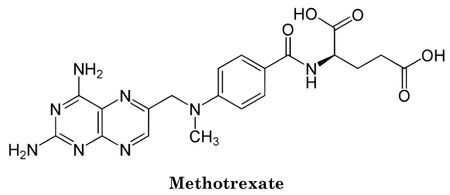
    The present case concerns pemetrexed, a folate
    metabolism inhibitor synthesized by Professor Ed Taylor at Princeton University
    and developed by Eli Lilly & Co., sold as the anticancer drug Alimta®
    for treating mesothelioma and small cell lung cancer.  Pemetrexed's biological activity, as with
    earlier folate inhibitors like methotrexate, is understood to result from its
    structural similarity to naturally occurring folic acid, which is needed for
    DNA and RNA synthesis:


    Pemetrexed
    Folic Acid


    Methotrexate

    Earlier embodiments of folate inhibitors, like
    methotrexate, were disadvantageous because their effects on nucleic acid
    metabolism were felt by non-cancerous as well as cancer cells, due to their ability to
    inhibit cellular enzymes like dihydrofolate reductase (DHFR) that were needed
    for both DNA and RNA production.  Pemetrexed was able to specifically inhibit DNA synthesis by virtue of its specificity for enzymes such as thymidylate synthetase (because the nucleotide
    thymidine is incorporated into DNA but not RNA).

    Princeton University obtained (and Eli Lilly
    licensed) three patents related to pemetrexed:  U.S. Patent No. 5,344,932 (the patent-in-suit); U.S. Patent No.
    5,028,608 and U.S. Patent No. 5,248,775.  The '608 patent disclosed and claimed a related but structurally distinct
    antifolate compound, and the '775 patent disclosed a "family of chemical
    intermediates that can be used to make a variety of antifolates"; important for the
    issues on appeal, the '775 patent disclosed an intermediate in antifolate
    synthesis that can be used to make pemetrexed (along with a variety of other
    antifolate molecules).  The '608 and '775 patents expired prior to the instant
    suit, while expiration of the '932 patent was delayed until July 14, 2016
    pursuant to patent term extension under 35 U.S.C. § 156.

    Teva #2Eli Lilly sued Teva, Barr Laboratories and APP
    Pharmaceuticals after each filed an ANDA, pursuant to 35 U.S.C. § 271(e)(2),
    asserting claims 1, 2, 3 and 7 of the '932 patent.  At the district court, the defendants
    asserted as a defense that the claims of the '932 patent were invalid under the
    judicially established doctrine of obviousness-type double patenting over claim
    3 of the '608 patent (claiming a related but structurally distinct antifolate
    molecule) and claim 7 of the 775 patent (that claims the intermediate).  With regard to the '608 patent, Teva
    contended at trial that pemetrexed was related to the compound claimed by claim
    3 of the '608 patent by substitution of a thienyl group with a phenyl group,
    something Teva asserted was "consistent with 'conventional wisdom' in the
    field [of the pharmaceutical arts]" and thus rendered the claims invalid.  As for the '775 patent, Teva's argument was that the pemetrexed compounds
    claimed in the '932 patent were a "use" of the intermediate compound
    disclosed in the '775 patent, and were invalid for double patenting under a
    line of Federal Circuit cases, the most recent of which was Sun Pharmaceuticals Industries, Ltd. v. Eli
    Lilly & Co
    .  In the
    alternative, Teva argued that pemetrexed was merely an obvious end product for
    the '775 patent intermediate.

    The District Court found none of these arguments
    persuasive.  The Court rejected Teva's "focus"
    on the particular portion of pemetrexed that differed from the compound
    disclosed in the '608 patent, saying that the weight of the evidence was that
    the skilled worker would have "pursued changes outside of the aryl region
    to improve TS inhibition and would have avoided introducing a phenyl group into
    the '608 Compound based on previous reports of toxicity with analogous
    antifolate structures."  The basis
    for the District Court's rejection of Teva's obviousness-type double patenting
    argument over the disclosure of the '775 patent intermediate was that the
    intermediate was not claimed ("so the teachings from the '775 patent's
    specification were inapplicable to its obviousness-type double patenting
    analysis") and that there were many possible end products that could have
    been produced from the '775 patent intermediate and no reasoned basis for the
    skilled worker to have produced pemetrexed as the end product.

    The Federal Circuit agreed, in an opinion by Judge
    Lourie joined by Judges Dyk and Wallach.  The panel rejected Teva's argument on appeal, that Federal Circuit
    precedent (specifically, Amgen Inc. v. Hoffmann-La Roche Ltd., 580 F.3d
    1340 (Fed. Cir. 2009)), mandated that a court look only at the differences
    between the claims at issue and the earlier claims, "so that any features
    held in common between the claims — in this case, all but the aryl regions of the
    '608 Compound and pemetrexed — would be excluded from consideration."  The panel acknowledged that Amgen directs a court to identify the
    differences, but asserts that Amgen
    then requires that the claims at issue be considered "as a whole" and
    not "the differences [] in isolation."  The basis for this analytical framework is
    the rubric reasserted in Amgen that
    obviousness-type double patenting is assessed "analogous to an obviousness
    analysis under 35 U.S.C. §103."  And as in a § 103
    analysis, claims must be considered "as a whole" in an obviousness-type double patenting analysis says the panel, citing General Foods Corp. v. Studiengesellschaft Kohle mbH, 972 F.2d 1272 (Fed. Cir. 1992).  "On the merits," the
    panel found no basis for finding clear error in the District Court's factual
    determinations underlying its judgment, and "absent any motivation to
    derive pemetrexed from the '608 Compound or reason to expect success in doing
    so," the panel concluded that the District Court had not erred in finding against
    Teva that the asserted claims of the '932 patent were not invalid for
    obviousness-type double patenting over the claims of the '608 patent.

    Turning to Teva's obviousness-type double patenting
    arguments based on the teachings of the '775 patent, the panel noted that these
    argument's were rooted in earlier precedent, specifically citing In re Byck,
    48 F.2d 665 (CCPA 1931), and Sun Pharmaceutical Industries, Ltd. v. Eli
    Lilly & Co.
    , 611 F.3d 1381 (Fed. Cir. 2010).  But the panel found this reliance on these
    cases "unsound" and proceeded to distinguish this case from that
    precedent.  The panel began by citing the
    "general rule" that obviousness-type double patenting depends on a
    comparison with what is claimed in an earlier patent, "with the earlier
    patent's written description considered only to the extent necessary to
    construe its claims," citing In re Avery, 518 F.2d 1228, 1232 (CCPA
    1975).  The panel then further reaffirmed
    the fundamental principles that the doctrine of obviousness-type double
    patenting is concerned with what is claimed, not what is disclosed, because the
    goal of the doctrine is to prevent separate patenting of merely obvious
    variants of a previously patented invention.

    The opinion then characterized the line of cases
    relied upon by Teva as "a limited exception" to this rule.  The basis for this exception was set forth in
    Byck, wherein:

    It would shock one's
    sense of justice if an inventor could receive a patent upon a composition of
    matter, setting out at length in the specification the useful purposes of such
    composition, manufacture and sell it to the public, and then prevent the public
    from making any beneficial use of such product by securing patents upon each of
    the uses to which it may be adapted.

    Next, the Court turned to a "trio" of
    recent cases:  Sun Pharma, Geneva Pharm., Inc.
    v. GlaxoSmithKline PLC
    , 349 F.3d 1373
    (Fed. Cir. 2003), and Pfizer, Inc. v. Teva
    Pharm. USA, Inc.
    , 518 F.3d 1353 (Fed. Cir.
    2008).  Each of these cases,
    according to the panel, resulted from situations where the second patent
    claimed a use of a composition claimed in an earlier patent that disclosed the
    later-claimed use.  According to the
    opinion, these cases each "address the situation in which an earlier
    patent claims a compound, disclosing the utility of that compound in the
    specification, and a later patent claims a method of using that compound for a
    particular use described in the specification of the earlier patent,"
    citing Sun Pharma, and that in each case the later
    application (or patent) claimed "a, or the" disclosed use of the
    composition claimed in the earlier patent.  This analysis was enough by itself to distinguish the claims at issue
    here, because it was not disputed that the intermediate compound disclosed in
    the '775 patent (and the compound claimed in the '608 patent) were not the same
    compound claimed in the '932 patent, i.e., pemetrexed.  Under these circumstances, "[t]he particular
    concerns motivating our prior decisions are [] absent here" because the
    claims of the '932 patent were "wholly independent" of the claims of
    the '775 patent, according to the opinion.  And "[p]utting aside the
    teachings in the '775 patent's specification, Teva's double patenting
    contentions evaporate."  In
    addition, the panel noted that it had no basis for finding error in the District Court's conclusion that there was "no reason" the skilled
    worker would have chosen to make pemetrexed from the '775 patent intermediate,
    noting in passing that while not controlling, this conclusion was consistent
    with the provisions of the Manual of Patent Examining Procedure that states
    that:

    [A]n
    intermediate product and a final product can be shown to be distinct inventions
    if the intermediate and final products are mutually exclusive inventions (not
    overlapping in scope) that are not obvious variants, and the intermediate
    product as claimed is useful to make other than the final product as claimed.  §806.05(j).

    Finally, the
    panel found that the District Court had erred by refusing to consider so-called
    "secondary" considerations of non-obviousness, on the grounds that
    these considerations were not to be applied in an obviousness-type double
    patenting assessment (on the contrary, the opinion asserts that they must be considered).  But this was
    harmless error because the District Court had reached the correct conclusion in
    rejecting Teva's invalidity arguments based on obviousness-type double
    patenting.

    The panel's
    opinion and discussion of the reasoning behind it appears to have cabined to a
    narrow category of facts the trio of decisions that applied the disclosure, as
    opposed to just the claims, of an earlier patent to make an obviousness-type
    double patenting determination on later-filed claims.  Under the revised interpretation of the
    obviousness-type double patenting standard enunciated by the Lilly court here, the claims of an
    earlier patent alone are to be considered for determining obviousness-type
    double patenting, except insofar as
    the disclosure of the earlier patent is necessary to construe the scope of the
    earlier claims, or unless the later
    application claims a use for a composition claimed in an earlier patent wherein
    the use itself is disclosed but not claimed in the earlier patent.  If this view is not further distinguished by
    a future panel, the Court may have brought some certainty to the application of
    the obviousness-type double patenting doctrine, consistent with their mandate
    from Congress to harmonize and clarify U.S. patent law.

    Eli Lilly & Co. v. Teva
    Parenteral Medicines, Inc.
    (Fed. Cir. 2012)

    Panel: Circuit Judges Lourie, Dyk, and Wallach
    Opinion by Circuit Judge Lourie

  • By Sherri Oslick —

    Gavel About Court Report:  Each week we will report briefly on recently filed biotech and pharma cases.

    Merck Sharp
    & Dohme Corp. v. Watson Laboratories, Inc.

    3:12-cv-05228;
    filed August 20, 2012 in the District Court of New Jersey

    Infringement
    of U.S. Patent Nos. 5,571,817 ("Methods of Treating Androgenic Alopecia
    with Finasteride
    [17β-N-mono-substituted-carbamoyl-4-aza-5-α-androst-1-en-ones]," issued
    November 5, 1996), 5,547,957 ("Method of Treating Androgenic Alopecia with
    5-α Reductase Inhibitors," issued August 20, 1996), and 5,886,184 ("Finasteride
    Processes," issued March 23, 1999) following a Paragraph IV certification
    as part of Watson's filing of an ANDA to manufacture a generic version of Merck's
    Propecia® (finasteride, used to treat androgenic alopecia).  View the complaint here.  [NB: Merck voluntarily dismissed the case
    without prejudice 3 days after filing.]


    Santarus,
    Inc. et al. v. Dr. Reddy's Laboratories Inc. et al.

    3:12-cv-05202;
    filed August 15, 2012 in the District Court of New Jersey

    • Plaintiffs:
     Santarus, Inc.; The Curators of The
    University of Missouri
    • Defendants:
     Dr. Reddy's Laboratories Inc.; Dr. Reddy's
    Laboratories, Ltd.

    Infringement
    of U.S. Patent Nos. 6,699,885 ("Substituted Benzimidazole Dosage Forms and
    Methods of Using Same," issued March 2, 2004), 6,489,346 (same title,
    issued December 3, 2002), 6,645,988 (same title, issue November 11, 2003), and
    7,399,772 (same title, issued July 15, 2008) following a Paragraph IV
    certification as part of Dr. Reddy's filing of an ANDA to manufacture a generic
    version of Santarus' Zegerid® (omeprazole/sodium bicarbonate, used to treat
    heartburn and other symptoms associated with gastroesophageal reflux
    disease).  View the complaint here.

  • Calendar

    August 27, 2012 – AIA Post-Grant Implementation Begins – Is Your Business Strategy Aligned? (Foley & Lardner) – 3:00 pm (Eastern)

    August 30, 2012 – The Written Description Requirement: Are Antibodies Chemicals, Proteins, or Exceptions? (American Bar Association) – 1:00 – 2:30 pm (Eastern)

    September 6, 2012 – A Review of the Impact of Recent Supreme Court and Federal Circuit Decisions on Patent Strategy (McDonnell Boehnen Hulbert & Berghoff LLP) – 10:00 – 11:15 am (CT)

    September 9-11, 2012 – IPO Annual Meeting (Intellectual Property Owners Association) – San Antonio, TX

    September 10-12, 2012 – Business of Biosimilars & Generic Drugs (Institute for International Research) – Boston, MA

    September 18,
    2012 – New USPTO Rules for Post-Grant Proceedings (Strafford) – 1:00 – 2:30 pm (EDT)

    September 19, 2012 – New Post Grant Proceeding Rules: Adjusting to the New Reality (Technology Transfer Tactics) – 1:00 – 2:15 pm (Eastern)

    September 20-21, 2012 – FDA Boot Camp*** (American Conference Institute) – Boston, MA

    September 24-25, 2012 – Biosimilars and Biobetters*** (SMi) – London, UK

    September 25-26, 2012 – EU Pharma Regulatory Law*** (C5) – Brussels, Belgium

    September 28, 2012 – Focus on Biologics and Biosimilars (Catalyzing Collaboration Between Industry and Academia in the Life Sciences) – Hospira, Inc., Lake Forest, IL

    October 10-11, 2012 – Maximizing Pharmaceutical Patent Lifecycles*** (ACI) – New York, NY

    October 10-11, 2012 – Biotech & Pharmaceutical Patenting*** (C5) – London, UK

    October 22-23, 2012 – Tech Transfer Summit North America*** (Tech Transfer Summit Ltd.) – John Hopkins University, Montgomery County, MD

    October 24-25, 2012 – FDA Boot Camp Devices Edition*** (American Conference Institute) – Chicago, IL

    October 25-26, 2012 – Life Sciences Congress on
    Paragraph IV Disputes
    (Center for
    Business Intelligence) – Washington, DC

    ***Patent Docs is a media partner of this conference or CLE

  • Strafford #1Strafford will be offering a webinar/teleconference
    entitled "New USPTO Rules for Post-Grant Proceedings:  Meeting the New Requirements for Post-Grant
    and Inter Partes Reviews and Supplemental Examination" on September 18,
    2012 from 1:00 – 2:30 pm (EDT).  Scott A.
    McKeown, Greg H. Gardella, and Jessica J. Harrison of Oblon Spivak McClelland
    Maier & Neustadt will provide guidance for counsel to IP owners on changes
    to implement inter partes review
    proceedings, post-grant review proceedings, and the transitional program for
    covered business method patents, and outline strategic considerations for
    post-grant practice.  The webinar will
    review the following questions:

    •
    How has post-grant practice been transformed since the America Invents Act?
    •
    How do the new rules impact the strategic use of post-grant proceedings
    parallel to litigation?
    •
    What are the relevant deadlines and best practices for the new post-grant
    review process?

    An
    interactive Q&A session will follow the presentation.

    The
    registration fee for the webinar is $297 ($362 for registration and CLE
    processing).  Those registering by August
    31, 2012 will receive a $50 discount. 
    Those interested in registering for the webinar, can do so here.

  • Washington - Monument #2The Center for
    Business Intelligence (CBI) will be holding its 4th Life Sciences Congress on
    Paragraph IV Disputes on October 25-26, 2012 in Washington, DC.  The conference will offer presentations on the
    following topics:

    • Through the
    looking glass — Fine-tune fundamentals of Hatch-Waxman and anticipate future
    developments in patent litigation;
    • The next big wave
    — Understand the inner workings of the FDA's biosimilars pathway;
    • Interpretation of
    Supreme Court's ruling for patent use codes;
    • Examine the new
    era of label carve-outs;
    • Navigate new
    provisions and procedures of the America Invents Act — to be presented by
    Teresa Stanek Rea, Deputy Deputy Director of the U.S. Patent and Trademark Office
    • Understand the
    impact of the changing bio/pharma business model on Paragraph IV litigation
    (panel);
    • Generic —
    Essential considerations and necessary requirements for the letter;
    • Branded —
    Strategic first steps before and after a PIV letter is received;
    • Today's courtroom
    — A Judge's perspective — to be presented by the Honorable Tonianne
    Bongiovanni of the U.S. District Court for the District of New Jersey;
    • Defining
    inequitable conduct in today's PIV suits;
    • Qualification of
    combination products under Hatch-Waxman and the biosimilars pathway; and
    • Recent
    developments on FTC settlements and pay-for-delay agreements — to be presented
    by Mark Woodward of the Health Care Division, Federal Trade Commission.

    CBIAn agenda for the
    Congress on Paragraph IV Disputes can be found here.

    The registration
    fee is $2,495 (vendor) or $2,295 (pharma/biotech) for those registering by
    October 25, 2012.  Those interested in
    registering for the conference can do so here.

  • By
    Kevin E. Noonan —


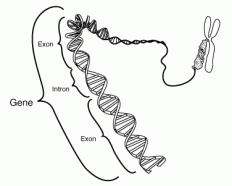
    GeneEarlier this month we
    asked for examples of instances where claims to isolated DNA interfered with
    basic research (see "The Proper Scope of DNA (or "Gene")
    Patent Claims
    ").  We posited that the claim would be something
    like this one:

    An isolated (human) nucleic acid (or
    DNA molecule or gene (specified by name)), encoding an amino acid sequence
    identified by SEQ ID NO: X,

    where the portions
    of this claim in parentheses are optional, used in some cases but not necessary
    to properly recite the claimed subject matter.  This type of claim has the following features:

    • It must use the term "isolated" in the claim, to distinguish
    it from naturally occurring molecules in their natural state, so as to evince
    the "hand of man" in its creation (Diamond v. Chakrabarty)
    to satisfy 35 U.S.C. § 101;

    • It cannot read on
    the natural molecule (i.e., the claim scope cannot be broad enough to encompass
    the natural molecule) so that it satisfies the novelty requirement of 35
    U.S.C. § 102
    (Wood-Paper Patent,
    90 U.S. 566 (1874), and Cochrane v. Badische Anilin Soda Fabrik,
    111 U.S. 293 (1884));

    • Infringement will lie only if the entire
    amino acid sequence-encoding isolated nucleic acid recited in the claim is made, used, sold, offered to be
    sold, or imported;

    • Portions of the gene can be isolated,
    sequenced, and characterized and not infringe, and such portions can be changed
    and then introduced into the gene to produce another gene that does not
    infringe;

    • The gene product (typically, a protein)
    can be isolated from the cell and studied without infringement, as can
    antibodies raised against the gene product; and

    • The sequence itself can be identified in
    individuals and compared to wildtype or disease-associated mutations without
    infringing unless the entire DNA is isolated intact.

    Bottlenose DolphinRecent posts provide an opportunity to further distinguish what
    is patent eligible from what is not (see "Dolphin Genes Show Relationships
    between Large Brains and Energy Metabolism Similar to Humans and Elephants"

    and "Genetic
    Marker Map of Sunflower Species Reported
    ").  In
    the former, researchers have identified a number of genes that have been
    subjected to positive selection, presumably due to their usefulness in adapting
    to the aquatic lifestyle.  This
    information was developed by comparing dolphin genes with their orthologs in
    related species, including cow, horse, dog, mouse,
    elephant, opossum, platypus, chicken, and man.  And none of this information is, per se, eligible for patenting, being
    (like the capacity for certain species of Rhizobium to grow together) to be "part
    of the storehouse of knowledge of all men [and] 
    manifestations of laws of nature, free to all men and reserved
    exclusively to none." 
    Funk
    Brothers Seed Co. v. Kalo Inoculant Co
    .,
    333 U.S. 127 (1948).

    However, the paper does posit that
    dolphins may be large animal models for type 2 diabetes in humans

    During the course of primate evolution, metabolism evolved to provide a
    constant supply of energy to the increasing demands of a larger brain. 
    [Leonard et al., 2003, "Metabolic correlates
    of hominid brain evolution
    ," Comp.
    Biochem. Physiol. A
    136: 5–15].  Humans have evolved several
    adaptations, including an increase in visceral fat and the evolution of
    tissue-specific insulin resistance in the brain that protects nervous tissue
    from energy shortage; however, malfunctions of this system in humans can cause
    type 2 diabetes (Kuzawa, 2010 Beyond feast-famine: brain evolution, human life
    history, and the metabolic syndrome. In Human evolutionary biology (ed.
    Muehlenbein M.), pp. 518–527. Cambridge, UK: Cambridge University Press). 
    Interestingly, recent research has proposed that dolphins should be seen as a
    model for type 2 diabetes, as they possess all the hallmarks of the disease
    [Venn-Watson et al., 2011, "Dolphins as animal
    models for type 2 diabetes: sustained, post-prandial hyperglycemia and
    hyperinsulinemia
    ," Gen. Comp.
    Endocrinol.
    170: 193–99)].  Here, we find genomic signatures of
    adaptive evolution in dolphin genes related to control of food intake such as
    genes involved in glycerol uptake and/or glucose metabolism (AQP9, OSTN,
    SOCS6), and a neuropeptide AGRP that is expressed in the
    hypothalamus and involved in increasing appetite, decreasing metabolism and
    regulating leptin. In addition, we found several genes under selection related
    to lipid transport and metabolism [] that may be associated with the large fat
    reserves found in cetaceans.

    Thus, methods for testing compounds as
    potential drugs for treating human type 2 diabetes using dolphins may be patent
    eligible, in a claim such as this one:

    A method for identifying a compound that is effective in treating type 2
    diabetes in the human, comprising the step of administering the compound to a
    bottlenose dolphin and detecting an antiglycemic effect in the dolphin.

    The other paper, on the sunflower genome
    identified more than 10,000 genetic loci (by virtue of small nucleotide
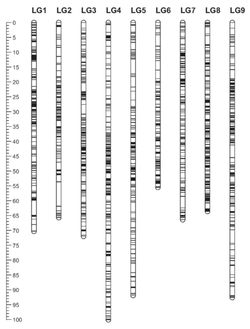
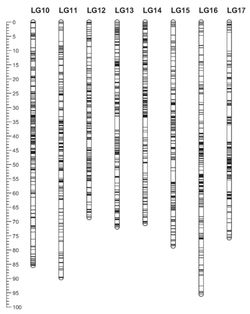
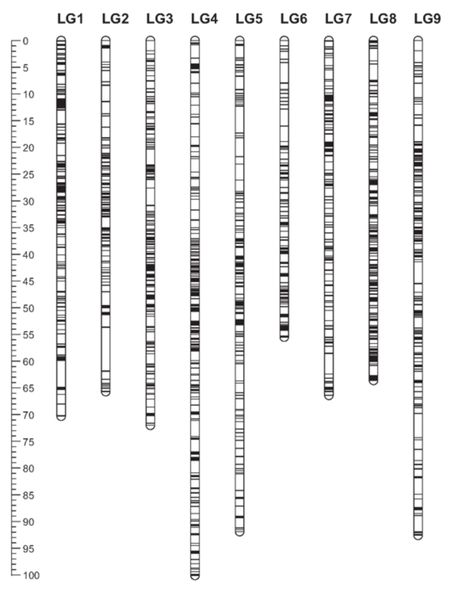
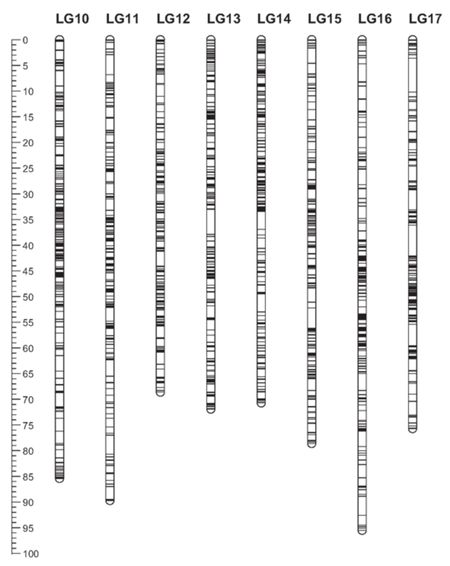
    polymorphisms or SNPs) to provide a genetic map of the sunflower genome.  That genome was represented graphically as
    follows:

    2012-08-23 FIG1
    2012-08-23 FIG2

    SunflowerLike the dolphin genome, this map is also
    not patent eligible.  However, sunflowers
    are of great economic importance, being the fourth largest source of cultivated
    vegetable oils worldwide (www.fas.usda.gov).  In addition to these maps, the "sunflower
    genome project" is under active pursuit (Kane et al. 2011, "Progress
    towards a reference genome for sunflower," Botany-Botanique 89:
    429–37), wherein genes that may increase yield or resistance to insect
    predation or aridity may be mapped to portions of the sunflower genome close to
    one of these SNPs.  In such a case,
    methods for identifying sunflowers having a desirable trait associated with one
    of these polymorphisms may be patentable:

    A method for producing sunflowers having [a desirable trait], wherein
    the trait is genetically linked to [a particular SNP], the method comprising
    the step of identifying the SNP in said sunflower and cultivating said
    sunflower.

    These examples are
    not meant to be exhaustive.  But they are
    intended to illustrate the difference between patent eligible and ineligible
    subject matter, and to show that the mere intersection of patents and biology
    should not be the occasion to disqualify patent eligible subject matter.

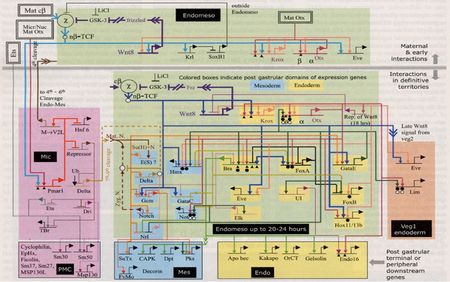
    This is illustrated by the drawing below, which discloses relationships between gene expression in mammalian development.  If you squint a little looking at the drawing (or click on the image), these inter-relationships look somewhat like a circuit drawing, and in some ways they are.  These interrelationships are not, per se, eligible for patenting.  But components thereof, and methods taking advantage of the elucidation of these interrelationships should be, and their provenance in the natural world should not be enough to categorically exclude them from patent eligibility.

    ImageFigure from Ellis, "Animal Evolution: A View from the Genome," Engineering & Science 3/4: 42-51 (2001).

  • By
    Kevin E. Noonan —

    SunflowerLong
    before DNA sequencing technology existed (indeed, long before Watson and Crick
    proposed that DNA was the genetic material and proposed a structural basis for
    its ability to be replicated), scientists were able to study genome structure
    using strictly genetic approaches.  Genetic linkage maps, for example, date from
    the work of Thomas Hunt Morgan and Hermann Mueller on fruit flies at Columbia
    University and later at Cal Tech.  Traditionally,
    these maps have been generated using phenotypic markers, much like Mendel did
    with his pea plants (in relative obscurity) a generation before.

    Marker
    density is a limitation using traditional methods, however.  But an improvement in this aspect of the
    methodology was achieved in the 1980's with the advent of restriction fragment
    length polymorphism (RFLP) methods.  These methods used physical changes in DNA sequence (specifically at
    restriction enzyme recognition sites) to greatly expand the scope of linkage
    analysis.  This is because the "phenotype"
    of a RFLP is a polymorphism that can be identified using electrophorectic
    separation of fragments having different lengths; unlike traditional
    phenotypes, unless the RFLP happens to be associated with an amino acid change
    in a protein it is unlikely to be subject to natural selection, and thus will
    fall within the "neutral" sequence variation that has been
    appreciated to exist in natural populations since the work of Motoo Kimura in
    the 1960's.  The RFLP method was used to
    great effectiveness by David Botstein, Ray White, Mark Skolnick, and Ronald
    Davis in identifying the chromosomal location of genes associated with, inter alia, Huntington's disease, and
    notably by Mary Claire King in identifying the locus of the BRCA1 gene and in forensic
    studies used to identify Argentines "disappeared" by the military
    dictatorship during the co-called "dirty war."

    CoverSince
    the completion of the Human Genome Project, the existence of single nucleotide
    polymorphisms (SNPs), which are RFLPs without being limited to restriction
    enzyme recognition sites, has expanded the extent and number of generic markers
    useful for genome mapping.  These SNPs
    have been used to construct a high-density linkage map for the sunflower (Helianthus annus) in a paper by John
    E. Bowers
    , Eleni
    Bachlava
    , Robert
    L. Brunick
    , Loren
    H. Rieseberg
    , Steven
    J. Knapp
    and John
    M. Burke
    from the Department of Plant Biology and Center for Applied
    Genetic Technologies, University of Georgia, the Department of Crop and Soil
    Science, Oregon State University, the Department of Botany, University of
    British Columbia, and the Department of Biology, Indiana University.  The study, "Development of a 10,000 Locus Genetic Map of the Sunflower Genome Based on
    Multiple Crosses
    " was reported in the online journal Genes/Genomes/Genetics (G3), 2:
    721-729 (July 1, 2012).  These researchers identified 10,080 polymorphic
    genetic loci in the approximately 3.5 Gbp sunflower genome using a high
    throughput SNP genotyping array in developing their map, but also noted areas
    of the sunflower genome (up to 26 centiMorgans in size) having no markers that
    could be detected in individual crosses, the result, the authors speculate, of
    genetic identity between individuals in the four populations studied.  However, none of these regions were in common
    in the four populations as a whole, permitting a "gapless" map of the
    sunflower genome to be elucidated.

    Interestingly,
    the economic importance of sunflowers (being the fourth largest source of
    cultivated vegetable oils worldwide; www.fas.usda.gov) is such that earlier
    genomic mapping technologies have been applied (including RFLP maps; Berry
    et al. 1995, "Molecular marker analysis of Helianthus-annuus L. 2. Construction
    of an RFLP linkage map for cultivated sunflower," Theor. Appl. Genet. 91: 195–99; Gentzbittel et al. 1995, "Development
    of a consensus linkage RFLP map of cultivated sunflower (Helianthus-annuus L)," Theor. Appl. Genet. 90: 1079–108) and
    others.  These efforts, however, have
    been directed towards "traits of agronomic importance" as well as
    comparisons with genomic structure of related Helianthus species according to the authors.  But these traditional efforts suffered from
    the same limited marker density deficiencies noted earlier (although SNPs and
    other markers identified using these methodologies were integrated into the
    high-density map).  Compared with the
    marker density in these earlier studies (one marker per 2 Mbps) other species (Arabidopsis, rice, sorghum) were
    previously mapped at a density of ~160 bp per marker (i.e., a ~12,500-fold
    higher marker density).  These efforts
    were also hampered by the fact that no plant species closely related to
    sunflower (family Asteraceae) have been fully sequenced (the closest sequenced
    relative is the potato), although other related species (tomato, lettuce) are
    currently subject to genomic sequencing efforts.

    Markers were analyzed from multiple
    genetic crosses between members of the four populations.  The study reports crosses between individuals
    from an oilseed maintainer line with high oleic acid content and an oilseed "restorer"
    line, while other crosses involved individuals from the oilseed maintainer line
    and a wild sunflower line; an oilseed restorer line and a confectionery
    restorer line; and an oilseed restorer line that segregates for nuclear male
    sterility and a non-oilseed landrace line.  From these four populations, four individual maps of ~3500-5500 marker
    loci were created, falling into 17 linkage groups which was consistent with the
    17 chromosomes in the sunflower species (although crosses with the landrace
    species showed genetic heterogeneity that required additional analysis).  Analyses of genotyping errors showed that the
    "raw allele calls" made from the data were "highly robust"
    (i.e., having an error rate ranging from ~0.14-1%).  Turning to these results, the authors report that
    the maps were "largely collinear with an average of 88.7% of all shared
    loci being syntenic in pairwise combinations."  "Not surprisingly," according to
    the study, "the cross that showed the most and largest regions of reduced
    recombination was the only cross that involved wild sunflower," a
    phenomenon that had been previously seen in maize (McMullen et al. 2009, "Genetic properties of the maize
    nested association mapping population," Science
    325: 737–40).  The study also reports that 762 of the 5694 mapped loci could be
    ascribed to two different chromosomal locations in different crosses (and 21
    markers were found at three genomic locations), a phenomenon the authors
    suggest could be due to the existence of multicopy genes, wherein the mapped
    markers were the result of detecting the different paralogs that were located
    at different loci in the sunflower genome.  This corresponded to <14% of all detected SNPs being associated with multicopy
    genes.

    The combined consensus
    map reported in this paper comprised 10,080 loci spanning 1380 cM.  The authors state that the existence of this
    SNP map represented "over 5 million molecular data points" made
    possible by using multiple mapping populations simultaneously and that can be
    used to help assemble a map from the "sunflower genome project"
    currently underway (Kane et al. 2011, "Progress towards a reference genome for sunflower," Botany-Botanique 89: 429–37).  The relevance and
    utility of this marker map for understanding and improving sunflower species,
    subspecies and economically important variants remains a task for the future.

    FIG1
    FIG2

  • By
    Kevin E. Noonan —

    Bottlenose Dolphin"Genome
    projects" for a variety of species (comprising a complete sequence
    determination of a species' genomic DNA) has been underway for the past dozen or
    so years, in the wake of the completion of the Human Genome Project at the turn
    of the century.  While such a sequence
    determination remains the "gold standard" for a full appreciation of
    the gene structure and complement of a species, partial genome sequences,
    focusing on an animal's protein-coding sequences can also be useful in deriving
    phylogenetic relationships and understanding how genes are associated with (if
    not directly responsible for) shared phenotypic characteristics.

    Such
    a study was reported recently for the bottlenose dolphin, Tursiops truncates in a paper by Michael McGowen, Lawrence Grossman
    and Derek Wildman of the Center for
    Molecular Medicine and Genetics, Wayne State University School of Medicine (Proceedings of the Royal Society: Biological Sciences, 279: 3643-3651).   The
    paper,"Dolphin genome provides evidence for adaptive evolution of nervous system genes and a molecular rate slowdown,"
    reports the results of a comparison of 10,025 protein-coding genes from
    bottlenose dolphins and orthologous genes from cow (Bovis taurus, the closest living mammalian species in the Order
    Cetartiodactyla), horse (Equus caballus),
    dog (Canis familiaris) (together,
    these four species comprising the laurasiatherian species), mouse (Mus muscalus), elephant (Loxodonta africana), opossum (Monodelphis domestica), platypus (Ornithorhynchus anatinus), chicken (Gallus gallus) and man.  The comparison was limited to coding
    sequences (CDS) ranging from 26335 bp (SYNE1)
    to 150 bp (C20orf196 and FDPS).

    Dolphin
    genes were found to have the slowest rates of synchronous substitution between
    the laurasiatherian species and comparable to rates seen in elephants and humans.  The mean ratio of the number of
    non-synonymous substitutions per non-synonymous site to the number of
    synonymous substitutions per synonymous site (dN/dS) were highest in
    dolphins of all laurasiatherian species, and again close to human rate
    ratios.  Within the dolphin genome, 228
    genes were identified as having  (dN/dS)
    >1 (shown in Table 2), which was interpreted to indicate positive selection
    at levels (2.26%) significantly higher than seen in other species (horse, 48 or
    0.51%; cow, 32 or 0.32%; dog, 11 or 0.12%).  Moreover, while at least 46% of genes in all other lineages studied were
    subject to "purifying selection" (genes having a (dN/dS)
    <0.1), only 36.4% (or 3646 dolphin genes) were found with this ratio,
    compared with 44-51% in other species.

    Of
    the 228 dolphin genes (2.26% of total genes sequenced) under positive selection
    (having dN/dS > 1), 27 of these genes are related to the nervous system
    including genes homologous to human genes known to be involved in sleep,
    synaptic plasticity and, when defective, cognitive disability.  These include "[s]even genes [that] are
    identified as being involved in intellectual disabilities and/or microcephaly (ERCC8,
    AP4S1, MCPH1, TTR), schizophrenia (MAL) or
    Alzheimer's susceptibility (AGER, RNF182)[; f]ive genes []
    involved in neuroendocrine function, neuropeptide hormonal activity, or
    function as hormones that affect the brain (AGRP, C2orf40, EDN2,
    NMU, TTR)[; ] genes [that] function in the development of myelin (MAL),
    neuronal or brain development (CNPY1, ZNF597, PCP4L1, MCPH1), neural
    potassium channel function (KCNK18), neurite growth (CD47, LRFN1,CNPY2)
    and synaptic function (BAALC, DBI, SYPL1, AP4S1, LRFN1)."  These results were consistent with
    morphological characteristics of dolphin brains, including "high level of
    gyrification (cortical folding), expansion of the insular and cingulate
    cortices, specialized von Economo neurons, high glia to neuron ratio increase
    in synapse number, reduction of the olfactory system and the large relative
    size of the cerebral cortex."  This
    suggests to the authors that a genetic analysis might uncover evidence of "convergent
    evolution" among large-brained mammals.  Further, consistent with the source, the authors report that genes "putatively
    related to cetacean adaptations" were also identified, including "the
    cardiovascular system (TSPO2, EPGN, PLN, EDN2, PLA2G5,
    KCNJ2), sperm function and spermatogenesis (TNP1, USP26,SPAG4,
    NANOS3, SPATA9, CDYL, SOX30, SPATA7
    , AKAP4, SPATA3, GTSF1),
    lung development and respiratory function (SCGB3A2, PLUNC, TMPRSS11D),
    dermal development and function (KRTDAP, SPINK5, SPINK6, IL20,
    PSORS1C2, DMKN), hair (KRT84), olfaction (OR6B1, OR2AK2),
    vision (CRYGN), milk (CSN2), glucose and/or glycerol metabolism (OSTN,
    SOCS6, AQP9
    ), vitamin B-1 and B-12 binding and metabolism (TCN1, THTPA)
    and a multitude of genes involved in lipid transport and metabolism (APOA2,
    APOC4, APOO, FABP4, SERINC4, CCDC129, PLA2G5
    , PNLIPRP3, RARRES2,
    NR1I3)."

    The
    study also examined metabolism-associated genes (a total of 548 genes),
    particularly the mitochondrial cellular (genomic) component genes (i.e., genes
    residing in the cellular chromosome whose gene products localize in the
    mitochondrion).  These genes are believed
    to be important for energy metabolism.  8.5%
    of these genes (compared with 1.5-5% for other species) were found to have (dN/dS) > 0.5, including the gene for
    cytochrome c (CYCS).  This is consistent with the increased energy
    needs of mammals with large brains, it being known that "basal metabolic
    rates [are correlated] with relative [larger] brain size" [Isler et al., 2006, "Metabolic costs of brain size evolution," Biol. Lett.
    2, 557–560] as has been observed in humans [Grossman et al., 2004, "Accelerated evolution of the electron transport chain
    in anthropoid primates
    ," Trends Genet. 20, 578–585].  These
    results were consistent with increased brain size, which like in humans is
    larger than expected when body size is considered.

    The
    authors conclude that their data is consistent with a slower rate of mutation
    that other species (1.4 x 10⁻⁹ substitutions/per site per year
    compared with an average mammalian mutation rate of 2.2 x 10⁻⁹
    substitutions/per site per year).  These
    results are also consistent with "adaptive evolution" of both the
    dolphin nervous system and brain, and although the authors have not established
    a definitive link between any of the brain-related genes they identified and "morphological
    or behavioral" traits in dolphins.  But they point out that they identified six genes (AP4S1encoding a membrane protein
    associated with AMPA glutamate receptors; SYPL1encoding a synaptic
    molecule differentially regulated during human development; LRFN1encoding a synaptic adhesion molecule;
    BAALC encoding a component of postsynaptic complexes; and DBI encoding
    a modulator of signal transduction at type A gamma-aminobutyric acid receptors
    with implications in sleep regulation) that are thought to be involved in
    synaptic function; similar genes "have been implicated in the evolution of
    the brain in humans" according to the report.

    Genes
    involved in DNA repair and associated with intellectual disabilities in humans
    were also identified in the study, including "ERCC8 is a gene
    involved in transcription-coupled DNA damage repair; mutations in this gene
    result in Cockayne's syndrome, whose symptoms include microcephaly,
    neurological defects and premature ageing [Rapin et al., 2006, "Cockayne syndrome in adults: Review with clinical and
    pathological study of a new case
    ," J. Child Neurol. 21, 991–1006].  ERCC8 shows evidence of positive selection in recent human populations [Voight
    et al., 2006, "A map of recent positive
    selection in the human genome
    ," PLoS Biol. 4, e72].  MCPH1 is another gene with evidence of function in DNA damage repair as
    well as cell cycle regulation.  MCPH1 dysfunction can cause microcephaly
    and has been documented to be under positive selection along the human lineage."

    Regarding
    genes involved in energy metabolism, the positive selection observed by these
    authors is consistent with an oxygenation rate of 6.0 mL kg/min, greater than
    in humans or elephants.  In this regard
    the paper makes the following interesting observation:

    During the course of primate evolution,
    metabolism evolved to provide a constant supply of energy to the increasing
    demands of a larger brain.  [Leonard et al.,
    2003, "Metabolic correlates of hominid brain evolution," Comp. Biochem.
    Physiol. A
    136, 5–15].  Humans have evolved several adaptations,
    including an increase in visceral fat and the evolution of tissue-specific
    insulin resistance in the brain that protects nervous tissue from energy
    shortage; however, malfunctions of this system in humans can cause type 2
    diabetes (Kuzawa, 2010 Beyond feast-famine: brain evolution, human life
    history, and the metabolic syndrome. In Human evolutionary biology
    (ed.
    Muehlenbein M.), pp. 518–527. Cambridge, UK: Cambridge University
    Press).  Interestingly, recent research has proposed that dolphins
    should be seen as a
    model for type 2 diabetes, as they possess all the hallmarks of the
    disease [Venn-Watson et al., 2011, "Dolphins as animal models for type 2 diabetes:
    sustained, post-prandial hyperglycemia and hyperinsulinemia
    ," Gen. Comp.
    Endocrinol.
    170: 193–99)].  Here, we find genomic signatures of
    adaptive evolution in dolphin genes related to control of food intake such as genes
    involved in glycerol uptake and/or glucose metabolism (AQP9, OSTN,
    SOCS6), and a neuropeptide AGRP that is expressed in the
    hypothalamus and involved in increasing appetite, decreasing metabolism and
    regulating leptin. In addition, we found several genes under selection related
    to lipid transport and metabolism [] that may be associated with the large fat reserves
    found in cetaceans.

    This paper is just one example of how elucidating
    genomic DNA structure can provide insights (including, as set forth above
    regarding the relationship between energy metabolism and diabetes, unexpected
    insights) into genotype/phenotype relationships in evolutionarily related
    species.  These results also indicate
    that the "golden age" of genomics is still, really, in its infancy.

    Table2