• UCI School of LawThe University of California-Irvine School of Law will be holding a conference entitled "The Meaning of Myriad" from 9:00 am to 5:00 pm on September 12, 2014 at the University of California, Irvine.  The conference schedule is as follows:

    • Panel 1: The New, New Subject Matter
        - Mark Janis, IU Bloomington — Expressive Eligibility
        - Amelia Rinehart, University of Utah — Myriad Lessons Learned

    • Panel 2: Implications for Scientific Research and Medicine
        - Peter Lee, UC Davis — Law, Forbearance, and Definitional Fluidity: The Impact of Myriad Genetics on Scientific Research
        - Anna Laakmann, Lewis & Clark — The New Genomic Semicommons

    • Keynote Address: Hon. Andrew Guilford, USDC — "Judging Myriad"

    • Panel 3: International and Comparative Assessments
        - Brad Sherman, Griffith University — What Does it Mean to Invent Nature?
        - Jessica Lai, University of Lucerne — Myriad Genetics in the European Context: A Contrast to the U.S. Approach

    • Panel 4: Scouting the Way Ahead
        - Lisa L. Oullette, Stanford University — Non-Patent Innovation Incentives and Patentable Subject Matter
        - Mark Lemley, Stanford University — Can Mayo and Myriad be Reconciled?

    Additional information about the conference can be found here.  There is no registration fee for the conference.  Those interested in registering for the seminar can do so here.

  •         By Sherri Oslick

    Gavel About Court Report:  Each week we will report briefly on recently filed biotech and pharma cases.

    UCB Inc. et al. v. Watson Laboratories Inc. (NV) et al.
    1:14-cv-01083; filed August 21, 2014 in the District Court of Delaware

    • Plaintiffs:  UCB Inc.; UCB Manufacturing Ireland Ltd.; UCB Pharma GmbH; LTS Lohmann Therapie-Systeme AG
    • Defendants:  Watson Laboratories Inc. (NV); Watson Laboratories Inc. (DE)

    Infringement of U.S. Patent Nos. 6,699,498 ("Transdermal Therapeutic Systems Having Improved Stabilty and Their Production," issued March 2, 2004), 6,884,434 ("Transdermal Therapeutic System Which Contains a D2 Agonist and Which is Provided for Treating Parkinsonism, and a Method for the Production Thereof," issued April 26, 2005), 7,413,747 ("Transdermal Therapeutic System for Treating Parkinsonism," issued August 19, 2008), 8,246,979 ("Transdermal Delivery System for the Administration of Rotigotine," issued August 21, 2012), 8,246,980 ("Transdermal Delivery System," issued August 21, 2012), and 8,617,591 ("Transdermal Delivery System for the Administration of Rotigotine," issued December 31, 2013) following a Paragraph IV certification as part of Watson's filing of an ANDA to manufacture a generic version of UCB's Neupro® (rotigotine transdermal systm, used to treat the signs and symptoms of idiopathic Parkinson's disease and moderate-to-severe Restless Legs Syndrome).  View the complaint here.

    Mallinckrodt LLC et al. v. Hi-Tech Pharmacal Co. Inc. et al.
    1:14-cv-01084; filed August 21, 2014 in the District Court of Delaware

    • Plaintiffs:  Mallinckrodt LLC; Mallinckrodt Inc.; Nuvo Research Inc.
    • Defendants:  Hi-Tech Pharmacal Co. Inc.; Akorn Pharmaceuticals Inc.; Akorn Ophthalmics Inc.; Akorn Inc.

    Infringement of U.S. Patent Nos. 8,217,078 ("Treatment of Pain with Topical Diclofenac," issued July 10, 2012), 8,546,450 (same title, issued October 1, 2013), 8,618,164 (same title, issued December 31, 2013), and 8,741,956 (same title, issued June 3, 2014) following a Paragraph IV certification as part of Hi-Tech's filing of an ANDA to manufacture a generic version of Mallinckrodt's Pennsaid® (diclofenac sodium topical solution, used for the treatment of signs and symptoms of osteoarthritis of the knee(s)).  View the complaint here.

    Novartis Pharmaceuticals Corp. et al. v. Dr. Reddy's Laboratories, Ltd. et al.
    2:14-cv-05260; filed August 21, 2014 in the District Court of New Jersey

    • Plaintiffs:  Novartis Pharmaceuticals Corp.; Novartis AG
    • Defendants:  Dr. Reddy's Laboratories, Ltd.; Dr. Reddy's Laboratories, Inc.

    Novartis Pharmaceuticals Corp. et al. v. Dr. Reddy's Laboratories Ltd. et al.
    1:14-cv-01076; filed August 20, 2014 in the District Court of Delaware

    • Plaintiffs:  Novartis Pharmaceuticals Corp.; Novartis AG
    • Defendants:  Dr. Reddy's Laboratories Ltd.; Dr. Reddy's Laboratories Inc.

    The complaints in these cases are substantially identical.  Infringement of U.S. Patent Nos. 6,894,051 ("Crystal Modification of a N-phenyl-2-pyrimidineamine Derivative, Processes for Its Manufacture and Its Use," issued May 17, 2005) and RE43,932 ("Crystal Modification of a N-phenyl-2-pyrimidineamine Derivative, Processes for Its Manufacture and Its Use," issued January 15, 2013) following a Paragraph IV certification as part of Dr. Reddy's filing of an ANDA to manufacture a generic version of Novartis' Gleevec® (imatinib mesylate, used for various indications, including treatment of myeloid leukemia).  View the Delaware complaint here.

    Janssen Products LP et al. v. Cipla Ltd. et al.
    1:14-cv-01056; filed August 15, 2014 in the District Court of Delaware

    • Plaintiffs:  Janssen Products LP; Janssen R&D Ireland
    • Defendants:  Cipla Ltd.; Cipla USA Inc.

    Infringement of U.S. Patent Nos. 7,700,645 ("Pseudopolymorphic Forms of a HIV Protease Inhibitor," issued April 20, 2010), 7,126,015 ("Method for the Preparation of Hexahydro-furo-[2,3-b]furan-3-ol," issued October 24, 2006), 7,595,408 ("Methods for the Preparation of (3R,3aS,6aR)hexahydro-furo[2,3-b]furan-3-ol," issued September 29, 2009), and 8,518,987 ("Pseudopolymorphic Forms of a HIV Protease Inhibitor," issued August 27, 2013) following a Paragraph IV certification as part of Cipla's filing of an ANDA to manufacture a generic version of Janssen's Prezista® (darunavir, used to treat human immunodeficiency virus (HIV-1) infection).  View the complaint here.

    Salix Pharmaceuticals Ltd. et al. v. Mylan Pharmaceuticals Inc.
    1:14-cv-01055; filed August 15, 2014 in the District Court of Delaware

    • Plaintiffs:  Salix Pharmaceuticals Ltd.; Salix Pharmaceuticals Inc.; Glycyx Pharmaceuticals Ltd.
    • Defendant:  Mylan Pharmaceuticals Inc.

    Infringement of U.S. Patent Nos. 6,197,341 ("Formulations of Balsalazide and Its Derivatives," issued March 6, 2001) and 8,497,256 ("Formulations and Uses of 2-Hydroxy-5-Phenylazobenzoic Acid Derivatives for the Treatment of Males," issued July 30, 2013) following a Paragraph IV certification as part of Mylan's filing of an ANDA to manufacture a generic version of Salix's Giazo® (balsalazide disodium, used for the treatment of mildly to moderately active ulcerative colitis in male patients 18 years of age and older).  View the complaint here.

    Forest Laboratories, LLC et al. v. Lupin Ltd. et al.
    1:14-cv-01058; filed August 15, 2014 in the District Court of Delaware

    • Plaintiffs:  Forest Laboratories, LLC; Forest Laboratories Holdings Ltd.; Adamas Pharmaceuticals Inc.
    • Defendants:  Lupin Ltd.; Lupin Pharmaceuticals Inc.; Par Pharmaceutical Inc.; Anchen Pharmaceuticals Inc.; Amerigen Pharmaceuticals Inc.; Amerigen Pharmaceuticals Ltd.

    Infringement of U.S. Patent Nos. 8,039,009 ("Modified Release Formulations of Memantine Oral dosage Forms," issued October 18, 2011), 8,168,209 ("Method and Composition for Administering an NMDA Receptor Antagonist to a Subject," issued May 1, 2012), 8,173,708 (same title, issued May 8, 2012), 8,283,379 ("Method and Compositions for the Treatment of CNS-Related Conditions," issued October 9, 2012), 8,329,752 ("Composition for Administering an NMDA Receptor Antagonist to a Subject," issued December 11, 2012), 8,362,085 ("Method for Administering an NMDA Receptor Antagonist to a Subject," issued January 29, 2013), and 8,598,233 (same title, issued December 3, 2013) following a Paragraph IV certification as part of defendants' filing of an ANDA to manufacture a generic version of Forest's Namenda XR® (memantine hydrochloride extended release, used for the treatment of moderate to severe dementia of the Alzheimer's type).  View the complaint here.

    Jazz Pharmaceuticals, Inc. v. Par Pharmaceutical, Inc.
    2:14-cv-05139; filed August 15, 2014 in the District Court of New Jersey

    Infringement of U.S. Patent No. 8,731,963 ("Sensitive Drug Distribution System and Method," issued May 20, 2014) following a Paragraph IV certification as part of Par's filing of an ANDA to manufacture a generic version of Jazz's Xyrem® (sodium oxybate, used to treat narcolepsy).  View the complaint here.

    Senju Pharmaceutical Co., Ltd. et al. v. Lupin, Ltd. et al.
    1:14-cv-05144; filed August 15, 2014 in the District Court of New Jersey

    • Plaintiffs:  Senju Pharmaceutical Co., Ltd.; Bausch & Lomb, Inc.; Bausch & Lomb Pharma Holdings Corp.
    • Defendants:  Lupin, Ltd.; Lupin Pharmaceuticals, Inc.

    Infringement of U.S. Patent No. 8,754,131 ("Aqueous Liquid Preparation Containing 2-amino-3-(4-bromobenzoyl)phenylacetic acid," issued June 17, 2014) following a Paragraph IV certification as part of Lupin's filing of an ANDA to manufacture a generic version of B&L's Prolensa® (bromfenac ophthalmic solution, used to treat postoperative inflammation and reduction of ocular pain in patients who have undergone cataract surgery).  View the complaint here.

    United States Department of Health and Human Services et al. v. Cipla Ltd. et al.
    2:14-cv-05135; filed August 15, 2014 in the District Court of New Jersey

    • Plaintiffs:  United States Department of Health and Human Services; Board of Trustees of the University of Illinois
    • Defendants:  Cipla Ltd.; Cipla USA, Inc.

    Infringement of U.S. Patent Nos. 7,470,506 ("Fitness Assay and Associated Methods," issued December 30, 2008) and 8,597,876 ("Method of Treating HIV Infection," issued December 3, 2013), both licensed to Janssen, following a Paragraph IV certification as part of Cipla's filing of an ANDA to manufacture a generic version of Janssen's Prezista® (darunavir, used to treat human immunodeficiency virus (HIV-1) infection).  View the complaint here.

  • CalendarSeptember 7-9, 2014 – 42nd Annual Meeting (Intellectual Property Owners Association) – Vancouver, Canada

    September 11, 2014 – "Post-AIA Section 102 and Prior Art: Navigating the Expanded Scope of Prior Art and AIA Exceptions" (Strafford) – 1:00 to 2:30 pm (EDT)

    September 11-12, 2014 - Advanced Patent Prosecution Workshop 2014: Claim Drafting & Amendment Writing (Practising Law Institute) – Chicago, IL

    September 16, 2014 – "Section 103 and Obviousness: Capitalizing on CCPA and Early Federal Circuit Precedent — Strategies for Withstanding Obviousness Rejections and Attacks on Patent Validity and Patentability" (Strafford) – 1:00 to 2:30 pm (EDT)

    September 18-19, 2014 – FDA Boot Camp (American Conference Institute) – Boston, MA

    September 25, 2014 – "Charting New Territory: Prosecution and Diligence Strategies in the Wake of the AIA" (American Bar Association Center for Professional Development and Section of Intellectual Property Law) – 1:00 to 2:30 pm (ET)

    September 26, 2014 – IP & Diagnostics Symposium (Biotechnology Industry Organization) – Alexandria, VA

    September 30, 2014 – 2014 Intellectual Property Continuing Legal Education Seminar (DuPont and Widener University School of Law) – Wilmington, DE

    September 30 – October 1, 2014 – Paragraph IV Disputes Master Symposium (American Conference Institute) – Chicago, IL

    October 2, 2014 – "USPTO Guidance for Determining Subject Matter Eligibility In View of U.S. Supreme Court's Mayo and Myriad Decisions" (McDonnell Boehnen Hulbert & Berghoff LLP) – 10:00 to 11:15 am (CT)

    October 2, 2014 – "Conflicts in Patent Prosecution: Minimizing Risks of Malpractice Liability and Ethics Sanctions" (Strafford) – 1:00 to 2:30 pm (EDT)

    October 20-22, 2014 – Business of Biosimilars (Institute for International Research) – Boston, MA

    October 29-30, 2014 - Congress on PIV Litigation (Momentum) – Philadelphia, PA

    ***Patent Docs is a media partner of this conference or CLE

  • By Claire Gregg* and Martin O'Brien** —

    Australia Coat of ArmsThe Full Federal Court of Australia has handed down its long awaited decision in D'Arcy v Myriad Genetics Inc today, affirming that isolated DNA and RNA are patentable subject matter under Australian law.

    The first instance decision of Nicholas J was appealed to the Full Federal Court on the grounds that the earlier Federal Court decision erred in its conclusion that isolating a gene is sufficient to render it a manner of manufacture.  We refer you to our article of 15 February 2013 for a more detailed discussion of the first instance Federal Court decision.

    Under Australian law, s 18(1)(a) of the Patents Act 1990 requires that, in order to constitute patentable subject matter, the claimed invention must be 'a manner of manufacture within the meaning of section 6 of the Statute of Monopolies'.  The meaning of 'manner of manufacture'was broadly construed by the High Court of Australia in National Research Development Corporation v Commissioner of Patents (NRDC), which held that a claim directed to a product found in nature may constitute a manner of manufacture provided that the claimed product involves an artificially created state of affairs and has utility in a field of economic significance.

    In view of the principles laid down in NRDC, the Full Federal Court unanimously upheld the decision of Nicholas J, emphasizing that '[t]his case is not about the wisdom of the patent system.  It is about the application of Australian patent law, as set out in the Act and as developed by the courts since the Statute of Monopolies'.

    The Court went on to note that it is not the role of the courts to decide 'whether, for policy or moral or social reasons, patents for gene sequences should be excluded from patentability', re-iterating that the Australian Parliament has previously considered such questions and chosen not to exclude gene sequences from patentability.

    The Court concluded that an isolated gene sequence is different to the gene as it exists in nature, with specific reference to the functional differences that arise as a result of isolation.  The Court further rejected the view of the U.S. Supreme Court that Myriad's claims are concerned 'primarily with the information contained in the genetic sequence'.  Rather, the Full Court emphasized that the claim in question 'is to a compound; a nucleic acid.  It is not a claim to information'.

    The Full Court's decision that the isolated nucleic acid in question has 'resulted in an artificially created state of affairs for economic benefit' and is therefore capable of defining patentable subject matter, has maintained the status quo in Australia in relation to the patentability of isolated gene sequences.  However, the possibility of an application for Special Leave to Appeal to the High Court still exists, and thus it may be some time before this matter is finally put to rest in Australia.

    The decision of the Full Federal Court of Australia can be found here.

    * Dr. Gregg is a Patent Scientist with the Chemical / Life Sciences Team of Spruson & Ferguson in Sydney, Australia.

    ** Dr. O'Brien is a Principal / Patent Attorney with the Chemical / Life Sciences Team of Spruson & Ferguson in Sydney, Australia.

  • By Donald Zuhn

    Kennedy TrustLast month, in AbbVie Inc. v. Mathilda & Terence Kennedy Institute of Rheumatology Trust, the Federal Circuit affirmed a determination by the District Court for the Southern District of New York that U.S. Patent No. 7,846,442, which is owned by the Mathilda & Terence Kennedy Institute of Rheumatology Trust ("Kennedy Trust"), was invalid under the doctrine of obviousness-type double patenting in view of the Kennedy Trust's U.S. Patent No. 6,270,766.

    The '766 and '442 patents are directed towards methods of treating rheumatoid arthritis by co-administering a disease-modifying antirheumatic drug (such as methotrexate) and an anti-TNFα antibody.  Representative claim 8 of the '766 patent recites (with emphasis added):

    8.  A method of treating rheumatoid arthritis in an individual in need thereof comprising co-administering methotrexate and an [anti-TNFα] antibody or an antigen-binding fragment thereof to the individual, in therapeutically effective amounts.

    and representative claim 1 of the '442 patent recites (with emphasis added):

    1.  A method of treating an individual suffering from rheumatoid arthritis whose active disease is incompletely controlled despite already receiving methotrexate comprising adjunctively administering with methotrexate therapy a different composition comprising an anti-human [TNFα] antibody or a human [TNFα] binding fragment thereof to the individual, wherein the anti-human [TNFα] or fragment thereof (a) binds to an epitope on human [TNFα], (b) inhibits binding of human [TNFα] to human [TNFα] cell surface receptors and (c) is administered at a dosage of 0.01-100 mg/kg, and wherein such administration reduces or eliminates signs and symptoms associated with rheumatoid arthritis.

    The relevant differences between the two representative claims are as follows: (1) while the '766 method is directed towards any "individual in need," the '442 method is directed towards individuals with "active disease"; (2) while the '766 method recites "co-administering" methotrexate and an anti-TNFα antibody, the '442 method recites "adjunctively administering" an anti-TNFα antibody with methotrexate.

    The '766 patent application, which was filed on August 1, 1996, claimed the benefit of an application that was filed on October 8, 1992.  After the '766 patent issued in 2001, the Kennedy Trust filed the '442 patent application.  Although the specification of the '442 patent is identical to that of the '766 patent, the '442 patent only claims the benefit of the '766 patent's August 1, 1996 filing date.  As a result, while the '766 patent expired on October 8, 2012, the '442 patent does not expire until August 21, 2018.

    AbbvieAs the opinion notes, AbbVie, Inc. and AbbVie Biotechnology Ltd. ("AbbVie"), which license the '766 patent but not the '442 patent, paid the Kennedy Trust more than $100 million in royalties in order to sell its anti-TNFα antibody, Humira, in combination with methotrexate for the treatment of rheumatoid arthritis.  However, when the '442 patent issued in 2010 and the Kennedy Trust sought an additional license from AbbVie, AbbVie instead filed a declaratory judgment action seeking a determination that the '442 patent was invalid for obviousness-type double patenting.

    At trial, the Kennedy Trust contended that the '442 patent was patentable over the '766 patent because the latter claims a broad genus of methods for treating rheumatoid arthritis, and the former claims a narrower species of those treatment methods having unexpected results.  The District Court, however, determined that the claims of the '442 patent that were at issue in the declaratory judgment action were invalid over certain claims of the '766 patent.  In reaching that decision, the District Court determined that the adjunctive administration of the '442 method was one of three forms of co-administration covered by the '766 patent, and that the term "active disease" as recited in the '442 method covered all patients suffering from rheumatoid arthritis and requiring treatment.  Thus, the District Court determined that the '442 patent covered the same invention as the '766 patent, and as a result that the asserted claims of the '442 patent were invalid over the asserted claims of the '766 patent for obviousness-type double patenting.

    In an opinion by Judge Dyk, joined by Judges Wallach and Chen, the Federal Circuit affirmed the District Courter's determination, finding the '442 patent invalid for obviousness-type double patenting in light of the '766 patent.  As the opinion inicates, the Kennedy Trust argued that:

    [T]he statutory and policy rationales underlying the obviousness-type double patenting doctrine no longer exist and the doctrine should be discarded.  More specifically, [the] Kennedy [Trust] contends that the Uruguay Round Agreement Act (URAA), Pub. L. 103-465, 108 Stat. 4809, effective June 8, 1995, and its implementation of a 20-year period of patent protection that runs from a patent's earliest claimed priority date, eliminated the need for the obviousness-type double patenting doctrine.  . . .  Now that the patent term is measured from the earliest claimed priority date, as opposed to the date of issuance, [the] Kennedy [Trust] contends that the submarine patent problem no longer exists and that the URAA amendment vitiated the policy basis for the doctrine of obviousness-type double patenting.

    The Court, however, countered that:

    [T]his argument ignores another crucial purpose of the doctrine: It is designed to prevent an inventor from securing a second, later expiring patent for the same invention.  . . .  That problem still exists.  Patents claiming overlapping subject matter that were filed at the same time still can have different patent terms due to examination delays at the PTO.

    As a result, the Court determined that "the doctrine of obviousness-type double patenting continues to apply where two patents that claim the same invention have different expiration dates."  With respect to the dispute between AbbVie and the Kennedy Trust, the Court stated that the Kennedy Trust was "not entitled to an extra six years of monopoly solely because it filed a separate application unless the two inventions are patentably distinct."

    Before reaching a decision on whether the differences between the '766 and '442 patents rendered their claims patentably distinct, the Court addressed the disputed terms of "co-administering" and "active disease."  With respect to the first term, the Kennedy Trust argued that the District Court's construction excluded a fourth form of co-administration, namely, administration of the anti-TNFα antibody antibody alone after discontinuing the administration of methotrexate.  The Court, however, noted that "[t]he '766 patent's specification confirms the correctness of the district court's claim construction," in that "[t]he specification never uses the term 'co-administering' to refer to patients who only received the antibody after discontinuing treatment with methotrexate."

    With respect to the second term, the Kennedy Trust argued that the prosecution history revealed that a more specific definition of "active disease" (i.e., particularly sick patients) was critical to the Examiner's allowance of the '442 patent claims.  "[A]ssum[ing], without deciding, that [the Kennedy Trust's] proposed construction of 'active disease' was correct," the Court noted that "[t]he consequence is the genus claimed in the '766 patent (treating all patients in need thereof) is broader than the species claimed in the '442 patent (treating patients with 'active disease,' i.e., particularly sick patients)."  As a result, the Court stated that it "must decide whether a patent that claims to treat a subset of patients with more severe rheumatoid arthritis (the '442 patent) is an obvious variant of a patent that claims treatment of rheumatoid arthritis patients generally (the '766 patent)."

    While noting that "[i]t is well-settled that a narrow species can be non-obvious and patent eligible despite a patent on its genus," the opinion points out that "species are unpatentable when prior art disclosures describe the genus containing those species such that a person of ordinary skill in the art would be able to envision every member of the class."  In the instant case, the opinion stated that "it is clear that a reader of the '766 patent could have easily envisioned a species limited to sicker patients," and determined that the District Court was correct in concluding that the species of the '442 patent was not patentably distinct from the genus of the '766 patent.

    As for the Kennedy Trust's argument that the species of the '442 patent showed unexpected results, the Court found that argument to be unsupported.  Looking to the specification to assess what results were expected at the time the '766 patent application was filed (which the Court stated was permissible), the Court determined that "the '442 patent merely claims the known utility of the '766 patent and does not claim a species with unexpected results."  The Court therefore concluded that the '442 patent was invalid for obviousness-type double patenting in light of the '766 patent.

    AbbVie Inc. v. Mathilda & Terence Kennedy Institute of Rheumatology Trust (Fed. Cir. 2014)
    Panel: Circuit Judges Dyk, Wallach, and Chen
    Opinion by Circuit Judge Dyk

  • By Andrew Williams

    USPTO SealAre proceedings before the Patent Trial and Appeals Board ("PTAB") more like prosecution or more like litigation?  This might appear to be a purely academic question, except for one significant issue — litigation prosecution bars.  Prosecution bars are often included in Protective Orders or Discovery Confidentiality Orders to prevent litigation counsel from using the confidential information produced in a lawsuit during subsequent prosecution before the Patent Office.  Of course, with the advent of the PTAB's post-issuance proceedings, the issue of whether practice before the Board should be subject to such bars needed to be resolved.

    The PTAB – IPRs are Litigation

    Earlier this year, the PTAB addressed the issue, concluding that its proceedings were more like litigation.  In Google Inc. v. Jongerious Panoramic Techs., LLC (Case IPR2013-00191), the Board concluded that "[a]n inter partes review is neither a patent examination nor a patent reexamination."  See id. Paper No. 50, at 4 (P.T.A.B. Feb. 13, 2014).  The issue being decided was whether petitioner's litigation counsel could be admitted pro hac vice.  The requirement for the Board to recognize counsel pro hac vice is good cause, provided lead counsel is a registered practitioner.  See 37 C.F.R. § 42.10(c).  In this case, Mr. James R. Batchelder submitted a declaration in which he indicated that he had extensive experience litigating patent cases, and that he had familiarity with the relevant subject matter because of his representation of Apple in district court litigation involving the same patents (Apple was co-petitioner with Google).  Not surprisingly, the Patent Owner argued that the prosecution bar in the underlying litigation should prevent Mr. Batchelder from participating in the IPR.  That protective order precluded attorneys receiving access to confidential information from engaging in "prosecution activities," and therefore the Patent Owner believed that it would be a violation if Mr. Batchelder were admitted in the case.  See Google Inc., Paper No. 50, at 4.

    In that case, the PTAB was unpersuaded by the Patent Owner's arguments.  The Board observed that an IPR is "a trial, adjudicatory in nature and constitutes litigation."  Id.  The Board also noted that, even though it prohibited "prosecution activities, the protective order was silent regarding trials before the PTAB.  Also, all of the substantive briefings had been filed in the case already.  Most importantly, however, the PTAB appeared to shift the focus back to the district court.  Mr. Batchelder was still subject to sanctions if he violated the order.  The Patent Owner did not suggest that Mr. Batchelder was in violation of the protective order, even though he had already been assisting the Petitioner's counsel.  If the Patent Owner believed that Mr. Batchelder was violating the protective order, it could seek relief at the district court.  Of course, this left open the question of how a district court would handle such prosecution bars.

    District Court – Counsel May Participate in IPR Proceeding Regardless of Prosecution Bar

    The United States District Court for the Southern District of New York recently answered that question in a similar manner, but took it an additional step.  The litigation entailed 11 separate lawsuits against several different ANDA filers that were attempting to market generic versions of OPANA® ER, an opiod painkiller.  The relevant case for these purposes was Endo Pharmaceuticals Inc. v. Amneal Pharmaceuticals, LLC, 12 Civ. 8115 (TPG).  Endo was represented in the litigation by the law firm of Dechert LLP.  Amneal filed an IPR before the PTAB related to the validity of three of the patents involved in the lawsuit — U.S. Patents 8,309,122, 8,329,216, and 7,851,482.  Endo retained the law firm of Mayer Brown LLP to serve as its primary counsel in that proceeding, but desired to have the two firms collaborate about claims and defenses at issue in both proceedings.  The problem was that a protective order had been filed in the litigation preventing the Dechert attorneys from engaging in patent prosecution or claim amendment before the PTO.

    In its decision of August 13, 2014, the District Court noted that the protective order did not specifically bar participation in IPR proceedings, citing the Board's Google decision approvingly.  The Court also noted that both Dechert and Endo had assured the court that the attorneys involved will not participate in claim amendment proceedings.  These, in and of themselves, would have been sufficient to allow Dechert's participation in the IPR.  Nevertheless, the Court went on to conclude that even if the protective order did bar the attorneys from IPR participation, it would have made an exception on the facts of this case.

    The Court cited the Federal Circuit's In re Deutsche Bank Trust Co. Americas case, which provided factors to evaluate a party's request for an exemption from a prosecution bar.  First, it must be shown that "representation of the client in matters before the PTO does not and is not likely to implicate competitive decisionmaking related to the subject matter of the litigation so as to give rise to a risk of inadvertent use of confidential information learned in litigation . . . ."  Deutsche Bank, 605 F.3d 1373, 1381 (Fed. Cir. 2010).  The District Court noted that the questions at issue in this case, obviousness and the relevant prior art, would not implicate competitive decisionmaking or claim amendments.  The second factor entails a weighing of the potential injuries: whether "the potential injury to the moving party . . . outweighs the potential injury to the opposing party . . . ."  In this case, the District Court noted that there was minimal risk of inadvertent disclosure, because Dechert's attorneys are explicitly prohibited from participating in claim amendment discussions.  In contrast, the injury to Endo would be significant because the prior art references are the same in both proceedings.  Mayer Brown simply did not have Dechert's considerable expertise and extensive knowledge regarding those references.  Finally, the Court noted the policy concerns of allowing a petitioner/alleged infringer to prevent trial counsel from participating in PTAB proceedings.  The result would be that a patent holder would be required to defend a patent in two separate venues with two sets of attorneys, resulting in a waste of time and resources.  Moreover, the decision at the PTAB would have direct consequences on the district court proceedings, and therefore patent holders have a legitimate interest in formulating consistent strategies.

    Even though this was a positive result for patent holders embroiled in both litigation and IPR proceedings, it is only one case.  Therefore, it will be interesting to see how other jurisdictions handle similar questions regarding prosecution bars.  We will continue to monitor and report on any significant updates.

  • By Michael Greenfield

    In a not particularly well-written opinion that breaks no new ground, the Federal Circuit considered a consolidated appeal of two patents directed to methods of promoting hair growth, including, in particular, eyelash hair growth using compounds and analogs that were previously known for their utility in treating glaucoma.

    AllerganAllergan had asserted its 7,351,404 patent (the '404 patent) and Duke asserted its 7,388,029 patent (the '029 patent) after Apotex filed an ANDA for a generic version of Allergan's Latisse®, an ophthalmic solution comprising bimatoprost (a prostaglandin F-2-alpha ("PGF") analog) as the active ingredient.  The District Court had held the asserted patents were not invalid and were infringed, but in an opinion issued June 10, 2014, a split panel vacated and reversed.  The appeal included an issue of claim construction, the Court once again delving the depths of the meaning of the word "and," as well as issues of anticipation and obviousness.

    The two patents claimed uses of PGF analogs for promoting hair growth, generally, and eyelashes, in particular.  The work that led to Duke's '029 patent arose from research into the effects of a wide range of prostaglandins on mice.  The inventors discovered that PGF analogs specific for the FP receptor promoted growth of longer and thicker hair, and they filed the application directed to a method of treating hair loss.

    The subject matter of the '404 patent arose from clinical studies of the glaucoma drug Lumigan® (identical to Allergan's Latisse®).  The inventors observed that glaucoma patients treated with Lumigan® spontaneously grew longer and thicker eyelash hair.  They filed their patent application directed to treatment of eyelash hair loss through topical administration of the PGF analog bimatoprost.

    Claim construction

    The claim construction issue involved the meaning of the '029 patent's claims to methods of "treating hair loss."  The parties agreed that the term was to be construed as expressly defined in the specification:  "'Treating hair loss' includes arresting hair loss or reversing hair loss, or both, and promoting hair growth."  Apotex contended that the use of the conjunction "and" in the definition of "treating hair loss" required both (a) arresting or reversing hair loss and (b) promoting hair growth, whereas Allergan contended that term required only (a) arresting or reversing hair loss or (b) promoting hair growth.  Under Apotex's construction, its generic version of Latisse® would not infringe the claims because Latisse® lengthened, thickened, and darkened existing healthy hair (which they contended meant only promoting hair growth) but did not arrest or reverse hair loss.

    By contrast, Allergan contended, and the District Court agreed, that by use of the word "includes" in the definition of "treating hair loss," the patentee plainly meant to encompass any one or more of preventing hair loss, arresting hair loss, and promoting hair growth but not necessarily all simultaneously.  This interpretation was further bolstered by examples in the specification demonstrating several aspects of hair growth promotion without accompanying arresting or preventing hair loss.  The panel affirmed the District Court's decision.

    The '029 patent

    Anticipation

    Apotex contended that two prior art publications anticipated the '029 patent:

    (1) Johnstone PCT/US98/02289 application ("Johnstone")

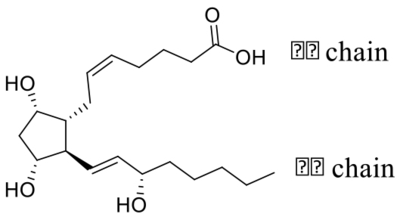
    Johnstone disclosed methods of stimulating hair growth using analogs of PGF,

    Image 1
    in which the α-chain was of the form

    Image 2
    The '029 patent claims expressly disclaimed the Johnstone compounds, but Apotex asserted that Johnstone anticipated nevertheless because Johnstone stated that α-chain could be unsaturated (as shown above) or saturated (i.e., wherein the double bond shown above is a single bond).  So, Apotex argued that because the '029 patent claims also encompassed the use of PGF analogs in which the α-chain was saturated (the saturated compounds not having been disclaimed), Johnstone anticipated.

    But the District Court agreed with Duke that Johnstone was insufficiently specific with respect to PGF analogs with saturated α-chains.  The District Court held that in view of the state of the art, the ordinary artisan would not have read Johnstone as disclosing the single-bonded structures because the evidence showed that such structures would not have been thought to have a therapeutic effect because they would selectively bind the FP receptor.  The District Court further noted the examiner's statement that Johnstone "lacks motivation to modify the prostaglandins taught therein in order to obtain the presently claimed prostaglandins."

    Another argument (that wasn't made) might have been that Johnstone failed to expressly teach any particular compound that anticipated the asserted claims but, instead, taught a genus of compounds in which the members of the genus were not so few that the ordinary artisan could have immediately envisioned them.  Indeed, the dissent, which agreed with the majority on this issue, noted that Jonstone's teachings amounted to a laundry list comprising thousands or even millions of variations.

    Following its reasoning, the Federal Circuit panel held that the District Court's reasoning was not clearly erroneous.

    (2) The '819 patent

    The '819 patent (an Allergan patent) taught a method of treating glaucoma comprising administering selective PGF analogs (including bimatoprost).  Although the '819 patent was silent with respect to any sort of hair growth, hair loss, or topical administration, the issue was whether the '819 patent nevertheless anticipated the claims as inherently teaching the treatment of hair loss.

    To cut to the chase, the District Court held that the evidence demonstrated that although it was possible that administration of eye drops according to the '819 patent could have resulted in transfer of some liquid to the adjacent eyelid skin, such transfer would not necessarily occur.  Therefore, because an inherent limitation must necessarily be present to anticipate, the '819 did not anticipate the '029 claims.

    Obviousness

    The District Court held that the '029 claims were not invalid as obvious over the combination of Johnstone and the '819 patent because, the Court reasoned, the ordinary artisan wouldn't have combined the teachings of the two.  Although the compounds of the two patents shared the unsaturated α-chain and the were effective in treating glaucoma, the compounds of the '819 patent comprised terminal amide groups on the α-chain (e.g., bimatoprost, which has a terminal ethyl amide moiety) whereas Johnstone's compounds comprised an ester or carboxylic acid at that position.  And, furthermore, the '819 compounds were thought to bind to a receptor other than the FP receptor.

    The majority disagreed, noting that the '029 patent claims were not limited to compounds having an α-chain amide moiety but included compounds having a variety of moieties at the terminal position of the α-chain, including esters and carboxylic acids.  The majority found this problematic because for patentability purposes inventors had relied on the fact that the amide-containing PGF analogs bind to a variant of the FP receptor.  But ester- and carboxylic acid-containing PGF analogs within the scope of the claims do not, and the majority faulted the District Court for not considering the issue of obviousness with respect to the full scope of the claims.  Similarly, the majority faulted the District Court for not considering the secondary indicia of obviousness (unexpected results) for the full scope of the claims.

    And the majority further criticized the District Court for overlooking teachings in Johnstone, which was "replete" with references to the advantages of PGF compounds (including those with carboxylic acid and ester moieties) failing within the scope of the '029 patent claims, including specific guidance as to the parameters that would lead to a reasonable expectation of success.

    The majority concluded that Johnstone provided adequate teachings in conjunction with the '819 patent to guide the ordinary artisan to the claimed methods with a reasonable expectation of success.  Therefore, the District Court's finding that the '029 patent claims were non-obvious was vacated and reversed.

    The '404 patent

    One issue that arose with respect to the '404 was the date of invention, important for determining whether certain Brandt publications were prior art.  In brief, the Federal Circuit reversed the lower court's finding with respect to the date of invention because the panel found that none of the documentary evidence was directed to the claimed invention, i.e., topical application of bimatoprost.  Rather, the only evidence of conception was the oral testimony of a co-inventor, which the panel essentially dismissed outright.

    Allergan further argued that even neglecting the date of invention, the Brandt publications were not "by another" because it represented the inventors' own work.  In particular, Allergan argued that one of the co-inventors directed the clinical trials whose results were reported in the Brandt publications and, therefore, the Brandt publications represented the inventors' work.

    Although the issue may have not been timely presented, the panel nevertheless held that Allergan's argument was unavailing.  The panel noted that the co-inventor at issue was an author of one Brandt paper but not another.  Furthermore, there was insufficient evidence presented to establish that the co-inventor was responsible for directing production of the contents of the Brandt publications.  Accordingly, the panel held that the Brandt publications were prior art to the '404 patent.

    Noting that the Brandt publications disclosed a substantial rate of eyelash hair growth as a side effect of using bimatoprost in eyedrops, and coupled with Johnstone's teaching that eye drops containing latanoprost (another PGF analog) promote eyelash hair growth when making topical contact with the eyelid, the panel held that the ordinary artisan would have had substantial motivation to follow Johnstone and use topical application of bimatoprost to grow eyelash hair and the Brandt publications provided a reasonable expectation of success.  Accordingly, the panel held that the claims were obvious.

    The Dissent

    The dissent joined the majority in all respects except for obviousness of the '029 patent, agreeing with the District Court and Examiner that Johnstone's teachings were too vague and equivocal.  In particular, the dissent thought Johnstone's teaching concerning the saturated α-chain of the PGF analogs was merely one item "serve[d] up [in] a menu of seemingly unlimited possibilities" that would cover "almost any conceivable prostaglandin," failing to provide sufficient "blaze marks" to the claimed invention.  The dissent asserted that Johnstone's teachings regarding a saturated α-chain, rather than directing the ordinary artisan to a finite number of identified, predictable solutions, "proposes hundreds of thousands, or even millions, of variations on the alpha chain."

    And the dissent further believed that the majority erred in minimizing the undisputed evidence that the field of hair growth was "unpredictable and mysterious."

    Allergan, Inc. v. Apotex, Inc. (Fed. Cir. 2014)
    Panel: Chief Judge Prost and Circuit Judges Reyna and Chen
    Opinion by Chief Judge Prost; dissenting opinion by Circuit Judge Chen

  • By Kevin E. Noonan

    Ferring PharmaceuticalsIn the second of a pair of decisions issued last Friday, styled Ferring B.V. v. Watson Laboratories, Inc., the Federal Circuit affirmed a finding by the District Court that the generic ANDA challenger had not shown the asserted claims of the patents-in-suit were obvious, but reversed the District Court's finding of infringemnent.

    The case involved a generic form of Lysteda® (trans-4-(aminomethyl)cyclohexanecarboxylic acid, also called tranexemic acid), used to treat heavy menstrual bleeding.  The drug was known in the prior art, but was also known to be associated with dosage-dependent gastrointestinal side effects.  The Orange Book-listed patents-in-suit, U.S. Patent 7,947,739, 8,022,106, and 8,273,795, were directed to "modified release" formulations; claim 1 of the '739 patent is representative (according to the Court):

    1.  A tranexamic acid tablet formulation, comprising:
        tranexamic acid or a pharmaceutically acceptable salt thereof; and
        a modified release material, wherein the modified release material comprises a polymer selected from the group consisting of hydroxyalkylcelluloses, alkylcelluloses, cellulose ethers, partial esters thereof, and mixtures thereof;
        wherein the modified release material is present in the formulation in an amount from about 10% to about 35% by weight of the formulation;
        wherein the formulation provides an in-vitro dissolution release rate of the tranexamic acid or pharmaceutically acceptable salt thereof, when measured by the USP 27 Apparatus Type II Paddle Method @ 50 RPM in 900 ml water at 37±0.5ºC., of less than about 70% by weight tranexamic acid or pharmaceutically acceptable salt thereof released at about 45 minutes, and about 100% by weight tranexamic acid or pharmaceutically acceptable salt thereof released by about 120 minutes; and
        wherein each tablet of the formulation provides a dose of about 650 mg of tranexamic acid.

    Watson PharmaceuticalsAs discussed in the opinion, it was "undisputed" that the branded drug is encompassed within the claims of the patents-in-suit.  Also relevant to the Court's opinion, defendant Watson's ANDA was approved and Watson launched "at risk" of a finding of willful infringement (despite this opportunity, Ferring did not move to enjoin the putatively infringing sales).

    The District Court construed two claim terms:  a single term in the claims, concerning the meaning of the word "about" as used in the claim limitation "less than about [%] by weight," which the District Court held to mean "approximately"; and the phrase "modified release material," which was construed to mean "a material that modifies the release of the active pharmaceutical ingredient [in water]."

    The District Court held, and the Federal Circuit affirmed, that the claims were not obvious because the cited prior art taught dosages of the drug no greater than 500mg, and the evidence of dose-dependent gastrointestinal side effects would have suggested to the skilled worker that lower rather than higher dosages were indicated.  Regarding infringement, the District Court considered evidence of dissolution rates from uncoated cores of drug and modified release material, as well as commercial tablets, and assessed infringement under § 271(a) as well as § 271(e)(2), in view of Watson's "at risk" sales.  As in its companion case, the District Court suggested that changes in Watson's formulation (here, the hardness of the coatings used) would avoid infringement, and as in the companion case Watson complied by amending its ANDA to incorporate the "softer" coating.  However, in this case the District Court entered judgment against Watson and imposed an injunction against further "making, using, selling or offering to sell" Watson's commercial product.

    The Federal Circuit's opinion was penned by Judge Lourie, joined by Judges Dyk and Reyna.  In the opinion, the Court states that that it will not "disturb" the District Court's claim construction (which neither party challenged on appeal).  Regarding obviousness, the panel held that the cited prior art "neither set forth the limitations required by the asserted claims, nor provided any reason or motivation to combine those teachings to derive the claimed formulations with specific dissolution profiles."  Specifically, like the District Court the panel found that the prior art taught formulations of 500mg tranexemic acid, and disclosed dose-dependent gastrointestinal side effects.  The art did not disclose or suggest the specific modified release polymers used in Ferring's patented formulations or the amounts to use, and amounted to merely a series of generic teachings that tranexemic acid can be formulated with any of a number of excipients including modified release materials.  Also, the Federal Circuit discerned no teaching in the art of the "critical dissolution limitations" recited in many of the claims.  Finally, the opinion referenced a showing of secondary considerations (long-felt and unmet need, as well as the evidence that Ferring's drug received "Fast Track" consideration by the FDA) that supported the District Court's non-obvious determination.

    The opinion reviewed District Court's infringement determinations under both § 271(e)(2) and § 271(a).  With regard to § 271(e)(2) as the basis for the District Court's finding of infringement, the Federal Circuit opined that filing an ANDA was merely a device to establish jurisdiction, and that Ferring had the burden to show that the generic product described in the ANDA would be infringing.  In some instances the ANDA is enough, the Court stated, but when it is not sufficient then evidence (such as "biobatch" data on the generic product) can be used to establish infringement.  In this case, the ANDA did not resolve the question, and the Federal Circuit disagreed that Ferring had proven that the generic product would infringe.  Lack of evidence in the ANDA (with regard to dissolution characteristics of the generic formulation) is not enough ("silence does not answer the question of infringement") and the Federal Circuit held that the District Court erred by accepting evidence from the uncoated cores; according to the opinion, Watson was given FDA approval to market the "final, coated commercial tranexamic acid tablets" and that was the accused infringing article whose dissolution properties had to fall within the scope of Ferring's claims.  The Federal Circuit held that the evidence failed to establish that any of the claims of the patents-in-suit were infringed by the commercial embodiment Watson was authorized by the FDA to market and thus reversed.

    The Court also addressed the application of the claim element "modified release material," which the District Court had construed to mean "a material that modifies the release of the active pharmaceutical ingredient."  Saying that it would not disturb this construction, the opinion asserted that "just because a certain material can modify release of the active pharmaceutical ingredient tranexamic acid, does not necessarily mean that it actually does" (emphasis in opinion).  Thus, the Federal Circuit required evidence to establish that Watson's accused infringing formulation satisfied this claim element, and found that Ferring had failed to adduce any such evidence at trial.  This failure further supported the panel decision reversing the District Court's finding of infringement.

    Again as in its companion decision, the panel awarded costs to Watson, without explanation.

    Ferring B.V. v. Watson Laboratories, Inc. (II) (Fed. Cir. 2014)
    Panel: Circuit Judges Lourie, Dyk, and Reyna
    Opinion by Circuit Judge Lourie

  •         By Sherri Oslick

    Gavel About Court Report:  Each week we will report briefly on recently filed biotech and pharma cases.

    AstraZeneca AB v. Watson Laboratories Inc. et al.
    1:14-cv-01051; filed August 15, 2014 in the District Court of Delaware

    • Plaintiff:  AstraZeneca AB
    • Defendants:  Watson Laboratories Inc.; Actavis Inc.; Actavis LLC

    Infringement of U.S. Patent No. RE44,186 ("Cyclopropyl-Fused Pyrrolidine-Based Inhibitors of Dipeptidyl Peptidase IV and Method," issued April 30, 2013) following a Paragraph IV certification as part of Watson's filing of an ANDA to manufacture a generic version of AstraZeneca's Onglyza® (saxagliptin hydrochloride, used as an adjunct to diet and exercise to improve glycemic control in adults with type 2 diabetes mellitus).  View the complaint here.

    Novartis Pharmaceuticals Corp. et al. v. Breckenridge Pharmaceutical, Inc.
    9:14-cv-81067; filed August 15, 2014 in the Southern District of Florida

    • Plaintiffs:  Novartis Pharmaceuticals Corp.; Novartis AG
    • Defendant:  Breckenridge Pharmaceutical, Inc.

    Novartis Pharmaceuticals Corporation et al. v. Breckenridge Pharmaceutical Inc.
    1:14-cv-01043; filed August 13, 2014 in the District Court of Delaware

    • Plaintiffs:  Novartis Pharmaceuticals Corp.; Novartis AG
    • Defendant:  Breckenridge Pharmaceutical Inc.

    The complaints in these cases are substantially identical.  Infringement of U.S. Patent Nos. 5,665,772 ("O-alkylated Rapamycin Derivatives and Their Use, Particularly as Immunosuppressants," issued September 9, 1997), 6,004,973 ("Pharmaceutical Compositions Comprising Rafamycin Coprecipitates," issued December 21, 1999), 6,239,124 ("Pharmaceutical Compositions for the Treatment of Transplant Rejection or Autoimmune or Inflammatory Conditions Comprising Cyclosporin A and 40-0-(2-hydroxyethyl)-rapamycin," issued May 29, 2001), and 6,455,518 ("Pharmaceutical Compositions for the Treatment of Transplant Rejection, Autoimmune or Inflammatory Conditions Comprising Cyclosporin A and 40-O-(2-hydroxyethyl)-rapamycin," issued September 24, 2002) following a Paragraph IV certification as part of Ben Venue's filing of an ANDA to manufacture a generic version of Novartis' Zortress® (everolimus, used for the prophylaxis of organ rejection in adult patients at low-moderate immunologic risk receiving a kidney transplant, and for the prophylaxis of allograft rejection in adult patients receiving a liver transplant).  View the Delaware complaint here.

    Cephalon Inc. v. Ben Venue Laboratories Inc. et al.
    1:14-cv-01045; filed August 13, 2014 in the District Court of Delaware

    • Plaintiff:  Cephalon Inc.
    • Defendants:  Ben Venue Laboratories Inc.; Hikma Pharmaceuticals PLC; West-Ward Pharmaceutical Corp.

    Infringement of U.S. Patent Nos. 8,791,270 ("Bendamustine Pharmaceutical _Compositions," issued July 29, 2014), 8,445,524 ("Solid Forms of Bendamustine Hydrochloride," issued May 21, 2013), 8,436,190 ("Bendamustine Pharmaceutical Compositions," issued May 7, 2013), and 8,609,863 ("Bendamustine Pharmaceutical Compositions," issued December 17, 2013) following a Paragraph IV certification as part of Ben Venue's filing of an ANDA to manufacture a generic version of Cephalon's Treanda® (bendamustine hydrochloride, used to treat chronic lymphocytic leukemia and non-Hodgkin's lymphoma).  View the complaint here.

    Dow Pharmaceutical Sciences, Inc. et al. v. Taro Pharmaceuticals U.S.A., Inc. et al.
    2:14-cv-05079; filed August 13, 2014 in the District Court of New Jersey

    • Plaintiffs:  Dow Pharmaceutical Sciences, Inc.; Valeant Pharmaceuticals North America LLC
    • Defendants:  Taro Pharmaceuticals U.S.A., Inc.; Taro Pharmaceutical Industries Ltd.

    Infringement of U.S. Patent No. 8,288,434 ("Topical Pharmaceutical Formulations Containing a Low Concentration of Benzoyl Peroxide in Suspension in Water and a Water-Miscible Organic Solvent," issued October 16, 2012) and 8,663,699 ("Topical Pharmaceutical Formulations Containing a Low Concentration of Benzoyl Peroxide in Suspension in Water and a Water-Miscible Organic Solvent," issued March 4, 2014) following a Paragraph IV certification as part of Taro's filing of an ANDA to manufacture a generic version of Dow's Acanya® (clindamycin phosphate and benzoyl peroxide gel, 1.2%/2.5%, used to treat acne).  View the complaint here.


    Janssen Products, L.P. et al. v. Cipla Ltd. et al.
    2:14-cv-05093; filed August 13, 2014 in the District Court of New Jersey

    • Plaintiffs:  Janssen Products, L.P.; Janssen R&D Ireland
    • Defendants:  Cipla Ltd.; Cipla USA, Inc.

    Infringement of U.S. Patent Nos. 7,700,645 ("Pseudopolymorphic Forms of a HIV Protease Inhibitor," issued April 20, 2010), 7,126,015 ("Method for the Preparation of Hexahydro-furo-[2,3-b]furan-3-ol," issued October 24, 2006), 7,595,408 ("Methods for the Preparation of (3R,3aS,6aR)hexahydro-furo[2,3-b]furan-3-ol," issued September 29, 2009), and 8,518,987 ("Pseudopolymorphic Forms of a HIV Protease Inhibitor," issued August 27, 2013) following a Paragraph IV certification as part of Cipla's filing of an ANDA to manufacture a generic version of Janssen's Prezista® (darunavir, used to treat human immunodeficiency virus (HIV-1) infection).  View the complaint here.

    UCB, Inc. v. Yeda Research and Development Co. Ltd.
    1:14-cv-01038; filed August 13, 2014 in the Eastern District of Virginia

    Declaratory judgment invalidity, unenforceability, and non-infringement of U.S. Patent No. 6,090,923 ("Murine Monoclonal Antibody Binding TNFα," issued July 18, 2000) based on UCB's manufacture and sale of its Cimzia® product (certolizumab pegol, used to treat Crohn's disease, rheumatoid arthritis, psoriatic arthritis, and ankylosing spondylitis).  View the complaint here.

    Cephalon Inc. v. Eagle Pharmaceuticals Inc.
    1:14-cv-01042; filed August 12, 2014 in the District Court of Delaware

    Infringement of U.S. Patent No. 8,791,270 ("Bendamustine Pharmaceutical Compositions," issued July 29, 2014) in conjunction with Eagle's filing of an NDA (under § 505(b)(2) of the Food, Drug and Cosmetic Act) to manufacture a generic version of Cephalon's Treanda® (bendamustine hydrochloride, used to treat chronic lymphocytic leukemia and non-Hodgkin's lymphoma).  View the complaint here.

  • CalendarSeptember 4, 2014 – "Patents and Export Control Compliance: Managing Risk and Avoiding Unintentional Violations — Minimizing Export Control Liability in Patent Application Preparation, Development and Analysis of Innovation, and Licensing" (Strafford) – 1:00 to 2:30 pm (EDT)

    September 7-9, 2014 – 42nd Annual Meeting (Intellectual Property Owners Association) – Vancouver, Canada

    September 11, 2014 – "Post-AIA Section 102 and Prior Art: Navigating the Expanded Scope of Prior Art and AIA Exceptions" (Strafford) – 1:00 to 2:30 pm (EDT)

    September 11-12, 2014 - Advanced Patent Prosecution Workshop 2014: Claim Drafting & Amendment Writing (Practising Law Institute) – Chicago, IL

    September 16, 2014 – "Section 103 and Obviousness: Capitalizing on CCPA and Early Federal Circuit Precedent — Strategies for Withstanding Obviousness Rejections and Attacks on Patent Validity and Patentability" (Strafford) – 1:00 to 2:30 pm (EDT)

    September 18-19, 2014 – FDA Boot Camp (American Conference Institute) – Boston, MA

    September 25, 2014 – "Charting New Territory: Prosecution and Diligence Strategies in the Wake of the AIA" (American Bar Association Center for Professional Development and Section of Intellectual Property Law) – 1:00 to 2:30 pm (ET)

    September 26, 2014 – IP & Diagnostics Symposium (Biotechnology Industry Organization) – Alexandria, VA

    September 30, 2014 – 2014 Intellectual Property Continuing Legal Education Seminar (DuPont and Widener University School of Law) – Wilmington, DE

    September 30 – October 1, 2014 – Paragraph IV Disputes Master Symposium (American Conference Institute) – Chicago, IL

    October 2, 2014 – "USPTO Guidance for Determining Subject Matter Eligibility In View of U.S. Supreme Court's Mayo and Myriad Decisions" (McDonnell Boehnen Hulbert & Berghoff LLP) – 10:00 to 11:15 am (CT)

    October 2, 2014 – "Conflicts in Patent Prosecution: Minimizing Risks of Malpractice Liability and Ethics Sanctions" (Strafford) – 1:00 to 2:30 pm (EDT)

    October 20-22, 2014 – Business of Biosimilars (Institute for International Research) – Boston, MA

    October 29-30, 2014 - Congress on PIV Litigation (Momentum) – Philadelphia, PA

    ***Patent Docs is a media partner of this conference or CLE