• Institute of Continuing Legal Education (ICLE)The Institute of Continuing Legal Education (ICLE) will be holding its 33rd Annual Intellectual Property Law Summer Institute on July 12-14, 2007 on Mackinac Island in Michigan.  The Institute, which is being co-sponsored by the Intellectual Property Law Section of the State Bar of Michigan, will provide information regarding the latest developments in patent, trademark, and copyright law, including discussions on the Supreme Court's decision in KSR Int'l. Co. v Teleflex Inc., the best approaches to patent protection in China, and how to address conflicts of interest in patent prosecutions.

    Details regarding the Institute, including an agenda, can be found here, and a list of Institute faculty can be found here.  Two pre-conference sessions will also be offered, the first entitled: "Drafting and Prosecuting Patents for Subsequent Litigation and Licensing," and the second entitled: "Taxation of Intellectual Property Interests:  What Every IP Lawyer Should Know."

    The registration fee for the Institute ranges from $295 to $395 (a $147.50 discounted rate is available to law students).  Those interested in registering for the conference can do so here.

  •     By Donald Zuhn

    Gqlogoweb
    On Friday, Massachusetts-based GenomeQuest, Inc. announced via the GenomeQuest Blog that GenomeQuest® 4.0, the bioinformatics company’s new web-enabled application for genetic sequence data search and analysis, would soon be released.  The new version of the application will allow subscribers to add their own sequence data and annotations to GenomeQuest’s collection of sequences, which president and CEO Ron Ranauro noted outnumbers GenBank’s collection.  In addition, GenomeQuest has rewritten the new version of the GenomeQuest application as a web application in which every sequence record, search query, and result exists as a web page with a persistent Uniform Resource Locator (URL), thereby permitting records, queries, and results to be bookmarked, linked, tagged, and e-mailed.  The new web-enabled version also allows subscribers to readily re-visit and update their searches.  According to GenomeQuest, the new application is to be released sometime this summer.

    GenomeQuest also announced via the GenomeQuest Blog that its GQ-PAT sequence repository (i.e., sequences culled from U.S. and worldwide patents and published applications) had surpassed some 66 million sequences, making it the world’s largest patent sequence database.  Including sequences obtained from major public sequence repositories, GenomeQuest’s sequence database now totals some 137 million sequences.  While GemomeQuest Vice President and General Manager Dr. Michael J. McManus observed that "even GenBank has only about 4 million sequence patent records," it should be noted that GenomeQuest’s true competition is not the GenBank collection of patent sequences, but rather the Thomson Derwent GENESEQ (DGENE) database, a collection of sequences extracted from the Derwent World Patents Index of patent documents published by 41 patent offices worldwide.  According to Thomson Derwent, the GENESEQ database currently "[i]ncludes over three million records derived from over 60,500 patent applications."  No information, however, could be found as to how that number of records translates into the number of sequences present in the GENESEQ collection.

    Lookup_result_2

    For additional information regarding these announcements, please see GenomeQuest’s original press releases from May 1, 2007 and May 7, 2007.

  •     By Donald Zuhn

    Main_logo
    On Thursday, the California Healthcare Institute (CHI), an independent organization comprising more than 250 biomedical companies, academic and research institutions, and companies involved in supporting the biomedical community, released a white paper entitled "Impact of Patent Law Changes on Biomedical Investment and Innovation."  The CHI white paper analyzes the implications of recent patent law developments on the biomedical industry, and concludes that a handful of Supreme Court decisions, Congress’ attempt to enact patent reform legislation, and the Patent Office’s push for new patent rules have combined to reduce the value of life sciences patents will have a "chilling effect on biomedical investment and innovation."

    Supreme_court_justices
    According to the white paper, the first challenge to the patenting of life sciences inventions comes from the Supreme Court’s "apparent growing anti-patent stance," which is reflected in a number of Supreme Court decisions, including: Merck KgaA v. Integra Lifesciences I, Ltd. (2005), eBay Inc. v. MercExchange, L.L.C. (2006), MedImmune, Inc. v. Genentech, Inc. (2007), and KSR Int’l Co. v. Teleflex Inc. (2007).  In particular, the report contends that the Court, in Merck, "weakened the ability of patent holders to enforce their rights against companies performing drug research."  The report also concludes that the Court’s decision in eBay, which reduces the availability of permanent injunctions to patentees, "weakens the value of patent rights for patent owners who are not commercializing their inventions by making it more difficult for those parties to enjoin an infringer."  With respect to the MedImmune decision, the report observes that the Court has made it easier for a patent licensee to challenge the validity of a licensed patent.  Finally, the report concludes that the Court’s decision in KSR lowers the standards used to evaluate obviousness, thus making it harder for applicants to obtain patents and easier for defendants to invalidate them.

    351012083_acc992df01_o
    The second challenge to the patenting of life sciences inventions comes from Congress’ attempt to enact patent reform legislation.  The report contends that the most recent round of proposed patent reforms reflects fundamental differences in business models of two distinct high-tech industries:  life sciences on one side and software/IT on the other.  The report notes that because life sciences products are long-lived and less susceptible to incremental improvement, and further because investors must be able to rely on patent protection to justify the costs of bringing life science products to market, the relative value of life sciences patents is much higher than the relative value of software/IT patents.

    Uspto_seal
    According to the CHI report, the final challenge to the patenting of life sciences inventions comes from the "heavy handed approach taken by the U.S. Patent and Trademark Office (USPTO) towards making and promulgating new patent rules."  The report takes the Patent Office to task for its proposed limitations on the permissible number of claims and continuation applications, contending that such modifications will "significantly change the way applicants file their applications and would decrease an applicant’s ability to obtain full patent coverage for its inventions," and predicting that the proposed changes to the rules will "have a devastating effect on mid-sized and start-up life science companies."  The report believes that if the proposed rules changes are implemented, life sciences companies will motivated to accept narrower claims in order to obtain the allowances needed to secure investment funding, or even worse, will be forced into a lengthy appeal process that could preclude investment altogether.

    The CHI white paper ultimately concludes that these three areas of change "represent an extensive and dramatic shift that will make patents harder to obtain, easier to invalidate, and cheaper to infringe, thus creating incalculable problems for the life sciences community in procuring and maintaining the essential patent protections for their inventions."

    For additional information regarding the recent patent law developments discussed in the CHI white paper, please see:

  •     By Kevin E. Noonan

    One of the many benefits touted by proponents of the Human Genome Project has been the prospect of personalized medicine, based on a determination of an individual’s entire genomic DNA sequence.  The advantages of this information are expected to include an understanding about the status of disease propensity-associated genes, as well as the existence of isoforms of enzymes, such as the P450 system in liver, that can affect how efficacious a particular drug may be in the individual, or alternatively, how ineffective or even toxic the individual’s reaction to the drug may be.  Since both types of information represent a huge increase in specific knowledge about an individual (as opposed to the statistical data that underlie such determinations at present), the prospect of being able to ascertain this sequence information is widely considered to be the harbinger of a brave new world of 21st century medicine.

    Watson2201
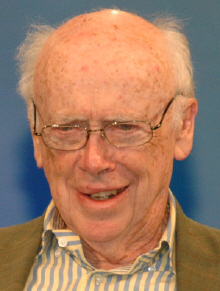
    Two more steps towards this brighter tomorrow were taken today.  First, and entirely fittingly, Dr. James Watson (at left) was presented with a pair of CD-ROMs containing approximately 3 billion basepairs encoding his genomic DNA.  The presentation was made by Dr. Richard Gibbs, director of Baylor College of Medicine’s Human Genome Sequencing Center, and Dr. Jonathan Rothberg, founder of the company 454 Life Sciences.  Dr. Rothberg’s company makes the automated DNA sequencing machines that enabled Dr. Gibbs’ team to determine Dr. Watson’s genomic DNA sequence in months rather than years, and at a cost of less than one million dollars.  It is thought that expected advances in the technology will reduce the cost even further, to perhaps as little as ten thousand dollars; at that point widespread genomic DNA sequencing may become economically feasible.

    The Watson DNA sequence will be made publicly available, with one exception:  Dr. Watson will not disclose the sequence of the gene that encodes apolipoprotein E in his genome, since certain alleles of this gene are associated with the development of Alzheimer’s disease.

    Venter_craig
    Ironically, another total genomic DNA sequence will also soon become available, that of Dr. J. Craig Venter (at right), the man whose for-profit company, Celera Corporation, is credited with motivating completion of the human genomic DNA sequence (obtained from a mixture of different individual’s DNA) by the Human Genome Project, headed by Dr. Watson.

    Nhgri_logo
    The other announcement came from the National Human Genome Research Institute (NHGRI), involving a study of 1,000 individuals with symptoms of coronary artery disease.  This study is limited to determining the genomic sequence of between 200 and 400 genes known to be associated with this disease, although there will also be an analysis of other genetic variations.  These genomic determinations will take about two years, and will be correlated with changes in disease states of the participants.  The goal is better understanding of the association between disease and genetic variability.

    Richard_lewontin_2
    As promising as these efforts may be, there are reasons to be skeptical about them, at least in the short term.  The determination of individual genomes, while informative for the individuals, may not provide any broader information about the "canonical" human sequence, because there is good evidence from classical population genetics that such a sequence does not exist.  In studies done 40 years ago, Richard Lewontin (at right) and others showed that natural populations contain a great deal of genetic variation in the amino acid sequence of common cellular enzymes.  This variation did not appear to confer any evolutionary advantage on the organisms expressing them (typically, Drosophila), leading to what has been called the "neutralist" school of population biologists.  The explanation is that organisms have this vast genetic variability that is neutral under normal circumstances, but provides a reservoir of adaptability during times associated with speciation – natural disasters, isolated sub-populations, and geographic allopatry.  Thus, a determination of any individual’s genomic DNA can be expected to say little about "the" sequence for any particular gene; "the" sequence will, at best, be the most common sequence in a population, requiring information from thousands or perhaps millions of individuals to be accurately portrayed.

    Another reason for skepticism about projects like the NHGRI’s is that it will be limited to the 200-400 genes now known to be associated with coronary artery disease.  By limiting the scope of the study to these genes, the data produced will increase our understanding of the genes, but not perhaps the underlying disease, for example, if there are genes not yet identified that play an unappreciated (and perhaps important) role in the disease etiology.

    Finally, the problem with applying genomics in this way is reminiscent of Abraham Maslow’s aphorism, that "if you only have a hammer, you tend to see every problem as a nail."  The determination of the human genomic sequence has been a landmark achievement, but caution suggests that the problems of biology are unlikely to be solved in any meaningful way merely by detecting variabilities in DNA sequence.  Certainly these do exist – sickle cell anemia is the result of a transversion (A to T) mutation that changes a valine residue to a glutamic acid residue.  However, clinicians know that there is variability in how different sickle cell anemia patients react to environmental stimuli, reflecting the interactions of the millions of other genes they express.  Systems biologists are just now beginning to explore the relationships between the biological products of genes, proteins and the cellular structures they create.  It is well to be reminded that we are merely at the beginning of this journey, and that the projects announced today are only the smallest of steps to unraveling (to the extent we are able) the fascinating riddle of life.

  •     By Christopher P. Singer

    Ucb
    In a May 29, 2007 press release, sanofi-aventis and UCB announced that the FDA approved Xyzal® (active ingredient: levocetirizine dihydrochloride) a once-daily prescription antihistamine for the relief of seasonal and perennial allergic rhinitis, as well as for the treatment of chronic idiopathic urticaria (hives) in adults and in children age six and older.  UCB filed the new drug application (NDA) in July 2006 and researched the drug in a number of clinical trials.  Xyzal® was shown to reduce the severity of common symptoms associated with allergies, such as runny nose, itchy eyes, and sneezing.  In patients with hives, the drug was able to reduce the number, size, and itch associated with the hives.

    In the fall of 2006, sanofi-aventis signed an agreement with UCB in which it agreed to launch and co-market and Xyzal®, which is expected to be ready for launch for the upcoming fall allergy season.

    Sanofiaventis

  •     By Donald Zuhn

    Invitrogen
    On Tuesday, Invitrogen Corporation and Clontech Laboratories, Inc. jointly announced that the two companies had reached a settlement in a patent litigation battle that had been begun more than 11 years earlier.  Invitrogen had initiated the lawsuit when it filed a complaint against Clontech in December of 1996 in the District Court of Maryland, asserting that Clontech infringed Invitrogen’s U.S. Patent Nos. 5,244,797; 5,405,776; 5,668,005; 6,063,608.  Two weeks ago, on May 17, Invitrogen secured a unanimous verdict from the Maryland jury.

    Logo
    As part of the settlement, Clontech, a wholly-owned subsidiary of Takara Bio Inc., has agreed that the four patents-in-suit are valid and enforceable.  In addition, Clontech has agreed to discontinue sales of its RNase H minus RT products, including its PowerScript products, until Invitrogen’s patents expire.  No other details of the settlement were announced.

    The patents-in-suit encompass a polypeptide having DNA polymerase activity and substantially no RNase H activity (‘797 patent), an isolated DNA molecule encoding such a polypeptide (‘005 patent), an isolated "DNA compound" encoding such a polypeptide (‘776 patent), and an isolated polypeptide having DNA polymerase activity and substantially reduced RNase H activity (‘608 patent).

    Commenting on the length of the lawsuit, Invitrogen’s trial counsel Robert J. Koch of Milbank, Tweed, Hadley & McCloy LLP noted that "[t]he complexity of the underlying science combined with the multiple patents and number of claims involved, contributed to the duration of the litigation" (see "Patent Infringement Victory for Invitrogen").  Over the course of the litigation, the parties had engaged in three District Court battles and had taken three appeals to the Federal Circuit.

    For additional information regarding the settlement, please see:

  •     By Jason Derry —

    02novacea
    Novacea, Inc. and Schering-Plough have announced an agreement to develop and commercialize Asentar®, which is currently in Phase III clinical trials for the treatment of prostate cancer.  Novacea is to receive an upfront payment of $60 million and $12 million in common stock.  Novacea may also receive up to $380 million in future royalty payments on sales of Asentar.  The Agreement is subject to clearance under the Hart-Scott-Rodino Antitrust Improvement Act.
    Scheringplough

  •     By Kevin E. Noonan

    There are new developments in global drug pricing policy today, but while they are good news for sub-Saharan Africa they fall far short of addressing the overarching disaster facing Western drug companies in these disputes (see "Worldwide Drug Pricing Regime in Chaos").

    Siquinovir_2
    In a move kindly described as charity, The Wall Street Journal reports that Roche Holdings AG announced that it had agreed with two African generic drug companies to transfer technology related to production of the anti-AIDS drug saquinavir "free of charge."  The deal also includes the right for these companies, located in Ethiopia and Zimbabwe, to distribute the drug to any country in sub-Saharan Africa characterized by the United Nations as a "least developed" nation.  Roche also expressed a willingness to enter similar technology transfer agreements under the same terms with other generic drug companies in such countries.

    Roche
    This agreement is one avenue for addressing the economic and political effects of the developing world efforts to reap the benefits of World Trade Organization membership while being able to provide needed drugs for their citizens.  The crisis is particularly acute with regard to anti-AIDS drugs, and in this regard Roche has astutely chosen the countries most affected by the pandemic, and least capable of affording the drugs, to garner the benefits of its charitable largess.  Its actions are also likely to blunt the effectiveness of "more" developed countries, such as Brasil, from establishing markets in such countries for their own generic drug industries.  And by supporting local drug production in Africa, Roche has also began a process for building the types of development relationships that may render these countries’ governments less intractable in respecting Roche’s patent rights for other, less critically-needed drugs.

    The downside of Roche’s actions, however, is that they perpetuate the model of Western drug companies treating intellectual property rights as bargaining chips.  They do not address the larger question of resolving the tensions between the once-hoped-for international IP protection regime and resistance to respecting Western drug companies’ IP rights when it comes to anti-AIDS and other drugs.  It is possible that deals like the ones Roche has struck with these local drug companies are the best now possible, and insofar as they lessen the pressure of rhetoric (from governments, non-governmental organizations, and even individuals like former President Clinton) to eliminate such IP rights entirely (and have the other benefits mentioned above), they are clearly a coup for Roche.  But they also represent a throwback to the more paternalistic posture of the past, where less developed countries are dependent not on a regulated international system of rights and privileges but on the West’s inclinations to act humanely in the face of a crisis (something whose effects can be variable, as seen most recently in Darfur).  They also raise the question of whether Western drug companies, and their governments, have the political will to address the challenges raised by specific actions (like the Doha Declaration and actions taken pursuant thereto by Brasil and others) that most seriously, and systemically, challenge the reigning drug development paradigm.

    For additional information regarding this and other related topics, please see:

  • San Francisco #1 American Conference Institute (ACI) will be holding a conference on Pharma and Biotech Collaborative Agreements on July 16-17, 2007 in San Francisco, CA.  The conference will provide information about protecting intellectual property rights, minimizing risks through effective due diligence, developing effective governance processes, drafting termination provisions, overcoming antitrust violations, anticipating the impact of generics, and avoiding pitfalls associated with international deals with respect to the structuring, negotiation, and management of pharma and biotech collaborative agreements.  In particular, ACI's faculty will offer presentations on the following topics:

    • 751l07snf
      Adapting negotiation strategies to allow for future merger and acquisition opportunities.
    • Strategically planning the deal, gauging value, and structuring compensation in the face of increased competition for early-stage products.
    • Leveraging and safeguarding intellectual property rights during negotiations.
    • Exploring the potentially damaging impact of MedIimmune v. Genentech.
    • Ensuring the agreement includes flexible and scalable methodologies for assessing the value of multiple indications.
    • Fine-tuning due diligence processes to identify and minimize risks.
    • Successfully negotiating collaborative research.

    Two additional master classes will be offered on July 18, 2007.  The morning class is entitled: "Negotiating Industry/University Collaborations: Ethical and Practical Strategies for Maximizing Return on Investment," and the afternoon class is entitled: "The "Win-Win" Collaborative Agreement: Ethical and Practical Negotiating and Drafting Strategies."

    American_conference_institute_aci
    The agenda for the Technology IP Due Diligence conference can be found here.  A complete brochure for this conference, including an agenda, list of speakers, and registration form can be downloaded here.

    The registration fee ranges from $1,995 (conference alone) to $2,595 (conference and one master class) or $3,195 (conference and both master classes).  Those registering on or before June 15, 2007 will receive a $200 discount off the registration fee.  Those interested in registering for the conference can do so here or by calling 1-888-224-2480.

    Patent Docs is a media sponsor of ACI's Pharma and Biotech Collaborative Agreements conference.

  •     By Sherri Oslick

    Gavel About
    Court Report:  Each week we will report briefly on recently filed
    biotech and pharma cases, and a few interesting cases will be selected
    for periodic monitoring.


    Allergan Inc. v. Apotex Inc. et. al.

    1:07-cv-00278; filed May 21, 2007 in the District Court of Delaware

    Infringement of U.S. Patent Nos. 5,424,078 ("Aqueous Ophthalmic Formulations and Methods for Preserving Same," issued June 13, 1995), 6,562,873 ("Compositions Containing Therapeutically Active Components Having Enhanced Solubility," issued May 13, 2003), 6,627,210 ("Compositions Containing alpha-2-Adrenergic Agonist Components," issued September 30, 2003), 6,641,834 (same title, issued November 4, 2003), and 6,673,337 (same title, issued January 6, 2004) following a paragraph IV certification as part of Apotex's filing of an ANDA to manufacture a generic version of Allergan's Alphagan® P (brimonidine tartrate ophthalmic solution, used to treat glaucoma).  View the complaint here.


    Iowa State University Research Foundation, Inc. v. Monsanto Company et. al.

    4:07-cv-00221; filed May 21, 2007 in the Southern District of Iowa

    Infringement of U.S. Patent Nos. 5,534,425 ("Soybeans Having Low Linolenic Acid Content and Method of Production," issued July 9, 1996) and 5,710,369 ("A16 soybeans having low linolenic acid content and descendents," issued January 20, 1998) based on Monsanto's Vistive® soybean program.  View the complaint here.


    Takeda Pharmaceuticals North America, Inc. et. al. v. Sandoz, Inc.

    3:07-cv-02341; filed May 18, 2007 in the District Court of Delaware

    Infringement of U.S. Patent Nos. 5,965,584 ("Pharmaceutical Composition," issued October 12, 1999), 6,329,404 (same title, issued December 11, 2001), 6,166,043 (same title, issued December 26, 2000), 6,172,090 (same title, issued January 9, 2001), 6,211,205 (same title, issued April 3, 2001), 6,271,243 (same title, issued August 7, 2001), and 6,303,640 (same title, issued October 16, 2001) following a paragraph IV certification as part of Sandoz's filing of an ANDA to manufacture a generic version of Takeda's Actos® (pioglitazone hydrochloride, used to treat type II diabetes).  View the complaint here.