• Viral Mercenaries to The Rescue

        By Baltazar Gomez

    On May 29, 2007, Oncolytics Biotech Inc. of Calgary, Canada announced the grant of U.S. Patent No. 7,223,585, the biotech company’s twenty-first U.S. patent.  The ‘585 patent, entitled "Viral Purification Methods," covers the production and purification of viruses, specifically human reovirus (Respiratory Enteric Orphan virus; see below).  In particular, the patent covers methods for isolating virus from suspended mammalian cells using detergents to rupture the cells and a series of filtration, ion exchange, and size exclusion chromatography.

    According to Oncolytics, the patent represents another piece of intellectual property that complements the company’s core technology directed to the formulation of viruses that seek and destroy cancerous cells.  Such viral mercenaries may prove valuable in the treatment of at least a third of human cancers.  Oncolytics is developing a REOLYSIN® therapy that utilizes a reovirus to treat a variety of advanced cancers.  REOLYSIN® represents an ingenious way to treat tumor cells and other cellular proliferative disorders by taking advantage of tumor-specific cellular pathways – an activated Ras pathway is the key by which the reovirus infects a tumor cell where the virus can replicate eventually killing the cancerous cell.  The reovirus cannot kill normal cells because normal cells do not have an activated Ras pathway and use an anti-viral response mediated by the host cellular protein PKR to stop reovirus from killing normal cells.  Tumor cells with an activated Ras pathway are unable to activate the PKR-mediated anti-viral response so that tumor cells become susceptible to reovirus replication.  But also important is that progeny reovirus released from killed tumor cells infect surrounding tumor cells, eventually eliminating all cancerous cells.

    Oncolytics is presently conducting a number of Phase I and II clinical trials that have shown promising results and hold much hope for the treatment of advanced and metastatic cancers.  Oncolytics’ technologies are based on discoveries from research conducted at the University of Calgary by Dr. Matt Coffey.

    The ‘585 patent issued from U.S. Application No. 10/424,985 and claims the benefit of U.S. Provisional Application Nos. 60/377,273, filed April 30, 2002, and 60/443,176, filed January 29, 2003.  Representative independent claims 1 and 14 of the ‘585 patent recite:

    1.  A method of producing virus from a culture of cells, comprising the steps of:
        (a) providing a culture of mammalian cells in suspension which has been infected by the virus in culture;
        (b) extracting the virus from the cells by adding a detergent to the culture of mammalian cells in suspension and incubating for a period of time to result in a cell lysate;
        (c) separating cell debris from the virus in the cell lysate by step-wise filtration comprising:
            (i) filtering through a prefilter having a pore size of 5 µM or 8 µM, and
            (ii) filtering after step (i) through a combination filter having pore sizes of 3 µM and 0.8 µM;
        (d) purifying the virus by a combination of ion exchange and size exclusion chromatography; and
        (e) collecting the virus,
        provided that after infection by the virus and before extraction of the virus, the mammalian cells are not pelleted or resuspended.

    14.  A method of producing infectious reovirus, comprising:
        (a) providing a culture of HEK 293 cells in suspension which has been infected by reovirus in culture;
        (b) extracting the reovirus from the HEK 293 cells by adding octoxynol-9 to 10 to the culture of HEK 293 cells in suspension and incubating at about 25o C. to about 37o C.;
        (c) treating the mixture from step (b) with a DNA-cleaving enzyme;
        (d) separating cell debris from the reovirus in the mixture from step (c) by step-wise filtration comprising:
            (i) filtering through a prefilter having a pore size of 5 µM or 8 µM, and
            (ii) filtering after step (i) through a combination filter having pore sizes of 3 µM and 0.8 µM;
        (e) concentrating the filtrate by ultrafiltration or diafiltration;
        (f) purifying the reovirus by a combination of ion exchange and size exclusion chromatography; and
        (g) collecting the reovirus,
        provided that after infection by the reovirus and before extraction of the reovirus, the HEK 293 cells are not pelleted or resuspended.

    For additional information regarding Oncolytics’ REOLYSIN® technology, please see:

  •     By Sherri Oslick

    Amgen
    On Wednesday, Amgen Inc. of Thousand Oaks, CA announced that it would acquire drug company Alantos Pharmaceuticals of Cambridge, MA for $300 million cash.  Alantos is a private company developing small molecule drugs for diabetes and inflammatory diseases.  Following acquisition, Alantos will be a wholly owned subsidiary of Amgen.

    Logo_home
    Alantos has six product candidates in various stages of development.  Its lead candidate, ALS 2-0426, a DPP-IV inhibitor for the treatment of type II diabetes, is currently in Phase 2a clinical trials.  Alantos’ patent portfolio includes at least two published U.S. patent applications.

  •     By Jason Derry —

    Aryxth_logo
    GenomeQuest, Inc. has announced that ARYx Therapeutics has signed on to use its GenomeQuest search and analysis application.  As previously discussed on Patent Docs, GenomeQuest is a bioinformatics company that provides web-enabled applications for genetic sequence searching and analysis.  ARYx is a pharmaceutical research and development company that uses proprietary Retrometabolic Drug Design to discover and develop novel drugs.  ARYx’s goal is to develop safer drugs by addressing drug design and metabolism problems.

    Genomequest

  •     By Kevin E. Noonan

    Genentech
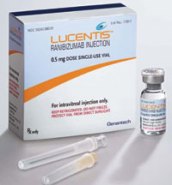
    The comparative effectiveness of two Genentech drugs, Lucentis® and Avastin®, for the treatment of age-related macular degeneration (AMD) is currently the subject of a study by the National Eye Institutes (NEI) of the National Institutes of Health.  The reason:  the cost of Avastin® treatment (an off-label use, since Avastin® is approved only for treating colon and certain lung cancers), is much less than the cost of treating AMD with Lucentis® ($20-60/dose versus $2000/dose).  Perhaps not surprisingly, Genentech has refused to supply the NEI with either drug for the trial.  In an article in Tuesday’s Wall Street Journal, Dr. Arthur Levinson attempted to justify the decision.

    1art_levinson_2
    In responding to questioning by reporter Marilyn Chase, Dr. Levinson (at left) recounted the history of the development of both drugs.  According to Dr. Levinson, Genentech’s inventor, Dr. Napoleone Ferrara, purified vascular endothelial growth factor (VEGF), a protein that induces blood vessels to form, and then showed that 90% of cancers overexpressed the protein.  This discovery was consistent with work, most famously by Dr. Judah Folkman, that cancer cells produce angiogenic factors that induce blood vessel proliferation in tumors as part of the natural progression of the disease.  Avastin®, a monoclonal antibody that interferes with VEGF action, was then developed by Genentech for use against colorectal and lung cancer.  The same Genentech inventor also showed (about 12 years ago) that patients with macular degeneration also have high levels of VEGF, in this case near the retina, which led to the development of Lucentis®, another antibody-based drug.

    Lucentis
    Dr. Levinson pointed out that, despite this coincidence of disease etiology (i.e., inhibiting VEGF as a way to prevent unwanted vascular proliferation), bringing Lucentis® to market required two years of experimental work to improve binding affinity to VEGF, reduce the molecule’s size and make it noninflammatory.  In addition, the drug had to undergo a full regulatory review (Phases I, II and III of the Food and Drug Administrations IND/NDA approval process), and was not approved for use in treating AMD until June 30, 2006.  Dr. Levinson also noted that the Phase III clinical trials for Lucentis® were, in his words, "the most expensive clinical-development program Genentech ever undertook," costing $40,000 – 45,000 per patient.

    In Dr. Levinson’s view, the cost of Lucentis® is the result of all these factors, and as such is fully justified.  He also questioned the wisdom of spending the upwards of $50 million it will cost to do the NEI trial, in view of a finite U.S. R&D budget and the overwhelming number of other diseases having no or ineffective treatments.  Finally, he disputed allegations that some patients did not have access to the more expensive Lucentis®, citing coverage by major health insurers and the company’s own drug purchase assistance programs.

    Dr. Levinson’s points are well-taken, but in the current climate it will be hard for his comments to change many minds.  Genentech is faced with defending a situation where its drugs, both Lucentis® and Avastin®, are two of only three drugs effective for treating AMD.  (The other is Macugen, sold by (OSI) EyeTech, Inc., which has a far smaller share of the market).  As Dr. Levinson acknowledged, "[t]his is a disease that over the course of days you can go from 20/20 vision to losing your eyesight.  It’s very, very quick, and once you lose your vision, it’s gone and you will probably never get it back."  In addition, neither drug cures AMD but merely stabilizes it, preventing the condition from worsening in many patients.  As a consequence, the drug must be administered like insulin or other maintenance drugs.  At a cost of $2,000/dose and a once-a-month dosing schedule, the cost to treat the half-million "wet" AMD patients in the U.S. with Lucentis® is greater than $10 billion per year.  Avastin® treatment is cheaper because a vial of it costs less ($600/vial) and each vial yields more doses, according to Dr. Edward Chaum, Plough Foundation Professor of Ophthalmology, University of Tennessee (as previously reported in Patent Docs).

    National_eye_institute
    Genentech’s decision will do little to either resolve the controversy (which includes assertions by the company that Avastin® treatment entails significantly higher risks of side effects including stroke), nor diminish the anger in the retinal ophthalmology community over the company’s stance.  Nor will Genentech’s decision not to support the NEI study inhibit these ophthalmologists from off-label use of Avastin® for treating AMD.  All the decision will do is limit the comparitors between Avastin® and Lucentis® treatment to anecdotal evidence from off-label Avastin® use, and give additional ammunition to those who unfairly ignore the realities of drug development by focusing on the purported avarice of the innovator drug companies responsible for developing new drugs.  It is not in the public interest to frame the debate in this way, but neither is that interest served by Genentech’s refusal to support the NEI’s study and conform its behavior to that study’s conclusions.

    For additional information on this topic, please see:

  •     By Christopher P. Singer

    Uspto_seal
    The biotechnology, chemical, and pharmaceutical
    technology groups at the U.S. Patent Office will hold their quarterly customer
    partnership meeting on
    June 13, 2007.  The meeting can be attended either live at the PTO or via the
    web.  The topics listed on the agenda for the
    day-long meeting include restriction between product and process inventions,
    enablement issues in the examination of antibody inventions, RNAi patent space,
    and guidance on routine optimization.  Attendance space for the seminar is limited, and those interested in
    attending can sign up here.  Patent Docs will post highlights of
    selected discussion topics following the seminar.

  •     By Sherri Oslick

    AmgenOn Monday, Amgen Inc. of Thousand Oaks, CA announced that
    it would acquire drug company Ilypsa, Inc. of Santa Clara, CA for $420 million
    cash.  Ilypsa, formerly Symyx
    Therapeutics, is a private company developing non-absorbed, GI based drugs for
    phosphate, potassium, and sodium management in patients with chronic kidney
    disease.  Following acquisition, Ilypsa
    will be a wholly owned subsidiary of Amgen.

    Ilypsa_cmyk_small1
    Ilypsa has fifteen product candidates in various stages of
    development.  Its lead candidate, ILY101,
    a phosphate binder for the treatment of hyperphosphatemia in chronic kidney
    disease (CKD) patients on hemodialysis, is currently in Phase II trials.  Ilypsa’s patent portfolio includes at least six published
    U.S. patent applications.

    For additional information regarding the acquisition, please see:

  • Federal Circuit Upholds Liability And Damages in Genetically Modified Soybean Case

        By Sherri Oslick

    Monsantologo
    Monsanto holds two patents related to its Roundup Ready technology:  U.S. Patent No. 5,633,435 (RE39,247) and 5,352,605 [NB: Monsanto has asserted these two patents against nine farmers in the last five months.]  Genetically modified Roundup Ready seeds yield crops resistant to glyphosphate herbicide (Monsanto’s Roundup), enabling farmers to treat their crops with Roundup, killing weeds while leaving the resistant crops unaffected.  The ‘435 patent is directed to plant cells containing DNA encoding the resistance-based modified enzyme, while the ‘605 patent is directed to a plant cell containing a promoter sequence facilitating the plant’s production of the modified enzyme.

      Rrsoybe3
    Monsanto authorizes various companies to produce and sell the Roundup Ready seeds, including soybeans, on their behalf, and they are sold at a per bag cost of $19-$20.  Purchasers must also sign a "Technology Agreement" ("the Agreement"), agreeing to pay a one-time license fee of $6.50 per bag, and agreeing not to plant themselves, or supply to others, "saved" seeds, i.e., seeds produced from the originally purchased seeds.  This system ensures that farmers purchase and license Roundup Ready soybean seeds each planting season.

    Having learned that for two years in a row farmer McFarling saved seeds from an earlier crop and planted them the following year, Monsanto sued for breach of the Agreement and for patent infringement.  The present decision represents Round 3 at the CAFC.  In McFarling I, the District Court preliminarily enjoined McFarling from continuing to plant saved seeds; the CAFC affirmed.  In McFarling II, Monsanto moved for summary judgment on breach of contract claim, on infringement of the ‘605 patent, and on McFarling’s counterclaims.  The District Court granted Monsanto’s motion with the exception of damages, which were subsequently set by stipulation of the parties to the liquidated damages delineated in the Agreement.  On appeal, the CAFC affirmed liability but vacated the liquid damages.  Monsanto then withdrew all claims but for the ‘605 patent claim, and the issue of damages was tried to a jury.  The jury returned a verdict of $40 per bag of saved seeds, higher than the $6.50 per bag argued for by McFarling but lower than the $80.65 (for year one) and $73.20 per bag (for year two) advanced by Monsanto.  The District Court adopted the jury’s verdict for a total award of $375,000, and permanently enjoined McFarling from any further unauthorized use of the patented technology.

    On appeal, McFarling argued that Monsanto’s withdraw of its claim under the ‘435 patent negated the CAFC’s earlier holding against McFarling’s patent misuse and antitrust claims.  In McFarling II, McFarling had asserted that Monsanto’s license impermissibly restricted the use of farmer-grown Roundup Ready soybean seeds.  In this earlier case, the CAFC, noting that the ‘435 patent read on the saved seeds, and that the antitrust claim was simply a repackaging of the patent misuse claim, held against McFarling.  McFarling’s reassertion of the arguments fared no better; the CAFC upheld its prior ruling, adding that their earlier reasoning applied equally well to the ‘605 patent.

    McFarling also challenged the damages award.  McFarling insisted that the established royalty of $6.50 per bag should apply, an amount dismissed by the District Court as insufficient for failing to take into account the consumer’s obligation under the Agreement to purchase seeds from an authorized dealer in addition to paying the license fee.  The CAFC, agreeing with the District Court, held that the royalty payments were a total of two separate payments – one payment directly to Monsanto ($6.50), and another payment through the third party seed distributors ($19-$22), for a total payment of $25.50 to $28.50 per bag of seeds.  Monsanto proffered evidence at trial showing that the current system for selling Roundup Ready soybean seed provided benefits to Monsanto beyond the monetary amounts of purchase plus license – the no saved seeds requirement, for example, ensured Monsanto’s knowledge of the quality of seed planted each year.  Additionally, Monsanto provided evidence that use of Roundup Ready soybeans provided farmers with concrete benefits over use of the next-best non-infringing product, conventional soybeans.  Taken together, the CAFC found the jury’s valuation justified, and affirmed the lower court’s ruling.

    Monsanto Co. v. McFarling (Fed. Cir. 2007)
    Panel: Circuit Judges Lourie, Rader, and Bryson
    Opinion by Circuit Judge Bryson

    Additional information regarding this case can be found at Patently-O.

  •     By Christopher P. Singer

    Biotechnology_industry_organization
    Last Thursday, the Biotechnology Industry Organization (BIO) published a white paper entitled: "The Myth of the Anticommons."  The paper, authored by Dr. Ted Buckley (BIO Director of Economic Policy), asserts that there is a lack of any strong theoretical or empirical data which supports the theory of the "tragedy of the anticommons."  The basic notion behind this theory is that a system which allows for "over-patenting" stifles, rather than promotes the advancement of downstream technology, because the patenting of upstream technology increases transactional costs and induces more anti-competitive strategic behavior.  Dr. Buckley sets forth some compelling arguments as to why, nearly a decade after Heller and Eisenberg introduced the tragedy of the anticommons to the public (Heller and Eisenberg, 1998, "Can Patents Deter Innovations?  The Anticommons in Biomedical Research," Science 280: 698-701), there appears to be no actual manifestation of this theory in the biotechnology industry.

    After providing some general background on the economics of the patent system and the anticommons theory, Dr. Buckley begins his argument by first examining the theoretical underpinnings of the theory.  While he acknowledges that the anticommons approach is elegant and compelling, the focus of Dr. Buckley’s argument is on how the theory is too simple to apply to a system with the inherent complexity and diversity of biotechnology.  He notes that many of the analogies used to explain the theory are not applicable to biotechnology because the industry does not have the same type of scarcity of resources ("biological commons") that are present in typical geometrical or geographical models (such as toll roads Statingroup664499400
    and waterways).  Dr. Buckley uses several examples to argue that biotechnology lacks such scarcity.  He points to the multiple statin-based drugs that are currently on the market and used to lower cholesterol, the variety of breast cancer drugs in clinical development, and the number of products being developed for the treatment of chronic myeloid leukemia.  These examples, he argues, demonstrate how patents have taught the biotechnology industry to explore alternative pathways to try and solve a common challenge, essentially creating new "real estate."

    Dr. Buckley also presents several lines of empirical evidence which, he argues, demonstrates in real economic terms that the anticommons approach may not be relevant to biotechnology.  Because the lead time of a drug product from patent to market is anywhere from nine to twelve years, he presents an examination of several "inputs" that are critical to the production of novel therapeutics.  In particular, there are three inputs that Dr. Buckley believes would be occurring if the anticommons theory was happening:  (1) the amount of R&D would decrease; (2) the number of potential therapies being tested would decrease; and (3) companies and researchers would lobby for a change in policy.  The data Dr. Buckley presents shows a general increase in dollars spent on R&D, an increase in venture capital investment, and an increase in employment in the biotechnology industry.  He also cites to an increase in both the number of investigational new drug (IND) submissions and of biological compounds entering clinical trials as indicators that more potential therapies are being tested (contrary to what the anticommons would predict).  Lastly, Dr. Buckley points to industrial and academic opinion on the state of the patent system to show that there is not a large movement for patent reform from these groups.  He states that BIO (i.e., the biotech industry) has a positive position on maintaining the current state of the patent system and "fundamentally opposes the notion that patents on [a] broad array of biotechnology inventions are hindering innovation."  He also cites to a 2005 study conducted by the National Academy of Sciences that requested opinions from researchers from universities, non-profits, and government labs, concerning patents and whether the system has hindered research.  The results overwhelmingly showed that only 1% of responders had experienced a delay of more than one month because of patents on "research inputs."  None of those responding to the questions indicated that they had abandoned a line of research because of patented technology.

    As Dr. Buckley notes, it is impossible to completely dismiss the possibility that the tragedy of the anticommons may manifest itself at some point.  Nevertheless, he makes several convincing arguments as to why it appears that the anticommons may not have applicability to the biotechnology industry.

    For additional information on this topic, please see:

  •     By Sherri Oslick

    Gavel About
    Court Report:  Each week we will report briefly on recently filed
    biotech and pharma cases, and a few interesting cases will be selected
    for periodic monitoring.


    Takeda Pharmaceutical Company Ltd. et. al. v. Teva Pharmaceuticals USA Inc. et. al.

    1:07-cv-00331; filed May 25, 2007 in the District Court of Delaware

    Infringement of U.S. Patent Nos. 4,628,098 ("2-[2-Pyridylmethylthio-(Sulfinyl)]Benzimidazoles," issued December 9, 1986), 5,045,321 ("Stabilized Pharmaceutical Composition and Its Production," issued September 3, 1991), 5,464,632 ("Rapidly Disintegratable Multiparticular Tablet," issued December 7, 1995), and 6,328,994 ("Orally Disintegrable Tablets," issued December 11, 2001) following a paragraph IV certification as part of Teva's filing of an ANDA to manufacture a generic version of plaintiff's Prevacid® SoluTab (lansoprazole delayed release orally disintegrating tablets, used to treat ulcers, gastroesophageal reflux disease, erosive esophagitis, and pathological hypersecretory conditions, including Zollinger-Ellison syndrome).  View the complaint here.


    Teva Pharmaceutical Industries Ltd. et. al. v. Torrent Pharmaceuticals Ltd. et. al.

    1:07-cv-00332; filed May 25, 2007 in the District Court of Delaware

    Declaratory judgment of infringement of U.S. Patent Nos. 6,600,073 ("Methods for Preparation of Sertraline Hydrochloride Polymorphs," issued July 29, 2003), 6,500,987 ("Sertraline Hydrochloride Polymorphs," issued December 31, 2002), 6,495,721 ("Sertraline Hydrochloride Form II and Methods for the Preparation Thereof," issued December 17, 2002), and 6,897,340 ("Processes for Preparation of Polymorphic Form II of Sertraline Hydrochloride," issued May 24, 2005), all directed to methods of manufacturing crystalline forms of sertraline hydrochloride (the API in Pfizer's Zoloft®, used to treat depression) based on defendant's anticipated manufacture and sale of generic Zoloft®.  View the complaint here.


    Cornerstone BioPharma, Inc. et. al. v. Provident Pharmaceuticals, LLC et. al.

    5:07-cv-00192; filed May 25, 2007 in the Eastern District of North Carolina

    Infringement of U.S. Patent No. 6,270,796 ("Antihistamine/Decongestant Regimens for Treating Rhinitis," issued August 7, 2001) based on defendants' manufacture (and sale to Breckenridge for distribution and sale) of Breckenridge's Allergy DN, allegedly a "generic" version of Cornerstone's AlleRx® formulations (used to treat allergies and symptoms of the common cold).  View the complaint here.


    Aventis Pharmaceuticals Inc. et. al. v. Sandoz Inc.
    2:07-cv-02454; filed May 24, 2007 in the District Court of New Jersey

    Infringement of U.S. Patent Nos. 6,399,632 ("Method of Providing an Antihistaminic Effect in a Hepatically Impaired Patient," issued June 4, 2002), 6,187,791 (same title, issued February 13, 2001), and 6,037,353 (same title, issued March 14, 2000) following a paragraph IV certification as part of Sandoz's filing of an ANDA to manufacture a generic version of Aventis' Allegra® and Allegra-D® (fexofenadine hydrochloride, and fexofenadine hydrochloride/ pseudoephedrine, used to treat allergies).  View the complaint here.

  • Calendar June 7, 2007 – "Biotechnology and the Law: A Primer" – Part II (ABA CLE)

    June 13, 2007 – "The Scope and Implications of the Supreme Court's Ruling in KSR v. Teleflex on the Doctrine of Patent Obviousness" (Practising Law Institute)

    June 21-22, 2007 – Technology IP Due Diligence Conference (American Conference Institute) – San Francisco, CA***

    June 21-22, 2007 – Pharma/Biotech Patent Boot Camp (American Conference Institute) – New York, NY***

    June 26-28, 2007 – Euro-Biotech Forum 2007 – Paris, France

    June 28, 2007 – "Patent Licensing Post MedImmune: Proceed with Caution: Best Practices for Adapting to Sweeping Change in Licensing" (Strafford CLE Teleconferences)

    July 12-14, 2007 – Intellectual Property Law Summer Institute (Institute of Continuing Legal Education) – Mackinac Island, Michigan

    July 16-17, 2007 – Pharma and Biotech Collaborative Agreements Conference (American Conference Institute) – San Francisco, CA***

    ***Patent Docs is a media sponsor of this conference or CLE.