•     By Donald Zuhn

    Senate_large_seal
    Last week, the U.S. Senate Committee on Health, Education, Labor & Pensions announced that it had passed the Biologics Price Competition and Innovation Act.  According to a Committee press release, the bill (S. 1695) "includes standards for the FDA to approve follow-on biologics, a procedure designed to help resolve patents in an expedited way, and strong but responsible incentives to encourage innovation and the development of new therapies."

    The bill was referred to committee on May 25, 2007 after being introduced by Senators Judd Gregg (R – NH), Richard Burr (R – NC), and Tom Coburn (R – OK).  The bill is being sponsored by sponsored by Committee Chairman Edward Kennedy (D – MA) and Senators Orrin Hatch (R – UT), Hillary Clinton (D – NY), Mike Enzi (R – WY) and Charles Schumer (D – NY).

    Senator Kennedy stated that the bill "reflects a balanced approach that enables patients to have safe, effective and affordable biological drugs, while preserving the incentives that have brought these life-saving advances to the American public."  Senator Hatch thought the Committee had "achieved a good balance" by giving incentives to continue biological development while allowing generic companies "to do what they do best – bring low-cost versions to the market," and ensuring that "patients and providers not only have access to low-cost biologics but that they’re also safe."  Senator Enzi noted that because biologics "can’t easily be duplicated, and the slightest differences can be fatal," it was imperative that the bill ensure that approved biologic therapies would be safe and affordable.

    According to the Committee’s statement, the Biologics Price Competition and Innovation Act would amend § 351 of the Public Health Service Act to provide for an approval pathway for biosimilars (interchangeable biological products), relying in part on the prior approval of the corresponding brand product.  A biosimilar applicant would be required to demonstrate (using analytical data, animal testing, and one or more clinical studies) that there are no clinically meaningful differences in safety, purity, and potency between the biosimilar and the brand product.  Under the Act, the FDA would be permitted to waive such a demonstration as unnecessary.

    The Act provides incentives for the development of new biological products and interchangeable biosimilar products.  In particular, the Act affords entities that develop new biological products with 12 years of data exclusivity during which a biosimilar may not be approved, and affords entities developing the first biosimilar of a biological product with 1 year of exclusivity.

    The Act also includes a multi-step process for identifying and resolving patents that a biosimilar may infringe.  The biosimilar applicant is first required to provide information regarding the biosimilar and manufacturing process to the brand company.  Next, both the brand company and biosimilar applicant identify any patents in question and are allowed to opine on the issues of validity or infringement.  Once the brand company and biosimilar applicant have agreed to a list of patents to be litigated (or have exchanged a list of patents when no agreement can be reached), the brand company is given 30 days to file suit against the biosimilar applicant for infringement.

    If a brand company fails to identify a patent for litigation, the Act prevents the brand company from ever asserting that patent against the biosimilar applicant.  If the brand company decides not to litigate an identified patent, the Act requires a biosmilar applicant to give the brand company notice 180 days before launching its product, and limits the brand company’s damages to a reasonable royalty if the brand company subsequently decides to litigate the patent.  Under the Act, if a brand company receives a judgment of validity and infringement before the 12-year data exclusivity period has run, the biosimilar applicant will be enjoined from infringing the patent until it expires.


  •     By Donald Zuhn

    Last Thursday, the Federal Circuit upheld a judgment from a District Court that Defendant-Appellant Alphapharm Pty., Inc. had failed to prove invalidity and unenforceability of claims 1, 2, and 5 of U.S. Patent No. 4,687,777 (the ‘777 patent).  Specifically, the Federal Circuit held that the District Court did not err in finding that these claims were not obvious in light of the cited prior art and testimony adduced in deposition and at trial.  In a separate appeal on the issue of enforceability, the Federal Circuit entered a judgment of affirmance without opinion under Fed. R. App. P. 36 with respect to the District Court’s determination of no inequitable conduct.

    Takeda_logo
    Plaintiffs-Appellees Takeda Chemical Industries, Ltd. and Takeda Pharmaceuticals North America, Inc. (Takeda) own the ‘777 patent, which relates to antidiabetic agents including 5-{4-[2-(5-ethyl-2-pyridyl)ethoxy]benzyl}-2,4-thiazolidinedione, which is commonly referred to as pioglitazone.  Takeda sells pioglitazone under the trademark Actos®, which is approved for treating Type 2 diabetes.

    Alphapharm
    Seeking approval to market generic pioglitazone, Alphapharm filed an Abbreviated New Drug Application (ANDA) with the FDA.  In response, Takeda filed suit against Alphapharm and three other generic drug manufacturers seeking FDA approval to sell generic pioglitazone, alleging that the defendants infringed or would infringe claims 1, 2, and 5 of the ‘777 patent.

    Asserted claim 1 of the ‘777 patent recites a compound of the formula:

    Compound_1_circle

    The critical portion of this formula is the ethyl-substituted pyridyl ring (circled), which encompasses four possible compounds in which the ethyl substituent (C2H5) is located at one of four available positions on the pyridyl ring, generating 3-, 4-, 5-, and 6-ethyl compounds.  Asserted claim 2 covers pioglitazone, which is referred to as a 5-ethyl compound because the ethyl substituent is attached to the 5-position of the pyridyl ring:

    Pyridyl_ring

    During a bench trial on the issues of validity and enforceability, Alphapharm argued that the claimed compounds would have been obvious at the time of their invention in view of a prior art compound known as "compound b."  Compound b possesses a pyridyl ring in which a methyl (CH3) group is attached to the 6-position:

    Compound_b

    The District Court determined that Alphapharm failed to meet its burden of proving invalidity or inequitable conduct by clear and convincing evidence.  With respect to its finding of nonobviousness, the District Court concluded that there was no motivation in the prior art to select compound b as a lead compound for antidiabetic research, and that the prior art actually taught away from using compound b.  The District Court also concluded that even if Alphapharm had succeeded in making a prima facie case of obviousness, such a showing would be rebutted by the unexpected results of pioglitazone’s nontoxicity.  Alphapharm appealed the District Court’s determination of validity.

    In affirming the District Court’s finding of validity, the Federal Circuit determined that:

    Alphapharm failed to adduce evidence that compound b would have been selected as the lead compound and, even if that preliminary showing had been made, it failed to show that there existed a reason, based on what was known at the time of the invention, to perform the chemical modifications necessary to achieve the claimed compounds.

    Finding that Alphapharm had failed to prove that the claimed compounds would have been prima facie obvious, the Federal Circuit did not find it necessary to also consider objective indicia of nonobviousness.

    The Federal Circuit began its analysis by dismissing Alphapharm’s assertion that the District Court had misapplied the law relating to obviousness of chemical compounds.  Citing In re Dillon, 919 F.2d 688 (Fed. Cir. 1990) and In re Grabiak, 769 F.2d 729 (Fed. Cir. 1985), the Federal Circuit noted that while "structural similarity between claimed and prior art subject matter . . . where the prior art gives reason or motivation to make the claimed compositions, creates a prima facie case of obviousness," a prima facie case of obviousness also requires a showing of "adequate support in the prior art" for the change in structure.  The Federal Circuit noted that the test for prima facie obviousness for chemical compounds was also applied in In re Deuel, 51 F.3d 1552 (Fed. Cir. 1995), where the Court observed that "[a] known compound may suggest its homolog, analog, or isomer because such compounds ‘often have similar properties and therefore chemists of ordinary skill would ordinarily contemplate making them to try to obtain compounds with improved properties,’" but that "in order to find a prima facie case of unpatentability in such instances, a showing that the ‘prior art would have suggested making the specific molecular modifications necessary to achieve the claimed invention’ was also required."  Finally, the Federal Circuit stated that the test for prima facie obviousness for chemical compounds "is consistent with the legal principles enunciated in KSR," and thus, "in cases involving new chemical compounds, it remains necessary to identify some reason that would have led a chemist to modify a known compound in a particular manner to establish prima facie obviousness of a new claimed compound."

    Alphapharm’s assertion of nonobviousness rested on two key arguments.  First, Alphapharm argued that one of ordinary skill in the art would have selected compound b as a lead compound on which to perform further chemical modifications.  Second, Alphapharm argued that the skilled artisan would have made two obvious chemical changes to compound b; namely, replacing the methyl group at the 6-position of compound b with an ethyl group (homologation) and moving the ethyl group from the 6-position to other positions on the pyridyl ring (ring-walking) – including the 5-position of pioglitazone.

    At trial, the District Court had determined that one of ordinary skill in the art would not have selected compound b as a lead compound.  In reaching this finding, the District Court considered the teachings in Takeda’s U.S. Patent No. 4,287,200 (the ‘200 patent), a 1982 article entitled "Studies on Antidiabetic Agents. II. Synthesis of 5-[4-(1-Methylcyclohexylmethoxy)-benzyl]
    thiazolidine-2,4-dione (ADD-3878) and Its Derivatives" (Sodha et al.), and Takeda’s U.S. Patent No. 4,444,779 (the ‘779 patent).

    The ‘200 patent, which is related to the ‘777 patent, discloses hundreds of millions of thiazolidinedione compounds and specifically identifies 54 compounds, including compound b, that the inventors synthesized.  However, the ‘200 patent provides no experimental data or test results for the synthesized compounds.  In addition, while the prosecution history of the ‘200 patent provides test results for nine of the synthesized compounds, the District Court determined that the prosecution history did not indicate that any of the nine compounds were superior antidiabetics.  Sodha et al. disclose test data relating to 101 thiazolidinedione compounds, including compound b, and identify three compounds deemed most favorable in terms of toxicity and activity.  However, none of these favorable compounds is compound b.  More importantly, Sodha et al. single out compound b as causing "considerable increases in body weight and brown fat weight."  Finally, the ‘779 patent, which is related to both the ‘200 and ‘777 patents, discloses a subset of compounds, including compound b, that were originally disclosed in the ‘200 patent.  The prosecution history of the ‘779 patent discloses that "the compounds in which these heterocyclic rings are substituted have become important, especially [compound b]."

    The District Court concluded that based on the prior art as a whole, one of ordinary skill in the art would not have selected compound b as a lead compound for antidiabetic treatment – notwithstanding the statement in the ‘779 patent prosecution history – since researchers would have been dissuaded from selecting a lead compound that exhibited negative effects (such as the "considerable increases in body weight and brown fat weight" caused by compound b).  The Federal Circuit agreed, concluding that the District Court’s fact-findings with respect to the lead compound issue were not clearly erroneous and were supported by evidence in the record.

    In addition, the Federal Circuit refused to accept Alphapharm’s assertion that KSR International Co. v. Teleflex Inc. or Pfizer, Inc. v. Apotex, Inc. mandated reversal in this case.  In contrast with the circumstances in KSR, the Federal Circuit found that in the instant case, "the prior art disclosed a broad selection of compounds any one of which could have been selected as a lead compound for further investigation" as opposed to identifying "predictable solutions" for antidiabetic treatment.  The Federal Circuit also noted that compound b "exhibited negative properties that would have directed one of ordinary skill in the art away from that compound."  In addition, where the Federal Circuit had determined, in Pfizer, that "the prior art provided ‘ample motivation to narrow the genus of 53 pharmaceutically-acceptable anions disclosed by Berge to a few,’" in this case, "the court found nothing in the prior art to narrow the possibilities of a lead compound to compound b."

    Finally, with respect to the second ground of Alphapharm’s obviousness argument (i.e., that the skilled artisan would have used the steps of homologation and ring walking to synthesize the claimed compounds from compound b), the Federal Circuit concluded that the District Court did not err in determining that one of ordinary skill in the art would not have been prompted to modify compound b.  In particular, the Federal Circuit found no error in the District Court’s determination that "’homologation had no tendency to decrease unwanted side effects’ and thus researchers would have been inclined ‘to focus research efforts elsewhere.’"  The Federal Circuit also found no error in the District Court’s finding that "there was no reasonable expectation in the art that changing the positions of a substituent on a pyridyl ring [via ring walking] would result in beneficial changes."

    Takeda Chem. Indus., Ltd. v. Alphapharm Pty., Ltd. (Fed. Cir. 2007)
    Panel: Circuit Judges Lourie, Bryson, and Dyk
    Opinion by Circuit Judge Lourie; concurring opinion by Circuit Judge Dyk

    Additional information regarding this case can be found at the Orange Book Blog and Patently-O.

  •     By Kevin E. Noonan

    Although it is well past time to stop the hypocrisy over stem cell patents (see Part I and Part II of this series), the forces aligned against the Thomson human embryonic stem cell patents refuse to do so.  This was made evident again this week, when additional voices, none without significant conflicts of interest, joined the fray.

    Warf
    The stem cell patents, owned by the Wisconsin Alumni Research Foundation, have been involved in re-examination proceedings in the U.S. Patent and Trademark Office prompted by two groups:  the Public Patent Foundation (PUBPAT), headed by Dan Ravicher, and The Foundation for Taxpayer and Consumer Rights (FTCR), a California taxpayer group.  The patents in re-examination are U.S. Patent Nos. 5,843,780 (claiming primate embryonic stem (pES) cells); 6,200,806 (claiming human embryonic stem cell (hES) cells); and 7,029,913 (hES); ‘708 and ‘806 patents are undergoing re-examination under the conventional ex parte re-examination proceedings (35 U.S.C. § 302-307) under Serial Nos. 90/008102 and 90/008139, respectively, while the ‘913 patent is being re-examined inter partes (35 U.S.C. § 311-318) under Serial No. 95/000154.

    Uspto_seal
    The Patent and Trademark Office initially rejected all the claims of all the patents, based on novelty (35 U.S.C. § 102) and obviousness (35 U.S.C § 103) grounds (see "WARF Stem Cell Patent Claims Rejected in Re-examination").  WARF responded to these rejections, providing amendments, arguments, and expert testimony in a declaration from Dr. Colin Stewart, a mouse embryologist from the Institute of Medical Biology in Singapore (see "WARF Responds to the Patent Office on Its Re-examined Stem Cell Patents").  The response is being considered by the patent examiner.

    In the ex parte re-examinations, the third party re-examination requestors cannot comment on WARF’s response or evidence.  This is not the case in the inter partes re-examination, and the opponents have taken advantage of their opportunity to provide affidavit evidence of their own.  Specifically, the opponents have submitted declarations from four individuals:  Dr. Doug Melton, a co-director of the Harvard Stem Cell Institute, Harvard University; Dr. Chad Cowan, also at Harvard; Dr. Jeanne Loring, from the Burnham Institute for Medical Research in San Diego; and Dr. Alan Trounson, of Monash University in Australia.  In their declarations, these affiants provide a new, previously unasserted basis for finding the claims of the Thompson patent obvious.  For the first time, the opponents assert that Dr. Thomson was able to make human embryonic stem cells not because the prior art made them obvious, but because he had "unique access" to an Israeli scientist who provided him with human embryos.  In Geron_2
    addition, they cite funding from the San Francisco biotech company Geron, an exclusive licensee in some fields of use of the Thomson patents in re-examination.

    Substantively, of course, the fact that Dr. Thomson (lower left) had sufficient financial support for his work is an irrelevancy; it is nonsensical that this factor could raise the bar of non-obviousness, which would put well-financed companies and industries at a competitive disadvantage.  It also appears that the other factor cited, access to previously unavailable starting materials, should not be dispositive of novelty or non-obviousness, for several reasons.  First, 35 U.S.C § 103 explicitly recites that "patentability shall not be negatived by the manner in which the invention is made."  In addition, the absence of the appropriate starting materials in the prior art would by itself render any prior art teachings non-enabled, Thomson_james_2
    and this would prevent the art from anticipating Thomson’s invention.  Indeed, these affidavits provide admissions by the challengers that the art did not anticipate, since their position is that the necessary starting materials were not available.

    This lack of availability would not appear to support their obviousness argument, either.  Their affidavits (if believed) establish that the art prior to Dr. Thomson’s invention was incapable of producing human embryonic stem cells.  Under these circumstances, the best the art could provide is a suggestion about how human stem cells might be produced were the necessary starting materials (human embryos) available.  If the subject matter was a simple mechanical device, this argument may have had some force.  However, in view of the inherently high degree of unpredictability in producing embryonic stem cells from any source, these affidavits do not support the other prong of the non-obviousness test:  that the skilled worker would have had a reasonable expectation of success in achieving the claimed invention based on the teachings of the prior art.

    The requirement for such a reasonable expectation of success was not overturned by the Supreme Court’s recent decision in KSR International Co. v. Teleflex Inc. (see "Implications of the Supreme Court’s KSR v. Teleflex Decision for Biotechnology").  Indeed, as recently as last Thursday, the Court of Appeals for the Federal Circuit affirmed the necessity for an obviousness determination that a reasonable expectation of success exist, in Takeda Chem. Indus., Ltd. v. Alphapharm (see "Takeda Chem. Indus., Ltd. v. Alphapharm Pty., Ltd. (Fed. Cir. 2007)").  In this case, WARF has presented evidence (unrefuted by these affidavits) from Dr. Stewart that even among mouse strains there was variability in the facility with which ES cells could be isolated (i.e., some strains reliably produced ES cells, and some strains did not, and success was not predictable a priori).  In addition, Dr. Stewart averred that attempts to isolate rat or ovine ES cells had been unsuccessful.  Human embryonic stem cells would appear to be sufficiently unpredictable that their invention by Dr. Thomson was non-obvious.

    Thus, on the merits, the recently-submitted affidavits do not overcome WARF’s arguments of unpredictability made in its response to the Patent Office rejections of the Thomson patents, and in some respects bolsters WARF’s arguments that the cited art fails either to anticipate or render obvious the Thomson claims to human embryonic stem cells.

    Loring_jeanne
    But it is the hypocrisy that stands out, as it has throughout the re-examinations.  Dr. Loring’s culpability in this regard has been the subject of a previous post:  the patent examiner excoriated her affidavit submitted in support of the original inter partes re-examination request (see "WARF Stem Cell Patent Claims Rejected in Re-examination").  In that declaration, Dr. Loring (at right) opined not only on the prior art but on the legal conclusions regarding the art (i.e., that it rendered the claims obvious) as well as the "public injury" occasioned by the Thomson patents.  The Examiner handling the inter partes re-examination explicitly condemned this declaration as being improper in a re-examination as being outside the scope of the statutory limits.  And Dr. Loring is not beyond shaping her opinions on the availability of stem cell patents depending on her own self-interest:  in 2002, Dr. Loring submitted her own U.S. patent application on stem cells, published as U.S. Publication No. 2002/0188963.  Although ultimately rejected by the Patent Office, in her application Dr. Loring claimed "an isolated population of non-mouse embryonic stem cells," a claim much broader than any of Dr. Thomson’s claims.  The capacity for "public injury" would appear to have been much higher for Dr. Loring’s claims than Dr. Thomson’s (see Part I of this series).  And recently Millipore announced plans for training
    workshops on human stem cells developed at the Burnham Institute. These workshops are intended to be
    comprehensive and frequent, being 4-5 days long and offered quarterly. The workshops are to be held at the Burnham
    Institute at a cost of $1,500 per student.

    Melton_doug
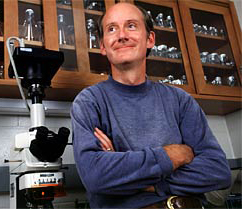
    Any mention of Dr. Melton’s self-interest must be tempered by the recognition that he has a personal stake in the outcome of stem cell research.  As he has made clear in opposing the Bush administration’s unnecessary limits on federal funding for stem cell research, his own son is a juvenile diabetic whose life might be immeasurably improved by stem cell replacement of his pancreatic islet cells.  However, this does not change the fact that Dr. Melton (at left) is not a disinterested observer without a financial stake in the outcome of the re-examination.  Besides his own interest in funding for his laboratory, the decision of the Massachusetts state government to provide one billion dollars for biotechnology research (see "Massachusetts to Invest $1 Billion on Medical and Science Research"), with a hefty dose earmarked for stem cell research, may be expected to motivate his participation if not his opinions on the Thomson re-examinations.  Dr. Melton’s colleague, Dr. Cowan, suffers from the same financial conflict of interest.

    Like Dr. Loring, Dr. Trounson also has a number (five) of published U.S. patent applications directed to stem cells, including U.S. Publication No. 2002/0160509 reciting the following claim:

    Claim 1.  A purified preparation of human undifferentiated embryonic stem cells capable of proliferation in vitro.

    Trounson_alan_2
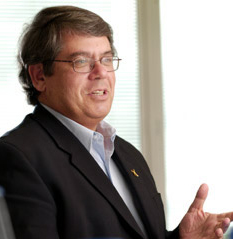
    The relative overbreadth of this claim, compared with Dr. Thomson’s claims in re-examination, make it hard to give credence to Dr. Trounson’s testimony.  This is particularly true since Dr. Trounson (at right) was required to supply a declaration/power of attorney in his U.S. application attesting to the fact that he was an inventor of this claim.  If the art available when Dr. Thomson filed his earliest application rendered human embryonic stem cells obvious, the question arises as to whether Dr Trounson was mistaken when he signed his application declaration or when he signed the declaration submitted in the Thomson patent re-examinations.

    The challengers have also tried to raise the political and public relations pressure on WARF by releasing these affidavits to the press, which lacks the capacity (scientific or political) to properly evaluate their claims or provide an unbiased review of the self-interest of the challengers (while trumpeting the self-interests of the patentee as being contrary to the public interest).  The sad thing is that neither the press nor the public seems to have any interest in dispassionately assessing the motivations of the parties, and appear content in reporting the largely unsubstantiated charges against WARF made by the patent challengers (see Part II of this series).

    The Patent Office is now considering WARF’s responses and, in the inter partes re-examinations, the challengers’ affidavits and the arguments accompanying them.  Under the "special dispatch" rules for patent re-examinations, it can be expected that any further Action should issue from the Patent Office by autumn, and that a final (appealable) determination should issue by the end of this year.

    For additional information on this and related topics, please see:

  • Boston Skyline American Conference Institute (ACI) will be holding its 9th Advanced Forum on Biotech Patents: Analysis, Insights and Strategies for New Challenges in Biotech Patent Practice on September 26-27, 2007 in Boston, MA.  The conference will provide practical and tactical advice for adapting current biotech practices to account for follow-on biologics, addressing ethical and practical concerns regarding the patenting of life, developing best practices for biotech patent claim construction, planning for potential changes to the obviousness standard, protecting proprietary information in biotechnology inventions, working effectively with examiners, incorporating Patent Office reforms into biotech patent practices, conducting freedom to operate assessments in biotechnology, prosecuting antibody claims, maximizing patent term extensions, and adjusting patent strategies in accordance with evolving standards for inequitable conduct.  In particular, ACI's faculty of biotech patent practitioners and in-house counsel will offer presentations on the following topics:

    • 771l08bos
      Debating the Validity and Future of Follow-Ons (Legislative and Regulatory Update)
    • The Patenting of Life:  Demystifying Ethical and Practical Concerns
    • Keynote Address:  Navigating the Intricacies of USPTO Biotech Patent Practice Including the New Proposed Changes to the Patent Rules
    • Evolving Best Practices for Claim Construction in Biotech Patent Applications Filings
    • KSR v. Teleflex:  Bracing for the Potentially Damaging Impact on the Obviousness Standard
    • Protecting Proprietary Information – Deciding Whether to File for a Patent
    • Working Effectively With Examiners When Filing and Drafting Biotech Patent Claims
    • Patent Reform at the USPTO:  Where Are We Now?
    • Freedom to Operate Assessments in Biotechnology:  Analysis, Opinions and More
    • Focus on MedImmune v. Genentech:  Dissecting its Impact on Patent Strategies, Freedom to Operate and Licensee/Licensor Relationships
    • Cultivating Biotechnology Patent Strategies in Europe and Asia:  Identifying Differences and Assessing Impact on U.S. Practices
    • Maximizing Patent Term Extension and Adjustment
    • Prosecuting Antibody Claims – Tactics for Addressing the Many Challenges
    • Interpreting Recent Decisions Regarding Inequitable Conduct and Adjusting Patent Strategies Accordingly

    American_conference_institute_aci
    Among the conference's speakers will be John J. Doll, Commissioner of Patents for the U.S. Patent and Trademark Office, who will be presenting the keynote address entitled "Navigating the Intricacies of USPTO Biotech Patent Practice Including the New Proposed Changes to the Patent Rules," and Patent Docs author Kevin E. Noonan, who will be discussing the Supreme Court's decision in KSR International Co. v. Teleflex Inc.

    An additional Master Class on "Drafting Successful Patent Applications for Biotechnology Related Inventions" will be offered on September 28, 2007.

    The agenda for the Biotech Patents conference can be found here.  A complete brochure for this conference, including an agenda, list of speakers, and registration form can be downloaded here.

    The registration fee ranges from $1,995 (conference alone) to $2,595 (conference and master class).  Those interested in registering for the conference and workshop can do so here or by calling 1-888-224-2480.

    Patent Docs is a media sponsor of ACI's 9th Advanced Forum on Biotech Patents.

  •     By Donald Zuhn

    Logo_valeant
    Valeant Pharmaceuticals International announced today (July 2, 2007) that it has settled its patent infringement suit with Kali Laboratories, Inc. (which was acquired by Par Pharmaceutical in June of 2004).  Valeant’s patent infringement action involved Diastat®, which Valeant markets as the only FDA-approved at-home acute treatment for break-through epileptic seizures.

    Xcel Pharmaceuticals, Inc. (which Valeant acquired in March 2005) filed the patent infringement action in July 2004 in the U.S. District Court for the District of New Jersey in response to Kali’s submission, in March 2004, of an Abbreviated New Drug Application (ANDA) seeking approval for a generic version of Diastat®.

    Diastat
    Under the terms of the agreement, Kali will not introduce a generic version of Diastat® until September 2010.  Other terms of the settlement were not disclosed.  The companies now have 60 days within which to finalize the agreement.

  •     By Christopher P. Singer

    Introgen
    In a July 2, 2007 press release, Introgen Therapeutics, Inc. announced that the U.S. Patent Office has issued U.S. Patent No. 7,235,391, entitled "Formulations of Adenovirus for Gene Therapy."  The general technology covered by the patent relates to pharmaceutical formulations containing adenoviruses that have improved shipping and long term storage capacity.  According to Introgen, the company has developed a number of adenoviral formulations that contain combinations of common formulation agents, such as glycerol and non-ionic detergents, which allow for final formulations that can be shipped under standard refrigeration conditions and can be stored over longer periods of time.  Introgen expects that these formulations will be explored for use in its adenoviral vector series of pipeline drugs, particularly ADVEXIN p53 and INGN 241 mda-7.

    Vaccine1
    The ‘391 claims priority as a divisional application to issued U.S. Patent 6,689,600, which in turn claims priority to two U.S. Provisional Patent Applications, one filed on November 16, 1998, and the other on May 7, 1999.  Briefly, the claims of the patent relate to aqueous pharmaceutical compositions comprising adenoviral particles, a polyol, and a non-ionic detergent.  The patent contains twenty total claims, with Claim 1 as the only in independent claim.  Claim 1 recites:

    1.  An aqueous pharmaceutical composition comprising adenoviral particles and a polyol in an amount effective to promote the maintenance of adenoviral infectivity, wherein the composition further comprises a non-ionic detergent.

    More information regarding this technology, as well as Introgen’s other technology platforms, can be found at Introgen’s website.

  • San Francisco #3 American Conference Institute (ACI) will be holding its fall session of the Pharma/Biotech Patent Boot Camp on September 18-19, 2007 in San Francisco, CA.  The conference will focus on the interplay of the Patent and Trademark Office (PTO) and Food and Drug Administration (FDA) in the patenting of drugs and biologics as well as on coordinating patent filings with FDA strategies; developing practical knowledge concerning Hatch-Waxman protocols, including Orange Book listings, exclusivities, bioequivalency, the 30-month stay, and the safe harbor; determining when and how to undertake a freedom to operate analysis; navigating patent term adjustment and patent term restoration regulations; drafting strong claims; and avoiding pitfalls associated with licensing agreements.  In particular, ACI's faculty of IP and regulatory counsel will offer presentations on the following topics:

    • Pharmabiotech_boot_camp
      Key agencies: Understanding the jurisdiction and interplay of the FDA and PTO in the patenting of drugs and biologics;
    • Life sciences patents: What is patentable?
    • Tests for patentability in the life sciences;
    • Perfecting claims in life sciences patent applications;
    • Pre-patent considerations relative to product development, commercialization and life cycle management;
    • Freedom to operate: Analysis and opinions for pharma and biotech patents;
    • Finding safe harbors for life sciences IP: Assessing protections and identifying infringing activities relative to third-party patents;
    • The nature of the approval process for drugs and biologics:  What every life sciences patent attorney should know;
    • Patent and IP overview for drugs and biologics:  Hatch-Waxman, trade dress, and more;
    • Patent and non-patent exclusivity;
    • Bioequivalence and the "same active ingredient" vis-à-vis patentability;
    • Exploring pharmaceutical patent extensions:  Patent term adjustment and patent term restoration;
    • Transactional considerations:  The essentials of life sciences licensing

    American_conference_institute_aci
    The agenda for the Pharma/Biotech Patent Boot Camp can be found here and a list of conference speakers can be found here.  A complete brochure for this conference, including an agenda, list of speakers, and registration form can be downloaded here.

    The registration fee for the conference is $1,995 (or $1,795 for those registering before July 20, 2007).  Those interested in registering for the conference can do so here or by calling 1-888-224-2480.

    Patent Docs is a media sponsor of ACI's Pharma/Biotech Patent Boot Camp.

  •     By Jason Derry —

    Efsweb
    On July 8, 2007, the Patent Office will release the next version of EFS-Web.  As indicated on the Patent Office website, the new features associated with the release will make it possible to:

    • E-file Reissue and Reexam applications and follow-on documents;
    • Select Accelerated Examination;
    • Select only from a list of document descriptions that fit the filing type;
    • Enter the International application number for U.S. National Phase filings using either the 14 or 17 character PCT format;
    • Attach PCT SAFE zip files in existing applications;
    • Monitor status of uploaded and validated documents via a progress bar; and
    • Pay multiple terminal/statutory disclaimer fees.

    Uspto_seal_3
    Jason Derry, Ph.D., who graduated with honors from DePaul University
    College of Law, is a molecular biologist and founding author of Patent Docs.

  •     By Kevin E. Noonan

    New_york_times
    The hostility of The New York Times to patents in general (and gene patenting in particular) has been well documented (see "Anti-Patent (‘Sullivan?’) Malice by The New York Times" and "Science Fiction in The New York Times").  However, until now this bias has been confined to the editorial page, where it at least can be recognized as a particular point of view and subject to public debate.  This Sunday (July 1, 2007), the Times proved that even the purported "paper of record" is not immune to the modern virus of letting its opinion pieces bleed onto the news pages, with an "analysis" on new developments in biological sciences which the author (falsely) asserts places the validity of biotech patents, particularly gene patents, into question (see "A Challenge to Gene Theory, a Tougher Look at Biotech").

    Uploadimagedisplayservletsrv
    The piece, in the "science" section, is by Denise Caruso (at left), a frequent Times contributor and executive director of the Hybrid Vigor Institute, a private think tank putatively dedicated to assessing risk in an interdisciplinary fashion; its biases, and its directors, will become evident shortly.  The subject of the piece is recent evidence that mammalian (including human) genes are not expressed as simply as are the genes of less complicated organisms, such as bacteria and yeast.  These results show that a majority of the DNA sequences studied are transcribed into RNA, including both gene sequences and sequences understood to be non-coding, "junk" DNA, and that these primary transcripts are overlapping, i.e., they start and stop at a more diverse array of sites than previously appreciated (see "What’s ENCODE’d in Your Genome Isn’t a Simple Collection of Genes").  As the authors explain, "[i]nstead of the traditional view that many genes have one or more alternative transcripts that code for alternative proteins, our data suggest that a given gene may both encode multiple protein products and produce other transcripts that include sequences from both strands and from neighbouring loci (often without encoding a different protein)."  The authors were quick to point out, however, the important caveat that the study was limited to only 1% of the human genome.

    Encode
    No such caution from Ms. Caruso, however.  In her article, she asserts from the very first sentence that these results challenge the scientific principles upon which the biotechnology industry is based.  She claims that this is contrary to "[t]he presumption that genes operate independently [that] has been institutionalized since 1976, when the first biotech company was founded.  In fact, it is the economic and regulatory foundation on which the entire biotechnology industry is built."  She goes on to analogize the biotech industry to the development of antibiotics, with the unknown consequences of "superbugs" resistant to them (ignoring, as only those who disregard history can, the overwhelming countervailing benefit that the antibiotic era conferred on mankind).  She characterizes the ENCODE results as challenging the "central dogma of molecular biology," while actually mischaracterizing what she is describing:  the principle of "one gene, one enzyme" enunciated by Beadle and Tatum in 1941, twelve years before Watson and Crick invented molecular biology and Crick formulated the central dogma.  She then raises explicitly the issue of whether "gene patenting" by the U.S. Patent and Trademark Office is tenable, saying the ENCODE data "now raises some fundamental questions about the defensibility of those patents."

    In all of this, she is not only wrong but misses the point of the scientific results.  (Understandable for someone who was an English major at California Polytechnic State University.)  The ENCODE study did not overturn more than 100 years of genetics, mammalian or otherwise.  Genes as a concept and a reality still exist; they can be physically mapped to specific locations in human chromosomes, and mutations and other changes have consequences consistent with their physical reality as discrete genes.  What ENCODE tells us is that expression of these genes in native form in a cell is more complex than previously appreciated.  Regardless, however, the messenger RNA that enters the cytoplasm from the nucleus is exactly the same discrete "gene" (more accurately, protein coding sequence) that it always has been, and which it has always been understood to be.  And it is complementary DNA copies of those mRNAs that have formed the basis for most of the "gene patents" granted in the U.S. and elsewhere.  The reason for this is technical:  it has been known for more than thirty years that the coding sequence of most mammalian "genes" was interrupted by intervening sequences (called "introns" to the coding sequence’s "exons") and that the primary transcript from the "gene" was processed in the nucleus to produce messenger RNA.  Even if it has turned out that the biological mechanism is more complicated than that, it hasn’t done anything to the usefulness of cloned genes recognized by the Patent Office and industry for the past 30 years.

    600pxbiohazardsvg
    Ms. Caruso also raises the specter of safety in her piece:  if "we" really don’t understand how this all works, isn’t it (couldn’t it) be dangerous?  The answer, for the most part, is "no," and answer is backed up by long experience.  At the dawn of the biotechnology age, its foremost practitioners (who didn’t need think tank policy wonks to raise the issue for them) met at Asilomar in California and came up with physical and biological safety standards that were later implemented in large part by the National Institutes of Health.  In the ensuing years, it became evident that most of these precautions were unnecessary, since genes transferred by researchers from organism to organism didn’t cause any health or other issues nor pose any threat to humans.  Today, there are neither safety issues nor technical issues for most industrial biotechnology.  Despite the misapplication of the ENCODE results by Ms. Caruso, most industrial genes (for erythropoietin, or tissue plasminogen activator, or any number of antibodies) work just like the traditional model says they should.  This is not surprising, since for recombinant protein production the genes are engineered to work in a culture of isolated cells.  For bacterial cell embodiments of this technology the ENCODE results are inapplicable, and for mammalian cell embodiments they are irrelevant.  It cannot be emphasized enough, in view of the misinformation in Ms. Caruso’s piece, that the ENCODE results are directed (and limited) to native expression of native genes, not recombinant ones.  And for transgenic plants and animals, experience teaches that there simply is no "gene transfer" from the transgenic organism to humans, just as native tomato or other genes do not transit the species barrier as they transit our digestive tracts.

    While no doubt useful for selling newspapers, the problem with "analyses" such as this one are two-fold (at least).  First, they are based on at best a faulty understanding of the science behind the headlines, written for and consumed by a public with little (perhaps less) understanding of the facts.  Second, they are dishonest, since they are written as if they were dispassionate when in fact they are biased.  A look behind the curtain of the Hybrid Vigor Institute shows that Ms. Caruso started the Institute after a stint with the Electronic Frontier Foundation, an anti-patent, "free information" group representing the interests of the IT community.  For a variety of reasons (some civil libertarian but many economic), this group is against patenting (and copyright, for that matter).  While it is easy to dress these views up as being in favor of "freedom," they are really in favor of economic exploitation without compensation for the innovators.  While this stance may be both attractive and viable for industries where investment in new technology can be a computer and a bright computer science major (or high school student), very different economics attach to the biotechnology industry (see "Could Creating a U.S. ‘Utility Model’ Patent Fulfill the ‘Need’ for Patent Law Reform?"), which is why most biotech representatives support patent Ilterms
    protection.  Ms. Caruso found one of the few biotech naysayers in Barbara Caulfield (at left) from Affymetrix, who is quoted in the piece, ostensibly in support of the "problems" with gene patenting.  (In fairness, Ms. Caulfield’s own bias is evident in her article, "Why We Hate Gene Patents" on Law.com.)  In reality, Ms. Caulfield’s anti-patent bias has the same genesis as that of the IT industry:  since the company wants to sell its gene chips that comprise thousands of gene-specific sequences, patent owners of these sequences constitute a "patent thicket" requiring licenses that the company would rather not be forced to obtain.  On the biotechnology side, Ms. Caruso has been involved in studies of the risks of xenotransplantation and pandemic infections (subjects traversed thoroughly by others, including Laurie Garrett in "The Coming Plague: Newly Emerging Diseases in a World Out of Balance").

    Ms. Caruso’s bias is also evident in the content of her book, "Intervention: Confronting the Real Risks of Genetic Engineering and Life on a Biotech Planet."  It is characterized this way on amazon.com:

    418v2tgmkpl_ss500__2
    INTERVENTION challenges two of the most sacred tenets of modern society, innovation and technology, from the perspective of the unique risks they present.  Using genetic engineering as its model, it paints a vivid picture of the scientific uncertainties that biotech risk evaluations dismiss or ignore, and lays bare the power and money conflicts between academia, industry and regulators that have sped these risky innovations to the market.  Intervention champions an alternative method for assessing the risks of technology, developed by the world’s top risk experts, that can eliminate such conflicts, help regain public trust in science and government, and drive research and development toward more useful, safer products.

    Whether Luddite or technology Cassandra, Ms. Caruso’s public and published career attest to her bias against technology, seeing it as posing a risk to be assessed (preferably not by those with the best understanding of the potential – and potential difficulties – of that technology) rather than an opportunity to be exploited.

    Ms. Caruso is entitled to her bias and her opinions, of course.  What is troubling is that those opinions are based on a flawed and incorrect understanding of the facts.  It is even more troubling that The New York Times would accept those opinions, and those misunderstood facts, at face value, and then print them as if they were not opinions but were themselves facts.  This sort of irresponsibility to its reading public is as good a reason as any for the precipitous decline in the level and tenor of public debate at this time in this country.

  •     By Sherri Oslick

    Gavel_26
    About
    Court Report:  Each week we will report briefly on recently filed
    biotech and pharma cases, and a few interesting cases will be selected
    for periodic monitoring.


    Astrazeneca Pharmaceuticals LP et. al. v. Teva Pharmaceuticals USA, Inc. et. al.

    3:07-cv-03001; filed June 28, 2007 in the District Court of New Jersey

    Infringement of U.S. Patent No. 4,879,288 ("Novel Dibenzothiazepine Antipsychotic," issued November 7, 1989) following a paragraph IV certification as part of Teva’s filing of an ANDA to manufacture a generic version of AstraZeneca’s Seroquel® (quetiapine fumarate, used to treat schizophrenia and bipolar disorder).  View the complaint here.


    AsymmetRx, Inc. v. Biocare Medical LLC et. al.

    1:07-cv-11189; filed June 27, 2007 in the District Court of Massachusetts

    Infringement of U.S. Patent Nos. 6,946,256 ("Cell Regulatory Genes, Encoded Products, and Uses Related Thereto, issued September 20, 2005) and 7,030,227 (same title, issued April 18, 2006) based on defendants’ manufacture and sale of products that infringe in the diagnostic and/or therapeutic markets, outside the scope of their limited licenses.  View the complaint here.


    Idaho Technology et. al. v. Corbett Life Science et. al.

    2:07-cv-00425; filed June 27, 2007 in the District Court of Utah

    Infringement of U.S. Patent Nos. 6,787,338 ("Method for Rapid Thermal Cycling of Biological Samples," issued September 7, 2004), 7,238,321 (same title, scheduled to issue July 3, 2007), 7,081,226 ("System and Method for Fluorescence Monitoring," issued July 25, 2006), 6,174,670 ("Monitoring Amplification of DNA During PCR, issued January 16, 2001), 6,245,514 ("Fluorescent Donor-Acceptor Pair with Low Spectral Overlap," issued June 12, 2001), 6,569,627 ("Monitoring Hybridization During PCR using SYBR Green I," issued May 27, 2003), 6,303,305 ("Method for Quantification of an Analyte," issued October 16, 2001), and 6,503,720 (same title, issued January 7, 2003) based on Corbett’s manufacture and sale of its Rotor-Gene products.  View the complaint here.


    Smithkline Beecham Corporation et. al. v. Mylan Laboratories, Inc. et. al.

    3:07-cv-02939; filed June 25, 2007 in the District Court of New Jersey

    Infringement of U.S. Patent No. 7,229,640 ("Paroxetine Controlled Release Compositions," issued June 12, 2007) following a paragraph IV certification as part of Mylan’s filing of an ANDA to manufacture a generic version of plaintiffs’ Paxil CR® (paroxetine hydrochloride controlled release tablets, used to treat depression).  View the complaint here.


    Glaxo Group Ltd. v. Cypress Pharmaceutical, Inc.

    1:07-cv-06012; filed June 25, 2007 in the Southern District of New York

    Infringement of U.S. Patent No. 5,068,249 ("Aqueous Ranitidine Compositions Stabilized With Ethanol," issued November 26, 1991) following a paragraph IV certification as part of Cypress’s filing of an ANDA to manufacture a generic version of Glaxo’s Zantac® Syrup (ranitidine hydrochloride, used to treat gastroesophageal reflux disease in children).  View the complaint here.


    MedPointe Healthcare Inc. v. Sun Pharmaceutical Industries Ltd.

    1:07-cv-00407; filed June 22, 2007 in the District Court of Delaware

    Infringement of U.S. Patent No. 5,164,194 ("Azelastine Containing Medicaments," issued November 17, 1992) following a paragraph IV certification as part of Sun Pharmaceutical’s filing of an ANDA to manufacture a generic version of MedPointe’s Optivar® (azelastine hydrochloride ophthalmic solution, used to seasonal allergic rhinitis).  View the complaint here.


    Monsanto Company et. al. v. Harold Sinn

    3:07-cv-00288; filed June 22, 2007 in the Northern District of Indiana

    Infringement of U.S. Patent Nos. 5,352,605 ("Chimeric Genes for Transforming Plant Cells Using Viral Promoters," issued October 4, 1994) and RE39,247 ("Glyphosate-tolerant 5-enolpyruvylshikimate-3-phosphate Synthases," issued August 22, 2006) based on defendant’s use of soybean seed produced from earlier planted Roundup Ready® soybean seed.  View the complaint here.


    Wyeth v. Sandoz, Inc.

    5:07-cv-00234; filed June 22, 2007 in the Eastern District of North Carolina

    Infringement of U.S. Patent Nos. 6,274,171 ("Extended release formulation of venlafaxine hydrochloride," issued August 14, 2001), 6,403,120 (same title, issued June 11, 2002), and 6,419,958 (same title, issued July 16, 2002) following a paragraph IV certification as part of Sandoz’s filing of an ANDA to manufacture a generic version of Wyeth’s EFFEXOR XR® (venlafaxine hydrochloride, extended release, used to treat depression).  View the complaint here.


    Otsuka Pharmaceutical Co., Ltd. v. Teva Pharmaceuticals USA, Inc. et. al.

    3:07-cv-02919; filed June 22, 2007 in the District Court of New Jersey

    Infringement of U.S. Patent No. 5,006,528 ("Carbostyril Derivatives," issued April 9, 1991) based on Teva’s filing of an ANDA to manufacture a generic version of Otsuka’s Abilify® (aripiprazole, used to treat bipolar disorder and schizophrenia).  View the Synthon complaint here.


    Teva Pharmaceutical Industries Ltd. et. al. v. Lupin Ltd. et. al.

    3:07-cv-02896; filed June 21, 2007 in the District Court of New Jersey

    Teva Pharmaceutical Industries, Ltd. et. al. v. Moehs Iberica, S.L.
    3:07-cv-02897; filed June 21, 2007 in the District Court of New Jersey

    Teva Pharmaceuticals Industries Ltd. et. al. v. Orchid Chemicals & Pharmaceuticals, Ltd. et. al.
    3:07-cv-02898; filed June 21, 2007 in the District Court of New Jersey

    Teva Pharmaceutical Industries Ltd. et. al. v. Urquima, S.A.
    3:07-cv-02899; filed June 21, 2007 in the District Court of New Jersey

    Teva Pharmaceutical Industries Ltd. et. al. v. Wanbury Ltd.
    3:07-cv-02913; filed June 22, 2007 in the District Court of New Jersey

    Teva Pharmaceutical Industries Ltd. et. al. v. Zhejiang Huahai Pharmaceutical Co., Ltd.
    3:07-cv-02914; filed June 22, 2007 in the District Court of New Jersey

    Teva Pharmaceutical Industries, Ltd. et. al. v. USV Ltd.
    3:07-cv-02911; filed June 22, 2007 in the District Court of New Jersey

    Teva Pharmaceutical Industries Ltd. et. al. v. Cadila Pharmaceuticals Ltd.
    3:07-cv-02912; filed June 22, 2007 in the District Court of New Jersey

    The complaints in these cases are substantially identical.  Declaratory judgment of infringement of U.S. Patent Nos. 6,699,997 ("Carvedilol," issued March 2, 2004), 6,710,184 ("Crystalline Solids of Carvedilol and Processes for Their Preparation," issued March 23, 2004), 7,056,942 ("Carvedilol," issued June 6, 2006), and 7,126,008 (same title, issued October 24, 2006) based on defendants’ filing of a DMF (drug master file) with the FDA for the manufacture of carvedilol (the active ingredient in GSK’s Coreg®, used to treat congestive heart failure).  View the Lupin complaint here.


    Teva Pharmaceutical Industries Ltd. et. al. v. Ranbaxy Laboratories Ltd. et. al.

    3:07-cv-02892; filed June 21, 2007 in the District Court of New Jersey

    Teva Pharmaceuticals Industries, Ltd. et. al. v. Dr. Reddy’s Laboratories, Ltd. et. al.
    3:07-cv-02894; filed June 21, 2007 in the District Court of New Jersey

    Teva Pharmaceutical Industries Ltd. et. al. v. Watson Pharmaceuticals, Inc.
    3:07-cv-02895; filed June 21, 2007 in the District Court of New Jersey

    Teva Pharmaceutical Industries Ltd. et. al. v. Mylan Pharmaceuticals, Inc.
    1:07-cv-05915; filed June 21, 2007 in the Southern District of New York

    Teva Pharmaceutical Industries Ltd. et al v. Taro Pharmaceuticals U.S.A., Inc. et. al.
    1:07-cv-05914; filed June 21, 2007 in the Southern District of New York

    The complaints in these cases are substantially identical.  Declaratory judgment of infringement of U.S. Patent Nos. 6,699,997 ("Carvedilol," issued March 2, 2004), 6,710,184 ("Crystalline Solids of Carvedilol and Processes for Their Preparation," issued March 23, 2004), 7,056,942 ("Carvedilol," issued June 6, 2006), and 7,126,008 (same title, issued October 24, 2006) based on defendants’ filing of an ANDA to manufacture and sell a generic version of GSK’s Coreg® (carvedilol, used to treat congestive heart failure).  View the Ranbaxy complaint here.