•     By Donald Zuhn

    Ariad
    On Monday, ARIAD Pharmaceuticals, Inc. announced that the U.S. District Court for the District of Massachusetts had ruled in its favor in a patent infringement suit ARIAD filed against Eli Lilly and Co.  ARIAD and co-plaintiffs Massachusetts Institute of Technology, The Whitehead Institute for Biomedical Research, and The President and Fellows of Harvard College had filed suit against Eli Lilly on June 25, 2002, contending that Eli Lilly’s osteoporosis drug, Evista®, and septic shock drug, Xigris®, infringed the plaintiffs’ U.S. Patent No. 6,410,516.  In a 57-page opinion, the District Court Lilly
    determined that ‘516 patent did not encompass unpatentable subject matter and was not unenforceable due to inequitable conduct or prosecution laches.  A jury had previously found the ‘516 patent valid and infringed in May 2006.

    Uspto_seal
    ARIAD also announced on Monday that the U.S. Patent and Trademark Office had issued a final Office action in its reexamination of the ‘516 patent.  In that Action, the Patent Office rejected the patentability of certain claims, including the claims ARIAD had asserted against Eli Lilly (and in a separate lawsuit, against Amgen Inc. and Wyeth).  The Cambridge, Massachusetts-based biotech company has said that it plans to respond to the Action and, "if necessary, appeal the decision through all appropriate means of review within the Patent Office and the courts."

    For additional information on this and other related topics, please see:

  •     By Kevin E. Noonan

    More than 100 years ago, Mark Twain understood the corrosive power of numbers to sway a debate, particularly when those numbers are accepted unquestioningly and are based on faulty (but unspoken) assumptions.  One example in patent law is the 85-97% patenting rate of patent applications set forth in Quillen and Webster, 11 Fed. Cir. B.J. 1 (2001); although quoted extensively (most notably, by Mark Lemley and (now Federal Circuit Judge) Kimberly Moore in their paper condemning continuation application practice), the number has been thoroughly debunked by a variety of authors (see, e.g., Patrick Doody, "The Patent System is Not Broken," 18 Intellectual Property & Technology Law Journal 10 (December 2006)).  That has not stopped the idea from motivating much of the rhetoric about the "broken" patent system, or wrongheaded attempts to change the law by rule or statute (see "They Just Don’t Get It – ‘Patent Reform’ at the USPTO").

    Ipo_2
    The Intellectual Property Owners Association (IPO) today posted another example of how statistics can be used to mistakenly frame the continuation debate.  Here is the notice on the IPO e-mailer:

    PATENT APPLICATION LISTS 71 EARILER-FILED CONTINUING APPLICATIONS — A reader brought to our attention published U.S. patent application 2003/0229514, filed August 30, 2002, by Stephen J. Brown of Woodside, California.  The application is a continuation-in-part that lists SEVENTY-ONE earlier-filed continuation or continuation-in-part applications.  This is by far the most continuing applications we have seen listed in one application, and might be a record.

    Unstated is the assumption that this is another patent submariner, keeping an endless string of continuations pending, Lemelson-like, and no doubt dreaming of one day blossoming into another patent troll to stifle innovation.  But a closer look reveals how wrong the assumption would be, and illustrates the benefits of using the application process to protect technology that is rapidly developing.

    Initially, simple observation of the continuity data on the Patent and Trademark Office’s Patent Application Information Retrieval (PAIR) system shows that the list contains three simple duplications, and there are only 68 applications in the priority chain.  The first statistic that jumps out from the data is that this continuity chain has resulted in 37 patents (see below).  Thus, of the 68 filings noted in the IPO post, 54% have been granted.  There have also been 6 provisional applications, and since these expire and have been converted into utility applications they reduce the total number to 62 (or else we will have double-counted them).

    Another thing that stands out is that of the 62 utility applications, 48 have been continuations-in-part (77%).  By its very nature, a continuation-in-part application contains new disclosure and is not simply a re-filing of a previous application.  Moreover, under patent prosecution rules any claim to the newly-disclosed embodiments will be entitled to the filing date of the continuation-in-part application, not the earlier date, thus negating any benefit from the priority claim (without which, of course, the application would not make up the provocative statistic).  And the consequence to the applicant is that the expiration date of any patent obtained thereby will be shortened to 20 years from the earliest filing date.  This term-shortening effect is felt for all of the applications in the priority chain filed after June 7, 1995, which constitute all but 9 of the applications (and 6 of the patents) in the priority string.

    When the underlying data is reviewed, it is evident that the priority chain set forth in the published application (and posted by IPO) is in fact consistent with generations of U.S. patent policy.  Rather than attempting to obtain overarching patent claims that could be asserted against infringers from vastly different areas of commerce, the applicant here has chosen to file applications directed to each of the embodiments of his invention as he has developed them.  He has incurred the costs of these filings, even when failing to disclose might have permitted at least some of these embodiments to remain under trade secret protection.  More importantly, it is the disclosure, not the patents, that should be the focus of the story.  In this case it appears that the public benefit of the disclosure, and the transfer of this technology into the public domain when patent protection expires, outweighs the limited rights accruing to the patentee.  And it is equally clear that the bald statistic, of 71 prior applications, is at best misleading and at worst can be easily manipulated to support the proposition that the patent system is somehow "broken."  In fact, the revealed reality is that this is a good example of behavior the patent system was designed to promote.

    The 37 patents:
    5,307,263; 5,569,212; 5,601,435; 5,678,571; 5,782,814; 5,794,219; 5,828,943; 5,832,448; 5,879,163; 5,887,133; 5,897,493; 5,899,855; 5,913,310; 5,918,603; 5,933,136; 5,940,801; 5,951,300; 5,956,501; 5,985,559; 5,997,476; 6,023,686; 6,068,615; 6,144,837; 6,167,386; 6,168,563; 6,186,145; 6,196,970; 6,210,272; 6,233,539; 6,240,393; 6,246,992; 6,330,426; 6,334,778; 6,368,273; 6,375,469; 6,968,375; 7,167,818

  •     By Donald Zuhn

    Roche
    As we reported two weeks ago, Roche commenced a cash tender offer on June 27, 2007 to acquire all outstanding shares of Ventana Medical Systems, Inc. common stock.  In the past week, however, it appears that Roche’s acquisition of Ventana may have hit a snag – or two.

    Ventana_medical_systems_2
    Last Wednesday, Reuters reported that Roche had filed a complaint against Ventana, contending that Ventana was using an unfair defense to block Roche’s acquisition.  According to Reuters, Roche has asked a federal court to invalidate Ventana’s "poison pill" defense, which would give Ventana shareholders the right to buy new shares at half price if Roche acquires 20% of the company.

    In addition, the Associated Press reported last Friday that the Arizona Anti-Takeover Act may also impede the acquisition.  According to the Associated Press, Roche is now seeking to have a federal court declare the 20-year-old Arizona law unconstitutional.  The Arizona law, which restricts the voting rights of an outsider who buys 20% or more of a company’s shares, would prevent Roche from exercising authority over Ventana for three years.

    For additional information regarding this topic, please see:

  •     By Sherri Oslick

    Gavel_25
    About
    Court Report:  Each week we will report briefly on recently filed
    biotech and pharma cases, and a few interesting cases will be selected
    for periodic monitoring.


    Codon Devices, Inc. v. febit Biotech GmbH et. al.

    1:07-cv-01177; filed June 29, 2007 in the District Court of the District of Columbia

    Declaratory judgment of non-infringement, invalidity, and unenforceability of U.S. Patent No. 6,586,211 ("Method for Producing Polymers," issued July 1, 2003) based on Codon Devices’ operation in the area of synthetic gene manufacturing.  View the complaint here.


    Purdue Pharma Products LP et. al. v. Par Pharmaceutical Inc. et. al.

    1:07-cv-00414; filed June 28, 2007 in the District Court of Delaware

    Infringement of U.S. Patent No. 6,254,887 ("Controlled Release Tramadol," issued July 3, 2001) following a paragraph IV certification as part of Par’s filing of an ANDA to manufacture a generic version of plaintiffs’ Ultram® ER (tramadol hydrochloride, used to treat moderate to moderately severe chronic pain).  View the complaint here.  As reported here, plaintiffs have previously asserted this patent against Par Pharmaceutical; the present complaint includes an additional dosage included in Par’s ANDA.


    Daiichi Sankyo Company, Ltd. et. al. v. Mylan Pharmaceuticals Inc. et. al.

    2:07-cv-03039; filed June 22, 2007 in the District Court of New Jersey

    Infringement of U.S. Patent No. 5,616,599 ("Angiotensin II Antagosist 1-Biphenylmethylimidazole Compounds and Their Therapeutic Use," issued April 1, 1997) following a paragraph IV certification as part of Mylan’s filing of an ANDA to manufacture a generic version of plaintiffs’ Benicar HCT® (olmesartan medoxomil and hydrochlorothiazide, used to treat hypertension).  View the complaint here.

  •     By Kevin E. Noonan

    Abbott
    A measure of sanity returned last week, when the Brasilian Health Ministry and Abbott Laboratories announced an agreement on a pricing regime for Abbott’s anti-AIDS drug, Kaletra®.  Under this agreement, Brasil will not "break" Abbott’s patent by permitting sale or importation of a generic version of the drug.

    As set forth earlier, Brasil is saddled with a large HIV-positive patient population that costs the Brasilian government tens of millions of dollars a year in drug costs alone.  This led Brasil to recently threaten to invoke provisions of its national law implementing the TRIPS agreement in conjunction with the provisions of the Doha Declaration that would have permitted Brasil to import a generic version of the drug without incurring the type of trade sanctions envisioned when the World Trade Organization was formed.

    Kaletra
    The agreement sets prices for the drug for the next six years, and comes out to about $1,000 per year per patient, at a 30% reduction of per pill costs (from $1.04 per pill to 73 cents per pill this year and 63 cents in 2008).  Brasil’s health ministry said the price reduction will give Brasil a savings of $18 million in the first year and up to $259 million over the next six years.  Brasil receives the additional benefit that the agreement covers an improved version of the drug, Meltrex®, once the U.S. Food and Drug Administration grants approval to the new drug.

    One area of apparent disagreement is over technology transfer for producing the drug.  The Brasilian Health Ministry said last week that Abbott will begin technology transfer in 2009, a date Abbott disputes:  according to the company, it will not transfer Kaletra®-producing technology until 2015, when the patent expires.

    Abbott’s actions are consistent with its similar capitulation when the government of Thailand made similar threats.  They are in stark contrast to the situation with Merck’s anti-AIDS drug efavirenz:  this week, Brasil received the first shipment of a generic version of this drug from an Indian company, Aurobindo, under the terms of a compulsory license issued by the Brasilian government in May.  In that case, Merck was reported to have refused a 60% price reduction demanded by Brasil.

    Under the political and economic realities Western pharmaceutical companies face internationally, and in the face of Brasil’s evident willingness to follow through with compulsory licenses as evidenced by the efavirenz example, Abbott had little choice.  However, without a coordinated effort between innovator drug companies and governments representing the source as well as the recipient countries, the other economic realities – the costs of developing new drugs and the factors that influence investment in those development activities – will no doubt soon have a negative effect that will be likely felt worldwide.

    For additional information regarding this and other related topics, please see:

  •     By Christopher P. Singer

    Alnylam
    Alnylam Pharmaceuticals, Inc. and Roche announced on July 9, 2007 that they have entered into a non-exclusive license agreement in the area of RNA interference (RNAi) therapeutics.  The agreement includes an upfront payment of $331 million from Roche to Alnylam, which includes cash payments, purchase of 1.975 million shares of Alnylam common stock (about 5% of its outstanding shares), and the acquisition of Alnylam’s European research site located in Kulmbach, Germany.  The research site will become Roche’s Center of Excellence for RNAi therapeutics.  The agreement also provides for milestone payments from Roche to Alnylam on candidate products throughout the various stages of development as well as royalty payments on sales of commercial products.

    Roche
    Under the current terms, Roche has access to a broad spectrum of Alnylam’s intellectual property, including rights to aspects of their chemistry and delivery technologies.  The agreement, at this time, covers four general indication areas:  oncology, respiratory disease, metabolic disease, and certain liver diseases.  The agreement allows for potential field expansion payments from Roche to Alnylam that would increase the number of therapeutic areas covered by the agreement.

    For additional information regarding the licensing agreement, please see:

  •     By Kevin E. Noonan

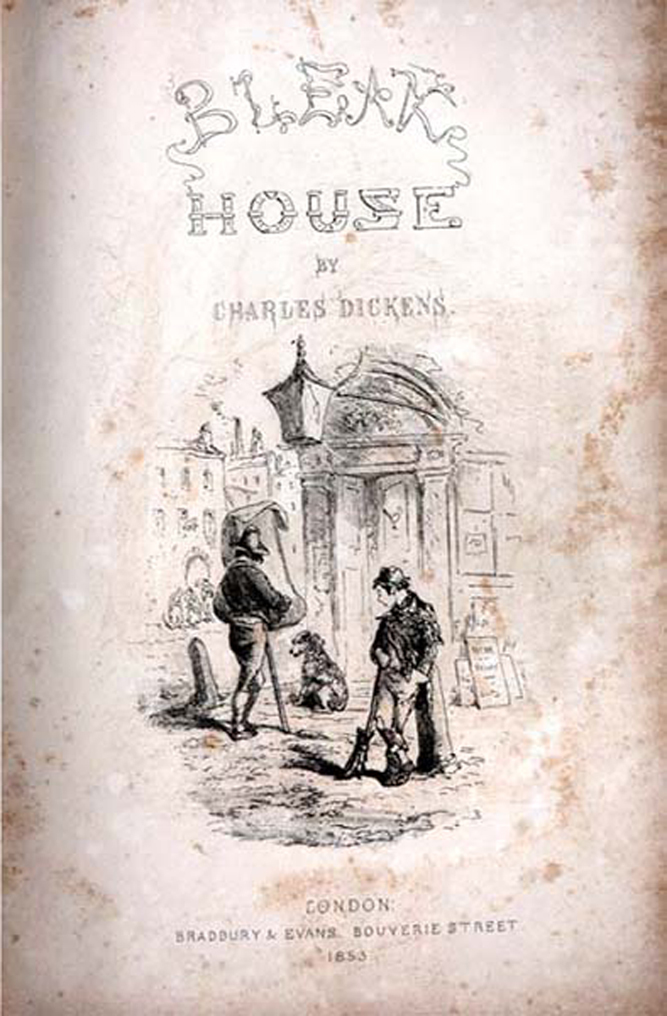
    Bleak_house
    The course of litigation of Festo Corp. v. Shoketsu Kinzoku Kogyo Kabushiki Co. (SMC) has been almost as lengthy as Jarndyce and Jarndyce, having been first filed in 1988.  The case appeared again this week, when the Federal Circuit affirmed a District Court decision that prosecution history estoppel prevented Festo from asserting the doctrine of equivalents against SMC’s product.  Festo Corp. v. Shoketsu Kinzoku Kogyo Kabushiki Co. (Fed. Cir. 2007) (Festo XIII).

    The patent-in-suit (U.S. Patent No. 4,354,125) claimed a "magnetically coupled rodless cylinder," in which a piston having embedded magnets contained in a shaft is magnetically coupled to a driven member on the outside of the shaft.  Movement of the piston is motivated by pressure, such as by a fluid, while movement of the driven member is motivated by magnetic forces between the magnets in the piston and the magnets in the driven member.  One issue faced by Festo is that such magnetically coupled rodless cylinders were "well-known" in the prior art; the distinction of Festo’s invention was that there was a small gap between the magnets, to maximize the magnetic motivating force.

    The equivalents issue involved a sleeve on the outside of the driven member that encases the magnets, which feature was not recited in the independent claim as filed but was a limitation found in a dependent claim.  In the face of claim structure objections from the patent examiner under 35 U.S.C. § 112, the Patentees added the limitation that the sleeve was made of a "magnetizable material," as well as other amendments not at issue in the Federal Circuit’s decision.  The former amendment raised the prosecution history estoppel issue.

    A review of the litigation history of the case helps delineate the questions before the District Court and Federal Circuit.  In the original District Court case (Festo I), a jury found that SMC infringed under the doctrine of equivalents, and awarded damages to Festo in excess of four million dollars.  A three-judge panel of the Federal Circuit affirmed (Festo II), but the Supreme Court granted certiorari and remanded for consideration of the extent of prosecution history estoppel in view of its decision in Warner-Jenkinson Co. v. Hilton Davis Chemical Co. (Festo III).  In Warner-Jenkinson, the Supreme Court held that claim amendments raised a presumption that prosecution history estoppel applied, which presumption a patentee had the opportunity (and the burden) to rebut.

    Federal_circuit_seal
    On remand, the Federal Circuit heard the parties en banc, posing four questions to be decided.  First, were amendments that raise prosecution history estoppel limited to rejections based on 35 U.S.C. §§ 102 or 103, or did any amendment related to patentability raise the estoppel?  Second, did voluntary amendments raise the estoppel?  Third, what was the consequence of amendments having no basis on the record for the motivation behind the amendments?  And last, if prosecution history estoppel was raised by an amendment, what was the scope of equivalents available for that equivalent?

    The Federal Circuit answered these questions (Festo VI) by holding that prosecution history estoppel could be raised by amendments made for any reason relating to patentability, including voluntary amendments and amendments having no motivation or basis on the record.  Significantly, the Federal Circuit also held that a claim element was entitled to no range of equivalents if an estoppel was raised.

    The Supreme Court reversed in part (Festo VIII), finding that a patentee could rebut the presumption of prosecution history estoppel by establishing one of three exceptions:  1) that the equivalent was unforeseeable; 2) that the amendment had only a tangential relation to the equivalent or 3) that there was "some other reason" that suggested the patentee would not have reasonably been expected to describe the equivalent.  Relevant to the Federal Circuit’s later decision, the Supreme Court established that foreseeability depends on whether the patentee would be expected to know, and claim, the equivalent.

    On remand from the Supreme Court, the Federal Circuit held en banc (Festo X) that whether a patentee had rebutted the presumption of surrender under the three exceptions was a matter of law, but that there are factual issues underlying the foreseeability exception that permitted a court to hear expert testimony in making its decision.  The Court also held that only the foreseeability exception was available to Festo, and remanded the case to the District Court for this determination.

    On remand from the Federal Circuit, the District Court held (Festo XI) that Festo had failed to rebut the presumption that the equivalent, an aluminum alloy that was stipulated to be a non-magnetic material, was not foreseeable.  An important factor in this determination was that Festo had submitted two references during prosecution that disclosed using non-magnetic material in a sleeve, and the fact that using aluminum to shield magnetic fields was known in the prior art.  Festo argued that what the art did not teach was that aluminum could be used as an equivalent to the magnetizable material recited in the claim, under the theory that a foreseeable equivalent should satisfy the insubstantial differences/substantially similar function, way, result test for the doctrine of equivalents.  Festo argued that there was no inconsistency in its analysis, that the equivalent satisfied these tests with regard to infringement of the accused article under the doctrine of equivalents, while not satisfying these tests with regard to prosecution history estoppel, because the analyses are performed at different times.  Thus, while the suitability of the equivalent might not be recognized at the time the amendment was made, and thus was not foreseeable, this suitability may be known at the time the accused infringer made, used, sold, offered to sell, or imported the infringing article, thus producing infringement liability under the doctrine of equivalents.

    The Federal Circuit rejected this analysis.  In rejecting Festo’s argument that foreseeability of an equivalent should be assessed using the same criteria (insubstantial differences/substantially similar function, way, result), the Court majority (Judge Dyk writing for the Court, with Chief Judge Michel joining the opinion) raised the concern that this scheme would result in inconsistent arguments by patentees, not giving credence to Festo’s argument that it is not inconsistency but rather different timing of the analysis that informs the differences in the arguments.

    The Court expressly held that an equivalent is foreseeable if it is known in the "pertinent prior art" regardless of whether its applicability to the invention is appreciated.  The Court further distinguished between "new" technology and "old" technology, saying the latter is "more likely" to be foreseeable.  The Court also revisited the issue of whether the fact that an equivalent is independently patentable would preclude (or at least affect) availability of the doctrine of equivalents for finding patent infringement liability.  This discussion renewed the Court’s traditional concern that a patentee not be permitted to ensnare later-developed, independently-patentable inventions using the doctrine of equivalents.  The Court did not take the opportunity to decide this question (which was not at issue in the Festo case) but opined that a finding that the doctrine of equivalents would apply under the circumstances of independent patentability would be "considerably more difficult to make out."  Finally, the Court asserted that "an equivalent cannot be non-obvious and insubstantial" at the same time, and that the foreseeability issue should be considered with relation to the claim scope before the amendment.  Using this analysis, the issue is whether the equivalent would be foreseeable prior to patentee’s claim amendment, because if the equivalent was known in the art, an amendment excluding (or at least not including) the equivalent would raise the estoppel.

    Judge Newman’s dissent focused on the unforeseeability of the functional equivalence of the non-magnetic aluminum alloy used in the sleeve, explicitly citing the differences in the timing of the analyses.  She excoriated the majority’s analysis as one that could make equivalents "retroactively foreseeable" when, as here, the equivalent was known but its usefulness as an equivalent was not appreciated.  Judge Newman stated the point of her dissent most succinctly with the aphorism "[h]indsight is not foreseeability."

    This case represents yet the latest salvo in the continuing dispute over the scope of the doctrine of equivalents and prosecution history estoppel limitations of the doctrine that has played our between the Federal Circuit and the Supreme Court in the ten years since Warner-Jenkinson.  While the subject matter of the claims is a mechanical device, the Federal Circuit’s reasoning is not limited to such simple subject matter, and its applicability to biotechnology patents can be illustrated by a simple example.

    For many years, the Patent and Trademark Office has been generally willing to grant claims to nucleic acids and proteins encoded thereby supported by a particular predicted protein amino acid sequence, but has been less willing to grant claims generally to protein embodiments comprising "conservative mutations" in such proteins.  The biotechnology community has accepted these claims under the belief that infringement by a protein having a sequence that differed from the disclosed sequence only by such conservative substitutions would be encompassed under the doctrine of equivalents.  As a consequence, claims to such conservative substitutions are frequently amended or cancelled in an effort to obtain patented claims.

    The Federal Circuit’s latest Festo decision calls that belief into question.  For example, assume that an infringer replaces one or several valine residues in the native, disclosed protein sequence with leucine residues, a change that adds but a single methylene group to the amino acid sequence at every valine to leucine substitution position.  The structural and functional equivalence of valine to leucine are well-known, and indeed biotechnology patent specifications routinely contain references for this equivalence.  Under the Federal Circuit’s latest explication of its Festo jurisprudence, whether leucine is an equivalent to valine at any particular substitution position or positions should be irrelevant to whether there is an estoppel raised by cancelling or amending claims to eliminate conservative substitution mutants.  The equivalence of the two amino acids is appreciated in the pertinent prior art; the further demonstration that a particular substitution of a particular valine residue produces a functional protein may not be enough to avoid the estoppel.  There is no reason to distinguish this fact pattern from the situation in Festo, where the existence of aluminum alloy sleeves in the prior art was enough to raise the estoppel, despite the lack of knowledge or recognition that non-magnetic material could be used in the claimed invention.

    So far, the Supreme Court has not been content to let stand the Federal Circuit’s prior decisions in Festo, and in view of the Supreme Court’s recent penchant for reviewing Federal Circuit opinions (see "Is It Time for the Supreme Court to Stop Flogging the Federal Circuit?") it is likely that the Supreme Court will once again revisit these issues.  Until then, it would be prudent for biotechnology patent practitioners to carefully assess the impact of this Festo decision on the applicability of the doctrines of equivalents and prosecution history estoppel to their clients’ claims.

    Festo Corp. v. Shoketsu Kinzoku Kogyo Kabushiki Co. (Fed. Cir. 2007)
    Panel: Chief Judge Michel and Circuit Judges Newman and Dyk
    Opinion by Circuit Judge Dyk; dissenting opinion by Circuit Judge Newman

    Additional information regarding this case can be found at the Orange Book Blog and Patently-O.

  • Calendar_24
    July 12-14, 2007 – Intellectual Property Law Summer Institute (Institute of Continuing Legal Education) – Mackinac Island, Michigan

    July 16-17, 2007 – Pharma and Biotech Collaborative Agreements Conference (American Conference Institute) – San Francisco, CA***

    September 18-19, 2007 – Pharma/Biotech Patent Boot Camp (American Conference Institute) – San Francisco, IL***

    September 26-27, 2007 – Advanced Forum on Biotech Patents (American Conference Institute) – Boston, MA***

    ***Patent Docs is a media sponsor of this conference or CLE.

  •     By Baltazar Gomez

    Logo
    On June 26, 2007, Denmark-based 7TM Pharma A/S announced the grant of United Kingdom patents covering the use of the Obinepitide and TM30339 for treating obesity.  In 7TM Pharma’s statement, CEO Mette Kirstine Agger said the patents demonstrate the strength of 7TM Pharma’s patent position in the obesity area allowing for strong commercial, development, and marketing of treatments for obesity.  7TM Pharma is a biotech company focusing on the discovery and development of new drug targets for seven-transmembrane receptors.  7TM Pharma’s primary therapeutic area is metabolic diseases such as obesity and cardiovascular diseases.  The basis for 7TM Pharma’s drug discovery is thorough and comprehensive knowledge of target receptors as well as target structures for designing new drug candidates.

    Obinepitide is a synthetic analogue of two natural satiety human hormones: PYY3-36 and Pancreatic Polypeptide.  The hormones serve as satiety signals from the gastrointestinal system and are released during meals.  Obinepitide incorporates the properties of PYY3-36 and Pancreatic Polypeptide in a single molecule that targets the Y2 and Y4 receptors.  In pre-clinical studies in diet-induced obese animals, the dual active Obinepitide demonstrated better long term reduction in body weight compared to PYY3-36, which targets the Y2 receptor only.  In obese human subjects, once-a-day subcutaneous dosing of Obinepitide inhibited food intake up to nine hours after dosing.

    TM30339 is an analogue of Pancreatic Polypeptide and works through the Y4 receptor.  However, TM30339 has improved properties compared to Pancreatic Polypeptide.  Thus, TM30339 imitates a natural mechanism of the gastrointestinal system that regulates food intake.  In pre-clinical studies of obese mice, TM30339 demonstrated long-term reduction of body weight.

    Both Obinepitide and TM30339 are presently involved in Phase I/II clinical studies.  In the Unites States, the FDA has approved a number of drugs for treating obesity, including desoxyephedrine, phenmetrazine, World_health_organization_2
    phentermine, diethylpropion, phendimetrazine, benzphetamine, mazindol, fenfluramine, dexfenfluramine, sibutramine, and orlistat.  Obesity is a growing global health concern.  The World Health Organization estimates that more than 1 billion adults are overweight and that at least 300 million are clinically obese.  Obesity is a major risk factor for chronic diseases such as type 2 diabetes, cardiovascular disease, hypertension, stroke, and even certain cancers.  Obinepitide and TM30339 should be welcomed additions to the therapeutic arsenal in the fight against obesity.

  •     By Donald Zuhn

    Applied Nanoscience Inc. announced today (July 6, 2007) that it has entered into a settlement agreement with NanoScale Coroporation.  The agreement ends the lawsuit NanoScale filed against Applied Nanoscience, Emergency Filtration Products, Inc., Applied Nanoscience President Thomas K. Allen, and Emergency Filtration Products President and CEO Douglas K. Beplate, on July 27, 2006 in the U.S. District Court for the District of Kansas.

    Nanoscale_logo_tag_line
    In addition to claims of false advertising, copyright infringement, misappropriation of trade secrets, breach of contract, breach of fiduciary duties, tortious interference with business expectancy, and unfair competition, NanoScale also asserted a number of its patents against the Defendants, including U.S. Patent Nos. 6,057,488; 6,087,294; 6,093,236; 6,417,423; and 6,653,519.  The asserted patents are directed, in part, to nanocrystalline metal oxides, organometallic compounds, and haolgenated derivatives thereof, as well as to methods of using such compounds for destroying biological agents such as toxins and bacteria.

    As recently as last November, NanoScale issued a statement saying that it believed the Defendants’ responses to its complaint were "without merit" and that it would "continue to vigorously pursue the allegations" in its complaint.  The terms of the settlement were not disclosed.