•     By Donald Zuhn

    Last week, the Federal Circuit affirmed a finding of exceptionality and award of $16.8 million in attorneys fees by the District Court for the Southern District of New York in a case involving two Hatch-Waxman challenges to U.S. Patent No. 4,687,777.

    Mylan
    The challenges to the '777 patent had been initiated by Defendants-Appellants Mylan Laboratories, Inc., Mylan Pharmaceuticals, Inc., and UDL Laboratories, Inc. (Mylan) on the one hand, and Defendants-Appellants Alphapharm Pty., Inc. and Genpharm, Inc. (Alphapharm) on the other.  Seeking approval to market a generic version of the antidiabetic agent, 5-{4-[2-(5-ethyl-2-pyridyl)ethoxy]benzyl}-2,4-thiazolidinedione, commonly referred to as pioglitazone, both Mylan and Mylan filed Abbreviated New Drug Applications (ANDAs) with the FDA.

    Takeda
    Plaintiffs-Appellees Takeda Chemical Industries, Ltd. and Takeda Pharmaceuticals North America, Inc. (Takeda) market pioglitazone, which is covered by Takeda's '777 patent, under the trademark Actos®.  In response to the ANDAs filed by Mylan and Alphapharm, Takeda filed suit against the Defendants-Appellants, alleging that they had infringed claims 1, 2, and 5 of the '777 patent.

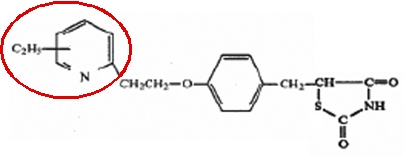
    As discussed in a previous Patent Docs post, asserted claim 1 of the '777 patent recites a compound of the formula:

    Compound 1_circle

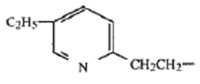
    The critical portion of this formula is the ethyl-substituted pyridyl ring (circled), which encompasses four possible compounds in which the ethyl substituent (C2H5) is located at one of four available positions on the pyridyl ring, generating 3-, 4-, 5-, and 6-ethyl compounds.  Asserted claim 2 covers pioglitazone, which is referred to as a 5-ethyl compound because the ethyl substituent is attached to the 5-position of the pyridyl ring:

    Pyridyl Ring

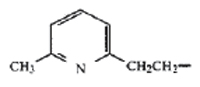
    When Mylan and Alphapharm filed their ANDAs, they made certifications pursuant to 21 U.S.C. § 355(j)(2)(A)(vii)(IV) — known as Paragraph IV certifications — that the '777 patent was invalid for obviousness.  At trial, Alphapharm argued that the claimed compounds would have been obvious at the time of their invention in view of a prior art compound known as "compound b," which was disclosed in Takeda's U.S. Patent No. 4,287,200 and in Sohda et al., 1982, Chem. Phar. Bull. 30: 3580.  Compound b possesses a pyridyl ring in which a methyl (CH3) group is attached to the 6-position:

    Compound b
     

    Mylan, on the other hand, argued that Takeda had committed inequitable conduct in procuring the '777 patent (Mylan also presented a revised obviousness argument).  The District Court, however, determined that Mylan and Alphapharm had failed to meet their burden of proving invalidity or inequitable conduct by clear and convincing evidence.  In separate appeals, the Federal Circuit affirmed the District Court's judgment of validity and enforceability (see "Takeda Chem. Indus., Ltd. v. Alphapharm Pty., Ltd. (Fed. Cir. 2007)" for a discussion of Alphapharm's appeal).

    Contending that Mylan and Alphapharm had lacked a good faith basis to make their Paragraph IV certifications, and had engaged in litigation misconduct, Takeda moved against Mylan and Alphapharm for an award of attorneys fees.  The District Court granted Takeda's motion, awarding Takeda $11.4 million from Mylan and $5.4 million from Alphapharm, with interest.  Explaining its finding of exceptionality and award of attorneys fees, the District Court stated that Alphapharm's certification letter was "so devoid of merit and so completely fail[ed] to establish a prima facie case of invalidity that it must be described as 'baseless.'"  In particular, the Court noted that while Alphapharm focused on compound b at trial, its certification letter had focused on two other compounds and contained scientific errors.  In addition, the Court pointed to Alphapharm's "utter failure" to explain why a skilled artisan would even select compound b as a lead compound.  The Court similarly noted that Mylan's focus also changed at trial, with Mylan revising its certification argument of obviousness and emphasizing a new inequitable conduct claim, an argument the Court found to be unsupported and frivolous (the Court noted that Mylan's certification letter also contained scientific errors).

    Despite support from the Generic Pharmaceutical Association, which filed an amicus brief arguing that the failure to reverse the District Court's finding of exceptionality would have a chilling effect on future ANDA patent challenges, the Federal Circuit affirmed the District Court's determination that the case was exceptional and its award of attorneys fees.

    Alphapharm
    With respect to Alphapharm, the Federal Circuit determined that "[g]iven the district court's familiarity with the parties and the issues and its thorough discussion of Alphapharm's certification letter and litigation strategy, we cannot say that the court committed clear error in finding that this was an exceptional case due in part to the misconduct of Alphapharm."

    With respect to Mylan, the Federal Circuit determined that:

    Mylan's invalidity argument in its certification letter appears even more baseless than Alphapharm's.  Mylan certified that pioglitazone was rendered obvious because Takeda had already disclosed compound 14, which had high efficacy, and simply replaced its benzene ring with a pyridine ring, which it described as a bioisostere, to create pioglitazone.  But Mylan’s Rule 30(b)(6) designee testified that no reason existed to choose compound 14 as the lead compound; Takeda's expert emphatically disagreed with the assertion that benzene and pyridine rings are bioisosteres; and Alphapharm's expert testified that the properties of compound 14 taught nothing with respect to pyridines.

    The CAFC also agreed with the District Court regarding the merits of Mylan's inequitable conduct claim, noting that Mylan had failed to present any evidence that Takeda hid or misrepresented any information to the Patent Office.  Thus, the Federal Circuit concluded that:

    We do not find persuasive Mylan's argument that the district court took issue with the mere fact that Mylan changed its theory of invalidity and then lost.  Rather, the court determined that Mylan's initial certification letter was completely baseless and that the claims Mylan offered as substitutes were similarly frivolous.  In short, the district court, which was in the best position to evaluate the entire strategy pursued by Mylan, did not commit clear error in finding litigation misconduct.

    Takeda Chem. Indus., Ltd. v. Mylan Labs., Inc. (Fed. Cir. 2008)
    Panel: Circuit Judges Lourie, Rader, and Bryson
    Opinion by Circuit Judge Lourie; opinion concurring in part and concurring in the result in part by Circuit Judge Bryson
  •     By Kevin E. Noonan

    Denial of an ANDA validity challenge by generic pharmaceutical company Apotex of Sanofi-Synthelabo's Orange Book-listed patent for Plavix® was affirmed by the Federal Circuit last week.  The decision, by Judge Newman, joined by Judges Lourie and Bryson, was unremarkable and should remain so, unless the Supreme Court were to grant certiorari and work more of its particular brand of mischief on U.S. patent law.

    Sanofi-Aventis_small
    Sanofi-Synthelabo, Sanofi-Synthelabo, Inc., and Bristol-Myers Squibb Sanofi Pharmaceuticals Holding Partnership (collectively, Sanofi) brought suit under 35 U.S.C. § 271(e)(4) in response to a Paragraph IV certification submitted to the Food and Drug Administration by Apotex, Inc. and Apotex Corp., alleging that Sanofi's U.S. Patent No. 4,847,265 was invalid for anticipation and obviousness over Sanofi's U.S. Patent No. 4,529,596 and Canadian Patent No. 1,194,875.  The active pharmaceutical agent of Plavix®, clopidogrel bisulfite, is recited in claim 3 of the '265 patent:

    3.  Hydrogen sulfate of the dextro-rotatory isomer of methyl alpha-5(4,5,6,7-tetrahydro(3,2-c)thienopyridyl)(2-chlorophenyl)-acetate substantially separated from the levo-rotatory isomer.

    At trial, the District Court heard evidence that Sanofi synthesized many hundreds of derivatives of the basic structure of clopidogrel, thienopyridines, and that the first compound approved for use in humans, ticlopidine, was associated with serious side effects.  The unsatisfactory nature of this first thienopyridine drug led to Sanofi producing a second series of compounds, which were the basis for the prior art U.S. and Canadian patents asserted by Apotex as anticipating and/or rendering obvious the claims of the '265 patent.  These patents disclosed 21 specific examples, including a racemic mixture of clopidogrel termed PCR 4099, or by an acronym for its chemical name MATTPCA.  In addition, the evidence indicated that the hydrochloride salt of these compounds was similarly unsuitable for use in humans, due to severe side effects.  Finally, the Court heard testimony from both Sanofi and Apotex that separating enantiomers was both difficult and unpredictable, both in terms of whether the enantiomers could be separated and the properties of each of the enantiomers if they were successfully separated; indeed, the Federal Circuit opinion characterized the way actually used to separate the Plavix® enantiomer from the racemic mixture to be a "lucky combination" of chemical reagents.  For chiral thienopyridines other than PCR 4099 that had been separated into their component enantiomers, there was no evidence of any advantage over the original racemic mixture:  although one enantiomer was more biologically active, it was also more neurotoxic, a common side effect of these drugs.

    Evidence heard by the District Court established that the Plavix® enantiomer displayed absolute stereoselectivity, i.e., all of the desired biological activity was found in the Plavix® enantiomer, while all of the neurotoxic side effects were found in its enantiomeric twin.  The Court characterized this distribution of properties to be rare, unexpected, and unpredictable.

    Apotex #1
    In considering Apotex's anticipation defense, the District Court parsed claim 3 of the '265 patent into the following 4 elements:  1) the bisulfate salt; of 2) the "d" enantiomer; of the compound 3) methyl alpha-5-(4,5,6,7-tetrahydro(3,2-c)thienopyridyl)-(2-chlorophenyl) acetate (MATTPCA); that was 4) "substantially" separated from the "l" enantiomer.  Apotex argued that Sanofi's prior patents disclosed not only the racemic mixture, but that the separated enantiomers were encompassed by the invention.  Apotex argued that disclosure of the racemate, plus the knowledge of the skilled worker of methods for separating enantiomers, anticipated claim 3 of the '265 patent.

    The District Court, and the Federal Circuit, disagreed, on the grounds that an anticipating reference must be enabling.  Moreover, according to Judge Newman's opinion, an anticipating reference requires "the specific description as well as enablement of the subject matter at issue," and that the art must disclose the elements "arranged as in the claim," citing the Federal Circuit's recent decision in Net MoneyIN, Inc. v. VeriSign, Inc., 545 F.3d 1359, 1369 (Fed. Cir. 2008).  As stated in In re Arkley, 455 F.2d 586, 587 (C.C.P.A. 1972), cited in Net MoneyIN:

    [The] reference must clearly and unequivocally disclose the claimed [invention] or direct those skilled in the art to the [invention] without any need for picking, choosing, and combining various disclosures not directly related to each other by the teachings of the cited reference.

    Apotex cited In re Petering, 301 F.2d 676 (C.C.P.A. 1962), and In re Schaumann, 572 F.2d 312 (C.C.P.A. 1978) in support of its argument, but the Federal Circuit found that these cases required an enabling reference disclosing a genus to disclose "specific preferences" not disclosed by the art cited here.  Judge Newman asserted to the contrary In re May, 574 F.2d 1082, 1090 (C.C.P.A. 1978), which is explicit (according to the CAFC) that "the novelty of an optical isomer is not negated by the prior art disclosure of its racemate."

    The Federal Circuit expressly held that knowledge that enantiomers may be separated is not anticipation of a specific enantiomer that has not been separated, identified, and characterized in the cited prior art.  The Federal Circuit agreed with the District Court that separation of these enantiomers was not enabled because such separation would constitute undue experimentation.  Judge Newman cited Forest Laboratories, Inc. v. Ivax Pharmaceuticals, Inc., 501 F.3d 1263, 1268-69 (Fed. Cir. 2007), that "this court recognized the known difficulty of separating enantiomers and the unpredictability of their properties, and held that a reference that stated that a compound has enantiomers did not enable the separation of those enantiomers, where the reference did not teach how to obtain the enantiomer."  The Federal Circuit rejected Apotex's argument that the cited '596 patent should be presumed to be enabled, under the Court's Amgen Inc. v. Hoechst Marion Roussel, Inc. decision, stating that the presumption could, and here was, overcome by the particular facts and circumstances of this case.
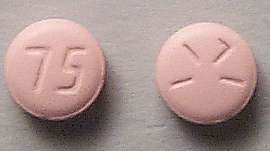
    Plavix
    Turning to Apotex's obviousness defense, Judge Newman assessed how the District Court applied the Graham v. John Deere Co. factors in view of the Supreme Court's recent decision in KSR Int'l Co. v. Teleflex Inc.  Initially, the opinion defined the basis for doing this analysis for a chemical compound on the principle that a chemical compound and its properties are inseparable when assessing obviousness, citing In re Sullivan and In re Papesch.  The District Court had assumed that Apotex had made out a prima facie case of obviousness, but found that "the unpredictable and unusual properties of the dextrorotatory enantiomer and the therapeutic advantages thereby provided, weighed in favor of nonobviousness, and that Apotex had not met its burden of establishing otherwise."  The bases for this determination were, inter alia, the absolute stereospecificity of the Plavix®  enantiomer, which experts for both Sanofi and Apotex testified were both unpredictable and rare, and that it was even more rare that all of the biological activity would be in one enantiomer and all the neurotoxicity would be in the other.

    Apotex's argument was substantially that the recognition in the art that enantiomers exist, and known methods for isolating them, were sufficient to overcome Sanofi's argument of unexpected results of the claimed enantiomer.  In this regard, the argument echoes the Patent Office position in Ex parte Kubin (as well as In re Deuel) that the obviousness of a method for isolating a nucleic acid sequence can make the nucleic acid itself obvious.  Here, the Federal Circuit rejected this argument:

    Apotex argues that the district court applied an incorrect inquiry, and that the correct inquiry is not whether the results obtained with the separated enantiomer were unexpected, but whether it would have been obvious to separate and test the enantiomers, based on the general knowledge that enantiomers can exhibit different properties.

    A more intriguing argument by Apotex was that recognition in the art that enantiomers existed provided sufficient motivation to separate them, using known methods, and that routine methods could be used to identify the properties of the separated enantiomers.  In this calculus, the very properties relied upon by Sanofi and the Court to establish that the Plavix® enantiomer is non-obvious can be considered inherent, albeit unrecognized, properties that (under Papesch) are inseparable from their chemical structure (which was recognized in the art).  Especially considering that obviousness references do not have the same enablement requirements as anticipatory references do, there is some (but here insufficient) force to this argument.

    For both the District Court and the Federal Circuit, testimony from Sanofi's expert that enantiomeric separation was difficult and unpredictable was persuasive.  The District Court described the separation as a "paradigm of trial and error," and found that:

    neither the chemists at Sanofi nor a person of ordinary skill in the art could have reasonably expected that the separate enantiomers of PCR 4099 could be obtained at the time that Sanofi was contemplating whether to investigate them and, if obtained, they could not have predicted by what method and configuration.

    Judge Newman's opinion expressly contrasted the Forest Labs case and Aventis Pharma Deutschland GmbH v. Lupin, Ltd., 499 F.3d 1293 (Fed. Cir. 2007), noting that in Forest Labs
    "the (+) enantiomer of citalopram would not have been obvious in light
    of the known racemate, when it was shown that the therapeutic
    properties of the (+) enantiomer were unexpected."  In the Lupin
    case, on the other hand, "this court held that the ramipril isomer's
    potency was 'precisely what one would expect, as compared to a mixture
    containing other, inert or near-inert stereoisomers.'"  Although Apotex
    argued that the CAFC should come to the same decision it came to in the
    Lupin case, Judge Newman opined that "the evidence was directly
    contrary to that position.  The district court entered extensive
    findings in this case on the unexpected and unpredictable properties of
    clopidogrel, and there was no contrary evidence suggesting, based on
    the prior art, that the stereoselective properties were 'precisely what
    one would expect,'" as required for the Lupin case to be controlling.

    In addition to the issue of the non-obviousness of the Plavix® enantiomer per se, the Federal Circuit also addressed the non-obviousness of the bisulfite salt as recited in claim 3 of the '265 patent.  The Court noted that the cited U.S. and Canadian prior art patents disclosed the HCl salt, and that there were 80 possible alternative candidate candidates, with 53 of these being FDA approved.  The Court noted that it was unpredictable whether a particular salt with a particular drug would form a "pharmaceutically-suitable crystalline salt."  Moreover:

    The district court distinguished the facts of this case from those of Pfizer v. Apotex (480 F.3d 1348), where there was evidence that based on the prior art a person of ordinary skill would have narrowed the possible salts to only a few including the claimed besylate, whereas here Sanofi presented evidence that the prior art taught away from the use of sulfuric acid with an enantiomer, for strong acids could encourage re-racemization.

    The Federal Circuit's decision in this case is both unremarkable and entirely consistent with its own and Supreme Court precedent.  Particularly with regard to chemical obviousness of separated enantiomers in view of the KSR decision, here the Federal Circuit has consistently relied on evidence of unexpected results of the separated enantiomer coupled with difficulties in achieving enantiomeric separation.  The Federal Circuit has avoided per se rules or mechanical or rigid application of any rubrics other than the Graham factors, based on a case-by-case determination of the facts disclosed in the prior art and underlying the claimed invention.

    Nevertheless, Plavix® is a "blockbuster" drug, garnering $3 billion in revenue in 2007, and moreover is an example of a pharmaceutical company obtaining a "later-filed" patent to increase patent protection specifically directed to its commercial product.  These factors increase the political pressures surrounding this case, from a diverse cross-section of the public that opposes "high" drug prices and "lengthened" terms of patent protection for human drugs.  Plavix® has already been the target of efforts in countries like Thailand to exercise national preogatives granted under the Doha Declaration to void drug patent rights (see "EU trade Commissioner Sends Warning Letter to Thailand").  The next and final step for Apotex to challenge Sanofi's patent protection for Plavix® would be for the Supreme Court to grant certiorari.  If the legal issues were paramount, this might be considered unlikely.  But in view of the serious political pressures around this patent and this drug, and the Supreme Court's recent sensitivity to political considerations in patent law, there is a real possibility that the Supreme Court will decide to review this Federal Circuit decision.

    Sanofi-Synthelabo v. Apotex, Inc. (Fed. Cir. 2008)
    Panel:  Circuit Judges Newman, Lourie, and Bryson
    Opinion by Circuit Judge Newman

  •     By Sherri Oslick

    Gavel_2About
    Court Report:  Each week we will report briefly on recently filed
    biotech and pharma cases, and a few interesting cases will be selected
    for periodic monitoring.


    Merial Ltd. v. Intervet, Inc.

    3:08-cv-00121; filed December 10, 2008 in the Middle District of Georgia

    Merial Ltd. v. Boehringer Ingelheim Vetmedica, Inc.
    3:08-cv-00116; filed December 8, 2008 in the Middle District of Georgia

    The complaints in these cases are substantially identical.  Infringement of U.S. Patent No. 6,224,882 ("Insect Cells or Fraction as Adjuvant for Antigens," issued May 1, 2001) based on defendants' manufacture and sale of various veterinary vaccines containing insect cell fractions.  View the Boehringer complaint here.


    AstraZeneca Pharmaceuticals LP et al. v. Handa Pharmaceuticals, LLC et al.

    3:08-cv-05997; filed December 8, 2008

    Infringement of U.S. Patent Nos. 4,879,288 ("Novel Dibenzothiazepine Antipsychotic," issued November 7, 1989) and 5,948,437 ("Pharmaceutical Compositions Using Thiazepine," issued September 7, 1999) following a Paragraph IV certification as part of defendants' filing of an amendment of their ANDA (adding an additional dosage form) to manufacture a generic version of AstraZeneca's Seroquel® XR (quetiapine fumarate, used to treat schizophrenia and bipolar disorder).  View the complaint here.


    Orion Corp. v. Wockhardt USA Inc. et al.
    1:08-cv-00917; filed December 8, 2008 in the District Court of Delaware

    Infringement of U.S. Patent Nos. 5,446,194 ("Pharmacologically active catechol derivatives," issued August 29, 1995), 5,135,950 ("Stable Polymorphic Form of (E)-N,N-diethyl-2-cyano-3-(3,4-dihydroxy-5-nitrophenyl)acrylamide and the Process for Its Preparation," issued August 4, 1992), and 6,500,867 ("Pharmaceutical Composition Comprising Entacapone, Levodopa, and Carbidopa," issued December 31, 2002) following a Paragraph IV certification as part of Wockhardt's filing of an ANDA to manufacture a generic version of Orion's Stalevo® (marketed by Novartis in the U.S.) (entacapone, levodopa, and carbidopa mixture, used to treat Parkinson's disease).  View the complaint here.


    King Pharmaceuticals, Inc. et al. v. Sandoz Inc.

    3:08-cv-05974; filed December 5, 2008 in the District Court of New Jersey

    Infringement of U.S. Patent No. 7,122,566 ("Metaxalone Products, Method of Manufacture, and Method of Use," issued on October 17, 2006) following a Paragraph IV certification as part of Sandoz's filing of an ANDA to manufacture a generic version of King's Skelaxin® (metaxalone, used as an adjunct to rest, physical therapy, and other measures for the relief of discomforts associated with acute, painful
    musculoskeletal conditions).  View the Colorado complaint here.


    Auxilium Pharmaceuticals, Inc. et al. v. Upsher-Smith Laboratories, Inc.

    1:08-cv-02651; filed December 5, 2008 in the District Court of Colorado

    Auxilium Pharmaceuticals Inc. et al. v. Upsher-Smith Laboratories Inc.
    1:08-cv-00908; filed December 4, 2008 in the District Court of Delaware

    The complaints in these cases are substantially identical.  Infringement of U.S. Patent No. 7,320,968 ("Pharmaceutical Composition," issued January 22, 2008) following a Paragraph IV certification as part of Upsher-Smith's filing of an ANDA to manufacture a generic version of Auxilium's Testim® (transdermal testosterone gel, used to treat hypogonadism in men).  View the Colorado complaint here.

  • CalendarJanuary 3-7, 2009 – 26th Annual National CLE Conference (Law Education Institute) – Vail, CO

    January 12-13, 2009 – Pharmaceutical and Biotech Patent Opinion Writing*** (American Conference Institute) – San Diego, CA

    January 20-21, 2009 – Bio/Pharmaceutical Summit on Legal and Regulatory Product Lifecycle
    Strategies
    *** (Center for Business Intelligence) – Baltimore, MD

    January 26-27, 2009 – Structuring and Negotiating Pharma & Biotech Collaborative Agreements (C5) – London, England

    January 27-28, 2009 – ITC Litigation (American Conference Institute)*** – Washington, DC

    January 28-29, 2009 – 6th National Conference on Pharma/Biotech IP Due Diligence (American Conference Institute) – New York, NY

    January 29-30, 2009 – Commercialization of Life Sciences Inventions (Law Seminars International) – Phoenix, AZ

    January 29-30, 2009 – Fourth Annual Conference on Best Practices in Patent Monetization (Law Seminars International) – San Francisco, CA

    February 17-18, 2009 – Pharma/Biotech Patent Litigation (C5) – Amsterdam, Netherlands

    February 23-24, 2009 – Pharmaceutical and Biotech Patent Claim Drafting*** (American Conference Institute) – Palo Alto, CA

    March 9-10, 2009 – Pharmaceutical and Biotech Patent Claim Drafting*** (American Conference Institute) – Research Triangle Park, NC

    March 30-31, 2009 – Pharmaceutical and Biotech Patent Claim Drafting*** (American Conference Institute) – New York, NY

    ***Patent Docs is a media partner of this conference or CLE

  •     By Donald Zuhn

    USPTO Seal
    On Thursday, the U.S. Patent and Trademark Office issued a reminder notice to all registered patent attorneys and agents to update their contact information via the Office's new online registration system.  Patent Docs first reported on the new online registration system last summer.

    According to the Patent Office's notice, each patent practitioner should begin by checking the "Patent Attorney/Agent Search" page of the USPTO website before March 1, 2009 to ensure that the practitioner's business mailing address is correct.  If a practitioner's business address is incorrect, the practitioner should download and complete a "Change of Address for Registered Patent Attorneys and Agents" form and mail the completed form to:  Mail Stop OED, Director, United States Patent and Trademark Office, P.O. Box 1450, Alexandria, Virginia 22313-1450.

    If a practitioner does not find his or her name on Office's roster of registered attorneys and agents, the reminder notice states that the practitioner is not authorized to practice before the USPTO in patent cases, and notes that the practitioner's name may have been removed pursuant to 37 C.F.R. §§ 10.11(b) or 11.11 for lack of response to a previous survey or communication from the OED.  The Office's reminder notice contains detailed instructions for resolving situations in which a practitioner believes he or she should be listed on the roster.

    In the second phase of online registration, the OED will separately mail passwords and user identifications to all practitioners for which it has a correct (or corrected) mailing address.  The two mailings will be sent out after March 1, 2009.  Once practitioners have received their password and user identification, they will be able to change their address, telephone number, and e-mail address by signing in at the "On-Line Change of Address for Practitioners" page of the USPTO website.  The Office notes that to avoid unsolicited spamming and communications, practitioner e-mail addresses will not be made public by the Office.

    The Office's notice states that the new online registration system is being implemented in order to help eliminate processing errors associated with the practitioner roster, reduce losses due to mailings to incorrect addresses, and ensure that practitioners receive critical notices and confirmations from the USPTO.  The Office intends to use the collected contact information to communicate with practitioners — including providing information about future annual practitioner maintenance fees (see "Annual Fee Announced for Registered Practitioners").  The notice also reminds practitioners that under 37 C.F.R. § 11.11(a), they are required to update their contact information on the roster within 30 days of any change.

    With respect to the annual practitioner maintenance fee the Office will begin assessing next year, the Office reminder notes that in response to suggestions from law firms and companies, such entities will be able to make a single payment of the annual fee for all practitioners who are members of their firms or companies.  In order to ensure that firm and company payments are properly attributed to the correct practitioners, the Office is recommending that all practitioners within a particular firm or company use the same name in their contact information.  Additional information regarding annual practitioner fee payments by law firms and companies can be found in the Office's reminder notice.

  • 737L09-PAO
    American Conference Institute (ACI) will be holding its Pharmaceutical and Biotech Patent Claim Drafting conference on February 23-24 in Palo Alto, California.  The course will be repeated on March 9-10, 2009 in Research Triangle Park, North Carolina and on March 30-31, 2009 in New York.  The conference will provide hands-on training with respect to:

    • Eliciting complete, thorough, and accurate information from the inventors;
    • Establishing the breadth and scope of the patent claims;
    • Setting the boundaries of responsibility clearly during the patent claim drafting process;
    • Penetrating the complexities of balancing attorney-client privilege against the need to disclose information;
    • Analyzing court decisions to determine the new responsibilities in patent claim drafting;
    • Navigating the maze of legal decisions that impact patent claim drafting;
    • Factoring restrictions into your patent claim drafting strategy;
    • Ensuring that patent claims will withstand the rigors of potential litigation;
    • Deciding when to adjust the scope of the patent claim;
    • Defining the standard of inequitable conduct; and
    • Avoiding inequitable conduct.

    In particular, ACI's faculty — including Patent Docs author Donald Zuhn — will offer presentations on the following topics:

    • Clarifying, managing, and protecting the data before you begin drafting the claims;
    • Navigating the constant state of flux of case law affecting pharmaceutical and biotech patent claim drafting;
    • Establishing the breadth, scope, and strength of the claims:  From patentable subject matter to obviousness;
    • Using claim drafting to manage, monitor, and maximize product life;
    • Identifying the challenges and consequent strategies in emerging technologies;
    • Avoiding inequitable conduct charges; and
    • Special topics of claim drafting:  Incorporating enablement, written description, and inherency.

    ACI - American Conference Institute
    The agenda for the Pharmaceutical and Biotech Patent Claim Drafting conference can be found here.  A complete brochure for this conference, including an agenda, list of speakers, and registration form can be downloaded here.

    The registration fee for this conference is $1,695.  Those interested in registering for the conference can do so here, by calling 1-888-224-2480, or by faxing a registration form to 1-877-927-1563.

    Patent Docs is a media partner of the Pharmaceutical and Biotech Patent Claim Drafting conference.

  • By Kevin E. Noonan

    USPTO Seal On December 3rd, the
    biotechnology, chemical, and pharmaceuticals (BCP) technology groups at the
    U.S. Patent and Trademark Office held their most recent quarterly customer
    partnership meeting.  During one of six presentations, Kathleen Bragdon, a
    Quality Assurance Specialist from Technology Center 1600, presented "A Look at
    Personalized Medicine."  In prior
    years, this talk may have been anticipated to be a prospective look at a
    developing technology area, or represent the Office's attempt to open a dialog
    with applicants and their representatives.  But these have not been normal times, and the presentation
    contained a few unpleasant but not entirely unexpected surprises.

    The majority of the
    presentation was a competent, but by no means comprehensive, review of
    personalized medicine (referencing scientific journal articles and Wikipedia)
    and pharmacogenetics.  Warfarin,
    and the use of genetic screening of single nucleotide polymorphisms (SNPs) to
    determine patients for whom warfarin treatment may be contraindicated, was used
    as a case study.  Ms. Bragdon also
    reviewed FDA approval of genetic testing of two human genes (VKORC1 and CYP2C9) having SNPs predictive for warfarin sensitivity.

    The talk featured
    several examples of how these relationships between genotype and drug treatment
    could be claimed, including the following:

    3. A method for determining whether a
    human subject having breast cancer will be effectively treated with "breast
    cancer drug X", said method comprising:
    a) considering
    data in a database comprising genetic patient information about the ERBB2
    gene at position 101 of SEQ ID NO:1; and
    b) correlating
    the presence of a cytosine at position 101 of SEQ ID NO:1 with effective
    treatment of the human subject with "breast cancer drug X".

    This is an invalid
    claim, according to Ms. Bragdon, for failing to qualify as statutory subject
    matter under the Bilski decision,
    because it is neither tied to a machine or apparatus nor performs a
    transformation (see ".  The following
    claim, on the other hand, would be statutory subject matter:

    4. A method for treating a human subject
    having breast cancer, said method comprising:
    a) obtaining
    a nucleic acid sample from said human subject;
    b) subjecting
    the sample to PCR and identifying the nucleotide present at position 101 of SEQ
    ID NO:1; and
    c) treating
    the human subject with "breast cancer drug X" when a cytosine is detected at
    position 101 of SEQ ID NO:1.

    LabCorp
    A comparison
    between these claims illustrates the Office's solution to how Bilski (or whatever form a future LabCorp decision may take regarding
    these kinds of claims) may be applied to biotechnology (or more specifically,
    molecular diagnostic) claims (see "The Relevance of In re Bilski to the Patentability of the Metabolite Claim").  By
    casting the claim as a method of treatment, and tying the step of identifying
    patients bearing a diagnostic SNP to a treatment step, the policy and
    philosophical problems presented by the LabCorp
    case are apparently solved.  While
    the identification step can still be interpreted to be either a "mental step" or a mere recitation of a natural principle, treatment methods are clearly
    statutory subject matter (in the U.S.).

    One difficulty with
    this solution, however, is that it may frequently be the case that the actor
    who performs the diagnostic step of determining whether a patient bears a
    diagnostically-relevant SNP is a different actor than the one who performs the
    method of treatment step.  This
    dichotomy of action then directly implicates the principle enunciates in the Muniauction case, that a claim cannot be
    infringed by joint tortfeasors unless there is one actor exercising direction
    and control over the others (see "Adequate Method Claiming Requirements:  Muniauction, Inc v. Thomson Corp.").  This situation
    may frequently be the case in the practice of claims such as claim 4 in the
    presentation.  However, there may
    be instances when it is not the case.  In these cases, the Office's solution to the LabCorp problem will be unavailing.  The introduction of method of treatment claims in this
    regard is also problematical insofar as it implicates the infringement
    exemption embodied in 35 U.S.C. § 287(c) for physicians and other medical
    personnel.

    The presentation
    also discusses the Office's interpretation of how the enablement requirement
    may be implicated in personalized medicine claims.  In this regards, Ms. Bragdon discussed the following claim:

    5. A
    method for treating a human subject having breast cancer, said method
    comprising:
    a) obtaining
    a nucleic acid sample from said human subject;
    b) subjecting
    the sample to PCR and identifying the nucleotide present at position 101 of SEQ
    ID NO:1; and
    c) treating
    the human subject with "breast cancer drug X" when a cytosine is detected at
    position 101 of SEQ ID NO:1.

    The presentation
    supplies the (putative) disclosure from the specification supporting this
    claim, that SEQ ID NO:1 is a variant of the ERBB2 gene having an A
    (adenine) to C (cytosine) mutation at position 101 (A101>C).  This mutation (A101>C) is typically found
    in breast cancer patients, according to the hypothetical, and it correlates
    with a significantly better response to treatment with "breast cancer drug X" versus placebo (i.e., without the mutation, breast cancer drug X is ineffective).  Finally, the hypothetical specification
    does not distinguish among patient populations tested, but teaches that variability
    in treatment responses among patient populations may be an unpredictable (emphasis in
    original) factor in SNP correlation studies (presumably, this factor in the
    analysis could also be something within the skill of one having ordinary skill
    in the art).

    The enablement
    issue arises under this hypothetical because post-filing data establishes that
    there is a patient population that does not show the claimed correlation
    between the mutation in the ERBB2 gene and responsiveness vel non to breast cancer drug X.  Ms. Bragdon did
    not assert that under these circumstances the claim would necessarily be invalid for lack of enablement, but suggested that "[t]he
    appropriateness of making any enablement rejection should be considered based on the
    foregoing facts."

    Monsanto
    While it is
    certainly the case that post-filing evidence can be used to show that a claim
    is not enabled, here it seems that the more appropriate question would be
    whether the specification provided sufficient guidance to enable the skilled
    worker to determine whether a particular patient (as opposed to a patient
    population) would bear a predictive SNP, and whether the practice of the
    claimed invention with a particular patient having a particular SNP to predict
    drug sensitivity would require undue experimentation.  Perhaps Ms. Bragdon was performing her analysis in view of
    the Federal Circuit's Monsanto Co. v. Syngenta
    Seed, Inc.
    case, where the Court found invalid claims reciting genetic
    transformation of plant cells where certain plant cells (monocots) could not be
    transformed at the time the application was filed, and the specification
    provided neither any teaching regarding how to transform monocot cells nor
    disclaimer or limitation to transformable dicot cells.  However, the Office appears to be
    suggesting that claims like claim 5 may be per
    se
    unpatentable in the face of after-filing evidence that not all patients
    fall within the scope of the claim.  This seems an unnecessary conclusion and extension of the requirements
    for enablement under 35 U.S.C. § 112, first paragraph.

    A copy of Ms. Bragdon's presentation can be obtained here.

    Additional BCP
    presentations will be discussed in future posts.  For information regarding other BCP posts, please see:

    • "USPTO Implements New Program to Teach Examiners How to Read and Understand Case Law," December 4, 2008.

  • By Christopher P. Singer

    USPTO Seal
    In a memorandum dated
    December 10, 2008, the USPTO announced that, in response to comments from its customers, it has modified the requirements
    for requesting participation in the patent prosecution highway (PPH) pilot
    program.  The changes will take
    effect on December 22, 2008, and will allow certain U.S. applications based on
    PCT filings to participate in the program.  We reported the prior announcement detailing the more
    restrictive original requirements for participation in the PPH pilot program
    between the USPTO and the EPO here.

    Under the new
    requirements, a U.S. application may be eligible to participate in the PPH
    program if it falls within any of the three following categories:

    (a)
    a Paris Convention application which either (i) validly claims priority under
    35 U.S.C. § 119(a) and 37 C.F.R. § 1.55 to one or more applications filed in the EPO;
    or (ii) validly claims priority under 35 U.S.C. § 119(a) or § 365(a) to a PCT
    application that contains no priority claims.

    (b)
    a national stage application under the PCT (an application which entered the
    national stage in the U.S. from a PCT international application after compliance
    with 35 U.S.C. § 371), which PCT application (i) validly claims priority under 35
    U.S.C. § 365(b) to an application filed in the EPO; (ii) validly claims priority
    under 35 U.S.C. § 365(b) to a PCT application that contains no priority claims;
    or (iii) contains no priority claim.

    (c)
    a so-called bypass application filed under 35 U.S.C. § 111(a) which validly
    claims benefit under 35 U.S.C. § 120 to a PCT application, which PCT application
    (i) validly claims priority under 35 U.S.C. § 365(b) to an application filed in
    the EPO;
    (ii)
    validly claims priority under 35 U.S.C. § 365(b) to a PCT application that
    contains no priority claims; or (iii) contains no
    priority claim.

    WIPO
    The Notice provides
    some graphical depictions of applications which fall under these categories, which
    may be helpful in determining whether an application you are handling is
    eligible under these new requirements.  Questions concerning the Notice or the PPH program can be directed to
    Magdalen Greenlief, Office of the Deputy Commissioner for Patent Examination
    Policy, at 571-272-8800 or at magdalen.greenlief@uspto.gov.

  •     By Donald Zuhn

    Yesterday, we reported on a Notice published by the U.S. Patent and Trademark Office in today's Federal Register announcing a delay in the effective date of the new rules relating to Practice before the Board of Patent Appeals and Interferences in Ex Parte Appeals (Appeals rules).  Today, the Patent Office placed announcements regarding the appeals rules delay on the home page and "News and Notices" page of the Office's website.  The Office's announcement indicates that new effective and applicability dates for the appeals rules will be identified in a subsequent announcement.  The Office also states that it will continue to accept appeal briefs that comply with either the current or new rules.

    Katznelson, Ron
    As suggested by Ron Katznelson (at right) in a comment to our earlier report:

    It is important that practitioners not follow USPTO's invitation to use the new rules' option when filing an appeal and that they make clear in their transmittal that the appeal is filed under the 2004 rules.  Because the public record on the extent of paperwork burdens imposed by the new appeal rules is incomplete, this is important for three reasons:

    (a) The USPTO will likely use the fact that some filings are made under the new rules to later argue that the public does not really care much which rules are used – thereby making a false point about lack of incremental burdens.

    (b) It is also clear that appeal cases that would be most negatively impacted by the new rules would naturally be filed under the old rules and therefore the voluntary filings under the new rules would be heavily biased towards the simple and short cases. The USPTO will most likely use their "junk science" methods to characterize the ensemble of appeals filed under the new rules based on this voluntary highly biased population. This will enable the USPTO to falsely characterize all appeals if filed under the new rules.

    (c) It is unlikely that the new appeal rules will survive proper OMB PRA review. As numerous comments show, certain features of the new rules would have to be withdrawn or modified substantially. Therefore, practitioners' "learning curve benefits" from attempting to follow rules that may never survive are doubtful at best.

    Dr. Katznelson was one of twelve parties to submit comments in response to the Patent Office's June 9th request for comments on the Office's estimates for additional burdens imposed on applicants by the new appeals rules (see "Patent Office Posts Comments on New Appeals Rules").  Dr. Katznelson, the President of Bi-Level Technologies, is also a named inventor on a number of U.S. patents.

    For additional information regarding this topic, please see:

    • "Patent Office to Publish Notice Delaying New Appeals Rules," December 9, 2008
    • "More on Ex parte Appeal Rule," October 10, 2008
    • "Patent Office Posts Comments on New Appeals Rules," September 11, 2008
    • "More on USPTO Rulemaking Practices,"July 21, 2008
    • "USPTO Rulemaking Practices Being Called into Question (Again)," July 20, 2008
    • "New Appeals Rules Published," June 10, 2008
    • "Patent Office to Publish New Appeals Rules on Tuesday," June 9, 2008

  •     By Kevin E. Noonan

    Becerra, Congressman
    Roll Call
    , the Newspaper of Capitol Hill since 1955, announced today that Rep. Xavier Becerra (D-CA, 31st Dist.) "appears poised to accept a post as U.S. trade representative" in the Obama administration.  We here at Patent Docs, and all reasoning members of the patent community, wish Rep. Becerra (at right) well in his new position, and breathe a sigh of relief that another wrong-thinking political meddler won't be in the next Congress to work more mischief on the U.S. patent system.

    Rep. Becerra, it will be recalled, is the House member who introduced a bill, the Genomic Research and Accessibility Act, to ban human gene patenting (see "The Continuing Threat to Human Gene Patenting").  Rep. Becerra, in his remarks introducing the bill on the House floor on February 7, 2007, stated his reasons for introducing the bill that included the usual (mis)statements:  that patent holders own "our" genes; that countries that do not permit gene patenting have "better" genetic tests; and that gene patenting impedes research.  Even though none of these statements are true, they have traction with the uninformed and provide convenient populist political soundbites.  But we heed them at our peril.

    For example, despite its title Rep. Becerra's bill was not limited to banning DNA patenting.  The prohibition is to "a nucleotide sequence, or its functions or correlations, or the naturally occurring products it specifies."  If passed, this bill would ban not only DNA patenting itself but also a patent on "the naturally-occurring products [a nucleic acid] specifies."  This would ban patenting of all naturally-occurring proteins produced by any means.  This would include proteins such as blood clotting Factor VIII, erythropoietin, hemoglobin, albumen, insulin, human growth hormone, and all human antibody drugs like Herceptin®, to name only a few.  It would also ban any diagnostic assay depending on the identification of genetic polymorphisms such as single nucleotide polymorphisms (SNPs), no matter how deduced.  This would render unpatentable not only existing polymorphism-based assays but those yet to be developed.  In short, the bill would eliminate patent protection for the molecules that are expected to provide the "pipeline" of new drugs for the next twenty years.  (It would not, paradoxically, render unpatentable recombinant cells and organisms used to produce useful quantities of these gene products that could otherwise not be obtained in useful quantities.)

    Godspeed, Rep. Becerra.