•     By Kevin E. Noonan

    Chinese Flag
    One of our foreign associates in China, Vivien Chan & Co., informs us of a number of important changes in Chinese patent law adopted by the People's Congress on December 27th.  The following new rules for patent practice will come into force in China on October 1, 2009:

    •  China will now accept first foreign filings by Chinese companies or individual inventors who "complete" an invention in China.  This will permit Chinese applicants to file in the U.S., for example, as a "first filing" and thus take advantage of the patent term advantages in China of having a priority date one year earlier than the filing date for patent term determining purposes.

    However, should an applicant (Chinese or not) wish to take advantage of this new option for an invention completed in China, the applicant will need to apply for "confidential examination" with the Chinese Patent Office (SIPO) prior to foreign filing.  Like with foreign filing licenses in the U.S., non-compliance with this provision can result in severe penalties for the corresponding Chinese application (rejection in China, unenforceability in the U.S.).

    SIPO will need to develop rules of practice for implementing this change, including rules related to inventions that implicate national security concerns.

    •  The scope of novelty-destroying activity has been expanded.  Previously, an invention needed to be publicly known or used in China (or to be disclosed in a patent or printed publication abroad or in China) to be prior art (similar in effect to 35 U.S.C. § 102(a)).  With this change, public activities in other countries can be the source of novelty-destroying prior art for Chinese applications.

    •  Chinese patent law provides both utility applications (termed "patents for invention") and utility model patents.  It is common practice for applicants in China to apply for both invention and utility model patents, because the latter tend to grant more quickly.  Typically, the utility model patent is abandoned once the invention patent is granted.  The change in Chinese law merely acknowledges this practice.

    •  "Genetic resources" must be identified in a patent specification if "completing" an invention requires acquisition and use of genetic resources.  Both the immediate ("direct") and original source must be identified, or an explanation provided why the genetic resource is not identified.  Patents can be rejected if either the acquisition or use of the genetic resource violates any law or regulation.  Unfortunately, the scope of this requirement is not yet apparent, since neither the term "genetic resource" or what would be considered illegal acquisition or use has been defined.

    •  Compulsory licensing has been a contentious topic worldwide, with developing countries like Brasil, India, and Thailand taking aggressive steps to impose compulsory licenses particularly on Western pharmaceutical companies (see, e.g., "Thailand Continues Its Compulsory Licensing Practices").  While the opportunity exists under current law for a company in China that has the capability to "exploit" an invention to petition SIPO for a compulsory license, the current changes specify with more particularity the circumstances under which SIPO will grant compulsory licenses.  These include:  1) that the patentee has failed to exploit or "sufficiently" exploit the invention within 3 years of the patent grant or 4 years after filing, without "reasonable" grounds; or 2) exploitation of the patent by the patentee would violate Chinese antitrust laws and SIPO makes a determination that the compulsory license is "essential" to counter the patent's anticompetitive effects.

    Further, Chinese law permits SIPO to grant compulsory licenses for reasons of public health, or for export to countries that are "members of international treaties to which China is also a member" (once again illustrating the unexpected consequences of TRIPS and the WTO).  The new rules also make provisions for payment of an "exploitation fee" to the patentee, again under provisions of international treaties.  Compulsory licenses are to be granted on semiconductor patents only in the public interest or to counter anticompetitive effects.  Finally, except for public health or interest licenses, the effects of these licenses are meant to be limited to the Chinese domestic market.

    •  The "cap" on fines for infringement has been raised, from three times the "illegal income" made from the infringement or RMB 50,000 (US $7,311.33) — where there was no illegal income made from the infringement — to four times the illegal income or RMB 250,000 (US $36,556.66) for income-less infringement.  Statutory damages can be as high as RMB 500,000 (US $73,113.31) at the court's discretion, and the changes in Chinese law now provide methods for calculating damages, in the following order of preference:

    •  Actual losses to the patentee;
    •  Profits made by the infringer;
    •  "Reasonable" multiple of royalties paid (presumably, by licensees); or
    •  In the absence of these, up to RMB 1,000,000 (US $146,226.63)

    Also included are damages incurred by a patentee as "reasonable costs" incurred in protecting its rights.

    The new law also imposes the requirement for a bond for preliminary injunctions or other "pre-action" relief, including seizures to preserve evidence.

    Finally, the new Chinese law has provisions (for the first time), similar to the Hatch-Waxman Act, that define as non-infringing conduct, acts taken to provide information to administrative agencies for obtaining approval to make, use, or import a patented medicine or medical devices.  There are no provisions extending patent term for delays in obtaining approval.

    China Location

  •     By Sherri Oslick

    Gavel_2About
    Court Report:  Each week we will report briefly on recently filed
    biotech and pharma cases, and a few interesting cases will be selected
    for periodic monitoring.

    Oscient Pharmaceuticals Corp. et al. v. Lupin Ltd. et al.
    1:09-cv-00083; filed January 14, 2009 in the District Court of Maryland

    Infringement of U.S. Patent No. 7,101,574 ("Pharmaceutical Composition Containing Fenofibrate and the Preparation Method," issued September 5, 2006) following a Paragraph IV certification as part of Lupin's filing of an ANDA to manufacture a generic version of Oscient's Antara® (fenofibrate, used to treat hypercholesterolemia).  View the complaint here.


    AstraZeneca AB et al. v. Sandoz, Inc.

    3:09-cv-00199; filed January 14, 2009 in the District Court of New Jersey

    Infringement of U.S. Patent Nos. 5,714,504 ("Compositions," issued February 3, 1988), 5,877,192 ("Method for the Treatment of Gastric Acid-Related Diseases and Production of Medication Using (-)Enantiomer of Omeprazole," issued March 2, 1999), 6,875,872 ("Compounds," issued April 5, 2005), 6,369,085 ("Form of S-omeprazole," issued April 9, 2002), and 7,411,070 (same title, issued August 12, 2008) following a Paragraph IV certification as part of Sandoz's filing of an ANDA to manufacture a generic version of AstraZeneca's Nexium® (esomeprazole magnesium, used for the treatment of gastroesophageal reflux disease).  View the complaint here.


    Medicis Pharmaceutical Corp. v. Mylan Inc. et al.

    1:09-cv-00033; filed January 13, 2009 in the District Court of Delaware

    Infringement of U.S. Patent No. 5,908,838 ("Method for the Treatment of Acne," issued June 1, 1999) following a Paragraph IV certification as part of defendants' filing of an ANDA to manufacture a generic version of Medics' Solodyn® (minocycline hydrochloride extended release tablets, used to treat acne).  View the complaint here.


    AstraZeneca Pharmaceuticals LP et al. v. Biovail Laboratories International SRL et al.

    3:09-cv-00128; filed January 9, 2009 in the District Court of New Jersey

    Infringement of U.S. Patent Nos. 4,879,288 ("Novel Dibenzothiazepine Antipsychotic," issued November 7, 1989) and 5,948,437 ("Pharmaceutical Compositions Using Thiazepine," issued September 7, 1999) following a Paragraph IV certification as part of Biovail's filing of an ANDA to manufacture a generic version of AstraZeneca's Seroquel® XR (quetiapine fumarate, used to treat schizophrenia and bipolar disorder).  View the complaint here.


    Life Technologies Corp. v. Oxford Biomedical Research, Inc. et al.

    3:09-cv-00029; filed January 9, 2009 in the Middle District of Tennessee

    Infringement of U.S. Patent No. 5,886,157 ("Expression and Purification of Human Cytochrome P450," issued March 23, 1999) based on a disagreement regarding the scope of a Licensing and Supply Agreement among the parties centering on methods of making recombinant human cytochrome P450.  View the complaint here.  [NB: As previously reported on Court Report, a comparable complaint was filed in the Western District of Wisconsin.  That case, however, was dismissed for lack of personal jurisdiction; hence the Tennessee filing.]


    Wyeth v. Torrent Pharmaceuticals Ltd. et al.

    1:09-cv-00019; filed January 8, 2009 in the District Court of Delaware

    Infringement of U.S. Patent Nos. 6,274,171 ("Extended release formulation of venlafaxine hydrochloride," issued August 14, 2001), 6,403,120 (same title, issued June 11, 2002), and 6,419,958 (same title, issued July 16, 2002) following a Paragraph IV certification as part of Torrent's filing of an ANDA to manufacture a generic version of Wyeth's EFFEXOR XR® (venlafaxine hydrochloride, extended release, used to treat depression).  View the complaint here.


    Alcon Research, Ltd. et al. v. Barr Laboratories, Inc.

    1:09-cv-00026; filed January 8, 2009 in the Southern District of Indiana

    Infringement of U.S. Patent Nos. 5,641,805 ("Topical Ophthalmic Formulations for Treating Allergic Eye Diseases," issued June 24, 1997), 6,995,186 ("Olopatadine Formulations for Topical Administration," issued on February 7, 2006), and 7,402,609 (same title, issued July 22, 2008) following a Paragraph IV certification as part of Barr's filing of an ANDA to manufacture a generic version of Alcon's Pataday® (olopatadine hydrochloride ophthalmic solution, used to treat ocular itching associated with allergic conjunctivitis).  View the complaint here.


    Dr. Reddy's Laboratories, Ltd. et al. v. Eli Lilly & Co,

    3:09-cv-00192; filed January 8, 2009 in the District Court of New Jersey

    Declaratory judgment of non-infringement, invalidity, and unenforceability of U.S. Patent Nos. 5,910,319 ("Fluoxetine Enteric Pellets and Methods for Their Preparation and Use," issued June 8, 1999), 5,985,322 ("Method for the Treatment of CNS Disorders," issued November 16, 1999), and RE39,030 ("Fluoxetine Enteric Pellets and Methods for Their Preparation and Use," issued March 21, 2006) in conjunction with Dr. Reddy's filing of an ANDA to manufacture a generic version of Lilly's Prozac ® Weekly (fluoxetine hydrochloride, used to treat clinical depression).  View the complaint here.


    Abbott Laboratories et al. v Bayer Healthcare, LLC

    4:09-cv-40002; filed January 5, 2009 in the District Court of Massachusetts

    Declaratory judgment of invalidity, non-infringement, and unenforceability of U.S. Patent No. 5,654,407 ("Human Anti-TNF Antibodies," issued August 5, 1997) in conjunction with Abbott's manufacture and sale of its Humira® (adalimumab, used to treat rheumatoid arthritis, juvenile idiopathic arthritis, psoriatic arthritis, ankylosing spondylitis, Crohn's disease and plaque psoriasis).  View the complaint here.

  • Calendar

    January 20-21, 2009 – Bio/Pharmaceutical Summit on Legal and Regulatory Product Lifecycle
    Strategies
    *** (Center for Business Intelligence) – Baltimore, MD

    January 26-27, 2009 – Structuring and Negotiating Pharma & Biotech Collaborative Agreements (C5) – London, England

    January 27-28, 2009 – ITC Litigation (American Conference Institute)*** – Washington, DC

    January 28-29, 2009 – 6th National Conference on Pharma/Biotech IP Due Diligence (American Conference Institute) – New York, NY

    January 29-30, 2009 – Commercialization of Life Sciences Inventions (Law Seminars International) – Phoenix, AZ

    January 29-30, 2009 – Fourth Annual Conference on Best Practices in Patent Monetization (Law Seminars International) – San Francisco, CA

    February 13, 2009 – Fourth Annual Workshop on Patent Claim Construction (Law Seminars International) – Chicago, IL

    February 17-18, 2009 – Pharma/Biotech Patent Litigation (C5) – Amsterdam, Netherlands

    February 23-24, 2009 – Pharmaceutical and Biotech Patent Claim Drafting*** (American Conference Institute) – Palo Alto, CA

    February 25-26, 2009 – Optimizing Patent Strategies at Patent Forum 2009 (World Research Group) – San Francisco, CA

    March 9-10, 2009 – Pharmaceutical and Biotech Patent Claim Drafting*** (American Conference Institute) – Research Triangle Park, NC

    March 30-31, 2009 – Pharmaceutical and Biotech Patent Claim Drafting*** (American Conference Institute) – New York, NY

    ***Patent Docs is a media partner of this conference or CLE

  •     By Jason Derry —

    Medicines Co. to Buy Targanta

    Medicines Company
    The Medicines Company and Targanta Therapeutics have announced that Medicines Co. will buy Targanta for $42 million.  Medicines Co. has agreed to increase the purchase price by an additional $1.20 a share if Targanta's oritavancin, a product for treating skin infections, is approved by the FDA as a single dose infusion product. 

    Abbott to Acquire Advanced Medical Optics
     

    Abbott Laboratories #1
    On January 12, 2009, Abbott Laboratories and Advanced Medical Optics (AMO) announced an agreement under which Abbott will purchase AMO for about $2.8 billion.  The acquisition of AMO will expand Abbott's business into the ophthalmic medical device field.  AMO currently markets products for cataract surgery, laser vision correction surgery (LASIK), and other eye care products.

    Jason Derry, Ph.D., who graduated with honors from DePaul University
    College of Law, is a molecular biologist and founding author of Patent Docs.
  •     By Donald Zuhn

    Congress
    Yesterday, the Manufacturing Alliance on Patent Policy (MAPP) released a report which indicates that the apportionment of damages provisions found in the Senate (S. 1145) and House (H.R. 1908) patent reform bills would have several adverse effects.  The apportionment of damages provisions in these bills attempt to apportion the value of a product that can be attributed to a patented invention and the portion that can be attributed to other components or aspects of the product.  The report notes that while proponents of the above bills have argued that apportionment is needed to fix a flawed U.S. patent system, "in all of the rhetoric about the inadequacy of the U.S. patent system, the resulting problems faced by innovators in this country, and the need to elevate apportionment of damages to solve those problems, careful examination of the likely effects of an apportionment-centric system of damages have been lost."

    Shane, Scott
    The results of the 12-page report, entitled "The Likely Adverse Effects of an Apportionment-Centric System of Patent Damages," were announced on Wednesday during a press teleconference attended by Patent Docs.  MAPP representative Stan Fendley, the Director of Legislative and Regulatory Policy for MAPP member Corning Inc., noted that the debate on patent reform, which has been fought by the IT and biotech/pharma industries, was missing an objective analysis of the possible effects of patent reform legislation.  As a result, eleven companies and organizations formed MAPP, and commissioned Dr. Scott Shane (at left), a Professor of Economics at Case Western Reserve University, to prepare a report on the impact of apportionment of damages.  In his report, Dr. Shane concludes that an apportionment-centric system of damages would have five specific adverse effects, including:

    1.  Decreasing the value of U.S. patents by $34.4 billion to $85.3 billion;
    2.  Decreasing the value of U.S. public companies by $38.4 billion to $225.4 billion;
    3.  Decreasing research and development spending in the U.S. by $33.9 billion to $66 billion per year;
    4.  Putting between 51,000 and 298,000 U.S. manufacturing jobs at risk; and
    5.  Favoring industries employing fewer people over those employing more people.

    Reduction in the value of patented technology

    Dr. Shane estimates that under an apportionment-centric system of damages, the value of U.S. patents would decrease by $34.4 billion to $85.3 billion.  He arrived at this estimate by first determining how the amount of patent damages would change were patent reform legislation containing an apportionment of damages provision enacted.  To do this, a randomly selected group of patent attorneys were surveyed and asked whether the apportionment of damages provisions in S. 1145 and H.R. 1908 would, if enacted, lead to an increase or decrease in damage awards.  The group estimated that these provisions would lead to a 20-39% decrease in damage awards.  Next, Dr. Shane calculated the value of U.S. patents by multiplying the average patent value ($93,463 to $118,988; as determined in three separate studies discussed in the report) by the total number of U.S. patents in force (1,838,242; as determined in a separate study).  Finally, the expected reduction in damages was multiplied by the value of U.S. patents, since the report concludes that the value of a patent is a function of the amount of damages that one can collect in an infringement suit.

    Reduction in the value of public corporations

    Dr. Shane estimates that under an apportionment-centric system of damages, the value of U.S. public companies would decrease by $38.4 billion to $225.4 billion.  He arrived at this estimate by taking the average of two different methodologies:  one conservative and one liberal.  Under the conservative approach, the portion of the value of public companies that can be attributed to patents (0.8-1.0%) is determined by dividing the value of U.S. patents in force that are held by public companies ($77.3 billion to $98.4 billion; determined using two separate studies) by the total value of U.S. public companies ($9.8 trillion).  Therefore, under the conservative approach, a 20-39% decrease in 0.8-1.0% of the value of public companies that can be attributed to patents yields a reduction in the value of public companies of $15.5 billion to $38.4 billion.  Under the liberal approach, which utilizes algorithms devised by Ocean Tomo, the value of public companies that can be attributed to patents is 11.3%.  Therefore, under the liberal approach, a 20-39% decrease in 11.3% of the value of public companies that can be attributed to patents yields a reduction in the value of public companies of $225.4 billion to $431.2 billion.  By taking the higher of the conservative range and the lower of the liberal range, Dr. Shane estimated that the value of U.S. public companies would decrease by $38.4 billion to $225.4 billion, which constitutes a reduction in value of 0.4-2.3%.

    Decreased investment in research and development

    Dr. Shane estimates that under an apportionment-centric system of damages, research and development spending in the U.S. would decrease by $33.9 billion to $66 billion per year.  He arrived at this estimate by first determining that apportionment would lead to a 14.0-27.3% decline in R&D investment (as explained in more detail in the report), and then multiplying this decrease by U.S. R&D expenditures ($342.9 billion, $241.8 billion of which was paid by corporations; as determined in a separate study).

    Adverse impact on manufacturing employment and compensation

    Dr. Shane notes that in 2006, U.S. manufacturers had $5.02 trillion in total receipts and employed slightly less than 13 million people who received $757.5 billion in total compensation (as determined in a separate study).  Using the 0.4-2.3% reduction in value calculation discussed above, and an estimated market value for manufacturing companies of $5.02 trillion (i.e., equivalent to total receipts), Dr. Shane determined that apportionment would reduce the value of U.S. manufacturing companies by $20 billion to $115 billion, which would translate to a loss in annual revenue of $20 billion to $115 billion.  If U.S. manufacturers were to attempt to recover the lost revenue by cutting jobs, Dr. Shane estimates that 51,000 to 298,000 manufacturing jobs could be lost (as explained in more detail in the report).

    Favors some industries over others

    The report states that "[e]ffective patent reform needs to enhance innovation in all industries, not enhance innovation in one industry at the expense of innovation in another," concluding that "[t]he apportionment legislation fails to meet this condition because it benefits some industries at the expense of others."  In the report, Dr. Shane describes two broad classes of industries:  complex technology industries, in which products comprise numerous separate patentable elements, and discrete technology industries, in which products comprise a small number of patentable elements.  Because each patent is more valuable to discrete technology industries, and further, because patented elements are more likely to make a disproportionate contribution to the value of discrete technology products, Dr. Shane contends that discrete technology industries would be more adversely affected by apportionment.  Moreover, discrete technology industries employ 8.1 million people as compared with the 5.0 million employed by complex technology industries (as explained in more detail in the report).  Thus, Dr. Shane concludes that apportionment would favor industries employing fewer people.

  •     By Kevin E. Noonan

    Amgen
    The Federal Circuit heard oral argument for In re Kubin last week, and a very hot bench (Judge Rader presiding, joined by Judges Linn and Friedman) sharply challenged the positions of both Kubin and the Patent Office.  While it is foolish to attempt to read the tea leaves of judicial intention when listening to oral argument, the questions from the bench point out once again that obviousness remains a legal issue intimately dependent on the underlying facts (and misapprehension of those facts).

    Federal Circuit Seal
    Judge Rader immediately raised the "obvious to try" issue with Barbara Rudolph, representing Kubin.  After letting Ms. Rudolph get about 80 words into her presentation, Judge Rader asked her "If I use the O'Farrell standard of a reasonable expectation of success, don't I come out with the office?" which, he reminded her, preceded In re Deuel and thus would be controlling precedent.  She reminded the Court that the O'Farrell standard for "obvious to try" sets forth two situations where what is obvious to try is not obvious.  One of these is when all possible parameters are varied with no direction from the art on which parameter to vary or how.  That was the situation here, according to Ms. Rudolph. 

    Judge Friedman then gave counsel the opportunity to take a breath and set forth some background information, asking for a brief synopsis of what the patent applicants were trying to do.  She responded by explaining the underlying immunology of natural killer (NK) cells.  In response to renewed questioning from Judge Rader, that the prior art Valiante reference "taught p38 which is NAIL" (the subject matter of the Kubin application was a cDNA encoding human NAIL), she reminded the Court that what Valiante disclosed was "a band on a gel," i.e., that the Valiante patent disclosed an antibody immunologically reactive to p38, and therefore, that Valiante did not disclose purified p38, but merely its detection on a Western blot (where it would be expected to be in the presence of a multiplicity of other proteins).

    At this point the Court went off the factual rails a bit.  Judge Rader asked:

    You're talking process to me, and frankly the only difference with the Valiante process and the Kubin process is the difference between a liquid immunoabsorption technique and a solid immunoabsorption technique, but we are not talking processes anyway.

    From which Judge Rader came to the conclusion that:

    We're talking p38 is NAIL isn't it.  . . .  So the prior art teaches what is claimed here, and you're trying to say:  "But they got there a different way."

    Frankly, no.  Ms. Rudolph reminded the Court that Kubin was claiming a cDNA and the prior art taught the p38 protein, and that Kubin's claim was not to the entirety of the NAIL sequence but just to a fragment of it.  This led the Court to what seemed to be a greater misunderstanding of the underlying facts:

    Judge Rader:  You're right, they actually claimed the probe that binds to NAIL, but once you [have] the probe that binds to NAIL, and the methods for producing the sequence, why hasn't the prior art shown a reasonable expectation they get to everything you claimed very quickly?

    Rudolph:  Well, what they claim was the gene fragment encoding NAIL, but not all of NAIL, just a particular . . .

    Judge Rader:  Yeah, they claimed that, but remember what they taught:  p38, which is NAIL.  They were smart; they claimed the probe.  The probe is what is of value anyway, so that's what you claim.  But they taught p38, which is NAIL.

    Rudolph:  They taught only . . . they did not teach p38 in the sense of giving its . . . any information to identify . . .

    Judge Rader:  No, they didn't give its sequence.  But again, that's where you can use the commonly used methods [that] anyone with skill in the art knows to get the sequence, and the only difference between the way they got the sequence and [the way] you got the sequence is the difference between the liquid and the solid immunoabsorption technique.

    This colloquy seems to indicate that the Court is at least receptive to the Patent Office position that the cloning methods were "routine."  But this ignores, of course, the critical factual distinctions between the prophetic example from the prior art Valiante patent and what Kubin actually did.  Ms. Rudolph tried to get the Court back on track:

    Rudolph:  No, because there is no reasonable expectation of success, because there are things that are missing in Valiante.  First is the NK cell library.  Valiante does not disclose the starting material, and what does Matthews teach us?  Mathew teaches us when you use a conventional method [to] isolate this gene, it does not work.  And what they used was a NK cell library with total RNA from NK cells, and that did not work.

    Judge Rader seemed to continue to miss Ms. Rudolph's point that what was deficient in the art were not cloning methods, but a source for preparing a cDNA library:

    Judge Rader:  We get the library out of Sambrook.  That is why they cite that part.  Matthew is kind of a reinforcing reference that shows [that] they did do everything you said they haven't done in the murine context, which shows again [that] it's easy for one of skill in the art to do it.  They can do it in mice.  They can do it in humans.  [They’re] closely related genomes.

    As anyone familiar with the underlying science will recognize, you don't "get the library out of Sambrook."  You get generic cloning methods from Sambrook, but the predicate for using these methods is having a biological source, a cell or tissue, that expressed the protein encoded by a cDNA of interest, from which source Sambrook can be used to prepare a library.  It is ironic that one of the classic scientific limitations of gene cloning was ignorance of the source of such important cDNAs like blood clotting Factor VIII.

    Judge Linn commented that, on the one hand, the Matthew reference "troubled" him as a teaching away, but also said he thought that example 12 of the Valiante reference was "of consequence" to the obviousness question.  In response to Judge Linn's question about the significance of Example 12 being a prophetic example, Ms. Rudolph responded that while its prophetic nature "didn't matter," looking at the evidence as a whole showed there was no reasonable expectation of success that practicing Example 12 would result in Kubin's invention.

    Judge Rader continued to emphasize the existence of the antibody probe, combined with using "the Sambrook libraries," and then (voila!) "you find the sequence."  Ms. Rudolph responded succinctly:  "Probe it in what?  . . .  [Y]ou need a starting material from which to probe.  And if you have a NK cell library, that's not going to produce p38 or sufficient amounts [of it]."  Judge Rader then asserted that "Valiante had already produced p38," to which Ms. Rudolph reminded the Court that had been done for the protein and not for the cDNA.  Specifically, she correctly asserted that "you need a starting cell library that will have a sufficient amount of that particular gene that will produce that particular protein."  Unfazed, Judge Rader responded:

    Well that is the kind of thing you assign to your lab assistant — you assign your lab assistant to do it.  And yes, it's trial and error; and yes, you make lots of mistakes.  But remember, we have dealt with that in our case law:  Atlantic, Atlas Powder for instance.  You can have lots of mistakes and still produce it, and fully enable your invention.

    Ms. Rudolph made one more attempt to clarify the issue:

    Rudolph:  But the Board hasn't
    identified — jumping to a different aspect of the claim — the Board has not identified any basis for identifying a specific binding region — what the structure of that binding region is — and it hasn't identified any basis for finding CD48-binding obvious. And those are claim limitations that the Board would consistently like to ignore, or the PTO would like to consistently ignore.  And those are important limitations that could not have been predicted from Valiante, or any of the cited references, or Sambrook.  Which is really . . . Sambrook does not contain a recitation of NK cell library, Sambrook is just a general cloning . . .

    Judge Rader:  No, it tells one of skill in the art how to produce those libraries, and when you [have] the probe it's not so hard to do.

    Rudolph:  It does not tell one with skill in the art how to produce a NK cell library, and if you look at the methodology that's recited in the specification, what they used was a specific mixture of resting cells, resting NK cells and NK cells stimulated with a very specific cocktail of activators.  That's not disclosed in Sambrook.  That's not disclosed in Valiante.  That's not disclosed anywhere, and nor is any of the CD48-binding aspects of this claim disclosed anywhere.  And this is really getting down to the problem that we see with the Board's analysis — [the Board] is looking at the methodology and that's not the proper way.  It's easy to say, sure . . . could someone have used a hammer and a nail to get there?  Could someone have used conventional tools to get there?  That's a different question from:  Is this claimed subject matter as a whole obvious than what came in the prior art?  And looking at this invention, as is should be looked at — the genetic basis for the binding region for an very important interaction between NAIL and CD48 — when that interaction was not known in the prior art and has significant biological consequences.

    Janet Gongola, Associate Solicitor for the Office of the Solicitor, argued for the Patent Office.  Judge Rader started her off with Deuel, asking her the converse of his O'Farrell question to Kubin's counsel.  She distinguished Deuel based on the statement in Deuel that:

    Identification of a structurally similar molecule in the prior art is normally where you would start to make a chemical obviousness finding.  Normally — that word is key because it is descriptive of one way you can establish chemical obviousness.  It's not prescripted  . . . so you always have to do it that way.

    A unique argument to anyone with a memory of the In re Bell / In re Deuel dyad of cases and the Federal Circuit's clear holding (followed de facto by the Patent Office ever since) overruling the same arguments the Office now makes against Kubin's claims.  Judge Rader persisted, asking Ms. Gongola to "distinguish the rule of Deuel, which says general methodologies are irrelevant.  [And if so,] you lose Sambrook, and if you don't have Sambrook, you can't have the libraries [and] you can't use example 12 to get to Kubin."  Her response:

    Gongola:  Respectfully, your Honor, I disagree with that Deuel goes on to general methodologies for making an undefined cDNA molecule.  The Court there said that it was irrelevant to whether a specific molecule would have been obvious.  In the very next sentence, the Board explained what to do — I'm sorry, the Court — explains what to do with this specific method, and the Court said:  "A prior art disclosure of the process reciting a particular compound is another matter raising issues of anticipation and obviousness."  We are that other matter, and what the Board did here is [it] looked at the teaching of Valiante.  Valiante identified p38 cDNA, [which] gave [the skilled artisan] motivation to make it, and then provided a methodology of doing so.  So Deuel envisions the situation we have here, and says the result would be different.  We have a specific method, teaching how to make a specific DNA molecule, falling within the scope of the genus.

    Judge Linn then asked her about the statements by Kubin's counsel that Valiante did not show a library.  Ms. Gongola responded:

    If you listen to what exactly Ms. Rudolph said, she explained to you that Example 12 did identify starting materials — a specific kind of NK cell library that a person of skill of the art would have known to use.  This kind of goes to the question of reasonable expectation of success — Matthews [sic] provides that reasonable expectation of success.  Matthews followed the method of Valiante identically except [for] using mouse NK cells instead of human [cells] as a starting material, and instead of using a probe specific for human p38 cDNA.  Matthews used [a probe] for 2B4 cDNA.  But Matthews successfully followed the method otherwise, and obtained 2B4 cDNA, the mouse counterpart to human NAIL.

    So, the Board made specific findings in this regard on page A9 of its decision.  It explained that Matthews is cumulative to Valiante and provides the reasonable expectation of success.  Kubin itself, before the Board — and the Board made this finding at Finding of Fact 13, admits that conventional cloning methodologies were known in the art.  People knew how to clone.  The Board capitalized on this, found that Valiante taught a prior art species, that [this] species was obvious in light of the method used to make it, and then in turn said that the prior art disclosure of an obvious species under the line of Lilly renders the claimed genus obvious.

    There are, of course, two errors of fact and one of law in this argument.  The first is that neither the Matthew reference nor the Valiante reference taught that mouse 2B4 was the murine homolog of human NAIL.  That understanding was evident only when Kubin succeeded in cloning NAIL cDNA and compared it to the mouse 2B4 reference.  Second, the reason that Matthew could use substantially the same method that Valiante prophetically taught for cloning the murine p38-encoding gene is that mouse NK cells make sufficient 2B4 mRNA that a conventional murine cDNA library will be capable of producing cDNA clones encoding the sought-after gene.  Kubin (and Matthew) show that this isn't the case for human NK cells.  Ms. Gongola, and the Board, continue to base their obviousness argument on the obviousness of the cloning methods — "People knew how to clone" — but as Judge Lourie realized in Deuel, that isn't the standard:

    The PTO's focus on known methods for potentially isolating the claimed DNA molecules is also misplaced because the claims at issue define compounds, not methods.  See In re Bell, 991 F.2d 781, 785, 26 USPQ2d 1529, 1532 (Fed. Cir. 1993).  In Bell, the PTO asserted a rejection based upon the combination of a primary reference disclosing a protein (and its complete amino acid sequence) with a secondary reference describing a general method of gene cloning.  We reversed the rejection, holding in part that "the PTO's focus on Bell's method is misplaced.  Bell does not claim a method.  Bell claims compositions, and the issue is the obviousness of the claimed compositions, not of the method by which they are made."  Id.

    And KSR does nothing to change that.

    Interestingly, in view of the professed desire of the Office to have the Federal Circuit overturn
    Deuel, Ms. Gongola did not assert any deficiencies in Deuel per se occasioned by the Supreme Court's KSR decision:

    Judge Rader:  Deuel, is it consistent with KSR?

    Gongola:  Yes, your Honor, except for one small feature of KSRDeuel . . .

    Judge Rader:  You don't seem — the Board doesn't seem to agree with you.

    Gongola:  I would disagree with that characterization.  The Board explained — if we look at page A8 of their decision — they don't say that KSR overturns Deuel or anything along those lines.  The Board pointed out that KSR may cast doubt on Deuel to the extent that the Federal Circuit has rejected an obvious to try test.  In KSR, the Supreme Court said that in certain circumstances, obvious to try may be the standard for obviousness.  And that's what the Board is saying here, that to the extent people are citing Deuel for the proposition [that] obvious to try can't be the standard, well . . . KSR cast doubt on that.  But otherwise, Deuel remains good law.

    Judge Rader:  Well, KSR said rather persuasively on page 12 here [that] it might have been obvious to try the combination of Asano, and the big mistake, of course, was rejecting Asano, because obvious to try . . . and they cite Deuel for the mistaken methodology of not trying the combination of Asano.  Doesn't that cast a little doubt on Deuel?

    Gongola:  Only to the extent that Deuel says obvious to try can't be the standard.  I think the Supreme Court went on to clarify that when there is a design need or a market identifies a problem, and there's a finite number of identified solutions, and those solutions are predictable, then obvious to try can be the standard.  And the Board here applied that principle in an alternate fashion, so we've got the obvious species grounds and separate obvious to try grounds for finding [that] Kubin's claimed invention would have been obvious.  Here the Board said that the problem was to identify or isolate NAIL cDNA, there were a limited number of methodologies to do so, and a person of skill in the art would have followed those methodologies and met with success.  The Board was correct.  Valeinte teaches one and one only one method for isolating p38 cDNA.  Matthews comes along and provides the reasonable expectation of success, showing, hey, they followed that same method, and they obtained 2B4 cDNA.

    She also asserted, in response to Judge Linn's comment that KSR involved simple mechanical technology, that the Supreme Court in KSR envisioned that its principles would be applicable across other technologies.  Ms. Gongola based this assessment on dicta in KSR that the application of such principles to other technologies might not be as easy as it had been for the Court in KSR.  She also cited the Federal Circuit's Takeda Chem. Indus., Ltd. v. Alphapharm Pty., Ltd. decision as one "that helps us in this case," again asserting the "facts" before the Court in Kubin.  The Federal Circuit's decision in finding Takeda's claims non-obvious was based on the "hundreds of [related] compounds" in the prior art and the failure of the art to teach "compound b" as a desirable compound.  Here, according to Ms. Gongola:

    Our facts stand in direct contrast to those facts in Takeda.  Here we have a limited number of methodologies — we have one method being taught by Valiante's Example 12.  And Matthews evidences the expectation of success.  So, this is a classic case to apply obvious to try in a unpredictable art, and to demonstrate it will work.  That's what the Board meant at pages A8 and A9 of its decision when it applied obvious to try to these facts.

    Both Kubin and amici had the opportunity to argue in their briefs the factual distinctions and misapplication of the facts in the Board's obviousness analysis.  However, unless one of the judges or their clerks digs down far enough to understand the limitations of the art, and the hindsight recognition that mouse 2B4 and NAIL are homologs, the Court may need to defer to the Office's factual findings under Dickinson v. Zurko.  And Ms. Gongola's protestations that the Office does not seek to overturn Deuel should preclude a sea change in Patent Office examination even if the court upholds the Kubin rejection. 

    A decision is expected (but not guaranteed) within 90 days.

    For information regarding this and other related topics, please see:
    • "Kubin Panel Questions Motivation behind Reversal in New Written Description Training Materials," January 8, 2009
    • "In re Kubin to Be Argued before the Federal Circuit on Thursday," January 7, 2009
    • "Docs at BIO: Panel Discusses IP Strategies after KSR," June 26, 2008
    • "Docs at BIO: 'Gotcha' Games Continue at USPTO," June 25, 2008
    • "Docs at BIO: Representatives from JPO, EPO, SIPO, and USPTO Discuss Recent Developments in Japan, Europe, China, and the U.S.," June 22, 2008
    • "Briefs for In re Kubin filed by Amgen and BIO," June 12, 2008
    • "USPTO's Bruce Kisliuk Addresses ACI Conference," March 3, 2008
    • "DNA Non-obviousness under Ex parte Kubin (It Gets Worse)," October 18, 2007
    • "Ex parte Kubin (B.P.A.I. 2007)," July 18, 2007
  •     By Donald Zuhn

    Patent Buddy
    Last week, we received a press release from PatentBuddy.com regarding
    an analysis of employment statistics performed by the patent networking
    website.  PatentBuddy.com is an online database of patent attorneys and agents registered to practice before the U.S. Patent and Trademark Office.  The website allows registered practitioners to create personal profiles providing information regarding their background, experience, areas of technical expertise, work product, and publications, and then network with other registered users. 

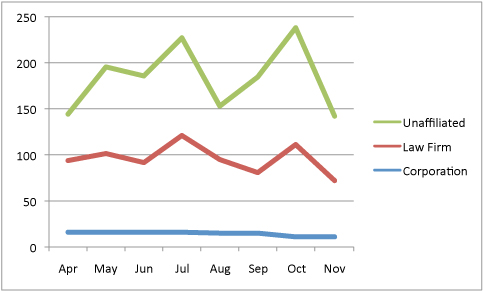
    In PatentBuddy.com's analysis, the site tracked the percent of new patent registrants between October 2007 and November 2008 that were affiliated with a corporation, affiliated with a law firm, or not affiliated with either a corporation or law firm.  Over the six-month period from October 2007 to March 2008, PatentBuddy.com determined that there were 1,010 new patent registrants, of which 41.6% (420) were unaffiliated with a corporation or law firm, 50.0% (505) were affiliated with law firms, and 6.8% (69) were affiliated with corporations.  Between April 2008 and November 2008, the distribution of new registrants was as follows:

    PatentBuddy Stats

    Chart provided by PatentBuddy.com

    Over the eight-month period ending November 2008, PatentBuddy.com determined that there were a total of 1,468 new patent registrants, of which 48.0% (705) were unaffiliated, 44.4% (651) were affiliated with law firms, and 7.6% (112) were affiliated with corporations.  When comparing the two time periods, PatentBuddy.com's analysis shows a 7.4% rise in unaffiliated new registrants and a 5.6% drop in new registrants affiliated with law firms.  These changes appear to be due to differences between unaffiliated registrants and law firm affiliated registrants in September and October of last year (i.e., the plots for each of these categories otherwise appear to be somewhat similar):

    Registrants

    While economists now agree that the current recession began in December of 2007 (see New York Times report), the disconnect between unaffiliated registrants and law firm affiliated registrants in September and October may correlate with the country's recent recognition of the economic crisis.  Patent practitioners will no doubt be keeping an eye on these numbers in the coming months.

  •     By Donald Zuhn

    Cytori
    Last week, Cytori Therapeutics, Inc. announced that the U.S. Patent and Trademark Office had issued U.S. Patent No. 7,473,420.  The '420 patent, which is directed to a method of treating patients with stem cells obtained from adipose tissue, is Cytori's sixth U.S. patent.  The San Diego-based biotech company is also named as an assignee on two U.S. patent application publications.

    Cytori's announcement regarding the '420 patent follows the company's press release late last month announcing that the USPTO issued U.S. Patent No. 7,470,537.  The '537 patent is directed to adipose-derived stem cells (ADSCs) for use in generating differentiated tissues and structures, producing molecules in culture, and providing cultured media to support the growth and expansion of other cell populations.  While Cytori's release notes that the company has licensed the '537 patent from the University of California, no assignee is listed on the face of the '537 patent, and no assignment has been recorded for this patent.

    Adipose Tissue
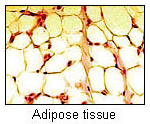
    According to Cytori's press release on the '420 patent, this patent, in conjunction with U.S. Patent No. 7,390,484, covers Cytori's Celution System technology for the bedside processing of stem and regenerative cells derived from adipose tissue.  In particular, Cytori states that the '420 patent covers methods to combine the Celution System output with additives such as scaffolds, matrices, or other agents to increase therapeutic effect, optimize or localize cell delivery, enhance specific cell properties, or promote cell differentiation.  In Cytori's announcement regarding the '537 patent, the company stated that this patent covers a population of stem cells, progenitor cells, and other replicating cells, which can be obtained from human adipose tissue.  According to Cytori's website, adipose tissue has proven to be one of the richest sources of adult stem cells in the human body, containing more than a hundred times more stem cells per unit volume than bone marrow.

    The '420 patent issued from U.S. Application No. 10/614,431, filed July 7, 2003, which is a divisional of U.S. Application No. 10/316,127, which claims the benefit of U.S. Provisional Application No. 60/338,856, filed December 7, 2001.  Independent claim 1 of the '420 patent recites:

    1.  A method of processing a cell population that comprises adipose-derived stem cells comprising:
        removing adipose tissue that comprises a cell population that comprises adipose-derived stem cells from a patient;
        introducing the removed adipose tissue that comprises said cell population that comprises adipose-derived stem cells into a self-contained adipose-derived stem cell processing unit configured to maintain a closed pathway, wherein said self-contained adipose derived stem cell processing unit comprises:
        a tissue collection container that is configured to receive adipose tissue that is removed from a patient, wherein said tissue collection container is defined by a closed system;
        a first filter that is disposed within said tissue collection container, wherein said first filter is configured to retain a first component of said unprocessed adipose tissue and pass a second component of said unprocessed adipose tissue, such that said first filter separates said first component from said second component, and wherein said first component comprises a cell population that comprises adipose-derived stem cells and said second component comprises lipid, mature adipocytes, and saline;
        a cell collection container, which is configured to receive said first component comprising a cell population that comprises adipose-derived stem cells from said tissue collection container, wherein said cell collection container is within said closed system;
        a conduit configured to allow passage of said first component comprising a cell population comprising adipose-derived stem cells from said tissue collection container to said cell collection container while maintaining a closed system;
        a cell concentrator disposed within said cell collection container, which is configured to facilitate the concentration of said first component comprising a cell population that comprises adipose-derived stem cells so as to obtain a concentrated population of cells that comprises adipose-derived stem cells, wherein said cell concentrator comprises a centrifuge or a spinning membrane filter; and an outlet configured to allow the aseptic removal of said concentrated population of cells that comprise adipose-derived stem cells;
        separating and concentrating said cell population that comprises adipose-derived stem cells from said removed adipose tissue within said self-contained cell processing unit while maintaining said closed pathway; and
        contacting said concentrated cell population that comprises adipose-derived stem cells with an additive.

    The '537 patent issued from U.S. Application No. 10/740,315, filed December 17, 2003, which claims the benefit of a series of applications dating back to March 10, 1999.  The '537 patent consists of three independent claims, which recite:

    1.  An isolated population of stem cells, obtained from human adipose tissue having a CD marker profile comprising a combination of STRO-1+, CD29+, CD44+, CD71+, CD49D+, low or undetectable levels of CD 106, CD90+, and CD105+.

    2.  An isolated population of stem cells, obtained from human adipose tissue having a CD marker profile comprising
        (a) STRO-1,
        (b) CD49d,
        (c) low or undetectable levels of CD106, and
        (d) any one or more of CD29, CD44, CD71, CD90, SH3, and CD105, and
    wherein the CD marker profile further comprises CD31-, and CD45-.

    3.  An isolated population of stem cells, obtained from human adipose tissue having a CD marker profile comprising a combination of STRO-1+, CD29+, CD44+, CD49D+, low or undetectable levels of CD106, CD71+, CD90+, CD105+, CD31-, and CD45-.

  •     By Christopher P. Singer

    USPTO Seal
    The U.S. Patent and Trademark Office announced in a Notice posted on its website today that January 19th (Martin Luther King Day) and January 20th (Inauguration Day) are considered Federal holidays within the District of Columbia, under 35 U.S.C. § 21(b).  Consequently, any action or fee due on either day will be considered timely if the action is taken or the fee is paid on Wednesday, January 21, 2009, which is the next business day.  The Office's Notice also states that any correspondence (e.g., papers or fees) deposited with the Express Mail Service of the United States Postal Service (USPS) on the 19th or the 20th will be considered to be filed on the date of deposit (as shown by the "date-in" on the Express Mail mailing label) with the USPS.  Similarly, while the Electronic Business Center will be closed on those days, the Notice states that EFS-Web will be available for receiving transmissions on both days, and that electronically transmitted correspondence (if complete) will receive a date of submission as indicated on the EFS-Web Acknowledgment Receipt.

  •     By Donald Zuhn

    Last month, Medarex, Inc., Eurand, Inc., and Alexion Pharmaceuticals, Inc. joined the growing list of patentees that have filed complaints against U.S. Patent and Trademark Office Director Jon Dudas alleging that the Patent Office miscalculated the Patent Term Adjustment (PTA) for their patents.  Medarex, Eurand, and Alexion became the eighth, ninth, and tenth patentees to file suit against Director Dudas seeking revised PTA determinations.

    Wyeth
    As we reported last fall, the District Court for the District of Columbia issued an important decision that impacts the manner in which PTA determinations are made (see "Wyeth v. Dudas (D.D.C. 2008)").  In Wyeth v. Dudas, the District Court determined that the USPTO had misconstrued 35 U.S.C. § 154(b)(2)(A), and as a result, had denied Wyeth a portion of patent term to which it was entitled under U.S. Patent Law.

    At issue in Wyeth was the interplay, under § 154(b)(2)(A), between the patent term guarantee provision of § 154(b)(1)(A) that provides a one-day extension of patent term for every day that the issuance of a patent is delayed by the failure of the USPTO to comply with various enumerated statutory deadlines ("A delay") and the patent term guarantee provision of § 154(b)(1)(B) that provides a one-day term extension for every day greater than three years after the filing date that it takes for the patent to issue ("B delay").  According to the Patent Office's interpretation of § 154(b)(2)(A), the start of the B delay period is an application's filing date rather than the date occurring three years after the application's filing date, and as a result, any A delay occurring during the first three years of prosecution would overlap with any B delay the application might accumulate.  Thus, under the USPTO's procedure for determining PTA, "the applicant gets credit for 'A delay' or for 'B delay,' whichever is larger, but never A + B."  The Wyeth Court determined, however, that the proper formula for determining PTA is:

    A delay + B delay – A delay that overlaps with B delay – applicant's delay

    District Court for the District of Columbia Seal
    While the District Court's decision in Wyeth specifically impacts only the two patents that were at issue in that case (U.S. Patent Nos. 7,179,892 and 7,189,819), the decision has had a significant, albeit indirect, impact by raising awareness concerning the Patent Office's flawed interpretation of § 154(b)(2)(A).  In addition, because 35 U.S.C. § 154(b)(4)(A) specifies that "[a]n applicant dissatisfied with a [PTA] determination made by the Director . . . shall have remedy by a civil action against the Director filed in the United States District Court for the District of Columbia within 180 days after the grant of the patent" (emphasis added), patentees finding themselves in Wyeth's position have had little choice but to file complaints seeking revised PTA determinations or risk waiving the additional patent term.  Prior to the new filings, the list of patentees filing complaints included:

    • Complaint filed on August 16, 2007 — Wyeth seeks additional 294 days of PTA for U.S. Patent No. 7,179,892, and additional 230 days of PTA for U.S. Patent No. 7,189,819;
    • September 5, 2008 — Napo Pharmaceuticals, Inc. seeks additional 554 days of PTA for U.S. Patent No. 7,341,744;
    • November 7, 2008 — Ironwood Pharmaceuticals, Inc. seeks additional 291 days of PTA for U.S. Patent No. 7,371,727;
    • November 28, 2008 — Solvay Pharmaceuticals GmbH seeks additional 99 days of PTA for U.S. Patent No. 7,381,729;
    • December 1, 2008 — Biogen Idec Inc. seeks additional 649 days of PTA for U.S. Patent No. 7,381,560;
    • December 1, 2008 — Purac Biochem B.V. seeks additional 563 days of PTA for U.S. Patent No. 7,410,556;
    • December 1, 2008 — Molecular Insight Pharmaceuticals, Inc. seeks 669 days of PTA for U.S. Patent No. 7,381,399; and
    • December 1, 2008 — Molecular Insight Pharmaceuticals, Inc. seeks 669 days of PTA for U.S. Patent No. 7,381,745.

    The most recent additions to the above list include:

    Medarex
    • Medarex, Inc. of Princeton, NJ, which filed a complaint on December 12, 2008 asserting that the correct PTA for U.S. Patent No. 7,387,776 (which issued June 17, 2008) should be 521 rather than the 231-day period determined by the Office (see complaint);

    Eurand
    • Eurand, Inc. of Vandalia, OH, which filed a complaint on December 12, 2008 asserting that the correct PTA for U.S. Patent No. 7,387,793 (which issued June 17, 2008) should be 655 days rather than the 470-day period determined by the Office (see complaint); and

    Alexion Pharmaceuticals
    • Alexion Pharmaceuticals, Inc. of Chesire, CT, which filed a complaint on December 23, 2008 asserting that the correct PTA for:

    • U.S. Patent No. 7,393,648 (which issued July 1, 2008) should be 758 days rather than the 462-day period determined by the Office (see complaint);
    • U.S. Patent No. 7,396,917 (which issued July 8, 2008) should be 654 days rather than the 413-day period determined by the Office (see complaint);
    • U.S. Patent No. 7,399,594 (which issued July 15, 2008) should be 990 days rather than the 512-day period determined by the Office (see complaint);
    • U.S. Patent No. 7,408,041 (which issued August 5, 2008) should be 306 days rather than the 258-day period determined by the Office (see complaint);
    • U.S. Patent No. 7,414,111 (which issued August 19, 2008) should be 870 days rather than the 549-day period determined by the Office (see complaint);
    • U.S. Patent No. 7,427,665 (which issued September 23, 2008) should be 812 days rather than the 379-day period determined by the Office (see complaint); and
    • U.S. Patent No. 7,435,412 (which issued October 14, 2008) should be 1,012 days rather than the 343-day period determined by the Office (see complaint).

    Patent Docs will continue to monitor newly filed actions in the District Court for the District of Columbia in order to identify other patentees seeking corrected PTA determinations.

    For information regarding this topic, please see:

    • "Top Stories of 2008: #13 to #10," January 1, 2009
    • "More Patentees Follow Wyeth's Lead in Seeking Additional PTA," December 3, 2008
    • "USPTO to Appeal Wyeth v. Dudas," December 2, 2008
    • "Two Patentees Follow Wyeth's Lead in Seeking Additional PTA," November 12, 2008
    • "Wyeth v. Dudas (D.D.C. 2008)," October 16, 2008