•     By Donald Zuhn

    Pfizer
    The New York Times
    reported this evening that Pfizer has agreed in principle to acquire Wyeth for $68 billion.  The Times notes that barring an 11th-hour twist, the deal, which would be the largest in the U.S. since March 2006, will be announced tomorrow morning.  According to the Times, five banks have agreed to loan Pfizer more than $25 billion to complete the deal — despite the current financial crisis.  The report also notes that four of the banks backing the deal (Goldman Sachs, JPMorgan Chase, Citigroup, and Bank of America) received federal bailout money (the fifth bank is reported to be Barclays).  At least part of the impetus behind the deal appears to be the loss of patent protection that Pfizer must face between now and 2014 for fourteen of its products (including the loss of protection for Lipitor, the best-selling drug in the world).   In the event that Pfizer backs out of the deal, it will be required to pay a reported $4.5 billion breakup fee.

    Wyeth
    For additional information regarding the deal, please see:
    Associated Press report.

  • CalendarJanuary 26-27, 2009 – Structuring and Negotiating Pharma & Biotech Collaborative Agreements (C5) – London, England

    January 27-28, 2009 – ITC Litigation (American Conference Institute)*** – Washington, DC

    January 28-29, 2009 – 6th National Conference on Pharma/Biotech IP Due Diligence (American Conference Institute) – New York, NY

    January 29, 2009 – Effective Licensing in the Wake of MedImmune v. Genentech (FX Conferences) – 11:30 AM to 12:30 PM (EDT)

    January 29-30, 2009 – Commercialization of Life Sciences Inventions (Law Seminars International) – Phoenix, AZ

    January 29-30, 2009 – Fourth Annual Conference on Best Practices in Patent Monetization (Law Seminars International) – San Francisco, CA

    February 13, 2009 – Fourth Annual Workshop on Patent Claim Construction (Law Seminars International) – Chicago, IL

    February 17-18, 2009 – Pharma/Biotech Patent Litigation (C5) – Amsterdam, Netherlands

    February 23-24, 2009 – Pharmaceutical and Biotech Patent Claim Drafting*** (American Conference Institute) – Palo Alto, CA

    February 25-26, 2009 – Optimizing Patent Strategies at Patent Forum 2009 (World Research Group) – San Francisco, CA

    March 9-10, 2009 – Pharmaceutical and Biotech Patent Claim Drafting*** (American Conference Institute) – Research Triangle Park, NC

    March 30-31, 2009 – Pharmaceutical and Biotech Patent Claim Drafting*** (American Conference Institute) – New York, NY

    June 22-27, 2009 – Innovation Week 2009 (U.S. Patent and Trademark Office) – Arlington, VA

    ***Patent Docs is a media partner of this conference or CLE

  •     By Jason Derry —

    Peptimmune and Novartis Sign $500 Million Deal

    Peptimmune
    Peptimmune Inc.
    and Novartis AG recently announced a licensing deal for Peptimmune's multiple sclerosis drug candidate, PI-2301.  The deal gives Novartis an exclusive license to the drug candidate.  Novartis will assume all responsibilities relative to clinical development, manufacturing, and marketing of PI-2301.  The deal could be worth up to $500 million for Peptimmune if certain milestones are met.  In addition, Peptimmune will be entitled to royalties on drug sales.

    BMS to License HCV Therapy from Zymogenetics

    ZymoGenetics
    Bristol-Myers Squibb (BMS) and ZymoGenetics recently announced a licensing deal for ZymoGenetics' hepatitis C therapy PEG-interferon lambda.  BMS will pay ZymoGenetics $85 million upfront and a license fee of $20 million for 2009.  ZymoGenetics will also be entitled to further payments based on certain milestones events.  In all, the deal could be worth up to $1.1 billion for ZymoGenetics.

    Merck to License MS Drug

    Apitope
    Merck KGaA recently announced that it has entered a licensing agreement with Apitope, a British biotech company, to license Apitope's multiple sclerosis drug, ATX-MS-1467.  Merck has reported that it will pay Apitope up to $204.8 million in upfront payments and possible milestone payments.  Apitope will also be entitled to royalties.  Apitope's press release regarding the agreement can be viewed here.

    Jason Derry, Ph.D., who graduated with honors from DePaul University
    College of Law, is a molecular biologist and founding author of Patent Docs.
  •     By Donald Zuhn

    Innovation Week 2009
    The U.S. Patent and Trademark Office announced today that it will be holding Innovation Week 2009 at the Office's headquarters in Arlington, VA from June 22-27.  The Patent Office describes Innovation Week 2009 as a weeklong celebration of the vital role patents and the USPTO play in our economy and for the advancement of science and technology.  The conference will include technology-specific presentations for patent examiners, lunch time programs open to the public and Office employees, exhibits, and a two-day conference for independent inventors.  Among the technology-specific presentations that may be of interest to Patent Docs readers will be one on cancer research (interestingly, this is the only presentation currently listed for Technology Center 1600).  A complete list of presentation topics (which include more than a hundred topics for Technology Centers 1600, 1700, 2100, 2400, 2600, 2800, 2900, 3600, and 3700) can be found here.  The Patent Office is also soliciting presenters for the technology-specific presentations.  Those interested in registering as a presenter, can do so here.  In addition, the Office is seeking keynote presenters and exhibitors.  According to the Office's registration information page for the event, the Office is looking for exhibitors wishing to display information about "patented technology which will enhance the education of our patent examiners and educate the public about the impact patented technology has on the global economy."  More information about the registration process, can be found here.

  • FX Conferences
    FX Conferences will be offering an audio conference entitled "Effective Licensing in the Wake of MedImmune v. Genentech" on January 29, 2009 from 11:30 AM to 12:30 PM (EDT).  Dr. Michael Samardzija of Bracewell & Giuliani will explore the Supreme Court's decision in MedImmune v. Genentech, and the various decisions that have followed it, and provide attendees with ten drafting tips to decrease the risks associated with a licensee challenging the validity of a patent.  The audio conference will focus on the licensing of life science technologies.

    The registration fee for the webcast is $249.  Those interested in registering for the audio conference, can do so here.

  •     By Donald Zuhn

    Xdec08_jan09
    In an interview with TechJournal South, Biotechnology Industry Organization (BIO) President and CEO Jim Greenwood discussed the state of the biotech industry and the biotech issues the new Administration will be facing in the coming year (see "BIO President Sees Biotech Industry Challenges for New Administration").  Mr. Greenwood told the technology business publication that while 2008 started out strong for the biotech industry, the year ended on a far different note as a result of the recession and financial crisis.  According to Mr. Greenwood, this was particularly true for small biotech companies that have yet to market products, and are now finding it more difficult to secure financing.

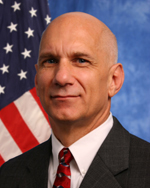
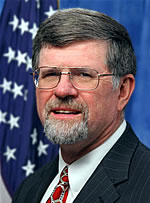
    Greenwood, Jim
    Mr. Greenwood (at left) asserted that the Obama Administration would be facing two big issues in 2009:  follow-on biologics and patent reform.  With respect to follow-on biologics, Mr. Greenwood stated that BIO supported a 14-year exclusivity period, noting that while "[l]ots of folks in the generic industry think it should be less," BIO was concerned that "if the industry does not have enough time to recover its investments, those investments will never be made."  He called the debate over the exclusivity period "a huge issue" for BIO's membership.

    The other big biotech issue for the new President will be patent reform.  On the IT industry's efforts to pass reforms that will make it easier to challenge patents, Mr. Greenwood argued that such reforms "could be a death knell for the [biotech] industry," adding that "[u]ndermining IP protection would be disastrous."  Using stem cell research as an example, Mr. Greenwood argued that the bulk of such research would likely be conducted by the private sector using billions of dollars in private capital, rather than in academic institutions using public funds.  Mr. Greenwood contended that "[t]he policy sector has to improve the environment for innovation or it won't get any of it."

    FDA
    As reported in the article, Mr. Greenwood also encouraged President Obama to pick a "competent, strong FDA commissioner" — especially since "the FDA regulates something like a quarter of the U.S. economy."  Mr. Greenwood said that BIO was also open to the proposal to divide the agency into separate food and drug divisions, each having their own commissioner.  Such a division might help the FDA avoid future approval slowdowns.  Whether the FDA has been experiencing a slowdown in approvals — at least in 2008 — is debatable.  For example, Bloomberg.com reported earlier this month that the FDA approved 25 new drugs last year, the most since 2004 (when the FDA approved 36 new drugs), and that 2008 approvals increased by six over approvals in 2007 (see "Specialty Medicines Led Rebound in U.S. Drug Approvals in 2008").

  •     By Donald Zuhn

    Science Progress
    Last week, Science Progress, a semi-annual journal published by the Center for American Progress, a liberal think tank headed by John Podesta, former White House Chief of Staff under President Clinton (as well as recent co-chairman of the Obama-Biden transition team), issued a series of reports on the U.S. patent system.  The series, outlined in an article entitled: "Patent Reform 101," consists of four reports:

    Center for American Progress
    Today, we discuss the second report in the series (subsequent Patent Docs posts will address the remaining reports).  In the series' second report, Gerald Mossinghoff and Stephen Kunin examine four recommendations for reforming the U.S. Patent and Trademark Office.  In particular, the authors recommend:

    • Establishing the USPTO as an independent government corporation;
    • Providing adequate financial support to the USPTO;
    • Improving the USPTO's decision-making process; and
    • Establishing work-sharing arrangements with other national and regional patent offices.

    USPTO Seal
    The authors begin by endorsing a National Academy of Public Administration (NAPA) recommendation that the USPTO be restructured as a government corporation under the Government Corporation Control Act of 1945.  As a government corporation, the Patent Office would be:  exempt from hiring ceilings, able to set and revise fees, allowed to borrow for needed capital investments, and permitted to access corporate revenues without needing annual appropriations.  The authors suggest that a "corporate" USPTO would no longer be subject to "the political vagaries of the appropriations process," and would therefore be able to establish pay and benefits systems that would enable the Office to compete more effectively with the private sector.

    Citing a report by the National Academy of Sciences, which states that "[a]pproximately $638 million in [USPTO] revenue over 10 years and an estimated $100 million in fiscal year 2004 [were] spent on other governmental activities," the authors recommend that Congress permanently end diversion of applicant fees.  The authors state that "[h]igh-quality patents depend absolutely on a high-quality workforce of highly trained and dedicated professional patent examiners," and contend that fee diversion is antithetical to maintaining such a workforce.  The authors also cite an NAPA report that concludes that the current backlog of unexamined patent applications is the direct result of fee diversion, noting that "[h]ad the USPTO not experienced diversions of $680 million of user-fee revenues during the fiscal year 1990 to 2004 time period, then the time that it takes to examine a patent application would have averaged slightly over 21 months as compared with the 30 months to 40 months that it currently takes."

    While the USPTO may have little control over the first two recommendations presented in the report, the authors do not allow the Office to go unscathed.  Noting that the USPTO has "[i]ncreasingly over the last three to four years . . . formulated new policies, rules, practices and procedures without any signifcant participation from its constituents," the authors stress that the Office needs to "revise its current way of conducting business by making a concerted effort to engage its constituent groups early in the decision-making process by explaining the problems confronting them and soliciting public ideas before proposing new policies, rules, practices, and procedures."

    The authors' final recommendation is that the USPTO continue to enhance its work-sharing arrangements with other patent offices.  As reported by Patent Docs previously (see, e.g., #11 of our "Top Stories of 2008" series), the Patent Office has been actively seeking work-sharing arrangements with other patent offices.  While the USPTO's rulemaking practices have been justifiably criticized by patent practitioners and applicants, the Office's work-sharing efforts to date are to be commended.  Last year alone, the USPTO expanded its Patent Prosecution Highway (PPH) program to include pilots with the Canadian Intellectual Property Office (CIPO), Korean Intellectual Property Office (KIPO), IP Australia (IPAU), European Patent Office (EP), and Danish Patent and Trademark Office (DKPTO); extended its PPH pilot program with the CIPO; entered into an agreement with IPAU, in which the IPAU will act as an International Searching Authority (ISA) and International Preliminary Examining Authority (IPEA) for certain International applications filed with the USPTO Receiving Office; added the KIPO as a participating foreign patent office in the Priority Document Exchange (PDX) system; initiated the "Triway" worksharing program between the USPTO, EPO, and JPO; initiated the "New Route" worksharing program with the JPO; announced a new worksharing initiative with the KIPO, EPO, JPO, and State Intellectual Property Office of the People's Republic of China (SIPO); and released information about a Common Application Format (CAF) that arose out of an agreement between the USPTO, EPO, and JPO at the 25th Annual Trilateral Conference.

    The authors conclude the report by stating that "[a]doption of the recommendations included in this essay, together with adoption by Congress of the patent reform measures on which there is broad consensus today, will result in a far more effective, responsive, and robust U.S. patent system geared toward the grant of quality patents in a timely manner."

  •     By Kevin E. Noonan

    Emanuel, Rahm
    President Obama, through his chief of staff Rahm Emanuel (at right), has acted swiftly to stall implementation of the spate of rulemaking by the outgoing Bush Administration.  In the last days of the last administration, several rules concerning important, sensitive, and controversial issues were promulgated by various branches of the Federal government, despite pledges to not do so after opposing similar (but much less controversial or extensive) actions by the Clinton administration in its last days.  These actions also were contrary to Presidential Advisor Josh Bolten's directive, from last May, that agencies should not promote new rules in the administration's waning days (see "Maybe It's Finally Time They Went Home").

    Mr. Emanuel, in a memo issued from the White House on January 20th, directed all Heads of Executive Departments and Agencies to forgo sending any proposed or final regulations to the Office of the Federal Register for publication, and to withdraw any such "new rules" that had been submitted but not yet published.  In addition, Mr. Emanuel's memo ordered agency and department heads to withdraw all proposed or final regulations from the Office of the Federal Register that had not bee published.  Exceptions to this directive were limited to rules promulgated for emergency situations or "other urgent circumstances" relating to health, safety, environmental, financial, or national security. 

    Office of Management & Budget - OMB
    This directive was intended by its terms to permit President Obama's appointees to review and approve such regulations.  The directive also asked these heads to consider extending the effective date of all new regulations that had been published in the Federal Register for an additional 60 days "for the purpose of reviewing questions of law and policy raised by those regulations."  Concomitantly, the memo suggests that the heads consider reopening the comment period for 30 days "to allow interested parties to provide comments about issues of law and policy raised by those rules."  Insofar as there are rules that raise "substantial questions of law and policy," the heads are directed to notify the Director of the Office of Management and Budget (OMB) to take "appropriate further action."

    Doll, John
    This memorandum raises interesting questions about the various "new rules" packages pending in the Patent and Trademark Office.  Most pressing are the ill-advised continuation and claims rules enjoined by Judge Cacheris in Tafas v. Dudas, currently awaiting a decision from the Federal Circuit.  Even if the Court were to overrule Judge Cacheris, it seems that Patent Office leadership (notably, John Doll (at right), Acting Undersecretary of Commerce for Intellectual Property and Acting Director of the Patent and Trademark Office) would be precluded from implementing the rules until President Obama's new Under Secretary of Commerce has an opportunity to review and approve the rules.  The plethora of other proposed rules (including the new appeals rules, whose December 9th implementation was prevented by Patent Office non-compliance with OMB regulations and Executive Orders, and the Markush rules) should also be forestalled until the new Patent Office Director has the opportunity to review them.

    Love, John
    It is less clear whether the Emanuel memo will prevent the Patent Office from issuing Guidelines or revising the Manual of Patent Examination Procedure, actions that it has been rumored are under development and consideration by Patent Office officials, including John Love (at left), Deputy Commissioner for Patent Examination Policy, who is scheduled to leave the Office in March, and is said to be actively working on Section 800 of the MPEP (concerning restriction practice) and the scope of statutory subject matter under 35 U.S.C. § 101 in view of the Federal Circuit's en banc decision in In re Bilski.

    A Patent Docs hat tip to Hal Wegner for bringing the Emanuel memo and its potential impact on PTO rules to our attention.

  •     By Donald Zuhn

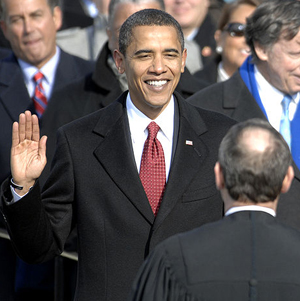
    Obama Sworn In
    Earlier today, in a historic moment on the steps of the U.S. Capitol, Barack Hussein Obama was sworn in as the 44th President of the United States.  Tomorrow, his Administration will begin to tackle the many serious issues that face our country (the Administration's agenda can be found on the newly revamped White House website).  While fixing the U.S. patent system — to the extent that it needs to be fixed — will need to take a back seat to fixing the economy in the coming months, President Obama and Congress will likely turn their attention to patent reform later this year (the President's goals for the U.S. patent system can be found on the Technology page of the White House website).

    Heritage Foundation
    Last Friday, The Heritage Foundation, a conservative public policy research institute, joined the ranks of organizations and trade groups that have offered the Obama Administration suggestions for reforming the U.S. patent system.  In a publication entitled: "Promoting Innovation with Patent Reform: A Memo to President-elect Obama," Senior Legal Policy Analyst Andrew Grossman asked the President "to consider the patent system's flaws in the context of its broad, unparalleled success" when making changes.  Suggesting that the Obama Administration and Congress "favor narrower reforms that target specific flaws and shortcomings," Mr. Grossman specifically proposes that the President:

    • Insist on patent reform that promotes innovation across the entire economy;
    • Reject "reforms" that reduce the certainty of intellectual property;
    • Improve patent quality; and
    • Reject proposals that would undermine investment in innovative biologic drugs.

    Grossman, Andrew
    With respect to the first objective, Mr. Grossman (at right) warns that "[s]pecial interests are angling for advantage within America's patent system," and advises the new Administration to avoid implementing additional limits on remedies for patent infringement or further restrictions on injunctive relief.  In recognition of the efforts by the IT industry and the Coalition for Patent Fairness to convince Congress to include an apportionment of damages provision in patent reform legislation, Mr, Grossman states that "patent reform must adopt a consensus approach that does not favor any one industry's or coalition's narrow agenda," adding that "[p]laying favorites with the patent system is risky and likely to fail, both politically and economically."

    Some of the paper's most interesting proposals are presented in the portion of the memo that addresses the second objective.  First, Mr, Grossman asks the President to "strictly limit" the window within which a patent could be challenged, and the parties that would be allowed to initiate such a challenge, under any new post-grant review process.  He contends that "[w]ithout these protections, additional post-grant review procedures are likely to weaken property rights without significantly reducing litigation."  Next, Mr. Grossman tackles the inequitable conduct doctrine, advising that "the doctrine's great costs and limited deterrent value counsel its elimination or restriction."  Absent elimination of the doctrine, the memo endorses the approach taken by the Kyl patent reform bill (S. 3600), in which initial determinations of inequitable conduct are referred to the Patent Office in order to reduce the burden of fully litigating the issue in court (see "Senator Kyl's Patent Reform Bill Introduced Today").

    Regarding the third objective, Mr. Grossman suggests that the President provide adequate resources to the Patent Office by asking Congress to give the Office permanent authority to keep all of its fees, as well as the authority to set its fees.  In addition, the memo seeks revision of the patent production system, contending that "the system encourages examiners to spend too little time on most applications, to cut short the examination of complex applications disproportionately, and to shortchange initial examinations in favor of continuation applications."  The paper also proposes other "minor" reforms, including regular pre-search and pre-first action interviews and financial incentives for applicants who elect to defer examination or abandon applications prior to search or examination.

    While Mr. Grossman notes that the last objective relates more to the establishment of a follow-on biologics regulatory pathway, he nonetheless offers its advice concerning an appropriate data exclusivity period under such a pathway.  Stating that "[w]ithout adequate data exclusivity, innovation in the biotech sector will dry up, leading to fewer lifesaving treatments and eroding America's leadership in this field," he advises against "[i]mposing a short exclusivity period or otherwise limiting enforcement of biologic patents."  Interestingly, while exclusivity periods of between 0-14 years have been proposed in various follow-on biologics bills introduced in the House and Senate, the paper only specifically mentions the 14-year period.

    Mr. Grossman concludes by stating that:

    American businesses are among the world's most innovative and, as a result, stand as global leaders in a great many competitive fields, despite other countries' lower labor costs and other advantages.  This is due not to chance but, in large measure, to the strong intellectual property protections that the Framers committed to the Constitution.  . . .  Predictability and clarity in patents will, as you observed, further innovation.  In contrast, proposals that undermine these values will have the opposite effect.  The key to achieving successful patent reform and avoiding unnecessary damage to America's economic leadership lies in discriminating carefully between the two.
  •     By Kevin E. Noonan

    The recent changes in Chinese patent law have not received universal approval from a number of Western groups.  Two of these, the Intellectual Property Owners Association (IPO) and the Biotechnology Industry Organization, have taken different tacks to the same end:  disapproval of changes seen as harming their members' interests.

    IPO #2
    Last October, the IPO sent a letter from President Steven W. Miller to the Legal Working Committee of the National People's Congress outlining the group's concerns.  The tone is a positive one, beginning with an affirmation of IPO's interests in intellectual property and its protection, including member filings in China.  It also mentions the group's commitment to patent harmonization, and that its comments on the proposed changes to Chinese patent law are made in that spirit of international cooperation.

    That said, the IPO's letter points out features of the proposed changes that the group believes are inconsistent with these principles.  Specifically, IPO's letter counsels that compulsory licensing should be avoided, or at most, to limit those situations under which compulsory licenses are granted.  Acceptable conditions for granting compulsory licenses would include patents in violation of the Chinese Anti-Monopoly law (but only after a such a violation was established by an administrative or judicial process), or in a national emergency rising to the level of "an extraordinary state of affairs resulting in extreme urgency."  Under these circumstances, "public non-commercial use" should be either by or for the government.

    The IPO also believes that the provisions on genetic resources are premature in view of a lack of international consensus on the issue.  The proposed new law also contains "undefined terms" and broad language "inconsistent with similar . . . provisions adopted by other countries or international treaties."  The IPO voiced its opposition to requirements for "special disclosure requirements" and suggests contractual alternatives.  The letter further recommends implementation of provisions of the U.N. Convention on Biological Diversity including databases to "ensure availability of information about prior art."

    Finally, the IPO recommends clarifying the time limits under which security/secrecy examination must be completed to permit an applicant from filing an application abroad for an invention "completed in China."  The IPO's letter also recommends that the law be changed to provide a "clear definition of when an invention . . . is . . . completed in China."

    In an Addendum, the IPO also recommended that China adopt provisions relating to "indirect infringement," provisions for exploitation fees for patents involved in standards, limiting statutory damages to state-owned entities (and leaving the amount of damages from infringement between private parties to be determined between the parties), and provisions such as those in Japan and elsewhere that permit an invention to be considered novel if an application is filed within 6 months after disclosure at an international exhibition, and academic or technological conference or disclosed without the inventor or assignee's consent.  The IPO also suggests that China adopt a form of the Doctrine of Equivalents, and that invalidity determinations be confined to the Re-examination Board of SIPO instead of the courts.

    Biotechnology Industry Organization (BIO)
    BIO sent its letter to Jennifer Choe Groves, Director for Intellectual Property and Innovation and Chair, Special Section 301 Committee of the Office of the U.S. Trade Representative.  In its letter, BIO recommends that the USTR maintain China on its Priority Watch List.  The bases include increased trafficking in counterfeit pharmaceuticals and deficiencies in judicial mechanisms for enforcing intellectual property protection in China.  Included in these reasons, BIO cites provisions of the proposed changed Chinese patent law including restrictions on exploitation of genetic resources and provisions for compulsory licensing.  Finally, BIO objects to the provisions of the law analogous to the Bolar amendment that excludes from infringement liability activities related to obtaining regulatory approval for pharmaceutical products without concomitant provisions for extending patent term to compensate for regulatory approval delay.  A similar letter was sent to Kimberly Halamar of the U.S. Counsel for International Business.

    Despite these sentiments, China's National People's Congress enacted the proposed changes to Chinese patent law on December 29, 2008 (see "Changes in Chinese Patent Law Adopted").