•     By Kevin E. Noonan

    Supreme Court Building #2
    The Supreme Court was petitioned today to grant certiorari in two cases important to biotechnology patenting:  In re Bilski, involving the standard for determining that method claims are patentable subject matter; and Aventis Pharma S.A. v. Amphastar Pharmaceuticals, regarding the standard for finding inequitable conduct.  And in each case, dissents by Judge Rader are an important part of petitioner's arguments.

    There were two questions presented by petitioners in the Bilski petition:

    Whether the Federal Circuit erred by holding that a "process" must be tied to a particular machine or apparatus, or transform a particular article into a different state or thing ("machine-or-transformation" test), to be eligible for patenting under 35 U.S.C. § 101, despite this Court's precedent declining to limit the broad statutory grant of patent eligibility for "any" new and useful process beyond excluding patents for "laws of nature, physical phenomena, and abstract ideas."

    Whether the Federal Circuit's "machine-or-transformation" test for patent eligibility, which effectively forecloses meaningful patent protection to many business methods, contradicts the clear Congressional intent that patents protect "method[s] of doing or conducting business."  35 U.S.C. § 273.

    Bilski argues that the "machine or transformation" test is a misreading of the Court's precedent, which has been expansive in determining the outer boundaries of patentable subject matter (citing the famous "anything under the sun made by man" language from Diamond v. Chakrabarty).  Recognizing that the Chakrabarty case concerned "compositions of matter" or "manufacture" claims, the petition also cites Diamond v. Diehr to find the Court's precedent for permissible method or process claims.  Here, the Court's reading is decidedly different from the Federal Circuit, where the majority believed its tests, based on the Supreme Court's decision in Gottschalk v. Benson, 409 U.S. 63 (1972), was supported by Diamond v. Diehr.  Petitioners stress that while the Court precluded natural phenomena and laws of nature from patentability, the Diehr case held that a process is patentable if, "'taken as a whole', [it] represents 'an application of a law of nature or mathematical formula'."  Petitioners suggest that this distinction provides a "bright line" for the Court to draw in deciding what is a patentable method and what is not.

    Petitioners also maintain that the Supreme Court itself has deigned not to adopt the Federal Circuit's "machine or transformation" test, ironically in Gottschalk v. Benson, but also in Parker v. Flook.  And they are also quick to point out that the Federal Circuit's reliance on the "machine or transformation" test is contrary to the positions the CAFC itself took in State Street Bank & Trust Co. v. Signature Financial Group, 149 F.3d 1368 (Fed. Cir. 1998), and AT&T Corp. v. Excel Communications, Inc., 172 F.3d 1352 (Fed. Cir. 1999).

    Supreme Court Seal
    Petitioners also urge the Court to grant certiorari and reverse the Federal Circuit because the "machine or transformation" test is too restrictive, adopting Judge Rader's position that the test is an outdated relic of the age of mechanical patents in an era where the "bleeding edge" of innovation is "subatomic particles and terabytes."  They cite recent examples of the application of the restrictions on process patent claims (arguing that these claims are not "second class" claims under the statute), including In re Comisky and Classen Immunotherapies, Inc. v. Biogen Idec, and also warn that these cases mark a trend.  In the Federal Circuit, petitioners cited Comisky and Prometheus Labs., Inc. v. May Collaborative Srvs. as cases where the Federal Circuit had stayed consideration (or reconsideration) in favor of deciding the Bilski case to establish its precedent.  The Bilski decision was also affecting how the U.S. Patent and Trademark Office was deciding questions of patent eligibility for process claims, the petitioners argue, citing Ex parte Roberts, 2008 WL 2754746 (B.P.A.I. July 15, 2008), as well as claims to other statutory categories, citing Ex parte Godwin, 2008 WL 4898213 (B.P.A.I. Nov. 13, 2008)  (claims directed to a "portal server system" and a "portal server") and Ex parte Noguchi, 2008 WL 4968270 (B.P.A.I. Nov. 20, 2008) (claims directed to a "program for causing a computer connected to an external network to perform the functions of . . .").  These trends rendered certiorari urgent, to avoid continued application of the Federal Circuit's over-limiting test, according to petitioners.

    In the Aventis case, this question was presented:

    Whether a court may refuse to enforce an otherwise valid patent on the basis of an inequitable conduct determination premised on a sliding scale between intent and materiality, effectively permitting a finding of fraudulent intent to be predicated on gross negligence,

    based on the following succinct statement of what is wrong with the Federal Circuit's inequitable conduct jurisprudence:

    Under the judge-made doctrine of "inequitable conduct," a federal court may decline to enforce an otherwise valid patent that was procured through fraud or deceit.  Precision Instrument Mfg. Co. v. Auto. Maint. Mach. Co., 324 U.S. 806 (1945).  As befits the punitive nature of the doctrine, this Court has invoked it only in extreme circumstances involving "deliberate," "corrupt," "sordid" and "highly reprehensible" misconduct.  Some panels of the Federal Circuit have similarly limited the inequitable conduct doctrine to deliberately planned and carefully executed schemes to defraud, but other Federal Circuit panels — including the majority in this case — have adopted a "sliding scale" under which "less intent" is required as the materiality of an omission or misrepresentation increases.

    In framing the factual and legal background of the case, the petition relies heavily on Judge Rader's dissent, regarding "the improper '[m]erging [of] intent and materiality' under the majority's sliding-scale standard, and highlighting several previous cases in which the Federal Circuit had 'emphasized materiality almost to the exclusion of intent'."  Perhaps befitting the presence of Supreme Court advocate Theodore Olsen on the brief, petitioner's prayer for relief is based not only on the law of inequitable conduct but also on the application of equitable principles under federal common law.  In addition, the petition cites dissension at the appellate level not only among the judges of the Federal Circuit, but in the several regional circuit courts of appeal and the district courts, citing cases that predate the creation of the Federal Circuit but that implicate differences in the circuits relevant to more general questions of equity.  In support of these notions, the petition cites Microsoft Corp. v. AT&T Corp., 550 U.S. 437 (2007); MedImmune, Inc. v. Genentech, Inc., 549 U.S. 118 (2007); and eBay Inc. v. MercExchange, L.L.C., 547 U.S. 388 (2006), for the principle that patent law (and the Federal Circuit) are bound by more than just its own specific doctrines (like inequitable conduct) but needs to fit properly within the federal judicial scheme for deciding on the bases for equitable relief.  And here, the petitioners argue, the Federal Circuit's "sliding scale" of proof, where the amount of intent required to be shown by a party alleging inequitable conduct varies inversely with the materiality of the reference, is outside the bounds of appropriate federal judicial standards.

    Aventis Pharmaceuticals
    In making this argument, petitioners remind the Court that it has held a patent unenforceable in just three cases:  Keystone Driller Co. v. General Excavator Co., 290 U.S. 240 (1933); Hazel-Atlas Glass Co. v. Hartford-Empire Co., 322 U.S. 238 (1944); and Precision Instrument Mfg. Co. v. Automotive Maintenance Machinery Co., 324 U.S. 806 (1945).  In all those cases, petitioners argue that the Court found overwhelming evidence of affirmative, culpable behavior, involving "'deliberate,' 'corrupt,' 'sordid,' and 'highly reprehensible' fraudulent conduct intentionally committed by the patent holder during prosecution or enforcement of the patent."  Such conduct included "false affidavit and false deposition testimony 'to keep secret the details of [a] prior use' which would have been 'sufficient to cast doubt upon the validity of the patent'" (Keystone Driller); "fabrication of an 'ostensibly disinterested' publication describing the claimed invention as a 'remarkable advance in the art,' which was submitted to the PTO and relied on by the patentee in the Court of Appeals" (Hazel-Atlas Glass); and "false testimony by Larson (the patentee) in an interference proceeding, and the discovery of Larson's perjury by Automotive, which used that information to blackmail Larson into assigning his patent rights to Automotive and agreeing never to contest the resulting patent" (Precision Instrument). 

    Notwithstanding this precedent, the Federal Circuit erred almost from its inception, by adopting a "sliding scale" or "balancing" test in American Hoist & Derrick Co. v. Sowa & Sons, Inc., 725 F.2d 1350, 1363 (Fed. Cir. 1984).  In that case, petitioners argue:

    A knowing deception is thus presumed from the mere fact that highly material information was omitted, under the justification that "he who failed to supply highly material information should have known about the information's materiality."

    According to petitioners, this standard is erroneous and inconsistent with Supreme Court precedent, wherein "[t]he non-disclosure of material information is a necessary but not sufficient element of fraud or inequitable conduct.  The complainant must also prove that the material information was intentionally withheld" (emphasis in original).  The petitioners characterize the Federal Circuit's standard as one of "strict liability" under circumstances where the materiality of the undisclosed information is high.  Such a standard is inconsistent with "almost two centuries" of Supreme Court precedent on the requirements of showing fraud, all of which require some element of knowing intention, according to petitioners, citing Lord v. Goddard, 54 U.S. 198, 211 (1851); Wiscart v. Dauchy, 3 U.S. 321, 330 (1796); Moss v. Riddle & Co., 9 U.S. 351, 357 (1809); Magee v. Manhattan Life Ins. Co., 92 U.S. 93, 98-99 (1875); Reilly v. Pinkus, 338 U.S. 269, 275 (1949); and Madigan v. Telemarketing Assocs., 538 U.S. 600, 621 (2003).

    Petitioners also assert that the Federal Circuit's "extraordinary" remedy — unenforceability — is contrary to equitable principles, since it is a "one-size-fits-all" remedy imposed without regard to whether there are other legal remedies available nor with regard to the effect of the remedy on the public interest.  "''The essence of equity jurisdiction has been the power of the Chancellor to do equity and to mould each decree to the necessities of the particular case.  Flexibility rather than rigidity has distinguished it,'" citing Hecht Co. v. Bowles, 321 U.S. 321, 329 (1944).

    Finally, petitioners argue that the consequences of the chaotic application of inequitable conduct by the Federal Circuit affects innovation by excessive litigation costs, imposing excessive citations of references of dubious relevance to the Patent Office, and creating business uncertainty.  This situation is particularly appropriate for Supreme Court review:

    The inequitable conduct doctrine in patent cases is judge-made in every sense, and can (and should) be shaped by the Judiciary to conform to the broader policies of the Progress Clause and the Patent Act, as well as the general run of federal law.  This issue will not benefit from further percolation in the circuits.  The split in the lower courts and within the Federal Circuit itself is deep and mature, and the Federal Circuit has exhibited a steadfast unwillingness to revisit the issue en banc.  Four decades of confusion are enough.  The question presented is ripe — indeed overdue — for this Court's review.

    The Court can be expected to decide whether to grant these petitions by the end of this term.

    For additional information regarding this and other related topics, please see:
    • "The Relevance of In re Bilski to the Patentability of the Metabolite Claim," November 17, 2008
    • "Aventis Pharma S.A. v. Amphastar Pharmaceuticals (Fed. Cir. 2008)," May 26, 2008
  •     By Donald Zuhn

    Neuralstem
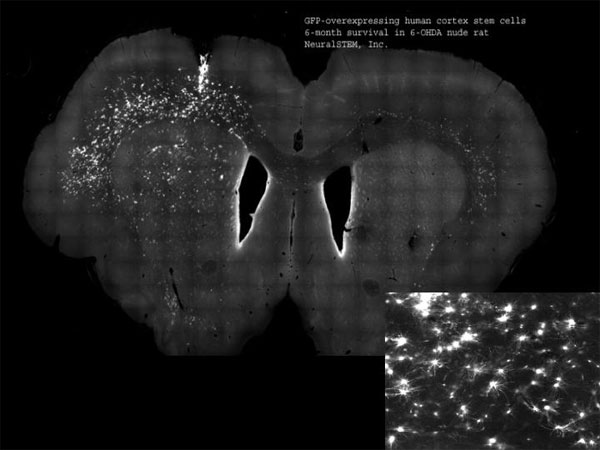
    On Monday, Neuralstem, Inc. announced that the U.S. Patent and Trademark Office allowed U.S. Application No. 10/047,352 (U.S. Patent Publication No. 2002/0064873), entitled "Stable neural stem cell lines."  The '352 application, which was allowed on January 13th, is directed to a method for establishing stable neural stem cell lines and neuronal progenitor lines.  The timing of the '352 application's allowance is interesting in view of the recent announcement that the FDA has approved of Geron's Investigational New Drug (IND) application for the clinical trial of that company's human embryonic stem cell (hESC)-based therapeutic candidate in patients with acute spinal cord injury (see "Geron Gets Approval for First Human Clinical Trial Using Embryonic Stem Cells").

    According to Neuralstem's press release, the patent issuing from the '352 application will cover methods of immortalizing any human neural stem cell using c-Myc-ER, a fusion protein of c-Myc and estrogen receptor (ER).  The immortalized human neural stem cells can be grown for over 60 cell doublings.  The claimed methods will allow for the production of commercial quantities of neural stem cells of the human brain and spinal cord, which can then be differentiated into human neurons and glia (a video of Neuralstem's process can be viewed here).  Stable neural stem cells produced by the claimed methods can be used to treat diseases of the major central nervous system, including ischemic spastic paraplegia, traumatic spinal cord injury, Huntington's disease, and amyotrophic lateral sclerosis (ALS).  In December, Neuralstem filed an IND application for ALS clinical trials using its stable neural stem cells, after showing in preclinical studies that the cells extended the life of rats with ALS.

    Slide3
    The '352 application, which upon issuance will be Neuralstem's third U.S. patent, is a continuation of U.S. Application No. 09/398,897, which claims the benefit of U.S. Provisional Application No. 60/101,354 and is a continuation-in-part of U.S. Application No. 09/053,414, which is a continuation-in-part of U.S. Application No. 08/719,450, which issued as U.S. Patent No. 5,753,506.  Independent claims 51 and 64 of the '352 application (which will issue as claims 1 and 13) recite:

        51:    A method for obtaining a culture of human neural precursor cells capable of differentiating into neurons and glia comprising:
        a)    culturing at least one neural precursor cell in a medium including a first mitogen selected from the group consisting of aFGF, bFGF, EGF, TGFα and combinations thereof;
        b)    introducing into the neural precursor cell in the medium including the first mitogen a recombinant DNA construct comprising a receptor ligand-regulated c-myc cDNA, wherein c-myc cDNA is fused with DNA encoding a ligand-binding domain of a nuclear receptor; and
        c)    expanding the neural precursor cell including the c-myc construct beyond thirty cell doublings prior to differentiation of said cell, wherein said expansion occurs in a medium containing the first mitogen and a second mitogen,
        wherein said second mitogen is selected from the group consisting of aFGF, bFGF, EGF, TGFα, serum and combinations thereof, and
        wherein said medium comprising the first mitogen and the second mitogen further comprises an amount of a c-myc-activating agent sufficient to maintain a stable cell line, wherein said c-myc-activating agent is capable of binding to the ligand-binding domain of said nuclear receptor.
       
        64:    A method of maintaining the capacity of a neural precursor cell line of a human to differentiate into neurons in vitro, wherein said cell line includes neural precursor cells capable of differentiating into neurons and glia, said method comprising:
        a)    preparing a culture comprising at least one neural precursor cell from said neural precursor cell line, wherein said culture includes at least one mitogen selected from the group consisting of aFGF, bFGF, EGF, TGFα and combinations thereof;
        b)    introducing into said neural precursor cell a recombinant DNA construct comprising a receptor ligand-regulated c-myc cDNA capable of expressing a chimeric c-myc protein fused with at least one nuclear receptor protein having a c-myc-activating ligand binding domain; and
        c)    expanding the undifferentiated modified neural precursor cell beyond thirty cell doublings in a medium comprising said mitogen and an amount of a c-myc-activating agent.
  •     By Donald Zuhn

    Science Progress
    Earlier this month, Science Progress, a semi-annual journal published by the Center for American Progress, issued a series of reports on the U.S. patent system.  The series, outlined in an article entitled: "Patent Reform 101," consists of four reports:

    Lehman, Bruce
    Last week, we discussed the article by Gerald Mossinghoff and Stephen Kunin proposing Patent Office improvements (see "Science Progress Tackles Patent Reform").  Today, we address the report by Bruce Lehman (at left), which provides recommendations to the Obama Administration for dealing with the problems of the international patent system.

    Mr. Lehman begins by noting that "[p]atent systems here and in other countries are experiencing a period of crisis, characterized by too many patent applications pending final approval, the declining quality of patent examinations, duplication of work by multiple patent offices, and the increasing costs of patent prosecution."  According to Mr. Lehman, the primary problem facing the international patent system is the increasing global demand for patent rights.  Evidence of this increasing demand can be found in the rapid rise in non-resident filings over the past few years (for example, global non-resident filings increased from 35.7% of all filings in 1995 to 43% of all filings in 2006).  These non-resident filings, in turn, are an indication of a rise in multinational filings directed to essentially the same invention.  As a result of such multinational filings, patent offices frequently perform duplicative work by examining applications that will be examined again by other offices (approximately 27% of applications examined by the USPTO were originally submitted to the EPO or JPO, and therefore, are likely to be examined by the EPO or JPO).

    While duplicative work is a problem for the international patent system, it is even more of an issue for the USPTO.  Interestingly enough, it is the USPTO's overall pendency of 32 months (as of 2008), which is frequently criticized for being too lengthy, that makes duplicative work a more significant problem in the U.S.  According to Mr. Lehman, because the overall pendency in the EPO is 45.3 months and the overall pendency in the JPO is effectively 68 months (once deferred examination is taken into consideration), the USPTO is generally one step ahead of its counterparts in Europe and Japan.  As a result, the USPTO "must examine virtually every application from scratch," and is unable to take advantage of the results of foreign examinations to decrease the workload of its examiners.

    Aside from differences in pendency, Mr. Lehman argues that with respect to its patent laws, the U.S. is also hampered by its retention of several "non-conforming idiosyncrasies."  Among these idiosyncrasies are our first-to-invent system and one-year grace period.

    After outlining the problem in his article, Mr. Lehman then sets forth a number of possible solutions.  His most radical suggestion involves the creation of a multinational patent examining authority:

    Ultimately . . . the most effective way of eliminating duplicative examinations from the global patent system — and to promote uniformity and harmonization — would be for the United States to work with its foreign partners to create a multinational patent examining authority that could be used as a substitute for the USPTO.

    Mr. Lehman explains that under such a system, an applicant seeking U.S. patent protection would have the choice of filing an application with the multinational examining authority or with the USPTO directly — akin to the choice of filing an application in the European or German patent offices.  As in Europe, where the German patent office and not the EPO would issue a German patent, the USPTO, and not the multinational examining authority, would issue a U.S. patent.  Mr. Lehman notes that such issuance "would take place only after a review that the examination complied with U.S. law," and therefore, "[i]n no way would the sovereignty of the United States be compromised."  Mr. Lehman also notes that were the World Intellectual Property Organization (WIPO) to serve as the home for a new multinational patent office, there would be no need to promulgate a new treaty to create such an office since the Patent Cooperation Treaty (PCT) already allows for its creation.

    Of course, the U.S. would still have to address the non-conforming idiosyncrasies of its own patent laws, but as the patent community is well aware, Congress has begun to take steps toward further harmonizing U.S. Patent Law.  Mr. Lehman recommends that:

    [T]he incoming Obama administration should give strong consideration to adopting a first-inventor-to-file position in any international negotiations involving substantive patent law harmonization.  Of course, if the Unites States agrees to change its law in this regard it should expect corresponding concessions from other negotiating parties.  As an example, this could include concessions on matters such as the grace period between public disclosure and the filing of a patent application.

    As a (perhaps) more attractive alternative to a multinational examining authority, Mr. Lehman suggests that the U.S. attempt to more effectively spread the examination burden among other patent offices, such as the EPO and JPO, by modifying its patent system to take advantage of foreign examination.  As Mr. Lehman notes, however, such a strategy would require the adoption of a deferred examination system in the U.S. to offset the differences in overall pendency.  As we reported yesterday, the USPTO appears to be receptive towards considering a deferred examination system (see "USPTO Schedules Roundtable Discussion on Deferred Examination"), and therefore, Mr. Lehman's less radical proposal for curing the international patent system's ills may have the best chance of being implemented.

  •     By Christopher P. Singer

    USPTO Seal
    In a January 28, 2008 press release, the U.S. Patent and Trademark Office announced that the existing pilot Patent Prosecution Highway (PPH) program with the Korean Intellectual Property Office (KIPO) will expire in favor of a permanent PPH which begins on January 29, 2009.  Applicants who participate in the PPH and receive a determination that at least one claim is patentable from the initial examining office (either the USPTO or KIPO) can request that the other office fast-track the examination of corresponding claims in the corresponding application.

    KIPO #2
    According to Jung-Sik Koh, Commissioner of the KIPO, the success of the pilot program over the past year, "has confirmed that the PPH significantly expedites the acquisition of patent rights for applicants and enhances the efficiency of administrative work for both offices.  The PPH program on a full-time basis will make these benefits permanent and contribute to the development of the PPH network on a global scale."

    The PPH program is one part of the cooperation initiative regarding intellectual property rights protection between the USPTO and the KIPO, which is designed to streamline practices and procedures under the international patent system.

    The USPTO plans to publish updated requirements for applicants that wish to participate in the USPTO-KIPO PPH through the USPTO on a dedicated page at the USPTO website.  The KIPO has also published requirements on its website.

    For additional information regarding this and other related topics, please see:
    • "'Blueprint' Announced for Work Sharing Initiative Between Five IP Offices," November 6, 2008
    • "KIPO Becomes Participating Foreign Office in PDX Program," October 21, 2008
    • "Online Priority Document Exchange Service Between USPTO and KIPO," October 9, 2008
    • "USPTO and KIPO Sign Memoradum on Cooperative Patent Examination," September 24, 2008
    • "USPTO and UKIPO Extend Patent Prosecution Highway Pilot Program," September 3, 2008
    • "Patent Prosecution Highway Network Expands to Canada & Korea," January 29, 2008
    • "USPTO Announces Two Additional Partners in the Patent Prosecution Highway Pilot Program," January 17, 2008

  •     By Kevin E. Noonan

    Chinese Flag
    Intellectual property rights (particularly Western intellectual property rights) were intended to receive improved protection under the Trade-related Aspects of Intellectual Property Rights (TRIPS) provisions of the General Agreement on Tariffs and Trade (GATT).  The World Trade Organization (WTO) was to provide the forum for disputes arising under TRIPS.  However, the anticipated benefits for Western IP rights holders have not materialized (see "The Law of Unintended Consequences Arises in Applying TRIPS to Patented Drug Protection in Developing Countries"; "Worldwide Drug Pricing Regime in Chaos"; "More on the Global Drug Patenting Crisis").  This outcome is due in large part to WTO member countries taking advantage of further treaty provisions intended to permit compulsory licenses in the face of extreme medical emergency being co-opted to more nationalistic demands (see "Thailand Continues Its Compulsory Licensing Practices").

    U.S. Trade Representative
    So it is gratifying to learn that for other areas of IP protection (specifically copyright and trademark), the WTO is having a slightly better track record for protecting IP rights.  Today, the Office of the U.S. Trade Representative, Acting Representative Peter Allgeier, announced that the WTO ruled in favor of the U.S. on its complaint, filed in April 2007, that aspects of Chinese trademark and copyright law were not in compliance with its TRIPS obligations.  Specifically, the WTO panel found the following provisions of Chinese law to be deficient.  Chinese copyright law was not in compliance with its TRIPS obligations because it "does not protect copyrighted works that do not meet  . . . 'content review' standards."  The WTO panel found this to be a "blanket denial of [copyright] protection" and in violation of Article 9.1 of TRIPS (which incorporates Article 5(1) of the Berne Convention for the Protection of Literary and Artistic Works).  In addition, the WTO panel found these provisions of Chinese law to be inconsistent with the requirements of Article 41.1 of TRIPS (requiring enforcement procedures to be "effective" against copyright infringement).  

    Second, Chinese law provides that counterfeit or otherwise infringing goods seized by the government would "normally be auctioned subject only to the condition that the infringing trademark must be removed."  As a result, the counterfeit goods are returned to the marketplace, something that the panel considered "could confuse consumers and harm the reputation of the legitimate product."  Paradoxically, in the panel's view, this would "facilitate" rather than discourage "further acts of infringement."  These provisions of Chinese law are inconsistent with Articles 46 and 59 of TRIPS, the panel opined. 

    Finally, Chinese law provides criminal penalties for counterfeiting and piracy, but only when the extent of these practices exceed specific thresholds (such as 500 copies of a pirated DVD or about $7,000 of counterfeit goods).  Article 61 of TRIPS requires criminal penalties for counterfeiting and piracy to be available for "all 'commercial scale' copyright piracy and trademark counterfeiting."  The U.S. complained that the Chinese thresholds were "so high as to be divorced from market realities."  Tellingly, just prior to the U.S. filing its complaint, China had dropped its threshold for criminal sanctions from 1,000 infringing copies to 500 infringing copies.  The panel stopped short of making a determination that these provisions were in violation of Article 61, saying that it would need additional evidence.  The panel did state that determining what amounts to "commercial scale" of counterfeiting or piracy "must take into account the impact of technological developments" (such as the Internet), and that "commercial scale" of infringing activity depends on the product at issue (DVD's watched, software) "and the market in which it is sold."

    Ambassador Allgeier called the decision "an important victory, because they confirm the importance of IPR [i.e., intellectual property rights] protection and enforcement, and will clarify key enforcement provisions of the TRIPS Agreement."  He also pledged to "engage vigorously with China on appropriate corrective action to ensure U.S. rightsholders obtain the benefits of this decision."

    Because these decisions are subject to appeal by either the U.S. or China, it is unclear if they will lead in any reasonable timeframe to changes in Chinese law, or how the WTO will react if China does not timely respond with changes to its law.

  •     By Christopher P. Singer

    USPTO Seal
    In a Federal Register pre-publication Notice scheduled to be published officially in tomorrow's Federal Register, the U.S. Patent and Trademark Office announced that it plans to hold a roundtable discussion regarding deferred examination options (UPDATE: the notice has now been published in the Federal Register at 74 Fed. Reg. 4946).  The announcement, and roundtable, is designed to assess whether there is general public interest in establishing a route of deferred examination of patent applications, and to discuss ideas about how deferred examination could be implemented.  The roundtable discussion is currently scheduled for Thursday, February 12, 2009 (9:00 am to 12:30 pm EST).  While the roundtable is currently planned to be open to the public, the number of participants will be limited.  This will help to guarantee that all roundtable participants will have adequate opportunity to comment during the discussion.  The USPTO plans to select participants in order to provide a balance of views (patent users, practitioners, industry, academia, independent inventor organizations, and government).

    Anyone interested in participating in the roundtable must send a request to the USPTO by e-mail to Robert.bahr@uspto.gov.  The request must include the following:  (1) name of participant and contact information (phone number and e-mail address); and (2) the organization the participant represents. 

    The general public should be able to observe the roundtable discussion (either in person or via webcast) without having to submit any specific request to do so.  Members of the public will also have the opportunity to submit written comments to the USPTO regarding the issues raised during the roundtable, or any additional issues relating to a potential route of deferred examination.  While the PTO does not plan to publish these written comments in a "comment and response" analysis (this is not a notice of proposed rulemaking), the USPTO plans to review and consider any and all written comments it receives regarding this issue.

    For additional information regarding this and other related topics, please see:
    • "U.S. Chamber of Commerce Provides Detailed Recommendations to New Administration Regarding USPTO," January 8, 2009
    • "Director Answers House Subcommittee's Questions," June 12, 2008
    • "Post-GSK: Where DoWe Go from Here? – Deferred Examination," November 12, 2007

  •     By Christopher P. Singer

    EFS-Web
    Since the launch of EFS-Web in the fall of 2006, applicants have had the option of e-filing sequence listings as text (.txt) files only, rather than filing sequence listings in both paper and computer readable copies.  Several biotech prosecutors in our office have had recent discussion and debate about what files and statements can or must be filed with an EFS-Web filed sequence listing in order to be compliant with the requirements under the Legal Framework and in order for it to be considered as part of the original application. 

    As we discussed in November 2006 (see "Hassle-Free Filing of Sequence Listings on EFS-Web Version 1.1"), the early version of EFS-Web was limited because it allowed submission of files in .pdf format only and was not able to handle sequence listing filings because they needed to be submitted as text files (.txt).  Since the upgrade to EFS-Web 1.1 in October of 2006, practitioners have been able to electronically submit text files such as sequence listings, computer program listings, and mega tables.  This eliminated the need to submit these types of files on supplemental electronic media (e.g., CD-R, 3.5" disk, etc.) and avoid fees for excess application size (currently $270 for large entities or $135 for small entities per 50 pages after the first 100).

    USPTO Seal
    Section XIII of the EFS-Web Legal Framework clearly authorizes the filing of a sequence listing as a text file (37 C.F.R. § 1.821(c)), provided the file is ASCII compliant.  When submitting a sequence listing in this way, 37 C.F.R. § 1.52(e)(5) requires that the specification be amended to contain an incorporation-by-reference of the material in the text file in a separate paragraph which identifies the name of the text file, the date of its creation, and the size of the text file in bytes.  This paragraph should be inserted immediately before the Background of the Invention (37 C.F.R. § 1.77(b)(5)).  Pursuant to 37 C.F.R. § 1.821, a patent application which discloses nucleotide and/or amino acid sequences must contain both "a paper copy" of the sequence listing (37 C.F.R. § 1.821(c)) and a computer-readable form (CRF) of the sequence listing (37 C.F.R. § 1.821(e)).  As long as the sequence listing text file submitted via EFS-Web is a compliant ASCII text file, it will serve as both the paper copy required by § 1.821(c) and the CRF required by § 1.821(e).  Because the single file serves this dual role, the statement  indicating that the paper copy and CRF copy of the sequence listing are identical is no longer necessary (37 C.F.R. § 1.821(f)).  There is also no need to submit any additional copies of the sequence listing pursuant to § 1.821(e).  That is, if the sequence listing text file submitted by EFS-Web is ASCII compliant, the filer should not separately request the use of a compliant computer readable sequence listing that is on file for another application.  If such a request is filed, the Office will not carry out the request but will use the sequence listing submitted with the application as originally filed via EFS. 

    When filing a sequence listing in response to a Notice to Comply or Notice of Missing Parts, you must include a statement indicating that the sequence listing does not include any new matter that goes beyond the disclosure of the application as filed.  As with the filing of a sequence listing with an original application, the statement under § 1.821(f) is not necessary, and requests under § 1.821(e) will not be carried out.

    Sequence listing text files submitted by EFS-Web have a size limit of 100 megabytes.  Because of this size limit, filers with sequence listing files larger than 100 megabytes are encouraged to submit the text file on compact disc via Express Mail (37 C.F.R. § 1.10) on the date of the corresponding EFS-Web filing, if the filer wishes the electronic copy to be considered part of the application as filed.  Alternatively, a filer may submit the application in paper and include the electronic copy of the sequence listing text file on compact disc in accordance with 37 C.F.R. § 1.52(e).  According to the Legal Framework:

    [S]equence listing text files may not be partitioned into multiple files for filing via EFS-Web as the EFS-Web electronic filing system is not currently capable of handling such submissions.  If the sequence listing is filed on a compact disc, the sequence listing must be a single document, but the document may be split using software designed to divide a file, that is too large to fit on a single compact disc, into multiple concatenated files.  If the filer breaks up a sequence listing so that it may be submitted on multiple compact discs, the compact discs must be labeled to indicate their order (e.g., "1 of X", "2 of X", etc.).

    WIPO
    Electronic filing of sequence listing text files in international applications with the U.S. Receiving Office of the PCT is authorized under sections XVII and XVIII of the EFS-Web Legal Framework.  Under PCT Rule 5.2(a), the sequence listing is filed as a separate part of the description and should be submitted as a single ASCII text file.  The text file will serve both as the written portion of the sequence listing under PCT Rule 5.2 and the electronic form under PCT Rule 13ter.1(a).  Furthermore, the required statement in paragraph 40 of Annex C that "the information recorded in the electronic form is identical to the sequence listing in the application" is not required.  Similar to U.S. filings, follow-on submissions will form part of the international application if they are filed on the same date on which the international application was filed.  EFS-Web can be used to submit a sequence listing in text format after the international filing date in response to a requirement under PCT Rule 13ter, however it will not form part of the international application as set forth in PCT Rule 13ter.1(e).

    A noteworthy difference between U.S. and PCT practice concerning the filing of sequence listings in electronic format relates to fees.  As noted above, the USPTO does not charge excess page fees for compliant sequence listings submitted by EFS-Web only.  However, the PCT does charge a fee for electronically submitting sequence listings only as text files (or on any electronic media).  The fee is equivalent to the fee for 400 excess pages (currently $5,600), so filing sequence listings in the PCT as electronic text files only makes economic sense if the sequence listing is over 400 pages in length.  For sequence listings that are less than 400 pages, a better alternative is to submit the sequence listing as a .pdf as part of the application (so as to pay only for the pages submitted), while also including the text file of the sequence listing.  In this situation, the filer should also submit the statement required by Annex C.

  •     By Kevin E. Noonan

    Ah, the popular press!  Purported protectors of our fundamental freedoms, their behavior (at least in the mainstream press) has recently been less than noble.  Eschewing the role of crusader (or even muckraker), the press seems to look for the common popular denominator of received wisdom, and then to trumpet it.  After all, it wasn't until the war in Iraq went badly and Katrina went ashore that the press did anything more than cheerlead every move of the last, recently departed occupant of the White House.

    When it comes to patents, the press has been with the Zeitgeist, echoing the clamor that there is a "broken" patent system and that it imposes a burden on us all.  The New York Times has made a cottage industry of such articles (see "New York Times to Innovation: Drop Dead"; "Science Fiction in The New York Times"; "War is Peace, Freedom is Slavery, Ignorance is Strength"), most based on fundamental a misunderstanding of the underlying facts and a penchant to blindly accept as impartial, partisan advocates with their own axe to grind (see "Anti-Patent ("Sullivan?") Malice by The New York Times").  And The New Yorker has not been above similar antics regarding the state of the U.S. patent system, again missing important facts available from consultation with any patent attorney (see "The 'Unfairness' of World Intellectual Property Protection According to The New Yorker"; "Once Again, The New Yorker Gets It Wrong on Patents"). 

    Newsweek
    Next week, it will be Newsweek's turn, when it publishes an article entitled:  "Innovation Gridlock: Today's inventors need to put together many bits of intellectual property. Too bad they are all patented."  The author is Michael Heller, a professor of real estate (not intellectual property) law at Columbia.  Professor Heller is also the co-author, along with Professor Rebecca Eisenberg, of the "tragedy of the anti-commons" hypothesis, that patent protection for gene sequences would impede progress in deciphering the human genome and reaping its benefits.  That hypothesis was not borne out by events (see "The Future of DNA Patenting"; "The 'Anti-Commons' Aren't So Tragic, After All").  And not coincidentally, Professor Heller is also the author of "The Gridlock Economy: How Too Much Ownership Wrecks Markets, Stops Innovation and Costs Lives." 

    Heller, Michael
    Professor Heller's thesis is the now-familiar one that patenting hurts innovation; having been proven wrong with the anti-commons idea, he has expanded his intellectual playground to assert that patenting is preventing the development of life-saving drugs.  He trots out his favorite "proof" of the thesis:  a quote from Peter Ringrose, former chief science officer at Bristol-Myers Squibb, in The New York Times that BMS could not investigate "'more than 50 proteins possibly involved in cancer' because patent holders 'either would not allow it or were demanding unreasonable royalties.'"  Unfortunately, Professor Heller (at left) does not include "the rest of the story" as reported in the Times (see "Bristol-Myers and Athersys Make Deal on Gene Patents," January 8, 2001); in fact, BMS partnered with Athersys, a small biotech startup from Cleveland that had a (patented) technology for making "a collection of cells that produces virtually every protein" — thus effectively, and legally, designing around those "unreasonable" patent holders.

    Professor Heller also makes the (unsupported) conceptual leap that all this patenting of genetic information has resulted in the dearth of pharmaceutical innovation by major pharmaceutical companies.  This statement ignores the achievements of biotechnology companies like Amgen and Genentech and the rest of the industry, who are providing an ever-increasing stream of new drugs such as Humulin® (recombinant human insulin); Epogen® (recombinant human erythropoietin); Herceptin® (anti-Her2/neu monoclonal antibody); beta-interferon (for treating multiple sclerosis); Cerezyme® (for treating Gaucher's disease); Enbrel® (soluble TNF receptor); and Gleevac® (imatinib; anticancer drug).  Indeed, the Biotechnology Industry Organization says that there are more than 200 biotechnology drugs on the market as of 2007, with more than 400 drugs and vaccines in various phases of clinical testing for FDA approval (see "Guide to Biotechnology: 2007").  It also ignores (and is ignorant of) the difference between identifying targets for therapeutic intervention and finding safe and effective drugs that take advantage of this knowledge.  This isn't a matter of patent law, it is science and science will occur at its own pace.  Professor Heller's argument also disregards University of Chicago Professor Richard Epstein's (at right) insight, in "Overdose: How Excessive Government Regulation Stifles Pharmaceutical Innovation," that "[m]edical science is not immune from the iron Epstein, Richard
    economic law of diminishing marginal returns" and the time for having "low-hanging" fruit of easily-achieved increased well-being (for example, by developing drugs against bacterial diseases) is behind us.  The viability of "Big Pharma" partnering and reaping the fruits of biotechnology are evident in Pfizer's acquisition of Wyeth, which (according to the Atlanta Journal Constitution) was spurred to make the acquisition by Wyeth's robust biologics drug pipeline (see "In Wyeth, Pfizer Sees a Drug Pipeline").

    Professor Heller also conflates the real problems encountered in the information technology industry with biomedical science.  In biomedicine and pharmaceutical science, intellectual property tends to be discrete.  For example, AstraZeneca can market and patent the acid reflux drug omeprazole (Prilosec® and Nexium®) and TAP Pharmaceuticals can market and patent the acid reflux drug lansoprazole (Prevacid®) without any interference from patent law.  These molecules are discrete, and the development and patenting of one is independent of the other.  The only area in biotechnology where the "patent thicket" problem has been evident is in microarray technology (used for drug and target screening and certain diagnostic applications), and that industry tends to side with IT groups (like the oxymoronic Coalition for Patent Fairness) in supporting or fomenting political attempts to reduce patent protection.

    Professor Heller also draws the wrong conclusions when he assesses the different reactions to biotechnology patenting in the U.S. and the competing economies of Europe and Japan.  While it is evident that America's early embrace of patent protection for biotechnology was an important reason why biotechnology breakthroughs occurred here rather than abroad (see "The Continuing Value of Biotech Patenting"; "Disadvantages For Biotechnology Patents in Japan"), Professor Heller concludes that the U.S. Patent and Trademark Office has issued "hundreds of thousands of weak, vague patents" and "if you are a U.S. innovator, there is no way even to figure out who owns rights relevant to your proposed new drug."  To anyone with experience in biotechnology and pharmaceutical patent law or drug development, those statements are worse than hyperbole — they are just simply untrue (at least as far as pharmaceutical and biotechnology patents are concerned).

    Finally, he accuses U.S. scientists of being forced to be "patent pirates" as if this was a serious impediment to biotechnology innovation.  While using patented materials or processes for commercial development (in or outside the groves of academe) is not tolerated, Professor Heller does not provide any examples of purely academic research being impeded by patents (if for no other reason than the ideas, the scientific breakthroughs, and the information of discovery are not patentable).

    Professor Heller tells a compelling story, and it probably provides impetus for future sales of his book.  He has been consistent in his "perils of patenting" theme throughout his career (clearly eschewing Emerson's caution about intellectual consistency).  But his thesis is wrong and the history of the biotechnology era in the U.S. clearly demonstrates it is wrong.  What won't help American innovation is Newsweek's giving Professor Heller yet another platform for this failed thesis.

  •     By Donald Zuhn

    Geron
    On Friday, Geron Corporation announced that the U.S. Food and Drug Administration has approved the biopharmaceutical company's Investigational New Drug (IND) application for the clinical trial of GRNOPC1 in patients with acute spinal cord injury.  According to Geron's press release, the clinical trial, to be conducted on patients with complete American Spinal Injury Association (ASIA) grade A subacute thoracic spinal cord injuries, will constitute the world's first study of a human embryonic stem cell (hESC)-based therapy in man.  The trial will utilize Geron's lead hESC-based therapeutic candidate, GRNOPC1, which consists of hESC-derived oligodendrocyte progenitor cells that have demonstrated remyelinating and nerve growth stimulating properties leading to restoration of function in animal models of acute spinal cord injury (Kierstead et al., 2005, "Human embryonic stem cell-derived oligodendrocyte progenitor cell transplants remyelinate and restore locomotion after spinal cord injury," J. Neurosci. 25(19): 4694-705).  Geron President and CEO Dr. Thomas Okarma called the approval "the beginning of what is potentially a new chapter in medical therapeutics — one that reaches beyond pills to a new level of healing:  the restoration of organ and tissue function achieved by the injection of healthy replacement cells."

    Human Embryonic Stem Cell
    Candidates for the trial must have a functionally complete spinal cord injury and agree to have GRNOPC1 injected into the lesion sites between seven and fourteen days after injury.  While the goal of the trial is to determine the safety of GRNOPC1, the trial will also seek to assess efficacy.  Once safety has been established, Geron intends to seek approval to increase the dose of GRNOPC1, enroll individuals with complete cervical injuries, and expand the trial to include patients with severe incomplete injuries (ASIA grade B or C).  Additional information, including a video illustration of GRNOPC1 in an animal model of spinal cord injury, can be found here.

    According to Geron's press release, the production and commercialization of GRNOPC1 is protected by a portfolio of patents owned by or exclusively licensed to Geron.  Among the patents in its portfolio are those covering hESCs, which are exclusively licensed to Geron from the Wisconsin Alumni Research Foundation (WARF), and those covering the production of oligodendrocytes from hESCs, which are exclusively licensed to Geron from the University of California.

    Human embryonic stem cell image: Ryddragyn, Wikipedia Commons

  •     By Sherri Oslick

    Gavel_2About
    Court Report:  Each week we will report briefly on recently filed
    biotech and pharma cases, and a few interesting cases will be selected
    for periodic monitoring.

    Elan Pharma International Ltd. v. Alcon Laboratories, Inc. et al.
    4:09-cv-00032; filed January 22, 2009 in the Eastern District of Texas

    Infringement of U.S. Patent Nos. 5,429,824 ("Use of Tyloxapol as a Nanoparticle Stabilizer and Dispersant," issued July 4, 1995) and 5,298,262 ("Use of Ionic Cloud Point Modifiers to Prevent Particle Aggregation During Sterilization," issued March 29, 1994) based on Alcon's manufacture and sale of its Azopt® product (brinzolamide ophthalmic suspension, used to treat glaucoma or ocular hypertension).  View the complaint here.


    Merck Sharp & Dohme Pharmaceuticals SRL v. Teva Pharmaceuticals USA, Inc. et al.

    3:09-cv-00233; filed January 16, 2009 in the District Court of New Jersey

    Infringement of U.S. Patent No. 5,565,473 ("Unsaturated Hydroxyalkylquinoline Acids as Leukotriene Antagonists," issued October 15, 1996) following Teva's filing of an ANDA to manufacture a generic version of Merck's Singulair® (montelukast sodium oral granules, used to treat asthma and allergic rhinitis).  View the complaint here.

    Sciele Pharma, Inc. et al. v. Lupin Ltd. et al.
    1:09-cv-00105; filed January 16, 2009 in the District Court of Maryland

    Sciele Pharma Inc. et al. v. Lupin Ltd. et al.
    1:09-cv-00037; filed January 15, 2009 in the District Court of Delaware

    The complaints in these cases are substantially identical.  Infringement of U.S. Patent Nos. 6,099,859 ("Controlled Release Oral Tablet Having a Unitary Core," issued August 8, 2000) and 6,866,866 ("Controlled Release Metformin Compositions," issued March 15, 2005) following a Paragraph IV certification as part of Lupin's filing of an ANDA to manufacture a generic version of Sciele's Fortamet® (extended release metformin hydrochloride, used to treat Type 2 diabetes).  View the Delaware complaint here.


    Orion Corp. v. Wockhardt USA Inc. et al.

    1:09-cv-00030; filed January 15, 2009 in the District Court of Delaware

    Infringement of U.S. Patent Nos. 5,446,194 ("Pharmacologically active catechol derivatives," issued August 29, 1995), 5,135,950 ("Stable Polymorphic Form of (E)-N,N-diethyl-2-cyano-3-(3,4-dihydroxy-5-nitrophenyl)acrylamide and the Process for Its Preparation," issued August 4, 1992), and 6,500,867 ("Pharmaceutical Composition Comprising Entacapone, Levodopa, and Carbidopa," issued December 31, 2002) following a Paragraph IV certification as part of Wockhardt's filing of an ANDA to manufacture a generic version of Orion's Stalevo® (marketed by Novartis in the U.S.) (entacapone, levodopa, and carbidopa mixture, used to treat Parkinson's disease).  View the complaint here.


    Warner Chilcott Laboratories Ireland Ltd. et al. v. Sandoz Inc.

    2:09-cv-00228; filed January 15, 2009 in the District Court of New Jersey

    Infringement of U.S. Patent No. 6,958,161 ("Modified Release Coated Drug Preparation," issued October 25, 2005) following a Paragraph IV certification as part of Sandoz's filing of an ANDA to manufacture a generic version of Warner Chilcott's Doryx® (modified release doxycycline hyclate, used for adjunctive treatment of severe acne).  View the complaint here.