•     By Donald Zuhn

    USPTO Seal
    This morning, the U.S. Patent and Trademark Office hosted a roundtable discussion on deferred examination.  The roundtable, which lasted about four hours, brought together two dozen participants, representing a variety of industries and organizations (as well as positions on the issue), to discuss the advantages and disadvantages of implementing a deferred examination system in the U.S.; the impact such a system would have on applicants, their competitors, the public, and the USPTO; and how such a system could (or should) be implemented.  Roundtable participants included:

    • Gordon Arnold – American Bar Association (ABA)
    • Robert Budens – President, Patent Office Professional Association (POPA)
    Q. Todd Dickinson – Executive Director, American Intellectual Property Law Association (AIPLA)
    John Doll – Acting Under Secretary of Commerce for Intellectual Property & Acting Director, USPTO
    Nicholas Godici – Executive Director, Birch, Stewart, Kolasch & Birch, LLP
    Carl Gulbrandsen – Managing Director, Wisconsin Alumni Research Foundation (WARF), representing university technology transfer
    • Henry Hadad – Vice President & Associate General Counsel, Intellectual Property, Schering-Plough Co.
    • Alan Hammond – Chief Intellectual Property Counsel, Life Technologies
    • Brad Huther – U.S. Chamber of Commerce
    • Glen Katopish – Independent Inventor
    Ron Katznelson – President, Bi-Level Technologies
    Stephen Kunin – Partner, Oblon, Spivak, McClelland, Maier & Newstadt
    Jeffrey Kushan – Partner, Sidley Austin LLP
    Nancy Linck – Of Counsel, Rothwell, Figg, Ernst & Manbeck, former solicitor for the USPTO
    John Love – the Deputy Commissioner for Patent Examination Policy for the USPTO
    • Ken Patel – Associate General Counsel of Intellectual Properties Organization, Procter & Gamble
    Arti Rai – Elvin R. Latty Professor of Law, Duke University School of Law
    • Hans Sauer – Associate General Counsel, Intellectual Property, Biotechnology Industry Association (BIO)
    • Manny Schecter – Associate General Counsel, Intellectual Property Law, IBM
    John Thomas – Professor of Law, Georgetown University Law Center
    Peter Thurlow – New York IP Law Association (NYIPLA)
    • Herb Wamsley – Executive Director, Intellectual Property Owners Association (IPO)
    John Whealan (roundtable moderator) – Associate Dean for Intellectual Property Law Studies, The George Washington University Law School
    • Dick Wilder – Associate General Counsel, Microsoft

    As the roundtable progressed, and each participant laid out his or her own case, the participants began to separate into two readily discernable camps:  those who favored implementing a deferred examination (or at least believed that the topic warranted serious consideration) and those who maintained a longstanding opposition to the concept (or were at best only lukewarm about such a system being introduced in the U.S.).  For attendees, viewers, and listeners who favor the implementation of a deferred examination system in the U.S., the proponents outnumbered the opponents by a sizeable margin.  Today's post addresses the comments of the deferred examination opposition.  In a subsequent post, the comments of the proponents of deferred examination will be considered. 

    Among the roundtable participants who opposed (or were not very receptive to) a deferred examination system were Gordon Arnold, Robert Budens, Q. Todd Dickinson, Herb Wamsley, and Dick Wilder.

    ABA
    Gordon Arnold, representing the American Bar Association (ABA), stated that the ABA IP section was on record as being opposed to deferred examination.  He explained that the ABA believed the effort that would be required to implement a deferred examination system would be better spent addressing "other areas," and that the ABA had its doubts that such a system could even be implemented (particularly if Congressional help was needed).  In addition, Mr. Arnold argued that in the current economic climate, where applicants needed to secure patents in order to raise investment capital, deferred examination would not be a preferred option.
    POPA
    Robert Budens, the President of the Patent Office Professional Association (POPA), asserted that the conversation about deferred examination was taking place a little too late.  He believed that the USPTO and its stakeholders were "on the edge" of seeing the benefits of recent examiner hirings, and that the way to reduce pendency was to get "boots on the ground."  Mr. Budens stated that POPA was not in favor of adding another variable, such as deferred examination, that could have unintended consequences, and therefore was not in favor of the idea.

    AIPLA
    Q. Todd Dickinson, the Executive Director of the American Intellectual Property Law Association (AIPLA), noted that the AIPLA had also been traditionally opposed to deferred examination.  While stating that the AIPLA continued to opposed the concept of deferred examination, he noted that the USPTO's application backlog was at least creating an "openness" to the issue.  However, Mr. Dickinson indicated that there were so many variables and unanswered questions (e.g., whether deferred examination would mean the end of provisional applications; whether deferred examination would impact patent term), that the issue required more analysis and clarity.

    IPO #2
    Herb Wamsley, the Executive Director of the Intellectual Property Owners Association (IPO), noted that the IPO opposed deferred examination, primarily because of the uncertainty such a system would create for "innovative competitors."  He also argued that the recession might make implementation of a deferred examination unnecessary, since the recession could very well lead to a reduction in application filings, which in turn could lead to a reduction in the application backlog.  During the question and answer portion of the roundtable discussion, former IPO President Marc Adler joined Mr. Wamsley in strongly opposing the concept of deferred examination.  (Mr. Adler also strayed from the topic by voicing concerns about continuation practice abuses.  Mr. Wamsley later noted that while the IPO had opposed the claims and continuations rules, the majority of its members believed that continuations create too much uncertainty, and therefore, that limitations on continuations were needed in order to eliminate "abuse.")

    Microsoft
    Dick Wilder, the Associate General Counsel for Microsoft Corp., noted that he was "apathetic" about the possibility of a deferred examination system being introduced in the U.S., and argued that the U.S. already had a de facto deferred examination system as a result of lengthy examination pendency.  He also noted that Microsoft neither used deferred examination in other forums nor used the suspension of action provisions of 37 C.F.R. § 1.103 in this country (see "Post-GSK: Where Do We Go from Here? – Deferred Examination" for a discussion of Rule 103).  In addition, Mr. Wilder pointed out that even if one industry, such as the biotech industry, chose to utilize deferred examination, this would have no effect on the backlog of software applications, since biotech examiners would not be able to pick up software applications for examination.

  •     By Kevin E. Noonan

    Science Progress
    Rick Weiss gets it when it comes to the value of patents.  "Patents assure an inventor a period of time, generally 20 years, to exclude others from using the invention, in return for a full explication of that invention by the patent holder," he says.  "The assurance that competitors can be blocked from freely copying inventions during this period of exclusivity is a powerful stimulus to capital investment, which is a key enabler of the inventive process."  He also understands that "full and public description" of an invention, the quid pro quo of the patent system, "fuels a faster pace of innovation than would occur through other means of market exclusivity, such as trade secrets, which in turn boosts broad-based economic growth and prosperity."

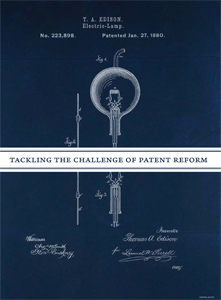
    Tackling the Challenge of Patent Reform
    Which is why Mr. Weiss' Report ("Tackling the Challenge of Patent Reform: Recommendations for the Obama administration and Congress"), authored as the result of a series of roundtable meetings of "expert stakeholders from a wide array of business, legal and academic disciplines," is a little disappointing.  The Report was published by the Center for American Progress and Science Progress and is timely, since the roundtable discussions were held just last October.  Perhaps because of the intentionally competing interests of the stakeholders involved, and the participation of patent academics, the Report does not hew to the realities of the patent system with the faithfulness Mr. Weiss himself evinces in the Report's introductory paragraphs.

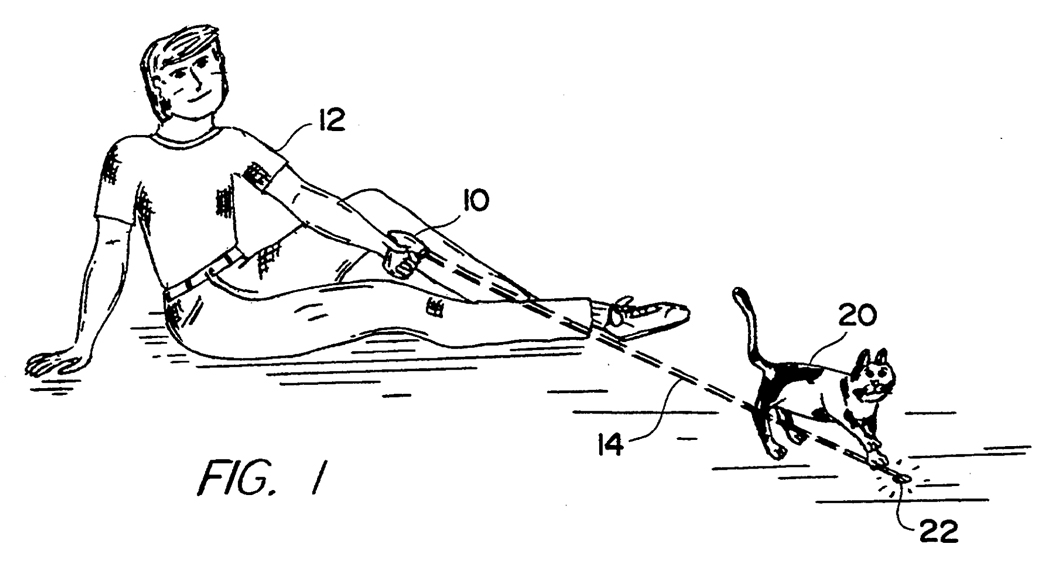
    For example, while the Report asserts that "the widespread characterization of the PTO as 'broken'" is an overstatement, in the next breath it states that there is "broad consensus today that the U.S. system for protecting intellectual property is burdened with too many patents of questionable quality and validity."  While properly articulating the current conventional wisdom, there is little evidence to back up the claim.  Generally, the patents that are mentioned in this regard are frivolous (methods for playing with cats or swinging on a swing), which are the Fig. 1 - Cat Patent
    patent equivalent of a vanity publication.  While déclassé compared with patents for more "serious" technologies, there is no good argument that the patent system is harmed in any way by their having been issued.  Other complaints about "bad" patents tend to be either philosophical (for opponents of human gene patents, for example) or political (by industries that would rather expropriate than license technology developed by others). 

    The Report also suffers from accepting the existence of the alphabet soup of government and other groups calling for patent reform as evidence that reform is needed ("where there's smoke, there's got to be fire").  But such uncritical acceptance ignores the potent political forces behind these various groups and reports, as well as ignoring the inability for any such group constituted to investigate whether reform is needed to conclude that it is not.  And the fact that Congress last performed a major rewrite of the patent statute almost 60 years ago disregards major changes in 1984, 1988, 1996, and 2000, all of which adapted U.S. patent law to international trends and treaties and changed in fundamental ways how patents are obtained and enforced.

    Turning to the recommendations, those directed towards the Patent Office are the most sound.  There are four:

    1.  Solidify the budget, and control revenues and expenses, including:

    • Creation of a fee-based fast-track system,
    • Demanding that a greater share of patent-processing fees be paid earlier in the examination process,
    • Increasing those fees that the PTO is authorized to set,
    • Retaining funds left over from prior years, and
    • Total and permanent halt to PTO fee diversion.

    2.  Hire and retain the best patent staff:

    • Make pay competitive,
    • Adjust production goals to be more realistic,
    • Improve the information infrastructure, including giving examiners access to "outside" experts, and
    • Developing objective measures of patent quality, including considering not only the frequency with which patents are improvidently granted, but also how frequently they are improvidently denied.

    3.  Improved communication between applicants and the Office:

    • Reverse Bush administration practices that limited communication and consultation with stakeholders,
    • Seek "early and extensive" input from the public on rules packages,
    • Offer better access to the public of PTO management and economic information, especially statistics relating to PTO performance, and
    • Open the Public Policy Advisory Committee meetings to the public and webcast them (two things the Office is doing for the first time this Friday; see PTO notice for more details).

    4.  Improve the information available to PTO staff:

    • Improve electronic information systems for prior art searching, to include trade publications, academic research journals and the like, and
    • Encourage "interested" third party "experts" to participate in programs like the "peer-to-patent" program, which the Report recommends be scaled up.

    USPTO Building Facade
    The Report also discusses the pros and cons of converting the Office to a government-owned corporation (like the Post Office), as a way to better compete with the private sector, but concludes that the Office can accomplish its objectives if kept "wholly" within the Federal government.

    Finally, the Report recommends that executive management and business skills may be more important for the new Director than legal skills.  What it doesn't say, and what is evident to anyone watching the many failures of the Rogan/Dudas administrations under the former presidency, is that the new Director should understand how the patent process works, to better understand how it is not working (insofar as it is not) and to appreciate the difference between changes that will improve U.S. patents and those that merely improve Office statistics or its image.

    As promising as these recommendations are, the Report then sets forth a series of recommendations that seem bizarre.  Citing the "significant threat posed by patent trolls to the integrity and stability of the patent system (a charge that might as well have been written, and may have been, by representatives from the Coalition for Patent Fairness), the Report recommends that the Patent Office should "initiate a study assessing various approaches to understanding and resolving the patent troll issue."  The possible "remedies" proposed include an "awarding of legal fees to successful defendants (a 'losers pay' rule); more strict adherence to Rule 11 requirements (which set the bar height for the filing of patent infringement suits) by the courts; and a requirement that all patent assignments and licenses be registered with the PTO, including ongoing declaration of assignments and licenses to and by the patent-holder's upward and downward affiliates."  The first two of these recommendations are outside the scope of the Patent Office and are entirely inappropriate; they also presuppose that a patent "troll" is imbued with lesser patent rights than a practicing entity, a proposition that has no basis in U.S. patent law.  (Indeed, all the Supreme Court's eBay decision changed in this regard is to require a court to decide whether the balance of the equities and the public interest was served by granting an injunction to a non-practicing entity;  it did not preclude NPEs from having an injunction granted under appropriate circumstances.)

    The Report contains a few additional recommendations that are more in keeping with its overall thoughtful and reasonable tone, including changing restriction/election practices to prevent inventions that require "the integrated use of many independent pieces" from being considered to be multiple inventions.  Worksharing and deferred examination are also considered as ways to reduce pendency.  But unfortunately, the Report adheres to discredited notions that continuations are an abuse of the system and recommends that they should be "studied" to determine "whether continuations as practiced today are in keeping with the public policy principles underpinning the patent system."  And it also seems to have missed recent reports that inter partes reexamination has become a robust tool, since the Report characterizes these proceedings as "seldom used and therefore ineffective."

    The Report recommends (albeit with much less thorough discussion) that Congress reconsider patent reform legislation, and specifically highlights changing the U.S. to a "first to file" system and "updating" the inequitable conduct doctrine.  With regard to inequitable conduct, the Report envisions concomitantly increasing the burden on applicants to provide the Patent Office with search results and other information on the relevant art, while at the same time protecting such disclosure from being characterized as inequitable conduct unless there was evidence of intentional failure to disclose the art.  Moreover, the inequitable conduct defense would be limited to those cases where at least one claim had been found invalid, presumably on the basis of such uncited prior art.  In addition, the Report recommends that such reform legislation provide avenues for the public to provide art, with commentary to the Office (analogous to "observations" that can be filed in the European Patent Office with regard to pending EPO applications).

    The Report also holds applicants accountable for some of the current perceived deficiencies in patent law.  Principal among these is what can kindly be termed applicant overreaching:  presenting claims that are broader than the underlying disclosure.  Of course, like beauty, the correspondence between claim scope and disclosure may be in the eye of the beholder; certainly, it is a question with sufficient complexity and political overtones that calls for restricting "exaggerated claims" may be the province of businesspeople wishing to practice a patented technology and looking for any opportunity to argue that their attempts at designing around are not expressly disclosed in a patent specification.  Just as important as preventing overreaching is the principle that a patentee should not have its patent right unduly proscribed so as to make patent protection less valuable than the patentee is entitled to expect.

    Finally, the Report notes with approval judicial action to "correct" the perceived "worst" abuses of the current patent regime, including the Supreme Court's decisions in eBay Inc. v. MercExchange, L.L.C.; Quanta Computer, Inc. v. LG Electronics, Inc.; MedImmune, Inc. v. Genentech, Inc.; and KSR Int'l Co. v. Teleflex Inc., as well as Federal Circuit decisions including SanDisk Corp. v. STMicroelectronics, Inc. and In re Bilski.  The Report also notes that procedural and jurisdictional decisions in the 5th Circuit, such as In re Volkswagen, may be correcting the "venue" problems addressed in the proposed legislation that failed in the last Congress.  But the Report accepts the IT industry's contentions that damages awards are out of line, citing the example of a patented semiconductor component and whether infringement damages should be calculated based on the price of the semiconductor component or the laptop of which it is a (crucial) part.

    Weiss, Rick
    "The time is ripe for positive change in the U.S. patent system," Mr. Weiss (at right) states in his conclusion.  Would that he had presented any compelling evidence that this assertion is actually so.  For a little historical perspective, consider the following:

    While we have focused attention on the appropriate standard to be applied by the courts, it must be remembered that the primary responsibility for sifting out unpatentable material lies in the Patent Office.  To await litigation is — for all practical purposes — to debilitate the patent system.  We have observed a notorious difference between the standards applied by the Patent Office and by the courts.  While many reasons can be adduced to explain the discrepancy, one may well be the free rein often exercised by Examiners in their use of the concept of "invention."  In this connection we note that the Patent Office is confronted with a most difficult task.  Almost 100,000 applications for patents are filed each year.  Of these, about 50,000 are granted and the backlog now runs well over 200,000.  1965 Annual Report of the Commissioner of Patents 13-14.  This is itself a compelling reason for the Commissioner to strictly adhere to the 1952 Act as interpreted here.  This would, we believe, not only expedite disposition but bring about a closer concurrence between administrative and judicial precedent.  n10

    n10  The President has appointed a Commission on the Patent System.  Executive Order No. 11215, 30 Fed. Reg. 4661 (April 10, 1965).  It is hoped that its studies may develop more efficient administrative procedures and techniques that will further expedite dispositions and at the same time insure the strict application of appropriate tests of patentability.

    This quote is taken from the Supreme Court's decision in Graham v. John Deere Co., from 1966.  It would be good for everyone, including Congress, to remember the adage plus ça change, plus c'est la même chose when assessing the pressing need for patent reform.

    For a discussion of other reports from the Science Progress Patent Reform 101 series, please see:
    • "Science Progress Article Addresses Global Patent Protection," January 28, 2009
    • "Science Progress Tackles Patent Reform," January 21, 2009
  •     By Donald Zuhn

    Last month, the Manufacturing Alliance on Patent Policy (MAPP) released a report that indicates that the apportionment of damages provisions found in prior Senate (S. 1145) and House (H.R. 1908) patent reform bills would have adverse effects on the U.S. economy.  In particular, the report concludes that an apportionment system of damages would decrease the value of U.S. patents by $34.4 billion, decrease the value of U.S. public companies by $38.4 billion, decrease research and development spending in the U.S. by $33.9 billion per year, and place 51,000 to 298,000 U.S. manufacturing jobs at risk (see "Manufacturing Alliance on Patent Policy: Apportionment of Damages Provision Will Have Adverse Effects").

    President Obama
    Earlier today, MAPP released a letter, signed by more than 130 non-pharma manufacturing companies, that the organization sent to President Obama.  In the letter, MAPP argues that "[s]trong protection of patents and other forms of intellectual property are essential to American prosperity, particularly during the current economic crisis — a time when we need to develop new and improved products to stimulate economic activity."  MAPP also argues in its letter to the President that the patent reform bills introduced in the Senate and passed by the House contained "a number of provisions [that] would have weakened rather than strengthened patent protection," and ultimately "could have harmed the competitiveness, investment and employment of [the manufacturing] sector."  With the 111th Congress poised to once again take up the patent reform debate, the letter reiterates MAPP's concerns regarding the issue and reaffirms the group's belief "that the prosperity of a few companies within two industries [i.e., information technology and financial services] should not come at the expense of a larger group of stakeholders."

    MAPP begins its letter by exposing the flawed justifications of patent reform proponents.  First, the group contends that there has been no explosion in patent litigation, since the percent of litigated patents has risen only 0.03% over the past fifteen years (increasing from 1.45% of issued patents in 1993 to 1.48% of issued patents in 2007).  Second, the group contends that there has been no explosion in patent damage awards, since the median patent damages award, when adjusted for inflation, has actually dropped over the past thirteen years (decreasing from $3.9 million from 1995-2000 to $3.8 million from 2001-2007).

    According to MAPP, the patent reform movement is led by a narrow slice of patent stakeholders having as its top goal the reduction of penalties for patent infringement through a change in the law of patent damages.  This change would elevate apportionment of damages above all other factors presently employed in determining patent damages awards.  MAPP argues that proponents of apportionment have "attempted to shift the blame in patent litigation from the infringer to the patent holder," with the former becoming "the victim of an infringed patent holder seeking too much in damages."  Asserting that the current patent damages system accomplishes exactly what it is intended to accomplish, MAPP "encourage[s] policy makers to reject the call for drastic changes to the law of patent damages."

    While MAPP concedes that there has been an explosion in the number of patent applications filed in recent years, the group sees this "as a good thing, representing increased innovation that is crucial for American prosperity."  MAPP's letter argues that "[i]t would be a terrible mistake to allow the increase in patent applications to become an excuse to undermine patent protections."  Instead of focusing on reform of U.S. patent law, MAPP therefore requests that President Obama focus on reforming operations at the USPTO.

    Image of President Obama:  Pete Souza, The Obama-Biden Transition Project, Wikipedia Commons, Creative Commons License

  •     By Christopher P. Singer

    USPTO Seal
    The U.S. Patent and Trademark Office sent out a series of e-Commerce Alerts on February 10, 2009, announcing that the existing pilot e-Office Action program will be made permanent and available as an option to all applicants beginning this March.  The USPTO has been maintaining the current pilot e-Office Action program for the past two years, and has gathered regular participant feedback in efforts to improve the program.

    As we have previously reported (see "USPTO Begins the 'e-Office Action' Pilot Program" and "Patent Office Announces Update to E-Office Action Pilot Program"), participants in the e-Office Action program no longer receive the typical hardcopy paper correspondence related to a patent application that is sent by U.S. mail.  The USPTO sends e-mail notifications to e-Office Action participants regarding new outgoing correspondence that are accessible in Private PAIR.  Through this electronic notification system, correspondence from the USPTO can arrive to applicants up to three days faster as compared to hardcopy correspondence sent by mail.

    Focarino, Margaret
    The USPTO sent out an initial e-Alert, signed by Acting Commissioner for Patents, Peggy Focarino, announcing the anticipated March rollout of the e-Office action program to all applicants.  Evidently, some confusion resulted from this e-Alert insofar as recipients were taking the announcement to mean that the e-Office Action program would require mandatory participation.  After several people contacted the USPTO, the Office sent out a subsequent e-Alert, signed by Don Levin, Program Manager of the e-Commerce Division, which clarified that (a) participation in the program is optional, and (b) Office Actions will be sent out by U.S. mail unless you choose to participate in the e-Office Action program.

    If you wish to learn more about participating in the e-Office Action program, the EBC asks that you send an e-mail with your questions or indicating your interest in the program to PAIR@uspto.gov.

  •     By Donald Zuhn

    Smith, Matthew
    Recently, we were contacted by Matthew Smith (at right), an associate in Foley & Lardner's Washington, DC office and an adjunct professor at the George Washington University Law School, who wanted to let us know about a treatise on inter partes reexamination that he had just completed.  Prof. Smith also wished to make the treatise available to Patent Docs readers at a very reasonable price (i.e., free); a copy of the treatise can be obtained here.  Prof. Smith mentioned that he would be interested in hearing what Patent Docs readers have to say about the treatise; comments can be sent to him at msmith@foley.com or masmith.work@gmail.com.

  •     By Suresh Pillai

    GeoPharma and Dr. Reddy's Resolve Patent Litigation Related to Claritin® Patents

    GeoPharma
    On January 20, 2009, GeoPharma, based in Largo, FL, announced the settlement of its Clarinex® (Desloratadine) ANDA patent litigation with Schering-Plough (based in Kenilworth, NJ) and Sepracor (based in Marlborough, MA) (see "Court Report," February 24, 2008).  On February 20, 2008, Sepracor and Schering filed suit against GeoPharma for infringement of U.S. Patent Nos. 6,100,274, 7,214,683, and 7,214,684.  Prior to this filing, GeoPharma had filed a Paragraph IV certification claiming that these patents were either invalid or had not been infringed upon.

    Schering-Plough (SP)
    The settlement allows GeoPharma to commercially launch its generic Desloratadine drug on July 1, 2012 (or earlier under certain conditions), with a six month marketing exclusivity.  Other specific terms and conditions of the settlement agreement have not been disclosed.  The agreement itself is subject to review by the United States Federal Trade Commission and the Department of Justice.

    Sepracor
    The GeoPharma settlement is but the most recent settlement of lawsuits covering the Clarinex® patents.  On December 23, 2008, Dr. Reddy's, based in Hyderabad, India, announced a settlement of its own ANDA patent litigation with Schering and Sepracor (see "Court Report," October 27, 2007).  This settlement resolves all pending patent infringement actions filed by Schering and Sepracor against Dr. Reddy's in the U.S. District Court for the District of New Jersey.  Under the terms of the agreement, Dr. Reddy's is allowed to manufacture and market generic versions of Clarinex-D®-12 Hour and Clarinex-D®-24 Hour products, with six months marketing exclusivity.  Dr. Reddy's also will receive marketing co-exclusivity for its generic version of Clarinex® 5 mg tablet for six months following the launch of the first generic version of that product.  The Dr. Reddy's
    agreement is subject to the review of the United States Federal Trade Commission and Department of Justice.  

    Roche Removes Patent from Boniva® Litigation

    Roche
    Last month, Roche announced that it was dropping one of the patents connected with its multi-party infringement suit, first filed in 2007, against companies manufacturing generic versions of the Roche drug Boniva®.  Subsequent to its initial lawsuit filings in 2007, the ongoing lawsuits were consolidated into a single case before U.S. District Court for the District of New Jersey.  Until this action, patents that were the subject of the lawsuit included U.S. Patent Nos. 6,294,196, 7,192,938, 7,410,957, and 4,927,814.

    GenPharm
    In this latest action by Roche, it agreed to drop litigation over the '196 patent with all eight of the defendant drug companies, a group that includes GenPharm, a Mylan subsidiary (see "Court Report," October 7, 2007).  In addition to dropping the patent from litigation, Roche granted GenPharm a covenant not to sue based on the pharmaceutical products already being manufactured by GenPharm.  The covenant does not cover future GenPharm products.  Roche continues to litigate the three remaining patents in suits against all eight defendant companies.

  •     By Donald Zuhn

    USPTO Seal
    Last month, in a notice published in the Federal Register, the U.S. Patent and Trademark Office announced that it would be holding a roundtable discussion regarding deferred examination on February 12th (see "USPTO Schedules Roundtable Discussion on Deferred Examination").  Today, the Patent Office provided additional details regarding the roundtable on its website.

    USPTO Building Facade
    The roundtable discussion, which is open to the public, will be held from 9 AM to 1 PM (Eastern time) in the Madison North Auditorium at the USPTO Headquarters, 600 Dulany Street, Alexandria, VA.  A webcast of the roundtable can be accessed at https://uspto.connectsolutions.com/thm021209/ (webcast attendees should log on using their first and last names).  An audiocast is also available at 1-800-988-9629 (pass-code: 5163535).

    The Patent Office has released the following agenda for the roundtable:

    • 9:00 – 9:05 AM — Opening remarks by Acting Under Secretary of Commerce for Intellectual Property and Acting Director of the USPTO John Doll
    • 9:05 – 9:15 AM — Introductions by roundtable moderator and participants
    • 9:15 – 11:45 AM — Moderated discussion among roundtable participants
    • 9:15 – 9:45 AM — Advantages and disadvantages of deferred examination
    • 9:45 – 10:15 AM — Impact of deferred examination on applicants/the public/competitors
    • 10:15 – 10:45 AM — Impact of deferred examination on the USPTO’s pendency/workload
    • 10:45 – 11:15 AM — Global impacts of deferred examination/Experiences with deferred examination in other countries
    • 11:15 – 11:45 AM — How deferred examination might work in the United States
    • 11:45 AM – 12:00 PM — Break
    • 12:00 – 12:50 PM — Questions and comments from the audience
    • 12:50 – 1:00 PM — Closing remarks by moderator and Acting Director Doll

    In today's announcement, the Patent Office also released a list of roundtable participants:

    Arti Rai – Elvin R. Latty Professor of Law, Duke University School of Law
    John Thomas – Professor of Law, Georgetown University Law Center
    Jeffrey Kushan – Partner, Sidley Austin LLP
    Stephen Kunin – Partner, Oblon, Spivak, McClelland, Maier & Newstadt
    Q. Todd Dickinson – Executive Director, American Intellectual Property Law Association (AIPLA)
    • Hans Sauer – Associate General Counsel, Intellectual Property, Biotechnology Industry Assocation (BIO)
    • Gordon Arnold – American Bar Association (ABA)
    • Ron Reardon – President, National Association of Patent Practitioners (NAPP)
    • Herb Wamsley – Executive Director, Intellectual Property Owners Association (IPO)
    • Brad Huther – U.S. Chamber of Commerce
    • Glen Katopish – Independent Inventor
    Carl Gulbrandsen – Managing Director, Wisconsin Alumni Research Foundation (WARF), representing university technology transfer
    • Manny Schecter – Associate General Counsel, Intellectual Property Law, IBM
    • Ken Patel – Associate General Counsel of Intellectual Properties Organization, Procter & Gamble
    • Dick Wilder – Associate General Counsel, Microsoft
    • Robert Budens – President, Patent Office Professional Association (POPA)
    Nancy Linck – Of Counsel, Rothwell, Figg, Ernst & Manbeck, former solicitor for the USPTO
    • Henry Hadad – Vice President & Associate General Counsel, Intellectual Property, Schering-Plough Co.
    Nicholas Godici – Executive Director, Birch, Stewart, Kolasch & Birch, LLP
    Peter Thurlow – New York IP Law Association (NYIPLA)
    Ron Katznelson – President, Bi-Level Technologies
    John Doll – Acting Under Secretary of Commerce for Intellectual Property & Acting Director, USPTO
    Margaret Focarino – Acting Commissioner for Patents, USPTO

    The roundtable will be moderated by John Whealan – Associate Dean for Intellectual Property Law Studies, The George Washington University Law School.

  •     By Donald Zuhn

    Shortly before leaving the U.S. Patent and Trademark Office, former Director Jon Dudas was served with three last complaints from patentees seeking additional Patent Term Adjustment (PTA) for their patents.  The three complaints bring the number of 35 U.S.C. § 154(b)(4)(A) actions to 14, involving 15 patentees and 21 separate patents (including Wyeth and Elan Pharma International Ltd., which secured a favorable decision against the Director with regard to two of their patents on September 30, 2008).

    The most recent additions to the growing list of patentees that have filed complaints under § 154(b)(4)(A) include:

    Bayer
    • Bayer Bioscience GmbH and Max-Planck-Gesellschaft zur Foderung der Wissnschaften eV of Berlin, Germany, which filed a complaint on January 15, 2009 asserting that the correct PTA for U.S. Patent No. 7,402,420 (which issued July 22, 2008) should be 667 days rather than the 259-day period determined by the Office (see complaint);

    Syntonix Pharmaceuticals
    • Syntonix Pharmaceuticals, Inc. of Waltham, MA, which filed a complaint on January 16, 2009 asserting that the correct PTA for U.S. Patent No. 7,404,956 (which issued July 29, 2008) should be 752 days rather than the 423-day period determined by the Office (see complaint); and

    Massachusetts General Hospital
    • The General Hospital Corporation of Boston, MA, which filed a complaint on January 16, 2009 asserting that the correct PTA for U.S. Patent No. 7,367,341 (which issued May 6, 2008) should be 515 days rather than the 214-day period determined by the Office (see complaint).

    As noted in our previous reports regarding complaints filed under § 154(b)(4)(A), this section specifies that "[a]n applicant dissatisfied with a [PTA] determination made by the Director . . . shall have remedy by a civil action against the Director filed in the United States District Court for the District of Columbia within 180 days after the grant of the patent."  Interestingly, General Hospital Corp. becomes the first patentee to seek additional PTA for a patent that issued more than 180 days prior to the filing of its complaint (the deadline for filing a complaint under § 154(b)(4)(A) for a patent issuing on May 6, 2008 was November 2, 2008).  (While Biogen and Molecular Insight Pharmaceuticals filed § 154(b)(4)(A) actions on December 1, 2008 — rather than November 30, 2008 — for patents that issued on June 3, 2008, November 30th was a Sunday, and therefore, their complaints were timely filed under Fed. R. Civ. P. 6(a)(3).)

    In its complaint, General Hospital Corp. contends that the complaint was timely filed in view of the doctrine of equitable tolling.  In particular, the complaint states that "[the District Court for the District of Columbia's] decision in Wyeth v. Dudas constituted a change in the law sufficient to invoke the doctrine of equitable tolling to allow for the filing of this complaint at this time."  The doctrine of equitable tolling preserves a plaintiff's claims when strict application of the statute of limitations would be inequitable.

    District Court for the District of Columbia Seal
    Patentees who were unable to file complaints within the 180-day deadline proscribed by § 154(b)(4)(A) will no doubt be watching with great interest to see whether the District Court permits General Hospital Corp. to move forward with its case despite missing the 180-day deadline by 76 days.  Whether the District Court gives any weight to the fact that Wyeth was decided 34 days before General Hospital Corp.'s 180-day deadline will also be of interest.  Of course, even if the District Court were to refuse to apply the doctrine of equitable tolling in this case, whether the doctrine could be applied in a case involving a patent issuing on or before April 1, 2008 (i.e., more than 180 days before the Court's decision in Wyeth v. Dudas) would remain an open question.  While awaiting the Court's decision in General Hospital Corp. v. Dudas, patentees seeking additional PTA would be wise to file their complaints within the 180-day deadline.

    Patent Docs will continue to monitor newly filed actions in the District Court for the District of Columbia in order to identify other patentees seeking corrected PTA determinations.  A recent search of the District Court for the District of Columbia case management electronic case filing system indicated that no complaints have yet been filed against Acting Director John Doll.

    For information regarding this topic, please see:
    • "Three More Patentees File § 154(b)(4)(A) Actions against Director Dudas," January 12, 2009
    • "Top Stories of 2008: #13 to #10," January 1, 2009
    • "More Patentees Follow Wyeth's Lead in Seeking Additional PTA," December 3, 2008
    • "USPTO to Appeal Wyeth v. Dudas," December 2, 2008
    • "Two Patentees Follow Wyeth's Lead in Seeking Additional PTA," November 12, 2008
    • "Wyeth v. Dudas (D.D.C. 2008)," October 16, 2008

  •     By Sherri Oslick

    Gavel_2About
    Court Report:  Each week we will report briefly on recently filed
    biotech and pharma cases, and a few interesting cases will be selected
    for periodic monitoring.


    Boehringer Ingelheim Vetmedica Inc. v. Merial Ltd. et al.

    3:09-cv-00212; filed February 4, 2009 in the District Court of Connecticut

    Declaratory judgment of license to practice, non-infringement and invalidity of U.S. Patent No. 6,224,882 ("Insect Cells or Fraction as Adjuvant for Antigens," issued May 1, 2001) based on Boehringer's manufacture and sale of its CircoFLEX® products (porcine circovirus vaccines).  View the complaint here.

    Monsanto Co. et al. v. Jones
    3:09-cv-00093; filed February 3, 2009 in the Southern District of Illinois

    Monsanto Co. et al. v. Collins
    4:09-cv-00195; filed February 3, 2009 in the Eastern District of Missouri

    Monsanto Co. et al. v. Pool
    4:09-cv-00185; filed February 2, 2009 in the Eastern District of Missouri

    The complaints in these cases are substantially identical.  Infringement of U.S. Patent Nos. 5,352,605 ("Chimeric Genes for Transforming Plant Cells Using Viral Promoters," issued October 4, 1994) and RE39,247 ("Glyphosate-tolerant 5-enolpyruvylshikimate-3-phosphate Synthases," issued August 22, 2006) based on defendants' use of soybean seed produced from earlier planted Roundup Ready® soybean seed.  View the Jones complaint here.

    Alcon Research, Ltd. et al. v. Apotex Inc. et al.
    1:09-cv-00102; filed February 2, 2009 in the Southern District of Indiana

    Infringement of U.S. Patent Nos. 5,641,805 ("Topical Ophthalmic Formulations for Treating Allergic Eye Diseases," issued June 24, 1997), 6,995,186 ("Olopatadine Formulations for Topical Administration," issued on February 7, 2006), and 7,402,609 (same title, issued July 22, 2008) following a Paragraph IV certification as part of Apotex's filing of an ANDA to manufacture a generic version of Alcon's Pataday® (olopatadine hydrochloride ophthalmic solution, used to treat ocular itching associated with allergic conjunctivitis).  View the complaint here.

    Alcon Research, Ltd. et al. v. Sandoz Inc.
    1:09-cv-00103; filed February 2, 2009 in the Southern District of Indiana

    Infringement of U.S. Patent Nos. 5,641,805 ("Topical Ophthalmic Formulations for Treating Allergic Eye Diseases," issued June 24, 1997) following a Paragraph IV certification as part of Sandoz's filing of an ANDA to manufacture a generic version of Alcon's Patanol® (olopatadine hydrochloride ophthalmic solution, used to treat ocular itching associated with allergic conjunctivitis).  View the complaint here.

    Cephalon Inc. et al. v. Barr Pharmaceuticals Inc. et al.
    1:09-cv-00074; filed January 30, 2009 in the District Court of Delaware

    Infringement of U.S. Patent Nos. 6,200,604 ("Sublingual Buccal Effervescent," issued March 13, 2001) and 6,974,590 (same title, issued December 13, 2005) following a Paragraph IV certification as part of Barr's filing of an amendment to its ANDA (adding additional dosage forms) to manufacture a generic version of Cephalon's Fentora® (fentanyl citrate buccal tablets, used to treat breakthrough pain in adult patients with cancer).  View the complaint here.

    Warner Chilcott Laboratories Ireland Ltd. et al. v. Actavis Elizabeth LLC et al.
    2:09-cv-00469; filed January 30, 2009 in the District Court of New Jersey

    Infringement of U.S. Patent No. 6,958,161 ("Modified Release Coated Drug Preparation," issued October 25, 2005) following a Paragraph IV certification as part of Actavis Elizabeths' filing of an ANDA to manufacture a generic version of Warner Chilcott's Doryx® (modified release doxycycline hyclate, used for adjunctive treatment of severe acne).  View the complaint here.

    Eli Lilly & Co. v. Invagen Pharmaceuticals, Inc.
    2:09-cv-00392; filed January 29, 2009 in the Eastern District of New York

    Infringement of U.S. Patent Nos. 6,458,811 ("Benzothiophenes Formulations Containing Same and Methods," issued October 1, 2002), 6,797,719 (same title, issued September 28, 2004), and 6,894,064 (same title, issued May 17, 2005) following a Paragraph IV certification as part of Invagen's filing of an ANDA to manufacture a generic version of Lilly's Evista® (raloxifene, used for the prevention and treatment of osteoporosis in postmenopausal women and for the reduction in risk of invasive breast cancer in postmenopausal women with osteoporosis and in postmenopausal women at high risk of invasive breast cancer).  View the complaint here.

    Boehringer Ingelheim International GmBH et al. v. Mylan Pharmeceuticals Inc. et al.
    2:09-cv-00366; filed January 26, 2009 in the District Court of New Jersey

    Infringement of U.S. Patent No. 4,886,812 ("Tetrahydro-Benzthiazoles, the Preparation Thereof and Their Use as Intermediate Products or as Pharmaceuticals," issued December 12, 1989) following a Paragraph IV certification as part of Mylan's filing of an ANDA to manufacture a generic version of Boehringer's Mirapex® (pramipexole dihydrochloride, used for the treatment of the signs and symptoms of idiopathic Parkinson's disease).  View the complaint here.

  • CalendarFebruary 12, 2009 – Patent Portfolio Strategies in the Post-KSR Environment (FX Conferences) – 11:30 AM to 12:30 PM (EST)

    February 12, 2009 – Stanford IP Litigation Clearinghouse: A Pioneering Database with "Life and Death" Statistics for Patent Litigators (Practising Law Institute) – 1:00-2:00 PM (EST)

    February 13, 2009 – Fourth Annual Workshop on Patent Claim Construction (Law Seminars International) – Chicago, IL

    February 14, 2009 – Compulsory Licensing and Other IP Controls (American Bar Association) – 7:30-9:00 AM (CST)

    February 17-18, 2009 – Pharma/Biotech Patent Litigation (C5) – Amsterdam, Netherlands

    February 23-24, 2009 – Pharmaceutical and Biotech Patent Claim Drafting*** (American Conference Institute) – Palo Alto, CA

    February 25-26, 2009 – Optimizing Patent Strategies at Patent Forum 2009 (World Research Group) – San Francisco, CA

    March 3, 2009 – Biotechnology, Chemical, and Pharmaceuticals (BCP) Technology Groups Customer Partnership Meeting (U.S. Patent & Trademark Office) – Alexandria, VA

    March 9-10, 2009 – Pharmaceutical and Biotech Patent Claim Drafting*** (American Conference Institute) – Research Triangle Park, NC

    March 13, 2009 – Current Strategies for Patent Claim Construction: Key Updates on Patent Prosecution and Litigation (Law Seminars International) – San Francisco, CA

    March 24, 2009 – 5th Annual Document Management, E-Discovery, and Litigation Readiness for Life Sciences (American Conference Institute) – New York, NY

    March 25-27, 2009 – Intellectual Property Counsels' Committee Spring Conference & Meeting (Biotechnology Industry Organization) – Phoenix, AZ

    March 30-31, 2009 – Pharmaceutical and Biotech Patent Claim Drafting*** (American Conference Institute) – New York, NY

    March 30-31, 2009 – FDA Boot Camp*** (American Conference Institute) – New York, NY

    June 22-27, 2009 – Innovation Week 2009 (U.S. Patent and Trademark Office) – Arlington, VA

    ***Patent Docs is a media partner of this conference or CLE