• USPTO Seal
    The biotechnology, chemical, and pharmaceuticals (BCP) technology groups at the U.S. Patent and Trademark Office will hold their next quarterly customer partnership meeting on March 3, 2009 at the USPTO's Madison Auditorium, 600 Dulany Street, Alexandria, VA.

    The schedule of topics for discussion include (all times Eastern):

    Morning Session

    • Greetings and Overview (10:00 – 10:15 AM):  John LeGuyader, Remy Yucel, Andrew Wang, Directors, Technology Center 1600

    • Patent Term Extension (10:15 – 11:00 AM):  Mary Till, Office of Patent Legal Administration

    • Chemical Unity of Invention Practice (11:00 – 11:45 AM): Julie Burke, QAS, TC 1600

    • Break (11:45 -12:00 AM)

    • 35 U.S.C. § 112, Paragraph 6 Training (12:00 – 12:45 PM):  Jean Witz, QAS, TC 1600

    • Lunch (12:00 – 1:15 PM)

    Afternoon Session

    • Topics in Viral Immunology (1:45 – 2:30 PM):  Bruce Campell, SPE, Art Unit 1648

    • Break (2:30 – 2:45 PM)

    • Transgenic Plants (2:45 – 3:30 PM):  Anne Marie Grunberg, SPE, Art Unit 1638/1661

    • Update on Gene Therapy and Transgenics (3:30 – 4:15 PM):  Peter Paras, SPE, Art Unit 1632

    • Closing Remarks/Discussion (4:15 – 4:30 PM):  John LeGuyader, Remy Yucel, Andrew Wang, Directors, Technology Center 1600

  • Biotechnology Industry Organization (BIO)
    The Biotechnology Industry Organization (BIO) will be holding its Intellectual Property Counsels' Committee (IPCC) Spring Conference & Meeting on March 25-27, 2009 in Phoenix, AZ.  The semi-annual IPCC conference will be open to the public for the first time ever.  The registration fee for the conference ranges from $400 for BIO members to $700 for non-members.  Those interested in registering can do so here or by faxing a registration form to 1-202-488-0650.  An agenda for the conference can be found here.  Additional information can be found at the conference website.

  • New York #2
    American Conference Institute (ACI) will be holding its 5th Annual Document Management, E-Discovery, and Litigation Readiness for Life Sciences conference from March 24, 2009 in New York, NY.  The conference will provide information on:

    • Implementing an effective litigation hold on ESI — and auditing compliance;
    • Gathering and monitoring e-data stored on multiple databases in decentralized locations;
    • Reviewing and producing proprietary and highly sensitive product and company information during discovery;
    • Cost-effectively managing outside counsel and vendor relationships during litigation; and
    • Responding to extensive production requests during government investigation.

    In particular, ACI's faculty will offer presentations on the following topics:

    656L09-NYC
    • Litigation and legislative update:  Review of current e-Discovery rules, lessons learned from recent high-profile e-Discovery disasters and litigation no-no's;
    • Managing decentralized data and reconciling disparate records management procedures:  Improving internal processes to reduce downstream e-Discovery risks and costs;
    • Evaluating, selecting and auditing outside counsel and vendors in a manner that will increase efficiency and reduce costs;
    • Best practices for filtering, reviewing and producing ESI and proprietary information during discovery;
    • Tips and techniques for minimizing costs and remaining within your budget during litigation;
    • Implementing an effective litigation hold on ESI:  Minimizing litigation risk while ensuring compliance;
    • Special e-Discovery issues and challenges encountered during complex life sciences Litigation; and
    • Avoiding ethical gray areas in life sciences e-Discovery.

    An additional pre-conference workshop, entitled "Life Science's Industry Guide to Record Retention and Compliance:  A Cost-Effective Guide to Achieving Efficient System Management," will be offered on March 23, 2009.  The workshop will present strategies for cost-effectively and efficiently managing internal and external resources when establishing and maintaining a litigation-friendly record retention protocol.

    ACI - American Conference Institute
    The agenda for the Document Management, E-Discovery, and Litigation Readiness for Life Sciences conference can be found here.  A complete brochure for this conference, including an agenda, list of speakers, and registration form can be downloaded here.

    The registration fee ranges from $1,195 (conference only) to $1,795 (conference and workshop).  Those interested in registering for the conference can do so here, by calling 1-888-224-2480, or by faxing a registration form to 1-877-927-1563.

  • San Francisco #1
    Law Seminars International (LSI) will be holding a one-day workshop on Current Strategies for Patent Claim Construction:  Key Updates on Patent Prosecution and Litigation on March 13, 2009 in San Francisco, CA.  The workshop will address:

    • The latest on managing patent drafting;
    • Case law overview on patent claim interpretation;
    • Judicial perspective on patent claim construction;
    • Electronic discovery and ethics;
    • Advantages and disadvantages of evidentiary hearings;
    • Successful summary judgment hearings;
    • The nuts and bolts of case management; and
    • Handling claim construction on appeal.

    In particular, LSI's faculty will offer presentations on the following topics:

    09CLAIMCA-1
    • The claim construction game:  Review of recent claim construction law;
    • Adapting to changes in the law:  Tips for successful claim and specification drafting today;
    • View from the bench;
    • Ethical issues in patent litigation;
    • The nuts and bolts of case strategy and management; and
    • Handling claim construction on appeal.

    The agenda for the Patent Claim Construction workshop can be found here.  A complete brochure for this workshop, including an agenda, list of speakers, and registration form can be downloaded here.

    Law Seminars International
    The registration fee is $447.50 for students and new employees, $695 for government employees, or $895 for all other attendees. Those interested in registering for the workshop can do so here, by calling 1-800-854-8009, or by faxing a registration form to 1-206-567-5058.

  •     By Kevin E. Noonan

    EXACT Sciences
    An astute reader has asked, regarding our post concerning EXACT Sciences' announcement of the issuance of U.S. Patent No. 7,485,420, whether the claims of the '420 patent would be invalid under the Federal Circuit's In re Bilski standard for patentable subject matter.  The independent claims of the '420 patent are:

    1.  A method for detecting the likelihood that a human patient has colon neoplasia, comprising:
        a)  obtaining a sample from a human patient; and
        b)  assaying said sample for the presence or absence of methylation within a nucleotide sequence selected from the group consisting of SEQ ID NOs: 40-45,
        wherein the presence of methylation within any one of said nucleotide sequence is indicative of the likelihood that the human patient has colon neoplasia.

    13.  A method for detecting the likelihood that a human subject has colon neoplasia, comprising detecting vimentin protein or nucleic acid expression level in a sample from the human subject, wherein reduced expression level of vimentin protein or nucleic acid relative to a control sample from a healthy subject is indicative of the likelihood that the human subject has colon neoplasia.

    17.  A method for monitoring over time colon neoplasia in a human subject, comprising:
        a)  detecting the methylation status of a vimentin nucleotide sequence selected from the group consisting of SEQ ID NOs: 40-45 in a sample from the human subject for a first time; and
        b)  detecting the methylation status of any one of said vimentin nucleotide sequence of step (a) in a sample from the same human subject at a later time;
        wherein absence of methylation in the vimentin nucleotide sequence taken at a later time and presence of methylation in the vimentin nucleotide sequence taken at the first time is indicative of regression of colon neoplasia; wherein presence of methylation in the vimentin nucleotide sequence taken at a later time and absence of methylation in the vimentin nucleotide sequence taken at the first time is indicative of progression of colon neoplasia.

    Federal Circuit Seal
    Since the Supreme Court has not yet spoken on the issue, the standard for patentability of process (method) claims is the one announced by the en banc Federal Circuit in Bilski:  for a process to be eligible for patenting (i.e., to be deemed patentable subject matter under 35 U.S.C. § 101), it must be claimed to include one or the other of these elements:  (1) it is tied to a particular machine or apparatus, or (2) it transforms a particular article into a different state or thing.

    The invention in Bilski was a method for hedging risk in commodities trading, subject matter seemingly far-removed from diagnostic claims such as EXACT's colorectal cancer detection method. 

    However, the Federal Circuit has had the occasion, since its Bilski decision, to consider the patentability of claims more similar to EXACT's claims than those invalidated in Bilski.  In Classen Immunotherapeutics, Inc. v. Biogen Idec, the CAFC affirmed a district court decision invalidating the claims in Classen's U.S. Patent No. 5,723,283:

    1.  A method of determining whether an immunization schedule affects the incidence or severity of a chronic immune-mediated disorder in a treatment group of mammals, relative to a control group of mammals, which comprises immunizing mammals in the treatment group of mammals with one or more doses of one or more immunogens, according to said immunization schedule, and comparing the incidence, prevalence, frequency or severity of said chronic immune-mediated disorder or the level of a marker of such a disorder, in the treatment group, with that in the control group.

    The Federal Circuit in Classen made short work of any analysis of how Bilski's patentability rubrics apply to Classen's claims:  the Court's decision read in its entirety:

    In light of our decision in In re Bilski, 545 F.3d 943 (Fed. Cir. 2008) (en banc), we affirm the district court's grant of summary judgment that these claims are invalid under 35 U.S.C. § 101.  Dr. Classen's claims are neither "tied to a particular machine or apparatus" nor do they "transform[] a particular article into a different state or thing."  Bilski, 545 F.3d at 954.  Therefore we affirm.
    LabCorp
    There are distinctions that can be drawn, of course, between Classen's claims and EXACT's claims, one of which is that the Classen claims are directed to an immunization schedule, and expressly recite that the results of the immunization procedure be "compared" between an experimental and a control group.  This "comparing" step implicates the deficiency found by three Supreme Court justices (Breyer, Souter, and Stevens) in their dissent from dismissal of the appeal in the Laboratory Corp. v. Metabolite Labs., Inc. (LabCorp) case.  There, the claim at issue read as follows:

    13.  A method for detecting a deficiency of cobalamin or folate in warm-blooded animals comprising the steps of:  assaying a body fluid for an elevated level of total homocysteine; and correlating an elevated level of total homocysteine in said body fluid with a deficiency of cobalamin or folate.

    In their dissent, the Justices opined:

    The researchers who obtained the present patent found that an elevated level of homocysteine in a warm-blooded animal is correlated with folate and cobalamin deficiencies.  As construed by the Federal Circuit, claim 13 provides those researchers with control over doctors' efforts to use that correlation to diagnose vitamin deficiencies in a patient.  Does the law permit such protection or does claim 13, in the circumstances, amount to an invalid effort to patent a "phenomenon of nature"?  I concede that the category of non-patentable "phenomena of nature," like the categories of "mental processes," and "abstract intellectual concepts," is not easy to define.  See Flook, supra, at 589 ("The line between a patentable 'process' and an unpatentable 'principle' is not always clear"); cf. Nichols, 45 F. 2d, at 122 ("[W]e are as aware as anyone that the line [between copyrighted material and non-copyrightable ideas], wherever it is drawn, will seem arbitrary").  After all, many a patentable invention rests upon its inventor's knowledge of natural phenomena; many "process" patents seek to make abstract intellectual concepts workably concrete; and all conscious human action involves a mental process.  See generally 1 Chisum §1.03, at 78–295.  Nor can one easily use such abstract categories directly to distinguish instances of likely beneficial, from likely harmful, forms of protection.  Cf. FTC, To Promote Innovation: The Proper Balance of Competition and Patent Law and Policy, ch. 3, p. 1 (Oct. 2003) (hereinafter FTC) (collecting evidence that "issues of fixed cost recovery, alternative appropriability mechanisms, and relationships between initial and follow-on innovation" vary by industry); Burk & Lemley, Policy Levers in Patent Law, 89 Va. L. Rev. 1575, 1577–1589 (2003) ("Recent evidence has demonstrated that this complex relationship [between patents and innovation] is . . . industry-specific at each stage of the patent process").

    But this case is not at the boundary.  It does not require us to consider the precise scope of the "natural phenomenon" doctrine or any other difficult issue.  In my view, claim 13 is invalid no matter how narrowly one reasonably interprets that doctrine.

                                                    *    *    *

    Even were I to assume (purely for argument's sake) that claim 13 meets certain general definitions of process patentability, however, it still fails the one at issue here:  the requirement that it not amount to a simple natural correlation, i.e., a "natural phenomenon."  See Flook, supra, at 588, n. 9 (even assuming patent for improved catalytic converter system meets broad statutory definition of patentable "process," it is invalid under natural phenomenon doctrine); Diehr, 450 U. S., at 184–185 (explaining that, even if patent meets all other requirements, it must meet the natural phenomena requirement as well).

    At most, respondents have simply described the natural law at issue in the abstract patent language of a "process."  But they cannot avoid the fact that the process is no more than an instruction to read some numbers in light of medical knowledge.  Cf. id., at 192 (warning against "allow[ing] a competent draftsman to evade the recognized limitations on the type of subject matter eligible for patent protection").  One might, of course, reduce the "process" to a series of steps, e.g., Step 1: gather data; Step 2: read a number; Step 3: compare the number with the norm; Step 4: act accordingly.  But one can reduce any process to a series of steps.  The question is what those steps embody.  And here, aside from the unpatented test, they embody only the correlation between homocysteine and vitamin deficiency that the researchers uncovered.  In my view, that correlation is an unpatentable "natural phenomenon," and I can find nothing in claim 13 that adds anything more of significance.

    Supreme Court Courtroom
    The Supreme Court remanded the LabCorp case without reaching a decision, and Chief Justice Roberts took no role in the decision to remand on the grounds that certiorari had been improvidently granted, so there is no way to know whether Justice Breyer's opinion in dissent is truly limited to the Justices who joined him in dissent.  Bilski has petitioned for certiorari, so the Court may address the propriety of the Federal Circuit's application of the Bilski formula to the Classen claims.   

    EXACT's claims avoid a direct recitation of the "buzzwords" like "compared" and "correlated," but that may not be enough:  after all, saying that the level of methylation in vimentin gene sequences is "reduced" poses the question "compared to what?" and therein may be the problem.  Of course, "comparison" is required in many claims that, prior to Bilski, would have been thought to be unambiguously patentable, for example, claim 1 of U.S. Patent No. 7,464,002:

    A diagnosis method for boiler degradation, comprising:  calculating a first thermal transmission rate from a difference in thermal quantity of gas or steam between an entrance and exit of a heat exchanger with respect to at least one heat exchanger constituting the boiler; calculating a second thermal transmission rate based upon a thermal conductivity rate of pipes and thermal conductivity transfer rate of steam and gas of the heat exchanger; comparing the first and second thermal transmission rates; and carrying out diagnosis of the progress of degradation, wherein the diagnosis is displayed on a display device, wherein the boiler is a heat recovery boiler for recovering heat from a gas turbine.

    The trivial answer is that this claim is directed at "diagnosing" a machine, and so fall under the "machine" prong of the test.  But a better reading of Bilski is that the method must be performed by a machine, not on a machine, and so that line of reasoning does not appear to be a valid distinction.  The level of uncertainty produced by the Federal Circuit in Bilski, encouraged or at least catalyzed by Justice Breyer's dissent in LabCorp, is the polar opposite to the avowed purpose of Congress in establishing this specialized appellate court, i.e., to bring greater certainty to patent law than had been achieved by the several regional circuit Courts of Appeal.  It is up to the Supreme Court (if it deigns to) to decide whether to overturn the Federal Circuit's mechanical, bright-line test for patentability in Bilski (which is frankly in direct conflict with the Supreme Court's own view of what is patentable enunciated in Diamond v. Chakrabarty), and thus to follow its decade-long pattern of imposing on the Federal Circuit its conception of the metes and bounds of U.S. Patent Law.

    For information regarding this or other related topics, please see:
    • "Patent Profile: EXACT Sciences Announces Issuance of Colorectal Cancer Screening Patent," February 4, 2009
    • "Classen Immunotherapies, Inc. v. Biogen Idec (Fed. Cir. 2008)," December 22, 2008
    • "Personalized medicine: A Patent Office Perspective," December 11, 2008
    • "The Relevance of In re Bilski to the Patentability of the Metabolite Claim," November 17, 2008

  •     By Donald Zuhn

    Kohl, Senator
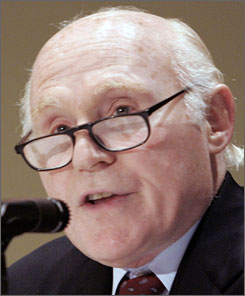
    Yesterday, Senator Herb Kohl (D-WI) (at right) introduced the Preserve Access to Affordable Generics Act (S. 369) in the Senate.  The bill, which is co-sponsored by Senators Sherrod Brown (D-OH), Richard Durbin (D-IL), Russell Feingold (D-WI), and Chuck Grassley (R-IA), is designed to prohibit brand name drug companies from compensating generic drug companies for delaying the entry of generic drugs into the market.

    Congress
    The bill states that "settlements which include a payment from a brand name manufacturer to a generic manufacturer to delay entry by generic drugs are anti-competitive and contrary to the interests of consumers," and therefore, clarifies the law "to prohibit payments from brand name to generic drug manufacturers with the purpose to prevent or delay the entry of competition from generic drugs."  In particular, the bill would add a new section to The Clayton Act (15 U.S.C. 12 et seq.) that would, in part, make it unlawful:

    [F]or any person, in connection with the sale of a drug product, to directly or indirectly be a party to any agreement resolving or settling a patent infringement claim in which–
    (1) an ANDA filer receives anything of value; and
    (2) the ANDA filer agrees not to research, develop, manufacture, market, or sell the ANDA product for any period of time.

    A generic drug company found to violate the provisions of the Act would forfeit its 180-day exclusivity period.

    When introducing the bill, Senator Kohl stated that it would prohibit so-called reverse payments, where a drug company holding a patent on a brand-name drug pays a generic drug company to forgo marketing its generic version of the drug.  Calling such "backroom" payments "one of the most egregious tactics used to keep generic competitors off the market," Senator Kohl noted that S. 369 would "make these anti-competitive, anti-consumer patent payoffs illegal."

    Federal Trade Commission (FTC) Seal
    According to the Wisconsin Senator, an antitrust case filed by the Federal Trade Commission and the State of California in the District Court for the Central District of California on Monday indicated the urgent need for the bill.  In that case, the plaintiffs allege that a 2006 settlement between Watson Pharmaceuticals, Par Pharmaceuticals, Paddock Laboratories and patentee Solvay Pharmaceuticals with respect to patent litigation involving AndroGel(R) 1% (testosterone gel) CIII is unlawful.  Senator Kohl called the "pay for delay" settlement in the above case "exactly the anti-consumer, anti-competition agreement that would be rendered illegal by our bill."

    S. 369 differs from the bill Senator Kohl introduced in the 110th Congress in that it gives the FTC the authority to exempt settlement agreements that the FTC determines would benefit consumers.

    For additional information regarding the California antitrust case, please see:
    • FTC press release
    Watson press release
    • Par press release
  •     By Sherri Oslick

    EXACT Sciences
    EXACT Sciences Corp. announced today the issuance of U.S. Patent No. 7,485,420, entitled "Methods and Compositions for Detecting Colon Cancers," which is directed toward the use of differentially methylated vimentin as a marker of colorectal cancer.  The patent is assigned to Case Western Reserve University, and licensed exclusively by EXACT Sciences.

    Vimentin
    The claims are directed to assays for assessing the likelihood of colorectal cancer in a patient through the detection of methylation within a vimentin nucleotide sequence.  The invention is based in part on the inventor's discovery that methylation of vimentin DNA is associated with the presence of colorectal cancer, or more specifically, that vimentin is differentially methylated in tissues from colon cancer and unmethylated in normal human tissues.  Claim 1 of the patent recites:

    1.  A method for detecting the likelihood that a human patient has colon neoplasia, comprising:
        a) obtaining a sample from a human patient; and
        b) assaying said sample for the presence or absence of methylation within a nucleotide sequence selected from the group consisting of SEQ ID NOs: 40-45, wherein the presence of methylation within any one of said nucleotide sequence is indicative of the likelihood that the human patient has colon neoplasia.  [SEQ ID NOs 40-45 are vimentin sequences.]

    This patent adds to EXACT's patent estate around non-invasive colorectal cancer screening.

  •     By Donald Zuhn

    USPTO Seal
    Last fall, the U.S. Patent and Trademark Office announced that it was seeking up to a thousand registered practitioners to help with a pilot test of the Office's new online Continuing Education for Practitioners (CEP) system (see "Patent Office Seeking Volunteers to Test Continuing Education System").  Yesterday, the Patent Office issued a statement announcing that the pilot program had been completed, and that the program was a success.

    Under the CEP program that the Patent Office is expected to eventually implement, practitioners will be presented with "brief educational materials" concerning "recent changes to USPTO rules and procedures, revised patent statutes, and helpful hints concerning practice before the USPTO," and will then be prompted to respond to "one or more verification questions."  For the pilot, participants were presented with three educational courses:  (1) USPTO examination guidelines following KSR Int'l Co. v. Teleflex, Inc.; (2) common errors in petitions practice; and (3) electronic signatures and powers of attorney.

    The Patent Office noted that 864 registered patent practitioners (652 attorneys and 212 agents) were accepted as volunteers to participate in the pilot program.  The program ran from September 3 to September 30, 2008 (applicants were initially given until September 23rd to complete the course, but the Office later extended the deadline to September 30th).  The Office indicated that 59.4% (513) of the volunteers completed their course by the initial deadline and 77.4% (669) completed their course by the extended deadline (88.4% of all volunteers at least accessed the online system during the pilot).  Patent agents achieved a greater completion rate (83.0%) than did attorneys (75.6%).

    Following the pilot, the Patent Office sought feedback from the volunteers.  In its announcement, the Office noted that 406 volunteers had provided written feedback, and that the Office intends to begin implementing improvements to the online system based on this feedback.  As for making the educational program permanent, the Office stated that final rules concerning CEP are "currently under consideration," and that further announcements would be made "as developments occur."

  •     By Kevin E. Noonan

    Watson & Crick
    Perhaps the most beautiful sentence in scientific literature is this one:

    It has not escaped our notice that the specific pairing we have postulated immediately suggests a possible copying mechanism for the genetic material.

    James Watson & Francis Crick, "Molecular Structure of Nucleic Acids; A Structure for Deoxyribose Nucleic Acid," Nature 171: 737-38 (April 25, 1953)

    It is beautiful because of its elegance, its understatement, and because it provokes in the reader recognition that one of the fundamental mysteries of life on this planet has been answered, with the tantalizing promise that the first two human beings who know that answer are preparing to tell the rest of us.  Perhaps this type of sentence can only be written by scientists who realize that they have made such a fundamental discovery that worries about careers, funding, and all the other cares of the working scientist are no longer their concern.

    Cover
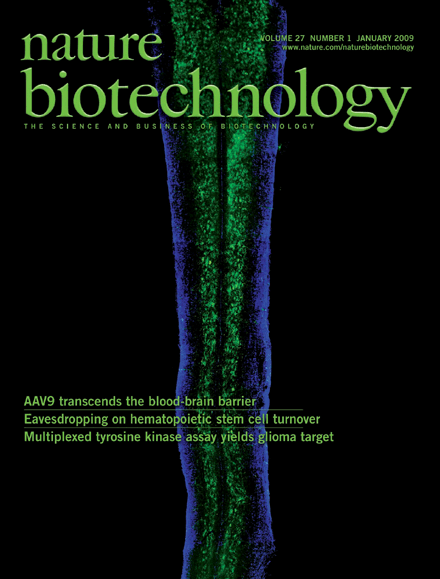
    Unfortunately, for more mundane topics there is a tendency to provoke, posture, or puff up the significance of the research, a tendency that sometimes results in mischaracterizing what has actually been found.  A recent example of this is a paper in the January issue of Nature Biotechnology by Zhen Lei, Rakhi Juneja, and Brian D. Wright entitled "Patents Versus Patenting: Implications of Intellectual Property Protection for Biological Research."  The paper purports to show that agricultural scientists believe that university patenting impedes the free flow of academic exchange and, as a consequence, retards their research.  Upon more careful reading, however, it is clear that the scientists are woefully misinformed about the difference between patents and "intellectual property," and that most of their responses are self-serving and reflect the cultural differences between academics and industry, with university technology transfer professionals being caught in the middle.

    First, the authors report the results of a qualitative research survey on the attitudes of agricultural scientists at several University of California campuses (Davis, Berkeley, and Riverside) and the University of Arizona.  The researchers, using a survey format that both asked for detailed narrative answers and for rankings on a 1-5 scale, asked the scientists about the effects on their research of university involvement in intellectual property protection.  The response rate was about 25%, which the authors say is typical in these types of studies.  The responder pool was characterized as follows:  56% of respondents undertook at least one project directed towards commercial application, 45% report some funding from industry (by comparison, 23-28% of biomedical scientists have industry funding), 40% disclosed inventions within the last 5 years, and 34% had applied for patents.  Of the last group, one third (13%) had research tool inventions and 9% had patented research tools themselves.

    The scientists believe, the authors summarize, that "contrary to the current consensus, proliferation of IP protection has a strongly negative effect on research in their disciplines" (which were limited to agricultural science).  Upon more detailed questioning, the authors report that the scientists attribute problems stemming from delays in their research or blocked access to research materials to university requirements for material transfer agreements (MTAs).  These, the scientists understand, are required by university administrators "to protect the value of IP rights held by their institution or to reduce their exposure to lawsuits by third parties."  

    The authors characterize as "standard policy" the requirement for MTAs between academic scientists who exchange research tools.  Surprisingly, formal agreements between universities account for only 21% of instances where respondents to the survey supplied research tools to colleagues (overall, the authors report that 48% of academic exchanges are covered by MTAs), and the respondents reported that they frequently ignored the university requirements for these agreements.  Even more surprisingly, about 25% of respondents reported sending research materials to industry without a formal MTA.  The researchers do not find the MTA process itself particularly difficult (a question on this point averages between 2.5-3.0 on a scale of 1 to 5, where 5 = very difficult), but this may be due to the fact that the scientists themselves do very little of the negotiating between universities.  Delay is the reported "dominant transaction cost" of MTAs (4 months from academia, 6 months from industry), and overall delays averaged about 9 months in the survey.

    More generally, the respondents reported on average that IP rights had a negative effect on their incentive to invent or conduct related research (2.7 average on a 1-5 scale), and a score of 2.3 versus 3.7 on whether the effects of IP protection on research is negative or positive, respectively.

    USPTO Building Facade
    Paradoxically, patents seem to have a much lower effect on research, primarily because the respondents reported that they routinely ignore the existence of patent protection for research tools.  Of the 85 respondents, 77 reported that they "have never checked whether a tool that they might need in planned research is patented," a result consistent with reports of only 5% of biomedical researchers who actively assess the patent landscape for research tools.  The reason, according to the scientists, is that most think they won't be sued (despite Madey v. Duke University), something the authors state is "consistent with the rational toleration of researcher infringement often reported by industry patent holders," citing Eisenberg, 2006, "Patents and Data-Sharing in Public Science," Indus. Corp. Change 15: 1013-31.  This casual attitude regarding patent infringement may explain why the respondents reported no reason to support efforts to provide them with a stronger research exemption (citing Cukier, 2006, "Navigating the Future(s) of Biotech Intellectual Property," Nat. Biotechnol. 24: 249-251).

    With regard to IP protection of research tools, the authors report that "[t]he type of research tools that are most frequently exchanged between researchers are quite distinct from those that researchers choose to patent.  Vectors, plasmids and gene clones are the most commonly exchanged unpatented tools, followed by seeds, germplasm and plant varieties.  Gene and protein sequences feature most frequently in invention disclosures, followed by seeds, germplasm and plant varieties."  In what is perhaps another surprise, despite their negative views on "IP protection," the respondents did not report encountering a "patent thicket" or an "anticommons effect" with regard to research tool patenting.

    One conclusion that can be readily drawn from the study is that both the authors and scientist respondents did not distinguish between patenting and MTAs, comingling them under the umbrella term "IP protection."  This is perhaps one reason why the results they report are contrary to a variety of reports from the U.S. (Walsh et al., 2003, "Science and the Law: Working Through the Patent Problem," Science 299: 1020; Walsh et al., 2005, "Science and Law: View from the Bench: Patents and Material Transfers," Science 309: 2002-03), Germany (Straus, 2002, Genetic Inventions, Intellectual Property Rights and Licensing Practices), Australia (Nicol et al., 2003, Patents and Medical Biotechnology: An Empirical Analysis of Issues Facing the Australian Industry, Centre for Law & Genetics, Occasional Paper 6) and Japan (Nagaoka, 2006, "An Empirical Analysis of Patenting and Licensing Practice of Research Tools from Three Perspectives," presented in OECD Conference in Research Use of Patented Inventions, Madrid) finding that "patent thickets" (Shapiro, 2001, "Navigating the Patent Thicket: Cross Licenses, Patent Pools, and Standard Setting," In: Innovation Policy and the Economy 1: 119-50) or the "anticommons" (Heller & Eisenberg, 1998, "Can Patents Deter Innovation? The Anticommons in Biomedical Research," Science 280: 698-701) rarely affect the research of academic scientists.  One explanation for this disparity is that there are many and significant differences between patent protection and MTAs.  For example, patents promote disclosure, whereas MTAs typically require continued confidentiality.  MTAs are exactly that:  agreements concerning the transfer of materials.  This means they are limited to tangible items that can be transferred and exclude intellectual property such as know-how, trade secrets, and methods (indeed, their tangibility makes them move akin to personal property than intellectual property).  Patent rights are exhausted by a sale (see "Quanta Computer, Inc. v. LG Electronics, Inc. (2008)"), whereas with MTAs, the granting institution typically retains ownership of the transferred materials and requires either their return or certification that they have been destroyed after the term of the agreement has expired.  In addition, while patents are governed by Federal statute, and are encumbered with protections against improper use (such as patent misuse and Walker Process antitrust concerns, for example), MTAs are private contracts between the parties, governed by state common law that typically permits any behavior not in direct contravention of criminal or other statutes (i.e., contract law is much more permissive than patent law).

    Thus, the actual conclusions of the paper are not related to the effects of patenting on academic research at all.  Rather, the authors report the subjective opinions of academic scientists on the delaying effects of institutionally-mandated MTAs on their research, something the authors report that the scientists consider puts "sand in the wheels" of an otherwise "lively system of interdisciplinary exchanges" of research materials.  No doubt the researcher respondents feel this way; however, the disparity between these results and the results of the academic reports that the authors admit are contrary should raise a few questions about the nature of the study and the elicited responses.  Academic researchers are focused, ambitious, egotistical people used to having their own way; these traits are perhaps necessary for them to have the temerity to believe they can make sense of a complex world, and are certainly an expected consequence for individuals having the intelligence of most academic researchers.  The law presents them with another, different set of rules and a logical structure that differs from science, having to take into account the unpredictable peculiarities of individual human beings.  Particularly in view of the power differential between tenured professors and the staff of most university technology transfer offices, the scientists frequently believe they can ignore the rules (see their disdain for potential patent infringement reported in the paper), or if "forced" to comply, believe that it must have a negative effect on the only thing they are interested in, getting their research done as timely as possible (since there are usually other researchers actively engaged in their area). 

    Indeed, rather than patenting or other intellectual property protections, academic competition may be the greatest impediment to the "free exchange" of research materials and information.  As the study authors admit, "[l]ong before the proliferation of IP protection, scientists were often secretive and uncooperative in their interaction with competitors (Hagstrom, 1974, Am. Sociol. Rev. 39: 1-18)," and "[r]espondents anticipate a moderate (3.2/5) degree of difficulty in obtaining tools or materials from rivals."

    But recognizing these nuances of the problem is not
    as "sexy" as pitching the results as being "contrary" to the "developing consensus" that patents have not had a negative effect on university research.  While the authors believe that there is an advantage to obtaining "direct" results of the effects of "IP protection" from the researchers, an uncritical acceptance of the responses, and a failure to appreciate the important distinctions between MTAs and patents (which promote disclosure and hence academic cooperation and the free flow of information) leads them to conclude that intellectual property protection impedes academic freedom and stifles research.  From the responses reported in this paper, nothing could be further from the truth, and failing to address or even simply report that does little to illuminate an important issue for U.S. patent policy.

  •     By Suresh Pillai

    Oxford Gene Technology Settles Legal Action with Bioarray Solutions

    Oxford Gene Technology (OGT)
    On January 21, 2009, Oxford, UK-based Oxford Gene Technology (OGT) announced a settlement of the patent infringement lawsuit OGT filed against BioArray Solutions, Ltd., a subsidiary of Immucor, a U.S. corporation based in Norcross, Georgia (see "Court Report," June 1, 2008).  OGT filed the lawsuit in May 2008 for the alleged infringement of U.S. Patent Nos. 6,307,039; 6,770,751; and 7,192,707.  These patents covered the use of microarrays for the detection of DNA sequence variations such as single nucleotide polymorphisms or variable-length tandem repeat regions.  Because of the settlement, BioArray now has a license for the patents that had been in dispute; this license extends through the patents' lifetimes.

    Warner Chilcott and Watson Pharmaceuticals Resolve Patent Litigation Related to Loestrin® 24 and Femcon® Fe

    Warner Chilcott
    On January 12, 2009, Rockaway, NJ-based Warner Chilcott announced that it had entered into licensing agreements with Watson Pharmaceuticals to cover Watson's use of two Warner Chilcott oral contraceptives, Loestrin® 24 and Femcon® Fe.  These agreements are part of a resolution of pending patent litigation involving the alleged infringement of Warner Chilcott's patents by Watson Pharmaceuticals (see "Court Report," October 7, 2007).  The agreement provides Watson Pharmaceuticals with a non-exclusive license that permits Watson to market generic equivalents of the disputed products.  This also allows Watson to enter the market with a generic version of Femcon® Fe before Teva Pharmaceuticals Industries introduces its own generic version.

    Watson Pharmaceuticals
    A separate agreement, also part of the settlement, provides for Watson's co-promotion of Warner-Chilcott's drug Femring®.  Under the agreement, Watson's direct pharmaceutical sales force will promote Femring® to obstetricians and gynecologists in exchange for both fee-based compensation and a portion of the net sales of Femring® for the duration of the agreement.

    In a third licensing and supply agreement, Watson has received an exclusive license to market and sell a new oral contraceptive product, designated WC3026, that is currently under development by Warner Chilcott.  In exchange for providing the product exclusively to Watson on a cost plus margin basis, Watson has agreed to pay royalties on the product based on product net sales.


    PDL BioPharma and Alexion Pharma Resolve Patent Dispute

    PDL BioPharma
    Incline Village, NV-based PDL BioPharma and Chesire, CT-based Alexion Pharma have resolved their patent dispute by entering into a definitive licensing and settlement agreement covering all disputed patents and all legal disputes related to Soliris, Alexion's humanized antibody (see "Court Report," May 26, 2007).  The agreement grants Alexion a license under certain claims within the disputed patent portfolio as well as a blanket covenant not to sue covering other claims in the portfolio.

    Alexion Pharmaceuticals
    As part of the agreement, Alexion has agreed to pay PDL a one time consideration of $25 million.  The licensing agreement also provides Alexion with the future right to take a royalty-bearing license to commercialize additional Alexion antibodies that may be covered by the patents in suit.  Under this future right provision, PDL would be entitled to an additional royalty of 4% of net sales of these future products.  Alexion has also confirmed that the patents in suit are valid and that the Alexion product, Soliris, used technology covered by the patents.  Finally, Alexion is forbidden from challenging the validity of the patents and assisting others in challenging the validity of the PDL patents.