•     By Christopher P. Singer

    EPO-EPC
    Recently, the European Patent Office (EPO) published a notice on its website announcing a new fee schedule that will become effective on April 1, 2009.  A complete description of the revised fees can be found here.  This schedule will be applicable for all EP applications, including divisional and new applications, that are filed on or after April 1, 2009.  Several of the notable changes relate to fees for excess claims, application size, and country designation.

    Claims Fee

    Currently, applicants get 15 claims at no additional cost (beyond the filing and examination fees), and pay 200 Euro for each claim beyond the first 15 claims.  Under the new fee schedule, the same claims fees apply up to the 50th claim, and every claim beyond 50 will incur a new escalated charge of 500 Euro per claim.  Patent Docs first reported on the fee increase last year (see "New Excess Claim Fees for EP Applications"), and shortly thereafter, presented some strategies for dealing with the new claims fees (see "Dealing with the EPO's New Excess Claims Fees").

    Application Size Fee

    An additional application size fee will be introduced for applications containing more than 35 pages, at a rate of 12 Euro per page.  Application pages that are considered in the total page calculation include the description, claims, drawings and (1 page) abstract.  This fee is due within one month from the filing date of the application.  Previously, the EPO charged a similar excess page fee for applications over 35 pages in length at the time of printing the granted patent.  The EPO will no longer charge fees for excess pages at the time of printing the granted patent.

    Designation Fee

    The new fee schedule simplifies the prior designation fees for entering the various contracting states of the EPC by charging a flat designation fee of 500 Euro, which covers the designation of all contracting states.  Currently, the designation fee is 85 Euro per country, up to a maximum fee of 595 Euro (i.e., all designated contracting states after the seventh incur no additional cost).

    In light of these changes to the fee structure, applicants may wish to file European applications prior to April 1, 2009, if they intend to designate five or fewer contracting states, or if the application contains more than 50 claims or more than 35 pages.

  •     By Kevin E. Noonan

    U.S. Constitution - Preamble
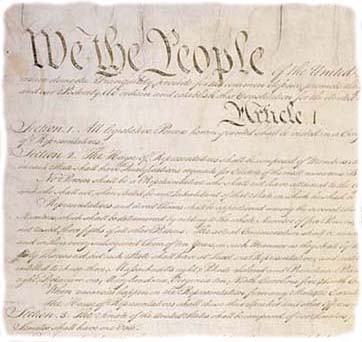
    Congress has the power, under Article I of the U.S. Constitution, to grant patents "to promote the progress of Science and the Useful Arts."  The value of patenting to the public is disclosure –- the raw material that drives progress is full disclosure of an invention in a patent specification that satisfies 35 U.S.C. § 112, 1st paragraph.  In this way, the public will be able to practice the invention throughout its full scope once the patentee's exclusionary power has expired (a maximum term of 20 years from filing, with shorter terms for patents that expire 4, 8, or 12 years after grant for failure to pay maintenance fees).

    But for patentees, and their assignees, the value of patents is to spur investment, so that the invention can be commercialized and the exclusionary grant can have economic value.  This value has always been one of the drivers of commercial biotechnology, from the first nascent biotechnology companies in the early 1980s, some of which survived (Amgen and Genentech) and some of which did not (Biotechnica International and Genetics Institute).

    The Scientist.com
    This value is likely to come to the fore once again if the prognostications of Stephanie Marrus, writing in the latest issue of The Scientist, are true (see "How to save biotech: What the industry needs is not a bailout, but some sensible policies"; free registration required).  As Ms. Marrus says in the first sentence of her piece, "[b]iotech is in trouble, again."  The evidence:  about one third of the 370 U.S. public biotechnology companies have less than six months in cash to support operating expenses, according to the Biotechnology Industry Organization.  This is a 90% increase in the number of companies that were this cash-strapped two years ago.  In addition, BIO estimates that 40% of private biotechnology companies have less than one-year's worth in cash requirements.

    Part of the problem, of course, is that the source of investment for many biotechnology companies –- venture capitalists –- have more important things, like their own survival, to worry about, and as a result they have been either "hoarding cash or closing their doors," according to Ms. Marrus.  Moreover, Big Pharma has become sophisticated enough, and as affected by the poor economy and their own pipeline and other woes (see "Predictions Dire for U.S. Pharmaceutical Industry," August 8, 2008) to be more discriminating in their acquisitions.  The result, as noted by Ms. Marrus, is that "the companies that most need to be saved are the least likely to be bought."  And the expected consequences of this situation are bankruptcies, layoffs of research personnel, cancellations of clinical trials, and "sell outs."

    Under these circumstances, Ms. Marrus has the following suggestions for intervention:

    • "FDA:  Appoint a respected leader for the FDA and resource the agency properly.  Do not go overboard with control in the post-Vioxx era, thereby preventing life saving drugs from coming to market.  Let informed patients choose — sick people without good options are willing to take some risk."

    • "Price controls:  Do not make the mistake of interfering with free market pricing mechanisms.  If a drug is overpriced relative to its efficacy, it will not sell.  Setting a ceiling or instituting other price controls will only serve to insure that new drugs are not developed.  Industry must see an economic return to invest in highly risky drug development or it will opt out."

    • "Intellectual property:  Intellectual property protection is the lifeblood of the industry, and the reason investors will fund companies without revenue.  Set policies to enhance and extend protection, not dilute it.  Do not weaken the predictability, value and enforceability of patents such as provisions of the Patent Reform Act of 2007, which made it through the House but thankfully stalled in the Senate last year."

    • "Funding sources:  Increase NIH funding so that fledgling companies have a pre-venture capital source of funds.  [NOTE:  NIH will receive $10 billion from the economic stimulus bill signed into law by President Obama earlier today.]  NIH funding has remained stagnant for a number of years as costs continue to rise.  Consider the national venture capital fund model used in other countries to provide financing during the "Valley of Death," the period when companies are engaged in translational research to bridge academe to industry and not yet fundable by venture capital."

    These are all in lieu of a financial bailout which is not forthcoming (although Ms. Marrus remarks that companies involved in developing lifesaving drugs are just as deserving as Detroit automakers or other proposed recipients).  Reasons for this, according to Ms. Marrus, are that many biotechnology companies do not have sufficiently-developed commercial goals or products to attract anything but speculative investment (she calls these companies little more than "science projects").  And while there may be creative ways for such companies to identify merger partners with complementary technologies, Ms. Marrus contends that management has "a vested interest in keeping their company intact to the detriment of their shareholders" and gets in the way of sound(er) business practices.  "Some companies should continue life only as part of a merged entity.  Some companies should sell their assets.  Other companies may have to bite the bullet and shut their doors.  Management needs to act responsibly for the shareholders even if it means their jobs will end," she writes.

    Biotechnology is considered to be the future because it is believed to be the engine that will drive future new drug development as well as a better understanding of the molecular basis of disease.  It is commonly understood by ecologists and evolutionary biologists that extinction of a species may have the consequence that some unappreciated property or beneficial product will be unavailable in future, perhaps to the detriment of humans and, more broadly, the planet.  It is also recognized that sometimes in nature extinction occurs by chance, that is by (relatively) short-term perturbations of climate or other variables that the species cannot survive.  It would be tragic if the current economic disruptions "killed off" a company with the combination of researchers, technology and management that could provide a future life-saving drug because we did not have the foresight to provide the conditions in which it could endure.

  •     By Donald Zuhn

    NVCA
    In December, the National Venture Capital Association (NVCA), a trade association representing the U.S. venture capital industry, issued its forecast for venture investment in the coming year, predicting that most sectors would see a continued slowdown in investment in 2009 (see "NVCA Predicts Another Slow Year for Venture-backed Businesses in 2009").  If there was a bright spot in the NVCA's forecast (which was based on a survey of 400 venture capitalists), it was that 25% of those surveyed predicted that venture investment in biotechnology would increase, and 33% believed biotech funding would stay flat in 2009.  The news, however, was much worse for other industry sectors, as 60-79% of respondents believed venture funding would drop in 2009.

    PricewaterhouseCoopers (PWC)
    Last month, the NVCA released the results of a new study, conducted with PriceWaterhouseCoopers and Thomson Reuters, which indicates that venture capitalists invested $28.3 billion in 2008, marking the first yearly decline of total investments since 2003.  Fourth quarter investments, which totaled $5.4 billion, were the lowest amount invested since the first quarter of 2005.  NVCA President Mark Heesen stated that the fourth quarter decline in investment funding was not unexpected in view of the recession, and noted that "[v]enture capitalists are being cautious with their dollars which, in this environment, is the right strategy."  An increase in seed and early stage investment, which was at a eight-year high, led Mr. Heesen to conclude that "venture capitalists are continuing to fund very young companies, giving credence to the philosophy that an economic downturn is a time ripe with opportunity."  Tracy Lefteroff, global managing partner of the venture capital practice at
    PricewaterhouseCoopers, noted that while investment funding declined for the first time in five years, the 2008 total still marked the fifth highest amount of funding in the past fourteen years.  She added that "[t]he silver lining is that history has proven that true innovation can surface under very challenging circumstances."

    Thomson Reuters
    With respect to the life sciences sector (biotechnology and medical devices), the NVCA study showed a 15% drop in total investment last year (from $9.3 billion in 2007 to $8.0 billion in 2008).  Despite this drop in investment dollars, the number of deals dropped by only 3% (from 883 in 2007 to 853 in 2008).  However, in terms of dollars and deals, the fourth quarter saw more severe drops of 33% and 22%, respectively.  Notwithstanding the bad news, the life sciences sector continued to lead all other sectors, collecting 28% of total venture investment.

    Biotechnology Industry Organization (BIO)
    In addition to the NVCA study, the Biotechnology Industry Organization (BIO) issued a statement earlier this month regarding a survey the biotech trade group conducted with Thomson Reuters.  According to the BIO survey, which was released during the 11th Annual BIO CEO & Investor Conference, the biotech industry is expected to rebound and outperform healthcare and the rest of the market this year.  Investors surveyed in the BIO study predict high merger and acquisition activity in 2009, with major pharmaceutical companies acquiring biotech companies of all sizes and large biotech companies acquiring smaller biotech companies.  More importantly, 70% of survey participants expect biotech to outperform the rest of the market in 2009.  In addition, 87% of investors surveyed expect biotech to rebound by at least 2010, with 57% predicting a rebound by the end of this year.  BIO intends to release the full study at the end of March.

  •     By Donald Zuhn

    USPTO Seal
    Last week, the U.S. Patent and Trademark Office hosted a roundtable discussion on deferred examination.  The roundtable, which lasted about four hours, brought together two dozen participants, representing a variety of industries and organizations (as well as positions on the issue), to discuss the advantages and disadvantages of implementing a deferred examination system in the U.S.; the impact such a system would have on applicants, their competitors, the public, and the USPTO; and how such a system could (or should) be implemented.  Roundtable participants included:

    • Gordon Arnold – American Bar Association (ABA)
    • Robert Budens – President, Patent Office Professional Association (POPA)
    Q. Todd Dickinson – Executive Director, American Intellectual Property Law Association (AIPLA)
    John Doll – Acting Under Secretary of Commerce for Intellectual Property & Acting Director, USPTO
    Nicholas Godici – Executive Director, Birch, Stewart, Kolasch & Birch, LLP
    Carl Gulbrandsen – Managing Director, Wisconsin Alumni Research Foundation (WARF), representing university technology transfer
    • Henry Hadad – Vice President & Associate General Counsel, Intellectual Property, Schering-Plough Co.
    • Alan Hammond – Chief Intellectual Property Counsel, Life Technologies
    • Brad Huther – U.S. Chamber of Commerce
    • Glen Katopish – Independent Inventor
    Ron Katznelson – President, Bi-Level Technologies
    Stephen Kunin – Partner, Oblon, Spivak, McClelland, Maier & Newstadt
    Jeffrey Kushan – Partner, Sidley Austin LLP
    Nancy Linck – Of Counsel, Rothwell, Figg, Ernst & Manbeck, former solicitor for the USPTO
    John Love – the Deputy Commissioner for Patent Examination Policy for the USPTO
    • Ken Patel – Associate General Counsel of Intellectual Properties Organization, Procter & Gamble
    Arti Rai – Elvin R. Latty Professor of Law, Duke University School of Law
    • Hans Sauer – Associate General Counsel, Intellectual Property, Biotechnology Industry Association (BIO)
    • Manny Schecter – Associate General Counsel, Intellectual Property Law, IBM
    John Thomas – Professor of Law, Georgetown University Law Center
    Peter Thurlow – New York IP Law Association (NYIPLA)
    • Herb Wamsley – Executive Director, Intellectual Property Owners Association (IPO)
    John Whealan (roundtable moderator) – Associate Dean for Intellectual Property Law Studies, The George Washington University Law School
    • Dick Wilder – Associate General Counsel, Microsoft

    As the roundtable progressed, and each participant laid out his or her own case, most of the participants began to separate into two readily discernable camps:  those who favored implementing a deferred examination (or at least believed that the topic warranted serious consideration) and those who maintained a longstanding opposition to the concept (or were only lukewarm at best about such a system being introduced in the U.S.).  Last week, the comments of the five roundtable participants who oppose deferred examination were considered (see "Patent Office Hosts Roundtable on Deferred Examination: The Opposition").  Today's post focuses on the comments of deferred examination proponents, as well as those participants who did not take a stand on the issue.

    Among the thirteen roundtable participants who supported (or were at least minimally receptive to) a deferred examination system were Nicholas Godici, Carl Gulbrandsen, Henry Hadad, Alan Hammond, Ron Katznelson, Jeffrey Kushan, Nancy Linck, John Love, Ken Patel, Hans Sauer, Manny Schecter, Peter Thurlow, and John Whealan.

    Godici, Nicholas
    Nicholas Godici (at right), the Executive Director for Birch, Stewart, Kolasch & Birch, LLP, advised proponents of deferred examination to not "fall in love" with the concept because it would save them money since it probably would not.  He also believed the USPTO would have to raise examination fees under a deferred examination scheme in order to offset the loss of examination fees for deferred applications that were eventually dropped.  While Mr. Godici (like Mr. Patel) did not appear to be a true proponent of deferred examination, he did state that if the USPTO could produce modeling indicating that deferred examination would lead to an 18-month pendency, such a system would be "attractive."

    Gulbrandsen, Carl
    Carl Gulbrandsen (at left), the Managing Director for the Wisconsin Alumni Research Foundation (WARF), noted that WARF did not pursue 10-20% of its provisional applications under the current system.  He predicted that if a deferred examination system were implemented in the U.S., the percent of applications dropped by WARF would go up, leading to cost savings for the Foundation.

    Schering-Plough (SP)
    Henry Hadad, the Vice President & Associate General Counsel of Intellectual Property for Schering-Plough Co., asserted that while the U.S. already had de facto deferred examination via provisional and PCT applications, a true deferred examination system would be a lot more efficient.

    Life Technologies
    Alan Hammond, Chief Intellectual Property Counsel for Life Technologies, asserted that deferred examination was a "practical solution" that should be pursued, and stated that he was "very positive" about deferred examination.  Mr. Hammond also contended that if "[deferred examination] is working elsewhere, it can work here."
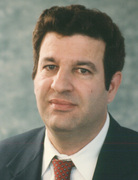
    Katznelson, Ron
    Ron Katznelson (at right), the President of Bi-Level Technologies, presented some of the strongest arguments in favor of deferred examination.  First, he predicted that the implementation of a deferred examination system would result in substantial cost savings to the USPTO.  Dr. Katznelson also asserted that such a system would benefit applicants by moving more important applications up in the queue to replace applications that were deferred, many of which would ultimately be dropped altogether.  He challenged opponents of deferred examination to produce a study showing that such a system would increase application pendency, noting that he was unaware of any such study.  In addition, he argued that deferred examination would make the examination process more efficient as applicants presented more focused claim sets to the Office.  Dr. Katznelson thought deferred examination could be implemented without Congressional intervention, noting that the USPTO had obtained a separation of basic, search, and examination fees in 2003 by representing to Congress that the division of fees was needed for deferred examination, which was on its way.  He also argued that the USPTO should act more like a business, and try to generate a better product, namely a patent that "lives longer" (i.e., that is not dropped during the maintenance fee stage when the USPTO stands to collect over $7,500 per patent).  With respect to demands that deferred examination produce an 18-month pendency, Dr. Katznelson contended that the 18-month pendency period was a red herring, and that the true measure of success should be pendency stability.  He argued that deferred examination should not be kept hostage to the goal of 18-month pendency.  With regard to the specifics of a deferred examination system, Dr. Katznelson preferred a three-year deferral period, and a system in which third-party requesters had to pay for examination — but could submit art (since a third-party willing to pay for someone else's examination would probably have good art). 
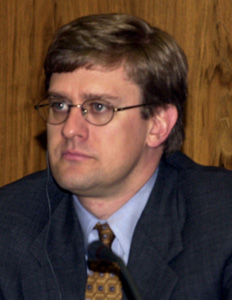
    Kushan, Jeffrey
    Jeffrey Kushan (at left), a Partner with Sidley Austin LLP, told the roundtable that the U.S. needed a system in which important applications moved to the head of the queue, leading to quicker issuance of important patents.  He stated that the fundamental driver in favor of a deferred examination system is that it would "eliminate the need to examine applications that shouldn't be examined."

    Linck, Nancy
    Nancy Linck (at right), Of Counsel with Rothwell, Figg, Ernst & Manbeck, also offered some strong arguments in favor of deferred examination.  Ms. Linck noted that while USPTO solicitor in 1998, she wrote a paper advocating on behalf of deferred examination, and that her views had not really changed.  She also argued that no one had proposed any other solutions or alternatives for reducing the backlog that had "a prayer of working" (noting that the Office had tried raising fees and increasing the size of the examining corps without halting the rising backlog).  Ms. Linck agreed that proponents of deferred examination should not look to Congress to enact a system, reminding the roundtable that Congress took nine years to craft inter partes reexamination legislation.  She also agreed with those who said the USPTO would not be able to implement a deferred examination system tomorrow, but suggested that proponents "shoot for the day after tomorrow."

    Love, John
    John Love (at left), the Deputy Commissioner for Patent Examination Policy for the USPTO, asserted that deferred examination would yield benefits other than a reduction in the application backlog, including efficiency gains (since the Office would need to examine fewer cases) and the issuance of higher quality patents.

    P&G
    Ken Patel, the Associate General Counsel of Intellectual Properties Organization for Procter & Gamble, argued that allowing applicants to defer examination for up to seven years would be very bad, since such a system would lead to an increase in "blue sky" filings.  He stated that such a system would force companies like P&G, which would not otherwise file such applications, to follow suit.  Mr. Patel also noted that P&G had observed no real benefit from China's deferred examination system, as P&G had to just "sit and wait" for examination, and could not afford to take every application through accelerated examination.  He feared that the same thing might happen in the U.S. if a deferred examination systen was implemented.  He recommended that if the USPTO were to get serious about deferred examination, it should study Japan's system (even though Mr. Patel did not speak highly of P&G's experiences with deferred examination in Japan).  Notwithstanding the above, however, Mr. Patel (like Mr. Godici) would support deferred examination if it could lead to an 18-month application pendency.

    Biotechnology Industry Organization (BIO)
    Hans Sauer, the Associate General Counsel of Intellectual Property for the Biotechnology Industry Association (BIO), noted that BIO members defer examination wherever that option is offered.  He also noted that BIO members were no more dissatisfied with the operations of foreign offices offering deferred examination than they were with the USPTO.  Dr. Sauer pointed out that while BIO members had two objections to deferred examination — uncertainty and surrendering the longstanding goal to achieve an 18-month pendency — the benefits of deferred examination outweighed the disadvantages.  As a result, BIO supported further exploration of the concept.  Dr. Sauer also reminded roundtable participants that nine of the United States' ten biggest trading partners have a deferred examination system, and argued that by not having a deferred examination system, the U.S. is routinely the first to examine an application having foreign counterparts (the impact of being the first office to examine was discussed in Bruce Lehman's article on global patent protection; see "Science Progress Article Addresses Global Patent Protection").  Dr. Sauer also noted that not only does the USPTO do the first work on an application family (work that can often be used by other offices), but as a result of the high drop-out rates (between 20-40%) in other offices having deferred examination systems, the USPTO may do the only work on an application family.  With regard to the specifics of a deferred examination system, Dr. Sauer thought the system should be "opt in" (i.e., the default would be no examination), require a fee for maintaining deferral, and force third-party requesters to pay for the examination.  

    IBM
    Manny Schecter, the Associate General Counsel for Intellectual Property Law for IBM, noted that his company "strongly supported" the concept of deferred examination and would use it if implemented.  He reasoned that if 20-25% of patentees decide to forgo payment of the four-year maintenance fee of $980, applicants would likely forgo the examination of a good portion of deferred applications to save the $760 search and examination fees.  With regard to the specifics of a deferred examination system, Mr. Schecter thought a three-year deferral made sense, wanted to see an opt in system (as compared with the little used suspension of action provisions of 37 C.F.R. § 1.103), and agreed with Dr. Sauer's suggestion regarding third-party requests.

    Thurlow, Peter
    Peter Thurlow (at left), who represented the New York IP Law Association (NYIPLA), agreed with other bar association representatives that deferred examination presented some valid concerns, but thought the idea should be pursued.  With respect to the alleged lack of certainty under a deferred examination scheme (as suggested by Mr. Wamsley; see "Patent Office Hosts Roundtable on Deferred Examination: The Opposition"), Mr. Thurlow argued that such uncertainty was already present in the system, noting, for example, that he could not provide clients with clearance opinions of published applications.  He also argued that the idea that the USPTO could reallocate up to 20-25% of its resources on important applications under a deferred examination system seemed "to make sense."
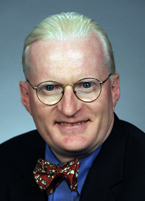
    Whealan, John
    John Whealan (at right), Associate Dean for Intellectual Property Law Studies at George Washington University Law School, and the roundtable's moderator, spent most of the discussion ably moving the participants from one topic to the next.  However, towards the end of the discussion, he observed that deferred examination appeared to be "a little less industry-driven of an issue" (perhaps alluding to the claims and continuations rules package), and that the fact that some industries would use deferred examination and some industries would not could be an indication that such a system "may not be a problem."  Mr. Whealan also stated that a true deferred examination system would be more efficient than the "RCE deferred examination" system that seemed to be in place at the moment.

    While most of the roundtable participants indicated a preference for or against deferred examination, five participants appeared to neither support nor oppose the concept during the roundtable.  Among those who did not take a position during the discussion were John Doll, Brad Huther, Stephen Kunin, Arti Rai, and John Thomas.
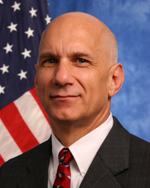
    Doll, John
    John Doll (at left), the Acting Director of the USPTO, noted that the Office witnessed a 17% rise in RCE filings and only a 1% rise in original application filings in 2008, and that as a result, deferred examination might not have as significant an impact on the application backlog as its proponents believed.

    U.S. Chamber of Commerce
    Brad Huther, who represented the U.S. Chamber of Commerce, noted that during the preparation of a recent report on proposals for improving the U.S. patent system, the organization received few comments about deferred examination.  Interestingly, the organization's report did propose implementing a deferred examination system (see "U.S. Chamber of Commerce Provides Detailed Recommendations to New Administration Regarding USPTO").
    Kunin, Stephen
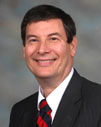
    Stephen Kunin (at left), a Partner with Oblon, Spivak, McClelland, Maier & Newstad, asserted that trying to add a deferred examination component to our present system would be unworkable, since an applicant should not be expected to merely move from real deferred examination to de facto deferred examination (i.e., lengthy pendency).  In addition, he was not sure that worksharing would mesh with deferred examination.  Mr. Kunin also wondered whether applicants requesting deferred examination should have to do something more (e.g., pay more fees, provide a search), or whether they should be allowed to secure broader claims down the road; he acknowledged, however, that such changes would require Congressional action.

    Rai, Arti
    Arti Rai (at right), Professor of Law at Duke University School of Law, cautioned that a deferred examination system would likely have to be implemented via the USPTO's rulemaking powers since Congressional action would take too much time.  She contended, however, that an element of a deferred examination system under which a third-party could request and expedite examination might require Congressional action.

    Thomas, John
    John Thomas (at left), Professor of Law at Georgetown University Law Center, stated that the most contentious issues to be resolved in implementing a deferred examination system would be the amount of the deferral (roundtable participants discussed 3, 5, and 7 year deferral periods) and who could request examination (i.e., whether a third-party could request examination).  He also opined that deferred examination could lead to an increase in original filings (as Mr. Patel suggested).

    Proponents and opponents alike will now await the USPTO's next move regarding deferred examination.  For proponents, the fact that the USPTO hosted the roundtable — and that proponents outnumbered opponents two-to-one (even discounting Mr. Godici's and Mr. Patel's far-from-enthusiastic support) — would suggest that the Office may be prepared to take the next step by beginning to craft new rules implementing a deferred examination system.

  •     By Sherri Oslick

    Gavel_2About
    Court Report:  Each week we will report briefly on recently filed
    biotech and pharma cases, and a few interesting cases will be selected
    for periodic monitoring.


    Monsanto Co. et al. v. Schroeder et al.

    2:09-cv-10460; filed February 6, 2009 in the Eastern District of Michigan

    Infringement of U.S. Patent Nos. 5,352,605 ("Chimeric Genes for Transforming Plant Cells Using Viral Promoters," issued October 4, 1994) and RE39,247 ("Glyphosate-tolerant 5-enolpyruvylshikimate-3-phosphate Synthases," issued August 22, 2006) based on defendants' use of soybean seed produced from earlier planted Roundup Ready® soybean seed.  View the complaint here.

    PerkinElmer, Inc. et al. v. Intema Ltd.
    1:09-cv-10176; filed February 5, 2009 in the District Court of Massachusetts

    Declaratory judgment of invalidity and non-infringement of U.S. Patent No. 6,573,103 ("Antenatal Screening for Down's Syndrome," issued June 3, 2003) based on Perkin Elmer's marketing of its Modified Sequential Screening protocol.  View the complaint here.

  • CalendarFebruary 17-18, 2009 – Pharma/Biotech Patent Litigation (C5) – Amsterdam, Netherlands

    February 23-24, 2009 – Pharmaceutical and Biotech Patent Claim Drafting*** (American Conference Institute) – Palo Alto, CA

    February 25-26, 2009 – Optimizing Patent Strategies at Patent Forum 2009 (World Research Group) – San Francisco, CA

    March 2-3, 2009 – 3rd Annual Patent Law Institute (Practising Law Institute) – New York, NY

    March 3, 2009 – Biotechnology, Chemical, and Pharmaceuticals (BCP) Technology Groups Customer Partnership Meeting (U.S. Patent & Trademark Office) – Alexandria, VA

    March 9-10, 2009 – Pharmaceutical and Biotech Patent Claim Drafting*** (American Conference Institute) – Research Triangle Park, NC

    March 13, 2009 – Current Strategies for Patent Claim Construction: Key Updates on Patent Prosecution and Litigation (Law Seminars International) – San Francisco, CA

    March 23-24, 2009 – 3rd Annual Patent Law Institute (Practising Law Institute) – San Francisco, CA

    March 24, 2009 – 5th Annual Document Management, E-Discovery, and Litigation Readiness for Life Sciences (American Conference Institute) – New York, NY

    March 25-27, 2009 – Intellectual Property Counsels' Committee Spring Conference & Meeting (Biotechnology Industry Organization) – Phoenix, AZ

    March 30-31, 2009 – Pharmaceutical and Biotech Patent Claim Drafting*** (American Conference Institute) – New York, NY

    March 30-31, 2009 – FDA Boot Camp*** (American Conference Institute) – New York, NY

    April 1-4, 2009 – 24th Annual Intellectual Property Law Conference (American Bar Association Section of Intellectual Property Law) – Arlington, VA

    April 20-21, 2009 – 6th Annual Freedom to Operate Forum (C5 (UK)) – London, England

    June 22-27, 2009 – Innovation Week 2009 (U.S. Patent and Trademark Office) – Arlington, VA

    ***Patent Docs is a media partner of this conference or CLE

  •     By Jason Derry —

    Merck to Buy Biologics Division from Insmed

    Merck
    Insmed Inc. and Merck have announced a deal in which Merck will purchase Insmed's research and production division and facility for developing follow-on biologics for $130 million (see Insmed press release).  Merck will receive Insmed's follow-on biologics platform, and its development and production facility located in Boulder, CO.  Insmed's pipeline of follow-on biologics includes biosimilar versions of Amgen's Neupogen and Neulasta.  Merck is obtaining development and commercial rights for these follow-on biologic candidates.

    Insmed #1


    GSK Licenses HIV Drug Candidate

    GlaxoSmithKline - GSK
    GlaxoSmithKline and Idenix Pharmaceuticals, Inc. have announced that GSK has licensed worldwide rights to Idenix's non-nucleoside reverse transcriptase inhibitor, IDX899, for treating HIV/AIDS (see Idenix press release).  The compound is currently in Phase II clinical development.  GSK will be responsible for continuing development.  Idenix will receive $34 million upfront, and may receive additional milestone payments of up to $416 million plus royalties.

    Idenix Pharmaceuticals
    Jason Derry, Ph.D., who graduated with honors from DePaul University College of Law, is a molecular biologist and founding author of Patent Docs.

  • ABA Conference
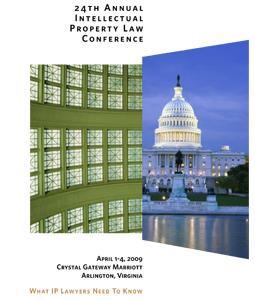
    The American Bar Association (ABA) Section of Intellectual Property Law will be holding the 24th Annual Intellectual Property Law Conference on April 1-4, 2009 in Arlington, VA.  Among the topics that will be covered at the conference are:

    • The Patent Reform Movement – Where Is It Going and Will It Get There?
    • From Drafting to Appeal – The Changing U.S. Prosecution Practice
    • Prosecuting for Enforcement Success in Europe, China, Japan, and Australia
    • The Role of Intellectual Property in Personalized Medicine
    • Swearing-in Ceremony and Mock Appellate Argument at the U.S. Court of Appeals for the Federal Circuit
    • Litigating Multi-Party, Multi-Patent Patent Cases:  Challenges, Considerations and Solutions
    • How to Extract Value from an IP Portfolio
    • Avoiding the Inevitable:  Managing the Risk of Inevitable Disclosure Claims
    • The Ethics of Patent Prosecution
    • Using Financial and Economic Analysis for IP Litigation, Licensing, and Profit
    • The Ethics of IP Litigation
    • Supreme Court’s Effect on Patent Licensing Practice

    On the first day of the conference, the luncheon speaker will be Congressman Rick Boucher (D-VA), who will give a presentation on "IP Legislation in the 111th Congress."  In addition, an evening reception will be held at the U.S. Court of Appeals for the Federal Circuit.  On the second day of the conference, the luncheon speaker will be Sherry Knowles, Senior Vice President and Chief IP Counsel for GlaxoSmithKline, who will give a presentation entitled "Are Governments Overreaching?  Current Challenges to Our Intellectual Property."

    ABA
    The program schedule for the conference can be found here.  A complete brochure for the conference, including the program schedule, a list of speakers, and registration form can be downloaded here.

    The registration fee ranges from $245 for students to $795 for non-ABA members.  Those registering before March 17 will receive a $50 discount.  Detailed registration information can be found in the conference brochure or on the ABA website.

  • New York #3
    Practising Law Institute (PLI) will be holding its 3rd Annual Patent Law Institute on March 2-3, 2009 in New York, NY and on March 23-24, 2009 in San Francisco, CA.  A live webcast of the New York session will also be available.  The two-day conference consists of six one-hour plenary sessions of broad interest to patent lawyers and a separate breakout track consisting of six one-hour sessions focusing on one of three patent practice sub-groups: patent prosecution; patent litigation; and patent transactions.  The plenary sessions will cover:

    • Recent Supreme Court and Federal Circuit decisions and subsequent District Court applications of those decisions;
    • The current status of PTO law, rule, and practice changes;
    • Changes in business method and software patents post-Bilski;
    • Critical issues at the patent-antitrust interface;
    • A judges panel discussing recent appellate decisions and the impact on pending litigation; and
    • Hot patent business and legal concerns of outstanding corporate counsel.

    San Francisco #4
    Breakout tracks will cover:

    • Prosecution:

    • A PTO law, rule, and practice changes update;
    • New appeals and OED rule packages;
    • What new rule and prosecution initiatives and patent reform to expect with the new Administration and Congress;
    • PTO biotech/pharma trends; and
    • How to successfully transition to paperless patent prosecution.

    • Litigation:

    • Litigation at the patent-antitrust interface;
    • e-Discovery best practices;
    • Infringement remedies;
    • The latest facts and figures on the hot patent litigation venues; and
    • Expert insights on trial presentation.

    • Transactional/strategic:

    • Using opinions of counsel post-Seagate;
    • Critical business considerations of a license agreement, including the effects of Quanta;
    • Hot technology transfer and licensing issues;
    Inter partes reexamination; and
    • 27 hidden dangers in your patent license agreement.

    Practising Law Institute (PLI) #2
    A program schedule and list of speakers for the New York Patent Law Institute can be found here, and a program schedule and list of speakers for the San Franscisco Patent Law Institute can be found here.

    The registration fee for the conference is $1,495.  Those interested in registering for the conference can do so at the PLI website.

  • London
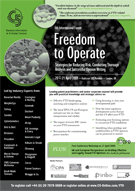
    C5 (UK) will be holding its 6th Annual Freedom to Operate Forum on April 20-21, 2009 in London, England.  The conference will provide practical knowledge and strategic advice on:

    • Effective FTO landscaping, searching, and competitor analysis;
    • The latest EPO, U.S., and European national case law on claim interpretation and validity;
    • The impact of recent SPC claims on your FTO assessments;
    • Best practices for commissioning patent searches;
    • Using licensing to clear your developmental path;
    • How the latest regulatory developments across Europe and the U.S. affect your FTO;
    • Evaluating your licensing options to circumvent FTO roadblocks; and
    • Identifying when privilege and confidentiality in FTO opinions can be preserved or waived.

    In particular, C5 faculty will offer presentations on the following topics:

    839L09-LON
    • Perspectives on creating an effective FTO search strategy including setting search parameters and conducting results-driven competitor analysis;
    • Avoiding common traps when outsourcing patent and prior art searches;
    • Successful claim interpretation, analysis and evaluation of infringement risk;
    • Recent case law on validity and unenforceability in Europe and the U.S.;
    • The impact of regulatory data protection and other EU regulatory developments on your FTO;
    • Recent developments in Hatch-Waxman and U.S. non-patent exclusivity;
    • Recent developments in SPC law and how they impact your FTO analysis;
    • Strategies for identifying and overcoming blocking patents;
    • Using licensing as a tool to circumvent FTO roadblocks;
    • Privilege in FTO opinions:  When is it preserved and when is it waived?; and
    • When FTO assessments go wrong:  Key considerations relating to remedies and damages.

    An additional post-conference workshop will be offered on April 21, 2009.  The workshop, entitled "UK and European Perspectives on Drafting Effective and Legally Sound FTO Opinions" will provide information for drafting a sound opinion on invalidity and non-infringement from both U.S. and European perspectives, including insights into effective prior art analysis.

    A complete brochure for this conference, including an agenda, list of speakers, and registration form can be downloaded here.

    C5
    The registration fee for the conference is £1723.85 ($2,474.52), for the conference plus workshop £2297.70 ($3,298.26), and for the workshop alone £803.85 ($1,153.89).  For those registering on or before March 9, 2009, the registration fee for the conference is £1608.85 ($2,309.44), for the conference plus one workshop £2182.70 ($3,133.18), and for the workshop alone £803.85 ($1,153.89).  Those interested in registering for the conference can do so here, by calling +44 (0) 20 7878 6888, by faxing a registration form to +44 (0) 20 7878 6896, or by e-mailing marketing@C5-Online.com.