•     By Donald Zuhn

    USPTO Seal
    It's been more than a week since the U.S. Patent and Trademark Office hosted a roundtable discussion on deferred examination.  The roundtable brought together two dozen participants, representing a variety of industries and organizations, to discuss whether a deferred examination system should be implemented in the U.S.  Ron Katznelson, who participated in the roundtable, recently contacted us to let us know that the webcast can be viewed at https://uspto.connectsolutions.com/p91717658 (for some reason, the USPTO has yet to update its notice regarding the roundtable participants and agenda to provide a link to the recorded webcast, or post a link to that notice on its "News and Notices" page).

    Katznelson, Ron
    Dr. Katznelson (at left) also wanted to remind interested practitioners and applicants that while the roundtable may be over, the USPTO is still accepting comments on deferred examination from the public.  As we noted last month, the USPTO published a notice in the Federal Register (74 Fed. Reg. 4946) seeking participants for the roundtable discussion (see "USPTO Schedules Roundtable Discussion on Deferred Examination").  In addition, the notice sought written comments from the public "on issues raised at the roundtable or on any issue pertaining to deferral of examination."  The deadline for submission of written comments is February 26, 2009.  Written comments should be sent by e-mail to AC6comments@uspto.gov or by regular mail addressed to:  Mail Stop Comments — Patents, Commissioner for Patents, P.O. Box 1450, Alexandria, VA 22313–1450, marked to the attention of Robert W. Bahr.  The USPTO notice indicates that all comments will be made available for public inspection at the Office of the Commissioner of Patents, as well as on the USPTO website.

    While there's no substitute for actually viewing the four-hour long roundtable discussion, Patent Docs readers who are short on time can get a flavor for all of the participants' comments in our posts on the deferred examination proponents and opponents who attended the roundtable.  Both of these posts provide more information regarding the participants' affiliations than was made available in the USPTO notice, and should be helpful when crafting comments regarding deferred examination or replies to remarks made by any of the participants during the roundtable.

  •     By Kevin E. Noonan

    New York Times
    Like a broken clock that nonetheless tells the right time twice a day, it was inevitable that The New York Times would eventually run a story where they got it right on patenting (see "Crop Scientists Say Biotechnology Seed Companies Are Thwarting Research").  It was, of course, a story about how large companies seem to be abusing the power conferred by the patent grant.

    The story involves the following statement by 26 academic scientists to the Environmental Protection Agency:

    Technology/stewardship agreements required for the purchase of genetically modified seed explicitly prohibit research.  These agreements inhibit public scientists from pursuing their mandated role on behalf of the public good unless the research is approved by industry.  As a result of restricted access, no truly independent research can be legally conducted on many critical questions regarding the technology, its performance, its management implications, IRM, and its interactions with insect biology.  Consequently, data flowing to an EPA Scientific Advisory Panel from the public sector is unduly limited.

    Shields, Elson
    The scientists are described on the EPA website as being "leading corn insect scientists working at public research institutions located in 16 corn producing states."  Their names are withheld from the public docket, because "virtually all of [them] require cooperation from industry at some level to conduct [their] research" according to the EPA.  (Some of them did permit their names to be used for their interviews with the Times.)  Indeed, Dr. Elson J. Shields (at right), an entomology professor at Cornell University, noted that support for agricultural research has shifted from the public to the private sector, making agricultural scientists increasingly dependent on seed companies for financing and technical support.

    Their complaint stems from restrictions on their research imposed by industry, specifically companies selling herbicide-resistant and other genetically-engineered crops.  As reported in the Times on Friday by science reporter Andrew Pollack, the scientists allege that companies make purchasers of genetically-engineered seed sign an agreement used in other contexts to prevent farmers from regrowing seed (violations of these agreements by farmers have been the bases of several patent infringement and breach-of-contract lawsuits; see, e.g., Monsanto Co. v. McFarling; Monsanto Co. v. David).  For the scientists, these agreements have been used to prevent recombinant seeds from being grown for research purposes.  While companies can give scientists permission to use recombinant seeds for their research, they can also impose (and have imposed) restrictions on what research can be done, as well as demanding review of the results prior to publication, according to Mr. Pollack.
    Ostlie, Ken
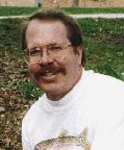
    This results in de facto censorship of research, since the companies can prevent negative results from being published.  This also limits the information and evidence available to government regulators, including the EPA.  Dr. Shields says this gives the companies the opportunity to "launder the data."  Dr. Ken Ostlie (at left), a University of Minnesota entomologist, illustrated the type of control by the companies by describing a study for which he had received permission from three companies selling genetically-engineered seed, comparing how well each of their corn seed resisted predation by Minnesota rootworms.  One year later, Syngenta withdrew its permission and Dr. Ostlie was forced to discontinue the study.  And Dr. Mark Boetel described the refusal by both Monsanto and Syngenta to grant permission for a study, prior to market launch, of their genetically-engineered sugar beets and how the crop would respond to an insecticide. 

    Niebur, William
    Perhaps predictably, the companies defend their behavior.  Dr. William S. Niebur (at right), Vice President for DuPont Crop Genetics Research and Development (DuPont owns Pioneer Hi-Bred), cites the need to comply with government regulations on how recombinant crops are grown to justify the restrictions.  Monsanto and Syngenta spokesmen were quoted in the article as using their intellectual property rights as a defense, as well as compliance with government regulations.  (The Syngenta agreement prohibits any comparisons between Syngenta's product and any other crop.)  An EPA spokesman, Dale Kemery, contradicted the regulatory rationale, saying that the government only required "management of the crops' insect resistance and that any other contractual restrictions were put in place by the companies" not the EPA.
    EPA
    The EPA has published an announcement in the Federal Register for a meeting on insect-resistant biotech crops (see 73 Fed. Reg. 75099).

    The seed companies' activities are legal, of course.  The Federal Circuit has deemed the types of restrictions imposed on farmers not to be an abuse of the patent grant, and has affirmed patent infringement and breach-of-contract judgments when they have been appealed (see, e.g., McFarling; David).  However, these judgments have been in the context of commercial activity and commercial agreements.  They have involved farmers, some of whom have extensive holdings, breaching their agreements in an effort to avoid the cost of new seed.  They have also involved allegations, some persuasive, that the defendants had been less than forthcoming about their conduct or have attempted to deceive the court.  In short, in decisions favorable to Monsanto, the company's conduct (while criticized) has not been the issue.

    The scientists raise very different issues.  It is one thing to prevent a customer from reneging unilaterally on commercial agreements entered into to obtain a commercial advantage (i.e., greater crop yields due to herbicide resistant recombinant seed).  It is quite another to use the exclusionary right granted under the patent laws to enforce contractual agreements restricting research use.  Genetically-modified foods, while facing much less resistance in the U.S. than in, for example, Europe, have ambiguous public support.  And in the present environment, behavior that could be characterized as an abuse of the patent grant is risky.  For example, seed companies are already at risk from the Supreme Court's Quanta Computer, Inc. v. LG Electronics, Inc. decision, which reaffirmed the principle of patent exhaustion:  a patentee's rights to a patented product are exhausted upon first sale of the product.  The contractual restrictions on reseeding can be argued to be contrary to this principle, although this theory has not yet been advanced with any success.  This is particularly relevant because this situation comprises the confluence of two private activities "affected with a public interest":  patenting and public health.  Where U.S. common law has traditionally limited legal restrictions on contract terms between two parties dealing at arms' length, the law has permitted restrictions based on public policy (limiting enforceability on adhesion contracts, for example).  The allegations by these scientists raise the real possibility that the restrictions recombinant seed companies have successfully included in their commercial contracts will, at least with regard to research science, be deemed unenforceable.  In view of the other possible consequences (such as patent misuse or antitrust allegations), such a determination may turn out to be the best the seed companies may be able to hope for.

    For additional information regarding this and other related topics, please see:
    • "Monsanto Announces Latest Lawsuit Settlement over Roundup Ready® Soybean Seed," September 2, 2008)
    • "Quanta Computer, Inc. v. LG Electronics, Inc. (2008)," June 9, 2008
    • "Monsanto Co. v. David (Fed. Cir. 2008)," February 6, 2008
    • "Supreme Court Fails to Grant Certiorari in Monsanto Co. v. McFarling," January 7, 2008
    • "Monsanto Co. v. McFarling (Fed. Cir. 2007)," June 4, 2007
  •     By Sherri Oslick

    Gavel_2About
    Court Report:  Each week we will report briefly on recently filed
    biotech and pharma cases, and a few interesting cases will be selected
    for periodic monitoring.


    Millennium Pharmaceuticals Inc. et al. v. Teva Parenteral Medicines Inc. et al.

    1:09-cv-00105; filed February 18, 2009 in the District Court of Delaware

    Infringement of U.S. Patent No. 5,807,825 ("Platelet Aggregation Inhibitors," issued September 15, 1998), licensed to Schering Corp., following a Paragraph IV certification as part of Teva's filing of an ANDA to manufacture a generic version of Schering-Plough's Integrilin® (eptifibatide injection, used to treat acute coronary syndrome).  View the complaint here.


    Kabushiki Kaisha Hayashibara Seibutsu Kaguku Kenkyujo v. Doll

    1:09-cv-00308; filed February 17, 2009 in the District Court of the District of Columbia

    Review and correction of the patent term adjustment calculation made by the USPTO for U.S. Patent No. 7,414,038 ("Embolic Materials," issued August 19, 2008).  View the complaint here.

    Phylonix Pharmaceuticals, Inc. v. Zygogen, LLC
    1:09-cv-10220; filed February 13, 2009 in the District Court of Massachusetts

    Infringement of U.S. Patent Nos. 6,656,449 ("Methods of Screening Agents For Activity Using Teleosts," issued December 2, 2003), 7,041,276 (same title, issued May 9, 2006), and 7,482,507 (same title, issued January 27, 2009) based on Zygogen's manufacture and sale of its Z-Tag Angiogenesis Assay and related compound screening services.  View the complaint here.

    Intema Ltd. v. NTD Laboratories, Inc. et al.
    2:09-cv-00633; filed February 13, 2009 in the Eastern District of New York

    Infringement of U.S. Patent No. 6,573,103 ("Antenatal Screening for Down's Syndrome," issued June 3, 2003) based on Perkin Elmer's marketing of its Modified Sequential Screening protocol.  View the complaint here.


    Astrazeneca Pharmaceuticals LP et al. v. Accord Healthcare, Inc. et al.

    3:09-cv-00619; filed February 10, 2009 in the District Court of New Jersey

    Infringement of U.S. Patent Nos. 4,879,288 ("Novel Dibenzothiazepine Antipsychotic," issued November 7, 1989) and 5,948,437 ("Pharmaceutical Compositions Using Thiazepine," issued September 7, 1999) following a Paragraph IV certification as part of Accord's filing of an amendment to its ANDA (adding additional dosage forms) to manufacture a generic version of AstraZeneca's Seroquel® XR (quetiapine fumarate, used to treat schizophrenia and bipolar disorder).  View the complaint here.

  • CalendarFebruary 23-24, 2009 – Pharmaceutical and Biotech Patent Claim Drafting*** (American Conference Institute) – Palo Alto, CA

    February 25-26, 2009 – Optimizing Patent Strategies at Patent Forum 2009 (World Research Group) – San Francisco, CA

    March 2-3, 2009 – 3rd Annual Patent Law Institute (Practising Law Institute) – New York, NY

    March 3, 2009 – Biotechnology, Chemical, and Pharmaceuticals (BCP) Technology Groups Customer Partnership Meeting (U.S. Patent & Trademark Office) – Alexandria, VA

    March 9-10, 2009 – Pharmaceutical and Biotech Patent Claim Drafting*** (American Conference Institute) – Research Triangle Park, NC

    March 13, 2009 – Current Strategies for Patent Claim Construction: Key Updates on Patent Prosecution and Litigation (Law Seminars International) – San Francisco, CA

    March 23-24, 2009 – 3rd Annual Patent Law Institute (Practising Law Institute) – San Francisco, CA

    March 24, 2009 – 5th Annual Document Management, E-Discovery, and Litigation Readiness for Life Sciences (American Conference Institute) – New York, NY

    March 25-27, 2009 – Intellectual Property Counsels' Committee Spring Conference & Meeting (Biotechnology Industry Organization) – Phoenix, AZ

    March 30-31, 2009 – Pharmaceutical and Biotech Patent Claim Drafting*** (American Conference Institute) – New York, NY

    March 30-31, 2009 – FDA Boot Camp*** (American Conference Institute) – New York, NY

    April 1-4, 2009 – 24th Annual Intellectual Property Law Conference (American Bar Association Section of Intellectual Property Law) – Arlington, VA

    April 20-21, 2009 – 5th International Judges Conference on Intellectual Property Law (Intellectual Property Owners Association) – Washington, DC

    April 20-21, 2009 – 6th Annual Freedom to Operate Forum (C5 (UK)) – London, England

    April 27-28, 2009 – 3rd Annual Paragraph IV Disputes Conference*** (American Conference Institute) – New York, NY

    June 22-27, 2009 – Innovation Week 2009 (U.S. Patent and Trademark Office) – Arlington, VA

    ***Patent Docs is a media partner of this conference or CLE

  •     By Jason Derry* and Donald Zuhn

    GPC Biotech and Agennix to Merge

    GPC Biotech
    GPC Biotech AG and Agennix Inc. have announced a plan to merge.  Both companies are focused on discovering and developing treatments for cancer.  A new company will be formed with the help of cash from the investment company dievini Hopp Biotech.  GPC shareholders will have 39.3% ownership in the new company, Agennix shareholders will have 48% ownership, and dievini Hopp Biotech will own the remaining 12.7%.  The new company will continue to develop the Agennix compound, talactoferrin, which is in Phase III trials for treating non-small cell lung cancer.  In addition, the company will pursue a topical Agennix
    talactoferrin for treating diabetic foot ulcers, and GPC's compound, RGB-286638, for treating advanced solid tumors.


    Lundbeck to Acquire Ovation Pharmaceuticals

    Lundbeck
    Last week, Denmark-based H. Lundbeck A/S announced that it had entered into a definitive agreement with Ovation Pharmaceuticals, Inc., of Deerfield, IL, under which wholly owned subsidiary Lundbeck, Inc. would acquire Ovation in an all cash transaction of up to $900 million.  As a result of the agreement, Lundbeck acquires Ovation's portfolio of marketed products and late-stage pipeline primarily focused on CNS disorders, including Ovation's Sabril® for adults with refractory complex partial seizures and children with infantile spasms.  Sabril® is in the final stage of FDA review and has been recommended for approval by an FDA Advisory Committee.  Lundbeck President and CEO Ulf Wiinberg said that the company was "very encouraged by what Ovation has Ovation Pharmaceuticals
    achieved in the short time since the company was founded and we look forward to working together in the common interest of both companies."

    *Jason Derry, Ph.D., who graduated with honors from DePaul University
    College of Law, is a molecular biologist and founding author of Patent Docs.

  • New York #2
    American Conference Institute (ACI) will be holding its 3rd Annual Paragraph IV Disputes conference on April 27-28, 2009 in New York, NY.  The conference will allow attendees to:

    • Strategically evaluate patent strength, Orange Book listing, and assertion strategies;
    • Interpret and apply the MMA statutory scheme as it applies to declaratory judgments;
    • Litigate with multiple ANDA filers in various jurisdictions;
    • Implement effective and cost-saving e-discovery and document management processes during Paragraph IV litigation;
    • Master the interplay between 180-day exclusivity, forfeiture provisions, and citizens petitions;
    • Minimize downstream risk and calculating damages associated with preliminary injunctions and at risk launches; and
    • Factor recent local patent rule and proposed patent reform changes into your litigation strategy.

    In particular, ACI's faculty will offer presentations on the following topics:

    661L09-NYC
    • Brand name considerations — Anticipating and preparing for a Paragraph IV challenge;
    • Generic considerations — Making the decision to certify Paragraph IV;
    • Issuing the challenge and coordinating a response:  The Paragraph IV notice letter;
    • Factoring recent local patent rule changes, jurisdictional considerations, and patent reform legislation into your litigation strategy;
    • Positioning your patent/product for success at trial:  Crafting the initial pleadings, seeking declaratory judgment and managing the Markman hearing;
    • Litigating with multiple ANDA filers:  Considerations for managing multiple parties during Paragraph IV disputes;
    • View from the Bench:  Chief Judge's roundtable on Paragraph IV litigation;
    • FTC Address:  The law of Hatch-Waxman patent infringement settlements and where it is going;
    • Overseeing discovery and expert witness selection before and during Paragraph IV litigation:  Reducing costs while maintaining control over the process;
    • Mastering the interplay between 180-day exclusivity, forfeiture provisions, citizens petitions, and Paragraph IV litigation;
    • Ethical dilemmas, confidentiality and privilege to avoid when overseeing and litigating a Paragraph IV dispute; and
    • Minimizing downstream risk and calculating damages associated with preliminary injunctions and at risk launches.

    An additional post-conference master class, entitled "Obtaining Optimal Terms and Mitigating Antitrust Concerns When Settling Paragraph IV Disputes:  Brand Name and Generic Perspectives," will be offered on April 29, 2009.  In the master class, ACI faculty will provide attendees with the best practices for negotiating and finalizing settlements that both parties and the FTC can live with.

    The agenda for the Paragraph IV Disputes conference can be found here.  A complete brochure for this conference, including an agenda, list of speakers, and registration form can be downloaded here.

    ACI - American Conference Institute
    The registration fee is $1,995 for the conference and $2,595 for the conference and master class.  Those registering by March 27, 2009 will receive a $200 discount.  Those interested in registering for the conference can do so here, by calling 1-888-224-2480, or by faxing a registration form to 1-877-927-1563.

    Patent Docs is a media sponsor of ACI's Paragraph IV Disputes conference.

  • The Intellectual Property Owners Association (IPO) will be holding its 5th International Judges Conference on Intellectual Property Law on April 20-21, 2009 in Washington, DC.  The conference will provide discussions on the following topics:

    Cover
    • Litigation Issues:  A panel discussion regarding current and possible future judicial collaboration in addressing discovery and settlement issues in cross-border IP disputes;

    • Developing Judicial Issues:  A panel discussion regarding the use of precedents and principles from other countries, the enforcement of trade secret protection, and specialization and training for judges handling IP matters;

    • Transnational Enforcement:  A panel discussion regarding a hypothetical fact pattern, in which a product will pass through multiple countries during manufacture, assembly, and distribution before entry into the U.S. market, with a panel of judges commenting on remedies that may be available in their jurisdictions to prohibit or discourage infringement of IP rights in this scenario.

    • Patentable Subject Matter:  A panel discussion regarding the differences in approach between the U.S. and other countries with respect to patentability of software, business methods, and biotechnology will be discussed, with panelists commenting on strategies and recommendations for IP protection for companies that hold these types of patents.

    IPO #2
    In addition, Chief Judge Paul R. Michel of the U.S. Court of Appeals for the Federal Circuit will present the luncheon keynote on April 20, and Director General Francis Gurry of the World Intellectual Property Organization will present the luncheon keynote on April 21.

    A complete brochure for the meeting, including an agenda, list of speakers, and registration form can be downloaded here.

    The registration fee for the conference is $1,475.  Those interested in registering for the meeting can do so here.

  •     By Kevin E. Noonan

    As we have noted in the past, the World Trade Organization (WTO) and Trade-related Aspects of Intellectual Property Rights (TRIPS) portion of the General Agreements on Tariffs and Trade (GATT) have not resulted in the general reverence for intellectual property protection intended by Western countries in the developing world, particularly with regard to pharmaceuticals (see "Not Getting It about Patented Drug Prices at The Wall Street Journal").  In particular, the combination of the Doha Declaration of 2001 and compulsory licensing provisions in national TRIPS implementing laws have created a crisis for Western pharmaceutical companies, who have seen the trend for compulsory licensing, or the threat of such licenses, expand from anti-AIDS drugs to other drugs less relevant to "national medical emergencies," to where the levels of protection may be lower in the post-TRIPS world than they were before the GATT treaty was signed.

    Witty, Andrew
    Western drug companies bear part of the responsibility for this state of affairs, being (up until now) unwilling to address this real threat to their continued viability (and capacity to develop new drugs) in any coordinated way.  This paralysis may be changing, however, in view of remarks by Andrew Witty (at right), CEO of GlaxoSmithKline, to an audience at Harvard Medical School on February 13th.  In an address entitled "Big Pharma:  A Catalyst for Change," Mr. Witty squarely faced facts:  34 of the 50 poorest countries are in Africa, he said, and these countries were burdened with 24% of human disease.  He seemed to recognize what has been evident for some time:  that drug prices are the key motivator for governments in the developing world to grant compulsory licenses.  It would thus be prudent for Western drug companies to lower their own prices and thus blunt, if not forestall, the generic companies' justifications for government action.  There have been instances when this has happened (see, e.g., "Africa (Still) Depending on the Kindness of Strangers in Anti-AIDS Drug Pricing"), but there has been no coordinated effort by Western drug companies to develop a strategy around drug pricing in the developing world to address the compulsory licensing issue. 

    Mr. Witty set forth four commitments directed to these concerns:

    • Adopt a "more flexible" approach in "least developed countries" (as defined, inter alia, in "Trying to Find a Solution to the Global Drug Pricing Crisis").  These efforts would be particularly directed to "neglected tropical diseases" lacking research efforts and monies.  He proposed a "Least Developed Country (LDC) Patent Pool" for medicines for these diseases, where GSK would permit others access to its "relevant small molecule compounds" for developing new drugs.  He also proposed that participation in the pool would be voluntary and that "any benefits from the pool must go in full and solely to LDCs."  This latter provision would prevent transfer of new drugs for treating "neglected diseases" in Africa from being sold in the West, where GSK would be expected to want at least non-exclusive rights.

    • Reduce prices for drugs under patent protection in LDCs to be no greater than 25% of the cost in the West, with the proviso that GSK would "cover" production, distribution, and other costs.  This is intended to be a maximum price, and Mr. Witty raised the possibility of "more aggressive" drug pricing under certain (undefined) circumstances.  He also indicated that while GSK would be willing to be flexible on drug pricing in "middle income" countries, such flexibility would "reflect more closely" the country's ability to pay for the drugs.

    • Participate in greater collaborations against Diseases of the Developing World (DDW).  In this regard, Mr. Witty mentioned the GSK research center in Tres Cantos, Spain that is dedicated to DDW research.  He spoke of developing a "greater critical mass" and "partnership between public and private efforts to combat the existing "fragmented," "sub-optimal" efforts.  He asserted that GSK was willing to allow "partners" (including governments, foundations, or other companies) to use its facilities in the hope of creating "a truly world-class, global centre of excellence, not owned just by GSK."

    • Taking responsibility for the state of global healthcare.  He advocated moving "from being a supplier of drugs to being a partner" in providing healthcare solutions to underserved populations, for example by identifying the individuals and institutions in these countries who can "ensure that the [healthcare] infrastructure" exists.  He committed 20% of GSK profits made selling drugs in LDCs would be reinvested in infrastructure projects in those countries, "benefiting the poorest people in the poorest countries directly."  This would involve acting not as a "Western" company but as a local company "committed to addressing the healthcare needs" of the countries GSKs work in.  He cited Brasil as an example, where GSK is "helping them build technical expertise so that in the long run they can produce vaccines for themselves" (presumably after GSKs patents have expired).  He said the resulting increased ties to these societies is "how it should be" for GSK, and presumably other Western pharmaceutical companies.

    GlaxoSmithKline - GSK
    While forward-looking, Mr. Witty was able to cite existing GSK programs on malaria vaccines (the PATH Malaria Vaccine Initiative) that are entering Phase III clinical trials.  Should the vaccine successfully complete the trial, Mr. Witty said GSK needs "to make sure nothing gets in the way of access" to the vaccine for the children who "are among the poorest in the world."  He envisioned an international partnership to "mobilize the resources to pay for [the vaccine] and the infrastructure to deliver [it]."  

    Other Western drug companies have proposed similar, more limited or focused efforts before.  GSK's commitment is reminiscent of Monsanto's proposal to use its technology to address world hunger (see "Monsanto Moves to Address World Food Shortages").  It is a bold first step; whether it is ultimately successful will likely depend on whether the remaining innovator drug companies see the benefits of such behavior and act accordingly.  Recent history indicates that such a coordinated strategy will be necessary if innovator drug companies are not to be left with none of the advantages that the TRIPS agreement was intended to have for their industry.

    For additional information about this and other related topics, please see:
    • "Monsanto Moves to Address World Food Shortages," June 4, 2008
    • "Thailand Continues Its Compulsory Licensing Practices," March 11, 2008
    • "Trying to Find a Solution to the Global Drug Pricing Crisis," July 16, 2007
    • "Pharma Sanity Lacks Global Reach," July 13, 2007
    • "Brasil Prevails in Dispute with Abbott over AIDS Drug Pricing," July 9, 2007
    • "Africa (Still) Depending on the Kindness of Strangers in Anti-AIDS Drug Pricing," May 29, 2007
    • "Not Getting It about Patented Drug Prices at The Wall Street Journal," May 6, 2007
    • "A Modest Proposal Regarding Drug Pricing in Developing Countries," May 2, 2007
    • "The Law of Unintended Consequences Arises in Applying TRIPS to Patented Drug Protection in Developing Countries," May 1, 2007
  •     By Donald Zuhn

    Vermillion
    Last week, Vermillion, Inc. announced that the U.S. Patent and Trademark Office had issued a Notice of Allowance for its application directed to diagnostic methods using hepcidin as a biomarker for ovarian cancer.  The patent that eventually issues from the allowed application will be the Fremont, CA-based molecular diagnostics company's third U.S. patent.

    A search of the USPTO Published Applications database and Public PAIR suggests that the Notice of Allowance described in Vermillion's press release was mailed for U.S. Application No. 11/373,833, which is entitled "Biomarker for Ovarian and Endometrial Cancer: Hepcidin," and which was published on March 8, 2007 as U.S. Patent Application Publication No. 2007/0054329.  The Public PAIR record for this application indicates that the Notice of Allowance was mailed on November 17, 2008.  Vermillion's patent is expected to issue sometime within the next four months.

    According to the statement released by Vermillion, "the discovery of hepcidin as a biomarker for ovarian cancer . . . could ultimately lead to the development of an improved, next-generation assay that might provide physicians with additional, valuable information to diagnose ovarian cancer."  Ovarian cancer leads to approximately 15,000 deaths each year in the United States, with approximately 20,000 new cases of ovarian cancer being diagnosed per year.  The majority of new diagnoses are made in patients with late stage disease, where the cancer has spread beyond the ovary.  The prognosis for these patients is, unfortunately, poor.  However, when detected in stage 1, ovarian cancer has up to a 90% cure rate following surgery and/or chemotherapy.

    The '833 application claims the benefit of U.S. Provisional Application No. 60/662,090, filed March 11, 2005.  Allowed claim 1 of the '799 application, which includes amendments introduced by Examiner's Amendment, recites:

    1.  A method for qualifying ovarian cancer status in a subject comprising: (a) measuring the level of hepcidin in a biological sample from the subject being screened for ovarian cancer; and (b) correlating the measurement of an increased level of hepcidin in the biological sample from the subject as compared to the level of hepcidin in a biological sample from a healthy subject with the diagnosis of ovarian cancer.

    The claim, as presented in Vermillion's last response, recited:

    1.  A method for qualifying ovarian cancer status in a subject comprising: (a) measuring one or more biomarkers in a biological sample from the subject, wherein at least one biomarker is hepcidin; and (b) correlating the measurement or measurements with an ovarian cancer status selected from ovarian cancer and a benign ovarian tumor, wherein an increase in level of hepcidin is indicative of ovarian cancer.
  •     By Donald Zuhn

    Innovators Looking for Help from Follow-on Biologics

    Merck
    Last week, Merck announced that it had acquired Insmed's portfolio of follow-on biologic therapeutic candidates as well as its biologics manufacturing facilities in Boulder, CO (see "Biotech/Pharma Business Briefs").  While the timing and target of the acquisition may have been somewhat surprising, Merck's move into follow-on biologics was not, as the company revealed plans to do so back in December (see Reuters report).

    Insmed #1
    With respect to the acquisition's timing, Merck's purchase of Insmed's follow-on biologics technology comes less than ten weeks after Merck announced the creation of Merck BioVentures, a new division of the company charged with the development of biologics and follow-on biologics (at the time of that announcement, Merck indicated that it would have at least five follow-on biologics in late-stage development by 2012).  And with respect to the target, Insmed had, over the past twelve months, moved to the forefront of the U.S. follow-on biologics movement by launching a national awareness campaign last February to promote the establishment of a follow-on biologics regulatory pathway in the U.S., and then in July, demonstrating that its recombinant human granulocyte colony stimulating factor (G-CSF) follow-on biologic was bioequivalent to Amgen's FDA-approved Neupogen®.  Merck's purchase of Insmed appears to be due, at least in part, to the looming "patent cliff" — i.e., the expiration of key pharma patents between 2009 and 2011 — that is confronting many innovators, as well as the timeline for Merck's own follow-on biologics pipeline.

    Lilly
    Merck is not alone among innovator drug companies looking to get involved in follow-on biologics, as Eli Lilly and Co. and Astrazeneca have also expressed a recent interest in biosmiliars.  Two days after Merck's announcement, Lilly stated that the company was "very much considering" a push into follow-on biologics (see Reuters report).  According to Reuters, Lilly Research Laboratories President Steven Paul contended that follow-on biologics would be "a very reasonable thing for Lilly to do, probably down the road."

    AstraZeneca_small
    Less than two weeks after Lilly expressed a desire to get into follow-on biologics, AstraZeneca made a similar announcement (see Financial Times report).  As with Lilly, which purchased biologic drug developer ImClone Systems last fall, AstraZeneca believes a move into biosmiliars will build upon the company's existing biologic drug operations.  According to the Financial Times, AstraZeneca's interest in biosimiliars also appears to be related to the patent cliff, with the company unable to balance current products coming off patent with new drugs from its pipeline.

    Amgen Preparing for More Generic Competition

    Amgen
    Amgen CEO Kevin Sharer told attendees at last month's JP Morgan Global Healthcare Conference, that the biotech company was preparing for generic competition in Europe with respect to its drug Neupogen® (see Reuters report).  Some of that competition will likely come from Merck BioVentures, now that Merck has acquired a biosimiliar portfolio that includes recombinant G-CSF.  In addition, Teva received approval for its own G-CSF product last September (see "Teva Receives EU Marketing Authorization for G-CSF Biosimilar").

    Despite the competition, however, Amgen's CEO stated that the company could "hold very significant market share at attractive revenues for a long time post patent expiry."  His statement is supported by Amgen's recent experience dealing with generic competition in Europe for its anemia drug Epogen.  With respect to that drug, Mr. Sharer noted that the company had "felt the effects of a biosimilar, but did substantially better than expected."


    Novartis Gets EU Approval for Filgrastim

    Novartis
    Amgen will also be facing generic competition from Novartis, as that company's generic division, Sandoz, announced that it had received approval from the European Commission (EC) for its filgrastim (i.e., G-CSF analog) biogeneric.  Last November, the Committee for Medicinal Products for Human Use (CHMP) of the European Medicines Agency (EMEA) issued a positive opinion for the Sandoz drug Zarzio (filigrastim) for the treatment of neutropenia.  The EC's decision came as no surprise, as the EC usually follows the CHMP's recommendations.  Zarzio was approved for use in treating the same indications as Amgen's Neupogen®.

    Sandoz
     

    For additional information regarding this and other related topics, please see:
    • "Biotech/Pharma Business Briefs," February 13, 2009
    • "Teva Receives EU Marketing Authorization for G-CSF Biosimilar," September 24, 2008
    • "Insmed Announces Bioequivalent G-CSF Biologic," July 10, 2008
    • "Insmed Announces National Awareness Campaign Regarding Follow-on Biologics," February 13, 2008