•     By Sherri Oslick

    Gavel_2About
    Court Report:  Each week we will report briefly on recently filed
    biotech and pharma cases, and a few interesting cases will be selected
    for periodic monitoring.


    MedImmune, LLC v. Sun Pharmaceutical Industries Ltd. et al.

    1:09-cv-00452; filed February 24, 2009 in the District Court of Maryland

    Infringement of U.S. Patent Nos. 5,424,471 ("Crystalline Amifostine Compositions and Methods of the Preparation and Use of Same," issued June 13, 1995) and 5,591,731 ("Crystalline Amifostine Compositions," issued January 7, 1997) based on defendants' manufacture and sale of a generic version of MedImmune's Ethyol® (amifostine, used to treat xerostomia in patients receiving radiation therapy for head and neck cancer).  View the complaint here.


    Anticancer, Inc. v. Cambridge Research & Instrumentation, Inc. et al.

    3:09-cv-00351; filed February 23, 2009 in the Southern District of California

    Infringement of U.S. Patent Nos. 6,251,384 ("Metastasis Models Using Green Fluorescent Protein (GFP) As a Marker, issued June 26, 2001), 6,759,038 (same title, issued July 6, 2004), and 6,649,159 ("Whole-body Optical Imaging of Gene Expression and Uses Thereof," issued November 18, 2003) based on CRI's manufacture and sale of its Maestro and Nuance imaging products.  View the complaint here.

  • CalendarMarch 2-3, 2009 – 3rd Annual Patent Law Institute (Practising Law Institute) – New York, NY

    March 3, 2009 – Biotechnology, Chemical, and Pharmaceuticals (BCP) Technology Groups Customer Partnership Meeting (U.S. Patent & Trademark Office) – Alexandria, VA

    March 6, 2009 – "Riding the Wave: Understanding Recent Developments in IP Law" (Northwestern Journal of Technology & Intellectual Property) – Chicago, IL

    March 9-10, 2009 – Pharmaceutical and Biotech Patent Claim Drafting*** (American Conference Institute) – Research Triangle Park, NC

    March 13, 2009 – Current Strategies for Patent Claim Construction: Key Updates on Patent Prosecution and Litigation (Law Seminars International) – San Francisco, CA

    March 23-24, 2009 – 3rd Annual Patent Law Institute (Practising Law Institute) – San Francisco, CA

    March 24, 2009 – 5th Annual Document Management, E-Discovery, and Litigation Readiness for Life Sciences (American Conference Institute) – New York, NY

    March 25-27, 2009 – Intellectual Property Counsels' Committee Spring Conference & Meeting (Biotechnology Industry Organization) – Phoenix, AZ

    March 30-31, 2009 – Pharmaceutical and Biotech Patent Claim Drafting*** (American Conference Institute) – New York, NY

    March 30-31, 2009 – FDA Boot Camp*** (American Conference Institute) – New York, NY

    April 1-4, 2009 – 24th Annual Intellectual Property Law Conference (American Bar Association Section of Intellectual Property Law) – Arlington, VA

    April 20-21, 2009 – 5th International Judges Conference on Intellectual Property Law (Intellectual Property Owners Association) – Washington, DC

    April 20-21, 2009 – 6th Annual Freedom to Operate Forum (C5 (UK)) – London, England

    April 27-28, 2009 – 3rd Annual Paragraph IV Disputes Conference*** (American Conference Institute) – New York, NY

    April 29-30, 2009 – Corporate IP Counsel Summit (World Research Group) – New York, NY

    June 22-27, 2009 – Innovation Week 2009 (U.S. Patent and Trademark Office) – Arlington, VA

    ***Patent Docs is a media partner of this conference or CLE

  • New York #3
    World Research Group (WRG) will be holding its Corporate IP Counsel Summit on April 29-30, 2009 in New York, NY.  The conference will provide solutions for maximizing existing IP assets, avoiding costly litigation, creating and maintaining efficient infrastructure, fully integrating IP strategy into business plans, and preparing for anticipated patent law changes.

    Among the presentations to be offered by WRG faculty are:

    • Looking at Bilski from every angle;
    • Doing deals:  Maximizing strategic IP outcomes and successes;
    • Software, intellectual property, and the pre-information-economy company:  Evolving risks and opportunities;
    • Best practices in defending your business from IP threats;
    • Declaratory judgment actions:  Why Medimmune is bad for corporate America;
    • Intellectual property issues in M&A;
    • Using IP to support a business strategy;
    • Current topics of patent law that impact litigation;
    • IP divestitures:  Channels to market that corporate professionals can leverage;
    • Considering trade secrets as an alternative to patents;
    • Recent developments in remedies for patent infringement;
    • Monetizing IP — More than just patents;
    • Optimizing filing strategies and overcoming new cost pressures; and
    • The nuts and bolts of negotiating and drafting a license agreement.

    Two additional pre-conference workshops will be held on April 29.  The first workshop, entitled "Executable Innovative Strategies for Maximizing Corporate IP Asset Value While also Minimizing IP Legal Spends," will present actionable strategies, IP asset management methodologies, as well as tools and techniques to select and manage IP legal budgets.  The second workshop, entitled "Preparing for Litigation:  Best Practices to Prepare, Assert or Defend Against a Patent Assertion Which Leads to Litigation," will focus on the issues that corporations need to consider before entering into patent litigation, and will address pre-suit considerations that should be addressed before a patent litigation is commenced from both the patentee's and accused infringer's perspective.

    The agenda for WRG's Patent Forum 2009 can be found here (Day One; Day Two).  A complete brochure for this conference, including an agenda and list of speakers, can be downloaded here.

    World Research Group
    The registration fee for the conference ranges from $1,895 (corporate rate) to $2,195 (consultant and law firm rate).  Those registering before March 6, 2009 will receive a $300 discount off the registration fee.  Those interested in registering for the conference can do so online at the conference website, by sending an e-mail to info@worldrg.com, by calling 1-800-647-7600 or 1-781-939-2500, or by faxing 1-781-939-2543.

  • Northwestern University School of Law
    The Northwestern Journal of Technology & Intellectual Property (JTIP) will be holding its Fourth Annual Symposium on March 6, 2009 in Chicago, IL.  The Symposium, entitled "Riding the Wave:  Understanding Recent Developments in IP Law," will consist of the following sessions:

    • Debate on In re Bilski – a debate regarding the Federal Circuit's decision in Bilski, featuring Bob Irvine of McDonnell, Boehnen, Hulbert & Berghoff, who will argue that business method patents should be patentable; Lauren Katzenellenbogen of Knobbe Martens Olson & Bear, who will argue against patenting business methods; and R. David Donoghue of Holland & Knight, and author of the Chicago IP Litigation Blog, who will moderate the debate.

    • Keynote speaker:  James F. Holderman, Chief Judge for the United States District Court for the Northern District of Illinois, will present the "Ten Commandments for Conducting an Intellectual Property Jury Trial."

    • Panel on Tafas v. Dudas, Patent Rules Changes, and Patent Reform – a panel discussion on the Tafas case and patent reform bills recently considered by Congress featuring Chris Singer of McDonnell Boehnen Hulbert & Berghoff, and Patent Docs author, will discuss the Tafas v. Dudas decision and the effects the proposed changes would have had on patent practice, and Prof. Sean Seymore of the Washington and Lee University School of Law, and Prof. Matthew Sag of DePaul University College of Law, who will add a viewpoint from outside the practicing legal community.

    • Discussion of Employer Invention Assignment Agreements after DDB Technologies L.L.C. v. MLB Advanced Media, L.P. – a panel discussion regarding the best ways for protecting a client's interests (whether the individual or the company) in an invention assignment agreement following DDB Technologies, featuring Mike Baniak of McDonnell Boehnen Hulbert & Berghoff, and Todd Dawson, Vice President of Legal Affairs at Zimmer, Inc.

    Additional information about the Symposium, including a schedule, list of speakers, and directions can be found at the Symposium website.  Registration for the Symposium is free (CLE credit is available for a fee of $50 per credit hour).  Those wishing to register should contact the development editor, Michael Hammer, at m-hammer2009@nlaw.northwestern.edu.

  •     By Kevin E. Noonan

    Biotechnology Industry Organization (BIO)
    The Biotechnology Industry Organization (BIO) held one of its periodic meetings with the press today for a wide-ranging discussion of its policy goals and agendas for the new Congress and administration.  A panel of BIO officials, headed by President and CEO James Greenwood, answered questions from more than a dozen reporters for about 90 minutes.

    Greenwood, Jim
    Mr. Greenwood (at left) was positive in his opening remarks, saying that BIO's member companies were positioned to be important in the economic recovery and in many of the initiatives under consideration by the Obama administration (see BIO press release on President Obama's stated national priorities).  That technologies like healthcare and biofuels were in the companies' "sweet-spot" were part of the basis for this optimism.  Mr. Greenwood also mentioned President Obama's reference in his speech before Congress on Tuesday night to a new effort to conquer cancer, including a six billion dollar increase in funding for the National Cancer Institute that BIO "applauded."  He cited statistics that the average survival time for cancer patients had increased by about a full year since the 1970's, and that the five-year survival average had risen from 43% in 1974 to 65% in 1997.  While BIO supported additional Federal funding for basic research, Mr. Greenwood asserted that this was but a first step — biotechnology companies were necessary to translate basic research into treatments and, hopefully, cures.  In this regard, Mr. Greenwood said that biotechnology companies have 254 products in the pipeline for a variety of cancers, actually enumerating about two dozen different cancers.

    However, a good portion of the discussion following these remarks focused on a statistical report commissioned by BIO on the economic health of the biotechnology industry (see BIO statistics on current economic climate for biotech industry).  To put it succinctly, it isn't very good.  According to the report, 120 companies (30% of BIO's membership) had less than 6 months of cash on hand at their present burn rate; this represents a 90% increase compared with 2007.  One hundred and eighty companies (45%) have less than one year of cash remaining, a 65% increase over 2007.  And only 10% of the 370 publicly-traded biotechnology companies have "positive" income at this time.  (Ironically, this discussion was had on the same day that Steve Burrill announced that 2008 was the first year in the 40-year history biotechnology that the industry as a whole was profitable; see "Bio-irony: Biotech Turns a Profit in 2008").  James Greenwood explained that BIO had worked with Congress during the negotiations over the stimulus package to see whether some form of tax credit, or refundable grants were available for the industry, to no avail.  In response to the question, "Will half of BIO's members drop dead this year?" the panel said that its companies were very experienced in managing cash-flow and burn rate and would find ways to weather the storm (indeed, the experience small start-up biotechnology companies have had in the roller-coaster investment environment through most of the industry's history should help them in this regard).  Most (85-90%) of BIO's 1,250 member companies have less than 100 employees and about 5 pending projects.  The economic downturn might cause them to reduce the number of active projects or pare down their personnel numbers, but it was unlikely that many would be bankrupted (although they could become more attractive takeover targets).  Members of the panel stated that while the biotechnology business model was fundamentally sound, the industry's reliance on investment due to the long product development timelines means that Congress may need to act.  In this regard, BIO reminded reporters that there will be additional bills in Congress and attempts to address the economic crisis — "stimulus 2" — that may provide opportunities for BIO to advocate for help for its members.

    "We feel challenged right now [economically]," Mr. Greenwood said, but despite this, the short-term outlook was surprisingly good.  Recent surveys of investors showed they are bullish for biotech.  Sixty-six percent of analysts expect biotechnology companies to outperform the healthcare sector this year, and 70% expect biotech to outperform the rest of the market.

    Turning to follow-on biologics legislation, Mr. Greenwood reiterated BIO's commitment to getting a bill through Congress (see BIO's principles on follow-on biologics).  He said it was a misperception by the media and some politicians that BIO or its member companies were against biosimilars legislation.  Mr. Greenwood reaffirmed that BIO believes that the issues are patient safety and data exclusivity.  Specifically, he said BIO supported the Dingle bill, particularly those portions involving surveillance over foreign sources of ingredients used to make biosimilar drugs.  He also said that the process for bringing a biosimilars bill to the floor for a vote should be transparent, not "a small number of players in a very small room" cutting a political deal.  For specifics, Mr. Greenwood deferred to BIO's Vice President for Federal Government Relations, Brent Del Monte, who said that the issue of preemption could become an issue, and that BIO also supported the Insley bill.  He also said that the BIO community recognized that "things have changed" in Congress with Mr. Waxman taking the chair of the House Committee on Energy and Commerce.  He also cited a report showing that the difference between 10 and 14 years data exclusivity would produce a healthcare cost saving to the public of about 1.02% of total costs.  In contrast, the reduced revenues to innovator companies could be as high as 12%, which Mr. Greenwood said could represent a "go, no go" decision point for innovator companies to bring biologic drugs to market.

    In response to a question from a Reuters reporter, Mr. Del Monte said that biologics could not be treated like small molecules under the Hatch-Waxman regime (where there is only 3-5 years of data exclusivity).  In another distinction with traditional drugs, he said that the timelines for biologic drug approval resulted in patents providing insufficient exclusivity times, and that the industry needs data exclusivity to provide adequate time for sufficient return on investment for innovator companies to be able to bring biologic drugs to market.  John Taylor, BIO's Executive Vice President for the Health sector, disputed a statement by a reporter from Drug Store News that BIO supported a 17-year data exclusivity term based on a white paper report.  The report showed that economists predict that 17-year data exclusivity was necessary on average for the profitability a biologic drug to "break even."  The report showed that on average it took 13.5 years for a generic drug to go to market (ranging from 12.9-16.1 years) and that the higher capital costs of developing biologic drugs resulted in the 17-year "break-even" point.  Despite this, BIO supported a 14-year data exclusivity term.

    Another reporter asked about BIO's position on the proposal that biologic drugs should be prevented from "evergreening," i.e., permitting an innovator to produce — and protect — additional formulations of its drugs.  The BIO panel responded by saying that the innovator should be able to make new products and that improving products is not a bad thing.  Moreover, these practices do not thwart generic competition.  What it does, according to the panel, is undervalue the innovator's commitment to make the new formulations, dosage f
    orms, or other improvements.  Permitting these kinds of "new and improved" drugs for biologics would incentivize advancement (incremental or otherwise).

    Turning to healthcare reform, Mr. Greenwood said that "reform" could
    not be just "squeezing" the last drop of savings from reducing
    reimbursement to doctors, hospitals, and other healthcare providers (see BIO's principles on universal access to health care).  The future, according to Mr. Greenwood, is treating chronic illnesses like diabetes and Alzheimer's disease.

    A reporter with the Associated Press asked whether there was any concern that the Obama administration had not overturned the Bush administration's ban on Federal funding for stem cell research.  Mr. Greenwood attributed the delay to the controversy surrounding President Obama's first choice for Health and Human Services secretary; he said he thought it might be a question of the proper protocol, having the Secretary confirmed before the administration made any important policy decisions.  In addition, Mr. Greenwood shared his impression that the Obama administration wanted Congressional action (presumably to prevent such funding to be at the whim of the proclivities of different administrations).

    Obama, Barack #2
    Turning at last to patent reform, we noted that, in BIO's letter to President Obama, the organization suggested that legislative patent reform efforts should have a respite in favor of administrative efforts.  Our question was what proposals did BIO think Congress should consider in legislation, consistent with its view of the limitations of Patent Office rulemaking authority?  BIO's Vice President and General Counsel, Mr. Tom DiLenge, said that BIO believed there were many portions of the bills Congress considered last year for which there was broad consensus, and that BIO supported these provisions (without going into detail about what these provisions were).  Mr. DiLenge said that other provisions (which he also did not name) were being promoted by specific industry sectors, and that BIO opposed these provisions.  BIO supports provisions to improve quality and Mr. DiLenge said that this is necessary for economic competitiveness.  In response to a Chemical and Engineering News reporter's question, Mr. DiLenge would not commit BIO's support to either the Kyl bill or the Leahy bill, but said that BIO was hoping for "consensus" and "a good bill."

    Finally, in the most amusing exchange of the session, Mr. Greenwood refused to pick a favorite candidate for FDA commissioner.

  •     By Kevin E. Noonan

    Burrilll, Steven
    In an ironic twist, the worst economic downturn in over seventy years seems to have coincided with an economic first:  according to G. Steven Burrill (at right), CEO of Burrill & Co., in 2008, the biotechnology industry became profitable for the first time in its forty-year history (see FierceBiotech report).

    Biotech 2009_Book Cover
    In "Biotech 2009: Life Sciences: Navigating the Sea Change," Mr. Burrill reports that two companies, Amgen and Genentech, account for "a big reason" why the sector was profitable.  And most of the companies in the sector remain "works in progress" that need the "umbilical cord" of investment to remain viable.  This has now become a challenge, of course, since the days of "relatively easy access to cheap capital" are over, at least for now.  And this has resulted in many biotech companies being on "life support," with "limited cash resources."

    Greenwood, Jim
    This is the same message reporters heard from James Greenwood (at right), President and CEO of the Biotechnology Industry Organization, during a press conference earlier today (see "BIO Meets the Press").  In a statistical report released today, Mr. Greenwood revealed research indicating that, in addition to many biotech companies having only between 6 and 12 months of working capital, investment has also declined.  Money raised in initial public offerings (IPOs) declined 97% in 2008 compared with 2007, and total capital raised by the industry fell by 55%.  These numbers translated to 32 life science IPOs in 2006 raising $1.7 billion, compared with 41 life science IPOs raising $1.9 billion in 2007, falling to one IPO in 2008 that raised $5.8 million.  In addition, 19 biotech companies withdrew IPOs in 2008, and 6 companies went bankrupt.

    Similar bleak economic news is in the Burrill report.  Of the 370 biotech companies analyzed for the report, "almost 60% saw their market capitalization fall below $100 million."  One hundred companies announced "corporate restructuring" involving cutting staff and reducing support for projects; the BIO report showed that 34 biotech companies laid off 10% or more of their workforce since September and that at least 24 companies had "shelved" drug development programs for diseases including Alzheimer's disease, diabetes, multiple sclerosis, and various cancers.  This constituted a "clear pattern" that developed in the 4th quarter of 2008, according to Burrill.  "Blue chip" biotech companies who have "product revenue streams, strong pipelines and big pharma partners" have not been as negatively affected.  Accordingly, investors consider these companies to be "safe havens"; in another irony, the evidence for this confidence is that the Burrill Biotech Select Index fell only 10% compared with a 35% drop in the Dow Jones Industrial Average and a 42% drop in the NASDAQ.

    Biotechnology Industry Organization (BIO)
    The BIO report reflects these realities.  Almost all (87%) of U.S. biotech companies lost stock value in 2008.  The median stock performance for all biotech stocks declined 61%; small biotech companies had a 64% decline, while large biotechs (with more than $1 billion in market cap) declined only 30%.  Breaking these numbers down further, the BIO report showed that 91/350 biotech companies with under $1 billion in market cap are trading below their cash value, a 3-fold increase over 2007.

    The Burrill report contains some recommendations for dealing with the new economic realities.  These include advice that companies and their executives get into "survival mode" and stop expecting "the good old days" to return.  Companies should also realize that they will need cash, so they cannot be concerned about diluting their stock value.  The report also recommends a shift in focus, from treating illness to promoting wellness, a paradigm shift that echoes Mr. Greenwood's call for treating chronic diseases.  The Burrill report also recommends "BioGreenTech" and biomarker research for drug development (Mr. Burrill does not seem to share the concerns of many that biomarker patent protection may be weakening in the wake of the Classen Immunotherapies decision by the Federal Circuit).

    Despite all the relative "gloom and doom" of portions of the report, Mr. Burrill rates the buying opportunities in the sector as the "best ever."

    The report became available in PDF version on February 24, and will be available in paper form on March 20.

  •     By Donald Zuhn

    Generic Pharmaceutical Association (GPhA)
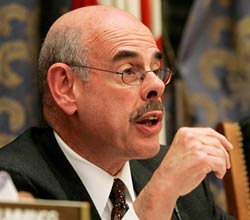
    Congressman Henry Waxman (D-CA), the Chairman of the House Committee on Energy and Commerce, addressed the Generic Pharmaceutical Association (GPhA) yesterday, telling attendees of the trade group's annual meeting in Naples, FL that "a workable scientific regulatory and legal pathway for biogenerics and biosimilar pharmaceuticals will ensure more affordable medications for Americans and we believe it will spur innovation in the bio tech markets" (see GPhA press release).  It was fitting that Rep. Waxman appear before the group (even if via video), as the GPhA's annual meeting this year celebrates the 25th anniversary of the signing of the Hatch-Waxman Act.

    Waxman, Henry
    Rep. Waxman (at left) called the issue of exclusivity "[o]ne of the biggest sticking points in the debate over biogeneric legislation," informing attendees that "[t]he brand industry is calling for 12, 14, 16, and even 20 years of exclusivity."  As for the soundness of the brand industry's argument, Rep. Waxman told the GPhA that "[i]t makes my head spin trying to keep up with [the brands'] ever changing arguments for why these terms are justified."  Acknowledging his own bias, Rep. Waxman argued that the Hatch-Waxman model, which "has worked well for 25 years," would achieve a strong balance between fostering innovation and making affordable biologics available to consumers.

    Jaeger, Kathleen
    Following Rep. Waxman's remarks, GPhA President and CEO Kathleen Jaeger (at right) and BIO President and CEO Jim Greenwood participated in a "lively" biogenerics panel discussion, in which both Ms. Jaeger and Mr. Greenwood agreed that biogenerics legislation has gained momentum.  However, Mr. Greenwood reiterated BIO's position that there should be 14 years of market exclusivity.  Ms. Jaeger responded that "the devil is in the details," pointing out that "the issue of exclusivity is likely the 'gordian knot' that must be cut loose for us to reach consensus and get legislation passed."  However, she asserted that "[t]he generic industry has 25 years of experience that shows the balanced approach under Hatch-Waxman is a sound and successful model to use for biogenerics."

    In a separate announcement, the Coalition for a Competitive Pharmaceutical Market (CCPM), an organization of large national employers, consumer groups, generic drug manufacturers, and insurers (a list of members can be viewed here), strongly praised Rep. Waxman's remarks at the GPhA's annual meeting.

  •     By Donald Zuhn

    Congress
    Earlier today, the Manufacturing Alliance on Patent Policy (MAPP) let us know, through its media relations firm, that "well sourced rumors" have pegged Monday, March 2nd as the day on which the first of perhaps three patent reform bills will be introduced in the 111th Congress.  The 110th Congress saw the introduction and/or passage of three patent reform bills:  H.R. 1908, which the House passed in September of 2007; S. 1145, which was introduced by Senator Patrick Leahy (D-VT) in April of 2007, and then removed from the calendar one year later; and S. 3600, which was introduced by Senator Jon Kyl (R-AZ) in September 2008.  MAPP did not indicate which of the three bills might be introduced next week, but speculation has centered on the Senate, rather than the House, taking the lead on patent reform this time around, and Senator Leahy announced plans to reintroduce his bill earlier this month (see "US patent overhaul bill seen returning to Congress").  Senator Leahy has stated that his new bill will be "quite similar in some areas" to S. 1145.

    For additional information regarding this and other related topics, please see:
    • "Senator Kyl’s Patent Reform Bill Introduced Today," September 25, 2008
    • "Senate Patent Reform Legislation — One Old Bill and One New Bill," August 11, 2008
    • "Senate Patent Reform Bill: R.I.P.?" May 5, 2008
    • "Amendments to S. 1145," March 17, 2008
    • "Patent 'Reform' Bill Passes House of Representatives," September 9, 2007
  •     By Donald Zuhn

    Lilly
    The Federal Circuit today affirmed a decision by the District Court for the Southern District of Indiana to extend the statutory 30-month stay under 21 U.S.C. § 355(j)(5)(B)(iii), thereby preventing the U.S. Food and Drug Administration from approving the Abbreviated New Drug Application (ANDA) filed by Defendant-Appellant Teva Pharmaceuticals USA, Inc.

    Teva
    Seeking approval to manufacture and market a generic version of Plaintiff-Appellee Eli Lilly and Company's raloxifene hydrochloride formulation, which Lilly markets as Evista® for the treatment and prevention of postmenopausal osteoporosis, Teva filed an ANDA with the FDA in 2006.  In response, Lilly filed an infringement suit against Teva on June 29, 2006, alleging that Teva's ANDA filing infringed four Lilly patents (U.S. Patent Nos. RE38,968; RE39,049; RE39,050; and 6,906,086; directed to methods of preventing and treating postmenopausal osteoporosis using raloxifene).  The FDA followed by staying approval of Teva's ANDA for 30 months from the date Lilly received Teva's Paragraph IV notifications, with the stay set to expire on November 16, 2008.

    In February 2007, Lilly amended its complaint to allege infringement of three additional patents (U.S. Patent Nos. 6,458,811; 6,797,719; and 6,894,064; directed to raloxifene particle size and formulation).  On July 8, 2008, Teva amended its ANDA to include a new particle-size measuring methodology for its raloxifene tablets, and notified Lilly of the amendment two days later.  In addition, Teva provided batch samples of its raloxifene tablets to Lilly on July 28, August 19, and September 17, 2008, and produced 27,000 pages of documentation related to the new particle-size measuring methodology on September 5, 2008.

    In response, Lilly moved for an extension of the 30-month stay under 21 U.S.C. § 355(j)(5)(B)(iii), which allows a District Court to shorten or extend the statutory 30-month stay if "either party to the action fail[s] to reasonably cooperate in expediting the action."  In its motion, Lilly alleged that Teva "fail[ed] to 'reasonably cooperate in expediting the action' . . . as evidenced by Teva's last-minute alteration of its proposed drug product and its 'multiple delays in producing critical discovery . . . [which have] adversely affected Lilly's infringement case and trial preparation.'"  The District Court granted Lilly's motion for a stay, extending the 30-month stay until March 9, 2009, the date on which the trial was scheduled to begin.

    Federal Circuit Seal
    In an opinion by Circuit Judge Rader, who was joined by Chief Judge Michel, a panel majority determined that the record contained sufficient evidence upon which the District Court could base its decision to extend the 30-month stay.  In particular, the majority noted that evidence in the record indicated that Teva had altered its particle size manufacturing specification and the method of measuring particle size, and "then delivered its changed samples to Lilly past the court's August 18, 2008, discovery deadline" (as the majority notes elsewhere in the opinion, one set of batch samples was delivered to Lilly prior to the discovery deadline).

    In affirming the District Court's decision to extend the stay in this case, the majority distinguished the instant appeal from its decision in Andrx Pharmaceuticals, Inc. v. Biovail Corp., 276 F.3d 1368 (Fed. Cir. 2002), where the Federal Circuit vacated a district court decision to shorten the 30-month stay.  In Andrx, the CAFC held that the district court had erred by basing its decision to shorten the stay on Biovail's actions before the FDA (Biovail submitted a second patent on its NDA and, in a practice that is no longer permitted, secured a second 30-month stay after filing suit against Andrx on that patent).  According to the majority, "[u]nlike Andrx, in this case, the district court extended the statutory thirty-month stay based on its findings of Teva's lack of cooperation in expediting the patent litigation in its court," rather than on Teva's filing with the FDA.

    Circuit Judge Prost, in dissent, argued that while "[t]he thirty-month stay described in 21 U.S.C. § 355(j)(5)(B)(iii) may be extended for one reason and one reason only:  'because either party to the action failed to reasonably cooperate in expediting the action,' . . . the district court never made any finding related to the statutory standard, i.e., whether Teva reasonably cooperated in expediting the action."  According to the dissent, the District Court provided only two justifications for extending the stay — giving Lilly sufficient opportunity to identify the nature and composition of Teva's raloxifene product and providing Lilly with a reasonable amount of time to test Teva's altered raloxifene samples before trial — and "[n]either of these reasons remotely resembles the statutorily required finding."  Noting that the Federal Circuit had examined the issue before it only once before (in Andrx), the dissent concluded that "[t]o affirm in this case is to effectively eliminate the statutorily required finding, and to prematurely terminate the development of appropriate standards governing modification under 21 U.S.C. § 355(j)(5)(B)(iii)."

    Eli Lilly & Co. v. Teva Pharmaceuticals USA, Inc. (Fed. Cir. 2009)
    Panel: Chief Judge Michel and Circuit Judges Rader and Prost
    Opinion by Circuit Judge Rader
  •     By Suresh Pillai

    King Pharmaceuticals' Patents on SKELAXIN® Invalidated By District Court

    King Pharmaceuticals
    In the case of King Pharmaceuticals, Inc. v. Eon Labs, Inc., the U.S. District Court for the Eastern District of New York invalidated two of the King patents at issue in the case, U.S. Patent Nos. 6,407,128 and 6,683,102 as part of its ruling on a motion for summary judgment filed by Eon Labs, Inc.  The two patents at issue relate to the King drug SKELAXIN® (metaxalone).

    Sandoz
    Although the District Court ruled on the validity of these two patents, the Order invalidating the patents is unrelated to King's litigation against Eon successor Sandoz, Inc. in the U.S. District Court for the District of New Jersey regarding U.S. Patent No. 7,122,566, another member of the SKELAXIN® patent family (see "Court Report," December 14, 2008).  While this patent is currently listed in the Orange Book, the FDA has not approved any ANDA covering the patent to Sandoz for the marketing of a generic version of SKELAXIN®.  King Pharmaceuticals is headquartered in Bristol, TN and Sandoz, Inc. is headquartered in Holzkirchen, Germany.


    Settlement Announced in Lotrel® Lawsuit

    Novartis
    IP Law 360
    reported last week that both Woodcliff Lake, N.J.-based Par Pharmaceutical and Basel, Switzerland-based Novartis have moved to dismiss a patent suit over Par's marketing of a generic version of Lotrel® (amlodipine besylate/benazepril hydrochloride, used to treat hypertension), a Novartis product (see "Court Report," February 19, 2007).  The suit, first filed in October 2006 in the U.S. District Court for the District of New Jersey, commenced when Novartis claimed that Par's ANDA covering a generic version of Lotrel® infringed a Novartis patent, U.S. Patent No. 6,162,802.  The stipulation signed as a result of the Par Pharmaceutical
    dismissal was silent as to the existence of any type of settlement in the case.