•     By Donald Zuhn

    Waxman, Henry
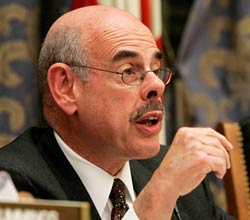
    It appears that Representative Henry Waxman (D-CA) (at right) will be the first to introduce a follow-on biologics bill in the 111th Congress.  According to a Reuters report, Rep. Waxman has initiated a bipartisan effort to create a follow-on biologics regulatory pathway in the United States.  Rep. Waxman, who was joined by Rep. Nathan Deal (R-GA), Rep. Frank Pallone (D-NJ) and Rep. Jo Ann Emerson (R-MO), called this effort one of his highest priorities this year.

    As we reported previously, five follow-on biologics were introduced in the 110th Congress:

    • "Access to Life Saving Medicine Act," (S. 623 and H.R. 1038), introduced by Congressman Henry Waxman and Senator Charles Schumer in February 2007;
    • "The Patient Protection and Innovative Biologic Medicines Act of 2007" (H.R. 1956), introduced by Congressman Jay Inslee in April 2007;
    • "The Biologics Price Competition and Innovation Act of 2007" (S. 1695), introduced by Senator Edward Kennedy in June 2007; and
    • "The Pathway for Biosimilars Act" (H.R. 5629), introduced by Congresswoman Anna Eshoo and Congressman Joseph Barton in March 2008.

    Much of the debate surrounding these prior bills centered on the exclusivity periods provided by each bill, with H.R. 1956 providing twelve years of data exclusivity (the period of time during which a potential generic drug supplier is prevented from using an innovator's clinical trial and related data to substantiate the safety of the generic's medically equivalent drug) followed by two years of approval or market exclusivity (the period of time during which a generic drug supplier can file for, but not receive, FDA approval), S. 1695 and H.R. 5629 providing four years of data exclusivity followed by eight years of approval exclusivity, and S. 623 and H.R. 1038 providing the same exclusivity period found in the Hatch-Waxman Act (i.e., five years of market exclusivity for original products and three years for some modified versions of existing drugs).

    Rep. Waxman's new bill (H.R. 1427; the Promoting Innovation and Access to Life Saving Medicines Act) reportedly provides the same exclusivity period set forth in S. 623 (the text of H.R. 1427 is not yet available on THOMAS).  The Congressman said the new bill "will lead to healthy competition and long-term savings for patients and payers, and will preserve innovation in the biotech marketplace," adding that its approach was consistent with President Obama's proposal for creating a follow-on biologics regulatory pathway.

    One analyst called Rep. Waxman's new bill "more pro-generic" than his previous effort, but believed the new bill would be "more balanced" following House debate on the exclusivity period (see Reuters report).  The possibility that H.R. 1427 may lack "balance" should come as little surprise following the Congressman's remarks to the Generic Pharmaceutical Association (GPhA) last month.  Addressing the issue of exclusivity, Rep. Waxman told the GPhA that "[t]he brand industry is calling for 12, 14, 16, and even 20 years of exclusivity," adding that "[i]t makes my head spin trying to keep up with [the brands'] ever changing arguments for why these terms are justified."

    Generic Pharmaceutical Association (GPhA)
    It did not take long for proponents and opponents of H.R. 1427 to issue statements regarding the new bill.  GPhA President and CEO Kathleen Jaeger applauded Waxman's efforts in introducing a "consensus bill that achieves the balance of fostering pharmaceutical innovation while also making affordable medicines available to consumers" (see GPhA press release).  Ms. Jaeger contended that in strengthening the U.S. health care system, "our priority must be to reduce costs while increasing access to quality care," adding that "[n]ow, more than ever, it's time to put patients first."

    Teva
    The U.S. subsidiary of Teva Pharmaceutical Industries Ltd., one of the largest generic pharmaceutical companies in the world, joined the GPhA in applauding the introduction of H.R. 1427 (see Teva press release).  William Marth, President and CEO of Teva North America, stated that the new bill "can provide a vast benefit for all Americans and save billions at the same time."  The Teva release noted that the average daily cost of a biologic drug is approximately 22 times greater than a traditional, small molecule drug.

    Biotechnology Industry Organization (BIO)
    The Biotechnology Industry Oragnization (BIO) took a different view of H.R. 1427.  In a statement entitled "New Proposed Biosimilars Pathway Filled With Potholes," BIO President and CEO Jim Greenwood asserted that the Waxman bill "would take patients and our industry down the wrong path — a path that jeopardizes the continued development of new breakthrough therapies and potential cures for debilitating diseases such as multiple sclerosis, HIV/AIDS and Alzheimer's," and argued that the bill "sets a path that jeopardizes our ability to help meet President Obama's call for a cure to cancer 'within our time' and help realize the promise of stem cell research."  While Mr. Greenwood noted that BIO continued to strongly support the creation of a follow-on biologics regulatory pathway, he said that H.R. 1427 "seeks to cut prices but instead cuts corners."  Interestingly, Mr. Greenwood did not directly attack the new bill's exclusivity period (BIO has previously indicated support for an exclusivity period of between 12 and 14 years).  Instead, the BIO release focused on the bill's shortcomings with respect to safeguarding patient safety.

    Patent Docs will have more on H.R. 1427 when the text of the bill has been made available.

  •     By Kevin E. Noonan

    Obama Change
    In all the understandable excitement surrounding President Obama's lifting of the Bush Administration's ban on federal funding for embryonic stem cell research, his broader message may have gotten lost.  Overturning the stem cell ban is just a part of a return to the tradition, the guiding principle in Western societies since the end of the Dark Ages, to use the scientific method and its results to understand the world and make rational decisions on policy based on science instead of ideology. 

    This tradition was suppressed during the Bush years.  The evidence for this conclusion is rampant:  there have been several books published describing the undue influence of ideology (Seth Shulman's Undermining Science: Suppression and Distortion in the Bush Administration, University of California Press, 2006; Chris Mooney, The Republican War on Science, Basic Books, 2006), as well as dozens of editorials (collected by the Union of Concerned Scientists here).  The Union has also collected its Periodic Table of these abuses).  While the Bush administration's antipathy to the evidence of global warming is well known, there are several other important issues where ideology trumped science, such as abortion and its psychological and medical effects; various specific environmental policies involving endangered species; and political litmus and loyalty tests for scientists appointed to advisory and other federal panels.

    President Obama has been on record for some time as being opposed to this philosophy.  In a radio address in December, announcing members of his scientific and technology advisory team, he said:

    [T]oday, more than ever before, science holds the key to our survival as a planet and our security and prosperity as a nation.  It is time we once again put science at the top of our agenda and worked to restore America's place as the world leader in science and technology.  Because the truth is that promoting science isn't just about providing resources — it's about protecting free and open inquiry.  It's about ensuring that facts and evidence are never twisted or obscured by politics or ideology.  It's about listening to what our scientists have to say, even when it's inconvenient — especially when it's inconvenient.  Because the highest purpose of science is the search for knowledge, truth and a greater understanding of the world around us.  That will be my goal as President of the United States.

    A distinct change from the immediate past.

    In his remarks on Monday, President Obama reiterated some of these sentiments:

    This Order is an important step in advancing the cause of science in America.  But let's be clear:  promoting science isn't just about providing resources — it is also about protecting free and open inquiry.  It is about letting scientists like those here today do their jobs, free from manipulation or coercion, and listening to what they tell us, even when it's inconvenient — especially when it's inconvenient.  It is about ensuring that scientific data is never distorted or concealed to serve a political agenda — and that we make scientific decisions based on facts, not ideology. 

    By doing this, we will ensure America's continued global leadership in scientific discoveries and technological breakthroughs.  That is essential not only for our economic prosperity, but for the progress of all humanity.

    That is why today, I am also signing a Presidential Memorandum directing the head of the White House Office of Science and Technology Policy to develop a strategy for restoring scientific integrity to government decision making.  To ensure that in this new Administration, we base our public policies on the soundest science; that we appoint scientific advisors based on their credentials and experience, not their politics or ideology; and that we are open and honest with the American people about the science behind our decisions.  That is how we will harness the power of science to achieve our goals — to preserve our environment and protect our national security; to create the jobs of the future, and live longer, healthier lives.

    Amen.

    For additional information regarding this or other related topics, please see:
    • "President Obama to Life Stem Cell Limits on Monday," March 8, 2009
  •     By Donald Zuhn

    Senate Committee Room
    For almost two hours this morning, the Senate Judiciary Committee heard testimony regarding its efforts to reform U.S. patent law.  Not surprisingly, much of the discussion at the hearing focused on Section 4 of the Senate patent reform bill (S. 515), which concerns damages.  The damages provision of S. 515 (like that of S. 1145, which stalled in the Senate last spring) requires a court to choose from among three methods to be used in calculating a reasonable royalty:  (1) the entire market value of an infringing product (when the claimed invention's specific contribution over the prior art is the predominant basis for the infringing product's market demand), (2) an established royalty based on marketplace licensing, or (3) the portion of the economic value of the infringing product or process properly attributable to the claimed invention's specific contribution over the prior art (when neither of the first two methods applies).

    The hearing's focus on the damages section was expected given the debate over the damages section in the 110th Congress.  In addition, on the same day that the new Senate bill was introduced, Senator Orrin Hatch (R-UT) noted that Congressional leaders "agree that more work needs to be done on the damages and inequitable-conduct provisions," and in a letter to Committee Chairman Patrick Leahy (D-VT), Senator Arlen Spector (R-PA) requested that the Senate wait until late May to act on S. 515 in order to give the Federal Circuit an opportunity to hear argument on an important damages-related case.

    At today's hearing, the Committee heard testimony from six witnesses:

    • Steven Appleton, Chairman and CEO of Micron Technology, Inc. (Mr. Appleton's testimony);
    • Philip Johnson, Chief Intellectual Property Counsel for Johnson & Johnson (Mr. Johnson's testimony);
    • David Kappos, Vice President and Assistant General Counsel of Intellectual Property Law and Strategy for International Business Machines Corp. (Mr. Kappos' testimony);
    • Taraneh Maghamé, Vice President of Tessera, Inc. (Ms. Maghamé's testimony);
    • Herbert Wamsley, Executive Director for the Intellectual Property Owners Association (Mr. Wamsley's testimony); and
    • Mark Lemley, the William H. Neukom Professor of Law at Stanford Law School (Prof. Lemley's testimony).

    Senator Spector
    Following statements from each witness, Committee members spent the latter half of the hearing questioning the witnesses.  Senator Spector (at right) highlighted the divide on the damages issue when he asked the witnesses to succinctly summarize their positions regarding an acceptable damages provision, and the witnesses responded by providing a range of different methods.  Mr. Appleton found an apportionment of damages method to be the best approach.  Mr. Johnson favored a method in which damage calculations were based on the increase in product value attributable to the invention, noting that more than one of the Georgia-Pacific factors normally needs to be considered when determining damages.  Mr. Kappos argued for the "essential features" standard of Quanta Computer, Inc. v. LG Electronics, Inc.  Ms. Maghamé believed that a gatekeeper approach, in which the court determined the Georgia-Pacific factors to be considered by the jury, was the proper method.  Prof. Lemley asserted that damage calculations should be based on the value actually contributed by the invention, and argued that something more than a gatekeeper approach was needed.  Mr. Wamsley, noting that four of the other five witnesses worked for IPO members, dodged Senator Spector's question by saying that there were "no magic words."

    Senator Feinstein
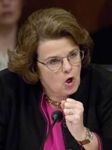
    Senator Dianne Feinstein (D-CA) (at left) expressed concern as to how the bill's current damages provision would impact a number of industries in her state, including the biotech industry.  She said that no one industry "should rule the roost" with respect to the damages issue, and contended that the damages language in the Senate bill "needs to be reworked."  The Senator proposed codifying the Georgia-Pacific factors, which she found to be "excellent," and supported the gatekeeper approach for damage calculations.  Absent reconciliation on the damages issue, Senator Feinstein stated that she would not be voting for the bill.

    Senator John Kyl (R-AZ) also questioned the witnesses regarding the damages provision, and asked Mr. Kappos to provide citations to any cases that applied an essential features standard when calculating damages.  (Senator Kyl noted that his own staff was unable to identify any such cases.)

    Senator Leahy closed the hearing by thanking the witnesses and informing (warning) attendees that "there will be new patent legislation" this year.

    For additional information regarding this topic, please see:
    • "Senator Specter Seeks Resolution of Issues before Vote on Patent Reform Bill," March 5, 2009
    • "Senate Judiciary Committee Releases Witness List for Patent Reform Hearing," March 4, 2009
    • "Senate and House Introduce New Patent Reform Legislation," March 3, 2009

  •     By Suresh Pillai

    Final Judgment Granted to Applera in Dispute with Enzo

    Life Technologies
    On March 5, the U.S. District Court for the District of Connecticut, upon the order of the Court of Appeals for the Federal Circuit (see "Biotech/Pharma Docket," March 2, 2009), reopened the patent litigation suit between Applera (based in Foster City, CA) and Enzo Biochem (based in New York, NY) and issued final judgment in favor of Applera (now Life Technologies, following Applera's merger with Invitrogen).  This final judgment was made possible by Enzo's grant of an unrestricted covenant not to sue for infringement of the last patent remaining in the dispute.

    Enzo
    Last month, the Federal Circuit issued an order granting Enzo's petition for a writ of mandamus, a petition filed by Enzo in order to clear the way for Enzo's appeal to the CAFC.  In issuing final judgment against Enzo, the District Court removed any ambiguity concerning claims status, thereby passing jurisdiction onto the Federal Circuit.  By granting the defendants an unrestricted covenant not to sue, Enzo mooted the final remaining issue in the case, the counterclaims of invalidity and noninfringement for the final patent in suit.


    Supreme Court Denies Writ of Certiorari in Prilosec Case

    Apotex #1
    On March 8, the Supreme Court denied Toronto, ON-based Apotex's writ of certiorari, refusing to hear Apotex's appeal against AstraZeneca (based in London, UK) in their dispute over Prilosec.  Apotex was seeking review of a May 2007 District Court decision that Apotex had infringed AstraZeneca's Prilosec patents (U.S. Patent Nos. 4,786,505 and 4,853,230).  In October of 2008, prior to filing its writ, Apotex had sought an en banc hearing by the Federal Circuit, but the CAFC denied Apotex's petition for the hearing, upholding the District Court's findings of infringement (as reported by Patent Docs on June 11, 2008 and August 20, 2008).  Following the Supreme Court's denial of a writ of certiorari, the case will return to the lower court for the next phase, a determination and award of damages.


    Settlement Agreement Announced in Elan's Suit against Watson

    Watson Pharmaceuticals
    On March 6, Watson Pharmaceuticals, Inc. (based in Corona, CA) agreed to settle its patent dispute with Elan Corp. (based in Dublin, Ireland) over Watson's generic version of Naprelan, covered by U.S. Patent No. 5,637,320, owned by Elan.  This settlement brings to a close a lawsuit that started when Andrx Pharmaceuticals, Inc. began marketing generic Naprelan, and Andrx had filed a countersuit.  Andrx's successor-in-interest, Watson, became a party to the litigation upon completion of Watson's 2006 purchase of Andrx.

    Elan
    In August, the District Court for the Southern District of Florida found in favor of Elan, ruling that Watson's naproxen sodium products infringed upon Elan's patent.  The District Court found that Andrx, in its ANDA filing describing its generic drug, had filed an inaccurate certification notice with respect to the generic product and the manufacturing process.  The Court also concluded that Andrx had willfully neglected to file an ANDA without first having received a legal written opinion on infringement with regard to its generic drug.

    The settlement stipulates that Watson must pay Elan $18 million.  The agreement also prevents Watson from marketing or selling its product until the expiration of Elan's patent in 2014 or, in the alternative, until Elan's patent is found invalid or unenforceable.

  •     By Christopher P. Singer

    USPTO Seal
    In a Federal Register Notice (74 Fed. Reg. 10036) published on Monday, March 9, the U.S. Patent and Trademark Office announced that it is extending the deadline for submitting written comments regarding issues raised at last month's roundtable discussion on deferred examination, or any issue relating to deferral of examination, to May 23.  As we previously reported the Patent Office had initially announced that the deadline for submitting comments was February 26, 2009.  The roundtable discussion was held on Thursday, February 12, 2009.  According to today's Notice, the motivation behind the extending the period for submitting comments was to allow the public additional opportunity to view the recorded roundtable discussion webcast (viewable here) before submitting any comments.  In the days following the roundtable, the Office failed to provide a clearly marked link to the recorded roundtable discussion.  Anyone interested in a quick overview of the roundtable can review our previous summaries of the various participant viewpoints here (deferred examination proponents) and here (deferred examination opponents). 

    The USPTO encourages people to submit written comments by e-mail addressed to AC6comments@uspto.gov.  Alternatively, comments can be submitted by U.S. Mail addressed to:  Mail Stop Comments — Patents, Commissioner for Patents, P.O. Box 1450, Alexandria, VA 22313–1450, marked to the attention of Robert W. Bahr.

  •     By Kevin E. Noonan

    Federal Circuit Seal
    The Court of Appeals for the Federal Circuit occupies a unique place in the Federal appellate system.  Like the D.C. Circuit and unlike the other circuits, it is not regional and its jurisdiction is not limited to Federal District Courts in a particular geographical area.  Instead, its subject matter jurisdiction is limited to patent infringement decisions from district courts, appeals from the Board of Patent Appeals and Interferences, the Trademark Trial and Appeal Board, the Merit Systems Protection Board, the Court of International Trade, the International Trade Commission, the Court of Appeals for Veterans Claims, the Court of Federal Claims, the Boards of Contract Appeals, the U.S. Government Accountability Office, and arbitrator's decisions in employment disputes for various federal departments and agencies.  But despite this variety, the Court's purpose is not as a catch-all for appellate review but rather is defined by its mandate to harmonize U.S. patent law.  As described on the Federal Judicial Center page regarding the Act establishing the Court (Federal Courts Improvement Act of 1982, Pub. L. No. 97-164, 96 Stat. 25):

    In an effort to promote greater uniformity in certain areas of federal jurisdiction and relieve the pressure on the dockets of the Supreme Court and the courts of appeals for the regional circuits, the Congress in 1982 established what is now the only U.S. court of appeals defined exclusively by its jurisdiction rather than geographical boundaries.  The U.S. Court of Appeals for the Federal Circuit assumed the jurisdiction of the U.S. Court of Customs and Patent Appeals and the appellate jurisdiction of the U.S. Court of Claims.  The new court was authorized to hear appeals from several federal administrative boards as well.  Congress abolished the Court of Customs and Patent Appeals and the Court of Claims, reassigning those courts' 12 judges to serve on the Federal Circuit court.

    These considerations of the Court's origins make even more curious the colloquy, contained almost entirely in footnotes, to be found between Judges Mayer and Gajarsa, writing for the majority, and Judge Newman, writing in a curious concurrence reading more like a dissent, on the proper role in federal patent policy for the Court.  The case is In re Ferguson, the latest (perhaps deserved) victim to the Court's In re Bilski decision, and would be otherwise thoroughly not notable absent the judges sub rosa institutional debate.

    The case involved rejection by the U.S. Patent and Trademark Office's Board of Patent Appeals and Interferences of the claims in U.S. Serial No. 09/387,823, filed September 1, 1999 by Lewis Ferguson, Darryl Costin, and Scott C. Harris (a patent attorney who argued before the Court).  The claims are almost prima facie patent ineligible under Bilski, claiming a "process" as well as a "paradigm":

    A method of marketing a product, comprising:
        developing a shared marketing force, said shared marketing force including at least marketing channels, which enable marketing a number of related products;
        using said shared marketing force to market a plurality of different products that are made by a plurality of different autonomous producing company, so that different autonomous companies, having different ownerships, respectively produce said related products;
        obtaining a share of total profits from each of said plurality of different autonomous producing companies in return for said using; and
        obtaining an exclusive right to market each of said plurality of products in return for said using.

    And:

    A paradigm for marketing software, comprising:
        a marketing company that markets software from a plurality of different independent and autonomous software companies, and carries out and pays for operations associated with marketing of software for all of said different independent and autonomous software companies, in return for a contingent share of a total income stream from marketing of the software from all of said software companies, while allowing all of said software companies to retain their autonomy.

    Procedurally, the Examiner rejected the claims based on 35 U.S.C. §§ 102, 103, and 112; these grounds of rejection were not upheld by the Board.  Instead, the Board sua sponte entered a new ground of rejection based on 35 U.S.C. § 101, saying (in a decision rendered in 2004) that "[o]ur interpretation of these claims is that they do not expressly or implicitly require performance of any of the steps by a machine, such as a general purpose digital computer."  On rehearing (in a decision rendered in 2006), the Board entered a new ground of rejection under 35 U.S.C. § 101, in view of the intervening Interim Guidelines for Examination of Patent Applications for Subject Matter Eligibility.  The Board held that the method claims were not patent eligible for being directed to an abstract idea, and that the "paradigm" claims were not within the statutory categories because a "marketing company" was not a machine, manufacture or composition of matter.

    The Federal Circuit majority made short work (albeit not as short as the panel in Classen Immunotherapeutics) of the substantive issue of patentability.  Applying the Bilski "machine-or-transformation" test, the Court held that while reciting a patent-eligible category of invention, the method claims were clearly neither tied to a particular machine (citing In re Nuitjen for the required degree of tangibility to qualify as a machine) nor effected a transformation of any article into a different state or thing.  Citing Bilski, practice of the claims at issue did not qualify as a "transformation" because "'[p]urported transformations or manipulations simply of public or private legal obligations or relationships, business risks, or other such abstractions cannot meet the test because they are not physical objects or substances, and they are not representative of physical objects or substances.'"

    The majority was also crystal clear about its unwillingness (absent Supreme Court command) to consider any other test, calling the Bilski test the "'sole,' 'definitive,' 'applicable,' 'governing,' and 'proper' test for a process claim under § 101 . . . ."  And with regard to the applicability of the Court's State Street decision (which this panel agrees was not overturned by Bilski), the Court reminded appellants, and us, that the claims in State Street were directed to a machine, and that "[t]he claim at issue in State Street was thus drawn to a patent-eligible machine implementation of what may have otherwise been a non–patent-eligible abstract idea" (emphasis added).

    As for the paradigm claims, the opinion cites both the Nuitjen and Bilski cases for the proposition that inclusion in one of the categories enumerated in the statute is a necessary prerequisite for patent eligibility.  Here, appellants' paradigm claims did not fit into a category, and hence were patent-ineligible.

    Judge Newman
    Judge Newman (at left) continues to evince her displeasure with the substance of the Bilski decision in her concurrence, where she concurs with the majority's decision but little else.  She begins by reminding everyone that, as she reads it, the Supreme Court's Gottschalk v. Benson opinion does not support the reading of it adopted by the en banc Bilski majority.  Citing footnote 3 of the majority opinion:

    Contrary to the concurrence's assertion, we do not contend that this court has overturned State Street Bank & Trust Co. v. Signature Financial Group, 149 F.3d 1373 (1998), but merely note that the "useful, concrete and tangible result test" "is insufficient to determine whether a claim is patent-eligible under § 101," Bilski, 545 F.3d at 959, and "is inadequate," id. at 960 (reaffirming that "the machine-or-transformation test outlined by the Supreme Court is the proper test to apply" (emphasis added)), and that "those portions of our opinions in State Street and AT&T [Corp. v. Excel Commc'ns, Inc., 172 F.3d 1352 (Fed. Cir. 1999),] relying on a 'useful, concrete and tangible result' analysis should not longer be relied on," id. at 960 n.19.

    She asserts that the majority suggests that the Bilski decision overturned not only State Street but other precedent (including the Freeman-Walter-Abele test, the "technological arts" test and the "physical steps" test), constituting a "sweeping rejection of precedent [that] simply enlarges the taint on the thousands of patents that were granted in application of these tests."  She also disagrees with the scope of the majority's rationale for deciding the method claims at issue constitute an "abstract idea":

    [T]he court disposes of the Ferguson method on the ground that it is an "abstract idea," although it is definite and concrete and limited, and not at all abstract.  The court resolves this dilemma by defining "abstract idea" as anything that does not meet the Bilski machine-or-transformation test.  However, the Ferguson marketing method is not an abstraction, even in Bilski terms.  The Ferguson method "does not pre-empt all uses of a fundamental principle in any field but is limited to a particular use, a specific application.  Therefore, it is not drawn to the principle in the abstract".  Bilski, 545 F.3d at 957.

    The court's circular definition of "abstraction" as anything that is not patent-eligible under Bilski can impact the many new methods flowing from the new information technologies.  These methods have enhanced human capabilities, blurring the traditional line between machine and human; their patentability warrants at least consideration in appropriate cases, not disposition in dictum.

    At base, Judge Newman is concerned about the consequences of extending Bilski as far as the majority of the Court seem to desire:

    Until we are confident in understanding the consequences of our rulings, let us not forget that today's "knowledge economy" arose and thrived under the past law of patent eligibility.  Although I agree that new thinking is warranted, this court's broadside assault on patent-eligible subject matter is unsupported by any stated policy or benefit to either society or commerce.  We are ignorant of whether competitive activity, creative energies, and entrepreneurial initiatives, will founder or be facilitated by this court's dramatic change in the legal framework.  I take note that scholarship is starting to appear, as economists recognize "the new economy."  See, e.g., Richard G. Anderson, The New Economy: How the United States is Adapting to the Knowledge-Based Economy of the Twenty-First Century, Southern Illinois Economic Development Conference 21 (Sept. 21, 2006) (discussing intellectual property rights and the creation of knowledge).  But much more needs to be understood, as this court undertakes to change the legal framework of this economy.

    Today's new capabilities of acquiring and using knowledge are producing myriad creative advances.  This court has offered no explanation of the interests and policy that we intend to serve by removing such advances from the legal framework of the patent system.  See, e.g., Milton Katz, The Role of the Legal System in Technological Innovation and Economic Growth, The Positive Sum Strategy 169 (1986) (explaining that the legal system plays a part in facilitating and promoting "business enterprise, technological innovation, and economic thought").

    This court's retreat into the methods of the past is unworthy of our responsibility to support innovation in the future.  Major adjustment in established law should be based on changing industrial or intellectual or equitable needs — of which no evidence is before this court.  The only need of which I am aware is that of the current harsh economic times, when the need is of enhanced incentives to innovation and investment in new things and new industries, not reduction in the existing incentives.

    At the end of this passage, Judge Newman drops a footnote in response to a footnote in the majority opinion; a comparison of these notes illustrates the most interesting philosophical question raised in this case:

    Majority note 7:

    The essence of the concurrence is an argument premised on policy and philosophical grounds.  We disagree with this approach, as it is not the role of courts to make such arguments but rather the responsibility of Congress to consider amending the patent laws as necessary to recognize and allow for innovation in the future.

    Judge Newman note 1:

    I take note of the panel majority's criticism of my views as "policy" related.  Indeed, the major concern with my colleagues' aggressive elimination of patent access in areas of modern commerce is their failure to consider the policy effects.  The success of the common law derives from its relation to the policy that it implements.  As Justice Holmes stated:

    The very considerations which judges most rarely mention, and always with an apology, are the secret root from which the law draws all the justices of life.  I mean, of course, considerations of what is expedient for the community concerned.  Every important principle which is developed by litigation is in fact and at bottom the result of more or less definitely understood views of public policy; most generally, to be sure, under our practice and traditions, the unconscious result of instinctive preferences and inarticulate convictions, but nonetheless traceable to views of public policy in the last analysis.

    It is stunning, in a way, that Judges Gajarsa and Mayer question the Court's role in considering patent policy in making their decisions.  The majority's footnote 7 properly recognizes Congress as
    the ultimate arbiter of how it will exercise its Article I power to grant patents (provided, of course, that the Supreme Court does not conclude that its Acts are outside Constitutional boundaries).  But the Federal Circuit's role, as the only specialized appellate court in the federal judicial system, has always been to consider the policy implications of its decisions; even the Supreme Court has recognized the Federal Circuit's "special expertise" in this area.  Congress created the Court expressly with the aim of harmonizing U.S. patent law, a goal made difficult if not impossible without some consideration of the policy implications of its decisions.  Now it seems that at least two members of the Court believe this is not their role and eschew any suggestion that "policy" is a valid factor for their deliberations.  If the Federal Circuit is not to be involved in patent policy, then it can fairly be asked:  "What good is the Federal Circuit?"

  •     By Donald Zuhn

    Schering-Plough
    The new year has witnessed yet another blockbuster biotech/pharma deal.  On the heels of Pfizer's $68 billion acquisition of Wyeth (see "Pfizer Expected to Announce Wyeth Acquisition on Monday") in January, Merck & Co., Inc. and Schering-Plough Corp. announced today that their Boards of Directors had unanimously approved a definitive merger agreement under which Schering-Plough shareholders will receive 0.5767 shares and $10.50 in cash for each share of Schering-Plough stock and each share of Merck stock will become a share of the combined company.  Based on the March 6, 2009 closing price of Merck stock, Schering-Plough shareholders will receive stock and cash valued at $23.61 per share, or $41.1 billion total.  The cash portion of the deal will be financed through a combination of $9.8 billion from existing cash reserves and $8.5 billion in financing provided by J.P. Morgan.

    Merck
    The combined company, which will operate under the name Merck, will be led by Merck Chairman, President, and Chief Executive Officer Richard Clark, and will have its corporate headquarters in Whitehouse Station, NJ.  Because the merger will create a much larger organization, Merck expects that the substantial majority of Schering-Plough employees will remain with the combined company.

    Dr. Peter Kim, Merck executive vice president and president of Merck Research Laboratories, stated that "Schering-Plough's considerable biologics expertise will complement Merck's novel proprietary biologics platform and aligns with our commitment to build a powerful biologics presence," adding that the pipelines of the two companies, when combined, would be "the best in the industry, by far."  For example, by merging with Schering-Plough, Merck will double the number of potential medicines it has in Phase III development, bringing the combined company's total to eighteen.  As a result of the merger, Merck also expects to achieve cost savings of approximately $3.5 billion annually beyond 2011.

  •     By Donald Zuhn

    Human Embryonic Stem Cell
    The New York Times
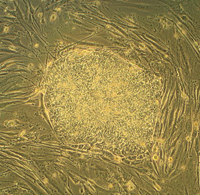
    reported late last week that President Obama will satisfy one of his campaign pledges on Monday when he reverses limits imposed by the Bush administration on embryonic stem cell research.  In August of 2001, the Bush administration ordered that federal research be limited to lines of cells that were already in existence at the time.  President Obama is expected to allow federal research on not only stem cell lines already in existence, but stem cell lines that have yet to be created.  In addition, the President will be asking the National Institutes of Health to come up with new stem cell research guidelines within 120 days of the announcement.

    Obama, Barack #2
    Accompanying the President for the announcement, which is scheduled to take place at 11:45 am (Eastern) in the White House, will be a number of Democratic and Republican legislators who support the reversal.  Among the lawmakers who have been invited to attend the announcement are Senators Dianne Feinstein (D-CA), Tom Harkin (D-IA), Orrin Hatch (R-UT), Edward Kennedy (D-MA), and Arlen Specter (R-PA), and Representatives Michael Castle (R-DE) and Diana DeGette (D-CO).  According to the Times, President Obama will also take the opportunity to speak about a return to "sound science" during his administration, fulfilling a campaign promise to separate politics and science.

    In an additional report in today's edition of the Times, officials in the Obama administration noted that the President would be looking — but perhaps not expressly asking — for some cooperation from Congress with respect to its own stem cell ban.  In particular, the President would like Congress to overturn the Dickey-Wicker amendment, first passed in 1996, which prohibits the use of tax dollars to create human embryos or to conduct research in which embryos are destroyed, discarded, or knowingly subjected to risk of injury.

    Congress
    Congress has already begun work on the stem cell issue with the introduction last month of three bills in the House (H.R. 872 and H.R. 873) and Senate (S. 487).  The bills would amend the Public Health Service Act to require the Secretary of Health and Human Services to conduct and support research that utilizes human embryonic stem cells, regardless of the date on which the stem cells were derived from a human embryo.  The two House bills, which were sponsored by Rep. DeGette and co-sponsored by Rep. Castle, Tammy Baldwin (D-WI), Mary Bono Mack (R-CA), Lois Capps (D-CA), Russ Carnahan (D-MO), Charles Dent (R-PA), Gene Green (D-TX), Mark Kirk (R-IL), James Langevin (D-RI), Ed Perlmutter (D-CO), and Fred Upton (R-MI), differ in that H.R. 872 also directs the National Institutes of Health to issue guidelines for such stem cell research.  The Senate bill, which was sponsored by Sen. Harkin and co-sponsored by Sen. Feinstein, Hatch, Kennedy, Specter, Harry Reid (D-NV), and Jeanne Shaheen (D-NH), is similar to H.R. 873.  Similar bills were passed by both the House and Senate in 2007, only to be vetoed by then-President Bush.  At a press conference to announce the introduction of the Senate bill, Sen. Specter said the legislation was needed so that "this important policy change . . . does not ping-pong back and forth with each successive President."

  •     By Sherri Oslick

    Gavel_2About
    Court Report:  Each week we will report briefly on recently filed
    biotech and pharma cases, and a few interesting cases will be selected
    for periodic monitoring.


    Genzyme Corp. v. Lupin Ltd. et al.

    1:09-cv-00147; filed March 5, 2009 in the District Court of Delaware

    Infringement of U.S. Patent Nos. 5,496,545 ("Phosphate-Binding Polymers for Oral Administration," issued March 5, 1996), 5,667,775 ("Phosphate-Binding Polymers for Oral Administration," issued on September 16, 1997), 6,509,013 ("Method of Making Phosphate-Binding Polymers for Oral Administration," issued January 21, 2003), and 7,014,846 ("Phosphate-Binding Polymers For Oral Administration," issued on March 21, 2006) following a Paragraph IV certification as part of Lupin's filing of an ANDA to manufacture a generic version of Genzyme's Renagel® (sevelamer hydrochloride, used for the control of serum phosphorus in patients with chronic kidney disease on dialysis).  View the complaint here.

    Procter & Gamble Co. et al. v. Apotex Inc. et al.
    1:09-cv-00143; filed March 4, 2009 in the District Court of Delaware

    Infringement of U.S. Patent No. 7,192,938 ("Method of Treatment Using Bisphosphonic Acid," issued March 20, 2007) following a Paragraph IV certification as part of Apotex's filing of an ANDA to manufacture a generic version of P&G's Actonel® (risedronate sodium, used to treat and prevent postmenopausal osteoporosis).  View the complaint here.


    Galderma Laboratories LP et al. v. Tolmar Inc.

    3:09-cv-00400; filed March 3, 2009 in the Northern District of Texas

    Infringement of U.S. Patent Nos. 6,881,726 ("Aqueous Compositions Containing Metronidazole," issued April 19, 2005) and 7,348,317 (same title, issued March 25, 2008), both licensed exclusively to Galderma, following a Paragraph IV certification as part of Tolmar's filing of an ANDA to manufacture a generic version of Galderman's MetroGel® (metronidazole gel, used to treat rosacea).  View the complaint here.


    Duramed Pharmaceuticals, Inc. v. Paddock Laboratories, Inc.

    1:09-cv-01905, filed March 2, 2009 in the Southern District of New York

    Infringement of U.S. Patent No. 5,908,638 ("Pharmaceutical Compositions of Conjugated Estrogens and Methods for Their Use," issued June 1, 1999) following a Paragraph IV certification as part of Paddock's filing of an ANDA to manufacture a generic version of Duramed's Cenestin® (synthetic conjugated estrogens, used to peri-menopausal, menopausal, and post-menopausal disorders).  View the complaint here.

    Millennium Pharmaceuticals Inc. v. Teva Parenteral Medicines Inc. et al.
    1:09-cv-00127; filed February 27, 2009 in the District Court of Delaware

    Infringement of U.S. Patent Nos. 6,713,446 ("Formulation of Boronic Acid Compounds," issued March 30, 2004) and 6,958,319 (same title, issued October 25, 2005), licensed exclusively to Millennium, following a Paragraph IV certification as part of Teva's filing of an ANDA to manufacture a generic version of Millenium's Velcade® (bortezomib, used to treat multiply myeloma).  View the complaint here.

    Merck & Co., Inc. v. Sandoz Inc.
    3:09-cv-00890; filed February 27, 2009 in the District Court of New Jersey

    Infringement of U.S. Patent Nos. 5,719,147 ("Morpholine and Thiomorpholine Tachykinin Receptor Antagonists," issued February 17, 1998), 6,048,859 (same title, issued April 11, 2000), 6,096,742 ("Polymorphic Form of a Tachykinin Receptor Antagonist," issued August 1, 2000), and 6,235,735 ("Morpholine and Thiomorpholine Tachykinin Receptor Antagonists, issued May 22, 2001) following a Paragraph IV certification as part of Sandoz's filing of an ANDA to manufacture a generic version of Merck's Emend® (aprepitant, used to prevent nausea and vomiting caused by chemotherapy).  View the complaint here.

    Schering Corp. v. Mylan Pharmaceuticals Inc.
    3:09-cv-00874; filed February 26, 2009 in the District Court of New Jersey

    Infringement of U.S. Patent No. 7,405,223 ("Treating Allergic and Inflammatory Conditions," issued July 29, 2008) following a Paragraph IV certification as part of Mylan's amendment of its ANDA to manufacture a generic version of Schering-Plough's Clarinex® (desloratidine, used to treat allergies).  View the complaint here.

    AstraZeneca Pharmaceuticals LP et al. v. Sandoz Inc.
    3:09-cv-00870; filed February 26, 2009 in the District Court of New Jersey

    Infringement of U.S. Patent No. 4,879,288 ("Novel Dibenzothiazepine Antipsychotic," issued November 7, 1989) following a Paragraph IV certification as part of Sandoz's filing of an amendment to its ANDA (adding additional dosage forms) to manufacture a generic version of AstraZeneca's Seroquel® XR (quetiapine fumarate, used to treat schizophrenia and bipolar disorder).  View the complaint here.

  • Calendar

    March 13, 2009 – Current Strategies for Patent Claim Construction: Key Updates on Patent Prosecution and Litigation (Law Seminars International) – San Francisco, CA

    March 23-24, 2009 – 3rd Annual Patent Law Institute (Practising Law Institute) – San Francisco, CA

    March 24, 2009 – 5th Annual Document Management, E-Discovery, and Litigation Readiness for Life Sciences (American Conference Institute) – New York, NY

    March 25-27, 2009 – Intellectual Property Counsels' Committee Spring Conference & Meeting (Biotechnology Industry Organization) – Phoenix, AZ

    March 30-31, 2009 – Pharmaceutical and Biotech Patent Claim Drafting*** (American Conference Institute) – New York, NY

    March 30-31, 2009 – FDA Boot Camp*** (American Conference Institute) – New York, NY

    April 1-4, 2009 – 24th Annual Intellectual Property Law Conference (American Bar Association Section of Intellectual Property Law) – Arlington, VA

    April 20-21, 2009 – 5th International Judges Conference on Intellectual Property Law (Intellectual Property Owners Association) – Washington, DC

    April 20-21, 2009 – 6th Annual Freedom to Operate Forum (C5 (UK)) – London, England

    April 24, 2009 – Patent Claim Construction (Law Seminars International) – College Park, GA

    April 27-28, 2009 – 3rd Annual Paragraph IV Disputes Conference*** (American Conference Institute) – New York, NY

    April 29-30, 2009 – Corporate IP Counsel Summit (World Research Group) – New York, NY

    June 22-27, 2009 – Innovation Week 2009 (U.S. Patent and Trademark Office) – Arlington, VA

    ***Patent Docs is a media partner of this conference or CLE