•     By Donald Zuhn

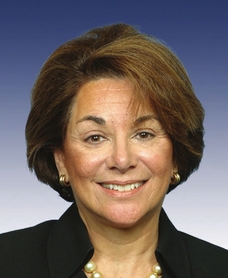
    Eshoo, Anna
    Yesterday, Rep. Anna Eshoo (D-CA) (at right) provided an alternative to Rep. Henry Waxman's (D-CA) follow-on biologics bill, when she introduced the Pathway for Biosimilars Act (H.R. 1548).  Rep. Waxman had introduced his own bill (H.R. 1427; the Promoting Innovation and Access to Life Saving Medicines Act) last week.

    The introduction of the Eshoo bill comes as little surprise, as Rep. Eshoo, like Rep. Waxman, had introduced a similar bill during the 110th Congress.  In fact, five follow-on biologics bills were introduced in the last Congress:  H.R. 1038 and S. 623 (introduced by Rep. Henry Waxman and Sen. Charles Schumer in February 2007), H.R. 1956 (introduced by Rep. Jay Inslee in April 2007), S. 1695 (introduced by Senator Edward Kennedy in June 2007), and H.R. 5629 (introduced by Rep. Anna Eshoo and Rep. Joseph Barton in March 2008).  Interestingly, Rep. Inslee has signed on as a co-sponsor of Rep. Eshoo's new bill, suggesting that Rep. Inslee will not be introducing his own follow-on biologics bill in the current Congress. 

    Much of the debate surrounding the prior follow-on biologics bills centered on the exclusivity periods provided by each bill, with H.R. 1956 providing twelve years of data exclusivity (the period of time during which a potential generic drug supplier is prevented from using an innovator's clinical trial and related data to substantiate the safety of the generic's medically equivalent drug) followed by two years of approval or market exclusivity (the period of time during which a generic drug supplier can file for, but not receive, FDA approval), S. 1695 and H.R. 5629 providing four years of data exclusivity followed by eight years of approval exclusivity, and S. 623 and H.R. 1038 providing the same exclusivity period found in the Hatch-Waxman Act (i.e., generally, five years of market exclusivity for original products and three years for some modified versions of existing drugs).
    House of Representatives Seal
    With regard to exclusivity periods, a full nine years of exclusivity separate the 5.5-year maximum provided by Rep. Waxman's bill and the 14.5-year maximum provided by Rep. Eshoo's bill.  The bills also appear to have very different levels of support, with Rep. Waxman attracting three co-sponsors and Rep. Eshoo attracting 43 co-sponsors.

    In a press release issued on her website, Rep. Eshoo noted that while "[b]iotechnology can lead to cures for cancer, diabetes, and AIDS, and prevent the onset of deadly and debilitating diseases like Alzheimer's, heart disease, and Parkinson's, . . . we need to preserve incentives to innovate and ensure that these therapies are safe and effective."  Rep. Eshoo contends that her new bill would achieve these objectives.  The press release issued by Rep. Eshoo's office also indicated that her bill had the support of "the academic and research community, patients, biotech companies, and the entrepreneurs who support the small start-up firms that form the basis of the biotechnology industry."

    In response to the introduction of H.R. 1548, the Biotechnology Industry Organization (BIO) issued its own press release, in which BIO President and CEO Jim Greenwood stated that the Eshoo bill "provides patients with the right balance between innovation and competition."  In contrast with its statement following the introduction of Rep. Waxman's bill, Mr. Greenwood stated that BIO was pleased to announce its support for Rep. Eshoo's bill.

    For additional information on this and other related topics, please see:
    • "Waxman Introduces Follow-on Biologics Bill," March 11, 2009
  •     By Donald Zuhn

    Shane, Scott
    Back in January, the Manufacturing Alliance on Patent Policy (MAPP) released a report indicating that the apportionment of damages provisions H.R. 1908 — the patent reform bill passed by the House in September 2007 — would have severe economic effects (see "Manufacturing Alliance on Patent Policy:  Apportionment of Damages Provision Will Have Adverse Effects").  The report, which was prepared by Dr. Scott Shane (at right), a Professor of Economics at Case Western Reserve University, concludes that the damages provisions would lead to a $34.4 billion to $85.3 billion decrease in the value of U.S. patents, a $38.4 billion to $225.4 billion decrease in the value of U.S. public companies, and a $33.9 billion to $66 billion decrease in annual research and development spending.

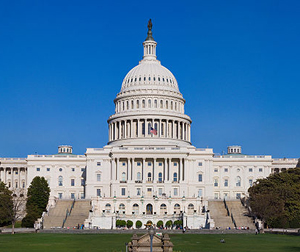
    U.S. Capitol Building
    Last month, prior to the introduction of the Senate (S. 515) and House (H.R. 1260) patent reform bills, Dr. Shane met with "key House and Senate offices" to discuss his economic analysis of an apportionment approach for calculating patent damages.  According to an e-mail distributed by MAPP, a number of the offices that were briefed by Dr. Shane asked him to provide a greater level of detail regarding his analysis (Dr. Shane had asked patent attorneys working in law firms to quantify the impact of an apportionment of damages approach).  In particular, the Congressional offices asked Dr. Shane to determine whether patent litigators and non-litigators differed with respect to their estimates of damages awards or the impact of the damages provision on the cost of experts or number of lawsuits filed.

    Dr. Shane informed Congressional staffers that of the 949 registered patent attorneys who received the survey, 209 responded, and of this number, 132 were litigators.  With respect to damages estimates, Dr. Shane noted that while patent attorneys estimated that damages awards would decrease by 25.7%, patent litigators believed damages awards would drop by 28.7%.  In addition, while patent attorneys estimated that expert costs would increase by 21.4%, patent litigators thought such costs would go up by 17.6%.  From this last result, Dr. Shane surmised that the results of his survey "seem to indicate that the respondents do not view the apportionment legislation as simplifying the process, and that they may view it as making the process less simple."  Finally, while patent attorneys thought the number of patent litigations would drop by 8.3% as a result of an apportionment approach, patent litigators believed the drop would be 6.7%.  Thus, for all three measures, the mean response for all patent attorneys did not differ much from the mean response for patent litigators.  Moreover, as Dr. Shane used the lower 25.7% drop in damages awards to generate his estimates of loss in patent value, business value, and R&D spending, the litigators' estimate would have yielded an even greater economic impact.

    Dr. Shane informed the Congressional offices that "apportionment of damages legislation will have certain negative implications that should be taken into account by policy makers as patent legislation is considered in the future."  However, he recommended that additional empirical research be conducted in order to provide Congress with a more complete picture of the likely effects of an apportionment system for determining patent damages.

  •     By Suresh Pillai

    Sepracor Settles Xopenex Suit With Barr

    Sepracor
    Last week, Sepracor Inc. and Barr Pharmaceuticals, Inc. (a Teva Pharmaceuticals subsidiary) entered into a settlement agreement that effectively ends a dispute between the two companies over the patent family covering Xopenex®, an inhaled asthma treatment.  Sepracor's initial complaint against Barr, filed in July of 2007 (see "Court Report," July 22, 2007), alleged infringement of five patents (U.S. Patent Nos. 5,362,755, 5,547,994, 5,760,090, 5,844,002, and 6,083,993) and was filed in response to Barr's ANDA filing seeking FDA approval for production of generic levabutrol hydrochloride inhalation solutions.

    Barr Pharmaceuticals
    Under the terms of the settlement agreement, Sepracor will grant a nonexclusive license to Barr to manufacture and market generic versions of Xopenex beginning in February 2013.  The agreement also provides, however, for earlier effective dates of the license if certain conditions are met.  In exchange for the grant of the license, Barr is obligated to pay to Sepracor royalties on sales, based on profit margins, of these generic versions.  The settlement agreement will become effective upon the filing of a consent final judgment and dismissal in the U.S. District Court for the District of Delaware.

    Additional information regarding the settlement agreement can be found in Sepracor's press release.

    Life Technologies Seeks to Invalidate Oxford Patent

    Life Technologies
    Life Technologies, Inc. has filed an amended complaint in the U.S. District Court for the Middle District of Tennessee seeking to invalidate U.S. Patent No. 5,886,157, owned by Oxford Biomedical Research Inc.  The '157 patent covers a method of purification for cytochrome P450 proteins.  Life Technologies' complaint was filed in response to Oxford's breach of contract suit against Life Technologies, filed in the U.S. District Court for the Eastern District of Michigan in 2005, alleging that Life Technologies owed hundreds of millions of dollars in anticipated damages from Life Techologies' breach of a sublicensee agreement acquired from Oxford's previous sublicensee.

    Oxford claims that the patent at issue is enforceable until its expiration in 2016, but the agreement stipulates that the license would expire in 2006 if no patent covering "licensed material" ever issued.  Because the patent that issued only covered methods and not any licensed material, Life Technologies claimed that the agreement's royalty terms had expired.  By filing the amended complaint in order to invalidate the patent, Life Technologies hopes to weaken Oxford's argument that any royalties are due.

    Breckenridge Loses Suit to Invalidate Everett Patent

    Breckenridge
    On March 12, the U.S. District Court for the Southern District of Florida dismissed Breckenridge Pharmaceutical Inc.'s suit to invalidate Everett Laboratories Inc.'s patents for a prescription multivitamin due to a lack of subject matter jurisdiction.  Breckenridge launched its Nutravance product on January 7, 2009 and filed suit seeking to invalidate the Everett patents before the existence of any controversy.  The District Court held that Breckenridge could not file suit without provocation from Everett.  In this case, at the time the suit was filed, Everett was unaware that Breckenridge was marketing a product that might have been infringing on Everett's own product.  Though Breckenridge claimed that past litigious activity by Everett in enforcing their patent rights created a controversy suitable for federal court jurisdiction, the Court disagreed.  The Court concluded that subject matter jurisdiction could only be established where there was "an actual and substantial controversy" between the parties.

    Everett
    Although Breckenridge's immediate complaint has been dismissed, it will still be able to contest validity in the infringement suit, filed by Everett after Breckenridge had filed suit in Florida, in the U.S. District Court for the District of New Jersey.  The patents at issue in the suit are U.S. Patent Nos. 6,660,293 and 6,893,904.

  •     By Christopher P. Singer

    USPTO Seal
    In a pre-OG Notice dated March 13, 2009, the U.S. Patent and Trademark Office addressed some issues relating to the competency of certain foreign patent offices to act as an International Searching Authority (ISA) under the PCT.  According to the Notice, the USPTO has found that a number of international applications filed with the United States Receiving Office (RO/US) have elected an ISA which is not competent to search and examine the entirety of the claimed subject matter.  An improper election of an ISA can delay issuance of the International Search Report and Written Opinion from the ISA.  The delay arises after the RO/US forwards a PCT application to the elected ISA, and the ISA determines that the application contains claims drawn to subject matter for which it has declared that it is not competent to act.  The ISA then returns the application to the RO/US, and the RO/US must then notify and invite the applicant to select a different ISA that is competent to handle the claimed subject matter.  The newly selected ISA will perform the international search in accordance with Chapter I of the PCT.

    The Notice made particular mention about the limited competency of the European and Australian Patent Offices for applications filed with the RO/US.  Specifically, the EPO will not act as an ISA/IPEA for applications with one or more claims to a business method, and the AU-IPO will not act as an ISA/IPEA for applications with one or more claims drawn to mechanical engineering or analogous fields of technology as defined by certain International Patent Classification classes (IPCs).  The USPTO suggests that applicants can avoid significant processing delays when filing international applications by reviewing applications which name either the EPO or AU-IPO as ISA and making sure those applications contain only claims that those offices are competent to search.

  •     By Donald Zuhn

    U.S. Capitol Building
    Recently, a number of bills that would significantly impact the biotech and pharma industry have been introduced in Congress.  These bills include the Preserve Access to Affordable Generics Act (S. 369), which would prohibit brand name drug companies from compensating generic drug companies for delaying the entry of generic drugs into the market; the Promoting Innovation and Access to Life-Saving Medicine Act (H.R. 1427), which would create a follow-on biologics regulatory pathway in the U.S.; and the Patent Reform Act of 2009 (S. 515 and H.R. 1260), which would make a number of important changes to Title 35.

    Lost in the introduction of these bills was the introduction of the Fair Prescription Drug Competition Act (S. 501 and H.R. 573), which would prohibit the marketing of authorized generic drugs.  In particular, the new legislation would amend § 505 of the Federal Food, Drug, and Cosmetic Act (21 U.S.C. § 355) to add a new subsection prohibiting the holder of a New Drug Application (NDA) from manufacturing, marketing, selling, or distributing an authorized generic drug, either directly or indirectly, or authorizing any other person to manufacture, market, sell, or distribute an authorized generic drug.  The House bill, which was introduced on January 15, was sponsored by Representative Jo Ann Emerson (R-MO) and co-sponsored by Representatives Marion Berry (D-AR), Dennis Moore (D-KS), and Zach Wamp (R-TN).  The Senate bill, which was introduced on February 26, was sponsored by Senator John D. Rockefeller, IV (D-WV) and co-sponsored by Senators Sherrod Brown (D-OH), Daniel Inouye (D-HI), Herb Kohl (D-WI), Patrick Leahy (D-VT), Charles Schumer (D-NY) Jeanne Shaheen (D-NH), and Debbie Stabenow (D-MI).

    For additional information regarding this and other related topics, please see:
    • "Waxman Introduces Follow-on Biologics Bill," March 11, 2009
    • "Senate and House Introduce New Patent Reform Legislation," March 3, 2009
    • "Bill to Prohibit Reverse Payments Introduced in the Senate," February 4, 2009

  •     By Donald Zuhn

    Senate Seal
    The Senate Judiciary Committee has placed the Senate patent reform bill (S. 515) on the agenda for the Committee's March 19th Executive Business Meeting.  The meeting, which begins at 10:00 am (Eastern), will be webcast.  The meeting agenda and a webcast link can be found at the Committee's website.

    On Friday, the Intellectual Property Owners Association (IPO) reported that under Committee rules, any Senator could hold up the bill for one meeting after it is placed on the agenda.  As a result, the IPO believes that discussion of S. 515 is likely to be deferred until the Committee's March 26th meeting.  Based on comments made by Senators Dianne Feinstein (D-CA), Arlen Spector (R-PA) Orrin Hatch (R-UT), and John Kyl (R-AZ) at last week's hearing on patent reform (see "Senate Judiciary Committee Holds Hearing on Patent Reform"), the IPO's prediction certainly has merit.  The IPO also noted in its report that any proposed amendments to the bill must be circulated on the day before the meeting.

  •     By Sherri Oslick

    Gavel_2About
    Court Report:  Each week we will report briefly on recently filed
    biotech and pharma cases, and a few interesting cases will be selected
    for periodic monitoring.


    Sanofi-Aventis U.S. LLC et al. v. Ebewe Pharma Ges.M.B.H. NFG.KG

    3:09-cv-01116; filed March 11, 2009 in the District Court of New Jersey

    Infringement of U.S. Patent No. 5,338,874 ("Cis oxalato (trans 1-1,2-cyclohexanediamine) PT(II) Having Optically High Purity," issued August 16, 1994) following a Paragraph IV certification as part of defendants' supplementation of its ANDA to manufacture a generic version of plaintiffs' Eloxatin® (oxaliplatin for injection, used to treat colorectal cancer).  View the complaint here.


    Abbott Laboratories et al. v. Lupin Ltd. et al.

    1:09-cv-00152; filed March 6, 2009 in the District Court of Delaware

    Abbott Laboratories et al. v Lupin Ltd. et al.

    1:09-cv-00564; filed March 6, 2009 in the District Court of Maryland

    The complaints in these cases are substantially identical.  Infringement of U.S. Patent Nos. 6,129,930 ("Methods and Sustained Release Nicotinic Acid Compositions for Treating Hyperlipidemia at Night," issued October 10, 2000), 6,406,715 ("Intermediate Release Nicotinic Acid Compositions for Treating Hyperlipidemia Having Unique Urinary Metabolite Profiles," issued June 18, 2002), 6,676,967 ("Methods for Reducing Flushing in Individuals Being Treated with Nicotinic Acid for Hyperlipidemia," issued January 13, 2004), 6,746,691 ("Intermediate Release Nicotinic Acid Compositions for Treating Hyperlipidemia Having Unique Biopharmaceutical Characteristics," issued June 8, 2004), 7,011,848 ("Hydrophobic Component Free Sustained Release Nicotinic Acid Compositions for Treating Hyperlipidemia and Related Methods Therefor," issued March 14, 2006), 6,818,229 ("Intermediate Release Nicotinic Acid Compositions for Treating Hyperlipidemia," issued November 16, 2004), and 6,080,428 ("Nicotinic Acid Compositions for Treating Hyperlipidemia and Related Methods Therefor," issued June 27, 2000) following a Paragraph IV certification as part of Lupin's filing of an ANDA to manufacture a generic version of Abbott's Niaspan® (niacin extended-release tablets, used to treat hypercholesterolemia).  View the Delaware complaint here.

    Genzyme Corp. v. Lupin Ltd. et al.
    1:09-cv-00563; filed March 6, 2009 in the District Court of Maryland

    Infringement of U.S. Patent Nos. 5,496,545 ("Phosphate-Binding Polymers for Oral Administration," issued March 5, 1996), 5,667,775 ("Phosphate-Binding Polymers for Oral Administration," issued on September 16, 1997), 6,509,013 ("Method of Making Phosphate-Binding Polymers for Oral Administration," issued January 21, 2003), and 7,014,846 ("Phosphate-Binding Polymers For Oral Administration," issued on March 21, 2006) following a Paragraph IV certification as part of Lupin's filing of an ANDA to manufacture a generic version of Genzyme's Renagel® (sevelamer hydrochloride, used for the control of serum phosphorus in patients with chronic kidney disease on dialysis).  View the complaint here.  [NB:  As reported previously in Court Report, Genzyme recently filed a comparable suit against Lupin in the District Court of Delaware.]

    Abbott Laboratories et al. v. Lupin Ltd. et al.
    2:09-cv-01007; filed March 6, 2009 in the District Court of New Jersey

    Infringement of U.S. Patent Nos. 6,277,405 ("Fenofibrate Pharmaceutical Composition Having High Bioavailability and Method for Preparing It," issued August 21, 2001), 7,037,529 (same title, issued May 2, 2006), and 7,041,319 ("Fenofibrate Pharmaceutical Composition Having High Bioavailabilty," issued May 9, 2006) following a Paragraph IV certification as part of Lupin's filing of an ANDA to manufacture a generic version of Abbott's Tricor® (fenofibrate, used in the treatment of increased triglyceride levels).  View the complaint here.

    Elan Pharma International Ltd. et al. v. Lupin Ltd. et al.
    2:09-cv-01008; filed March 6, 2009 in the District Court of New Jersey

    Infringement of U.S. Patent Nos. 7,276,249 ("Nanoparticulate Fibrate Formulations," issued October 2, 2007), and 7,320,802 ("Methods of Treatment Using Nanoparticulate Fenofibrate Compositions," issued January 22, 2008), all licensed to Abbott, following a Paragraph IV certification as part of Lupin's filing of an ANDA to manufacture a generic version of Abbott's Tricor® (fenofibrate, used in the treatment of increased triglyceride levels).  View the complaint here.

    Procter & Gamble Co. et al. v. Apotex Inc. et al.
    1:09-cv-00281; filed March 5, 2009 in the Southern District of Indiana

    Infringement of U.S. Patent No. 7,192,938 ("Method of Treatment Using Bisphosphonic Acid," issued March 20, 2007) following a Paragraph IV certification as part of Apotex's filing of an ANDA to manufacture a generic version of P&G's Actonel® (risedronate sodium, used to treat and prevent postmenopausal osteoporosis).  View the complaint here.  [NB:  As reported previously in Court Report, P&G recently filed a comparable suit against Apotex in the District Court of Delaware.]

  • CalendarMarch 23-24, 2009 – 3rd Annual Patent Law Institute (Practising Law Institute) – San Francisco, CA

    March 24, 2009 – 5th Annual Document Management, E-Discovery, and Litigation Readiness for Life Sciences (American Conference Institute) – New York, NY

    March 25-27, 2009 – Intellectual Property Counsels' Committee Spring Conference & Meeting (Biotechnology Industry Organization) – Phoenix, AZ

    March 30-31, 2009 – Pharmaceutical and Biotech Patent Claim Drafting*** (American Conference Institute) – New York, NY

    March 30-31, 2009 – FDA Boot Camp*** (American Conference Institute) – New York, NY

    April 1-4, 2009 – 24th Annual Intellectual Property Law Conference (American Bar Association Section of Intellectual Property Law) – Arlington, VA

    April 20-21, 2009 – 5th International Judges Conference on Intellectual Property Law (Intellectual Property Owners Association) – Washington, DC

    April 20-21, 2009 – 6th Annual Freedom to Operate Forum (C5 (UK)) – London, England

    April 24, 2009 – Patent Claim Construction (Law Seminars International) – College Park, GA

    April 27-28, 2009 – 3rd Annual Paragraph IV Disputes Conference*** (American Conference Institute) – New York, NY

    April 29-30, 2009 – Corporate IP Counsel Summit (World Research Group) – New York, NY

    June 22-27, 2009 – Innovation Week 2009 (U.S. Patent and Trademark Office) – Arlington, VA

    ***Patent Docs is a media partner of this conference or CLE

  •     By Christopher P. Singer

    Roche
    In a March 12, 2009 press release, Roche and Genentech announced that the two companies had agreed on terms of a merger agreement.  According to the report, the terms of the agreement include Roche's cash acquisition of all outstanding publicly held shares of Genentech stock at $95 per share, which will total about $46.8 billion.  The combined company will be the seventh largest U.S. pharmaceutical company in terms of market share, generating approximately $17 billion in annual revenues.  Roche has held a majority ownership interest in Genentech for some time.

    Genentech
    Representatives from both companies indicated that they were pleased that the ongoing negotiations had come to a successful conclusion and look forward to completing the transaction as quickly as possible.  According to the press release, initial reorganization plans include forming an independently operating center for research and early development, and converting Genentech's South San Francisco site to headquarters for U.S. commercial operations for the combined companies.

    Roche's tender offer remains subject to the condition that a majority of the public shareholders tender their shares.  Genentech's special board, which has handled the negotiations with Roche, has recommended that its shareholders accept Roche's offer.  The expiration date for the offer is March 25, 2009.  As of the close of business on March 11, 2009, approximately 2.9 million shares have been tendered pursuant to the offer.

    Additional information about the transaction, including the offering documents, can be found here.  Genentech's recommendation to stockholders on Schedule 14D-9 to accept Roche's offer will be made available on Genentech's website, and via EDGAR on the SEC's website.

    For additional information regarding this topic, please see:
    • Genentech's press release

  •     By Donald Zuhn

    BIO Seeks Improvements to Patent Reform Legislation

    Biotechnology Industry Organization (BIO)
    Following Tuesday's hearing on patent reform, the Biotechnology Industry Organization (BIO) issued a press release urging the Senate Judiciary Committee to make improvements to its new patent reform bill (S. 515).  The organization's written testimony, which was submitted to the Committee on Tuesday, was also made available.

    In the press release, BIO "expressed its support for strengthening the U.S. patent system through carefully constructed and consensus-based legislation."  BIO asked the Committee to hold a series of hearings "to evaluate the major legal and economic changes relevant to patent reform efforts," and reminded the Committee that since its last hearing in 2007, there have been several landmark Supreme Court and Federal Circuit decisions "that have weakened the rights of patent owners, making it more difficult to obtain and enforce valid patents while making it easier to challenge patents."  The organization also requested that the Committee "undertake a careful and comprehensive evaluation of the continuing need for, and potentially negative impact of, some of the more controversial provisions in the patent reform debate, including changes to how damages are calculated after a finding of infringement and expanded administrative opportunities to challenge patents without the protections afforded to patents in courts of law."

    BIO did not deny that some reforms are needed, pointing to full funding for the U.S. Patent and Trademark Office, expanded opportunities for the public to submit prior art during patent examination, and repeal of the best mode requirement and inequitable conduct doctrine, as a few examples.  BIO President and CEO Jim Greenwood stated that the industry group hoped that Tuesday's hearing would be "the beginning of an open and fair process to get a good patent reform bill that benefits all sectors of the U.S. economy."

    IPO Summarizes Positions on Patent Reform

    IPO #2
    On Tuesday, Intellectual Property Owners Association (IPO) Executive Director Herbert Wamsley appeared at the Senate Judiciary Committee's hearing on patent reform.  Today, the IPO outlined its positions on patent reform in its daily e-mail newsletter.  The newsletter noted that the organization's positions on certain patent reform provisions had been adopted by the IPO Board of Directors prior to the introduction of the new Senate bill.

    With respect to the most hotly debated issue (damages), the IPO stated that "[a] majority of IPO's board supported codifying existing patent damages law, but IPO has been unable to develop consensus language to recommend."  This is not a startling revelation in view of the testimony provided by Mr. Wamsley at the hearing.  Noting that four of the other five witnesses worked for IPO members, Mr. Wamsley responded to Senator Spector's request for suitable damages language by saying that there were "no magic words."

    As for its other patent reform positions, the IPO indicated that the group:

    • Supported a first-inventor-to-file system;
    • Supported the bill's reform of willful infringement law (but was studying the need for such reform in view of the In re Seagate);
    • Generally supported the bill's post-grant review procedure (but had concerns about a clause opening reexamination proceedings to public use and on sale issues);
    • Endorsed "certain changes" to the venue statute (but suggested the provision be reviewed in light of decisions granting motions to transfer suits from the Eastern District of Texas);
    • Opposed interlocutory appeals of patent claim interpretations to the Federal Circuit as a matter of right;
    • Opposed authorizing the USPTO Director to raise patent and trademark fees by rule change;
    • Supported legislation to prevent diversion of fees;
    • Supported the removal of the Applicant Quality Submissions (AQS) provision from the bill; and
    • Urged legislators to add a provision on inequitable conduct to the bill.

    Coalition Believes Patent Reform Should Stimulate R&D Investment

    The Coalition for 21st Century Patent Reform issued a press release shortly after the Senate Judiciary Committee's hearing on patent reform, stating that witness Philip Johnson, the Chief Intellectual Property Counsel for Johnson & Johnson, represented the views of the Coalition.  Johnson & Johnson is a member of the group of nearly 50 global corporations "advocating for patent reforms that will continue to foster innovation and enhance American competitiveness."

    Coalition Banner

    In addition to providing excerpts from Mr. Johnson's written testimony, where he states that "the principle objective of patent reform should not be on saving administrative costs, but on changes that will stimulate research and development investment," since "these changes will stimulate job growth," the Coalition's press release notes that with respect to patent damages, "the case for remedial legislation has not been made."  In support of this assertion, the Coalition points to a recent study indicating that patent damages awards have been relatively stable for many years, and that the number of patent litigations was leveling off, if not in fact declining (see "PWC Releases Patent Damages Report").  The Coalition concludes that "any approach to reasonable royalty damages that would redefine the invention to be less than that to which the inventor has proven he/she is entitled, such as an 'essential elements' approach, would amount to just another version of 'prior art subtraction,' and would be grossly unfair to inventors."

    Reuters Paints Optimistic Picture Regarding Divide on Damages Provision

    Reuters
    Earlier this week, a Reuters report indicated that "[h]igh tech and pharmaceutical companies expressed unusual agreement" on the Senate's new patent reform bill (S. 515) during the Senate Judiciary Committee's hearing on patent reform (see "U.S. battle over patent reform headed for compromise?").  The report noted that this "agreement" even extended to the bill's "most contentious issue:  how to determine damages for infringement," with the two sides appearing to agree that "the judge in a patent infringement trial should act as a gatekeeper, instructing juries on what factors to consider in determining damages."

    As an initial matter, the Reuters report seems to suggest that both industries were adequately represented at the hearing, when in fact only one representative from a pharmaceutical company provided live testimony.  Three witnesses, on the other hand, represented high tech companies. 

    Senator Feinstein
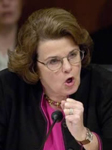
    In addition, while none of the witnesses was looking to go toe-to-toe with Senator Dianne Feinstein (D-CA) (at left), who made it abundantly clear that she favored a codification of the Georgia-Pacific factors and the gatekeeper approach (in which the court determines the Georgia-Pacific factors to be used by the jury in determining damages), it would be stretching it to say that the witnesses reached any agreement on the damages issue.  As we noted on Tuesday, the divide on this issue was highlighted when the witnesses, in response to a question from Senator Spector, provided almost as many different approaches for calculating damages as there were witnesses (see "Senate Judiciary Committee Holds Hearing on Patent Reform").