•     By Kevin E. Noonan

    "Monopoly" is a loaded buzzword when it comes to patents.  It is imprecise, indeed incorrect, but it can be effective in appealing to prejudices that emphasize a negative view of patent rights.  It also effectively telegraphs the writer's own prejudices, so that when it is used in the title of a putatively academic article it can be particularly jarring.

    Cover_nature
    Such an article appears on-line today in the March 26th edition of Nature, in a commentary by Robert Cook-Deegan (lower left), Subhashimi Chandrasekharan, and Mishra Angrist (lower right) of the Institute for Genome Science and Policy at Duke University.  Entitled "The dangers of diagnostic monopolies," it is reminiscent of nothing so much as Eisenberg and Heller's "The Tragedy of the Anti-Commons" in 1998, positing potential problems in the (then) uncertain future of gene patenting, in the context of little support for the espoused position.

    The authors of today's Nature commentary admit, in the first paragraph, that the recent report from the Health and Human Services Secretary's Advisory Committee on Genetics, Health and Society disclosed little to no "irreparable" harm to genetic diagnostics from patenting, but assert that "neither have [patents] proven greatly advantageous."  At best, the authors' own research "detect[ed] no pervasive effects of patenting that consistently help or hinder clinical access to genetic testing."  This is consistent with the overwhelming majority of studies showing that the anti-commons aren't tragic after all.  Nonetheless, the authors contend that there are "some" problems that "could be addressed" to benefit everyone — "patients, researchers, health professionals and companies alike."

    Robert_cookdeegan
    The authors' primary concerns are (here we go again) "monopoly situations" — i.e., when patents are exclusively licensed to one provider.  Why this is a concern is unclear, since they report that "prices of patented and exclusively licensed tests are not dramatically or consistently higher than those of tests without a [wait for it] monopoly."  Moreover, the patent incentive is "usually not necessary."  But the authors go on to state that the effects of patents ("monopolies," of course) on test quality are "equivocal."  And the relationship between quality issues relating to Myriad's BRCA test could not "be ascribed only to the monopoly" (although they assert without support that "[t]est quality is a general problem but monopolies can exacerbate it").  It would be reasonable to conclude from the information discussed in the article to this point that patents are, if anything, neutral with regard to genetic diagnostic tests.

    Even benefits associated with sole providers (exclusive patent licensees), such as establishing standards of care, are described as being suspect.  The authors answer the question: "Is a standard of care set by a single provider desirable?" by noting that European companies "take various [alternative] approaches" before performing BRCA tests.  If BRCA tests are reliable, however, what is the benefit of alternative testing?  The authors do not say, merely that "[i]f [if] alternatives are valuable, exclusive licenses limit their availability."  If available alternatives are not patented by the exclusively-licensed single provider, it is unclear how exclusive licenses for BRCA tests could limit availability for those (other, distinct, unpatented) tests.

    Misha_angrist
    The authors also bemoan the "fact" that exclusive licenses (actually, the patents underlying them) are difficult to design around.  There is a flaw in the logic behind this assertion, however.  Noting that "[m]ost genetic disorders are heterogeneous — different genes and mutations lead to clinically similar syndromes," the authors state that "[a]n exclusive license to one or a few common genes or mutations can drive testing to one provider."  On the contrary, the existence of such heterogeneity suggests that it should be difficult for one patentee to cover the entire field, and that continued research on such diseases and the heterogeneous genetic bases thereof should provide a variety of tests controlled by a variety of patentees (much like the co-existence of varieties of pharmaceuticals that address the same underlying pathology).

    The authors do raise a legitimate issue — whether full-genome sequencing efforts will encounter a "patent thicket" comprising patent holders owning rights to specific genetic polymorphisms.  These concerns are real but not realistic, in view of the technical obstacles for the technology (not performing the sequencing but accurately interpreting the data to provide a useful genetic diagnostic test) and the developing legal obstacles to diagnostic testing in general, in view of the Federal Circuit's decisions in Classen Immunodiagnostics, Inc. v. Biogen Idec, In re Bilski, and Justice Breyer's patent musings in the Laboratory Corp. v. Metabolite Labs., Inc. case.  They also ignore the reality that most of the patents existing today will have expired before any of these issues are likely to have been sufficiently resolved to make genomic sequence-based diagnosis a commonly-available diagnostic tool.

    The authors eventually arrive at their message — that "patient rights" should "trump" patent rights for genetic diagnostic tests.  Indeed, the authors identify six "obstructive practices" that should "negate gene patent enforcement," consistent with their goal of whose rights should be trumped.  These include exclusive rights-holders whose policies do not permit:

    • Basic and clinical research, including genetic testing in clinical trials or health-services research;
    • Performing a test in a form that it does not offer (such as prenatal or preimplantation diagnosis);
    • Testing in a territory where the company does not offer a test but has exclusive rights;
    • Getting second opinions or verification testing;
    • Testing those not covered by its payment agreements with insurers and health plans; and
    • Research and development to make testing more comprehensive, more accurate or less expensive.

    Opponents of patents frequently raise the issue of "patient rights," typically conflating issues such as reproductive rights or genetic privacy with patent issues, and simplistically framing the issue as one of individual "rights."  These authors do not make these mistakes, but they do seem to forget the realities of the U.S. healthcare system.  The "patient rights" they believe should trump patent rights are solely economic ones (since even the accessibility issues devolve to economics).  But in America, the one right patients don't have when it comes to medical treatment or diagnosis is an economic one.  Healthcare in this country depends intimately on what each individual patient can afford, or if they have benefits through their employer, what their employer provides.  The patent system didn't create this situation and weakening patenting won't solve it.

    What weakening the patent system will do is make it less likely that the fundamental research done at universities (where researchers are indeed not motivated by patent concerns) will be translated into useful genetic diagnostic tests.  There is enormous expense required to convert the genetic observations made in a laboratory into a validated diagnostic test that physicians can rely upon in making diagnostic and therapeutic decisions.  This is as it should be — such tests should be thoroughly vetted before patients are asked to make critical decisions about their health in reliance upon them.  Without the exclusivity provided by patents, there would be little incentive for investors to take the risk that the result of such expenditures will be a robust, reliable genetic diagnostic test.  Restricting patent rights in ways that reduce patent exclusivity can be expected only to reduce these incentives.  This outcome would impinge on a more fundamental patient right than the ones discussed by the authors — the right to quality and reliable clinical care based on innovation in the genetic bases of human disease.  While the sentiment underlying the authors' commentary may be admirable, they have identified the wrong villain.  In that, of course, (at least lately) they have no monopoly.

  • By Christopher P.
    Singer

    USPTO Seal
    In the wake of the
    Federal Circuit's decision in Tafas v.
    Doll
    (see "Tafas v. Doll (Fed. Cir. 2009)"; "Federal Circuit Issues Decision in Tafas v. Doll";
    and "Anyone Remember What These 'New Rules' Are All About?"),
    the U.S. Patent and Trademark Office posted an announcement clarifying that it has no immediate plans to enact the claims and continuations rules.  While the USPTO takes the opportunity to remind
    us that the CAFC "concluded that the Final Rules were all within the
    agency's rulemaking authority," it also acknowledges that the Court held
    Rule 78 (limiting the number of continuations) inconsistent with the Patent Act.  The announcement concludes by noting
    that because there are issues yet to be determined by the District Court on
    remand and that litigation is ongoing, the "Final Rules will not be
    implemented at this time."  The announcement did not mention the status of any of the other rules
    packages (IDS, Markush, and Appeals).

  •     By Suresh Pillai

    Settlement Announced in SOLODYN® Patent Dispute

    Medicis
    Last week, Teva Pharmaceutical Industries Ltd. and Medicis Pharmaceutical Corp. entered into a settlement agreement that effectively ends a dispute between the two companies over the patent family covering SOLODYN® (minocycline HCL, used to treat acne) Extended Release Tablets.  Medicis' initial complaint, which was filed against Barr Pharmaceuticals (which has since been acquired by Teva) in January (see "Court Report," January 13, 2009), alleged infringement of U.S. Patent No. 5,908,838.

    Teva
    Under the terms of the settlement agreement, Medicis has granted Teva the option to market its generic versions of SOLODYN® 45 mg, 90 mg, and 135 mg tablets beginning in November 2011 or earlier under certain conditions.  In exchange for this license and Medicis' release of Teva from liability stemming from Teva's sales of generic SOLODYN®, Teva has agreed to cease all of their SOLODYN® shipments.  Additional information regarding the settlement agreement can be found in Teva's press release

    Supreme Court Denies Apotex Appeal in Risperdal® Litigation

    Apotex #1
    On Monday, the Supreme Court denied Apotex's petition for a writ of certiorari seeking review of the Federal Circuit's affirmation of a District Court's dismissal of Apotex's counterclaims of noninfringement.  The patents at issue in the case, U.S. Patent Nos. 4,804,663, 5,453,425, and 5,616,587, cover risperidone, the active ingredient in Risperdal®, a drug made by Janssen Pharmaceutica NV and prescribed for the treatment of schizophrenia, bipolar mania, and irritability associated with autistic behavior.

    Janssen Pharmaceutica
    Janssen first filed suit in the U.S. District Court for the District of New Jersey against Apotex in March 2006 (see "Court Report," July 22, 2007), claiming that Apotex's ANDA covering oral Risperdal® infringed the '663 patent.  Janssen subsequently filed suit against Apotex, alleging that Apotex's ANDA covering a tablet version of Risperdal® also infringed Janssen's Risperdal® patents.  Apotex responded by asserting counterclaims seeking a declaratory judgment of noninfringement for two unasserted patents, the '425 and the '587 patents.  The District Court granted Janssen's motion to dismiss the counterclaims, citing an absence of a case or controversy with regard to the unasserted patents.  Apotex appealed the decision to the Federal Circuit, which affirmed the lower court's decision.  Additional information regarding the Federal Circuit decision can be found in this Patent Docs report

    Federal Trade Commission Declines to Challenge UCB-Generics Deal

    Federal Trade Commission (FTC) Seal
    In a letter dated March 10, and reported by Dow Jones on March 20, the Federal Trade Commission (FTC) has declined a challenge to UCB SA's legal settlement with Dr. Reddy's Laboratories, Ltd., Cobalt Pharmaceuticals, Inc., and Mylan Inc. to keep generic versions of the UCB anti-epileptic drug, Keppra®, off the market.  The UCB patent at issue is U.S. Patent No. 4,943,639.  In 2004, Mylan filed an ANDA application seeking FDA approval to manufacture and market generic versions of Keppra®.  Mylan also filed a Paragraph IV certification asserting that the '639 patent was invalid and not infringed.  Mylan's filing was followed by ANDA filings by Dr. Reddy's and Cobalt; in response to these multiple filings, UCB sued the generic manufacturers in the U.S. District Court for the Northern District of Georgia.  In October 2007, UCB settled the dispute with Dr. Reddy's, Mylan, and Cobalt, in which Mylan received a license to market tablets of lev4etiracem, the Keppra® active ingredient, as of November 2008.  The rest of the agreement, however, including the dates when Dr. Reddy's and Cobalt could market generic Keppra®, was not disclosed, and the FTC began an antitrust investigation.

  •     By Donald Zuhn

    The Federal Circuit's recent decision in Tafas v. Doll, in which the CAFC found that new Rule 265 — which creates the dreaded Examination Support Document (ESD) — was both procedural and not inconsistent with the Patent Act (see "Tafas v. Doll (Fed. Cir. 2009)"), and the introduction last week of Senator Jon Kyl's patent reform bill (S. 610), which includes an inequitable conduct provision that transfers final determinations of inequitable conduct from the courts to the U.S. Patent and Trademark Office (see "Senator Kyl Introduces Alternative to Leahy Patent Reform Bill"), re-focused our attention on a letter sent by the American Bar Association's Section of Intellectual Property Law to Senators Patrick Leahy and Arlen Specter last February.  Senator Leahy's patent reform bill (S. 515), which was introduced on March 3rd, does not contain an inequitable conduct provision (see "Senate and House Introduce New Patent Reform Legislation").

    ABA
    In the letter, which was signed by Section of Intellectual Property Chair Gordon Arnold, the Section expressed the view that "the defense [of inequitable conduct] should be reformed and retained, rather than eliminated in favor of administrative proceedings in the PTO" — such as would happen if Senator Kyl's bill was passed into law.  Instead, the Section states that the defense of unenforceability based on inequitable conduct should be predicated on principles of common law fraud.  According to the letter, by applying such principles any judgment of unenforceability would require proof, by clear and convincing evidence, that:

    (1)  a person having a duty of candor and good faith to the USPTO in connection with the prosecution of an application knowingly and willfully misrepresented a material fact or material information to the USPTO or omitted a known material fact or known material information from the PTO;
     
    (2)  in the absence of such misrepresentation or omission, the USPTO, acting reasonably, would not have granted or maintained in force at least one invalid claim; and
     
    (3)  the misrepresentation or omission occurred with a specific intent to deceive the USPTO, and that such intent cannot be established by the mere materiality of the misrepresentation or omission.

    The Section also notes that it opposes basing an inequitable conduct defense on any conduct that did not substantially affect the validity, scope, or duration of one or more claims of the patent.  The Section also notes the views expressed in the letter are those of the Section and not the ABA as a whole.

    It will be interesting to see whether any inequitable conduct amendments, including all or part of the Section's proposal, will be introduced at the Senate Judiciary Committee's Executive Business Meeting on March 26th (see "Senate Judiciary Committee Places Patent Reform Bill on Agenda").

  •     By Donald Zuhn

    Federal Circuit Seal
    On Friday, the Federal Circuit issued its decision in Tafas v. Doll (formerly Tafas v. Dudas).  The Tafas appeal concerns the validity of four rules in the continuation and claims rules package promulgated by the U.S. Patent and Trademark Office on August 21, 2007.  The four rules at issue are:  Rule 75, which requires applicants submitting more than five independent or 25 total claims to file an Examination Support Document (ESD); Rule 78, which limits applicants to two continuation applications per application family absent a petition and showing; Rule 114, which limits applicants to one RCE per application family absent a petition and showing; and Rule 265, which establishes the requirements for an ESD.

    In an opinion authored by Judge Prost and joined by Judge Bryson, a split panel determined that Rules 75, 78, 114, and 265 are procedural, but that Rule 78 is inconsistent with 35 U.S.C. § 120.  Judge Rader dissented in part, contending that all four of the rules at issue are substantive.

    Judge Prost
    Judge Prost (at left) begins her discussion by rejecting the USPTO's argument that the District Court erred for failing to give the Office's interpretation of its rulemaking authority under 35 U.S.C. § 2(b)(2) proper deference under Chevron U.S.A., Inc. v. Natural Resources Defense Council, Inc. (1984).  However, with respect to the USPTO's argument that the District Court also failed to accord the Office Chevron deference with respect to its interpretations of various sections of the Patent Act, and its belief that the continuation and claims rules were consistent with such interpretations, Judge Prost finds that "the USPTO's interpretations of statutes that pertain to the USPTO's delegated authority are entitled to Chevron deference."  Thus, for rules that are within the scope of the Office's delegated authority (i.e., procedural rules promulgated under 35 U.S.C. §§ 2(b)(2) and 132(b)), the Court must "give Chevron deference to the USPTO's interpretation of statutory provisions that relate to the exercise of delegated authority."

    Having decided that the USPTO is to be afforded Chevron deference with respect to procedural rules, Judge Prost next turns to the issue of whether the continuation and claims rules at issue are substantive or procedural.  Noting that the parties "vigorously disagree . . . as to how the boundary between 'substantive' and 'procedural' rules should be defined," Judge Prost disagrees with the District Court's "broad and absolute" reading of Chrysler Corp. v. Brown (1979) as defining as substantive "any rule that 'affect[s] individual rights and obligations.'"  Instead, she finds the D.C. Circuit's approach in JEM Broad. Co. v. FCC (D.C. Cir. 1994) to be more persuasive.  (In view of Judge Prost's use of JEM, it's interesting, but perhaps not surprising, that she cites Professor Mark Lemley and fellow Circuit Judge Kimberly Moore's article on "Ending Abuse of Patent Continuations" in a footnote on page two of the opinion.)

    In JEM, the Federal Communications Commission adopted "hard look" rules in response to a significant number of "carelessly prepared and speculative applications" for broadcasting licenses.  Under the FCC's rules, applications that failed to include necessary information or contained incorrect or inconsistent information were dismissed with no opportunity to cure the defect.  Noting that the D.C. Circuit had "recognized that the rules could result in the loss of substantive rights, but found that they were nonetheless procedural because they did not 'foreclose effective opportunity to make one's case on the merits,'" Judge Prost concludes that the continuation and claims rules are procedural because "[i]n essence, they govern the timing of and materials that must be submitted with patent applications," adding that while the rules "may 'alter the manner in which the parties present . . . their viewpoints' to the USPTO, . . . they do not, on their face, 'foreclose effective opportunity' to present patent applications for examination."

    With respect to Rules 78 and 114, Judge Prost states that:

    Applicants who include in each continuation application all amendments, arguments, and evidence available at the time of filing will not be limited by Final Rule 78.  Similarly, applicants who diligently present all of their amendments, arguments, and evidence as soon as possible during prosecution will be granted as many RCEs as they require.  Thus, applications that are submitted in compliance with these timing requirements will be fully examined and given all of the benefits provided by the Patent Act.

    As a result, Judge Prost finds these rules to be procedural under a JEM analysis.  While acknowledging that the Office's responses during the notice and comment period suggested that the USPTO would "deny additional applications in almost all circumstances" such that Rules 78 and 114 would create "hard limits" on continuation and RCE filings, the majority states that "we decline to rely on these responses, which are not binding on the USPTO," adding that courts "will be free to entertain challenges to the USPTO's application of the Final Rules, including its view of when amendments, arguments, and evidence could not have been submitted earlier."

    With respect to Rules 75 and 265, Judge Prost states that:

    Once a satisfactory ESD is submitted, examination will proceed in precisely the same manner as it would have in the absence of the rule.  It is important to note that an examiner is not permitted to substantively reject claims on grounds that the ESD did not prove that the claims are patentable.

    As a result, Judge Prost finds these rules to also be procedural under a JEM analysis.  However, because she states that the search requirement of Rule 265 "does not necessarily require a visit to every library in every corner of the world," but rather only requires "[a] reasonable, cost-effective search," the implementation of Rules 75 and 265 would also lead to an inevitable increase in the number of lawsuits filed by applicants against the USPTO.  While Judge Prost is "mindful of the possibility that the USPTO may in some cases attempt to apply the rules in a way that makes compliance [with Rules 75 and 265] essentially impossible and substantively deprives applicants of their rights," she notes that in such circumstances, "judicial review will be available."  Judge Prost also dismisses the concern that "even the most diligently prepared ESD will inevitably open the applicant to inequitable conduct allegations that will entail costly litigation and a possible finding of unenforceability," as being "too speculative to void the rules."  As with the Office's interpretation of the new rules, the majority states that:

    We recognize that the drafting of an ESD will entail browsing many references, that mistakes and omissions will inevitably occur, and that the courts will be asked to determine if there was inequitable conduct.  However, doubt about the judiciary's ability to apply its own doctrine in a way that yields fair results and discourages frivolous allegations should not preclude the USPTO from promulgating rules that are within its statutory authority.

    Finding that the four rules at issue are procedural, Judge Prost turns to the question of whether the four rules are consistent with the Patent Act.  Judge Prost begins with Rule 78, which, like the District Court, she determines to be inconsistent with 35 U.S.C. § 120, albeit on "narrower grounds."  In particular, Judge Prost notes that while "Section 120 unambiguously states that an application that meets four requirements 'shall have the same effect, as to such invention, as though filed on the date of the prior application,'" new Rule 78 "attempts to add an additional requirement — that the application not contain amendments, arguments, or evidence that could have been submitted earlier — that is foreclosed by the statute."  With respect to In re Henriksen (C.C.P.A. 1968) and In re Bogese (Fed. Cir. 2002), Judge Prost dismisses these cases as being unhelpful to the USPTO's cause, the former concerning the permissible length of a chain of serial continuations, rather than the total number of continuations that may be filed, and the latter concerning prosecution history laches (Judge Prost notes that Rule 78 "simply captures too many applications that would not be even remotely susceptible to a prosecution history laches challenge").

    As for Rules 114, 75, and 265, Judge Prost finds none of these rules to be inconsistent with the Patent Act.  First, she finds the application of an RCE limit to application families rather than individual applications to be not inconsistent with 35 U.S.C. § 132 because that section does not "unambiguously dictate[] that its provisions be applied on a per application basis."  In addition, with respect to the argument that Congress intended RCEs to be subject only to the applicant's discretion, Judge Prost states "[i]t is plausible that, as the USPTO suggests, § 132(b) simply directs the USPTO to 'prescribe regulations' to govern the applicant's ability to request continued examination which must, in some circumstances, be granted" (emphasis added).  As for the possibility that Rules 75 and 265 create a hard limit on the number of claims that an applicant can file, the majority states that:

    [W]e need not decide whether the USPTO may impose a limit on the number of claims an applicant can pursue because we do not find that the ESD requirement creates any such limit.  Rather, it simply requires that an ESD be submitted if more than five independent or twenty-five total claims are included in certain sets of copending applications.

    In response to the argument that Rule 265 creates a duty to conduct a prior art search, the majority states that "[w]e agree with the USPTO that [the cases cited by the District Court] do not speak to whether the USPTO may impose such a duty by regulation," and therefore, "[o]n this record, we see no persuasive reason to prohibit the USPTO from requesting the information required by Final Rule 265, even if the applicant must take action to acquire that information."  Reiterating her procedural analysis, Judge Prost also dismisses the argument that Rules 75 and 265 improperly transfer examination burdens from the Office to applicants, stating that these rules "do not require an applicant to make a prima facie case of patentability," adding that "[a]n examiner cannot reject an application because he believes that the applicant failed to find the most material references or if he is otherwise not persuaded by the applicant's view of the prior art."

    After concluding that Rules 75, 78, 115, and 265 are procedural, and further, that Rule 78 is inconsistent with the Patent Act, Judge Prost notes that:

    Because of the complexity of this case and the numerous arguments presented on appeal and before the district court, we think it is important to expressly summarize what we believe remains for the district court on remand.  This opinion does not decide any of the following issues:  whether any of the Final Rules, either on their face or as applied in any specific circumstances, are arbitrary and capricious; whether any of the Final Rules conflict with the Patent Act in ways not specifically addressed in this opinion; whether all USPTO rulemaking is subject to notice and comment rulemaking under 5 U.S.C. § 553; whether any of the Final Rules are impermissibly vague; and whether the Final Rules are impermissibly retroactive.

    In his concurring opinion, Judge Bryson helpfully provides the USPTO with a roadmap for modifying Rule 78 to render it consistent with 35 U.S.C. § 120 — at least as far as he is concerned.  Stating that "the most difficult question in this case . . . is whether Final Rule 78 is a valid regulation in light of 35 U.S.C. § 120," Judge Bryson notes that while he agrees that the rule is invalid, he thinks "it is important to emphasize the narrow scope of the court's decision."  Stating that "a rule limiting the number of continuances co-pending with the first-filed application is necessarily contrary to the statute and invalid," Judge Bryson argues that this "does not answer the question whether the rule is invalid as applied to serial continuances."  While he acknowledges that "[f]or the last 40 years, . . . section 120 has been understood to confer upon patent applicants the right to file any number of successive continuation applications after the first application has been abandoned or issued as a patent," he contends that "[i]t would not be unreasonable, however, to construe the phrase 'an application similarly entitled' [in § 120] to mean an application that satisfies all the preceding requirements set forth in section 120, including the requirement of co-pendency with the initial application."  Judge Bryson notes that while the majority properly struck down Rule 78, that does not mean "a revised rule that addressed only serial continuances and limited such continuances to only two — the first co-pending with the original application and the second co-pending with the first — would be struck down as reflecting an impermissible interpretation of section 120."  Thus, in view of Judge Bryson's analysis, the USPTO could impose a two-continuation limitation — or whatever limit the Office deemed necessary to resolve its backlog — on any continuation that was not filed while the original application was still pending.  In other words, for applicants wishing to file continuations serially, the 2+1 rule (two continuations + one RCE) would merely become the 3+1 rule.

    Judge Rader
    Judge Rader (at right), writing in dissent with respect to all but the majority's finding that Rule 78 is inconsistent with the Patent Act, states that "in my view, the Final Rules are substantive, not procedural."  Noting that "[t]he distinction between substantive or non-substantive rules requires a difficult judgment," Judge Rader admonishes that he "would not so casually discard, as this court does today, this court's precedent for identifying a 'substantive' rule."  In particular, Judge Rader states that:

    The Supreme Court provided valuable guidance on the substantive/non-substantive inquiry in Chrysler Corp. v. Brown, 441 U.S. 281 (1979).  In Chrysler, the Court defined an inherent characteristic of a "substantive" or "legislative-type" rule, namely, such rules "affect[] individual rights and obligations."  Id. at 302.  Contrary to this court's analysis today, the Chrysler Court's reasoning was in no way limited to defining the boundary between interpretative and substantive rules.  The Court sought to draw a broad distinction between substantive and non-substantive rules — the same inquiry presented in this case.  Id.

    * * *

    Both this court and the Court of Appeals for the District of Columbia Circuit have relied on Chrysler in building a body of jurisprudence germane to the substantive/non-substantive inquiry.  Central to this jurisprudence is the recognition that classifying a rule as substantive or non-substantive is a case-by-case exercise, poorly suited for bright-line rules.

    With respect to the majority's reliance on JEM, Judge Rader argues that "as JEM illustrates, the test for substantive, ultra vires rules is a case-by-case inquiry, not a rigid application of a sentence out of context in JEM."  Noting that the public participation during the notice and comment period was "overwhelming (itself an indication of the substantive impact of the rules?)," Judge Rader adds that "[m]any of the comments shared a common concern:  that the Final Rules 'had a significant effect on private interests, and marked a change in existing law or policy,'" and states that he "share[s] that concerned view."

    Judge Rader concludes his dissent by outlining how each of the four rules at issue would have "sufficiently grave" effects.  His analysis regarding the probable impact of Rule 75 is of particular interest:

    [L]imiting an applicant to five independent claims ignores the varying scopes and methods of claiming inventions across different technologies.  For example, in a pharmaceutical application, an applicant may claim not only the genus compound, but also a number of species, intermediates, methods of making, and methods of use.  Asking an inventor to limit her application to five independent claims disproportionately affects technologies with greater complexity and greater public interest in disclosure.

    Judge Rader also explains that:

    [Rule 75] has a similar effect to imposing a five-page limit on applications.  Although that notion is obviously too simplistic and problematic, this court's rationale would apparently make that hypothetical rule possible as a procedural rule that merely "[alters] the manner in which the parties present themselves or their viewpoints to the agency."  JEM, 22 F.3d at 326.  To my eyes, much more is at stake.

    Tafas v. Doll (Fed. Cir. 2009)
    Panel: Circuit Judges Rader, Bryson, and Prost
    Opinion by Circuit Judge Prost, concurring opinion by Circuit Judge Bryson, opinion concurring in part and dissenting in part by Circuit Judge Rader
  •     By Kevin E. Noonan

    USPTO Seal
    It has been quite some time since most in the patent community have given much thought to the ill-advised "claims and continuation" rules promulgated by the Patent and Trademark Office on August 21, 2007 that were preliminarily enjoined on Halloween, 2007 (one day before they were to go into effect) and permanently enjoyed on April Fool's Day, 2008.  But with the Federal Circuit's decision last Friday overturning the bases for enjoining three of the four rules at issue, it is a good time to be reminded of what was (and now once again is) at stake.  A few caveats, however, are in order.

    New Rules - PTO Graphic
    First, the injunction was imposed on summary judgment, so District Court Judge Cacheris has not heard the merits of the parties' arguments.  Second, Judge Cacheris based his ruling on only one of the grounds asserted by Dr. Tafas and GlaxoSmithKline, leaving several others that the Court never ruled upon.  Third, as pointed out on Patent Docs last week, Judge Prost, writing for the fractured majority, set forth a roadmap of issues for the District Court to consider, any one of which could be further grounds for invalidating and enjoining anew the "new rules."  Fourth, the delay in President Obama's appointment of a Commerce Secretary has also delayed the appointment of a new Director for the Patent Office, and there is no indication of who that individual might be or what that person's views on changing any of these rules might be.  Finally, the rules package was an interconnected whole, intended to block any "loopholes" that would permit an applicant (albeit at increased cost) from filing additional claims and continuations.  Thus, even if the Federal Circuit's determination that one of the proposed new rules (Rule 78) is contrary to statute (35 U.S.C. § 120) and thus outside the scope of the Office's rulemaking authority under 35 U.S.C. § 2(b)(2)(A) is the only aspect of the decision that survives the expected impending continued litigation, failure to implement this aspect of the rule might doom the entire endeavor.

    The Federal Circuit considered four of the "new rules" in the continuation and claims package:  Rules 75, 78, 114, and 265.  Prior posts in this space have reviewed the metes and bounds of these rules extensively in the past, and this post is meant merely as a refresher; in-depth treatment can be found in those prior posts.

    Rule 75(b):

    The prior (and still current) version of Rule 75(b) merely requires that claims "differ substantially from each other and are not unduly multiplied."  The proposed changes to Rule 75(b), which increased the rule by 522 words and added 5 new subparts, embodied the limitation to 5 independent claims and 25 total claims in any application (Rule 75(b)(1)), unless the applicant supplied an examination support document (ESD) pursuant to proposed new Rule 265 (see below).  Rule 75(b)(2)(A) defined as an independent claim any claim that referenced another claim but did not incorporate by reference all the limitations of the referenced claim, or that was directed to a different statutory class ("a method of using the subject matter of claim x" would thus not be considered a dependent claim).  Proposed rule 75(b)(3) provided a notice provision to permit an applicant to amend an application to be in compliance with the rule (and thus bypass the need to submit an ESD).

    Proposed Rule 75(b)(4) prohibited an applicant from avoiding the strictures of the claims limitations by filing more than one application; the rule provided that the Office would consider together the claims in commonly-owned applications that contained "patentably-indistinct" claims, and would then add together all the claims of the two applications to determine whether the applications were in compliance with the claims limitations.  The intent was explicit in the Final Rule Notice, where the Office stated that Rule 75(b)(4) is intended "to preclude an applicant from submitting multiple applications to the same subject matter (with claims that are patentably indistinct), each with five or fewer independent claims or twenty-five or fewer total claims, for the purpose of avoiding the requirement to submit an examination support document."

    Rule 78:

    This rule, which the Federal Circuit held was inconsistent with 35 U.S.C. § 120, embodies the limitations on continuation applications, and was even more expressly directed towards preventing applicants from avoiding the effects of the rules package.  It was also the most extensive of the rules, having the following relevant provisions:

    Rule 78(d):  there are several subparts to this portion of the proposed rules, but the most important provision precludes an applicant from filing more than two continuation applications in any application family (wherein the definition of an "application family" includes continuation and continuation-in-part applications but excludes divisional applications). 

    Rule 78(f) required an applicant prosecuting an application to identify all other commonly-owned applications having (a) a common inventor and (b) a filing or priority date within 2 months of the filing or priority date of the application in question.  This section of the proposed rule also created a rebuttable presumption that such commonly-owned applications sharing a common inventor and "substantial overlapping disclosure" contained at least one patentably-indistinct claim.  The Office under these circumstances could then require that the patentably-indistinct claims be cancelled in all but one of the related applications.

    Rule 114:

    This proposed rule would permit an applicant to file only a single request for continued examination (RCE) without a petition and showing, and this limitation would apply to an entire application family (i.e., an application and all continuation and continuation-in-part applications claiming priority thereto).  While divisional applications are not part of an application "family" for the purposes of this proposed rule, each such divisional application is also entitled to a single RCE.  This was the "+1" part of the "2+1" rule imposed in combination with proposed Rule 78.  The petition required for filing a second RCE would require a showing that an amendment, argument, or evidence sought to be entered with the RCE could not have been submitted earlier in prosecution.  Importantly, the requirement for a showing would not be satisfied by submitting an IDS containing art not known to anyone with Rule 56 duty prior to 3 months before the RCE is requested (including art identified, inter alia, by a foreign patent office in a counterpart application).

    Rule 265:

    This proposed rule describes the examination support document (ESD) required when an applicant files more than 5 independent claims and 25 total claims in an application.  The provisions are simple, and in view of the inequitable conduct implications, frightening; an ESD must contain:

    • A preexamination search statement;
    • Listing of references deemed most closely related to the subject matter of each claim;
    • Identification of claim limitations disclosed by each reference;
    • Detailed explanation of patentability; and
    • Showing of support under 35 U.S.C. § 112, ¶ 1.

    The preexamination search statement must contain:

    • A statement that a preexamination search in compliance with 37 C.F.R. § 1.265(b) was conducted.
    • An identification of:

    • The field of search by U.S. class and subclass, the date of the search; and
    • For database searches, the search logic or chemical structure or sequence used as a query, the name of the file(s) searched and the database service, and the date of the search (in the manner set forth in M.P.E.P. § 719.05).

    Unlike current Information Disclosure Statements, an ESD requires that the content of the references be disclosed with particularity, especially with regard to the relevance of each reference to the claimed invention.  "The ESD must include a de
    tailed explanation that particularly points out how each of the independent claims is patentable over the references cited in the listing of references," as well as explaining why the claims are novel and non-obvious with regard to the references, as well as evidence of support in the specification in compliance with 35 U.S.C. § 112, ¶ 1.

    These are, in brief, the "new rules" given new life by the Federal Circuit's decision.  There is no reason to believe that the current Office administration does not remain committed to them.  Although that administration has indicated that the rules would not be imposed retroactively to pending applications (this was one of the grounds for GSK's opposition to the rules), any failure to impose any version of these "new rules" will do precisely what the Office was trying to avoid:  provoke a deluge of new filings intended to avoid the effects of the rules.  This is what happened immediately before the changes occasioned by implementation of the GATT provisions on June 7, 1995, and before the publication rules of the American Inventor Protection Act (AIPA) on November 28, 2000.  Two years ago we would have assumed that exacerbating the examination backlog was an important Office goal.  Today, in view of falling allowance rates (and maintenance fees) and falling application rates (down 5% in absolute terms and 10% less than Office expectations), these considerations may be less pressing for the Office.  They are no less important, however, for American innovation, especially because the Office has also stopped hiring new examiners due to budget shortfalls.  It would be ironic indeed if the Office eventually imposed some version of these rules in an effort to increase revenues by making worse the problem that provided the ostensible motivation for the rules in the first place.

  •     By Sherri Oslick

    Gavel_2About
    Court Report:  Each week we will report briefly on recently filed
    biotech and pharma cases, and a few interesting cases will be selected
    for periodic monitoring.


    Warner Chilcott Laboratories Ireland Ltd. et al. v. Impax Laboratories, Inc.

    2:09-cv-01233; filed March 18, 2009 in the District Court of New Jersey

    Infringement of U.S. Patent No. 6,958,161 ("Modified Release Coated Drug Preparation," issued October 25, 2005) following a Paragraph IV certification as part of Impax's filing of an ANDA to manufacture a generic version of Warner Chilcott's Doryx® (modified release doxycycline hyclate, used for adjunctive treatment of severe acne).  View the complaint here.

    Allergan Inc et al. v. Athena Cosmetics Inc et al.
    8:09-cv-00328; filed March 16, 2009 in the Central District of California

    Infringement of U.S. Patent Nos. 6,262,105 ("Method of Enhancing Hair Growth," issued July 17, 2001), 7,351,404 (same title, issued April 1, 2008), and 7,388,029 ("Compositions and Methods for Treating Hair Loss Using Non-Naturally Occurring Prostaglandins," issued June 17, 2008) based on defendants manufacture and sale of hair and/or eyelash growth products with prostamides.  View the complaint here.

    Stiefel Laboratories Inc. et al. v. Cobrek Pharmaceuticals Inc. et al.
    1:09-cv-00167; filed March 13, 2009 in the District Court of Delaware

    Infringement of U.S. Patent Nos. 7,141,237 ("Pharmaceutical Foam," issued November 28, 2006) and 7,374,747 (same title, issued May 20, 2008) following a Paragraph IV certification as part of Cobrek's filing of an ANDA to manufacture a generic version of Stiefel's Evoclin® (clindamycin phosphate foam, used to treat acne).  View the complaint here.

    Abbott Laboratories v. Matrix Laboratories Inc. et al.
    1:09-cv-00174; filed March 13, 2009 in the District Court of Delaware

    Abbott Laboratories v. Matrix Laboratories, Inc. et al.
    1:09-cv-01586; filed March 13, 2009 in the Northern District of Illinois

    The complaints in these cares are substantially identical.  Infringement of U.S. Patent Nos. 7,148,359 ("Polymorph of a Pharmaceutical," issued December 12, 2006) and 7,364,752 ("Solid Dispersion Pharamaceutical Formulations," issued April 29, 2008) following a Paragraph IV certification as part of Matrix's filing of an ANDA to manufacture a generic version of Abbott's Kaletra® (lopinavir and ritonavir, used to treat HIV infections).  View the Delaware complaint here.

    Genzyme Corp. v. Impax Laboratories, Inc.
    1:09-cv-00653; filed March 13, 2009 in the District Court of Maryland

    Infringement of U.S. Patent No. 5,667,775 ("Phosphate-Binding Polymers for Oral Administration," issued on September 16, 1997) following a Paragraph IV certification as part of Impax's filing of an ANDA to manufacture a generic version of Genzyme's Renagel® (sevelamer hydrochloride, used for the control of serum phosphorus in patients with chronic kidney disease on dialysis).  View the complaint here.

    Wyeth v. Intervet Inc. et al.
    1:09-cv-00161; filed March 12, 2009 in the District Court of Delaware

    Infringement of U.S. Patent Nos. 6,703,023 ("Circovirus Sequences Associated with Piglet Weight Loss Disease," issued March 9, 2004), 7,223,407 (same title, issued May 29, 2007), 7,223,594 (same title, issued May 29, 2007), and 7,407,803 (same title, issued August 5, 2008) based on defendants' manufacture and sale of their Circumvent® PCV, Porcilis® PCV, and CircoFLEX® vaccines (porcine circovirus vaccines).  View the complaint here.

  • CalendarMarch 23-24, 2009 – 3rd Annual Patent Law Institute (Practising Law Institute) – San Francisco, CA

    March 24, 2009 – 5th Annual Document Management, E-Discovery, and Litigation Readiness for Life Sciences (American Conference Institute) – New York, NY

    March 25-27, 2009 – Intellectual Property Counsels' Committee Spring Conference & Meeting (Biotechnology Industry Organization) – Phoenix, AZ

    March 30-31, 2009 – Pharmaceutical and Biotech Patent Claim Drafting*** (American Conference Institute) – New York, NY

    March 30-31, 2009 – FDA Boot Camp*** (American Conference Institute) – New York, NY

    April 1-4, 2009 – 24th Annual Intellectual Property Law Conference (American Bar Association Section of Intellectual Property Law) – Arlington, VA

    April 20-21, 2009 – 5th International Judges Conference on Intellectual Property Law (Intellectual Property Owners Association) – Washington, DC

    April 20-21, 2009 – 6th Annual Freedom to Operate Forum (C5 (UK)) – London, England

    April 24, 2009 – Patent Claim Construction (Law Seminars International) – College Park, GA

    April 27-28, 2009 – 3rd Annual Paragraph IV Disputes Conference*** (American Conference Institute) – New York, NY

    April 29-30, 2009 – Corporate IP Counsel Summit (World Research Group) – New York, NY

    June 22-27, 2009 – Innovation Week 2009 (U.S. Patent and Trademark Office) – Arlington, VA

    ***Patent Docs is a media partner of this conference or CLE

  •     By Donald Zuhn

    Federal Circuit Seal
    In a 55-page opinion issued earlier today, the Federal Circuit determined that the four rules at issue in Tafas v. Dudas are procedural, but that Rule 78 is inconsistent with 35 U.S.C. § 120 (i.e., that portion of the rule which limits the number of continuation applications), and therefore, affirmed-in-part, vacated-in-part, and remanded.  Judge Prost authored the opinion for the panel, with Judge Bryson filing a concurring opinion and Judge Rader filing an opinion concurring in part and dissenting in part.  Judge Prost concluded that:

    [T]he Final Rules 75, 78, 114, and 265 are procedural rules that are within the scope of the USPTO’s rulemaking authority.  However, we find that Final Rule 78 conflicts with 35 U.S.C. § 120 and is thus invalid.  Accordingly, we affirm the district court's grant of summary judgment that Final Rule 78 is invalid, vacate its grant of summary judgment with respect to Final Rules 75, 114, and 265, and remand for further proceedings consistent with this opinion.

    Because of the complexity of this case and the numerous arguments presented on appeal and before the district court, we think it is important to expressly summarize what we believe remains for the district court on remand.  This opinion does not decide any of the following issues:  whether any of the Final Rules, either on their face or as applied in any specific circumstances, are arbitrary and capricious; whether any of the Final Rules conflict with the Patent Act in ways not specifically addressed in this opinion; whether all USPTO rulemaking is subject to notice and comment rulemaking under 5 U.S.C. § 553; whether any of the Final Rules are impermissibly vague; and whether the Final Rules are impermissibly retroactive.

    Patent Docs will provide a more comprehensive analysis of the decision in a subsequent post.

  •     By Donald Zuhn

    Another day, another bill.  The 111th Congress has been on the job for a little more than ten weeks, but despite this short time span, legislators have already introduced seven bills that could significantly impact the life sciences sector if enacted.  Among the bills introduced this year are two concerning patent reform (S. 515 and H.R. 1260), two that would create a follow-on biologics regulatory pathway (H.R. 1427 and H.R. 1548), one that would restrict reverse payments (S 369), and two that would prohibit authorized generics (S. 501 and H.R. 573).

    Kyl, Jon
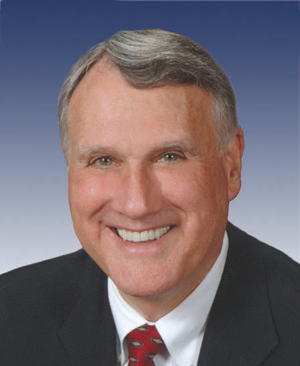
    On Wednesday, Senator Jon Kyl (R-AZ) (at right) made it an even eight, when he introduced legislation (S. 610) that would amend Title 35 to provide for patent reform.  The bill, which currently lacks any co-sponsors, offers an alternative to Senator Patrick Leahy's patent reform bill (S. 515), which, along with its counterpart in the House (H.R. 1260), was introduced on March 3rd (see "Senate and House Introduce New Patent Reform Legislation").

    The introduction of S. 610 was not unexpected, as Senator Kyl had introduced the bill during the last Congress (as S. 3600), and had promised to re-introduce the bill once the new session began (see "Senate Patent Reform Legislation — One Old Bill and One New Bill").  In addition, the Arizona Senator had made his dissatisfaction with certain provisions of the Leahy bill fairly well known, most recently at the Senate Judiciary Committee's March 10th hearing on patent reform (see "Senate Judiciary Committee Holds Hearing on Patent Reform").  When Senator Kyl originally introduced the bill, his staff noted that it differed significantly from the Leahy bill, and had been the result of several meetings between Senator Kyl and critics of the Leahy bill — including representatives from the pharmaceutical and life sciences industries (but not any members of the Coalition for Patent Fairness).

    Among the provisions in Senator Kyl's new bill are:

    • A first inventor to file provision that retains the one-year grace period for disclosures made by the inventor.

    • A damages provision that essentially allows the court or jury to "consider any factors that are relevant to the determination of the amount of a reasonable royalty."  The damages provision also contains a gatekeeper subsection that permits the court to "identify for the record those factors that are supported by legally sufficient evidence, and shall instruct the jury to consider only those factors when determining the amount of a reasonable royalty."

    • A post-grant review provision that establishes a first window in which a patent can be challenged within nine months of issuance on any condition for patentability, and a second window in which a patent can be challenged more than nine months after issuance as being anticipated or rendered obvious based on printed publications, patents, or patent applications.

    • A provision allowing third-parties to submit patents, published patent applications, or other publications to the Patent Office for consideration during the examination of an application, as well as provide a description of the asserted relevance of the submitted art.

    • A provision permitting the Patent Office to "offer incentives to applicants who submit a search report, a patentability analysis, or other information relevant to patentability," with such incentives to include "prosecution flexibility, modifications to requirements for adjustment of a patent term pursuant to section 154(b) of this title, or modifications to fees imposed pursuant to [the fee setting provision of the bill]."

    • An inequitable conduct provision that removes final determinations of inequitable conduct from the courts, and instead requires the Director to promulgate regulations for "receiving and reviewing information indicating that parties to a matter or proceeding before the Office may have engaged in misconduct in connection with such matter or proceeding."  As with Senator Kyl's original bill, the new bill allows the Director to levy civil penalties of between $150,000 to $10,000,000 for findings of misconduct (with the top penalty reserved for findings of "exceptional" misconduct), and parties found responsible for misconduct may be jointly and severally liable for such penalties.

    Patent Docs will provide additional discussion of the Leahy and Kyl bills in future posts.

    Senate Seal
    In a related matter, at today's Executive Business Meeting of the Senate Judiciary Committee, discussion of S. 515 was held over until the March 26th meeting (see "Senate Judiciary Committee Places Patent Reform Bill on Agenda").