•     By Kevin E. Noonan

    Federal Circuit Seal
    The duality of nucleic acids has long posed a challenge to patent law.  A gene is, in one way of looking at it, "but a chemical compound, albeit a complex one," and this view of the gene's nature has informed the emphasis on "structure, structure, structure" taken by the Federal Circuit from Amgen Inc. v. Chugai Pharmaceutical Co. to Judge Rader's comment in the oral argument for In re Kubin.  On the other hand, a gene also contains, and is defined by, the information it embodies, encoding an amino acid sequence corresponding to a structurally entirely different molecule, a protein.  This aspect of a gene's nature, and the unpredictable variability of it, underlies both the increased stringency with which the written description requirement is applied to nucleic acid claims, as well as the Office's resistance to apply Judge Rader's "structure, structure, structure" rule in determining whether a novel nucleic acid sequence, identified using established methods, is non-obvious.

    The latest example of this phenomenon is the Federal Circuit's decision last week to affirm rejection on 102/103 grounds of unpatentability in In re Greave.  The claims at issue include this generic claim:

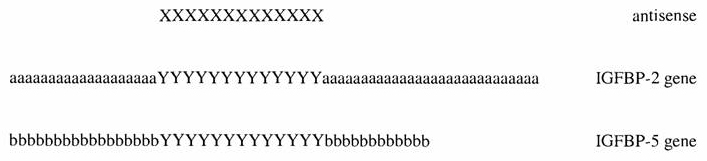
    [a] bispecific antisense oligodeoxynucleotide, wherein substantially all of the oligodeoxynucleotide is complementary to a portion of a gene encoding human IGFBP-2 and substantially all of the oligodeoxynucleotide is also complementary to a gene encoding human IGFBP-5, and wherein the oligodeoxynucleotide is of sufficient length to act as an antisense inhibitor of human IGFBP-2 and human IGFBP-5

    (where IGFBP-2 and -5 stand for two different species of insulin growth factor binding protein).  Also among the rejected claims were claims directed to particular species as set forth in applicants' specification.  The prior art asserted in support of the rejection was a PCT Publication to Wraight (WO 00/78431), which disclosed a list of all 15-mer oligonucleotides that could be made from the (publicly-available) full-length IGFBP-2 sequence, as well as disclosure in the Wraight reference that antisense oligonucleotides could comprise any oligonucleotide that specifically could bind to (i.e., hybridize with) any of the disclosed 15-mer sense oligonucleotides, and the existence in the Wraight disclosure of several 15-mer sense oligonucleotides with sequence complimentarity overlap to the specific oligonucleotides disclosed and claimed by Gleave.
    Att333be

    The Federal Circuit affirmed the rejection, in a decision by Judge Prost joined by Chief Judge Michel and Judge Moore.  The Court based this decision on its view that anticipation required merely that the oligonucleotide sequence was in the prior art, not that its usefulness was previously disclosed.  Gleave argued that the art disclosed a mere list comprising "ink," not disclosure of any functional antisense oligonucleotide (indeed, the cited art contained no disclosure of an antisense oligonucleotide at all), but such disclosure was unnecessary, according to the Court.  All that is necessary for a prior art reference to anticipate, said the Court, is that it enable the skilled artisan to make the claimed invention, not use it, citing Impax Lab., Inc. v. Aventis Pharm. Inc., 545 F.3d 1312, 1314 (Fed. Cir. 2008); and In re LeGrice, 301 F.2d 929, 940–44 (C.C.P.A. 1962).  The prior art disclosure need not show actual reduction to practice (Schering Corp. v. Geneva Pharm., Inc., 339 F.3d 1373, 1380–81 (Fed. Cir. 2003); In re Donohue, 766 F.2d 531, 533 (Fed. Cir. 1985)), and the description provided in the putatively anticipating reference "might not otherwise entitle its author to a patent," citing Vas-Cath Inc. v. Mahurkar, 935 F.2d 1555, 1562 (Fed. Cir. 1991).

    Cases that could be interpreted to the contrary, such as Bristol-Myers Squibb Co. v. Ben Venue Lab., Inc., 246 F.3d 1368, 1374 (Fed. Cir. 2001) ("[t]o anticipate, the reference must also enable one of skill in the art to make and use the claimed invention") are "[t]aken out of context," according to the Court, insofar as they are interpreted to impose an operability or utility disclosure requirement for an anticipating reference.  A "thorough" reading of the Court's caselaw (including Novo Nordisk Pharm., Inc. v. Bio-Technology General Corp., 424 F.3d 1347, 1355 (Fed. Cir. 2005); Rasmusson v. SmithKline Beecham Corp., 413 F.3d 1318, 1326 (Fed. Cir. 2005); and In re Hafner, 410 F.2d 1403, 1405 (C.C.P.A. 1969)) imposes no such requirement, the Court concluded.  And the Court also noted that Gleave's claims themselves contained no limitation restricting their scope to functional antisense oligonucleotides.

    The crux of the distinction the Court made, regarding the use of a list of sense oligonucleotides in the cited art and the traditional proscription against using a mere recitation of all possible compounds as anticipating claims to particular species, is found in the Court's consideration of the application of In re Wiggins, 488 F.2d 538, 543 (C.C.P.A. 1973) to the facts before it.  In Wiggins, the Court of Customs and Patent Appeals stated:

    In our view, [the alleged anticipatory reference's] listing of the compounds by name constituted nothing more than speculation about their potential or theoretical existence.  The mere naming of a compound in a reference, without more, cannot constitute a description of the compound, particularly when, as in this case, the evidence of record suggests that a method suitable for its preparation was not developed until a date later than that of the reference.

    If we were to hold otherwise, lists of thousands of theoretically possible compounds could be generated and published which, assuming it would be within the level of skill in the art to make them, would bar a patent to the actual discoverer of a named compound no matter how beneficial to mankind it might be.

    488 F.2d at 543 (emphases added).

    The Court noted that the CCPA in Wiggins stated that "'[t]he mere naming of a compound in a reference, without more, cannot constitute a description of the compound.'" 488 F.2d at 543.  But the distinction with this case, according to the Court's opinion, is that Wiggins involved the "mere naming of a theoretical compound, without more," and that was not anticipating.  Indeed, the Court emphasized that "'[w]ithout more' is the key phrase," because what is "more" is the capacity for the person of ordinary skill in the art to be able to make the claimed compound.  Here, these were not "potential or theoretical" compounds, but a class of compounds that fell within so limited a genus that the skilled artisan could "'at once envision each member of this limited class,'" citing Eli Lilly & Co. v. Zenith Goldline Pharm., Inc., 471 F.3d 1369, 1376 (Fed. Cir. 2006).  "In that limited circumstance, a reference describing the genus anticipates every species within the genus.  See Perricone [v. Medicis Pharm. Corp., 432 F.3d 1368, 1377 (Fed. Cir. 2005)]."

    What was not anticipated by the cited art are methods of using these oligonucleotides, and the Court suggested that Gleave might be entitled to such claims.  As for the appealed composition of matter claims, the Court found that these sequences "are simply not new," and affirmed.  And here is where the duality of nucleic acids becomes important.  It was undisputed that the Wraight reference did not disclose a single antisense oligonucleotide — it merely disclosed all 15-mer sense oligonucleotides, coupled with generic disclosure that antisense oligonucleotides would specifically hybridize to the disclosed sense oligonucleotides, and the knowledge in the art that such oligonucleotides could be made without undue experimentation.  Regardless of operability (although Gleave's arguments might have had additional force had they contained a functional limitation regarding operability as antisense oligonucleotides), the Court's decision suggests that nucleic acids can be anticipated by the mere recitation of any sequence, or its complement, in the prior art regardless of any disclosure as to operability.  This raises the question of whether an unidentified open reading frame, published in a publicly-available database, might not be enough to anticipate claims directed to an isolated nucleic acid encoding a novel protein.  Like the antisense oligonucleotides at issue in Gleave, the existence of the sequence in the prior art could be combined with the knowledge of the skilled worker that proteins are encoded by open reading frames to anticipate the sequence.  Known operability is not required, according to this panel opinion, raising the question of whether the availability of the published but unrecognized sequence would be enough.  There are certainly distinctions:  here, the oligonucleotides comprised a known protein, for example.  And there would be an In re Hall question about whether an unannotated open reading frame would be sufficiently accessible to qualify as prior art.  But the Federal Circuit's decision in Gleave amounts to yet another instance of differential applicatio
    n of the law to biotechnology claims, whose effects remain to be fully appreciated.

    In re Greave (Fed. Cir. 2009)
    Panel: Chief Judge Michel and Circuit Judges Prost and Moore
    Opinion by Circuit Judge Prost
  •     By Sherri Oslick

    Gavel_2About
    Court Report:  Each week we will report briefly on recently filed
    biotech and pharma cases, and a few interesting cases will be selected
    for periodic monitoring.


    Monsanto Co. et al. v. Dart et al.

    4:09-cv-00474; filed March 25, 2009 in the Eastern District of Missouri

    Infringement of U.S. Patent Nos. 5,352,605 ("Chimeric Genes for Transforming Plant Cells Using Viral Promoters," issued October 4, 1994) and RE39,247 ("Glyphosate-tolerant 5-enolpyruvylshikimate-3-phosphate Synthases," issued August 22, 2006) based on defendants' use of soybean seed produced from earlier planted Roundup Ready® soybean seed.  View the complaint here.


    Cubist Pharmaceuticals Inc. v. Teva Parenteral Medicines Inc. et al.

    1:09-cv-00189; filed March 23. 2009 in the District Court of Delaware

    Infringement of U.S. Patent Nos. 6,468,967 ("Methods for Administration of Antibiotics," issued October 22, 2002), 6,852,689 (same title, issued February 8, 2009), and RE39,071 ("Anhydro-and Isomer-A-21978C Cyclic Peptides, issued April 18, 2006) following a Paragraph IV certification as part of Teva's filing of an ANDA to manufacture a generic version of Cubist's Cubicin® (daptomycin for injection, used for the treatment of skin infections caused by certain Gram-positive microorganisms).  View the complaint here.

    Sepracor Inc. v. Teva Pharmaceuticals USA, Inc. et al.
    2:09-cv-01302; filed March 20, 2009 in the District Court of New Jersey

    Infringement of U.S. Patent Nos. 6,864,257 ("Optically Active 5H-Pyrrolo[3,4-B] Pyrazine Derivative, Its Preparation and Pharmaceutical Compositions Containing It," issued March 8, 2005), 6,319,926 (same title, issued September 23, 2002), 6,444,673 (same title, issued November 20, 2001), and 7,381,724 (same title, issued June 3, 2008) following a Paragraph IV certification as part of defendants' filing of an ANDA to manufacture a generic version of Sepracor's Lunesta® (eszopiclone, used to treat insomnia).  View the complaint here.


    OSI Pharmaceuticals Inc. et al. v. Mylan Pharmaceuticals Inc.

    1:09-cv-00186; filed March 19, 2009 in the District Court of Delaware

    OSI Pharmaceuticals Inc. et al. v. Teva Pharmaceuticals USA Inc.

    1:09-cv-00185; filed March 19, 2009 in the District Court of Delaware

    The complaints in these cases are substantially identical.  Infringement of U.S. Patent Nos. 5,747,498 ("Alkynyl and Azido-Substituted 4-Anilinoquinazoline," issued May 5, 1998), 6,900,221 ("Stable Polymorph on N-(3-Ethynylpheny1)-6, 7-Bis(2MethoxyEthoxy)-4-Quinazolinamine Hydrochloride, Methods of Production, and Pharmaceutical Uses Thereof," issued May 31, 2005), and 7,087,613 ("Treating Abnormal Cell Growth With A Stable Polymorph on N-(3-Ethynylpheny1)-6,7-Bis(2MethoxyEthoxy)-4-Quinazolinamine Hydrochloride," issued August 8, 2006) following a Paragraph IV certification as part of Mylan's filing of an ANDA to manufacture a generic version of OSI's Tarceva® (erlotinib, used to treat non-small cell lung cancer and advanced pancreatic cancer).  View the Mylan complaint here.

    Research Foundation of State University of New York et al. v. Mylan Pharmaceuticals Inc.
    1:09-cv-00184; filed March 19, 2009 in the District Court of Delaware

    Infringement of U.S. Patent Nos. 7,232,572 ("Methods of Treating Rosacea," issued June 19, 2007), 7,211,267 ("Methods of Treating Acne" issued May 1, 2007), 5,789,395 ("Method of Using Tetracycline Compounds for Inhibition of Endogenous Nitric Oxide Production" issued Augst 4, 1998), and 5,919,775 ("Method for Inhibiting Expression of Inducible Nitric Oxide Synthase with Tetracycline," issued April 16, 1998), all either assigned or licensed to Galderma, following a Paragr
    aph IV certification as part of Mylan's filing of an ANDA to manufacture a generic version of Galderma's Oracea® (doxycyline delayed release capsules, used to treat inflammatory lesions of rosacea).  View the complaint here.

    Shire Canada Inc. et al. v. Mylan Inc. et al.
    1:09-cv-02555; filed March 19, 2009 in the Southern District of New York

    Infringement of U.S. Patent No. 5,968,976 ("Pharmaceutical Composition Containing Selected Lanthanum Carbonate Hydrates," issued October 19, 1999) following a Paragraph IV certification as part of Mylan's filing of an ANDA to manufacture a generic version of Shire's Fosrenol® (lanthanum carbonate chewable tablets, used for the reduction of serum phosphate in patients with end stage renal disease).  View the complaint here.

  • CalendarMarch 30-31, 2009 – Pharmaceutical and Biotech Patent Claim Drafting*** (American Conference Institute) – New York, NY

    March 30-31, 2009 – FDA Boot Camp*** (American Conference Institute) – New York, NY

    April 1-4, 2009 – 24th Annual Intellectual Property Law Conference (American Bar Association Section of Intellectual Property Law) – Arlington, VA

    April 16, 2009 – Biologue Chicago (Biotech Committee of the Intellectual Property Law Association of Chicago) – Chicago, IL

    April 20-21, 2009 – 5th International Judges Conference on Intellectual Property Law (Intellectual Property Owners Association) – Washington, DC

    April 20-21, 2009 – 6th Annual Freedom to Operate Forum (C5 (UK)) – London, England

    April 24, 2009 – Patent Claim Construction (Law Seminars International) – College Park, GA

    April 27-28, 2009 – 3rd Annual Paragraph IV Disputes Conference*** (American Conference Institute) – New York, NY

    April 29-30, 2009 – Corporate IP Counsel Summit (World Research Group) – New York, NY

    May 18-21, 2009 – BIO International Convention (Biotechnology Industry Organization) – Atlanta, GA

    June 22-27, 2009 – Innovation Week 2009 (U.S. Patent and Trademark Office) – Arlington, VA

    ***Patent Docs is a media partner of this conference or CLE

  • Biotechnology Industry Organization (BIO)
    The Biotechnology Industry Organization (BIO) will be holding its annual BIO International Convention on May 18-21, 2009 in Atlanta, GA.  Founded in 1993, BIO is a nonprofit association seeking supportive biotechnology policies on behalf of more than 1,200 biotechnology companies, state and international affiliates, and related organizations, as well as providing business development services for many emerging biotech companies.  According to BIO, the BIO International Convention serves to educate the public and policymakers about biotechnology, while fostering partnering meetings and other business development activities to keep the biotech industry growing.

    BIO International Convention
    An event schedule for the Convention can be obtained here and descriptions of the breakout sessions can be obtained here
    As part of the Convention, more than 2,200 biotech companies,
    organizations, and institutions will participate in the BIO
    Exhibition.  A list of exhibitors and an interactive floor plan can
    be found here.  Information regarding registration and pricing can be obtained herePatent Docs Kevin Noonan, Donald Zuhn, and Sherri Oslick
    will also be attending BIO as part of the MBHB contingent, and will be
    participating in BIO's blogger network throughout the week.

  •     By Christopher P. Singer

    EPO logo
    One of our European associates, Forresters, alerted us today about change to Rule 36 EPC that was enacted on March 26, 2009 by the EPO Administrative Council.  The rule change is expected to limit the opportunities for divisional application filings in Europe, relative to the current rule, in an effort to curtail the current "abusive" practice of divisional application filing in Europe.  Forresters' website has posted an announcement with an overview of how the new rule is likely to impact divisional practice.

    EPO Hague branch (wiki)
    Briefly, the changed rule now features a two year window provision within which applicants must file any and all divisional applications based off of an original application.  Two distinct situations are envisioned that will trigger the two year window.  In one circumstance, if the EPO does not make an objection based on unity of invention the two year window starts on the date of the first communication from the examining division.  In the other circumstance, if the EPO raises an objection based on a lack of unity, the two year window starts on the date of the first communication from the EPO which asserts that the claims encompass more than one invention (except when it acts as the International Search Authority).

    The effective date of the rule change is expected to be April 1, 2010, and will include a six-month grace period for filing of divisional applications that would fall outside of the two year window provision.  The EPO is also expected to provide further clarifications regarding this rule over the course of the next year.

  • IPLAC
    The Biotech Committee of the Intellectual Property Law Association of Chicago (IPLAC) will be hosting its next Biologue Chicago event on April 16, 2009 from 5:30-7:30 pm at the Metropolitan Club in the Sears Tower (now known to some as the Willis Tower).  Biologue Chicago, which was launched by the Biotech Committee of the IPLAC in March 2007, provides a means of gathering members of Chicago's biotech community — including scientists, entrepreneurs, investors, attorneys, and journalists — to network, mingle, and socialize, thereby fostering academic, industrial, and IP law ties in the Midwest.  Those wishing to attend the event should RSVP to RSVP@biologuechicago.com — please include your full name, company or organization name, and title in the e-mail.  Some of the Patent Docs authors will be attending the event, and look forward to the opportunity to discuss recent developments in biotech patent law.

  •     By Christopher P. Singer

    Senate Seal
    The Senate Judiciary Committee held an Executive Business Meeting today to discuss, among other topics, the pending Patent Reform Bill, S. 515.  The recorded meeting can be viewed here.  [Note:  the portion relating to S. 515 begins just after the 11 minute mark].  Most of the discussion relating to S. 515 regarded a proposed amendment to the bill, Amendment GRA09350.  This amendment, which was adopted by the Committee and open to amendment, is sponsored by Senators Leahy, Hatch, Whitehouse, Specter, Feinstein, and Kyl.  While there was little discussion of the specific provisions of the amendment, Senator Leahy provided a general overview of the amendment, stating that it introduces a number of technical and clarifying amendments to tighten the language of the bill.  According to Senator Leahy, adopting the Amendment would open S. 515 for further amendment, moving the bill closer to being ready for debate in the Senate.  In general, the committee members seemed to believe that S. 515, once modified, will be ready the floor of Senate (sooner, rather than later).

    In her comments, Senator Dianne Feinstein (D-CA) said that while she applauds the general goal of the reform bill, she still believes that more work needs to be done.  Citing particularly to the proposed damages provision as the major roadblock, she stated that the communities on opposing sides of the issue will need to compromise if the bill has any chance of success.  Senator Feinstein referred to the Committee's March 10 hearing concerning Reform (see "Senate Judiciary Committee Holds Hearing on Patent Reform") and reiterated that perhaps reworking the existing damages provision to one that codifies the fifteen Georgia-Pacific factors and has the presiding judge serving as a gatekeeper would help to move the debate and discussion forward.  She was also quick to acknowledge that she is very open to considering other options, saying that she "wasn't married" to the particular gatekeeper plus Georgia-Pacific factors approach on damages.

    Whatever the end result may be, the Committee members appeared to be very committed to getting the existing bill into a form that has a real chance at passing once it hits the Senate floor for debate.

  • Robert_cookdeegan
    On Wednesday, we reported on an article, entitled "The dangers of diagnostic monopolies," that appeared in the March 26th edition of Nature (see "Genetic Diagnostic Testing: The 'Anti-Commons' Revisited?").  Today, we received an e-mail from one of the authors of the article, Robert Cook-Deegan (at right), providing some additional comments regarding the article:

    This is a very thoughtful take on our article.  I disagree with much of it, but not for the reasons you might predict.  I think if you read through the case studies that underlie this summary commentary in today's Nature, you'll find the reason for specifying the "problems" as we did.

    My main point here:  the problems we specify are identified as such by the companies, health professionals who order the tests, and those who get tested — everyone says they want to avoid them, and the companies say their informal policies are to, for example, permit unfettered basic and clinical research, and to ensure that everyone gets a second opinion and has their test paid for by their insurance or health plan.  If you're prepared to defend patent rights when they cause these problems — and sometimes they do — then that's where we can have productive disagreement.

    Two other key points where patents in this area differ — and here I really do urge you to read the case studies and see if you agree.  The word "monopoly" is not a scare word when it describes the reality.  The companies in these case studies — Athena, Myriad, and Clinical Data/PGxHealth — do have effective monopolies for testing for some of the conditions (and not others, the point of comparisons); that is their business plan.  It is completely legal, and as the case studies make plain, it's not a slam dunk for either the pro-patent camp or the anti-patent camp (and believe me, we'll get shot at from the other side too).  The tests have been on the market for over ten years in many cases, and in no case has someone "worked around" the key patents when those center on DNA sequences for the consensus sequence or the most common mutations associated with disease.  Myriad has been in effect the sole provider in the US.  (One little aside — the reason BRCA testing options in Europe are different are because Myriad's patent position has been much weaker there — so I didn't quite follow your train of argument on that point.)  So it is simply misleading to say such patents do not lead to monopoly effects.  Sometimes they do; and sometimes they don't (other cases also covered in the case studies — see comparison to colon).  When they do, the problems we note can arise.

    The peculiar dynamics of genetic testing  explain why patents on one or a few common mutations can dominate testing for an entire condition caused by many different genes or different mutations in the same gene.  An example:  if you have long-QT syndrome, you don't know which mutation or even which gene might be causing it.  You send your sample for testing to find that out.  Until recently, PGxHealth had a monopoly for such testing by having exclusive rights to Utah patents for some of the most common mutations associated with long-QT.  It was the only place you could send samples to get tested for those and other mutations.  BioReference Labs Inc. has now secured countervailing exclusive rights on other mutations, so that monopoly probably won't continue.  It seems to be an instance of mutually blocking patents — because neither lab can know in advance whether they are infringing the others' patents until they find out which mutations that particular patient has.  Until BRLI acquired contervailing exclusive rights, no one else was offering testing because PGxHealth had the exclusive rights to common mutations.  Through exclusive rights on the common mutations, PGxHealth has gotten all the business for those mutations as well as patients with long-QT caused by unpatented variants and mutations in undiscovered genes.  This is not necessarily bad (arguments on both sides), and it is unlikely to be catastrophic — the companies can cross-license or find some other accommodation.  But the situation until recently is fairly and accurately described as a monopoly, and a monopoly not only on the patented inventions but extending to other causes of the same clinical condition.  So I don't agree there is an inherent contradiction in our logic; monopolies can indeed form (but they can also prove unstable in the face of countervailing exclusive rights).

    The point about the necessity of the patent incentive is particular to this use of patents, not patents in general.  We do not make these arguments in therapeutics, vaccines, or instruments.  The evidence that a patent incentive is not needed comes from reference labs and academic labs that already offer a test when the exclusively licensed test hits the market.  In that case, it is tautological that the patent incentive was not needed.  The role of patents in that case is to shut down competitors.  That is, of course, a common use of patents and a reason they exist and how they often work; but it is nonetheless evidence that the patent was not needed to create the product or service.  This is not Pfizer keeping Lilly and Merck from making Viagra or Lipitor.  These are commercial labs eliminating testing by reference labs and academic health centers.  We are careful not to judge whether that is a good or bad thing — there are plenty of arguments on both sides — but the social benefit of patents in those cases is not that they create tests that would otherwise never come to be.

    I do think you're on thin ice and won't be very persuasive if you rest your case on "just live with it" arguments about access to health goods and services.  Here I stick to my guns.  If we can specify problems that could be solved by weakening monopoly rights a little at the margin when they conflict with patient access, then we should do so.  At root, this rests on a premise that patents are instrumental rights balancing net social benefit, not an inherent right, and so constraining them is fair game when doing so promotes social benefit.

    But thanks for being first out of the gate in rekindling a debate on this.  Really.  This is great.  And thanks for keeping it civil.

    Noonan, KevinKevin Noonan (at right), of course, provides a response:

    I don't doubt that there are circumstances and situations where the problems you outline in your commentary could occur.  My critique stems from my understanding that the evidence strongly suggests that the problems do not (at present) exist.

    As you mention, I have not reviewed the underlying case studies, and we will blog on the HHS White Paper in a future post.  But turning to what I do understand, there are good reasons to believe that the "problems" you outline are not problems at present.  For example, if companies permit basic and clinical research, or ensure that "everyone"
    gets a second opinion, then the informality of the policies does not trump the consequences — exactly what you propose be done under threat of patent unenforceability.  If there is an example of a company that has sued a university researcher engaged in basic research, or has refused a patient from getting a second opinion, by all means identify it and let's talk about how to solve the problem.  Revising patent law isn't the only option — good corporate citizenship seems to be working effectively to prevent the types of predation your commentary warns against.

    My reaction to using the term "monopoly" is several-fold.  First, even if not intended, it has a negative connotation.  If that is your opinion, fine, but I will react to it based on its use in anti-patent polemic.  It is also inaccurate because patents by definition have only a limited right — to exclude others from making, using, selling, offering to sell or importing the patented article or method in the U.S. during the term of the patent.  It does not prevent someone from designing around the patent, and the patent by definition discloses the identity of the gene involved in disease pathology.  All this information is fair game for a competitor to look for other, unpatented ways to achieve the same diagnosis.  You are right that the exclusivity is important for diagnostic companies' business plans — as I mentioned in my piece, the cost of validating these tests so that they can be reliably used with actual human patients is typically much higher than the cost of the original genetic observation, and without patent exclusivity no one would take the risk on that type of investment.  The fact that no one has "worked around" the patents you cite is, as you much recognize, a very small sample for interrogating a very big question:  it is possible that the earliest genetic diagnostic tests are just robust enough to be hard to design around.  But these tests are ten years old — how long until they are "off patent" and then fair game for competitors to use for free in perpetuity?

    The situation you described between PGxHealth and Bioreference Labs is precisely that which the patent system envisions — the development of blocking patents between competitors that require cross-licensing.  But as you admit, any "monopoly" is both unstable and short-lived — the quid pro quo of having the companies disclose their inventions so they can be practiced freely after the patents expire.  The alternatives — and they are potentially myriad — are instances where the underlying basis for the diagnostic assay is undisclosed as a trade secret.  In that case (which weakening the patent system would encourage) there would be no disclosure and thus no end to the (non-patent based) monopoly.

    I don't intend to rely on "just live with it" arguments.  I merely contend that you identify a host of theoretical or potential problems that, even if they existed would, at their worst, be inherently time-limited and associated with positive benefits for the public.  These benefits include disclosure of the underlying disease-associated polymorphisms, development of the genetic information into robust diagnostic tests, and incentives for others to design-around the patented tests.  I disagree that your proposals would weaken patents at the margins — the proposals in your commentary would impose your concepts of morality and public benefit — patient rights — for mine, or others.  There are certainly instances where that may be appropriate; the Federal government has "march-in" rights for any test developed with Federal grant money, as well as an inherent right to license any patent to any third party for its own use (with compensation through the Court of Claims).  These rights have not been lightly exercised, for good reason, but they exist for instances when they are necessary.  But I think there is little need to impinge on patent rights that underlie investment in genetic diagnostics to solve problems — such as patient access and insurance coverage — better addressed by other routes.

    Thanks for your response.

  •     By Christopher P. Singer

    IPO #2
    The Intellectual Property Owners Association (IPO) today announced that its Board of Directors has adopted two resolutions, one against any legislation concerning willful patent infringement, and the other against any significant U.S. Patent and Trademark Office fee increases for fiscal year 2009.  In its daily e-mail letter, the IPO stated that while it has supported, and will continue to support, adequate funding for the USPTO, in light of the current recession it would oppose any increases in patent fees beyond those dictated by an increase in the Consumer Price Index.  Fee increases based on increases in the CPI are authorized.  The Board's recommendation against legislation relating to reform of willful patent infringement represents a complete change from its earlier recommendations on the subject.  The IPO explained that its changed position on this issue results from the Federal Circuit's decision in In re Seagate Technology, which addressed many of the difficulties concerning the law of willful infringement, making legislation on this issue unnecessary.

    The full text of Resolutions, which were formally adopted on March 17, 2009, can be found here.

  •     By Christopher P. Singer

    Locke, Gary
    On March 24, 2009, the Senate unanimously confirmed Gary Locke (at right) as the 36th Secretary of Commerce.  While Secretary Locke obviously has a number of critical economic issues that require his immediate attention, the Department of Commerce also oversees the expansion of the country's broadband infrastructure (including the digital TV transition), the Census (to be taken in 2010), the National Oceanic and Atmospheric Administration (NOAA), and the National Institute of Standards and Technology (NIST), in addition to the U.S. Patent and Trademark Office.

    In his remarks before the Senate, Secretary Locke made several comments relating to the USPTO, saying that the application backlog needs to be addressed, and the U.S. needs to lead the world in innovation, science, and technology.

    The Department of Commerce press release can be viewed here.