•     By Kevin E. Noonan

    BIO International Convention Last week, Eli Lilly & Co. sponsored a "Super Session" at the BIO 2009 International Conference entitled "Biotechnology Intellectual Property at the Crossroads."  The session was moderated by John Lechleiter, President and Chief Executive Officer at Lilly, for a panel consisting of Robert Armitage, Lilly's General Counsel; Gregory Glover of the Pharmaceutical Law Group; and H. Thomas Watkins, President and Chief Executive Officer of Human Genome Sciences, Inc.
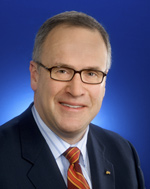
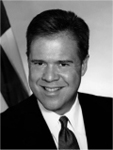
    Lechleiter, John In his opening remarks, Dr. Lechleiter (at left) called this a "historic moment" for the biotechnology and pharmaceutical industries, noting that the swine flu "crisis" might be focusing the public on the importance to them personally of the research done by these industries.  He reminded the audience that new drugs for fighting old diseases had played a major role in increasing life expectancy in the last century (from 47 years to 78 years) and that two proposals in Congress — patent "reform" and follow-on biologics legislation — put intellectual property and companies that relied on it under threat.  And he reminded the audience of Eli Lilly's credibility in the biotechnology area, from its introduction of human insulin in the 1980's to the fact that 40% of the drugs in the company's pipeline are biologics or the products of biotechnology, and that Lilly's sales of such drugs made it the fifth largest biotechnology company in the country.

    Dr. Watkins spoke next and provided a biotechnology company's perspective.  He recounted briefly HGS's involvement in the Human Genome Project and patenting numerous human genes, and how over the past 10 years or so the company has evolved into a new drug development company.  In these efforts, he said patents were "critical" and "essential" in making business decisions, based in part on the great costs of developing new drugs.  He highlighted the importance of market exclusivity and freedom to operate as being a major (but not the only) components of this analysis, and said that his scientists and researchers worked "hand in glove" in protecting HGS inventions through patenting.

    Dr. Glover's presentation focused on the interaction between patent protection and regulatory (almost exclusively FDA) requirements, and how the differing "exclusivities" can interact in ways that protect innovation sufficiently or not.  The Hatch-Waxman regime is the paradigm, according to Dr. Glover, who presented a "Cliff's Notes®" version of some of those provisions, including the abbreviated approval pathway permitting a generic company to use the innovator's safety and efficacy data, the data exclusivity period, and patent litigation provisions (specifically, the 30-month stay) that extend innovator protection.  He applied this scheme to follow-on biologics, highlighting the differences between small molecule drugs and biologics:

    •  Most conventional drugs are small molecules with defined structures that can be easily copied once the structure is known; consequently, they are not dependent on production process.

    •  Biologics, on the other hand, are very large molecules with less defined structures, due to, inter alia, the effects of post-translational modifications such as glycosylation.  These differences make biologic drugs much more complicated and "nearly impossible to copy" exactly.  Moreover, the nature and properties of biologic drugs are very dependent on manufacturing process, introducing another level of difficulty for copying.

    Turning to the current proposals for follow-on biologics (FOB) legislation, he noted three specific provisions and the differences regarding these provisions in the three FOB bills introduced in Congress to date:  H.R. 1548 (Congresswoman Eschoo, principle sponsor), H.R. 1427 (Congressman Waxman, principle sponsor), and S. 726 (Senator Schumer, principle sponsor).  These provisions are first, what kinds of products will be considered "biosimilar"; second, are the biosimilar and innovator biologic interchangeable"; and third, what is the period of data exclusivity?  What constitutes a "biosimilar" can differ widely in definition, accommodating differences in primary amino acid sequence, post-translational modifications, level of impurities, the mechanism of action, and the mode of administration.  The goal is to have the biosimilar have no clinically-meaningful differences in safety, purity, or potency, but the complexities of biologic drugs leave significant room for variability in FOBs that may be considered "biosimilar."

    With regard to interchangeability, Dr. Glover said that the goal is that there would be no increased risk of an adverse event if the biosimilar is substituted for the innovator biologic drug, or if the patient is switched between the two versions (this property of small molecule generic drugs is the basis for pharmacies providing generic versions of drugs unless the doctor affirmatively contravenes them, rather than having to obtain the physician's permission to substitute.)  Each of the bills has provisions for assessing whether the FOB is interchangeable with the innovator, but the complexities of these molecules increases the difficulties of achieving the interchangeability goal.  Finally, Dr. Glover mentioned the differing periods of data exclusivity in the bills, ranging from 14 years in the Eschoo bill to 5 years in the Waxman bill.

    These considerations led to a discussion of what Dr. Glover termed the RS/PS anomaly, i.e., the difference between the scope of regulatory protection (such as data exclusivity) and the scope of patent protection available for small molecule drugs as compared with biologics drugs.  For small molecules, RS and PS "align," according to Dr. Glover, whereas for FOBs they do not.  He illustrated this situation by reviewing the periods of data exclusivity for small molecule drugs, where new chemical entities (NCEs) have a 5-year period in which the FDA will not accept an application for generic version of an approved drug, coupled with the 30-month stay in approving a generic drug that is imposed when an innovator files suit in response to a Paragraph IV certification from the generic drugmaker than an Orange Book-listed patent on the innovator's approved drug is invalid or unenforceable.

    These timelines line up well with the timeline for a new drug according to Dr. Glover's hypothetical.  An innovator company files a provisional patent application followed by a utility application that issues within 3 years.  The company also filed an IND followed by a NDA, which is approved by the FDA within 5 years of the IND filing date.  For an NCE, the Hatch-Waxman Act pr
    ovides 5 years of data protection, independent of patent protection.  In addition, the innovator has up to 5 years of patent term extension.

    Moving to follow-on biologics, however, the situation is very different.  First, the regulatory standard is much more loosely applied for FOBs, since they are not required to be identical; the regulatory standard for small molecules is "sameness" whereas the standard for FOBs is "similarity," as a result of the complexities Dr. Glover discussed earlier in his talk.  This results in the regulatory scope being restricted to about the same extent as the patent scope for traditional small molecule drugs:  the innovator's safety and efficacy data available to the generic drugmaker is restricted to molecules that are substantially identical; similarly, the innovator's patent protection is limited to substantially identical molecules.  Thus, Dr. Glover showed that the extent of regulatory protection (RS) was about equal to the extent of patent protection (PS) for small molecule drugs.

    For biologics, the regulatory scope is much broader, Dr. Glover said, because it includes not only substantially identical molecules but also bio-"similars."  The patents, on the other hand, remain restricted to molecules that are substantially identical to the innovators biologic drug.  (Indeed, considering how the U.S. Patent and Trademark Office, and the courts, have interpreted the written description requirement, protein-based biologic drugs having even conservative substitutions are likely not within the literal scope of most patent claims.)

    Dr. Glover diagramed the concrete consequences of this anomaly, and in doing so showed dramatically the significance of data exclusivity periods as proposed in the various competing FOB bills in Congress.  Because FOB legislation permits biosimilar as well as bioidentical compounds to obtain regulatory approval, the possibility exists for a generic competitor to use the innovator's safety and efficacy data to obtain approval of a biosimilar drug that does not infringe the innovator's patent protection.

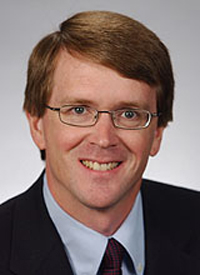
    Armitage, Robert #1 Bob Armitage (at right) gave the last talk, and his presentation was more pointed and passionate than the other presentations.  He first addressed patent reform, which he called a "life and death" issue for the biotech and pharma industry.  He cited the competing public policy pressures of providing the best medicines while at the same time providing the least expensive medicines, a situation that has put the industry at risk.  He reminded the audience that patent reform proposals have been considered over the past three sessions of Congress, and that the initial impetus for reform stemmed from a National Academy of Sciences report from 2004.  That report called for greater objectivity and greater predictability for both patent procurement and litigation.  He contrasted this with the approach advocated forcefully by the Coalition for Patent Fairness, which contends that the patent system has been "hijacked by trolls" and that litigation by such non-practicing entities is "antithetical" to the ability of those who make things to conduct their businesses properly.  This is not just a policy difference, according to Mr. Armitage, but rather is a crossroads, and one having a component not always considered in the debate:  he reminded the audience that "the rest of the world will be watching" how this policy debate turns out, and that there are "many people in the drug copying business who would be delighted at the double victory" of weakened patent protection and insufficient data exclusivity for follow-on biologic drugs.  (A parallel situation existed prior to strengthening the U.S. patent system in the 1980's by creation of the Federal Circuit and permitting universities to patent their inventions under the provisions of the Bayh-Dole Act.)

    While Mr. Armitage mentioned that there were "dozens" of views on how to reform the patent system, he said that for BIO member companies the choice was between "putting a stake in the ground" and "putting a stake through the heart of the patent system" — a position he ascribes to the Coalition for Patent Fairness and their member companies and organizations.  In making this point he named names, identifying universities, labor unions, the National Association of Manufacturers, the Coalition for 21st Century Patent Reform, BIO, and PhRMA as favoring "stake in the ground" patent reform, and various CPF groups, including the Business Software Alliance, the Financial Services Roundtable, and dozens of "high tech" companies as favoring "stake in the heart" reform.

    He stressed the concept of balance of competing interests, illustrated by the 2004 NAS report.  He characterized the balance advocated by the Academy as requiring greater harmonization of patent law (such as adopting a "first to file" system), greater transparency (patent application publication at 18 months), increased public participation (wherein the public could provide prior art to an examiner during prosecution and have an avenue for challenging a patent shortly after grant), and better and more consistent funding of the Patent Office.  With regard to litigation, Mr. Armitage stated that the Academy did not find fault in that there was an advantage for either patentees or accused infringers, but that there were too many subjective aspects (such as best mode and willfulness provisions in the law) that contributed to the expense and complexity of patent litigation.  These are the kinds of provisions that the Coalition for 21st Century Patent Reform argue should be passed into law.

    The agenda of the CPF is quite different, Mr. Armitage said — this group argues that the issues are all related to patent litigation and abuses of such litigation.  Their most sought-after goal is to change how compensatory patent damages are calculated by using an apportionment calculus, the consequences of which Mr. Armitage illustrated using Bell's telephone patent (something he said the CPF uses as one of their own examples.)  In looking at the damages that should have been available to Bell if his patent were infringed, the CPF would "subtract" the components of the device that were "old" in the art, such as wires, and amplifiers, and speakers, and microphones.  Having done that, Mr. Armitage characterized the CPF's position to be that there wouldn't be much left in damages for Mr. Bell, since after all he hadn't contributed much.  (Mr. Armitage noted that this position has been "widely condemned," specifically by labor unions that recognize that maintaining a strong patent system is "a jobs issue.")  In addition to the apportionment scheme for damages, Mr. Armitage mentioned that the CPF wanted to weaken injunctions (something accomplished for them by eBay v. MercExchange) and limit the availability of enhanced damages for willful infringement (something the Federal Circuit has done by the In re Seagate decision).

    In his final remarks on patent reform, Mr. Armitage voiced the hope that the bill recently voted out of the Judiciary Committee (S. 515) on a 15-4 vote might be the "end of the beginning" of Congressional patent reform, and mentioned that even the CPF (whose concerns are "not illegitimate") have reacted favorably to the bill, giving it "high marks."  The views of the Coalition for 21st Century P
    atent Reform on the bill can be found on the group's website.

    Turning to follow-on biologics legislation, Mr. Armitage posed the question of whether reformed patent protection could be "enough" to promote and protect innovation in the biotech and pharma industries.  Without expressly answering this question in the negative, he pointed out that data protection (a carefully considered semantic distinction from "data exclusivity," as it turned out) was "the big enchilada," characterizing these provisions as providing the term where a copier cannot copy the innovator "for free."  The "exclusivity" in "data exclusivity" is not the same as the exclusivity provided by patent protection for example, Mr. Armitage explained.  Nothing in the proposals for data exclusivity would prevent or preclude a generic competitor from "facing the same challenges" that the innovator did, and incurring the same costs.  If a generic (or FOB) competitor is willing to incur these costs, then they can show the FDA that their biosimilar products are safe and efficacious just as the innovator did.

    As for the appropriate term for data exclusivity, Mr. Armitage cited a report by Dr. Grabowski that showed that a term of between 12.8 and 16.2 years is needed for an innovator drug company to earn back the investment required to bring a new drug to market.  Like Dr. Glover, Mr. Armitage aligned this term with the "modern patent term" — 20 years from filing + any patent term extension available due to regulatory delay — and found that most drug patents will have a term of from 8-12 years, and that only between one-third and 40% of drug patents will have 14 years in their term.  Using these statistics, Mr. Armitage argued that patent protection would not be enough to protect innovation in the industry, a problem he characterized as involving the "survivability" of the industry.  He said that this illustrated "the real problem" that the patent system was not designed to be the sole means for protecting medicines from copying.  This is because there was no direct correlation between drugs that fulfilled the requirements for patentability — new, useful and non-obvious — and drugs that were safe and efficacious.  There were many patentable molecules that could not be approved by the FDA, and many FDA-approved medicines that could not satisfy patentability requirements.  Indeed, he said, there were many biotechnology-based medicines that had come to market with no patent protection at all.  This model was viable so long as there were no FOB provisions in the law.

    The final topic Mr. Armitage raised with regard to FOBs was what he called the "unkindest part of all" — the "perversity" that results in medicines that take the longest time to get to market have the shortest patent term.  But these drugs are just the ones that are likely to be pioneering or to have novel mechanisms of action or address the most intractable diseases (such as Alzheimer's disease).  He used the example of a medicine for a toothache as one where the clinical trials would take "a couple of days" and that would encounter the fewest hurdles for FDA approval.  In contrast, Mr. Armitage said he "would be a fool" to try to develop a drug for Alzheimer's disease.  As a consequence of this situation, Mr. Armitage contended that it was just those drugs most needed by the public — drugs for chronic diseases or disease prevention — that have been disfavored under the current patent regime, and that would be most negatively impacted by an insufficient period of data exclusivity.  He also mentioned that early generic entry discourages after-market research, for example to identify additional cancer targets for an anticancer drug, or to identify patient populations most (or least) responsive to a drug.

    Mr. Armitage finished his talk with a plea for audience members to "get involved" in the debate, and remind their representatives of the consequences of making the wrong decisions regarding both patent reform and follow-on biologics legislation.

  •     By Sherri Oslick

    BIO International Convention In a Breakout Session held last Wednesday at BIO 2009, a panel consisting of David Bassett, a Partner at WilmerHale; Genia Long, Managing Principal at Analysis Group; David Ridley, Assistant Professor of Business Administration at the Fuqua School of Business at Duke University; David Korn, Sr. Assistant General Counsel for the Pharmaceutical Researchers and manufacturers of America (PhRMA); and DR. Maggie Shafmater, Senior Vice President and Chief Patent Counsel for Genzyme Corp., presented a session entitled: "Shaping Follow-on Biologics Policy: The Interplay of Data Exclusivity, Patient Safety and Patents."

    While the session did not reveal much in the way of new information or insights to those familiar with follow-on biologics legislation and its surrounding issues, it did provide a comprehensive and well-organized summary of the state of follow-on biologics policy, including the current state of follow-on legislation and the special challenges presented by biosimilars.

    The session began with a discussion by Mr. Bassett of the current situation with biologics, which were noted to make up a rapidly growing area, to have provided breakthrough treatments in cancer and other diseases, and to possess unique scientific characteristics that make the challenge of bringing them to market more significant than small molecule drugs.  Currently, however, there is no regulatory pathway for follow-on biologics.  The key questions regarding follow-on policy were stated to be:  What clinical and other evidence is needed to establish similarity?  What exclusivity is to be given to the innovator?  What should the standard of interchangeability be?  How should economic incentives for continuing innovation be set — in other words, how should the need for innovation be balanced with the need for lower cost drugs?

    Addressing the fundamental differences between biologics and small molecule drugs, Mr. Korn noted that all the issues surrounding follow-on policy proceed from the fact that unlike small molecule drugs, follow-on biologics are similar to, but not the same as, the innovator drug.  Relative to small molecule drugs, biologics are different in composition, size, and structure, and have special manufacturing concerns (e.g., are more sensitive to temperature and shear forces) and clinical safety testing concerns (e.g., species specificity may limit the standard pre-clinical models typically used for safety testing).  For these reasons, different scientific and regulatory standards should be used for their approval — due to molecular similarity rather than identity, clinical trials are a must as are different names, for example.

    Mr. Ridley addressed the issues of patient safety and efficacy, noting that concerns in this area center on having a clear regulatory pathway in place for new product categories distinct from small molecules, including a system for distinct labeling and naming, and adequate quality standards of pre-clinical and clinical testing requirements.  To the latter concern, it was noted that the scope of pre-clinical and clinical requirements for safety and efficacy would necessarily include some case-by-case elements.  Appropriate risk management plans and active pharmacovigilance are also key elements of the regulatory pathway.

    Addressing the issue of data exclusivity, and the need to balance long-run innovation incentives with short-term cost savings from price competition, Ms. Long initiated the discussion by noting that patent protection and data exclusivity provide complimentary incentives.  Data exclusivity, noted Ms. Long, prevents "free riding" on the investments necessary to conduct clinical studies and provides protection where short remaining patent terms following approval may be an issue, as well against design-arounds (a particular issue with follow-ons).  The key question, however, is what the length of the exclusivity period should be.  According to Ms. Long, there are two ways to view the exclusivity time-frame:  1) the "break even" point of view in which the balance between innovation costs and exclusivity is just over even, which translates to a 12-16 year period; and 2) a timeframe comparable to what small molecules experience, which is roughly a 12 year period.

    Patent protection, noted Dr. Shafmater, provides incentives for innovation by protecting investments in technological improvements (versus data exclusivity, which only protects against others relying on one's clinical trial data), but patent rights are often narrow (e.g., to a specific sequence with a limited range of homology, or having a host cell limitation) leaving room for design-arounds.  And over time, patent rights become less and less certain as the requirements of patent law (e.g., novelty and non-obviousness) change.  In short, legislation will need to recognize that follow-ons are different, including from a patent protection perspective.

    The remaining formal part of the presentation focused on the two pending pieces of follow-on legislation:  H.R. 1427, the Waxman Bill, and H.R. 1548, the Eshoo bill.  The Waxman bill was introduced on March 11, 2009, the Eshoo bill six days later on March 17, 2009.  Salient provisions of the Waxman bill include:

    • Pathways for Approval:  1) K3 — where the follow-on biologic and the reference product have highly similar molecular structural features; the follow-on is biosimilar to or interchangeable with the reference product; the two biologics use the same mechanism of action; the route of administration, dosage form and strength are the same; or 2) K4 — if the follow-on doesn't meet the requirements for K3, safety, purity, and potency must be show.
    • Data Exclusivity:  only for products approved after the bill passes; 5 year period for the first "major substance"; 3 years if the "major substance" was previously approved and the product represents a significant therapeutic advance; 6 month extension for a significant therapeutic advance or a new patient population.
    • Patent Provisions:  innovator has no access to application for follow-on; follow-on applicant can request patent information from innovator at any time; failure of the innovator to timely identify patents in response to such a request results in forfeiture of the patent; failure of the innovator (or patent owner) to sue within 45 days of notice results in the inability to obtain an injunction against the follow-on applicant.

    And of the Eshoo bill:

    • Pathway for Approval:  process will require a showing of biosimilarity to reference product via analytic, animal, clinical and immunogenicity studies (unless waived by FDA); the FDA is to determine the feasibility of demonstrating "interchangeabilty" before a biosimilar can approved as interchangeable with the reference biologic.
    • Data Exclusivity:  12 year period; 2 year extension if a new indication is found within the first 8 years of licensure; 6 months additional for pediatric exclusivity; also includes an exclusivity period of 2 years for the follow-on applicant with an interchangeable biosimilar.
    • Patent Provisions:  only applies to patents expiring after the 12 year exclusivity period; the FDA will publish receipt of a follow-on application with 30 days with direct notice to the innovator; f
    ollow-on applicant will show application to innovator and the innovator will provide patent information; follow-on applicant can certify specific patents, which creates an artificial act of infringement, allowing courts to decide infringement issues before the follow-on goes to market; remedy in court is delayed approval of follow-on until after exclusivity period.

    UPDATE:  For those interested in obtaining a copy of the slides for the above presentation, they can be accessed here.

    For additional information on this and other related topics, please see:
    • "Third Follow-on Biologics Bill Introduced in 111th Congress," April 1, 2009
    • "Second Follow-on Biologics Bill Is Introduced in House," March 18, 2009
    • "Waxman Introduces Follow-on Biologics Bill," March 11, 2009
  • Washington Mall Law Seminars International (LSI) will be holding a one-day seminar entitled "Buying, Selling and Licensing Patents:  Strategies for Turning Your Patent Portfolios into Revenue Streams" on July 20, 2009 in Washington, DC.  During the seminar, LSI's faculty will offer presentations on the following topics:

    • Patent marketplace 2009 and beyond;
    • Patent sales case studies;
    • Patent reform and patent valuation;
    • Creating and implementing decision rules for patent portfolio mining and management (hold, sell, license or abandon?);
    • Designing a patent purchasing program; and
    • Licensing vs. litigation:  When you have a patent portfolio worthy of licensing, how do you determine the appropriate strategy to meet your business goals?

    The agenda for the seminar can be found here.  A complete brochure for the seminar, including an agenda, list of speakers, and registration form can be downloaded here.

    LSI - Law Seminars International - red The registration fee is $447.50 for students and new employees, $695.00 for government employees, or $895.00 for all other attendees.  Those interested in registering for the seminar can do so here.

  • Ann09 The American Bar Association (ABA) will be holding its 2009 Annual Meeting from July 30 to August 4, 2009 in Chicago, IL.  During the Annual Meeting, various ABA sections and divisions will be offering more than 250 CLE programs, including the following programs that will be offered by the Intellectual Property Law section:

    • Patent Reform Act 2009:  A Fresh Look? (Friday, July 31, 10:30 – 11:30 am)
    • Helping Companies in a Down Economy:  Strategic Planning for Identifying and
    Valuing Your IP (Friday, July 31, 2:00 – 3:30 pm)
    In re Bilski:  Are Method Claims a Thing of the Past? (Friday, July 31, 4:00 – 5:00 pm)
    • IP Policy in the Crossfire:  Section Business Session (Saturday, August 1, 8:30 – 11:00 am)
    • Mr. Lincoln's Patent (Sunday, August 2, 8:30 – 10:00 am)

    ABA The full program schedule for the Annual Meeting can be found here.  The registration fee for individual CLE programs ranges from $35 for government lawyers and judges to $75 for ABA members (students will be admitted to all CLE programs at no additional charge).  An All-Access CLE Badge (which can be used for admittance to governance meetings, non-CLE programs and all CLE programs) ranges from for $495 (ABA members registering before May 29, 2009) to $875 (non-ABA members).  Those interested in registering for the Annual Meeting can do so here.

  •     By Donald Zuhn

    Knowles, Sherry On Wednesday, we posted a report on a BIO Super Session entitled "A Model Patent Office for the Future — Promoting and Protecting Investments in Innovation" (see "Docs at BIO: Panel Offers Suggestions for Fixing the USPTO").  At that session, a panel consisting of Sherry Knowles (at right), Vice President of Corporate Intellectual Property at GlaxoSmithKline Biopharmaceuticals, Inc.; Q. Todd Dickinson, Executive Director for the American Intellectual Property Law Association (AIPLA); John Duffy, Professor of Law at George Washington University Law School; and Jeff Kushan, a Partner at Sidley Austin LLP, provided a long range view of what the model patent office of the future can and should look like to drive innovation and economic growth, and promote investment in IP-intensive industries.  Today, Ms. Knowles sent us a message to let us know that she believed the report did not accurately represent the gist of her comments at the BIO session.  The text of Ms. Knowles' message is provided below:

    Don:

    Your article inaccurately represented the gist of my comments at BIO.  To be accurate, my position is that the success of the pharmaceutical and biotech industries are directly linked to the success of the US Patent Office.  I said it is not just up to Congress, the courts or the new Commissioner to fix the Patent Office issues, it is up to all of us as stakeholders to play an active role to make sure the PTO's problems are solved.  I concluded the session by saying we should all put the past frustrations and rhetoric behind us and fully support the new PTO Commissioner with a new spirit of cooperation.

    Gene Quinn's articles in IPwatchdog.com on the new attitude of Dep. Commissioner Focarino are refreshing and show the PTO is trying to go in the right direction.  We want to work closely with the new administration to accomplish these goals.

    The comment about the potential "train wreck" referred to the statistics showing a decreasing allowance rate and decreasing filing rate (which leads to a smaller PTO budget) in combination with an increasing backlog of applications.  This is a matter all of us must proactively propose solutions for.

    I am of the opinion that the PTO fee sheet can be used to incentivize behavior and is a better means to regulate filings, submissions and claim presentation than absolute restrictions.  A structure can be implemented that provides relief for small entities and patent applicants for whom this presents a hardship.

    I would appreciate it if you post this response.

    Sherry Knowles

    Our goal in reporting on the BIO session was to provide a fair summary of all of the panelists' comments for Patent Docs readers unable to attend the session.  To the extent that the report did not accomplish this goal, the publication of Ms. Knowles' e-mail should help clarify her intended message.  In addition, as regular readers are well aware, we have previously expressed the opinion that the patent community owes a debt of gratitude to GSK for leading the challenge (along with Dr. Tafas) against the continuation and claims rules (and, as a result, for perhaps playing a role in the USPTO's decision to put the IDS, Markush, and appeals rules packages on hold).  Thus, in publishing our prior report, there was no intent to diminish these important efforts (see links below).

    • "Federal Circuit Hears Oral Argument on Tafas Appeal," December 8, 2008
    • "GSK Files Brief in Tafas v. Dudas Appeal," September 25, 2008
    • "USPTO Posts Comments on New Rules for Alternative Claiming," April 23, 2008
    • "No April Fool's Joke — Tafas and GSK Win on Summary Judgment," April 1, 2008
    • "Managing Intellectual Property Releases MIP 50," July 28, 2008
    • "U.S. Senate Mailbox Filling with Letters against Passage of Patent 'Reform' Bill," January 18, 2008
    • "Enjoined New Rules and Patent Reform Finally Appearing on Biotech Industry's Radar," December 20, 2007
    • "Tafas v. Dudas; SmithKline Beecham Corp. v. Dudas (E.D. Va. 2007)," October 31, 2007
    • "AIPLA Supports GSK's Lawsuit Against the Patent Office's New Rules," October 25, 2007
    • "GSK Brings Out the Big Guns Opposing the New Continuation and Claims Rules," October 24, 2007
    • "Hooray! – (Finally) the Big Dogs Have Joined the Hunt," October 11, 2007

  •     By Suresh Pillai

    Bavarian Nordic Suit over TroVax® Survives Motion to Dismiss

    Bavarian Nordic Last week, the U.S. District Court for the Southern District of California refused to dismiss an amended complaint filed by Bavarian Nordic A/S alleging that Oxford Biomedica infringes Bavarian Nordic's U.S. Patent Nos. 6,761,893, 6,913,752, 7,335,364, and 7,459,270 with respect to Oxford Biomedica's experimental cancer vaccine TroVax® (see "Court Report," July 6, 2008).

    Oxford BioMedica In its attempt to have the suit dismissed, Oxford claimed that Bavarian Nordic's action was premature, as TroVax® was still in the development phase.  However, Bavarian Nordic argued that Oxford should be denied safe harbor because Oxford had already commercialized the TroVax® vaccine and entered into a $700 millon contract with Sanofi.  The District Court agreed with Bavarian Nordic's arguments, ruling that Bavarian Nordic may continue its suit against Oxford.


    Settlement Reached in Coreg® Patent Suit

    Zydus Teva Pharmaceuticals Industries Ltd. announced the settlement of its patent infringement suit with Zydus Pharmaceuticals Inc. and Cadila Healthcare Ltd. concerning the process of making the key ingredient in Coreg®, a beta blocker used to treat high blood pressure.  Teva launched lawsuits against Zydus and Cadila in 2007 asserting infringement of patents covering the preparation of carvedilol, Coreg's® active ingredient (see "Court Report," July 1, 2007).  Coreg® is currently sold by GlaxoSmithKline PLC.  The patents-in-suit, U.S. Patent Nos. 7,056,942, 6,710,184, 6,699,997, and 7,126,008, had all been assigned to Teva.  In October, Teva learned that Zydus had submitted a new drug master file to the FDA that disclosed a new process for the manufacture of carvedilol.

    Teva After filing suit, Teva reviewed the FDA filing and withdrew the infringement suit as it pertained to the '184 and '942 patents.  Teva also provided Zydus with a covenant not to sue regarding the two patents.  The U.S. District Court for the District of New Jersey signed off on the dismissal last week.  Details of the settlement have not been released.

    Patent Co-owned by U.S. Not Immunized from Infringement or Validity Determinations

    KGK Synergize Last week, the U.S. District Court for the Northern District of Illinois ruled that KGK Synergize Inc. could not avoid a determination of validity and infringement on the basis that the co-owner of the patent-in-suit is the United States government.  SourceOne Global Partners LLC, a former licensee of KGK, sued KGK in December 2008 after KGK sent a cease and desist letter ordering SourceOne to halt manufacturing and marketing of a cholesterol-reducing nutritional supplement.  In 2003, KGK and SourceOne entered into a licensing agreement providing SourceOne with the right to manufacture, distribute, and sell Sytrinol, a nutritional supplement used to lower cholesterol.

    SourceOne As part of its lawsuit, SourceOne sought a declaratory judgment of noninfringement or invalidity of a patent co-owned by the United States government (U.S. Patent No. 6,987,125) as well as two other patents not co-owned by the government.  KGK argued that,
    because the United States was a co-owner of one of the patents-in-suit, the suits were immune from suit, thereby depriving the District Court of subject matter jurisdiction.  In the alternative, KGK argued that the government was a required party for the suit due to its co-ownership of the '125 patent.

    The District Court, however, disagreed with KGK's interpretation, holding that the government's co-ownership and inability to be joined as a defendant did not divest the Court of subject matter jurisdiction.  Furthermore, the District Court concluded that SourceOne had standing to bring suit.  In his ruling, Magistrate Judge Schenkier stated that he would not allow KGK to "retreat behind the government's cloak of immunity and prevent the infringement or validity of the '125 patent from ever being tested in court."

  •     By Donald Zuhn

    BIO International Convention In a Wednesday Super Session entitled "A Model Patent Office for the Future — Promoting and Protecting Investments in Innovation," a panel consisting of Sherry Knowles, Vice President of Corporate Intellectual Property at GlaxoSmithKline Biopharmaceuticals, Inc.; Q. Todd Dickinson, Executive Director for the American Intellectual Property Law Association (AIPLA); John Duffy, Professor of Law at George Washington University Law School; and Jeff Kushan, a Partner at Sidley Austin LLP, provided a long range view of what the model patent office of the future can and should look like to drive innovation and economic growth, and promote investment in IP-intensive industries.

    Knowles, Sherry Ms. Knowles (at left), who moderated the session, began the discussion by fondly recalling the "Golden Era" of patent prosecution in which U.S. examiners were intrigued by inventions disclosed and claimed in patent applications, and worked with applicants to advance prosecution.  She noted that cooperation between the USPTO and its stakeholders had reached an all-time low, analogizing the USPTO to a "hospital that hates patients."  Pointing to statistics showing a decreasing filing rate, a first quarter allowance rate of 42% (which Ms. Knowles noted was also an all-time low), and an increasing application backlog of applications, she labeled the current situation a "train wreck."  Ms. Knowles contended, however, that stakeholders could not just count on patent reform, the courts, or the yet-to-be-named USPTO Director to fix the Office's problems, but rather had to play an active role (including working with the USPTO) to ensure that the USPTO's problems are solved.

    Dickenson, Q. Todd Mr. Dickinson (at right), who served as USPTO Director during the Clinton Administration, discussed a number of challenges that will confront the next Director, including the application backlog, application pendency, the current revenue shortfall, examiner attrition, and examination quality.  With respect to the first two challenges, Mr. Dickinson noted that the application backlog was approaching a million applications and that application pendency currently stood at 38 months.  He indicated that Gary Locke, the new Secretary of Commerce, had recently proposed reducing pendency to only 10 months.  While he found this goal to be laudable, he observed that the last time the USPTO had a 10-month application pendency, the country was embroiled in a Civil War.  He also noted that only one USPTO Director had been able to reduce application pendency in the past thirty years (later confirming that he had been that lone Director).  With regard to the Office's revenue shortfall, Mr. Dickinson pointed out that as a result of a drop in application filings and lower maintenance fee collections, revenue was down 10% for the year.  The revenue shortfall, in turn, had forced the Office to implement a hiring freeze and eliminate programs such as law school reimbursement for examiners, which not surprisingly, had negatively impacted examiner attrition (although Mr. Dickinson noted that the negative impacts have been somewhat offset by the unsettled job market).  Finally, Mr. Dickinson argued that examination quality was an issue that the USPTO needed to address, and one that patent reform (which has focused on downstream, litigation-related "reforms") could not fix.

    Mr. Dickinson next proposed several USPTO reforms, including changes in Office leadership, the count system, examination time allotments and examiner pay, enhanced worksharing, an end to fee diversion, and deferred examination.  Mr. Dickinson advised the new USPTO leadership that rulemaking transparency and attempts to engage stakeholders in the process would be critical to the success of any future rulemaking (a lesson he said he learned during passage of the AIPA, and a lesson that the last Administration never seemed to learn).  According to Mr. Dickinson, the count system, by which the Office measures examiner (and supervisor) performance, was in need of an update (he noted that the system had not been significantly changed in 30 years).  However, he advised session attendees that such an update would not come cheap, as the last update of the system cost $20 million.  Mr. Dickinson also argued that the amount of time allotted for examination, which he said ranged from 18-36 hours per application, was also in need of an update.  Mr. Dickinson warned, however, that adding just one hour to the examination of each application would result in an additional $20 million in expense.  On the topic of worksharing, Mr. Dickinson stated that continued implementation of such programs would require a leap a faith and buy-in from stakeholders with regard to searches conducted by foreign patent offices.  While noting that the last six Bush budgets and the first Obama budget had specified an annual end to fee diversion, Mr. Dickinson argued that a permanent end to fee diversion was needed in order to permit the USPTO to engage in long-term planning.  Finally, on the topic of deferred examination, he admitted that his own organization had traditionally rejected deferred examination proposals, but refused to dismiss deferred examination as a possible tool for reforming the USPTO, stating that the devil would be in the details (e.g., how many years would be available, how would the fee structure be altered, how would intervening rights and patent term adjustment be handled).

    Duffy, John In a presentation entitled "Ending the Patenting Monopoly: The Global Transition to Patent Office Decentralization," Prof. Duffy (at left) discussed the evolution of the USPTO from its current antiquated state.  Noting that the USPTO had changed little since its 1836 origins, when the centralization of patent examination was a revolutionary (but perhaps sensible) concept, he argued that radical change was needed (and that such change was almost inevitable).  Prof. Duffy argued that the current system, in which applicants were forced to deal with a single entity, necessarily created a monopolistic attitude at the USPTO.  Thus, stakeholders upset over lengthy application pendency in the U.S. were left with no recourse but to accept that pendency.

    As an example of a decentralized (or demonopolized) patent examination system, Prof. Duffy pointed to the Israeli patent system, in which applicants are allowed to use the examination of a corresponding application in a number of other patent offices to secure an allowance of an applic
    ation in the Israeli Patent Office.  Prof. Duffy also noted that steps towards demonopolization had already been taken in the form of the implementation of the PCT, where U.S. applicants can choose to have searches conducted by the USPTO, EPO, IP Australia, or South Korean Patent Office (and at significantly different costs); the creation of the EPO, where national offices compete with the EPO to provide examination services; and the Patent Prosecution Highway (PPH), a worksharing arrangement between the USPTO and a number of foreign patent offices.

    Prof. Duffy concluded his presentation by discussing private searches, the peer-to-patent system, and accelerated examination/Application Quality Submissions (AQSs), in which entities other than the USPTO perform the search or examination functions.  Referring to the above as the "cutting edge" of demonopolozation, Prof. Duffy predicted an inevitable move towards private searches.  However, he acknowledged that inequitable conduct remained a thorn in the side of accelerated examination.  Prof. Duffy also noted that the reaction to the demonopolization movement had not been favorable, pointing to a section of the Senate patent reform bill (S. 515), which labels search and examination functions as "sovereign," and requires these functions to be performed by U.S. citizens.  Mr. Dickinson speculated that lobbying from the examiners' union had led to the addition of this provision to the bill.

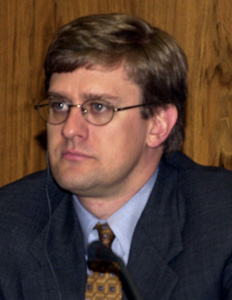
    Kushan, Jeffrey Mr. Kushan (at right) was the last member of the panel to offer his suggestions for USPTO reform in a presentation entitled "An Idealized PTO for Biotech and Pharmaceutical Applications."  Touching on the issue of patent quality, Mr. Kushan noted that the standards under which patents issue are frequently different from the standards under which patents are litigated.  Mr. Kushan also agreed with Mr. Dickinson that the outdated count system and time allotted for examination needed to be changed.  He also criticized the "two sets of eyes" policy as one in which examination was done "twice inefficiently" instead of just "once inefficiently."  Mr. Kushan advocated for "on demand" examination, with the caveat that applicants should be required to pay higher fees to defer examination.  He also contended that inequitable conduct reform was as necessary for the USPTO as it was for applicants.

    In the question and answer portion of the session, Ms. Knowles proposed (somewhat surprisingly) that the USPTO should enact escalating fees for the presentation of additional claims (akin to current EPO practice), the filing of each new continuation, and the submission of each new reference.  While the other panelists were less than enthusiastic about her proposal, none mentioned that in the absence of production goal reform (i.e., changes to the count system and examination time allotments) and inequitable conduct reform, escalating fees would be unlikely to resolve the problems confronting the USPTO.  Ms. Knowles also asked the panelists for their opinions regarding the substantive or procedural nature of the rule limiting continuations that was at issue in Tafas v. Doll.  Mr. Dickinson stated that the AIPLA believed the rule was substantive, but Prof. Duffy, noting his background in administrative law, suggested that Ms. Knowles would not be happy if the Supreme Court ever got their hands on the case.  When Ms. Knowles stated that she thought the Supreme Court would provide a more favorable ruling for GSK than the Federal Circuit did, Prof. Duffy jokingly advised her to hire some new attorneys.  When asked about his Supreme Court prediction after the session, Prof. Duffy indicated that the Supreme Court (where he once clerked) was not as familiar with patent law as it was with administrative law, and therefore, the Court would likely defer to the USPTO with respect to its interpretation of 35 U.S.C. § 120, and thus find the rule limiting continuations to be consistent with that section.

  •     By Kevin E. Noonan

    Burrilll, Steven What a difference a year makes.  Steven Burrill (at right), President and CEO of Burrill & Co., unveiled his company's "State of the Biotechnology Industry" report on Tuesday at BIO 2009 in Atlanta.  Mr. Burrill described what he termed "a sea change" that has occurred over the past several months, changes that have altered his rather optimistic proscriptions for the future set out in last year's report.  Then, his report concentrated on global developments that he anticipated will occur by 2020 and how those changes will impact the industry.  This year, he was much less sanguine about the future.

    BIO International Convention The two major changes to have occurred since last June have been, of course, the economic meltdown since last September and (perhaps less negative but just as significant) the election of Barrack Obama as President.  Indeed, several of Mr. Burrill's slides depicted the President in various guises commenting on the state of the economy and the economic bailout he (as his predecessor before him) has implemented in response.

    But Mr. Burrill's message was anything but optimistic.  Indeed, on several fronts he described a situation that will get worse before it gets better, ranging from unemployment (which he believes will peak at about 20%; it is already close to that figure in Indiana and Michigan) to the capital markets (where he contrasted the situation a year ago, when a $5 million investment procured a 5% stake in a biotechnology company, to today, where the same stake may result in a 90% stake).  And Big Pharma will not be a savior, according to Mr. Burrill, since these companies know that the price will always go down if they have the patience to wait.

    Unlike Mr. Burrill's futuristic musings of a year ago, the economic crisis seems to have refocused his talk to his core competency:  assessing company strengths, cash reserves, and burn rates to inform investors.  He descried the consequences of the economic downturn on the industry, where a substantial portion of biotechnology companies have less than 6 months cash at hand to cover their current outlays, and where many public biotechnology companies are trading below their capitalized value.  And in view of the tightness in the capital markets, the situation is unlikely to improve any time soon, according to Mr. Burrill.

    However, as he did last year Mr. Burrill suggested that a paradigm shift would be necessary and could provide a way out of the morass currently plaguing the industry.  Pursuing overseas sources of capital is one illustration of his "think outside the box" recommendations.

    Mr. Burrill's vision remains "futuristic" in terms of technology and social trends existing in the present day.  He did not admit that one of his predictions from 2008 — that primary medical care will be provided by "wellness centers" staffed by nurse practitioners relying on both diagnostic technology and personal medicine — has instead seen WalMart close most of these types of wellness centers over the past year.  Mr. Burrill attributed this outcome to bad business models rather than any flaw in his vision of the future of medical care.  And he remains committed to the idea that the future of medicine will be an emphasis on medical monitoring and surveillance with regard to "lifestyle" choices such as smoking, alcohol consumption, and diet that will replace the "reactive" current model of treating disease, particularly chronic diseases of aging, only after they have developed.

    The complete Burrill Report can be purchased from Burrill & Co.; sales at BIO 2009 include a CD-ROM of Mr. Burrill's presentation slides, and attendees of Mr. Burrill's presentation received a free copy of the CD-ROM.  Patent Docs will provide additional reports regarding Mr. Burrill's presentation in subsequent posts.

  •     By Donald Zuhn

    BIO International Convention In a Breakout Session entitled "The Emerging Promise of Personalized Medicine," a panel consisting of Cindy Collins, Group Vice President at Beckman Coulter, Inc.; Brian Barrett, Associate General Patent Counsel at Eli Lilly & Company; Dr. Courtney Harper, Associate Director for Toxicology at the Office of In Vitro Diagnostic Device Evaluation and Safety of the Food and Drug Administration; and Sheldon Bradshaw, a partner and regulatory attorney at Hunton & Williams, LLP, addressed the business, scientific, and legal challenges for the commercialization of personalized medicine on Tuesday at BIO 2009.  Mr. Barrett's presentation would likely have been of most interest to Patent Docs readers, as his focus at Lilly is on patent procurement.  In Mr. Barrett's portion of the presentation, entitled "Unpredictable Patent Protection and Inadequate Data Protection:  Key Obstacles to Developing Personalized Medicine," he listed a number of patent obstacles for personalized medicine and then briefly touched on data exclusivity with regard to proposed follow-on biologics legislation.

    Lilly With regard to patent-related obstacles for personalized medicine, Mr. Barrett discussed the recent Association for Molecular Pathology v. U.S. Patent and Trademark Office gene patenting case, and noted that the Supreme Court has not had an opportunity to address the patentability of "isolated DNA."  He also noted that the landmark Diamond v. Chakrabarty decision involved human intervention rather than isolation.  Mr. Barrett also discussed the impact of Laboratory Corp. v. Metabolite Laboratories, Inc. (LabCorp), In re Bilski, and the pending appeal in Prometheus v. Mayo on medical diagnostics.  He next addressed the possible impact of the Supreme Court's decision in KSR International Co. v. Teleflex Inc. on optimization (i.e., tailoring) of therapeutics to individual patients, and then touched on a number of decisions impacting nucleic acid patentability, including In re Fisher, In re Kubin, and Ariad v. Eli Lilly & CoPatent Docs readers are no doubt quite familar with the above cases.  Mr. Barrett concluded the patent obstacles portion of his talk by briefly discussing anticipation by experimental use, inherent anticipation, inequitable conduct, compliance with the best mode requirement, inducing infringement, and injunctions in view of eBay Inc. v. MercExchange, L.L.C.

    On the topic of data exclusivity, Mr. Barrett highlighted the exclusivity periods in the two pending House follow-on biologics bills (the Waxman and Eshoo bills), and noted that because data protection and patent protection were not additive, the Waxman bill would provide insufficient protection for innovator drug companies.  He stated that innovators, who learn a lot about a therapeutic "deep into" Phase II clinical trials, would be well past the 5.5 years of data protection afforded under the Waxman bill by the time such knowledge had been gathered.  When asked during the question and answer portion of the session whether there was a compromise level of data exclusivity that innovators could live with (i.e., something lower than the maximum 14.5 years provided under the Eshoo bill), Mr. Barrett responded that the Eshoo period "was the compromise" since the data protection period is "currently unlimited" (in the absence of a follow-on biologics regulatory pathway).  Perhaps not surprisingly, Mr. Barrett's response was identical to the one BIO President and CEO Jim Greenwood gave Patent Docs at the BIO IPCC conference in March.

    For additional information regarding many of the obstacles discussed in Mr. Barrett's presentation, please see:
    • "Association for Molecular Pathology v. U.S. Patent and Trademark Office," May 17, 2009
    • "Ariad Pharmaceuticals, Inc. v. Eli Lilly and Co. (Fed. Cir. 2009)," April 6, 2009
    • "In re Kubin (Fed. Cir. 2009)," April 5, 2009
    • "Second Follow-on Biologics Bill Is Introduced in House," March 18, 2009
    • "Waxman Introduces Follow-on Biologics Bill," March 11, 2009
    • "Applying In re Bilski to Diagnostic Method Claims," February 5, 2009
    • "Personalized Medicine: A Patent Office Perspective," December 11, 2008
    • "KSR Int'l Co. v. Teleflex Inc. (2007)," April 30, 2007
    • "In re Fisher (Fed. Cir. 2005)," November 9, 2006
  •     By Sherri Oslick

    BIO International Convention In a Super Session held Tuesday morning at the BIO 2009 conference, Ernst & Young hosted "Beyond Borders — Ernst & Young's Global Biotechnology Report 2009," a presentation that summarized the financial performance of the biotechnology industry in 2008 and addressed related issues and trends.  The session consisted of brief presentations by representatives of Ernst & Young as well as a panel discussion.  Members of the panel included Samantha Du of Hutchison MediPharma, Colin Goddard of OSI Pharmaceuticals, Adelene Perkins of Infinity Pharmaceuticals, and Peter Wirth of Genzyme, with Glen Giovannetti of Ernst & Young as the moderator.

    Ersnt & Young Two primary themes emerged throughout the course of the presentation:  1) the industry has faced unprecedented challenges as a result of the global financial crisis, including a significant funding drought and an uncertain landscape, and 2) innovation (both technologically and in business models) is key.

    Some of the take-home messages, data, and predictions from the session include:

    • The financial crisis has resulted in a real separation between the "haves" (large corporations) and "have nots" (restructuring, rifts, and refocusing have been prevalent in smaller companies).
    • Globally, financing was down 46% in 2008.  IPO funding fell 95%, however Venture Capital funding fell only 19%.
    • Despite the financial crisis, financial performance was quite strong:  Globally, revenues were up by 12%, losses were cut by 53%, and the U.S. industry reached aggregate profitability for the first time.  Additionally, 2008 was a strong year for deals and alliances — total value of M&As involving U.S. biotechs reached more than $28.5 billion.
    • While the biotech industry has been through funding cycles before (this is the 5th significant funding drought), the current cycle is different.  Prior funding drops have been the result of a decline in investor enthusiasm.  The current drop is not driven by biotechnology but rather by the U.S. housing market which triggered a global recession; biotech is one of many sectors that are suffering as a result.
    • Expect contraction ahead, likely protracted.  Expect pricing pressure.
    • The business model as it now exists for biotech ("world's longest relay race:  of passing the funding baton along) is not sustainable.  Rather, the future of biotechnology will be Darwinian, a survival of the fittest as companies work to shift to more workable business models.
    • The industry will return to "a new normal" as soon as the appetite for risk returns to the market, perhaps within a couple of years.
    • A tight capital market will remain.  Deal space will remain active.  The rules of the game will change and companies will need to adapt — to innovate both technologically and in their business model.
    • IPOs will not return for at least 12 months.

    The speakers also noted four paradigm-shifting trends that show promise for the industry:

    • Generics:  Generics of today's top-selling drugs will provide relief to the government and health insurers' budgetary restrictions, paving the way to pay for new innovative drugs.
    • Healthcare Reform:  Will likely include pay-for-performance metrics that reward innovation and can create opportunities for companies that develop truly innovative products.
    • Personalized Medicine:  Will lead to more efficient drug development and improved bargaining power of small companies, boosting valuation and returns and making for more sustainable funding.
    • Globalization:  Creates new opportunities for partnering and funding sources.

    More information — including some representative data as well as a link to request a copy of the Ernst & Young report — may be found here.