•     By Andrew Williams

    Amgen On Monday, the Federal Circuit issued its decision in Amgen, Inc. v. Ariad Pharmaceuticals, Inc.,  dealing another blow to Ariad Pharmaceuticals and U.S. Patent No. 6,410,516, directed to certain aspects of the NF-κB transcription factor pathway.  Previously, on April 3, the Federal Circuit held that four of the claims of the '516 patent were invalid because of a failure to satisfy the written description requirement.  At that time, Patent Docs provided a detailed report of that case.  In the present case, the Court affirmed a Delaware District Court's grant of Amgen's motion for summary judgment of non-infringement related to Amgen's Enbrel® (etanercept, a TNF blocker) product.

    Ariad The technology of the '516 patent relates to gene regulation, and specifically the transcription factor NF-κB.  The technology was described in detail in the Ariad v. Lilly opinion, as well as our post regarding that case.  Briefly, NF-κB exists in an inactive state in the cytoplasm of a cell when it is bound to its natural inhibitor, IκB.  NF-κB is activated when various stimuli external to the cell cause the NF-κB-IκB complex to dissociate, resulting in the transcription factor traveling into the nucleus and binding NF-κB recognition sites found in various promoters.  This binding results in the production of many different proteins.  When the external stimulus is eventually removed, the cell returns to a state in which NF-κB is inactive.  This natural cycle of NF-κB control can become disrupted, resulting in the continual production of protein, often to the detriment of the cell, and can result in various diseases and conditions, ranging from sepsis, cancer, and AIDS.

    The '516 patent issued with 203 claims — 197 of which contain the single step of either "reducing" or "altering" NF-κB activity in cells.  In fact, all of the claims at issue in the present case contain the limitation "reducing NF-κB activity in [the] cells."  For example, claim 6 reads:

    6.  A method for diminishing induced NF-κB-mediated intracellular signaling comprising reducing NF-κB activity in cells such that NF-κB-mediated intracellular signaling is diminished.

    As another example, claim 18 reads:

    18.  A method for reducing Interleukin-1 or Tumor Necrosis Factor-α activity in mammalian cells comprising reducing NF-κB activity in the cells so as to reduce intracellular signaling caused by Interleukin-1 or Tumor Necrosis Factor-α in the cells.

    The District Court construed this phrase to mean "taking action inside cells to directly inhibit (interfere or block) an NF-κB activity."  However, Amgen's Enbrel works outside the cells by binding to free TNF-α, thereby interfering with TNF-α's ability to reach the receptors on the cell surface, resulting in an interference of inducing NF-κB activity.  Therefore, because Enbrel works outside the cell, it could not infringe these claims, and the District Court granted Amgen's summary judgment motion of non-infringement.

    Federal Circuit Seal Ariad argued that the District Court's claim construction was wrong, and that under the proper construction, Enbrel infringes.  Judge Moore authored the opinion for the Court, reviewing support for the construction of this claim term in the language of the claims, the context of the entire patent, including the specification, and the prosecution history of the patent.  The Court first noted that the ordinary meaning of "reducing NF-κB activity in cells" was unclear.  In fact, a simple conclusion that the term means that NF-κB activity must occur in cells would be redundant, because NF-κB activity already only occurs in cells.  Ariad took the position that the method must be performed on cells in which NF-κB is present, regardless of where the reducing agent is situated.  The Court then reviewed the specification and found that the '516 patent differentiates external influences (such as TNF-α) from intercellular transducers (such as NF-κB), and that the dividing line between these two is the cell membrane.  The specification provides hypothetical agents for carrying out this step, including inhibitors, decoy molecules, and dominantly interfering molecules.  However, all of these examples act within the cell to reduce NF-κB activity.  The specification does not provide any example of agents that could work outside the cell to block external influences from reaching the cell.  And, this is exactly what Enbrel does, blocking TNF-α from reaching the cells and interacting with receptors found in the cell membrane.

    Most damaging for Ariad was a position that they took in the prosecution history, not of the original patent, but one taken during the currently pending reexamination of the '516 patent.  One of the class of prior art molecules asserted as inherently anticipating the '516 claims was antibiotics.  Antibiotics work outside the cell by killing bacteria, which subsequently reduces the amount of TNF-α released by cells in response to the bacterial infection with a concomitant reduction in NF-κB activity.  As a result, Ariad was in the tenuous position of placing a boundary for where the reducing activity could occur somewhere outside of the cell, to cover Enbrel, but not anywhere outside a cell, in order to leave antibiotics outside of the scope of the claims.  The Federal Circuit picked up on a distinction Ariad made in the reexam between two types of claims found in the patent:  (a) methods that reduce the induced NF-κB activity by intervening intracellularly at a specific segment within the signaling pathway, and (b) methods that prevent the external inducing stimuli from inducing the intercellular signaling pathway in the first place.  Clearly, decoy molecules and dominantly interfering molecules belong to category (a), while antibiotics belong to category (b).  Tellingly, however, Ariad lacked any basis in the specification to distinguish Enbrel from antibiotics in this scheme.  And, because the patent creates a category of agents that impact "external influences," both Enbrel and antibiotics must be found in this category.  Therefore, because the specification and prosecution history, albeit of the reexamination of the '516 patent, "unequivocally point" to a construction whereby the
    reduction of NF-κB activity occurs within the cells, the Court concluded that the District Court's claim construction was correct.  And, as a result, the Federal Circuit affirmed that Enbrel does not infringe the claims at issue.

    Finally, in light of the Ariad v. Lilly decision, Amgen moved the Court for affirmance on the alternative ground of collateral estoppel.  The Court, however, declined to reach this issue.

    Amgen, Inc. v. Ariad Pharmaceuticals, Inc. (Fed. Cir. 2009)
    Nonprecedential disposition
    Panel: Chief Judge Michel and Circuit Judges Dyk and Moore
    Opinion by Circuit Judge Moore
  •     By Kevin E. Noonan

    Supreme Court Building #3 The Supreme Court today granted certiorari to the patent applicants in the In re Bilski case, an en banc decision from the Federal Circuit last fall.  In doing so, the Court continued its recent history of more direct supervision of the Federal Circuit, a decision made more notable by the Federal Circuit's express reliance on its interpretation of Supreme Court precedent in crafting a legal test for patentability of method claims.  Since it is rare for the Supreme Court to take a decision merely to affirm (something the Court has even more rarely done with Federal Circuit opinions), it is likely that the Federal Circuit's "machine or transformation" test will be modified if not completely abrogated.

    This should not be much of a surprise, since the Federal Circuit once more crafted a "bright-line" test for method claim patentability, and the Supreme Court (by temperament and inclination) does not favor bright line rules.  Indeed, almost the entire history of the Court's recent patent jurisprudence reversing the Federal Circuit has come in nullifying such bright line rules.  In KSR International Co. v. Teleflex Inc.; eBay Inc. v. MercExchange, LLC; Quanta Computer, Inc. v. LG Electronics, Inc.; Microsoft Corp. v. AT&T Corp.; Festo Corp. v. Shoketsu Kinzoku Kogyo Kabushiki Co.; Dickinson v. Zurko; and Medimmune, Inc. v. Genentech, Inc., the Court has rebuked the Federal Circuit for developing and enforcing "bright line" rules where the Court believes a "totality of the circumstances" approach is more flexible and more consistent with the public interest that affects patent rights.  This stems, in part, from how the Supreme Court sees the Federal Circuit, more as a regional circuit court, subject to the Court's own vision of consistency in how certain legal principles — such as declaratory judgment actions and injunctions, recently — are applied, rather than as a court with a particularized, specific Congressional mandate to harmonize U.S. patent law nationwide and bring consistency to patent law interpretation.

    Federal Circuit Seal In many ways, Bilski was a stark departure from the Federal Circuit's institutional self-image, the majority opinion being almost fawning in its blatant subservience to its interpretation of Supreme Court precedent.  Indeed, the "machine or transformation" test was mandated by Supreme Court precedent, according to the CAFC, and was based in large part on the Supreme Court's decision in Gottschalk v. Benson, 409 U.S. 63 (1972).  In addition to Benson, the Federal Circuit cited Diamond v. Diehr; Tilghman v. Proctor, 125 U.S. 136 (1888); and Cochrane v. Deener, 95 U.S. 355 (1877), as well as prior U.S. patent law (all the way back to the 1793 Patent Act) and the British Statute of Monopolies.

    The certiorari petition addressed these interpretations of Supreme Court precedent forthrightly:

    Whether the Federal Circuit erred by holding that a "process" must be tied to a particular machine or apparatus, or transform a particular article into a different state or thing ("machine-or-transformation" test), to be eligible for patenting under 35 U.S.C. § 101, despite this Court's precedent declining to limit the broad statutory grant of patent eligibility for "any" new and useful process beyond excluding patents for "laws of nature, physical phenomena, and abstract ideas."

    Another avenue for the Supreme Court to reverse the Bilski decision stems from an interpretation of 35 U.S.C. § 273:

    Whether the Federal Circuit's "machine-or-transformation" test for patent eligibility, which effectively forecloses meaningful patent protection to many business methods, contradicts the clear Congressional intent that patents protect "method[s] of doing or conducting business."  35 U.S.C. § 273.

    This question stems from the plain meaning of the statute, enacted in 1999 as part of the American Inventors Protection Act, which appears to codify the Federal Circuit's "useful, concrete and tangible result" from State Street Bank & Trust Co. v. Signature Financial Group.

    While these issues are important for business methods patents, they are also of considerable interest for the biotechnology community.  Recently, in Classen Immunotherapies Inc. v. Biogen Idec, the Federal Circuit affirmed that the following claim was invalid as being directed to non-statutory subject matter:

    A method of determining whether an immunization schedule affects the incidence or severity of a chronic immune-mediated disorder in a treatment group of mammals, relative to a control group of mammals, which comprises immunizing mammals in the treatment group of mammals with one or more doses of one or more immunogens, according to said immunization schedule, and comparing the incidence, prevalence, frequency or severity of said chronic immune-mediated disorder or the level of a marker of such a disorder, in the treatment group, with that in the control group.

    And it did so in a decision that took fewer words to write than the claim it invalidated:

    In light of our decision in In re Bilski, 545 F.3d 943 (Fed. Cir. 2008) (en banc), we affirm the district court's grant of summary judgment that these claims are invalid under 35 U.S.C. § 101.  Dr. Classen's claims are neither "tied to a particular machine or apparatus" nor do they "transform[] a particular article into a different state or thing."  Bilski, 545 F.3d at 954.  Therefore we affirm.

    The Bilski decision (as applied under Classen) also looms large in how the Federal Circuit might rule in Prom
    etheus Labs, Inc. v. Mayo
    regarding a district court decision invalidating the following claim based in large part on Bilski:

    A method of optimizing therapeutic efficacy for treatment of an immune mediated gastrointestinal disorder, comprising:
        (a)  administering a drug providing 6-thioguanine . . . ; and
        (b)  determining the level of 6-thioguanine in said subject . . . and
        (c)  wherein the levels of 6-thioguanine greater than about 400 pmol per 8×10(8) red blood cells indicates a need to decrease the amount of said drug subsequently administered to said subject.

    LabCorp The most important aspect for biotechnology of the Supreme Court's consideration of the Federal Circuit's Bilski decision may be to permit the Court to address the issues raised by Justice Breyer in a dissent over the Court's decision to dismiss its granted certiorari petition (as improvidently granted) in the Laboratory Corp. v. Metabolite Laboratories, Inc. case regarding the patent-eligibility of this claim:

    A method for detecting a deficiency of cobalamin or folate in warm-blooded animals comprising the steps of:  assaying a body fluid for an elevated level of total homocysteine; and correlating an elevated level of total homocysteine in said body fluid with a deficiency of cobalamin or folate.

    Justice Breyer (joined by Justices Souter and Stevens) argued in dissent that:

    The researchers who obtained the present patent found that an elevated level of homocysteine in a warm-blooded animal is correlated with folate and cobalamin deficiencies.  As construed by the Federal Circuit, claim 13 provides those researchers with control over doctors' efforts to use that correlation to diagnose vitamin deficiencies in a patient.  Does the law permit such protection or does claim 13, in the circumstances, amount to an invalid effort to patent a "phenomenon of nature"?  I concede that the category of non-patentable "phenomena of nature," like the categories of "mental processes," and "abstract intellectual concepts," is not easy to define.  See Flook, supra, at 589 ("The line between a patentable 'process' and an unpatentable 'principle' is not always clear"); cf. Nichols, 45 F. 2d, at 122 ("[W]e are as aware as anyone that the line [between copyrighted material and non-copyrightable ideas], wherever it is drawn, will seem arbitrary").  After all, many a patentable invention rests upon its inventor's knowledge of natural phenomena; many "process" patents seek to make abstract intellectual concepts workably concrete; and all conscious human action involves a mental process.  See generally 1 Chisum §1.03, at 78–295.  Nor can one easily use such abstract categories directly to distinguish instances of likely beneficial, from likely harmful, forms of protection.  Cf. FTC, To Promote Innovation: The Proper Balance of Competition and Patent Law and Policy, ch. 3, p. 1 (Oct. 2003) (hereinafter FTC) (collecting evidence that "issues of fixed cost recovery, alternative appropriability mechanisms, and relationships between initial and follow-on innovation" vary by industry); Burk & Lemley, Policy Levers in Patent Law, 89 Va. L. Rev. 1575, 1577–1589 (2003) ("Recent evidence has demonstrated that this complex relationship [between patents and innovation] is . . . industry-specific at each stage of the patent process").

    But this case is not at the boundary.  It does not require us to consider the precise scope of the "natural phenomenon" doctrine or any other difficult issue.  In my view, claim 13 is invalid no matter how narrowly one reasonably interprets that doctrine.

                                                    *    *    *

    Even were I to assume (purely for argument's sake) that claim 13 meets certain general definitions of process patentability, however, it still fails the one at issue here:  the requirement that it not amount to a simple natural correlation, i.e., a "natural phenomenon."  See Flook, supra, at 588, n. 9 (even assuming patent for improved catalytic converter system meets broad statutory definition of patentable "process," it is invalid under natural phenomenon doctrine); Diehr, 450 U. S., at 184–185 (explaining that, even if patent meets all other requirements, it must meet the natural phenomena requirement as well).

    At most, respondents have simply described the natural law at issue in the abstract patent language of a "process."  But they cannot avoid the fact that the process is no more than an instruction to read some numbers in light of medical knowledge.  Cf. id., at 192 (warning against "allow[ing] a competent draftsman to evade the recognized limitations on the type of subject matter eligible for patent protection").  One might, of course, reduce the "process" to a series of steps, e.g., Step 1: gather data; Step 2: read a number; Step 3: compare the number with the norm; Step 4: act accordingly.  But one can reduce any process to a series of steps.  The question is what those steps embody.  And here, aside from the unpatented test, they embody only the correlation between homocysteine and vitamin deficiency that the researchers uncovered.  In my view, that correlation is an unpatentable "natural phenomenon," and I can find nothing in claim 13 that adds anything more of significance.

    It is, of course, possible that the Court will resolve Bilski in a way that does not impact biotechnology claims.  Chief Justice Roberts took no role in the decision to remand on the grounds that certiorari had been improvidently granted, and as a consequence, his views are unknown.  In addition, Justice Souter will have left the Court by the time the Court considers Bilski, and the views of the Justice who will replace him are unknown (and, indeed, unknowable).  Moreover, the Bilski case is not focused on a biotechnology claim, and the Court could decide that the question of the patent-eligibility of diagnostic method claims as in LabCorp, Classen, and Prometheus is not before them.  However, it is also likely that the Court will take the occasion to fashion a test for determining patent eligibility for method claims that will directly impact the patentability of biotechnology method claims.  These considerations suggest that biotech amici may share their views with the Court, and that biotechnology and diagnostics and pharmaceutical companies (and their counsel) should watch this case with great interest.

  •     By Sherri Oslick

    Gavel_2About
    Court Report:  Each week we will report briefly on recently filed
    biotech and pharma cases, and a few interesting cases will be selected
    for periodic monitoring.


    Stiefel Laboratories Inc. v. KV Pharmaceutical Co.

    1:09-cv-00376; filed May 28, 2009 in the District Court of Delaware

    Infringement of U.S. Patent No. 5,466,445 ("Topical Compositions Containing Bensoyl Peroxide and Clindamycin and Method of Use Thereof," issued November 14, 1995) following a Paragraph IV certification as part of KV's filing of an ANDA to manufacture a generic version of Stiefel's Duac® Topical Gel (clindamycin phosphate/benzoyl peroxide topical gel, used to treat acne).  View the complaint here.

    Apotex, Inc. v. Cephalon, Inc.
    2:09-cv-02416; filed May 27, 2009 in the Eastern District of Pennsylvania

    Declaratory judgment of invalidity and non-infringement of U.S. Patent No. 7,297,346 ("Pharmaceutical Formulations of Modafinil," issued November 20, 2007) so the FDA can provide Apotex with approval to market a generic version of Cephalon's Provigil® (modafinil, used to improve wakefulness in adults who experience excessive sleepiness due to one of the following diagnosed sleep disorders:  obstructive sleep apnea, shift work sleep disorder, or narcolepsy).  View the complaint here.

    Novo Nordisk Inc. et al v. Mylan Pharmaceuticals Inc.
    3:09-cv-02445; filed May 20, 2009 in the District Court of New Jersey

    Infringement of U.S. Patent No. 6,677,358 ("NIDDM Regimen," issued January 13, 2004) following a Paragraph IV certification as part of Mylan's filing of an ANDA to manufacture a generic version of Novo Nordisk's Prandin® (repaglinide, used to treat non-insulin dependent diabetes mellitus in combination with metformin).  View the complaint here.

    E8 Pharmaceuticals LLC v. Navigenics, Inc.
    1:09-cv-10832; filed May 19, 2009 in the District Court of Massachusetts

    Infringement of U.S. Patent No. 6,703,228 ("Methods and Products Related to Genotyping and DNA Analysis," issued March 9, 2004) based on Navigenics' providing and selling genetic counseling services that use certain GeneChip® products manufactured by Affymetrix, Inc.  View the complaint here.

  • CalendarJune 16-17, 2009 – Biotech Patenting (C5) – Munich, Germany

    June 19, 2009 – Patent Enforcement & Early Stage Litigation (Law Seminars International) – San Francisco, CA

    June 22-27, 2009 – Innovation Week 2009 (U.S. Patent and Trademark Office) – Arlington, VA

    June 21-23, 2009 – IP Business Congress (Intellectual Asset Management magazine) – Chicago, IL

    July 6, 2009 – Prior Art & Obviousness 2009: The PTO & CAFC Perspective on Patent Law Sections 102 & 103 (Practising Law Institute) – New York, NY

    July 8, 2009 – Markman Hearings and Claim Construction in Patent Litigation (Practising Law Institute) – New York, NY

    July 14-15, 2009 – Pharma/Biotech Collaborative Agreements (American Conference Institute) – San Francisco, CA

    July 15, 2009 – Cost-Effective Patent Strategies (Law Seminars International) – Seattle, WA

    July 18-21, 2009 – National Association of Patent Practitioners (NAPP) 2009 Annual Meeting – San Diego, CA

    July 20, 2009 – Buying, Selling and Licensing Patents: Strategies for Turning Your Patent Portfolios into Revenue Streams (Law Seminars International) – Washington, DC

    July 21-22, 2009 – FDA Boot Camp*** (American Conference Institute) – Chicago, IL

    July 30 – August 4, 2009 – 2009 Annual Meeting (American Bar Association) – Chicago, IL

    September 1, 2009 – Prior Art & Obviousness 2009: The PTO & CAFC Perspective on Patent Law Sections 102 & 103 (Practising Law Institute) – San Francisco, CA

    ***Patent Docs is a media partner of this conference or CLE

  • New York #2 Practising Law Institute (PLI) will be holding a seminar entitled: "Prior Art & Obviousness 2009:  The PTO & CAFC Perspective on Patent Law Sections 102 & 103" on July 6, 2009 in New York, NY and on September 1, 2009 in San Francisco, CA.  The seminar will provide information on the following topics:

    • When is a patent a "patent" under the statute?
    • Public accessibility — on the web, on the shelf, in the mail, "routine" practices;
    • Four steps to the abyss of 102(d);
    • Ex parte 102(g); abandon, suppress, conceal;
    • Actual vs. constructive reduction to practice (where 102(e) trumps 102(g));
    • What have they done to 102(e)?
    • A walk through the "guidelines" and "timelines"; and
    • Impact of proper/improper benefit claims on:  a) prior art date of a reference, and b) effective filing date of the application being examined.

    San Francisco #5 In particular, PLI's faculty will offer presentations on the following topics:

    I.  Section 102 and the MPEP, from (a) to (g) (or what isn't in the statute but is in the law?)

    A.  "Public knowledge" vs. "public use," "in this country"
    B.  Section 103 and the PTO KSR Guidelines

    II.  Section 102(a) – (d)

    A.  102(a) & (b) and the CAFC 2008
    B.  102(c) & (d):  Abandonment and the "four steps"

    III.  102(f) & (g):  Joint ventures and co-development
    IV.  35 U.S.C. 103 and the CAFC
    V.  102(e) and the 9 most common timelines:  Effects of priority under 119, 120, 121, 365

    A program schedule and list of speakers for the New York Patent Law Institute can be found here, and a program schedule and list of speakers for the San Franscisco Patent Law Institute can be found here.

    Practising Law Institute (PLI) #2 The registration fee for the conference is $1,495.  Those interested in registering for the conference can do so here (New York) or here (San Francisco).

  • New York #1 Practising Law Institute (PLI) will be holding a seminar entitled: "Markman Hearings and Claim Construction in Patent Litigation" on July 8, 2009 in New York, NY.  Groupcasts of the New York session will also be held in New Brunswick, NJ; Philadelphia, PA; and Pittsburgh, PA.  The seminar will provide information on the following topics:

    • Overview of Markman and its progeny; the promises and the realities of Markman in practice;
    • Claim construction procedure, strategies, and tactics;
    • How to prepare and prosecute patent applications to obtain appropriate claim construction;
    • Discovery, timing, alternatives, and challenges in multi-patent and multi-party cases;
    • Evidentiary considerations and the use of demonstratives and other extrinsic evidence;
    • Use of experts, inventors, and masters;
    • Claim construction from an appellate perspective; and
    • After the Markman hearing — effect on further trial proceedings.

    In particular, PLI's faculty will offer presentations on the following topics:

    1.  Markman law and claim construction procedures in litigation

    a.  Overview of Markman and its progeny; the promises and the realities of Markman in practice
    b.  Claim construction strategy and tactics in litigation

    2.  How to present an effective Markman hearing

    a.  The Markman hearing itself — Practical tips and strategies
    b.  Evidentiary considerations and the use of demonstratives and other extrinsic evidence

    3.  Claim construction from business and governmental perspectives

    a.  Business perspective
    b.  Government perspective

    4.  Markman hearing presentation

    a.  Patentee's presentation
    b. Accused infringer's presentation
    c. Discussion of Markman presentations

    5.  Markman judges' panel:  A symposium on the practice, procedure and perspectives of the judiciary and on bigger Markman issues

    Practising Law Institute (PLI) #2 A program schedule and list of speakers for the seminar can be found here.  The registration fee for the conference is $1,495.  Those interested in registering for the New York seminar can do so here; those interested in registering for the Groupcasts can do so here (New Brunswick), here (Philadelphia) or here (Pittsburgh).

  •     By Kevin E. Noonan

    BIO International Convention Last week, Biogen Idec sponsored a "Super Session" at the BIO 2009 International Conference entitled "Weathering the Perfect Storm of Financial Distress and Political Pressure."  The session was moderated by Stephen Sands, Lazard Freres & Co., for a panel consisting of Broderick D. Johnson, Bryan Cave; Scott Gottlieb M.D., a senior fellow at the American Enterprise Institute; Vaughn Kailian, MPM Capital LLP; and David Pyott, Chairman and CEO of Allergan, Inc.

    Mr. Sands echoed the pessimism over the financial state of the biotech/pharma sector voiced by Steve Burrill in his State of the Industry address at BIO (see "Docs at BIO: Steve Burrill's State of the Biotechnology Industry Report 2009").  Mr. Sands invoked the Chinese curse that we live in "interesting times" and a "very difficult environment," including uncertainties in intellectual property protection.  He noted that the economic crisis is coincident with traditional pharmaceutical companies being expected to lose exclusivity for 40% of their proprietary compounds over the next five years as patent protection expires, and that overall, the percentage of branded drugs "on-patent" will fall from 80% to 20%.  He said that in his view there are four fundamental principles industry participants must keep in mind:  continuing to innovate for unmet medical needs, advancing pharmaceutical pipelines, demonstrating product efficacy, and providing investors with attractive returns.

    None of these goals will be easy in the current capital climate, however, according to Mr. Sands, because the capital markets have become "fairly Darwinian."  While it is true that the biotech sector has outperformed the market during the downturn (most major stock indices are down 30% while biotech is "only" down 15%), the effects on different biotechnology companies are strongly related to their market capitalization.  Large-cap biotech companies are down as much as most other major industries, Mr. Sands said, but biotech companies with market capitalization between $300 million and $2 billion are actually up significantly.  He characterized these companies as those that had gotten out of the general morass and have a successful product generating revenue.  In contrast, biotech companies with market caps of less than $300 million, constituting 75% of the industry (with 50% having less than $100 million in market capitalization), are in trouble.  Since the beginning of the year, 25 biotech companies have declared bankruptcy, a rate that Mr. Sands noted he had not seen in more than 20 years in the industry.  He described the state of the industry as being "fragmented" on the low end, with a few "substantial" companies that are "sustainable" at the top end of the market capitalization spectrum.

    Paradoxically, Mr. Sands noted that, until 18 months ago, the biotech sector had raised more money each year since 2000 than it did in the previous decade, and that investment was strong up until 2008.  However, since last fall, this trend has reversed in view of the tightening capital markets:  Mr. Sands used as an example the fact that there have been no initial public offerings (IPOs) since November 2008, and that even last September, investors polled by his company believed that the market would "stay the same or get worse."  In the private markets, venture capital investment has dropped by about 50% in the first quarter of 2009, Mr. Sands reported, with 700-800 companies "starved for capital."  Sixty percent of venture capitalists report that they are changing how they make investments, with half of them looking to invest in companies that will be sold before they go public.  Mr. Sands also mentioned venture investment in public entity funds — VIPEs — had amassed capital but deployed little of it, in view of the distress being felt by most public biotech companies.  At least one reason that VCs are standing on the sidelines recently is the history of how investment in biotech companies, in the form of IPOs, has worked out in the recent past.  Citing the period between 2003-2009, Mr. Sands stated that 76% of the 82 biotech companies with IPOs during that time were valued under their IPO offering price, 75% were below $200 million in market value and 50% had less than two years cash on hand to fund their businesses.  The result, according to Mr. Sands, is that these companies have had to return to the capital markets to raise money over and above their IPOs, further diluting the value of the VCs investment.

    In answering the question, "What will it take for the biotech sector to come back," Mr. Sands asserted that market stability, combined with a rally in small cap stocks, is what's required, but that any recovery is at least six months away.  When investors return to biotech, Mr. Sands thinks they can be expected to demand strong management and strong data, and to avoid investing in companies valued at less than $100-150 million.  In addition, investors will be looking to manage risk by investing in "late stage" biotech companies according to Mr. Sands.

    So, how to weather the perfect storm?  Mr. Sands suggested that deal-making with traditional pharmaceutical companies should not be expected:  although there have been 25-30 merger and acquisition deals per year recently, six of the biggest traditional pharmaceutical companies are involved in their own M&A activities, which are distracting them (generally) from reaching out to acquire biotechnology companies.  In addition, Mr. Sands cited the increased activities in alliances and partnering, which are on a pace for about 100 deals this year.  Mr. Sands put this number in perspective, by noting that in an industry sector with 1,000 companies, 100 deals involves less than 1 in 10 companies.  Industry opinion on worldwide (i.e., overseas) alliances is evenly split between those who think it will create value and those who believe it diminishes value.  However, if the investment is from outside the U.S., 80% think it will create value, reflecting desire for "undiluted" capital investment, according to Mr. Sands.  However, Mr. Sands also mentioned that for investors, partnering is less a validation of a company's worth than it is an admission that a buyer cannot be found for the company.

    Mr. Sands did leave this portion of the program on a positive note, however.  He mentioned that 20-30% of the top 100 products in development are biotech products, illustrating the continuing truth that biotech is a source of innovation in the sector.  His final thought was that a strong, healthy biotech sector was in the best interests of biotechnology, the pharmaceutical industry, and the country.

    Pyott, David The remainder of the discussion was a free-flowing give-and-take between the members of the panel.  Mr. Kailian began this part of the talk by questioning whether statements by VCs and traditional pharma companies might not be posturing and a negotiating position intended to drive down the price of investing or acquiring biotech companies caught in the capital market squeeze.  He said that this is a cycle like other ones, and that while he expects the industry to come out the other side, in the meantime the way to survive is with cash.  Mr. Pyott (at left) agreed that a company's focus should be to have sufficient cash on hand to weather the next 18-24 months, and that his job at Allergan was to try to manage the timing of an unpredictable product pipeline, since it cannot be expected that everything in a company's pipeline will fulfill all its promises.  He characterized this as a "balancing" of high-risk and low-risk projects, across Allergan's diversified investment portfolio.
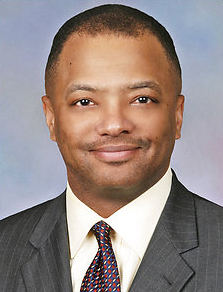
    Johnson, Broderick Mr. Johnson (at right) addressed health care reform and the effect of reform on the biotechnology industry.  First, he said that he believed that President Obama had "staked the success of his first term" on healthcare reform presented as a comprehensive whole rather than piecemeal.  He says that he expects healthcare reform to pass in Congress either with or without bipartisan support (he believes bipartisan support is a goal the administration should pursue zealously), and that the success of BIO's members companies depends on the success of healthcare reform.  Mr. Sands asked him whether healthcare reform is in trouble since it is not moving forward, and Mr. Johnson said that while there were "monumental political challenges" to enacting reform, "the die is cast" for this administration.

    Gottlieb, Scott Dr. Gottlieb (at left) noted that one reason why healthcare reform might not be so certain is its price — he said there are estimates in Congress (from the Congressional Budget Office) that reform may cost $1.5-2 trillion dollars.  In response to Mr. Sands comment that while reform might result in a greater patient (read:  customer) population, there would also be pressure to reduce costs, Dr. Gottlieb noted that innovator companies would not be so focused on bigger markets per se.  What does concern him, however, is the likelihood, or perhaps at least the propensity, that the Centers for Medicare and Medicaid Services (CMS) would expand its role under healthcare reform from merely being a healthcare cost payor to asserting its own clinical judgment on care decisions (something Dr. Gottlieb stated CMS did not have the trained staff to do properly).  He said that instances of such CMS attempts to expand its authority were not new, and that the agency had previously tried to introduce concepts of functional equivalence for drugs, had tried to mandate the use of only the least costly alternative, drug and had taken the position that drugs approved by the FDA under accelerated approval regimes were not FDA-approved drugs and thus were not eligible for reimbursement.  In addition to not having the clinical staff to make these decisions, Dr. Gottlieb also stated that the process for having the agency properly determine such questions was "opaque."  He also accused CMS of being one of the reasons for healthcare sector inflation, due to how the agency reimbursed doctors and other medical personnel.

    Kailain, Vaughn Mr. Johnson countered that the expense that would be incurred by not enacting healthcare reform was much greater than reform, and in addressing Mr. Kailian's (at right) earlier comment that BIO did not have a seat at the table at the White House when reform was discussed, reassured the audience that BIO was well-represented in the Senate committees and councils on these issues.  (Mr. Kailian mentioned that not being invited to the White House might not be such a bad thing, since in his view most of the industry groups that had visited had later been "demonized.")  He also said that the key even under reform will be innovation, because while reform puts at risk 3rd and 4th generation drugs produced by traditional pharmaceutical companies to generate revenue, truly innovative drugs will always get reimbursement.  The biotech industry is in a perfect position to use its innovation to address unmet medical needs, he said.

    Turning to follow-on biologics (FOBs) or biosimilars, Dr. Gottlieb stated that there will be legislation "in the near future" but that this had not advanced in Congress because Rep. Waxman could not move his own bill out of (his own) committee, and that there was a competing bill by Rep. Eschoo that had greater support in Congress.  He also said that delaying passage of biogenerics legislation was beneficial because it increased the number of years that Epogen would be off-patent and would improve the estimates from the CBO.  He also said that he expects the FDA to more slowly in approving FOBs and that they will not be approved as true "biogenerics," at least in part because the FDA would not approve them as being interchangeable with the innovator biologic drug.  However, he cautioned that CMS could attempt to classify FOBs under the same reimbursement code as the innovator and in this way try to treat these drugs as generics despite FDA's determination to the contrary.  He reminded the audience that CMS had tried to exercise this authority on other occasions, and that the chief counsel prevented it.  Since neither statute nor regulation prevents it, a new chief counsel at the FDA could change the policy "by fiat," according to Dr. Gottlieb, or Congress could expressly grant that power to the agency.

    Dr. Gottlieb went on to say that he expects that, with the exception of peptides or short proteins, FDA will require Phase III clinical trials and "switching studies" in anticipation of the likelihood that in practice an innovator biologic drug and an FOB would be switched (inadvertently, of necessity or otherwise).  He said that the expectation in the industry is that traditional generics companies like Mylan and Dr. Reddy's would not be involved in FOBs, and that companies like J&J, Biogen, Genentech, and others would be.  Mr. Johnson agreed that FOB legislation had stalled in Congress because Rep. Waxman cannot get the support he needs, even in his own committee, due to greater support for Rep. Eschoo's bill.

    Mr. Kailian made one statement about FOB legislation, and that was that he believed that Rep. Waxman's five year data exclusivity proposal was "dead in the water," stating that in his opinion "rationality will prevail."

    Mr. Johnson brought up patent reform legislation, which he believes will go forward.&#01
    60; He said BIO was well positioned as a resource on this bill, being a "cool head" on the value of reform but that the mantra of "innovation must be supported" should be stressed.

    The panel also took questions from the audience, Mr. Kailian garnering a chuckle with his response to the question of how to weather the "perfect storm."  "Cash," he said, "you can hide in a bucket of cash for a long time."

  •     By Christopher P. Singer

    EFS-Web The U.S. Patent and Trademark Office has posted on the top page of the EFS-Web portal site an advisory that the system will be unavailable because of system maintenance.  According to the advisory, the maintenance is scheduled to begin at midnight and end at 4 a.m. on Sunday, May 31st (EDT) — obviously a window of time with minimal filing activity.  During this period, the electronic business center states that EFS-Web will be unable to process (1) National Stage applications filed under 35 U.S.C. § 371; (2) follow-on documents to existing applications; (3) real-time online fee payments; and (4) Customer Number selection list for Registered e-Filers.

  •     By Donald Zuhn

    BIO International Convention In a Breakout Session entitled "The Narrowing Scope of Biotech Patent Claims: What Does It Mean for the Industry?" at last week's BIO International Convention, a panel consisting of Anne Dollard, the Deputy General Counsel and Chief Patent Counsel for Takeda San Francisco; Thomas Kim, Senior Director of Intellectual Property for VGX Pharmaceuticals, Inc.; Jane Gunnison of Ropes & Gray LLP; John Tessensohn of Shusaku Yamamoto Patent Law Offices; and Dr. Hans-Rainer Jaenichen of Vossius & Partner, discussed how practices in the United States, Europe, and Japan have led to a narrowing of biotech patent claim scope.  The panel was moderated by James Haley of Ropes & Gray LLP and Len Smith, Senior Intellectual Property Counsel for Novo Nordisk, Inc.

    Ms. Dollard began the presentation by discussing how the statutory subject matter requirement of 35 U.S.C. § 101 has recently moved to the forefront of biotech patenting.  She reviewed the impact of Laboratory Corp. v. Metabolite Laboratories, Inc. (LabCorp), In re Bilski, Classen Immunotherapies, Inc. v. Biogen Idec, and the pending appeal in Prometheus v. Mayo on medical diagnostic claims, and then provided a review of Association for Molecular Pathology v. U.S. Patent and Trademark Office, a recently-filed case concerning gene patents assigned to Myriad Genetics.  Speaking of the ACLU case, Ms. Dollard stated that the clear intent of the plaintiffs was "to take down patents on human genes."  As for Bilski, Ms. Dollard compared the case with KSR International Co. v. Teleflex Inc., "where we thought the world was going to end," and stated that the impact of Bilski could ultimately be less significant than first thought.

    Mr. Kim followed with a discussion of recent obviousness caselaw.  After reviewing KSR International Co. v. Teleflex Inc. and Takeda Chemical Industries, Ltd. v. Alphapharm Pty., Ltd., Mr. Kim addressed two recent obviousness Federal Circuit decisions:  Procter & Gamble Co. v. Teva Pharmaceuticals USA, Inc. and In re Kubin.  With respect to the future of biotech claims in a post-KSR world, he cautioned that trouble may lie ahead since biotechnology was becoming more predictable.  Mr. Kim also noted that while applicants might be able to point to secondary considerations of nonobviousness, such considerations would be unlikely to trump a strong case of obviousness.

    Using antibodies as a paradigm, Ms. Gunnison next addressed the issue of written description.  She first reviewed Examples 13 and 14 of the Written Description Training Materials issued by the Patent Office just over a year ago, and then turned to a recent Board decision (Ex parte Xia), where the Board determined that a description of an epitope was not required for compliance with the written description requirement.  Ms. Gunnison then discussed Chiron Corp. v. Genentech, Inc., where the Federal Circuit determined that an antibody format that did not exist at the time of filing could not be adequately described.  She concluded her presentation by observing that changes in the written description standard have been costly for applicants.  Touching on a theme raised earlier by Mr. Kim, Ms. Gunnison responded to a question by stating that we could be reaching a point where monoclonal antibodies to known sequences would be considered obvious, but that this would depend on whether antibodies were viewed as chemical compounds (requiring application of structural nonobviousness caselaw) or whether Kubin would prevail. 

    The last two panelists, Mr. Tessensohn and Dr. Jaenichen provided informative presentations regarding the state of biotech practice in Japan and Europe, respectively.  Mr. Tessensohn began his presentation by focusing on recent acquisitions by Japanese biotech companies, noting that these companies were facing the same issues (i.e., "anemic pipelines and expiring patents") that many U.S. biotech companies are currently facing.  Turning to patent practice in Japan, Mr. Tessensohn argued that the environment was not "hostile," but acknowledged that patentability standards were evolving and becoming more narrow in Japan (he noted that he was "not here to be a JPO apologist, but you have to know what you're dealing with").  With respect to written description and enablement, he stated that the Japan Patent Office (JPO) required disclosure of pharmacological test results in the application, adding that if such results were submitted after filing that was "too bad."  As for those who would suggest that the JPO was applying a heavier hand with regard to non-Japanese applicants, Mr. Tessensohn humorously contended that there was "no grand conspiracy theory" at work, and that the tough standards in Japan were affecting U.S. companies (e.g., Pfizer) and Japanese companies (e.g., Astellas) alike.  And his solution for dealing with these tough standards was simple:  "crank out as much disclosure as possible."  He added that applicants could not go wrong by following his "ABCD" rule when drafting applications, and remember to provide data that is All-inclusive, Broad, Comprehensive, and Detailed.  Mr. Tessensohn observed that it was best to avoid inferences and prophetic examples in favor of lots of data and working examples.  On the issue of obviousness, he noted that many Japanese IP High Court decisions have been decided on an "obvious to try" standard, which is alive and well in Japan, but that the "silver bullet" for dealing with obviousness rejections in Japan was to show unexpected results (which can be submitted after filing in Japan).

    The session's last panelist, Dr. Jaenichen, began by discussing a few favorable differences between European and U.S. patent practice.  For example, he noted that in Europ
    e, claims to hybridization variants are readily obtainable, provided that the claims include a functional limitation.  He stated that the same is also true for claims reciting percent identity, adding that a functional limitation is not required for claims to allelic variants.  Dr. Jaenichen also contended that the sequencing of the human genome did not mean that human genomics claims were all but dead, as there would be continue to be avenues open for genomics claiming (e.g., splice variants).  With respect to the European Patent Office's recent decision to crack down on "abuses" related to divisional filings, Dr. Jaenichen argued that only 0.35% of all applications were considered to be abuses of the system, and thus concluded that the EPO's new rules regarding divisional practice were simply a money-making device.

  •     By Sherri Oslick

    Gavel_2About
    Court Report:  Each week we will report briefly on recently filed
    biotech and pharma cases, and a few interesting cases will be selected
    for periodic monitoring.


    Teva Pharmaceutical Industries Ltd. et al. v. Amgen Inc.

    2:09-cv-02256; filed May 20, 2009 in the Eastern District of Pennsylvania

    Infringement of U.S. Patent No. 7,449,603 ("Process for the Preparation of Cinacalcet Base," issued November 11, 2008) based on Amgen's manufacture and sale of its Sensipar® (cinacalcet hydrochloride, used to treat secondary hyperparathyroidism in patients on dialysis, and hypercalcemia in patients with parathyroid carcinoma).  View the complaint here.

    Takeda Pharmaceutical Co. et al. v. Teva Pharmaceutical Industries, Ltd. et al.
    1:09-cv-04665; filed May 18, 2009 in the Southern District of New York

    Infringement of U.S. Patent Nos. 5,965,584 ("Pharmaceutical Composition," issued October 12, 1999), 6,329,404 (same title, issued December 11, 2001), 6,166,043 (same title, issued December 26, 2000), 6,172,090 (same title, issued January 9, 2001), 6,211,205 (same title, issued April 3, 2001), 6,271,243 (same title, issued August 7, 2001), and 6,303,640 (same title, issued October 16, 2001) following a Paragraph IV certification as part of Teva's filing of an ANDA to manufacture a generic version of Takeda's Actoplus MET® (pioglitazone hydrochloride and metformin, used to treat type II diabetes).  View the complaint here.


    CIMA Labs Inc. et al. v. Barr Laboratories Inc. et al.

    1:09-cv-00349; filed May 15, 2009 in the District Court of Delaware

    Infringement of U.S. Patent Nos. 6,024,981 ("Rapidly Dissolving Robust Damage Form," issued February 15, 2000) and 6,221,392 (same title, issued April 24, 2001), licensed to Azur Pharma, following a Paragraph IV certification as part of Barr's filing of an ANDA to manufacture a generic version of Azur's FazaClo® (clozapine, used to treat schizophrenia).  View the compliant here.

    TET Systems Holding GmBH & Co. KG v. Pharmasset, Inc.
    3:09-cv-02230; filed May 11, 2009 in the District Court of New Jersey

    Infringement of U.S. Patent No. 5,464,758 ("Tight Control of Gene Expression in Eucaryotic Cells by Tetracycline-Responsive Promoters," issued November 7, 1995) based on Pharmasset's development of pharmaceutical compositions through the use of the plaintiff's TET System.  View the complaint here.