•     By Suresh Pillai

    Cook and W. L. Gore Prevail in Suit over
    Endovascular Grafts

    W.L. Gore

    The Court of Appeals for the Federal Circuit has affirmed
    a lower court ruling that neither Cook Inc. nor W. L. Gore & Associates
    infringed Edwards Lifesciences LLC's
    patents covering endovascular grafts used to treat aneurysms without open
    vessel surgery.  Both Edwards and
    EndoGAD Research Pty Ltd. filed suit for infringement in August 2003, alleging
    that products made by Cook and W. L. Gore infringed U.S. Patent Nos. 6,582,458,
    6,613,073,
    6,685,736,
    and 6,689,158.  The patents-in-suit are all related
    to the treatment of blood vessel occlusions via non-invasive balloon
    catheters.  In 2007, the U.S.
    District Court for the Northern District of California dismissed the case on
    summary judgment, having determined following its claim construction that the accused
    devices did not infringe the plaintiffs' patents.

    Edwards Lifesciences

    The Federal Circuit affirmed the lower court
    decision, concluding that the lower court had correctly interpreted the
    claims.  The Federal Circuit also
    rejected Edwards' argument that, even under the lower court's claim construction,
    Edwards had presented evidence of infringement sufficient to survive summary
    judgment.  The patents-in-suit have
    already been the subject of one previous lawsuit.  In January 2006, Medtronic settled its infringement suit
    with Edwards for $37 million.  Medtronic also entered into a non-exclusive licensing agreement with
    Edwards for the manufacturing of devices covered by the patents-in-suit.


    Life Technologies Files Suit against Biosearch over
    Flourescent Probe Patents


    Life Technologies

    Life Technologies Corp. has
    filed suit against Biosearch Technologies, Inc., alleging that
    Biosearch infringed Life Technologies' patented technology covering production
    of self-quenching fluorescent probes.  The five patents-in-suit, U.S. Patent Nos. 5,538,848,
    5,723,591,
    5,876,930,
    6,030,787,
    and 6,258,569,
    all cover technology related to the design of probes for real time monitoring of DNA amplification in PCR reactions.  In its filing, Life Technologies has asked
    for a declaratory judgment infringment and an
    injunction that would enjoin Biosearch from continuing to create probes encompassed by the patents-in-suit.  Should the court find that Biosearch willfully infringed upon the
    patents-in-suit, Life Technologies has asked that damages be trebled.  The technology that is covered by the
    patents can be practiced in any instrument platform capable of executing
    real-time PCR reactions.  Should
    the District Court find the patents valid and infringed, such a judgment would
    likely clear the way for Life Technologies to pursue licensing agreements for the
    technologies with all manufacturers of real-time PCR platforms as well as all
    synthesizers of real-time fluorophore/quencher probes.


    Teva Files Appeal in Singulair® Infringement Suit

    Teva

    Last week, Teva Pharmaceuticals Industries, Inc. filed notice in the
    U.S. District Court for the District of New Jersey stating its intent to appeal
    the District Court's order barring Teva from marketing and manufacturing a generic
    version of Singulair®,
    a product made by Merck Sharpe &
    Dohme Pharmaceuticals SRL

    for the treatment of asthma.  Merck filed suit against Teva in
    April 2007, alleging that Teva had infringed Merck's patents covering
    Singulair® by filing an Abbreviated New Drug Application (ANDA) with the FDA in which
    Teva sought approval to make and market a generic version of Singulair® (see
    "Court Report," April 15, 2007).  In its complaint, Merck sought
    injunctive relief that would prevent Teva from marketing the generic until
    after the patent-in-suit's 2012 expiration date, a judgment of infringement, and
    attorneys' fees.  Merck followed up
    this filing with two more complaints, alleging the same claims and seeking the
    same relief, after Teva filed an ANDA with the FDA seeking permission to market
    different generic formulations of the drug.  In all three complaints, Merck alleges that Teva's FDA
    filings infringed Merck's U.S. Patent No.
    5,565,473.

    Merck

    On August 19, 2009, the District Court ruled in
    Merck's favor, determining that Teva's proposed generic version of Singulair® would
    infringe Merck's '473 patent.  The Court enjoined Teva from manufacturing its generic version of Singulair®, and ordered the FDA not to
    grant approval for the proposed drug until the 2012 expiration of the '473 patent.


    AstraZeneca Files Motion for Summary Judgment in
    Crestor® Case

    AstraZeneca_small

    With the case scheduled to go to trial in February, AstraZeneca recently filed a
    motion for summary judgment seeking a determination in its favor and against eight defendant
    generics manufacturers whom AstraZeneca has accused of infringing its
    patents covering the cholesterol drug Crestor®.  The first suit in this consolidated
    litigation was filed in December 2007 (see "Court Report," December 16, 2007)
    in the U.S. District Court for the District of Delaware.  In all of the suits,
    AstraZeneca alleged that the defendants' filings of Abbreviated New Drug Applications seeking to market and manufacture generic versions of its
    blockbuster drug infringed U.S. Reissue Pat. No. RE37,314,
    the patent covering Crestor®.  The
    defendants in the suit are Apotex Inc.,
    Sandoz, Inc.,
    Mylan Pharmaceuticals Inc.,
    Sun Pharmaceutical Industries Ltd.,
    Par Pharmaceutical Inc.,
    Aurobindo Pharma Ltd.,
    Teva Pharmaceuticals USA,
    and Cobalt Pharmaceuticals Inc.

  •     By Christopher P. Singer

    USPTO Seal

    In a notice dated
    September 23, 2009, the U.S. Patent and Trademark Office announced that it will extend for one year the
    trial period for its patent prosecution highway (PPH) program with the European Patent Office.  The extended trial period will expire on
    September 30, 2010.  As we have
    noted, the PPH programs are designed to expedite and leverage the examination
    process for applicants that have received favorable examination in one of the partner
    countries.

    EPO-EPC

    We reported last winter about the types of
    applications that are eligible for participation in the trial PPH, and the requirements
    for participation (see "Additional
    Application Types Eligible for Participation in PPH Between USPTO and EPO
    ").  Updated requirements for participation in the USPTO
    will be available here, and
    requirements in the EPO will be posted here.

    For additional information regarding this and other related topics, please see:

    • "USPTO Initiates Patent Prosecution Highway Pilot Program with Finland Patent Office," June 29, 2009
    • "USPTO Extends Patent Prosecution Highway Pilot Program with IP Australia; Begins Pilot Program with German Patent Office," April 15, 2009
    • "USPTO Begins Pilot Program with the German Patent Office," May 7, 2009
    • "Pilot PPH Program between Singapore and U.S.," February 1, 2009
    • "Full Time Patent Prosecution Highway between Korea and US," January 28, 2009
    • "Patent Prosecution Highway Pilot with CIPO Is Extended," December 23, 2008
    • "Additional Application Types Eligible for Participation in PPH between USPTO and WPO," December 11, 2008
    • "Patent Prosecution Highway Pilot Program between U.S. and Danish Patent Offices," October 29, 2008
    • "Patent Prosecution Highway Expands to Europe," September 25, 2008
    • "USPTO and UKIPO Extend Patent Prosecution Highway Pilot Program," September 3, 2008
    • "USPTO and EPO to Implement Pilot Patent Prosecution Highway Program," April 29, 2008
    • "Patent Prosecution Highway Extended to IP Australia," April 2, 2008
    • "Patent Prosecution Highway Network Expands to Canada & Korea," January 29, 2008
    • "USPTO Announces Two Additional Partners in the Patent Prosecution Highway Pilot Program," January 17, 2008
    • "USPTO and JPO to Implement Patent Prosecution Highway on Full-Time Basis," December 27, 2007
    • "USPTO and UK IPO to Collaborate on Patent Prosecution Highway," September 14, 2007

  •     By
    Donald Zuhn

    Last
    week, the Federal Circuit determined that Plaintiff-Appellant AsymmetRx, Inc.
    did not have standing to bring an action for infringement of the
    patents-at-suit absent the participation of the President and Fellows of
    Harvard College.  As a result, the
    CAFC vacated and remanded an order by the District Court for the District of Massachusetts
    granting summary judgment in favor of Defendant-Appellee Biocare Medical, LLC.

    Biocare Medical

    Harvard
    owns U.S. Patent Nos. 6,946,256 and 7,030,227, which relate to anti-p63
    monoclonal antibodies and methods for using them to detect malignant carcinoma.  In 2002, Harvard entered into a license
    agreement with Biocare to make, use, and sell p63 antibodies.  The Biocare license states that it
    "does not include a license under any U.S. or foreign patents" — the
    '256 and '227 patents were pending but had not issued at the time Harvard
    entered into the agreement with Biocare.

    AsymmetRx

    In
    2004, Harvard entered into a license agreement with AsymmetRx that also
    concerned p63 antibodies.  The AsymmetRx
    license states that AsymmetRx receives "an exclusive commercial license"
    for the '256 and '227 patents. 
    Under the terms of the AsymmetRx license, Harvard could (a) make and use
    the claimed p63 antibodies for academic research purposes, (b) grant
    non-exclusive licenses for the claimed p63 antibodies to other non-profit or
    governmental institutions for academic research purposes, (c) render the
    license non-exclusive if AsymmetRx failed to meet certain commercial use or
    public availability benchmarks or FDA filing milestones, and (d) suggest
    sub-licensees to AsymmetRx (Harvard would also receive a portion of all
    sublicensing income).  In addition,
    the agreement gave AsymmetRx the right to prosecute in its own name any
    infringement of the '256 and '227 patents, provided that AsymmetRx gave "careful
    consideration to the views of Harvard and to potential effects on the public
    interest in making its decision whether or not to sue" prior to filing
    suit.  Harvard also retained the
    right to join as a party in any such infringement action, and AsymmetRx was
    required to secure written consent from Harvard before settling or otherwise
    voluntarily disposing of any such infringement action.

    In
    2007, AsymmetRx sued Biocare for infringement of the '256 and '227 patents,
    alleging that Biocare's sale of p63 antibodies violated its exclusive rights.  The parties filed cross-motions for
    summary judgment, and the District Court granted Biocare's motion and denied
    AsymmetRx's motion.

    Federal Circuit Seal

    In
    vacating the District Court's order granting summary judgment, the Federal
    Circuit determined that "Harvard retained substantial control over the
    patent rights it was exclusively licensing, such that its agreement with AsymmetRx
    did not convey all substantial rights under the patents and thus did not make
    the license tantamount to an assignment."  Because "AsymmetRx must therefore be considered a
    licensee, not an assignee," the panel determined that under Waterman v. Mackenzie, 138 U.S. 252 (1891), and subsequent cases, "AsymmetRx does not have a sufficient interest in the '256 and
    '227 patents to sue, on its own, as the 'patentee' entitled by 35 U.S.C. § 281
    to judicial relief from infringement" (absent joinder of the patentee).

    In
    reaching this determination, the Court compared the terms of the AsymmetRx
    license with those of licenses in three other CAFC cases, and determined that
    the terms of the AsymmetRx license were more similar to those in the license at
    issue in Abbott Labs. v. Diamedix Corp.,
    47 F.3d 1128, 1130 (Fed. Cir. 1995), than the licenses at issue in Vaupel Textilmaschinen KG v. Meccanica Euro
    Italia S.P.A.
    , 944 F.2d 870, 874 (Fed. Cir. 1991), and Speedplay, Inc. v. Bebop, Inc., 211 F.3d 1245 (Fed. Cir. 2000).  Under the license in Abbott, the patentee retained a limited
    right to make, use, and sell products embodying the patented inventions, a
    right to bring suit if the licensee declined to do so, and the right to prevent
    the licensee from assigning its rights under the license to any party other
    than a successor in business.  In
    addition, the licensee could not "prejudice or impair the patent rights"
    in prosecuting or settling any infringement action.  In Vaupel, the
    license allowed the patentee to retain a veto right on sublicensing, the right
    to obtain patents on the invention in other countries, a reversionary right in
    the patent in the event of bankruptcy, and a right to receive infringement
    damages, the licensee was granted the right to sue in its entirety, subject
    only to the obligation to inform the patentee of the existence of the suit.  Finally, in Speedplay, the license did not grant the original patentees the
    right to participate in an infringement action brought by the licensee, or limit
    the licensee's management of that action. 
    In view of these three cases, the panel determined that:

    This
    case is more similar to Abbott than to Vaupel or Speedplay
    in terms of what rights Harvard retained under the patents.  Although the AsymmetRx License effected
    a broad conveyance of rights to AsymmetRx, Harvard retained substantial
    interests under the '256 and '227 patents, including the right to sue for
    infringement, and AsymmetRx therefore does not have the right to sue for
    infringement as "patentee" under the patent statute.

    That
    Harvard had licensed rights to anti-p63 antibodies to both Biocare and AsymmetRx
    (the latter in the form of an exclusive license) did not escape the panel's
    notice:

    Harvard,
    by granting licenses to two parties involving the same subject matter, has
    potentially put itself in the conflicting position of having to aid two
    licensees opposed to each other.  Complicating
    matters is the fact that Harvard is continuing to accept royalty payments from
    Biocare resulting from sales in the commercial diagnostic market that AsymmetRx
    asserts are infringing its patent rights. 
    If anything, this added complication indicates that the purpose of Rule
    19 [the federal joinder rule] to avoid multiple suits or incomplete relief
    arising from the same subject matter is best served by joinder of Harvard,
    which would permit the relationships between AsymmetRx, Biocare, and Harvard to
    all be resolved at the same time as well as solve the standing problem.

    AsymmetRx, Inc. v. Biocare
    Medical, LLC
    (Fed. Cir. 2009)
    Panel:
    Circuit Judges Lourie and Rader and District Judge Clark
    Opinion
    by Circuit Judge Lourie

  •     By
    Donald Zuhn

    Wipo_pub_941

    Last
    week, the World Intellectual Property Organization (WIPO) released a report on
    intellectual property trends showing that the number of filed patent,
    trademark, and industrial design applications increased in 2007 ("World
    Intellectual Property Indicators 2009
    ").  However, preliminary results for 2008
    indicate that application filings dropped last year, a result not altogether
    surprising given the economic crisis that began in December 2007.  Concerning the preliminary findings showing an IP downturn in 2008, WIPO Director
    General Dr. Francis Gurry noted that "[h]istory has shown . . . that
    companies and countries which continue to invest in new products and innovation
    during times of economic recession will be those that will be best positioned
    to take advantage of the recovery, when it arrives."

    WIPO

    With
    regard to filed patent applications, the 110-page report indicates that
    worldwide patent filings increased by 3.7% in 2007, the last year for which
    complete worldwide statistics were available.  However, the increase in 2007 patent filings was not as high
    as the 5.2% increase observed in 2006. 
    While preliminary data indicate that fewer patent applications were
    filed last year than in 2007, the report states that the depth of the slowdown
    remains unclear.  Interestingly, despite the drop
    in worldwide patent applications in 2008, the number of PCT applications filed
    last year actually increased by 2.3%.

    The
    report also indicates that in 2007, 59.2% of all patent applications were filed in
    China, Japan, and the U.S., and 74.4% of all issued patents coming from the
    five largest offices (Japan, U.S., Korea, China, and the EPO).  In addition, the report shows that 43.3% of all
    patent applications were filed in 2007 by non-residents.  The report further reveals that the backlog of unprocessed worldwide patent
    applications reached 4.2 million in 2007, with the USPTO accounting for about 28% of
    the backlog, followed by Japan, the EPO, and Korea.  With
    regard to patent application filings by field of technology, the report
    indicates that between 2002 and 2006, organic chemistry filings were down 0.8%,
    biotechnology filings were down 3.8%, and pharmaceutical filings were up 3.1%.

    The
    report also indicates that 764,700 patents were issued worldwide in 2007, an
    increase of 1.6% over 2006.  The
    2007 increase in issued patents, however, was far below the 19.4% increase
    observed in 2006.  The report
    attributes the slowdown in issued patents to a "substantial decrease"
    in patents granted by the U.S. Patent and Trademark Office and the European
    Patent Office.  In addition, the report notes that the USPTO, which had led all other countries in
    issued patents since 1998, was overtaken by Japan in 2007.  China also overtook the EPO as the
    fourth largest office in terms of issued patents, with the Republic of Korea
    taking the third spot.  The report states that about 6.3 million patents were in force in 2007, with residents of
    Japan and the USA owning approximately 47% of this total.

    The
    report also provides a listing of the Top 20 PCT applicants in the business
    sector and the university sector. 
    Of the twenty companies making the business sector list, the only company having any biotech or pharma ties
    was DuPont (at #20). 
    The Top 20 PCT filers for the university sector are indicated in the
    table below.

    University PCT Filers

  •     By Sherri Oslick

    Advaxis

    Last week, Advaxis, Inc., a biotechnology
    corporation focused on using a bioengineered bacterium, Listeria monocytogenes (Lm), to activate the immune system to treat cancer, infectious disease, or allergic
    syndromes, was issued U.S. Patent No. 7,588,930 ("Compositions and Methods
    for Enhancing the Immunogenicity of Antigens").  The '930 patent is directed
    to the use of Lm protein ActA and
    fragments thereof for use in the creation of antigen fusion proteins; the ActA
    protein was found to possess immuno-adjuvant properties.  The patent is assigned to The Trustees
    of the University of Pennsylvania, and licensed exclusively by Advaxis.

    The claims are directed to Lm vaccine strains comprising an antigen fused to a truncated ActA
    protein, as well as methods of eliciting an enhanced immune response to an
    antigen using the claimed vaccine strains.  Representative claims include:

    1.  A
    Listeria monocytogenes vaccine strain comprising an antigen fused to a
    truncated ActA protein, wherein said truncated ActA protein consists of amino
    acids 1-390 of said ActA protein; wherein said truncated ActA protein comprises
    a PEST-like sequence selected from the sequences set forth in SEQ ID No: 2-5;
    and wherein said antigen is selected from the group consisting of human
    papilloma virus (HPV) E6, HPV E7, Her-2/Neu, NY-ESO-1, human telomerase, WT-1,
    proteinase 3, TRP-2 and PSA antigen.

    6.  A
    method of eliciting an enhanced immune response to an antigen, the method
    comprising administering to a subject an effective amount of a composition
    comprising a Listeria monocytogenes vaccine strain comprising said antigen
    fused to a truncated ActA protein, wherein said truncated ActA protein consists
    of amino acids 1-390 of said ActA protein; and wherein said truncated ActA
    protein comprises a PEST-like sequence selected from the sequences set forth in
    SEQ ID No: 2-5; and wherein said antigen is selected from the group consisting
    of human papilloma virus (HPV) E6, HPV E7, Her-2/Neu, NY-ESO-1, human
    telomerase, WT-1, proteinase 3, TRP-2, and PSA antigen.

    This patent adds to Advaxis' patent portfolio
    directed toward creating specific and effective vaccines by using a variety of
    antigens and adjuvant proteins to target different types of cancers and
    infectious disease indications.

  •     By
    Donald Zuhn

    Earlier
    this month, James Love and James Glassman, writing in the Congressional
    newspaper Roll Call, expressed "alarm"
    regarding recent Congressional action concerning the establishment of a
    follow-in biologics (FOB) regulatory pathway ("Don't Kill Competition for High-Tech Drugs").  That action included the recent passage by the House
    Committee on Energy and Commerce of a health care reform bill containing a
    licensure pathway for biosimilar biological products that would prevent the FDA
    from approving a biosimilar application until 12 years after the date on which
    the reference product (i.e., the
    innovator biologic) was first licensed (see
    "House Committee Approves Health Care Reform Bill Calling for 12-Year
    Exclusivity Period
    "),
    and prior approval by the Senate Health, Education, Labor and Pensions (HELP) Committee
    of an amendment providing a 12-year data exclusivity period for biologic drug
    makers (see "Senators Champion
    12-Year Data Exclusivity in Senate
    ").

    Love, James

    James
    Love (at right), the director of the public interest
    advocacy group Knowledge Ecology International, and
    James Glassman (below left) the former
    under secretary of State for public diplomacy and public affairs in the George
    W. Bush administration and editor of Roll
    Call
    from 1988-93, contend that passage of FOB provisions by the House
    Energy and Commerce and Senate HELP Committees would "make it difficult, if not
    impossible, for generic drugs to compete with biologics, even after patents
    have expired."  The authors
    add that these provisions, if reconciled and passed into law, have "the
    potential to harm millions of sick people, in the United States and beyond."

    Glassman, James

    Mr.
    Love's and Mr. Glassman's assertions are based on a comparison of the predicted
    impact of the House and Senate provisions with that of the Hatch-Waxman Act,
    which they note provided "streamlined procedures [that] lowered the cost
    of entry by generic suppliers and created a highly competitive environment that
    has saved consumers billions of dollars."  According to the authors, the FOB regulatory pathway
    currently being proposed by Congress is "deeply flawed and will reduce, or
    even eliminate, potentially significant savings to consumers."

    Mr.
    Love and Mr. Glassman make it clear that the "flaw" in the process is the
    exclusivity period, which unlike the 5-year period for small molecule generics
    under Hatch-Waxman, at present stands at 12-years for biogenerics.  They state that "[t]he original
    proposal for biogenerics would have retained most of the features of the 1984
    Hatch-Waxman Act, including the five-year exclusion [i.e., exclusivity period]."  However, their assertion is not entirely accurate, since one of the two
    House FOB bills introduced last spring (H.R. 1548) called for up to 14.5 years
    of exclusivity (see "Second
    Follow-on Biologics Bill Is Introduced in House
    ").  It also disregards the White House's
    call, in June, for an exclusivity period longer than 5 years (see "White House Recommends 7-Year
    Data Exclusivity Period for Follow-on Biologics
    ").  Instead, the authors argue that "after
    an intense lobbying campaign by the manufacturers of biologics, new amendments
    to the Senate and House versions of the bill made it much more difficult for
    makers of generics to enter the market."  Again, this statement is somewhat disingenuous in that it
    ignores the fact that Rep. Anna Eshoo (D-CA), who helped introduce the 12-year
    amendment in the House Energy and Commerce Committee, also introduced H.R. 1548
    last spring as well as a similar bill in the last Congress (see "New Follow-on Biologics Bill
    Introduced in the House
    ").  Thus, Rep. Eshoo did not succumb to
    "an intense lobbying campaign" in introducing the amendment, but
    rather has been pushing for a double-digit exclusivity period since March of
    2008.  (In fact, in proposing a
    12-year period, Rep. Eshoo actually backed off the longer period she had
    been seeking.)

    Noting
    that "Members of Congress from both parties have claimed that long
    monopolies are needed to stimulate investments in research and
    development," the authors declare their strong disagreement with this
    position.  Although they
    acknowledge that developmental costs for new biologics are "undoubtedly
    expensive," they contend that "this is just as true for products that
    the FDA classifies as 'small-molecule,' or conventional, drugs as it is for
    biologics."  Mr. Love and Mr.
    Glassman also argue that "innovation has prospered under the Hatch-Waxman
    regime."  Biologic manufacturers,
    however, would likely disagree with these assertions, and Amgen Inc. Vice
    President and Law & Intellectual Property Officer Stuart Watt did just that
    last March in a presentation at the Biotechnology Industry Organization (BIO)
    Intellectual Property Counsels' Committee (IPCC) conference (see "Amgen VP Makes Case for Longer
    Exclusivity Period in Follow-on Biologics Legislation
    ").

    Mr.
    Love and Mr. Glassman conclude their article by noting that while Article I,
    Section 8, Clause 8 of the Constitution confers upon Congress the power
    "[t]o promote the Progress of Science and useful Arts, by securing for
    limited Times to Authors and Inventors the exclusive Right to their respective
    Writings and Discoveries," the Founders "understood the need for
    balance in creating monopolies that were temporary" — i.e., which existed for limited times.  The authors state that "[e]ndless monopolies,
    particularly those created by regulatory measures, must be avoided,"
    concluding that "a 12-year exclusion simply does not meet the test of
    logic."

  • CalendarSeptember 21-22, 2009 – 2009 World Stem Cell Summit*** – Baltimore, MD

    September 21-22, 2009 – Patent Litigation 2009 (Practising Law Institute) – San Francisco, CA

    September 23-25, 2009 – 10th Annual Generic Drugs
    Summit on the Business of Biosimilars
    (
    Institute for
    International Research) –
    Boston, MA

    September 30-October 1, 2009 – Biotech Patents*** (American Conference Institute) – Boston, MA

    October 5-6, 2009 – Patent Litigation 2009 (Practising Law Institute) – McLean, VA

    October 7-8, 2009 – Maximizing Pharmaceutical Patent Lifecycles*** (American Conference Institute) – New York, NY

    October 14, 2009 – Developments in Pharmaceutical and Biotech Patent Law (Practising Law Institute) – San Francisco, CA

    October 15-16, 2009 – Patent Litigation 2009 (Practising Law Institute) – Chicago, IL

    October 20-21, 2009 – 17th Forum on Biotech Patenting (C5) – London,
    United Kingdom

    October 22-23, 2009 – Pharmaceutical Congress on Paragraph IV Disputes*** (Center for Business Intelligence) – Philadelphia, PA

    October 26-28, 2009 – Intellectual Property Counsels' Committee (IPCC) Fall Conference & Meeting (Biotechnology Industry Organization) – Washington, DC

    October 28-29, 2009 – Patent Opinion Writing Boot Camp*** (American Conference Institute) – Philadelphia, PA

    November 9-10, 2009 – Patent Litigation 2009 (Practising Law Institute) – Atlanta, GA

    November 9-11, 2009 – Developing
    IP Strategies for Crystalline Forms
    *** (
    International
    Quality & Productivity Center) –
    London,
    England

    November 10, 2009 – The Patent Cooperation Treaty (PCT): Important Tool for Small and Medium-Sized Enterprises (SMEs) and Independent Inventors (World Intellectual Property Organization) – Baltimore, MD

    November 12-13, 2009 – Paragraph IV on Trial*** (American Conference
    Institute) – New York, NY

    November 13, 2009 – The Patent Cooperation Treaty (PCT): Important Tool for Small and Medium-Sized Enterprises (SMEs) and Independent Inventors (World Intellectual Property Organization) – Las Vegas, NV

    November 16-17, 2009 – Patent Litigation 2009 (Practising Law Institute) – New York, NY

    November
    17-18, 2009 –
    Structuring,
    Negotiating, and Managing Pharma/Biotech Collaborative Agreements
    (
    American Conference
    Institute) – New York, NY

    December 7-8, 2009 – Foreign Patent Law &
    Regulation
    ***
    (American Conference
    Institute) – New York, NY

    ***Patent Docs is a media partner of this conference or CLE

  • New York #1

    American Conference
    Institute (ACI) will be holding a conference on Foreign Patent Law &
    Regulation for the U.S. Life Sciences Patent Practitioner from December 7-8,
    2009 in New York, NY.  The
    conference will allow attendees to:

    • Develop a
    strategic plan for deciding when and where to file life sciences patents
    abroad;
    • Prosecute and
    file life sciences and pharmaceutical patents in emerging Asian markets;
    • Navigate unique
    issues that arise in the context of seeking supplementary protection
    certificates (SPCs) and method of use/treatment claims in life sciences patents;
    • Address cultural
    idiosyncrasies and technical requirements in various jurisdictions when
    developing international patent litigation strategy;
    • Select and manage
    a multi-jurisdictional patent litigation team;
    • Seek damages and
    pursue available remedies abroad — knowing what you can (and cannot get) and
    where you can get it; and
    • Assess the impact
    of the EC Sector inquiry on global pharmaceutical patent life cycles.

    854L10-NYC

    In particular, ACI's
    faculty will offer presentations on the following topics:

    • Why now?  Understanding the importance of developing
    a global strategy for a life sciences patent portfolio;
    • Evaluating
    advantages and limitations of foreign filing conventions and treaties;
    • Foreign patent offices:
     Exploring filing and prosecution protocols;
    • Filing and
    prosecuting life sciences & pharmaceutical patents in emerging Asian markets;
    • Guidelines for
    evaluating standards of patentability and selecting the best jurisdictions in
    which to file an international life sciences patent;
    • Strategies for
    successfully obtaining method of use/treatment claims;
    • Navigating the
    "ins" and "outs" of opposition practice in Europe and Asia;
    • Supplementary
    protection certificates (SPCs):  Strategies for successfully extending the patent term on a
    life sciences invention;
    • Balancing
    competing antitrust and IP interests:  Assessing the impact of the EC Pharmaceutical Sector Inquiry
    on the exercise and defense of patent rights;
    • Considerations
    for U.S. life sciences companies when filing patent suits abroad and selecting
    foreign litigation counsel;
    • Successfully
    seeking injunctive relief for a life sciences patent:  Strategies for the EU and Asia;
    • Organizing and
    managing a foreign patent litigation team and strategy;
    • Understanding the
    mechanics of conducting and seeking discovery in foreign jurisdictions;
    • Obtaining,
    calculating, and evaluating the scope of available damages abroad; and
    • Caselaw update:  Emerging trends in foreign life sciences
    patent litigation.

    An additional
    post-conference workshop entitled "Mastering the Interplay between Foreign
    Patent Law and Regulatory Requirements for Life Sciences Companies in the EU
    and Asia" will be offered from 9:00 am to noon on December 9, 2009.  During the workshop, ACI faculty will
    provide a comprehensive overview of the basics of patent protection and
    regulatory approval required for the commercial viability of life sciences
    products in the EU and emerging Asian jurisdictions.

    According to an ACI
    release, the Foreign Patent Law & Regulation conference has been designed
    to provide in-house patent and IP counsel within the pharmaceutical, biopharmaceutical,
    biotechnology, and medical device industries with a working knowledge of the
    current status of patent law in key foreign jurisdictions, including the EU and
    emerging Asian markets.  A leading
    faculty comprised of experienced in-house counsel representing such
    multi-national companies as Allergan, Boehringer Ingelheim, GlaxoSmithKline,
    Medtronic, Novartis, Novo Nordisk, Purdue Pharma, sanofi-aventis, Sanofi
    Pasteur, and Schering-Plough, as well as patent prosecution attorneys and
    litigation counsel from Australia, Belgium, China, India, Germany, Japan,
    Korea, Netherlands, Switzerland, and the United Kingdom will provide attendees
    with an in-depth overview of the unique issues that arise in the context of
    both prosecution and litigation outside the U.S.

    The agenda for the Foreign
    Patent Law & Regulation conference can be found here.  A complete brochure for this
    conference, including an agenda, list of speakers, and registration form can be
    downloaded
    here.

    ACI - American Conference Institute

    The registration
    fee for the conference is $2,195 (conference alone) or $2,795 (conference and
    workshop).  Those registering on or
    before October 2, 2009 will receive a $300 discount off the registration fee
    and those registering on or before November 6, 2009 will receive a $200
    discount off the registration fee. 
    ACI will also provide a $200
    discount
    off the standard price to all Patent Docs readers who reference the discount code "Patent
    Docs" when registering.  Those
    interested in registering for the conference can do so here,
    by calling 1-888-224-2480, or by faxing a registration form to 1-877-927-1563.

    Patent Docs is a media partner of ACI's Foreign Patent Law & Regulation
    conference.

  •     By
    Donald Zuhn

    SeattlepiLogoThumb On
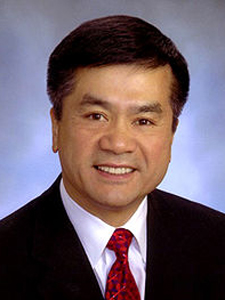
    Monday, a group of 56 companies sent a letter to Secretary of Commerce Gary
    Locke (below) urging the Secretary "to push for improvements" to the
    post-grant and inter partes examination
    provisions of patent reform legislation currently before Congress.  The Seattle PI's Microsoft blog published a copy of the letter
    on Wednesday in an article entitled "Tech cos. protest patent reform in
    letter to Locke
    ."

    Locke, Gary In
    the letter, the group acknowledges that "some versions of the legislation
    have been improved this Congress," but asserts that "additional
    improvements are in order to ensure that the end product avoids serious
    unintended consequences." 
    According to the signatories, the "two most contentious issues in
    the patent reform debate relate to patent damages and the expansion of
    administrative challenges to patent validity."  With respect to the first issue, the letter commends the
    Senate for resolving the patent damages issue by introducing a
    "gatekeeper" provision, and urges Secretary Locke to support that
    approach (see "Senate Judiciary Committee Holds Hearing on Patent Reform"
    and "Senate 'Patent Reform' Bill (S. 515) Voted out of Judiciary Committee").  The group states that "[a]ny
    effort to go back to previous [damages] proposals will, in our view, endanger
    the entire patent reform effort."

    With respect to the second issue, however, the group predicts that post-grant review and
    inter partes examination provisions
    in the current legislation "will have serious negative consequences which
    must be considered."  The
    letter notes that these provisions will put additional strain on an already
    burdened Patent Office, and contends that "[a]dding new obligations to the
    agency at this time seems extraordinarily unwise."  If the current provisions are passed
    into law, the group foresees "longer patent pendency and lower patent
    quality."  In addition, the
    signatories contend that such provisions would be "vulnerable to a high
    level of abuse" by "allow[ing] infringers to subject valid patents to
    lengthy and repeat challenges." 
    In support of its contentions, the group cites a November 2007 article co-authored by Yongshun Cheng (former Senior Judge and Deputy Presiding Judge of
    the Intellectual Property Division of Beijing High People's Court) and Li Lin,
    which concluded that the patent reform bill passed by the House in September
    2007 "is friendlier to the infringers than to the patentees in general as
    it will make [U.S.] patent[s] less reliable, easier to be challenged and
    cheaper to be infringed" (see
    "Chinese IP Judge Discusses Implications of U.S. Patent Reform Bill and
    Two Congressmen Heed Warning
    ").

    The
    group contends that abuse of the post-grant review and inter partes examination provisions "will be harmful to
    American innovators who rely on strong patents," and therefore, urges
    Secretary Locke "to push for improvements to these provisions which will
    limit the ability of infringers to undermine the very system the legislation
    attempts to strengthen."

    The 56 signatories to the letter include:  Abbott Medical Optics Inc.; Acclarent, Inc.; Acorn
    Cardiovascular, Inc.; Allergan Inc.; Applied Medical; ARCH Venture Partners; Ardian,
    Inc.; Asthmatx, Inc.; ATS Medical; Aware, Inc.; Biomerix Corporation; Calibra
    Medical; Carticept Medical, Inc.; Conceptus, Inc.; Corning Inc.; Cryptography
    Research, Inc.; Cummins-Allison; Cyberonics; Digimarc Corp.; Dolby Laboratories;
    Dynatronics Corp.; Elemé Medical Inc.; Evalve, Inc.; ExploraMed Development,
    LLC; Fallbrook Technologies Inc.; The Foundry, LLC; ForSight; ForSight VISION3;
    ForSight VISION4; GeneEx, Inc.; Ikaria Holdings, Inc.; InterDigital, Inc.; Intermolecular;
    Medigroup Inc.; Miramar Labs, Inc.; Mohr Davidow Ventures; Monsanto; Moximed,
    Inc.; NeoTract, Inc.; NeoVista, Inc.; Neuro Resource Group, Inc.; NeuroPace,
    Inc.; Nims, Inc.; Novasys Medical; Optimum Performance Solutions LLC; OsteoMed;
    Paracor Medical, Inc.; PolyRemedy, Inc.; Qualcomm Inc.; Streamline; Tessera; TherOx;
    Transonic Systems Inc.; Urovalve Inc.; U.S. Venture Partners; Venture Investors;
    The Vertical Group; Vibrynt, Inc.; and Viryd Technologies Inc.

  • Medical Diagnostics Claims Are Patentable Subject Matter

        By Kevin E. Noonan

    Prometheus Laboratories Over the past few years, Federal Circuit
    decisions in In re Bilski and Classen Immunotherapeutics, Inc. v. Biogen Idec,
    combined with Justice Breyer's dissent in Laboratory Corp. v. Metabolite Labs., Inc. ("LabCorp"), have created more than a frisson of anxiety in the
    biotechnology and medical diagnostics community, due the apprehension that
    medical diagnostics claims might generally be deemed not to be patent-eligible
    subject matter under 35 U.S.C. § 101.  These fears may be alleviated to some degree by the decision today in Prometheus Laboratories, Inc. v. Mayo
    Collaborative Services
    , where the Court held that a diagnostics claim
    satisfies the machine-or-transformation test enunciated in Bilski.
    Mayo Clinic The case relates to U.S. Patent Nos. 6,335,623 and
    6,680,302, which were exclusively licensed by Prometheus.  Defendants Mayo Collaborative Services
    and Mayo Clinic Rochester used the technology covered by these patents, until
    Mayo unilaterally announced that it intended to use its own test internally and
    to sell the test to other hospitals.  Prometheus brought suit and the District Court granted summary judgment
    in Prometheus' favor that Mayo's test literally infringed claim 7 of the '623
    patent.  All of the patent claims
    relate to methods for identifying metabolites of thiopurine, a drug used to
    treat various gastrointestinal disorders such as Crohn's disease and ulcerative
    colitis.  Claim 1 of the '623
    patent was cited in the Federal Circuit opinion as being representative:

    A method of
    optimizing therapeutic efficacy for treatment of an immune- mediated
    gastrointestinal disorder, comprising:
        (a)
    administering a drug providing 6-thioguanine to a subject having said
    immune-mediated gastrointestinal disorder; and
        (b)
    determining the level of 6-thioguanine in said subject having said
    immune-mediated gastrointestinal disorder,
        wherein the
    level of 6-thioguanine less than about 230 pmol per 8×10
    8 red blood cells indicates a need to increase the amount of said
    drug subsequently administered to said subject and
        wherein the
    level of 6-thioguanine greater than about 400 pmol per 8×10
    8 red blood cells indicates a need to decrease the amount of said
    drug subsequently administered to said subject.

    The District Court granted summary judgment in favor of the defendants that the
    claims of the '623 and '302 patents were invalid under 35 U.S.C. § 101 for
    failure to recite patent-eligible subject matter, stating that merely because
    the inventors:

    have framed the claims as "treatment
    methods" does not make the claims patentable.  Indeed, "one can
    reduce any process to a series of steps.  The question is what those steps
    embody."  Lab. Corp. of
    Am. Holdings v. Metabolite, Inc.
    , 548 U.S. 124 (2006) (Breyer, J.,
    dissenting from dismissal of certiorari) (emphasis in original); see also In re Grams, 888 F.2d
    835, 839 (Fed. Cir. 1989) (explaining that the critical question is: "What
    did applicants invent?") (quoting In
    re Abele
    , 684 F.2d 902, 907 (C.C.P.A.1982)) . . .  [T]he "administering"
    and "determining" steps are merely necessary data-gathering steps for
    any use of the correlations.  However, an "unpatentable principle"
    will not transform into a "patentable process" simply by adding
    conventional method steps.  . . .  [The [wherein or] "warning"
    step [in a mental step that] does not require that dosage be adjusted, or any
    other action.  . . .  [I]t is the metabolite levels themselves that "warn"
    the doctor that an adjustment in dosage may be required.

    The District Court held that "the patents claimed the correlations
    between certain thiopurine drug metabolite levels and therapeutic efficacy and
    toxicity."  These
    correlations were "natural phenomena" according to the District
    Court, and thus unpatentable "because the correlations resulted from a
    natural body process."  The
    inventors of the '623 and '302 patents did not invent the correlation,
    according to the lower court's
    invalidity opinion, because the metabolites detected according to the patent
    claims "are products of the natural metabolizing of thiopurine drug, and
    the inventors merely observed the relationship between these naturally-produced
    metabolites and therapeutic efficacy and toxicity."  Moreover, having determined that the
    claims encompass the correlations themselves, the District Court held that the
    claims "wholly preempt" the correlations.  The recited process steps, of administering a thiopurine
    drug and determining the levels of thiopurine metabolites in a patient's blood,
    were "merely necessary data-gathering steps," and the final step
    constituting the "wherein" clause of claim 1 of the '623 patent (for
    example) is merely a "mental step," according to the District Court,
    since it did not recite any action mandating that a physician adjust the
    administered dosage of the thiopurine drug.
    Federal Circuit Seal The Federal
    Circuit reversed, in an opinion by Judge Lourie joined by Chief Judge Michel
    and the Honorable Ron Clark, District Judge of the U.S. District Court for the
    Eastern District of Texas, sitting by designation.  The opinion cited as context the Supreme Court's expansive
    definition of patentable subject matter in Diamond
    v. Chakrabarty
    and its limits, as in Diamond v. Diehr and Gottschalk v. Benson,
    as well as how methods were defined broadly by Congress under 35 U.S.C.
    § 100(b), but the analytical framework of the decision was the
    machine-or-transformation test in In re
    Bilski
    .  Citing Bilski, the Court framed the issue
    before it as follows:

    The key
    issue for patentability, then, at least on the present facts, is whether a
    claim is drawn to a fundamental principle or an application of a fundamental
    principle.

    The CAFC
    turned to Bilski to address this "key
    issue," with one additional caveat in guiding its application.  The Supreme Court, said Judge Lourie, "has
    also made clear that the patent eligibility of a claim as a whole should not be
    based on whether selected limitations constitute patent-eligible subject matter
    . . . [I]t is "inappropriate to dissect the claims into old and new
    elements and then to ignore the presence of the old elements in the analysis,"
    citing Diehr, and that "it is
    improper to consider whether a claimed element or step in a process is novel or
    nonobvious, since such considerations are separate requirements set forth in 35
    U.S.C. §§ 102 and 103, respectively," citing Bilski and Diehr.

    Turning to
    the claims at issue, the Federal Circuit held that the administering and determining
    steps, dismissed by the District Court as constituting mere "necessary
    data-gathering steps," were instead transformative and thus satisfy the
    transformation prong of the Bilski machine-or-transformation (for convenience,
    MOT) test.  The CAFC opined
    that "[t]he transformation is of the human body following administration
    of a drug and the various chemical and physical changes of the drug's
    metabolites that enable their concentrations to be determined."  The Court found that these steps were
    essentially "method of treatment" steps, "which are always transformative when a defined group of
    drugs is administered to a body to alleviate the effects of an undesired
    condition"
    (emphasis added).  A human body to
    which drugs such as thiopurines are administered "necessarily undergoes a transformation," since "the
    drugs do not pass through the body untouched without affecting it," which
    the Court characterized as "the entire purpose of administering the drugs."  The Court rejected Mayo's contention
    that the transformations are the result of "natural processes"
    because "quite literally every transformation of physical matter can be
    described as occurring according to natural processes and natural law."  But the transformation encompassed by
    the administering step of the asserted claims are not "natural processes"
    according to the Court:  "[i]t
    is virtually self-evident that a process for a chemical or physical
    transformation of physical objects or substances is patent-eligible
    subject matter (emphasis in the original text).  Ironically noted in a footnote, the Court dismissed Justice Breyer's Metabolite
    dissent, upon which the District Court "relied heavily on,"
    summarily:  "[t]hat dissent is
    not controlling law."

    The
    considerations that guided the panel in deciding that the administration steps
    were transformative also apply to the metabolite-determining steps, according
    to the Court, since metabolite levels "cannot be determined by mere
    inspection."  The Court cited
    in this regard Prometheus' expert, to the effect that "at the end of the
    process [of metabolite-determining], the human blood sample is no longer human
    blood; human tissue is no longer human tissue," i.e., these samples have
    been transformed.

    The Court's
    opinion also rejected any characterization of the administering and
    metabolite-determining steps as being "insignificant extra-solution
    activity."  Failure to
    recognize this was "the crucial error" made by the District Court,
    according to Judge Lourie.  In this
    analysis, the Federal Circuit applied the teachings of In re Grams, a case cited by the District Court in coming to its "extra-solution
    activity" conclusion.  The
    Federal Circuit distinguished the claims at issue here, which recite
    patent-eligible subject matter, from the claims in Grams, which did not, because in Grams "the essence of the claimed process was [a] mathematical
    algorithm, rather than any transformation of the tested individuals,"
    being "merely an algorithm combined with a data gathering step."

    The opinion
    also asserted that, even if the "warning" step encompassed in the "wherein"
    clause of claim 1 of the '623 patent was merely a mental step, it "does
    not detract from patentability" (or, more properly,
    patent-eligibility).  Looking at
    the claim "as a whole":

    The data
    that the administering and determining steps provide for use in the mental
    steps is obtained by steps well within the realm of patentable subject matter.  The addition of the mental steps to the claimed methods thus does not remove
    the prior two steps from that realm.

    And citing Bilski:

    [I]t is
    inappropriate to determine the patent eligibility of a claim as a whole based
    on whether selected limitations constitute patent-eligible subject matter.  After all, even though a fundamental principle itself is not patent-eligible,
    processes incorporating a fundamental principle may be patent-eligible.  Thus,
    it is irrelevant that any individual step or limitation of such processes by
    itself would be unpatentable under § 101.

    Finally, the Federal Circuit opined that the District Court erred in deciding that Prometheus'
    asserted claims "wholly preempted" the use of correlations between
    metabolites of thiopurine drugs and their toxicity and efficacy.  Rather, according to the Court, the
    claims utilize, not preempt, the correlations of natural processes "in a
    series of specific steps" that are patent-eligible subject matter
    according to the statute, citing Diehr
    and its analogous use of the Arrhenius equation for curing rubber (a
    transformative step).  "Regardless,"
    according to the Court, of this issue, satisfaction of the MOT test renders the
    claims patent-eligible and thus "they do not preempt a fundamental
    principle."

    The decision
    in the Prometheus case comes as at
    least a temporary balm to the diagnostics industry, since similar claims in Classen had been summarily (and tersely)
    rejected by the Federal Circuit as failing the Bilski MOT test (see Patent Docs post).  The Court's
    recognition in this case of the transformative nature of method claim steps
    reciting administering, or assaying, or determining, or immunizing thus
    reconciles the application of the Court's Bilski
    precedent with physical reality (not to mention common sense).  It also provides inventors and their
    counsel with tools to adapt their diagnostic method claims to satisfy the test,
    and precedent to defend patent-eligibility when challenged at the Patent Office
    or in litigation.  Diagnostic
    methods companies can now breathe a cautious sigh of relief, at least until the
    Supreme Court decides Bilski later
    this year.

    Prometheus Laboratories, Inc. v. Mayo Collaborative
    Services
    (Fed. Cir. 2009)

    Panel: Chief
    Judge Michel, Circuit Judge Lourie, and District Judge Clark
    Opinion by
    Circuit Judge Lourie