 Managing Intellectual Property will be offering a webinar entitled "Patent reform: prepare for the new post grant system" on September 15, 2011 from 12:00 – 1:30 PM (EDT). Eileen McDermott, Americas editor for Managing IP will moderate a panel consisting of Laura Johnson, vice president of IP for DexCom, and Peng Chen and Mehran Arjomand of Morrison & Foerster LLP. The webinar will examine the post-grant system provided under the House patent reform bill, including the elimination of inter partes reexamination, establishment of post-grant review proceedings, special transitional post-grant review of business method patents, and supplemental examination. Those interested in attending the webinar, can do so here.

Patent Law Weblog
recent posts
- Judge Newman Suspension Matter Transferred to 11th Circuit
- Ex parte Chowdhury (PTAB 2026)
- Biofer S.P.A. v. Vifor (International) AG (Fed Cir. 2026)
- Exelixis, Inc. v. MSN Laboratories Private Ltd. (Fed. Cir. 2026)
- Patentees File Claim under 28 U.S.C. § 1498 before Court of Federal Claims, and Federal Government Files Motion to Dismiss under 28 U.S.C. § 1500
about
-
-
 Judges from both the U.S. Court of Appeals for the Federal Circuit and the Tokyo Intellectual Property High Court will be participating in a Joint Judicial Conference on October 26-27, 2011 in Tokyo, Japan. The conference will include sessions and breakout panels on the following topics:
• En Banc Session of the Courts
• Breakout Panel 1: Exhaustion
• Breakout Panel 2: Indirect Infringement
• Breakout Panel 3: Damages & Injunctions
• Breakout Panel 4: Obviousness
• Breakout Panel 5: Doctrine of Equivalents
• Breakout Panel 6: Trade Secret Protection
• Views from the Patent Offices
• Panel Discussion: What have the Federal Circuit and Intellectual Property High Court Contributed to Their Nations and What Is In Store?
• Mock Appellate Case: Oral Arguments
• Mock Appellate Case: Decisions and Discussion Representing the Federal Circuit at the conference will The Honorable Randall R. Rader, Chief Judge; The Honorable Arthur J. Gajarsa, Circuit Judge; The Honorable Richard Linn, Circuit Judge; The Honorable Timothy B. Dyk, Circuit Judge; The Honorable Sharon Prost, Circuit Judge; and The Honorable Kimberly A. Moore, Circuit Judge. The judges representing the Tokyo Intellectual Property High Court are yet to be announced. The U.S. Patent and Trademark Office and Japan Patent Office will be represented at the conference by Director David J. Kappos, Deputy Director Teresa Stanek Rea, and Deputy General Counsel Raymond T. Chen of the USPTO, and Commissioner Yoshiyuki Iwai of the JPO.
A program for the conference, including an agenda and list of speakers can be found here. Those interested in registering for the conference can do so here; the online registration deadline is October 14, 2011.
The U.S. Patent and Trademark Office and Federal Circuit Bar Association will be holding a one-day conference on "Innovation and Commerce — Global Legal Considerations" on the day before the Joint Judicial Conference. The October 25, 2011 conference will include a number of speakers/panelists from the Joint Judicial Conference. The one-day event will include sessions and panels on the following topics:
• Innovation, the Law, Commerce, and Best Practices: The Corporate Perspective
• Recent Developments in the United States
• Best Practices in Administration: The Courts and the Agencies
• The Role of the Bar and Best Practices
• Best Practices in Advocacy
• Best Practices in Managing an Intellectual Property PortfolioA program for this event, including an agenda and list of speakers can be found here. Those interested in registering for the one-day conference can do so here.
-
By Donald Zuhn —
USPTO Planning to Review Existing Rules
 In a notice published in the Federal Register (76 Fed. Reg. 39797) earlier this summer, the U.S. Patent and Trademark Office indicated that it has prepared a preliminary plan to review its existing regulations in response to Executive Order 13563. That Order, which was issued on January 18, 2011, directed agencies to develop and submit preliminary plans for reviewing their existing "significant regulations" (as defined in Executive Order 12866) and determining whether and how such regulations could be made more effective and less burdensome. The Office's plan is part of the Department of Commerce's "Preliminary Plan for Retrospective Analysis of Existing Rules," which calls for the Office to review its regulations and determine whether any of the regulations should be modified, streamlined, expanded, or repealed in order to make the Office's regulatory program more effective and less burdensome. The DOC plan can be found on the DOC website and on the White House website. The Office is seeking comments regarding the plan, which must be submitted on or before September 6, 2011 (although the notice indicates that the Office will continue to receive and consider comments submitted after that date). In particular, the Office seeks comments regarding ways in which the plan can be improved or best implemented and suggestions for regulations (in addition to those listed in the plan) that should be reviewed. Comments can be sent by e-mail to regulatory_review_comments@uspto.gov, or by regular mail to Office of the General Counsel, United States Patent and Trademark Office, P.O. Box 1450, Alexandria, VA 22313–1450, marked to the attention of Nicolas Oettinger. Information regarding the plan, the Office's implementation of the plan, and the Office's review of its regulations can be found on a webpage dedicated to the plan on the USPTO website. The webpage will also provide comments received by the Office and allow for the submission of comments after the September 6 deadline.
USPTO Considering One-Year Retention Plan for Patent-Related Papers In a notice published last week in the Federal Register (76 Fed. Reg. 53667), the U.S. Patent and Trademark Office indicated that it was considering establishing a one-year retention period for patent-related papers that have been scanned into the Image File Wrapper system (IFW), where the Office electronically stores and maintains the files of patent applications and reexamination proceedings, or the Supplemental Complex Repository for Examiners (SCORE), a data repository system for the capture and retrieval of non-standard content, such as color and grayscale drawings, complex tables, and sequence listings. Under the Office's proposed document retention plan, papers scanned into the IFW system or SCORE prior to September 1, 2011 would be disposed of on September 1, 2012, and papers scanned into the IFW system or SCORE after September 1, 2011 would be disposed of one year after their submission date. The Office would exempt papers for which a request to correct the electronic record, made by a patent applicant or owner or reexamination party, is pending at the time of disposal (provided that the request was made one month prior to the expiration of the one-year retention period). Currently, the Office retains papers that have been scanned indefinitely (even though the papers, once scanned, are no longer part of the official record); the notice indicates that the Office has accumulated approximately 235,700 boxes of papers that have been scanned into the IFW system or SCORE. The Office is seeking comments regarding its document retention proposal, which must be submitted on or before October 28, 2011. Comments can be sent by e-mail to IFWPaperRetention@uspto.gov, or by regular mail to Mail Stop Comments — Patents, Commissioner for Patents, P.O. Box 1450, Alexandria, VA 22313–1450. Additional information regarding the Office's document retention practices (including the fact that the Office scanned 24,895,341 pages last year and that the Office's image scanning quality rate is 99.999916%) can be found in the Federal Register notice. The notice also outlines procedures for correcting the electronic record.
USPTO Clarifies Criteria for Reissue Error Last month, the U.S. Patent and Trademark Office issued a notice regarding a change in reissue policy in view of the Federal Circuit's April 15, 2011 decision in In re Tanaka. In particular, the notice indicates that the addition of claims in a reissue application that are narrower in scope than the existing claims, without any narrowing of the existing patent claims, will be considered to be a sufficient basis for correcting an error under 35 U.S.C. § 251. The notice also indicates that the Office is withdrawing any rejection in a pending application that contravenes the Court's decision in Tanaka. In addition, the Office noted that MPEP § 1402 is not consistent with the Tanaka decision, and therefore, that the Office intends to revise this section in due course.
USPTO and TIPO Establish PPH Pilot Program On August 22, the U.S. Patent and Trademark Office announced the establishment of a new Patent Prosecution Highway (PPH) pilot program between the USPTO, as the designated representative of the American Institute in Taiwan (AIT), and the Taiwan Intellectual Property Office (TIPO), as the designated representative of the Taipei Economic and Cultural Representative Office (TECRO) in the United States. As with other PPH programs, the USPTO-TIPO PPH will permit an applicant having an application whose claims have been allowed in one of the offices to fast track the examination of an application in the other office, such that the latter application is examined out of turn. In particular, an applicant receiving a ruling from either the USPTO or TIPO that at least one claim in an application is patentable may request that the other office fast track the examination of corresponding claims in the corresponding application in that office.
The USPTO-TIPO PPH pilot program, which began today, is scheduled to expire on August 31, 2012, but may be extended for up to one year or terminated earlier depending on volume of activity and other factors. USPTO requirements for participation in the USPTO-TIPO PPH pilot program can be found here, and TIPO requirements can be here. The USPTO also issued a pre-OG notice yesterday for the new PPH program with TIPO.
With the addition of the new pilot program with TIPO, the USPTO has now established PPH programs with nineteen Offices. Currently the USPTO has PPH programs (full or pilot) in place with the Japan Patent Office (JPO), the Korean Intellectual Property Office (KIPO), the United Kingdom Intellectual Property Office (UK IPO), the Canadian Intellectual Property Office (CIPO), IP Australia (IP AU), the European Patent Office (EPO), the Danish Patent and Trademark Office (DKPTO), the Intellectual Property Office of Singapore (IPOS), the German Patent and Trade Mark Office (DPMA), the National Board of Patents and Registration of Finland (NBPR), the Hungarian Patent Office (HPO), the Russian Federal Service for Intellectual Property, Patents and Trademarks (ROSPATENT), the Spanish Patent and Trademark Office (SPTO), the Austrian Patent Office (APO), the Mexican Institute of Industrial Property (IMPI), the Swedish Patent and Registration Office (PRV), Nordic Patent Institute (NPI), and the Israel Patent Office (ILPO), and the Taiwan Intellectual Property Office (TIPO).
USPTO and China's Jiangsu Provincial People's Government Sign Memorandum of Understanding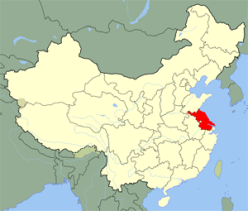 The U.S. Patent and Trademark Office announced earlier this summer that the Office had signed a Memorandum of Understanding (MOU) with the Jiangsu Provincial People's Government in the People's Republic of China. The MOU was the Office's first agreement with a provincial government. USPTO Director David Kappos noted that the agreement was "aimed at improving enforcement and collaboration on intellectual property matters through exchanges of information, capacity building, and other educational activities." The MOU is part of a larger effort by the USPTO to work with the Chinese government on IP matters.
 -
By Kevin E. Noonan —
 Today, the Federal Circuit revisited the patent-eligibility of claims directed to methods for optimizing childhood immunization, in Classen Immunotherapies, Inc. v. Biogen IDEC. The Federal Circuit's original opinion, handed down in December 2008, was vacated by the Supreme Court in view of that Court's decision in Bilski v. Kappos, and remanded to the Federal Circuit for reconsideration in view of the Supreme Court's instructions on the proper standard to be applied to determine patent-eligibility for method claims.
Today's decision could not be more different from the Federal Circuit's earlier decision. That decision, in its entirety, was as follows:
In light of our decision in In re Bilski, 545 F.3d 943 (Fed. Cir. 2008) (en banc), we affirm the district court's grant of summary judgment that these claims are invalid under 35 U.S.C. § 101. Dr. Classen's claims are neither "tied to a particular machine or apparatus" nor do they "transform[] a particular article into a different state or thing." Bilski, 545 F.3d at 954. Therefore we affirm.
That decision was written by Judge Moore, joined by Judge Newman (who dissented in the Court's en banc In re Bilski decision) and District Court Judge Joseph Farnan, sitting by designation. Today's opinion was written by Judge Newman, joined by Chief Judge Rader, and Judge Moore penned a furious dissent. In addition, Judge Rader wrote an opinion containing "additional views" regarding challenges to patent validity sounding in § 101. The Court in its opinion also addressed not only the § 101 issues raised by the parties but also the denial of summary judgment of invalidity for anticipation and the District Court's determination that the activities of several co-defendants were within the "safe harbor" provisions of 35 U.S.C. § 271(e)(1). In view of the complexities of these opinions, this post is limited to the majority opinion; future posts will consider Judge Moore's dissent and Chief Judge Rader's "additional views," which are directed to policy implications of § 101 challenges to patent eligibility.
There are three patents in suit: U.S. Patent Nos. 5,723,283, 6,420,139, and 6,638,739; these patents contain a total of 230 claims asserted in the lawsuit. Plaintiff designated certain claims as "representative claims," and the panel opinion made its determination on these claims. The majority opinion draws a distinction between the claims of the '283 patent (which it found were not patent-eligible under § 101) and the claims of the '139 and '739 patents (which the majority found to be patent-eligible). Claim 1 of the '283 patent can be compared to claim 1 of the '739 patent to illustrate the differences in the claims:
The '283 patent claim:
A method of determining whether an immunization schedule affects the incidence or severity of a chronic immune-mediated disorder in a treatment group of mammals, relative to a control group of mammals, which comprises immunizing mammals in the treatment group of mammals with one or more doses of one or more immunogens, according to said immunization schedule, and comparing the incidence, prevalence, frequency or severity of said chronic immune-mediated disorder or the level of a marker of such a disorder, in the treatment group, with that in the control group.
The '739 patent claim:
1. A method of immunizing a mammalian subject which comprises:
(I) screening a plurality of immunization schedules, by
(a) identifying a first group of mammals and at least a second group of mammals, said mammals being of the same species, the first group of mammals having been immunized with one or more doses of one or more infectious disease-causing organism-associated immunogens according to a first screened immunization schedule, and the second group of mammals having been immunized with one or more doses of one or more infectious disease-causing organism-associated immunogens according to a second screened immunization schedule, each group of mammals having been immunized according to a different immunization schedule, and
(b) comparing the effectiveness of said first and second screened immunization schedules in protecting against or inducing a chronic immune-mediated disorder in said first and second groups, as a result of which one of said screened immunization schedules may be identified as a lower risk screened immunization schedule and the other of said screened schedules as a higher risk screened immunization schedule with regard to the risk of developing said chronic immune mediated disorder(s),
(II) immunizing said subject according to a subject immunization schedule, according to which at least one of said infectious disease-causing organism-associated immunogens of said lower risk schedule is administered in accordance with said lower risk screened immunization schedule, which administration is associated with a lower risk of development of said chronic immune-mediated disorder(s) than when said immunogen was administered according to said higher risk screened immunization schedule.Plaintiff espoused a broad scope for these claims. According to the majority opinion, plaintiff argued that the claims of the '739 patent were infringed "when a health care provider reads the relevant literature and selects and uses an immunization schedule that is of lower risk for development of a chronic immune-mediated disorder:" specifically:
[T]he '139 and '739 patents in suit are directly infringed when a physician, hospital or other health care provider reads the relevant literature and selects an immunization schedule and immunizes a patient in accordance with the schedule which appears to have minimal risk.
On the other hand, plaintiffs contended that the claims of the '238 patent were infringed "when a person reviews relevant information, whether the person is a producer of vaccines, a health care provider, or a concerned parent," specifically, "the infringer need only assess risk, it is not necessary for the infringer to conduct its own clinical trials or prove the cause of any adverse effects."
Although the majority opinion suggests that there was sufficient knowledge in the prior art that the patentability of these claims is in question, the opinion draws a strict line between such concerns and the question of patent-eligibility. And the opinion expressly relies on the intervening precedent of Research Corp. Technologies, Inc. v. Microsoft Corp., 627 F.3d 859 (Fed. Cir. 2010); Prometheus Laboratories, Inc. v. Mayo Collaborative Services, 628 F.3d 1347 (Fed. Cir. 2010), cert. granted, _ S. Ct. _ , 2011 WL 973139 (June 20, 2011); and Association for Molecular Pathology v. U.S. Patent & Trademark Office, _ F.3d _, 2011 WL 3211513 (Fed. Cir. July 29, 2011), in reaching its determination on patent-eligiblity. In reciting the conflicting positions of the parties, the majority opinion appears to be setting forth the basis for its decision: whether the claims recite merely a mental step or a fundamental scientific principle, or an application of a principle that properly falls within the scope of § 101.
The majority opinion begins its analysis of the patent-eligibility question by reciting the broad scope of the statutory language, citing ancient precedent as well as Diamond v. Chakrabarty for the principle. According to Judge Newman and Chief Judge Rader, the Supreme Court's decision in Chakrabarty arose at a time when the courts were also considering the patent-eligibility of inventions in "the evolving fields of computer science and technology," including especially Diamond v. Diehr. In making determinations on patent-eligibility, the majority states that the Supreme Court has directed that "the boundary between abstract principle and practical application may vary with the subject matter." These principles remain the standard as evidenced by the Supreme Court's decision in Bilski v. Kappos, which the majority opinion cites for the proposition that:
The §101 patent-eligibility inquiry is only a threshold test. Even if an invention qualifies as a process, machine, manufacture, or composition of matter, in order to receive the Patent Act's protection the claimed invention must also satisfy "the conditions and requirements of this title." §101. Those requirements include that the invention be novel, see §102, nonobvious, see §103, and fully and particularly described, see §112.
The majority "appli[ed] this distinction [between patent-eligibility and the substantive requirements of patentability] to the Classen patents" in arriving at its decision that the claims of the '139 and '739 patents satisfy the test and the claims of the '238 patent do not.
Turning to the District Court's decision on summary judgment that the claims of all the patents-in-suit did not recite patent-eligible subject matter, the majority states that the lower court's reasoning was based on its determination that "the method claimed in all three patents includes the mental step of reviewing the relevant literature to determine the lower-risk immunization schedule" and that the lower court did not consider whether the claims satisfied the other provisions of the Patent Act. Citing Application of Prater, 415 F.2d 1393, 1402 n. 22 (CCPA 1969), the opinion states that "the presence of a mental step is not of itself fatal to §101 eligibility" and that there was no "universal rule" governing "all situations that include mental activity."
Classen argued, and the majority appear to agree, that an important distinction between the claims here and the claims in Bilski is that the presence of "immunization" steps in Classen's claims distinguish them from the commodity hedging method claimed by Bilski. Recognizing the deficiencies in the Supreme Court's Bilski opinion (through the voice of former Justice Stevens, who "observed" that the majority "never provide[d] a satisfying account of what constitutes an unpatentable abstract idea"), the majority turn to the Federal Circuit's own Research Corp. precedent, for the principle that a claim should be disqualified from patent-eligibility only if the characteristic of "abstractness" "should exhibit itself so manifestly as to override the broad statutory categories of eligibile subject matter." Although this "standard" appears subjective at best, the majority illustrates its application in Research Corp., where the claimed method was "functional and palpable" and thus patent-eligible.
Again turning to its Research Corp. precedent, the majority recites the statements in that case that subject matter eligibility is a "course eligibility filter" that is not the "final arbiter" of patentability (rather, the substantive provisions of §§ 102, 103 and 112 fulfill that role). "The preferable procedure" is to "apply the substantive conditions and requirements of patentability" if the claims recite one of the statutory classes of invention and are not "manifestly abstract." Also relevant to the question is whether there is a "commercial application of the technology," which the opinion contends is an indication that the subject matter is not "so abstract as to negate" patent eligibility under § 101.
Using these guidelines, the majority states that the '139 and '739 patent claims are patent-eligible, inter alia, because they recite methods that include "the physical step of immunization on [a] determined schedule" and thus are "directed to a specific, tangible application." Although again raising the possibility that the claims do not satisfy the substantive provisions of the Patent Act, the majority concludes that finding these claims to be patent-eligible is consistent with Supreme Court precedent that subject matter eligibility should be construed broadly, and that "categorical rules" should not be adopted due to the possibility that such rules might have "wide-ranging and unforeseen impacts" on innovation.
The claims of the '238 patent, on the other hand, are not patent-eligible according to the majority, because they do not recite affirmative immunization steps. The distinction appears to be that the patent-eligible claims of the '139 and '739 patents recite immunization steps after the appropriate schedule has been arrived at by operation of the other steps of the claim, whereas the claims of the '238 patent do not require any immunization step (except the steps that produce the pattern of immunization-related diseases and disorders recited in the claim). This distinction is supported by arguments plaintiff made regarding acts constituting infringement, such as alleging that defendant Merck "induced direct infringement by parents when Merck provides and physicians distribute . . . [a] book that advises parents to understand vaccines and vaccination schedules." Citing AMP v. USPTO, the majority states that "methods that simply collect and compare data, without applying the data in a step of the overall method, may fail to traverse the §101 filter." That is the case here for the '238 patent claims.
The opinion also makes a distinction, termed "special consideration," when courts make patent-eligibility determinations for "evolving technologies" in order to provide the "liberal encouragement" for innovation resulting from the "permissive approach" to patent-eligibility taken by Congress in implementing the Patent Act and recognized by courts since (including the recent Bilski opinion by the Supreme Court). Even under this expansive approach, however, the majority found that the '238 patent claim "is directed to the single step of reviewing the effects of known immunization schedules, as shown in the relevant literature" which, while a "first step in the scientific method" is not sufficient to recite patent-eligible subject matter. The majority found that the method claimed in the '238 patent "do[es] not include putting this knowledge to practical use" and is merely "directed to the abstract principle that variation in immunization schedules may have consequences for certain diseases." This "abstraction" is not patent-eligible because it "is unrelieved by any movement from principle to application."
In making this distinction between the '238 patent claims and the '139 and '739 patent claims, the majority states that "[p]ragmatic thoroughness is thereby achieved, for extensive precedent guides the continuum from abstractness to specificity, in the context of a vast breadth of subject matter. Aided by this experience, courts may more readily resolve close questions such as are here presented."
With regard to the other questions presented for review the majority declined to consider whether the claims were invalid for anticipation, on the grounds that denial of summary judgment was not generally appealable, citing Kendall v. City of Chesapeake, Va., 174 F.3d 437, 443-44 (4th Cir. 1999), as well as the pragmatic consideration that "there is no record, no factual findings or representations on which such findings might be made, indeed no basis for factual inferences, even on the premises of summary adjudication." The Court did consider the question of infringement and whether certain of the defendants' (Biogen and GlaxoSmithKline) accused activities fell within the "safe harbor" provisions of 35 U.S.C. § 271(e)(1). These activities constituted post-approval studies to determine whether immunizations with hepatitis B and Haemophilus influenza vaccines increase the incidence of type 1 diabetes, as well as an allegation that Biogen induced infringement by GSK by "providing instructions and/or recommendations on a proper immunization schedule for vaccines." Classen argued that the § 271(e)(1) safe harbor is limited to pre-approval activities, and the majority agreed. Assaying the legislative history and the purported purposes of the Hatch-Waxman Act, the opinion states that the safe harbor only applies to pre-approval activities (which the Biogen and GSK actions clearly were not):
§271(e)(1) provides an exception to the law of infringement in order to expedite development of information for regulatory approval of generic counterparts of patented products. The statute does not apply to information that may be routinely reported to the FDA, long after marketing approval has been obtained.
The majority opinion also finds no change in this analysis based on the Supreme Court's decision in Merck KGaA v. Integra Lifesciences I, Ltd., 545 U.S. 193, 207 (2005), which was directed towards "preclinical research" that was, by definition, "pre-approval." The Supreme Court's Merck decision was directed towards (and limited to) "preclinical research, whether or not ultimately included in a submission to the Food and Drug Administration, [that] is exempted from infringement by §271(e)(1) 'as long as there is a reasonable basis for believing that the experiments will produce "the types of information that are relevant to an IND [investigational new drug application] or NDA [new drug application].'" Since the accused actions by Biogen and GSK were "not related to producing information for an IND or NDA," the majority concludes that § 271(e)(1) does not provide a safe harbor under the Merck precedent.
Finally, the majority directed that, on remand, the District Court should determine whether allegations of infringement for performing "studies 'to evaluate suggested associations between childhood vaccinations, particularly against hepatitis B and Haemophilus influenza . . . and risk of developing type 1 diabetes; and to determine whether timing of vaccination influences risk'" is properly within the bounds of the right to exclude granted to Classen or whether it is "impermissible under patent principles," i.e., as "preempting the field of study and prevent[ing] any investigation into any immunogen, known or unknown, and to any disease."
Classen Immunotherapies, Inc. v. Biogen IDEC (Fed. Cir. 2011)
Panel: Chief Judge Rader and Circuit Judges Newman and Moore
Opinion for the court by Circuit Judge Newman; additional views by Chief Judge Rader; dissenting opinion by Circuit Judge Moore -
By Kevin E. Noonan —
 Yesterday, counsel for defendants/appellants filed a petition for rehearing before the Federal Circuit in Association for Molecular Pathology v. U.S. Patent and Trademark Office. Defendants assert a single ground for rehearing, based on the standing issue and particularly related to their allegations that Dr. Harry Ostrer (the only plaintiff found to have standing) no longer has the capacity for "immediately begin[ning] to perform BRCA 1/2-related genetic testing" upon invalidation of the Myriad patents. This allegation is based on Dr. Ostrer's move from his academic position at New York University to a position at Montefiore Hospital and the Albert Einstein School of Medicine of Yeshiva University. In addition, defendants ask the Court to dismiss the appeal and the case for lack of standing while not vacating the panel decision on patent-eligibility of claims to isolated DNA.
 The gist of defendants' argument is that the panel found Dr. Ostrer (at left) to have standing because "he remains in the same position with respect to his ability and desire to provide BRCA testing as in the late 1990's." The change in Dr. Ostrer's academic position destroys this predicate for "no change in position" according to defendants. The petition states that Dr. Ostrer's standing was not personal to him but was based on his relationship with NYU: "[b]ecause the communication [offering a license] was directed at NYU, involved the testing that was being performed at NYU, and offered to grant a license to NYU," the only basis for Dr. Ostrer to have standing "derived solely from his position at NYU" (emphasis in original). These assertions are based on Dr. Ostrer's declaration testimony that:
Through the Human Genetics Program and Molecular Genetics Laboratory at the NYU Langone Medical Center that I direct, my staff and I engage in both research and clinical practice relating to genetic relate susceptibility to disease. . . . My laboratory has all of the personnel, expertise, and facilities necessary to do various types of sequencing of the BRCA1 and BRCA2 genes and I have a strong desire for my lab to provide such sequencing services. We could, and would . . . do full sequencing [and other procedures used for diagnostic genetic testing (emphasis in original)].
According to the petition, "[t]hese statements . . . make clear that [Dr. Ostrer's] claim to standing depended entirely on his employment at NYU." The petition asserts that the panel recognized this, by stating that "his lab has the personnel, facilities and expertise" to perform the testing, and that this had not changed from the time that Myriad offered NYU a license in 1998. Dr. Ostrer's academic move thus removes the basis for the panel's determination that nothing had changed and at the same time destroyed the basis for the panel's determination that Dr. Ostrer has standing, defendants contend.
Defendants made similar, albeit less extensive, arguments in a letter to the Court the day before the panel rendered its decision (see "Myriad Writes to Federal Circuit on Standing Issue"), and plaintiffs responded a day later with their own letter (see "Standing in AMP v. USPTO: The Plot Thickens"), stating that Dr. Ostrer's "change in circumstances" did not change his capacity to perform the testing but merely the situs where the testing would be performed. Defendants assert three arguments for why plaintiffs' response is inadequate to preserve Dr. Ostrer's standing to sue. First, defendants argue that the move eliminates any controversy between Myriad and NYU. The panel's decision on standing, the petition maintains, was based on Myriad's offer of a license to NYU as an institution, and that was the circumstance that the panel considered not to have changed (because NYU's employee, Dr. Ostrer, asserted the unchanged capacity and intention to practice the claimed invention should Myriad's patents be invalidated). The petition contains a highlighted portion of Myriad's letter to NYU, illustrating that the offer to license was to the institution and was not personal to Dr. Ostrer:

The petition also notes as significant that, had NYU agreed to the proffered license, the right to perform BRCA testing would not have migrated with Dr. Ostrer when he moved from NYU to Montefiore. Thus:If the mere offer of a collaborative license to an institution constitutes a threat sufficient to support declaratory-judgment jurisdiction, then declaratory-judgment jurisdiction must be rooted in the actions being taken at the institution offered the license.
Second, there is no current controversy between Myriad and Montefiore, an institution that has not offered BRCA testing services in the past and with which Myriad has not "communicated" either now or earlier. Plaintiffs' assertions in their responsive letter that Montefiore has "the same immediate capability" of performing BRCA genetic testing is not evidence, say defendants, and even if true, make Montefiore no different than "hundreds of laboratories around the United States" that have similar capabilities. That is not enough to provide standing for declaratory judgment, the defendants assert, citing the panel opinion that declaratory judgment jurisdiction requires "affirmative acts by patentee directed at specific Plaintiffs" (emphasis in original).
Finally, defendants' petition contends that plaintiffs' letter to the Court (in response to their own) is insufficient to establish an "immediate controversy," based at least on the fact that in plaintiffs' letter Dr. Ostrer was characterized as having a "wish to engage in [diagnostic BRCA] sequencing" (emphasis in original). The petition notes that the panel found similar statements from other named plaintiffs to be inconclusive and that such "some day intentions" were insufficient to establish standing for other named plaintiffs, including Drs. Kazazian and Ganguly. In addition, there is no evidence that Montefiore is willing to permit Dr. Ostrer to perform BRCA-directed genetic diagnostic testing.
The petition asks the Court to dismiss the current appeal, and the underlying declaratory judgment action, for failure of any of the plaintiffs to have standing, saying that the case is moot because Dr. Ostrer's move from NYU will not "make a difference to the legal interests of the parties (as distinct from their psyches, which might remain deeply engaged with the merits of the litigation)," citing Nasatka v. Delta Scientific Corp., 58 F.3d 1578, 1580 (Fed. Cir. 1995). In addition, defendants argue that "[b]ecause the mootness was caused by plaintiff Ostrer's unilateral action," the panel decision should not be vacated. This argument is based on the principle that vacating a panel opinion is only appropriate when "mootness arises through no fault of the parties (such as external causes or mere 'happenstance')," citing United States v. Munsingwear, Inc., 340 U.S. 36, 40 (1950). The policy behind this standard is that a party subject to an adverse panel decision could otherwise always "seek to eliminate the unfavorable precedent by manufacturing mootness during the course of the appellate process," defendants contend. The petition cites Tafas v. Kappos, 586 F.3d 1369, 1371 (Fed. Cir. 2009), as an instance where the Court refused to vacate a panel decision unfavorable to a party (the USPTO) when the party's "voluntary act" caused the action to be moot. Unless there is a countervailing public interest that would be served by vacatur (and defendants argue there is none in this case), the petition argues that the Court should maintain the patency of the panel decision.
The defendants' petition does not address any other issue, suggesting that Myriad has decided not to contest invalidation of the method claims included in the lawsuit. Perhaps this is because there are other claims remaining to be asserted against a future infringer that are more likely to withstand a patent-eligiblity challenge than the claims in this case, or perhaps it is because of the impending Supreme Court decision in Mayo Collaborative Svcs. v. Prometheus Labs., Inc., which is expected to shed additional light on the patent-eligibility of medical diagnostic method claims regardless of whether they encompass a transformation step. In any case, defendants' petition provides the Federal Circuit with an opportunity to revisit the standing issue, both as it applies to Dr. Ostrer and to the American College of Medical Genetics and Ms. Ellen Matloff (as argued in plaintiffs' petition). Reaching a decision of "no standing" in this case would go a long way towards putting the genie of the patent-eligibility of gene patents back in the bottle, perhaps long enough for Myriad's patents to expire and moot the entire controversy. There are worse outcomes.
-
By Kevin E. Noonan —
 On Thursday, counsel for plaintiffs/appellees in Association for Molecular Pathology v. U.S. Patent and Trademark Office (who may be simply Dr. Harry Ostrer, the only plaintiff with standing in the case after the panel decision) filed a petition for panel rehearing before the Federal Circuit. As grounds for rehearing, Plaintiffs list two points of law and fact that they allege were overlooked or misapprehended by the Court. First, the petition contends that the Court "failed to consider whether the DNA fragments claimed in these patents are products of nature." Second, the Court is alleged to have erred by not finding that two other named plaintiffs, the American College of Medical Genetics and specifically named plaintiff Ellen Matloff, satisfied the standards for standing enunciated by the Court.
 Regarding the first asserted point of error, plaintiffs allege that "DNA fragments" (presumably, genomic DNA) exist in nature and thus are patent-ineligible. This determination, according to the petition, ignores the "language of the claims" and "the scientific fact that DNA fragments with identical chemical structures are found in nature." The claims do not define the claimed DNA by structure, plaintiffs contend, but by function: encoding BRCA 1 or BRCA 2 polypeptides. The claims thus include "[m]ultiple chemicals with different structures and covalent bonds broken in different places," including "allelic variations," "chemically or biochemically modified" polynucleotides, and nucleotides that are 60% identical to the claimed sequence. According to the petition, "the many different chemicals described in each claim of the patent have nothing in common . . . except that they serve a particular function, i.e. they encode a particular protein" or protein fragment. The petition alleges that this is the function the sequences have in nature, and therefore that the failure of the panel majority to declare the claims patent-ineligible on this basis was "an error in claim construction."
The petition further alleges that "DNA fragments identical to those claimed in the patents appear in the body," citing meiosis, double-strand DNA breaks, and the occurrence of fetal and maternal DNA fragments in maternal blood plasma in support of its conclusion that "all of the fragments that make up the BRCA1/2 genes can be found in natural maternal blood" (having the same characteristics — broken covalent bonds and free 3' hydroxyl groups — that the majority cites as a sufficient basis for finding the claimed isolated DNA to be "markedly different"). Also cited are instances where DNA fragments are found in blood plasma from cancer patients. In plaintiffs' view, the purported existence of these DNA "fragments" from these natural sources renders the claimed DNA to be "products of nature" and thus unpatentable.
Finally, the petition cites the methods by which genes have been isolated from genomic DNA — random fragmentation into vectors and identification of clones encompassing the gene — as evidence that the claimed DNA fragments are sufficiently identical to what occurs randomly in nature for these fragments to qualify as patent-ineligible "products of nature." The petition also cites the evidence that the oligonucleotide fragments can be found in other genes and are not specific to DNA (see "Caught in a Time Warp: The (In)validity of BRCA1 Oligonucleotide Claims"). According to the petition, "if the claims cover, even in part, any product of nature, they must be found invalid."
The petition also asserts that the majority erred by basing its decision on evidence regarding the chemical nature of DNA that was "not supported by the record," specifically the fact that covalent bonds are broken in isolating BRCA DNA from the chromosome. And the petition notes that plaintiffs would be "happy" to provide declarations containing "responsive facts" to explain to the Court what it "simply got wrong." One has to admire their cheek.
One thing that these arguments reinforce is that what this case needs as a predicate to any further argument is for the Court to construe the claims (see "Is Claim Construction the Key to Patent-eligibility of Isolated DNA?"). While many of the arguments contained in the petition seem fantastical to anyone who has worked in this area of patent law for any time, unless the parties can set forth the evidence and arguments for construing the claims, and the Court has an opportunity to rule on the scope and meaning of disputed claim terms, there can be no basis for the Federal Circuit, or the Supreme Court, to rule affirmatively on the question of whether the subject matter of the composition of matter claims is patent-eligible.
This portion of the petition also seems to indicate that plaintiffs have acquiesced to the majority's decision that cDNA claims are patent-eligible, despite those claims having the same "informational" content as the isolated genomic DNA claims that the petition argues were improperly determined by the majority to be patent-eligible.
 With regard to the standing issue, plaintiffs argue that the finding that Dr. Ostrer (at right) has standing confers "organizational standing" on the American College of Medical Genetics, citing "well-established Supreme Court law," specifically Warth v. Selden. For those who have not reviewed the Warth case, it involved a lawsuit against the town of Penfield, N.Y. by an organization, Metro-Act of Rochester, that alleged housing discrimination. The Supreme Court found that the plaintiffs did not have standing to sue because none of the plaintiffs could demonstrate any injury in fact. The relevant "Supreme Court law" recited in Warth is that for an organization to have standing, it must allege that "all or any one" of its members has suffered or been threatened with an immediate injury.
In addition, the petition argues that Ellen Matloff alleged that she "was told by Myriad that she and geneticists at Yale would violate Myriad's patents if they performed the test she wanted to perform." The petition does not, however, point to any evidence that Ms. Matloff "would immediately begin to perform BRCA1/2-related genetic testing upon invalidation of the Myriad patents," which was the basis for the Court deciding that Dr. Ostrer has standing. These assertions of standing for other plaintiffs arise in the wake of allegations by defendants that Dr. Ostrer no longer has the capacity for "immediately begin[ning] to perform BRCA 1/2-related genetic testing upon invalidation of the Myriad patents," an allegation denied by plaintiffs.
The one certain consequence of the filing of plaintiffs' petition is that any petition for certiorari will be delayed, making it likely that the Supreme Court will decide the Mayo Collaborative Svcs. v. Prometheus Labs., Inc. case before ruling on the invalidated method claims in the Myriad case.
-
By Sherri Oslick —
 About Court Report: Each week we will report briefly on recently filed biotech and pharma cases.
Alcon Pharmaceuticals, Ltd. et al. v. Apotex Inc. et al.
4:11-cv-00600; filed August 25, 2011 in the Northern District of Texas• Plaintiffs: Alcon Pharmaceuticals, Ltd.; Alcon Research, Ltd.
• Defendants: Apotex Inc.; Apotex Corp.Infringement of U.S. Patent No. 7,977,376 ("Olopatadine Formulations for Topical Nasal Administration," issued July 12, 2011) following a Paragraph IV certification as part of Apotex's filing of an ANDA to manufacture a generic version of Alcon's Patanase® (olopatadine hydrochloride, used to treat seasonal allergic rhinitis). View the complaint here.
Cadence Pharmaceuticals, Inc. et al. v. Exela Pharma Sciences, LLC et al.
5:11-cv-00116; filed August 24, 2011 in the Western District of North Carolina• Plaintiffs: Cadence Pharmaceuticals, Inc.; SCR Pharmatop
• Defendants: Exela Pharma Sciences, LLC; Exela Pharmsci, Inc.; Exela Holdings, Inc.Cadence Pharmaceuticals, Inc. et al. v. Paddock Laboratories, Inc. et al.
1:11-cv-00880; filed August 19, 2011 in the Western District of Michigan• Plaintiffs: Cadence Pharmaceuticals, Inc.; SCR Pharmatop
• Defendants: Paddock Laboratories, Inc.; Perrigo Co.; Paddock Laboratories, LLCCadence Pharmaceuticals, Inc. et al. v. Paddock Laboratories, Inc. et al.
0:11-cv-02399; filed August 19, 2011 in the District Court of Minnesota• Plaintiffs: Cadence Pharmaceuticals, Inc.; SCR Pharmatop
• Defendants: Paddock Laboratories, Inc.; Perrigo Co.; Paddock Laboratories, LLCCadence Pharmaceuticals Inc. et al.. v. Paddock Laboratories et al.
1:11-cv-00733; filed August 18, 2011 in the District Court of Delaware• Plaintiffs: Cadence Pharmaceuticals Inc.; SCR Pharmatop
• Defendants: Paddock Laboratories Inc.; Perrigo Co.; Paddock Laboratories LLC; Exela Pharma Sciences LLC; Exela Pharmsci Inc.; Exela Holdings Inc.The complaints in these cases are substantially identical. Infringement of U.S. Patent Nos. 6,028,222 ("Stable Liquid Paracetamol Compositions, and Method for Preparing the Same," issued February 22, 2000) and 6,992,218 ("Method for Obtaining Aqueous Formulations of Oxidation-Sensitive Active Principles," issued January 31, 2006), both licensed to Cadence, following a Paragraph IV certification as part of defendants' filing of an ANDA to manufacture a generic version of Cadence's Ofirmev® (acetaminophen injection, used for the management of mild to moderate pain, the management of moderate to severe pain with adjunctive opioid analgesics, and the reduction of fevers). View the Paddock (Delaware) complaint here.
-
 The National Small Business Association (NSBA) and Washington, DC, Northern Virginia, and Baltimore sections of the IEEE will be holding a forum entitled "The Overhaul of U.S. Patent Law" on August 30, 2011 from 1:00 to 4:30 pm (ET) at the University of California Washington Center, 1608 Rhode Island Avenue, NW in Washington, DC. Note: The forum was originally scheduled for August 29, but has been postponed due to Hurricane Irene. Forum speakers and panelists will address the effects of statutory changes in the patent law on the courts, large and small firm patenting, investments in new inventions and new domestic science and engineering jobs creation prospects for U.S. professionals. Other forum panelists will address the regulatory changes required to implement the new law, the prospects of U.S. Patent Office access to its user fees, and the Office's ability to handle the increasing workload and new tasks necessitated by the new law. The forum will be moderated by Chris Katopis, former USPTO Director of Congressional Relations. Speakers and panelists include:
• Paul Michel, Chief Judge (retired), The U.S. Court of Appeals for the Federal Circuit
• Pinchus Laufer, Office of Patent Legal Administration, U.S. Patent & Trademark Office
• John Duffy, University of Virginia School of Law
• Valerie Gaydos, Angel investor, Angel Venture Forum
• Ron Hira, Rochester Institute of Technology, co-author of "Outsourcing America"
• Ron Katznelson, Entrepreneur-inventor and President of Bi-Level Technologies
• Lisa Kuuttila, President & CEO, STC.UNM, at the University of New Mexico
• Henry Nothhaft, Serial Entrepreneur and Author of "Great Again"
• Herbert Schwartz, Patent litigator and author of "Patent Law and Practice"There is no admission fee for the forum, but those interesting in attending should register at the forum webpage by August 29, 2011. The forum will also be webcast, and can be viewed here.
-
The Association of Intellectual Property Firms (AIPF) will be holding its 2011 Annual Meeting on September 18-20, 2011 in Chicago, IL. A program for the meeting, including an agenda, descriptions of the scheduled sessions, and list of speakers, can be viewed here. A schedule of registration fees for the meeting can be found here, and a registration form for the meeting can be obtained here.
-

August 30, 2011 – The Overhaul of U.S. Patent Law (National Small Business Association and Washington, DC, Northern Virginia, and Baltimore sections of the IEEE) – 1:00 to 4:30 pm (ET)
August 31, 2011 – Expert Analysis of Federal Circuit's Ruling in Myriad Appeal (Technology Transfer Tactics) – 1:00 – 2:00 PM (Eastern)
September 6-7, 2011 – Pharmaceutical Law Academy (IBC Legal Conferences) – London, UK
September 8, 2011 – Patents and the Written Description Requirement: Lessons Learned Since Ariad v. Lilly (Strafford) – 1:00 – 2:30 PM (EDT)
September 11-13, 2011 – 2011 Annual Meeting (Intellectual Property Owners Association) – Los Angeles, CA
September 13, 2011 – Biotechnology/Chemical/ Pharmaceutical (BCP) Customer Partnership Meeting (U.S. Patent and Trademark Office) – Alexandria, VA (and webcast)
September 14, 2011 – Compulsory Licensing as an Emerging Global IP Issue (Intellectual Property Owners Association) – Los Angeles, CA
September 14-16, 2011 – 85th Annual Meeting (Intellectual Property Institute of Canada) – Chicago, IL
September 18-20, 2011 – Accelerating Intellectual Property and Innovation in South Africa*** (South African Department of Science and Technology) – Cape Town, South Africa
September 18-20, 2011 – 2011 Annual Meeting (Association of Intellectual Property Firms) – Chicago, IL
September 19-20, 2011 – Tech Transfer Summit Europe*** (Tech Transfer Summit Ltd.) – Paris, France
September 19-21, 2011 – Business of Biosimilars & Biobetters*** (Institute for International Research) – Boston, MA
September 21-22, 2011 – Forum on European Pharmaceutical Regulatory Law*** (C5) – Brussels, Belgium
September 22-23, 2011 – FDA Boot Camp*** (American Conference Institute) – Boston, MA
September 26-27, 2011 – Biosimilars and Biobetters*** (SMi Group) – London, UK
September 26-27, 2011 – Life Sciences Business Development & Acquisitions in Emerging Markets (American Conference Institute) – New York, NYNew York, NY
October 3-4, 2011 – Tech Transfer Summit North America*** (Tech Transfer Summit Ltd.) – Bethesda, MD
October 4-5, 2011 – Maximizing Pharmaceutical Patent Lifecycles*** (ACI) –
October 5-6, 2011 – Biotech Patenting*** (C5) – London, UK
October 24-26, 2011 – Developing IP Strategies for Crystalline Forms*** (International Quality & Productivity Center) – London, UK
October 25-26, 2011 – FDA Boot Camp Devices Edition*** (American Conference Institute) – Chicago, IL
***Patent Docs is a media partner of this conference or CLE

