• By Kevin E. Noonan —

    Sometimes the U.S. and Europe seem to be on diametrically opposed trajectories when it comes to patent policy.  One such moment was in the 1980's, when the U.S. Patent and Trademark Office responded to the Supreme Court's Diamond v. Chakrabarty decision by permitting broad patenting of biotechnological inventions while Europeans debated the wisdom of such a course and suffered the resulting lag in development of a native biotechnology industry.  A similar outcome may result from the recent European Court of Justice decision to ban patenting of any invention that involves the destruction of a human embryo; while U.S. efforts in this industry were retarded by the Bush Administration's wrongheaded stem cell ban, European stem cell science prospered (and American efforts devolved at least in theory to states like Massachusetts and California, which funded their own stem cell research initiatives).

    Conversely, the U.S. patent system is in the throes of judicial review over subject matter eligibility of isolated genes (something settled in Europe in the affirmative by the Biotechnology Directive 99/44EC issued in 1998) as well as questions over the patent-eligibility of diagnostic method claims.  A recent decision by the U.K. Supreme Court (a bench comprising a subset of the House of Lords called the "Law Lords" although the Court is institutionally separate from Parliament; see "Biographies of the Justices") overturned a decision by Judge Kitchen denying a patent to Human Genome Sciences on the human Neurokine-alpha gene, and in doing so seems to have expanded the scope of patent eligibility to be greater than exists under current U.S. law (even before the challenge to the Myriad patents by the American Civil Liberties Union and the Public Patent Foudation).

    LillyThe case involved a nullity action brought by Eli Lilly and Co. over the U.K. national phase counterpart (U.K. 0,939,804) of HGS's European Patent for the human Neurokine-alpha gene and protein encoded thereby (EP 0939804).  Claim 1 is representative:

    An isolated nucleic acid molecule comprising a polynucleotide sequence encoding a Neutrokine-α polypeptide wherein said polynucleotide sequence is selected from the group consisting of: 
(a) a polynucleotide sequence encoding the full length Neutrokine-α polypeptide having the amino acid sequence of residues [as defined]; and 
(b) a polynucleotide sequence encoding the extracellular domain of the Neutrokine-α polypeptide having the amino acid sequence of residues [as defined].

    Human Genome SciencesThe patent was granted by the EPO and invalidated by the Opposition Division, only to be reinstated (in modified form) by a decision of the EPO Technical Boards of Appeal (whose decisions have significantly less precedential value, in the EPO and the EP member nations, than does the Federal Circuit in the U.S.).  The patent, filed on October 25, 1996, contained the nucleotide and amino acid sequences of the isolated nucleic acid and predicted protein product, respectively.  The patent disclosed the structural relationship between the human Neutrokine-alpha (hNα) gene and other memebrs of the tumor necrosis factor (TNF) "superfamily" of related cytokine proteins.  The specification further noted that "all known members" of the superfamily "are involved in regulation of cell proliferation, activation and differentiation, including control of cell survival or death by apoptosis or cytotoxicity" but failed to disclose any particular biological function for the hNα protein.  The in vivo expression pattern of the hNα gene was disclosed as being expressed in "neutrophils . . . in kidney, lung, peripheral leukocyte, bone marrow, T-cell lymphoma, B-cell lymphoma, activated T-cells, stomach cancer, smooth muscle, macrophages and cord blood tissue."  Although the patent discloses the use of the hNα protein for "the diagnosis, prevention, or treatment of an extraordinarily large and disparate number of, sometimes widely expressed, categories of disorders of the immune system," "nowhere in the Patent is there any data or any suggestion of in vitro or in vivo studies" and "there is no experimental evidence to support any of those suggestions."

    Both the U.K. High Court and the U.K. Court of Appeals found the patent to be invalid, based on a failure to describe any specific uses for the hNα protein or the gene that encodes it.  As characterized by the U.K. Supreme Court opinion (by Lord Neuberger, joined by Lords Hope, Walker, Clarke, and Collins), the "central issue" considered by the lower U.K. courts and the Opposition Division of the EPO was "whether, in the light of the common general knowledge at October 1996, by disclosing the facts summarised in para 10 above (namely the existence and structure of Neutrokine-α, the sequence of its encoding DNA, its tissue distribution, its expression, and its membership of the TNF ligand superfamily), the Patent satisfied Articles 52 and 57 of the EPC so as to enable HGS to claim the encoding gene for Neutrokine-α."  Articles 52 and 57 read as follows:

    Article 52:

    European patents shall be granted for any inventions, in all fields of technology, provided that they are new, involve an inventive step and are susceptible of industrial application.

    Article 57:

    An invention shall be considered as susceptible of industrial application if it can be made or used in any kind of industry, including agriculture.

    The U.K. courts decided in the negative, finding (as did the EPO Opposition Division) that the disclosed function of the hNα protein or the gene that encodes it were speculative and lacked a "concrete basis for anything other than a research project."  HGS's argument, as frankly put by the Supreme Court's opinion, was that these lower U.K. courts were wrong and had "set too high a standard for industrial applicability in the context of a patent for biological material."

    This being a case of first impression before the U.K. courts regarding the patent-eligibility of human gene patents, the parties and the courts relied upon decisions of the EPO Technical Boards of Appeal, "decisions of courts in the United States" and some earlier U.K. decisions on patent-eligibility of biological material.  Citing U.K. Appellate Court Judge Jacob, the standard enunciated in the High Court's opinion is that "[h]owever clever and inventive you may have been in discovering a gene sequence, you cannot have a patent for it or for the protein for which it encodes if you do not disclose how it can be used."  The question thus became whether the HGS patent specification satisfied that standard.  The opinion finds little help in deciding this question in the prior U.K. precedent, and while the legal analyses in the U.S. cases "deserve great respect," they entail "obvious risks" relating to the differences between European and U.S. patent law (citing as "notorious examples" the "first to file" rule in Europe and the existence of prosecution history estoppel in the U.S.).

    UK Supreme CourtThe Supreme Court thus turned to decisions from the EPO Technical Boards of Appeal (TBA) for guidance, noting the parallel considerations that the countries of the EPC interpret the Articles consistently while permitting individual member states to make their own determinations on sovereignty grounds.  As may be expected, the opinion notes several diverse opinions of the TBA (including T 0870/04 BDP1 Phosphatase/ Max-Planck; 0898/05 Hematopoietic receptor/ZymoGenetics; T 1329/04 Factor- 9/John Hopkins; T 0604/04 PF4A receptors/Genentech; T 1452/06 Serine protease/Bayer; and T 1165/06 IL-17 related polypeptide/Schering) that support both parties here, and ultimately decides that the lesson of this jurisprudential review is that each situation requires specific application of the Article 52 and 57 requirements to its own unique facts.

    Considering the U.K. High Court decision, the Supreme Court noted that Judge Kitchin accepted HGS's contention that its claims were "significant" because of the "importance of the identification of the tissues where [it] is expressed, the tissues where it acts, the nature of its biological activity and how that profile varies in any particular disease state" while noting that there was "no data is provided to support these claims" and that "the variety of conditions for which the described method is said to be useful [is] puzzlingly wide and . . . the method itself impossible to operate in the absence of any information as to the standard level of Neutrokine-α expressed in each of these tissues in normal conditions."  Under these conditions, the High Court characterized "the idea that Neutrokine-α and [its antagonists] could be used to treat the extraordinary range of diseases identified was fanciful" and that "the skilled person would come to the conclusion that the inventors had no idea as to the activity of Neutrokine-α when drafting the Patent."  "[S]imply identifying a protein is not necessarily sufficient to confer industrial utility upon it," according to Judge Kitchin, contrasting the situation with "insulin, human growth hormone and erythropoietin" (where the utility was "immediately suggest[ed]") with cases, as here in the High Court's opinion, where "the function of the protein is not known or is incompletely understood and if no disease has been attributed to a deficiency or excess of it."

    In rendering its decision that the lower U.K. courts had erred in finding the HGS claims to be patent ineligible, the Supreme Court noted that "it is plainly appropriate in principle, and highly desirable in practice, that all [national] tribunals interpret the provisions of the EPC in the same way" (here, to find the claims patent eligible), a sentiment supported by several earlier court cases both in the U.K. (Generics (UK) Ltd v H Lundbeck A/S [2009] UKHL 12; [2009] RPC 13) and Germany (Case Xa ZR 130/07 (10 September 2009)).  This principle is limited by instances where courts "form different judgments in view of the same expert and factual evidence" in the application of the same "relevant principles" — i.e., reasonable minds may differ while agreeing with the underlying legal rationale behind patent eligibility.  And the Court adds instances where a national court believes that a TBA decision "may take the law in an inappropriate direction, misapplies previous EPO jurisprudence, or fails to take a relevant argument into account."  But such instances should require "very unusual facts" where the EPO Board "has adopted a consistent approach to an issue in a number of decisions."  And the opinion asserts that it considered a letter from the BioIndustry Association (BIA) informing it of its members' opinion that "clarity and certainty" were required to support an industry "with an aggregate turnover in 2010 of about £ 5.5 billion and a workforce of 36,000 in the U.K., in view of the "large amount of research and development [] required before there can be any therapeutic benefit" from a newly discovered biological molecule like hNα:

    If the application is filed early, . . . [t]he company will be left with no patent protection, but would have disclosed its invention in the published patent application to competitors.  If the application is filed late, there is a risk in such a competitive environment where several companies may be working on the same type of research projects, that a third party will already have filed a patent application covering the same or a similar invention, in which case the company may not be able to gain any patent protection for its work and by continuing their programme they may risk infringing that third party's patents.  In both cases, the company will have lost much of the benefit of its costly research and development.

    Ultimately, while acknowledging the legal and logical force behind the High Court opinion by Judge Kitchin (and his better position to hear and evaluate the evidence), Lord Neuberger decided that the claims at issue were patent eligible, as that decision being most consistent with what the opinion calls the "general principles" enunciated by the EPO Board for the satisfaction of Article 57 by claims to biological materials:

    • (i)  The patent must disclose "a practical application" and "some 
profitable use" for the claimed substance, so that the ensuing monopoly "can be expected [to lead to] some . . . commercial benefit" (T 0870/04, para 4, T 0898/05, paras 2 and 4);

    • (ii)  A "concrete benefit", namely the invention's "use . . . in industrial practice" must be "derivable directly from the description," coupled with common general knowledge (T 0898/05, para 6, T 0604/04, para 15);

    • (iii)  A merely "speculative" use will not suffice, so "a vague and speculative indication of possible objectives that might or might not be achievable" will not do (T 0870/04, para 21 and T 0898/05, paras 6 and 21);

    • (iv)  The patent and common general knowledge must enable the skilled person "to reproduce" or "exploit" the claimed invention without "undue burden," or having to carry out "a research programme" (T 0604/04, para 22, T 0898/05, para 6);

    Where a patent discloses a new protein and its encoding gene:

    • (v)  The patent, when taken with common general knowledge, must demonstrate "a real as opposed to a purely theoretical possibility of exploitation" (T 0604/04, para 15, T 0898/05, paras 6, 22 and 
31);

    • (vi)  Merely identifying the structure of a protein, without attributing 
to it a "clear role," or "suggest[ing]" any "practical use" for it, or suggesting "a vague and speculative indication of possible objectives that might be achieved," is not enough (T 0870/04, paras 6-7, 11, and 21; T 0898/05, paras 7, 10 and 31);

    • (vii)  The absence of any experimental or wet lab evidence of activity of the claimed protein is not fatal (T 0898/05, paras 21 and 31, T 1452/06, para 5);

    • (viii)  A "plausible" or "reasonably credible" claimed use, or an "educated guess," can suffice (T 1329/04, paras 6 and 11, T 0640/04, para 6, T 0898/05, paras 8, 21, 27 and 31, T 1452/06, para 6, T 1165/06 para 25);

    • (ix)  Such plausibility can be assisted by being confirmed by "later evidence," although later evidence on its own will not do (T 1329/04, para 12, T 0898/05, para 24, T 1452/06, para 6, T 1165/06, para 25);

    • (x)  The requirements of a plausible and specific possibility of exploitation can be at the biochemical, the cellular or the biological level (T 0898/05, paras 29-30);

    Where the protein is said to be a family or superfamily member:

    • (xi)  If all known members have a "role in the proliferation, differentiation and/or activation of immune cells" or "function in controlling physiology, development and differentiation of mammalian cells," assigning a similar role to the protein may suffice (T 1329/04, para 13, T 0898/05, para 21, T 1165/06, paras 14 and 16, and T 0870/04, para 12);

    • (xii)  So "the problem to be solved" in such a case can be "isolating a 
further member of the [family]" (T 1329/04, para 4, T 0604/04, 
para 22, T 1165/06, paras 14 and 16);

    • (xiii)  If the disclosure is "important to the pharmaceutical industry," 
the disclosure of the sequences of the protein and its gene may suffice, even though its role has not "been clearly defined" (T 0604/04, para 18);

    • (xiv)  The position may be different if there is evidence, either in the patent or elsewhere, which calls the claimed role or membership of the family into question (T 0898/05 para 24, T 1452/06, para 5);

    • (xv)  The position may also be different if the known members have different activities, although they need not always be "precisely interchangeable in terms of their biological action," and it may be acceptable if "most" of them have a common role (T 0870/04, para 12, T 0604/04, para 16, T 0898/05, para 27).

    The Supreme Court based its decision on satisfaction of points viii through xiii based on the relationship between the disclosed hNα gene and the properties of the other TNF superfamily members.

    The issue before the U.K. Supreme Court as "first impression" will be readily apparent to participants in the U.S. patent system; in the wake of an avalanche of gene patent filings at the end of the last century the U.S. Patent and Trademark Office promulgated examination guidelines that required isolated gene sequences to encode a protein for which a specific, substantial and credible utility was disclosed or would be apparent to the skilled worker.  This standard is much narrower than the standard adopted by the U.K. Supreme Court.  Indeed, the U.K. Supreme Court in its opinion seems to adopt a standard requiring an alleged use to be merely "indeed plausible" to give rise prima facie to satisfying Article 57 EPC; this is far less than the "specific, substantial and credible" standard adopted by the USPTO.  Whether these differences, and the course U.S. patent law will take after it has traversed the seas of judicial consideration on patent eligibility of biological materials and methods, lead to a continued strength of U.S. biotechnology or an eclipse by a resurgent Europe cannot be predicted.  But it can be, and rightly should be, feared by those interested in continued prosperity and contributions to human health and well-being by American inventors.

  • By Donald Zuhn —

    Bingaman, JeffLast week, Sen. Jeff Bingaman (D-NM) introduced a bill in the Senate (S. 1882) that would eliminate the 180-day exclusivity period for a generic applicant that enters into a disqualifying agreement as defined by the legislation.  In introducing the bill, also known as the "Fair And Immediate Release of Generic Drugs Act" or "FAIR Generics Act," Sen. Bingaman (at right) asserted that the legislation was "an important step in addressing the root cause of the growing cost of healthcare–the delay of generic drugs entering the market."  Noting that "[p]ay-for-delay patent settlements [between] brand and generic pharmaceutical manufacturers . . . are delaying timely public access to generic drugs, which costs consumers and taxpayers billions of dollars annually," and that "[m]any experts and consumer advocates have called for legislation to address this problem and ensure access to affordable medicines for all Americans," the Senator stated that S. 1882 "addresses the root cause of anti-competitive pay-for-delay settlements between brand and generic  pharmaceutical manufacturers — the unintended, structural flaw in the Hatch-Waxman Act that allows 'parked'' exclusivities to block generic competition."  According to the Senator:

    The legislation would prevent "parked exclusivities'" from delaying full, fair, and early generic competition by modifying three key elements of existing law.  First, the legislation would grant the right to share exclusivity to any generic filer who wins a patent challenge in the district court or is not sued for patent infringement by the brand company.  The legislation also maximizes the incentive for all generic challengers to fight to bring products to market at the earliest possible time by holding generic settlers to the deferred entry date agreed to in their settlements.  Finally, in order to create more clarity regarding litigation risk for pioneer drug companies and generic companies, the legislation requires pioneer companies to make a litigation decision within the 45 day window provided for in the Hatch-Waxman Act.

    In a statement posted on Sen. Bingaman's website, the Senator indicated that the legislation would, if enacted, "save American consumers and the federal government hundreds of millions of dollars and level the playing field among generic manufacturers."  He explains that:

    Unfortunately, in many instances, the "first-filer" [i.e., first generic filer] is paid by or settles with the name brand company to delay selling their generic drug.  This leaves only the expensive brand name drug on the market, while both the name-brand company and the generic company financially benefit.  During this delay, the brand name company enjoys market exclusivity, reaping 100 percent of profits from drug sales.  The generic company may enjoy a settlement payment, and blocks other generics from coming to market.  In the meantime, American consumers and the federal government (through Medicaid, Medicare, and other federal healthcare programs) are forced to purchase more expensive medications for longer periods of time.

    Sen. Bingaman notes that his bill would remedy this situation by "allow[ing] any generic company that wins a patent challenge in district court or is not sued by the brand name company to share most of the 180 day market exclusivity that was originally reserved for first filers only."

    Among other changes, S. 1882 would amend § 505(j)(5)(B) of the Federal Food, Drug, and Cosmetic Act to delete section (bb) in clause (iv)(II), and re-designate sections (cc) and (dd) as (bb) and (cc), respectively.  The current version of § 505(j)(5)(B)(iv) reads as follows:

    (iv) 180-day exclusivity period.
        (I) Effectiveness of application. Subject to subparagraph (D), if the application contains a certification described in paragraph (2)(A)(vii)(IV) and is for a drug for which a first applicant has submitted an application containing such a certification, the application shall be made effective on the date that is 180 days after the date of the first commercial marketing of the drug (including the commercial marketing of the listed drug) by any first applicant.
        (II) Definitions. In this paragraph:
            (aa) 180-day exclusivity period. The term "180-day exclusivity period" means the 180-day period ending on the day before the date on which an application submitted by an applicant other than a first applicant could become effective under this clause.
            (bb) First applicant. As used in this subsection, the term "first applicant" means an applicant that, on the first day on which a substantially complete application containing a certification described in paragraph (2)(A)(vii)(IV) is submitted for approval of a drug, submits a substantially complete application that contains and lawfully maintains a certification described in paragraph (2)(A)(vii)(IV) for the drug.
            (cc) Substantially complete application. As used in this subsection, the term "substantially complete application" means an application under this subsection that on its face is sufficiently complete to permit a substantive review and contains all the information required by paragraph (2)(A).
            (dd) Tentative approval.
                (AA) In general. The term "tentative approval" means notification to an applicant by the Secretary that an application under this subsection meets the requirements of paragraph (2)(A), but cannot receive effective approval because the application does not meet the requirements of this subparagraph, there is a period of exclusivity for the listed drug under subparagraph (F) or section 505A, or there is a 7-year period of exclusivity for the listed drug under section 527.
                (BB) Limitation. A drug that is granted tentative approval by the Secretary is not an approved drug and shall not have an effective approval until the Secretary issues an approval after any necessary additional review of the application.

    The bill would add an additional clause to § 505(j)(5)(B) that would essentially move section (bb) to the end of § 505(j)(5)(B), and additionally require that the first applicant "has not entered into a disqualifying agreement under clause (vii)(II)."  Clause (vii)(II) states:

    (II) AGREEMENT THAT DISQUALIFIES APPLICANT FROM FIRST APPLICANT STATUS.—An agreement described in this subclause is an agreement between an applicant and the holder of the application for the listed drug or an owner of one or more of the patents as to which any applicant submitted a certification qualifying such applicant for the 180-day exclusivity period whereby that applicant agrees, directly or indirectly, not to seek an approval of its application or not to begin the commercial marketing of its drug until a date that is after the expiration of the 180-day exclusivity period awarded to another applicant with respect to such drug (without regard to whether such 180-day exclusivity period is awarded before or after the date of the agreement).

    The legislation, which was supported by co-sponsors Sen. Sherrod Brown (D-OH), Jeff Merkley (D-OR), Bernard Sanders (I-VT), and David Vitter (R-LA), has been referred to the Senate Health, Education, Labor, and Pensions (HELP) committee.

  • By Donald Zuhn —

    FDAEarlier this month, the U.S. Food and Drug Administration announced that the agency has approved 35 new drugs over the past twelve months.  With the exception of 2009, when 37 new drugs were approved, more drugs were approved in fiscal year (FY) 2011, which ended September 30, than in any other year over the past decade.  The largest number of drug approvals occurred in 1996, when the FDA approved 53 new drugs; the number of annual approvals declining since then.

    The new drugs approved this year include two new drugs for hepatitis C and drugs for late-stage prostate cancer, Hodgkin's lymphoma, and lupus.  The last two drugs are the first new drugs approved for treating Hodgkin's lymphoma and lupus in 30 and 50 years, respectively.  In addition, two other drugs (for treating melanoma and lung cancer) were approved with a diagnostic test that helps identify patients for whom the drug is most likely to bring benefits.

    Ucm278357In a report entitled "FY 2011 Innovative Drug Approvals," the FDA outlined how the agency boosted the number of drug approvals to 35 while maintaining drug safety standards.  The report notes that that the FDA achieved faster approval times than its counterparts around the globe.  In fact, 24 of the 35 drugs were approved in the U.S. before being approved by any other country.  The quick approvals were made possible in part by priority review and accelerated review procedures.  FDA Commissioner of Food and Drugs Dr. Margaret Hamburg said that the FDA is "committed to working with industry to promote the science and innovation it takes to produce breakthrough treatments and to ensure that our nation is fully equipped to address the public health challenges of the 21st century."

  • Calendar

    November 30 to December 1, 2011 – Advanced Forum on Biotech Patents*** (American Conference Institute) – Boston, MA

    December 1, 2011 – Biotechnology/Chemical/ Pharmaceutical (BCP) Customer Partnership Meeting (U.S. Patent and Trademark Office) – 9:00 am – 5:15 pm (ET)

    December 5, 2011 – 22nd Annual Conference on USPTO Law and Practice — PTO Day (Intellectual Property Owners Association and U.S. Patent and Trademark Office) – Washington, D.C

    December 5-7, 2011 – Drug and Medical Device Litigation*** (American Conference Institute) – New York, NY

    December 6, 2011 – Biosimilars: Emerging Legal Challenges (Strafford) – 1:00 – 2:30 pm (EST)

    December 6-7, 2011 – Paragraph IV Disputes*** (American Conference Institute) – San Francisco, CA

    December 16, 2011 – A Review of the America Invents Act and Its Impact on the USPTO (Birch, Stewart, Kolasch & Birch, LLP and CONNECT) – San Diego, CA

    January 4-8, 2012 – 29th Annual National CLE Conference (Law Education Institute) – Snowmass, CO

    January 31 – February 1, 2012 – Pharma & Biotech Patent Litigation (C5) – Amsterdam, The Netherlands

    ***Patent Docs is a media partner of this conference or CLE

  • CONNECTBirch, Stewart, Kolasch & Birch, LLP and CONNECT, a regional program that catalyzes the creation of innovative technology and life sciences products in San Diego County and has assisted in the formation and development of more than 3,000 companies, will be holding a public policy forum entitled "A Review of the America Invents Act and Its Impact on the USPTO" with U.S. Patent and Trademark Office Director David Kappos on December 16, 2011 from 8:30 to 10:00 am at the Joan Kroc School of Peace and Justice Theater at the University of San Diego.  Joining Director Kappos will be Leonard Svensson of Birch Stewart, Kolasch & Birch, LLP and moderator Donald Rosenberg, Executive Vice President, General Counsel and Corporate Secretary of Qualcomm Inc.  The registration fee for the forum is $25 (students), $45 (pre-registered members), $60 (pre-registered non-members), or $90 (at the door).  Those interested in registering for the lecture can do so here.

  • AmsterdamC5 (UK) will be holding its 4th Annual Pharma & Biotech Patent Litigation conference from January 31 to February 1, 2012 in Amsterdam, The Netherlands.  At the conference, C5 faculty will offer presentations on the following topics:

    • Recent Case Law Developments in Pharma and Biotech Patent Litigation in Germany (keynote address);
    • SPC references and recent opinion by the Advocate General of the ECJ: What you need to know for your SPC applications;
    • The enforceability of gene sequence patents in light of Lilly v HGS;
    • EPO update on biotech patenting and the EU patent reform;
    • The interplay between insufficiency of disclosure and future embodiments in biotech inventions;
    • The impact of recent launch strategies by generics on preliminary and interim injunctions across Europe (panel discussion);
    • Recent US developments in pharma and biotech patent litigation;
    • Patentability and enforcement of research tool patents: How broadly should reach-through claims be applied?
    • Patent litigation in India for pharma & biotech products;
    • Instructing scientific experts in your patent litigation proceedings in light of recent case law;
    • Patent litigation strategies in Central and Eastern Europe;
    • Second medical use and dosing regimens claims: Back in the spotlight;
    • Developing a successful strategy for pan-European patent enforcement following recent case law developments on cross-border injunctions;
    • Disclosure of prior art and forthcoming antitrust issues;
    • The stem cell patent landscape: Overcoming the legal and regulatory challenges;
    • Avoiding patent infringements in clinical trials; and
    • Managing the practical implications of EU border enforcement of IP rights.

    An additional pre-conference two-part workshop on "Successful Patent Drafting Tips and Techniques in Light of Recent Case Law Developments" and "Practical Considerations for Your 2012 Pan-European Patent Litigation Strategies" will be offered on January 30, 2012.

    A complete brochure for this conference, including an agenda, detailed descriptions of conference sessions, list of speakers, and registration form can be obtained here.

    C5The registration fee for the conference is €1999 and for the conference and workshop is €2698.  Those registering by January 6, 2012 will receive a €100 discount.  Those interested in registering for the conference can do so here, by calling +44 (0) 20 7878 6888, or by faxing a registration form to +44 (0) 20 7878 6885.

  • By Donald Zuhn —

    EPO, JPO, and USPTO Meet at Annual Trilateral Conference

    EPO-EPCThe European Patent Office, Japan Patent Office, and U.S. Patent and Trademark Office gathered last week at the 29th annual Trilateral Conference in St. Germain-en-Laye, France to discuss ways to further harmonize their patent systems.  This year's conference focused on a number of topics, including data standards, work-sharing, patent classification, and the trilateral Patent Prosecution Highway pilot project utilizing PCT work products (PPH-PCT).  In a press release issued by the EPO, the host of this year's conference noted that the three offices had agreed to launch the Common Citation USPTO SealDocument (CCD), a new tool that will make it easier to access results from patent searches carried out by multiple offices for the same invention.  The offices also agreed to extend the duration of the "Patent Prosecution Highway" (PPH) pilot program that reuses PCT International phase work (PCT-PPH) for another two years.

    JPO 1In a statement released after the conference concluded, the EPO called the gathering "[t]he most successful trilateral conference in 29 years."  The EPO noted that the CCD "fills an important gap in the information services for the public and IP authorities by offering a one-stop overview of all documents cited by the EPO, JPO and USPTO in the search process for applications for the same invention pending simultaneously at the three offices."  The CCD can be accessed here.


    USPTO and SIPO Establish PPH and PCT-PPH Pilot Programs

    PPH LogoLast week, the U.S. Patent and Trademark Office announced that two new Patent Prosecution Highway (PPH) pilot programs with China’s State Intellectual Property Office (SIPO) would launch on December 1, 2011.  The pilot programs will apply to qualifying patent applications filed under the Paris Convention ("Paris Route") or the Patent Cooperation Treaty (PCT).  As with other Paris Route PPH programs, the USPTO-SIPO PPH will permit an applicant having an application whose claims have been allowed in one of the offices to fast track the examination of an application in the other office, such that the latter application is examined out of turn.  In particular, an applicant receiving a ruling from either the USPTO or SIPO that at least one claim in an application is patentable may request that the other office fast track the examination of corresponding claims in the corresponding application in that office.  Under the USPTO-SIPO PCT-PPH, an applicant receiving a positive written opinion or a positive international preliminary report in a PCT application where the USPTO or SIPO was the International Searching Authority or the International Preliminary Examination Authority may request that the other office fast track the examination of corresponding claims in corresponding applications.  The USPTO-SIPO PPH pilot programs are scheduled to expire on November 30, 2012, but may be extended for up to one year upon mutual agreement.

    SIPOSince implementing its first Patent Prosecution Highway (PPH) program with the Japan Patent Office (JPO) on July 3, 2006, the U.S. Patent and Trademark Office has established a total of twenty-one PPH programs with other patent offices.  Currently the USPTO has PPH programs (full or pilot) in place with the Japan Patent Office (JPO), the Korean Intellectual Property Office (KIPO), the United Kingdom Intellectual Property Office (UK IPO), the Canadian Intellectual Property Office (CIPO), IP Australia (IP AU), the European Patent Office (EPO), the Danish Patent and Trademark Office (DKPTO), the Intellectual Property Office of Singapore (IPOS), the German Patent and Trade Mark Office (DPMA), the National Board of Patents and Registration of Finland (NBPR), the Hungarian Patent Office (HPO), the Russian Federal Service for Intellectual Property, Patents and Trademarks (ROSPATENT), the Spanish Patent and Trademark Office (SPTO), the Austrian Patent Office (APO), the Mexican Institute of Industrial Property (IMPI), the Swedish Patent and Registration Office (PRV), Nordic Patent Institute (NPI), and the Israel Patent Office (ILPO), the Taiwan Intellectual Property Office (TIPO), the Norwegian Industrial Property Office (NIPO), and China’s State Intellectual Property Office (SIPO).


    Fee for Non-Electronic Filing of Application Takes Effect

    USPTO Seal - backgroundOn Tuesday, the U.S. Patent and Trademark Office published a notice in the Federal Register (76 Fed. Reg. 70651), informing practitioners and applicants that the $400 fee for filing an application non-electronically, as set forth in Section 10(h) of the Leahy-Smith America Invents Act (AIA), is now in effect.  The fee applies to original (i.e., non-reissue) patent applications, except for design, plant, or provisional applications, that are not filed by electronic means.

    Apart from the above provision, the AIA also provides an additional electronic filing incentive in Section 11(h) for small entities filing applications electronically.  This additional incentive reduces the basic filing fee by 75% — from $330 to $95 — and became effective on the date of enactment of the AIA (i.e., September 16, 2011).


    EFS-Web & Private PAIR Users Advised to Refrain from Installing Java Updates

    EFS-WebYesterday, the U.S. Patent and Trademark Office distributed an eAlert informing EFS-Web and Private PAIR users that two recent Java updates are incompatible with the software used for authentication on both systems.  The two versions are Java 7, which was released on July 28, 2011, and Java 6 Update 29, which was released on October 18, 2011.  The EBC noted that the updates require a software patch, and that the Office had obtained the patch for Java 6 Update 29 and had begun testing to ensure that the EFS-Web and Private PAIR worked properly with the patch.  The Office expected to complete testing within a week.  However, the Office is still working to resolve the issues with the Java 7 update.  EFS-Web and Private PAIR users having problems authenticating are advised to uninstall the affected Java update and install Java 6 update 26, which is the most recent compatible version of Java.  According to the eAlert, Java 6 update 26 and instructions for removing the affected Java update from computers running a Linux, Solaris, or Windows OS can be obtained here.  The Office advises Windows users to select the "Windows Offline Installation" download option at the above link.

    The Office has provided no information regarding how to resolve authentication on computers running the Mac OS.  However, it should be noted that Apple released Java for Mac OS X 10.7 Update 1, which updates Java SE 6 to version 1.6.0_29, on November 8, 2011.  Unfortunately, Java for Mac OS X 10.5 Update 10, which updated Java SE 6 to 1.6.0_26, is not compatible with Mac OS 10.7 (Lion), which was released in July.  Mac users running Lion may have to wait for the Office to complete its testing before regaining EFS-Web and Private PAIR functionality.

    UPDATE: A notice posted on the EFS-Web on November 18 indicates that Java 6 Update 29 is now supported, but that Java 7 remains incompatible.

  • By Donald Zuhn —

    GeronOn Monday, Geron Corporation announced that it was discontinuing further development of its human embryonic stem cell (hESC) programs and would be seeking partners for each of the programs, which include oligodendrocyte progenitor cells (GRNOPC1) for central nervous system disorders, cardiomyocytes (GRNCM1) for heart disease, pancreatic islet cells (GRNIC1) for diabetes, dendritic cells (GRNVAC2) as an immunotherapy vehicle, and chondrocytes (GRNCHND1) for cartilage repair.  In place of the hESC programs, the biopharmaceutical company noted that it would be focusing on its oncology programs.

    According to Dr. John Scarlett, Geron's CEO, the company's decision to discontinue its hESC programs was necessitated by "the current environment of capital scarcity and uncertain economic conditions."  By narrowing the company's focus to the oncology therapeutic area, Dr. Scarlett explained that Geron would have sufficient financial resources to reach important clinical milestones over the next 20 months for its oncology drug candidates imetelstat and GRN1005.  He added that "[t]his would not be possible if we continue to fund the stem cell programs at the current levels."

    Geron noted that the decision to narrow the company's focus was made after "a strategic review of the costs, value inflection timelines and clinical, manufacturing and regulatory complexities associated with the Company's research and clinical-stage assets."  As a result of the decision, Geron will be eliminating 66 positions, representing 38% of the company's workforce.  The company will also be closing its GRNOPC1 trial for spinal cord injury — the first hESC trial approved in the U.S. — to further enrollment, but would continue to follow currently enrolled patients, accrue data, and update the FDA and medical community on the trial's progress.  The trial, which was initiated last April, has shown GRNOPC1 to be well tolerated with no serious adverse events.

    For additional information regarding this and other related topics, please see:

    • "Geron Initiates Human ES Cell Clinical Trial," October 18, 2010
    • "Geron Gets Approval for First Human Clinical Trial Using Embryonic Stem Cells," January 25, 2009

  • By Huan Zhu —

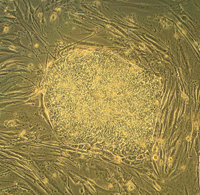
    Human Embryonic Stem Cell (Wikipedia Commons)With recent developments in biotechnology, the legal issues surrounding its patent law since the 1980's have been a growing concern.  Among all the subcategories of biotechnology, hESCs (human embryonic stem cells), one of the most controversial categories, is receiving different patent system treatments in different countries.  The rules and regulations regarding patents, their applications, issuance, and litigations are studied and compared in the United States, the European Patent Organization (EPO), and China.  The analysis is based on the general theory and principles of patents along with the existing patent laws.

    The essence of patent law is to reward inventors, through legal intellectual property protection, in order to both stimulate and promote innovation.  The main task of patent law is to protect a legal monopoly while maintaining a fair competition market.  With regard to hESCs, this task is more complicated than with other subjects.  There are obvious issues due to the close relation to human embryonic stem cells and human beings along with a symbolic component of human dignity.  People question both the legitimacy of human embryonic stem cell research and the state granted monopoly on related research findings.  In addition, it is questionable whether patent law, in its current form, can keep the perfect balance between stimulating hESC innovation in industry and ensuring that patients can benefit from inventions derived from hESC research.  Due to this collection of considerations, different countries have developed various, and sometimes competing, viewpoints on hESC patentability and patent protocol.

    For instance, China explicitly opposes the patentablity of hESCs in its agency manual for morality consideration under the Chinese Patent Law because patenting hESCs is contrary to morality and public interest.

    Similarly, the EPO, based on ambiguous language in the European Patent Convention (EPC), excludes hESCs' patentability during patent examination by broadly interpreting the morality clause under the EPC, as long as hESCs used in inventions are derived from human embryos.  A similar interpretation is issued in a recent case Brüstle v Greenpeace e.V before the Court of Justice of European Union, stating that any stem cells derived from human embryos are considered "human embryos," and therefore not patentable, regardless of whether the purpose is for business and industry or therapy and treatment.  Nevertheless, whether this interpretation will be adopted by the European Patent Office is still in question, the same as how national patent offices will respond to the decision.

    In contrast to both China and the EPO, the United States has become the main progenitor of hESC patents, although debates on the validity of those patents have begun and continue to be of interest.  Instead of taking morality into account as in China and the EPO, people have questioned the validity of hESC patents on the grounds of their novelty and non-obviousness.  The novelty and non-obviousness clauses are believed by some to be an alternative method to exclude hESCs from patenting due to the lack of morality considerations in US patent law.

    According to a survey on hESCs-related patents issued and patent applications filed before the US Patent and Trademark Office, the European Patent Office, and the State of Intellectual Property Office of the PRC, two elements may constitute the law and policy differences, especially between the US and China.  One factor is the development of hESC research.  The US owns more than half of the hESC-related patents issued in the three patent offices, which gives the US more motivation to protect the results and findings than other countries.  The other possibly influential element is the ownership types of patent holders.  In the US, individuals and companies are the primary owners of hESC-related inventions, while government-affiliated research institutes and public universities are the main owner types in China.  Whether inventions are circulated in the free market determines whether patent rights are needed to function as an innovation stimulus, which may ultimately affect the patentability policy adopted by these governments.

    Huan Zhu is a policy research assistant with DB Capitol Strategies PLLC in Washington, D.C.  Prior to joining DB Capitol Strategies, she earned a Doctorate in Juridical Science from the University of Kansas School of Law in 2011 after completing her dissertation entitled "A Comparative Study on Human Embryonic Stem Cell Patent Law in the United States, the European Patent Organization, and China."  This article is based in part on a presentation Dr. Zhu gave at the Biolaw 5.0: Law at the Frontiers of Biology conference at the University of Kansas School of Law on October 21, 2011.

  • By Kevin E. Noonan —

    In the aftermath of the European Court of Justice's decision last month that patent claims encompassing human embryonic stem cells (hESCs) were patent-ineligible in Europe on public order and morality grounds (see "European Court of Justice Renders Stem Cell Decision"), some commentators argued that the decision had a "silver lining":  hESC development unhampered by stem cell patents.  This view was challenged at the time, by several comments on an e-posting of the argument in a Nature News article, and today with regard to efforts to produce synthetic blood in the U.K.

    Nature NewsThe Nature News article, by Ewen Callaway, cited several European stem cell researchers on the negative impacts of the ban, including Oliver Brüstle at the University of Bonn, Germany (it was his patent that was invalidated by the ECJ's ruling) ("European ban on stem-cell patents has a silver lining").  This reaction was characterized as akin to saying that "the sky is falling," and the article contrasted this sentiment with the "more moderate view" that the ruling had positive aspects; for example, a "physician scientist," Chris Mason of University College London was quoted as saying that "[i]f anything the ruling is an opportunity.  It's not the end of stem cells in Europe."  A genuinely more moderate view was voiced by Nick Bassil, from Kilburn and Strode, who simply said that "[t]ime will tell how serious [the impact of the ruling] is going to be."  In addition, the article cited alterative aspects of stem cell technology that remain patentable including "[g]rowth media, equipment and chemicals that help scientists work with stem cells," citing Julian Hitchcock of Field Fisher Waterhouse, as well as methods for using stem cells rather than the stem cells themselves (although patent claims on such methods may also be suspect under the Court's ruling, depending on how such methods are claimed).  Finally, other types of intellectual property protection, such as trade secret, was cited, depending on the complexity of the techniques and methodologies needed to properly grow hESCs (paradoxically advocating non-disclosure of the "manufacturing processes" used as a beneficial alternative to the disclosure of such methods in patents and neglecting the societal consequence that non-disclosure promises to impede rather than promote progress).  And finally, the article suggests that many of the hESC patents will have expired by the time the therapies are ready for the clinic, again citing Dr. Mason, who suggests that the lack of patents could promote an "anything goes" climate for stem cell research.

    Comments on the article rebutted this rosy view, noting that the ban was "far-reaching" and extended to "any downstream products" of hESCs (Comment #28580).  Others noted that the principles invoked by the ECJ in banning hESC patenting (the dignity of the individual) could be applied to protecting the dignity of other individuals, patients (Comment #28589), and that the Court "invent[ed] moral standards" for Europe unnecessarily (Comment #28617).

    The IndependentBut the question remains whether the ruling will foster or hinder innovation, and while it will take perhaps a generation to understand the full extent of the ban, it is worthwhile noting its effects as they develop.  One such effect involved efforts by U.K researchers to create synthetic blood from stem cells.  As reported last month by FierceBiotech, The Daily Mail, and The Independent, the effect on the ban on these efforts may not be as beneficial as some have hoped (or posited).  The goal is to produce O-negative blood cells, which as the "universal donor" type would satisfy the unmet demand for blood.  Despite some successes, notably by Edinburgh University's Marc Turner, it is reported that researchers are considering "moving away from embryonic stem cells to iPS" (induced pluripotent stem cells, derived from mature human cells) in light of the ECJs ruling.  The reason is simple "[w]ithout patents . . . no private company would ever touch their work, let alone gamble the money needed to launch commercial operations."  As Dr. Turner told The Independent:

    The NHS is not in the business of developing products and to see this technology going forward we would need private investment.  In the broadest sense, the patent ruling will have an impact on possible investment by the private sector.

    Daily MailAs noted by Fiona MacRae in The Daily Mail, artificial blood is "the holy grail," having the potential to alleviate chronic blood shortages (particularly in acute situations like battlefields and car crashes) as well as providing an assured pathogen-free blood supply.  While teams from Edinburgh and Bristol Universities have made "thousands of millions" of red blood cells from bone marrow stem cells, this is mere proof of concept in view of the "2.5 million million" red blood cells contained in the amount of blood used in a typical blood transfusion.  The promise is in hESCs, which "are easier to multiply in large numbers," she says.

    These efforts are threatened by the ECJ's ruling; as quoted in The Independent, Professor Sir Ian Wilmut (who cloned the sheep Dolly) expressed the widely-held opinion that "[u]nfortunately [the ruling] will make it less likely that companies in Europe will invest in the research to develop treatments to use embryonic stem cells for treatment of human diseases."  The Independent article also noted that over 100 "spare" in vitro fertilization (IVF) embryos from fertility clinics have been used to generate hESC lines and that one of them, RC-7, had been used to produce mature human red blood cells (albeit not O-negative cells).

    This is just one data point in what can be expected to be a long experiment on the effects of patenting on innovation.  It has the benefit that these effects can be evaluated in "real time" and not retrospectively.  Whether the negative effects of the ECJ's ruling outweigh those benefits cannot be predicted.

    For additional information regarding this topic, please see:

    • "No More Patents for Cells Derived from Human Embryos in EU," October 18, 2011
    • "European Court of Justice Renders Stem Cell Decision," October 18, 2011
    • "European Court of Justice Considers Embryonic Stem Cell Ban," May 11, 2011