• By Sherri Oslick —

    Gavel In an effort to catch up with recently filed biotech and pharma cases, Patent Docs presents this additional installment of Court Report.

    Allergan, Inc., et al. v. Watson Pharmaceuticals, Inc., et al.
    1:12-cv-00321; filed March 30, 2012 in the Middle District of North Carolina

    • Plaintiffs:  Allergan, Inc.; Duke University
    • Defendants:  Watson Pharmaceuticals, Inc.; Watson Laboratories, Inc.; Watson Pharma, Inc.

    Infringement of U.S. Patent Nos. 7,351,404 ("Method of Enhanced Hair Growth," issued April 1, 2008), 7,388,029 ("Compositions and Methods for Treating Hair Loss Using Non-Naturally Occurring Prostaglandins," issued June 17, 2008), 8,038,988 ("Method of Enhanced Hair Growth," issued October 18, 2011), 6,403,649 (""Non-Acidic Cyclopentane Heptanoic Acid,2-Cycloalkyl Or Arylalkyl Derivatives As Therapeutic Agents, issued June 11, 2002), and 8,017,655 ("Non-Acidic Cyclopentane Heptanoic Acid, 2-Cycloalkyl or Arylalkyl Derivatives as Therapeutic Agents," issued  September 13, 2011) based on Watson's filing of an ANDA to manufacture a generic version of Allergan's Latisse® (bimatoprost topical solution/drops, 0.03%, used to treat inadequate or not enough eye lashes).  View the complaint here.


    Eagle Pharmaceuticals, Inc. v. Sandoz Inc.

    3:12-cv-01938; filed March 30, 2012 in the District Court of New Jersey

    Infringement of U.S. Patent Nos. 7,589,106 ("Alcohol Free Formulation of Argatroban," issued September 15, 2009,) and 7,687,516 (same title, issued March 30, 2010) following a Paragraph IV certification as part of Sandoz's filing of an ANDA to manufacture a generic version of Eagle's Argatroban in Sodium Chloride (argatroban 50 mg/ 50 mL, used for prophylaxis or treatment of thrombosis in adult patients with heparin-induced thrombocytopenia and also as an anticoagulant in adult patients with or at risk of heparin-induced thrombocytopenia undergoing percutaneous coronary intervention).  View the complaint here.


    Glaxosmithkline PLC et al. v. Hikma Pharmaceutical Co., Ltd. et al
    .
    3:12-cv-01965; filed March 30, 2012 in the District Court of New Jersey

    • Plaintiffs:  Glaxosmithkline PLC; Pfizer, Inc.; Encysive Pharmaceuticals, Inc.; Mitsubishi Chemical Corp.; Mitsubishi Tanabe Pharma Corp.
    • Defendants:  Hikma Pharmaceutical Co., Ltd.; West-Ward Pharmaceutical Corp.

    Infringement of U.S. Patent No. 5,214,052 ("Method for Dissolving Arginineamides and Pharmaceutical Compositions Containing Them," issued May 25, 1993) following a Paragraph IV certification as part of Hikma's filing of an NDA (under  § 505(b)(2) of the Food, Drug and Cosmetic Act) to manufacture a generic version of GSK's Argatroban Injection (argatroban, used for prophylaxis or treatment of thrombosis in adult patients with heparin-induced thrombocytopenia and also as an anticoagulant in adult patients with or at risk of heparin-induced thrombocytopenia undergoing percutaneous coronary intervention).  View the complaint here.


    Otsuka Pharmaceutical Co., Ltd v. Kappos

    1:12-cv-00357; filed March 30, 2012 in the Eastern District of Virginia

    Review and correction of the patent term adjustment calculation made by the U.S. Patent and Trademark Office for U.S. Patent No. 8,030,312 ("5-HT1A Receptor Subtype Agonist," issued October 4, 2011).  View the complaint here.

  • By Kevin E. Noonan —

    Marine Polymer TechnologiesIn a decision ripe for Supreme Court review (appropriately, this time), a fractured Federal Circuit delivered a plurality opinion in Marine Polymer Technologies, Inc. v. Hemcon, Inc. (Fed. Cir. 2012) (en banc).  The case revealed a deep division between judges taking a strict constructionist view of the patent statute (in this case, 35 U.S.C. § 152 regarding intervening rights), and another cohort of judges who are apparently willing to adopt a more outcome-determinative view of the matter.

    The case involved claims of U.S. Patent No. 6,864,245 directed to poly-N-acetyl glucosamine polymer used for treating trauma and other uses, purified from arthropods, fungi, and microalgae.  The claims recited "biocompatible" preparations, based on four tests set forth in specification.  A substance passes the test if the reaction is only mild or slight reactivity (<++), but some language in the specification indicated that truly biocompatible embodiments falling within the scope of the claim must be (< +), i.e., having "no detectable biological reactivity."  The claims, on the other hand, recited biocompatible "generically," with no distinction based on degree (although some dependent claims recite values of 0).

    During a Markman heating at the District Court, Marine Polymer argued that "biocompatible" p-GlcNAc should be construed to mean "biomedically pure [p-GlcNAc] that reproducibly exhibits acceptably low levels of adverse bioreactivity, as determined by biocompatibility tests."  HemCon countered that "biocompatible" should be read as limiting the claims to p-GlcNAc that had been "harvested from plant microalgae," or in the alternative, should be interpreted broadly to mean "suited for biomedical applications."  The District Court concluded that "biocompatible" p-GlcNAc, as claimed in the '245 patent, means p-GlcNAc "with low variability, high purity, and no detectable biological reactivity as determined by biocompatibility tests."  The District Court granted summary judgment of infringement, and a jury entered a verdict of no invalidity and damages of ~$29M.  In addition, the District Court granted Marine Polymer a permanent injunction.

    HemConWhile the District Court was pending, HemCon filed an ex parte request for re-examination, basing the "substantial new question of patentability" on District Court's claim construction.  The examiner adopted a claim construction that differed from the District Court, concluding that "biocompatible" means "low variability, high purity, and little or no detectable reactivity" because (according to the examiner) independent claim 1 could not be construed to mean "no detectable bioreactivity" because there were dependent claims that recited low level of bioreactivity.  Because this interpretation was broader than the District Court's claim construction, the examiner rejected all 22 claims on obviousness grounds.  In response, the patentee canceled the dependent claims that recited little or no detectable reactivity, and argued that the District Court's construction should prevail.  The examiner agreed and withdrew the rejections and issued the reexamination certificate.

    A merits panel reversed the District Court on grounds that HemCon was entitled to intervening rights under Section 252.  (Intervening rights apply to reexaminations under Sections 307(b) and 316(b).)  In the Federal Circuit's en banc decision, written by Judge Lourie (joined by Chief Judge Rader and Judges Newman, Bryson and Prost in full, and Linn in part), with a dissent written by Judge Dyk (joined by Gajarsa, Reyna, and Wallach in full and Linn in part) (Judges O'Malley and Moore took no part in the decision), the Court "affirmed" (because the Federal Circuit was equally divided and hence there was no basis to reverse).  The issue dividing the Court was whether a claim must be amended during reexamination (as opposed to merely changed in scope) for intervening rights to arise.

    The "majority" opinion upheld the District Court's claim construction as being supported by intrinsic evidence (ignoring inconsistent portions of the specification), and determined that the claims did not define the term "biocompatible."  Accordingly, the District Court was correct in interrogating the specification to ascertain the proper meaning of the term in the claim.

    The opinion characterized the issue as "a conflict between teachings in the specification and the doctrine of claim differentiation," because the presence of dependent claims reciting the "little or no bioreactivity" limitation implied that the independent claim encompassed embodiments having a greater degree of bioreactivity).  But the Court opined that the doctrine of claim differentiation was not controlling (not a "hard and fast rule") while claim construction based on the written description is, citing Seachange Int'l, Inc. v. C-Cor, Inc., 413 F.3d 1361, 1369 (Fed. Cir. 2005).

    The issue of whether intervening rights arose as a consequence of the reexamination is where the Court split 5 to 5.  HemCon's position was that cancellation of the dependent claims effectively changed the scope of the independent claim, and that this was enough to confer intervening rights.  The majority rejected this contention, saying that the statute requires that the claims be "amended or new" to raise intervening rights, and here the independent claim was not amended.  The opinion considered two types of intervening rights:  absolute intervening rights and equitable intervening rights.  Intervening rights do not accrue, according to the opinion, where the accused product or activity infringes a claim that existed in the original patent and remains "without substantive change" after reissue, citing Seattle Box Co. v. Indus. Crating & Packing, Inc., 731 F.2d 818, 827–28 (Fed. Cir. 1984).  The opinion holds that the threshold inquiry is whether the claims were "amended or new"; only thereafter does the question become was there a substantive change.  Accordingly, "HemCon ignores this threshold statutory requirement [that a claim be amended] and asks that we proceed directly to the subsidiary 'substantive change' analysis, which derives from § 252."  While the plurality opinion recognizes that the amendments made during the reexamination changed claim scope, this is not the same as amending the claims, and HemCon's position that the equivalence of the effect should lead to an equivalent outcome (i.e., to raise intervening rights) "goes too far."  Thus:

    Section 307(a) identifies three categories of claims in a reexamined patent:  (1) claims that existed in the original patent but have been cancelled as unpatentable, (2) claims that existed in the original patent and have been confirmed as patentable, and (3) amended or new claims that did not exist in the original patent but have been found to be patentable and will be incorporated into the patent by the PTO.

    Intervening rights apply only to category #3 says the Court, if only because "[a]ny interpretation of 'amended' that includes disavowal or disclaimer by argument alone, as advocated by HemCon, would conflict with the rest of § 307, for it is difficult to envision how arguments about claim meaning could be 'incorporated into a patent' by the Director of the PTO."

    The plurality addresses the concern raised by the dissent that their decision creates a "loophole" fraught with the potential for gamesmanship by patentees; the plurality does not believe the potential for a "loophole" is likely, because invalid claims will need amendment to be allowed.  "Thus, the fear of gamesmanship does not persuade us to rule contrary to the plain meaning of the statute."

    In sum, the plain directive of the governing statute before us does not permit HemCon to invoke intervening rights against claims that the PTO confirmed on reexamination to be patentable as originally issued.  To be sure, patent applicants' actions and arguments during prosecution, including prosecution in a reexamination proceeding, can affect the proper interpretation and effective scope of their claims.  But in rejecting HemCon's request for intervening rights, we are not here interpreting claims.  Rather, we are interpreting a statute that provides for intervening rights following reexamination only as to "amended or new" claims.  The asserted claims of the '245 patent are neither.

    The dissent contends that the Court failed to address the issue except by dicta, and that the possible existence (or creation) of strategic advantages would only increase under the expanded post-grant review provisions of the Leahy-Smith America Invents Act (LS-AIA).  For the dissenting judges, "[t]he starting point for an intervening rights determination is the meaning of the original claim language" as opposed to the plain meaning of the statute.  These judges disagreed with District Court's claim construction, being more convinced by the claim differentiation argument that the meaning of the term "biocompatible" was broader than it was interpreted by the District Court's claim construction.  It was also an important issue for these judges that whether the "product of nature" polymer was patent-eligible depends on the meaning of the term "biocompatible."

    This case illustrates the continuing difficulties with the Federal Circuit's claim construction jurisprudence; the dissent says "[o]ne might at the outset be somewhat skeptical of this construction because it was not proposed by either party and was indeed contrary to the patentee's own proposed construction."  This sentiment is in direct opposition to other pronouncements of the Federal Circuit, to the effect that a district court should not adopt either party's claim construction position but should instead come to an independent determination.  (See, for example, Exxon Chemical Patents v. Lubrizol).  Here, however, the dissenting judges think the District Court construction is contrary to the specification and prosecution history (and which is entitled to no deference), and also put more emphasis on the claim differentiation doctrine (saying it is ignored only if "compelled" by the intrinsic evidence).  Thus:

    Judge Lourie's new approach to claim construction would enable patentees to eliminate questions of validity by narrowing claims in accordance with a preferred embodiment or single example, while also allowing alleged infringers to narrow claims beyond their valid scope to avoid infringement.  That approach cannot be correct.

    The dissent also disagrees with the plurality's claim construction, relying on those portions of the specification that appear to indicate that "biocompatible" may be entitled to a broader interpretation that was given it by the District Court:

    In other words, under the district court's incorrect claim construction, now binding on the parties as a result of the affirmance of the district court's judgment, the original and reexamined claims are identical in scope, and there is thus no issue of intervening rights and no need for the majority to offer "an alternative ground for decision."

    The dissenting opinion equates "new or amended" = "substantially identical" ("clearly intended to have the same meaning"), relying on Laitram Corp. v. NEC Corp., 163 F.3d 1342, 1346 (Fed. Cir. 1998) ("Reexamined claims are "identical" to their original counterparts if they are 'without substantive change'") (this portion of the dissent is rebutted by the plurality on the grounds that the claims in Laitram were amended).  Because "[t]he effect [of canceling claims] was to narrow the claims and protect them from a finding of invalidity," the dissenting judges believe that "[h]ere, although identical in language, the claims of the patent after reexamination were not identical in scope for purposes of intervening rights because they were "substantively changed" during reexamination."  In perhaps their strongest argument, the dissenting judges note that the Supreme Court recognized that the scope of patents could be changed by an amendment to the specification where there is no formal amendment to the claim, citing Russell v. Dodge, 93 U.S. 460, 463 (1876) (noting that a specification might "be substantially changed, either by the addition of new matter or the omission of important particulars, so as to enlarge the scope of the invention as originally claimed").

    Once again, this case illustrates one of the consequences of the difficulties inherent in applying the Federal Circuit's rubrics regarding whether the claims are being construed in light of the specification or the majority is importing limitations from the specification into the claims.  The decision is also reminiscent of the differences on opinion that arose in Retractable Techs., Inc. v. Becton, Dickinson & Co.,  There, Judge Lourie wrote for the majority (reversing the District Court's construction) that:

    There is a fine line between construing the claims in light of the specification and improperly importing a limitation from the specification into the claims.  See Phillips, 415 F.3d at 1323.  In reviewing the intrinsic record to construe the claims, we strive to capture the scope of the actual invention, rather than strictly limit the scope of claims to disclosed embodiments or allow the claim language to become divorced from what the specification conveys is the invention.  Id. at 1323–24.

    This sentiment was espoused even more strongly by Judge Plager, whoe wrote in a concurring opinion that:  "the claims cannot go beyond the actual invention that entitles the inventor to a patent" and that "the [patentee's] obligation [was] to make full disclosure of what is actually invented, and to claim that and nothing more."

    On the contrary, Chief Judge Rader, dissenting-in-part, argued the primacy of the claim language, and that it is impermissible to read limitations from the specification into the claims.  He also joined in Judge Moore's dissenting opinion, which focused on a deficiency in the Court's application of the law:  where to draw the "fine line" between "construing the claims in light of the specification and improperly importing a limitation from the specification into the claims."  Relying principally on Phillips v. AWH Corp., 415 F.3d 1303, 1312 (Fed. Cir. 2005) (en banc), and the "bedrock principle" that "the claims of a patent define the invention to which the patentee is entitled the right to exclude,"  Judge Moore discounted the concerns voiced by the majority in Retractable Technologies, including that "the metes and bounds of what the inventor claims extend beyond what he has invented or disclosed in the specification."  In that case, the question is one of validity rather than claim construction, she wrote, and it is not the role of the court to "tailor the claim language to the invention disclosed."  Citing Phillips, Judge Moore's dissent relied once again on the mantra that the "plain meaning" of the clams controls (and the dissent voices surprise that this question was not resolved in Phillips).  Judge Moore states her (stringent) standard for the relationship between the claims and the specification:  "the specification cannot be used to narrow a claim term — to deviate from the plain and ordinary meaning — unless the inventor acted as his own lexicographer or intentionally disclaimed or disavowed claim scope," citing Phillips and Teleflex, Inc. v. Ficosa N. Am. Corp., 299 F.3d 1313, 1327 (Fed. Cir. 2002).  Judge Moore identified the problem with the panel decision with particularlty:

    The error in Retractable is the majority's attempt to rewrite the claims to better conform to what it discerns is the "invention" of the patent instead of construing the language of the claim.  Indeed, the majority candidly explained that its construction, limiting "body" to a one-piece body, "is required to tether the claims to what the specifications indicate the inventor actually invented."

    HemCon's position is supported by amici curiae Hewlett-Packard Co., Broadcom Corp., Cisco Systems, Inc., Dell, Inc., eBay, Inc., Facebook, Inc., Google Inc., and SAP America, Inc.; and GEICO Corp., FedEx Corp., and Macy's, Inc.

    Marine Polymer's position is supported by amici curiae Jan K. Voda; Intellectual Ventures Management LLC; the Biotechnology Industry Association and Phar- maceutical Research and Manufacturers of America; Soverain Software LLC and Tessera, Inc.; and Sealy Corp.

    Marine Polymer Technologies, Inc. v. Hemcon, Inc. (Fed. Cir. 2012) (en banc)
    Panel: Chief Judge Rader and Circuit Judges Newman, Lourie, Bryson, Gajarsa, Linn, Dyk, Prost, Reyna, and Wallach
    Opinion for the court by Circuit Judge Lourie, joined by Chief Judge Rader and Circuit Judges Newman, Bryson, and Prost in full, and by Circuit Judge Linn as to part II; dissenting opinion by Circuit Judge Dyk, joined by Circuit Judges Gajarsa, Reynam and Wallach in full, and by Circuit Judge Linn as to parts I-II.

  • By Andrew Williams —

    DeyOn Monday, in Dey Pharma, LP v. Sunovion Pharmaceuticals Inc., the Federal Circuit affirmed a District Court's conclusion that it had subject-matter jurisdiction over a declaratory judgment action of a second ANDA filer, and as a result also affirmed the District Court's final judgment of non-infringement (based on a stipulation of the parties).  This case follows the cases of Caraco Pharm. Labs. Ltd. v. Forest Labs, Inc., 527 F.3d 1278 (Fed. Cir. 2008), and Janssen Pharmaceutica, N.V. v. Apotex, Inc., 540 F.3d 1353 (Fed. Cir. 2008), in considering the scope of declaratory judgment jurisdiction for second ANDA filers in the context of Hatch-Waxman.  Of specific concern in all of these cases was the ability of a first ANDA filer to "park" their 180-day exclusivity by not marketing their ANDA product, and the affect such an action would have on the ability of a subsequent ANDA filer to bring a declaratory judgment against the NDA holder.

    As background, in the Hatch Waxman scheme, a first ANDA filer to challenge the validity of the Orange Book listed patents, or the ability of the NDA holder to assert infringement of the patents, is entitled to 180 days of generic marketing exclusivity.  Under the present scheme, this exclusivity begins, or is triggered, when the first ANDA filer begins to market its generic product.  If instead, the first ANDA filer "parks" its 180 day exclusivity by not launching its ANDA product, the exclusivity period is never triggered.  And, without the trigger, no subsequently filed ANDAs can be approved by the FDA.  In an attempt to address this problem, the Medicare Prescription Drug, Improvement, and Modernization Act of 2003 ("MMA") modified the statute to provide for forfeiture of the first filer's exclusivity period if it did not, among other things, market the drug within 75 days of a final judgment that all of the Orange Book patents are invalid or not infringed, whether brought by itself or a subsequent ANDA filer.  Congress contemplated that the NDA holder could chose not to sue a subsequent ANDA filer for infringement of any or all of the Orange Book listed patents, resulting in the forfeiture event from never occurring, and as a result, it specified in the statute that an ANDA filer could file a declaratory judgment action "to the extent consistent with the Constitution" (35 U.S.C. § 271(e)(5)).  Such a situation presented itself in Dey.  The Federal Court followed the Caraco case in finding that Dey, the second ANDA filer, properly brought a declaratory judgment action because subject-matter jurisdiction existed when the action was filed.  The Court also held that such jurisdiction might be rendered moot when the first ANDA filer actually launched its product, thereby triggering the exclusivity period, but that regardless of how imminent the launch was, Sunovion had not met its burden of establishing that the subject-matter jurisdiction was now moot.

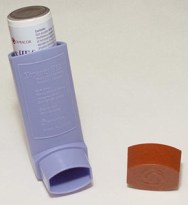
    XOPENXThe brand-name drug at issue in this case was XOPENEX®, with levosalbutamol as its active ingredient, which is marketed to treat or prevent bronchospasm in adults, adolescents, and children 6 years of age and older with reversible obstructive airway disease.  The NDA-holder, Sunovion, listed three patents in the Orange Book related to this drug product:  U.S. Patent No. 5,362,755 ("the '755 patent"), expiring on March 25, 2013; U.S. Patent No. 5,547,994 ("the '994 patent"), expiring on August 20, 2013; and U.S. Patent No. 6,451,289 ("the '289 patent"), expiring on March 21, 2021.  Breath filed the first ANDA in June 2005, which contained Paragraph IV certifications to all three patents.  Breath and Sunovion settled the subsequent litigation, with the parties agreeing that Breath could sell the generic product under its ANDA starting on August 20, 2012 (or earlier depending on a third-party commercial launch).  In July 2005, Dey filed the second ANDA, which also contained Paragraph IV certifications to all three listed patents.  However, Sunovion only asserted the '755 and '994 patents, causing Dey to bring a declaratory judgment action for the '289 patent.  Sunovion then provided Dey with a covenant not to sue (which would not result in a forfeiture event), and moved to dismiss the declaratory judgment action for lack of subject matter jurisdiction.  The District Court denied Sunovion's motion, and the parties stipulated to non-infringement.  Sunovion only appealed the jurisdictional issue to the Federal Circuit.

    SunovionThis case has facts that are almost indistinguishable from Caraco.  Caraco was decided based on the scheme that existed prior to the MMA, in which there were no forfeiture provisions, but the 180-day exclusivity period could also be trigged by a final judgment of invalidity and non-infringement, regardless of who obtained that judgment.  Therefore, even though the schemes were different, the practical result was similar in both.  In fact, the Court noted that this change in statutory trigger made no difference to the issues in this case.  The only argument that Sunovion advanced to support its assertion that subject-matter jurisdiction did not exist when Dey brought its declaratory judgment action was that success in the DJ action was insufficient to redress Dey's injury — because Dey had to be successful in Sunovion's suit involving the '755 and '994 patents.  In other words, Sunovion appears to have argued that it was necessary to consider the two litigations involving the three Orange Book patents sequentially, not concurrently, because if Dey was not successful in the first suit, the declaratory judgment action would be unnecessary.  This argument has appeal when considering that while the parties were fighting over the jurisdiction of this case, the District Court entered a judgment in favor of Sunovion in the '755 and '994 litigation.  Post-trial motions were still being considered in that case, but judicial resources would be saved if the declaratory judgment case was postponed until a final judgment was rendered.  However, the analysis must begin by considering whether there was jurisdiction when the case was first filed.  If so, then jurisdiction will not be lost just because a companion case is at a further stage.  It is even more egregious in this case because it was Sunovion's actions in not asserting the '289 patent that gave rise to the multiple litigations.  Of course, should the '755 and '994 litigation reach a final judgment against Dey, it is possible that the Court would entertain a motion to dismiss on the grounds that the DJ case would then be moot.  However, those were not the facts before the Federal Circuit.

    Sunovion also argued that even if jurisdiction existed when Dey filed the declaratory judgment action, it did not still exist when the case reached the Federal Circuit.  The basis of this argument was that, according to the agreement between Breath and Sunovion, Breath was going to be able to market its ANDA product soon.  In fact, there was insufficient time for even the '755 and '994 litigation to reach a final judgment before the August 20, 2012 launch date.  The Court, however, pointed out the flaw in Sunovion's logic — Breath had not yet launched, and even though it appeared to have every incentive to launch in August, it is not certainty that it would.  In fact, the Federal Circuit noted that because it was Sunovion's "heavy" burden to bring forward information to establish that the case was now moot, merely pointing out the approaching date of a potential launch was insufficient to meet that burden.  The Federal Circuit all but guaranteed that situation would have resolved itself differently if Sunovion had brought the same motion after Breath actually went to market with its ANDA product.  Nevertheless, because Breath had not yet launched, the Court affirmed the judgment of non-infringement.

    Dey Pharma, LP v. Sunovion Pharmaceuticals Inc. (Fed. Cir. 2012)
    Panel:  Circuit Judges Bryson, Dyk, and Moore
    Opinion by Circuit Judge Dyk

  • By Sherri Oslick —

    Gavel About Court Report:  Each week we will report briefly on recently filed biotech and pharma cases.

    Horizon Pharma Inc. et al. v. Par Pharmaceutical Companies Inc. et al.
    1:12-cv-00393; filed March 28, 2012 in the District Court of Delaware

    • Plaintiffs:  Horizon Pharma Inc.; Horizon Pharma USA Inc.
    • Defendants:  Par Pharmaceutical Companies Inc.; Par Pharmaceutical Inc.

    Infringement of U.S. Patent No. 8,067,033 ("Stable Compositions of Famotidine and Ibuprofen," issued November 29, 2011) following a Paragraph IV certification as part of Par's filing of an ANDA to manufacture a generic version of Horizon's Duexis ® (famotidine and ibuprofen, used for the relief of signs and symptoms of rheumatoid arthritis and osteoarthritis and to decrease the risk of developing upper gastrointestinal ulcers).  View the complaint here.


    Precision BioSciences, Inc. v. Cellectis SA et al
    .
    5:12-cv-00160; filed March 27, 2012 in the Eastern District of North Carolina

    • Plaintiff:  Precision BioSciences, Inc.
    • Defendants:  Cellectis SA; Cellectis bioresearch; Cellectis bioresearch Inc.

    Infringement of U.S. Patent No. 8,143,015 ("Methods of Cleaving DNA with Rationally-Designed Meganucleases," issued March 27, 2012) based on Cellectis' manufacture, use, and sale of meganucleases targeting the HPRT gene in Chinese Hamster Ovary cells, meganucleases targeting the GS gene in Chinese Hamster Ovary cells, meganuncleases targeting the human RAG1 gene, and meganucleases targeting the HIV1 genome.  View the complaint here.


    Precision BioSciences, Inc. v. Cellectis SA et al
    .
    5:12-cv-00161; filed March 27, 2012 in the Eastern District of North Carolina

    • Plaintiff:  Precision BioSciences, Inc.
    • Defendants:  Cellectis SA; Cellectis bioresearch; Cellectis bioresearch Inc.

    Infringement of U.S. Patent No. 8,143,016 ("Methods of Cleaving DNA with Rationally-Designed Meganucleases," issued March 27, 2012) based on Cellectis' manufacture, use, and sale of meganucleases targeting the HPRT gene in Chinese Hamster Ovary cells, meganucleases targeting the GS gene in Chinese Hamster Ovary cells, and meganucleases targeting the HIV1 genome.  View the complaint here.


    Allergan, Inc. v. Watson Laboratories, Inc. et al
    .
    6:12-cv-00197; filed March 23, 2012 in the Eastern District of Texas

    • Plaintiff:  Allergan, Inc.
    • Defendants:  Watson Laboratories, Inc.; Watson Pharmaceuticals, Inc.; Watson Pharma, Inc.

    Infringement of U.S. Patent Nos. 7,851,504 ("Enhanced Bimatoprost Ophthalmic Solution," issued December 14, 2010) and 5,688,819 ("Cyclopentane Heptanoic Acid, 2-Cycloalkyl or Arylalkyl Derivatives as Therapeutic Agents," issued November 18, 1997) following a Paragraph IV certification as part of Watson's filing of an ANDA to manufacture a generic version of Allergan's Lumigan® (0.01% bimatoprost ophthalmic solution, used to treat lower intraocular eye pressure in people with open-angle glaucoma or ocular hypertension).  View the complaint here.


    Novartis Pharmaceuticals Corp. et al. v. Actavis Elizabeth LLC et al
    .
    2:12-cv-01798; filed March 22, 2012 in the District Court of New Jersey

    • Plaintiffs:  Novartis Pharmaceuticals Corp.; Novartis Corp.; Novartis AG; Novartis Pharma AG
    • Defendants:  Actavis Elizabeth LLC; Actavis, Inc.; Actavis Group PTC EHF; Actavis Group HF

    Novartis Pharmaceuticals Corporation et al. v. Actavis Group hf et al.
    1:12-cv-00366; filed March 21, 2012 in the District Court of Delaware

    • Plaintiffs:  Novartis Pharmaceuticals Corp.; Novartis Corp.; Novartis AG; Novartis Pharma AG
    • Defendants:  Actavis Group hf; Actavis Group PTC ehf; Actavis Inc.; Actavis Elizabeth LLC

    The complaints in these cases are substantially identical.  Infringement of U.S. Patent Nos. 6,465,504 ("Substituted 3,5-Diphenyl-1,2,4-Triazoles and Their Use as Pharmaceutical Metal Chelators," issued October 15, 2002) and 6,596,750 (same title, issued July 22, 2003) following a Paragraph IV certification as part of Actavis' filing of an ANDA to manufacture a generic version of Novartis' Exjade® (deferasirox, used for the treatment of chronic iron overload due to blood transfusions).  View the Delaware complaint here.


    Cubist Pharmaceuticals Inc. v. Hospira Inc.

    1:12-cv-00367; filed March 21, 2012 in the District Court of Delaware

    Infringement of U.S. Patent Nos. 6,468,967 ("Methods for Administration of Antibiotics," issued October 22, 2002), 6,852,689 (same title, issued February 8, 2009), RE39,071 ("Anhydro-and Isomer-A-21978C Cyclic Peptides, issued April 18, 2006), and 8,058,238 ("High Purity Lipopeptides," issued November 15, 2011) following a Paragraph IV certification as part of Hospira's filing of an ANDA to manufacture a generic version of Cubist's Cubicin® (daptomycin for injection, used for the treatment of skin infections caused by certain Gram-positive microorganisms).  View the complaint here.

  • CalendarApril 16-18, 2012 – Intellectual Property Counsels Committee (IPCC) Spring Conference & Meeting (Biotechnology Industry Organization) – Austin, TX

    April 17, 2012 – 28th Annual Joint Patent Practice Seminar (Connecticut, New Jersey, New York, and Philadelphia Intellectual Property Law Associations) – New York, NY

    April 18, 2012 – European Biotech Patent Law Update (D Young & Co.) – 7:00 am and 12:00 pm (EDT)

    April 18, 2012 – Patent Term Adjustments and Extensions: Recent Developments (Strafford) – 1:00 – 2:30 pm (EDT)

    April 24, 2012 – Patent Law in Light of Mayo v. Prometheus: Claims to Laws of Nature Are Not Patentable (American Bar Association) – 1:00 – 2:30 pm (EDT)

    April 24-25, 2012 – Paragraph IV Disputes*** (American Conference Institute) – New York, NY

    April 26, 2012 – Moving From First to Invent to First to File: Understanding the Opportunities and Challenges (Technology Transfer Tactics) – 1:00 – 2:00 pm (Eastern)

    May 1, 2012 – Prometheus in the Post-Bilski Age: Patentable Subject Matter Under Continued Attack (Strafford) – 1:00 – 2:30 pm (EDT)

    May 2, 2012 – Patent Prosecution under the AIA: Strategies for Before, During and After the Transition to First-Inventor-to-File (American Intellectual Property Law Association) – 12:30 – 2:00 pm (Eastern)

    May 2, 2012 – Patent Reform Strategies in the Life Sciences: Assessing 'First-to-File' and Freedom to Operate under the New Rules (Elsevier Business Intelligence, CHI-California Healthcare Institute, and Merrill Datasite®) – 1:00 – 2:00 pm (EDT)

    May 3, 2012 – In-Depth Analysis of Mayo v. Prometheus: What it Means for the Future of Medical Diagnostic Patents (Technology Transfer Tactics) – 1:00 – 2:00 pm (Eastern)

    May 10, 2012 – The America Invents Act and Beyond: International Grace Period and Post–Grant Review (Intellectual Property Owners Association) – Brussels, Belgium

    May 16-18, 2012 – Fundamentals of Patent Prosecution 2012: A Boot Camp for Claim Drafting & Amendment Writing (Practising Law Institute) – Chicago, IL

    May 22-23, 2012 – Biosimilars*** (American Conference Institute) – New York, NY

    June 13-15, 2012 – Fundamentals of Patent Prosecution 2012: A Boot Camp for Claim Drafting & Amendment Writing (Practising Law Institute) – New York, NY

    June 18-21, 2012 – BIO International Convention (Biotechnology Industry Organization) – Boston, MA

    July 11-13, 2012 – Fundamentals of Patent Prosecution 2012: A Boot Camp for Claim Drafting & Amendment Writing (Practising Law Institute) – San Francisco, CA

    ***Patent Docs is a media partner of this conference or CLE

  • PLIPractising Law Institute (PLI) will be holding its Fundamentals of Patent Prosecution 2012: A Boot Camp for Claim Drafting & Amendment Writing seminar on May 16-18, 2012 in Chicago, IL, on June 13-15, 2012 in New York, NY, and on July 11-13, 2012 in San Francisco, CA.  The three-day program, which is directed to patent attorneys, litigation attorneys, and patent agents with or without a Patent Office registration number, or little patent experience, will focus on teaching the basics of claim drafting, patent application preparation and prosecution, as well as a review of recent developments in the law.  A litigator's perspective is also presented to show how drafting and prosecution can influence the development, and often the outcome, of subsequent patent litigation.  The seminar will feature lectures in the morning followed by small clinic sessions in the afternoon, with day 1 focusing on invention disclosures and patent preparation, day 2 on prosecution and issuance, and day 3 on litigation.  Lectures will explain:

    • How to decide what elements of the invention should be included in the patent;
    • How to prosecute an application to result in allowance of an enforceable patent;
    • How to interview an Examiner;
    • How to use reissues, reexaminations, and other post-issuance proceedings; and
    • How to anticipate patent litigation issues during the patent prosecution process.

    PLI faculty will offer presentations on the following topics:

    • Taking Invention Disclosures;
    • Overview of Claim Drafting and Preparation of Patent Application;
    • Claim Drafting;
    • Review of Model Claims;
    • Patent Prosecution;
    • Conducting the Examiner Interview;
    • Review of Model Amendment; and
    • Litigation Issues.

    A program schedule and list of speakers for each of the locations can be found here.  Patent Docs authors Kevin Noonan (Chicago co-chair) and Donald Zuhn will be presenting at the Chicago seminar.

    The registration fee for the conference is $1,795.  Those interested in registering for the conference can do so here.

  • Boston SkylineThe Biotechnology Industry Organization (BIO) will be holding its annual BIO International Convention on June 18-21, 2012 in Boston, MA.  Founded in 1993, BIO is a nonprofit association seeking supportive biotechnology policies on behalf of more than 1,100 biotechnology companies, state and international affiliates, and related organizations, as well as providing business development services for many emerging biotech companies.  According to BIO, the organization's mission is to be the champion of biotechnology and the advocate for its member organizations — both large and small.

    BIO International ConventionInformation about the Convention program can be obtained here.  As part of the Convention, more than 1,800 biotech companies, organizations, and institutions will participate in the BIO Exhibition.  A searchable list of exhibitors can be found here.  Information regarding registration and pricing can be obtained here.  Patent Docs authors Donald Zuhn and Kevin Noonan, and contributors Sherri Oslick, James DeGiulio, Andrew Williams, and Kwame Mensah will be attending BIO as part of the MBHB contingent (Booth 1335 – Hall A), and will also be participating in BIO's blogger network throughout the week.

  • Elsevier Business IntelligenceElsevier Business Intelligence, CHI-California Healthcare Institute, and Merrill Datasite® will be offering a webinar entitled "Patent Reform Strategies in the Life Sciences: Assessing 'First-to-File' and Freedom to Operate under the New Rules" on May 2, 2012 from 1:00 – 2:00 pm (EDT).  Steven C. Carlson of Fish & Richardson will provide a focused overview of the statute's "first-to-file" rules, as well as pointers for reassessing freedom to operate under the PTO's new provisions for challenging issued patents.

    There is no registration fee for the webinar.  Those interested in registering for the program, can do so here.

  • IPO #1The Intellectual Property Owners Association (IPO) European Practice Committee will be hosting a one-day conference entitled "The America Invents Act and Beyond: International Grace Period and Post–Grant Review" on May 10, 2012 in Brussels, Belgium.  The conference will offer presentations on the following topics:

    Morning Session: International Grace Period
    • The View from the Consumer Industry Perspective
    • The View from the Pharmaceutical Industry Perspective
    • The View from an Academic Perspective
    • The View from the European Patent Attorney
    • The Grace Period in Germany

    Afternoon Session: Post-Grand Review Comparison With European Oppostion Procedures
    • Opposition Procedure in Europe from the Practitioner Perspective
    • Oppositions: European Patent Office Perspective
    • Post-Grant Review

    A program for the conference, including an agenda and list of speakers can be found here.

    There is no registration fee for the conference, but those interested in attending must register and can do so here.

  • By Donald Zuhn —

    PromegaLast month, in Promega Corp. v. Life Technologies Corp., the Federal Circuit affirmed a decision by the District Court for the Western District of Wisconsin granting a motion to compel arbitration by Invitrogen IP Holdings, Inc.  The appeal involved a 1996 licensing agreement between Research Genetics, Inc. and Promega Corp. concerning German, U.S., European, and Japanese patents (including U.S. Patent No. RE37,984) directed to genetic identification.  The agreement contained provisions specifying that the agreement could "not be assigned by either party without the express written consent of the other party," and that "[a]ll controversies or disputes arising out of or relating to this Agreement, or relating to the breach thereof, shall be resolved by arbitration."

    Following Research Genetics' merger with Invitrogen Corp., Promega granted written consent allowing Research Genetics to assign its rights under the agreement to Invitrogen.  Two years later, Promega again granted written consent allowing Invitrogen to assign its rights under the agreement to Invitrogen IP Holdings.  Following Invitrogen's merger with Applied Biosystems Inc., the combined company changed its name to Life Technologies Corp., with Invitrogen IP Holdings remaining a wholly owned subsidiary of Life Technologies.

    Life TechnologiesAfter acquiring information regarding payments by Promega on its sublicensees' sales of products incorporating the licensed patents, Life Technologies notified Promega of its alleged noncompliance with the agreement.  When negotiations between the parties failed to resolve the issue, Life Technologies demanded arbitration pursuant to the agreement's arbitration clause.  Promega responded by filing suit against Life Technologies, seeking a declaratory judgment of non-arbitrability of Life Technologies' claims and alleging infringement of five patents (including the '984 patent).  With respect to the issue of arbitration, Promega contended that the rights under the agreement had never been assigned to Life Technologies and therefore that Life Technologies was not entitled to demand arbitration.  After discovering that Invitrogen IP Holdings had not assigned its rights under the agreement to Life Technologies, Invitrogen IP Holdings served Promega with a demand for arbitration on its behalf and filed a motion to compel arbitration.  Following limited discovery on the issues of whether Invitrogen IP Holdings was the current assignee of the agreement and whether it maintained its legal existence, the District Court entered an order compelling arbitration between Promega and Invitrogen IP Holdings with respect to claims relating to the agreement.  The District Court's order was certified as a final order and Promega appealed.

    Federal Circuit SealIn a split decision affirming the District Court's order compelling arbitration, Judge Dyk, writing for the Court, begins by noting that the Federal Arbitration Act (FAA) mandates enforcement of valid, written arbitration provisions, "establish[ing] a national policy favoring arbitration when the parties contract for that mode of dispute resolution."  Judge Dyk then addressed each of Promega's arguments as to why it should not be compelled to arbitrate.

    As to Promega's argument that the arbitration clause was permissive rather than mandatory (with Promega noting that the agreement states that the parties "may invoke the arbitration provision" if there is a dispute over whether a material breach has occurred), the Court countered that "[w]hile the agreement does not compel a party to demand arbitration, once a party does so, the plain language of the 1996 agreement shows that arbitration is mandatory, not permissive."  With regard to Promega's argument that Invitrogen IP Holdings is merely a shell subsidiary, that the real party-in-interest is Life Technologies, and that there was no agreement between Promega and Life Technologies to arbitrate, the Court stated that "[b]ecause there was no assignment, the rights under the 1996 agreement remain with IP Holdings," and "[b]ecause there is no dispute that IP Holdings remains a corporation in good standing under Delaware law, we conclude that there is a valid agreement between Promega and IP Holdings to arbitrate."

    With respect to Promega's argument that the arbitration provision does not encompass the dispute over Promega's alleged failure to pay royalties because the parties intended arbitration to apply only to small disputes between non-competitors, the Court noted that the agreement's arbitration clause "is not limited to small disputes, or to disputes with those who do not compete with Promega," but rather, "clearly and unambiguously applies to all disputes arising out of or relating to the 1996 agreement."  As for Promega's argument that compelling arbitration would be unjust and unfair because the agreement's arbitration procedures do not permit third-party discovery, the Court pointed out that the agreement provides that during arbitration, "either party may engage in discovery upon any matter, not privileged, relevant to the dispute, claim or controversy," including "written interrogatories, requests for production of documents and tangible things, requests for admissions and oral depositions of the other party and its employees," and further, that Invitrogen IP Holdings represented during oral argument that Life Technologies would consent to discovery and the production of relevant documents during arbitration.

    Promega also argued that arbitration was inappropriate given that its infringement claims remained pending in the District Court.  In rejecting this argument, the Federal Circuit noted that "[t]he district court's duty to compel arbitration is not altered by the fact that non-arbitrable claims may remain pending in the district court."  As for Promega's equitable defenses of laches, waiver, unjust enrichment, and estoppel, the Federal Circuit stated that "[d]efenses to liability under the agreement must be raised before the arbitrator," adding that "[t]here is no claim here that there is a ground for revocation of the agreement itself."

    In a short dissent, Judge Newman stated that "there is no agreement to arbitrate as between the parties in interest for this dispute," noting that "[n]o consent was given to assignment of the contract to Life Technologies."  She therefore concluded that "[i]n the absence of agreement to arbitrate, arbitration cannot be imposed."

    Promega Corp. v. Life Technologies Corp. (Fed. Cir. 2012)
    Panel: Chief Judge Rader and Circuit Judges Newman and Dyk
    Opinion for the court by Circuit Judge Dyk; dissenting opinion by Circuit Judge Newman