• By Kevin E. Noonan —

    Supreme Court Building #1On April 17th, the Supreme Court overturned a Federal Circuit decision construing statutory language involving the 2003 Medicare Prescription Drug Improvement and Modernization Act, which amended the 1984 Drug Price Competition and Patent Term Restoration Act (colloquially known as the Hatch-Waxman Act).  The decision was certainly not a surprise, to put it mildly; indeed, the surprise is when the Court affirms a Federal Circuit decision.  But that doesn't mean the Court is wrong, it just reflects the differences in the way the two appellate courts view the world and their respective places in it.

    The statutory provisions at issue involve the requirements for listing patents claiming drug products or their uses in the Orange Book.  The statute requires an innovator and approved New Drug Application (NDA) holder to identify these patents by patent number and expiration date.  For patents claiming uses (more properly, methods of use) of a regulated drug, the FDA proscribes "use codes" which are published in the Orange Book as well.

    For a use not covered by an Orange Book listed patent, a generic drug manufacturer who files an Abbreviated New Drug Application (ANDA) must submit a proposed label for the unpatented use as well as a statement under 21 U.S.C. § 355(j)(2)(A)(viii) (a "Section viii" statement) that the use does not infringe any listed patent.  Approval of the ANDA requires that the proposed label does not overlap (to any extent) any patented method (termed a "carve-out").

    As part of the litigation provisions of the Hatch-Waxman Act, an ANDA filer can file a counterclaim in ANDA litigation that challenges the accuracy of the patent information submitted by the innovator, inter alia, that the patent doesn't claim an approved method for using the drug (which is defined by the use codes and the innovator drug label):

    [The ANDA] applicant may assert a counterclaim seeking an order requiring the holder to correct or delete the patent information submitted by the holder under subsection (b) or (c) of this section on the ground that the patent does not claim either–

        (aa) the drug for which the application was approved; or
        (bb) an approved method of using the drug.

    21 U.S.C. § 355(j)(5)(c)(ii)(I)
    Novo NordiskThe case involves Novo Nordisk's repaglinide drug product marketed as PRANDIN®.  Novo listed two patents in the Orange Book associated with this drug:  Reissue Patent No. RE37,035, which claims the repaglinide drug product itself and expired March 14, 2009, and U.S. Patent No. 6,677,358, which claims the method of using repaglinide in combination with metformin and patent expires on June 12, 2018.  There are two other approved uses for PRANDIN®:  as monotherapy and in combination with thiazolidinediones (TZD's), but neither of these indications is claimed in any Orange Book listed patent.  All indications are for treating Type 2 (adult-onset) diabetes.

    Caraco Pharmaceutical LaboratoriesCaraco filed an ANDA for generic repaglinide having a Paragraph III certification regarding the '035 patent and a Paragraph IV certification for the '358 patent, the latter leading to ANDA litigation pursuant to 35 U.S.C. § 271(e)(2).  During the litigation, Caraco stipulated in that action that its ANDA would infringe the '358 patent if it included a label describing the combination of repaglinide and metformin, at the same time submitting an amended ANDA with a Paragraph IV certification and a Section viii statement that its ANDA would not seek approval for the repaglinide + metformin combination.  The "carve-out" label was acceptable to FDA.

    However, at that time the FDA changed the use code associated with Novo's PRANDIN® product.  The original use code, U-546, specified the combination of repaglinide + metformin to lower blood glucose.  The FDA changed this use code to U-968, for "a method for improving glycemic control in adults with Type 2 diabetes."  This use code was not limited to the specific repaglinide + metformin combination, and indeed was not expressly limited to Novo's drug (i.e., it could encompass metformin monotherapy).  (There was some dispute at the Federal Circuit regarding whether the FDA changed the use code sua sponte.)

    This change in the use code caused the FDA to reject Caraco's Section viii certification and "carve-out" label, requiring Caraco to include the rapaglinide + metformin combination on its label.  Since Caraco stipulated that this combination was an infringement, the FDA's decision essentially mandated judgment for Novo absent a finding at trial of invalidity or unenforceability.  In response to the FDA's determination, Caraco counterclaimed for a court order that the FDA return the use code to U-546.  The District Court granted summary judgment on this issue, granting Caraco the requested order and ordered Novo to request the FDA to change the use code in the Orange Book for Prandin® from U-968 to its former U-546 listing.
    Federal Circuit SealThe Federal Circuit opinion, by Judge Rader joined by Judge Clevenger (with concurring opinions by Judge Clevenger and a dissenting opinion by Judge Dyk) held that the statute contained no provisions permitting an ANDA defendant to request or a district court to grant such an injunction, reversing the decision and vacating the injunction (see "Novo Nordisk A/S v. Caraco Pharmaceutical Laboratories, Ltd. (Fed. Cir. 2010)").

    The question at the Federal Circuit was whether the statutory language of "an approved method" means "any approved method" (Novo's position) or "all approved methods" (Caraco's position).  In finding for Novo, the Federal Circuit found "no ambiguity" in the language of the statute:

    When an indefinite article is preceded and qualified by a negative, standard grammar generally provides that "a" means "any."  See, e.g., American Heritage Dictionary of the English Language 1 (4th Ed. 2006).

    The Federal Circuit concluded that Caraco can assert its counterclaim only if no patent listed in the Orange Book claims "any approved methods of using the listed drug," which was not the case here.  In addition to this construction of the statutory language, the Federal Circuit also referenced the legislative history "to make sure that it does not contain any clear intent to the contrary" and concluded that the counterclaim provisions of the statute were devoid of a "private cause of action to delist an allegedly irrelevant patent from the Orange Book."  The Federal Circuit also indicated that its interpretation was supported by the public policy concern that the combination of a Section viii certification and ANDA litigation "ensure that a generic drug [approved] for non-patented purposes will not be used for patented purposes via a simple section viii certification."  The Federal Circuit opinion also asserted that the statute had no provisions permitting a generic drug maker to obtain an order from a court to compel a patent holder to change or modify its use code.  The plain language of the statute authorizes the generic drug maker to "request an order compelling the 'holder to correct or delete the patent information submitted by the holder'," where "patent information" is limited to "the patent number and the expiration date.") (emphases in original).

    Judge Dyk dissented on public policy grounds, stating that this construction was contrary to the "manifest purpose" of the statute, allowing "the same manipulative practices" the statute was passed to prevent, i.e., "delay[ing] the onset of competition from generic drug manufacturers."  Since the FDA "repeatedly declined to police Orange Book listings," and the Federal Circuit refused to let ANDA filers use declaratory judgment jurisdiction to do so (Mylan Pharms. Inc. v. Thompson), Congress intervened by passing the 2003 amendments, including the Section viii certification provisions thereof according to Judge Dyk.  (Ironically, in a footnote the Supreme Court indicates that on remand the District Court found the '358 patent to be invalid an unenforceable.)
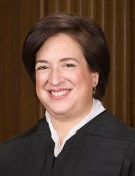
    Justice KaganIn its unanimous opinion, authored by Justice Kagan (with a concurring opinion by Justice Sotomayor), the Supreme Court construed the statute to provide a generic ANDA applicant with the opportunity to challenge inaccurate use codes and designations under the counterclaim provisions of the statute.  Specifically, the Court construed the phrases the "patent does not claim . . . an approved method of using" a drug and the "patent information submitted . . . under subsection (b) or (c)" of § 355, both in the "context" of another statutory phrase, that the counterclaim is brought to "correct or delete" in accurate patent information.  The Court found neither party's position on the issue to be "plausible," and thus applied a "statutory context" analysis to decide the question.  This favored Caraco's position, because it is consistent with Congressional intent to get generic drugs to market quickly, particularly for uses not falling within the scope of Orange Book listed patents.  ("The statutory scheme, in other words, contemplates that one patented use will not foreclose marketing a generic drug for other unpatented ones.")

    The Court also makes quick work of the question of whether use codes are "patent information" under the statute, holding that they "surely qualify."  Citing Eli Lilly & Co. v. Medtronic, Inc., 496 U.S. 661 (1990), the Court holds that while the statute recites that "patent information" is the patent number and expiration date by the plain meaning of the statutory language, "neighboring" provisions of the statute and the use of the broad term "under" in citing the specific sections convinced the Court that use codes should be encompassed within the scope of the counterclaim statute.  These use codes are "pivotal" to implementation of the Hatch-Waxman Act (despite having been enacted almost twenty years after the Act itself), according to the opinion, justifying (for the Court) the "broad sweep" of the counterclaim provisions.

    Finally, the Court rejected Novo's argument that Congress merely intended to remedy a deficiency in the law resulting from the Federal Circuit's earlier decision in Mylan Pharmaceuticals, Inc. v. Thompson, 268 F. 3d 1323 (Fed. Cir. 2001), to enable generic applicants to remove an improperly listed patent from the Orange Book.  According to the Court, Congress intended to supply generic drug applicants with a means to challenge the "accuracy" of a branded drug's patent listings; this conclusion is supported, according to the opinion, by provisions that not only permit a generic applicant to challenge branded drugs having "baseless" Orange Book patent designations (the situation in Mylan), but also instances where the designation is merely wrong.  The opinion also notes (and is seemingly influenced by) a Federal Trade Commission report that alleged branded drug companies were listing inaccurate patent information in the Orange Book to delay generic drug approval, something the Court considers to provide the motivation for Congress to have enacted the counterclaim provisions.

    In her concurring opinion, Justice Sotomayor argues that the statutory regime of ANDA filing (i.e., suit under § 271(e)(2), counterclaim assertion by the generic drug maker, "correction" of the use codes followed by resubmission of the ANDAn with a the Section viii certification) is flawed because "it results in delay and expense the statutory scheme does not envision" and "there is no guarantee the process will work," either because the generic drug maker will not prevail on its counterclaim or, even more troublesome, the branded drug maker will not file suit under § 271(e)(2).  Under these circumstances, the FDA will be able to approve the ANDA, but the generic is then forced to launch at risk of a patent infringement lawsuit if it markets a generic product that falls within the scope of a use that is patented.  Justice Sotomayor takes the Agency to task for this situation, calling the relevant regulations "remarkably opaque" and suggests that Congress has created precisely the "excessive litigation" it sought to avoid in enacting the statute in the first place.

    Caraco Pharmaceutical Laboratories, Ltd. v. Novo Nordisk A/S (2012)
    Opinion by Justice Kagan
    Concurring opinion by Justcie Sotomayor

  • By Donald Zuhn —

    Abbott Laboratories #1In a Citizen Petition filed with the U.S. Food and Drug Administration on April 2, Abbott Laboratories requested that the FDA refrain from accepting biosimilar applications under the Biologics Price Competition and Innovation Act (BPCIA) that cite reference products (biologics) for which a biologics license application (BLA) was submitted to the FDA prior to March 23, 2010.  The BPCIA, which provides an approval pathway for biosimilar biological products and constitutes a portion of the Patient Protection and Affordable Care Act that was signed into law on March 23, 2010, allows the FDA to accept biosimilar applications four years after a reference product has been licensed and to approve such applications twelve years after the reference product has been licensed.

    In its Petition, Abbott specifically asks the FDA to:

    [C]onfirm that it will not accept for filing, file, approve, or discuss with any company, or otherwise take any action indicating that the agency will consider, any application or any investigational new drug application (IND) for a biosimilar that cites, as its reference product, BLA 125057 for Humira® (adalimumab) or any other product for which the biologics license application (BLA) was submitted to FDA prior to March 23, 2010, the date on which the BPCIA was signed into law.

    Abbott explains that the FDA should refuse biosimilar applications for all pre-enactment reference products, including its own biologic Humira®, because to approve such applications would constitute a taking under the Fifth Amendment of the U.S. Constitution, which requires just compensation.

    Noting that "the reference product sponsor has invested massive amounts of capital . . . and has taken great risk to develop, test, and seek a license to market the reference product," Abbott argues that "[a]n innovator's resulting license application typically reflects more than a decade of research and contains analytical, preclinical, and clinical data, as well as detailed manufacturing information, most of which qualifies as trade secrets," and contends that "[t]hese trade secrets are the private property of the reference product sponsor and are therefore protected by the Fifth Amendment to the U.S. Constitution."  According to Abbott's Petition, "[w]hen FDA approves a biosimilar biological product on the grounds that the reference product has been shown safe, pure, and potent, it uses these trade secrets."

    Abbott also notes that when it submitted its BLA for Humira® in 2002, the company "had no notice, or reasonable expectation, that the agency would use its trade secrets to approve another company's product," and in fact, had "developed and submitted those trade secrets in reasonable reliance on FDA's lack of legal authority to approve biosimilars, confirmed by years of agency statements that it lacked such authority."  The Petition suggests that other innovators who submitted pre-enactment BLAs also "reasonably expected — on the basis of applicable law and agency statements — that the trade secrets contained in their applications would not be used to benefit a competitor."  Abbott argues that "[u]nder well-established Supreme Court jurisprudence, FDA's use of the trade secrets in pre-enactment sponsors' BLAs to support approval of competitor products would frustrate these sponsors' investment-backed expectation regarding their property and would constitute a taking under the Fifth Amendment to the U.S. Constitution that requires just compensation."

    With regard to whether the information in a BLA constitutes a trade secret, the Petition explains that the Uniform Trade Secrets Act (UTSA), which has been adopted (with minor variations) in 45 states and the District of Columbia, defines a trade secret as constituting information that (a) derives independent economic value from not being generally known to, or readily ascertainable using proper means by, other persons who can obtain economic value from its disclosure or use, and (b) is the subject of reasonable efforts to maintain its secrecy.  With respect to the first prong, Abbott states that "maintaining the secrecy of the data and information in a license application gives the submitter an economic advantage, because the license holder's competitors cannot obtain approval of a competing similar product without undertaking an investment of similar magnitude or compensating the innovator for a right to reference that information and data."  As to the second prong, Abbott notes that "biologics innovators go to great lengths to ensure that the data and other information submitted in their applications are not publicly released, whether inadvertently or purposefully, or otherwise accessible to potential competitors."  Abbott, therefore, contends that the information submitted to FDA — including analytical, preclinical, and clinical data to support a marketing application — constitute trade secrets.

    FDAAccording to the Petition, as of February 2012, the FDA had received 35 requests for pre-IND meetings for proposed biosimilar products for eleven different reference products, had held 21 pre-IND sponsor meetings, and had received nine INDs.  Indicating that it "believe[s] that some (if not all) proposed biosimilar product applications that have been or will be the subject of such meetings will reference innovator biologic products that were approved via BLAs submitted prior to March 23, 2010," Abbott argues that the constitutional issue raised in its petition is "both timely and urgent."  Abbott also expresses a belief "that at least three companies have begun preclinical and/or clinical testing of biosimilar adalimumab," but notes that it "does not know whether FDA is advising any companies about the contents of a biosimilar application citing approval of Humira[®]."

    Abbott asserts that even if the biosimilar applicant receives no information from the FDA regarding the contents of an innovator's BLA, the approval of a biosimilar application based on the approved biologic results in a taking.  In particular, Abbott contends that:

    Any FDA approval of a biosimilar application necessarily uses the trade secrets that were submitted in support of the BLA that the biosimilar is referencing.  Such a use occurs even though the BPCIA directs FDA to base approval of the biosimilar product only on information in the biosimilar application and directs the biosimilar applicant to include in its application only publicly available information regarding FDA's prior finding of safety, purity, and potency for the reference product.  The approval of a biosimilar necessarily relies on and uses the trade secrets that the innovator sponsor submitted in support of the BLA.  Were it not for those trade secrets — generated at great effort and expense by the sponsor — there would be no pioneer biologic for the biosimilar sponsor to reference.

    The Petition further argues that:

    FDA's reliance on its earlier finding that the reference product is safe, pure, and potent — to grant another company a license to market a competing biosimilar product — diminishes the economic value of the reference product sponsor's trade secrets that made the finding possible.  The trade secrets generated at great risk and expense by the first entrant lose value and provide a diminished competitive advantage if the government can simply proceed with approving competitor products on the basis of subsequent applications that omit trade secrets comparable to those required of the reference product sponsor.

    Abbott notes that "[w]ithout the [innovator] company's efforts to create the trade secrets in the BLA, the license 'simply would not exist,'" and "FDA's reliance on the finding accompanying the license is therefore reliance on the underlying trade secrets."  Abbott argues that "FDA may not, in other words, separate the 'public finding' [of a biologic's approval] from the underlying data."

    Citing Ruckelshaus v. Monsanto Co., 467 U.S. 986 (1984) — which involved Monsanto's submission of trade secret data to the EPA in support of its application to register a pesticide — Abbott argues that:

    [W]hen an applicant submits trade secret data as part of a license application, at a time when the government has provided assurances through law, regulation, and/or agency guidance that the data will not be used by the agency to benefit a competitor of that applicant, later "consider[ation of] those data [by the agency] in evaluating the application of a subsequent applicant" would frustrate the applicant's "reasonable investment-backed expectation" that the data would, instead, remain inviolate.

    Abbott notes that in Monsanto, the Supreme Court "first acknowledged that trade secrets are property protected by the Fifth Amendment's prohibition on taking private property for public use without just compensation," and determined that Monsanto had a reasonable, investment-backed expectation that the EPA would not use data submitted to it between 1972 and 1978 (when the statutory scheme prohibited the EPA from publicly disclosing an applicant's trade secret data) for the benefit of a competitor.

    Abbott contends that "approving biosimilars of pre-enactment reference products would take the trade secret property of an identifiable class (i.e., pre-enactment reference product sponsors) and impose a very large financial liability on the United States," adding that "retrospective application of the BPCIA would call the statute's constitutionality into question."  Abbott suggests that the FDA should therefore "apply the BPCIA prospectively only."  The Petition concludes by requesting that the FDA "interpret the BPCIA as applying only to post-enactment reference products, thereby avoiding both significant constitutional questions and significant governmental liability."

  • By Sherri Oslick —

    Gavel About Court Report:  Each week we will report briefly on recently filed biotech and pharma cases.

    Enzo Life Sciences Inc. v. Affymetrix Inc.
    1:12-cv-00433; filed April 6, 2012 in the District Court of Delaware

    Enzo Life Sciences Inc. v. Agilent Technologies Inc.
    1:12-cv-00434; filed April 6, 2012 in the District Court of Delaware 

    Enzo Life Sciences Inc. v. Illumina Inc.
    1:12-cv-00435; filed April 6, 2012 in the District Court of Delaware

    The complaints in these cases are substantially identical.  Infringement of U.S. Patent No. 7,064,197 ("System, Array and Non-Porous Solid Support Comprising Fixed or Immobilized Nucleic Acids," issued June 20, 2006) based on defendants' manufacture, use, and sale of nucleic acid array products.  View the Affymetrix complaint here.


    Incyte Corp. v. Kappos
    1:12-cv-00380; filed April 6, 2012 in the Eastern District of Virginia

    Review and correction of the patent term adjustment calculation made by the U.S. Patent and Trademark Office for U.S. Patent No. 8,034,953 ("Modulators of Indoleamine 2,3-Dioxygenase and Methods of Using the Same," issued October 11, 2011).  View the complaint here.


    Sanofi-Aventis U.S. LLC et al. v. Strides, Inc. et al.

    3:12-cv-02070; filed April 5, 2012 in the District Court of New Jersey

    • Plaintiffs:  Sanofi-Aventis U.S. LLC; Sanofi-Aventis; Debiopharm S.A.
    • Defendants:  Strides, Inc.; Onco Therapies Ltd.; Strides Arcolab Ltd.

    Infringement of U.S. Patent Nos. 5,338,874 ("Cis oxalato (trans 1-1,2-cyclohexanediamine) PT(II) Having Optically High Purity," issued August 16, 1994) and 5,716,988 ("Pharmaceutically Stable Preparation of Oxaliplatinum," issued February 10, 1998) following a Paragraph IV certification as part of Strides' filing of an ANDA to manufacture a generic version of Sanofi's Eloxatin® (oxaliplatin for injection, used to treat colorectal cancer).  View the complaint here.


    Ferring B.V. et al. v. Allergan Inc. et al.

    1:12-cv-02650; filed April 5, 2012 in the Southern District of New York

    • Plaintiffs:  Ferring B.V.; Ferring International Center S.A.; Ferring Pharmaceuticals Inc.
    • Defendants:  Allergan Inc.; Allergan USA, Inc.; Allergan Sales, LLC; Serenity Pharmaceuticals Corp.; Serenity Pharmaceuticals, LLC; Reprise Biopharmaceutics, LLC; Seymour H. Fein; Ronald V. Nardi

    Correction of inventorship of U.S. Patent Nos. 7,405,203 ("Pharmaceutical Compositions Including Low Dosages of Desmopressin," issued July 29, 2008), 7,579,321 (same title, issued August 25, 2009), and 7,799,761 (same title, issued September 21, 2010) relating to Ferring's Minirin® (desmopressin, used to treat central diabetes insipidus, nocturnal enuresis, and nocturia) and various tort claims.  View the complaint here.


    Teva Pharmaceuticals USA, Inc. et al. v. Synthon Pharmaceuticals, Inc. et al.

    1:12-cv-02556; filed April 3, 2012 in the Southern District of New York

    • Plaintiffs:  Teva Pharmaceuticals USA, Inc.; Teva Pharmaceutical Industries Ltd.; Teva Neuroscience, Inc.; Yeda Research and Develpment Co. Ltd.
    • Defendants:  Synthon Pharmaceuticals, Inc.; Synthon Holding B.V.; Synthon B.V.; Synthon S.R.O.

    Infringement of U.S. Patent Nos. 7,199,098 ("Copolymer-1 Improvements in Compositions of Copolymers," issued April 3, 2007), 6,939,539 (same title, issued September 6, 2005), 6,054,430 (same title, issued April 25, 2000), 6,620,847 (same title, issued September 16, 2003), 5,981,589 (same title, issued November 9, 1999), 6,342,476 (same title, issued January 29, 2002), and 6,362,161 (same title, issued March 26, 2002) following a Paragraph IV certification as part of Synthon's filing of an ANDA to manufacture a generic version of Teva's Copaxone® (glatiramer acetate injection, used for the reduction of frequency of relapses in patients with relapsing-remitting multiple sclerosis).  View the complaint here.

  • CalendarApril 24, 2012 – Patent Law in Light of Mayo v. Prometheus: Claims to Laws of Nature Are Not Patentable (American Bar Association) – 1:00 – 2:30 pm (EDT)

    April 24-25, 2012 – Paragraph IV Disputes*** (American Conference Institute) – New York, NY

    April 26, 2012 – Moving From First to Invent to First to File: Understanding the Opportunities and Challenges (Technology Transfer Tactics) – 1:00 – 2:00 pm (Eastern)

    May 1, 2012 – Prometheus in the Post-Bilski Age: Patentable Subject Matter Under Continued Attack (Strafford) – 1:00 – 2:30 pm (EDT)

    May 2, 2012 – Patent Prosecution under the AIA: Strategies for Before, During and After the Transition to First-Inventor-to-File (American Intellectual Property Law Association) – 12:30 – 2:00 pm (Eastern)

    May 2, 2012 – Patent Reform Strategies in the Life Sciences: Assessing 'First-to-File' and Freedom to Operate under the New Rules (Elsevier Business Intelligence, CHI-California Healthcare Institute, and Merrill Datasite®) – 1:00 – 2:00 pm (EDT)

    May 3, 2012 – In-Depth Analysis of Mayo v. Prometheus: What it Means for the Future of Medical Diagnostic Patents (Technology Transfer Tactics) – 1:00 – 2:00 pm (Eastern)

    May 8, 2012 – GW Law Symposium on Intellectual Property (George Washington University Law School, Mayer Brown, and Cornerstone Research) – Washington, DC

    May 10, 2012 – The America Invents Act and Beyond: International Grace Period and Post–Grant Review (Intellectual Property Owners Association) – Brussels, Belgium

    May 16-18, 2012 – Fundamentals of Patent Prosecution 2012: A Boot Camp for Claim Drafting & Amendment Writing (Practising Law Institute) – Chicago, IL

    May 22-23, 2012 – Biosimilars*** (American Conference Institute) – New York, NY

    June 13-15, 2012 – Fundamentals of Patent Prosecution 2012: A Boot Camp for Claim Drafting & Amendment Writing (Practising Law Institute) – New York, NY

    June 18-21, 2012 – BIO International Convention (Biotechnology Industry Organization) – Boston, MA

    June 20-21, 2012 – International Forum on Pharma Patent Lifecycles*** (C5) – London, England

    June 25-26, 2012 – Hatch-Waxman Boot Camp*** (American Conference Institute) – San Diego, CA

    July 11-13, 2012 – Fundamentals of Patent Prosecution 2012: A Boot Camp for Claim Drafting & Amendment Writing (Practising Law Institute) – San Francisco, CA

    ***Patent Docs is a media partner of this conference or CLE

  • San DiegoAmerican Conference Institute (ACI) will be holding the next session of its Hatch-Waxman Boot Camp conference on June 25-26, 2012 in San Diego, CA.  ACI faculty will help attendees:

    • Comprehend how recent biosimilars legislation is changing industry dynamics;
    • Understand the interplay of between the PTO and FDA in the patenting of drugs and biologics;
    • Learn about the essentials of the FDA approval process and its link to biopharmaceutical patents;
    • Develop an in-depth and practical knowledge of Hatch-Waxman protocols, including Orange Book listings, bioequivalency, exclusivities, the 30-month stay, and the safe harbor;
    • Navigate the intricacies of patent term adjustment and patent term extension; and
    • Recognize how new pre-commercialization concerns relative to CMS approval and Medicare/Medicaid formulary selection are influencing the patenting and approval of drugs and biological products.

    Brochure HWBCIn particular, ACI's faculty will offer presentations on the following topics:

    • Key agencies overview:  Understanding the jurisdiction and interplay of the FDA and PTO in the patenting of drugs and biologics;
    • Identifying and comprehending pre-commercialization concerns relative to small molecules and biologics;
    • Exploring the link between the FDA approval process and the patenting of drugs and biologics;
    • IP overview for drugs and biologics:  Hatch-Waxman, BPCIA, trade dress, and more;
    • Paragraph IV disputes and litigation: Federal Court, PTO proceedings & ITC actions;
    • How the dynamics of biosimilars are changing the Hatch-Waxman landscape;
    • Orange Book listings, de–listings, and related challenges;
    • Bioequivalence and the "same active ingredient" vis-a-vis patentability;
    • An in-depth look at 180-day exclusivity;
    • Comprehending the intricacies of non-patent/regulatory exclusivity;
    • Assessing patent protections afforded under the safe harbor; and
    • Examining pharmaceutical patent extensions:  Patent Term Adjustment and Patent Term Restoration.

    A post-conference interactive biosimilars strategy session, entitled "Biosimilars: An In-Depth Look at the Law, Interpreting Regulations, and Anticipated Litigation," will be offered from 9:00 am to 12:00 pm on June 27, 2012.  The workshop will provide an overview of the law governing biosimilars and will then delve into the preparations that should be made in anticipation of litigation.

    A post-conference workshop, entitled "Patent Reform 101: Overview of the Fundamental Provisions in the America Invents Act and the Impact on Hatch-Waxman Litigation," will be offered from 1:00 pm to 4:00 pm on June 27, 2012.  The workshop will provide a clear overview of the numerous sections in the America Invents Act, especially highlighting how it will tie into Hatch-Waxman and when implementation will begin.

    The agenda for the Hatch-Waxman Boot Camp conference can be found here.  A complete brochure for this conference, including an agenda, detailed descriptions of conference sessions, list of speakers, and registration form can be obtained here.

    ACI - American Conference InstituteThe registration fee for the conference is $2,295 (conference alone), $2,895 (conference and one workshop), or $3.295 (conference and both workshops).  Those registering by April 27, 2012 will receive a $300 discount and those registering by May 25, 2012 will receive a $200 discount.  Patent Docs readers who reference the discount code "PD 200" will receive $200 off the current price tier when registering.  Those interested in registering for the conference can do so here, by calling 1-888-224-2480, or by faxing a registration form to 1-877-927-1563.

    Patent Docs is a media partner of ACI's Hatch-Waxman Boot Camp conference.

  • George Washington University Law SchoolThe George Washington University Law School (with Mayer Brown and Cornerstone Research) will be holding its annual GW Law Symposium on Intellectual Property on May 8, 2012 at The George Washington University Law School, 2000 H Street NW, Washington, DC.  The Symposium will offer presentations on the following topics:

    • Keynote Address — Janet Gongola, Patent Reform Coordinator, U.S. Patent and Trademark Office
    • Damages in Patent Litigation Cases: The New Models
    • Tips and Trends for Litigating Patent Cases in The Federal Courts
    • Luncheon Address — Hon. Randall R. Rader, Chief Judge, U.S. Court of Appeals for the Federal Circuit
    • A New Challenge: Navigating Inter Partes and Post Grant Review under The America Invents Act
    • The In-House Counsel Perspective: Tips for Outside Counsel and Trends

    Additional information about the Symposium, including a program, list of speakers, and directions can be found at the Symposium's website.  A cocktail reception will take place following the Symposium.

    The registration fee for the Symposium is $25 (GW IP Law Student) or $75 (all other registrations).  Those interested in registering for the Symposium can do so here.

  • LondonC5 (UK) will be holding its 11th International Forum on Pharma Patent Lifecycles on June 20-21, 2012 in London, England.  The conference will provide practical and strategic guidance on patent lifecycle extensions, including:

    • Recent SPC case law developments and their implications on the industry;
    • Maximizing exclusivity for new medical products in light of regulatory and case law developments;
    • How to get the most value out of pediatric exclusivity for your patent portfolio;
    • Patent Office insights on key challenges in SPC regulation Europe-wide;
    • Guidance from the European Commission on lifecycle extensions and anti-trust enforcement;
    • Avoiding 'Abuse of Dominance' in your patent management strategies;
    • Designing successful patent lifecycle plans for biosimilars following new regulatory guidelines in Europe and the U.S.;
    • How U.S. patent reform and U.S. case law developments will impact your lifecycle management strategies; and
    • Understanding the latest regulatory developments and IP reforms in Brazil.

    Brochue PPLIn particular, C5 faculty will offer presentations on the following topics:

    • EPO — An Update on the Latest Developments — to be presented by Dieter Tzschoppe, Director Pure and Applied Organic Chemistry, European Patent Office;
    • PTO Panel: Addressing Key Challenges in SPC Regulation Europe-wide and Contrasting Different Interpretations — panel includes Martijn de Lange, Netherlands Patent Office; Dr. Hubertus Zink, Patent Examiner, DPMA (German Patent and Trademark Office); and Dr. Lawrence Cullen, Deputy Director (Biotechnology, Pharmaceuticals & Organic Chemistry) Patents Directorate, Intellectual Property Office (UK IPO);
    • Defining "New Actives" in Light of the Latest Regulatory and Case Law Developments;
    • Clarifying SPCs for Enantiomers;
    • Utilising Paediatric Exclusivity to Maximise the Value of your Patent Portfolio;
    • Big Pharma Panel: How to Adopt SPC Strategies to Overcome Challenges Based on Recent Court Decisions and Industry Trends;
    • Developing Strategies for Biosimilar Products Following New Regulatory Guidelines;
    • Generics Panel: Strategies for Overcoming IP Challenges for Generic Companies;
    • European Commission Keynote: The Latest Guidance on Patent Lifecycle Extensions — to be presented by Lavinia Teodorescu, DG Competition Antitrust Pharma and Health Services, European Commission;
    • Competition Law vs. Patent Law – Overcoming Potential Conflicts;
    • Avoiding 'Abuse of Dominance' in Your Patent Management Strategies: Lessons to be Learnt From Recent Cases;
    • Prior Art and Obviousness: Understanding this Complicated Legal Area;
    • Maximising the Use of Your Existing IP through Patent Pooling;
    • Identifying the Latest Amendments and Reforms in Brazilian Patent Law;
    • How the Latest IP Trends and Case Law Developments Impact Your Patents in China;
    • Discover the Latest on the FDA Guidelines for Biosimilars; and
    • The Impact of the U.S. Patent Reform.

    A pre-conference workshop, entitled "Designing an Effective and Up-to-date SPC Strategy" will be offered from 1:30 pm to 5:30 pm on June 19, 2012.

    A complete brochure for this conference, including an agenda, list of speakers, detailed descriptions of conference sessions, and registration form can be downloaded here.

    C5The registration fee is £2095 for the conference and workshop and £1595 for the conference alone.  Those registering by May 22, 2012 will receive a £100 discount.  Patent Docs readers who reference the discount code "PD 10" will receive 10% off the current price tier when registering.  Those interested in registering for the conference can do so here, by calling +44 20 7878 6888, by faxing a registration form to +44 20 7878 6885, or by e-mailing registrations@C5-Online.com.

    Patent Docs is a media partner of C5's Pharma Patent Lifecycles conference.

  • By Kevin E. Noonan —

    Supreme Court Building #2That rarest of rara aves issued from the Supreme Court yesterday, an affirmance of a Federal Circuit opinion in Kappos v. Hyatt.  Perhaps it is because, as in Stanford v. Roche one of the parties was the government (here, Director David Kappos representing the U.S. Patent and Trademark Office, perhaps the least likely administrative agency to receive Supreme Court deference).  Or maybe it is because the Office's position appears to be contrary to the plain meaning of the statute under consideration, 35 U.S.C. § 145.  But in an opinion by Justice Thomas (another 9-0 opinion at that), the Court firmly sided with applicant Hyatt regarding both the extent of new evidence that a dissatisfied applicant can produce during a § 145 proceeding and the standard of review to be applied by the district court to such evidence.

    The case arose from a decision by the District Court to exclude evidence that applicant Hyatt could have presented in the first instance to the PTO, and to enter judgment against Hyatt based on a deferential review of the PTO record.  This decision was affirmed by a merits panel in a 2-1 decision written by former Chief Judge Michel (joined by Judge Dyk), who asserted an equitable reason for the exclusion:

    It is clear from the record that under our case law Hyatt had an affirmative and specific duty to disclose to the PTO the evidence excluded by the district court, and was so notified by the PTO, but willfully refused to cooperate in the examination process.  On the facts of this case, we uphold the district court's exclusion of Hyatt's evidence.  We therefore hold that the district court correctly granted summary judgment sustaining the Board decision because Hyatt offered no other evidence and the Board's decision was based on findings of fact and factual conclusions, all of which are supported by substantial evidence, and thus we affirm.

    This decision was based on the majority's characterization of how district courts had treated such evidence:

    In sum, it has been the general practice of federal courts for over eighty years in certain circumstances to exclude evidence which a party could and should have introduced before the Patent Office but did not despite an obligation to do so.  Our own cases likewise have not adopted a de novo standard for trial.  We have said that "[c]learly, the applicant does not start over to prosecute his application before the district court unfettered by what happened in the PTO."  On the other hand, it is beyond question that in appropriate circumstances new evidence may be submitted to the district court in a § 145 action (subject, at least, to the Federal Rules of Evidence).  See Gould v. Quigg, 822 F.2d 1074, 1079 (Fed. Cir. 1987) ("[A]dditional evidence is permitted in a civil action under section 145, allowing the district court to make de novo fact findings."); Newman v. Quigg, 877 F.2d 1575, 1579 (Fed. Cir. 1989) ("A district court action under 35 U.S.C. § 145 is a de novo determination of patentability. It is not limited to the record before the PTO.")

    Judge Moore's dissent was based on her interpretation of the plain language of the statute:

    The majority's decision to affirm the district court's exclusion of the inventor's own declaration in a § 145 civil action severely restricts the rights that Congress action contemplated and enacted by Congress.  Moreover, by concluding that an inventor has an "affirmative duty" to submit his own declaration in response to a rejection by the PTO, lest he be prevented from admitting the material in any subsequent district court proceeding, the majority makes it impossible for inventors to ever testify in a § 145 action unless their testimony had first been proffered to the PTO.  I cannot agree that this was what Congress contemplated when it enacted § 145, and therefore I dissent.

    The Federal Circuit reconsidered this decision en banc, and arrived at Judge Moore's position (she wrote the 7-2 decision):

    On its face, § 145 authorizes a civil action in district court by which an applicant can prove his entitlement to a patent.  The statute provides no indication that this civil action is somehow different from a customary civil action.  In particular, § 145 does not provide that unique rules of evidence, separate from or supplementary to the Federal Rules of Evidence that apply to all civil actions, control to limit an applicant's ability to introduce new evidence before the district court.  Additionally, § 145 makes clear that the civil action is distinct from an appeal, in which the applicant would be limited to the record before the Patent Office.  See 35 U.S.C. § 144.  Pursuant to the plain language of § 145, this civil action does not merely afford judicial review of agency action.  Rather, the statute directs that the district court may "adjudge that such applicant is entitled to receive a patent for his invention . . . as the facts in the case may appear."

    The opinion cites in support earlier Supreme Court cases (Butterworth v. Hoe, 112 U.S. 50 (1884); Gandy v. Marble, 122 U.S. 432, 439 (1887); Hoover Co. v. Coe, 325 U.S. 79, 83 (1945)) that permitted applicants to adduce new evidence in support of suits brought at the district court under the legislative parent of § 145 (§ 4915 of the Patent Act of 1927), as well as Dickinson v. Zurko ("[Section 145] permits the disappointed applicant to present to the court evidence that the applicant did not present to the PTO.  The presence of such new or different evidence makes a factfinder of the district judge").  Finally, the majority held that "new evidence is admissible in a civil action under 35 U.S.C. § 145, subject only to the Federal Rules of Evidence and Federal Rules of Civil Procedure."  And the standard of review to be used by district courts was de novo for any evidence newly submitted in those proceedings (while the opinion concedes that a deferential standard of review for evidence considered by the Office was appropriate under the provisions of the Administrative Procedures Act, 5 U. S. C. § 701 et seq.).

    Judge Dyk's dissent, joined by Judge Gajarsa, warned that "applicants will deliberately withhold evidence in their possession, in order to spring it on the district court under section 145," saying further that the majority's decision "reflects yet another misguided effort to craft special rules for patent cases that the Supreme Court in other cases has held to be impermissible," citing eBay Inc. v. MercExchange, L.L.C., 547 U.S. 388 (2006), and MedImmune, Inc. v. Genentech, Inc., 549 U.S. 118 (2007).

    The Supreme Court specifically rejected these arguments in affirming the majority's decision.  In an opinion written by Justice Thomas, the Court reviewed the history of § 145 and its predecessor statutes as well as its own jurisprudence regarding the questions of whether new evidence could be adduced and the standard of review to be applied by district courts.  With regard to the first issue, the Court held that "there are no evidentiary restrictions beyond those already imposed by the Federal Rules of Evidence and the Federal Rules of Civil Procedure," echoing the Federal Circuit majority.  As for the standard of review, the Court held that "the district court must make a de novo finding when new evidence is presented on a disputed question of fact."

    The Court's reasoning on the first issue was based on the distinctions between review sought under 35 U.S.C. § 145 with direct review to the Federal Circuit under 35 U.S.C. § 141.  Citing Zurko, the opinion states that one important distinction between these two statutory provisions is the ability for an applicant to "present new evidence to the district court that was not presented to the PTO," which is "significant" because the Office did not "generally" accept oral testimony.  The opinion recognizes that it has not spoken on whether there were any limitations on the new evidence or the appropriate standard of review of such evidence, which it supplies in this decision.

    A clue to the basis for this decision comes from one way the opinion characterizes the PTO position:  "[b]oth of these arguments share the premise that §145 creates a special proceeding that is distinct from a typical civil suit filed in federal district court and that is thus governed by a different set of procedural rules" based on "background principles of administrative law and pre-existing practice under a patent statute that predated §145."  But the Court finds these arguments unavailing, based on the plain meaning of the statutory language:  "[b]y its terms, §145 neither imposes unique evidentiary limits in district court proceedings nor establishes a heightened standard of review for factual findings by the PTO."

    In view of its finding that these arguments by the Director were unavailing, the Court then turned to the Director's appeal to those "traditional principles of administrative law" embodied in the APA, specifically 5 U.S.C. § 706 ("judicial review of an agency decision is typically limited to the administrative record").  The issue is that here, the statute itself contradicts this interpretation, because it expressly provides for the applicant to present new evidence, which requires the court to "act as a factfinder."  It thus "makes little sense for the district court to apply a deferential standard of review to PTO factual findings that are contradicted by new evidence," reasoned the Court.  Moreover, "[t]he PTO, no matter how great its authority or expertise, cannot account for evidence that it has never seen," making it necessary for the district court to "make its own findings de novo."  As such, the district court is not a "reviewing court" under the APA.  The opinion also rejects the Director's contention that the Federal Circuit's decision would violate the principle of "administrative exhaustion," i.e., that the agency should in the first instance make all such factual determinations in the exercise of its special expertise.  But the Court finds that the reason for this principle, as enunciated in McKart v. United States, 395 U. S. 185, 193–94 (1969), was to avoid "premature interruption of the administrative process."  Here, the opinion states, § 145 actions arise only after the administrative process is complete.

    The opinion then turned to the historical evidence, tracing the right of review back to the 1836 Act, which provided for an applicant to bring a bill in equity for rejections based on whether grant of a patent would "interfere" with another patent, grounds which were expanded in 1839 to encompass any ground of rejection.  This procedure was modified by the 1870 Act, which provided for intermediate levels of review in the Office (to a three-member panel of Examiners-in-Chief and the Director), followed by en banc consideration by the Supreme Court of the District of Columbia (a trial court that exercised appellate review when sitting en banc).  Importantly, the 1870 Act preserved the right to bring a bill in equity upon denial by the Commissioner or the Supreme Court of D.C.

    Finally, the opinion reviewed how it had interpreted the immediate predecessor to § 145, Revised Statute 4915 in two cases:  Butterworth v. United States ex rel. Hoe, 112 U. S. 50 (1884), and Morgan v. Daniels, 153 U. S. 120 (1894).  In the Butterworth case, the Court found that actions under R.S. 4915 were not an appeal, but rather an action "prepared and heard upon all competent evidence adduced and upon the whole merits."  Morgan, on the other hand, used a deferential standard of review of the Patent Office record.  While noting some tension between these cases, the Court here discerns that different circumstances (i.e., that no additional evidence was adduced in Morgan) explains the different standard of review applied by the Court.

    In addition, the opinion notes that later decisions by the Court followed the "well-reasoned interpretation of R.S. 4815" in Butterworth (including Gandy v. Marble, 122 U.S. 432, 439 (1887), and Hoover Co. v. Coe, 325 U.S. 79, 83 (1945), cited by the Federal Circuit majority opinion).  The Court states that the circumstances here mandate that the Butterworth precedent should be followed, finding that in a § 145 action, as in an action under R.S. 4915, a district court should consider "all competent evidence adduced" and "is not limited to considering only new evidence that could not have been presented to the PTO."  And the opinion also agrees with the Federal Circuit majority that "where new evidence is presented to the district court on a disputed fact question, a de novo finding will be necessary to take such evidence into account together with the evidence before the board," citing Fregeau v. Mossinghoff, 776 F. 2d 1034, 1038 (1985), because "[a]s a logical matter," the district court must make its determinations de novo on new evidence ('it is the first tribunal to hear the evidence in question')."

    The opinion addresses the question of how to balance the scope of new evidence the statute permits an applicant to adduce before the district court with the PTO record by agreeing that the district court "may, in its discretion, 'consider the proceedings before and findings of the Patent Office in deciding what weight to afford an applicant's newly-admitted evidence'" (emphasis added).  In this way the district court can accommodate its own need to consider the new evidence presented with its duty to "accord respect to decisions of the PTO."  In coming to this accommodation the opinion expressly rejected the possibility that an applicant could be motivated to "withhold evidence from the PTO intentionally with the goal of presenting that evidence for the first time to a nonexpert judge."  This "scenario" is "unlikely," according to the Court because "[a]n applicant who pursues such a strategy would be intentionally undermining his claims before the PTO on the speculative chance that he will gain some advantage in the §145 proceeding by presenting new evidence to a district court judge."

    Justice Sotomayor concurred, in an opinion joined by Justice Breyer that emphasized that the Court's opinion did not "foreclose a district court's authority, consistent with 'the ordinary course of equity practice and procedure,' to exclude evidence 'deliberately suppressed' from the PTO or otherwise withheld in bad faith" (citations omitted).

    Kappos v. Hyatt (2012)
    Opinion of the Court by Justice Thomas
    Concurring opinion by Justice Sotomayor, joined by Justice Breyer

  • By Sherri Oslick —

    Gavel In an effort to catch up with recently filed biotech and pharma cases, Patent Docs presents this additional installment of Court Report.

    AR Holding Co. Inc. v. Par Pharmaceutical Inc.
    1:12-cv-00419; filed April 4, 2012 in the District Court of Delaware

    Infringement of U.S Patent Nos. 7,619,004 ("Methods for Concomitant Administration of Colchicine and Macrolide Antibiotics," issued November 17, 2009), 7,601,758 ("Methods for Concomitant Administration of Colchicine and Macrolide Antibiotics in the Treatment of Gout Flares," issued October 13, 2009), 7,820,681 ("Methods for Concomitant Administration of Colchicine and a Second Active Agent," issued October 26, 2010), 7,915,269 (same title, issued March 29, 2011), 7,964,647 ("Colchicine Compositions and Methods," issued June 21, 2011), 7,964,648 ("Methods for Concomitant Administration of Colchicine and a Second Active Agent," issued June 21, 2011), 7,981,938 ("Colchicine Compositions and Methods," issued July 19, 2011), 8,093,296 ("Methods for Concomitant Administration of Colchicine and Macrolide Antibiotics," issued January 10, 2012), 8,093,297 ("Methods for Concomitant Administration of Colchicine and a Second Active Agent," issued January 10, 2012), and 8,097,655 ("Methods for Concomitant Administration of Colchicine and Macrolide Antibiotics," issued January 17, 2012) following Par's filing of an ANDA to manufacture a generic version of Mutual's Colcrys® (single-ingredient colchicine product, used to prevent and treat gout flares).  View the complaint here.


    Teva Pharmaceuticals USA, Inc. et al. v. Synthon Pharmaceuticals, Inc. et al.

    5:12-cv-00179; filed April 4, 2012 in the Eastern District of North Carolina

    • Plaintiffs:  Teva Pharmaceuticals USA, Inc.; Teva Pharmaceutical Industries Ltd.; Teva Neuroscience, Inc.; Yeda Research and Development Co. Ltd.
    • Defendants:  Synthon Pharmaceuticals, Inc.; Synthon Holding B.V.; Synthon B.V.; Synthon s.r.o.

    Infringement of U.S. Patent Nos. 7,199,098 ("Copolymer-1 Improvements in Compositions of Copolymers," issued April 3, 2007), 6,939,539 (same title, issued September 6, 2005), 6,054,430 (same title, issued April 25, 2000), 6,620,847 (same title, issued September 16, 2003), 5,981,589 (same title, issued November 9, 1999), 6,342,476 (same title, issued January 29, 2002), and 6,362,161 (same title, issued March 26, 2002), all licensed to Teva, following a Paragraph IV certification as part of Synthon's filing of an ANDA to manufacture a generic version of Teva's Copaxone® (glatiramer acetate injection, used for the reduction of frequency of relapses in patients with relapsing-remitting multiple sclerosis).  View the complaint here.


    Allergan Sales LLC v. Akorn Inc
    .
    2:12-cv-00175; filed April 4, 2012 in the Eastern District of Texas

    Allergan Sales, LLC v. Alcon Research, Ltd. et al.
    2:12-cv-00177; filed April 4, 2012 in the Eastern District of Texas

    • Plaintiff:  Allergan Sales LLC
    • Defendants:  Alcon Research, Ltd.; Alcon Laboratories, Inc.; Alcon Pharmaceuticals Ltd.; Falcon Pharmaceuticals, LTD

    Allergan Sales, LLC v. Apotex, Inc. et al.
    2:12-cv-00178; filed April 4, 2012 in the Eastern District of Texas

    • Plaintiff:  Allergan Sales LLC
    • Defendants:  Apotex, Inc.; Apotex Corp.

    The complaints in these cases are substantially identical.  Infringement of U.S. Patent No. 8,008,338 ("Ketorolac Tromethamine Compositions for Treating or Preventing Ocular Pain," issued August 30, 2011) based on defendants' manufacture, use, and sale of a generic version of Allergan's Acular LS® (ketorolac tromethamine ophthalmic solution, 0.4%, used for the reduction of ocular pain and burning/stinging following corneal refractive surgery).   View the Akorn complaint here.


    Precision BioSciences, Inc. v. Cellectis SA et al.

    5:12-cv-00174; filed April 2, 2012 in the Eastern District of North Carolina

    • Plaintiff:  Precision BioSciences, Inc.
    • Defendants:  Cellectis SA; Cellectis bioresearch; Cellectis bioresearch Inc.

    Infringement of U.S. Patent No. 8,148,098 ("Methods of Cleaving DNA with Rationally-Designed Meganucleases," issued April 3, 2012) based on Cellectis' manufacture, use, and sale of meganucleases targeting the HIV1 genome.  View the complaint here.

  •     By Andrew Williams —

    BayerIn a second case involving the Hatch-Waxman regulatory scheme decided by the Federal Circuit on Monday, the Court held in Bayer Schering Pharma AG v. Lupin, Ltd. that for an ANDA filing to infringe a method-of-use claim, the proposed label must indicate that the FDA has determined that the drug is safe and effective for the claimed method.  Judge Newman dissented, however, because the District Court had made this determination on the pleadings but failed to conduct a standard infringement analysis.  Instead, Judge Newman believed the question should have been whether the sale or use of the generic equivalent, in accordance with the representations in the ANDA, would infringe the claims of the patents, which should have at least proceeded past the pleading stage.

    As background, when a pharmaceutical company files a New Drug Application (NDA) with the FDA seeking approval to market a new drug, it is required to identify every patent that claims the drug or use of the drug that could reasonably be asserted in an infringement action.  For method-of-use claims, the FDA regulations provide that the patents must claim "indications or other conditions of use that are described in the pending or approved application" (21 C.F.R. § 314.53(b)).  These patents are then listed in the Orange Book.  Anyone wanting to market a generic version of the drug before the expiration of any method-of-use patents must either state that it is not seeking approval of the claimed method, i.e., that it created a carve-out, (a section viii statement), or they must certify that the claim is either invalid or not infringed (a Paragraph IV certification).  The filing of an ANDA with a Paragraph IV certification is a statutory act of infringement, which can give rise to a "Hatch-Waxman" litigation.

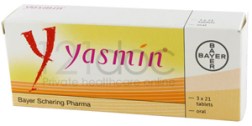
    YasminThe drug at issue in the present case was Yasmin, an oral contraceptive.  Bayer's predecessor company received FDA approval in 2001, where the FDA "concluded that adequate information has been presented to demonstrate that the drug product is safe and effective for use as recommended in the agreed upon enclosed labeling text."  The drug Yasmin or its use for contraception alone was not covered by a Bayer patent.  Instead, Bayer had listed three patents in the Orange Book, one of which was U.S. Patent No. 5,569,652 ("the '652 patent").  All of the claims in this patent recite that the claimed method achieves three effects simultaneously:  a contraceptive effect, an anti-androgenic effect (effective in treating conditions such as hirsutism or acne), and an anti-aldosterone effect (which can be used to reduce excess water retention).  Claim 1 is representative:

    1. A method of simultaneously achieving, during premenopause or menopause a gestagenic effect, antiandrogenic effect, and an antialdosterone effect in a female patient in need thereof comprising administering an amount of dihydrospirorenone to said female patient, wherein said amount of dihydrospirorenone is effective to simultaneously achieve a gestagenic effect, antiandrogenic effect and antialdosterone effect in said patient.

    LupinWatson and Sandoz filed an ANDA, followed shortly by Lupin, all with certifications that the ANDA products do not, among other things, infringe the '652 patent.  In turn, Bayer filed complaints against all of the ANDA filers.  Watson and Sandoz moved for judgment of non-infringement on the pleadings (pursuant to Rule 12(c)), arguing that Bayer could not succeed in its suit because the ANDAs that they filed only sought approval to market the generic form of Yasmin for oral contraception.  Because the "Indications and Usage" section of the label was limited to the use for oral contraception, and not for the treatment of three conditions, the District Court granted the motion of non-infringement.  In view of this ruling, Bayer and Lupin stipulated to final judgment in the other case, and both cases were considered together by the Federal Circuit.

    Bayer's position was that the FDA did approve the use of all three effects simultaneously in menopausal and premenopausal women, and that the District Court erred because it only looked at the approved "Indications and Usage" section of the label.  This section stated that "Yasmin is indicated for the prevention of pregnancy in women who elect to use an oral contraceptive."  Bayer pointed out, however, that the "Pharmacodynamics" subsection of the "Clinical Pharmacology" section of the label explains that one of the two active compounds in Yasmin had anti-mineralocorticoid activity, and in preclinical studies in animals had anti-androgenic activity.  As such, the use of Yasmin to alleviate all three claimed conditions was described in the proposed labels.  The majority, however, rejected this argument because that passage from the label did not provide any safety or efficacy information associated with the use of Yasmin to treat patients in need of these effects.  The Court concluded that "[t]o practice the method claimed in the '652 patent, a physician must determine that all three effects are needed by a specific premenopausal or menopausal patient," and that "FDA approval of that method of use would require a showing that Yasmin was safe and effective for simultaneously obtaining those three effect in patients needing those effects."  Because the label, taken in its entirety, failed to recommend or suggest this to a physician, the Court affirmed the District Court's ruling.

    To support its opposition to the motion for judgment of non-infringement, Bayer submitted two declarations — one from Dr. Shulman, an obstetrician-gynecologist with experience in the clinical use of contraception, and Dr. Allan, a former FDA official who oversaw the approval of the Yasmin NDA.  Dr. Shulman declared that prescribing Yasmin as an oral contraceptive with the intent to produce the other two pharmacological effects was "clearly stated and on-label."  Similarly, Dr. Allan stated that the label indicates that the FDA approved Yasmin for all of the therapeutic effect of contraception, and the two pharmacological effects.  She pointed out that the listing of those two effects on the label indicated that they were pertinent to the human use of the drug.  However, the Court still found that because the label did not include that the drug was safe or effective in inducing the three claimed effects in patients with a specific need for those effects, the testimony of Dr. Shulman and Dr. Allan were unavailing.

    Finally, Bayer argued that the FDA's own regulations regarding what patents should be submitted for inclusion in the Orange Book provided support for its position.  As noted out above, the FDA requires submission not only of patents that claim "indications," but also patents that claim "other conditions of use."  However, the Court pointed out that the FDA encourages broad disclosure of patents, and that just because a patent is listed doesn't mean that a generic product in an ANDA submission will necessarily infringe the patent.  Moreover, as made clear by the recent Supreme Court decision in Caraco v. Novo Nordisk, the FDA does not police the correctness of information submitted for inclusion in the Orange Book.

    Judge Newman took issue with the District Court's dismissal and judgment on the pleadings, and the Federal Circuit's affirmance, because they both ignored the fact that a plaintiff's non-conclusory factual allegations must be taken as true at this stage.  Not only that, but the majority ignored the fact that Bayer also came forward with evidence, including Dr. Allan's testimony regarding the FDA approval process, stating that because the label included information regarding all three effects meant "that the FDA approved (a) the therapeutic effect (contraceptive) and (b) the two additional pharmacological effects (anti-androgenic and anti-mineralocorticoid) of Yasmin®."  Judge Newman pointed out that it was error to only consider a portion of the FDA label in determining what a product's properties are, while failing to undertake a standard infringement analysis — to determine whether the patent would be infringed by the sale of use of the ANDA product.  Instead, Judge Newman would have framed the infringement question as "whether sale or use of the generic equivalent of the Yasmin® product, in accordance with the representations in the ANDA with respect to FDA approval for the generic equivalent of Yasmin®, infringes the '652 patent."  And, because this is a fact-intensive inquiry, she would have entitled Bayer the opportunity to present its infringement case at the district court level.

    Bayer Schering Pharma AG v. Lupin, Ltd. (Fed. Cir. 2012)
    Panel: Circuit Judges Newman, Plager, and Bryson
    Opinion for the court by Circuit Judge Bryson; dissenting opinion by Circuit Judge Newman