• By Donald Zuhn —

    USPTO SealOn Tuesday, the U.S. Patent and Trademark Office published six notices in the Federal Register providing five final rules packages for implementing various provisions of the Leahy-Smith America Invents Act and a practice guide for proceedings before the Patent Trial and Appeal Board.  With the publication of the six notices, the Office has completed the first round of an AIA-related rulemaking process that began in January with the release of several notices of proposed rulemaking and a practice guide for proposed trial rules.

    Earlier this summer, the Office issued final rules regarding the preissuance submissions by third parties provisions, statute of limitations provisions for Office disciplinary proceedings, and miscellaneous post patent provisions of the AIA:

    • Changes To Implement the Preissuance Submissions by Third Parties Provision of the Leahy-Smith America Invents Act, 77 Fed. Reg. 42150 (July 17, 2012) — Patent Docs report;

    • Implementation of Statute of Limitations Provisions for Office Disciplinary Proceedings, 77 Fed. Reg. 45247 (July 31, 2012) — Patent Docs report; and

    • Changes To Implement Miscellaneous Post Patent Provisions of the Leahy-Smith America Invents Act, 77 Fed. Reg. 46615 (August 6, 2012) — Patent Docs report.

    The Office published the following notices on Tuesday:

    • Rules of Practice for Trials Before the Patent Trial and Appeal Board and Judicial Review of Patent Trial and Appeal Board Decisions, 77 Fed. Reg. 48612 (August 14, 2012);

    • Changes to Implement Inter Partes Review Proceedings, Post-Grant Review Proceedings, and Transitional Program for Covered Business Method Patents, 77 Fed. Reg. 48680 (August 14, 2012);

    • Transitional Program for Covered Business Method Patents — Definitions of Covered Business Method Patent and Technological Invention, 77 Fed. Reg. 48734 (August 14, 2012);

    • Office Patent Trial Practice Guide, 77 Fed. Reg. 48756 (August 14, 2012);

    • Changes To Implement the Inventor’s Oath or Declaration Provisions of the Leahy-Smith America Invents Act, 77 Fed. Reg. 48776 (August 14, 2012); and

    • Changes To Implement the Supplemental Examination Provisions of the Leahy-Smith America Invents Act and To Revise Reexamination Fees, 77 Fed. Reg. 48828 (August 14, 2012).

    The final rule implementing the inter partes and post-grant review proceedings and transitional program for covered business method patents provisions of the AIA combines rules that were separately proposed for derivation proceedings, inter partes review proceedings, and post-grant review proceedings under the AIA.  Thus, the need for fewer final rules notices than the number of notices of proposed rulemaking the Office issued earlier this year.

    As with the final rules notices issued earlier this summer, Patent Docs will provide summaries regarding a number of the final rules notices published on Tuesday in subsequent posts.

  • By Kevin E. Noonan —
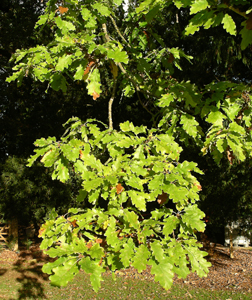
    White_oak_foliageThe Federal Circuit decided the In re Beineke case recently, affirming a decision by the USPTO's Board of Patent Appeals and Interferences that applicant Walter Beineke was not entitled to a patent for two strains of white oak trees under the Plant Patent Act of 1930 (as last amended in 1954).  While the court's decision is as unremarkable as it is apparently consistent with the scope of the Act intended by Congress in enacting it, the analysis is informative, particularly when compared with other recent decisions.

    The Plant Patent Act is codified as 35 U.S.C. § 161:

    Whoever invents or discovers and asexually reproduces any distinct and new variety of plant, including cultivated sports, mutants, hybrids, and newly found seedlings, other than a tuber propagated plant or a plant found in an uncultivated state, may obtain a patent therefor, subject to the conditions and requirements of this title,

    (where the italicized portion of the text was introduced by amendment 1954).

    Here, the subject matter claimed by Beineke were two white oak trees "in the front yard of a home," one being 118 years old and the other being 105 years old, having superior properties he recognized (including "excellent timber quality and strong central stem tendency").  He took acorns from these trees and planted them, and finding the beneficial traits to be retained reproduced them asexually.  Being successful, he applied for the two plant patents at issue.

    The Examiner rejected both applications based on statutory exclusion of plants "found in an uncultivated state."  A divided Board affirmed, the majority finding that based on the Act's legislative history the question of whether a plant found in a "cultivated state" depends on "whether the existence or condition of the found plant itself has been affected by human activity (i.e., cultivation)."  Based on the fact that the land was uncultivated when the trees began to grow, only having been "cultivated" when the house was built in 1930, the Board held that applicant Beineke failed to satisfied the "cultivated" requirement of the statute, reasoning that "[s]urrounding a tree with a lawn does not change the state of the tree itself."  Two Board members disagreed, however, "stating that they 'understand 'cultivated' to be a requirement that the plant be the recipient of human labor only after its discovery,' and that they would have found the trees patentable because the trees were cultivated when Beineke discovered them."

    On remand from the Board, applicant Beineke then submitted Rule 132 declarations in each application regarding whether the trees were "cultivated," but on their return to the Board, the applications were faced with no change in the Board majority's position.

    Federal Circuit SealThe Federal Circuit affirmed, in a decision by Judge Dyk, joined by Judges Schall and Reyna.  The opinion begins by stating that because a proper consideration of the issues requires the Court to interpret the scope and meaning of the statute, its review is de novo.  The opinion then cites earlier case law indicating that an "inventor" of a plant patent must "recognize [the plant's] uniqueness and difference (citing Yoder Bros., Inc. v. Cal.-Fla. Plant Corp., 537 F.2d 1347, 1382 (5th Cir. 1976)) and have "taken the steps of asexual reproduction" (citing Imazio Nursery, Inc. v. Dania Greenhouses, 69 F.3d 1560, 1566 (Fed. Cir. 1995), citing Yoder at 1380).  The point of contention here, according to the Federal Circuit is whether it is enough to "find[] a new variety of mature plant," recognize its beneficial properties, cultivate and asexually reproduce it (Beineke's position), or whether the statute also requires that "human activity played a role in the creation of the plant," the statute's (i.e., Congress') intention being directed toward protecting the activities of "plant breeders who create new varieties of plants either intentionally or by accident" (the PTO's position).  The panel sided with the PTO in affirming the decision that Beineke is not entitled to his patents (albeit without adopting the Office's position in toto).

    The first question the opinion addresses is whether "trees" as a class fall within the scope of the Plant Patent Act.  In this analysis, the opinion asserts that the statute requires that the plant be the result of "plant breeding or other agricultural or horticultural efforts" and that the patent be granted to an "inventor," defined as someone who "contributed to the creation of the plant in addition to appreciating its uniqueness and asexually reproducing it."  Beineke, the opinion notes, has brought forward no evidence that he satisfies either of these requirements.

    Delving further into the legislative history, the opinion recites as a rubric of statutory interpretation that the Court interpret the Act "in light of the 'contemporary legal context' in which it was enacted — that is, against the historical backdrop of the patent laws and the existing understanding of the language used in the act at the time," citing Cannon v. Univ. of Chicago, 441 U.S. 677, 698-99 (1979).  The opinion uses this rubric to interpret the "invents or discovers" language in the statute, stating that this phrase must be interpreted according to Supreme Court precedent to mean that:

    [t]he beneficiary [of a patent] must be an inventor and he must have made a discovery. . . . [I]t is not enough that a thing shall be new, in the sense that in the shape or form in which it is produced shall not have been before known, and that it shall be useful, but it must, under the constitution and the statute, amount to an invention or discovery,"

    (emphasis in opinion) citing Thompson v. Boisselier, 114 U.S. 1, 11 (1885).  And in turn, the Court opines that this requires the "exercise of the inventive faculty," citing Singer Mfg. Co. v. Cramer, 192 U.S. 265, 276 (1904); Pearce v. Mulford, 102 U.S. 112, 118 (1880); and Dann v. Johnson, 425 U.S. 219, 225 (1976) (and in a footnote cited cases of other Federal courts having language that "mere naked discovery" is not enough for a patent-eligible invention; these citations, as well as all but the Dann citation are directed towards utility patents, having been decided before the Plant Patent Act was enacted).

    The opinion also has a citation to Ex parte Latimer, 1889 Dec. Comm'r Pat. 123, to support the proposition that prior to the Plant Patent Act, it was thought that plants were not patent-eligible per se as "products of nature."  This discussion serves as a segue to the Court's conclusion that Congress evinced an intent to extend patent protection to plant breeders while retaining the proscription against patenting naturally occurring plants, by recognizing that plants created by plant breeders showed the "exercise of the inventive faculty" and, as a consequence, that the patent could be bestowed only upon the inventor (seeming to incorporate by implication that the inventor must have "created" the new plant variety and not merely appreciated it).  This reading is supported by citations to the legislative history that support the "limited scope" of the Act.

    The opinion then concedes that this requirement is not "explicitly stated in the statute," but supports its interpretation by citing statutory language that limits the scope to "cultivated sports, mutants and hybrids" (which seems to beg the question).  More relevant is citation to rejected amended provisions of the Act that would have included "found plants" expressly:

    [T]he words "invented" and "discovered" as used in this section, in regard to asexually reproduced plants, shall be interpreted to include invention and discovery in the sense of finding a thing already existing and reproducing the same as well as in the sense of creating,

    citing S. 3530, 71st Cong. (1930) (emphasis added); H.R. 9765, 71st Cong. (1930) (emphasis added).  And a similar provision was also stricken from the bill as first offered, based on an intention to "eliminate[] from the scope of the bill those wild varieties discovered by the plant explorer or other person who has in no way engaged in either plant cultivation or care and who has in no other way facilitated nature in the creation of a new and desirable variety," citing S. Rep. No. 71-315, at 7 (emphasis added).  Further citations to the record discuss the analogy between the plant breeder and the chemist, who both work with natural products but through inventive effort transform constituents of the natural world through the exercise of the "inventive faculty."  And this interpretation is also supported by language from the Supreme Court in Diamond v. Chakrabarty:

    Thus, a new mineral discovered in the earth or a new plant found in the wild is not patentable subject matter.  . . .  Such discoveries are "manifestations of . . . nature, free to all men and reserved exclusively to none,"

    citing Funk Brothers Seed Co. v. Kalo Inoculant Co., 333 U.S. 127, 130 (1948), as well as the Chakrabarty court's discussion of the Plant Patent Act.  This construction is enough to defeat Beineke's claim under the Plant Patent Act as originally enacted in 1930:

    In short, the provisions of the original 1930 Act, incorporated in the present plant patent statute, provided patent protection to only those plants (e.g., sports, mutants, and hybrids) that were created as a result of plant breeding or other agricultural and horticultural efforts and that were created by the inventor, that is, the one applying for the patent.  Beineke meets neither of these requirements.  Beineke does not argue that the oak trees were in any way the result of his creative efforts or indeed anyone's creative efforts, and thus they do not fall within the scope of those plants protected by the 1930 Act.

    The panel also agreed that the 1954 amendments to the Act are also not sufficient to bring Beineke's activities (or trees) within the scope of the Act, because they are not the products of "newly found seedlings" which were first brought within the scope of the Act by these amendments.  Interestingly, the amendments are discussed in the opinion as a legislative override of an application of the law as stringently as the Court applies the Act here; however, in view of the fact that the amendments were limited to "newly found seedlings" this intention by Congress to expand the scope of the Act was of no help to Beineke.  And the opinion cites the legislative history of the 1954 amendments to support its view that Congress had no intention of changing the requirement in the 1930 Act that plants eligible for a plant patent must be "created" plants and not "found" plants.

    The opinion's use of the Act's legislative history, while fully supporting the panel's decision, is curious in contrast with other recently decided cases.  For example, it is apparently unnecessary to consult the legislative history in view of the panel's interpretation of the claim language.  The statute is by its terms limited to "cultivated sports, mutants, hybrids, and newly found seedlings" and excludes, inter alia, "a plant found in an uncultivated state."  The white oak trees that are the subject of the two applications at issue would appear not to fall within the scope of a "cultivated sport[], mutant[], hybrid[, or] newly found seedling[]" except upon a reading that would include "a new plant found in the wild" contrary to the rubric recited in Chakrabarty.  (Indeed, it would be consistent with Judge Dyk's previously asserted opinion on the scope of patent-eligibility of natural products in Intervet v. Merial.)  Including the white oak trees at issue within the scope of the Plant Patent Act would also be contrary to the exclusion of "a plant found in an uncultivated state," again under any plain meaning analysis that did not reduce the term "cultivated" to a triviality.  Thus, recourse to the legislative history appears unnecessary.

    It is also curious where, in other cases, Federal Circuit panels have refused to consider the legislative histories where such considerations may have been illuminative.  One such case is Momenta Pharmaceuticals, Inc. v. Amphastar Pharmaceuticals, Inc., where the panel majority (which included Judge Dyk) refused to consider the legislative history of provisions of the Hatch Waxman Act, specifically 35 U.S.C. § 271(e)(1), on the grounds that the plain meaning of the Act was sufficient.  (And in addition, that panel majority held that it would be improper to consult the legislative history under circumstances where the meaning of the statutory language was clear.)  This decision, both on the merits and the majority's decision not to consider the legislative history of the Hatch Waxman Act, was the subject of a vigorous dissent by Chief Judge Rader.

    Comparison of these cases illuminates the inconsistency, that courts in their discretion can decide whether the "plain meaning" of statutory language is sufficient or if the legislative history need be consulted.  Because almost by definition reasonable people can differ on questions of statutory construction (else the exercise would be trivial), it would seem to be important to decide whether a court's construction of a statute is at least consistent with, if not mandated by, Congressional intent.  That may not be enough, of course; as the Supreme Court has recently instructed in National Federation of Independent Business et al. v. Sebelius et al.,  567 U.S. ___ (2012), courts should strike down laws enacted by Congress where "the lack of constitutional authority to pass [the] act in question is clearly demon­strated," citing United States v. Harris, 106 U. S. 629, 635 (1883).  Courts have the ability not only to strike down laws but also to interpret them so as to render them constitutional (which is arguably what the Supreme Court did in the National Federation case).

    Discerning Congressional intent can be a difficult and uncertain task.  But it would appear prudent for courts to at least consider whether the legislative history need be considered, much like proper claim construction requires courts to review the specification if only to ascertain whether the patentee has disclaimed aspects of the claims that would otherwise fall under the plain meaning of claim terms.  If prudence counsels such consideration of intent, and evidence of intent, for claim construction (which is limited to private patent rights), a fortiori the same prudence should counsel that the legislative history be similarly consulted for construing statutes.  Not to do so raises the risk that statutory scope decisions are driven by the court's, not Congress', intent, something clearly outside our constitutional scheme.  Only if courts (and their judges) are aware of these risks can the consequences be avoided.

    In re Beineke (Fed. Cir. 2012)
    Panel: Circuit Judges Dyk, Schall, and Reyna
    Opinion by Circuit Judge Dyk

  • By Kevin E. Noonan —

    Chief Judge RaderJudge Rader wrote a vigorous dissent to the panel majority's opinion in Momenta v. Amphastar, disagreeing with the panel majority's interpretation that the "safe harbor" embodied in 35 U.S.C. § 271(e)(1) extended to post-approval activities.  Before considering the substance of his dissenting opinion, the following facts should be remembered:

    • First, Chief Judge Rader (at right) was a Senate staffer for Senator Orin Hatch and intimately involved in the legislative history of the Hatch-Waxman Act;

    • Second, before he was Chief Judge, he wrote the Federal Circuit opinion in Merck v. Integra, which (like his dissent here) focused on Congress' intent in crafting the balanced Hatch-Waxman regime;

    • Third, Chief Judge Rader joined with Judge Newman in the majority opinion in Classen Immunotherapies, Inc. v. Biogen IDEC, which came to precisely the opposite conclusion as to the scope of the safe harbor (i.e., that it does not extend to post-approval activity); and

    • Fourth, Judge Moore wrote a spirited dissent to the majority opinion in Classen, based even more expressly than in the majority opinion here on her interpretation of the Supreme Court's Merck decision to mean that "the safe harbor extends to all uses that are reasonably related to submitting any information under the FDCA, including information regarding post-approval uses" (understandable in view of the typically broad language contained in Justice Scalia's opinion; see "Merck KGaA v. Integra Lifesciences I, Ltd. (2005)").

    (And, as we will see in our discussion elsewhere of In re Beineke, the third member of the Momenta panel, Judge Dyk, can base his decisions on legislative history when it serves his purposes.)  Here, in his dissent, the Chief Judge turns again to the limited scope of the safe harbor, based on his understanding of the fundamental right to exclude embodied in the patent statute and the limited exception to that right granted under § 271(e)(1).  ("Thus, exceptions to the traditional property remedy amount to a get-out-of-jail-free card for the trespasser.  Accordingly, such exceptions must occur only sparingly with awareness that this license allows the wrongdoer free reign to continue trespassing.")  That limited scope is the result of a balance, expressly struck by Congress, between the recompense to patentees who lost patent term during regulatory review (comprising the patent term extension provisions of 35 U.S.C. § 156 et seq.) and the benefits to the public by legislative override of Roche Products, Inc. v. Bolar Pharmaceutical Co., 733 F.2d 858 (Fed. Cir. 1984) (preventing any infringing activity prior to patent expiration including activities required by the FDA or other government agencies for approval of drugs).

    Here, despite a "strong incentive to invent the patented manufacturing method," Amphastar did not, according to the dissent — Momenta did, and:

    At that point, Amphastar stepped in and took Momenta's patented invention without permission and used it to manufacture each commercial batch it sells on the market.  Indeed Amphastar continues to trespass and promises to trespass for years to come.  In fact, as the court repeatedly acknowledges, Amphastar is only able to compete with Momenta by taking its patented invention.  Amphastar has not developed its own method, but instead delights in trespassing and refuses to pay a reasonable royalty to make the trespass lawful.

    And, the Chief Judge says with some incredulity, "[t]his court would allow this arrogance to continue by expanding the limited reach of 35 U.S.C. § 271(e)(1)."  Further, he reminds his brother and sister that this decision "ignores the binding precedent of Classen Immunotherapies, Inc. v. Biogen IDEC."

    In support for his dissent, Chief Judge Rader cites a relevant Supreme Court case, Eli Lilly & Co. v. Medtronic, Inc., 496 U.S. 661, 669 (1990), which was directed expressly to the scope of the safe harbor under § 271(e)(1) in deciding that it extended to medical devices, to reach the conclusion that the text of § 271(e)(1) can be "not plainly comprehensible."  This judicial recognition that the statute is not eminently clear justifies the Chief's resort to the legislative history (because, after all, the same language of the patent statute cannot be "not plainly comprehensible" some of the time and have a "plain meaning" at other times).  The dissent then sets forth extensive portions of that legislative history to illustrate Congressional intent:

    The purpose of 271(e)(1) and (2) is to establish that experimentation with a patented drug product, when the purpose is to prepare for commercial activity which will begin after a valid patent expires, is not a patent infringement.  Since the Committee's Subcommittee on Health and the Environment began consideration of this bill, the Court of Appeals for the Federal Circuit held that this type of experimentation is infringement.  In Roche Products, Inc. v. Bolar Pharmaceutical Co., 733 F.2d 858 (Fed. Cir. 1984), the Court of Appeals for the Federal Circuit held that the expiration date of a patent claiming that drug product constitutes patent infringement, even though the only purpose of the experiments is to seek FDA approval for the commercial sale of the drug after the patent expires.  It is the Committee's view that experimental activity does not have any adverse economic impact on the patent owner's exclusivity during the life of a patent, but prevention of such activity would extend the patent owner's commercial exclusivity beyond the patent expiration date.

    H.R. REP. NO. 98-857, pt. 1, at 45-46 (1984) (emphases added).  Remember, the Roche case had introduced a "lag in time" between patent expiry and generic drug market entry by prohibiting activities required by the FDA for generic drug approval.  Accordingly, Congress intended to remedy this situation, according to the Chief, by permitting the generic drug manufacturer to "conduct tests using [the patented drug] product if the purpose of those tests is to submit an application to FDA for approval," citing 130 CONG. REC. 23060 (1984) (statement of Rep. Robert W. Kastenmeier, Chairman of the Subcommittee on Courts, Civil Liberties and the Administration of Justice, Committee on the Judiciary) (emphasis added).  The dissent notes that this purpose was endorsed by groups having vastly different political agendas, namely the Pharmaceutical Manufacturers Association (PhRMA) and the Generic Pharmaceutical Industry Association (citing testimony before the House Judiciary Committee).  And insofar as it is relevant, the Reagan Administration not only supported the Act but advocated for "a more limited exception," although "it clearly understood the boundaries of [§ 271(e)(1)] to be pre-approval experimental use."

    The point of this historical exercise is to make the case that "§ 271(e)(1) won approval because it was limited in time, quantity, and type: [f]irst, as to time, § 271(e)(1) only applies to pre-marketing approval; [s]econd, as to quantity and type, § 271(e)(1) only applies to experimentation — and therefore would have limited impact on the patentee's exclusivity during the life of the patent."  Importantly, "the authors made clear that section 271(e)(1) would not apply to commercial sales, i.e., the 'infringing' product would not enter the market until after the patent's life" according to the dissent, citing H.R. REP. NO. 98-857, pt. 1, at 45 (1984) ("This section does not permit the commercial sale of a patented drug by the party using the drug to develop such information, but it does permit the commercial sale of research quantities of active ingredients to such party.") (emphasis added).  The dissenting opinion supported these points by extensive and specific citation to the Congressional record.

    Nothing like the activities the majority permits Amphastar under its interpretation was intended by Congress and there is evidence in the record that Congress specifically intended that such an outcome not result from the Hatch Waxman Act, according to Chief Judge Rader:

    Nowhere in the legislative history can this court find any suggestion that § 271(e)(1) would apply other than in the limited scenario of conducting de minimis experiments pre-approval (i.e., to obtain FDA approval).  Nowhere in the legislative history can this court find a hint that an "infringer" could continue to use its competitor's patented method in manufacture of each commercial batch for contemporaneous sale.  Nowhere in the legislative history can this court find any mention of the post-approval, continuous, commercial sales allowed by this decision.  Nowhere in the legislative history can this court find any suggestion that the mere maintenance or retention of information as part of a company's records is considered a submission that would trigger § 271(e)(1).  In fact, this court makes no attempt to examine the legislative history of this section at all — a very telling silence.

    And turning to the heart of the matter, the dissent notes that the majority avoids these considerations by dismissing them, deciding that because the majority can "find[] no ambiguity" there is no need to "find out the purpose of the section it distorts."  That "distortion" includes reading out of the statute the limitation that the permitted activities under the safe harbor are "solely" for developing and submitting information to the FDA, and in holding that a "submission" can include retaining manufacturing records (words that usually have opposing meanings, according to the Chief).  As a result:

    This new interpretation would allow almost all activity by pharmaceutical companies to constitute "submission" and therefore justify a free license to trespass.  The FDA can inspect records of any drug manufacturer and seller.  See 21 U.S.C. § 374.  Thus, the drug manufacturer need only make a record, which could potentially be inspected by the FDA, and then any activity could satisfy this new meaning of "submission."

    Turning to Classen, Chief Judge Rader notes that the Court has "already decided the meaning of this statute" not to encompass post-approval activities (based on the same considerations of the legislative history rejected by the majority here).  Amphastar's activities are antithetical to the Congressional intent according to the dissent because these activities are not "pre-approval" because they occur after Amphastar has obtained FDA approval; are not "limited because Amphastar uses Momenta's invention on a continuous basis in the manufacture of each commercial batch and during the life of Momenta's patent"; and are not "experimental because Amphastar uses Momenta's invention in manufacturing each commercial batch of its product for contemporaneous sale on the market (in commerce) to obtain profits and to compete with Momenta."  Accordingly, the majority's decision is directly contrary to binding precedent under Classen according to Chief Judge Rader.  He notes the analytical sleight of hand used by the majority to avoid the Classen precedent, and refutes the argument that the Classen decision was not based on the distinction between pre- and post-approval with quotes from Judge Moore's Classen dissent directed precisely to that specific point.  And the Chief's dissent frankly acknowledges the jurisprudential consequences:

    This decision ("post-approval studies"; "after approval"; "not restricted to pre-approval activities") cannot be genuinely reconciled with Classen ("pre-marketing approval").  Instead, the court in this decision uses the same language as the dissent in Classen ("post-approval"; "I conclude that the safe harbor extends to all uses that are reasonably related to submitting any information under the FDCA, including information regarding post-approval uses").  This decision should instead request the entire court to resolve the issue en banc.

    And the argument that the FDA mandates Amphastar to infringe are equally unavailing for Chief Judge Rader:

    Momenta thus far has created and developed the only successful method by which one can show the FDA's requirement has been met.  Amphastar is free to invent its own method to satisfy these requirements.  Instead it chooses to trespass.  Because it has not ventured to find another way to perform these tests, it is unfair to suggest that Amphastar's hands are tied.

    And, save for a discussion on the chimerical "tragedy of the anticommons" (discussed previously; see "Chief Judge Rader (Not Surprisingly) Gets it Right about Chimerical 'Tragedy of the Anti-Commons'"), Chief Judge Rader's dissent ends with his analysis of the Supreme Court's construction of § 271(e)(1) under Eli Lilly and Merck; in his reading, there is nothing inconsistent in these decisions with the conclusion that the safe harbor is limited to pre-approval activities.  He concludes:

    Every day, Amphastar, a competitor of Momenta, is infringing Momenta's patent.  This decision allows that trespass.  Moreover, to reach that result, this court must ignore its own prior decision in Classen and the purpose of the statute explained in the legislative history.  Sadly this decision abrogates Momenta's hard-achieved property right and reallocates that entitlement to its competitors — a sad day for property owners and an undeserved victory for those who decline to invest in the expense and difficulty of discovery and invention.

    The principle that courts must interpret statutes "as they find them" (which forms one basis for the majority's decision) is certainly one of judicial parsimony.  However, Congress cannot be expected to write any but the simplest laws having the most limited scope in language that will clearly instruct judges how to apply it in every (in)conceivable situation.  This is a truth even more relevant to a statute like the Hatch-Waxman Act, which by its express language is crafted to strike a balance not only between competing interests but diverse laws (patent and regulatory).  Thus, it seems prudent that legislative history be considered, keeping in mind that the search will frequently be fruitless; it is rare when the policy considerations are as expressly recited in the record as they appear to be in Chief Judge Rader's recitation (and his personal involvement lends credence to his arguments).  In some ways this is analogous to claim construction, where prudence requires courts to review the specification if only to ascertain whether the patentee has disclaimed aspects of the claims that would otherwise fall under the plain meaning of claim terms.  And this is in a much more limited context, where the patentee is responsible for the scope of the claims and the extent of the disclosure supporting them.  Sage Products, Inc. v. Devon Industries, Inc., 126 F.3d 1420 (Fed. Cir. 1997).  As illustrated here (and perhaps in Merck), failure to consider express Congressional intent risks deciding contrary to that intent, and while Congress retains the capacity (theoretically) to rectify judicial misinterpretation, the inefficiencies of using this way of construing statutes does not seem to be balanced by any principled basis for taking statutes as a court finds them.  And refusing to consider express Congressional intent runs the risk of decisions being driven by the court's, not Congress', intent, something clearly outside our constitutional scheme.  And yet, under Chief Judge Rader's analysis that is exactly what happened here.  A decision on en banc review (if one is filed) might indicate whether the Court as a whole sees things with the Chief or the majority.

  • "This is not how patent law works."

    By Andrew Williams —

    AlconWriting for the majority in Alcon Research, Ltd. v. Apotex Inc. last Wednesday, Judge Moore took issue with a position advanced by Alcon's counsel that would have essentially allowed a court to rewrite patent claims to preserve validity.  Because of that, in part, the Federal Circuit reversed a lower court's finding of non-obviousness with regard to six claims of the patent covering PANTANOL®.  However, because the Court affirmed the validity of two narrower dependent claims, Novartis' Alcon unit retained the ability to block generic competition of its anti-allergy eye-drops.

    OlopatadineThe technology at issue in the Alcon case was the drug product olopatadine, which is used in PANTANOL® to treat allergic eye disease in humans.  As background, antigens can cause the formation of antibodies in the body, and these antibodies can then bind to the surface of mast cells (which are specialized cells that are involved in the allergic reaction).  Such binding causes the sensitization of the mast cells, such that any subsequent antigen binding causes the cells to release chemical mediators, such as histamine and heparin.  To treat allergic reactions, anti-allergy drugs can interfere at multiple points in this process.  One such class of drugs is the mast cell stabilizers, which prevent the mast cells from releasing these mediators, thereby reducing the allergic symptoms.  In the human eye, mast cells are located in the membrane that covers the inner surface of the eyelid and the white part of the eyeball (the conjunctiva).

    The drug product olopatadine was known in the prior art as an effective antihistamine, and chemicals related to olopatadine that were known to have mast cell stabilizing activity.  However, olopatadine was not known to stabilize mast cells.  Moreover, mast cells from different species, and even different tissue from the same species, can have different biological responses, referred to as mast-cell heterogeneity.  Therefore, even though the drug was already known in the art, Alcon's scientists were the first to show that olopatadine could stabilize conjunctival mast cells in humans using in vitro testing.  This work gave rise to U.S. Patent No. 5,641,805 ("the '805 patent"), which claimed methods for treating allergic eye diseases in humans by topically administering an olopatadine composition.  The claims of this patent required that this method be accomplished by stabilizing the conjuctival mast cells.  Alcon's PANTANOL® product is the commercial embodiment of the claims of the '805 patent.

    Apotex #1The present action began when Apotex filed an ANDA seeking permission to sell a generic version of PANTANOL®, which included a Paragraph IV certification against the '805 patent.  In turn, Alcon sued Apotex in the Southern District of Indiana.  The lower court held that Apotex failed to establish by clear and convincing evidence that the claims of the '805 patent were obvious over the prior art.  One of the reasons was that, even though olopatadine was known to be an effective antihistamine, there were significant barriers to adapting a systemic antihistamine for topical use in the eyes.  In addition, the prior art did not teach that olopatadine could act as a mast cell stabilizer.  Finally, the lower court found that objective evidence of non-obviousness, including unexpected results, long-felt need, and commercial success, supported its holding.  Apotex appealed.

    Claims 1-3 and 5-7 Were Obvious

    The Federal Circuit disagreed with the lower court's determination that claims 1-3 and 5-7 were not obvious over the prior art.  The amount of administered olopatadine covered by the specific claims was important to this decision.  Independent claim 1 read:

    1.  A method for treating allergic eye diseases in humans comprising stabilizing conjuctival mast cells by topically administering to the eye a composition comprising a therapeutically effective amount of 11-(3-dimethylaminopropylidene)-6,11-dihydrodibenz(b,e)oxepin-2-acetic acid or a pharmaceutically acceptable salt thereof.

    (emphasis added).  The dependent claims specified the amount of administered olopatadine, ranging from about 0.0001% w/v to 5% w/v (claims 2 and 6) to about 0.001%  to about 0.2% w/v (claims 3 and 7).  The Federal Circuit reasoned that "a therapeutically effective amount" could not be a range less than 0.0001% w/v to 5% w/v, because a dependent claim cannot be broader than a claim from which it depends.  With regard to the range of administered olopatadine covered by the claims, Alcon's counsel took the position that the claims required that conjuctival mast cells be stabilized, and therefore any part of the range recited in the claim that does not operate to achieve this requirement would not fall within the scope of the claim.  Of course, as the Court pointed out, patent law does not work this way.  Instead, if you claim a range, and part of the range is inoperative (i.e., not enabled), you cannot later disavow the invalid portion.  "Courts do not rewrite the claims to narrow them for the patentee to cover only the valid portion."  Alcon, slip op. at 12.

    With regard to the obviousness contentions, the main reference cited against these claims was the Kamei reference, which disclosed treating eye allergies in guinea pigs using olopatadine at concentrations ranging from 0.0001% w/v to 0.01% w/v.  This range overlapped the range of claims 1-3 and 5-7 of the '805 patent.  Therefore, the only question for the Federal Circuit was whether there was a motivation to adapt this teaching to a use for treating allergic eye disease in humans.  The Court found that the lower court erred by only looking to the '805 patent for this motivation.  Instead, the Federal Circuit found that such motivation existed because the guinea pig animal model was predictive of antihistaminic efficacy in humans (a fact found by the lower court).  The Federal Circuit did find that the lower court's determination that Kamei did not teach olopatadine as a mast cell stabilizer was not clear error, but nevertheless Kamei's teaching of the use of olopatadine with "overlapping concentrations, even if for a different purpose, meets these claim limitations," even without that teaching.

    Important to the Court's analysis was the effect of the claim phrase:  "stabilizing conjuctival mast cells."  The lower court had construed this term to limit the claims to concentrations of olopatadine that so stabilize mast cells, and that are clinically relevant.  The Federal Circuit stated that it was not deciding whether this construction was correct.  However, as pointed out above, to the extent this construction allowed a disavowal of inoperative claim scope, the Court noted that this could not be correct.  In fact, the Federal Circuit's opinion essentially read this claim term out of the claim, because it found that it was not necessary for the prior art to teach this mast-cell stabilizing effect.  The reason provided was that the claim language did not impose any additional requirements beyond the cited range of administered olopatadine because the '805 patent taught that mast cell stabilization necessarily occurred at the claimed concentrations.  This allowed the Court to side-step the issue of whether an inherent property of the prior art could be used in an obviousness determination.  This was analogized to the situation in In re Kubin, 561 F.3d 1351 (Fed. Cir. 2009).  In that case, the applicants were attempting to claim an isolated nucleic acid molecule that encoded the Natural Killer Cell Activation Inducing Ligand ("NAIL").  However, the claim also included the limitation that the polypeptide bind CD48, which was not known in the prior art:

    73.  An isolated nucleic acid molecule comprising a polynucleotide encoding a polypeptide at least 80% identical to amino acids 22-221 of SEQ ID NO:2, wherein the polypeptide binds CD48.

    Nevertheless, because the patent application in Kubin explained that CD48 binding was an inherent property of NAIL, the prior art's failure to mention this was irrelevant to a finding that the claim was obvious.

    The Federal Circuit stressed the point that these cases did not implicate inherency.  However, if a property is not taught in the prior art, but the patent teaches that this property is necessarily present, it is unclear how this is different than inherency.  The distinction that the Court made — that it was the patent that taught the inherent property — does not appear to be relevant.  The problem that the Court faced was in acknowledging that the property was inherent, they would have to acknowledge that this was a case of inherent obviousness — something that the Federal Circuit does not like to do.

    Claims 4 and 8 Affirmed as Non-obvious

    With regard to the remaining two claims, claims 4 and 8, the Federal Circuit found that Kamei could not be used to render them obvious.  Both of these claims required the administration of olopatadine at a concentration of 0.1% w/v.  Kamei only tested olopatadine to a concentration of 0.01% w/v.  The Federal Circuit could not say that the lower court erred in finding that Kamei did not teach or suggest the higher concentration.  Apotex had also argued that a second reference, Lever, taught the use of a different ophthalmic formation at the concentration or 0.1% w/v.  However, a person of ordinary skill would not assume that you could simply substitute active ingredients in a formulation without adjusting concentrations.  Finally, PANTANOL® achieved nearly 70% market share within two years, and therefore the finding of commercial success was not clearly erroneous.  At the end of the day, therefore, Alcon was left with two valid claims, and as a result, Apotex will not be able to receive approval to market a generic version of PANTANOL® before the expiration of the '805 patent.

    Alcon Research, Ltd. v. Apotex Inc. (Fed. Cir. 2012)
    Panel: Circuit Judges Prost, Moore, and O'Malley
    Opinion by Circuit Judge Moore

  • By Sherri Oslick —

    Gavel About Court Report:  Each week we will report briefly on recently filed biotech and pharma cases.

    Cumberland Pharmaceuticals Inc. v. Perrigo Co.
    1:12-cv-06327; filed August 9, 2012 in the Northern District of Illinois

    Infringement of U.S. Patent No. 8,148,356 ("Acetylcysteine Composition and Uses Therefor," issued April 3, 2012) following a Paragraph IV certification as part of Perrigo's filing of an ANDA to manufacture a generic version of Cumberland's Acetadote® (N-acetylcysteine  injection, used to prevent or lessen hepatic injury after ingestion of a potentially hepatotoxic quantity of acetaminophen).  View the complaint here.


    Nycomed GmbH et al. v. Apotex Inc. et al.

    1:12-cv-01073; filed August 2, 2012 in the Southern District of Indiana

    • Plaintiffs:  Nycomed GmbH; Teijin Pharma Ltd.; Sunovion Pharmaceuticals Inc.
    • Defendants:  Apotex Inc.; Apotex Corp.

    Infringement of U.S. Patent Nos. 6,767,901 ("Ciclesonide Contained Pharmaceutical Composition for Application to Mucosa," issued July 27, 2004), 6,939,559 ("Pharmaceutical Composition for Application to Mucosa," issued September 6, 2005), and 7,235,247 (same title, issued June 26, 2007) following a Paragraph IV certification as part of Apotex's filing of an ANDA to manufacture a generic version of Nycomed's Omnaris® Nasal Spray (clesonide, used to treat nasal symptoms associated with seasonal allergic rhinitis).  View the complaint here.


    Astrazeneca Pharmaceuticals LP et al. v. Amneal Pharmaceuticals, LLC et al.

    3:12-cv-04841; filed August 2, 2012 in the District Court of New Jersey

    • Plaintiffs:  Astrazeneca Pharmaceuticals LP; Astrazeneca UK Ltd.
    • Defendants:  Amneal Pharmaceuticals, LLC; Amneal Holdings, LLC; Amneal Pharmaceuticals Holding Co., LLC; Amneal Pharmaceuticals of New York, LLC; Amneal Pharmaceuticals Co. India Private Ltd.

    Infringement of U.S. Patent No. 5,948,437 ("Pharmaceutical Compositions Using Thiazepine," issued September 7, 1999) following a Paragraph IV certification as part of Amneal's filing of an ANDA to manufacture a generic version of AstraZeneca's Seroquel® XR (quetiapine fumarate, used to treat schizophrenia and bipolar disorder).  View the complaint here.


    Millennium Pharmaceuticals Inc. v. Sandoz Inc.

    1:12-cv-01011; filed August 2, 2012 in the District Court of Delaware

    Infringement of U.S. Patent Nos. 6,713,446 ("Formulation of Boronic Acid Compounds," issued March 30, 2004) and 6,958,319 (same title, issued October 25, 2005), licensed exclusively to Millennium, following a Paragraph IV certification as part of Sandoz's filing of an ANDA to manufacture a generic version of Millenium's Velcade® (bortezomib, used to treat multiple myeloma).  View the complaint here.

  • Calendar

    August 16, 2012 – Challenging a Patent Application: Preissuance Submissions to the USPTO (Intellectual Property Owners Association) – 2:00 – 3:00 pm (ET)

    August 21, 2012 – Mayo v. Prometheus: The Supreme Court's New Methodology for Analyzing Patent Eligibility (American Bar Association) – 1:00 – 2:30 pm (EDT)

    August 24, 2012 – The America Invents Act: The Boundaries of Prior Art (American Bar Association) – 1:00 – 2:30 pm (EDT)

    August 27, 2012 – AIA Post-Grant Implementation Begins – Is Your Business Strategy Aligned? (Foley & Lardner) – 3:00 pm (Eastern)

    August 30, 2012 – The Written Description Requirement: Are Antibodies Chemicals, Proteins, or Exceptions? (American Bar Association) – 1:00 – 2:30 pm (Eastern)

    September 6, 2012 – A Review of the Impact of Recent Supreme Court and Federal Circuit Decisions on Patent Strategy (McDonnell Boehnen Hulbert & Berghoff LLP) – 10:00 – 11:15 am (CT)

    September 9-11, 2012 – IPO Annual Meeting (Intellectual Property Owners Association) – San Antonio, TX

    September 10-12, 2012 – Business of Biosimilars & Generic Drugs (Institute for International Research) – Boston, MA

    September 20-21, 2012 – FDA Boot Camp*** (American Conference Institute) – Boston, MA

    September 24-25, 2012 – Biosimilars and Biobetters*** (SMi) – London, UK

    September 25-26, 2012 – EU Pharma Regulatory Law*** (C5) – Brussels, Belgium

    October 10-11, 2012 – Maximizing Pharmaceutical Patent Lifecycles*** (ACI) – New York, NY

    October 10-11, 2012 – Biotech & Pharmaceutical Patenting*** (C5) – London, UK

    October 22-23, 2012 – Tech Transfer Summit North America*** (Tech Transfer Summit Ltd.) – John Hopkins University, Montgomery County, MD

    ***Patent Docs is a media partner of this conference or CLE

  • IPO #2The Intellectual Property Owners Association (IPO) will offer a one-hour webinar entitled "Challenging a Patent Application: Preissuance Submissions to the USPTO" on August 16, 2012 beginning at 2:00 pm (ET).  A panel consisting of Nicole Haines of U.S. Patent and Trademark Office; Patrick Jewick of Kilpatrick Townsend & Stockton LLP; and Rodney Young of Medtronic, Inc. will give insights into the final rules published by the USPTO in July, and discuss practical strategies for deciding whether and how best to file a preissuance submission of prior art on the patent application of a competitor or potential competitor.  The panel will also consider both the upside of using the process, such as the relatively low cost compared to post-grant procedures and the absence of estoppel, and its limitations, such as the early timing and often narrow window for such submissions which will prevent third parties from submitting prior art specifically directed at fully-developed claims.

    The registration fee for the webinar is $120 (government and academic rates are available upon request).  Those interested in registering for the webinar can do so here.

  • TTSnorthamerica2012Tech Transfer Summit Ltd. will be holding its third annual Tech Transfer Summit (TTS) North America on October 22-23, 2012 at John Hopkins University in Montgomery County, MD.  The Summit focuses on dialogue, partnering, licensing and technology transfer between public sector research technology transfer offices and senior industry licensing and business development executives, and serves as an international think-tank for technology transfer professionals, researchers, business angels, Government funding bodies, venture capitalists, financiers and financial service providers, and the legal profession in the biotechnology and life sciences sectors.  Host partners for TTS North America include the National Institutes of Health and Johns Hopkins Technology Transfer, and key partners including the Biotechnology Industry Organization (BIO), McDonnell Boehnen Hulbert & Berghoff LLP, and Patent Docs.

    A program for TTS North America including an agenda and list of speakers will be made available here.

    The registration fee for the Tech Transfer Summit Europe is $599 (rate for academic innovators, university or institute technology transfer offices, and start-ups) or $999 (multinational, corporate legal and consulting, and government rate).  Patent Docs readers who use the discount code "BCD12" and register by September 10, 2012 will receive $200 off the $599 rate or $300 off the $999 rate.  Details regarding registration for TTS North America can be found here.

  • ABAThe American Bar Association (ABA) Section of Intellectual Property Law, Section of Science and Technology Law, and Center for Professional Development will be offering a live webinar and teleconference entitled "The Written Description Requirement: Are Antibodies Chemicals, Proteins, or Exceptions?" on August 30, 2012 from 1:00 – 2:30 pm (Eastern).  Selena Kim of Gowling Lafleur Henderson LLP will moderate a panel including Amy Hamilton, Vice President and Deputy General Patent Counsel for Eli Lilly and Company; Christopher Holman, Associate Professor of Law at the University of Missouri-Kansas City School of Law; Oskar Liivak, Associate Professor of Law at Cornell University Law School; and Kristi L.R. Sawert, Associate Solicitor, Office of the Solicitor of the U.S. Patent and Trademark Office.  The panel will demonstrate a range of views on the written description requirement for antibodies.

    The registration fee for the webcast is $95 for members of any of the sections sponsoring the webinar, $99 for government attorneys, $150 for ABA members, and $195 for the general public.  Those interested in registering for the webinar, can do so here or by calling 800-285-2221.

  • Foley & LardnerFoley & Lardner will be offering a web conference entitled "AIA Post-Grant Implementation Begins – Is Your Business Strategy Aligned?" on August 27, 2012 at 3:00 pm (Eastern).  The web conference features USPTO Deputy Director Teresa Stanek Rea, USPTO Chief Administrative Patent Judge James D. Smith, and Matthew A. Smith and Andrew S. Baluch of Foley & Lardner.  The panel will discuss how the rule changes for post-grant will impact business strategy, how the USPTO's experience in interference and inter partes examination has influenced the new proceedings, as well as proactive steps you should be taking to get up to speed and prepare for the changes to come.  In particular, the panelists will address the following topics:

    • The USPTO's final rules and their effect on the balance of power between patent owners and accused infringers;
    • The use of inter partes review to strategic advantage;
    • Strategies for defending patents during inter partes review; and
    • What changes may need to be implemented within your business strategy?

    Those interested in attending the webinar can register here.