
By Andrew Williams —
 On Monday, in Sciele Pharma Inc. v. Lupin Ltd., the Federal Circuit vacated a preliminary injunction against ANDA-filer Lupin that blocked its sale of generic Fortamet, and remanded the case to the District Court for the District of Delaware for further processing. In so doing, the Federal Circuit reiterated the holding of the Supreme Court in Microsoft v. i4i that, because issued patents enjoy a presumption of validity, the burden of proof for a challenger is clear and convincing evidence. The fact that a reference was before the Patent Office goes to the weight of the evidence, but the burden of proof never changes. As such, the Court explained, it may be harder to meet the clear and convincing burden when asserting invalidity contentions based on the same references and arguments considered by the Office. Nevertheless, the Federal Circuit found that Lupin had met the incredibly high burden of establishing that the District Court abused its discretion in issuing the injunction because it found that Lupin had raised a substantial question of invalidity — even though it was a question of obviousness based on two references considered by the Office.
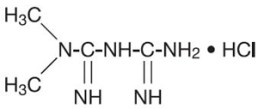 The technology at issue in this case was an extended-release tablet of metaformin hydrochloride, marketed as Fortamet, which is an oral antihyperglycemic drug used in the management of type 2 diabetes. According to the lower court's decision, the advantage of the extended-release formulation is that the maximum concentration of the drug occurs at night when the body's glucose level is the highest. The sole patent at issue was U.S. Patent No. 6,866,866 (the "'866 patent"), which claimed dosage forms of controlled release metformin compositions with a mean time to maximum plasma concentration at 5.5 to 7.0-7.5 hours after oral administration. However, as politely noted by the Federal Circuit, there was a "quirk" in the prosecution history of this patent. The examiner had rejected some of the pending claims as obvious in light of WO 99/47125 ("Cheng") in view of U.S. Patent No. 3,845,770. The examiner indicated that Cheng suggested a Tmax of 8 hours, and therefore rejected the claims which recited a Tmax range of 5.5-7.5 hours (because it was too close to the 8 hours of Cheng). In response, the applicant cancelled claim 1, which recited this range, but maintained a claim reciting the narrower range of 5.5-7.0 hours, amending it from dependent to independent form. Nevertheless, the Examiner issued a notice of allowance for the original claims. The applicant attempted to rectify this mistake by alerting the examiner to the error, which resulted in a supplemental notice of allowance to the amended claims without the cancelled claims (such a claim 1). But, the '866 patent issued with a "surprise" — all of the original claims were printed in the patent, including canceled claim 1 with a Tmax range of 5.5-7.5 hours, and original claim 3 with a Tmax range of 5.5-7 hours.
 The present action began when Lupin filed an ANDA to market generic Fortamet. Curiously, Sciele Pharma (now Shionogi Pharma) asserted both claims 1 and 3 (among others) — even though the patentees had twice cancelled claim 1. The litigation remained unresolved at the end of the 30-month stay, so the FDA approved Lupin's ANDA on June 29, 2011, and Lupin launched its ANDA product "at risk" on September 30, 2011. Shionogi moved for a preliminary injunction, which the District Court granted on December 6, 2011, noting that the presumption of validity creates a very steep requirement for the Lupin's validity challenge. The Federal Circuit vacated this injunction on February 6, 2012 because of the lower court's failure to address the merits of the obviousness argument. Eight days later, the District Court issued its Findings of Fact and Conclusions of Law.
Without repeating the other factors required for issuing a preliminary injunction, the lower court focused exclusively on Lupin's obviousness challenge, undertaking the approach as elucidated by the Supreme Court in Graham v. John Deere Co. The Court first determined the scope and content of the cited prior art and ascertained the differences between it and the claims at issue. The District Court did note that Lupin relied heavily on the Supreme Court's KSR decision, but pointed out "a fundamental factual difference" in the present case — the Patent Office had already considered Cheng and WO 99/47128 ("Timmins"), the two prior art references. As noted above, Cheng taught a formulation with a Tmax of 8 hours. Timmins, on the other hand, taught a new dosage form, but described a median Tmax, not at mean Tmax. And, an expert for Sciele declared that there was no way to ascertain the mean Tmax given only the median and the range. Moreover, Timmins allegedly indicated that its new formulation provided no impact on bioavailability. To the contrary, the Court noted, the '866 patent explains that the bioavailability is improved with the claimed formulation. With regard to the level of skill in the art, Lupin pointed to statements made by the applicant in response to an enablement rejection during the prosecution history. However, as the lower court noted, enablement and obviousness have different standards, and statements with regard to one are not necessarily applicable to the other. Finally, the Court did not consider any objective evidence of nonobviousness because the only evidence presented was after the filing date of the '866 patent. Based on this analysis, the lower court again issued a preliminary injunction, and Lupin appealed.
The Federal Circuit first acknowledged that it was required to review a decision to grant a preliminary injunction for an abuse of discretion, which must be either from a clear error of judgment in weighing relevant factors or an exercise of discretion based on an error of law. The Federal Circuit next rejected Lupin's argument that the claims of the '866 patent were not entitled to the presumption of validity because Sciele was asserting claims that it acknowledged should not have been issued. However, the Court similarly rejected Sciele's assertion that the claims were entitled to a heightened standard because the references were considered by the examiner. Again, the Court pointed out that the burden of proof requires clear and convincing evidence, regardless of what happened during prosecution. Instead, what happens during prosecution can go to the weight of the evidence.
Nevertheless, the Federal Circuit did find that that Lupin had raised a substantial question of validity. The Court apparently found that the District Court's obviousness determination was flawed because it had misapplied KSR, most likely because it had relied too heavily on the fact that the two references were before the Office during prosecution. However, even though the lower court did note this "fundamental factual difference," and it did indicate that deference was owed to the Office, it still undertook the proper Graham analysis. Instead, the Federal Circuit reached a different conclusion regarding the teachings of Cheng and Timmins — finding that the Timmins-disclosed median Tmax range could be converted to the claimed mean Tmax range. The Court also found that the applicant's statements regarding enablement were evidence that the design choice to make the claimed extended release dosage would have been routine and obvious. In addition, the Federal Circuit noted that the benefits of an earlier extended release as touted by Timmons would have motivated one skilled in the art to modify Cheng to achieve a lower Tmax range. The Federal Circuit concluded that Sciele failed to effectively rebut Lupin's arguments regarding what Timmins teaches, and how it could be used as motivation to modify Cheng.
Even though the Federal Circuit conducted what appeared to be a persuasive obviousness analysis, it is not clear that the analysis conducted at the District Court was so erroneous as to justify vacating the preliminary injunction. After all, Lupin faced an incredibly high hurdle — it needed to convince the Federal Circuit that the District Court abused its discretion in granting a preliminary injunction based, in part, on Lupin's failure to establish a substantial question of validity of an issued patent by clear and convincing evidence, in which both cited references were considered by the Office (which goes to the weight of the evidence). Instead, other than a few off-hand comments, the Court did not make much of the discrepancies between the issued claims and those that appear in the printed patent (and were asserted by Sciele). Nevertheless, Sciele's attorney was taken to task during the oral argument for its decision to assert claim 1 — even though it had acknowledged that this claim was cancelled during prosecution. It is tempting, therefore, to think that the Federal Circuit reached the decision that it did to correct this inequity. The problem, though, is that Sciele also asserted claim 3 against Lupin — a claim which always had the narrower Tmax range of 5.5-7 hours. Nevertheless, even though the Federal Circuit's opinion provides a very plausible reason why Lupin might ultimately be successful in its obviousness allegation, such a substitution of judgment should not be appropriate under the abuse-of-discretion standard required to vacate a preliminary injunction. As a result, it is difficult not to question whether the Court was just looking for a justification to correct this perceived inequity.
Sciele Pharma Inc. v. Lupin Ltd. (Fed. Cir. 2012)
Panel: Circuit Judges Lourie, Prost, and Moore
Opinion by Circuit Judge Moore


 Patent Docs
Leave a reply to Dan Feigelson Cancel reply