
By James DeGiulio —
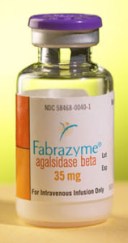 Last year, following Genzyme's inability to supply patient needs for the enzyme replacement drug Fabrazyme, concerned Fabry patients petitioned the Department for Health and Human Services (HHS) to exercise the government's "march-in" rights under the Bayh-Dole Act and force Genzyme to license the patents covering the drug to other manufacturers who can produce the needed Fabrazyme quantities (see "Genzyme's Manufacturing Issues with Fabrazyme Prompt Patients to Petition HHS Secretary to Exercise Bayh-Dole 'March-in' Rights"). That petition was denied on December 1, 2010, and Fabry patients resorted to bringing a civil suit against the Food and Drug Administration for damages caused by the shortage (see "Fabry Patients Sue Genyzme for Damages Caused By Fabrazyme Rationing"). Genzyme has since reported additional manufacturing errors at its Massachusetts plant that will further delay U.S. Fabry patients access to the drug. Fearful that Genzyme will continue to delay restoring production of Fabrazyme indefinitely, Fabry patients on April 5 once again asked for relief from the NIH by filing a petition for rehearing of their 2010 march-in request.
 On March 23, Genzyme announced that due to vial contamination issues, it had changed the predicted date of restoration of Fabrazyme supply from early 2011 to late 2011. Additionally, Genzyme announced that due to the loss, it would re-allocate drug away from American patients to overseas markets. According to the petition for rehearing, this is the ninth consecutive time that Genzyme has pushed back the projected deadline. The NIH kept the request for march-in open upon receiving information that "progress toward restoring the supply of Fabrazyme to meet patient demand was not proceeding as represented," and that it would revisit the petition upon receiving such information. Fabry patients have requested rehearing because the latest information from Genzyme contradicts Genzyme's original representations to the NIH. Genzyme's assurance to the NIH was that it expected to restore full access to patients in the first half of 2011, a deadline which the company appears to be unable to meet based on the latest manufacturing problems. According to the petition for rehearing, the NIH must now presume, for the protection of Fabry patients, that Genzyme will de facto never be able to reliably supply Fabrazyme to meet patient needs. Fabry patients ask that another manufacturer be provided with a license to the Fabrazyme patents in order to provide a second source of drug production should Genzyme fail once again. The petition also cites a conflict of interest, asking for (among others) NIH director Francis Collins to recuse himself from reviewing their petition because they maintain he has a financial interest in at least nineteen federally-funded inventions, which creates "at least the appearance of a conflict of interest."
For additional information regarding this topic, please see:
• "Fabry Patients Sue Genyzme for Damages Caused By Fabrazyme Rationing," March 10, 2011
• "U.S. Patients Petition FDA to Regulate Genzyme Export of Fabrazyme," January 25, 2011
• "HHS Denies Request to Exercise Bayh-Dole 'March-in' Rights for Fabrazyme," December 9, 2010
• "Genzyme's Manufacturing Issues with Fabrazyme Prompt Patients to Petition HHS Secretary to Exercise Bayh-Dole 'March-in' Rights," August 15, 2010


 Patent Docs
Leave a reply to Mayurbhai Sankalia Cancel reply