• By Kevin E. Noonan

    Federal Circuit SealThere are some cases where the Federal Circuit makes its decision based on the eternal verities of patent law (insofar as there are any eternal verities in patent law).  One such decision arose earlier this month when the Federal Circuit affirmed a determination of non-obviousness by the Patent Trial and Appeal Board in an inter partes review proceeding, that opinion captioned Teva Pharmaceuticals USA, Inc. v. Corcept Therapeutics, Inc.

    The case arose incident to ANDA litigation between the parties involving Corcept's Korlym product comprising the active pharmaceutical ingredient mifepristone for treating Cushing's Syndrome.  The drug had been recognized since the 1980's as an antiprogestin compound, but its relevant effect in vivo turned out to be as a glucocorticoid reception antagonist, which suggested its use against Cushing's (which was known to be caused by excessive levels of cortisol).  Corcept obtained FDA approval for the drug contingent on its performance of a post-marketing study under the provisions of 21 U.S.C. § 355(o)(3), one of which was to conduct "[a] drug-drug interaction clinical trial to determine a quantitative estimate of the change in exposure of mifepristone following co-administration of ketoconazole (a strong CYP3A4 inhibitor)."  The agency provided a description of the basis for this study, which included information such as ignorance in the art regarding the "degree of change" in exposure to mifepristone in the presence of drugs like ketoconazole and the potential safety risk that could arise.  Important to the issues before the Court was Korlym's approved label, which recommended a starting dose of 300 mg/day that could be increased in increments to 1200 mg/day, and a caveat that administration of the drug should be limited to 300 ng/day in the presence of strong CYP3A inhibitors.

    Corcept performed the required study and obtained patent protection on the resulting treatment method, U.S. Patent No. 10,195,214; claim 1 is representative:

    A method of treating Cushing's syndrome in a patient who is taking an original once-daily dose of 1200 mg or 900 mg per day of mifepristone, comprising the steps of:
        reducing the original once-daily dose to an adjusted once-daily dose of 600 mg mifepristone,
        administering the adjusted once-daily dose of 600 mg mifepristone and a strong CYP3A inhibitor to the patient,
        wherein said strong CYP3A inhibitor is selected from the group consisting of ketoconazole, itraconazole, nefazodone, ritonavir, nelfmavir, indinavir, boceprevir, clarithromycin, conivaptan, lopinavir, posaconazole, saquinavir, telaprevir, cobicistat, troleandomycin, tipranivir, paritaprevir, and voriconazole.

    The basis for Teva's IPR challenge was that this claim was obvious over Korlym's label in combination with the FDA study memorandum (which the opinion refers to as "Lee"), further and optionally in combination with FDA guidance documents on drug-drug interactions.

    The Board found that Teva had not satisfied its burden of showing obviousness by a preponderance of the evidence, specifically a showing that "a skilled artisan would have had a reasonable expectation of success for safe co-administration of more than 300 mg of mifepristone with a strong CYP3A inhibitor."  The Board's decision also specifically discredited Teva's expert's declaration and testimony to the contrary.  This appeal followed.

    The Federal Circuit affirmed, in a decision by Chief Judge Moore joined by Judges Newman and Reyna.  The opinion sets forth the bases for Teva's appeal as first, that the Board required "precise predictability" from the prior art in achieving the claimed invention (instead of a reasonable expectation of success) and second, that the issue involved "range" precedents that the Board did not apply (for recent examples, see Biogen Int'l GmbH v. Mylan Pharmaceuticals Inc. (Fed. Cir. 2021), and Indivior UK Ltd. v. Dr. Reddy's Laboratories S.A. (Fed. Cir. 2021)).  As can be her wont, the Chief Judge summarized the panel's opinion in the simple phrase "[w]e do not agree" with either of these arguments.

    With regard to the "reasonable expectation of success" argument, the opinion notes that the existence of the expectation is a question of fact requiring substantial evidence (although noting that the ultimate obviousness determination is a question of law subject to de novo review).  The issue, according to the Federal Circuit, was whether the skilled artisan would have had a reasonable expectation of success in achieving the invention as claimed with regard to the specific mifepristone dose (600 mg/day) in combination with a strong CYP3A inhibitor.  What the skilled worker would have lacked, according to the panel, was such a reasonable expectation that administering more than 300 mg/day in the presence of a strong CYP3A inhibitor would be safe.  Indeed, the Board went so far as to say the skilled worker would have had "no expectation" of such success in view of the cited art (keeping in mind the statements in Lee regarding the safety of the combination of mifepristone and a strong CYP3A inhibitor being unknown).  The Federal Circuit found these circumstances to be dispositive on this issue, citing Honeywell Int'l Inc. v. Mexichem Amanco Holding S.A. DE C.V., 865 F.3d 1348, 1356 (Fed. Cir. 2017), for the principle that where there is no expectation of success there can be no reasonable expectation of success.  The opinion specifically addressed Teva's expert's testimony, regarding what the Court considered contradictory statements prior to IPR institution ("it was reasonably likely that 600 mg [per day of mifepristone] would be well tolerated and therapeutically effective") and afterwards (wherein the expert stated "unequivocally" that "a skilled artisan 'would have no expectation as to whether the co-administration of 600 mg of mifepristone with ketoconazole would be safe'").

    Next considering Teva's range argument, the panel set forth its basis for rejecting the argument, that "Teva had failed to prove the general working conditions disclosed in the prior art encompass the claimed invention."  This is based on the Court's precedent that "where the general conditions of a claim are disclosed in the prior art, it is not inventive to discover the optimum or workable ranges by routine experimentation," citing E.I. DuPont de Nemours & Co. v. Synvina C.V., 904 F.3d 996, 1006 (Fed. Cir. 2018).  The "general working conditions" under consideration in the Court's range cases involved instances where "prior art ranges and claimed ranges either overlap or are close enough such that one skilled in the art would have expected them to have the same properties," citing, inter alia, Valeant Pharms. Int'l, Inc. v. Mylan Pharms. Inc., 955 F.3d 25, 32 (Fed. Cir. 2020).  Instead of a range the Board found, the prior art here recited a particular dose (300 mg/day), a conclusion the Federal Circuit held was supported by substantial evidence including the Korlym label and certain industry publications not specifically referenced in the opinion that voiced consistent limitations on mifepristone doses in the presence of strong CYP3A inhibitors.  Relying on the Board's findings on reasonable expectation of success the panel rejected Teva's argument that prior art monotherapy (i.e., mifepristone doses in the absence of strong CYP3A inhibitors) supported their obviousness argument on the basis that the skilled worker would have had no expectation of success regarding combination therapy based on these monotherapies.

    As for those eternal verities, the ones applied by the Federal Circuit here were the requirement for a showing that the skilled worker would have had a reasonable expectation of success in achieving the claimed invention in view of the asserted prior art, and that decisions of the Board on questions of fact supported by substantial evidence are difficult if not almost impossible for the Federal Circuit to overturn (see, for example, Qiagen North America Holdings Inc. v. Handylab, Inc. (Fed. Cir. 2021); Teva Pharmaceuticals Int'l GmbH v. Eli Lilly & Co., Eli Lilly & Co. v. Teva Pharmaceuticals Int'l GmbH, and Teva Pharmaceuticals Int'l GmbH v. Eli Lilly & Co. (Fed. Cir. 2021); Trustees of Columbia University v. Illumina, Inc. (Fed. Cir. 2021); and In re Fulton (Fed. Cir. 2021), but see, Chemours Company FC, LLC v. Daikin Industries, Ltd. (Fed. Cir. 2021)).  In this way the Court's decision was unremarkable except as an example of these fundamental principles.

    Teva Pharmaceuticals USA, Inc. v. Corcept Therapeutics, Inc. (Fed. Cir. 2021)
    Panel:  Chief Judge Moore and Circuit Judges Newman and Reyna
    Opinion by Chief Judge Moore

  • By Kevin E. Noonan

    Federal Circuit SealThe issue of standing can be outcome-determinative:  without it, no matter how worthy a party's position or arguments, a court will not consider them without standing.  The vagaries of standing and its importance were illustrated this fall in the Federal Circuit's opinion in University of South Florida Research Foundation, Inc. v. Fujifilm Medical Systems U.S.A., Inc.*

    The action arose over a dispute involving an invention described in the opinion as "Workstation-User Interface for Digital Mammography."  This invention was initially disclosed by faculty at the University of South Florida who assigned their rights to the University.  A later assignment of what is presumably a "new and improved" version of the invention was assigned by these inventors five years later, leading to filing an application resulting in U.S. Patent No. 6,630,937, entitled "Workstation Interface for Use in Digital Mammography and Associated Methods."

    The details of the relationship between the University and University of South Florida Research Foundation (USFRF) are obscured by redactions, but under a nunc pro tunc license agreement (putatively) relating to the '937 patent between these Florida entities, the USFRF filed suit against Fujifilm for infringement.  USFRF asserted a chain of interest in the patent in the complaint running from the inventors to USF to USFRF:

    The inventors of the '937 patent assigned their rights to the University of South Florida in Tampa, Florida.  The University of South Florida in turn assigned their rights to the '937 patent to the Plaintiff in this lawsuit, namely the University of South Florida Research Foundation, Inc. ("USFRF").  USFRF is currently the owner of the entire right, title and interest in United States Patent No. 6,630,937.

    Nevertheless, Fujifilm moved for summary judgment that USFRF lacked standing to sue, arguing that the license agreement did not transfer "all substantial rights" to the Foundation for it to bring suit by itself.  The defect, which USF attempted to "correct" if permitted to file a Second Amended Complaint, was that rather than assigning all right, title, and interest to the Foundation, the University had just granted an exclusive license.  The District Court dismissed the action (without prejudice) under Federal Rule Civil Procedure 12(h)(3) for "lack of both statutory and constitutional standing"; as explained in a footnote, "statutory standing" referred to 35 U.S.C. § 281, which the Federal Circuit characterized as "simply a statutory requirement" rather than a separate form of standing.  The defects in the license relied upon by the District Court included a lack of "an exclusive granting of the right to defend the patent to USFRF," the lack of any language regarding "the transference of the right to sue," and the lack of any provisions that "limit[ed] USF's ability to bring suit for alleged infringement."  Importantly, the District Court also considered the license's "grantback" provisions that permitted the University to practice the invention for "internal research, clinical, and education purposes" as standing-precluding provisions.  The District Court's constitutional (Article III) standing decision was based on USFRF's refusal to disclose the invention disclosure referred to in the license, which the Court held was a "necessary document"; another consideration was a question of whether the right to sue had been transferred prior to filing the complaint.  USFRF appealed.

    The Federal Circuit vacated the District Court's decision dismissing the action on standing grounds and remanded, in an opinion by Judge Stoll, joined by Chief Judge Moore and Judge Reyna.  The issue, framed by the Court's recitation of a litany of its precedent, is whether "an exclusive license is tantamount to an assignment," which depends on "the intention of the parties [to the license agreement] and . . . the substance of what was granted," citing Alfred E. Mann Found. for Sci. Rsch. v. Cochlear Corp., 604 F.3d 1354, 1358–59 (Fed. Cir. 2010), quoting Mentor H/S, Inc. v. Med. Device All., Inc., 240 F.3d 1016, 1017 (Fed. Cir. 2001).  The panel noted that while there had been decisions where the rights that needed to be transferred to establish standing to sue had been discussed, the Court had never "established a complete list of the rights that must be examined to determine whether a patentee has transferred away sufficient rights to render another party the owner of a patent."  Instead the Court had adopted a "totality of the agreement" approach, wherein "[a]mong the factors that we consider, the exclusive right to make, use, and sell, as well as the nature and scope of the patentee's retained right to sue accused infringers are the most important considerations in determining whether a license agreement transfers sufficient rights to render the licensee the owner of the patent," citing Diamond Coating Techs., LLC v. Hyundai Motor Am., 823 F.3d 615, 619 (Fed. Cir. 2016) (quoting Alfred E. Mann).

    Applying this precedent, the panel compared the rights transferred here with rights transfers deemed sufficient to satisfy the standing requirements.  In Alfred E. Mann, for example, the licensor's retention of the right to sue for infringement was "the most important factor in determining whether an exclusive license transfers sufficient rights to render the licensee the owner of the patent."  "[A] broad right to decide whether to bring suit and to control litigation is thoroughly inconsistent with an assignment of the patents-in-suit to [a licensee]" according to that opinion, thereby setting out a well-defined basis for finding lack of standing.  Similar considerations applied in AsymmetRx, Inc. v. Biocare Med., LLC, 582 F.3d 1314, 1321 (Fed. Cir. 2009), where the patentee retained "substantial interests in the patents-in-suit," including the right to sue for infringement.  Finally, in Diamond Coating, limitations on the licensee (including prohibition against licensing the patent without licensor's permission, a  grantback license that included a right to sell patented products and control over decisions regarding enforcement) precluded the licensee from having standing to sue on its own behalf.

    Here, the panel opined, the District Court was not incorrect in finding that USFRF was not a patentee as defined in § 281 and could not sue without joining USF.  The Court's decision was grounded in the first instance on an absence in the license of transfer from USF to USFRF of the right to sue on the patent.  As synthesized by the Federal Circuit, "[t]he agreement's silence on the right to sue accused infringers does not show an intent to transfer that right.  Rather, it shows that USF retained the important right to enforce the patent against accused infringer," and the panel decision was thus consistent with their Alfred E. Mann, AsymmetRx, and Diamond Coating precedent.  Additional features of the license (including redacted provisions on reservation of undisclosed rights and a weighting of infringement suit recovery amounts) supported this conclusion.  And the panel rejected USFRF's attempt to rely on their decision in Speedplay, Inc. v. Bebop, Inc., 211 F.3d 1245 (Fed. Cir. 2000), regarding a transferred royalty-free right to sublicense.

    Turning to Article III standing, the Court applied Second Circuit law relating to USFRF's failure to disclose the invention disclosure and failure to provide evidence of when the license agreement was signed.  On this issue the Federal Circuit held that the District Court erred in deciding that production of the invention disclosure was the only way USFRF could satisfy the requirement that the license covered the '937 patent, because doing so would involve waiver of attorney-client privilege and work-product protections.  The Court found sufficient disclosure in the license of the equivalence of the invention disclosure and the '937 patent to establish that the license extended to that patent.  According to the opinion, "[t]he correlation of the patent application serial number listed on the assignment and the face of the patent should have been sufficient in this case to prove that the license agreement covered the '937 patent."

    Also, the Federal Circuit held that the District Court erred in finding lack of Article III standing due to the undated nunc pro tunc license that failed to show when it was signed.  According to the panel, "[e]ven if the license agreement was signed after the filing of the complaint, USFRF would have held at least one exclusionary right in the patent under [a Revenue Allocation Agreement previously entered into by the parties]."  Constitutional standing arises when a party holds at least one such exclusionary right under the Court's precedents, including WiAV Sols. LLC v. Motorola, Inc., 631 F.3d 1257, 1265 (Fed. Cir. 2010);  Morrow v. Microsoft, 499 F.3d 1332, 1340–41 (Fed. Cir. 2007); and Intell. Prop. Dev., Inc. v. TCI Cablevision of Cal., Inc., 248 F.3d 1333, 1347 (Fed. Cir. 2001), according to the opinion.

    Whether USFRF can cure the deficiencies in statutory standing under § 281 will be the issue the District Court will be asked to decide on remand, because as explained in the opinion "the district court's dismissal was predicated on [USFRF's lack of] constitutional standing" and thus did not consider USFRF's attempt to cure in its Second Amended Complaint.  But both USF and USFRF believed the Foundation had standing to sue, and the District Court's decision on statutory requirements for standing and the Federal Circuit's opinion illustrate how wrong parties can be in arranging their agreements to be consistent with the rubrics discussed in this opinion.

    University of South Florida Research Foundation, Inc. v. Fujifilm Medical Systems U.S.A., Inc. (Fed. Cir. 2021)
    Panel: Chief Judge Moore and Circuit Judges Reyna and Stoll
    Opinion by Circuit Judge Stoll

    * The opinion was handed down under seal on October 22nd and then reissued on November 23rd in partially redacted form.

  • By Kevin E. Noonan

    The parties in Interference No. 106,132, namely Senior Party Sigma-Aldrich and Junior Party the University of California/Berkeley, the University of Vienna, and Emmanuelle Charpentier (collectively, "CVC"), filed their respective lists of proposed preliminary motions four days prior to their August 3rd teleconference with the Board to present their arguments for the Board to grant leave to file any of them.

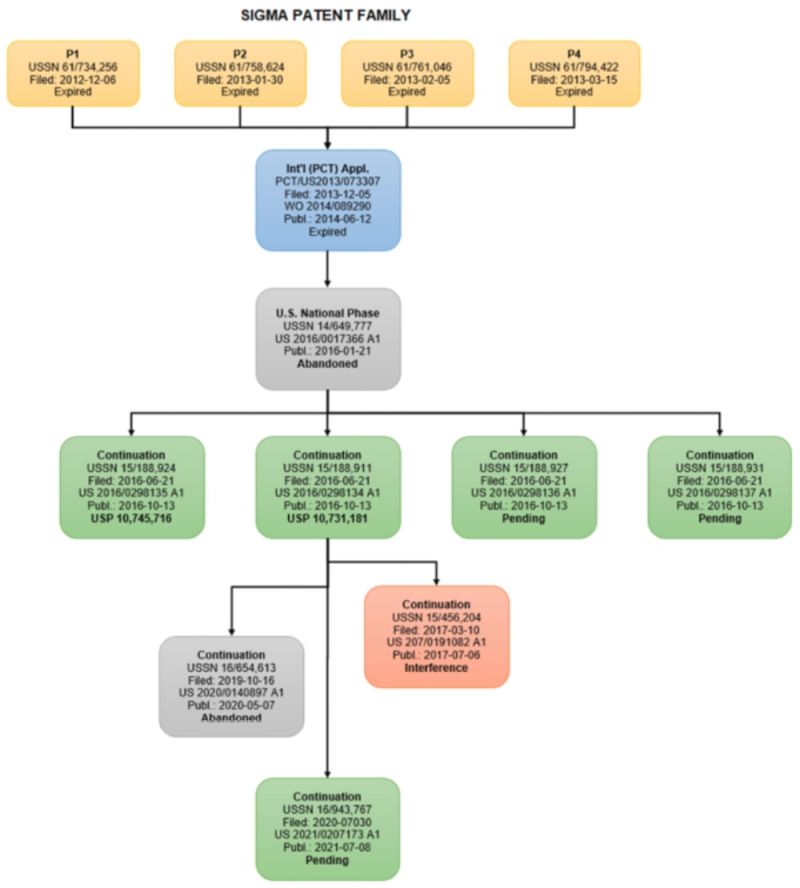
    Junior Party CVC proposed ten preliminary motions.  CVC Substantive Preliminary Motion No. 1, which CVC characterized as a "threshold" motion, sought to have a finding of no interference-in-fact because CVC alleged Sigma-Aldrich's application-in-interference was properly governed under the "first inventor to file" provisions of the Leahy-Smith America Invents Act because that patent "contains or contains at any time" (emphasis in brief) subject matter not entitled to priority to an application filed prior to enactment of the AIA.  As Sigma-Aldrich did in its analogous request for preliminary motion against Broad (see "Sigma-Aldrich and Broad Propose Preliminary Motions in Recent CRISPR Interference No. 106,133"), CVC provides an Appendix outlining the bases in Sigma-Aldrich's application-in-interference No. 15/456,204:

    Image
    CVC also provides as an example in the text amendment of a claim during prosecution of a parent application (No. 15/188,911) that the Office determined was sufficient for the amended claim not to be entitled to the first-to-invent provisions of the 1952 Patent Act.  This determination regarding the '911 application, from which the '204 application claimed priority, was enough for the Board to conclude, according to CVC, that the '204 application was not entitled to participate in this interference.  In addition to asking the Board for leave to file its Motion, CVC asks that this motion be authorized, briefed, and decided before any other motions are briefed or considered, so as not to burden the parties in filing unnecessary motions.

    CVC's Substantive Preliminary Motion No. 2 under 37 C.F.R. §§ 41.121(a)(1)(ii) and 41.208(a)(3) asks leave to file a motion for benefit of priority to U.S. provisional application Nos. 61/652,086, filed May 25, 2012 ("P1"); 61/716,256, filed October 19, 2012 ("P2"), earlier-filed applications from which CVC has sought priority benefit in Interference Nos. 106,115 (where the Board denied the motion) and 106,127 (where the Board has not yet ruled).  CVC asks for a longer page limit for its motion, "[d]ue to the complexity of the issues and extensive evidentiary record implicated by this Motion."  CVC also argued that the Board's adverse decision on this motion in the '115 does not raise an estoppel because that decision is not yet final (having not been ripe for appeal) and because the Count in the '115 Interference and the Count in this interference are not identical.

    CVC's Substantive Preliminary Motion No. 3 seeks to have the Board deny Sigma-Aldrich benefit of priority to its earliest provisional application, No. 61/734,256 filed December 6, 2012 (the Board having given Sigma-Aldrich the priority benefit to this application in the Declaration.

    CVC's Substantive Preliminary Motion No. 4 asks the Board to change the Count, "to better—and more uniformly—reflect the common invention being adjudicated in multiple pending interferences involving the claims of multiple parties directed to sgRNA CRISPR-Cas9."  CVC notes in particular that Sigma-Aldrich's "half" of the Count does not contain the limitation in claim 33 of the '204 application "wherein the guide RNA is a single molecule," while CVC's half of the Count is expressly limited to eukaryotic CRISPR species encompassing single molecule RNA species.  CVC relies on 37 C.F.R. § 41.1(b) for "considerations of efficiency, uniformity, and clarity [to] justify narrowing Sigma's half of the Count."

    CVC then proposes three separate Substantive Preliminary Motions under 37 C.F.R. § 41.121(a)(1) for unpatentability of Sigma-Aldrich's claims in this interference.  CVC's Substantive Preliminary Motion No. 5 asks the Board 37 C.F.R. § 41.121(a)(1) to find the claims of the '204 application to be unpatentable under AIA 35 U.S.C. § 103 for obviousness over U.S. Application Publication No. 2015/0322457, alone or in combination with several prior art references "disclosing gene editing using donor integration-based strategies"; CVC relies on its Substantive Preliminary Motion No. 1 that the '204 application is not entitled to the benefits of the first to invent provisions of the 1952 Patent Act in support of this motion.  In addition, CVC argues a variety of public and PTAB policy goals purportedly furthered by the Board granting this motion.

    CVC's Substantive Preliminary Motion No. 6 asks the Board 37 C.F.R. § 41.121(a)(1) to find the claims of the '204 application to be unpatentable under AIA 35 U.S.C. § 102 or § 103 for anticipation or obviousness over U.S. Application Publication No. 2014/0068797, alone or in combination with several prior art references in view of Sigma-Aldrich's purported inability to swear behind these references based on CVC's arguments in its Substantive Preliminary Motion No. 1.  CVC particularly notes that the basis for the Office finding the claims in the '204 application patentable over cited prior art was that the claims were amended to recite CRISPR embodiments having the feature of integrating donor DNA into target DNA.  This feature is found, CVC argues, in its '797 Publication as well as its P1 and P2 provisional applications, none of which were considered during ex parte prosecution.  CVC also argues that any adverse decision in the '115 Interference does not estop their making this argument in this interference, inter alia, because that earlier decision is not final.

    CVC's Substantive Preliminary Motion No. 7 asks the Board 37 C.F.R. § 41.121(a)(1) to find the claims of the '204 application to be unpatentable under AIA 35 U.S.C. § 102 or § 103 for anticipation or obviousness over under a combination of prior art references including "Jinek 2013, Mali 2013, Hwang 2013, Cong 2013, and/or Cho 2013."  In addition to asserting invalidity, CVC asserts that Sigma-Aldrich cannot "swear behind" these references due to its status as not being entitled to the first to invent provisions of the 1952 Patent Act.

    CVC asks the Board's leave to file two miscellaneous motions.  The first, CVC's Contingent Miscellaneous Motion No. 8 under 37 C.F.R. § 41.121(a)(3), asks the Board to include to add claims of U.S. Patent Nos. 10,731,181 and 10,745,716, contingent on the Board either denying it authorization to CVC for filing its Preliminary Motion No. 1 or denying the motion on its merits.

    CVC's Contingent Miscellaneous Motion No. 9 under 37 C.F.R. § 41.121(a)(3) asks the Board to add claims in Sigma-Aldrich's U.S. Patent Application Nos. 15/188,927; 15/188,931; 16/943,767; and 17/208,477 to this Interference.  Like CVC Motion No. 8, this motion is contingent on the Board either denying it authorization to CVC for filing its Preliminary Motion No. 1 or denying the motion on its merits.

    Finally, CVC's Substantive Preliminary Motion No. 10 was a motion under 37 C.F.R. § 41.208(a)(4) seeking judgment based on priority.

    Sigma-Aldrich filed its request under 37 C.F.R. § 41.121(a)(1)(i) to change the Count to one of five different alternatives.  Sigma-Aldrich justifies this request by asserting that "[t]he current Count 1, as set forth in the Declaration, encompasses two patentably distinct inventions: (1) CRISPR-Cas9 in a eukaryotic cell to cleave a target DNA; and (2) CRISPR-Cas9 in a eukaryotic cell to cleave a target DNA and subsequently to integrate a donor DNA sequence into the target DNA."  But the step of "subsequently to integrate a donor DNA sequence into the target DNA" is not obvious over merely CRISPR-mediate cleavage of target DNA and thus this aspect is patentably distinct.  Citing 37 C.F.R. § 41.201 for the principle that a single interference Count "should not encompass two patentably distinct inventions," Sigma-Aldrich argued that CVC's part of the Count is limited to CRISPR-mediated target DNA cleavage alone while its own portion of the Count is limited to CRISPR-mediated integration of donor DNA into the target site.  The inequity raised by this Count structure is that it would enable CVC to submit proofs of its invention (limited to DNA cleavage) to prevail on separately patentable subject matter encompassing donor DNA integration.

    Sigma-Aldrich's Proposed Counts 2-5 are as follows:

    Proposed Count 2 (all proposed Counts recite claim 31 of Sigma-Aldrich's Application No. 15/456,204 as in the Count as declared):

    156.  A method of cleaving or editing a target DNA molecule or modulating transcription of at least one gene encoded thereon, the method comprising:
    contacting a target DNA molecule having a target sequence with an engineered and/or non-naturally-occurring Type II Clustered Regularly Interspaced Short Palindromic Repeats (CRISPR)—CRISPR associated (Cas) (CRISPR-Cas) system comprising:
        a) a single molecule DNA-targeting RNA comprising
            i) a targeter-RNA that hybridizes with the target sequence, and
            ii) an activator-RNA that hybridizes with the targeter-RNA to form a double-stranded RNA duplex of a protein-binding segment,
    wherein the targeter-RNA and the activator-RNA are covalently linked to one another with intervening nucleotides; and
        b) a Cas9 protein,
    wherein the single molecule DNA-targeting RNA forms a complex with the Cas9 protein, thereby targeting the Cas9 protein to the target DNA molecule
    whereby said target DNA molecule is cleaved or edited or transcription of at least one gene encoded by the target DNA molecule is modulated, and
    wherein said contacting occurs in a eukaryotic cell.

    157.  The method of Claim 156, wherein, prior to the contacting step, the method comprises:
    introducing into the eukaryotic cell containing the target DNA molecule:
        1) the single molecule DNA-targeting RNA, or a DNA molecule comprising a nucleotide sequence that (i) encodes the single molecule DNA targeting RNA and (ii) is operably linked to a regulatory element operable in said eukaryotic cell; and
        2) the Cas9 protein, an RNA molecule comprising a nucleotide sequence encoding the Cas9 protein, or a DNA molecule comprising a nucleotide  sequence that (i) encodes the Cas9 protein and (ii) is operably linked to a regulatory element operable in said eukaryotic cell.

    164.  The method of Claim 157, wherein the method comprises creation of a double strand break in the target DNA molecule which is repaired by a homology-directed repair mechanism which incorporates a sequence of a donor polynucleotide into the target DNA molecule, thereby editing the target DNA molecule.

    (CVC Application No. 15/947,680)

    Sigma-Aldrich notes that an advantage of this Proposed Count 2 is that it reconciles the subject matter categories of the two alternatives in the Count (both are directed to methods) instead of Count 1 as declared (directed to CVC's composition and Sigma-Aldrich's method).

    Sigma-Aldrich's Proposed Count 3 is the same as Proposed Count 2 but Claim 164 would depend directly on claim 156 instead of including the limitations of intervening claim 157 of CVC's '680 application).

    Sigma-Aldrich's Proposed Count 4 recites CVC's claim 169 (dependent on claim 156) in the alternative to Sigma-Aldrich's claim 31 of the '204 application:

    169.  The eukaryotic cell of Claim 156, wherein the system comprises a donor polynucleotide and the system is capable of editing the target DNA molecule by inserting a sequence of the donor polynucleotide into a cleaved strand of the target DNA molecule.

    Sigma-Aldrich's Proposed Count 5 recites in alternative composition of matter claims; this proposal constitutes CVC's claim 169 of its Application No. 15/981,807 and Sigma-Aldrich's claim 64 of the '204 application:

    64.  A eukaryotic cell comprising a chromosomal sequence and a Clustered Regularly Interspersed Short Palindromic Repeats (CRISPR)/CRISPR associated (Cas) (CRISPR-Cas) type II system comprising
        (i) a CRISPR-Cas type II protein linked to only one nuclear localization signal (NLS) or a nucleic acid encoding the CRISPR-Cas type II protein linked to only one NLS, wherein the CRISPR-Cas type II protein is a Cas9 protein, and the nucleic acid encoding the CRISPR-Cas type II protein is codon optimized for expression in the eukaryotic cell;
        (ii) a guide RNA or DNA encoding the guide RNA, wherein the guide RNA comprises a first region that is complementary to a target site in the chromosomal sequence, which target site in the chromosomal sequence is immediately followed by a protospacer adjacent motif (PAM), and a second region that interacts with the CRISPR-Cas type II protein, and wherein the guide RNA comprises a crRNA and a tracrRNA; and
        (iii) a donor polynucleotide comprising a donor sequence and upstream and downstream sequences;
    wherein the guide RNA is capable of guiding the CRISPR-Cas type II protein to the target site in the chromosomal sequence, the CRISPR-Cas type II protein is capable of introducing a double-stranded break at the target site, and the system is capable of repairing the double-stranded break by a DNA homology-directed repair (HDR) process leading to integration or exchange of the donor sequence into the chromosomal sequence.

    Sigma-Aldrich requested leave to file its Contingent Motion No. 2 to deny CVC benefit of Application 61/757,640 (filed Jan. 28, 2013) ("CVC P3") or 61/765,576 (filed Feb. 15, 2013) ("CVC P4") under 37 C.F.R. § 41.121(a)(1), should the Board grant any of alternative Proposed Counts 2, 3, 4, or 5, on the grounds that these applications do not provide a constructive reduction to practice of an invention recited by any of these alternative Counts, i.e., "use of a CRISPR-Cas9 composition or method in a eukaryotic cell to successfully cleave a target DNA and thereafter to integrate a donor DNA sequence into that cleaved target DNA."

    Sigma-Aldrich also sought leave to file its Substantive Preliminary Motion No. 3 for a Board determination that CVC's involved claims are unpatentable under §§ 102(a)/(e) and/or 103 in view of the Chen reference, WO 2014/087489290 A1 (published June 12, 2014), which claimed priority to Application 61/734,256 (filed Dec. 6, 2012) ("Sigma P1").

    Sigma-Aldrich also seeks a Protective Order such as the one entered in other CRISPR interferences, and finally filed a motion under 37 C.F.R. § 41.208(a)(4) seeking judgment based on priority.

    In addition, Sigma-Aldrich adds the Board to address some "miscellaneous administrative issues" such as deadlines for filing and service in this interference and asks the Board to waive the requirement for a separate Statement of Material Fact or not have these pages be included in the page limit, as well as a few typographical errors in the caption.

    Future posts will discuss the parties arguments at the August 3rd teleconference and the Board's determinations regarding which Preliminary Motions the parties will be permitted to file.

  • By Kevin E. Noonan

    The parties in Interference No. 106,133, namely Senior Party Sigma-Aldrich and Junior Party the Broad Institute, Harvard University, and MIT (collectively, "Broad"), filed their respective lists of proposed preliminary motions four days prior to their August 3rd teleconference with the Board to present their arguments for the Board to grant leave to file any of them.

    Broad InstituteJunior Party Broad proposed Substantive Preliminary Motion No. 1, to change the Count under 37 C.F.R. §§ 41.121(a)(1)(i) and 41.208(a)(2).*  The justification here as in earlier interferences (Nos. 106,115 and 106,126) is to provide "a count broad enough to cover Broad's best proofs, which are directed to CRISPR-Cas9 systems using dual-molecule RNA but not including a donor polynucleotide sequence."  Proposed substitute Count 2 is:

    A CRISPR-Cas9 system, for use in a eukaryotic cell, comprising:
        a) a Cas9 or a nucleic acid encoding the Cas9 and
        b) an RNA or a nucleic acid encoding the RNA, wherein the RNA is a dual RNA comprising a CRISPR RNA (crRNA) and a trans activating crRNA (tracrRNA) or wherein the RNA is a chimeric RNA comprising a crRNA fused to a tracrRNA,
    wherein the crRNA directs the Cas9 to a target sequence in a eukaryotic cell, whereby a site-specific, double-strand break is introduced, or the target sequence is edited.

    Once again, Broad's argument involves the purported "fairness" that this Count provides compared with the Count as declared, which Broad asserts "does not appropriately capture the common subject matter," i.e., "use of CRISPR-Cas9 systems in eukaryotic cells."  Broad's "best proofs," they argue, "include dual-molecule RNA systems without a donor polynucleotide" (this latter feature recited in Sigma-Aldrich's alternative to Count 1).  In addition, Broad argues that Sigma-Aldrich's invention is likewise not limited to single-molecule RNA embodiments of CRISPR (for clarity, these embodiments comprise a fusion of the crRNA species, specific for the target, and tracrRNA which interacts with Cas9 in forming the CRISPR complex).  Moreover, Broad cites portions of Sigma-Aldrich's prosecution history to support its motion, reminding the Board that Sigma-Aldrich asserted to the Examiner that the party "reserves the right to file patentably distinct CRISPR cleavage-only claims at a later date in one or more continuing applications."  According to Broad, Sigma-Aldrich sought to provoke an interference directed to "methods of integrating a donor polynucleotide sequence into the chromosomal sequence of a eukaryotic cell," and understandably reminds the Board that the only CRISPR interference that has reached a conclusion, No. 106,048 (which Broad "won" by having the Board find no interference-in-fact), had a scope that encompassed both single molecule and dual molecule RNA CRISPR embodiments.  And the "best proofs" Broad refers to are its achievement (disputed by Junior Party CVC in Interference No. 106,115) of dual molecule CRISPR embodiments in eukaryotic cells in 2011.

    Broad also proposes an alternative Count 3 under 37 C.F.R. §§ 41.121(a)(1)(i) and 41.208(a)(2), intended to limit the scope of the interference to the extent that would support a motion by Broad to declare most of its claims to not correspond to the substituted Count.  Proposed Count 3 recites in the alternative claim 52 of Broad involved application 16/177,403:

    A method comprising: introducing into, or expressing in, a eukaryotic cell having a DNA molecule,
        (I)    a Cas9 protein or one or more nucleotide sequences encoding the Cas9 protein;
        (II)   an RNA or one or more nucleotide sequences encoding the RNA, the RNA comprising: (a) a first RNA comprising a first ribonucleotide sequence and a second ribonucleotide sequence, and (b) a second RNA; and
        (III) a template polynucleotide;
    wherein the second RNA forms an RNA duplex with the second ribonucleotide sequence, and wherein, in the eukaryotic cell, the first ribonucleotide sequence directs the Cas9 protein to a target sequence of the DNA molecule, whereby the Cas9 cleaves both strands of the DNA molecule and the cleavage is repaired by integration of the template polynucleotide into the DNA molecule in the eukaryotic cell.

    Or, as in this interference as declared, claim 31 of U.S. Application No 15/456,204.  Broad justifies this Proposed Count 3 by asserting that:

    Sigma limited its claims to only those requiring use of a donor polynucleotide, arguing that this specific limitation rendered its claims non-obvious over Jinek 2012 and Kim P1.  Having so limited its claims to only those requiring a donor polynucleotide in order to secure allowance, Sigma should not now be permitted to attempt to claim for itself broader subject matter ([i.e.,]use of CRISPR-Cas9 in eukaryotic cells more generally without a template, the subject matter of Broad's half of Count 1).

    Broad helpfully recites the claims in Broad's involved application and patents that would remain in the interference should the Board substitute Proposed Count 3 in this interference:  "U. S. Patent No. 8,871,445, claim 13; U.S. Patent No. 8,932,814, claims 2, and 14-15; U.S. Patent No. 8,889,356, claims 2 and 14; U.S. Patent No. 9,840,713, claim 14; and application 14/704,551, claims 14-15" (as well as claims 52-56 of U.S. Application No. 16/177,403 should the Board grant a series of contingent motions, vide infra).

    Again, pursuant to 37 C.F.R. §§ 41.121(a)(1)(i) and 41.208(a)(2), Broad proposes a series of Contingent Preliminary Motions dependent upon the Board granting its Substantive Motion No. 1 for either of the Proposed Substitute Counts.  Under circumstances where the Board grants Broad's Motion No. 1 to substitute Proposed Count 2, Broad asks the Board to grant leave to add to the interference claims 1 and 40-41 of Application No. 15/160,710; and claims 74 and 94-95 of U.S. Application No. 15/430,260.  Under circumstances where the Board grants Broad's Motion No. 1 to substitute Proposed Count 3, Broad asks the Board to grant leave to add to the interference claims 52-56 of U.S Application No. 16/177,403.

    In a second Contingent Preliminary Motion Broad asks the Board for leave to designate claims as not corresponding to the substituted Count under 37 C.F.R. §§ 41.121(a)(1)(iii) and 41.208(a)(2), based on such claims reciting a Staphylococcus aureus Cas9 species not disclosed in Sigma-Aldrich's application, including all involved claims of Broad U.S. Patent Nos. 8,865,406 and 8,895,308, as well as claims 1, 16-21, and 30-40 of U.S. Application No. 15/330,876.  Under the same Rules, Broad asks the Board to de-designate all involved claims of its U.S. Patent No. 8,889,418 based on limitations in those claims that the Cas9 comprising the claimed CRISPR complex is chimeric, i.e., comprised of first and second protein fragments from different Cas9 proteins.  Also contained in this proposed Contingent Preliminary Motion is Broad's request that the Board de-designate all involved claims of its U.S. Patent Nos 8,871,445 and 8,932,814, as well as claim 7 of U.S. Patent No. 8,993,233 and claims 9-11 of U.S. Application No. 14/704,551 and claim 34 of U.S. Application No. 15/330,876.  The basis for this request is that these claims recite Cas9 species with improved nuclear localization by incorporation of more than one nuclear localization signal.  Broad further asks the Board for leave to file a Contingent Preliminary Motion to de-designate all involved claims of U.S. Patent Nos. 8,993,233 and 8,999,641 and claims 18-19, 25, 29-30 and 36 of U.S. Patent No. 9,840,713 and claim 21 of U.S. Application No. 15/330,876 on the basis that these claims do not recite Cas9 species fused to "specified protein domains or [that] includes one or more heterologous domains or includes a functional domain."  Finally, Broad asks the Board for leave to file a Contingent Preliminary Motion to de-designate all involved claims of U.S. Patent Nos 8,865,406; 8,889,356; 8,889,418; 8,932,814; 8,945,839; 8,993,233; and 8,999,641, as well as claims 1-3, 5-20, 12-17, and 19-20 of U.S. Patent No. 8,697,359; claims 1-4 and 6-19 of U.S. Patent No. 8,771,945; claims 1-12 and 14-30 of U.S. Patent No. 8,871,445; claims 1-9, 11-14, 16-25, and 27-28 of U.S. Patent No. 8,895,308; claims 1, 3-4 and 6-30 of U.S. Patent No. 8,906,616; claims 1-7, 10-13, 15, 17-26, and 28-41 of U.S. Patent No. 9,840,713, and claims 2, 4-13, and 16-18 of U.S. Application No. 14/704,551.  As Broad summed up, if the Board granted these motions:

    [C]laims 4, 11, and 18 of U.S. Patent No. 8,697,359; claim 5 of U.S. Patent No. 8,771,945; claims 1-20 (all involved claims) of U.S. Patent No. 8,795,965; claim 13 of U.S. Patent No. 8,871,445; claims 10, 15 and 26 of U.S. Patent No. 8,895,308; claims 2 and 5 of U.S. Patent No. 8,906,616; claims 8-9, 14, 16, and 27 of U.S. Patent No. 9,840,713, claims 14 and 15 of application 14/704,551 and claims 1, 16-21, and 30-40 (all involved claims) of application 15/330,876 would remain designated as corresponding to Count 1 (although some of those claims are subject to other grounds for being designated as not corresponding to the Count) as those are the only involved claims that require chimeric RNA where the RNA components are fused or covalently linked through intervening nucleotides in the CRISPR-Cas9 complex and/or inclusion of a donor polynucleotide for HDR after DSB [i.e., these would be the only Broad claims involved in this Interference].

    Broad also asked the Board for leave to file two additional substantive motions.  Broad Substantive Preliminary Motion No. 2 seeks judgment of unpatentability under 37 C.F.R. §§ 41.121(a)(1)(iii) on the basis that Sigma-Aldrich's involved application (Application No. 15/456,204) is not entitled to priority benefit to its first provisional application, U.S. Application No. 61/734,256, for failing to provide an adequate written description and for failing to provide a constructive reduction to practice of the claimed subject matter.  In addition, Broad argues that without such benefit prior art including Broad's Cong et al. paper (Science 339: 819-23, January 3, 2013), Mali et al., Science 339: 823-26, January 3, 2013, and U.S. Publication No. 2014/0342457, claiming priority to U.S. Application No. 61/738,355, filed December 17, 2012, are invalidating prior are under § 102 and/or § 103.

    Broad's final proposed Substantive Preliminary Motion No. 3 is brought under 37 C.F.R. § 41.121(a)(3) and asks the Board to enter an Order requiring Sigma-Aldrich to keep Broad and the Board abreast of any issuance or notice of allowance for any related, pending applications.

    And of course, Broad filed a motion under 37 C.F.R. § 41.208(a)(4) seeking judgment based on priority.

    Sigma-AldrichFor its part, Sigma-Aldrich filed its list of three proposed Substantive Preliminary Motions.  In proposed Substantive Preliminary Motion No. 1, under 37 C.F.R. § 41.121(a)(1), Sigma-Aldrich asks the Board to deny Broad standing in this interference, based on failing to satisfy the requirements under the Leahy-Smith America Invents Act to fall under prior "first to invent" regime under the 1952 Patent Act.  Sigma-Aldrich asks the Board to consider this a threshold motion under 37 C.F.R. § 41.201.  Sigma-Aldrich contends that "[e]ach of Broad's involved patents and applications is subject to the first inventor-to-file ("FITF") law, regulations, rules, and procedures, as enacted and promulgated as a consequence of the AIA" because "each of Broad's involved patents and applications contains claims to subject matter that (a) contains (or at one time contained) a claim to a claimed invention having an effective filing date after March 16, 2013; and/or (b) claims (or at one time claimed) the benefit of an earlier filing date based upon an earlier application that contained such a claim," citing M.P.E.P. § 2159.02.  (CVC asked the Board for leave to file a similar Preliminary Motion in Interference No. 106,048).  Rather than burdening the text of the motion, Sigma-Aldrich provides its detailed support for this Motion in an appendix, providing in its argument a list of five claim limitations it contends were not supported by pre-AIA disclosures.  Sigma-Aldrich contends that "while an applicant is permitted to rely upon the filing date of an earlier-filed patent application, an applicant is not permitted to submit evidence of earlier invention, e.g., evidence of earlier conception and reduction to practice" under the AIA, and thus Broad lacks standing to submit any evidence of invention earlier than its first priority date, December 12, 2012, for U.S. Application No. 61/736,527 (also known as "Broad P1" in this and related CRISPR interferences).

    Sigma-Aldrich's Substantive Preliminary Motion No. 2 under 37 C.F.R. § 41.121(a)(1) asks the Board to deny Broad benefit of priority to seven provisional applications in addition to P1 filed between December 12, 2012 and March 15, 2013 (P2: Application No. 61/748,427, filed Jan. 2, 2013; P3: Application No. 61/758,468, filed January 30, 2013; P4: Application No. 61/768,595, filed February 25, 2013; P5: Application No. 61/769,046, filed February 25, 2013; P6: Application No. 61/791,409, filed March 15, 2013; and P7: Application No. 61/802,174, filed March 15, 2013).  (Sigma-Aldrich notes in a footnote that these provisional applications were all filed before the effective date of the AIA, and that while Broad has 14 other related provisional applications, the complexities of their interrelatedness preclude considering the deficiencies in their disclosures in this single Motion.)  The basis for this Motion is that in these applications Broad did not demonstrate a constructive reduction to practice of an invention according to the Count, wherein is recited "a method of using CRISPR-Cas9 in a eukaryotic cell to successfully cleave a target DNA and thereafter to successfully either integrate a donor DNA sequence into that cleaved target DNA, or alter the expression of the gene product of that cleaved target DNA."

    Sigma-Aldrich's Substantive Preliminary Motion No. 3 under 37 C.F.R. § 41.121(a)(3) seeks to remove Broad's allowed Application No. 15/330,876 from the interference, because "[a]ll of the claims in the '876 application are directed solely to, inter alia, a composition of CRISPR-Cas9 in a eukaryotic cell to simply cleave a target DNA molecule" and "[n]one of the claims in the '876 application recite further that the composition subsequently integrates a donor DNA sequence into the target DNA molecule, nor do they recite further that the composition alters the expression of the gene product of the cleaved target DNA molecule."  Accordingly, because "none of Broad's claims in the '876 application is substantially the same as (i.e., patentably indistinct from) Sigma's claims in the present interference . . . none of the claims in the '876 application interferes with any of the claims of Sigma's involved Application 15/456,204."

    Sigma-Aldrich also seeks a Protective Order such as the one entered in other CRISPR interferences, and finally filed a motion under 37 C.F.R. § 41.208(a)(4) seeking judgment based on priority.

    In addition, Sigma-Aldrich asks the Board to address some "miscellaneous administrative issues" such as deadlines for filing and service in this interference and asks the Board to waive the requirement for a separate Statement of Material Fact or not have these pages be included in the page limit.

    Future posts will discuss the parties arguments at the August 3rd teleconference and the Board's determinations regarding which Preliminary Motions the parties will be permitted to file.

    * Readers familiar with the other CRISPR interference will recognize this motion.

  • By Kevin E. Noonan

    Sigma-AldrichOn June 21st,* the Patent Trial and Appeal Board declared two new interferences involving CRISPR technology.  The first, Interference No. 106,132, named Sigma-Aldrich as Senior Party and the University of California/Berkeley, the University of Vienna, and Emmanuelle Charpentier (collectively, "CVC") as Junior Party, while the second, Interference No. 106,133 named Sigma-Aldrich as Senior Party and the Broad Institute, Harvard University, and MIT (collectively, "Broad") as Junior Party.

    Each Interference names Sigma-Aldrich U.S. Application No. 15/456,204 as the involved application.  In the '133 Interference, the following Broad patents are involved:

    • U.S. Patent No. 8,697,359 – claims 1-20
    • U.S. Patent No. 8,771,945 – claims 1-29
    • U.S. Patent No. 8,795,965 – claims 1-30
    • U.S. Patent No. 8,865,406 – claims 1-30
    • U.S. Patent No. 8,871,445 – claims 1-30
    • U.S. Patent No. 8,889,356 – claims 1-30
    • U.S. Patent No. 8,889,418 – claims 1-28
    • U.S. Patent No. 8,895,308 – claims 1-30
    • U.S. Patent No. 8,906,616 – claims 1-30
    • U.S. Patent No. 8,932,814 – claims 1-30
    • U.S. Patent No. 8,945,839 – claims 1-28
    • U.S. Patent No. 8,993,233 – claims 1-43
    • U.S. Patent No. 8,999,641 – claims 1-28
    • U.S. Patent No. 9,840,713 – claims 1-41
    • U.S. Patent Application No. 14/704,551 – claims 2 and 4-18
    • U.S. Patent Application No. 15/330,876 – claims 1, 16-21, and 30-40,

    In the '132 Interference, the following CVC applications are involved in the Interference:

    • U.S. Patent Application No. 15/947,680 – claims 156–185
    • U.S. Patent Application No. 15/947,700 – claims 156–185
    • U.S. Patent Application No. 15/947,718 – claims 156–185
    • U.S. Patent Application No. 15/981,807 – claims 156–185
    • U.S. Patent Application No. 15/981,808 – claims 156–170 and 172-185
    • U.S. Patent Application No. 15/981,809 – claims 156–170 and 172-185
    • U.S. Patent Application No. 16/136,159 – claims 156–184
    • U.S. Patent Application No. 16/136,165 – claims 156–184
    • U.S. Patent Application No. 16/136,168 – claims 156–184
    • U.S. Patent Application No. 16/136,175 – claims 156–184
    • U.S. Patent Application No. 16/276,361 – claims 3-31
    • U.S. Patent Application No. 16/276,365 – claims 3-32
    • U.S. Patent Application No. 16/276,368 – claims 3-31; and
    • U.S. Patent Application No. 16/276,374 – claims 3-32.

    (In each case these are the same patents and applications involved in the interferences with ToolGen (the '126 and '127 Interferences) and between Broad and CVC (the '115 Interference).

    In the '132 Interference, Count 1 is, in the alternative, claim 156 of CVC's involved Application No. 15/981,807 or claim 31 of Sigma-Aldrich's involved Application No. 15/456,204:

    Claim 156:

    A eukaryotic cell comprising a target DNA molecule and an engineered and/or non-naturally occurring Type II Clustered Regularly Interspaced Short Palindromic Repeats (CRISPR)-—CRISPR associated (Cas) (CRISPR-Cas) system comprising
        a) a Cas9 protein, or a nucleic acid comprising a nucleotide sequence encoding said Cas9 protein; and
        b) a single molecule DNA-targeting RNA, or a nucleic acid comprising a nucleotide sequence encoding said single molecule DNA targeting RNA; wherein the single molecule DNA-targeting RNA comprises:
            i) a targeter-RNA that is capable of hybridizing with a target sequence in the target DNA molecule, and
            ii) an activator-RNA that is capable of hybridizing with the targeter-RNA to form a double-stranded RNA duplex of a protein-binding segment,
        wherein the activator-RNA and the targeter-RNA are covalently linked to one another with intervening nucleotides; and
        wherein the single molecule DNA-targeting RNA is capable of forming a complex with the Cas9 protein, thereby targeting the Cas9 protein to the target DNA molecule, whereby said system is capable of cleaving or editing the target DNA molecule or modulating transcription of at least one gene encoded by the target DNA molecule.

    Claim 31:

    A method for modifying a chromosomal sequence in a eukaryotic cell by integrating a donor sequence, the method comprising introducing into the eukaryotic cell:
        (i) a Clustered Regularly Interspersed Short Palindromic Repeats  (CRISPR)/CRISPR-associated (Cas) (CRISPR-Cas) type II protein linked to only one nuclear localization signal (NLS) or a nucleic acid encoding the CRISPR-Cas type II protein linked to only one NLS, wherein the CRISPR Cas type II protein is a Cas9 protein, and the nucleic acid encoding the CRISPR-Cas type II protein is codon optimized for expression in the eukaryotic cell;
        (ii) a guide RNA or DNA encoding the guide RNA, wherein the guide RNA comprises a first region that is complementary to a target site in the chromosomal sequence, which target site in the chromosomal sequence is immediately followed by a protospacer adjacent motif (PAM), and a second region that interacts with the CRISPR-Cas type II protein, and wherein the guide RNA comprises a crRNA and a tracrRNA; and
        (iii) a donor polynucleotide comprising the donor sequence and upstream and downstream sequences;
        wherein the guide RNA guides the CRISPR-Cas type II protein to the target site in the chromosomal sequence, the CRISPR-Cas type II protein introduces a double-stranded break at the target site, and repair of the double-stranded break by a DNA homology-directed repair (HDR) process leads to integration or exchange of the donor sequence into the chromosomal sequence.

    In the '133 Interference, Count 1 is, in the alternative, claim 18 of Broad's involved Patent No. 8,697,359 (dependent on claim 15) or claim 31 of Sigma-Aldrich's involved Application No. 15/456,204:

    Claim 15:

    An engineered, programmable, non-naturally occurring Type II CRISPR-Cas system comprising a Cas9 protein and at least one guide RNA that targets and hybridizes to a target sequence of a DNA molecule in a eukaryotic cell, wherein the DNA molecule encodes and the eukaryotic cell expresses at least one gene product and the Cas9 protein cleaves the DNA molecules, whereby expression of the at least one gene product is altered; and, wherein the Cas9 protein and the guide RNA do not naturally occur together.

    Claim 18:

    The CRISPR-Cas system of claim 15, wherein the guide RNAs comprise a guide sequence fused to a tracr sequence.

    All claims of all applications and patents of each party in each Interference were designated as corresponding to the Count.

    The PTAB gave CVC a priority date that is the filing date of U.S. Provisional Application No. 61/757,640, filed January 28, 2013, and Sigma-Aldrich a priority date of U.S. Provisional Application No. 61/734,256, filed December 6, 2012.

    The PTAB gave Broad a priority date that is the filing date of U.S. Provisional Application No. 61/736,527, filed December 12, 2013, and Sigma-Aldrich a priority date of U.S. Provisional Application No. 61/734,256, filed December 6, 2012.

    It might be recalled (see "Sigma-Aldrich Wants Its Piece of CRISPR Pie" and "Sigma-Aldrich Tries Again") that Sigma-Aldrich, in its petition that the PTAB declare interferences with Broad and CVC, set forth the following priority timeline:

    Image
    which certainly suggests the timing milieu that will be relevant to the Parties' priority positions.

    The Board set a date of August 3, 2021, for the initial conference regarding proposed Preliminary Motions for each party.  The details of these motions, and those the Board granted leave for each party to file, will be the subject of the next post.

    * Our apologies for turning to these interferences in a somewhat untimely fashion.  However, a review of the blog over the past several months suggests that posts involving these two interferences, in addition to the '115,'126,and '127 Interferences, might have been unnecessarily confusing.

  • By Donald Zuhn

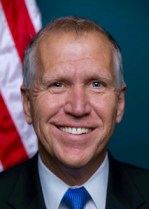
    Tillis  ThomEarlier this month, Sen. Thom Tillis (R-NC), the Ranking Member of the Subcommittee on Intellectual Property of the Senate Committee of the Judiciary, wrote to United States Trade Representative Katherine C. Tai to express his opposition, yet again, to the Biden Administration's support for a proposal by India and South Africa to waive certain provisions of the World Trade Organization (WTO) Agreement on Trade-Related Aspects of Intellectual Property Rights (TRIPS Agreement) in relation to the prevention, containment, or treatment of COVID-19.  In Sen. Tillis' letter, which was his fifth letter to the U.S. Trade Representative, the Senator called the Administration's support for waiving international obligations under the TRIPS Agreement "disastrous" (using that word three times in the two-page letter).

    Sen. Tillis (at right) "urge[d] the Administration to abandon its misguided attempts to negotiate any waiver of American intellectual property (IP) rights –- at home or abroad," and argued that "[t]he Administration's continued focus on destroying American IP rights serve not only as a threat to future life-saving innovation, but also as a distraction from the very real problems hindering vaccine access."  Noting that half of the 92 lower-income countries supported by the World Health Organization's COVID-19 Vaccines Global Access (COVAX) program have used less than 75% of the vaccine doses they have received, Sen. Tillis argued that barriers to the delivery of vaccines, rather than vaccine supply, are the biggest issue with expanding access to COVID-19 vaccines.  Among the barriers to delivery, Sen. Tillis pointed to shortages of syringes as one example, and urged the Administration "to focus on resolving urgent trade issues, including export restrictions, supply chain restrictions, ensuring vaccines can clear customs, and financing production."  According to the Senator "these logistical and supply chain issues — not the IP rights of hardworking American inventor — -are delaying global vaccinations and should be the Administration's priority."

    Sen. Tillis also noted that South Africa, who with India put forth the initial waiver proposal, is also "struggling to overcome vaccine hesitancy," which the Senator believes makes clear that South Africa's "desire for a TRIPS waiver has less to do with vaccination efforts and more to do with their long-standing efforts to steal American intellectual property by forced technology transfer."

    The Senator concluded his letter by disputing the fundamental assumption that intellectual property is a barrier to production and sharing vaccines.  According to Sen. Tillis, "IP is an enabler — allowing companies to share information to work together to develop and distribute complex, sophisticated medical treatments."  He therefore asked the Administration to "not sacrifice our ability to combat future diseases for political points."

    For additional information regarding this topic, please see:

    • "U.S. Trade Representative Responds to Letters from Senators Regarding TRIPS Waiver," November 14, 2021
    • "U.S. Chamber of Commerce Urges Administration to 'Double Down' on Global Vaccine Distribution," November 3, 2021
    • "Is This the WTO Waiver End Game?" July 25, 2021
    • "BIO Declaration on Global Access to COVID-19 Vaccines and Treatments and Role of IP," June 24, 2021
    • "GOP Legislators Write in Opposition to Proposed TRIPS Waiver," May 16, 2021
    • "Population of Patents at Risk from Proposed WTO Patent Waiver," May 12, 2021
    • "Sen. Daines Urges Biden Administration to Withdraw Support for COVID-19 IP Waiver," May 12, 2021
    • "Pfizer CEO Pens Open Letter on COVID-19 Vaccine IP Waiver," May 10, 2021
    • "If the Devil of the WTO IP Waiver Is in the Details, What Are the Details?" May 9, 2021
    • "The Road to Hell Is Paved with What Everybody Knows," May 6, 2021
    • "BIO & IPO Issue Statements on Biden Administration's Support for Proposed WTO Waiver," May 6, 2021
    • "Biden Administration Supports Waiver of IP Protection for COVID-19 Vaccines," May 5, 2021
    • "Suspending IP Protection: A Bad Idea (That Won't Achieve Its Desired Goals)," April 26, 2021
    • "Sen. Tillis Asks Biden Administration to Oppose WTO Waiver Proposal," April 21, 2021
    • "IP Organizations Support Continued Opposition to Waiver Proposal," April 5, 2021
    • "Industry Coalition Supports Continued Efforts to Oppose Waiver Proposal," March 29, 2021
    • "BIO and PhRMA Urge Biden Administration to Oppose Proposed WTO TRIPS Waiver," March 11, 2021
    • "IPO Sends Letter on IP Law and Policy to President-Elect and Vice President-Elect," January 4, 2021

  • CalendarDecember 14, 2021 – 15th Annual USPTO IP Attaché Roundtable (U.S. Chamber of Commerce Global Innovation Policy Center) – 8:30 am to 10:30 am (ET)

    December 14, 2021 – "PTAB Trial Proceedings: Best Practices and Emerging Trends" (Intellectual Property Owners Association) – 2:00 pm to 3:00 pm (ET)

  • IPO #2The Intellectual Property Owners Association (IPO) will offer a one-hour webinar entitled "PTAB Trial Proceedings: Best Practices and Emerging Trends" on December 14, 2021 from 2:00 pm to 3:00 pm (ET).  Hon. Alyssa Finamore, Administrative Patent Judge, U.S. Patent and Trademark Office; Alyssa Holtslander of Unified Patents; Hon. Eric Jeschke, Administrative Patent Judge, U.S. Patent and Trademark Office; Mark Stewart of Eli Lilly and Co.; and Todd Walters of Buchanan Ingersoll & Rooney PC will discuss the best practices and emerging trends from pre-institution through final hearing, including strategies focused on petition drafting, preliminary patent owner responses, discretionary denial considerations, replies, protective orders, discovery practice, cross-examination practice, motions practice, motions to amend, demonstratives, and oral hearings.

    There is no registration fee for the webinar.  However, those interested in attending the webinar should register here.

  • U.S. Chamber of CommerceThe U.S. Chamber of Commerce Global Innovation Policy Center (GIPC) will be offering its 15th Annual USPTO IP Attaché Roundtable with the U.S. Patent and Trademark Office's IP Attachés on December 14, 2021 from 8:30 am to 10:30 am (ET).  The program provides a unique opportunity to engage with the assembled IP Attachés for a discussion about recent trends and challenges in IP protection and enforcement in regions around the world.

    Those interested in registering for the program, can do so here.

  • By Kevin E. Noonan

    Cat_2The domestic cat has been the subject of much study, recently involving its genetic structure, genomic DNA sequence, and comparisons with other felines.  The first such study was published in 2014, when an international effort led by Stephen J. O'Brien at the Oceanographic Center, Nova Southeastern University, Ft. Lauderdale, Florida reported the complete genomic sequencing of the domestic cat, Felix catus.  The report, entitled "Annotated features of domestic cat – Felis catus genome," was published in GigaScience 2014, 3:13 (August 5, 2014) (see "Domestic Cat Genome Sequenced").  The study reported sequencing of a female Abyssinian cat named Cinnamon, a mixed-breed cat from Russian named Boris, and Sylvester, a wildcat ancestor of domestic cats.  The report showed that domestic cats have retained "a highly conserved ancestral mammal genome organization" in comparison with ancestral cats (see Driscoll et al., 2007, "The near eastern origin of cat domestication," Science 317: 519–23).  Both species, F. catus and Felix silvestris, have 38 chromosomes, 18 pairs of autosomes, and two pairs of dimorphic gender-determining chromosomes.  Details of the domestic cat genome structure included the presence of 217 loci of endogenous retrovirus-like elements (amounting to 55.7% of the entire genome, comprised of long interspersed elements (LINEs), short interspersed elements (SINEs), satellite DNA, retroviral long terminal repeats (LTRs) and "others"); 21,865 protein coding genes (open reading frames or ORFs), detected by comparison with eight mammalian genomes (from human, chimpanzee, macaque, dog, cow, horse, rat, and mouse); and a wealth of genetic variability in single nucleotide polymorphisms (SNPs), insertion/deletion events (indels); novel families of complex tandem repeat elements; and short terminal repeat (STR) loci.

    Since that time more individual cat genomic sequences have been determined and assembled in the 99 Lives Cat Genome Consortium.  These efforts resulted in a more comprehensive elucidation of the feline genome and insights into genetic bases for disease.  A paper published in the Public Library of Science, entitled "A new domestic cat genome assembly based on long sequence reads empowers feline genomic medicine and identifies a novel gene for dwarfism," PLoS Genetics 16(10): e1008926 on October 20, 2020, reported a revisit of the genomic sequence of Cinnamon, an Abyssinian breed domestic cat previously sequenced.  Rather than focusing on one cat, this group* performed whole genome sequencing (WGS) of 54 domestic cats and aligned the sequences to detect single nucleotide variants (SNVs) and structural variants (SVs).  As a consequence of these studies, sequences comprising the ~300,000 gaps in the annotated sequence reported to the Cinnamon Abyssinian were obtained, to produce a new reference cat genome denoted in relevant databases as Felis_catus_9.0.  This genome comprised 2.84 gigabasepairs (Gb), of which only 1.8% (1.38 megabasepairs, Mb) was not assigned to a specific chromosomal location.

    While such assessments of global genetic structure are informative, analysis of genes resulting in well-known phenotypes have been slower to arrive.  One such study was published in March 2021 in Animal Genetics 52: 321-32, entitled "Mining the 99 Lives Cat Genome Sequencing Consortium database implicates genes and variants for the Ticked locus in domestic cats (Felis catus)."  In this paper, scientists from the U.S. and Australia* reported the genetic basis of the Ticked tabby coat pattern, a phenotype whose genetics long have been used empirically by cat breeders.  (Amathematically, the Consortium database contains genetic information from 195 individual cats.)

    Three autosomal alleles at a single genetic locus in wild and domestic cats are understood to control the tabby coat pattern: Abyssinian (Ta, also known as "ticked"); mackerel (Tm, aka striped); and blotched (tb, aka classic, blotched) (where these allelic abbreviations follow the convention that capital letters indicate Mendelian dominant traits and lower-case letters are inherited as recessive genes); the blotched phenotype was designated as the "classic" tabby by Linnaeus in 1758.  Various combinations of these alleles result in complicated coat patterns involving the legs, head/face, tail, and torso.

    Failure of this understanding to explain cats that have spotted coats, like Egyptian mau and ocicat, induced further genetic analyses that uncovered at least three other loci involved in coat pattern; these include Tabby and Ticked, where the Tabby locus affects the mackerel and blotched patterns.  Located on the cat A chromosome, the candidate gene encoded by this locus, laeverin (LVRN) or transmembrane aminopeptidase Q, Taqpep, encodes 'a membrane-bound metalloprotease and plays a regulatory role in extravillous trophoblast migration."  The genetic bases for coat patterns involving the Tabby locus were found to be even more complex, involving genes in a pigment switching signaling pathway, and can have a phenotype having individual hairs in the coat pattern that alternates between melanin types that are seen illusorily to be brown.

    The other locus, the Ticked locus, had been localized on the cat B1 chromosome but the gene residing at the locus had not been determined until this report.  The famous Cinnamon had the ticked pattern and accordingly her DNA was used by these researchers in one strategy as having the "reference" allele and in another as having the "variant" allele in performing their search for the gene or genes at the Ticked locus.  Of the 195 cats in the 99 Cat Consortium database, 80 had either solid or white coats and their ticked-tabby phenotype could not be determined (regardless of their underlying genotype).  Among the cats whose genomic DNA was assessed were two obligate heterozygous ticked cats identical by descent for their ticked allele as they are parent–offspring bred from a ticked Somali"; three known Abyssinians, including Cinnamon; and three other cats showing the ticked phenotype.

    The researchers used eight short tandem repeats that segregated with the Ticked phenotype as identified by genome scanning methods to find a 17 centoMorgan (cM) linked region on cat chromosome B1 for their analysis of candidate variants.  Seven phenotype filters were applied (e.g., "eliminate intergenic, intronic and synonymous variants; (ii) consider the variant zygosity for the [whole genome sequencing entry for Cinnamon;" etc.) to identify increasingly rare variants in this region of the B1 chromosome; after filtering only one variant remained, located in the gene for Dickkopf Wnt Signaling Pathway Inhibitor 4 (DKK4).  The protein encoded by this gene is known to be "a member of the dickkopf (Dkk) family of cysteine-rich secretory proteins that are antagonists of Wnt signaling pathways, involved in antero-posterior axial patterning, limb development, somitogenesis and eye formation."  These researchers report finding a G>A transition mutation at position 188 of this gene, resulting in a Cys63Tyr amino acid sequence change in the encoded protein.  The researchers also reported finding at lower frequency another transition mutation (C>T) in this gene, resulting in a change at amino acid 18 from Ala to Val.  The position of these mutations is shown in the following Figure:

    Image 1
    These researchers further report that protein structure modeling suggests that these mutations disrupt "a key disulfide bond" in a "cysteine-rich domain" in the first mutation or a signal peptide cleavage site in the Dkk protein in the second mutation.  The resulting change in protein conformation for the first mutation is illustrated in the following Figure:

    Image 2
    In either case the researchers conclude that disrupting the function of this protein (as the consequences of these mutations suggest) results in the observed ticked phenotype.

    The authors recognize that the ticked phenotype is rare in outbred cats (and the observed allele frequency, wherein no other cats from the 195 cats in the database have this allele, is consistent with its rarity) and dominant, suppressing patterning and resulting in cats having no discernable coat pattern.  But they also recognize the search for genes that influence coat pattern in cats is not concluded, stating:

    Additional genotyping of the proposed variants, in a large cohort of phenotyped cats, as well as supportive functional data, would clarify the role of these variants in cat coat pattern development.  The identified variants do not clarify the pathways leading to the production of the spotted coat phenotype in cats, suggesting that additional genes influence other tabby patterns in domestic cats.  The allelic series for the Ticked locus is suggested as TiA = TiCK > Ti+, where the TiA allele represents the p.Cys63Tyr variant and the TiCK allele represents the p.Ala18Val variant.

    * From the Department of Veterinary Medicine and Surgery, College of Veterinary Medicine, University of Missouri – Columbia, Columbia, MO and the School of Health and Behavioural Sciences, University of the Sunshine Coast, Sippy Downs, Australia; the paper in an appendix credits the hundreds of researcher who have contributed to the 99 Live Cat Genome Consortium.