• CalendarApril 20-21, 2009 – 5th International Judges Conference on Intellectual Property Law (Intellectual Property Owners Association) – Washington, DC

    April 20-21, 2009 – 6th Annual Freedom to Operate Forum (C5 (UK)) – London, England

    April 22, 2009 – "How Recent Patent Developments May Be Creating a 'Perfect Storm' for Biotechnology" (Association of Patent Law Firms) – 12:30-1:30 PM (EST)

    April 24, 2009 – Patent Claim Construction (Law Seminars International) – College Park, GA

    April 27-28, 2009 – 3rd Annual Paragraph IV Disputes Conference*** (American Conference Institute) – New York, NY

    April 29-30, 2009 – Corporate IP Counsel Summit (World Research Group) – New York, NY

    May 18-21, 2009 – BIO International Convention (Biotechnology Industry Organization) – Atlanta, GA

    June 16-17, 2009 – Biotech Patenting (C5) – Munich, Germany

    June 19, 2009 – Patent Enforcement & Early Stage Litigation (Law Seminars International) – San Francisco, CA

    June 22-27, 2009 – Innovation Week 2009 (U.S. Patent and Trademark Office) – Arlington, VA

    June 21-23, 2009 – IP Business Congress (Intellectual Asset Management magazine) – Chicago, IL

    ***Patent Docs is a media partner of this conference or CLE

  • APLF The Association of Patent Law Firms (APLF) will be offering a dial in presentation entitled:  "How Recent Patent Developments May Be Creating a 'Perfect Storm' for Biotechnology" on April 22, 2009 from 12:30-1:30 PM (EST).  Kevin Noonan, Andrew Williams, and Donald Zuhn of McDonnell Boehnen Hulbert and Berghoff LLP will discuss recent decisions on obviousness (In re Kubin), written description (Ariad v. Eli Lilly), and the patentability of medical diagnostic claims (Classen Immunotherapies v. Biogen Idec), developments regarding patent reform, and the possible fate of the proposed claims and continuations rules (Tafas v. Doll) and other Patent Office rules packages.

    The presentation is free to in house counsel and APLF members and $500 per phone line for other practicing attorneys.  Those interested in signing up or registering for the presentation, can do so here.

  • Chicago #2 Intellectual Asset Management (IAM) magazine will be hosting the second IP Business Congress on June 21-23, 2009 in Chicago, IL.  The IP Business Congress is designed to meet the needs of senior business executives responsible for the creation and management of IP value inside corporations, as well as those who advise them.  Among the plenary and breakout sessions being offered are:

    • The state of play — which focuses on five key jurisdictions (U.S., Europe, Japan, China, and India), their IP environments, how these may develop, and the effects that change may have on IP value creation;
    • Aligning IP and business strategy;
    • The U.S. patent environment;
    • IP as an asset class;
    • The CIPO (chief IP officer) manifesto;
    • Collaboration and open innovation;
    • Creating IP value;
    • The 21st century CIPO;
    • Brand IP — which focuses on helping the boardroom understand the importance of IP, setting the political agenda, and tackling negative public perceptions of IP;
    • Patents in Europe;
    • Litigation strategy;
    • IP monetisation; and
    • IP management in the knowledge economy.

    IPBC The programme for the IP Business Congress can be found here.

    The registration fee for the IP Business Congress is $1,500.  Those registering on or before May 8, 2009 will receive a $150 discount off the registration fee.  Those interested in registering for the conference can do so here.

  • San Francisco #1 Law Seminars International (LSI) will be holding a one-day workshop on Patent Enforcement & Early Stage Litigation on June 19, 2009 in San Francisco, CA.  During the workshop, LSI's faculty will offer presentations on the following topics:

    • Recent decisions impacting patent viability, value, and enforceability;
    • A fresh look at the plaintiff's decision to sue or license;
    • Updating the defendant's approach to developing a defense strategy;
    • Effective procedural practice for plaintiffs and defendants;
    • Special judicial panel:  Patent litigation under the new case law;
    • Conveying complex technology;
    • Working through the legal, economic, and business decisions for a successful strategy; and
    • Ethical issues in patent litigation.

    09PATCA-1 The agenda for the workshop can be found here.  A complete brochure for this workshop, including an agenda, list of speakers, and registration form can be downloaded here.

    The registration fee is $447.50 for students and new employees, $695 for government employees, and $895 for all other attendees. Those interested in registering for the workshop can do so here, by calling 1-800-854-8009, or by faxing a registration form to 1-206-567-5058.

  •     By Donald Zuhn

    Biotechnology Industry Organization (BIO) At last month's Biotechnology Industry Organization (BIO) Intellectual Property Counsels' Committee (IPCC) conference, Q. Todd Dickinson, Executive Director of the American Intellectual Property Law Association (AIPLA), and E. Anthony Figg of Rothwell, Figg, Ernst & Manbeck, P.C. provided an update on the status of patent reform legislation in one of the conference's more interesting panel sessions.  Interest in the topic, which would have been high on any other day, was elevated even more by the activities of the Senate Judiciary Committee back in D.C.  These activities included the presentation of a number of amendments to S. 515 on the day prior to the panel session, and the scheduled discussion of S. 515 at the Committee's Executive Business Meeting, which took place at the same time as the panel session.

    In the three weeks since the panel session took place, Senate Judiciary Committee Chairman Patrick Leahy (D-VT) has managed to get his bill voted out of Committee and placed on the Senate Legislative Calendar.  However, as the patent reform debate readies for a move to the House, it is worth reviewing some of issues that were discussed at the IPCC panel session.

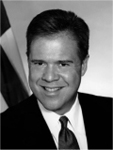
    Dickenson, Q. Todd With regard to the first-inventor-to-file provision of S. 515, Mr. Dickinson (at left) predicted that the Senate version of the provision, in which Europe and Japan would not be required to reciprocate with a grace period, would win out.  He added that the provision was desired by universities, where the "publish first and file second" mentality was prevalent.  Mr. Figg noted that the provision, which caused a "raging debate" only 10-15 years ago, was now "surprisingly noncontroversial."  He added that one argument against the House bill's "trigger" (adoption of a grace period) was that Congress should not give Europe and Japan veto power over the first-inventor-to-file provision, stating that if the provision would be good for the U.S., it should stay in the bill, and if it would not be good, it should be removed.

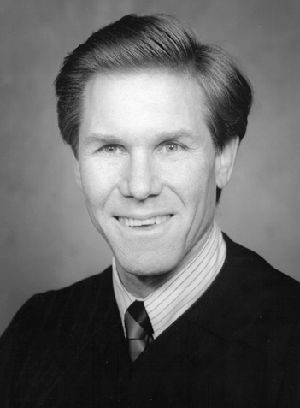
    Figg, Tony On inequitable conduct, the panelists noted that S. 515 did not include an inequitable conduct provision and that Senator Orrin Hatch (R-UT), who has been a champion of the topic, had not proposed an amendment to add such a provision to the bill.  Mr. Dickinson noted that the AIPLA supported a "but for" test for finding inequitable conduct.  Mr. Figg (at right), discussing the inequitable conduct provision in Senator Kyl's patent reform bill (S. 610), argued that the Patent Office had not demonstrated the capability to handle the administration proceedings created by that provision, and that the issue should remain with the courts.  Mr. Dickinson predicted (correctly as it turns out) that the Kyl provision "didn't have legs," adding that he believed that by dropping inequitable conduct from the debate, anti-apportionment Senators were able to focus attention on the bill's damages provision.  In this way, Senators who had been resistant to compromise on the damages issue were forced to consider a compromise (and, as we now know, reach a compromise).

    The panelists next addressed Applicant Quality Subsmissions (AQSs), a topic that has often been paired with the discussion of inequitable conduct reform.  While noting that S. 515 strikes the provision in last year's bill (S. 1145) that would have established an AQS requirement, the panelists opined that the Bush Administration's insistence on securing an AQS provision before resolving the inequitable conduct issue ultimately doomed that provision from making it into the present bill.  Neither panelist, however, could offer any insights as to whether the current Administration would take the same stance on AQSs.

    With respect to the willful infringement provision in S. 515, Mr. Figg noted that the ABA Section of IP Law Committee, of which he is a member, had not yet developed a position on the S. 515 provision, which codifies the objective recklessness standard of In re Seagate Technology, LLC.  Mr. Dickinson speculated that those favoring codification of the Seagate standard may want to do so in order to prevent the Federal Circuit from "taking it away."

    Having dispensed with the above issues, the panel moved to a discussion of three of the four big issues regarding patent reform:  post-grant review, venue, and damages (with the fourth big issue, inequitable conduct reform, having been tabled by Congress this time around).  With respect to post-grant review, the panel noted that while there was general support for a first window of review (i.e., challenges within 12 months of issuance), there had historically been much debate over the need for a second window (i.e., challenges from 12 months after issuance to expiration).  As with several other proposed patent reform provisions, the debate pitted the IT industry, which the panel claimed deferred searches until "late in the game" and therefore wanted a second window of review, and the biotech/pharma industry, which needed stable patent assets (i.e., quiet title) in order to secure investment.

    Since S. 515 forgoes a post-grant second window in favor of expanded inter partes reexamination, the panel turned its focus to the latter proceedings, and in particular, to the types of evidence that could be considered in determining whether a substantial new question of patentability affecting any patent claim had been raised.  Mr. Figg noted that H.R. 1260, unlike S. 515, would allow third-party requesters to file for inter partes examination on the basis of "any prior art of documentary evidence cited under paragraph (1) or (3) of subsection (a) of section 301," where paragraph (1) specifies patents or printed publications, and paragraph (3) specifies "documentary evidence that the claimed invention was in substantial public use or on sale in the United States more than 1 year prior to the date of the application for patent in the United States."  However, Mr. Figg argued that the meaning of "documentary" and "substantial" was unclear.  Because S. 515 lacks paragraph (3), it is also unclear how the House and Senate would resolve this difference in their respective bills.  Mr. Figg also argued that the USPTO lacked the capability to deal with some 1,000 opposition-like proceedings a year (and not just from the perspective of an increased workload).  Mr. Dickinson disagreed, stating that ALJs were capable.  The panelists completed their discussion of post-grant review by no
    ting that the AIPLA supported the idea, the Coalition for 21st Century Patent Reform did not support the idea, and the ABA supported the idea (but not with a "wide open second window").

    The panelists concluded by discussing the damages provisions of the bills, easily the most controversial part of the legislation and the reason why S. 1145 was pulled from the Senate calendar last spring.  They acknowledged that there had been a move away from apportionment and towards a gatekeeper mechanism in which the judge determines which factors the jury may consider — which, as we now know, was the compromise that allowed S. 515 to get voted out of Committee (the bill has now been placed on the Senate calendar).  However, in a possible foreshadowing of future problems, Mr. Dickinson warned that the Senate Judiciary Committee's resolution of the damages issue may not sit well with the House, which was able to pass a bill containing an apportionment of damages clause in September 2007.  Thus, the damages issue could rear its head once again as the House begins work on H.R. 1260, and in a reversal from last spring's experience with S. 1145, the House bill could fall victim to intense lobbying by the IT industry.

  •     By Christopher P. Singer

    IP Australia #2 In a Notice, dated April 13, 2009, the U.S. Patent and Trademark Office announced that it will continue the existing Patent Prosecution Highway (PPH) Pilot Program with the Intellectual Property Office of Australia (IP Australia) for an unspecified period of time in order to gather more information and assess the feasibility of the program prior to making the PPH program permanent.

    German Patent Office (DPMA) In a separate Notice, dated April 14, 2009, the USPTO announced that it will begin another PPH Pilot Program with the German Patent and Trademark Office (DPMA).  The new pilot program will begin on April 27, 2009 and last until April 27, 2011.  The forms for applicants interested in taking part in this program will be made available on the DMPA's website and the USPTO's website (Form PTO/SB/20DE) on April 27, 2009.  The following types of applications will be eligible for participation in this program:

    1.  U.S. applications filed under the Paris convention that either have (a) a valid priority claim under 35 U.S.C. § 119(a) and 37 C.F.R. § 1.55 to one or more applications filed with the DPMA or (b) a valid priority claim under 35 U.S.C. §§ 119(a) or 365(a) to a PCT application containing no priority claims.

    2.  U.S. National stage applications filed under the PCT, where the PCT application has (a) a valid priority claim under 35 U.S.C. § 365(b) to an application filed with the DPMA; (b) a valid priority claim under 35 U.S.C. § 365(b) to a PCT application containing no priority claims; or (c) contains no priority claim.

    3.  A bypass continuation application filed under 35 U.S.C. § 111(a) with a valid priority claim under 35 U.S.C. § 120 to a PCT application, where the PCT application has (a) a valid priority claim under 35 U.S.C. § 365(b) to an application filed with the DPMA; (b) a valid priority claim under 35 U.S.C. § 365(b) to a PCT application containing no priority claim; or (c) contains no priority claim.

    The Notice provides several examples of specific application types that fall within those requirements.

    USPTO Seal As mentioned in prior posts regarding the other participant Offices, the motivation behind the PPH is to leverage fast-track patent examination in participant offices so that applicants can obtain corresponding patents faster and more efficiently in each participant country.  Further, the PPH program should allow each office to benefit from work previously done by the initial examining office and consequently reduce examination workload and improve patent quality.

  •     By Suresh Pillai

    Resolution Announced in Johnson & Johnson Razadyne® ER Patent Litigation

    Johnson & Johnson Johnson & Johnson units Janssen LP, Janssen Pharmaceutica NV, and Ortho-McNeil Neurologics have stipulated to a dismissal with prejudice of all claims of patent infringement against KV Pharmaceutical Co., Barr Pharmaceuticals Inc., and Sandoz Inc. with respect to a generic version of Razadyne® ER.  The dispute stemmed from ANDA filings made in 2005 by KV, Barr, and Sandoz seeking approval to market generic Razadyne®.  The Johnson & Johnson units filed suit in the U.S. District Court for the District of New Jersey (see "Court Report," June 22, 2008), alleging that the generic companies were infringing U.S. Patent No. 7,160,559.

    KV Pharmaceutical Under an agreement between the parties, all three generic companies are allowed to market generic versions of galatamine hydrobromide extended-release capsules, the subject of their current ANDAs.  Although the Johnson & Johnson units stipulated to the dismissals with prejudice, the generic companies reserved the right to pursue invalidity counterclaims or defenses in any future actions between the parties that involve the '559 patent.

    Sandoz In a separate Razadyne® case (see "Court Report," August 17, 2008), the U.S. District Court for the District of Delaware invalidated Johnson & Johnson's U.S. Patent No. 4,663,318 for lack of enablement.  That case is currently on appeal before the Court of Appeals for the Federal Circuit.  The settlement with respect to the '559 patent does not affect that appeal.

    AstraZeneca Seeks a TRO to Stop Launch of Generic Pulmicort®

    AstraZeneca_small AstraZeneca filed a motion for interim relief with the U.S. District Court for the District of New Jersey, seeking a temporary restraining order to keep Canadian generic manufacturer Apotex from launching a generic version of Pulmicort®, a children's asthma medication.  In its motion, AstraZeneca stated that relief was necessary until its current patent infringement suit against Apotex involving the drug has been resolved.  The two patents in suit, U.S. Patent Nos. 6,598,603 and 6,899,099, cover the method for treating respiratory disease in children between the ages of 12 months and 8 years.  AstraZeneca originally filed suit on March 31, 2009, upon Apotex's announced intention to market a generic version of AstraZeneca's Pulmicort® Resulpules on the heels of the FDA's grant of Apotex' ANDA.  The trial is scheduled to begin on April 16.


    Biovail Files Counterclaims for Invalidity in Seroquel® IP Dispute

    Biovail In its latest action against AstraZeneca, Biovail has filed counterclaims in the U.S. District Court for the District of New Jersey asking the Court to invalidate or rule unenforceable AstraZeneca's U.S. Patent Nos. 4,879,288 and 5,948,437.  The '288 and '437 patents cover Seroquel® XR, which is used to treat schizophrenia and bipolar disorder, and which is AstraZeneca's best selling drug.  As a basis for its filing, Biovail alleges that AstraZeneca engaged in inequitable conduct during prosecution of the '288 and '437 patents, an allegation that also has been made in other Seroquel® XR suits.  While acknowledging that applicants have been found to have withheld non-material information from the U.S. Patent and Trademark Office, Biovail notes that those cases have been appealed to the Court of Appeals for the Federal Circuit and that Biovail is merely seeking to preserve its rights until the appellate court has considered the matter.  In its motion, Biovail also argues that both patents are invalid and/or that Biovail did not infringe the patents.

    AstraZeneca Logo The litigation stems from a suit AstraZeneca filed against Biovail and two subsidiaries in February (see "Court Report," March 8, 2009).  In its initial filing, AstraZeneca alleged that in submitting an ANDA seeking FDA approval to market a generic version of quetiapine fumarate, Biovail infringed upon AstraZeneca's patents.  AstraZeneca is asserting both direct infringement and inducement of infringement, and is seeking a declaratory judgment that both patents are valid and infringed.  In addition, AstraZeneca is seeking an order that the ANDA not become effective until after the patents' dates of expiry, and that the Court issue a permanent injunction against Biovail, as well as costs and treble damages.

    Additional Disclaimer:  MBHB represents Biovail in
    the above case.  To the
    extent that this post contains any
    opinions, the opinions would be of Dr. Pillai and not Biovail or MBHB.

  •     By Kevin E. Noonan

    Ariad Beginning with Regents of the University of California v. Eli Lilly and Company, the Federal Circuit has applied the written description requirement stringently in many art areas as a requirement of 35 U.S.C. § 112, first paragraph, that is separate from the enablement requirement.  Judge Linn, at least, believes that is a doctrinal mistake, as he expressly stated in a concurring opinion in Ariad Pharmaceuticals, Inc. v. Eli Lilly and Co. that read more like a dissent.  But how Ariad attempted to avoid the strictures of the written description requirement illustrates the wisdom of the theoretical framework for written description developed in large part by Judge Lourie over the past two decades.

    The claims at issue in the Ariad case include these (as the Court said in its opinion, including the limitations incorporated by independent claims):

    80.  [A method for modifying effects of external influences on a eukaryotic cell, which external influences induce NF-κB-mediated intracellular signaling, the method comprising altering NF-κB activity in the cells such that NF-κB-mediated effects of external influences are modified, wherein NF-κB activity in the cell is reduced] wherein reducing NF-κB activity comprises reducing binding of NF-κB to NF-κB recognition sites on genes which are transcriptionally regulated by NF-κB.

    95.  [A method for reducing, in eukaryotic cells, the level of expression of genes which are activated by extracellular influences which induce NF-κB-mediated intracellular signaling, the method comprising reducing NF-κB activity in the cells such that expression of said genes is reduced], carried out on human cells.

    144.  [A method for reducing bacterial lipopolysaccharide-induced expression of cytokines in mammalian cells, which method comprises reducing NF-κB activity in the cells so as to reduce bacterial lipopolysaccharide-induced expression of said cytokines in the cells] wherein reducing NF-κB activity comprises reducing binding of NF-κB to NF-κB recognition sites on genes which are transcriptionally regulated by NF-κB.

    145.  [A method for reducing bacterial lipopolysaccharide-induced expression of cytokines in mammalian cells, which method comprises reducing NF-κB activity in the cells so as to reduce bacterial lipopolysaccharide-induced expression of said cytokines in the cells], carried out on human cells.

    A careful perusal of these claims reveals that nowhere in the claims is there recited what can reduce NF-κB activity in a cell.  This is in contrast to the claims in University of Rochester v. G.D. Searle & Co., which the district court and the Federal Circuit found did not satisfy either the written description or enablement requirements for failing to identify a compound useful for practicing the claimed method:

    1.  A method for selectively inhibiting PGHS-2 activity in a human host, comprising administering a non-steroidal compound that selectively inhibits activity of the PGHS-2 gene product to a human host in need of such treatment.

    Ariad's claim format represented the strategy behind their legal arguments:

    Ariad claims methods comprising the single step of reducing NF-κB activity.  Lilly argues that the asserted claims are not supported by written description because the specification of the '516 patent fails to adequately disclose how the claimed reduction of NF-κB activity is achieved.  The parties agree that the specification of the '516 patent hypothesizes three classes of molecules potentially capable of reducing NF-κB activity: specific inhibitors, dominantly interfering molecules, and decoy molecules.  Lilly contends that this disclosure amounts to little more than a research plan, and does not satisfy the patentee's quid pro quo as described in Rochester.  Ariad responds that Lilly's arguments fail as a matter of law because Ariad did not actually claim the molecules.  According to Ariad, because there is no term in the asserted claims that corresponds to the molecules, it is entitled to claim the methods without describing the molecules.

    That failed:

    Ariad's legal assertion, however, is flawed.

    In Rochester, we held very similar method claims invalid for lack of written description.  Id. (holding patent invalid because "Rochester did not present any evidence that the ordinarily skilled artisan would be able to identify any compound based on [the specification's] vague functional description"); see also Fiers v. Revel, 984 F.2d 1164, 1170–71 (Fed. Cir. 1993) (holding a claim to a genus of DNA molecules not supported by written description of a method for obtaining the molecules); cf. Eli Lilly, 119 F.3d at 1567–68 (holding claims to a broad genus of genetic material invalid because the specification disclosed only one particular species).  Ariad attempts to categorically distinguish Rochester, Fiers, and Eli Lilly, because in those cases, the claims explicitly included the non-described compositions.  For example, in Rochester, the method claims recited a broad type of compound that we held was inadequately described in the specification of the patent:

    1. A method for selectively inhibiting PGHS-2 activity in a human host, comprising administering a non-steroidal compound that selectively inhibits activity of the PGHS-2 gene product to a human host in need of such treatment.

    Id. at 918 (emphasis added).  Ariad's attempt to distinguish these cases is unavailing.  Regardless of whether the asserted claims recite a compound, Ariad still must describe some way of performing the claimed methods, and Ariad admits that the specification suggests only the use of the three classes of molecules to achieve NF-κB reduction.  Thus, to satisfy the written description requirement for the asserted claims, the specification must demonstrate that Ariad possessed the claimed methods by sufficiently disclosing molecules capable of reducing NF-κB activity so as to "satisfy the inventor's obligation to disclose the technologic knowledge upon which the patent is based, and to demonstrate that the patentee was in possession of the invention that is claimed."  Capon, 418 F.3d at 1357.

    Amgen This strategy, of drafting broader claims to avoid a determination of invalidity, is reminiscent of the strategy Genetics Institute attempted to employ regarding its erythropoietin composition claims in Amgen Inc. v. Chugai Pharmaceutical Co.  Genetics Institute asserted the following claim against Amgen in the first litigation (Amgen I):

    1.  Homogeneous erythropoietin characterized by a molecular weight of about 34,000 daltons on SDS PAGE, movement as a single peak on reverse phase high performance liquid chromatography and a specific activity of at least 160,000 IU per absorbance unit at 280 nanometers.
    (U.S. Patent No. 4,677,195)

    This claim was upheld at trial but invalidated by the Federal Circuit (in Amgen II) for non-enablement:

    Defendants have produced no evidence that it ever prepared EPO with a specific activity of at least 160,000 IU/AU in vivo using the disclosed methods.  In its report to the FDA, GI stated that it had purified uEPO material "to homogeneity" by subjecting partially purified uEPO material to reverse phase high performance liquid chromatography (RP-HPLC), the technique taught by Hewick in the '195 patent.  The district court found that GI reported to the FDA that the specific activity of uEPO, based on in vivo bioassays, was only 109,000 IU/AU . . . GI originally arrived at the figure of 160,000 IU/AU by calculation, before it had the capacity to derive quantitative information from bioassays.  Hewick subjected the EPO to RP-HPLC, the EPO having an actual value of 83,000 IU/AU.  After weighing the chromatograph, he found that "at least fifty percent" of the area under the chromatograph curve was attributable to something other than EPO.  He then doubled the 83,000, and arrived at a theoretical specific activity of "at least about 160,000 IU/AU."  That procedure, while possibly valid as a means for estimating the specific activity of a pure sample, does not establish that GI had a workable method for actually obtaining the pure material that it claimed.

    Moreover, the work of others shows that Hewick did not enable the preparation of uEPO having an in vivo specific activity of at least 160,000, as the claims required.  Dr. Kawakita, a scientist at Kummamoto University in Japan, reported an in vivo specific activity of 101,000 IU/AU when using RP-HPLC according to Hewick's method.  This is similar to the 109,000 value reported to the FDA by GI.  Kawakita did report a value of 188,000, but did not follow the teachings in the '195 patent.

    Faced with this decision, Genetics Institute returned to the Patent Office and obtained the following claim (which, lacking the activity limitation was broader than the claim invalidated by the Federal Circuit):

    1.  A pharmaceutical composition for stimulating production of red blood cells comprising a therapeutically effective amount of homogeneous human EPO protein characterized by a molecular weight of about 34,000 daltons in a single band on SDS PAGE and movement as a single peak in reverse phase high performance liquid chromatography and a pharmaceutically acceptable vehicle.
    (U.S. Patent No. 5,322,837)

    Genetics Institute then sued Amgen on this patent.  On summary judgment, Judge Young concluded:

    After thoroughly examining the content and structure of Amgen II, the arguments made to the Federal Circuit by the parties, the context in which that decision was rendered, and the history of the preceding litigation, it is this Court's opinion that the Federal Circuit necessarily considered the '195 patent as claiming homogeneous EPO, an essential element of which was a specific activity level of 160,000 IU/AU.  Thus, the '195 patent simply "fails to enable purification of either rEPO or uEPO," Amgen II, 927 F.2d at 1217, which, in the view of this Court, means that the specification of the '195 patent does not enable one skilled in the art to obtain homogeneous EPO, which by Genetics's own definition is EPO with a specific activity level of 160,000 IU/AU.

    From this conclusion, the ineluctable logic of the doctrine of claim preclusion compels a declaration that Genetics may not invoke the spectre of the '837 patent against Amgen and its privies.  Whether under the name claim preclusion or res judicata, the principle and its elements are familiar: a claim is precluded where there is (1) a final judgment on the merits in an earlier action; (2) an identity of the cause of action in both the earlier and present suits; and (3) an identity of parties or privies in the two suits.  Kale v. Combined Ins. Co. of America, 924 F.2d 1161, 1165 (1st Cir.), cert. denied, 502 U.S. 816, 116 L. Ed. 2d 44, 112 S. Ct. 69 (1991); Hartley v. Mentor Corp., 869 F.2d 1469, 1471 n.1 (Fed. Cir. 1989) (applying regional circuit law of res judicata to patent dispute).

    The Court then supplied the doctrinal rationale for the importance of a full and complete disclosure of a claimed invention:

    From the early days of the republic, our patent law has required that in exchange for a government-sanctioned monopoly on the rights to an invention or discovery, the inventor must teach the world the secret behind the method or device.  Compare 35 U.S.C.A. § 112 (1984), supra, with Act of April 10, 1790, ch. 7, § 2, 1 Stat. 109 ("specification shall be so particular . . . as not only to distinguish the invention or discovery from other things before known and used, but also to enable a workman or other person skilled in the art of manufacture . . . to make, construct or use the same, to the end that the public may have the full benefit thereof, after the expiration of the patent term"); see also Bonito Boats, Inc. v. Thunder Craft Boats, Inc., 489 U.S. 141, 146-51, 103 L. Ed. 2d 118, 109 S. Ct. 971 (1989); In re Goodman, 11 F.3d 1046, 1050 (Fed. Cir. 1993) (specification must teach how to make and use the invention as broadly as it is claimed).  The rationale for the enablement requirement is that

    an inventor deprives the public of nothing which it enjoyed before his discovery, but gives something of value to the community by adding to the sum of human knowledge.  He may keep his invention secret and reap its fruits indefinitely.  In consideration of its disclosure and the consequent benefit to the community, the patent is granted.  An exclusive enjoyment is guaranteed [the inventor] for seventeen years, but upon the expiration of that period, the knowledge of the invention inures to the people, who are thus enabled without restriction to practice it and profit by its use.

    United States v. Dubilier Condenser Corp., 289 U.S. 178, 186-87, 77 L. Ed. 1114, 53 S. Ct. 554 (1933) (citations omitted); see also O'Reilly v. Morse, 56 U.S. 62, 119-20, 14 L. Ed. 601, (15 How. 62, 127-28) (1853) (Taney, C.J.) (one skilled in the art must be able to produce precisely the described result by using the means specified by the inventor); Grant v. Raymond, 31 U.S. 217, 247 (31 Peters 141, 160) (1832) (Marshal
    l, C.J.) (correct specification is a prerequisite to obtaining a patent in order to give the public "the advantage for which the privilege is allowed, and is the foundation of the power to issue the patent.").  When a putative inventor fails or refuses to fulfill the obligation to teach precisely what is claimed, the inventor is not entitled to the protections of the patent law.  See, e.g., Morton Int'l, Inc. v. Cardinal Chem. Co., 5 F.3d 1464, 1469-70 (Fed. Cir. 1993) (affirming determination of lack of enablement where fifty examples in specification "obviously teach something," but not what was defined in the claims).

    The Federal Circuit agreed, and granted Amgen its costs of responding to Genetic Institute’s appeal.

    Judge Linn These decisions illustrate why Judge Linn's position fails to account for the strong policy considerations behind a separate written description requirement.  Judge Linn (at right) argues that the claims have primacy in defining an invention, and that concentrating on a separate written description requirement obscures the question (in Ariad) of whether the claims are enabled.  In addition, citing In re Hyatt, he suggests that Ariad's claims are "single means claims" that encompass unknown methods that cannot be enabled.

    While it is certainly true that the Court's application of the written description requirement has occasionally "created mischief" (for example, in Enzo v. Genprobe I), it has also served a legitimate purpose.  It is certainly the case that it provides a bright line rule for determining what an applicant has invented at the time the application was filed.  It avoids the effects of improving technology, wherein an applicant can enable production of additional species (for example, of cDNA species encoding orthologs) that an applicant has not obtained.  It has also beneficially prevented applicants, including the Rochester and Ariad inventors, from foreclosing the future with broad claims to all compounds or all methods for achieving a particular result.  While Judge Linn may be correct that in certain circumstances an applicant will fail to satisfy both the written description and enablement requirements (as in Rochester), in others this may not always be the case (for example, isolation of a cDNA encoding one ortholog of a mammalian protein might enable the skilled worker to isolate orthologs from all other mammalian species); under these circumstances a separate written description requirement precludes overclaiming and rewarding an applicant with claims supported by a specification that does not satisfy the patent quid pro quo.  If for no other reason, these situations implicate the Constitutional requirement that patents be granted only that "promote the progress" of the useful arts.  That, alone, provides ample justification for the Federal Circuit's separate consideration of the written description and enablement requirements when determining whether claims are supported by a specification that adequately satisfies 35 U.S.C. § 112, first paragraph.

  •     By Kevin E. Noonan

    Federal Circuit Seal The recent discussion of the Federal Circuit's decision in the In re Kubin case suggests there may be some misunderstanding of the science behind the legal question of obviousness.  Because obviousness is a question of law based heavily on underlying issues of fact, it is important for commentators as well as judges to have some understanding of the underlying science.  The Federal Circuit's decision in the Kubin case illustrates the possible consequences of misunderstanding, or of Judge Rich's recitation of the "rudiments" of biotechnology from In re O'Farrell as somehow conferring on appellate judges the illusion that their understanding is per se sufficient.

    We must start, generally and classically, with a protein.  (The complications involved with the massive amount of sequence information generated by the Human Genome Project will be discussed separately below.)  Proteins, and the extent of knowledge in the prior art about proteins, varies enormously, from simple knowledge of its existence (as in Kubin) to a complete determination of the amino acid sequence of the protein, as in In re Bell.  Knowledge commensurate with Bell limits the scope of any claim for a gene encoding the protein to the specific nucleotide sequence of the isolated cDNA.  This is because of the degeneracy of the genetic code:  there are multiple codons for all but two of the 20 naturally-occurring amino acids, so the number of possible nucleotide sequences for any amino acid sequence is typically astronomical — the number of possible nucleotide sequences that could encode the insulin-like growth factor in the Bell case was 1036 (for a protein encoded by 70 amino acids).  Non-obviousness on these grounds is Federal Circuit precedent from the Bell case, and neither Kubin nor KSR International Co. v. Teleflex Inc. overrules it (unless 1036 can be considered a "small" number of predicable solutions).

    More typically, only partial amino acid sequence information from a protein is known in the art, of variable reliability (albeit the reliability has improved over the past 25 years).  This knowledge is used to produce probes for screening libraries prepared according to the Sambrook reference, but the predictability of being able to isolate a cDNA encoding the desired protein depends on whether the amino acid sequence known in the art can produce a degenerate probe that reliably detects a cDNA clone in the library.  Alternatively, longer probes can be developed depending on conserved functional motifs in the encoded protein (such as ATP-binding cassettes or G-protein coupled receptors).  However, the efficiency of using such probes depends on how closely conserved the particular motif is in the protein of interest, which is frequently not known in the prior art.  (As in Kubin, there are also ways of screening that rely on expression of antigenic epitopes of the protein of interest that are detected by antibodies, but the principles are the same.)

    Judge Rader This screening step depends upon more that the quality of the probe, however.  Most importantly, the art needs to provide a source for messenger RNA that can be used to make the cDNA library.  In addition, the cell or tissue source must make enough of the specific mRNA to be cloned so that its representation in the library (i.e., the number of cDNAs produced from the specific mRNA) is high enough to be detected.  This is because cells and tissues express mRNAs in generally broad classes of abundance:  structural proteins like actin and tubulin are expressed at high abundance, while cell- or tissue-specific genes are frequently expressed at low abundance.  While there may be some clues in the art about cell or tissue sources of an mRNA and the expression abundance thereof, these are generally gene-specific factual matters that cannot be presumed when making an obviousness determination.  This is why Judge Rader (at left) was incorrect when he said "No, [Sambrook] tells one of skill in the art how to produce those libraries, and when you [have] the probe it's not so hard to do" during the Kubin oral argument, since Sambrook did not provide any teaching on what cells to use or how to treat them to stimulate production of NAIL-encoding mRNA to detectable levels.

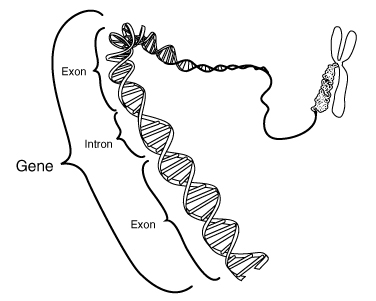
    Gene Now we come to the Human Genome Project (HGP), which has put lots of sequences into public databases and impacts both anticipation and obviousness.  For anticipation, there will frequently be In re Hall issues raised:  was the sequence sufficiently annotated so that the skilled worker would recognize it in the database?  This is not a trivial question, due to one of the vagaries of genome structure (at least in most eukaryotic organisms like mammals and vertebrates).  This feature is that genes are not set forth "in one piece" in the genomic DNA (which is the DNA sequenced in the Human Genome Project).  Instead, the gene sequences encoding a protein are broken up by non-coding sequences (variably termed "intervening sequences," "introns" or "junk DNA").  This gives the typical gene the structure (see link):  beginning of protein code — intron — continuing protein code — intron — end of protein code.

    When the gene sequence is transcribed into RNA, at first the whole sequence, coding and introns alike are transcribed.  Then, cellular enzymes splice out the introns, leaving the mRNA with the coding sequence arranged in one contiguous piece.  cDNA is prepared from mRNA because it has the coding sequence in this linear fashion and has the least amount of "extra" RNA, usually at each end.  This makes cDNA cloning much more efficient that genomic cloning.

    But these aspects of cellular biology have consequences for what we can tell from the HGP data.  First, is the data is present in the database in such a way that the skilled worker would be able to identify the "open reading frames" (i.e., portions of genomic DNA that could potentially be translated into protein via an mRNA intermediate) that encode the complete gene.  This is not always the case, because a gene made up of 1,000 nucleotides may have introns that are 35,000 nucleotides in length.  Certai
    nly, as the data has been analyzed more and more vigorously these sequences have become more and more accessible and algorithms are available having the capacity to detect open reading frames separated by large intron sequences and to identify properly positioned splice sites that would predict how these open reading frames could be assembled into an mRNA encoding the desired protein.  Thus, it has become more and more likely that the Hall conditions will be satisfied.  But this will be a fact-specific question to be answered anew for each gene under consideration.  For example, transcripts can be alternatively spliced in some instances and if the art did not disclose this the cDNA ultimately obtained would not be anticipated by the "predicted" sequence in the HGP data.

    Returning to obviousness, one of the hallmark discoveries of the HGP is the detection of genes (and hence proteins) otherwise never before identified or suspected; this is particularly true of members of multigene families, especially those more distantly related by evolution.  It seems that these genes should fall outside the Kubin standard of DNA obviousness because they lack the fundamental predicate of the decision:  knowledge in the art that the protein existed in the first place.  Indeed, the issue over the patentability of these genes has not been (and should not be after Kubin) whether they were obvious; the issue is whether applicants claiming these genes know (and disclose in their applications) the function of the encoded protein, its activity, in order to satisfy the utility requirements of 35 U.S.C. § 101.  So it isn't as easy as looking up open reading frames in a database and filing a patent application for these "unknown" genes identified through the HGP.

    It is fair to ask, if these are all the reasons why the Kubin sequence is non-obvious, under what circumstances could it be obvious?  I think these factors would support an obviousness determination:  the protein was known to exist in the prior art; the art identifies a cell or tissue type that expresses the gene of interest in amounts that permit cDNA from that gene to be represented in the library at levels (>1 clone in 100,000, for example) where the clones would be readily detectable (whether natively or as the result of some experimental treatment or manipulation); the art provides a probe (whether stemming from a reliable amino acid sequence encoded by a sufficiently non-degenerate collection of oligonucleotides or with a monoclonal antibody such as Valiante's C1.7 mAb) that efficiently detects the desired cDNA sequence; and the cDNA contained no features (hairpin structures, alternative splice sites, other anomalies) that would preclude or prevent cloning using conventional methods.

    Dwight Eisenhower said "[f]arming looks mighty easy when your plow is a pencil and you're a thousand miles from the corn field."  (Hat tip to zimmer at Patently-O for the quote.)  It appears that isolating cDNA clones looks equally easy to Examiners, APJs, and Federal Circuit judges when they fail to consider the underlying facts.  Neither is a good idea, nor good for the country.

  •     By Donald Zuhn

    Ryogen Ryogen LLC recently announced that the U.S. Patent and Trademark Office had issued U.S. Patent Nos. 7,468,266 and 7,470,522.  The '266 patent is directed to an isolated genomic polynucleotide encoding human lipoprotein-associated phospholipase A2, as well as vectors and host cells comprising such polynucleotides, antisense oligonucleotides to such polynucleotides, and methods for modulating human lipoprotein-associated phospholipase A2 levels in a subject using such polynucleotides.  The '522 patent is directed to an isolated genomic polynucleotide encoding human resistin or human syntaxin binding protein 2, as well as vectors and host cells comprising such polynucleotides, antisense oligonucleotides to such polynucleotides, and methods for obtaining a polypeptide that inhibits insulin activity. 

    A search of the USPTO Patent Full-Text and Image Database indicates that the '266 and '522 patents are the Suffern, NY-based genetic company's second and third U.S. patents (see "Ryogen Announces Issuance of Patent on Soluble Aminopeptidase P Gene").  According to Ryogen's website, the company, which is a portfolio company of IP Holdings LLC, was formed for the purpose of licensing U.S. Patent Nos. 6,399,349 and 7,273,718.

    In Ryogen's statement regarding the issuance of the two patents, Ryogen Chief Scientist (and named inventor on both patents) Dr. James Ryan noted that the proteins encoded by the claimed genes are "thought to play important roles in serious human diseases."  In particular, human lipoprotein-associated phospholipase A2 is believed to play a central role in the development of atherosclerosis, serves as an independent risk factor for coronary artery disease, and its level of expression has been found to be altered in patients with systemic lupus erythematosis, stroke, and asthma.  Resistin is believed to provide a link between obesity and Type 2 diabetes.  Ryogen Executive Vice President Valeria Poltorak stated that Ryogen was "planning to license the newly issued patents and make these genes widely available for research to promote the development of new methods of genetic diagnostics and treatment."

    The '266 patent issued on December 23, 2008 from U.S. Application No. 10/161,127, filed May 30, 2002, which claims the benefit of U.S. Provisional Application No. 60/294,404, filed May 30, 2001.  Independent claims 1, 8, and 10 of the '266 patent recite:

    1.  An isolated genomic polynucleotide selected from the group consisting of:
        (a) a polynucleotide which is at least 99% identical to the polynucleotide of SEQ ID NO:2, which encodes a polypeptide which is at least 99% identical to the amino acid sequence of SEQ ID NO:1, wherein said polypeptide has human lipoprotein-associated phospholipase A2 activity;
        (b) a fragment of (a) comprising at least nucleotides 11967-30301, which encodes a polypeptide which is at least 99% identical to the amino acid sequence of SEQ ID NO:1, wherein said polypeptide has lipoprotein-associated phospholipase A2 activity; and
        (c) the full complement of (a) or (b).

    8.  An isolated polynucleotide selected from the group consisting of (a) SEQ ID NO:2, which encodes lipoprotein-associated phospholipase A2 of SEQ ID NO:1; (b) a fragment of (a) comprising at least nucleotides 11967-30301 of SEQ ID NO:2, which encodes lipoprotein-associated phospholipase A2 of SEQ ID NO:1 and (c) the full complement of (a) or (b).

    10.  A method of identifying a polynucleotide of SEQ ID NO:2, which encodes a lipoprotein-associated phospholipase A2 of SEQ ID NO:1, or its complementary sequence comprising:
        (a) isolating genomic DNA from a subject and
        (b) determining the presence or absence of a polynucleotide identical to the polynucleotide of SEQ ID NO:2 in a subject by comparing the nucleotide sequence of SEQ ID NO:2 with the nucleotide sequence of the isolated genomic DNA.

    The '522 patent issued on December 30, 2008 from U.S. Application No. 11/483,373, filed July 7, 2006, which claims the benefit of U.S. Provisional Application No. 60/697,815, filed July 9, 2005.  Independent claims 1 and 12 recite:

    1.  An isolated genomic nucleic acid molecule, said nucleic acid molecule selected from the group consisting of:
        (a) a nucleic acid molecule consisting of a nucleic acid sequence which has at least 99% identity to the nucleic acid molecule of SEQ ID NO: 3 and which encodes a polypeptide having the amino acid sequence of SEQ ID NO: 1, wherein said polypeptide inhibits the action of insulin;
        (b) a fragment of the nucleic acid molecule of (a), said fragment comprising at least nucleotides 19611-20633 of SEQ ID NO: 3 and which encodes a polypeptide having the amino acid sequence of SEQ ID NO: 1, wherein said polypeptide inhibits the action of insulin, and;
        (c) a nucleic acid molecule that is the full complement of the nucleic acid molecule of (a) or (b).

    12.  A method of identifying a nucleotide sequence variant of the 5'-noncoding region, 3'-noncoding region or intron region of SEQ ID NO: 3 or its complementary sequence comprising:
        (a) isolating genomic DNA from a subject and
        (b) determining the presence or absence of a nucleotide sequence variation in said genomic DNA by comparing the nucleotide sequence of SEQ ID NO: 3 with the nucleotide sequence of the isolated genomic DNA and establishing if and where a difference occurs between the two nucleic acid sequences thereby identifying a nucleotide sequence variant of SEQ ID NO: 3, or its complement.