•     By Sherri Oslick

    Gavel_2About
    Court Report:  Each week we will report briefly on recently filed
    biotech and pharma cases, and a few interesting cases will be selected
    for periodic monitoring.


    Max-Planck-Gesellschaft zur Frderung der Wissenschaften e.V. v. Wolf Greenfield & Sacks, P.C.

    1:09-cv-11168; filed July 9, 2009 in the District Court of Massachusetts

    Various claims, including legal malpractice and breach of fiduciary duty, for a conflict of interest in prosecuting "Tuschl I" inventions related to RNAi.  Removed from state court; view the original complaint (filed June 26, 2009) here.

    Takeda Pharmaceutical Co. et al. v. Torrent Pharmaceuticals Ltd. et al.
    1:09-cv-00499; filed July 8, 2009 in the District Court of Delaware

    • Plaintiffs: Takeda Pharmaceutical Co. Ltd.; Takeda Pharmaceuticals North America Inc. 
    • Defendants: Torrent Pharmaceuticals Ltd.; Torrent Pharma Inc.

    Takeda Pharmaceutical Co. et al. v. Torrent Pharmaceuticals Ltd. et al.
    1:09-cv-06051; filed July 2, 2009 in the Southern District of New York

    • Plaintiffs: Takeda Pharmaceutical Company Limited; Takeda Pharmaceuticals North America, Inc. 
    • Defendants: Torrent Pharmaceuticals Limited; Torrent Pharma Inc.

    The complaints in these cases are substantially identical.  Infringement of U.S. Patent Nos. 5,965,584 ("Pharmaceutical Composition," issued October 12, 1999), 6,329,404 (same title, issued December 11, 2001), 6,166,043 (same title, issued December 26, 2000), 6,172,090 (same title, issued January 9, 2001), 6,211,205 (same title, issued April 3, 2001), 6,271,243 (same title, issued August 7, 2001), and 6,303,640 (same title, issued October 16, 2001) following a Paragraph IV certification as part of Torrent's filing of an ANDA to manufacture a generic version of Takeda's Actos® (pioglitazone hydrochloride, used to treat type II diabetes).  View the Delaware complaint here.

    Eurand Inc. et al. v. Anchen Pharmaceuticals Inc. et al.
    1:09-cv-00492; filed July 7, 2009 in the District Court of Delaware

    • Plaintiffs: Eurand Inc.; Cephalon Inc.; Anesta AG 
    • Defendants: Anchen Pharmaceuticals Inc.; Anchen Inc.

    Infringement of U.S. Patent No. 7,387,793 ("Modified Release Dosage Forms of Skeletal Muscle Relaxants," issued July 17, 2008), licensed to Cephalon, following a Paragraph IV certification as part of Anchen's filing of an ANDA to manufacture a generic version of Cephalon's Amrix® (cyclobenzaprine hydrochloride, used for relief of muscle spasm associated with acute, painful musculoskeletal conditions).  View the complaint here.

    Apotex Inc v. Glaxo Wellcome Inc. et al.
    1:09-cv-00485; filed July 6, 2009 in the Middle District of North Carolina

    • Plaintiff: Apotex Inc.
    • Defendants: Glaxo Wellcome Inc.; Smithkline Beecham Corp. d/b/a GlaxoSmithKline

    Declaratory judgment of non-infringement of U.S. Patent Nos. 5,879,706 ("Valaciclovir Tablets Containing Colloidal Silicon Dioxide," issued March 9, 1999) and 6,107,302 ("Guanine Derivative," issued August 22, 2000) in conjunction with Apotex's filing of an ANDA to manufacture a generic version of GSK's Valtrex® (valacyclovir, used to treat herpes infections).  View the complaint here.


    Research Foundation of State University of New York et al. v. Lupin Ltd. et al.

    1:09-cv-00483; filed July 2, 2009 in the District Court of Delaware

    • Plaintiffs: Research Foundation of State University of New York; New York University; Galderma Laboratories Inc.; Galderma Laboratories LP 
    • Defendants: Lupin Ltd.; Lupin Pharmaceuticals Inc.

    Infringement of U.S. Patent Nos. 7,232,572 ("Methods of Treating Rosacea," issued June 19, 2007), 7,211,267 ("Methods of Treating Acne" issued May 1, 2007), 5,789,395 ("Method of Using Tetracycline Compounds for Inhibition of Endogenous Nitric Oxide Production" issued August 4, 1998), and 5,919,775 ("Method for Inhibitin
    g Expression of Inducible Nitric Oxide Synthase with Tetracycline," issued April 16, 1998), all either assigned or licensed to Galderma, following a Paragraph IV certification as part of Lupin's filing of an ANDA to manufacture a generic version of Galderma's Oracea® (doxycyline delayed release capsules, used to treat inflammatory lesions of rosacea).  View the complaint here.

    Genzyme Corp. v. Sandoz, Inc.
    1:09-cv-01750; filed July 2, 2009 in the District Court of Maryland

    Infringement of U.S. Patent No. 5,667,775 ("Phosphate-Binding Polymers for Oral Administration," issued on September 16, 1997) following a Paragraph IV certification as part of Sandoz's filing of an ANDA to manufacture a generic version of Genzyme's Renagel® (sevelamer hydrochloride, used for the control of serum phosphorus in patients with chronic kidney disease on dialysis).  View the complaint here.

    Wyeth v. Orgenus Pharma Inc. et al.
    3:09-cv-03235; filed July 2, 2009 in the District Court of New Jersey

    • Plaintiff: Wyeth
    • Defendants: Orgenus Pharma Inc.; Orchid Chemicals & Pharmaceuticals Ltd.

    Infringement of U.S. Patent Nos. 6,274,171 ("Extended release formulation of venlafaxine hydrochloride," issued August 14, 2001), 6,403,120 (same title, issued June 11, 2002), and 6,419,958 (same title, issued July 16, 2002) following a Paragraph IV certification as part of Orgenus' filing of an ANDA to manufacture a generic version of Wyeth's EFFEXOR XR® (venlafaxine hydrochloride, extended release, used to treat depression).  View the complaint here.


    Endo Pharmaceuticals Inc. et al. v. Barr Laboratories, Inc.

    2:09-cv-03224; filed July 2, 2009 in the District Court of New Jersey

    • Plaintiffs: Endo Pharmaceuticals Inc.; Penwest Pharmaceuticals Co. 
    • Defendant: Barr Laboratories, Inc.

    Infringement of U.S. Patent Nos. 5,662,933 ("Controlled Release Formulation (Albuterol)," issued September 2, 1997) and 5,958,456 (same title, issued September 28, 1999) following a Paragraph IV certification as part of Barr's filing of an ANDA to manufacture a generic version of Endo's Opana® ER (oxymorphone hydrochloride, used to treat moderate to severe pain in patients requiring continuous, around-the-clock opioid treatment for an extended period of time).  View the complaint here.

  • CalendarJuly 14-15, 2009 – Pharma/Biotech Collaborative Agreements (American Conference Institute) – San Francisco, CA
    July 15, 2009 – Cost-Effective Patent Strategies (Law Seminars International) – Seattle, WA

    July 15, 2009 – Corporate Intellectual Property Conference (Law Bulletin Publishing Company) – Chicago, IL

    July 18-21, 2009 – National Association of Patent Practitioners (NAPP) 2009 Annual Meeting – San Diego, CA

    July 20, 2009 – Buying, Selling and Licensing Patents: Strategies for Turning Your Patent Portfolios into Revenue Streams (Law Seminars International) – Washington, DC

    July 21-22, 2009 – FDA Boot Camp*** (American Conference Institute) – Chicago, IL

    July 23-24, 2009 – Advanced Patent Prosecution Workshop 2009: Claim Drafting & Amendment Writing (Practising Law Institute) – New York, NY

    July 29, 2009 – Pharmaceutical Antitrust Initiatives and Developments in the U.S. and Abroad*** (American Conference Institute) – 1:00-2:30 PM (EST)

    July 30 – August 4, 2009 – 2009 Annual Meeting (American Bar Association) – Chicago, IL

    August 17-18, 2009 – Advanced Patent Prosecution Workshop 2009: Claim Drafting & Amendment Writing (Practising Law Institute) – San Francisco, CA

    September 1, 2009 – Prior Art & Obviousness 2009: The PTO & CAFC Perspective on Patent Law Sections 102 & 103 (Practising Law Institute) – San Francisco, CA

    September 14-15, 2009 – 3rd Summit on Biosimilars and Follow-on Biologics*** (Center for Business Intelligence) – National Harbor, MD

    September 15-16, 2009 – FDA Boot Camp*** (American Conference Institute) – Boston, MA

    ***Patent Docs is a media partner of this conference or CLE

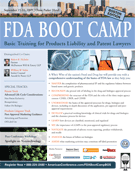
  • Boston skyline American Conference Institute (ACI) will be holding its fall session of the FDA Boot Camp conference on September 15-16, 2009 in Boston, MA.  The conference will provide information on:

    • The organization, jurisdiction, functions, and operations of the FDA;
    • The essentials of the approval process for drugs, biologics, and devices, including: NDAs, 505b2s, INDs, 510 K submissions, BLAs, MPA process, and ANDA applications;
    • Clinical trials for drugs and biologics and the clearance process for devices;
    • The classification of devices and the concept of "risk-based" classification;
    • The role of the Hatch-Waxman Act in the patenting of drugs and biologics;
    • Labeling in the drug and biological products approval processl;
    • cGMPs and other manufacturing concerns relative to products liability;
    • Proactive adverse events monitoring; and
    • Recalls, product withdrawals, and FDA oversight authority.

    785L10-BOS3737 In particular, ACI's faculty will offer presentations on the following topics:

    • The basics: Understanding and working with the FDA and the New Administration — Jurisdiction, functions, organizations & operations;
    • The nature of the approval process;
    • Essential requirements of the clinical trials processes;
    • Patent & IP spotlight:  Hatch-Waxman, the patenting process, and more;
    • Drugs, biological products, and medical device products:  Labeling;
    • Current good manufacturing practices (cGMPs) and quality system regulation (QSR);
    • Import/export guidelines & emerging international regulatory concerns;
    • Non-patent exclusivity (part of the conference's patent track) — to be presented by MBHB colleague Aaron Barkoff;
    • Bioequivalence:  What patent lawyers need to know (patent track);
    • Follow-on (comparable or biosimilar) biologics (patent track);
    • Adverse events monitoring, pharmacovigilance, and risk management; and
    • Recalls and withdrawals.

    An additional post-conference workshop entitled:  "Spotlight on Nanotechnology" will be offered on September 16, 2009.  The workshop will address the following topics:

    • A comprehensive overview of current and proposed FDA policies on nanotechnology regulation;
    • National Nanotechnology Initiative;
    • Potential legislation to regulate nano products; and
    • Classifying nano products for FDA approval.

    The agenda for the FDA Boot Camp conference can be found here.  A complete brochure for this conference, including an agenda, list of speakers, and registration form can be obtained here.

    ACI - American Conference Institute The registration fee ranges from $2,195 (conference) to $2,695 (conference plus workshop).  Those registering on or before August 14, 2009 will receive a $200 discount, and those registering on or before July 17, 2009 will receive a $300 discount.  ACI will provide a $600 discount off the standard price to all Patent Docs readers who reference the discount code "The Media Partner Discount" when registering.  Those interested in registering for the conference can do so here, by calling 1-888-224-2480, or by faxing a registration form to 1-877-927-1563.

    Patent Docs is a media partner of ACI's FDA Boot Camp conference.

  • National Harbor, MD The Center for Business Intelligence (CBI) will be holding its 3rd Summit on Biosimilars and Follow-on Biologics on September 14-15, 2009 in National Harbor, MD.  The conference will address the multiple competing follow-on biologics bills that have been introduced in the current Congress and the impact of this legislation on the life sciences industry.  CBI's faculty will offer presentations on the following topics:

    • Policy update and analysis;
    • Pathway for the Biosimilars Act (H.R. 1548 introduced by Rep. Anna Eshoo);
    • Promoting Innovation and Access to Life-Saving Medicines Act (H.R. 1427 introduced by Rep. Henry Waxman);
    • Explore the political principles, expectations and implications of pending biosimilars legislation;
    • Analyze patient safety concerns and biologic/biosimilar comparability;
    • Regulatory mechanisms, considerations and implications of biosimilar policy;
    • Review antitrust provisions and lessons learned from Hatch-Waxman;
    • Assess antitrust concerns and the competitive impact of biosimilars;
    • Identify the commercial, economic and strategic implications of biosimilars — Analyze the biotech and biosimilars markets;
    • Biotech market analysis;
    • Biosimilars market analysis;
    • Biosimilars versus biobetters — A side-by-side strategic analysis;
    • Understand the reimbursement and benefit implications for biosimilars;
    • Healthcare policy and payment perspective — Reimbursement payment system and benefit design implications;
    • Examine patent dispute mechanisms, IP issues and litigation concerns;
    • Analyze the methods of patent dispute and resolution in pending legislation;
    • Current and future IP challenges for biogenerics players — A global perspective; and
    • A change in the patent litigation dynamic — Will "big pharma" become "big generic"?

    A complete agenda for the Summit on Biosimilars and Follow-on Biologics can be found here (Day One) and here (Day Two).  A brochure for this conference can be requested here.

    Center for Business Intelligence (CBI) The registration fee for the conference is $2,095.  Attendees registering on or before July 17, 2009 will receive a $400 discount off the registration fee, and attendees registering a group of three individuals will receive a fourth registration for free.  Those interested in registering for the conference can do so here, by calling 1-800-817-8601, or by e-mail at cbireg@cbinet.com.

    Patent Docs is a media partner of CBI's Summit on Biosimilars and Follow-on Biologics.

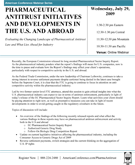
  • 782L09-WEB American Conference Institute (ACI) will be offering a webinar entitled: "Pharmaceutical Antitrust Initiatives and Developments in the U.S. and Abroad" on July 29, 2009 from 1:00-2:30 PM (EST).  Seth Silber of Wilson Sonsini Goodrich & Rosati and Jeffrey Brennan of Dechert LLP, both of whom were senior-level attorneys with the Federal Trade Commission, will provide insights into what the U.S. pharmaceutical industry can expect to see in terms of antitrust enforcement, particularly in light of the recent release of the European Commission (EC) Pharmaceutical Sector Inquiry Report.  In particular, the speakers will address the following topics:

    • An overview of the findings of the following recently released reports and what affect the various findings in these reports may have on pharmaceutical antitrust enforcement and activity both in the U.S and abroad:

    • EC Pharmaceutical Sector Inquiry Report
    • Authorized Generic Drug Study
    • Follow-On Biologic Drug Competition Report

    • Update on current legislative initiatives affecting the pharmaceutical industry, including the Consumer Access to Generic Drugs Act of 2009
    • Reverse settlement payments, switch strategies, and the current thinking on the aggregation of U.S. IP rights

    ACI - American Conference Institute There is no registration fee for this webinar.  Those interested in registering for the webinar, can do so here, or by calling 888-224-2480.

    Patent Docs is a media partner of this webinar.

  •     By Donald Zuhn

    National Coalition on Health Care (NCHC) On the same day that BIO CEO Jim Greenwood was briefing the media regarding follow-on biologics legislation in the current Congress, the National Coalition on Health Care (NCHC) was making its position on the legislation known in a letter sent to Senate Committee on Health, Education, Labor, and Pensions (HELP) Chairman Senator Ted Kennedy and the Committee's ranking member, Senator Michael Enzi (R-WY).  The NCHC, which was founded in 1990, describes itself as a non-profit and "rigorously non-partisan" coalition comprised of more than 70 organizations, employing or representing about 150 million Americans, that are working together to improve America's health care.

    In its letter, the NCHC notes that biologics are among the most expensive and most important drugs available to patients today, accounting for 25% of all new drug products approved by the FDA and costing on average 22 times more than small molecule drugs.  Stating that "[n]ow, there is an opportunity to yield substantial savings to the health care system by creating a generic pathway for high quality biologics as part of comprehensive health care reform," the Coalition encourages the Senate Health Committee to enact the Senate version (S. 726) of the bill introduced by Rep. Henry Waxman (H.R. 1427).  The NCHC bases its endorsement of S. 726 on the "tremendous success" of the Hatch-Waxman Act, which the Coalition contends has "accelerated" innovation of brand drugs, "as demonstrated by a dramatic increase in research and development spending."  (Amgen Inc. Vice President Stuart Watt would likely disagree with the Coalition's assessment of the impact of Hatch-Waxman, which he asserted earlier this year had resulted in less innovation, pharma company consolidation, and a shift in investment from pharma companies to biotech companies; see "Amgen VP Makes Case for Longer Exclusivity Period in Follow-on Biologics Legislation").

    Not surprisingly, the NCHC letter focuses on the issue of exclusivity for innovator biologics.  Noting that "[s]ome of the bills that have been introduced would provide that innovator biologics would be entitled to 12-14 years of exclusivity [i.e., the Eschoo bill, H.R. 1548]," the Coalition "urge[s the Committee] to oppose generic biologics legislation that contains excessive periods of exclusivity or that contains other unnecessary and significant barriers to generic, biologic competition."  In support of its plea to the Committee to reject double-digit exclusivity, the NCHC cites to the recent FTC report on biosimilars (see "No One Seems Happy with Follow-on Biologics According to the FTC").  The NCHC letter concludes that "[t]he five year period of exclusivity provided in H.R. 1427 follows the Hatch-Waxman model and is the appropriate period of exclusivity," and suggests that "[a]n unnecessarily long period of exclusivity would . . . diminish the incentives for other companies to continue innovating, actually resulting in less innovation over time."

    Patent Docs thanks a reader for alerting us to the NCHC letter.

  •     By Kevin E. Noonan

    Kennedy, Ted Yesterday, Senator Ted Kennedy (D-MA) proposed that innovator biologic drugmakers should be given up to 13.5 years of data exclusivity in any follow-on biologics legislation to be considered by Congress this session.  As reported by Catherine Larkin at Bloomberg.com, the Senator's proposal was introduced as a "placeholder" that could be adopted, modified, or discarded after other Senators have the opportunity to introduce their own amendments to biosimilars legislation being prepared by the Senate Committee on Health, Education, Labor, and Pensions.  Two of the three follow-on biologics bills introduced in the current Congress (H.R. 1427 and S. 726) provide for no more than 5.5 years of data exclusivity to innovator biologics companies, a term most industry representatives (including, inter alia, AEI, BIO, the IPO and, notably, the only peer-reviewed study by an academic; see "Follow-on biologics: data exclusivity and the balance between innovation and competition") have assailed as being inadequate to protect biotechnology innovation (see "Docs at BIO: 'Perfect Storm' Super Session").

    The Senator's proposal comes in the face of a flurry of recommendations recently sent to the Senate's Health, Education, Labor and Pensions committee (which Senator Kennedy chairs), including a letter from the AARP, a letter from the Office of Management and Budget (see "White House Recommends 7-Year Data Exclusivity Period for Follow-on Biologics") and a report from the Federal Trade Commission (see "No One Seems Happy with Follow-on Biologics According to the FTC"), all of which urged shorter data exclusivity periods.  As reported by Patent Docs yesterday, BIO CEO James Greenwood contends that a 12-year period, agreed to as recently as the last Congress, was a minimum term sufficient to protect innovation (see "BIO CEO Provides Update on Follow-on Biologics Legislation").  And industry leaders have stated publicly that any data exclusivity period shorter than 12 years would be bad for innovation and compromise patient health (see statement by Audrey Philips, Johnson and Johnson Executive Director for Biotechnology Policy in a Bloomberg.com report and comments by Stuart Watt, Vice President and Law & Intellectual Property Officer at Amgen Inc. in "Amgen VP Makes Case for Longer Exclusivity Period in Follow-on Biologics Legislation").

    Even proponents admit that follow-on biologic drugs may yield no more than a 10-30% reduction in biologic drug costs.  While this represents significant savings for government programs like Medicare and Medicaid, the cost reductions have potential risks, including increased adverse patient events (i.e., increased morbidity and mortality) and dangers to biotechnology innovation; see "Docs at BIO: Patent Reform Super Session").  The importance of setting an appropriate data exclusivity period is highlighted by predictions that biologics drugs will become predominant market leaders over the next 5 years (see "Future Drug Sales Predictions Highlight Importance of Follow-on Biologics Legislation").

    The Senate health committee has set no dates for hearings or further action on biosimilars legislation, and Congressman Waxman has been unable to move H.R. 1427 out of his committee in the face of Congresswoman Eshoo's competing (and more heavily-supported) bill, H.R. 1548 (see "Uncertain Future for Waxman Follow-on Biologics Bill").

  •     By Donald Zuhn

    Greenwood, Jim During a Wednesday afternoon teleconference, Jim Greenwood, the President and CEO of the Biotechnology Industry Organization (BIO), discussed a recent "flurry of activity" surrounding follow-on biologics legislation currently being debated in Congress.  Noting that the Senate Committee on Health, Education, Labor, and Pensions had reported follow-on biologics legislation providing 12 years of data exclusivity in the last Congress (S. 1695), Mr. Greenwood (at right) conceded that BIO had started hearing last Thursday that agreement on the 12-year period was "unraveling."

    Mr. Greenwood suggested that there were three reasons for the Committee's change on data exclusivity.  First, he noted that the AARP recently sent a letter to Congress indicating that the organization would not support any healthcare reform legislation that provided double-digit data exclusivity for follow-on biologics.  In its letter, the AARP also backed companion bills introduced in the House by Rep. Henry Waxman (H.R. 1427) and Sen. Charles Schumer (S. 726), which provide up to 5.5 years of data exclusivity.  According to a letter published in the Waxahachie Daily Light, a version of the AARP letter sent to Rep. Michael Burgess (R-TX) states that:

    AARP AARP understands that the pharmaceutical and biotechnology industries have said that H.R. 1427/S.726 would undermine their ability to recoup the costs of drug development.  However, there is little to support such an argument.  In fact, based on U.S. drug sales alone, many top selling biologics have recouped their manufacturer’s initial investment several times over in the last six years — often within a single year.  It is these drugs, according to a recent Federal Trade Commission (FTC) report, that will face generic competition, and not those that have relatively low sales.  In addition, the FTC has concluded that brand name manufacturers will continue to reap substantial profits even after generic versions enter the market.

    AARP also understands that it has been asserted that H.R. 1427/S.726 will undermine manufacturers' efforts to research and develop new life-saving medications.  Yet, the FTC recently concluded that five years without generic competition is adequate to support continued innovation, and that a twelve to fourteen year exclusivity period actually negatively impacts innovation.

    Office of Management & Budget - OMB Mr. Greenwood next pointed to a letter sent to Rep. Waxman on June 25 by OMB officials Peter Orszag and Nancy-Ann DeParle stating that a follow-on biologics regulatory pathway providing a 7-year data exclusivity period would "strike[] the appropriate balance between innovation and competition" (see "White House Recommends 7-Year Data Exclusivity Period for Follow-on Biologics").  Finally, he listed the report issued by the Federal Trade Commission (FTC) in early June indicating that no data exclusivity was needed (see "No One Seems Happy with Follow-on Biologics According to the FTC").

    Federal Trade Commission (FTC) Seal Mr. Greenwood suggested that the AARP and OMB letters and FTC report had caused some members of the Senate Committee to retreat from the 12-year period.  Instead, the Committee appears to have settled on 9 years of data exclusivity with 3 additional years for supplemental applications establishing a "significant therapeutic advance for patients" (e.g., a new indication).  The BIO CEO called the 9-year + 3-year provision "very bad language as far as we're concerned," adding that BIO continued to support the 12-year provision of S. 1695.  As for the possibility of securing legislation with a 12-year data exclusivity period, Mr. Greenwood noted that "it looks to us like Republicans will hold on that, and we're hoping to have enough Democrats to prevail."  However, he also noted that "the issue is far from resolved," and that a number of amendments have been filed by members of the Committee, including one by Sen. Barbara Mikulski (D-MD) that provides a 10-year + 1-year fallback option — that Mr. Greenwood said parallels biosimilar exclusivity in Europe — in case the 12-year period of S. 1695 fails to garner sufficient support.  Despite her amendment, Mr. Greenwood was counting Sen. Mikulski among the Committee's Democratic members (along with Sen. Kay Hagan (D-NC)) who continue to support a 12-year period of data exclusivity, ading that BIO was "continuing to work other swing Democrats."

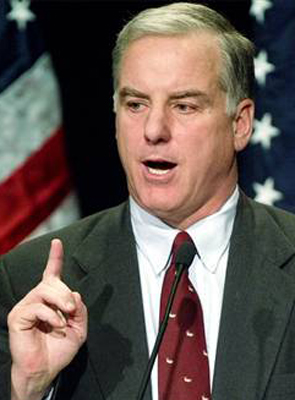
    Dean, Howard As for a timetable for resolution of the issue, Mr. Greenwood suggested that "this battle could play out Friday," and that BIO had "from now until then to round up our votes."  Mr. Greenwood also mentioned that in an Op-Ed piece in Wednesday's edition of The Hill, Democratic National Committee chairman Dr. Howard Dean (at left) backed the House bill (H.R. 1548) introduced by Rep. Anna Eshoo (D-CA) in March and the Senate bill (S. 1695) introduced in the last Congress.  In his article, Dr. Dean contends that:

    A commonsense and fair approach, similar to the process and timeline currently in place for generic versions of chemical-based medicines, would allow the original developer of the biologic to protect the proprietary data used to develop the medicine for at least 12 years.  A shorter exclusivity period would prematurely rob biotech innovators of their intellectual property and destroy incentives to develop new cures
    .  Most firms would be unable to recoup their investments in new medicines, which ordinarily top $1 billion and involve 15 years of research and development.  If we discourage investment, we jeopardize the development of the next generation of breakthrough medicines and cures.

    During the question and answer portion of the briefing, Mr. Greenwood explained why a 12-year data exclusivity period was needed.  In particular, he noted that because biologics are large and complex molecules, it is possible for generic companies to "engineer around" an innovator's patent by producing a biosimilar that is dissimilar enough from the innovators' molecule so as to not infringe the innovator's patent, but similar enough that the FDA could approve the biosimilar using clinical data accumulated by the innovator.  Mr. Greenwood noted that the ability of the FDA to approve such biosimilars would hinge on the text of the legislation passed by Congress, but that if the legislation was "written the wrong way," such approvals would become possible.  Under the above scenario, Mr. Greenwood contended that a generic company could begin competing with an innovator company very quickly, and that this would "completely deflate the incentive" for the innovator to invest in the development of biologics.  Mr. Greenwood concluded that "in order to create a legislative pathway for biosimilars, we need to have a proxy . . . for patent protection, and that's data exclusivity."

  •     By Christopher P. Singer

    USPTO Seal On June 30, 2009, the U.S. Patent and Trademark Office sent out an e-Commerce e-Alert announcing that the World Intellectual Property Organization (WIPO) is now participating in the Priority Document Exchange (PDX) program.  WIPO is the fourth foreign patent office (including Korea, Japan, and Europe) to join the PDX program with the USPTO.  When filing applications in participant Offices, applicants can request that any priority documents be exchanged, at no cost, between the Offices (e.g., USPTO and WIPO).  WIPO's PDX service can be accessed through it's Priority Document Access Service (DAS) website.  Applicants filing applications that claim priority from an earlier application can rely on a copy of the priority document accessible via DAS, rather than providing a certified copy separately to each Patent Office.

    WIPO More information regarding participation in the PDX program can be found at the USPTO's PDX website, and WIPO has posted FAQs regarding the program.  Additional questions concerning PDX or the DAS programs can be directed to the Patent EBC Customer Service Center by phone (866-217-9197 or 571-272-4100) or e-mail to PDX@uspto.gov.

  •     By Suresh Pillai

    Stanford Graduate Student Adds Claims to Suit against Mentor and Professor over Patent Inventorship

    Stanford University Christopher Sclimenti, a former graduate student in the laboratory of Stanford University faculty member Michele Calos, has amended his suit against both Stanford and his former mentor, claiming that Dr. Calos plagiarized Dr. Sclimenti's Ph.D. dissertation and laboratory notebooks as part of providing support for patent applications based upon Dr. Sclimenti's work.  Dr. Sclimenti originally filed suit in September 2008, alleging breach of contract and correction of inventorship on U. S. Patent Nos. 6,808,925 and 7,141,426.  His amended complaint adds claims of intentional misrepresentation, copyright infringement, defamation, negligence, and unjust enrichment.

    Dr. Sclimenti's claims stem from his allegations that, sometime in July 2002, Stanford University improperly removed Dr. Sclimenti as a named co-inventor on the '925 patent application.  According to Stanford, this happened around the time that it amended certain claims in order to satisfy patentability requirements.  However, Dr. Sclimenti's attorney contends that the removal occurred at or around the time that Stanford was in the midst of negotiating a licensing agreement for the applications with Poetic Genetics.  Poetic Genetics, in turn, was founded by Dr. Calos in 2002 as a vehicle for commercializing gene therapies based upon the patents' subject matter.  Dr. Sclimenti contends that he was wrongly removed as an inventor on the patents in order to deny him royalties from the licensing of the patents.

    Both the '925 patent (issued in 2004) and the '426 patent (issued in 2006) name Dr. Calos as the sole inventor and Stanford University as the sole assignee.  The amended complaint also includes new allegations that Stanford and Dr. Calos have filed an additional family of patent applications naming Dr. Calos as sole inventor yet citing Dr. Sclimenti's research.  The amended complaint identifies numerous passages within the pending applications that appear to be derived from sections of Dr. Sclimenti's dissertation thesis.  [UPDATE: The amended complaint can be viewed here.]

    Infosint Infringement Suit over Celexa® and Lexapro® Allowed to Move Forward

    Lundbeck The U.S. District Court for the Southern District of New York has rejected a motion from Lundbeck A/S and its partner, Forest Laboratories, Inc., seeking to dismiss certain infringement claims filed by Infosint S/A alleging infringement of Infosint's patent, U.S. Patent No. 6,458,973.  The '973 patent covers a process for producing 5-carboxyphthalide, an intermediate chemical generated during the manufacture of citalopram, one of the active ingredients in both Celexa® and Lexapro®, two of defendants' antidepressant drugs.  In its complaint, Infosint alleged that Lundbeck and Forest Labs infringed upon the process claimed in the '973 patent.  Lundebeck and Forest Labs counterclaimed that Infosint infringed Lundbeck's patent, U.S. Patent No. 6,403,813, which discloses a process for creating the same intermediate compound as the '973 patent (see "Court Report," July 30, 2007).

    Forest Laboratories Logo In their latest attempt to secure a dismissal, Lundbeck and Forest Labs argued that the method employed by their chemical supplier in the manufacture of the compound did not meet a claim limitation of the '973 patent, namely, that the chemical mixture used in the process be heated to 120-140 degrees Celsius.  The District Court, however, refused to dismiss the infringement claims against Lundbeck and Forest Labs, holding that the only evidence in support of their assertion — an unsigned photocopied letter dated from 2007 — was inadmissible evidence of the temperature at which the defendants' supplier manufactured the compound.  The Court also found the testimony of an Infosint expert to be highly persuasive; the expert testified as to the unlikelihood of creating the compound at the lower temperature on an industrial scale.


    Counterclaims Dismissed in Alzheimer's Institute/Mayo Patent Dispute

    AIA The U.S. District Court for the Middle District of Florida has dismissed two counterclaims filed by the Alzheimer's Institute of America Inc. (AIA) in its patent dispute with Mayo Clinic Jacksonville.  The original suit began in 2005 as part of an attempt by Mayo to compel arbitration to resolve a licensing dispute with AIA.  AIA granted Mayo a license to use the AIA's transgenic mice, and Mayo collaborated with its partner, Myriad Pharmaceuticals, to generate treatments through the use of the mice and related transgenic cell lines.  AIA objected to Mayo&#39
    ;s use of the cell lines, claiming that under the terms of the licensing agreement, Mayo was only allowed to use the mice.  AIA then filed suit for patent infringement, and Mayo sued to compel arbitration of the dispute.  The separate suits were consolidated into a single suit in Florida, and AIA filed counterclaims alleging unjust enrichment, breach of contract, and equitable interest.

    Mayo Clinic AIA argued that its counterclaims arose from the conduct of Mayo in negotiating the licensing agreement that was separate and distinct from their conduct in infringing the patents-in-suit, U.S. Patent Nos. 5,795,963 and 5,455,169.  The District Court, however, disagreed and concluded that AIA's counterclaims did not plead conduct that was separate and independent from AIA's claims under U.S. Patent Law.  Therefore, the Court held that the state law claims were preempted by federal patent law.  The Court dismissed the counterclaims with leave to refile by July 27.


    BioMedica's Bid for Interlocutory Appeal to Federal Circuit Denied in TroVax
    ® Suit

    Oxford BioMedica The U.S. District Court for the Northern District of California denied Oxford Biomedica Ltd.'s attempt to certify an order for an interlocutory appeal to the Court of Appeals for the Federal Circuit in BioMedica's patent dispute with Bavarian Nordic A/S over the cancer vaccine TroVax®.  Bavarian Nordic filed suit in 2008 (see "Court Report," July 6, 2008), claiming that BioMedica's TroVax® vaccine infringed upon Bavarian Nordic's patented method for delivering recombinant vaccines, covered by Bavarian Nordic's U.S. Patent Nos. 6,761,893, 6,913,752, 7,335,364, and 7,459,270.  BioMedica immediately claimed that Bavarian Nordic's suit was prematurely filed, as TroVax® was still in its development stage at the time of filing.  However, Bavarian Nordic countered that BioMedica's safe harbor argument failed because BioMedica, having entered into a contract with Sanofi-Aventis U.S. valued at $700 million, had already commercialized the TroVax® vaccine (see "Biotech/Pharma Docket," May 21, 2009).

    Bavarian Nordic In the latest ruling by the Court, it dismissed BioMedica's request to have the Federal Circuit address two questions that could resolve the suit.  The first question was whether the District Court had proper subject matter jurisdiction, where the suit involved a product currently in FDA clinical trials and a licensing agreement to jointly develop and co-fund the product with intent to commercialize.  The second question was whether such an agreement would be exempt from definitions of infringement.