• CalendarJuly 29, 2009 – Pharmaceutical Antitrust Initiatives and Developments in the U.S. and Abroad*** (American Conference Institute) – 1:00-2:30 PM (EST)

    July 30 – August 4, 2009 – 2009 Annual Meeting (American Bar Association) – Chicago, IL

    August 4, 2009 – Venue in Patent Litigation:  New Strategies after Genetech and TS Tech USA (Strafford) – 1:00-2:30 PM (EST)

    August 17-18, 2009 – Advanced Patent Prosecution Workshop 2009: Claim Drafting & Amendment Writing (Practising Law Institute) – San Francisco, CA

    September 1, 2009 – Prior Art & Obviousness 2009: The PTO & CAFC Perspective on Patent Law Sections 102 & 103 (Practising Law Institute) – San Francisco, CA

    September 13-15, 2009 – 2009 Annual Meeting (Intellectual Property Owners Association) – Chicago, IL

    September 14-15, 2009 – 3rd Summit on Biosimilars and Follow-on Biologics*** (Center for Business Intelligence) – National Harbor, MD

    September 15-16, 2009 – FDA Boot Camp*** (American Conference Institute) – Boston, MA

    September 17, 2009 – Developments in Pharmaceutical and Biotech Patent Law (Practising Law Institute) – New York, NY

    September 21-22, 2009 – 2009 World Stem Cell Summit*** – Baltimore, MD

    September 30-October 1, 2009 – Biotech Patents*** (American Conference Institute) – Boston, MA

    October 14, 2009 – Developments in Pharmaceutical and Biotech Patent Law (Practising Law Institute) – San Francisco, CA

    ***Patent Docs is a media partner of this conference or CLE

  • Boston Skyline American Conference Institute (ACI) will be holding its 11th Advanced Forum on Biotech Patents on September 30 to October 1, 2009 in Boston, MA.  The conference will allow attendees to:

    • Adopt a practical approach to incorporating follow-on biologics into your current patent strategies;
    • Implement best practices for avoiding § 112 and § 103 rejections in light of Kubin, Ariad, and KSR for patenting biotech inventions including gene sequences;
    • Establish effective strategies to overcome charges of inequitable conduct;
    • Uncover ways to overcome increasing rejections related to diagnostic and treatment claims and integrate Bilski and related precedents into current strategies;
    • Design global patent strategies that take into account developing standards abroad and patent harmonization efforts;
    • Identify and utilize key European patent litigation strategies; and
    • Optimize freedom to operate assessments.

    In particular, ACI's faculty will offer presentations on the following topics:

    787L10-BOS • Preparing for the inevitable enactment of follow-on biologics legislation and adopting a practical approach to integrating FOB's into your patent strategies;
    • Politics and patents:  Reassessing your patent strategy in light of current changes;
    • Uncovering current trends and predicting future changes facing biotech patent practitioners;
    • What's patentable?  The impact of Bilski and related precedents to diagnostic testing and treatment claims in the biotech patent industry — to be presented in part by Patent Docs author Kevin Noonan;
    • Deciphering the impact of In re Kubin on application of § 103 obviousness requirements;
    • Strategies for patenting biotechnology inventions with evolving § 112 jurisprudence;
    • Cultivating proactive prosecution strategies to overcome charges of inequitable conduct;
    • Developing global biotech patent strategies and indentifying key rule changes in foreign patent offices;
    • Spotlight presentation:  European biotech patent law;
    • Tactics for breaking through the challenges associated with antibody patent prosecution; and
    • Freedom to operate assessments for the biotech industry.

    An additional master class entitled: "Drafting Successful Patent Applications for Biotechnology Inventions" will be offered on October 2, 2008.  The master class will provide attendees with the tools they need to draft strong applications that will be well positioned to withstand future challenges.

    The agenda for the Biotech Patents conference can be found here.  A complete brochure for this conference, including an agenda, list of speakers, and registration form can be obtained here.

    ACI - American Conference Institute The registration fee ranges from $2,195 (conference) to $2,795 (conference plus master class).  Those registering on or before August 21, 2009 will receive a $200 discount.  ACI will provide a $400 discount off the standard price to all Patent Docs readers who reference the discount code "MBHB" when registering.  Those interested in registering for the conference can do so here, by calling 1-888-224-2480, or by faxing a registration form to 1-877-927-1563.

    Patent Docs is a media partner of ACI's Biotech Patents conference.

  • Strafford #1 Strafford will be offering a CLE seminar entitled: "Venue in Patent Litigation:  New Strategies after Genentech and TS Tech USA" on August 4, 2009 from 1:00-2:30 PM (EST).  The CLE will examine the latest case law developments on patent venue, discuss the evolving venue standards in patent litigation, and offer strategies for pursuing and defending motions to transfer venue.  In particular, the speakers will address the following topics:

    I.  New case law and its aftermath
        A.  28 U.S.C. § 1404(a)
        B.  In re Genentech Inc. (Fed. Cir. May 22, 2009)
        C.  In re TS Tech USA Corp. (Fed. Cir. Dec. 29, 2008)
        D.  Venue issues and declaratory judgments
    II.  Factors impacting selection of venue   
        A.  Perceived biases for or against a particular party or class of parties
        B.  Speed to disposition
        C.  Winning percentages for parties
        D.  Percentage of transfers out
        E.  Local patent rules in a particular district
        F.  Court’s experience in handling patent cases
        G.  Likelihood of summary judgment being granted
    III.  Best practices for pursuing and defending motions to transfer venue
        A.  Plaintiffs' strategies
        B.  Defense strategies
    IV.  Patent reform and venue

    The registration fee for the seminar is $297 ($362 for those desiring CLE credit).  Those interested in registering for the seminar, can do so here.

  •     By Sherri Oslick

    Bristol-Myers Squibb #2 On Wednesday Bristol-Myers Squibb and Medarex, Inc. announced that they have entered into a definitive merger agreement by which Bristol-Myers Squibb will acquire Medarex for $2.4 billion.  With Medarex holding approximately $300 million in net cash and marketable securities, the purchase prices is effectively about $2.1 billion.  Under the agreement, Bristol-Myers Squibb will commence a cash tender offer on or about July 27, 2009 to purchase all of the outstanding shares of common stock for $16.00 per share, and the companies expect the tender offer to close approximately 30 days after its commencement.

    Medarex Under the agreement, Bristol-Myers Squibb will acquire rights to ipilimumab, currently in Phase III clinical trials for the treatment of metastatic melanoma, as well as Phase II studies for the treatment of lung cancer and Phase III studies for the treatment of adjuvant melanoma and hormone-refractory prostate cancer.  Bristol-Myers Squibb will also acquire Medarex's UltiMAb Human Antibody Development System®, Medarex's Antibody-Drug Conjugate technology, rights to seven antibodies in clinical trials under Medarex's sole sponsorship and three other antibodies being developed jointly by Bristol-Myers Squibb and Medarex (including ipilimumab), and royalties based on a percentage of sales for SIMPONI™, STELARA™ and ILARIS®.

    For additional information regarding the merger agreement, please see:
    • Bristol-Myers Squibb's press release
    • Medarex's press release

    Additional Disclaimer:  MBHB represents Bristol-Myers Squibb on certain matters. 
    To the extent that this post contains any opinions, the
    opinions would be of Dr. Oslick and not Bristol-Myers Squibb or MBHB.

  •     By Christopher P. Singer

    USPTO Seal - background The U.S. Patent and Trademark Office issued a press release on July 21, announcing the start of the e-Office Action program following a successful pilot version of the program.  The e-Office Action program allows participating patent applicants to receive e-mail notifications of office communications, rather than receiving the usual paper notifications by regular mail.  Once an office communication is available for viewing and downloading in Private PAIR, an e-mail notice is sent to participants in the e-Office action program.

    According to USPTO's Acting Director, John Doll, the e-Office Action pilot program has, "dramatically reduced paper processing and mailing costs [and] expedited notification allowing applicants to take full advantage of their time period for reply to an office action."  The USPTO will also consider enacting several enhancements to the e-Office Action system once the IT infrastructure allows for such enhancement modifications.

    Participation in the e-Office Action program is optional and is available to any registered attorney or agent, or pro se inventor, prosecuting a patent application associated with a customer number.  Participants can also opt-out of the e-Office Action program at any time and return to receiving office communications through regular mail.  The e-Office Action program covers provisional applications and non-provisional applications including utility, plant, design, and reissue applications and national stage applications.  Excluded from the program are international applications, reexamination proceedings, and interference proceedings.  More information and a description of the full requirements needed to participate in the e-Office Action program are available at http://www.uspto.gov/eoa.  Specific questions or suggestions about the program should be directed to the Electronic Business Center (EBC) Customer Service Center at 866-217-9197 (toll-free) or 571-272-4100 or by e-mail to ebc@uspto.gov.

  •     By Christopher P. Singer

    USPTO Seal After much speculation and rumor regarding the practitioner maintenance fee (see "Annual Fee for Registered Practitioners May Be Delayed"), the U.S. Patent and Trademark Office posted an announcement clarifying that, "[t]he Final Rules adopted in November 2008 do not specify the date by which the annual fee, if collected, must be paid."  As the rule does require publication of adequate notice in advance of any due date for such fees, it seems unlikely that any fee would be payable by the previously speculated September 30, 2009 date.  However, while the Office mentions in the announcement that it "has not issued a notice to pay the annual practitioner maintenance fee for FY2009, nor has it required payment of the fee by September 30, 2009," it has not yet decided whether it will be collecting the fee for FY2009.

  •     By Suresh Pillai

    Judge Denies Attorneys Fees to Sandoz in Dispute with Sanofi-Aventis

    Sanofi-Aventis_small The U.S. District Court for the Central District of California denied Sandoz Inc.'s motion seeking attorneys' fees and costs in its patent infringement suit with Sanofi-Aventis.  The patents-in-suit, U.S. Patent Nos. 5,389,618 and RE 38,743, cover Sanofi's anti-clotting drug, Lovenox®.  The current litigation commenced when Aventis filed patent infringement suits against Amphastar and Teva in 2003.  Following Sandoz's filing of an ANDA, Aventis filed a separate suit against Sandoz in 2007, alleging infringement of the Lovenox® patents.  Also in 2007, the District Court for the Central District of California found the patents to be unenforceable on the basis of Aventis' inequitable conduct before the U.S. Patent and Trademark Office during patent prosecution.  The Court found that, because Aventis failed to disclose information pertaining to drug dosage, Aventis intended to deceive the Patent Office.  The District Court's decision was subsequently affirmed by the Court of Appeals for the Federal Circuit (see Patent Docs report).  Following that decision, the District Court granted summary judgment in favor of Sandoz.

    Sandoz In its motion for attorneys' fees and costs, Sandoz argued that fees and costs were warranted because Aventis filed suit against Sandoz after Aventis was aware that the patents-in-suit were unenforceable and because Aventis had "unnecessarily multiplied the proceedings."  Aventis countered that it had attempted to minimize the expense and undue prejudice to Sandoz during its time awaiting a final disposition in Aventis' suit against Amphastar.  The District Court agreed with Aventis, finding that none of Aventis' actions caused the case to rise to the level of an exceptional case for the purpose of awarding attorneys' fees.

    Albion and Lannett Resolve Patent Suit Over Ferrochel®

    Albion The U.S. District Court for the District of Utah dismissed the claims and counterclaims of both Albion Laboratories and Lannett Co. Inc., resolving their year long patent dispute over Albion's patented iron supplement Ferrochel®.  This resolution came on the heels of both parties jointly moved to end the case.  The patents-in-suit, U.S. Patent Nos. 5,516,925 and 6,716,814, cover the active ingredient in Albion's iron product.  The original suit commenced in 2008, when Albion sued Lannett for patent infringement, alleging that Lannett's generic vitamin products incorporated Albion's patented iron supplement.  Albion sought relief in the form of an injunction against Lannett and monetary damages.  Lannett countersued, alleging that Lannett had purchased Ferrochel® from Albion expressly for the purpose of using the iron supplement in Lannett's multivitamin.  In its complaint, Lannett alleged tortuous interference, breach of contract, and misrepresentation.

    Lannett Under the order ending the litigation, both parties waived all rights of appeal and are to bear their own costs.

    Warsaw Orthopedic, Inc. Awarded $2 Million in Globus Patent Dispute

    Medtronic The U.S. District Court for the Eastern District of Pennsylvania has awarded Warsaw Orthopedic, a Medtronic subsidiary, $2.1 million in its patent infringement suit with Globus Medical Inc. over Globus' infringement of patents covering the Medtronic and Warsaw Sextant® System.  The patents-in-suit are U.S. Patent Nos. 6,530,929 and 7,008,422 and are related to instruments and methods for the stabilization of bony structures in spinal surgery.  Warsaw and three other Medtronic subsidiaries, Medtronic USA, Medtronic Puerto Rico Operations Co., and Medtronic Sofamor Danek Deggendorf GmbH, sued Globus in 2006, alleging that Globus had infringed the two patents-in-suit.  At trial, plaintiffs sought lost profits and royalties for a single Medtronic subsidiary, Medtronic USA, as well as an injunction barring Globus from selling infringing products, but Globus filed a post-trial brief arguing that only Warsaw had the requisite standing to recover on an infringement cause of action.

    Globus Medical The District Court agreed with Globus, basing its decision on the history of the patents' prosecution and the fact that Warsaw's predecessor company was the original assignee of the patents-in-suit.  The Court held that the licensing agreements between Warsaw and the other Medtronic subsidiaries failed to transfer exclusionary rights that would grant the subsidiaries standing to sue for patent infringement.  Based on this, the Court awarded Warsaw $2.1 million, an amount equal to 15 percent of Globus' gross revenues from the sales of the infringing products.  Because Warsaw was a manufacturer and not a distributor, the Court concluded that Warsaw was unlikely to suffer irreparable harm.  As a result, the Court refused to grant Warsaw a permanent injunction and refused to award lost profits.

  •     By Kevin E. Noonan

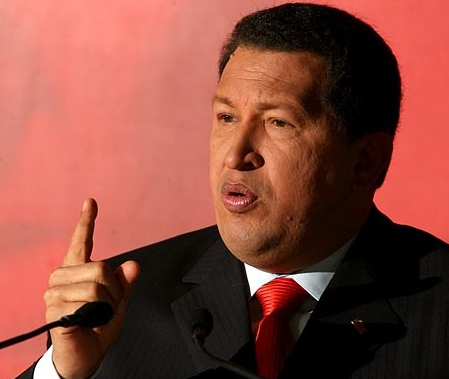
    Chavez, Hugo Venezuelan President Hugo Chavez (at right) made headlines last month, and caused not a small amount of consternation, with the pronouncement that his government would act to prevent foreign (read: Western or U.S.) drug companies from enforcing patents to maintain high drug prices in his country.  However, according to a story reported in The Wall Street Journal on July 7th, President Chavez may be in for a surprise:  it seems that Venezuelans prefer branded over generic drugs, and are willing to pay a premium for them.

    Wall Street Journal The article, reported by Avery Johnson, follows the interconnected stories and experiences of citizens at "the bottom of the pyramid" (not the middle class but the working poor) who nonetheless are willing to pay for branded rather than generic versions of drugs (such as Lipitor®).  The report characterizes this trend as being an effort by Western drug companies (including Pfizer, GlaxoSmithKline, Novartis, and Sanofi-Aventis) to "target" the working poor in Venezuela, China, Brasil, India, Russia, and Turkey.  The reason:  drug sales in the U.S. and other Western countries are declining, and in the U.S. drug companies are facing both increased generic competition as well as political pressure to reduce drug costs.  Conversely, sales of prescription drugs in developing countries are rising, from $67.2 billion in 2003 to $152.7 billion in 2008, and such sales are expected to reach $265 billion by 2013, according to industry tracker IMS Health.
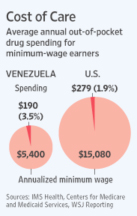
    Cost of Care These companies are adapting to local realities by reducing per unit drug prices, as illustrated by the figure to the right (Johnson, "Drug Firms See Poorer Nations as Sales Cure," Wall Street Journal, July 7, 2009).

    Why would the impoverished spend more for branded drugs than for cheaper generics?  For the same reason that many in Western countries do so — a belief that the branded drugs are better quality.  While drug prices in developing countries are 30% lower than the same drugs are priced in the U.S., they are still up to twice as expensive as generic equivalents.  The article uses as an example Lipitor®, which "costs between $100 and $125 a month for a standard dose, compared with less than $50 for a generic."  The preference for branded drugs by the working poor in Venezuela is more striking because 80% of drugs are paid by patients "out of pocket" according to IMS Health, in a country where the average monthly wage is $450.  The basis for this tendency, the purported superiority of branded over generic drugs, is disputed by organizations like the World Health Organization (WHO); Hans Hogerzeil, the World Health Organization's director of essential medicines and pharmaceutical policies is quoted in the article as stating that "[t]he quality of a product has nothing to do with the brand name."  However, such sentiments fly in the face of the reality that in developing countries up to 30% of drugs are counterfeit and of questionable efficacy, according to Rafael Mendoza, Pfizer's head of strategy in Venezuela.

    Physicians, who play a traditional role in these societies, are also part of the circumstances leading to this preference for branded over generic drugs.  "If their doctor tells them — their doctor from birth, the doctor they have had all their life — 'Look, this is what is going to cure you, this is what will guarantee your health,' that's what the patient buys," according to Julio Rodriguez, Pfizer's sales representative whose experiences form the backbone story of the article.

    New York Times Drug quality in developing countries is also the subject of an article today in The New York Times.  That story, by Thomas Fuller, recounts the work of Facundo M. Fernández, a chemistry professor at Georgia Institute of Technology who works to identify counterfeit drugs sold in developing countries.  Described as part of "an informal group of researchers and government officials spanning Africa, Asia and the United States" that is working with Interpol, Dr. Fernández is focused on detecting and tracking fake drugs sold as treatments for malaria, a disease that kills more than 2,000 children a day in Africa.  Part of this effort depends on recent technological developments, particularly an "ion gun" enhancement of traditional mass spectrometers that permits "hundreds of pills a day" to be analyzed.  The article reports that most counterfeit drugs are not simple sugar pills, but contain "varying amounts" of the active pharmaceutical agent.  However, many contain drugs, such as cheap analgesics, that mask pain but do nothing to treat the underlying causes of disease, according to Dr. Fernández.

    Even the WHO recognizes the problem, reporting in 2006 that one quarter of pharmaceuticals sold in developing nations was counterfeit.

    Some of the tactics used by investigators smack of CSI, such as analyzing pollen grains contaminating capsules and other inert components of many drugs.  The article cites evidence that many of these drugs come from "the border area between China and Vietnam" and from the "Golden Triangle" border region between Laos, Myanmar, and Thailand, formerly a nexus for international heroin trafficking.  The article notes that while governments in this region are intent on stopping illegal production of heroin, Esctasy, and marijuana, there is less emphasis on counterfeit pharmaceuticals and the penalties are also much less.  (The article does mention that the Chinese government used such pollen-based evidence to halt a counterfeit pharmaceuticals operation in Southern China, however).  These conditions have attracted international organized crime to get involved, according to an Interpol spokeperson quoted in the article, and has in turn led to more targeted enforcement efforts, including a combined effort by "[o]fficials from Cambodia, China, Laos, Myanmar, Singapore, Thailand and Vietnam" in "200 raids in Southeast Asia [that] yielded 16 million doses of fake drugs, with a street value of $6.6 million."

    All this leads to the paradox of government leaders, like Venezuela's President Chavez, acting to reduce patent protection and impose com
    pulsory licenses on drugs made by Western companies, in an effort to reduce the costs of drugs, in societies where the people (at least, those who can and are willing to pay higher prices) demand branded drugs as a guarantee against counterfeit and adulterated drugs.  The evidence from Dr. Fernández and his colleagues suggest that this appreciation of the value of branded drugs is accurate.  The evidence also suggests that the real emphasis of both Western drug manufacturers and the governments of developing countries should be on devising ways to promote delivery of high quality drugs at prices citizens of those countries can afford.  This will require a greater level of cooperation and indeed trust between entities (companies and governments) with ample reasons to be suspicious of one another.  But unless these suspicions can be overcome, the problems (of counterfeit drugs, increased and unsustainable drug costs, and compulsory licenses imposed by government fiat in developing countries) will persist, to no one's benefit.

  •     By Christopher P. Singer

    USPTO Seal As previously reported on Patent Docs, the U.S. Patent and Trademark Office (USPTO) had planned to institute an annual fee for all registered practitioners (73 Fed. Reg. 67750).  The fee was intended to be required for practitioners to maintain active status to practice before the Office, and was thought to be due in fiscal year 2009 (i.e., by September 30, 2009).

    Wegner, Harold However, in a series of e-mail newsletters sent by Hal Wegner (at left) on Monday, the USPTO may not make the fee due this year.  According to Mr. Wegner's newsletter, "[a] reliable source today reports a conversation with the OED Director who 'said they are not collecting the fee this year.  He was unable to say whether or not they would be publishing a notice or saying anything further publicly.'"  While this is certainly welcome news to the practicing patent bar, Mr. Wegner urged the Office to post an announcement in order to clarify the status of this annual fee noting that, "[n]o practitioner should rely upon second hand oral representations but should await a published notice on the Office website rescinding the $ 118 fee."

    We thank Mr. Wegner for his vigilance in monitoring the status of this rule.  Patent Docs will post additional information regarding the status of this fee as we become aware of it.


    UPDATE
    :  On Tuesday morning, Hal Wegner provided an update in his e-mail newsletter regarding the potential enforcement of the annual practitioner registration fee.  Mr. Wegner advises that USPTO Office of Enrollment and Discipline (OED) Director Harry Moatz has explained that the USPTO has not decided whether it will enforce the $118 fee this year, and could make it payable after September 30, 2009, but as a retroactive fee for financial year 2009.

    From Hal Wegner's e-mail:

    Mr. Moatz explains that "[t]he Final Rules…do not specify the date by which the annual fee, if collected, must be paid.  Further, the Rule requires that adequate notice be 'published and sent to practitioners in advance of the due date.'  The Rule contemplates that the Office, not someone else, publish and issue the notice.  37 CFR 11.8(d)."

    "The Office has not issued a notice to pay the annual practitioner maintenance fee for FY2009.  The Office has not required payment of the fee by September 30, 2009.  No decision has been made to collect the fee in or for FY2009."

    So, it seems the take-home message is "stay tuned" and have your checkbook ready.

  •     By Donald Zuhn

    Virginia Governor: Time Has Come to Move Forward

    Kaine, Tim Virginia Governor Timothy Kaine, once a candidate to be President Obama's running mate, sent a letter to the Virginia Congressional delegation at the end of June, stating that he was "encouraged by efforts in Congress to strengthen the approval process for biogeneric and biosimilar products," and "strongly encourag[ed the delegation] to move forward with legislation this year."  According to Gov. Kaine (at right), the most important goal of follow-on biologics legislation should be to "provide a competitive environment for biogeneric and biosimilar products that both rewards innovation and provides incentives for generic manufacturers."  Gov. Kaine also asserted that "[t]he Food and Drug Administration is the appropriate authority to provide a reasonable and safe regulatory framework to accomplish this goal," since the FDA would be able to "use the same scientific process and the same discretion that it currently has to approve innovative biologics."  He concluded his letter by stating that "[t]he time has come for Congress to move forward on this critical issue," noting that "[b]iogenerics and biosimilar products now are approved in countries around the world and it is time that we bring the benefits from these lower cost products to our citizens."  The Virginia Governor did not, however, take a position on what has become the most contentious issue in the follow-on biologics debate:  the length of the data exclusivity period.

    CMPI Hosts Congressional Briefing on Follow-on Biologics

    CMPI Last Wednesday, the Center for Medicine in the Public Interest (CMPI) hosted a briefing for Congressional staff to focus on patient safety as a top priority for follow-on biologics legislation.  The briefing was co-hosted by Rep. Anna Eshoo (D-CA), who introduced follow-on biologics legislation (H.R. 1548) in the House that would provide up to 14.5 years of data exclusivity, and Rep. Mike Rogers (R-MI), one of 136 co-sponsors of Rep. Eshoo's bill.  Rep. Eshoo and Rep. Rogers are members of the House Energy and Commerce Committee, which will determine the specific language of any follow-on biologics bill that makes it to the floor of the House for a vote.  The Energy and Commerce Committee is Chaired by Rep. Henry Waxman (D-CA), who has introduced competing legislation (H.R. 1427) that currently enjoys the backing of 13 co-sponsors.

    The CMPI, which describes itself as "a nonprofit, non-partisan organization promoting innovative solutions that advance medical progress, reduce health disparities, extend life and make health care more affordable, preventive and patient-centered," applauded the commitment of Rep. Eshoo and Rep. Rogers for "ensuring [that] patient safety is the top-priority for follow-on biologics legislation."  The CMPI stated that "[t]he next few weeks are going to be a pivotal time in Congress as health care takes top billing in the House and the Senate," adding that "[i]t is critical that advocates for safe and effective follow-on biologics do all they can to support Representative Eshoo's legislation."

    Board_merli-lg Also speaking at the event were former Congressman Mike Ferguson; Dr. Geno Merli (at left), Senior Vice President & Chief Medical Officer at Thomas Jefferson University, and Director of the Jefferson Center for Vascular Diseases; and John Crowley, President and Chief Executive Officer of Amicus Therapeutics.  Patent Docs touched base with Dr. Merli following the briefing.  Dr. Merli discussed how differences in similar but not identical forms of the anticoagulant disirudin affect its ability to bind thrombin, thereby affecting its ability to prolong clotting time.  Dr. Merli noted that Mr. Crowley's presentation similarly focused on the differences between a biologic and a biosimilar, and the ramifications such differences could have on patient safety.  In Mr. Cowley's case, the biologic was an enzyme being developed by Amicus Therapeutics and the biosimilar was a similar version of the enzyme that was also developed by his company.  Despite a high degree of similarity between the molecules, the biosimilar did not behave in the same manner as the biologic.  Dr. Merli concluded the conversation by noting that he did not have a particular position on the length of a data exclusivity period, but that "there should be some amount of time" to reward an innovator for the time and money it invests in developing a biologic.

    "Consumer Groups" Battle 12-Year Data Exclusivity Period

    AARP Last Thursday, the AARP, Consumers Union, and Coalition for a Competitive Pharmaceutical Market (CCPM) sent a letter to Rep. Waxman stating that "[i]n all frankness, we cannot be supportive of any generic biologics legislation that would be an empty promise to the Americans we represent and serve."  According to a report on CNNMoney.com, the three groups were threatening to pull support for any follow-on biologics legislation that would provide 12 years of data exclusivity, arguing that "no bill is better than a bad bill."  Interestingly, the "consumer groups" letter was also signed by the Generic Pharmaceutical Association (GPhA).  Also of interest is the way the CCPM described its group in a December 8, 2008 letter to the Obama-Biden Transition Project:  as "an organization of large national employers, health plans, PBM's, chain pharmacies, generic drug manufacturers, biopharmaceutical companies and others representing more than 200 million beneficiaries."  The letter also urged members of Congress to "reject the fatally flawed" bill introduced by Rep. Eshoo in March, and criticized the bill passed by the Senate Senate Health, Education, Labor and Pensions (HELP) Committee last week.  The signatories said they would "outright oppose" any l
    egislation providing 12 years of data exclusivity, and that such legislation would "serve as little more than a cruel hoax to some of our most vulnerable American citizens."