• CalendarOctober 20, 2009 – What the
    Federal Circuit Can Learn from the Supreme Court — and Vice Versa
    (
    American University Washington College of Law) – 6:00 pm (EST)

    October 20-21, 2009 – 17th Forum on Biotech Patenting (C5) – London,
    United Kingdom

    October 22-23, 2009 – Pharmaceutical Congress on Paragraph IV Disputes*** (Center for Business Intelligence) – Philadelphia, PA

    October 26-28, 2009 – Intellectual Property Counsels' Committee (IPCC) Fall Conference & Meeting (Biotechnology Industry Organization) – Washington, DC

    November 9-10, 2009 – Patent Litigation 2009 (Practising Law Institute) – Atlanta, GA

    November 9-11, 2009 – Developing
    IP Strategies for Crystalline Forms
    *** (
    International
    Quality & Productivity Center) –
    London,
    England

    November 10, 2009 – The Patent Cooperation Treaty (PCT): Important Tool for Small and Medium-Sized Enterprises (SMEs) and Independent Inventors (World Intellectual Property Organization) – Baltimore, MD

    November 12-13, 2009 – Paragraph IV on Trial*** (American Conference
    Institute) – New York, NY

    November 13, 2009 – The Patent Cooperation Treaty (PCT): Important Tool for Small and Medium-Sized Enterprises (SMEs) and Independent Inventors (World Intellectual Property Organization) – Las Vegas, NV

    November 16-17, 2009 – Patent Litigation 2009 (Practising Law Institute) – New York, NY

    November
    17-18, 2009 –
    Structuring,
    Negotiating, and Managing Pharma/Biotech Collaborative Agreements
    (
    American Conference
    Institute) – New York, NY

    December 7, 2009 – 20th Annual Conference on U.S. Patent and
    Trademark Office Law and Practice (PTO Day)
    (
    Intellectual Property Owners Association (IPO) and U.S. Patent and Trademark
    Office) – Washington, DC

    December 7-8, 2009 – Foreign Patent Law &
    Regulation
    ***
    (American Conference
    Institute) – New York, NY

    ***Patent Docs is a media partner of this conference or CLE

  • PTO Day The
    Intellectual Property Owners Association (IPO) and U.S. Patent and Trademark
    Office will be co-sponsoring the 20th Annual Conference on U.S. Patent and
    Trademark Office Law and Practice (PTO Day) on December 7, 2009 in Washington,
    D.C.

    The
    PTO Day program includes patent general sessions on the following topics:


    Quality Initiatives and Measurement Compact Prosecution

    Hidden Problems In PCT Cases

    Discussion of Bilski post Supreme Court Argument

    Discussion of 101 Examination Instructions

    And
    breakout sessions on the following topics:


    Chemical/Biotech Patent Examining Practice (including Q&A)

    Interferences & Board Update

    Reexamination (Inter Parte/Ex Parte)

    Patent Term Adjustment

    Confidentiality and Candor In Practice Before The PTO

    A Review of Recent Cautionary Tales

    Director David Kappos will provide the luncheon address.  A copy of the draft program, including
    a list of speakers, can be found here.

    The
    registration fee for the conference ranges from $225 (government/academic
    registration) to $650 (general registration).  Those interested in registering can do so by contacting Mary
    Lynch at mlynch@ipo.org or by calling 202-507-4500.

  • Dreyfuss, Rochelle On
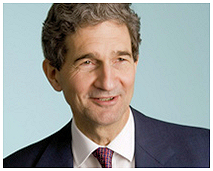
    Tuesday, October 20, 2009, the American University Washington College of Law
    Program on Information Justice and Intellectual Property will be offering the
    Fifth Annual Finnegan Distinguished Lecture on Intellectual Property.  The lecture, entitled: "What the
    Federal Circuit Can Learn from the Supreme Court — and Vice Versa," will
    feature Prof. Rochelle Dreyfuss
    (at right) of New York University School of Law. 
    A webcast of the lecture, which begins at 6:00 pm (EST), can be found here.

    Washington College of Law There
    is no registration fee for the lecture. 
    However, registration is required for those interested in attending the
    event — those interested in registering can do so here or by calling
    202-274-4445.  A reception will be
    held prior to the lecture, beginning at 5:00 pm.

  •     By
    Donald Zuhn

    New England Journal of Medicine In
    an online paper
    published by the New England Journal of Medicine on Wednesday, a New York
    patent attorney and two Harvard professors contend that follow-on biologics (FOB)
    legislation being proposed in the House and Senate, which provides 12 years of
    data exclusivity, would "upset[] the delicate balance between the
    interests of consumers and those of innovators."  The paper was authored by Alfred
    Engelberg, a New York patent attorney who represented the Generic
    Pharmaceutical Industry Association and played a role in the passage of the
    Hatch-Waxman Act in 1984; Dr. Aaron Kesselheim,
    a patent attorney and Instructor in Medicine at the Harvard Medical School; and
    Dr. Jerry Avorn, a Professor of
    Medicine at the Harvard Medical School. 
    The authors point to issues involving interchangeability and the impact
    of the European biosimilars regulatory pathway on biologic sales (i.e.,
    follow-on biologics, or biosimilars, have led to biologic price reductions of
    between 25-30% as compared with innovator small molecule price reductions of up to 80%),
    and contend that under an FOB regulatory scheme, "even after all patent
    and exclusivity rights have expired and a biosimilar product is eventually
    approved, innovator companies would maintain a substantial revenue stream in
    the new system."  The authors
    also argue that "[e]ven if the new legislation is adopted, manufacturers
    of potential follow-on products would probably prefer to ignore the new pathway
    and opt to file a standard BLA, which would not be subject to the 12-year delay,"
    and therefore contend that "as currently fashioned, the biosimilar
    legislation would have no value, because it would create a pathway that would
    scarcely be used."

    In
    support of their argument, the authors cite the Federal Trade Commission (FTC)
    report on follow-on biologics that was released in June (see "No One Seems Happy with Follow-on Biologics According to
    the FTC
    "), admonising Congress for
    "ignoring" the recommendations made in that report.  The authors also argue that:

    [T]he
    pharmaceutical industry's demand for a 12-year exclusivity period builds on one
    of the glaring failures of the Waxman–Hatch Act.  The act allows innovator companies to delay competition from
    generics for 30 months merely by asserting that their patents were infringed,
    even if this claim is not borne out. 
    Manufacturers of brand-name drugs have responded by seeking and
    obtaining many patents of questionable validity, engaging in frequent and
    costly patent litigation, and using litigated patents as vehicles for
    settlements in which they pay the manufacturers of potentially competitive
    generics to refrain from challenging their patents.  Congress is now considering additional legislation to
    prevent these abuses, which allow questionable patents to extend exclusivity
    improperly.  For biologic products,
    innovators seek — and Congress seems willing to grant — an iron-clad 12-year
    exclusivity period that would essentially eliminate the need to defend any patents.

    The
    paper suggests that the legislation currently being proposed in the House and Senate be
    amended to "give the FDA the mandate to evaluate and approve biosimilar
    drugs in a reasonable period, starting, as with small-molecule products, 5 years
    after the approval of the original drug," and concludes that "[s]uch a
    compromise would best balance the need for financial incentives with the need
    for competition, promoting access and motivating important subsequent
    innovation."

    Patent Docs
    thanks Kurt Karst of the FDA Law Blog for bringing this article to our
    attention.

  •     By Christopher P. Singer

    WIPO Within the last month, a number of foreign patent offices
    that act as International Searching Authorities (ISA) for the PCT announced fee
    increases to their search fees.  IP
    Australia and the Korean Intellectual Property Office both enacted search fee
    increases that have been effective since September 15, 2009.  The search fee for IP Australia to act
    as the ISA is now $1,278, while the search fee for the Korean Intellectual
    Property Office is now $729.

    Effective on October 1, 2009, the European Patent
    Office (EPO) also increased its search fee to act as the ISA.  The EPO will now charge $2,378 to act
    as the ISA.  The up-to-date PCT fee
    schedule is available online here.

    Updated Web Address for PCT Legal Administration

    With the recently launched redesign of the U.S.
    Patent and Trademark Office's website, a number of the previously assigned web
    addresses have been changed.  The
    PCT Legal Administration recently sent out an e-mail notification advising of
    its new address, which can be found here.

    To navigate to the site from the USPTO's top page,
    click on the "Patents" tab on the top menu bar, click on "Resources
    and Guidance" from the drop down menu, and from that page, click on "International
    Guidance," located below "Type of Patents."

  •     By Christopher P. Singer

    Thailand Flag Map Back on September 24, 2009, WIPO announced that Thailand
    deposited its instrument of accession to the Patent Cooperation Treaty (PCT), becoming the 142nd contracting
    state of the treaty.  The current list of contracting states can be viewed here.  The accession by Thailand means that in
    any international application filed on or after the effective date (December 24,
    2009), Thailand (TH) will automatically be designated, and as it will be bound
    by Chapter II of the Treaty, will automatically be elected in any demand for
    international preliminary examination filed in respect of an international
    application filed on or after December 24, 2009.  Also, as of that date,
    nationals and residents of Thailand will themselves be able to file PCT
    applications.

  •     By Kevin E. Noonan

    Tuesday was Sharon Barner's first day as Deputy
    Director of the U.S. Patent and Trademark Office, and she spent part of it
    addressing members of the patent bar in Chicago.  In a 90-minute
    roundtable meeting, Ms. Barner and Commerce Department General Counsel Cameron
    Kerry discussed patent reform and the Administration's support for S. 515, as previously outlined in a
    letter from Commerce Secretary Locke to the Chairman and Ranking Member of the
    Senate Judiciary Committee (see "Obama Administration Weighs in Supporting Patent 'Reform'").  Unfortunately, Mr. Kerry, a
    self-confessed patent law naif, did most of the talking.  And while his
    message was consistent with Secretary Locke's letter, it was also only a little
    less vague on specifics, while at the same time evincing a failure (still) to
    recognize the harm and suspicion remaining from the last Patent Office
    administration.

    Commerce Department Seal Mr. Kerry began the proceedings (after an introduction from Ms. Barner) by
    saying there was a "bright new day at the PTO."  He praised the
    leadership of Director Kappos, specifically mentioning the withdrawal of the
    continuation and claims rules as "turning over a new leaf" at the
    Office.  However, he also said that the PTO administration needed
    something more in order to solve the problems the Patent Office is facing.  That
    something more is patent reform, and as became evident, particularly and
    specifically substantive rulemaking authority for the PTO.  This is what
    is needed for the Office to provide "quality" patents (the first red
    flag), and "certainty" (another), and of course improve patent
    litigation and promote global patent harmonization.  He also said he had
    not spent one day since his swearing in earlier this year not working for
    passage of a patent reform bill, and that he was "optimistic"
    that patent reform will pass "once and for all" in this Congress.  This
    optimism stemmed, he said, from the compromises worked out by Senators Leahy,
    Specter, and Feinstein in the bill reported out of the Judiciary Committee last
    spring ("on balance, this is a good bill"), as well as judicial
    decisions that have convinced many that Congress may not have to address every
    aspect of patent reform by changing the law.

    Much of the focus of Mr. Kerry's address had to do
    with solving the problems of the Office such as the backlog and patent "quality,"
    and how the Office needed the "tools" to solve those problems (all
    within the context of a patent reform bill whose provisions will exacerbate,
    rather than ameliorate, these problems).  Both Mr. Kerry and Ms. Barner posed their talks in the guise of asking
    for help.  But it is clear that the
    Administration believes it knows what needs to be done, and that the only help
    they are really interested in is getting these proposals passed with a minimum
    of disagreement from the patent bar and their clients.

    Kerry, Cameron Specifically addressing the Patent Office, Mr. Kerry (at left) said that patent reform
    was necessary to overcome the backlog, reduce pendency, hire examiners, invest
    in IT and other infrastructure, and improve patent "quality."  Reform
    would give the Office the tools, specifically fee-setting authority to fund
    these improvements.  He also said that "we need to hit the reset
    button" on patent law to stimulate the "engine" of the U.S. economy.  Ms. Barner chimed in saying that stakeholders need to "step back and
    look at the big picture," specifically that the country needs a strong
    patent system, so that America (which has "the best patent system [in the
    world] that needs some tweaking") can promote innovation and lead the
    world.  Admirable sentiments, but consistent with this Commerce Department's
    rhetoric that is long on principle but short on specifics.

    To the question of "what is the definition of
    a good quality patent," Mr. Kerry deferred to Ms. Barner (after making the
    tautological statement that a good patent recites subject matter that is "clearly
    patentable"), who recited her "opening statement" to the effect that
    the claims needed to be novel, useful, and non-obvious, supported by a
    disclosure that adequately described and enabled what was claimed.  This is certainly the textbook answer
    but in many ways it is not the correct one; it has been evident for some time
    (and maybe it was always the case) that the definition of a "good quality
    patent" is one's own patent, and "bad" or "poor quality"
    patents are those held by one's competitors.  Mr. Kerry also asserted that a "bad" or "poor
    quality" patent is one having a claim or claims that should not have been
    granted, thereby echoing the standards of the "second pair of eyes"
    review that has led to a precipitous drop in allowances (and ironically has
    contributed to the financial shortfall experienced by the Office over the past
    year).  This statement was particularly disquieting in view of intelligence that
    the new Administration had eliminated this program, purportedly evincing an
    understanding that it had paralyzed examiners into a fear of allowing any
    claims whatsoever.  Ms. Barner also
    stated that "we don't always know the good [patents] but we know the bad
    ones," suggesting a standard uncomfortably reminiscent of Justice Stewart's
    definition of pornography.

    Barner, Sharon Ms. Barner (at right) reminded her listeners that patent "reform"
    came together after the FTC report, and that report said that it takes too long
    to get a patent, it's too expensive to litigate, quality has been going down,
    and the outcome is too uncertain, all of this has had an adverse impact on
    promoting innovation.  Thus, no "magic
    bullet" to "fix" the U.S. patent system — it is an organic,
    interrelated whole.

    Turning to specifics, Mr. Kerry had the following comments (many in response to
    questions from the audience) about specific provisions of S. 515:

    Fee-setting authority:  Mr. Kerry mentioned provisions of the
    bill that would grant the Office fee-setting authority to be important for the
    agency to get back on its financial feet.  He said that such fee increases could be on the order of 15%, which would
    merely restore the Office's budget to what it was before the financial crisis
    hit in the 4th quarter of 2008.  He also said that the philosophy of fee increases would be
    to have fees "rationally related to costs and conduct" and to be used
    to effect "behavior modification" without further elaboration.  He said he could not assure the
    audience that fee diversion would not return (calling it "a political
    problem"), but hoped that it could at least be forestalled long enough to
    get the Office's financial house in order.  He also said that while financial woes were "a big
    piece" of the current application pendency backlog, "more rational"
    incentives were needed during the examination process.

    Post-grant review:  Mr. Kerry stated that members of the
    Commerce Department were working with members of Congress for a "workable"
    post-grant review scheme that would include inter
    partes
    examination, and he particularly pointed out the need to avoid the
    estoppel effect that attaches to issues that "could have been raised"
    in inter partes reexamination.  The new administration is addressing
    Senator Kyl's objection to post-grant review and Congress is getting the PTO's
    input on how this can be effectuated.  Mr. Kerry stated that there were two key ingredients
    needed to implement a post-grant review process.  First, the Office needed fee-setting authority to have the financial
    ability to have adequate staffing.  Second,
    the program would have to be "phased in" over a period of one to four
    years, implementing "beta testing" of procedures.  He also mentioned the need to clarify
    the scope of the Office's procedural and substantive rulemaking authority in
    this area.

    Ms. Barner argued in support of post grant review
    that litigation had become "too expensive and too uncertain," and
    post grant review would "put patentability questions back before the
    experts [in the Office]," putting the onus back on the Patent Office rather
    than having patents grant and then testing them in litigation.  Mr. Kerry stated that "the reality
    is that examination does not stir up all prior art" as a justification for
    post-grant review.  In making this
    argument, it sounded like the Administration has decided against supporting
    efforts to "improve" the quality of the art cited during initial
    examination (for example, using Applicant Quality Statements to characterize
    the prior art, as was espoused by the last Administration) in favor of
    substituting post-grant review for litigation, as a way to reduce the costs of
    challenging "bad" patents and giving the responsibility in the first
    (really, second) instance to the Office rather than the courts.

    Regarding post-grant review procedures, Mr. Kerry
    did not mention specific proposals, but stated that the goal was to make the
    post-grant review procedures "simple enough" that they would not take
    too long or cost too much.  Subsequent inter partes
    reexamination proceedings would have a higher threshold, but one aspect he said
    should be changed is to not have the threshold be "so high" that it
    inhibits use thereof; in this regard, he made specific reference to estoppel
    provisions for any art or argument that "could have been raised"
    during the reexamination.  Ms.
    Barner and Mr. Kerry mentioned without elaborating on several procedural
    proposals, including adopting an "ITC-like" system where post-grant
    review would be completed within a year, with reexamination permitted only if a
    patent was in litigation.  Ms.
    Barner dismissed a suggestion from the audience that post-grant review be
    confined to questions of anticipation:  although seeming to agree that this might make review easier, she noted
    that in her experience anticipation was a concept juries could appreciate,
    whereas obviousness would benefit from Patent Office expertise in combining
    references and evaluating claims under current obviousness standards.  She also mentioned that there have been
    proposals that would not limit the art cited in post-grant review proceedings
    to printed publications, but again did not elaborate on these proposals.

    Substantive rulemaking:  An audience member asked, how can we be
    sure that we won't get a set of rules in future like the claims and
    continuation rules should the Office be given substantive rulemaking
    authority?  Mr. Kerry deferred to
    Ms. Barner, who said that the goal of the Office should be to be responsive to
    its stakeholders, but that "for as many of the stakeholders who were
    opposed to those [claims and continuation] rules, there were people in favor of
    them," necessitating compromise.  While stating that she isn't a proponent of the rules,
    she did contend that the Office must "ultimately" have the power to
    enact rules to make it work better.  Mr. Kerry refused to comment about rules "adopted by a prior PTO
    administration and withdrawn by the current administration."

    Mr. Kerry did assert that substantive rulemaking
    would be done by a different process than the way the claims and continuation
    rules were promulgated, and that stakeholders could expect any rulemaking process
    to be transparent under the Kappos regime.  One audience member reminded Mr. Kerry that conferring
    substantive rulemaking authority would be letting the genie out of the bottle,
    and no matter how beneficent the present administration may be, it could be
    replaced or succeeded by one less committed to transparency and more inclined
    to impose rules on the public in a manner forestalled for the claims and
    continuation rules only due to the fact that the Office did not have
    substantive rulemaking authority.  Mr. Kerry contended that there may be future efforts to adopt new rules by
    this administration using a process that provides the public with the
    opportunity to comment, resulting in rules "better attuned to the needs"
    of stakeholders.  (He also stated
    that "most" agencies have substantive rulemaking authority although
    neither he nor Ms. Barner could name one.)  He cited the Examination Guidelines for implementing the
    Federal Circuit's Bilski decision
    recently published for comment as an example of the benefits of granting the
    Office substantive rulemaking authority under the Kappos administration.  Not content with this answer, Hal Wegner pressed the
    issue, stating that while no one questions Dave Kappos' competence, "what
    would prevent a future administration" from using substantive rulemaking authority
    to pass "odd rules."  Mr.
    Wegner suggested that one mechanism for minimizing this outcome might be to specify
    that future Patent Office officials had the appropriate background in patent
    law, something he contended was the intent of provisions of the American
    Inventor Protection Act of 1999 to that effect.  He noted however that a court had decided that the standard enunciated
    in the statute was not sufficiently clearly defined to support Greg Aharonian's
    challenge to Margaret Peterlin's appointment as Deputy Director during the
    previous administration, despite an alleged deficiency in her background.  He asked whether the administration had
    given any thought to "nailing down" such requirements "in such
    detail" that we will "always have" people of the quality of Mr.
    Kappos and Ms. Barner as Patent Office administrators.  Mr. Kerry acknowledged that there is
    nothing in the current bill in that regard, and that the "basic backstop"
    to prevent arbitrary imposition of rules in a future administration were the
    provisions of the Administrative Procedures Act.

    Patent Office administration:  An audience
    member asked what efforts are being considered for strengthening the examining
    corps, and would monies from any fee increase be used to increase pay and
    retention?  Ms. Barner said that
    Mr. Kappos was "focused on this issue" but not as simple as putting
    in more money, mentioning the count system and other ideas.

    More questions from the audience included:  What
    about the attitude and morale of the corps?  Are examiners afraid to make a decision?  Are the examiners delaying examination
    in the hopes that the application will be abandoned?  How much of this is dependent on management, and will it
    change under the Kappos regime?

    Ms. Barner said that most examiners want to do
    their job and want to do it well, and that they have been trying to do so under
    some "very trying" circumstances.  She believes there has been "abuses" of the rules
    that "keep applications churning" in the Office (frankly,
    demonstrating a lack of understanding about how examination has been happening
    in recent years).  Mr. Kerry noted
    that Mr. Kappos had reached out to the examiners and the union to try to
    address their concerns.

    First to file:  Mr. Kerry and Ms. Barner were asked why the change to a "first
    to file" system was not tied to concessions from foreign patent offices,
    specifically the establishment of a grace period (something included as a "trigger" for the conversion
    in the bill passed in the House of Representatives in the last Congress).  Mr. Kerry contended that the
    administration supported the change because it would be good for U.S.
    applicants, providing a more uniform set of filing rules worldwide.  Mr. Wegner commented that there was "0.000000%
    chance" that any of the major foreign patent offices would agree to
    establishing a grace period, since in 1990, Commissioner Manbeck had scuttled an
    agreement on the grace period that had been hammered out between the different
    offices.

    Duty of disclosure:  In response to a question about whether
    Congress could eliminate the duty, Ms. Barner noted that the duty is imposed by
    Supreme Court precedent, and thus may be outside the power of Congress to
    eliminate.  However, an audience
    member suggested that Congress might define the scope of inequitable conduct.

    Best mode:  Ms. Barner said she thought the requirement was "peculiar"
    but is a question up for debate on whether it should be required to have a
    patent grant (showing an unfortunate misunderstanding of the process:  best mode is rarely if ever considered
    during patent prosecution, but rather acts to prevent enforcement of a patent
    procured without disclosing the best mode, thereby preventing a patentee from
    inequitably extending the advantage provided by the patent grant after patent
    expiry).

    As mentioned, Tuesday was Ms. Barner's first day on
    the job, and she deferred in large part to Mr. Kerry during the
    discussion.  When asked, she said
    her intention was to apply her passion for patent law to the goal of getting a
    patent reform bill passed.  Ms. Barner asserted that she would spend her time "making
    the stakeholders understand the big issues."  Respectfully, the problems of the Patent Office are not in
    the realm of the "big issues."  The problems facing the Patent Office
    are real and pressing, and in large part these problems will not be solved by
    the current or any bill — it is a matter of better, effective management and
    facing the realities of an increasingly technology-driven world and increasing
    participation of U.S. and ex-U.S. inventors.  It should not be too much to hope, or expect, that the
    Kappos administration will expend its energies on solving these problems, and
    leave patent reform efforts (benighted or otherwise) to others.

  •     By Suresh Pillai

    Teva Files Counterclaims in Gilead Suit

    Teva In answer to a complaint filed in the U.S. District
    Court for the Southern District of New York by Gilead Sciences Inc. over alleged patent
    infringement, Teva Pharmaceuticals
    has filed an amended answer and counterclaim alleging that the
    patents-in-suit are invalid.  The
    patents-in-suit, U.S. Patent Nos. 6,642,245
    and 6,703,396,
    cover formulations of the HIV drugs Atripla®
    and Truvada®.  The subject matter of the patents-in-suit was developed by three
    researchers, who then assigned their rights to Emory University, who in turn licensed the patents
    to Gilead Sciences.  Gilead filed
    suit in 2008 following Teva's filing of an Abbreviated New Drug Application
    seeking approval to import a generic version of a drug that Gilead claims is
    identical in formulation to Truvada® (see "Court Report," December
    21, 2008).  Teva is seeking a declaratory judgment
    that its generic product would not infringe the patents-in-suit.


    Shire Announces Settlement with Sandoz over
    Adderall®

    Shire Pharmaceuticals Shire Pharmaceuticals Group has
    announced a settlement in its patent dispute with Sandoz
    over Sandoz's proposed generic version of the Shire product Adderall®.  Shire originally filed suit in 2007 in
    the U. S. District Court for the District of Colorado on the heels of Sandoz's
    filing of an Abbreviated New Drug Application with the FDA seeking permission
    to market and manufacture a generic version of Adderall® (see "Court
    Report
    ," February 18, 2007).  In its suit, Shire claimed that Sandoz's
    proposed generic would infringe U.S. Patent Nos. 6,322,819 and
    6,605,300.  During the course of the litigation,
    the central issue concerned whether the coating, which would control the release
    of medication for Sandoz's proposed drug, fell within the claims of the
    patents-in-suit.

    Sandoz Under the terms of the settlement, Shire has
    granted Sandoz a license to market a generic version of Adderall® XR in the
    United States conditioned upon Sandoz receiving FDA approval.  In turn, Shire would receive a royalty
    from sales of the generic.


    Court Finds Valcyte® Patent Valid and Not
    Infringed

    Roche The U.S. District Court for the District of New
    Jersey has ruled that, though Roche Palo Alto's patent
    covering its anti-viral drug Valcyte® is valid, Ranbaxy Laboratories' generic version did
    not infringe Roche's patent rights.  Roche originally filed its complaint, accusing Ranbaxy of patent
    infringement of Roche's U.S. Patent No. 6,083,953,
    in April 2006.  The complaint was
    filed soon after Ranbaxy had notified Roche of Ranbaxy's submission of an Abbreviated New Drug Application seeking approval to market and manufacture a
    generic version of Valcyte®.  In
    this communication, Ranbaxy stated that the generic version would not infringe Roche's patent because the form of the active ingredient, valganciclovir,
    was amorphous rather than crystalline in nature.

    Ranbaxy In its complaint, Roche attempted to counter
    Ranbaxy's argument by stating that, because the amorphous form of the active
    ingredient would revert to the crystalline form spontaneously, Ranbaxy's
    proposed generic would infringe the '953 patent.  The District Court disagreed with Roche's arguments, finding instead
    that Roche could not prove that Ranbaxy's generic contained crystalline forms
    of the active ingredient.  The Court also concluded, however, that the '953 patent was valid and that Ranbaxy
    had failed to establish otherwise.

  •     By
    Donald Zuhn –-

    Doctors without Borders Last
    month, the international humanitarian aid organization Médecins Sans Frontières
    (MSF) — known to many as Doctors Without Borders — announced
    that it was asking nine of the world's largest pharmaceutical companies to pool
    their HIV patents in order to accelerate the availability of new treatments to HIV/AIDS
    patients.  As part of the effort to
    encourage these companies to pool their patents, MSF has launched an e-mail
    writing campaign calling on Abbott Laboratories, Boehringer Ingelheim,
    Bristol-Myers Squibb, Johnson & Johnson, Gilead Sciences, GlaxoSmithKline,
    Merck & Co, Pfizer, and Sequoia Pharmaceuticals to place specific HIV drug
    patents in the pool.  The specific patents
    relate to drugs that MSF has identified to be essential based on the group's
    field experience, and which have been recommended by the World Health
    Organization (WHO) for use in developing countries.  Michelle Childs, the Director of Policy & Advocacy for MSF's
    Campaign for Access to Essential Medicines, said that while the creation of an
    HIV patent pool was "a simple idea," in which the companies would "share their
    knowledge in return for fair royalty payments," such a pool would have "the
    potential to transform companies' approaches to access to HIV medicines and
    foster innovation in a way that marks an alternative to the confrontation and
    litigation of the past."

    UNITAID The
    MSF release noted that the international drug purchasing agency UNITAID was
    currently establishing a medicines patent pool for HIV drugs, but said the
    success of this effort depended on the willingness of patent owners to
    participate by including their patent rights in the pool.  Ms. Childs stated that the UNITAID
    project presented "an opportunity for these drug companies to demonstrate
    that they are genuinely committed to effective measures that allow access to life-saving
    medicines for people with HIV in developing countries," adding that
    "[s]ome companies have expressed interest in the idea, but we need them to
    go further and put key patents in the pool."  Dr. Eric Goemaere, medical coordinator for MSF in South Africa,
    noted that the formation of the patent pool "comes at a crucial
    time," because many HIV/AIDS patients in MSF's South African programs have
    developed resistance to current medicines and "need to switch to newer
    more effective drugs now." 
    Without new medicines, Dr. Goemaere said such patients "face a
    return to AIDS death row as treatment options dry up."

    The
    group contends that the formation of an HIV patent pool would "speed up
    the availability of more affordable versions of new medicines, as generic
    production could begin well before the 20-year patent terms expire."  In its release, MSF suggests that
    patent barriers prevent innovations such as new pediatric formulations or
    fixed-dose combinations.

    In
    a Daily News & Analysis report regarding the HIV patent pool,
    an unnamed MSF official noted that because the pool "will lead to
    companies losing monopoly . . . some of them don't seem keen on such a
    proposition."  However, the
    official said that Gilead Sciences had shown some interest.  In the same report, a GSK spokesperson
    stated that the company had created a patent pool for neglected tropical
    diseases earlier this year "because we felt it could help draw attention
    to the need for more research," but contended that "HIV is not
    included in our patent pool because as far as R&D is concerned, we do not
    consider it as neglected."  In
    August, Patent Docs reported on GSK's
    patent pool, which was formed to aid in the discovery and development of new
    medicines for the treatment of sixteen neglected tropical diseases, and which,
    at the time, comprised more than 2,300 patents (see "Alnylam to Donate RNAi Patents to Patent Pool").

  •     By Kevin E. Noonan

    The pitfalls attendant on collaborations between
    industry and academia are nicely illustrated in the Federal Circuit's decision
    last week in Board of Trustees of the
    Leland Stanford Junior University v. Roche Molecular Systems, Inc
    .

    Stanford University Stanford asserted three patents relating to methods
    for using polymerase chain reaction (PCR) detection of human immunodeficiency
    virus (HIV) RNA in blood samples for assessing the efficacy of antiretroviral
    drug treatment.  These patents
    were:

    U.S. Patent No. 5,968,730 (Merigan, Katzenstein and
    Holodniy, inventors), issued on October 19, 1999:

    1.  A method of
    evaluating the effectiveness of anti-HIV therapy of a patient comprising:
        (i) collecting a plasma
    sample from an HIV-infected patient who is being treated with an antiretroviral
    agent;
        (ii) amplifying the
    HIV-encoding nucleic acid in the plasma sample using HIV primers in about 30
    cycles of PCR; and
        (iii) testing for the
    presence of HIV-encoding nucleic acid, in the product of the PCR;
    in which the absence of
    detectable HIV-encoding nucleic acid correlates positively with the conclusion
    that the antiretroviral agent is therapeutically effective.

    U.S. Patent No. 6,503,705 (Kozal, Merigan,
    Katzenstein and Holodniy, inventors), issued on January 7, 2003:

    1.  A method of
    evaluating the effectiveness of anti-HIV therapy of an HIV-infected patient
    comprising:  a) collecting statistically significant data useful for determining
    whether or not a decline in plasma HIV RNA copy numbers exists after initiating
    treatment of an HIV-infected patient with an antiretroviral agent by: (i)
    collecting more than one plasma sample from the HIV-infected patient at time
    intervals sufficient to ascertain the existence of a statistically significant
    decline in plasma HIV RNA copy numbers; (ii) amplifying the HIV-encoding
    nucleic acid in the plasma samples using HIV primers via PCR for about 30
    cycles; (iii) measuring HIV RNA copy numbers using the products of the PCR of
    step (ii); (iv) comparing the HIV RNA copy numbers in the plasma samples
    collected during the treatment; and b) evaluating whether a statistically
    significant decline in plasma HIV RNA copy numbers exists in evaluating the
    effectiveness of anti-HIV therapy of a patient.

    And U.S. Patent No. 7,129,041 (Merigan, Katzenstein
    and Holodniy, inventors), issued on October 31, 2006:

    1.  A method of
    evaluating the effectiveness of anti-HIV therapy of a patient comprising:  correlating the presence or absence of detectable HIV-encoding nucleic acid in
    a plasma sample of an HIV infected patient with an absolute CD4 count, wherein
    the presence or absence of said detectable HIV-encoding nucleic acid is
    determined by (i) collecting a plasma samples from an HIV-infected patient who
    is being treated with an antiretroviral agent; (ii) amplifying HIV-encoding
    nucleic acid that may be present in the plasma sample using HIV primers via PCR
    and; (iii) testing for the presence of HIV-encoding nucleic acid sequence in
    the product of the PCR.

    All three patents were assigned to Stanford
    University.

    The background facts recited in the Federal Circuit's
    opinion relate to co-development in the late 1980's and early 1990's of the application
    of PCR technology to HIV detection by Stanford and Cetus, a private company
    that developed and owned the PCR technology.  These collaborations were governed by a series of written
    agreements between the company and the University.

    In 1988, Inventor Holodniy signed a "Copyright
    and Patent Assignment (CPA)" agreement as a condition for his employment
    as a post-doctoral researcher in Inventor Merigan's laboratory governing
    ownership of any inventions he developed.  However, in 1989 he began a series of "regular visits" to Cetus
    to learn the PCR technique.  The company imposed as a requirement that he sign a "Visitor's Confidentiality
    Agreement (VCA)" with Cetus that purported to assign his rights to any "ideas,
    inventions and improvements" made by him "as a consequence of"
    the work he performed at Cetus.

    Complicating matters, Stanford and Cetus signed
    several "Materials Transfer Agreements" permitting Stanford to use
    PCR-related reagents and information supplied by Cetus during the performance
    of the work that culminated in the patents-in-suit.  In return, Cetus received licenses to the technology
    developed by the Stanford researchers using the materials supplied by Cetus.Roche

    The Stanford Technology Transfer Office and Roche
    (Cetus' successor-in-interest to agreements between Stanford and Cetus and the
    PCR technology) began negotiations regarding a license to the patents, but the
    University sued when Roche refused to agree to a license.  Stanford sued Roche
    for infringement based on Roche's sale of kits for PCR detection of HIV RNA for
    assessing the efficacy of antiretroviral therapy.  Roche raised its purported ownership rights as well as "shop
    rights" to the claimed invention as affirmative defenses, as a declaratory
    judgment counterclaim, and procedurally regarding Stanford's standing to bring
    the lawsuit.

    The District Court ruled on summary judgment that
    Roche's assertion of ownership rights were properly viewed as a counterclaim
    subject to and barred by the California statute of limitations (which had
    expired before Roche raised the counterclaim).  The Court also ruled that Roche did not have a license to
    the technology because it failed to obtain consent from the patent holder,
    Stanford, and that Roche did not have shop rights in the invention.  The District Court granted Roche's summary
    judgment motion that the asserted claims of all three patents were invalid for
    obviousness.

    Federal Circuit Seal The Federal Circuit issued a decision vacating
    the District Court's determinations in a decision by Judge Linn, joined by
    Judges Prost and Moore.  The Federal Circuit
    affirmed the District Court's determination that Roche's ownership claims were
    barred by the California statute of limitations.  But the CAFC vacated the remainder of the District Court's
    decision, based on its conclusion that Stanford did not have standing to sue.

    The Federal Circuit first dismissed Stanford's objections to
    Roche's defenses and counterclaims on procedural grounds, finding critically
    that Roche had raised a question of standing that could properly be raised at
    any time during a litigation and that was not foreclosed by statutes of
    limitations.  Thus, the CAFC
    considered it error for the District Court to have refused to consider Roche's
    ownership counterclaims below.  Instead of returning the matter to the District Court, however, the Federal
    Circuit decided the question (in Roche's favor) in its opinion.

    In its decision, the panel went right to the heart
    of the matter:  that Inventor
    Holodniy had made agreements to assign his rights to multiple parties.  Here, however, the Court made an
    important distinction based on the language of the CPA Inventor Holodniy signed
    with Stanford.  The agreement
    stated that Inventor Holodniy "agrees to assign" all inventions that
    he first "conceives or first actually reduces to practice" under the
    research grants to the University.  The Court held that this was not "an immediate transfer of
    expectant interests" (i.e., a present assignment of future inventions),
    but "a mere promise to assign rights in the future"; the Court's conclusions were bolstered
    by further portions of the CPA that required Inventor Holodniy to assign his
    rights "at an undetermined [future] time."  Thus, the panel held that Inventor Holodniy retained rights
    in his invention at the time he made the further agreement with Cetus; if the Court had ruled otherwise, then
    Inventor Holodniy would have transferred all his rights to the University prior
    to signing the agreement with Cetus, and would have had no rights to assign.

    In contrast, the VCA Inventor Holodniy signed with
    Cetus contained the language required by the Federal Circuit to effect an
    immediate transfer of rights:  "I
    will assign and do hereby assign to CETUS, my right, title and interest
    in each of these ideas, inventions and improvements" (emphasis in
    original
    ).  With the
    filing of patent applications naming Inventor Holodniy as an inventor, the Court said, equitable title conferred upon Cetus by Inventor Holodniy's VCA
    converted "by operation of law" to legal title in the "ideas,
    inventions and improvements" disclosed in the patent applications that
    issued ultimately as the patents-in-suit.  This negated Inventor Holodniy's subsequent assignment of his rights to
    these inventions to Stanford, because he no longer had any legal rights to
    assign (Stanford's rights to the patents presumably derive from the interests
    of the other named inventors).

    The Federal Circuit also refuted Stanford's
    assertion that Holodniy's later assignment placed them in the position of a "bona
    fide purchaser for value" with regarding to Cetus' (now Roche's)
    interests in the patents.  The Court found that Stanford had at least constructive notice of Cetus'
    interests, if only as the result of the terms of several Materials Transfer
    Agreements between the University and the company.  In addition, the Court relied upon common-law agency
    principles that attribute knowledge to the employer possessed by the
    employee.  (Interestingly, the Court ignored any agency relationship between Inventor Holodniy and the
    University with regard to failure of the inventor to obtain Stanford's
    permission or consent to assign his rights to Cetus, since (according to the Court)
    "Holodniy signed away his individual rights as an inventor, not
    Stanford's, while performing work for Stanford after promising to assign his
    rights to the university" (emphasis in original).)

    Finally, the Court also rejected Stanford's
    argument that Inventor Holodniy's assignment to Cetus was voided by the
    University's rights to federally-funded inventions under the Bayh-Dole Act (35
    U.S.C. § 202(d)):

    We are
    unconvinced of Stanford's interpretation of the Bayh-Dole Act in this case.  Stanford identifies no authorities or reasons why its election of title under
    Bayh-Dole had the power to void any prior, otherwise valid assignments of
    patent rights.  Stanford was entitled to claim whatever rights were still
    available after the Government declined to exercise its option, including the
    rights of co-inventors Merigan, Katzenstein, and Kozal.  However, Holodniy
    transferred his rights to Cetus more than six years before Stanford formally
    notified the Government of its election of title.  As previously noted, Stanford's
    invention rights policy "allow[ed] all rights to remain with the inventor
    if possible," . . . which supports the conclusion that Holodniy still
    possessed rights at the time he signed the VCA with Cetus.  Just as we explained
    that Bayh-Dole does not automatically void ab initio the inventors' rights in
    government-funded inventions, . . . we see no reason why the Act voids prior
    contractual transfers of rights.

    (However, in footnote 1 the Court noted that "[w]e express no opinion as to whether
    Holodniy's execution of the VCA violated any provisions of the Bayh-Dole Act,
    or whether the Act provides the Government or Stanford some other legal
    recourse to recover Holodniy's rights.")

    Because the
    Federal Circuit affirmed Roche's rights to the patents-in-suit, Stanford lost
    standing to sue under the principle that all co-owners must be joined in an
    infringement lawsuit.  Despite
    Roche's loss of its ability to assert an ownership interest in the patents due
    to the actions of the statute of limitations, its rights to the patents
    obtained through Inventor Holodniy's assignment agreement were not extinguished
    and deprived Stanford of standing to assert infringement against Roche.  And because Stanford lacked standing to
    bring the suit, the District Court lacked jurisdiction to invalidate the
    asserted patents claims for obviousness, which judgment the Federal Circuit also vacated.

    While the
    outcome is not surprising and indeed is consistent with well-established patent
    law principles, wherein rights to an invention arise first in the inventor and can
    be freely alienated by the inventor (absent any agreement, such as an employment
    agreement, to the contrary), it is clear that this outcome is contrary in
    spirit to the intent of the Bayh-Dole regime.  It illustrates the necessity for universities to provide
    more than merely agreements to be signed by its researchers.  Rather, there is a critical need for
    information regarding the importance of understanding the interplay of
    university and corporate interests in inventions that its researchers may
    develop.  This is particularly true
    for junior researchers like Inventor Holodniy, who no doubt was more interested
    in gaining access to the reagents and techniques that would further his
    research interests than to any commercial applications of the technology.  These are not illegitimate
    concerns; indeed, it is preferable
    for university researchers to be focused on their primary goal, advancing
    knowledge through original research, than on the practical applications of that
    research.  However, in view of the
    different motivations and interests of academia and industry, it behooves
    technology transfer office personnel to have the capacity and authority to at
    least monitor activities of university research employees when they interact
    with or obtain technology owned by corporate sponsors or collaborators.  This remains a current problem, and one
    whose importance is demonstrated pointedly by Stanford's loss of standing (and
    licensing revenue) against Roche in this case.

    Board of Trustees of the Leland Stanford Junior
    University v. Roche Molecular Systems, Inc.
    (Fed. Cir. 2009)

    Panel: Circuit Judhes Linn, Prost, and Moore
    Opinion by Circuit Judge Linn