•     By Kevin E. Noonan

    Federal Circuit Seal In Anna Karenina, Leo Tolstoy
    wrote, "All happy families resemble one another, each unhappy family is
    unhappy in its own way."  This
    sentiment could also be applied to the briefs submitted to the Federal Circuit
    for its en banc consideration of the
    written description requirement.  A
    large proportion of those briefs support the current construction of 35 U.S.C. § 112, first paragraph, to include a separate written description requirement,
    but like unhappy families each amicus takes its position in a slightly
    different way.  The Federal Circuit
    Bar Association's
    brief is one example:  their position is that there is
    a separate written description requirement, but that there is much less of a
    difference between those who agree and those who believe the only requirement
    is enablement, including even Ariad who (understandably) has made the strongest
    argument that the statute should not be construed to contain a separate written
    description.

    The brief begins with the argument that there is "substantial common
    ground" among all the parties involved, including Ariad, Lilly, and the
    various amici.  The basis for this assertion is that
    all parties agree (according to this amicus) that the "invention"
    must be disclosed in the specification.  "Ultimately," they write, "the real issue on written
    description is not whether the law
    requires a description of the invention in a patent application, but whether
    that condition is its own statutory requirement or merely an 'aspect' of
    enablement without independent force."

    "Law and logic" converge in the conclusion that written
    description is a separate requirement, they argue.  In reaching this conclusion, they don't rely merely on the
    language of 35 U.S.C. § 112, first paragraph, but cite the provisions
    of the second paragraph, that the claims be directed to subject matter that an
    inventor "regards as his invention."  That statutory requirement requires that patents be granted
    only on what an inventor has invented, but there are instances where enablement
    is "insufficient to protect against overclaiming," according to this
    brief.

    The "central truth" providing "fundamental common ground"
    for the parties is the "simple common sense" that "a patent must identify what the inventor believes
    to be his or her invention," say the amicus (emphasis in original).  This requirement is based on the quid
    pro quo
    of the patent system.  The brief cites Ariad's principal brief for "the undisputed
    proposition that the claims must be
    directed to an invention that is identified in the specification
    "
    (emphasis in original).  Indeed, amicus make a strong argument
    based on this section of the brief that the dispute is one more semantical than
    real.  Amicus' brief further cites Ariad's
    principal brief that "[t]he specification must state what the invention is, for otherwise it fails to inform a person of
    ordinary skill in the art what to make and use" (emphasis in original).  (This "admission" is so significant that amicus feels
    compelled to state that it is "not a slip of the pen or poor proofreading.")  Further (and from the first page of
    Ariad's brief), "[p]roperly interpreted, the statute requires the
    specification to describe (i) what the
    invention is
    , and (ii) how to make and use it" (emphasis in original).

    Not content to rely on the "common sense" of its position, the
    brief cites precedent from the CCPA (In
    re Moore
    , In re Sus, Jepson v. Coleman) for the requirement
    that the specification disclose what the inventor regarded as her
    invention.  Specifically discussing
    In re Ruschig, the amicus states that
    "all parties agree that the specification must disclose what the inventor
    actually invented."

    Turning to the specific questions asked by the Court, the amicus asserts
    that the "common ground" discussed above provides the "starting
    point" for resolving the debate.  However, they argue that there is a "much narrower" question
    before the Court, specifically whether it is "possible to satisfy
    the enablement requirement without also satisfying" the written
    description requirement.  In most
    cases, the brief argues, these requirements are "so closely related"
    that satisfaction of one provides satisfaction of the other, citing LizardTech Inc. v. Earth Resource Mapping,
    Inc
    . and University of Rochester v.
    G.D. Searle & Co. Inc
    . (tellingly, cases involving electromechanical
    and biotech/pharma claims, respectively).  The problem with Ariad's argument, according to this amicus, is that "it
    fails to provide any statutory safeguard to keep an inventor to what he or she
    has actually invented in the limited class of cases where enablement is
    insufficient to prevent abuse."  This is because the two requirementswritten description and enablement — serve independent
    purposes.  These purposes are
    related to the fact that "the heart of innovation" is not always its implementation, i.e., there are instances where the inventor's "true
    contribution" is in implementing an invention, and other cases where an
    inventor recognizes that an "already-enabled system or method can be
    applied to solve a problem or otherwise advance a field of art."  In the latter instances, it is the
    identification of the solution that is the invention, and in these instances,
    this amicus argues, the enablement requirement "can be inadequate to
    ensure that the inventor's patent monopoly is limited to his or her
    contribution."  (This brief,
    as have other briefs, uses cases like Rochester
    and Amgen v. Hoescht Marion Roussel
    to support this point, some of the very cases Ariad and those challenging the
    separate written description requirement contend is a misapplication of the
    law.)

    The brief sets forth a hypothetical to illustrate the point:  an invention
    involving an "easy-to-make compound" to be used in a specific medical
    or biological application.  The
    inventor did not contribute by identifying how to make the compound; rather,
    the inventor's contribution is "to identify for the first time that the
    compound will be effective for the desired application."  Often, perhaps frequently, the inventor
    will disclose this new application in the patent specification.  But, the brief questions, "what
    happens when the inventor's patent application . . . evolves over the course of
    amendments to his or her claims?"  It is possible, amicus argues, that the claims "may shift to identify
    for the first time . . . compounds that are useful in solving a problem
    underlying the invention, but that the inventor had not identified in his or
    her original application."  The brief also raises the specter of such a change in the "invention" — i.e., what is claimed — as not even involving the inventor but being accomplished
    by a patent attorney (which while true, incongruously directs the source of the
    problem of misapplication of the written description requirement towards a
    substantial portion of the FCBA's membership).  Under these circumstances, the brief argues, enablement "can
    be wholly inadequate as a vehicle to prevent abuse . . . the newly-claimed
    compounds are undeniably enabled, even if they were never identified as part of
    the invention in the specification."  The brief also cites for this principle situations of belated claiming
    of a species falling within the scope of a disclosed genus but not expressly
    described in the specification as filed.  Other instances cited in the brief include those where "the
    specification describes a feature of the invention that is indispensible to the
    inventor's contribution but where the inventor — or his or her patent attorney — failed to include it in the claims as properly construed."  (This was the
    situation in the LizardTech
    case.)  In LizardTech, according to the amicus, without the written
    description requirement "neither principles of enablement nor claim
    construction would always keep the scope of the patent monopoly faithful to the
    inventor's invention — the claims could be completely untethered to his or her
    technical contribution."  (As
    an aside, the brief casts the written description requirement as being needed
    to constrain the "patent monopoly" much more frequently than might
    have been expected from a group that should understand the inaccuracy inherent
    in the phrase and the extent to which the Supreme Court has used the concept of
    "monopoly" to unduly restrict patent rights in the past.)  This portion of the brief closes by
    describing the written description in a patent specification to be "a
    snapshot in time" of the invention that is "indispensible" to
    identify the invention, and that serves to limit the scope of granted claims to
    what the inventor invented and to which she is "fairly entitled."

    Secondly, the brief argues that Ariad's position that the "requirement"
    that the inventor disclose what she thinks is her invention devolves to the
    enablement requirement is "not faithful to the text of Section 112."  Calling the first paragraph of §
    112, "far from a model of clarity," the brief argues that
    interpretation of the statute to require a separate written description
    requirement "flows not only from the statutory text and history" but
    also "from the overall context of the patent statute . . . itself."  This is the error in focusing (as Ariad
    and some amici have) on how § 112, first paragraph, should be parsed as a
    matter of English language sentence construction.  Rather, they argue that the statute should be construed with
    regard to context, specifically the interplay of the first paragraph of §
    112 with the second paragraph.  The
    amicus construes the second paragraph as having two requirements:  that the
    claims "set forth what the applicant regards as his invention" and "that
    is to do so with sufficient particularity and distinctiveness."  While the second requirement is the
    usual focus of analysis regarding fulfillment of the second paragraph of § 112, the amicus argues that the first requirement "provides
    powerful proof that an inventor's claim scope is tied directly to his or her
    invention as defined in his or her patent specification," a reading the
    brief argues is supported by Allen Engineering
    Inc. v. Bartell Industries Inc
    . (Fed. Cir. 2002).  By this interpretive legerdemain, this amicus moves the statutory
    situs of the written description requirement from the first paragraph (where it
    is inconveniently linked to the enablement requirement) to the second paragraph
    where it is free of the encumbrances of enablement.  The brief also argues that the Allen Engineering precedent,
    and the statutory context, confirm the "common sense principle" that
    a patentee is entitled to claims that extend as far and no farther than what
    the inventor sets forth as her invention in the specification.

    The brief then delves briefly into the waters of English language
    sentence analysis, on what it terms Ariad's "grammatical argument."  The amicus notes that this
    argument "largely revolves around the presence of a comma between the
    phrases 'of the manner and process of making and using it' and 'in such . . .
    terms'."  The objection to finding a separate
    written description requirement based on the position of this comma advanced by
    Ariad and amici in agreement with Ariad was also voiced by Chief Judge Markey
    in dissent to the Court's opinion in In
    re Barker
    (CCPA 1977) and by Judge Linn dissenting from the Rochester opinion.  But this amicus refutes the argument
    with a simple "not so."  For amicus, "[a]n at least equally-plausible reading of the [and
    manner and process of making and using it] phrase is that the comma between the
    phrases . . . represents a natural pause between the two clauses."  The amicus tests this analysis by
    assessing the meaning of the first paragraph of § 112 if its drafters had
    removed the phrase "written
    description of the invention" from the statute.  The comma still has a function, as a pause according to the
    amicus, and thus "the comma between the phrases . . . — relied upon so
    heavily by opponents of a separate written description requirement — does not
    undermine a separate written description requirement because proper English
    would include it in the statute even if
    the statute did not include language requiring a written description of the
    invention."  In short,
    according to this amicus, Ariad's principal grammatical argument is a
    nullity.  Moreover, the brief
    argues, if Congress wished to limit the scope of § 112, first paragraph, to require enablement alone, Congress could have achieved this end by "a
    couple of minor revisions."  Of course, Congress has not availed itself of this opportunity.  And the brief further notes that the
    phrase "of the invention" is set off from the phrase "the manner
    and process of using is" by its own comma, and thus Congress could have
    more clearly indicated an intention to equate a description of the invention
    with enablement by deleting this
    comma.

    The brief ends its survey of what it calls the "comma conundrum"
    by performing its own "grammatical deconstruction" of § 112,
    first paragraph, saying "it can hardly be a coincidence that the
    enablement requirement directly parallels the requirement contain the manner
    and process of making and using the invention but not the written description of
    the invention," saying that "[t]his parallelism of language reflects
    a parallelism of thought," that "an enabling disclosure must allow
    those of ordinary skill in the art to make and use the manner and process of
    making and using the invention."

    Finally, the brief surveys and rejects Ariad's contention that the
    written description requirement is but a relic of a time before the statute
    mandated peripheral claiming, saying "[t]his theory reads far too much
    into the statutory history of Section 112."

    The brief also addresses the second question posed by the Federal Circuit
    for en banc consideration.  According to amicus, the written
    description should be applied on a case-by-case basis, the brief arguing
    that there is "no one-size-fits-all approach" that can be properly
    used.  However, they do recommend
    to the Court two principles important for guiding development of written
    description jurisprudence.  First,
    claims should only be found valid to the extent that they are directed to "what
    the inventor 'regards has his invention'."  This is "[t]he key to a fair and balanced written
    description requirement," amicus argue.

    Second, fulfillment of the written description requirement should be
    assessed as a matter of law based on underlying facts, rather than as a factual
    matter.  Their basis for this
    contention is that "ultimately" patent validity is a question of law
    (citing Graham v. John Deere) and the written description requirement is
    something "fundamentally focused on the text of the patent's disclosure
    itself," in analogy to claim construction under Markman v. Westview Instruments (seemingly disregarding the
    difficulties and criticisms the Court's application of Markman decision to claim construction has engendered, by members
    of the FCBA as well as several current Federal Circuit judges).  Because satisfaction of the written
    description requirement goes "hand-in-hand" with satisfaction of the
    enablement requirement (except, as amicus argues in another portion of the
    brief, when they don't), both should be assessed as a matter of law, based on
    the "inventor's disclosure within the four-corners of the patent
    specification."  The argument
    focuses on the "black-and-white" nature of these analyses, meaning
    (it seems) that both are objective rather than subjective tests (as opposed,
    for example, to the best mode requirement).  However, the argument ignores the other distinction, made by
    other amici, that enablement permits consideration of what was known by one
    having ordinary skill in the art, while written description involves only what
    the inventor has described as being her invention.  The brief characterizes en
    banc
    consideration as being a "golden opportunity" for the
    Federal Circuit to address this "inconsistency."

    The FCBA's brief thus invites the Federal Circuit to once again take an issue of
    patent validity away from the jury, and potentially to add yet another aspect
    of patent infringement litigation to its de
    novo
    review.  As the history of
    Markman claim construction has amply showed, de novo review results in the opposite of what Congress intended
    when instituting the Federal Circuit — less consistency and less predictability
    in outcomes.  Unless the Court
    intends to revise its treatment of such de
    novo
    review situations — such as reviewing the factual underpinnings of
    legal conclusions for substantial evidence or clear error and basing its de novo review of the legal conclusions
    on trial court-determined facts — following the FCBA's recommendations seem
    curious coming from an amicus that would be expected to best understand the
    burden de novo review has been to the
    Federal Circuit, and the negative effects it has had on U.S. patent law and
    litigation.

    For additional information regarding this topic, please see:
    • "Amicus Briefs for Ariad v. Lilly: Intellectual Property Owners Association," November 25, 2009
    • "Amicus Briefs in Ariad v. Lilly: GlaxoSmithKline," November 24, 2009
    • "Amicus Briefs in Ariad v. Lilly: United States," November 23, 2009
    • "Amicus Briefs in Ariad v. Lilly: Google, Verzion Communications Inc. and Cisco Systems, Inc.," November 22, 2009
    • "Amicus Briefs in Ariad v. Lilly: Professor Christopher Holman," November 19, 2009
    • "Lilly Files Principal Brief for Ariad v. Lilly Rehearing En Banc," November 16, 2009
    • "Next Up: Ariad v. Lilly Rehearing En Banc," November 10, 2009
    • "Federal Circuit Grants En Banc Review in Ariad v. Lilly," August 21, 2009
    • "Ariad Files Petition for Rhearing in Ariad v. Lilly," June 3, 2009
    • "Ariad Decision Voids Attempt to Use Broad Claiming to Avoid the Written Description Requirement," April 14, 2009
    • "Ariad Pharmaceuticals, Inc. v. Eli Lilly and Co. (Fed. Cir. 2009)," April 6, 2009

  •     By Sherri Oslick

    Gavel_2About
    Court Report:  Each week we will report briefly on recently filed
    biotech and pharma cases, and a few interesting cases will be selected
    for periodic monitoring.


    Daiichi Sankyo Co. Ltd. et al. v. Sandoz Inc.
    1:09-cv-00898; filed November 25, 2009 in the
    District Court of Delaware

    • Plaintiffs: 
    Daiichi Sankyo Co. Ltd.; Daiichi Sankyo Inc.
    • Defendant: 
    Sandoz Inc.

    Infringement of U.S. Patent No. 5,340,821 ("Composition
    and Method for Treating Sjoegren Syndrome Disease," issued August 23,
    1994) in conjunction with Sandoz's filing of an ANDA to manufacture a generic
    version of Daiichi's Evoxac® (cevimeline hydrochloride, used to treat symptoms
    of dry mouth in patients with Sjogren's Syndrome).  View the complaint
    here.


    Nycomed U.S. Inc. v. Perrigo Israel Pharmaceuticals, Ltd. et
    al.

    1:09-cv-05123; filed November 20, 2009 in the
    Eastern District of New York

    • Plaintiff: 
    Nycomed U.S. Inc.
    • Defendants: 
    Perrigo Israel Pharmaceuticals, Ltd.; Perrigo Co.

    Infringement of U.S. Patent No. 7,300,669 ("Fluticasone
    Lotion Having Improved Vasoconstrictor Activity," issued November 27,
    2007) following a Paragraph IV certification as part of Perrigo's filing of an
    ANDA to manufacture a generic version of Nycomed's Cutivate® Lotion
    (fluticasone propionate, used to treat eczema).  View the complaint
    here.


    Allergan Inc. et al. v. Sandoz Inc.
    1:09-cv-00882; filed November 19, 2009 in the
    District Court of Delaware

    • Plaintiffs: 
    Allergan Inc.; Allergan USA Inc.; Allergan Sales LLC; Endo
    Pharmaceuticals Solutions Inc.; Supernus Pharmaceuticals Inc.
    • Defendant: 
    Sandoz Inc.

    Infringement of U.S. Patent No. 7,410,978 ("Once
    Daily Dosage Forms of Trospium," issued August 12, 2008) following a Paragraph
    IV certification as part of Sandoz's filing of an ANDA to manufacture a generic
    version of Allergan's Sanctura XR® (trospium, used to treat overactive
    bladder).  View the complaint
    here.


    Abbott Laboratories et al. v. Teva Parenteral Medicines Inc. et
    al.

    1:09-cv-00884; filed November 19, 2009 in the
    District Court of Delaware

    • Plaintiffs: 
    Abbott Laboratories; Wisconsin Alumni Research Foundation
    • Defendants: 
    Teva Parenteral Medicines Inc.; Teva Pharmaceuticals USA Inc.; Teva
    Pharmaceutical Industries Ltd.

    Infringement of U.S. Patent Nos. 5,246,925 ("19-nor-Vitamin
    D Compounds for Use in Treating Hyperparathyroidism," issued September 21,
    1993), 5,587,497 ("19-nor-Vitamin D Compounds," issued December 24,
    1996), and 6,136,799 ("Cosolvent Formulations," issued October 24,
    2000) following a Paragraph IV certification as part of Teva's filing of an
    ANDA to manufacture a generic version of Abbott's Zemplar® (paricalcitol, used
    to treat secondary hyperparathyroidism in patients with kidney failure).  View the complaint
    here.


  • CalendarDecember 7, 2009 – 20th Annual Conference on U.S. Patent and
    Trademark Office Law and Practice (PTO Day)
    (
    Intellectual Property Owners Association (IPO) and U.S. Patent and Trademark
    Office) – Washington, DC

    December 7-8, 2009 – Foreign Patent Law &
    Regulation
    ***
    (American Conference
    Institute) – New York, NY

    December 9, 2010 – Biotechnology/Chemical/Pharmaceutical (BCP) Customer Partnership Meeting (U.S. Patent and Trademark Office) – 10:00 am – 4:00 pm (EDT)

    January 6-10, 2010 – 27th
    Annual National CLE Conference
    (
    Law Education Institute, Inc.)

    January 20-21, 2010 – Life Sciences IP
    Due Diligence
    (American Conference
    Institute) – New York, NY

    January 25-26, 2010 – European Pharmaceutical Regulatory Law Boot
    Camp
    (American Conference
    Institute) – New York, NY

    ***Patent Docs is a media partner of this conference or CLE

  • USPTO Building Facade The
    next biotechnology/chemical/pharmaceutical (BCP) customer partnership meeting
    will be held on December 9, 2009. 
    The proposed agenda for that meeting is as
    follows:

    Morning
    Session


    Greetings and Overview (10:00 – 10:15 am EDT):  John LeGuyader and Remy Yucel, Directors, Technology Center
    1600


    Count System Changes (10:15 – 11:15 am): 
    Bruce Kisliuk, Assistant Deputy Commissioner of Patent Operations


    Restriction Comparison: 35 U.S.C. § 121 v. § 371, Practice and Restriction
    Petition Report (11:15 am – 12:00 pm): Julie Burke, QAS, TC1600


    Break (12:00 – 12:15 pm)


    KSR Case Law Update (12:15 – 1:00
    pm):  Jean Witz, QAS, TC1600


    Lunch (1:00 – 2:00 pm)

    Afternoon
    Session


    Report on Compact Prosecution Workshop (2:00 – 2:45 pm):  Bennett Celsa, QAS, TC1600


    Break (2:45 – 3:00 pm)


    TC1600 Training: 35 U.S.C. § 101 in view of Bilski
    (3:00 – 3:45 pm):  Marjorie Moran,
    SPE, Art Unit 1631


    Closing Remarks/Discussion (3:45 – 4:00 pm):  John LeGuyader and Remy Yucel, Directors, Technology Center
    1600

    The
    presentation can be attended in person at the Madison Auditorium, 600 Dulany
    Street, Alexandria, VA.  The
    meeting can be viewed online here
    (select the "enter as guest" option).  The Patent Office asks that non-USPTO employees login using
    their e-mail addresses.

  • New York #1 American Conference
    Institute (ACI) will be holding its 7th National Conference on Life Sciences IP
    Due Diligence from January 20-21, 2010 in New York.  The conference will allow attendees to:

    • Incorporate the
    impact of patent reform and new regulations on follow-on biologics into an IP
    due diligence review protocol;
    • Evaluate the
    breadth, strength and validity of the patents at issue in order to predict the
    commercial viability of the IP being gained;
    • Craft a checklist
    that will be most efficient in guiding attendees to obtain the information
    needed;
    • Quantify the
    value of the IP at stake in the deal for both the business and legal teams;
    • Uncover and
    resolve hidden issues with ownership rights, inventorship, and obligations
    under prior contractual agreements;
    • Protect and
    preserve confidentiality and privilege during the IP due diligence process; and
    • Gauge the effect
    of the patents in question on the acquiror's freedom to operate.

    In particular,
    ACI's faculty will offer presentations on the following topics on January 20
    and 21:

    Resample_brochure.php • Factoring recent
    developments in life sciences IP case law, pending patent reform and follow-on
    biologics legislation into your due diligence analysis;
    • Balancing
    competing interests in a changed economy: 
    Crafting a diligence review process that incorporates both the business
    objectives of the deal and a comprehensive IP assessment;
    • Creating a
    practical and useful checklist:  A
    guide to obtaining the information you need in the most cost-effective manner
    by utilizing the right team;
    • Evaluating the
    scope, breadth, validity, and enforceability of the target's patents under
    evolving patent standards and regulatory protocols;
    • Incorporating a
    valuation calculation into your life sciences diligence review:  Considering criteria that can impact
    the overall value of the deal;
    • Resolving
    ownership rights and inventorship issues arising under the target's prior
    contractual, third party and licensing obligations which could impact your
    deal;
    • Freedom to
    operate:  Overcoming obstacles by
    ensuring that the purchaser/licensee has the right to commercialize the IP at
    issue;
    • Protecting
    confidentiality, trade secrets, and attorney client privilege during a diligence
    review; and
    • Academic vs.
    commercial:  Handling unique issues
    that arise in the context of industry/university collaborations and
    intellectual property licenses.

    An additional
    master class entitled: "Drafting an Effective Due Diligence Report"
    will be offered on January 22 from 9:00 am to 12:00 pm.  During this master class, attendees
    will learn how to draft a comprehensive and effective report on due diligence
    findings.

    ACI - American Conference Institute A complete brochure
    for this conference, including an agenda, list of speakers, and registration
    form can be downloaded here.

    The registration
    fee ranges from $2,195 (conference alone) to $2,795 (conference and master
    class).  Those registering by
    December 18, 2009 will receive a $200 discount off the registration fee.  Those interested in registering for the
    conference can do so here, by calling
    1-888-224-2480, or by faxing a registration form to 1-877-927-1563.

  • New York #2 American Conference
    Institute (ACI) will be holding its European Pharmaceutical Regulatory Law Boot
    Camp from January 25-26, 2010 in New York.  The conference will allow attendees to:

    • Master the
    essentials of the different modes of the European drug approval process,
    including Centralized Procedure through the European Medicines Agency (the
    EMEA);
    • Understand the
    role of the EMEA within the EU and its juxtaposition with other European
    pharmaceutical regulatory bodies, including MHRA, BfArM/PEI, and affsapps;
    • Comprehend the EU
    Patent/Regulatory interface and the complexities surrounding data exclusivities
    and generic approvals in Europe;
    • Learn how the
    EU's approval of biosimilars may influence the development of an abbreviated
    pathway for follow-on biologics in the U.S.;
    • Explore new FDA/
    EMEA harmonization initiatives;
    • Examine the scope
    of the EU Clinical Trials Directive and its ties to the EU Data Protection and
    Good Clinical Practice Directives;
    • Appreciate the
    regulatory significance of the EC's DG Competition's Pharmaceutical Sector
    Inquiry vis-à-vis marketing authorizations, patents, and pricing;
    • Recognize the
    role of comparative effectiveness, and comparator and therapeutic evaluation
    studies in drug approval and development in Europe;
    • Decipher the
    relationship between the regulation of drug promotion and the status of DTC
    Advertising in the EU;
    • See the
    importance of cGMPs to the post-approval regulatory process in Europe; and
    • Navigate EU
    adverse events and pharmacovigilance protocols, including Risk Management Plans
    (RMPs), use of the EudraVigilance database and the role of Qualifi ed Persons
    (QPs) in these processes.

    In particular,
    ACI's faculty will offer presentations on the following topics:

    Resample_brochure_EP • The EMEA:  Exploring its unique role in the EU and
    its significance to the global pharmaceutical industry;
    • A look at other
    European pharmaceutical regulatory bodies and their interplay with EMEA;
    • The nature of the
    drug approval process in Europe via Centralized Procedure and other methods;
    • Understanding EU
    clinical trials and procedures;
    • Demystifying the
    patent/regulatory interface in the EU: 
    Generic approvals, exclusivities, and more;
    • Biosimilars:  A study of follow-on biologics in the
    EU;
    • cGMPs in the EU;
    • Analyzing the
    regulatory significance of the findings of the EC's DG Competition's
    Pharmaceutical Sector Inquiry;
    • Drug promotion
    and the current status of DTC advertising in the EU;
    • EMEA/FDA
    harmonization efforts:  Assessing
    their impact on the global pharmaceutical industry;
    • Adverse events
    monitoring and pharmacovigilance protocols in the EU;
    • Comparative
    effectiveness and therapeutic evaluation studies:  Understanding their scope and magnitude for EU drug
    development and commercialization; and
    • Drug recalls in
    the EU:  Everything you need to
    know.

    ACI - American Conference Institute A complete brochure
    for this conference, including an agenda, list of speakers, and registration
    form can be downloaded here.

    The registration
    fee for this conference is $2,195. 
    Those registering by January 8, 2010 will receive a $200 discount off
    the registration fee.  Those
    interested in registering for the conference can do so here, by calling
    1-888-224-2480, or by faxing a registration form to 1-877-927-1563.

  •     By Christopher P. Singer

    Turkey_2 In the spirit of the Thanksgiving holiday, we take
    a closer look at U.S. Patent No. 6,708,440,
    entitled "Turkey Decoy" (which is admittedly outside our usual biotech/pharma focus).  The
    '440 patent addresses a problem that has long-plagued
    the turkey hunting arts, specifically that prior turkey decoys were not
    laterally mobile and did allow for "movement of the tail to include
    outward fanning . . . or movement of the wings and/or back."  The result is striking; as described in claim 1, we seem to be
    one Cyberdyne Systems neural net CPU away from another James Cameron box office
    smash.

    Claim 1:  A turkey decoy, comprising:
        a flexible skin covering at least a portion of said
    turkey decoy;
        a robotic frame for supporting said at least a
    portion of said turkey decoy, said robotic frame further, comprising:
            1) a mobile carriage mounting to a mobile base for
    traversing over the ground surface;
            2) at least one post having a vertical axis
    projecting upwardly from said mobile carriage;
            3) a central frame member supported on said least
    one post defining a body;
            4) a neck supporting frame portion mounting on said
    central frame member projecting from a first end thereof;
            5) a tail supporting frame portion pivotally
    secured to said central frame member projecting from a second end thereof said
    tail supporting frame portion defining a tail of said turkey decoy including at
    least a pair of tail members moveable relative to one another for selectively
    varying the width of said tail of said turkey decoy;
            6) a first pair of moveable arms mounted on said
    central frame member for supporting a pair of wing defining portions of said
    turkey decoy;
            7) at least one remotely actuated motor for driving
    said mobile base;
            8) a second remotely actuated motor in cooperative
    engagement with said tail supporting frame for moving said tail up and down
    and/or for moving said at least a pair of tail members relative to one another;
    and
            9) a third remotely actuated motor for rotating said
    body of said turkey decoy about the vertical axis of said at least one post;
    and
            10) said remotely actuated motors being powered by
    at least one battery mounting on said mobile carriage and being controlled by
    an RF receiver mounted thereon in communication with a remotely located hand
    held RF transmitter.

    The Figures are particularly "chilling" —

                                            Delectable poultry?

    FIG_1
    Or a lethal fowl that
    "can't be bargained with, it
    can
    't
    be reasoned with. It doesn
    't
    feel pity or remorse or fear and it absolutely will not stop, ever, until you
    are dead!!
    "

    FIG_2
    Have a Happy and Safe Thanksgiving weekend!The Patent Docs.

  •     By Kevin E. Noonan

    IPO #2 The Intellectual Property Owners Association
    (IPO) has filed an
    amicus brief in the rehearing en banc of Ariad
    Pharmaceuticals, Inc. v. Eli Lilly & Co.,
    supporting
    neither party but arguing in favor of a separate written description
    requirement as part of 35 U.S.C. § 112, first paragraph.  The IPO's brief is significant, if only
    because the organization represents inventors across the spectrum of American
    industry (from sole inventors to Fortune 100 companies) and thus may represent
    a consensus of the views of its disparate membership.

    IPO's précis of its argument is simple.  A separate written description
    requirement exists according to traditional and settled judicial interpretations
    of the statute.  The requirement
    serves two related purposes:  it
    requires a patentee to show that she had possession of the claimed invention on
    its filing date and it serves a public notice function of what the inventor
    believes is her invention.  In these
    respects the written description requirement comprises part of the quid pro quo
    of the patent right, so that a patentee's disclosure is sufficiently certain to
    entitle the patent grant.  Merely
    providing an enabling disclosure is not enough, IPO's brief argues, since there
    could be situations where the specification enables a broader scope than the
    inventor described, and thus the ensuing scope of protection would be "unfairly
    broad."

    But IPO does not advocate that claims should be
    limited to the disclosed embodiments or "that unclaimed details of such
    embodiments should necessarily be used to limit claim scope."  IPO further argues that it would be
    inappropriate to craft a "bright line rule" of what constitutes an
    adequate written description.  This
    determination should be performed on a case-by-case basis, will depend on the
    technology and the state of development of that technology.  The brief recognizes that this
    increased the potential for uncertainty, but an inflexible rule "would
    either be too stringent for incremental improvements in well-developed
    technologies or too lenient for ground-breaking discoveries in undeveloped
    technologies."

    IPO's argument for the existence of a separate
    written description requirement relies heavily on Supreme Court precedent as
    well as case law from the CCPA and Federal Circuit, and of course comparisons
    of the statutory language in its various incarnations (the 1790, 1836, 1870, and
    1952 Acts).  The brief cites
    pre-1952 Act cases including Evans v.
    Eaton
    , O'Reilly v. Morse, and In re Moore.  Turning to the
    1952 Act, the brief cites In re Ruschig
    for the proposition that the statute requires "blaze marks" setting
    forth the metes and bounds of what the patentee believes to be her
    invention.  This case also
    exemplifies the distinction between written description and enablement,
    wherein enablement was said to be
    "beside
    the point for the question is not whether he would be so enabled but whether
    the specification discloses the compound to him, specifically, as something
    appellants actually invented."  The brief is also quick to mention (in a footnote) that it would be a
    misinterpretation of the judicial record to think that Ruschig was somehow the genesis of the concept of the distinctly
    different enablement and written description requirements, citing In re Lund and In re Cavallito as additional, earlier judicial expressions of the
    same principle.  Citing more recent cases from both the Supreme Court and the Federal Circuit, the
    brief then advocates for stare decisis:

    This Court should not disrupt over 200
    years ofprecedent beginning with the Patent Act of
    1790 and continuing until today.  Accordingly, this Court should hold that
    Section 112 does set forth a written description requirement separate from the
    enablement requirement.

    Turning to the concept
    of the quid pro quo, the brief once
    again cites Supreme Court precedent, specifically
    Bonito Boats, Inc. v. Thunder Craft Boats, Inc. (the first instance of Supreme Court
    review of the Federal Circuit) for the proposition that
    "[t]he federal patent
    system . . . embodies a carefully crafted bargain for encouraging the creation
    and disclosure of new, useful, and nonobvious advances in technology and design
    in return for the exclusive right to practice the invention for a period of
    years."  The brief then ties
    this proscription in favor of disclosure as the basis for the exclusive patent
    grant to the written description requirement, citing University of Rochester v. G.D. Searle that "'[t]
    he written description requirement serves as
    a teaching function, as a 'quid pro quo' in which the public is given
    meaningful disclosure in this carefully crafted bargain."

    This requirement can be further broken
    down into two features:  that the inventor had possession of the claimed subject matter on the
    filing date, and that the public is fairly put on notice by the disclosure in the
    patent specification as to what the inventor thinks her invention
    encompasses.  For the first point,
    the brief argues that an inventor is entitled to the exclusionary right "on
    only that subject matter that he has actually invented" (emphasis in original), supported by
    citation to abundant recent Federal Circuit precedent (of dubious applicability
    in view of the en banc Court's
    interest in deciding whether these cases have been properly decided in the
    first place).  As to the
    public notice function, the brief turns to more fruitful Supreme Court precedent,
    specifically Evans v. Eaton and, of
    course, Judge Rich's decision in Ruschig.  The brief brings the discussion somewhat into the modern era
    by arguing that the public notice function of the specification "begins"
    upon publication of the application, and "provides a reasonable guide to
    the likely scope of claimed that will ultimately issue."  The brief argues that since the claims
    in the published application are frequently broader than the claims that
    ultimately issue, focusing on the scope of the written description helps
    prevent innovation from being "stifled" out of fear of overbroad
    published claims.

    The enablement
    requirement is insufficient to police the boundary between the scope of the
    claims and the extent of the disclosure, according to amicus, because
    situations can arise where enablement may be satisfied even though the
    specification provides "no evidence that the inventor was in possession of
    the invention" throughout the scope of the granted claims.  The brief cites In re DiLeone for this proposition, specifically a "hypothetical
    example" recited in the case to illustrate the different purviews of the
    written description and enablement requirements:

    For greater clarity on this point,
    consider the case where the specification
    discusses only compound A and contains no broadening language of any
    kind.  This might very well enable one skilled in the art to make and
    use compounds B and C; yet the class consisting of A, B, and C has not
    been described.

    The brief also
    cites In re Ahlbrecht, where the
    issue involved entitlement to a priority claim (the traditional ambit of
    applications of the written description requirement).  (In Ahlbrecht, the
    range of methylene groups claimed (2 to 12) was broader than the range of
    methylene groups disclosed (3 to 12), and thus the written description
    requirement was not satisfied.)

    The brief then
    argues that it would be a mistake for the en banc Court to attempt to construct
    a "bright line rule" for the extent of disclosure that satisfies the
    written description requirement, perhaps being leery of the Court's ancient and
    recent propensity along those lines (and particularly its perverse
    perserverence in the practice, as illustrated by the en banc decision in In re
    Bilski
    in the face of a decade of Supreme Court opinions to the effect that
    the Court does not condone bright line rules in this (or perhaps any)
    area).  The brief reminds the Federal Circuit
    of the Supreme Court's displeasure with this practice, citing KSR International Co. v. Teleflex Inc., albeit only after
    arguing that the better reason for avoiding a bright line rule for the written description requirement is
    the impracticability of such a rule.  Instead, amicus argues, "[t]he sufficiency of written description
    should therefore be evaluated under a flexible standard on a case-by-case
    basis, with an understanding that what is sufficient to satisfy the written
    description requirement will vary according to the art to which the invention
    pertains and as the knowledge of those skilled in the art develops."  The brief is also careful that the en banc Court does not read this
    argument as advocating that claims be limited to those embodiments actually
    carried out (perhaps being mindful of the restrictive decision on enablement
    rendered by a panel of the Court in the In
    re '318 Patent Litigation
    case).  The brief even goes so far as to set forth what it
    characterizes as "[s]everal well-established tenets" for "delineating
    the boundaries of the written description requirement."  These include:

    1.  Examples:  "[E]xamples
    [explicitly covering the full scope of the claim language] are not necessary to
    support the adequacy of a written description." 
    Falko-Gunter Falkner v. Inglis,
    448 F.3d 1357, 1366 (Fed. Cir.
    2006);
    see also
    LizardTech, Inc.
    v. Earth Res. Mapping, Inc., 424 F.3d 1336, 1345 (Fed. Cir. 2005).

    2.  Actual Reduction to Practice:  "[A]n
    actual reduction to practice is not required for written description." 
    Falkner, 448 F.3d at 1366; see
    also University of Rochester,
    358
    F.3d at 922, n.5 (although "[c]onstructive reduction to practice" is
    sufficient so long as the application "describe[s] the claimed subject
    matter in terms that establish that [the applicant] was in possession of the . . . claimed invention, including all of the elements and limitations.") (alteration in original) (citation omitted).

    3.  Literal
    Support for the Claimed Invention:  The disclosure need not match the claim word
    for word to satisfy the written description requirement.  See Purdue Pharma
    L.P.
    v. Faulding Inc., 230 F.3d 1320, 1323 (Fed. Cir. 2000) ("the
    disclosure as originally filed does not have to provide in haec verba support
    for the claimed subject matter at issue."); see also Martin v. Johnson,
    454 F.2d 746, (C.C.P.A. 1972) (noting that "the description need not
    be in ipsis verbis to be sufficient").

    4.  Identical
    Type or Depth of Disclosure for Each Invention:  The written description
    requirement does not require "that every invention must be described in
    the same way.  As each field evolves, the balance also evolves between what is
    known and what is added by each inventive contribution."  Capon, 418
    F.3d at 1357-58.

    5.  Express
    Disclosure of Each and Every Species in a Genus:  "Mention of representative
    compounds encompassed by generic claims language clearly is not required by §112
    or any other provision of the statute.  But, where no explicit description of a
    generic invention is to be found in the specification, "mention of representative
    compounds may provide implicit description upon which to base generic claim language."  In re Robins, 429 F.2d 452, 456-57 (C.C.P.A. 1970).

    Finally, IPO argues
    that, however the en banc Court
    rules, claims should not be limited to their specifically-disclosed
    embodiments.  "The separate
    written description requirement also should
    not undermine the courts' reluctance to narrow claim scope by importing
    limitations appearing in the specifications,"
    amicus argues in its brief, under that
    well-established principle of claim construction.

    For additional information regarding this topic, please see:
    • "Amicus Briefs in Ariad v. Lilly: GlaxoSmithKline," November 24, 2009
    • "Amicus Briefs in Ariad v. Lilly: United States," November 23, 2009
    • "Amicus Briefs in Ariad v. Lilly: Google, Verzion Communications Inc. and Cisco Systems, Inc.," November 22, 2009
    • "Amicus Briefs in Ariad v. Lilly: Professor Christopher Holman," November 19, 2009
    • "Lilly Files Principal Brief for Ariad v. Lilly Rehearing En Banc," November 16, 2009
    • "Next Up: Ariad v. Lilly Rehearing En Banc," November 10, 2009
    • "Federal Circuit Grants En Banc Review in Ariad v. Lilly," August 21, 2009
    • "Ariad Files Petition for Rhearing in Ariad v. Lilly," June 3, 2009
    • "Ariad Decision Voids Attempt to Use Broad Claiming to Avoid the Written Description Requirement," April 14, 2009
    • "Ariad Pharmaceuticals, Inc. v. Eli Lilly and Co. (Fed. Cir. 2009)," April 6, 2009

  •     By Suresh Pillai

    Exela Files Appeal to Alphagan® Decision

    Allergan Following a ruling by the U.S. District Court for
    the District of Delaware that Exela PharmSci's proposed generic
    version of Allergan's
    Alphagan®
    glaucoma treatment infringed an Allergan patent, Exela has filed a notice
    of appeal, seeking to have the District Court's decision reviewed by the Court
    of Appeals for the Federal Circuit.  The patents-in-suit, U.S. Patent Nos. 6,627,210,
    6,641,834,
    6,673,337,
    6,562,873,
    and 5,424,078,
    cover methods and formulations related to the manufacturing of Alphagan®.  Allergan filed its original suit
    against Exela in 2007 following Exela's announced intent to enter the market
    for brimonidine ophthalmic solutions (see "Court Report," April 23,
    2007).  The suit was later consolidated into
    other related suits within the District of
    Delaware.

    Exela PharmSci Last month, the District Court ruled that a generic
    version of
    Alphagan® manufactured by Apotex,
    another defendant in the infringement suit, infringed all five of the
    patents-in-suit (see "Biotech/Pharma Docket," October 26, 2009).  In the same ruling, the District Court concluded
    that Exela infringed one of the patents-in-suit.  Although the defendants
    had alleged that the patents-in-suit were invalid on grounds of obviousness,
    nonenablement, lack of written description, failure to disclose a best mode,
    indefiniteness, lack of utility, inoperability, and incorrect inventorship, the Court disagreed and held that the patents were valid.


    Teva Announces Intent to Appeal Vigamox® Decision

    Teva Teva Pharmaceuticals USA has announced its
    intention to appeal a ruling of the U.S. District Court for the District of
    Delaware that Teva infringed Alcon's patent related to
    Vigamox®, an anti-bacterial eye drop drug.  Alcon filed its original suit in April 2006 after Teva filed
    an Abbreviated New Drug Application with the FDA, seeking permission to market
    a generic version of Vigamox®.  The
    patent-in-suit, U.S. Patent No. 6,716,830,
    covers moxifloxacin hydrochloride, the active ingredient in Vigamox.

    Alcon At trial, Teva alleged that the patent
    was invalid for anticipation, obviousness, failure to satisfy best mode,
    lack of written description, and lack of enablement.  Last month, the District Court entered final judgment, having earlier
    ruled at the conclusion of the 2008 bench trial that Teva's generic product
    infringed Alcon's patent (see "Biotech/Pharma Docket," October 21,
    2009).  Alcon followed this ruling with a
    request that the Court amend to the order to enjoin Teva from marketing the
    generic drug until after the patent's 2020 expiration date.


    Novartis Prevails over Teva in Famvir® Suit

    Teva A jury in the U.S. District Court for the District
    of New Jersey has found that Teva Pharmaceuticals USA infringed U.S. Patent No. 5,246,937, which covers Novartis'
    genital herpes drug Famvir®.  Novartis filed suit alleging infringement in 2005 after Teva's filing of
    an Abbreviated New Drug Application with the FDA seeking permission to market a
    generic version of Famvir®.  At the time, Novartis had also
    sought an injunction that would prevent Teva from marketing its generic, but
    the District Court denied Novartis' request for injunctive relief.

    Novartis Novartis then filed willful
    infringement claims, which Teva argued should be dismissed based on the District Court's denial of injunctive relief.  In February 2009, the Court dismissed Novartis' willful
    infringement claims against Teva, holding that in light of the Court's earlier
    denial of injunctive relief that would have prevented Teva from marketing its
    drug, Novartis would have difficulty proving willful infringement on the part
    of Teva.  Having conceded that it infringed, Teva argued at
    trial that the patent was invalid as obvious, but the jury disagreed.

  •     By Christopher P. Singer

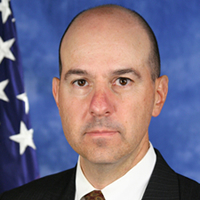
    Kappos, David #1 As widely publicized, U.S. Patent and Trademark Office Director David Kappos
    launched a blog earlier this month that is intended to engage the public and provide updates
    regarding USPTO news (see "Director Kappos Joins Blogger Ranks").  In an
    article posted on November 24, 2009, Director Kappos announced that the public
    has been requesting additional guidance concerning the determination of
    non-obviousness in light of the Supreme Court's decision in KSR International Co. v. Teleflex Inc.  While the Office did publish examination
    guidelines (72 Fed. Reg. 57526)
    that are currently used by the examining corps to determine non-obviousness of
    a claim, Director Kappos noted that the public has expressed concern regarding
    the manner in which the Office is applying KSR
    in practice.  The public has been
    heard.

    Noting that a number of court decisions regarding
    obviousness have been rendered in the two years since the KSR decision, Mr. Kappos stated that:  "[o]ffice personnel are
    presently reviewing court decisions with an eye toward identifying factual
    scenarios to illustrate the developing law of obviousness."  A good amount of effort will evidently
    be directed to cases that have analyzed the "obvious-to-try"
    rationale, implying that this basis has been particularly troublesome for
    applicants.

    The Director also noted that applicants and
    practitioners need to be keenly aware of how KSR has changed the law of
    obviousness, stating that:

    [I]t
    may be necessary to review a broader cross-section of prior art than was
    previously necessary, or to consider filing evidence of unexpected results earlier
    rather than later in the course of prosecution.  By being proactive,
    practitioners will expedite prosecution and avoid unnecessary fees and RCE
    filings.

    Understandably, Mr. Kappos did not specify a
    particular timeline for the completion of the review and publication of further
    guidelines.  Nevertheless, he did
    state his commitment to providing ongoing education for examiners and managers
    in an effort to ensure that KSR is clearly and properly applied, and his
    intention to keep an open dialog with applicants and practitioners regarding
    the "contours and boundaries" of KSR.