•     By
    James DeGiulio —

    Torrance, Andrew A recent study published in The Columbia Science and Technology Law Review challenges the traditional
    view that patents foster innovation, suggesting instead that patents may harm
    creation of new technology, economic activity, and societal wealth ("Patents and the Regress of Useful Arts"). 
    The study, conducted by Dr. Andrew W. Torrance (at right), Associate Professor at the University of Kansas School of Law and a Research
    Associate at the Biodiversity Institute at the University of Kansas, and Dr.
    Bill Tomlinson
    (below left), Assistant Professor in the Informatics Department of the Bren
    School of Information and Computer Sciences at the University of California-Irvine, sought to address the lack of empirical evidence to support the
    assumption that patents do actually encourage technological innovation.  The results of the study challenge the
    orthodox view that the prospect of patent protection for new inventions leads
    to higher rates of technological innovation, as well as greater attendant
    benefits to society, than would a commons system offering no patent protection.

    Tomlinson, Bill To
    test the hypothesis that a patent system promotes innovation, the study used a
    computer program to simulate the behavior of inventors and competitors under
    conditions approximating patent and non-patent systems.  PatentSim, the computer
    program used, is a multi-user interactive simulation of patent, patent/open
    source, and commons systems.  Inventions are created from a database of
    potential innovations, represented by an assortment and pattern of a fictional
    widget product.  The program
    attempts to represent the systematic, experimental nature of the process of
    invention by creating a set of values in which certain innovations are very
    valuable, but difficult to invent.  PatentSim contains an interactive interface that allows users to invent,
    patent, or open source innovations, and a network over which users may interact
    with one another to license, assign, buy, infringe, and enforce patents.  The
    program measures individual and societal benefits by offering money incentives
    for such activities as invention, licensing, and infringement.

    Kansas School of Law First
    year law students at University of Kansas School of Law competitively played
    PatentSim against one another in games under three distinct systems:  (1) a
    system approximating a pure patent system ("Pure Patent"), (2) a
    system allowing both patents and open source ("Patent/Open"), and (3)
    a system approximating a pure commons system ("Pure Commons").  Before
    the simulation began, all players were informed that they will be playing a
    simulated business game, and that the goal is to make as much money as possible
    before the game is over.  They are told that the game will conclude at a time
    randomly chosen between 25 and 35 minutes after they begin.  Following the conclusion of the
    simulations, data was generated that compared rates of innovation, productivity,
    and social utility across these three systems.

    Innovation
    was defined as the mean number of unique inventions.  Graph 1 (below) illustrates the relative amounts of
    innovation generated in the Pure Patent, Patent/Open Source, and Pure Commons
    systems.  The data reveal that there is no significant difference in innovation
    (p=0.538) between the Pure Patent and Patent/Open Source systems, a nearly
    significant difference in innovation (p=0.128) between the Pure Patent and Pure
    Commons systems, and a significant difference in innovation (p=0.046) between
    the Patent/Open Source and Pure Commons systems.

    Graph1Innovation Productivity
    was defined as the mean number of total inventions created.  Graph 2 (below)
    illustrates the relative amounts of productivity generated in the Pure Patent,
    Patent/Open Source, and Pure Commons Systems.  The data reveal that there is no
    significant difference in innovation (p=0.886) between the Pure Patent and
    Patent/Open Source systems, a highly significant difference in productivity
    (p=0.0000000004) between the Pure Patent and Pure Commons systems, and a highly
    significant difference in productivity (p=0.000003) between the Patent/Open
    Source and Pure Commons systems.

    Graph2Productivity Social
    Utility was defined as the mean amount of money with which each subject ended
    each trial.  Graph 3 (below) illustrates the relative amounts of social
    utility generated in the Pure Patent, Patent/Open Source, and Pure Commons
    systems.  The data reveal that there is no significant difference in social
    utility (p=0.454) between the Pure Patent and Patent/Open Source systems, a
    highly significant difference in social utility (p=0.0002) between the Pure
    Patent and Pure Commons systems, and a significant difference in social utility
    (p=0.0006) between the Patent/Open Source and Pure Commons systems.

    Graph3SocialUtility Data
    generated from this simulation suggest that the current system combining
    patent and open source protection for inventions generates significantly lower
    rates of innovation (p<0.05), productivity (p<0.001), and societal
    utility (p<0.002) than does a commons system.  Further, the empirical data generated using PatentSim
    suggests that commons systems can generate significantly greater amounts of
    innovation, productivity, and social utility than currently predominating
    patent systems that combine both patent and open source protection for
    inventions.

    Additional information regarding the study can be found in a press release issued by the University of California-Irvine.

    James DeGiulio has a doctorate in molecular biology and genetics from Northwestern University and is a third-year law
    student at the Northwestern University School of Law.  Dr. DeGiulio
    was a member of MBHB's 2009 class of summer associates, and he can be contacted at degiulio@mbhb.com.

  •     By Suresh Pillai

    The Medicines Company Files New Lawsuits in Angiomax®
    Patent Dispute

    Medicines Company Following up on lawsuits filed in October against
    defendant Teva Pharmaceuticals,
    The Medicines Company has now filed new lawsuits alleging infringement of U.S. Patent No. 7,598,343,
    which covers The Medicines Company's blood thinning drug, Angiomax®.  In its original suit, The Medicines
    Company alleged that Teva's proposed generic version of the drug, as described in Teva's
    ANDA filing seeking permission to market and manufacture said
    generic, would infringe The Medicines Company's U.S. Patent No.
    7,582,727,
    which also covers Angiomax® (see "Court Report," October 11, 2009).  In the most recent lawsuits, The Medicines Company alleges that Teva sent letters indicating that Teva had amended its ANDAs to include Paragraph IV
    certifications that the '343 patent was not valid, currently infringed, or
    would be infringed in the future by Teva's proposed generic.  However, Teva failed
    to offer The Medicines Company confidential access to the filed ANDAs.

    Teva The Medicines Company is seeking a declaratory judgment that
    the '343 patent is valid and enforceable as well as injunctive relief that
    would prevent Teva from marketing and manufacturing its generic until after the
    expiration of the '343 patent.


    As Abbott Appeals, Centocor Seeks Continuing
    Damages in Humira® Dispute

    Centocor Ortho Biotech On the heels of Abbott Laboratories' appeal of a record
    $1.85 billion judgment in favor of Centocor Ortho Biotech, Centocor has filed a new suit seeking continuing damages against Abbott for its manufacture of the
    arthritis drug Humira®.  In its most recent suit, Centocor seeks both actual and enhanced damages, alleging that Abbott continues
    to willfully infringe Centocor's patents during the appeals process.

    Abbott Laboratories #1 An Eastern
    District of Texas jury prevously found Abbott liable for willfull infringement of four claims
    of U.S. Patent No. 7,070,775 and awarded Centocor $1.17 billion in lost profits and $504 million as
    reasonable royalties (see "Biotech/Pharma Docket," June 30, 2009).  Abbott immediately moved for the District Court
    to find the '775 unenforceable on grounds of inequitable conduct, prosecution
    laches, and indefiniteness of the disputed claims, but the District Court
    denied this motion in November.  In
    December, the District Court entered final judgment in the case and added $176
    million in interest to the original judgment.  Abbott then filed its appeal with the Court of Appeals for
    the Federal Circuit.


    Teva, Others Found to Have Infringed Strattera®
    Patent

    Lilly The U.S. District Court for the District of New
    Jersey has determined that generic drug manufacturers Teva Pharmaceuticals, Actavis Elizabeth,
    Mylan Pharmaceuticals,
    Sandoz,
    Sun Pharmaceuticals Industries,
    Apotex,
    and Aurobindo Pharma induced infringement of Eli Lilly's patent covering
    Strattera®,
    Lilly's attention deficit/hyperactivity disorder treatment (see "Lilly Strattera Litigation Down to 7 Defendants"). 
    Although the patent-in-suit, U.S.
    Patent No. 5,658,590,
    covers a method of treatment, the District Court found that if the generic
    companies were to market their versions of Lilly's drug, the labeling on these generic versions
    would induce others to infringe, as the infringing use is the only method for using Strattera® that has been approved by the FDA.  Although
    the defendants argued that:  1)
    there was an absence of intent to infringe due to FDA labeling requirements, and
    2) that doctors could prescribe the drug for non-infringing uses, the District Court
    disagreed, finding that the labeling requirements provided objective evidence
    that would be sufficient to establish the defendants' intent to infringe.

    The District Court also ruled in favor of Lilly with respect to its
    summary judgment motion on validity and refused to rule on several
    summary judgment motions filed by the defendants.

  •     By
    Donald Zuhn

    Fireworks On
    New Year's Eve, we kicked off our third annual list of top biotech/pharma
    stories by counting down the first three of the top ten stories covered on Patent Docs in 2009 (see "Top Stories of 2009: #10, #9,
    and #8
    ").  Yesterday, we listed stories #7, #6,
    and #5 (see "Top Stories of 2009: #7, #6, and #5").  Today, we present our top four stories
    for 2009.  As with the 2008 list
    and 2007 list, links to
    our coverage of the 2009 top stories (as well as links to a few articles on
    related topics) have been provided in case you missed the articles the first
    time around or wish to go back and have another look.  As always, we love to hear from Patent Docs readers, so if you think we left something off the list
    or disagree with our rankings, please let us know.


    #4 — Gene Patenting
    Debate Rages On
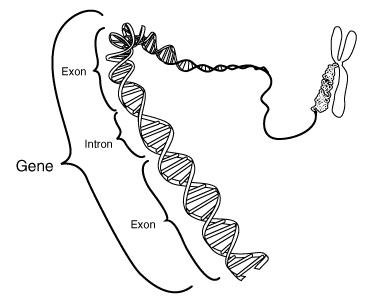
    Gene Gene
    patenting has been a hotly debated topic for at least the past three
    years.  Only two days after Patent Docs began posting new content,
    Chicago-Kent College of Professor of Law Lori Andrews and the late Michael
    Critchton published an article in the November 11, 2006 issue of Parade magazine, in which the two
    advocated for a Genetic Bill of Rights that would have included a prohibition
    on gene patents (see "Gene
    Patenting in the News Again
    ").  In response, Patent Docs author Dr. Kevin Noonan countered with an article refuting
    the factual misstatements in the Andrew-Critchton article (see "In Support of Gene Patents").  In February 2007, Rep. Xavier Becerra
    (D-CA) grabbed the anti-gene patent baton when he introduced a bill (H.R. 977)
    in the House that would have prohibited patents from being granted for "a
    nucleotide sequence, or its functions or correlations, or the naturally
    occurring products it specifies" (see "The Continuing Threat to Human
    Gene Patenting
    ").

    Last
    year, however, the issue of gene patenting moved into the courts — and the
    debate reignited — when a group of patients, physicians,
    academic researchers, and medical societies filed suit against the U.S. Patent
    and Trademark Office and Myriad Genetics, among others, over several patents
    claiming human BRCA1 and BRC2 genes and methods for detecting mutations in
    these genes to diagnose a predisposition to breast and ovarian cancer.  As a result of this high-profile litigation,
    gene patenting was debated not once, not twice, but three separate times on
    Public Radio.  In June, Dr. Hans
    Sauer, the Associate General Counsel for Intellectual Property for the
    Biotechnology Industry Organization (BIO); Joshua Sarnoff, Professor of the
    Practice of Law at American University's Washington College of Law; and Shobita
    Parthasarathy, Co-Director of the Science, Technology and Public Policy Program
    at the Ford School of Public Policy at the University of Michigan discussed the
    topic on WAMU, Washington, DC's leading public radio station.  And last August, Kevin Keenan,
    Executive Director of the ACLU for San Diego and Imperial Counties; Stacey
    Taylor, a partner at DLA Piper; and Dr. Leonard Deftos, Professor of Medicine
    in Residence at the University of California, San Diego, and Adjunct Professor
    of Law at California Western School of Law tackled the issue on San Diego's
    KPBS "These Days" program. 
    Finally, Patent Docs author
    Kevin Noonan and Daniel Ravicher, the Executive Director of the Public Patent
    Foundation (PUBPAT), which is serving as co-counsel in the Association for Molecular Pathology case, squared off in a third
    debate on the topic on NPR's Science
    Friday
    last month.  And gene
    patenting is not just being debated in the U.S.; the debate has also been
    heating up in Australia.  With the Association for Molecular Pathology case
    moving forward, gene patenting could very well end up on next year's top
    stories list as well.

    For
    information regarding this and other related topics, please see:


    "Gene Patenting: Australian Potpourri," December 28, 2009

    "Science Progress Article Examines Impact of Gene Patents on Research,"
    December 21, 2009

    "Gene Patenting Debate Continues – Round Three," December 17, 2009

    "BRCA Patent Suit to Continue in Southern District of New York,"
    November 2, 2009

    "Empirical Research Fails to Support Gene Patenting Ban," October 22,
    2009

    "The Tragedy of a Bad Idea," August 25, 2009

    "Gene Patenting Debate Continues – Round Two," August 4, 2009

    "The Unwanted Consequences of Banning Gene Patenting," June 16, 2009

    "Falsehoods, Distortions and Outright Lies in the Gene Patenting Debate,"
    June 15, 2009

    "Gene Patenting Debate Continues," June 9, 2009

    "Association for Molecular Pathology v. U.S. Patent and Trademark Office,"
    May 17, 2009

    "Court Report: Special Edition," May 13, 2009

    "BIO IP Policy Briefing," May 11, 2009

    "Gene Patenting and the Wisdom of Judge Lourie," April 12, 2009

    "The Effects of Intellectual Property Protection on Agricultural Research:
    Patents Are Not The Problem
    ," February 3, 2009

    "Newsweek Joins the Anti-patent Bandwagon," January 26, 2009


    #3 — Federal Circuit
    Hears Ariad v. Lilly En Banc

    Ariad On
    April 3rd, the Federal Circuit issued its decision in Ariad Pharmaceuticals, Inc. v. Eli Lilly & Co., reversing the
    District Court's denial of Lilly's motion for JMOL in view of a jury verdict of
    infringement and validity of the asserted claims, and affirming the District
    Court's ruling that Lilly failed to establish the affirmative defense of
    inequitable conduct.  Ariad
    Pharmaceuticals filed a petition for a panel rehearing of that decision in
    June, and the Federal Circuit determined in August that the appeal warranted en banc consideration.  The CAFC's en banc order presented two questions:  whether 35 U.S.C. § 112, first paragraph, contains a written
    description requirement separate from an enablement requirement, and if so,
    what the scope and purpose of that requirement is.

    Lilly Armed
    with the parties' principal briefs, Ariad's reply brief, and twenty-five amicus briefs, the Federal Circuit heard
    oral argument on December 7th.  By
    our count, nineteen of the twenty-five amicus
    briefs supported Defendant-Appellant-Respondent Eli Lilly & Co. and/or judgment
    of affirmance and six briefs supported neither party.  Patent Docs provided summaries of both principal briefs, the
    reply brief, and fifteen of the amicus
    briefs (see links below).  Regardless of the en banc panel's decision, the Ariad
    appeal is almost certain to make next year's list of top stories.

    For
    information regarding this and other related topics, please see:


    "Ariad v. Lilly: Oral Argument – Addendum," December 14, 2009

    "Ariad v. Lilly: Ariad's Reply Brief," December 10, 2009

    "Ariad v. Lilly: Oral Argument," December 9, 2009

    "Amicus Briefs in Ariad v. Lilly: Regents of University of California et
    al.
    ," December 6, 2009

    "Amicus Briefs in Ariad v. Lilly: Briefs by Companies," December 6,
    2009

    "Amicus Briefs in Ariad v. Lilly: American Intellectual Property Law
    Association
    ," December 1, 2009

    "Amicus Briefs in Ariad v. Lilly: Federal Circuit Bar Association,"
    November 29, 2009

    "Amicus Briefs in Ariad v. Lilly: Intellectual Property Owners
    Association
    ," November 25, 2009

    "Amicus Briefs in Ariad v. Lilly: GlaxoSmithKline," November 24, 2009

    "Amicus Briefs in Ariad v. Lilly: United States," November 23, 2009

    "Amicus Briefs in Ariad v. Lilly: Google, Verizon Communications Inc. and
    Cisco Systems, Inc.
    ," November 22, 2009

    "Amicus Briefs in Ariad v. Lilly: Professor Christopher Holman,"
    November 19, 2009

    "Lilly Files Principal Brief for Ariad v. Lilly Rehearing En Banc,"
    November 16, 2009

    "Next Up: Ariad v. Lilly Rehearing En Banc," November 10, 2009

    "Federal Circuit Grants En Banc Review in Ariad v. Lilly," August 21,
    2009

    "Ariad Files Petition for Rehearing in Ariad v. Lilly," June 3, 2009

    "Amgen, Inc. v. Ariad Pharmaceuticals, Inc. (Fed. Cir. 2009)," June
    1, 2009

    "Ariad Decision Voids Attempt to Use Broad Claiming to Avoid the Written
    Description Requirement
    ," April 14, 2009

    "Ariad Pharmaceuticals, Inc. v. Eli Lilly and Co. (Fed. Cir. 2009),"
    April 6, 2009


    #2 – USPTO Content with
    Dismissal in Tafas v. Doll Despite
    Federal Circuit Win

    GlaxoSmithKline - GSK The
    Tafas/GSK case (and the claims and
    continuations that are at the heart of the case) have, not surprisingly, dominated
    our top stories lists for each of the past three years.  Last year, the decision by Judge James Cacheris
    of the District Court for the Eastern District of Virginia to permanently
    enjoin the claims and continuations rules, and the USPTO's appeal of this
    injunction, took the top spot on our list (see
    "Top Stories of 2008: #5 to #1").  And stories related to the new claims
    and continuations rules took the #3 (promulgation of new rules), #2 (USPTO
    clarification of new rules), and #1 (new rules preliminarily enjoined) spots on
    our 2007 list of top stories (see
    "Top Stories of 2007: #5 to #1").  The Federal Circuit's decision in the Tafas v. Doll appeal and the USPTO's decision to rescind the rules and withdraw the appeal claim the #2 spot on this year's list.

    On
    March 20th, the Federal Circuit stunned many practitioners and applicants by
    determining, in a split decision authored by Judge Prost and joined by Judge
    Bryson, that Rules 75, 78, 114, and 265 are procedural, but that Rule 78 is
    inconsistent with 35 U.S.C. § 120. 
    Judge Rader dissented in part, contending that all four of the rules at
    issue are substantive.  In June,
    both Dr. Tafas and GSK filed petitions seeking a rehearing, and in July, the Federal
    Circuit ordered en banc review of Tafas v. Doll, vacating the earlier
    panel decision.  On month later,
    however, the Department of Justice (DOJ) filed a joint motion with Dr. Tafas
    and GSK seeking to stay briefing and oral argument in Tafas v. Kappos (previously Tafas
    v. Doll
    ) until 60 days after the U.S. Senate confirmed new Director David
    Kappos.  And on October 8th, the
    USPTO shocked the patent community by announcing that Director Kappos had signed
    a new Final Rule rescinding the claims and continuations rules.  A little more than a month later, Chief
    Judge Paul Michel, writing for most of the en
    banc
    Court of Appeals for the Federal Circuit (Judge Lourie took no part in
    the decision), granted the joint motion of all parties to dismiss the appeal of
    Tafas v. Kappos, ending nearly
    twenty-seven months of angst for most (but not all) patent practitioners and
    applicants.  With any luck, this
    story has made its last appearance on our year-end list.

    For
    information regarding this and other related topics, please see:


    "If It Ain't Over 'Til It's Over, Today It's Over," November 13, 2009

    "Dr. Tafas Files Reply to USPTO/GSK Motion to Dismiss Appeal and Vacate
    District Court Judgment
    ," October 20, 2009

    "Response to Rescission of Claims and Continuations Rules," October
    8, 2009

    "'New Rules' Officially Rescinded," October 8, 2009

    "Federal Circuit Grants Stay in Tafas v. Kappos," August 21, 2009

    "Could the "New Rules" Nightmare Finally Be Over?" July 27,
    2009

    "Federal Circuit Grants En Banc Review in Tafas v. Doll," July 6,
    2009

    "GSK Files Petition for Rehearing in Tafas v. Doll," June 4, 2009

    "Tafas Files Petition for Rehearing in Tafas v. Doll," June 3, 2009

    "USPTO Will Not Enforce New Claims and Continuation Rules . . . For Now,"
    March 25, 2009

    "Tafas v. Doll (Fed. Cir. 2009)," March 22, 2009
    • "Anyone Remember What These 'New Rules' Are All About?"
    March 22, 2009

    "Federal Circuit Issues Decision in Tafas v. Doll," March 20, 2009


    #1 — Biotech/Pharma
    Industry Tries to Recover from Great Recession

    In
    2009, the country suffered through its worst recession since the Great
    Depression.  The biotech/pharma
    industry was not immune to the recession's impact.  In February, BIO President and CEO Jim Greenwood noted that
    almost a third of BIO's membership had less than six months of cash on hand,
    45% had less than one year of cash remaining, and only 10% of the 370
    publicly-traded biotechnology companies reported a positive income.  In April, the National Venture Capital
    Association (NVCA) and PricewaterhouseCoopers announced that venture
    capitalists had invested $3.0 billion in 549 deals in the first quarter of
    2009, a 47% decrease in terms of dollars invested and a 37% decrease in terms
    of the number of deals as compared with the fourth quarter of 2008.  The NVCA noted that venture funding had
    dropped to levels not seen since 1997. 
    The first quarter drop followed a 2008 drop in venture funding, the
    first yearly decline in total investments since 2003.

    However,
    all of these negative indicators appear to be giving way to some more positive
    signs as we move into 2010.  As we noted in August, Nashville-based Cumberland Pharmaceuticals
    snapped a two-year industry dry spell when it conducted an initial public
    offering (IPO) that raised $85 million, and in October, Talecris Biotherapeutics
    and Omeros Corp. conducted their own IPOs, raising $950 million and $68.2
    million, respectively.  At least
    eight biotech/pharma companies have filed IPOs since October.  In addition, the NVCA released the
    results of its latest venture funding study in October, finding that venture capitalists
    invested $4.8 billion in the third quarter of 2009, a 17% increase in dollars
    as compared to the second quarter of 2009.  More importantly (at least for the biotech/pharma industry), the Life Sciences sector, which comprises the
    biotechnology and medical device industries, received the highest level of
    funding when compared with the other sixteen sectors the NVCA tracks (as a
    point of comparison, the Software sector dropped to its lowest level of funding
    since 1996, and ten of the seventeen sectors examined by the NVCA experienced
    dollar declines in the third quarter, including Semiconductors (14% decline; a
    10-year low), Healthcare Services (57% decline), Computers and Peripherals (40%
    decline) and Telecommunications (17% decline)).  While many expect a slow recovery in 2010, it appears that the worst may be behind us.

    For
    information regarding this and other related topics, please see:


    "Biotech/Pharma Companies Look to Market for Capital," December 29,
    2009

    "NVCA Study Shows Increase in Third Quarter Venture Funding," October
    23, 2009

    "Biotech/Pharma IPO Binge," October 9, 2009

    "BIO Top Brass Meet the Press," September 9, 2009

    "VC CEO Believes Biotech Is Entering Golden Era," September 6, 2009

    "Biotech/Pharma Financing Improving, R&D Spending Up," August 31,
    2009

    "Investors Saw Biotech Rebound Coming," August 17, 2009

    "Is Biotech/Pharma Beginning to Bounce Back?" August 12, 2009
    • "Bristol-Myers Squibb to Acquire Medarex," July 23, 2009

    "Docs at BIO: "Perfect Storm" Super Session," May 28, 2009

    "Docs at BIO: Steve Burrill's State of the Biotechnology Industry Report
    2009
    ," May 19, 2009

    "Docs at BIO: Ernst & Young Hosts Super Session Addressing Financial
    Performance of Biotech Industry
    ," May 19, 2009

    "First Quarter Venture Capital Funding at 12-Year Low," April 23,
    2009

    "Roche and Genentech Agree on Terms of Merger," March 13, 2009
    • "Merck and Schering-Plough to Merge," March 9, 2009

    "BIO Meets the Press," February 26, 2009
    • "Bio-irony: Biotech Turns a Profit in 2008," February 26, 2009

    "The Future of Biotechnology," February 17, 2009

    "NVCA Study Shows Decline in 2008 Investment; BIO Study Predicts Biotech
    Rebound in 2009
    ," February 16, 2009

    "Pfizer Expected to Announce Wyeth Acquisition on Monday," January
    25, 2009

    "PatentBuddy.com Examines Impact of Economic Recession on Patent Practice,"
    January 13, 2009

  •     By
    Donald Zuhn

    Fireworks On
    New Year's Eve, we kicked off our third annual list of top biotech/pharma
    stories by counting down the first three of the top ten stories covered on Patent Docs in 2009 (see "Top Stories of 2009: #10, #9,
    and #8
    ").  Today, we count down stories #7, #6,
    and #5, and tomorrow, we will present last year's top four stories.  As with the 2008 list
    and 2007 list, links to
    our coverage of the 2009 top stories (as well as a few links to articles on
    related topics) have been provided in case you missed the articles the first
    time around or wish to go back and have another look.  As always, we love to hear from Patent Docs readers, so if you think we left something off the list
    or disagree with our rankings, please let us know.


    #7 — USPTO Undergoes
    Changes in Leadership and Approach

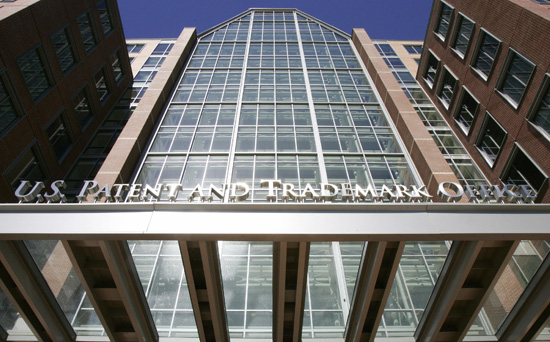
    USPTO Building Facade When
    President Obama was elected as the 44th President of the United States on
    November 4, 2008, patent practitioners and applicants had to believe that the end
    was near for an old USPTO administration that seemed to care little about the people
    who were paying all of those patent fees. 
    As a result of the many serious issues that confronted the President on
    the day he began his term, it took a while for the President to get all of his
    people in place.  By the end of
    March, however, Gary Locke was confirmed as Secretary of Commerce, and on
    August 7th, David Kappos was confirmed as Under Secretary of Commerce for
    Intellectual Property and Director of the USPTO.

    During
    the transition from the old guard to the new guard, Acting Director John Doll
    made some strides in fostering a more cooperative relationship with
    practitioners and applicants.  One such step was February's four-hour long roundtable on deferred examination in
    which the Office brought together two dozen participants, representing a variety
    of industries and organizations (as well as positions on the issue), to discuss
    the advantages and disadvantages of implementing a deferred examination system
    in the U.S.  In addition, in July,
    Secretary Locke appointed Nicholas Godici, who served as Commissioner for
    Patents from 2000-05, "to look at ways to strengthen the management
    structure of the USPTO and provide an up-to-date assessment of the challenges
    the office faces."

    President
    Obama's nomination of David Kappos for Director appears to have been a near-perfect
    selection.  Director Kappos,
    formerly the Vice President and Assistant General Counsel of Intellectual
    Property Law at IBM, has a background that satisfies the IT sector.  However, Director Kappos also filed a
    Declaration in support of the AIPLA's amicus
    brief in Tafas v. Dudas (the AIPLA
    brief supported GSK's position in the case), making his nomination more
    appealing to the biotech/pharma industry, which strongly opposed the claims and
    continuations rules (see "AIPLA
    Supports GSK's Lawsuit Against the Patent Office's New Rules
    ").  Shortly after the new Director was
    sworn in, the USPTO announced on its website that it was waiving the $118
    annual practitioner maintenance fee for FY 2009 (interestingly, the Office stubbornly
    refuted a report in July that the fee was going to be waived).  Since Director Kappos has taken over, the Office has asked for comments regarding the Sequence Listing rules and possible
    enhancements to patent quality, enacted changes to the count system, implemented
    an application backlog reduction plan, held a roundtable on worksharing, expanded
    the First Action Interview pilot program, launched an interactive patent
    pendency model, proposed a Patents Ombudsman pilot program, and started his own
    blog (something we at Patent Docs can
    appreciate).

    For information regarding this and other related topics, please see:


    "USPTO Launches Interactive Patent Pendency Model," December 27, 2009

    "USPTO Announces Changes to PKI Certificate Usage Policy," December
    21, 2009

    "USPTO Requests Comments on Enhancement of Patent Quality," December
    13, 2009

    "USPTO Implements Patent Application Backlog Reduction Stimulus
    Plan
    ," December 7, 2009

    "USPTO Issues Notice to Remove Claims and Continuations Rule Changes from
    CFR
    ," December 3, 2009

    "KSR: Additional Guidance Forthcoming from the USPTO," November 25,
    2009

    "Director Kappos Joins Blogger Ranks," November 12, 2009

    "USPTO Proposes Patents Ombudsman Pilot Program," November 12, 2009

    "USPTO Schedules Roundtable Discussion on Worksharing," October 22,
    2009

    "USPTO Expands First Action Interview Pilot Program," October 5, 2009

    "USPTO Proposes Changes to Count System," October 1, 2009

    "USPTO Seeks Comments Regarding Sequence Listing Rules," September
    24, 2009

    "Changes in USPTO Senior Management," September 8, 2009

    "Keeping $118 in Your Pocket," August 21, 2009

    "New Director to Be Sworn in on Thursday," August 12, 2009

    "Senate Judiciary Committee Hears from Director Nominee," July 29,
    2009

    "Senate Judiciary Committee to Consider Kappos Nomination on
    Wednesday
    ," July 28, 2009

    "USPTO Announces A 'No Decision' Regarding Annual Practitioner Fee,"
    July 22, 2009

    "Annual Fee for Registered Practitioners May Be Delayed," July 20,
    2009

    "Secretary Locke Appoints Godici to Assess USPTO Challenges," July 7,
    2009

    "Kappos Nomination Supported by Industry and Patent Groups," June 23,
    2009

    "Patent Office Extends Comment Period Regarding Deferred
    Examination
    ," June 18, 2009

    "President Obama to Nominate David Kappos as USPTO Director," June
    18, 2009

    "USPTO Posts Comments on Deferred Examination," June 11, 2009

    "Docs at BIO: Panel Offers Suggestions for Fixing the USPTO," May 20,
    2009

    "Patent Office Extends Deferred Examination Comment Period," March 9,
    2009

    "Comments on Deferred Examination Due by February 26th," February 13,
    2009

    "Patent Office Hosts Roundtable on Deferred Examination: The
    Proponents
    ," February 15, 2009

    "Patent Office Hosts Roundtable on Deferred Examination: The
    Opposition
    ," February 12, 2009

    "Patent Office Announces Agenda and Participants for Deferred Examination
    Roundtable
    ," February 9, 2009

    "Patent Office Calls Continuing Education Pilot Program a Success,"
    February 3, 2009

    "USPTO Schedules Roundtable Discussion on Deferred Examination,"
    January 27, 2009

    "U.S. Chamber of Commerce Provides Detailed Recommendations to New
    Administration Regarding
    USPTO
    ," January 8, 2009


    #6 — House and Senate
    Pass Health Care Bills Containing Follow-on Biologics Provisions

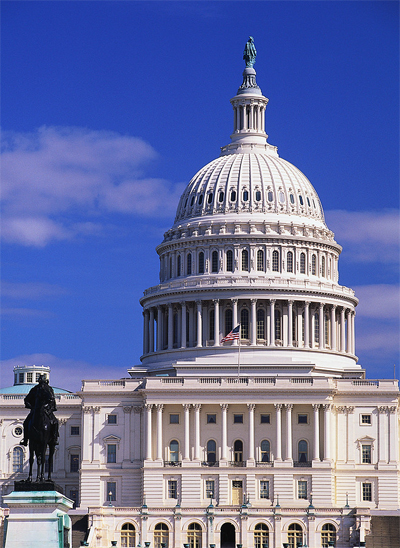
    Washington - Capitol #3 On
    Christmas Eve, the Senate passed the Patient Protection and Affordable Care Act
    (H.R. 3590) by a 60-39 vote.  The
    bill provides for an approval pathway for biosimilar biological products, which
    would preclude a biosimilar application from being approved "until the
    date that is 12 years after the date on which the reference product was first
    licensed."  In addition, the
    Senate bill would offer an additional 6 months of exclusivity for the use of
    reference products "in the pediatric population."  The Senate's action came a little more
    than a month after the House passed the Affordable Health Care for America Act
    (H.R. 3962) by a narrow five-vote margin (220-215).  The House bill provides a similar licensure pathway in which
    a biosimilar application is precluded from being approved "until the date
    that is 12 years after the date on which the reference product was first
    licensed," and an additional 6 months of exclusivity is provided for the
    use of reference products "in the pediatric population."

    The
    passage of the two bills was somewhat remarkable given the level of debate over
    the data exclusivity issue only eight to nine months earlier.  The debate was reignited in March with
    the introduction of three new follow-on biologics bills in the 111th
    Congress.  First, Rep. Henry Waxman
    (D-CA) introduced H.R. 1427, which would have provided a maximum of 5.5 years
    of data exclusivity.  Next, Rep.
    Anna Eshoo (D-CA) introduced H.R. 1548, which would have provided a maximum of
    14.5 years of data exclusivity. 
    Sen. Charles Schumer (D-NY) followed with a Senate bill (S. 726)
    corresponding to Rep. Waxman's House bill.  The FTC and White House soon chimed in, contending that either
    no data exclusivity (FTC) or seven years of data exclusivity (OMB) would be
    sufficient.  Over the past twelve
    months, a number of groups and individuals released papers, letters, and
    statements outlining various positions on the data exclusivity debate.  In a three-part series, we summarized our past reviews of
    these position papers and articles and assembled a list of the parties on both
    sides of the debate (see "Follow-on
    Biologics Data Exclusivity Debate Scorecard" – Part I,
    Part II,
    and Part III).

    In
    July, the House Subcommittee on the Courts and Competition Policy held a hearing
    on follow-on biologics.  Shortly thereafter, the House Committee on Energy and Commerce
    approved a health care bill including an amendment offered by Rep. Eshoo, Jay
    Inslee (D-WA), and Joe Barton (R-TX) that was similar to the follow-on
    biologics legislation introduced by Rep. Eshoo in March (providing up to 12.5
    years of data exclusivity instead of up to 14.5 years).  The amendment was passed by the
    Committee by a 41-11 margin.  The
    Senate Health, Education, Labor and Pensions (HELP) Committee also approved an amendment
    providing for a 12-year data exclusivity period for biologic drug makers in
    July.  The actions by both
    Committees were a prelude to the subsequent passage of health care bills
    containing biosimilar licensure pathways by both the House and Senate.

    For information regarding this and other related topics, please see:


    "Follow-on Biologics News Briefs – No. 11," December 30, 2009

    "Two Physicians Want Congress to Close 'Evergreening' Loophole in FOB
    Legislation
    ," December 3, 2009

    "Follow-on Biologics News Briefs – No. 10," November 30, 2009

    "Follow-on Biologics News Briefs – No. 9," November 5, 2009

    "House Health Care Bill Includes Biosimilar Licensure Pathway,"
    November 3, 2009

    "12 Senators Write in Support of 12-Year Data Exclusivity Period,"
    November 3, 2009

    "Follow-on Biologics Data Exclusivity Debate Scorecard – Part III,"
    November 1, 2009

    "Follow-on Biologics Data Exclusivity Debate Scorecard – Part II,"
    October 29, 2009

    "Follow-on Biologics Data Exclusivity Debate Scorecard – Part I,"
    October 28, 2009

    "Time Magazine on Data Exclusivity Debate," October 27, 2009

    "Four Senators Write in Support of 12-Year Data Exclusivity Period,"
    October 19, 2009

    "PhRMA Supports Follow-on Biologics Regulatory Pathway Providing 12-Years
    of Data Exclusivity
    ," October 19, 2009

    "Maybe Hatch-Waxman Data Exclusivity Isn't So Good For Traditional Drugs
    After All
    ," October 18, 2009
    •"NEJM Authors Say Five Years of Data Exclusivity Would Be
    Sufficient
    ," October 15, 2009

    "Governors Send Letter to Congressional Leaders in Support of 12-Year Data
    Exclusivity Period
    ," October 2, 2009

    "Roll Call Authors Unite against Current Follow Biologics
    Legislation
    ," September 20, 2009

    "BIO Top Brass Meet the Press," September 9, 2009

    "Deloitte White Paper Addresses Unintended Consequences of Follow-on
    Biologic Regulatory Pathway
    ," August 27, 2009

    "Professor Grabowski's Economic Analysis of Data Exclusivity for Follow-on
    Biologic Drugs
    ," August 24, 2009

    "AEI Presents Follow-on Biologic 'Reality,'" August 20, 2009

    "Follow-on Biologics News Briefs – No. 8," August 19, 2009

    "BIO CEO Makes Case for 12-Year Data Exclusivity Period," August 16,
    2009

    "Follow-on Biologics News Briefs – No. 7," August 5, 2009

    "Patents and Data Exclusivity: It Ain't Necessarily So," August 2,
    2009

    "House Committee Approves Health Care Reform Bill Calling for 12-Year
    Exclusivity Period
    ," July 31, 2009

    "Follow-on Biologics News Briefs – No. 6," July 28, 2009

    "Follow-on Biologics News Briefs – No. 5," July 19, 2009

    "Former House Economist Testifies at Follow-on Biologics Hearing,"
    July 16, 2009

    "The Risk of Biogenerics," July 15, 2009

    "House Subcommittee Holds Hearing on Follow-on Biologics," July 14,
    2009

    "Senators Champion 12-Year Data Exclusivity in Senate," July 14, 2009

    "NVCA Study Supports 12-Year Data Exclusivity Period," July 13, 2009

    "NCHC Sends Letter on Biosimilars to Senate Health Committee," July
    9, 2009

    "Senator Kennedy Weighs in on Biosimilar Data Exclusivity Period,"
    July 9, 2009

    "BIO CEO Provides Update on Follow-on Biologics Legislation," July 8,
    2009

    "Follow-on Biologics News Briefs – No. 4," June 29, 2009
    • "White House Recommends 7-Year Data Exclusivity Period for Follow-on
    Biologics
    ," June 26, 2009

    "Future Drug Sales Predictions Highlight Importance of Follow-on Biologics
    Legislation
    ," June 21, 2009

    "AEI Believes Advantages of Longer Data Exclusivity Period Outweigh
    Disadvantages
    ," June 18, 2009

    "No One Seems Happy with Follow-on Biologics According to the FTC,"
    June 14, 2009

    "Uncertain Future for Waxman Follow-on Biologics Bill," June 9, 2009

    "Docs at BIO: Panel Addresses Follow-on Biologics Policy," May 25,
    2009

    "BIO IP Policy Briefing," May 11, 2009

    "CHI CEO on Patent Reform and Follow-on Biologics Legislation," April
    28, 2009

    "Follow-on Biologics News Briefs – No. 3," April 27, 2009

    "Amgen VP Makes Case for Longer Exclusivity Period in Follow-on Biologics
    Legislation
    ," April, 22, 2009

    "Third Follow-on Biologics Bill Introduced in 111th Congress," April
    1, 2009

    "Second Follow-on Biologics Bill Is Introduced in House," March 18,
    2009

    "Waxman Introduces Follow-on Biologics Bill," March 11, 2009

    "BIO Meets the Press," February 26, 2009

    "Congressman Waxman Tells GPhA Meeting that Hatch-Waxman Model Will Work
    for Follow-on Biologics
    ," February 25, 2009

    "Follow-on Biologics News Briefs – No. 2," February 18, 2009

    "Teva CEO Predicts Passage of Follow-on Biologics Bill in 2009,"
    January 2, 2009


    #5 — Supreme Court Hears
    In re Bilski

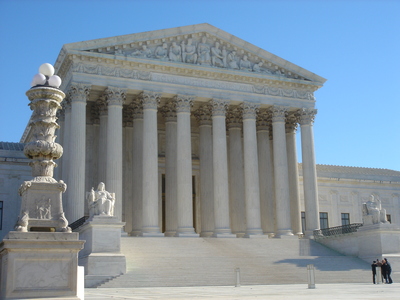
    Supreme Court Building #1 In
    November, the Supreme Court heard oral argument in In re Bilski.  The
    potential impact of the Supreme Court's decision in Bilski on the biotech/pharma industry seems to have been somewhat lessened,
    however, by the Court's reluctance to take the opportunity to address the patent-eligibility of
    diagnostic methods claims.  In
    addition, in SEptember, the Federal Circuit alleviated concerns in the industry with its decision in Prometheus
    Laboratories, Inc. v. Mayo Collaborative Services
    .  Of course, depending on what the
    Supreme Court says in Bilski, the case could very well vault all the way to the top of next year's
    list.

    For information regarding this and other related topics, please see:


    "Supreme Court Bilski Argument," November 9, 2009

    "Prometheus Laboratories, Inc. v. Mayo Collaborative Services (Fed. Cir.
    2009)
    ," September 16, 2009

    "BIO Top Brass Meet the Press," September 9, 2009

    "BIO Files Amicus Brief in Bilski," August 13, 2009

    "The Supreme Court, In re Bilski and the Lingering Question of LabCorp v.
    Metabolite
    ," June 1, 2009

    "Author of Nature Article Provides Rebuttal; Patent Docs Provides
    Surrebuttal
    ," March 26, 2009

    "Genetic Diagnostic Testing: The "Anti-Commons" Revisited?"
    March 25, 2009

    "Applying In re Bilski to Diagnostic Method Claims," February 5, 2009

    "Bilski and Aventis Petition for Certiorari from the Supreme Court,"
    January 29, 2009

  •     By Sherri Oslick

    Gavel_2About
    Court Report:  Each week we will report briefly on recently filed
    biotech and pharma cases, and a few interesting cases will be selected
    for periodic monitoring.


    Paratek Pharmaceuticals, Inc. v. Kappos
    1:09-cv-02425; filed December 28, 2009 in the
    District Court of the District of Columbia

    Review and correction of the patent term adjustment
    calculation made by the U.S. Patent and Trademark Office for U.S. Patent No.
    7,553,828 ("9-Aminomethyl Substituted Minocycline Compounds," issued
    June 20, 2009).  View the complaint
    here.


    Administrators of the Tulane Educational Fund et al. v. Ipsen
    Pharma, S.A.S. et al.

    1:09-cv-02428; filed December 28, 2009 in the
    District Court of the District of Columbia

    • Plaintiffs:  Administrators of the Tulane
    Educational Fund; David H. Coy
    • Defendants:  Ipsen Pharma, S.A.S.; Ipsen,
    S.A.

    Correction of inventorship of U.S. Patent Nos.
    6,903,186 ("Analogues of GLP-1," issued June 7, 2005), 7,268,213 (same
    title, issued September 11, 2007) and 7,235,628 (same
    title, issued June 26, 2007), and all related applications, directed to peptide
    analogs of the human glucagon-like peptide hormone (GLP-1), to add an inventor
    from Tulane University.  View the
    complaint
    here.


    Medicines Company v. Pliva Hrvatska d.o.o. et al.
    1:09-cv-01000; filed December 28, 2009 in the
    District Court of Delaware

    • Plaintiff:  Medicines Company
    • Defendants:  Pliva Hrvatska d.o.o.; Pliva d.d.;
    Barr Laboratories Inc.; Barr Pharmaceuticals Inc.; Barr Pharmaceuticals LLC;
    Teva Pharmaceuticals USA Inc.; Teva Pharmaceutical Industries Ltd.

    Medicines Company v. Teva Parenteral Medicines Inc. et al.
    1:09-cv-00999; filed December 28, 2009 in the
    District Court of Delaware

    • Plaintiff:  Medicines Company
    • Defendants:  Teva Parenteral Medicines Inc.; Teva
    Pharmaceuticals USA Inc.; Teva Pharmaceutical Industries Ltd.

    The complaints in these cases are substantially
    identical.  Infringement of U.S.
    Patent No. 7,598,343 ("Pharmaceutical Formulations of Bivalirudin and
    Process of Making the Same," issued October 6, 2009) following a Paragraph
    IV certification as part of defendants' filing of an ANDA to manufacture a
    generic version of The Medicines Company's Angiomax® (bivalirudin, used as an
    anticoagulant in patients with unstable angina undergoing percutaneous
    translurninal coronary angioplasty).  View the Pliva complaint
    here.


    Medicis Pharmaceutical Corp. v. Barr Laboratories et al.
    1:09-cv-03464; filed December 28, 2009 in the
    District Court of Maryland

    • Plaintiff:  Medicis Pharmaceutical Corp.
    • Defendants:  Barr Laboratories, Inc.; Teva
    Pharmaceuticals USA, Inc.

    Infringement of U.S. Patent No. 5,908,838 ("Method
    for the Treatment of Acne," issued June 1, 1999) following a Paragraph IV
    certification as part of defendants' supplemental filing to their ANDA to
    manufacture a generic version of Medics' Solodyn® (minocycline hydrochloride
    extended release tablets, used to treat acne).  View the complaint
    here.


    Abbott Laboratories Inc. et al. v. Apotex Inc. et al.
    1:09-cv-00990; filed December 23, 2008 in the
    District Court of Delaware

    • Plaintiffs:  Abbott Laboratories Inc.; Abbott
    GmbH & Co KG
    • Defendants:  Apotex Inc.; Apotex Corp.

    Infringement of U.S. Patent No. 5,436,272 ("Treatment
    of Obesity, issued July 25, 1995) following a Paragraph IV Certification as
    part of Apotex's filing of an ANDA to manufacture a generic version of Abbott's
    Meridia® (sibutramine hydrochloride, used to treat obesity).  View the compliant
    here.


  • CalendarJanuary 6-10, 2010 – 27th
    Annual National CLE Conference
    (
    Law Education Institute, Inc.) – Vail, CO

    January 20-21, 2010 – Life Sciences IP
    Due Diligence
    (American Conference
    Institute) – New York, NY

    January 25-26, 2010 – European Pharmaceutical Regulatory Law Boot
    Camp
    (American Conference
    Institute) – New York, NY

    January 26-27,
    2010 –
    Advanced In-House Counsel Forum on China IP Law (C5) – Shanghai, China

    January 27-30, 2010 – Mid-Winter Institute (American
    Intellectual Property Law Association) –
    La Quinta, CA

    January 27-28, 2010 – Pharma & Biotech Patent Litigation (C5) – Amsterdam, Netherlands

    February 9, 2010 – Patent
    Prosecution: Best Practices for Reducing Costs While Improving Patent
    Quality
    (
    Technology
    Transfer Tactics) –
    1:00 – 2:30 PM (EST)

    February 24-25, 2010 – 2nd Expert Forum on ITC Litigation &
    Enforcement
    (
    American Conference
    Institute) –
    New York, NY

    March 2-4, 2010 – 6th Annual Biosimilars Conference (Visiongain) – Boston,
    MA

    ***Patent Docs is a media partner of this conference or CLE

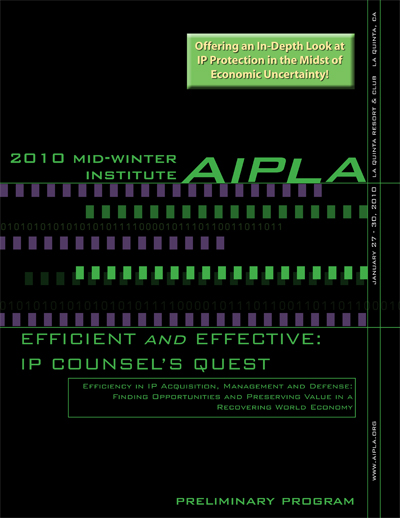
  • La Quinta The American
    Intellectual Property Law Association (AIPLA) will be holding its 2010
    Mid-Winter Institute on January 27-30, 2010 in La Quinta, CA.  The preliminary program for the
    Mid-Winter Institute includes presentations on the following topics:

    • Building strong
    IP on a smaller budget;

    • Business-based
    decision making and modeling for IP budgets;
    • Aligning patent
    filing strategies to the technology development strategy;
    • Top ten ideas for
    reducing IP costs at a global company;
    • Strategic uses of
    patent prior art research in view of budget constraints;

    • Peering into the
    2010 crystal ball:  What awaits the
    IP practitioner?

    • Reforming
    intellectual property law:  What's
    happening on Capitol Hill?
    • The Supreme
    Court's reshaping of the IP landscape in recent years;
    • The
    "other" Supreme Court of IP: 
    How recent Federal Circuit decisions affect IP and the practice of IP;
    • Are alternative
    fee structures really an acceptable alternative?
    • Bidding for IP
    work through requests for proposals: 
    An in-house perspective on reality;

    • Fact or
    fiction?  How to really make patent
    prosecution more efficient;

    • Tips from the
    USPTO for increasing efficiency of prosecution including reducing the number of
    Office actions and techniques for handling delays;
    • What the
    applicant can do before the RCE/appeal decision point to increase efficiency of
    prosecution;
    • RCE or appeal?
    • The value of the
    pre-appeal brief;

    • Reexamination –
    New ground rules in the new Administration.

    Brochure Readers should consult
    the preliminary program for a complete listing of presentations being offered
    at the Mid-Winter Institute.  The
    preliminary program, which includes a complete agenda, list of speakers, and
    registration information, can be downloaded here.

    The registration
    fee for the Mid-Winter Institute is $895 for AIPLA members, $1,205 for
    non-members, $55 for AIPLA student members, $70 for government employees or
    AIPLA academic/government members. 
    AIPLA members or non-members registering by January 13, 2010 will
    receive a $100 discount off the registration fee.  Those interested in registering for the conference can
    obtain a registration form here.

  •     By
    Donald Zuhn

    Fireworks Reflecting
    upon the events of the past twelve months, Patent
    Docs
    presents its third annual list of top biotech/pharma stories.  For 2009, we identified ten top stories
    that we covered on Patent Docs last year.  Today, we count down stories #10,
    #9, and #8.  On Sunday, we will
    present stories #7, #6, and #5, and on Monday, we will count down the top four
    stories of 2009.  As with the 2008
    list
    and
    2007 list, links to our
    coverage of these stories (as well as a few links to articles on related
    topics) have been provided in case you missed the articles the first time
    around or wish to go back and have another look.  As always, we love to hear from Patent Docs readers, so if you think we left something off the list
    or disagree with our rankings, please let us know.


    #10 — President Obama
    Ushers in Change

    Obama Change On
    January 20, 2009, Barack Hussein Obama was sworn in as the 44th President of
    the United States.  The election of
    President Obama came in at #8 on our list of top stories for 2008 ("#8 — Impact
    of Presidential Election on U.S. Patent Practice
    "),
    and at the time, we speculated that the direction the new Administration would
    take with the USPTO would likely be a top story for 2009.  President Obama's greatest impact on
    U.S. patent practice came via his nominations for Secretary of Commerce (Washington
    Governor Gary Locke) and Undersecretary of Commerce for Intellectual Property
    and Director of the U.S. Patent and Trademark Office (IBM Vice President and Assistant
    General Counsel of Intellectual Property Law David Kappos). The new
    Administration also took an active role in both the patent reform and follow-on
    biologics debates.

    One day after
    being sworn in, President Obama acted swiftly to stall implementation of any rulemaking
    by the outgoing Bush Administration, and in March, asked the Director of the
    Office of Management and Budget (OMB) to produce a set of recommendations for a
    new Executive Order on Federal regulatory review.  President Obama also satisfied one of his campaign pledges in
    March when he reversed limits imposed by the Bush Administration on embryonic
    stem cell research.  As the economy
    rebounds from the Great Recession, the President's impact on U.S. patent
    practice could be even greater in 2010.

    For information regarding this and other related topics, please see:


    "NIH Releases New Stem Cell Rules," July 7, 2009

    "Gary Locke Confirmed as New Secretary of Commerce," March 26, 2009

    "President Obama Reaffirms Faith in Science," March 11, 2009

    "President Obama to Lift Stem Cell Limits on Monday," March 8, 2009

    "White House Seeks Comments on Rulemaking and Rule Enforcement
    Policy
    ," March 5, 2009

    "Center for American Progress Report a Mixed Bag of Recommendations to
    Obama Administration
    ," February 11, 2009

    "BIO CEO Outlines Challenges for Obama Administration," January 22,
    2009

    "Obama Acts to Limit New Federal Rules," January 21, 2009


    #9 — After Much Debate,
    Patent Reform Takes Backseat to Economic Crisis

    Senate Floor The
    current patent reform debate has been ongoing since 2005, and but for the worst
    economic crisis since the Great Depression, Congress may well have passed patent
    reform legislation during 2009.  As
    late as November, patent reform's biggest proponent, Senate Judiciary Chairman Patrick Leahy
    (D-VT), wrote that patent
    reform's "time is now." 
    In October, the Republican General Counsel of the Senate Judiciary
    Committee, Joseph Matal, told attendees at the BIO IP Counsels Committee Conference that there was a 70-80%
    chance the Senate would pass a bill in 2009.

    Congress got off to a
    quick start on patent reform in 2009, with both the Senate and House
    introducing bills on March 3rd. 
    Shortly thereafter, the Senate Judiciary Committee heard testimony
    regarding its efforts to reform U.S. patent law from Steven Appleton, Chairman
    and CEO of Micron Technology, Inc.; Philip Johnson, Chief Intellectual Property
    Counsel for Johnson & Johnson; David Kappos, Vice President and Assistant
    General Counsel of Intellectual Property Law and Strategy for International
    Business Machines Corp.; Taraneh Maghamé, Vice President of Tessera, Inc.; Herbert
    Wamsley, Executive Director for the Intellectual Property Owners Association;
    and Mark Lemley, the William H. Neukom Professor of Law at Stanford Law School.

    In April, the Senate patent reform bill
    (S. 515) was voted out of the Judiciary Committee after Senators Leahy, Arlen
    Specter (R-PA), and Dianne Feinstein (D-CA) were able to reach an agreement on a damages
    provision that would provide for a gatekeeper approach, in which a court would determine
    the Georgia-Pacific factors to be
    considered by the jury in determining damages.  Later that month, the House held its own hearing on patent
    reform, receiving testimony from David Simon, Chief Patent Counsel for Intel,
    Inc.; Philip Johnson, Chief Intellectual Property Counsel for Johnson &
    Johnson; John Thomas, Professor at Georgetown University Law School; Jack
    Lasersohn, Partner with the Vertical Group; Dean Kamen, DEKA Research and
    Development Inc.; Mark Chandler, Senior Vice President for Cisco; and Bernard
    Cassidy, Senior Vice President and General Counsel for Tessera Inc.  Last year, patent reform came in at #3
    on our top stories list ("#3 — Patent Reform Stalls in the Senate"),
    and this year, we could have simply reused the heading from 2008.  However, in the Senate's defense, there should be little dispute that other more pressing matters required the body's focus in 2009.

    For information regarding this and other related topics, please see:


    "Patent Reform Efforts Opposed by Small Business Group," December 16,
    2009

    "Senator Leahy: 'Time Is Now' for Patent Reform," December 2, 2009

    "Patent 'Reform' May Happen This Year, After All," October 27, 2009

    "Commerce Department Brass Weighs in on Patent Reform," October 14,
    2009

    "Obama Administration Weighs in Supporting Patent 'Reform,'" October 6, 2009

    "Tech Companies Send Letter on Patent Reform to Secretary Locke,"
    September 17, 2009

    "A Response to Mr. Brill, and a Modest Proposal Regarding Inequitable
    Conduct
    ," June 3, 2009

    "Former House Economist Sets Sights on Inequitable Conduct 'Reform,'"
    June 2, 2009

    "Docs at BIO: Patent Reform Super Session," May 26, 2009

    "More on House Patent Reform Hearing," May 12, 2009

    "BIO IP Policy Briefing," May 11, 2009

    "House Judiciary Committee Holds Hearing on Patent Reform," April 30,
    2009

    "House Judiciary Committee (Finally) Releases Witness List for Patent
    Reform Hearing
    ," April 29, 2009

    "CHI CEO on Patent Reform and Follow-on Biologics Legislation," April
    28, 2009

    "Dickinson and Figg on Patent Reform," April 16, 2009

    "Not Everyone Thinks 'Patent Reform' is a Great Idea," April 7, 2009

    "Senate 'Patent Reform' Bill (S. 515) Voted out of Judiciary
    Committee
    ," April 2, 2009

    "Some (But Not All) Amendments Introduced in 'Patent Reform' Bill,"
    April 1, 2009

    "'Progress' on Senate 'Patent Reform' Bill," March 31, 2009

    "Senate Judiciary Committee Discusses S. 515 at Executive Business
    Meeting; Adopts "Technical" Amendment GRA09350
    ," March 26, 2009

    "IPO Board Opposes USTPO Fee Increases and Willful Infringement Provision
    of Reform Bill
    ," March 26, 2009

    "ABA IP Section Seeks Inequitable Conduct Reform," March 23, 2009

    "Senator Kyl Introduces Alternative to Leahy Patent Reform Bill,"
    March 19, 2009

    "MAPP Economist Advises Congress on Damages Provision," March 17,
    2009

    "Senate Judiciary Committee Places Patent Reform Bill on Agenda,"
    March 15, 2009

    "More Response to New Patent Reform Legislation," March 12, 2009

    "Senate Judiciary Committee Holds Hearing on Patent Reform," March
    10, 2009

    "Senator Specter Seeks Resolution of Issues before Vote on Patent Reform
    Bill
    ," March 5, 2009

    "Senate Judiciary Committee Releases Witness List for Patent Reform
    Hearing
    ," March 4, 2009

    "Senate and House Introduce New Patent Reform Legislation," March 3,
    2009

    "BIO Meets the Press," February 26, 2009

    "Patent Reform Bill to Be Introduced on Monday . . . Maybe," February
    25, 2009

    "Manufacturing Alliance Sends Letter on Patent Reform to President
    Obama
    ," February 10, 2009

    "Science Progress Tackles Patent Reform," January 21, 2009

    "Heritage Foundation Offers Patent Reform Proposals to the New
    President
    ," January 20, 2009

    "Manufacturing Alliance on Patent Policy: Apportionment of Damages
    Provision Will Have Adverse Effects
    ," January 15, 2009

    "BIO Gives President-elect Obama Its Ideas on Patent Reform," January
    6, 2009


    #8 — Federal Circuit
    Decides In re Kubin

    Federal Circuit Seal The
    Federal Circuit began the year by hearing oral argument in In re Kubin, and less than three months later issued its decision.  In summarizing the CAFC's decision, Patent Docs author Kevin Noonan wrote that:

    [T]he
    Federal Circuit not only affirmed the finding by the Board of Patent Appeals
    and Interferences that Kubin's invention was obvious, but in the process
    decided that the Supreme Court had overturned the Federal Circuit's In re Deuel
    decision.  This outcome is
    sufficiently disappointing in itself; the reasoning is all the more so.

    One
    interesting aspect of the Kubin oral
    argument involved an exchange between Judge Rader and USPTO Associate Solicitor
    Janet Gongola regarding the Office's motivation for revising Example 11 of the
    new Written Description Training Materials (which were issued in March 2008).  Judge Rader essentially accused the
    USPTO of revising Example 11 so that it would no longer be detrimental to the
    Office's position in Kubin.

    For information regarding this and other related topics, please see:


    "Is Everything Obvious?" April 26, 2009

    "The Non-obviousness of DNA," April 13, 2009

    "In re Kubin (Fed. Cir. 2009)," April 5, 2009

    "In re Kubin: The Obviousness of DNA," January 14, 2009

    "Kubin Panel Questions Motivation behind Reversal in New Written
    Description Training Materials
    ," January 8, 2009

    "In re Kubin to Be Argued before the Federal Circuit on Thursday,"
    January 7, 2009

  •     By
    Donald Zuhn

    Senate Passes Patient
    Protection and Affordable Care Act

    Senate Floor On
    Christmas Eve, the Senate passed the Patient Protection and Affordable Care Act
    (H.R. 3590) by a 60-39 vote.  Independent Senators Joe Lieberman (I-CT)
    and Bernard Sanders (I-VT) joined all 58 Democratic Senators in voting for the
    bill.  All of the Republican
    members of the Senate — with the exception of Senator Jim Bunning (R-KY), who did
    not vote — voted against the bill. 
    The Senate bill, which was officially renamed The Patient Protection and
    Affordable Care Act, expanded from 2,074 pages as introduced last month to
    2,407 pages.  One thing
    that did not change in the bill, however, was the section (§ 7002) providing
    for an approval pathway for biosimilar biological products.  As reported on Patent Docs last month
    (see
    "Follow-on Biologics News Briefs – No. 10")
    , this
    provision would preclude a biosimilar application from being approved
    "until the date that is 12 years after the date on which the reference
    product was first licensed."  In addition, the Senate bill would
    offer an additional 6 months of exclusivity for the use of reference products
    "in the pediatric population."  On Tuesday, a message regarding the Senate's passage of the bill was sent
    to the House of Representatives.


    Reaction to Senate Health Care Bill

    Biotechnology Industry Organization (BIO) In
    a statement
    released on Christmas, Biotechnology Industry Organization (BIO) President and
    CEO Jim Greenwood declared that the Patient Protection and Affordable Care Act
    passed by the Senate "includes many provisions which serve as early
    Christmas presents for patients living with debilitating diseases such as
    cancer, Multiple Sclerosis, HIV/AIDS and a host of rare diseases."  Referring to the biosimilar provision
    of the bill, Mr. Greenwood noted that the legislation "establishes, for
    the first time ever, a pathway to allow for U.S. Food and Drug Administration
    approval of biosimilars, sometimes inaccurately referred to as 'biogenerics.'"  He added that as a result of this
    provision, "patients with devastating diseases will have increased access
    to safe and effective life-saving advanced therapies and can take comfort in
    the knowledge that this bill will accelerate the biotechnology sector's drive
    toward discovering new treatments, therapies and cures for diseases that have
    plagued us for years."  Mr.
    Greenwood also pledged the industry group's cooperation in working with the
    Senate to ensure that "the House provisions pertaining to patent
    resolution are included in the final bill."

    PhRMA #2 One day earlier, Pharmaceutical Research and
    Manufacturers of America (PhRMA) Senior Vice President Ken Johnson issued a
    statement
    applauding the Senate "for taking an important and historic step toward
    expanding high-quality, affordable health care coverage and services to tens of
    millions of Americans, many of whom are struggling today
    financially."  While noting
    that "considerable work remains to be done in reconciling differences between
    the Senate and House bills," Mr. Johnson stated that the PhRMA was "convinced
    that comprehensive health care reform, if done in a smart way, will benefit
    patients, our economy and the future of our nation."

    Generic Pharmaceutical Association (GPhA) In
    a statement
    released on Christmas Eve, Generic Pharmaceutical Association (GPhA) President
    and CEO Kathleen Jaeger contended "[t]he bill passed by the Senate,
    unfortunately, amounts to a treasure trove to brand drug companies who stand to
    make enormous profits from health care reform — putting brand drug profits
    over patients."  Perhaps anticipating
    BIO's reaction to the bill's passage, Ms. Jaeger stated that bill was "no
    holiday present to American consumers."  She also stated that "[r]eal reform should bend the
    pharmaceutical cost curve in the right direction," adding that "as it
    stands, brand drug companies are poised to receive gold nuggets in their
    stockings, whereas consumers are about to get a handful of coal."

    CCPM In
    response to the Senate's passage of H.R. 3590, the Coalition for a Competitive
    Pharmaceutical Market (CCPM) — which has 33 participating members including
    Apotex, Hospira, Momenta Pharmaceuticals, Mylan Labs, Ranbaxy Pharmaceuticals,
    Teva Pharmaceuticals USA, Watson Pharmaceuticals, and the Generic
    Pharmaceutical Association (GPhA) — has begun a campaign on its website
    to "[s]how Congress that the gift to brand drug companies isn't all it's
    wrapped up to be."  As part of
    that campaign, the CCPM is asking visitors to its site to call or write the White House to "[a]sk the President to tell Congress to fix health
    care reform legislation by putting patients over profits."


    Washington
    Times
    Op-Ed
    Says Savings Claims Are Inflated

    Washington Times In
    an op-ed article appearing in The
    Washington Times
    less than a week before the Senate passed the Patient
    Protection and Affordable Care Act,
    Roland King, who served as the chief actuary for the Health Care Financing
    Administration (now the Centers for Medicare and Medicaid Services) for 16
    years, notes that "[a] minority of legislators claim that changing [follow-on
    biologics] legislation to allow biosimilar manufacturers to copy another
    product as early as 7 years will result in an enormous additional savings to
    the government"
    ("Inflated savings claims: Not a
    prescription for a sound policy
    ").
      Mr. King,
    however, disputes this claim, asserting that "the facts simply do not bear
    this out."  Noting that
    "[a] substantial majority of biologic drugs currently on the market are
    already at or near the end of the proposed 12-year protection period," Mr.
    King concludes that "lowering the data protection period would result in
    minimal additional savings." 
    In addition, he contends that "the 12-year protection period is
    necessary so the legislation does not irreparably harm the uniquely American
    biotechnology industry and the future cures it will produce."  Mr. King also believes that the
    bipartisan support the 12-year period received over the summer in the House
    Committee on Energy and Commerce (see
    "House Committee Approves Health Care Reform Bill Calling for 12-Year
    Exclusivity Period
    ")
    and the Senate Health, Education, Labor and Pensions (HELP) Committee (see "Senators Champion 12-Year Data
    Exclusivity in Senate
    ")
    another reason for retaining the 12-year data exclusivity period.

    Pointing
    to his "almost 40 years of experience preparing cost estimates for federal
    health care programs," Mr. King states that "it's a great deal easier
    to project savings than to actually realize them."  He contends that "the difficulty
    of the manufacture of biosimilar drugs, the number of likely biosimilar
    entrants in the market, the number of biologic products near the end of their
    patent life over the next decade, and the FDA review process that would be
    required to ensure the safety and effectiveness of biosimilar drugs, all lead
    to the conclusion that any savings from reducing the years of data protection
    would be insignificant." 
    Admonishing opponents of the 12-year period who use cost savings to
    support their position, Mr. King asserts that this argument is "misleading
    [and] counter to the public's interest in having biotech companies retain
    sufficient incentives to continue investing billions of dollars in the research
    and development of vital new medicines."  Instead, Mr. King concludes that "[m]oving from 12
    years of data protection to seven years would not materially impact the
    savings, but would materially impact the incentives for innovator biotechnology
    companies to discover the next generation of treatments for such serious
    diseases as cancer and Parkinson's."


    New
    York Times

    Reports on Lobbying Efforts Related to Biosimilar Provision of Health Care
    Legislation

    New York Times In
    a report in last month's New York Times,
    the paper notes that statements by more than a dozen lawmakers added to the official
    record of the House debate on health care reform "were ghostwritten, in
    whole or in part, by Washington lobbyists working for Genentech" ("In
    House, Many Spoke With One Voice: Lobbyists'
    ").  The report also notes that "lobbyists
    drafted one statement for Democrats and another for Republicans," and that
    these statements were picked up (at least in part) by 22 Republicans and 20
    Democrats.  According to the Times, e-mail messages that the paper
    obtained showed that the statements were based on information supplied by
    Genentech employees to lobbyist Matthew Berzok, a lawyer at Ryan, MacKinnon,
    Vasapoli & Berzok, who authored the statements, which were then distributed
    by lobbyists at another law firm (Sonnenschein Nath & Rosenthal).  The Times report notes that the
    Democratic statement "emphasized the bill's potential to create jobs in
    health care, health information technology and clinical research on new
    drugs," and that the Republican statement "opposed the bill, but
    praised a provision that would give the Food and Drug Administration the
    authority to approve generic versions of expensive biotechnology drugs, along
    the lines favored by brand-name companies like Genentech."

    In
    an editorial appearing in the Times
    two days later, the paper opines that "[i]t is disturbing that the [biotech]
    industry was able to so easily shape the official record to its liking"
    ("Puppets in Congress").  While acknowledging that "[t]he comforting
    news is that none of the ghostwritten material sought to change the contents of
    the bill, which was not open to much revision during the debate," the Times argues that it is "disturbing
    that so many members of Congress were willing to parrot the industry talking
    points."  The paper also
    characterizes the House bill's 12-year data exclusivity provision as "a
    generous period by anyone's standards."  (Our earlier series regarding the many papers, letters, and
    statements outlining positions taken by various players in the follow-on
    biologics data exclusivity debate contradicts the Times' characterization; see
    "Follow-on Biologics Data Exclusivity Debate Scorecard – Part III".)


    Wall
    Street Journal

    Op-Ed Warns That Europe May Take Biologic Lead

    Wall Street Journal In
    an op-ed appearing in The Wall Street
    Journal
    last month, a former member of the European Parliament argues that
    "European researchers are on the cusp of overtaking their American
    counterparts in biotechnology innovation, especially when it comes to the
    development of cutting-edge medicines known as 'biologics'" ("Washington's Gift to European Biotech").  According to the author, Della Vedova, a
    member of the Italian Chamber of Deputies, the European biotech industry has
    closed the gap in private financing and number of dedicated biotechnology firms
    over the past five years.  Mr.
    Vedova notes that "just as the European biotech industry's substantial
    investments in research and development — about a third of revenues in recent
    years — is beginning to pay off, U.S. policy makers are considering
    legislation that would hamstring biotech research in their own
    country."  In particular, Mr.
    Vedova refers to "[a] bill currently before the U.S. Congress [that] would
    allow drug companies to make knock-off versions of biologics much sooner than
    in Europe."

    While
    Mr. Vedova is mistaken as to the actions of Congress since July — House and
    Senate committees each passed 12-year data exclusivity provisions that are
    longer than Europe's 10-year period, and both the House and Senate have now
    passed health care bills providing for 12 years of exclusivity — his point
    regarding the importance of longer exclusivity periods is well taken.  For example, Mr. Vedova contends that
    "[w]ithout a significant exclusivity period, . . . biotech companies won't
    have enough time to recoup the huge sums they have invested."  With regard to Europe's 10-year period,
    Mr. Vedova notes that "[t]he EU adopted this standard in 2003 to increase
    the competitiveness of the continent's pharmaceutical and biotech firms,"
    adding that "it has paid off, as the recent success of European firms
    illustrates."  Mr. Vedova
    concludes that a shorter exclusivity period in the U.S. "would mean more
    investment dollars, more jobs, and more research facilities on this side of the
    Atlantic," and would constitute "a historic shift" for U.S.
    biotech researchers, who have "[f]or much of the past few decades . . . left
    the Europeans in the dust."

  •     By
    Donald Zuhn

    Over
    the past five months, biotech and pharma companies have increasingly turned to
    the stock market for much needed infusions of capital.  In August, Nashville-based Cumberland
    Pharmaceuticals snapped a two-year industry dry spell when it conducted an initial
    public offering (IPO) that raised $85 million (see "Is Biotech/Pharma Beginning to Bounce Back?").  And in October, Talecris Biotherapeutics
    and Omeros Corp. conducted their own IPOs, raising $950 million and $68.2
    million, respectively (see "Biotech/Pharma IPO Binge").  Meanwhile, Inspire Pharmaceuticals and
    Seattle Genetics managed to raise $115 and $136 million, respectively, in public
    offerings of their common stock, and Anthera Pharmaceuticals announced plans
    for a $70 million IPO.

    Coupled
    with the (slow) rebound of venture capital funding, the recent announcements of
    public offerings and registrations for public offerings are a possible
    indicator that the biotech/pharma industry has begun to bounce back after
    suffering through one of the worst economic downturns in history (see "NVCA Study Shows Increase in
    Third Quarter Venture Funding
    ").  A number of other biotech/pharma companies
    have joined the IPO fray since our last report in October, including Trius
    Therapeutic, Ironwood Pharmaceuticals, AVEO Pharmaceuticals, China Nuokang
    Bio-Pharmaceutical, Rules-Based Medicine, Tengion, Codexis, Med BioGene,
    Alimera Sciences, and Aldagen.

    Trius Therapeutics
    In early November, Trius Therapeutics announced that it filed a registration statement with the U.S. Securities and
    Exchange Commission (SEC) regarding a proposed initial public offering of
    shares of its common stock. 
    According to a FierceBiotech
    report,
    the San Diego-based biopharmaceutical company, which focuses on the discovery,
    development, and commercialization of antibiotics, is looking to raise $86
    million through its IPO.

    Ironwood Pharmaceuticals • Late last month, Ironwood Pharmaceuticals
    announced
    that it filed a registration statement with the SEC relating to the proposed
    initial public offering of shares of its Class A common stock.  According to a report
    in The Boston Globe, the Cambridge,
    MA-based pharmaceutical company has yet to announce the amount it expects to
    raise via the IPO.

    AVEO Pharmaceuticals
    Earlier this month, AVEO Pharmaceuticals announced that it filed a
    registration statement with the SEC regarding the proposed initial public
    offering of shares of its common stock. 
    The biopharmaceutical company, based in Cambridge, MA, focuses on
    discovering, developing and commercializing novel cancer therapeutics,
    including its lead product candidate, Tivozanib, a novel, highly potent and selective
    oral inhibitor of vascular endothelial growth factor (VEGF) receptors 1, 2 and
    3.  According to a report
    on StreetInsider.com, the company
    plans to raise $86.25 million through the IPO.

    Nuokang BioPharma
    On December 10th, China Nuokang Bio-Pharmaceutical, which offers a number of
    therapeutics for bleeding control and hematological, cardiovascular, and
    cerebrovascular disease diagnosis, treatment, and prevention, began trading on the
    Nasdaq Global Exchange under the ticker symbol NKBP.  The company's shares, which opened at $8.24, closed at $7.78
    today (see StreetInsider.com report).

    Rules-Based Medicine
    Last week, Rules-Based Medicine, which provides
    protein biomarker products and services based on its Multi-Analyte Profiling
    (MAP) technology platform, announced that it filed a registration statement
    with the SEC for an initial public offering of up to $90 million of its common
    stock (see StreetInsider.com report).

    Tengion
    On Christmas Eve, Tengion announced
    that it filed a registration statement with the SEC relating to the proposed
    initial public offering of shares of its common stock.  The regenerative medicine company,
    based in East Norriton, PA, has developed the Autologous Organ Regeneration
    Platform in which biocompatible materials and a patient's own cells are
    combined to regenerate diseased and failing organs and tissues (i.e., neo-organs and neo-tissues).  According to a report
    in The Philadelphia Inquirer, Tengion
    is looking to raise $42.25 million in the IPO.

    Codexis
    Yesterday, Codexis announced
    that it filed a registration statement with the SEC for a proposed initial public
    offering of shares of its common stock. 
    According to a Reuters report, the Redwood City, CA company,
    which makes "super enzymes" for use in pharmaceutical, chemical, and
    transportation fuel manufacturing and air and water treatment, plans to raise
    $100 million in the IPO.

    Med BioGene
    According to a report
    on StreetInsider.com, Med BioGene
    filed a registration statement today with the SEC for an initial public offering of
    its common stock.  Med BioGene, which
    is based in Vancouver, British Columbia, focuses on the development and
    commercialization of genomic-based clinical laboratory diagnostic tests.

    Aldagen
    In addition to the above reports, Alimera Sciences and Aldagen have each
    announced that they have refiled earlier IPOs.  According to a FierceBiotech
    report,
    Atlanta-based Alimera, which originally pulled a proposed $75 million IPO last
    spring, has now refiled an IPO seeking to raise $80 million.  A report
    in The Wall Street Journal indicates
    that Aldagen, which tabled its earlier IPO in October
    2008, has now refiled an IPO seeking to raise $80.5 million.  The Durham, NC-based biopharmaceutical
    company develops regenerative cell therapies.

    Vertex Pharmaceuticals
    Finally, Vertex Pharmaceuticals announced
    earlier this month that it had raised $500.5 million in a public offering of
    its common stock.  The Cambridge,
    MA-based biotech company focuses on the discovery and development of small
    molecule drugs for treating viral diseases, cystic fibrosis, inflammation,
    autoimmune diseases, cancer, and pain.

    For
    additional information regarding this and other related topics, please see:


    "Biotech/Pharma IPO Binge," October 9, 2009


    "Is Biotech/Pharma Beginning to Bounce Back?" August 12, 2009