• Calendar

    February 16-17, 2011 – Life Sciences Collaborative Agreements and Acquisitions*** (American Conference Institute) – New York, NY

    February 16-17, 2011 – Biotech & Pharmaceutical Patenting (IBC Legal) – Munich, Germany

    March 16-17, 2011 – FDA Boot Camp*** (American Conference Institute) – New York, NY

    ***Patent Docs is a media partner of this conference or CLE

  • By James DeGiulio

    Abbott Fails to Stay Patent Dispute with Wyeth over Stents

    Abbott Laboratories #1 Despite pending reexaminations over the patents-in-suit, Abbott Laboratories was unsuccessful in its attempt to stay litigation with Wyeth over patents for drug-coated stents.  On September 22, 2009, Wyeth filed suit against Abbott in the U.S. District Court for the District of New Jersey, accusing the defendants of infringement by selling certain drug-eluting coronary stents.  According to the complaint, Wyeth claimed that Abbott's Xience V stent infringed U.S. Patent No. 7,591,844, which issued that same day.  Boston Scientific, a licensee of Abbott's stent, is also accused of infringement.  The plaintiffs sought a permanent injunction, damages, and attorneys' fees.  On April 15, 2010, Boston Scientific requested an inter partes reexamination of all 24 claims of the '844 patent, alleging that the claims are invalid as obvious in light of a number of prior art references that had not been disclosed during prosecution.  In July, Wyeth amended the complaint by adding U.S. Patent No. 6,746,773 to the infringement counts.  Abbott then asked the USPTO for an inter partes reexamination of all remaining claims in the '733 patent.  Both requests for reexamination were granted, and Abbott moved to stay the case while the USPTO reexamined both patents at issue in the case.

    Wyeth On February 1st, Judge Joel A. Pisano denied the defendants' motion to stay proceedings in the suit.  Judge Pisano applied the three-part test for deciding whether to stay a case:  (1) whether a stay would unduly prejudice or present a clear tactical disadvantage to the non-moving party; (2) whether a stay will simplify the issues in question and trial of the case; and (3) whether discovery is complete and whether a trial date has been set.  The judge ruled that putting the litigation on hold for the six years the reexamination is likely to take will subject plaintiffs to continuing sales and market loss.  Although he acknowledged that reexaminations resulting in cancelled claims would simplify the issues in the case, Judge Pisano found that the case was moving along at an appropriate pace, noting that litigation has been pending for over a year, discovery is underway and claim construction proceedings will take place in the coming months.  Judge Pisano's opinion can be found here.


    Roxane Sanctioned in Asacol Patent Dispute with Medeva

    Roxane Laboratories Roxane Laboratories was hit with sanctions when Medeva successfully argued that Roxane Laboratories concealed a batch of its generic drug in a patent suit over the colitis drug Asacol.  In October 2007, Medeva filed suit in the U.S. District Court for the District of New Jersey alleging that Roxane infringed U.S. Patent No. 5,541,170 by filing an ANDA for a generic version of Asacol (see "Court Report," November 4, 2007).  The infringement issue is whether Roxane's proposed generic product releases its entire dose of mesalamine to the right side of the colon as claimed in the '170 patent.  After discovery, Medeva filed a motion for sanctions, claiming that Roxane was responsible for spoliation of evidence by destroying highly relevant documents and manufacturing a "secret batch" of its generic product in November 2008 in order to conduct testing in humans.  The District Court heard oral argument on the motion on November 23, 2010.

    On January 28, Magistrate Judge Tonianne Bongiovanni granted Medema's motion to impose sanctions for Roxane's impermissible concealment of a batch of its generic product, but denied the plaintiffs' motion to impose sanctions for Roxane's alleged destruction of documents.  Plaintiffs had requested information regarding all samples of Roxane's mesalamine product, but Roxane did not reference the concealed lot in its discovery responses and did not state it was withholding information based on the attorney-client privilege or the work product doctrine.  The judge thus found no justification for Roxane's failure to include information on this drug batch.  However, Judge Bongiovanni did not agree with the plaintiffs that Roxane's alleged destruction of documents warranted sanction, noting that Roxane had produced high-quality documents thus far in the litigation, and had adhered to a policy that required the company to retain technical information, such as laboratory notebooks, for a minimum of 20 years.  Judge Bongiovanni said Roxane must now pay Medeva's expert costs related to its expedited testing of the concealed batch, along with attorneys' fees incurred in arguing its motion over the batch.  Judge Bongiovanni's opinion can be found here.


    Watson Settles with Promote Innovation in Androderm False Marking Suit

    Watson Pharmaceuticals Watson Pharmaceuticals has settled with Promote Innovation over a false marking suit concerning its Androderm testosterone treatment, agreeing to stop using packaging for the product that was allegedly marked with expired patents.  Promote Innovation first brought suit in the U.S. District Court for the Eastern District of Texas in August 2010, arguing that Watson had been marking Androderm products with four expired patents:  U.S. Patent Nos. 4,849,224; 4,855,294; 4,863,970; and 4,983,395 (see "Court Report," August 23, 2010)  The complaint accused Watson of wrongfully and illegally advertising a patent monopoly, alleging that Watson's marketing materials give the false impression that the patents for Androderm are still in effect and not in the public domain.  Promote claimed that Watson benefited from this false marking by increasing its market power or commercial success, while consumers were harmed by preventing other companies from developing rival products.  Promote further claimed that Watson's actions harmed the U.S. government by stifling competition and violating the spirit of U.S. patent law.

    On February 1st, Judge T. John Ward ratified a stipulated dismissal between Watson and Promote Innovation.  The order calls for Watson and any companies selling its Androderm products to stop using the labels, packaging, and other materials.  However, Watson is granted reasonable time to sell inventory that was manufactured on or before the date of the order.  Each company is to pay its own attorneys' fees and costs, but other terms of the settlement were not disclosed.  Judge Ward's order can be found here.

  • By Kevin E. Noonan

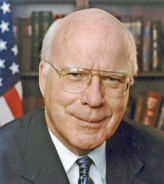
    A number of groups have responded to the Senate Judiciary Committee vote to approve the Patent Reform Act of 2011 (see "Judiciary Committee Votes on Patent Reform Bill").

    Biotechnology Industry Organization (BIO) The Biotechnology Industry Organization (BIO), in a press release from President and CEO Jim Greenwood the day after the vote, praised Senators Leahy (D-VT), Grassley (R-IA), and "the bill's other sponsors," citing their "tireless efforts" to "carefully craft bipartisan, consensus-oriented patent reform legislation."  The trade group asserted its belief that the bill "will help strengthen and improve our nation's patent system for all users while preserving the incentives necessary to spur the creation of high-wage, high-value jobs and sustain America's global leadership in innovation."  The patent system has been important for innovation in biotechnology, which requires "a strong and predictable protection of intellectual property," which is provided by the nation's patent system.  Mr. Greenwood connected directly the benefits of the patent system to investment, saying that "[w]ithout strong and predictable patent protection, investors would shy away from investing hundreds of millions of dollars, over a decade or more, in high-risk biotechnology companies, and will simply put their money into projects or products that are less risky or offer a more immediate return but are of less value to society."
  He also reiterated his belief that passage of the Senate bill will "benefit all sectors of the U.S. economy," and he again pledged BIO's support and "commitment to work with the Chairman and members of the House and Senate as this legislation advances to ensure that the final bill remains true to these principles."

    Innovation Alliance The Innovation Alliance also commented on the measure.  In a statement, the group praised the Committee leadership for their "efforts . . . to develop policies that drive economic growth while balancing the needs of America's diverse economy."  In particular, the Alliance "urge[d] Congress to provide the USPTO with all the resources it needs to reduce its backlog of over 700,000 patents," because this backlog "[t]rapped . . . the potential of creating hundreds of thousands if not millions of new jobs."  They cautioned against "any new programs [that] would divert some of USPTO's already overstretched resources, presumably referring to the post-grant opposition provisions of the bill (see "Here We Go Again").  Consistent with this concern, the Alliance "believes that policymakers should first address the serious and complex funding and administrative issues at the USPTO that gave rise to the backlog before creating any new programs at that already overburdened and understaffed agency."  Despite these reservations, the group "hope[s] to be a constructive force" in consideration of the bill, and "continuing to working with the Judiciary Committee leadership on legislation that allows all American companies to compete, innovate, and grow rather than tilt the economic playing field in favor of any company or industry."

    Coalition for 21st Century Patent Reform The Coalition for 20th Century Patent Reform called the bill "a bipartisan effort [that] will strengthen the USPTO, provide jobs [and] encourage innovation."  Gary Griswold, speaking for the Coalition, said that the group was "very appreciative of the support" the bill was receiving.  "Our Coalition believes we can have bipartisan legislation that improves our patent system including providing the USPTO with the resources necessary to begin reducing its current backlog of patent applications and enhancing the quality of the patents that are granted."

    Judge Michel As reported by Law360 (subscription required), Paul Michel (at left), former Chief Judge of the Court of Appeals for the Federal Circuit, told a D.C. bar association audience that he believes that any patent "reform" should be "highly selective" (as opposed, presumably, to the broad provisions of S. 23), "focusing on the fee, funding and backlog problems the U.S. Patent and Trademark Office is facing."  Judge Michel believes patent reform is important, calling it the "single most important issue facing the United States today" and echoes other voices in his belief that the patent system, and efforts to improve it are "key" to improving the nation's economy.  But it is a mistake, he said, to consider the law as "a simple set of statutes"; rather Judge Michel compared it to an ecosystem whose many interacting parts need to be tinkered with in balance," and that such reform is "impossible" unless the interactions between the components — "the USPTO, the courts, private advocates, the licensing process, entrepreneurs, inventors and research institutes" — are understood.  Judge Michel is not sanguine about Congress passing "comprehensive" patent reform legislation, and stated that "[t]he more comprehensive the bill, the less likely Congress will pass it and the more likely the balance of the overall system will be disrupted."  The problems that should be addressed, involving proper funding for the PTO, are problems that can only be addressed by Congress.  He also spoke out against "adding new burdens to the 'already dysfunctional' USPTO," and specifically an end to fee diversion, thereby permitting the Office to spend the user fees it collects.  He also said he thinks patent reform efforts need to be directed to reducing pendency times, citing global competitiveness.

    Generic  Pharmaceutical Association (GPhA) The Generic Pharmaceutical Association (GPhA) also released a statement on the bill, saying that the group is "deeply concerned with language in the bill that would severely weaken the current inequitable conduct standard."  These provisions of the bill would "not only harm[] consumers needing affordable medicines, but at the same time . . . incentivize[] innovators to be less than honest when seeking patents."  This will "mak[e] it harder for companies to challenge dubious patents and bring affordable generic medicines to consumers," read the statement, adding that "[i]t is imperative that provisions in the legislation avoid any unintended consequences of delaying the availability of lower-cost prescription drugs by making it more difficult for generic companies to challenge unenforceable patents and thus unjustly extending monopolies for branded drugs."  The statement also points to the "$140 billion" that generic drugs have saved American consumers in 2010 alone.

  • By Donald Zuhn

    Myriad With the help of Patent Docs readers, we have been trying to collect copies of all of the briefs that have been filed in the Association of Molecular Pathology v. U.S. Patent and Trademark Office ("Myriad") case and make them available on our site.  Of the thirty amicus briefs that have been filed in this case, seventeen briefs were filed in support of Defendants-Appellants and/or reversal, twelve briefs were filed in support of Plaintiffs-Appellees and/or affirmance, and the position of one brief remains to be determined (Patent Docs has not yet obtained a copy of this brief).  Amici supporting Defendants-Appellants and/or reversal are:

    • Alnylam Pharmaceuticals, Inc. in support of Defendants-Appellants supporting reversal (brief) — see Patent Docs post

    • American Intellectual Property Law Association (AIPLA) in support of reversal, but in support of neither party (brief) — see Patent Docs post

    • Animal Health Institute and Merial Ltd. in support of Defendants-Appellants and in support of reversal

    • Biotechnology Industry Organization (BIO) and the Association of University Technology Managers supporting reversal (brief) — see Patent Docs post

    • Boston Patent Law Association in support of Defendants-Appellants and reversal of summary judgment (brief)

    • CropLife International in support of neither party (brief)

    • Genetic Alliance supporting reversal, but not in support of either party (brief) — see Patent Docs post

    •  Genomic Health Inc., Celera Corp., XDx Inc., Target Discovery Inc., the Coalition for 21st Century Medicine, and Burrill & Co. in support of Defendants-Appellants (brief)

    • Gilead Sciences, Inc. and BioGenerator in support of Defendants-Appellants and urging reversal (brief)

    • Christopher M. Holman and Robert Cook-Deegan in support of neither party (brief) — see Patent Docs post

    • Intellectual Property Owners Association (IPO) in support of neither party (brief) — see Patent Docs post

    • Kane Biotech, Inc. in support of Defendant-Appellant and reversal (brief)

    • Novartis Corp. in support of Defendant-Appellant (brief)

    • Pharmaceutical Research and Manufacturers of America in support of Defendant-Appellant Myriad Genetics, Inc. (brief)

    • Rosetta Genomics, Ltd., Rosetta Genetics, Inc., and George Mason University in support of Defendants-Appellants supporting reversal (brief) — see Patent Docs post

    • United States in support of neither party (brief) — see Patent Docs post

    • University of New Hampshire School of Law in support of Appellants (brief) — see Patent Docs post

    ACLU Amici supporting Plaintiffs-Appellees and/or affirmance are:

    • AARP in support of Plaintiffs-Appellees and arguing for affirmance (brief) — see Patent Docs post

    • American Medical Association, American Society of Human Genetics, American College of Obstetricians and Gynecologists, American College of Embryology, and the Medical Society of the State of New York in support of Plaintiffs-Appellees and arguing for affirmance (brief)

    • Canavan Foundation, Claire Altman Heine Foundation, March of Dimes Foundation, Massachusetts Breast Cancer Coalition, National Organization for Rare Disorders, National Tay-Sachs, and Allied Diseases Association in support of Plaintiffs for affirmance (brief)

    • Cancer Council Australia and Luigi Palombi supporting affirmance (brief)

    • Professor Andrew Chin in support of plaintiffs-appellees supporting affirmance

    • Eileen M. Kane in support of Plaintiffs-Appellees and affirmance (brief)

    • Erika R. George and Kali N. Murray in support of AMP et al. (brief)

    • International Center of Technology Assessment, the Indigenous Peoples Council on Biocolonialism, Greenpeace, Inc., Friends of the Earth, and the Council for Responsible Genetics in support of Plaintiffs-Appellees (brief)

    • National Women's Health Network, the Asian Communities for Reproductive Justice, the Center for Genetics and Society, Generations Ahead, the Pro-Choice Alliance for Responsible Research, and Alliance for Human Biotechnology in support of Plaintiffs-Appellees (brief)

    • Richard Gold, James P. Evans, and Tania Bubela in support of Appellees and affirmance (brief)

    • Southern Baptist Convention in support of Plaintiffs-Appellees and arguing for affirmance (brief)

    • Universities Allied for Essential Medicines in support of Plaintiffs-Appellees supporting affirmance (brief)

    Finally, we have not obtained a copy of one brief that was filed in the case, and as a result, we have yet to assign this brief to either of the above groups:

    • Federation Internationale Des Conseils En Propriete Industrielle in support of neither party

    In addition to the above brief, we have also not been able to secure copies of the briefs filed by amici Animal Health Institute and Merial Ltd. or amicus Professor Andrew Chin.  In our last update regarding the briefing in this case, it appeared that Professor Chin submitted a brief as one of the Scholars of Biotechnology Patent Law in support of Plaintiffs-Appellees supporting affirmance (brief).  However, a check of the PACER briefs screen for this case indicates that the brief served on December 7 was rejected on December 15.  The brief served by Professor Chin on December 28, however, is shown as being filed on that same date.

    With regard to the parties to the appeal, Defendants-Appellants filed their opening brief on October 22, 2010 (see "Myriad Files Appeal Brief in AMP v. USPTO"); Plaintiffs-Appellees filed their brief on November 30, 2010 (see "AMP v. USPTO: Appellees' Brief"); and Defendants-Appellants filed their reply brief on December 22, 2010 (Patent Docs post forthcoming).

    Patent Docs will try to provide summaries of as many of the above amicus briefs as possible prior to the Federal Circuit's decision in this case.  We thank a number of our readers for kindly providing us with, or alerting us to, many of the amicus briefs listed above.

  • By James DeGiulio

    Renova_logo Last year, we reported on the revival of the therapeutic potential of gene therapy, after the technique hibernated for years due to questions of safety and inefficient gene delivery (see "Gene Therapy Experiencing a Revival").  The revival continues with the announcement of a new gene therapy clinical trial initiated by San Diego startup Renova Therapeutics.  Renova announced that researchers at the VA San Diego Healthcare System are entering Phase II testing of a very promising adenovirus-based gene replacement therapy for patients with Congestive Heart Failure (CHF).  If the human trials follow the animal data, Renova's therapy could substantially extend the lifespan of humans suffering from CHF.  The NIH has shown great faith in the gene therapy project, contributing $23 million so far.  However, if Phase II proves successful, Renova would likely look to partner up with a larger company to move into Phase III trials.  The Phase II data is expected sometime in 2012.

    Hammond-photo CHF is a condition where the heart is unable to pump sufficiently to provide the body with enough blood flow to match its needs, since the hearts of CHF patients contain low levels of cAMP.  The prognosis for CHF is dismal — 50% of those diagnosed die within 4-5 years.  CHF afflicts more than 5 million Americans.  The project began when Dr. Kirk Hammond (at left), Renova founder and a cardiologist at the VA San Diego Healthcare System and Professor of Medicine at the University of California, San Diego, discovered that the adenylyl cyclase type 6 (AC6) gene was downregulated in CHF patients.  Dr. Hammond later discovered that increasing the heart's content of AC6 improves heart function.  Dr. Hammond and his group sequenced and patented the human AC6 gene.

    The gene therapy technique uses the same adenovirus vector (Ad5.hAC6) as previous gene therapy candidate Generx, which reached Phase IIb/III studies before Schering determined that the protocol could not deliver enough gene product after 400 patients were screened.  However, Renova's technique improves expression of AC6 gene product by delivering the adenovirus via a coronary catheter to the arteries of the heart, similar to angiography, which is preferable because the technique does not require surgery.  This gene delivery technique is covered by U.S. Patent No. 5,792,453.  The results from the preclinical animal studies were excellent, the data showing that mice with cardiomyopathy (a type of CHF) who received the AC6 gene therapy lived as long as normal, healthy mice.  Whether human CHF patients experience an extension in lifespan remains to be seen.

    The first trial site invites active and retired military personnel to volunteer in the clinical trial.  They must be between 18 and 80 years old, and diagnosed with CHF.  A second clinical trial site has recently opened at the William Beaumont Hospital in Royal Oak, Michigan, which is open to all subjects and is not limited to military.  More information on the gene therapy clinical trial can be found on the AC6 Gene Transfer page at the ClincalTrials.gov site as well as on Renova's website.

  • By Donald Zuhn

    USPTO Seal Last week, the U.S. Patent and Trademark Office provided additional details regarding its proposed "Three Track" patent examination initiative.  An outline of the Office's Three Track program, or Enhanced Examination Timing Control Initiative, was originally provided in a Federal Register notice (75 Fed. Reg. 31763) published last June (see "USPTO Publishes Notice Regarding Enhanced Examination Timing Control Initiative").  In that notice, the Office indicated that under the Three Track proposal, applicants would be able to:  (1) request "prioritized examination" (Track I examination), (2) request a delay of up to 30 months in the docketing of a non-continuing application (Track III examination), or (3) make neither of these requests and receive the current application processing (Track II examination).  That notice also indicated that the fee for Track I examination "would be set at a level to provide the resources necessary to increase the work output of the USPTO so that the aggregate pendency of nonprioritized applications would not increase due to work being done on the prioritized application."

    In last week's announcement regarding the Three Track program, the Office noted that the proposed fee for Track I examination, which would provide prioritized examination of an application within 12 months of its filing date, would be $4,000.  In addition, the Office noted that Track I applications would be limited to four independent and thirty total claims and would have to be filed electronically via the EFS-Web.  During the first year of the program, the Office intends to limit the number of participating applications to 10,000 in order to ensure that it can meet the 12-month examination goal.  The Office would also like to offer a 50% discount on the Track I fee to small entities, and noted that the patent reform legislation (S. 23) recently introduced in the Senate (see "Here We Go Again") would allow the Office to set its own fees and thereby extend this discount to small entity applicants.

    Additional details regarding the Office's Track I-related proposals were published on Friday in a notice in the Federal Register (76 Fed. Reg. 6369).  In this notice, the Office stated that in response to input it received at a public meeting on July 20, 2010 and via more than fifty written comments, the Office was "in the process of refining the 3-Track proposal."  However, because "the vast majority of public input was supportive of the Track I portion of the 3-Track proposal," the Office would "proceed with immediate implementation of the Prioritized Examination Track (Track I), providing fast examination for applicants desiring it, upon payment of the applicable fee and compliance with [other] additional requirements."  The notice explains that:

    Under Track I prioritized examination, an application would be accorded special status and placed on the examiner's special docket throughout its entire course of prosecution before the examiner until a final disposition is reached in the application.  The aggregate goal for handling applications under Track I prioritized examination would be to provide a final disposition within twelve months of prioritized status being granted.  The final disposition for the twelve-month goal means: (1) Mailing of a notice of allowance, (2) mailing of a final Office action, (3) filing of a notice of appeal, (4) declaration of an interference by the Board of Patent Appeals and Interferences (BPAI), (5) filing of a request for continued examination, or (6) abandonment of the application, within twelve months from the date prioritized status has been granted.

    To participate in the Track I program, applicants would have to fulfill the following requirements:

    • File an original utility or plant nonprovisional application under 35 U.S.C. § 111(a);
    • File the application via the Office's electronic filing system (EFS-Web);
    • File an application that is complete under 37 C.F.R. § 1.51(b), with the filing fee, search fee, examination fee, any applicable excess claims fee, and any applicable application size fee paid at the time of filing;
    • Request prioritized examination (preferably by using Form PTO/SB/424);
    • Pay the required fees for requesting prioritized examination at the time of filing (i.e., the prioritized examination fee set forth in 37 C.F.R. § 1.17(c), the processing fee set forth in 37 C.F.R. § 1.17(i), and the publication fee set forth in 37 C.F.R. § 1.18(d)); and
    • If necessary, amend the application to contain no more than four independent claims and thirty total claims.

    In addition, the notice states that "[w]here . . . an applicant files a petition for an extension of time to extend the time period for filing a reply, the prioritized examination of the application will be terminated."  Thus, the notice advises that applicants participating in the program should consider:

    (1) Acquiring a good knowledge of the state of the prior art to be able to file the application with a clear specification having a complete schedule of claims from the broadest to which the applicant believes he is entitled in view of the state of the prior art to the narrowest to which the applicant is willing to accept; (2) submitting an application in condition for examination; (3) filing replies that are completely responsive to the prior Office action and within the shortened statutory period for reply set in the Office action; and (4) being prepared to conduct interviews with the examiner.

    The notice also indicates that "the prioritized examination of the application will be terminated if a request for continued examination is filed."

    While the notice proposes amending 37 C.F.R. § 1.17(c) to set the fee for filing a request for prioritized examination under § 1.102(e) at $4,000.00, the notice also indicates that:

    If legislation is passed providing a fifty percent fee reduction for providing prioritized examination under 37 CFR 1.102(e) for small entities under 35 U.S.C. 41(h)(1) and that the prioritized examination fees be set to recover the estimated cost of the prioritized examination program, the Office would set the prioritized examination fee at $4,800 ($2,400 for small entities), since 27.8 percent of the new serialized utility and plant applications filed in fiscal year 2010 were by small entities.

    The notice sets a March 7, 2011 deadline for the submission of comments regarding the Office's Track I-related proposals, which should be should be sent by e-mail to track_I_comments@uspto.gov, or by regular mail addressed to: Mail Stop Comments — Patents, Commissioner for Patents, P.O. Box 1450, Alexandria, VA 22313–1450, to the attention of Robert A. Clarke, Deputy Director, Office of Patent Legal Administration, Office of the Associate Commissioner for Patent Examination Policy.

  • By Sherri Oslick

    Gavel About Court Report:  Each week we will report briefly on recently filed biotech and pharma cases.

    Somaxon Pharmaceuticals Inc. et al. v. Par Pharmaceutical Inc. et al.
    1:11-cv-00107; filed February 2, 2011 in the District Court of Delaware

    • Plaintiffs:  Somaxon Pharmaceuticals Inc.; Procom One Inc.
    • Defendants:  Par Pharmaceutical Inc.; Par Pharmaceutical Companies Inc.

    Infringement of U.S. Patent No. 6,211,229 ("Treatment of Transient and Short Term Insomnia," issued April 3, 2001) following Par's filing of an ANDA to manufacture a generic version of Somaxon's Silenor® (doxepin, used to treat insomnia).  View the complaint here.


    Lupin Atlantis Holdings S.A. et al. v. Paddock Laboratories, Inc. et al.

    0:11-cv-00244; filed February 1, 2011 in the District Court of Minnesota

    • Plainiffs:  Lupin Atlantis Holdings S.A.; Ethypharm S.A.
    • Defendants:  Paddock Laboratories, Inc.; Cerovene, Inc.

    Lupin Atlantis Holdings S.A. et al. v. Paddock Laboratories, Inc. et al.
    1:11-cv-00668; filed January 31, 2011 in the Southern District of New York

    • Plaintiffs:  Lupin Atlantis Holdings S.A.; Ethypharm S.A.
    • Defendants:  Paddock Laboratories, Inc.; Cerovene, Inc.

    The complaints in these cases are substantially identical.  Infringement of U.S. Patent No. 7,101,574 ("Pharmaceutical Composition Containing Fenofibrate and the Preparation Method," issued September 5, 2006) following a Paragraph IV certification as part of Paddock's filing of an ANDA to manufacture a generic version of Lupin's Antara® (fenofibrate, used to treat hypercholesterolemia and hypertriglyceridemia).  View the New York complaint here.


    Hoffmann-La Roche Inc. v. Mylan Inc. et al.

    2:11-cv-00579; filed January 31, 2011 in the District Court of New Jersey

    • Plaintiff:  Hoffmann-La Roche Inc.
    • Defendants:  Mylan Inc.; Mylan Pharmaceuticals Inc.; Genpharm ULC; Genpharm, L.P.

    Infringement of U.S. Patent No. 7,410,957 ("Method of Treatment Using Bisphosphonic Acid," issued August 12, 2008) following a Paragraph IV certification as part of defendants' filing of an ANDA to manufacture a generic version of Roche's Boniva® (150 mg once-monthly tablets) (ibandronate sodium, used to treat post-menopausal osteoporosis).  View the complaint here.


    Syngenta Seeds, Inc. v. Bayer S.A.S.

    1:11-cv-00280; filed January 27, 2011 in the District Court of the District of Columbia

    Declaratory judgment of invalidity and non-infringement of U.S. Patent Nos. 6,245,968 ("Mutated Hydroxyphenylpyruvate Dioxygenase, DNA Sequence and Isolation of Plants Which Contain Such a Gene and Which Are Tolerant to Herbicides," issued June 12, 2001), 6,268,549 ("DNA Sequence of a Gene of Hydroxy-Phenyl Pyruvate Dioxygenase and Production of Plants Containing a Gene of Hydroxy-Phenyl Pyruvate Dioxygenase and Which Are Tolerant to Certain Herbicides," issued July 31, 2001), and 7,250,561 ("Chimera Gene with Several Herbicide Resistant Genes, Plant Cell and Plant Resistant to Several Herbicides," issued July 31, 2007) based on Syngenta's development of and planned sales of genetically modified crops containing the HPPD gene.  View the complaint here.


    Novartis Vaccines and Diagnostics Inc. v. MedImmune LLC et al.

    1:11-cv-00084; filed January 26, 2011 in the District Court of Delaware

    • Plaintiff:  Novartis Vaccines and Diagnostics Inc.
    • Defendants:  MedImmune LLC; Biogen Idec Inc.; Alexion Pharmaceuticals Inc.

    Infringement of U.S. Patent No. 5,688,688 ("Vector for Expression of a Polypeptide in a Mammalian Cell," issued November 18, 1997) based on defendants manufacture and sale of their Synagis®, Tysabri®, and Soliris® products.  View the complaint here.

  • Calendar

    February 8, 2011 – Corporate Intellectual Property Law Conference (Law Bulletin Publishing Company) – Chicago, IL

    February 9, 2011 – Patent Claim Indefiniteness: Enzo v. Applera (Intellectual Property Owners Association) – 2:00 PM (ET)

    February 9-10, 2011 – BioPharma IP Innovations Summit (Strategic Solutions Network) – Miami, FL

    February 16-17, 2011 – Life Sciences Collaborative Agreements and Acquisitions*** (American Conference Institute) – New York, NY

    February 16-17, 2011 – Biotech & Pharmaceutical Patenting (IBC Legal) – Munich, Germany

    March 16-17, 2011 – FDA Boot Camp*** (American Conference Institute) – New York, NY

    ***Patent Docs is a media partner of this conference or CLE

  • IPO #2 The Intellectual Property Owners Association (IPO) will offer a one-hour webinar entitled "Patent Claim Indefiniteness: Enzo v. Applera" on Wednesday, February 9, 2011 beginning at 2:00 PM (ET).  The IPO webinar will address the question:  just how definite do the claims of a patent need to be?  The webinar will look at the Federal Circuit's decision in Enzo Biochem, Inc. v. Applera Corp. that reversed a district court's judgment that two Enzo patents were invalid for indefiniteness; in mid-December, the U.S. Supreme Court asked the Solicitor General to weigh in on Applera's appeal.  The webinar will consider not only the issues raised by the Enzo case, but also the ways a patent can presently be found indefinite under 35 U.S.C. § 112, including indefinite means-plus-function claims and apparatus-plus-method claims in such cases as Telcordia, Aristocrat, Finisair, and IPXL.  The speakers include John Dragseth of Fish & Richardson P.C.; Prof. Michael Meurer of Boston University School of Law; and Mark Pals of Kirkland & Ellis, LLP.  The registration fee for the webinar is $120 (government and academic rates are available upon request).  Those interested in registering for the webinar, can do so here.

  • Law Bulletin The Law Bulletin Publishing Company will be holding its annual Corporate Intellectual Property Law Conference on February 8, 2011 in Chicago, IL.  The conference will address the following topics:

    General Sessions

    • The State of the USPTO — "Strategic Perspectives on Intellectual Property: Inside and Out (of the USPTO)" — Sharon Barner, former Deputy Director of the U.S. Patent and Trademark Office
    • Protecting Trade Secrets

    Patent Track Sessions

    • Patent Mismarking: 2010 and Beyond
    • The Scope of Patentability

    An agenda for the conference can be found here, and additional information about the conference can be found here.  The registration fee for the conference is $109.  Those interested in registering for the conference can do so here.