• By Kevin E. Noonan

    New York Times The New York Times is at it again, proselytizing on its OpEd page about patents and how bad they are.  This time the topic is the Supreme Court's upcoming argument in the Microsoft v. i4i case, involving the standard for determining whether the U.S. Patent and Trademark Office should be second-guessed by a lay jury.

    Under current law, the standard for assessing whether the USPTO has improvidently granted a patent is by "clear and convincing evidence," which is higher than the "preponderance of the evidence" standard typically employed in civil trials.  The rationale for the higher standard is that the USPTO is entitled to deference in its area of expertise.  The question in the i4i case is whether that deference is appropriate under circumstances where the Patent Office has not considered art raised by a defendant in asserting invalidity.  It is a provocative argument, and one that the Supreme Court has indicated an inclination to approve, for example in KSR Int'l Co. v. Teleflex Inc.

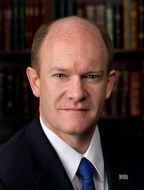
    Lichtman, Douglas In the article, entitled "Patently Obvious" the author, Professor Douglas Lichtman (at left) from the UCLA Law School, evinces no appreciation for the subtleties of the issues, involving as it must patent law, administrative law, and the burdens on a private defendant in establishing that an executive agency has erred in the performance of its duties.  All of these issues and others will no doubt inform the Court's opinion, but Prof. Lichtman would have us believe this is just another example of defects in a U.S. patent system that routinely grants "bad patents."  In his analysis, juries are "discouraged" from questioning a patent's validity, meaning that "all too often . . . dubious patents are nevertheless enforced."  This, of course, "inhibits innovation," he says, neglecting to mention that frequently it is the accused infringer who "inhibits innovation" by attempting to expropriate truly innovative technology from those who actually invent it.

    Keeping with the theme of "bad patents," Prof. Lichtman asserts that the USPTO cannot possibly perform its duties, due to the number of new patent filings each year and the lack to time patent examiners have to perform their duties.  The cogency of the first argument is diminished by the fact that the same argument has been made for at least ten years, well before the recent backlog of pending applications became an administrative nightmare.  The second argument has more heft, but Prof. Lichtman operates under the mistaken impression that patent examiners have a total of 17 hours to perform their examination, "typically spread over two or three years . . . interspersed with work on hundreds of other open files."  The 17-hour figure is accurate, but only for shorter and less complex applications.  So while it is true that more examiners are needed to devote sufficient time to the examination process (a fact well-appreciated by the Office, which has hired thousands of new examiners over the past six years), the idea that the Office is a "rubber stamp" for patent applicants is ludicrous.  "[I]n practice, even the best examiners are so overwhelmed and so poorly informed that the benefits of their expertise are fully dissipated," according to Prof. Lichtman.  But in situations when that is the case, examiners refuse to grant patents, because the burden is always on the applicant to convince the examiner that her patent application should be granted under the appropriate statutory requirements.

    This is something Prof. Lichtman might appreciate if he had any experience with the patent system outside opining on it from academe.  According to his biography, he graduated from Yale Law School in 1997, spent 10 years at the University of Chicago Law School, and since 2007 has been at UCLA.  No matter how intelligent Prof. Lichtman may be, there are some things that require actual experience to understand, and on that score the Professor is woefully lacking.

    This is further illustrated by allegations in the piece regarding the ex parte nature of patent examination.  "The only parties" involved in prosecution are "the patent applicant and the applicant's lawyers," Prof. Lichtman notes, contrasting the situation with litigation where a patentee is faced with a motivated adversary.  What he neglects to mention in the equation are examiners on the one hand, who do not want to grant patents improperly, and the strictures of the rules of practice before the Office on the other hand, which require good faith and candor in an applicant's dealings with the Office, with the threat of an inequitable conduct finding if such candor is not maintained (a finding that renders the entire patent unenforceable against any infringer should it be made).

    The philosophical basis of Prof. Lichtman's views are set forth in his penultimate paragraph:

    If the current approach were abandoned and juries were instead given real freedom to review patent validity, not much would change at the Patent Office.  Examiners would still evaluate the validity of patent applications and document their views.  And, in the event of litigation, those views would still be admissible in court.  The key difference would be that the examiner's view would then rise or fall on the merits, rather than enjoying substantial deference from the jury.

    Actually, in that event, real chaos would ensue, as we effectively substituted a layman's views for expert ones, and the value of patents and innovation would suffer.  That would be good for companies who could benefit from the inventions of others without having to compensate them.  (Similar arguments are raised by those who would rather exploit university research without the bother of complying with the Bayh-Dole Act.)  But it would not be good for "genuine innovation," which Prof. Lichtman professes to value.

    In the i4i case, the Supreme Court may very well decide that patentees and the Patent Office do not deserve the higher level of deference for art not considered by the Office during patent examination.  Or it may recognize that such a decision would implicate all other administrative agencies, and permit disgruntled citizens to challenge every agency action based on "evidence" not considered during agency review (and the costs that may ensue in encouraging manipulation of when such "evidence" is or is not presented during initial agency review).  In any case, Prof. Lichtman's article becomes just another example of how certain academics and their industry supporters are ready, willing, and able to take any opportunity to tell the public that the American patent system is broken.  It ain't necessarily so.

  • Calendar

    April 27, 2011 – 27th Annual Joint Patent Practice Seminar (Connecticut, New Jersey, New York, and Philadelphia Intellectual Property Law Associations) – New York, NY

    April 29, 2011 – Ethics in the Practice of Intellectual Property Law (John Marshall Law School Center for Intellectual Property Law) – Chicago, IL

    April 27-29, 2011 – Patent Strategies Summit*** (International Quality & Productivity Center) – Palo Alto, CA

    May 3-4, 2011 – Paragraph IV Disputes*** (American Conference Institute) – New York, NY

    May 18-19, 2011 – Forum on Freedom to Operate (C5) – Munich, Germany

    June 7-8, 2011 – Biosimilars*** (American Conference Institute) – New York, NY

    ***Patent Docs is a media partner of this conference or CLE

  • By Kevin E. Noonan

    House of Representatives Seal The House of Representatives Committee on the Judiciary today approved H.R. 1249 (the "America Invents Act") and reported the bill to the House floor by a vote of 32-3, with Representatives John Conyers, Jr. (D-MI), Steve King (R-IA), and James Sensenbrenner, Jr. (R-WI) voting against the measure.  Along the way, 21 amendments were offered, of which thirteen were passed, five failed to gain passage, and three were withdrawn (the latter category including a public display of emotion by Rep. Debbie Wasserman Schultz (D-FL)).

    The Manager's Amendment passed by the same vote as the bill overall (32-3), with one amendment passed by roll call vote (29-9 with 1 pass and 1 present).  This amendment, introduced by Rep. Bob Goodlatte (R-VA) amended the Supplementary Examination provisions to exclude "fraud on the [Patent] Office" by including subsection (C):

    (C)  FRAUD. – No supplemental examination shall be commenced by the Director on, and any pending supplemental examination shall be immediately terminated regarding, an application or patent in connection with which fraud on the Office was practiced or attempted.  If the Director determines that such fraud on the Office was practiced or attempted, the Director shall also refer the matter to the Attorney General for such action as the Attorney General may deem appropriate.

    This amendment appears to defeat the main purpose of the supplementary examination provisions, addressing a concern raised by the generic pharmaceutical industry (see "Reaction to Manager's Amendment to House Patent Reform Bill") and providing yet another difference from the Senate version of the bill (S. 23) that will need to be resolved.

    Several amendments were passed by voice vote.  These included an amendment (introduced by Rep. Goodlatte) to the settlement section (§ 317) of the inter partes reexamination provisions of the statute, that permits "[a]t the request of a party to the proceeding, the agreement or shall be treated as business confidential information, shall be kept separate from the file of the involved patents, and shall be made available only to the Government agencies on written request, or to any person on a showing of good cause."  Rep. Conyers (D-MI) introduced an amendment that would correct the perceived procedural detects related to patent term extension of The Medicines Company's patent on Angiomax®:

    CALCULATION OF 60-DAY PERIOD FOR APPLICATION OF PATENT TERM EXTENSION.

    (a)  IN GENERAL. – Section 156(d)(1) of tile 35, United States Code, is amended by adding at the end the following flush sentence:

    "For purposes of determining the date on which a product receives permission under the second sentence of this paragraph, if such permission is transmitted after 4:30 P.M., Eastern Time, on a business day, or is transmitted on a day that is not a business day, the product shall be deemed to receive permission on the next business dy.  For purposes of the preceding sentence, the term "business day" means any Monday, Tuesday, Wednesday, Thursday or Friday, excluding any legal holiday under section 6103 of title 5."

    (b)  APPLICABILITY. – The amendment made by subsection (a) shall apply to any application for extension of a patent term under section 156 of title 35, United States Code, that is pending on, that is filed after, or as to which a decision regarding the application is subject to judicial review on, the date of enactment of this Act.

    Also adopted by voice vote were a series of "Sense of the Congress" amendments that fractured the syntax of Article I, section 8, clause 8 of the Constitution and evinced a studied misunderstanding of the structure and basis of the U.S. patent system.  Rep. Sheila Jackson Lee (D-TX) added the following amendments to the "first inventor to file" provisions:

    (o)  SENSE OF CONGRESS. – It is the sense of the Congress that converting the United Stated Patent Registration System from "First Inventor to Use" to a system of "First Inventor to File" will promote the progress of science by securing for limited time to inventors the exclusive rights to their discoveries and provide inventors which greater certainty regarding the scope of protection granted by the exclusive rights to their discoveries.

    (o)  SENSE OF CONGRESS. – It is the sense of the Congress that converting the United Stated Patent Registration System from "First Inventor to Use" to a system of "First Inventor to File" will harmonize the United States Patent Registration System with the patent registration systems commonly used in nearly all other countries throughout the world with whom the United States conducts trade and thereby promote a greater sense of international uniformity and certainty in the procedures used for securing the exclusive rights of Inventors to their discoveries.

    Rep. Maxine Waters (D-CA) introduced an amendment requiring the U.S. Patent and Trademark Office to study implementation of the bill:

    Sec. 27.  STUDY ON IMPLEMENTATION

    (a)  PTO STUDY. – The Director of the United States Patent and Trademark Office shall conduct a study on the manner in which this Act and the amendments made by this Act is being implemented by the Patent and Trademark Office, and on such other aspects of the patent policies and practices of the Federal Government with respect to patent rights, innovation in the United States, competitive of United States markets, access by small businesses to capital for investment, and other such issues, as the Director deems appropriate.

    (b)  REPORT TO CONGRESS. – The Director shall, not later than  the date that is 4 years after the date of the enactment of this Act, submit to the Committees of the Judiciary of the House of Representatives and the Senate a report on the results of the study conducted under subsection (a), including recommendations for any changes to laws and regulations that the Director considers appropriate.

    And Rep. Judy Chu (D-CA) introduced an amendment to establish a "pro bono" patent program:

    Sec. 27. PRO BONO PROGRAM.

    The Director shall work with an support intellectual property law associations across the country in the establishment of pro bono programs designed to assist financially under-resourced independent inventors and small businesses.

    Rep. Pedro Pierluisi (D-PR) introduced an amendment in the "STATE COURT JURISDICTION" provisions of Section 19 of the bill to include "any State of the United States, the District of Columbia, the Commonwealth of Puerto Rico, the United States Virgin Islands, American Samoa, Guam, and the Northern Mariana Islands."

    Several additional amendments to the Manager's Amendment were introduced and passed by voice vote prior to passage of the Amendment by the committee.  These included an amendment from Representatives Melvin Watt (D-NC), Goodlatte, and Howard Berman (D-CA) to extend the sunset provision of the Director's authority to set patent fees from four years to six years, and another amendment by Rep. Watt to soften the provisions of Section 2 regarding the negative impact of abusive patent litigation on the patent process to rather recite "any negative impact of patent litigation that was the subject of such study" on implementation of the first inventor to file provisions of the bill.  Rep. Goodlatte introduced amendments to include "trials" expressly in the "actions" that fall within the ambit of the Joinder of Parties in new § 298, that eliminated the provisions of § 298 that would have provided for a stay of civil actions to "non-manufacturing parties" or "additional parties," and reversed the provisions of the Manager's Amendment that permitted the Director to grant an inter partes reexamination without considering the patentee's response to the petition.  Rep. Goodlatte also introduced an amendment to revise the prior user rights amendment to exclude from such rights situations where:

    (ii)  the claimed invention that is the subject of the defense was disclosed to the public in a manner that qualified for the exception from the prior art under section 102(b) and the commercialization date relied upon under paragraph (1) for establishing entitlement to the defense is less than 1 year from such disclosure to the public.

    Rep. Zoe Lofgren (D-CA) introduced an amendment (that passed on voice vote) that undid all the changes to the first inventor to file provisions with regard to public use and on-sale, and eliminated the provisions commanding that the standard for determining the meaning of "public accessibility" to be used is "the criteria used by courts in addressing whether a disclosure constitutes a printed publication" (a related amendment introduced by Rep. Sensenbrenner was rejected by voice vote).

    Several amendments failed, including an amendment by Rep. Conyers that would exempt patents that have "completed an ex parte or inter partes reexamination or been reissued with valid claims" from the reconsideration procedures for business method patents.  Also rejected was an amendment by Rep. Chu (D-CA) that attempted  to change inter partes reexamination to preclude institution of a reexamination "filed more than 30 days after the date on which a court of competent jurisdiction enters an order construing the claims of the patent in a civil action in which the petitioner, real party in interest, or privy of the petitioner is a party."  Rep. Chu's amendment to eliminate the first inventor to file changes and Rep. Lofgren's amendment to eliminate the supplemental examination provisions were also rejected by voice vote.

    Three amendments were withdrawn.  Representatives Conyers and Chu withdrew their amendment that would have excluded pending cases from the provisions limiting assertion of the false marking statute.  Representatives Sensenbrenner and Mike Quigley (D-IL) withdrew their amendment that would have changed the revisions to the prior user rights section of the bill.  Finally, Rep. Wasserman Schultz tearfully withdrew her amendment that would have exempted from infringement a "genetic diagnostic tester's performance of a confirming generic diagnostic test activity" that would otherwise constitute infringement under §§ 271(a) or (b).  Interestingly, in the definitions section an exception to the exception includes "the practice of a process in violation of a biotechnology patent."

    The bill next will be considered by the House in floor debate that has not yet been scheduled.  If the bill passes, it will either go to conference committee to be reconciled with the Senate's S. 23, or the Senate could simply bring H.R. 1249 to a vote.  In either event, the patent reform bill could be ready for the President's signature before the summer.

  • By James DeGiulio

    Cordis Stent Found to Infringe Boston Scientific Patent

    Bostonscientificlogo Boston Scientific Corp. secured a favorable ruling on summary judgment in its patent infringement suit against Cordis Corp. over one of its drug-eluting stents.  In 2003, Boston Scientific sued Cordis in the U.S. District Court for the District of Delaware for infringement of U.S. Patent No. 5,922,021, asserting that three sizes of Cordis' Cypher stent infringed the '021 patent.  In 2005, a jury agreed and returned a verdict in favor of Boston Scientific.  Cordis sought reexamination of the '021 patent in 2009.  Three claims of the '021 patent were rejected as obvious, but Boston Scientific was able to overcome this rejection.  Cordis filed a second request for reexamination in January 2011, which rejected one claim of the '021 patent as anticipated and obvious.  Following this rejection, Cordis asked the District Court to delay trial until the Patent Office finished its reexamination, while Boston Scientific moved for summary judgment of infringement.

    Cordis On April 13, Judge Sue L. Robinson issued an opinion that denied Cordis' motion to delay the start of a trial, weighing the general factors for staying a trial.  Judge Robinson considered the stay improper, since discovery was complete, the trial for damages was set to start May 5, and the reexamination could take many months to complete.  Judge Robinson also granted Boston Scientific's motion for summary judgment, finding that the product at issue, Cordis' 2.25 mm Cypher stent, infringes the '012 patent since it has the same architecture as three other sizes of stent that were found to infringe the same claim of the patent in a previous case.  Judge Robinson also assigned a favorable date to Boston Scientific for damage calculation.  Finally, Judge Robinson denied Cordis' Daubert motion to exclude an expert in royalty calculations from testifying for Boston Scientific.  Cordis had previously challenged the expert's methodology, but the favorable damage calculation date assigned to Cordis significantly weakened its challenge.


    Mylan, Barr and Anchen Blocked from Introducing Generic Amrix

    Cephalon #2 Cephalon was able to extend an injunction ruling that generic drugmakers cannot release their own versions of Amrix until the Judge issues a ruling on the validity and enforceability of the patents.  Cephalon brought six cases against several generic manufacturers to block them from producing generic versions of the extended release drug Amrix after their ANDA filings.  These cases were consolidated in the U.S. District Court for the District of Delaware in December 2009.  A bench trial was held from September 29 through October 10, 2010, where Barr and Mylan challenged the validity of Cephalon's Amrix patents, arguing that cyclobenzaprine was well known in the art and anyone with ordinary skill could have made an extended release version with minimal effort.  They also asserted that the patents were unenforceable due to inequitable conduct.  After trial, Cephalon settled with Impax (see "Biotech/Pharma Docket," October 14, 2010).  On October 29, Cephalon, Mylan, Barr, and Anchen stipulated that the generic drugmakers would not enter the Amrix market until April 17, 2011, or the date of issuance of an opinion on Cephalon's patents, whichever is earlier.

    On April 8, Judge Sue L. Robinson issued an order enjoining the generic manufacturers from launching their products until an opinion on the patents is issued in the case.  The 30-month automatic stay in this case is set to expire on April 17, and the generics have made it known that they intend to introduce their Amrix drugs to market on April 17, regardless of whether Judge Robinson issues her ruling, as per the stipulation.  While Judge Robinson intends to release her opinion on the patents soon, she did not guarantee that the opinion would come down before April 17.  Consequently, despite the parties' stipulation, the judge issued an injunction over all defendants in all the cases, keeping all generic Amrix off the market until she issues her ruling.


    Galderma, Dermalogix Agree to End Clobex Suit with Paddock

    Galderma As trial was set to begin, Galderma SA and Dermalogix Partners Inc. reached an agreement with Paddock Labs which ends their patent infringement suit over a generic version of the psoriasis spray Clobex.  In 2009, Galderma and Dermalogix brought suit in the U.S. District Court for the Northern District of Texas, alleging infringement of U.S. Patent No. 5,972,920 after Paddock submitted an ANDA seeking approval for a generic clobetasol propionate spray (see "Court Report," January 11, 2011).  Both parties moved for summary judgment, with the plaintiffs asking the District Court to rule that the proposed generic infringes the '920 patent and that the patent is not invalid.  The judge found that Paddock's proposed spray did infringe the '920 patent as a matter of law.  Paddock argued that the '920 patent was unenforceable due to inequitable conduct by the inventors and patent attorney.  However, the judge determined that there were genuine issues of material fact with respect to both infringement and inequitable conduct that must be established at trial, which was slated to start Monday.

    Paddock Laboratories Judge Terry R. Means signed off on the three companies' stipulation to dismiss the suit with prejudice, leaving each side to pay its own costs and attorneys' fees.  The stipulation was silent as to any settlement.

  • By Donald Zuhn

    On Tuesday, House Judiciary Committee Chairman Lamar Smith (R-TX) offered a Manager's Amendment to H.R. 1249, the House version of the America Invents Act (see "House Judiciary Chairman Releases Manager's Amendment to H.R. 1249").  While response to the amended version of H.R. 1249 appears to be more muted than that for the Senate's passage of S. 23 or the introduction of H.R. 1249, a few groups have issued statements or letters since the Manager's Amendment was released.

    In a press release issu Generic  Pharmaceutical Association (GPhA) ed on Wednesday, the Generic Pharmaceutical Association (GPhA) called on the House Judiciary Committee "to fix what is a fatal flaw" in the bill — a provision that the generic industry group says "will hurt consumer access to affordable medicines and undermine the integrity of the patent system."  According to the GPhA, "[t]he current bill allows patent holders that knowingly falsify information in their original patent application with the U.S. Patent and Trademark Office (PTO) or intentionally omit material information in such filings, a mechanism to retroactively correct their filing without any consequences."  The GPhA argues that "[t]he only way to correct this so called 'supplemental examination' process is to strike it entirely from the bill or amend it to prevent those that knowingly lie to the PTO from using it," adding that "[a]nything other than those changes endorses deception and falls far short of guaranteeing a fair and honest process."  Until the provision is struck or corrected via amendment, the GPhA says it will oppose the House bill.

    Michaud, Michael Rep. Mike Michaud (D-ME) (at left) who issued a statement opposing the House bill when it was introduced on March 30 (see "Reaction to House Patent Reform Bill"), issued a press release with Rep. Tom Reed (R-NY) on Monday noting that the two members of Congress had sent a letter to Chairman Smith and Ranking Member John Conyers (D-MI) requesting that "important provisions be inserted into the patent reform legislation scheduled to be marked up in committee."  Reps. Michaud and Reed are seeking two changes that they assert will "protect patent holders against abusive challenges by infringers":  (1) an increase in the threshold requirement for initiating an inter partes reexamination, and (2) removal of provisions that would encourage stays of infringement lawsuits or International Trade Commission (ITC) proceedings following initiation of a post-grant review or inter partes reexamination.  Contending that "reexaminations are already subject to abuse," Reps. Michaud and Reed state that "[i]t is critical that the good intent of H.R. 1249 not be undermined by giving . . . malicious organizations additional opportunities to misuse the patent system and discourage American innovators."  To remedy the situation, the Congressmen urge the Judiciary Committee to adopt the higher "reasonable likelihood that the challenge will succeed" standard.  Reps. Michaud and Reed also believe the stay provisions of H.R. 1249 could be abused, and therefore, urge the Committee to remove these provisions from the bill.

    AFL-CIO On Tuesday, the AFL-CIO also sent a letter to Chairman Smith and Rep. Conyers, stating that the Senate's passage of S. 23 was the result of "a fragile compromise, balancing a variety of different interests," and that the organization was "concerned that H.R. 1249 upsets that delicate balance and puts at risk a real opportunity to enact a law that would improve the operation of the U.S. patent system and, as a result, promote innovation, production and job creation here in America."  According to the AFL-CIO letter, "the House bill weakens important safeguards concerning time limits and standards for initiating administrative proceedings to review a granted patent," and asserts that "these safeguards must be maintained."

    Innovation Alliance Finally, the Innovation Alliance responded to the Manager's Amendment by sending its own letter to Chairman Smith and Rep. Conyers on Tuesday.  Stating that the group "continues to believe the best course for policymakers is to continue to focus their efforts on providing the U.S. Patent and Trademark Office ('USPTO') with the funding and resources it needs to reduce its backlog of over 700,000 patents," the letter argues that "the potential for creating hundreds of thousands if not millions of jobs" is "[t]rapped in that backlog."  As a result, the group supports provisions in the legislation that would put an end to fee diversion.

    While the Innovation Alliance also supports language in the House bill that "provides some critical safeguards against abuse of the new post-grant administrative review system, including 'could have raised' estoppel, meaningful threshold for filing post-grant reviews and inter partes reviews, and a presumption of validity for patents," the group is "very concerned" about language added via the Manager's Amendment that would "codify[] unprecedented and overly rigid rules on joinder and stays of patent litigation that would constrain a court's discretion to address such issues in a fair and flexible manner and unduly prejudice the ability of patent owners, especially small innovators, to enforce all patent rights against all infringers."  The Innovation Alliance also believes that the House bill "expands prior user rights in such a fashion as to deter investment in innovation by creating considerable uncertainty about whether an invention might be subject to a manufacturer's prior user rights," and therefore seeks the removal of the prior user rights section.  The group concludes its letter by arguing that the post-grant and inter partes review windows of one year from issuance and nine months from commencement of infringement litigation are "unnecessarily long for what ultimately amounts to a decision only about the forum in which to challenge a patent's validity."

    On Thursday morning, House Judiciary Committee will meet to mark up H.R. 1249Patent Docs intends to provide coverage of the results of this meeting.

    For additional information regarding this and other related topics, please see:
    • "Reaction to House Patent Reform Bill," March 31, 2011
    • "Patent Reform Discussion Moves to House," March 29, 2011
    • "Reaction to Senate Passage of S. 23," March 08, 2011
    • "More Reaction to Senate Patent Reform Legislation," February 24, 2011
    • "Reaction to Senate Patent Reform Bill (S. 23)," February 09, 2011

  • By Kevin E. Noonan

    Smith, Lamar If politics is the art of the possible, House Judiciary Committee Chairman Lamar Smith (R-TX) (at right) is doing whatever he can to make passage of H.R. 1249 (the "America Invents Act," aka the House patent reform bill) into law.  That includes release today of a Manager's Amendment, which makes significant changes to portions of the bill that have raised opposition by many groups.

    The first significant changes are in Section 2 of the bill, which effects the change from "first to invent" to "first inventor to file" in 35 U.S.C. § 102.  Objections from many (including notably Hal Wegner of Foley & Lardner, who has commented extensively on this provision) include that the bill as introduced effectively destroyed the one-year "grace period" for an inventor's own activity, by limiting permitted conduct to printed publications and excluding public use and on-sale as permitted inventor activities.  The Manager's Amendment addresses these concerns by making the following changes:

    Sec. 102.  Conditions for patentability; novelty

    (a)  Novelty; Prior Art- A person shall be entitled to a patent unless–

    (1)  the claimed invention was patented, described in a printed publication, or in public use, on sale, or otherwise available to the public before the effective filing date of the claimed invention; or

    (2)  the claimed invention was described in a patent issued under section 151, or in an application for patent published or deemed published under section 122(b), in which the patent or application, as the case may be, names another inventor and was effectively filed before the effective filing date of the claimed invention.

    (b)  Exceptions-

    (1)  DISCLOSURES MADE 1 YEAR OR LESS BEFORE THE EFFECTIVE FILING DATE OF THE CLAIMED INVENTION- A disclosure made 1 year or less before the effective filing date of a claimed invention shall not be prior art to the claimed invention under subsection (a)(1) if–

    (A)  the disclosure to the public was made by the inventor or joint inventor or by another who obtained the subject matter disclosed directly or indirectly from the inventor or a joint inventor; or

    (B)  the subject matter disclosed had, before such disclosure, been publicly disclosed disclosed to the public by the inventor or a joint inventor or another who obtained the subject matter disclosed directly or indirectly from the inventor or a joint inventor.

    Presumably, changing the language to exclude "public use" and "on sale" from the statute and retain "or otherwise disclosed to the public" excludes such activities from the definition of disclosure.  The criteria for making the determination of what constitutes a "public disclosure" is set forth in subsection (o):

    (o)  IMPLEMENTATION BY THE PATENT AND TRADEMARK OFFICE – In any guidelines for the examination of patents addressing whether a disclosure to the public has been made under section 102 of title 35, United States Code, as amended by this section, the Office shall use the public accessibility criteria employed by courts in addressing whether a disclosure constitutes a printed publication under section 102 of title 35, United States Code, as in effect on the day before the date of enactment of this Act.  Such public accessibility criteria shall be used regardless of the manner in which the disclosure resulted in the subject matter disclosed being known or used.

    The changes to Section 2 also evince a sentiment that "non-practicing entities" (which include universities, sole inventors, and in some instances pre-market start-ups) have a negative impact on innovation, as evidenced by the last sentence of subsection (p):

    (p)  STUDY OF PATENT LITIGATION. –

    (1)  GAO STUDY – The Comptroller General of the United States shall conduct a study of the consequences of litigation by non-practicing entities, or by patent assertion entities, related to patent claims made under title 35, United States Code, and regulations authorized by that title.

    (2)  CONTENTS OF THE STUDY. – The study conducted under this subsection shall include the following:

    (A)  The annual volume of litigation described in paragraph (1) over the 20-year period ending on the date of the enactment of this Act.

    (B)  The volume of cases comprising such litigation that are found to be without merit after judicial review.

    (C)  The impact of such litigation on the time required to resolve patent claims.

    (D)  The estimated costs, including the estimated cost of defense, associated with such litigation for patent holders, patent licensors, patent licensees, and inventors, and for users of alternate or competing innovations.

    (E)  The economic impact of such litigation on the economy of the United States, including the impact on inventors, job creation, employment, employees, and consumers.

    (F)  The benefit to consumers, if any, supplied by non-practicing entities or patent assertion entities that prosecute such litigation.

    (3)  REPORT TO CONGRESS. – The Comptroller General shall, not later than the date that is 1 year after the date of enactment of this Act,  submit to the Committee of the Judiciary of the House of Representatives and the Committee on the Judiciary of the Senate a report on the results of the study required under this subsection, including recommendations for any changes to laws and regulations that will minimize the negative impact of abusive patent litigation on the patent process.

    Section 4, which expanded prior user rights to include any technology (as opposed to the limited right to business method patents) was also changed by the Manager's Amendment:

    35 U.S.C. 273 Defense to infringement based on earlier inventor.

    (a)  DEFINITIONS.- For purposes of this section-

    (1)  the terms "commercially used" and "commercial use" mean use of the subject matter of a patent inside or outside the United States, so long as such use is in connection with an internal commercial use or an actual arm's-length sale or other arm's-length commercial transfer of a useful end result, whether or not the subject matter at issue is accessible to or otherwise known to the public, except that the subject matter for which commercial marketing or use is subject to a premarketing regulatory review period during which the safety or efficacy of the subject matter is established, including any period specified in section 156(g), shall be deemed "commercially used" and in "commercial use" during such regulatory review period; and

    (2)  in the case of activities performed by a nonprofit research laboratory, or nonprofit entity such as a university, research center, or hospital, a use for which the public is the intended beneficiary shall be considered to be a use described in paragraph (1), except that the use-

    (A)  may be asserted as a defense under this section only for continued use by and in the laboratory or nonprofit entity; and

    (B)  may not be asserted as a defense with respect to any subsequent commercialization or use outside such laboratory or nonprofit entity;

    (3)  the term "method" means a method of doing or conducting business; and

    (4)  the "effective filing date" of a patent is the earlier of the actual filing date of the application for the patent or the filing date of any earlier United States, foreign, or international application to which the subject matter at issue is entitled under section 119, 120, or 365 of this title.

    (b)  DEFENSE TO INFRINGEMENT.-

    (1)  IN GENERAL.- It shall be a defense to an action for infringement under section 271 of this title with respect to any subject matter that would otherwise infringe one or more claims for a method in the patent being asserted against a person, if such person had, acting in good faith, actually reduced the subject matter to practice at least 1 year before the effective filing date of such patent, and commercially used the subject matter before the effective filing date of such patent and commercially used the subject matter at least 1 year before the effective filing date of the claimed invention that is the subject matter of the patent.

    (2)  EXHAUSTION OF RIGHT.- The sale or other disposition of a useful end product produced by a patented process method, by a person entitled to assert a defense under this section with respect to that useful end result shall exhaust the patent owner's rights under the patent to the extent such rights would have been exhausted had such sale or other disposition been made by the patent owner.

    (3)  LIMITATIONS AND QUALIFICATIONS OF DEFENSE.- The defense to infringement under this section is subject to the following:

    (A)  PATENT.- A person may not assert the defense under this section unless the invention for which the defense is asserted is for a method.

    (A)  DERIVATION AND PRIOR USER DISCLOSURE TO THE PUBLIC.- A person may not assert the defense under this section if –

    (i)  the subject matter on which the defense is based was derived from the patentee or persons in privity with the patentee, or

    (ii)  the claimed invention that is the subject of the defense was disclosed to the public in a manner that qualified for the exception from the prior art under section 102(b)(2) before the date relied upon under paragraph (1) of this subsection for establishing entitlement to the defense.

    (B)  DERIVATION. – A person may not assert the defense under this section if the subject matter on which the defense is based was derived from the patentee or persons in privity with the patentee.

    (C) (B)  NOT A GENERAL LICENSE.- The defense asserted by a person under this section is not a general license under all claims of the patent at issue, but extends only to the specific subject matter claimed in the patent with respect to which the person can assert a defense under this chapter, except that the defense shall also extend to variations in the quantity or volume of use of the claimed subject matter, and to improvements in the claimed subject matter that do not infringe additional specifically claimed subject matter of the patent.

    Otherwise, § 273 remains as in the bill as introduced.  These amendments do not remedy the biggest criticism of the bill, that it abolishes the incentive to patent in favor of keeping innovation as a trade secret, particularly for large corporations who are given a virtual "get out of jail free" card against claims by innovative companies (such as Apple and Microsoft in the last generation).

    House of Representatives Seal Other provisions of the bill changed by the Manager's Amendment involve inter partes reexamination.  The amended provisions change the standard for granting a request (now termed a "petition") for inter partes reexamination, from raising a "substantial new question of patentability" under current law to "a reasonable likelihood that the petitioner will prevail with regard to at least one claim" (§ 314(a)), which is also the standard in Senate bill S. 23.  However, in the House version, the Director is empowered to grant the re-examination petition without considering the patentee's objections to the petition (§ 314(a)).  In view of the overwhelming percentage of re-examination requests granted by the Office under current practice (~90%), raising the standard for granting the petitions may benefit patentees to a greater extent than considering their petitions opposing inter partes reexamination would be.  The Manager's Amendment also extends from 9 months to one year the time from when the patentee files a complaint to when an inter partes re-examination can be filed by a defendant in the litigation.  And the Manager's Amendment also includes a provision that a patentee "shall have at least one opportunity to file written comments within a time period established by the Director" (§ 316(f)).  Finally, this version of the bill eliminates the provisions (found in S. 23) permitting courts to stay infringement proceedings in certain instances during re-examination proceedings (§ 320).   (Similar provisions are deleted from the post-grant review portion of the bill ((§ 330).)

    The Manager's Amendment adds provisions to § 292 (false marking) of the Patent Act absolving patentees from liability for false marking that occurs towards the end of a patent's term:

    Section 15.  Marking

    * * *

    (b)  FALSE MARKING

    * * *

    (3)  EXPIRED PATENTS. – Section 292 of title 35, United States Code, is amended by adding at the end the following

    (c)  Whoever engages in an activity under subsection (a) for which liability would otherwise be imposed shall not be liable for such activity –

    (1)  that is engaged in during the 3-year period beginning on the date on which the patent at issue expires; and

    (2)  that is engaged in after the end of that 3-year period if the work "expired" is placed before the word "patent," "patented," the abbreviation "pat," or the patent number, either on the article or through a posting on the Internet, as provided in section 287(a).

    In the "transitional" program for reviewing business method patents, the sunset provisions are extended from 4 years to 10 years, and the venue provisions of that section of the bill are removed; both changes benefit business method patent challengers.

    Finally, the Manager's Amendment adds a section on the joinder of parties in patent infringement litigation:

    Section 19.  Clarification of Jurisdiction

    * * *

    (e)  PROCEDURAL MATTERS IN PATENT CASES. –

    (1)  JOINDER OF PARTIES AND STAY OF ACTIONS. –Chapter 29 of title 35, United States Code, is amended by adding at the end the following new section:

    § 273 Joinder of parties and stay of actions.

    (a)  JOINDER OF PARTIES.-

    (1)  JOINER OF ACCUSED INFRINGERS. – In any civil action arising under any Act of Congress relating to patents, other than an action in which an infringement under section 271(e)(2) has been pled, parties that are accused infringers may be joined in one action as defendants or counterclaim defendants only if-

    (A)  any right to relief is asserted against the parties jointly, severally, or in the alternative with respect to or arising out of the same transaction, occurrence, or series of transactions or occurrences relating to the making, using, importing into the United States, offering for sale, or selling of the same accused product or process; and

    (B)  questions of fact common to all defendants or counterclaim defendants arise in the action.

    (2)  ALLEGATIONS INSUFFICIENT FOR JOINDER. – For purposes of this subsection, accused infringers may not be joined in one action as defendants or counterclaim defendants based solely on allegations that they each have infringed the patent or patents in suit.

    (b)  STAY OF ACTIONS AGAINST NONMANUFACTURING PARTIES. –

    (1)  JOINDER AND INTERVENTION OF MANUFACTURER OR USER OF INFRINGING PRODUCT OR PROCESS. – In any civil action arising under any Act of Congress relating to patents, the court shall grant a motion brought by any party to join as a party defendant or counterclaim defendant, or a motion to intervene as a party defendant or counterclaim defendant –

    (A)  the manufacturer of a product alleged to infringe the patent or patents in dispute; or

    (B)  the user of a manufacturing process, or manufacturer of a system or components that implement a process, that is alleged to infringe the patent or patents in dispute.

    (2)  STAY OF CERTAIN ACTIONS. – The court shall grant a stay of a civil action arising under any Act of Congress relating to patents that is brought against a distributor, reseller, customer, or user of an alleged infringing product or process, upon a motion showing that the same patent or patents that are being asserted in the action are also the subject of a declaratory judgment or infringement action that –

    (A)  was instituted by or against the manufacturer or supplier of the allegedly infringing product, or system or components that implement a process alleged to infringe the patent or patents in dispute; and

    (B)  was filed no later than 60 days after the service of the complaint in the action to be stayed.

    (3)  STAY OF ACTION AGAINST INDIVIDUAL PARTIES. – In any civil action arising under any Act of Congress relating to patents, if the manufacturer of a product or components alleged to infringe the patent or patents in dispute, or the user of a manufacturing process, or a manufacturer of a system or components that implement a process alleged to infringe the patent or patents in dispute, is a party to the action, the court shall grant a motion to stay the action as to the other parties accused of infringing the patent or patents in dispute solely by offering for sale or reselling products o processes alleged to infringe the patent or patents in dispute.

    Section (a) of this portion of the bill benefits defendants in instances such as the Data Treasury case, where a patentee enforces a patent across an industry.  Such suits would, under the proposed amendment, need to be filed one defendant at a time, clearly benefiting industries where patented technology is adopted widely with little regard to patent rights.  Section (b) limits a patentee's rights to sue sellers of an infringing product in favor of suing manufacturers; these provisions could encourage further transfer of manufacturing abroad, since such manufacturers could be expected to be more difficult to sue (while their U.S. distributors are shielded from infringement liability).

    Rep. Smith is reported to have scheduled H.R. 1249 for markup and consideration by the House Judiciary Committee on Thursday.

  • By Sherri Oslick

    Gavel About Court Report:  Each week we will report briefly on recently filed biotech and pharma cases.

    Alcon Pharmaceuticals Ltd et al. v. Watson Laboratories Inc. et al.
    1:11-cv-00293; filed April 7, 2011 in the District Court of Delaware

    • Plaintiffs:  Alcon Pharmaceuticals Ltd; Alcon Research Ltd.
    • Defendants:  Watson Laboratories Inc.; Watson Pharmaceuticals Inc.; Watson Pharma Inc.

    Infringement of U.S. Patent No. 6,716,830 ("Ophthalmic Antibiotic Compositions Containing Moxifloxacin," issued April 6, 2004) following a Paragraph IV certification as part of Watson's filing of an ANDA to manufacture a generic version of Alcon's Vigamox® (moxifloxacin, used to treat bacterial conjunctivitis).  View the complaint here.


    AstraZeneca Pharmaceuticals LP v. Palmetto Pharmaceuticals LLC

    1:11-cv-00294; filed April 7, 2011 in the District Court of Delaware

    Declaratory judgment of non-infringement and invalidity of U.S. Patent No. 6,465,516 ("Method of Stimulating Nitric Oxide Synthase," issued October 15, 2002) based on AstraZeneca's manufacture and sale of its Crestor® product (rosuvastatin calcium, used to treat high cholesterol and atherosclerosis).  View the complaint here.


    Pharmaceutical Technologies LLC v. Eisai Inc. et al.

    2:11-cv-00665; filed April 5, 2011 in the District Court of Arizona

    • Plaintiff:  Pharmaceutical Technologies LLC
    • Defendants:  Eisai Inc.; Eisai Medical Research Inc.

    False marking based on Eisai's inclusion in its Orange Book listing for Aricept® (donepezil hydrochloride, used in the treatment of mild to severe dementia of the Alzheimer's type) of U.S. Patent Nos. 5,985,864 ("Polymorphs Of Donepezil Hydrochloride and Process for Production," issued November 16, 1999) and 6,140,321 (same title, issued October 31, 2000), which were allegedly disclaimed effective on May 25, 2007 and 6,245,911 ("Donepezil Polycrystals and Process for Producing the Same," issued June 12, 2001) and 6,372,760 ("Stabilized Composition Comprising Antidementia Medicament," issued April 16, 2002), which allegedly do not cover Aricept® tablets.  View the complaint here.


    Shire LLC v. Watson Pharmaceuticals, Inc. et al.

    1:11-cv-02340; filed April 5, 2011 in the Southern District of New York

    • Plaintiff:  Shire LLC
    • Defendants:  Watson Pharmaceuticals, Inc.; Watson Laboratories, Inc.-Florida; Watson Pharma, Inc.; Andrx Corp.; Andrx Pharmaceuticals, L.L.C.

    Infringement of U.S. Patent Nos. 6,913,768 ("Sustained Release Delivery of Amphetamine Salts," issued July 5, 2005), RE42,096 (""Oral Pulsed Dose Drug Delivery System," issued February 1, 2011), and RE41,148 (same title, issued February 23, 2010) following a paragraph IV certification as part of Watson's filing of a new ANDA to manufacture a generic version of Shire's Adderall XR® (a combination of dextroamphetamine saccharate, amphetamine aspartate monohydrate, dextroamphetamine sulfate, and amphetamine sulfate, used to treat attention deficit hyperactivity disorder).  Also breach of contract and related claims.  View the complaint here.


    Palmetto Pharmaceuticals LLC v. AstraZeneca Pharmaceuticals LP

    2:11-cv-00807; filed April 5, 2011 in the District Court of South Carolina

    Infringement of U.S. Patent No. 6,465,516 ("Method of Stimulating Nitric Oxide Synthase," issued October 15, 2002) based on AstraZeneca's manufacture and sale of its Crestor® product (rosuvastatin calcium, used to treat high cholesterol and atherosclerosis).  View the complaint here.

  • By Donald Zuhn

    USPTO Seal On March 31, the U.S. Patent and Trademark Office announced that it was implementing a new e-Petitions system and that eight different petitions would initially be made available through the system.  The e-Petitions system automates the petitions process so that applicants can input the requisite data into a secure web interface and receive a decision automatically, thereby eliminating the time that would ordinarily be spent having a petition docketed, decided, and uploaded into Public PAIR (Patent Application Information Retrieval).  USPTO Director David Kappos stated that the e-Petitions system was a response to complaints from stakeholders that "it takes too long to get a decision from the Petitions Office."

    The eight petitions that are being made available through the system include:

    1. Withdrawal of attorney

    2. Withdraw from issue after payment of the issue fee

    3. Withdraw from issue after payment of the issue fee under 37 C.F.R. § 1.313(c)

    4. Withdraw from issue after payment of the issue fee under 37 C.F.R. § 1.313(c)(1) or (2) when patent number is assigned

    5. Withdraw from issue under 37 C.F.R. § 1.313(c)(3)

    6. Petition to accept late payment of issue fee — unintentional standard under 37 C.F.R. §§ 1.155(c) or 1.316

    7. Petitions for revival under 37 C.F.R. § 1.137(f)

    8. Petitions to revive an abandoned application under 37 C.F.R. § 1.137(b) for continuity purposes only

    The Office noted that the eight petitions above account for approximately one-third of the work of the Petitions Office, and join two other types of patent petitions that are already decided electronically, i.e., petitions to make special on the basis of age and petitions to accept unintentionally delayed payment of the maintenance fee.  According to a FAQs webpage on web-based e-Petitions, the Office plans to monitor the response to the eight initial petitions before converting other petitions to the web-based e-Petition format.

  • By Sherri Oslick

    Gavel About Court Report:  Each week we will report briefly on recently filed biotech and pharma cases.

    Eli Lilly and Company v. Accord Healthcare, Inc.
    1:11-cv-00261; filed April 4, 2011 in the District Court of North Carolina

    Infringement of U.S. Patent No. 5,919,485 ("Oral 2-Methyl-thieno-benzodiazepine Formulation," issued July 6, 1999) following a Paragraph IV certification as part of Accord's filing of an ANDA to manufacture a generic version of Lilly's Zyprexa® (olanzapine, used to treat schizophrenia and acute manic episodes associated with bipolar mania).  View the complaint here.


    Novartis AG v. Kappos

    1:11-cv-00659; filed April 1, 2011 in the District Court of the District of Columbia

    Review and correction of the patent term adjustment calculation made by the U.S. Patent and Trademark Office for U.S. Patent No. 7,807,155 ("IL-17 Antagonistic Antibodies," issued October 5, 2010).  View the complaint here.


    Elan Corp. PLC et al. v. Mylan Pharmaceuticals Inc.

    1:11-cv-00281; filed April 1, 2011 in the District Court of Delaware

    • Plaintiffs:  Elan Corp. PLC; Elan Pharma International Ltd.
    • Defendant:  Mylan Pharmaceuticals Inc.

    Infringement of U.S. Patent Nos. 6,228,398 ("Multiparticulate Modified Release Composition," issued May 8, 2001) and 6,730,325 (same title, issued May 4, 2004), licensed to Novartis, following a Paragraph IV certification as part of Mylan's filing of an ANDA to manufacture a generic version of Novartis' Focalin® XR (extended release dexmethylphenidate hydrochloride, used to treat attention deficit hyperactivity disorder).  View the complaint here.


    Takeda Pharmaceutical Co., Ltd. et al. v. Dr. Reddy's Laboratories, Ltd. et al.

    1:11-cv-02253; filed April 1, 2011 in the Southern District of New York

    • Plaintiffs:  Takeda Pharmaceutical Co., Ltd.; Takeda Pharmaceuticals North America, Inc.; Takeda Pharmaceuticals LLC; Takeda Pharmaceuticals America, Inc.
    • Defendants:  Dr. Reddy's Laboratories, Ltd.; Dr. Reddy's Laboratories, Inc.

    Infringement of U.S. Patent Nos. 6,664,276 ("Benzimidazole Compound Crystal,", issued December 16, 2003) and 7,790,755 ("Controlled Release Preparation," issued September 7, 2010) following a Paragraph IV certification as part of Dr. Reddy's filing of an ANDA to manufacture a generic version of Takeda's Dexilant® (dexlansoprazole, used for the treatment of all grades of erosive esophagitis, maintaining healing of esophagitis, and treating heartburn associated with symptomatic non-erosive gastroesophageal reflux disease).  View the complaint here.


    Life Technologies Corp. v. Pacific Biosciences of California, Inc
    .
    5:11-cv-01582; filed March 31, 2011 in the Northern District of California

    Review of the decision of the Board of Patent Appeals and Interferences awarding priority of invention to PacBio in the interference between U.S. Patent No. 7,329,492 ("Methods for Real-Time Single Molecule Sequence Determination," issued February 12, 2008), assigned to Life Technologies and U.S. Patent Application No. 11/459,182 ("A System and Method for Nucleic Acid Sequencing by Polymerase Synthesis," filed July 21, 2006), assigned to PacBio.  View the complaint here.


    Lupin Atlantis Holdings S.A. v. Ranbaxy Laboratories Ltd. et al.

    2:11-cv-02295; filed March 31, 2011 in the Eastern District of Pennsylvania

    • Plaintiff:  Lupin Atlantis Holdings S.A.
    • Defendants:  Ranbaxy Laboratories Ltd.; Ranbaxy Pharmaceuticals Inc.; Ranbaxy, Inc.; Ethypharm S.A.

    Infringement of U.S. Patent No. 7,863,331 ("Pharmaceutical Composition Containing Fenofibrate and Method for the Preparation Thereof," issued January 4, 2011) following a Paragraph IV certification as part of Ranbaxy's filing of an ANDA to manufacture a generic version of Lupin's Antara® (fenofibrate, used to treat hypercholesterolemia and hypertriglyceridemia).  View the complaint here.

  • By Donald Zuhn

    USPTO Seal Last week, the U.S. Patent and Trademark Office announced that it would begin accepting requests for prioritized examination of patent applications on May 4, 2011.  The program was initially announced as part of the Enhanced Examination Timing Control Initiative (or Three Track program) last June (see "USPTO Publishes Notice Regarding Enhanced Examination Timing Control Initiative").

    In February, the Office indicated that the first phase of the Three Track proposal (i.e., Track 1 examination, which would provide prioritized examination of an application within 12 months of its filing date) would carry a hefty additional fee of $4,000 (see "USPTO Provides More Details Regarding 'Three Track' Examination Proposal").  The Office also indicated that Track 1 applications would be limited to four independent and thirty total claims and would have to be filed electronically via the EFS-Web.  Finally, the Office noted that in view of the support for Track 1, it would be proceeding with "immediate implementation" of the prioritized examination track.

    In last week's announcement, the Office noted that requests for prioritized examination would be limited to a maximum of 10,000 applications from May 4 to September 30, 2011 (when the Office's fiscal year 2011 ends).  The Office also published a notice in the Federal Register (76 Fed. Reg. 18399) providing changes for implementing the Track 1 program.  In the notice, the Office states that "[t]he aggregate goal for processing applications under prioritized examination is to provide a final disposition within twelve months of prioritized status being granted."

    In addition to the $4,000 fee for requesting priority examination (for which small entities will not at present receive a 50% discount), applicants will still have to pay standard filing fees (including excess claims and application size fees) and processing and publication fees.  As the notice explains, large entity applicants can expect to pay a minimum of $5,520 for priority examination ($330 for the basic filing fee, $540 for the search fee, $220 for the examination fee, $4,000 for the prioritized examination fee, $130 for the processing fee, and $300 for the publication fee).  The notice also states that if the America Invents Act is enacted, giving the Office more fee-setting authority with respect to priority examination, the priority examination fee will be increased to $4,800 for large entities and decreased to $2,400 for small entities.

    While the Office will accord prioritized examination applications special status and place them on the examiner's special docket, the following actions taken by the applicant will terminate prioritized examination:

    • Filing a request for continued examination (RCE);
    • Filing a petition for an extension of time to file a reply;
    • Filing a request for a suspension of action; or
    • Filing an amendment that results in more than four independent claims, more than thirty total claims, or a multiple dependent claim.

    To participate in the Track I program, applicants have to fulfill the following requirements:

    • File a new original utility or plant nonprovisional application under 35 U.S.C. § 111(a) on or after May 4, 2011 (the procedure does not apply to international, design, reissue, or provisional applications, or reexamination proceedings, but can be used for continuing applications);
    • File an application that is complete under 37 C.F.R. § 1.51(b), including the oath or declaration, and payment of the filing, search, and examination fees, any applicable excess claims fee, and any applicable application size fee at the time of filing;
    • File the application via the Office's electronic filing system (EFS-Web);
    • The application cannot contain more than four independent claims and thirty total claims or any multiple dependent claims;
    • Request prioritized examination (preferably by using Form PTO/SB/424); and
    • Pay the required fees for requesting prioritized examination at the time of filing (i.e., the prioritized examination fee set forth in 37 C.F.R. § 1.17(c), the processing fee set forth in 37 C.F.R. § 1.17(i), and the publication fee set forth in 37 C.F.R. § 1.18(d)).

    The remainder of the Federal Register notice provides responses to 24 comments submitted on the Track 1 proposal, and amendments to the Rules of Practice for implementing the program.

    The Office indicated last week that Track 3, which would allow an applicant to request a delay of up to 30 months prior to docketing for examination, would likely be implemented by September 30, 2011.