• By Donald Zuhn

    USPTO Seal Five months after postponing the launch date of the prioritized examination (or Track I) portion of the Enhanced Examination Timing Control Procedures Initiative, the U.S. Patent and Trademark Office announced on Friday that it would begin accepting requests for prioritized examination today.  The program was postponed in April due to "funding limitations," which would have prevented the Office from "meet[ing] the twelve-month pendency goal in prioritized examination applications without impacting the non-prioritized examination applications at this time" (see "USPTO Publishes Notice Regarding Prioritized (Track I) Examination Delay").

    In a notice published in the Federal Register on Friday (76 Fed. Reg. 59060), the Office noted that "[t]he Leahy-Smith America Invents Act [AIA] includes provisions for prioritized examination [§ 11(h) of the AIA] that emulate the requirements of the Office’s Track I final rule, with revised fee amounts for prioritized examination (including a small entity discount) and a provision that addresses the funding limitations that required a delay in the implementation of the Track I final rule."  In April, the Office indicated that applicants would be allowed to request prioritized (or Track I) examination of an application for an additional fee of $4,000 beginning in May (see "USPTO to Launch Prioritized Examination on May 4th").  The start of the Track I program, however, was delayed when the President signed the FY 2011 budget, preventing the USPTO from spending $85-100 million in fees collected during the fiscal year.

    The AIA sets forth a prioritized examination fee of $4,800, which applicants must pay in addition to filing, search, and examination fees (including any applicable excess claims and application size fees) and processing and publication fees (the prioritized examination fee for small entities is reduced by 50%).  In addition, the AIA specifies that to be eligible for prioritized examination, an application must contain (or be amended to contain) no more than 4 independent claims and no more than 30 total claims.  The AIA limits the number of requests for prioritized examination that the Director may accept to 10,000 per fiscal year.  Under the AIA, the effective date of the above changes is September 26, 2011 (i.e., 10 days after the date of enactment of the AIA).

    While the Office will accord prioritized examination applications special status and place them on the examiner's special docket, the following actions taken by the applicant will terminate prioritized examination:

    • Filing a request for continued examination (RCE);
    • Filing a petition for an extension of time to file a reply;
    • Filing a request for a suspension of action; or
    • Filing an amendment that results in more than four independent claims, more than thirty total claims, or a multiple dependent claim.

    To participate in the Track I program, applicants have to fulfill the following requirements:

    • File a new original utility or plant nonprovisional application under 35 U.S.C. § 111(a) on or after September 26, 2011 (the procedure does not apply to international, design, reissue, or provisional applications, or reexamination proceedings, but can be used for continuing applications);
    • File an application that is complete under 37 C.F.R. § 1.51(b), including the oath or declaration, and payment of the filing, search, and examination fees, any applicable excess claims fee, and any applicable application size fee at the time of filing;
    • File the application via the Office's electronic filing system (EFS-Web);
    • The application cannot contain more than four independent claims and thirty total claims or any multiple dependent claims;
    • Request prioritized examination (preferably by using Form PTO/SB/424); and
    • Pay the required fees for requesting prioritized examination at the time of filing (i.e., the prioritized examination fee set forth in 37 C.F.R. § 1.17(c), the processing fee set forth in 37 C.F.R. § 1.17(i), and the publication fee set forth in 37 C.F.R. § 1.18(d)).

    For additional information regarding this topic, please see:

    • "USPTO Publishes Notice Regarding Prioritized (Track I) Examination Delay," May , 2011
    • "USPTO News Briefs," April 27, 2011
    • "USPTO News Briefs," April 21, 2011
    • "USPTO to Launch Prioritized Examination on May 4th," April 10, 2011
    • "USPTO Provides More Details Regarding 'Three Track' Examination Proposal," February 7, 2011
    • "USPTO Publishes Notice Regarding Enhanced Examination Timing Control Initiative," June 14, 2010

  • By Sherri Oslick

    Gavel About Court Report:  Each week we will report briefly on recently filed biotech and pharma cases.

    ISIS Pharmaceuticals, Inc. v. Santaris Pharma A/S Corp. et al.
    3:11-cv-02214; filed September 22, 2011 in the Southern District of California

    • Plaintiff:  ISIS Pharmaceuticals, Inc.
    • Defendants:  Santaris Pharma A/S Corp.; Santaris A/S

    Infringement of U.S. Patent Nos. 6,326,199 ("Gapped 2' Modified Oligonucleotides," issued December 4, 2011) and 6,066,500 ("Antisense Modulation of Beta Catenin Expression" issued May 23, 2000) based on Santaris' sale and offers for sale of certain drug discovery services and drug candidates, including antisense compounds that inhibit beta-catenin production.  View the complaint here.


    Cephalon, Inc. v. Sun Pharmaceutical Industries, Inc. et al.

    2:11-cv-14181; filed September 22, 2011 in the Eastern District of Michigan

    • Plaintiff:  Cephalon, Inc.
    • Defendants:  Sun Pharmaceutical Industries, Inc.; Sun Pharmaceutical Industries Ltd.

    Cephalon, Inc. v. Sun Pharmaceutical Industries, Inc. et al.
    3:11-cv-05474; filed September 21, 2011 in the District Court of New Jersey

    • Plaintiff:  Cephalon, Inc.
    • Defendants:  Sun Pharmaceutical Industries, Inc.; Sun Pharmaceutical Industries Ltd.

    The complaints in these cases are substantially identical.  Infringement of U.S. Patent No. 5,958,951 ("Modified Form Of The R(-)-N-(4,4-Di(3-Methylthien-2-yl)But-3-enyl)-Nipecotic Acid Hydrochloride," issued September 28, 1999) following a Paragraph IV certification as part of Sun's filing of an ANDA to manufacture a generic version of Cephalon's Gabitril® (tiagabine hydrochloride, used to treat epilepsy).  View the Michigan complaint here.


    Momenta Pharmaceuticals, Inc. et al. v. Amphastar Pharmaceuticals, Inc. et al.

    1:11-cv-11681; filed September 21, 2011 in the District Court of Massachusetts

    • Plaintiffs:  Momenta Pharmaceuticals, Inc.; Sandoz Inc.
    • Defendants:  Amphastar Pharmaceuticals, Inc.; International Medication Systems, Ltd.; Watson Pharmaceuticals, Inc.

    Infringement of U.S. Patent Nos. 7,575,886 ("Analysis of Sulfated Polysaccharides," issued August 18, 2009) and 7,790,466 ("Evaluating Mixtures of Low Molecular Weight Heparins by Chain Profiles or Chain Mapping," issued September 7, 2010) in conjunction with the manufacture and planned launch of Watson's generic Lovenox® (enoxaparin sodium injection, used for the prophylaxis and treatment of thromboembolic disease).  View the complaint here.


    Fresenius Medical Care Holdings, Inc. v. Invagen Pharmaceuticals, Inc.

    2:11-cv-04505; filed September 16, 2011 in the Eastern District of New York

    Fresenius Medical Care Holdings, Inc. v. Invagen Pharmaceuticals, Inc.
    1:11-cv-11645; filed September 16, 2011 in the District Court of Massachusetts

    The complaints in these cases are substantially identical.  Infringement of U.S. Patent No. 6,576,665 ("Encapsulated Calcium Acetate Caplet and a Method for Inhibiting Gastrointestinal Phosphorous Absorption," issued June 10, 2003) following a Paragraph IV certification as part of Invagen's filing of an ANDA to manufacture a generic version of Fresenius' PhosLo® GelCaps (calcium acetate, used to treat renal failure).  View the New York complaint here.


    Cephalon Inc. et al. v. Sandoz Inc.

    1:11-cv-00821; filed September 15, 2011 in the District Court of Delaware

    • Plaintiffs:  Cephalon Inc.; CIMA Labs Inc.
    • Defendant:  Sandoz Inc.

    Infringement of U.S. Patent Nos. 7,862,832 ("Generally Linear Effervescent Oral Fentanyl Dosage Form and Methods of Administering," issued January 4, 2011) and 7,862,833 ("Effervescent Oral Opiate Dosage Forms and Methods of Administering Opioids," issued January 4, 2011) following a Paragraph IV certification as part of Sandoz's filing of an ANDA to manufacture a generic version of Cephalon's Fentora® (fentanyl citrate buccal tablets, used to treat breakthrough pain in adult patients with cancer).  View the complaint here.

  • Calendar

    September 26-27, 2011 – Biosimilars and Biobetters*** (SMi Group) – London, UK

    September 26-27, 2011 – Life Sciences Business Development & Acquisitions in Emerging Markets (American Conference Institute) – New York, NYNew York, NY

    September 28, 2011 – The Impact of Stanford v. Roche on Private Party Transactions:  Inventor Ownership and Government Rights Under Bayh-Dole (American Bar Association) – 1:00 – 2:30 PM (ET)

    September 28, 2011 – USPTO Post-Grant Proceedings After New Patent Reform Law (Strafford) – 1:00 – 2:30 PM (EDT)

    October 3-4, 2011 – Tech Transfer Summit North America*** (Tech Transfer Summit Ltd.) – Bethesda, MD

    October 4-5, 2011 – Maximizing Pharmaceutical Patent Lifecycles*** (ACI) –

    October 5-6, 2011 – Biotech Patenting*** (C5) – London, UK

    October 14, 2011 – Patent Reform: Impact and Strategy for University Research and Tech Transfer (Technology Transfer Tactics) – 1:00 – 5:00 PM (Eastern)

    October 24-26, 2011 – Developing IP Strategies for Crystalline Forms*** (International Quality & Productivity Center) – London, UK

    October 25-26, 2011 – FDA Boot Camp Devices Edition*** (American Conference Institute) – Chicago, IL

    October 25, 2011 – Innovation and Commerce — Global Legal Considerations (U.S. Patent and Trademark Office and Federal Circuit Bar Association) – Tokyo, Japan

    October 26, 2011 – A Discussion with Robert Stoll of the USPTO (Association of Intellectual Property Firms) – 1:00 – 2:00 PM (EDT)

    October 26-27, 2011 – Joint Judicial Conference (U.S. Court of Appeals for the Federal Circuit and Tokyo Intellectual Property High Court) – Tokyo, Japan

    November 9, 2011 – Optimizing Relations with the USPTO: All the Questions You Always Wanted to Ask and Could Never Get Answers For (Association of Intellectual Property Firms) – 12:30 – 1:30 PM (EST)

    November 2-4, 2011 – Biotechnology from the Ground Up (Management Forum and JNB Marketing & Events) – San Diego, CA

    November 30 to December 1, 2011 – Advanced Forum on Biotech Patents*** (American Conference Institute) – Boston, MA

    December 5-7, 2011 – Drug and Medical Device Litigation*** (American Conference Institute) – New York, NY

    December 6-7, 2011 – Paragraph IV Disputes*** (American Conference Institute) – San Francisco, CA

    ***Patent Docs is a media partner of this conference or CLE

  • New York #1 American Conference Institute (ACI) will be holding its 16th annual Drug and Medical Device Litigation conference on December 5-7, 2011 in New York, NY.  The conference will allow attendees to:

    • Strengthen class action strategies by factoring favorable recent judicial decisions into new defense tactics;
    • Master the challenges created by the increased focus on the conduct of individual executives and weigh potential "fraud on the FDA";
    • Plan an exit strategy and select the most advantageous settlement model;
    • Prevent an MDL from becoming a runaway proceeding with front-end logistical strategies;
    • Comply with new industry disclosure requirements after Matrixx;
    • Develop game-changing defense tactics incorporating evidence from social media; and
    • Dissect and explain complex medical and scientific information.

    Brochure In particular, ACI's faculty will offer presentations on the following topics:

    • Applying favorable recent judicial decisions and policy trends to strengthen your class actions defense strategies;
    • Spotlight remarks: Case management and settlement of pharmaceutical mass tort litigation;
    • Personal liability concerns for life sciences counsel and other industry professionals;
    • Creating exit strategies for mass torts and selecting the most advantageous settlement model;
    • Defense tactics for generic and brand pharmaceutical companies after Mensing and Levine (breakout session);
    • Combating negative perceptions when selecting and communicating with jurors (breakout session);
    • Proactive litigation strategies for responding to government investigations and increased regulatory enforcement (breakout session);
    • Navigating unclear disclosure obligations for life sciences companies and counsel (breakout session);
    • Diversity: What are corporate counsel looking for and has it fallen by the wayside? (breakout session);
    • Post-recall defense strategies for drug and device litigators (breakout session);
    • Avoiding new litigation pitfalls arising from emergent social media;
    • Implementing strategic tactics for improving mdl logistics and efficiencies;
    • View from the Bench: Current judicial views on medical products litigation;
    • Avoiding mistakes when using the preemption defense in device cases; and
    • Sorting through the science and explaining complex medical data.

    In addition, a pre-conference ethics workshop entitled "Practical and Ethical Tools for Successful Mass Tort Litigation" will be offered from 9:30 am to 12:30 pm on December 5, 2011, and a post-conference business development master class entitled "In-House Perspectives on Selection and Evaluation of Outside Counsel" will be offered from 3:15 pm to 5:30 pm on December 7, 2011.

    The agenda for the Drug and Medical Device Litigation conference can be found here (Day 1) and here (Day 2).  A complete brochure for this conference, including an agenda, detailed descriptions of conference sessions, list of speakers, and registration form can be obtained here.

    ACI - American Conference Institute The registration fee for the conference is $2,595 (conference alone), $3,095 (conference and workshop or master class), or $3,495 (conference, workshop, and master class).  Those registering by November 4, 2011 will receive a $200 discount.  Those interested in registering for the conference can do so here, by calling 1-888-224-2480, or by faxing a registration form to 1-877-927-1563.

    Patent Docs is a media partner of the Drug and Medical Device Litigation conference.

  • Patent Exhaustion Does Not Apply to Genetically Engineered Seed

    By Kevin E. Noonan

    Monsanto Yesterday, the Federal Circuit once again upheld a judgment of infringement brought by Monsanto against a farmer who replanted its patented Roundup Ready® seed.  As it had in Monsanto Co. v. McFarling, Monsanto Co. v. David, and Monsanto Co. v. Scruggs, the Court in Monsanto Co. v. Bowman rejected defendant's argument, here that Monsanto's infringement action should be dismissed under the doctrine of patent exhaustion.  The difference is that this decision comes after the Supreme Court's opinion in Quanta Computer, Inc. v. LG Electronics, Inc., which might be expected to influence the outcome.

    Here, the patents-in-suit are (as they have been in other cases) U.S. Patent No. 5,352,605 and RE39,247 (a reissue of 5,633,435).  Claims 1 and 4 of the '605 patent are representative:

    1.  A chimeric gene which is expressed in plant cells comprising a promoter from a cauliflower mosaic virus, said promoter selected from the group consisting of a CaMV (35S) promoter isolated from CaMV protein-encoding DNA sequences and a CaMV (19S) promoter isolated from CaMV protein-encoding DNA sequences, and a structural sequence which is heterologous with respect to the promoter.

    4.  A plant cell which comprises a chimeric gene that contains a promoter from cauliflower mosaic virus . . . .

    and claims 103, 116, 122, 128, 129, and 130 of the '247 patent are representative:

    103.  A recombinant, double-stranded DNA molecule comprising in sequence:
        (a)  a promoter which functions in plant cells to cause the production of an RNA sequence;
        (b)  a structural DNA sequence that causes the production of an RNA sequence which encodes an EPSPS enzyme having the sequence of SEQ ID NO:70; and
        (c)  a 3' non-translated region that functions in plant cells to cause the addition of a stretch of polyadenyl nucleotides to the 3' end of the RNA sequence;
        where the promoter is heterologous with respect to the structural DNA sequence and adapted to cause sufficient expression of the encoded EPSPS enzyme to enhance the glyphosate tolerance of a plant cell transformed with the DNA molecule.

    116.  A glyphosate-tolerant plant cell comprising a DNA sequence encoding and EPSPS enzyme having the sequence of SEQ ID NO: 70.

    122. A seed of the plant of claim 116, wherein the seed comprises the DNA sequence encoding an EPSPS enzyme having the sequence of SEQ ID NO: 70.

    128. A glyphosate[-]tolerant plant cell comprising the recombinant DNA molecule of claim 103.

    129. A plant comprising the glyphosate[-]tolerant plant cell of claim 128.

    130. A method for selectively controlling weeds in a field containing a crop having planted crop seeds or plants comprising the steps of:
        (a)  planting the crop seeds or plants which are glyphosate-tolerant as a result of a recombinant double-stranded DNA molecule being inserted into the crop seed or plant . . .
        (b)  applying to the crop and weeds in the field a sufficient amount of glyphosate herbicide to control the weeds without significantly affecting the crop.

    (where the Federal Circuit's opinion italicized portions relating to the scope of the claims).

    Roundup Ready Soybeans Pioneer Hi-Bred (Pioneer), one of Monsanto's licensed seed producers, sold seed to Bowman; these sales were subject to a Technology Agreement similar to the Agreements Monsanto typically requires for farmers who purchase its seed.  Under the Technology Agreement, the licensed grower agrees: (1) "to use the seed containing Monsanto gene technologies for planting a commercial crop only in a single season"; (2) "to not supply any of this seed to any other person or entity for planting"; (3) "to not save any crop produced from this seed for replanting, or supply saved seed to anyone for replanting"; and (4) "to not use this seed or provide it to anyone for crop breeding, research, generation of herbicide registration data, or seed production."  It was undisputed that Bowman complied with these provisions as to its "first planting" each year.  Monsanto's complaint arose from farmer Bowman's "second planting," which was made using so-called "commodity seed" obtained from local grain elevators.  Farmers under the Technology Agreement could freely sell seed to grain elevators for commodity use, which did not include replanting.  However, since Farmer Bowman's "second planting" was riskier (in terms of potential yield) he decided to use commodity seed because it was significantly cheaper than Roundup Ready® seed.  After planting this seed, Farmer Bowman tested this second crop for Roundup® resistance, and finding that substantial amounts of the seed were resistant, used Roundup® on these plantings and replanted this seed.  Because the Technology Agreement did not cover this use, Monsanto did not allege breach of contract (as it was able to in other cases brought against farmers for improper replanting of Roundup Ready® seed).

    The District Court granted summary judgment of patent infringement and entered judgment against Farmer Bowman in the amount of $84,456.20.  In a decision by Judge Linn, joined by Judges Bryson and Dyk, the Court rejected farmer Bowman's arguments that were predicated directly on the Supreme Court's Quanta decision.  In Quanta, the Supreme Court reiterated its "substantial embodiment" test to apply the patent exhaustion principle, which applied to both composition and method claims (reversing the Federal Circuit as to method claim exhaustion), citing Ethyl Gasoline Corp. v. United States, 309 U.S. 436 (1940), and United States v. Univis Lens Co., 316 U. S. 241 (1942).  Specifically, the Court stated the standard that sales that "substantially embody" the patents in suit will be sales that exhaust the patent right to obtain royalties, citing Univis.  The immediately evident application of this decision to biotechnology patent claims include cases, as in Monsanto, where a patented article has the biological property of replication, where the license precludes use of replicates of the article after purchase.  Although critically important economically (since it is clear that Monsanto would not be in the seed business for very long in the absence of these restrictions), the rubrics for applying patent exhaustion set forth in the Court's Quanta decision could be applied to Monsanto's claim.  For example, it is without question that the seeds "embody" (figuratively and literally) the "essential features" of the patented invention, and thus the types of limitations Monsanto (and other seed producers) have placed on replanting of their patented seeds implicate the application of these standards to Monsanto's claims.

    The Federal Circuit did not see it this way.  Farmer Bowman argued that exhaustion applied to all Roundup Ready® soybean seeds, including those present in grain elevators as undifferentiated commodity.  "Sales of second-generation seeds by growers to grain elevators, and then from grain elevators to purchasers (like Bowman) are authorized according to the terms of Monsanto's [T]echnology [A]greement[], and are thus exhausting sales . . . under the Supreme Court's analysis in Quanta [Computer, Inc. v. LG Electronics, Inc., 553 U.S. 617 (2008)]," according to farmer Bowman.

    In response, Monsanto argued that sale of soybeans are not "authorized" when those soybeans are replanted (i.e., used as seed rather than as commodity grain).  Monsanto further argued that, even if sale to grain elevators resulted in exhaustion, infringement occurred when the seed was replanted because "patent protection 'is independently applicable to each generation of soybeans (or other crops) that contains the patented trait,'" arguments Monsanto had previously (successfully) made in other infringement actions.  Monsanto also urged that J.E.M. Ag Supply, Inc. v. Pioneer Hi-Bred International, Inc., 534 U.S. 124 (2001), was controlling for patent exhaustion in seeds, specifically that exhaustion "must be limited to the seeds sold."  In this regard, Monsanto urged the portion of the J.E.M. opinion that stated that "there are no exemptions for research or saving seed under a utility patent."  Id. at 143 (emphases added).

    The Federal Circuit agreed that patent exhaustion did not apply.  It distinguished McFarling as not implicating the doctrine, rather being directed towards enforcement of the Monsanto Technology Agreement.  Citing the McFarling opinion, the panel stated that "[t]he 'first sale' doctrine of patent exhaustion . . . [wa]s not implicated, as the new seeds grown from the original batch had never been sold.  The price paid by the purchaser 'reflects only the value of the 'use' rights conferred by the patentee.'"  Id. at 1299 (citing B. Braun Med., Inc. v. Abbott Labs., 124 F.3d 1419, 1426 (Fed. Cir. 1997)).

    Turning to the specific facts in this case, the Court stated that the important consideration is that "the grower has created a newly infringing article" when commodity seed was planted by farmer Bowman and the "next generation" of seeds comprising Monsanto's Roundup Ready® technology were produced.  "The fact that a patented technology can replicate itself does not give a purchaser the right to use replicated copies of the technology," according to the opinion, and "[a]pplying the first sale doctrine to subsequent generations of self-replicating technology would eviscerate the rights of the patent holder," citing Scruggs, 459 F.3d at 1336.  According to the opinion, the right to use patented technology upon purchase "do[es] not include the right to construct an essentially new article on the template of the original, for the right to make the article remains with the patentee," citing Jazz Photo Corp. v. Int'l Trade Comm'n, 264 F.3d 1094, 1102 (Fed. Cir. 2001).  The opinion applied the "substantial embodiment" test with regard to separate generations of seed, stating that present seed does not "substantially embody" "all later generation seeds," because with regard to the commodity seeds "nothing in the record indicates that the 'only reasonable and intended use' of commodity seeds is for replanting them to create new seeds, citing Quanta, 553 U.S. at 631 and noting that other uses for commodity seed existed (such as use as feed).  "While farmers, like Bowman, may have the right to use commodity seeds as feed, or for any other conceivable use, they cannot 'replicate' Monsanto's patented technology by planting it in the ground to create newly infringing genetic material, seeds, and plants."

    The Federal Circuit thus has once again affirmed that patent exhaustion applies to seeds that are sold and not to progeny seeds that were not sold by the patent owner or not made by authority of the patent owner (for self-replicating seeds).  The patency of these distinctions await possible Supreme Court review.

    Monsanto Co. v. Bowman (Fed. Cir. 2011)
    Panel: Circuit Judges Bryson, Linn, and Dyk
    Opinion by Circuit Judge Linn

  • By James DeGiulio

    Validity of Allergan Lumigan Patents Upheld

    Allergan Allergan has successfully defended its patents covering the glaucoma drug Lumigan from an invalidity attack by alleged infringers Teva and Sandoz.  In May 2009, Allergan filed the suit in the District of Delaware against Teva and Barr Laboratories, alleging infringement of U.S. Patent Nos. 6,403,649 and 5,688,819 after Barr filed an ANDA for generic Lumigan (see "Court Report," May 17, 2009).  Allergan also filed a similar suit against Sandoz (see "Court Report," January 17, 2010), which was consolidated with the Teva suit in April 2010.  A bench trial on the issues of infringement and validity was held between January 31 and February 4, 2011.  At trial, defendants' defense focused mainly on the claim that the two patents were invalid for anticipation and obviousness.  The defendants did not dispute that their ANDA products infringe three claims of the '649 patent, and conceded that the generics infringed the other asserted patent after trial was completed.

    Teva #2 On September 8, Judge Sue L. Robinson issued an opinion finding Allergan's patents valid and determiningb that the defendants had failed to prove otherwise.  Of key importance was Judge Robinson's finding that the credibility of the defendants' expert witness, Dr. Ashim K. Mitra, had been "eviscerated" on cross-examination.  Dr. Mitra had testified that the compound bimatoprost, the active ingredient in Lumigan, was anticipated by a patent that described a method for treating glaucoma with derivatives from a class of compounds known as prostaglandins.  The prior art patent did not explicitly name bimatoprost, but describes a compound that may result from the breakdown of bimatoprost and a compound that can be converted to bimatoprost.  However, the law on inherent anticipation requires convincing evidence that bimatoprost itself is necessarily present in the prior art, which the defendants did not prove.  Further, at trial, Allergan's attorneys discredited Dr. Mitra by establishing that he had incorrectly drawn the bimatoprost molecule during his deposition and disparaged the anticipatory prior art in a previous trial in 2008.  After trial, the defendants tried to raise a different theory of obviousness Sandoz #1 that did not rely on the prior art patent, but Judge Robinson prohibited the defendants from pursuing this new theory.


    Sanofi Secures Injunction Blocking Sun from Marketing Generic Eloxatin

    Sanofi In settling its patent dispute with Sun Pharmaceuticals over the colon cancer drug Eloxtin, Sanofi has successfully secured a ruling that will keep generic versions of its drug off the U.S. market until August 2012.  In June 2007, Sanofi brought suit in the District of New Jersey against Sun and other generics makers, alleging infringement of U.S. Patent No. 5,338,874 (see "Court Report," July 30, 2007).  By June 2009, Sanofi and Sun had reached a settlement agreement that included a consent decree and license agreement in which Sun would not market its generic drug until August 2010, the date of patent expiry, but would be permitted to market the drug before that date if the other drugmakers launched their own generics at-risk.  Before the agreement was signed, the District Court granted summary judgment of noninfringement of the '874 patent that allowed the other generics makers to market their versions of Eloxatin, but the Federal Circuit vacated this order.  Sanofi then reached a settlement agreement with the other generics makers that enjoined them from selling their versions of Eloxatin as of June 30, 2010.  Sun began selling its generic version of Eloxatin at-risk in January 2010, and Sanofi submitted a revised consent decree expanding the injunction to cover Sun, which was granted over Sun's objections.  Sun then appealed to the Federal Circuit, which ruled that the District Court should conduct an evidentiary hearing on the new language of the agreement.

    Sun Pharma On September 15, Judge Joel A. Pisano issued an opinion reinstating the April 2010 consent decree that prevented Sun from selling its generic Eloxatin from June 30, 2010 through August 9, 2012.  Sun argued at the evidentiary hearing that the consent decree between Sanofi and the other generics makers did not qualify as an enjoining decision because it was merely entered by a judge, not decided by one.  However, Judge Pisano found that an enjoining decision should be interpreted broadly and is not limited to decisions on the merits.  Thus, his ruling is a judicial act that results in an injunction.  In his ruling, Judge Pisano noted that the new language of the agreement intended to provide a mechanism by which Sanofi could regain exclusivity after at-risk launches are enjoined.  According to the judge, interpreting the term "decision(s) enjoining" to require a decision on the merits would be inconsistent with the intent of the new language of the agreement.


    Medicis Secures Permanent Injunction, Settling Solodyn Dispute with Aurobindo

    Medicis Medicis successfully resolved its latest patent dispute over the acne drug Solodyn, when it reached an agreement with Aurobindo which permanently enjoins the generic drugmaker from entering the market absent a Medicis license.  In December 2010, Medicis filed suit in the District of Delaware, alleging that Aurobindo infringed U.S. Patent Nos. 5,908,838 and 7,790,705, which cover the anti-acne oral antibiotic (see "Court Report – Part II," December 13, 2010).  Aurobindo notified Medicis in an October 2010 notice letter that it was seeking approval from the FDA for a generic version of Solodyn before the patents covering it expired.  In addition to infringement, the suit alleged that the notice letter did not provide a detailed statement of the legal basis for the claims that Aurobindo's version would not infringe the patents.

    Aurobindo On September 14, Judge Stark entered a consent judgment that, in the absence of a Medicis license, permanently enjoined Aurobindo from manufacturing, using, offering to sell, selling, importing, or distributing any current or future products having the same strength and dosage form as Medicis' Solodyn products.  Under the terms of a settlement and license agreement between the parties, Judge Stark dismissed all claims and counterclaims without prejudice, thus ending the suit.  Aurobindo acknowledged that the patents were valid and enforceable as part of the settlement.  Judge Stark noted that final settlement of the litigation will help Medicis and defendants avoid the substantial uncertainty and risks involved with prolonged litigation, save litigation costs, and conserve judicial resources.  Medicis has reached settlements with numerous generics over Solodyn, including Lupin, Teva, Mylan, Ranbaxy, Sandoz, and Impax.

  • By Donald Zuhn

    Jointcommitteereport On Monday, President Obama released his plan for economic growth and deficit reduction.  The 80-page plan, entitled "Living Within Our Means and Investing in the Future," outlines how the President would pay for the proposals in the American Jobs Act, which he unveiled on September 8th.  According to the President, the plan would also realize more than $3 trillion in net deficit reduction over the next 10 years.

    In the plan's section on "Health Savings," the Administration proposes "modifying the length of exclusivity on brand name biologics" established under the Approval Pathway for Biosimilar Biological Products section of the Patient Protection and Affordable Care Act (PPACA) by "award[ing] brand biologic manufacturers seven years of exclusivity rather than 12 years under current law."  In particular, the plan proposes to:

    Reduce the exclusivity period for generic biologics.  Access to affordable lifesaving medicines is essential to improving the quality and efficiency of health care.  The Administration's proposal accelerates access to affordable generic biologics by modifying the length of exclusivity on brand name biologics to encourage faster development of generic biologics while retaining appropriate incentives for research and development for the innovation of breakthrough products.  Beginning in 2012, this proposal would award brand biologic manufacturers seven years of exclusivity rather than 12 years under current law and prohibit additional periods of exclusivity for brand biologics due minor changes in product formulations, a practice often referred to as "evergreening."  Reducing the exclusivity period increases the availability of generic biologics to encourage faster development of generic biologics while retaining appropriate incentives for research and development for the innovation of breakthrough products.  The Administration's proposal strikes a balance between promoting affordable access to medications and encouraging innovation to develop needed therapies.  The proposal will result in $3.5 billion in savings over 10 years to Federal health programs including Medicare and Medicaid.

    The Administration contends that shortening the exclusivity period will produce $300 million in savings between 2012 and 2016 (but no savings between 2012 and 2014) and $3.5 billion in savings between 2012 and 2021.

    The President's attempts to shorten the exclusivity period from the 12 years provided under the PPACA to 7 years has become a common refrain.  Before signing the PPACA in March 2010, the President pushed hard for a reduction of the 12-year period (see "Snatching Defeat from the Jaws of Victory?").  The Administration's support for a 7-year exclusivity period can be traced back to a letter the White House sent in June 2009 to Rep. Henry Waxman (D-CA), then the Chairman (and now Ranking Member) of the House Energy and Commerce Committee, stating that a biosimilars regulatory pathway providing a 7-year data exclusivity period would "strike[] the appropriate balance between innovation and competition" (see "White House Recommends 7-Year Data Exclusivity Period for Follow-on Biologics").  In February, the President unveiled his 2012 budget, which specified that the exclusivity period be reduced to 7 years (see "President's Budget Proposal Increases Funding for Basic Research But Seeks to "Trim" Data Exclusivity Period and Pay-for-Delay Agreements").

    As with the President's 2012 budget, his deficit reduction plan also proposes to:

    Prohibit "pay for delay" agreements to increase the availability of generic drugs and biologics.  The high cost of prescription drugs places a significant burden on Americans today, causing many to skip doses, split pills or forgo needed medications altogether.  The Administration proposes to increase the availability of generic drugs and biologics by authorizing the Federal Trade Commission (FTC) to stop companies from entering into anti- competitive deals, known also as "pay for delay" agreements, intended to block consumer access to safe and effective generics.  A 2010 Federal Trade Commission study that evaluated the universe of brand-generic settlements and 2008 drug expenditure data found that on average, these agreements delayed entry of a generic by 17 months and cost American consumers as much as $3.5 billion per year.  More recently, the FTC reported that the number of pay-for-delay agreements skyrocketed from 19 in 2009 to 31 in 2010.

    Such deals block access to generics and can cost consumers billions of dollars because generic drugs are typically priced significantly less than their branded counterparts.  These agreements reduce competition and raise the cost of care for patients both directly, through higher drug and biologic prices, and indirectly through higher health care premiums.  The Administration's proposal facilitates greater access to lower-cost generics and will generate $2.7 billion over 10 years in savings to Federal health programs including Medicare and Medicaid.

    The Administration contends that the pay-for-delay ban will produce $400 million in savings between 2012 and 2016 (with no savings in 2012) and $2.7 billion in savings between 2012 and 2021.  Interestingly, the President's 2012 budget indicated that a pay-for-delay ban would produce far more savings over the same periods — in particular, $3.42 billion in savings between 2012 and 2016 and $8.79 billion between 2012 and 2021.

    As with the proposal to shorten the exclusivity period, little is new about the Administration's proposal prohibit pay-for-delay agreements.  Prior to the February 2010 health care meeting at the White House, the President outlined 34 key improvements to reform health care, including a ban of pay-for-delay settlements, wherein a brand-name pharmaceutical company can delay generic competition through an agreement to pay a generic company to keep its drug off the market for a period of time (see "President's Health Care Plan Includes Pay-for-Delay Ban and Biosimilar Regulatory Pathway").

    Neither of the above proposals is included in the American Jobs Act of 2011, so both would require additional legislation.

  • By Kevin E. Noonan

    Supreme Court Seal A little more than one year after the Supreme Court issued its opinion on the patent-eligibility of (business) method claims in Bilski v. Kappos, the Court has granted certiorari in one case (Prometheus Laboratories, Inc.  v. Mayo Collaborative Services) and may consider two others (Classen Immunotherapies, Inc. v. Biogen Idec. and Association for Molecular Pathology v. U.S. Patent and Trademark Office) relating to diagnostic methods.  The Court handed down its decision in Bilski on the last day of the 2010 term (June 28, 2010), and shortly thereafter granted certiorari, vacated the Federal Circuit opinion, and remanded both the Prometheus and Classen cases.  The Federal Circuit decided the Prometheus case on remand on December 17, 2010, and on June 20, 2011, the Court again granted certiorari.  Since the question of patent eligibility is completely dependent on the scope and meaning of properly construed claims (see "Is Claim Construction the Key to Patent-eligibility of Isolated DNA?"), a comparison of the claims in Prometheus, Myriad, and Classen might shed some light on the reasoning used by the Federal Circuit in arriving at the answers to the patent-eligibility question posed in each of these cases.

    Federal Circuit Seal Perhaps the most clear-cut decision by the Federal Circuit involves the method claims in the patents at issue in the Myriad case.  These claims all require the steps of "analyzing" or "comparing" a mutated BRCA gene sequence with the wildtype, "normal" sequence without any express claim language requiring that either sequence be determined as part of the claim:

    U.S. Patent No. 5,709,999:

    1.  A method for detecting a germline alteration in a BRCA1 gene, said alteration selected from the group consisting of the alterations set forth in Tables 12A, 14, 18 or 19 in a human which comprises analyzing a sequence of a BRCA1 gene or BRCA1 RNA from a human sample or analyzing a sequence of BRCA1 cDNA made from mRNA from said human sample with the proviso that said germline alteration is not a deletion of 4 nucleotides corresponding to base numbers 4184-4187 of SEQ ID NO:1.

    U.S. Patent No. 5,710,001:

    1.  A method for screening a tumor sample from a human subject for a somatic alteration in a BRCA1 gene in said tumor which comprises gene comparing a first sequence selected form the group consisting of a BRCA1 gene from said tumor sample, BRCA1 RNA from said tumor sample and BRCA1 cDNA made from mRNA from said tumor sample with a second sequence selected from the group consisting of BRCA1 gene from a nontumor sample of said subject, BRCA1 RNA from said nontumor sample and BRCA1 cDNA made from mRNA from said nontumor sample, wherein a difference in the sequence of the BRCA1 gene, BRCA1 RNA or BRCA1 cDNA from said tumor sample from the sequence of the BRCA1 gene, BRCA1 RNA or BRCA1 cDNA from said nontumor sample indicates a somatic alteration in the BRCA1 gene in said tumor sample.

    U.S. Patent No. 5,753,441:

    1.  A method for screening germline of a human subject for an alteration of a BRCA1 gene which comprises comparing germline sequence of a BRCA1 gene or BRCA1 RNA from a tissue sample from said subject or a sequence of BRCA1 cDNA made from mRNA from said sample with germline sequences of wild-type BRCA1 gene, wild-type BRCA1 RNA or wild-type BRCA1 cDNA, wherein a difference in the sequence of the BRCA1 gene, BRCA1 RNA or BRCA1 cDNA of the subject from wild-type indicates an alteration in the BRCA1 gene in said subject.

    U.S. Patent No. 6,033,857:

    1.  A method for identifying a mutant BRCA2 nucleotide sequence in a suspected mutant BRCA2 allele which comprises comparing the nucleotide sequence of the suspected mutant BRCA2 allele with the wild-type BRCA2 nucleotide sequence, wherein a difference between the suspected mutant and the wild-type sequences identifies a mutant BRCA2 nucleotide sequence.

    2.  A method for diagnosing a predisposition for breast cancer in a human subject which comprises comparing the germline sequence of the BRCA2 gene or the sequence of its mRNA in a tissue sample from said subject with the germline sequence of the wild-type BRCA2 gene or the sequence of its mRNA, wherein an alteration in the germline sequence of the BRCA2 gene or the sequence of its mRNA of the subject indicates a predisposition to said cancer.

    Significantly, other diagnostic method claims, including ones using antibodies to detect altered BRCA proteins, were not recited in the complaint and thus not at issue.  Also not recited in these claims were "additional, transformative steps," including "the steps of (1) extracting DNA from a human sample, and (2) sequencing the BRCA DNA molecule, . . . steps [that] necessarily precede the step of comparing nucleotide sequences."

    The Federal Circuit panel unanimously agreed that these claims do not satisfy the "machine or transformation" (MOT) test under Bilski.  These claims "recite[] nothing more than the abstract mental steps necessary to compare two different nucleotide sequences:  look at the first position in a first sequence; determine the nucleotide sequence at that first position; look at the first position in a second sequence; determine the nucleotide sequence at that first position; determine if the nucleotide at the first position in the first sequence and the first position in the second sequence are the same or different, wherein the latter indicates an alternation; and repeat for the next position," according to Judge Lourie's majority opinion.  Also significant for the Court is that the specification required the term "sequence" to refer "more broadly to the linear sequence of nucleotide bases of a DNA molecule" per se.  The panel found that Myriad's method claims can be satisfied (i.e., infringed) by "mere inspection" alone, and thus encompass merely an abstract idea.

    In contrast, on remand, the Federal Circuit found the claims in Prometheus to satisfy the MOT test and thus recite patent-eligible subject matter, whether the claim recites an affirmative administration step or not:

    U.S. Patent No. 6,355,623:

    1.  A method of optimizing therapeutic efficacy for treatment of an immune-mediated gastrointestinal disorder, comprising:
        (a)  administering a drug providing 6-thioguanine to a subject having said immune-mediated gastrointestinal disorder; and

        (b)  determining the level of 6-thioguanine in said subject having said immune-mediated gastrointestinal disorder,

        wherein the level of 6-thioguanine less than about 230 pmol per 8×10⁸ red blood cells indicates a need to increase the amount of said drug subsequently administered to said subject and

        wherein the level of 6-thioguanine greater than about 400 pmol per 8×10⁸ red blood cells indicates a need to decrease the amount of said drug subsequently administered to said subject.

    46.  A method of optimizing therapeutic efficacy and reducing toxicity associated with treatment of an immune-mediated gastrointestinal disorder, comprising:
        (a)  determining the level of 6-thioguanine or 6-methylmercaptopurine in a subject administered a drug selected from the group consisting of 6-mercaptopurine, azathiop[u]rine, 6-thioguanine, and 6-methyl-mercaptoriboside, said subject having said immune-mediated gastrointestinal disorder,

        wherein the level of 6-thioguanine less than about 230 pmol per 8×10⁸ red blood cells indicates a need to increase the[] amount of said drug subsequently administered to said subject, and

        wherein the level of 6-thioguanine greater than about 400 pmol per 8×10⁸ red blood cells or a level of 6-methylmercaptopurine greater than about 7000 pmol per 8×10⁸ red blood cells indicates a need to decrease the amount of said drug subsequently administered to said subject.

    The distinction between the claims in Myriad and claim 1 of the '623 patent can be appreciated in light of the difference in what is being detected in each claim:  a naturally occurring nucleic acid in the Myriad claims and an administered drug or its metabolite in Prometheus.  Insofar as patent eligibility for method claims must either satisfy the Bilski machine or transformation test or otherwise not be so abstract as to entirely preempt an abstract idea, law of nature, or natural phenomenon, the absence of the drug or its metabolite without administration of the drug would appear to provide the Federal Circuit with its rationale regarding the patent eligibility of claim 1 of the '623 patent.  Claim 46 of the '623 patent does not have an affirmatively recited administration step.  However, the "detecting" step recites that 6-thiopurine or one of its metabolites is performed on "a subject administered [one of the recited] drug[s]," again encompassing only those patients who have been transformed by drug administration.  It would seem that the Court refused to exalt form over substance in making a distinction between claims that recite administration of the drug to a subject and claims that are restricted to detecting a drug or its metabolites only in that subset of subjects to whom the drug has been administered; in either case, the Federal Circuit discerned a transformation.  Neither of these considerations are likely to be before the Supreme Court, however, since defendant's certiorari petition focused on the purported interference with the practice of medicine and the non-inventiveness of the portions of the claim that recited the transformation step.  In this regard it should be remembered that the case that raised this aspect of medical diagnostic method claims, Laboratory Corp. v. Metabolite Labs., Inc. (LabCorp), was like Myriad, directed at detecting a naturally occurring metabolite, homocysteine, and not an administered drug as in the Prometheus claims.

    The most surprising Federal Circuit decision relating to diagnostic method claims is the most recent, in the Classen case.  There, a divided panel (Judge Newman joined by Chief Judge Rader, with Judge Moore dissenting) found a distinction between the claims of U.S. Patent No. 5,723,283:

    A method of determining whether an immunization schedule affects the incidence or severity of a chronic immune-mediated disorder in a treatment group of mammals, relative to a control group of mammals, which comprises immunizing mammals in the treatment group of mammals with one or more doses of one or more immunogens, according to said immunization schedule, and comparing the incidence, prevalence, frequency or severity of said chronic immune-mediated disorder or the level of a marker of such a disorder, in the treatment group, with that in the control group.

    Which the majority found not to be patent-eligible, with the claims of U.S. Patent Nos. 6,420,139 and 6,638,739 (claim 1 of the '739 patent being representative):

    1.  A method of immunizing a mammalian subject which comprises:
        (i)  screening a plurality of immunization schedules, by
            (a)  identifying a first group of mammals and at least a second group of mammals, said mammals being of the same species, the first group of mammals having been immunized with one or more doses of one or more infectious disease-causing organism-associated immunogens according to a first screened immunization schedule, and the second group of mammals having been immunized with one or more doses of one or more infectious disease-causing organism-associated immunogens according to a second screened immunization schedule, each group of mammals having been immunized according to a different immunization schedule, and

            (b)  comparing the effectiveness of said first and second screened immunization schedules in protecting against or inducing a chronic immune-mediated disorder in said first and second groups, as a result of which one of said screened immunization schedules may be identified as a lower risk screened immunization schedule and the other of said screened schedules as a higher risk screened immunization schedule with regard to the risk of developing said chronic immune mediated disorder(s),

        (ii)  immunizing said subject according to a subject immunization schedule, according to which at least one of said infectious disease-causing organism-associated immunogens of said lower risk schedule is administered in accordance with said lower risk screened immunization schedule, which administration is associated with a lower risk of development of said chronic immune-mediated disorder(s) than when said immunogen was administered according to said higher risk screened immunization schedule.

    Which the panel found were patent-eligible.  Judge Moore, on the other hand, found no difference.  The difference appears to be in whether the determination of an appropriate immunization schedule directs an affirmative (and transformative) step or steps.  In the '283 claim, the majority construed the scope of the claim to encompass mere comparison of the results of immunization schedules that produce a conclusion (i.e., information) without any further steps in the claimed method.  The claims in the '739 patent, in contrast, require that an appropriate immunization schedule be determined, and then that a mammal or mammals be immunized according to that schedule to achieve the beneficial result of immunization with the least "incidence, prevalence, frequency or severity" of deleterious side effects.

    Seen in this light, the question can be framed (according to Supreme Court precedent) as whether immunizing according to different immunization schedules in the '283 patent is considered "mere data gathering" activity and could be performed by evaluating previously performed immunizations, and whether the immunization step recited in the '739 patent can be considered to be "insignificant post-solution activity."  It is evident that the first proposition is better supported that the second; as in the Myriad claims, the structure of the '283 patent claim encompasses activity (immunization according to a plurality of immunization schedules) not performed in the practice of the claimed method (as opposed to the comparison, in this view the only active step in the claim).  The immunization step in the '739 patent claim is harder to construe as "insignificant post-solution activity" since the claim is directed towards "a method for immunizing a mammalian subject."

    This analysis may seem like an exercise in counting dancing angels on the head of a pin, but it is the path set out by the Supreme Court in Benson v. Gottschalk, Parker v. Flook, Diamond v. Diehr, and Bilski v. Kappos (and for some members of the Court and commentators, LabCorp).  While Judge Moore recites a common-sense conclusion that the scope of the '283 and '739 claims should not logically be different, they must be when considered under the relevant Supreme Court rubrics, which give significance (no matter how undeserved) to these distinctions.  That is not to say that reciting the immunization step should be enough to render the '739 patent claims patent eligible, but like drug administration in Prometheus, immunization is transformative (as Judge Moore recognized by expressly equating immunization with drug administration).

    Perhaps another way of performing the analysis is to recognize that another salient difference between the Myriad claims and the '283 claim in Classen on the one hand, and the Prometheus claims and the '739 patent claims in Classen, on the other, is that the former claims involve producing intangible information, while the latter use the information to direct the claim practitioner to perform a tangible, transformative step.  Claims that produce information may not be patent-ineligible per se (see "Patenting Information"); however, as in Bilski (and Benson and Flook) they are more likely to raise patent eligibility concerns.  Indeed these considerations arose in the concurring Justices' opinion in Bilski:

    For even when patents encourage innovation and disclosure, "too much patent protection can impede rather than 'promote the Progress of . . . useful Arts.'" Laboratory Corp. of America Holdings v. Metabolite Laboratories, Inc., 548 U. S. 124, 126–127 (2006) (BREYER, J., dissenting from dismissal of certiorari).  . . .  Patents "can discourage research by impeding the free exchange of information," for example, by forcing people to "avoid the use of potentially patented ideas, by leading them to conduct costly and time-consuming searches of existing or pending patents, by requiring complex licensing arrangements, and by raising the costs of using the patented" methods.  Id., at 127.

    While the Supreme Court gave the Federal Circuit precious little time or opportunity to flesh out its patent eligibility jurisprudence after the Bilski v. Kappos decision by granting certiorari in Prometheus, the Supreme Court's Bilski decision provided no clear instruction for resolving the different results in the Prometheus and Classen cases.  Thus, its guidance may be necessary (provided that such guidance is more "pellucid" than the Court's opinion in Bilski).

    For biotechnology, it remains the case that including active, technology-dependent steps in method claims is prudent, and to draft claims that minimize the likelihood that the invention will be characterized as merely an "abstract idea."

  • President Signs HR1249

    By Donald Zuhn

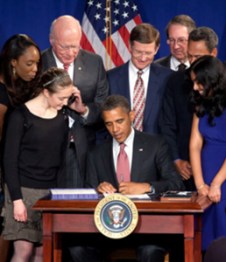
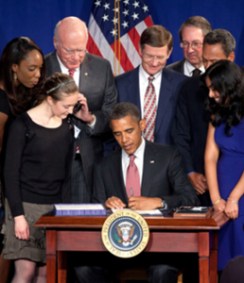
    On Friday, President Obama signed the Leahy-Smith America Invents Act (H.R. 1249) into law.  In a press release issued after the signing, the White House said the legislation would "help American entrepreneurs and businesses bring their inventions to market sooner, creating new businesses and new jobs."  President Obama noted that he was pleased to sign the Act, adding that "[t]his much-needed reform will speed up the patent process so that innovators and entrepreneurs can turn a new invention into a business as quickly as possible."

    USPTO Seal The U.S. Patent and Trademark Office responded to the signing by updating the website the Office recently established to provide information and seek input on the implementation of the Leahy-Smith America Invents Act (AIA).  New information being provided on the website includes a seven-page table of effective dates provided under the AIA.  Among the effective dates listed in the table are:

    • September 16, 2011 — micro-entities established under § 10 of AIA
    • September 26, 2011 — prioritized examination fee of $4,800 established under § 11 of AIA
    • September 26, 2011 — 15% surcharge on all fees charged or authorized under Title 35 imposed under § 11 of AIA
    • November 15, 2011 — additional fee of $400 for non-electronic filing of applications (other than design, plant, or provisional applications) established under § 10 of AIA
    • September 16, 2012 — inventor's oath or declaration provisions under § 4 of AIA take effect
    • September 16, 2012 — third-party submission provisions under § 8 of AIA take effect
    • September 16, 2012 — supplemental examination provisions under § 12 of AIA take effect
    • September 16, 2012 — post-grant review provisions under § 6 of AIA take effect
    • March 16, 2013 — first-inventor-to-file provisions under § 3 of AIA take effect
    • March 16, 2013 — derivation proceedings provisions under § 3 of AIA take effect

    The Office's AIA website also provides the following timeline of major milestones under the legislation:

    Timeline - Major Milestones
    With respect to the 15% surcharge on all fees charged or authorized under Title 35, the Office has posted the new fee schedule that will take effect on September 26, 2011.  The current fee schedule can be found here.

    Finally, the Office's AIA website provides a list of upcoming AIA-related events, which includes an American Conference Institute (ACI) webinar on the AIA by Commissioner Robert Stoll on September 27, 2011 at 1:00 pm (ET).  Registration for the webinar is complimentary; those interested in registering can do so here.

  • Myriad On Friday, the Federal Circuit (presumably) denied Defendants' petition for panel rehearing in Association for Molecular Pathology v. U.S. Patent and Trademark Office.  Unlike the Court's earlier notice regarding denial of Plaintiffs'/Appellees' petition, this notice did not identify the party (but Defendants' petition was the only one pending).  In their petition, counsel for Defendants asserted a single grounds for rehearing, of points of law and fact overlooked or misapprehended by the Court (see "Defendants File Petition for Panel Rehearing").  In particular, Defendants' petition asked the Court to review the standing issue based on their allegation that Dr. Harry Ostrer, the only plaintiff found to have standing, no longer has the capacity for "immediately begin[ning] to perform BRCA 1/2-related genetic testing" upon invalidation of the Myriad patents.  It also asked the Court not to vacate the panel decision even if it found that Plaintiff Dr. Ostrer no longer had standing.

    Either party could now ask the Court to rehear the case en banc, or could file petitions for certiorari with the Supreme Court.  It is likely that the Court will decide the Prometheus Laboratories, Inc. v. Mayo Collaborative Services case before reaching the invalidated method claims in Myriad, but the Court could review the Federal Circuit panel's decision on the composition of matter claims this term.