• By Donald Zuhn

    WIPO Last month, the World Intellectual Property Organization released a report that provides an overview of worldwide intellectual property activity through 2009, the most recent year for which complete data was available.  The 26-page report, entitled "WIPO IP Facts and Figures 2011," covers patents, utility models, trademarks, and industrial designs, compiling IP statistics collected from 90 IP offices around the world.

    While the report indicates that the patent application filings rose by an average of 2.2% annually between 2005 and 2009, the report notes that patent filings fell 3.1% from 2008 to 2009.  In particular, the report shows that worldwide patent filings rose from 1,692,000 in 2005 to 1,908,000 in 2008 before falling to 1,849,000 in 2009.  The news was better with respect to patent grants, as the number of issued patents rose every year between 2005 and 2009, climbing from 632,000 grants in 2005 to 826,000 grants in 2009; patent grants exhibited a 6.9% annual growth between 2005 and 2009, with growth from 2008 to 2009 hitting 6.2%.

    In a comparison of resident and non-resident filings, the report shows that for patent applications, non-resident filings (42.7%) come close to matching resident filings (57.3%).  In contrast, for trademark, industrial design, and utility model applications, the large majority of filings are made by resident applicants.

    A3
    According to the report, the top 10 IP Offices for patent application filings in 2009 were:

    Table
    The report notes that approximately 87% of all patent applications filed in 2009 were filed in the ten Offices listed above, and that approximately 60% of all patent applications were filed in the U.S., Japan, and China.

    The report notes that additional IP data can be found at the WIPO website.

  • By Donald Zuhn

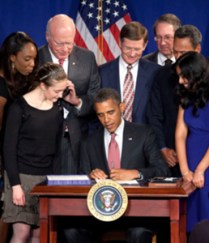
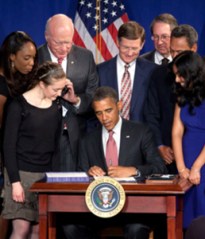
    For the past few weeks, the U.S. Patent and Trademark Office has been busy implementing changes brought about by the Leahy-Smith America Invents Act (see "USPTO Implements AIA Changes to Inter Partes Reexamination"; "USPTO Updates Fee Schedule, But Does Not Yet Offer Micro Entity Discount"; "USPTO Implements Prioritized Examination Track under AIA"; and "President Signs AIA into Law; USPTO Begins Implementation of Act").  Lost in the implementation of these AIA-related changes were two changes unrelated to the AIA.


    USPTO Extends Patent Prosecution Highway Pilot Program with HPO

    HPO Last month, U.S. Patent and Trademark Office Director David Kappos authorized an extension of the Patent Prosecution Highway (PPH) pilot program with the Hungarian Patent Office (HPO) that was begun on July 1, 2010 (see "USPTO Continues to Expand Patent Prosecution Highway").  The PPH pilot permits an applicant having an application whose claims have been allowed in the HPO to fast track the examination of an application in the USPTO, or vice versa, such that the latter application is examined out of turn.  In particular, an applicant receiving a ruling from the USPTO (or the HPO) that at least one claim in an application is patentable may request that the HPO (or USPTO) fast track the examination of corresponding claims in the corresponding application in that office.  According to a notice regarding the extension of the USPTO-HPO PPH, both offices have agreed to continue the pilot program (for an unspecified period of time) in its current state in order to collect more information before any formal decision on the program is made.

    The USPTO has established PPH programs with nineteen Offices.  Currently the USPTO has PPH programs (full or pilot) in place with the Japan Patent Office (JPO), the Korean Intellectual Property Office (KIPO), the United Kingdom Intellectual Property Office (UK IPO), the Canadian Intellectual Property Office (CIPO), IP Australia (IP AU), the European Patent Office (EPO), the Danish Patent and Trademark Office (DKPTO), the Intellectual Property Office of Singapore (IPOS), the German Patent and Trade Mark Office (DPMA), the National Board of Patents and Registration of Finland (NBPR), the Hungarian Patent Office (HPO), the Russian Federal Service for Intellectual Property, Patents and Trademarks (ROSPATENT), the Spanish Patent and Trademark Office (SPTO), the Austrian Patent Office (APO), the Mexican Institute of Industrial Property (IMPI), the Swedish Patent and Registration Office (PRV), Nordic Patent Institute (NPI), and the Israel Patent Office (ILPO), and the Taiwan Intellectual Property Office (TIPO).


    USPTO Eliminates Prior Art Listing on Reexamination Certificates

    USPTO Seal In a pre-OG notice issued last month, the USPTO indicated that it would no longer list prior art documents cited by the patent owner of third parties and considered by the Office, or prior art documents cited by the Office during reexamination proceedings, on reexamination certificates.  The Office states that prior art listings are being eliminated in order to expedite issuance of reexamination certificates, and because electronic listings of the art considered by the Office during reexamination proceedings can be readily identified using the Patent Application Information Retrieval (PAIR) system.  As a result of the above change, the Office will revise M.P.E.P. §§ 2290 and 2690 accordingly.

  • By Kevin E. Noonan

    Generic  Pharmaceutical Association (GPhA) The Generic Pharmaceutical Association (GPhA) released a report last month on the value of generic drugs to the American consumer and economy.  Perhaps surprisingly, among the statistics and policy arguments on cost containment and all the other benefits of generic drugs touted by the Association, the Report contains an argument (contrary to the long-standing position of the Federal Trade Commission and, more recently, the Obama Administration) in favor of "reverse payment" or "pay-for-delay" agreements between branded drug makers and generic entrants to the marketplace.

    The Report states that generic drugs had resulted in $1.031 trillion between January 1999 and December 2010, citing a study conducted by the IMS Institute for Healthcare Informatics and IMS Health.  The rate of savings is reported to be increasing, with $157 billion in savings in 2010 alone and one-third of the savings attributed to "new" medicines — drugs introduced since 2001.  The Report advocates "[p]olicies that encourage generic dispensing" and that "steer clear of unwarranted restrictions on generic use" as a way to "bring even greater savings" particularly with regard to the changes mandated by the health care reform law.  Examples include increasing the use of generic drugs in the Medicaid program by 2% as a way to save an additional $1.3 billion annually, asserting that "studies" show the government "needlessly" spends billions annually prescribing branded rather than generic drugs.

    Cover The Report also advocates for increased funding for the FDA's Office of Generic Drugs (OGD), citing over 2,000 "generic drug applications" awaiting approval (with 365 of these being "first-time" generics).  As a result, "[s]avings are being left on the table each day" from the backlog, since government programs and consumers must pay for brand name drugs in the absence of an approved generic alternative.  The Report also cites the potential for generic drug companies to "provide the FDA with hundreds of millions of dollars in new user fee funding," suggesting a way to pay for more expedited review.

    Regarding the new follow-on biologics ("biosimilars"), the Report characterizes this as "another opportunity to provide consumers and government with enormous savings."  However, "it is critical that the FDA maintains its commitment to funding the biosimilars program" and to develop an approval pathway "free from obstacles" that would delay entry of FDA-approved biosimilars.  The Report states GPhA's position that "the success of generics in achieving savings for consumers using traditional [small molecule] drugs can be duplicated in the biopharmaceutical market."  These range from an estimated $42 billion to $108 billion over ten years, and cites the Congressional Budget Office as estimating that prices for biologic drugs will fall by between 25-40%.  The Report also notes that the Biotechnology Industry Organization (BIO) and the Pharmaceutical Research and Manufacturers' Association (PhRMA) "recognize that competition from biogenerics and biosimilars will significantly reduce health care costs."

    These conclusions are supported by data showing that savings from generic drugs has "continued to grow at an exponential rate," specifically up to $360 billion in 2010.  Generic drugs for treating cardiovascular (27%) and nervous system diseases (35%) represent 62% of the cost savings, and account for less drug spending than branded drugs despite having nearly seven times as many products on the market."  (Significant generic drug contribution to the treatment of other disease states include metabolic diseases (14%, $22 billion in savings), anti-infection drugs (8%) and skeleto-muscular diseases (5%).)  These savings are much greater than initial estimates of saving from generic drugs (which the Report asserts were $1 billion over the first ten years of the Hatch-Waxman regime; instead $8-10 billion in savings were realized between 1984 and 1994, and "[s]ince then, annual savings have grown exponentially.

    The potential for savings is particularly significant for reducing healthcare spending by the Federal government, according to the Report, because there is an approximately ten-fold difference between the average monthly cost for branded drugs (~$200/mo) and the generic version (~$20/mo).  A one percentage point increase in generic drug prescriptions under government healthcare programs would result in $500 million in annual savings, according to the Report's calculations.  Direct-to-consumer costs are also affected, with the Report asserting that "the average co-payment for a generic drug was $6.06 per prescription, compare to $23.65 and $334.77 for preferred and non-preferred brand drugs."

    The Report contains data regarding the drugs that accounted for these savings, identifying "blockbusters" such as Flomax® and Aricept® in 2009 and Zocor®, Norvasc® and Zoloft® between 2005 and 2009.  From 2001 through 2010, the Report ascribes $569 billion in savings from generic drugs it characterizes as "older generics," i.e., drugs with generic versions that were introduced prior to 2000, and $362 billion in savings from "newly genericized products," drugs with generic versions introduced in 2001 and thereafter.  The relative contribution of "newly genericized" drugs is expected to increase dramatically in the next few years, when branded drugs like Zyprexa®, Singulair®, Lipitor®, and Plavix® are expected to lose patent protection with the resulting entry into the marketplace of generic versions; significantly the Report notes that the latter two drugs will lose patent protection "thanks to the use of pro-consumer patent settlements."

    The argument regarding "reverse payment" agreements made in the Report is that the one-third of the annual savings that result from products that entered the marketplace after 2001 implicate such agreements, because "most new generics get to market as the result of a settlement" (16 of 22 new, first-time generics launched in 2011).  The Report also asserts that, over the past 10 years, settlements of patent litigation over generic drugs "has resulted in billions of dollars in savings" due to the generic drugs at issue entering the market before they would otherwise (i.e., "prior to patents expiring on the counterpart brand drugs").  The Report characterizes such settlements as being "pro-consumer" due to the decrease in the time consumers must wait for a generic version of branded drugs involved in patent settlement agreements.  "Over the past 10 years, patent settlements have enabled dozens of first-time generics to come to market many month before patents on the counterpart brand drugs expires," the Report asserts in support of this conclusion, citing the 16 of 22 new generic drugs expected to launch in 2011 that were the result of such settlements.  The Report also cites a study by RBC Capital Markets, which "found that generic companies are successful, [and] thus able to market the generic product before patent expiration, in just 48 percent of cases, and that when factoring in settlements, generics are successful in bringing the generic product to market before patent expiration in 76 percent of cases."  While recognizing (but not acknowledging the identities of "some who contend such generic-brand agreements are non-competitive," the Report declares that "[t]he record is clear: settlements allow generic drugs to come to market long before patents on the counterpart brands expire," and that this results in "billions of dollars in annual savings."

    The Report sets forth its Methodology used to make its estimates, which used data from IMS on brand and generic drug sales and unit volumes to estimate potential savings "at the molecule level."  "Branded drugs were defined as molecules from an innovator for which patent protection had expired, and generic drugs as "those introduced after [] patent protection had expired on the original reference product."  The total savings estimates were produced by considering 4,521 drugs for which both branded and generic versions were on the market.  The study excluded drugs for which there was no generic equivalent on the market and generic drugs for which there was no longer a branded version on the market.

  • By Sherri Oslick

    Gavel About Court Report:  Each week we will report briefly on recently filed biotech and pharma cases.

    Precision BioSciences, Inc. v. Cellectis SA et al.
    5:11-cv-00513; filed September 26, 2011 in the Eastern District of North Carolina

    • Plaintiff:  Precision BioSciences, Inc.
    • Defendants:  Cellectis SA; Cellectis Bioresearch; Cellectis Bioresearch, Inc.

    Infringement of U.S. Patent No. 8,021,867 ("Rationally Designed Meganucleases with Altered Sequence Specificity and DNA-Binding Affinity," issued September 20, 2011") based on Cellectis' manufacture and sale of certain products, including meganucleases targeting the human RAG1 gene, meganucleases targeting the HIV1 genome, and meganucleases targeting the GS gene in Chinese Hamster Ovary cells.  View the complaint here.


    Helsinn Healthcare S.A. et al. v. Dr. Reddy's Laboratories, Ltd. et al.

    3:11-cv-05579; filed September 23, 2011 in the District Court of New Jersey

    • Plaintiffs:  Helsinn Healthcare S.A.; Roche Palo Alto LLC
    • Defendants:  Dr. Reddy's Laboratories, Ltd.; Dr. Reddy's Laboratories, Inc.; Sandoz Inc.; Teva Pharmaceuticals USA, Inc.; Teva Pharmaceutical Industries, Ltd.

    Infringement of U.S. Patent No. 7,960,424 ("Liquid Pharmaceutical Formulations of Palonosetron," issued June 14, 2011 following a Paragraph IV certification as part of defendants filing of an ANDA to manufacture a generic version of Helsinn's Aloxi® (palonosetron hydrochloride intravenous solution, used to prevent chemotherapy induced nausea and vomiting).  View the complaint here.

  • Calendar

    October 3-4, 2011 – Tech Transfer Summit North America*** (Tech Transfer Summit Ltd.) – Bethesda, MD

    October 4-5, 2011 – Maximizing Pharmaceutical Patent Lifecycles*** (ACI) – New York, NY

    October 5, 2011 – Practical Implications: The Impact of the America Invents Act (American Intellectual Property Law Association) – 12:30 – 2:00 pm (Eastern)

    October 5, 2011 – Impact of the New Patent Law: An Overview of the America Invents Act (McDonnell Boehnen Hulbert & Berghoff LLP) – 12:00 – 1:15 pm (CT)

    October 5, 2011 – The America Invents Act: As Good As It Gets? (American Bar Association) – 1:00 – 3:00 pm (EDT)

    October 5-6, 2011 – Biotech Patenting*** (C5) – London, UK

    October 6, 2011 – Patent Reform: PGR & IPR Through a Litigation Lens (Intellectual Property Owners Association) – 2:00 – 3:00 pm (ET)

    October 6, 2011 – Immediate Impacts of Patent Reform: What You Need To Know Now About The America Invents Act (Law Seminars International) – 1:00 pm (ET)

    October 6, 2011 – Therasense: Will the Tide Finally Turn in the Plague of Dubious Inequitable Conduct Claims and Reference Flooding? (Intellectual Property Law Association of Chicago) – 6:00 to 7:00 pm (CT)

    October 11, 2011 – America Invents Act: Patent Reform 2011 (Intellectual Property Law Association of Chicago) – 11:30 am to 1:45 pm (CT)

    October 14, 2011 – Patent Reform: Impact and Strategy for University Research and Tech Transfer (Technology Transfer Tactics) – 1:00 – 5:00 pm (Eastern)

    October 24-26, 2011 – Developing IP Strategies for Crystalline Forms*** (International Quality & Productivity Center) – London, UK

    October 25-26, 2011 – FDA Boot Camp Devices Edition*** (American Conference Institute) – Chicago, IL

    October 25, 2011 – Innovation and Commerce — Global Legal Considerations (U.S. Patent and Trademark Office and Federal Circuit Bar Association) – Tokyo, Japan

    October 26, 2011 – A Discussion with Robert Stoll of the USPTO (Association of Intellectual Property Firms) – 1:00 – 2:00 PM (EDT)

    October 26-27, 2011 – Joint Judicial Conference (U.S. Court of Appeals for the Federal Circuit and Tokyo Intellectual Property High Court) – Tokyo, Japan

    November 9, 2011 – Optimizing Relations with the USPTO: All the Questions You Always Wanted to Ask and Could Never Get Answers For (Association of Intellectual Property Firms) – 12:30 – 1:30 pm (EST)

    November 2-4, 2011 – Biotechnology from the Ground Up (Management Forum and JNB Marketing & Events) – San Diego, CA

    November 30 to December 1, 2011 – Advanced Forum on Biotech Patents*** (American Conference Institute) – Boston, MA

    December 5-7, 2011 – Drug and Medical Device Litigation*** (American Conference Institute) – New York, NY

    December 6-7, 2011 – Paragraph IV Disputes*** (American Conference Institute) – San Francisco, CA

    ***Patent Docs is a media partner of this conference or CLE

  • A number of CLE events addressing the Leahy-Smith America Invents Act have been scheduled for the next few weeks.  These events include:

    AIPLA The American Intellectual Property Law Association (AIPLA) will be offering a web-based program entitled "Practical Implications: The Impact of the America Invents Act" on October 5, 2011 from 12:30 – 2:00 pm (Eastern).  Thomas Irving of Finnegan, Henderson, Farabow, Garrett & Dunner, LLP and Alan Kasper of Sughrue Mion PLLC will explore the Act's substantive provisions, including those implementing one of the most significant and highly publicized changes to U.S. patent law, namely the move from a first-to-invent to a first-inventor-to-file system, as well as provisions regarding new definitions of prior art, third-party challenges to patents and applications, supplemental examination, derivation, and USPTO fees and funding, and many others.

    The registration fee for the program is $145 (AIPLA member rate) or $175 (non-member rate) (information regarding group fee options can be found here).  Those interested in registering for the program, can do so here.

    MBHB Logo 1 McDonnell Boehnen Hulbert & Berghoff LLP will be offering a live webinar on the "Impact of the New Patent Law: An Overview of the America Invents Act" on October 5, 2011 from 12:00 pm to 1:15 pm (CT).  Grantland Drutchas and Patent Docs author Dr. Donald Zuhn will provide an overview of the impact of the new patent law with respect to the following:

    • First-to-file versus first-to-invent;
    • Patent litigation;
    • Patent prosecution;
    • PTO fees, practices and operations;
    • Post-grant review;
    Inter Partes Review;
    • False marking claims; and
    • Expansion of prior user rights.

    While there is no fee to participate, attendees must register in advance.  Those wishing to register can do so here.  CLE credit is being applied for in the states of California, Illinois, New Jersey, and New York.

    ABA The American Bar Association (ABA) will be offering a live audio webcast entitled "The America Invents Act: As Good As It Gets?" on October 5, 2011 from 1:00 to 3:00 PM (EDT).  James Myers and J. Steven Baughman of Ropes & Gray will examine and critique the America Invents Act, including its numerous provisions related to the USPTO.  In particular, the program will address the following topics:

    • Prohibition of joinder of multiple patent infringement defendants;
    • Changing nature of prior art available to challenge patents;
    • Prohibition of most false marking suits;
    • Expansion of the prior user defense;
    • Additions and changes to challenges to patent validity before the USPTO;
    • Elimination of best mode defense;
    • Changes for inequitable conduct allegations; and
    • Prohibition of tax strategy patents.

    The registration fee for the webcast is $199 (for group fee options, please visit the event website).  Those interested in registering for the webinar, can do so here.

    IPO #2 In the first of a series of webinars on the Leahy-Smith America Invents Act, the Intellectual Property Owners Association (IPO) will offer a one-hour presentation entitled "Patent Reform: PGR & IPR Through a Litigation Lens" on October 6, 2011 beginning at 2:00 PM (ET).  The IPO webinar will look at Post Grant Review (PGR) and Inter Partes Review/Reexamination (IPR) and the impact these provisions will have on patent litigation, including how estoppels, stays, and filing deadlines will shape patent litigation strategy.  The panel includes Kevin Rhodes of 3M Innovative Properties Co., Jon Wright of Sterne, Kessler, Goldstein & Fox, PLLC, and Charles Miller of Dickstein Shapiro LLP.

    The registration fee for the webinar is $120 (government and academic rates are available upon request).  Those interested in registering for the webinar can do so here.

    LSI - Law Seminars International - red Law Seminars International (LSI) will be offering a one-hour telebriefing entitled "Immediate Impacts of Patent Reform: What You Need To Know Now About The America Invents Act" on October 6, 2011 beginning at 1:00 pm (ET).  John Vandenberg of Klarquist Sparkman LLP will moderate a panel including Dr. Barbara Rudolph of Finnegan, Henderson, Farabow, Garrett & Dunner, LLP and Joel Meyer, Vice President, Intellectual Property for Digimarc Corp.  The panel will provide practical tips and discuss immediate and near-term strategies for patent prosecution, licensing, litigation and reexaminations in view of the AIA.  Among the topics to be covered are:

    • Filing of inter partes reexaminations and reissue applications;
    • Licensing to qualify for reduced-fee micro entity status;
    • License agreement provisions regarding the new "virtual patent marking" regime and the four types of petitions under the AIA;
    • Strategies for a Fed. R. Civ. P. 20 motion to dismiss/sever;
    • Changing patent search/clearance policies;
    • Revisiting and expanding joint research agreements;
    • Eliminating "prior art" by buying it;
    • New considerations for timing of publicly disclosing inventions;
    • New considerations for filing immediate provisional applications; and
    • New strategies for filing DJ actions.

    A question and answer session of up to 30 minutes will follow the panel discussion.  The registration fee is $125 per caller and $50 for each person on the same line who desires continuing education credit.  Those interested in registering for the telebrief, can do so here.

    IPLAC The Intellectual Property Law Association of Chicago (IPLAC) will offer a lunch briefing on the "America Invents Act: Patent Reform 2011" on October 11, 2011 from 11:30 am to 1:45 pm (CT) at the John Marshall Law School in Chicago, IL.  The program will include presentations on the following topics:

    • Overview of Act and Timeline of Effective Dates — Paul Kitch of Nixon Peabody, LLP
    • Changes to Section 102/103 including First-Inventor-to-File — George Wheeler of McAndrews, Held & Malloy and John S. Paniaguas of Katten Muchin Rosenman LLP
    • Additional Review Provisions (Post Grant Oppositions, Inter Partes Reexam Changes, Supplemental Examination) — Mitch Weinstein of Levenfeld Pearlstein and Robert Polit of McAndrews, Held & Malloy
    • Everything Else — Edward Manzo of Husch Blackwell

    The presentations will be followed by a round table discussion of the AIA.  The registration fee for the program is $25 (IPLAC members), $15 (students), and $35 (all other attendees).  Those interested in registering for the panel discussion, can obtain a registration form here.  Box lunches and beverages will be provided.

  • IPLAC The Intellectual Property Law Association of Chicago (IPLAC) will be offering a panel discussion entitled "Therasense: Will the Tide Finally Turn in the Plague of Dubious Inequitable Conduct Claims and Reference Flooding?" on October 6, 2011 from 6:00 to 7:00 pm (CT) at the offices of Nixon Peabody in Chicago, IL.  The panel discussion will include The Honorable Chief Judge James Holderman of the U.S. District Court for the Northern District of Illinois; Charles Shifley of Banner & Witcoff, who argued IPLAC’s amicus curiae position in the case; Craig Summerfield of Lempia Summerfield Katz; and moderator Janet Pioli of Brinks Hofer Gilson & Lione.  The panel discussion will be preceded by cocktails and hors d'ouevres from 5:30 to 6:00 pm, and will be followed by a reception from 7:00 to 8:00 pm.  The registration fee for the panel discussion is $65.  Those interested in registering for the panel discussion can do so here.

  • By James DeGiulio

    Woodcock, Janet Earlier this year, the U.S. Food and Drug Administration declared that it would release regulatory guidelines for biosimilars by the end of 2011, and since the FDA's announcement, the biotechnology industry has eagerly awaited the agency's insight on gaining approval for biosimilars in a potentially multi-billion dollar U.S. market.  Just last month, the FDA seemed to be a ways off from promulgating guidelines, continuing to struggle with many of the issues involved with these complex biological products.  However, according to a September 22 report by the biotechnology and pharmaceutical industry publication, BioCentury, which interviewed Janet Woodcock (at right), the Director of the FDA Center for Drug Evaluation and Research, the FDA as it turns out recently completed the guidelines.

    FDA In addition, Reuters reported last week that the deputy director of the FDA's Europe office in London, Janice Soreth, told attendees at Windhover's Pharmaceutical Strategic Alliances Conference that the release of the biosimilar guidelines could come "as early as the next few weeks, maybe even days" ("U.S. FDA guidance on biosimilars may be imminent").  Soreth pointed to last month's New England Journal of Medicine article (see "FDA Looks to Multiple Sources, Including EMA Guidelines, in Developing Biosimilar Approval Standards"), written by FDA officials, as an indicator of what the guidance might look like.  Soreth said the FDA has received about two dozen meeting requests for proposed biosimilar products, involving potential versions of nine or ten reference products.  The biosimilars panel included traditional generic drugmakers, such as Novartis' Sandoz division, as well as brand pharmaceutical companies like Pfizer and Merck, suggesting that industry players on both sides of the field will be involved in biosimilars.  Many predict that the industry will see companies abandon their typical roles, switching sides from "brand" to "generic," and vice versa (although the term "generic" should not be used to describe a "biosimilar").

  • By Donald Zuhn

    USPTO Seal The U.S. Patent and Trademark Office continues the process of implementing the many changes to U.S. patent law brought about by the enactment of the Leahy-Smith America Invents Act (AIA) on September 16.  In one of its more recent steps, the Office issued a notice in the Federal Register (76 Fed. Reg. 59055) that revises the standard for granting requests for inter partes reexamination.  In the notice, the Office indicates that the rules of practice regarding inter partes reexamination have been revised to reflect the new standard for granting an inter partes reexamination provided in § 6(c)(3)(A) of the AIA, as well as provide for the termination of inter partes reexamination on September 16, 2012 as provided in § 6(c)(3) of the AIA.

    With regard to the revised standard, the AIA specifies that a request for inter partes reexamination will not be granted unless the information presented in the request shows that there is a reasonable likelihood that the requester will prevail with respect to at least one of the claims challenged in the request.  The old standard for granting a request for inter partes reexamination required that the request raise a substantial new question of patentability (SNQ) affecting any claim of the patent — the same standard for granting an ex parte reexamination request, which remains unchanged by the AIA.  The new standard for inter partes reexamination requests applies to any request that is filed on or after September 16, 2011 (i.e., the date of enactment of the AIA), but before September 16, 2012 (i.e., the effective date of the inter partes review provisions of the AIA).  The notice indicates that a rulemaking regarding inter partes review will be forthcoming.

    In discussing the new reasonable likelihood standard, the Office cites to the report on the AIA by the House Committee on the Judiciary, released June 1, 2011, which states at page 47 that:

    The threshold for initiating an inter partes review is elevated from 'significant new question of patentability' — a standard that currently allows 95% of all requests to be granted –to a standard requiring petitioners to present information showing that their challenge has a reasonable likelihood of success.

    The House report also contained Additional Views presented by Representatives Howard Berman (D-CA), Melvin Watt (D-NC), and Zoe Lofgren (D-CA), in which the legislators noted at page 165 that "the practical meaning of the new [reasonable likelihood] standard in H.R. 1249 is not clear and creates a risk that the PTO will reject legitimate petitions at the outset of the procedure, without further inquiry."

    The Office's Federal Register notice indicates that the old standard will apply for all inter partes reexaminations requested prior to September 16, 2011 (including reexaminations ordered under the old standard and conducted after September 16, 2011), the new standard will apply to reexaminations requested on or after September 16, 2011, but before September 16, 2012 (including reexaminations ordered under the new standard and conducted after September 16, 2012), and that the Office will not grant requests for inter partes reexamination filed on or after September 16, 2012.

  • By Donald Zuhn

    USPTO Seal In anticipation of yesterday's implementation of the 15% surcharge on certain patent fees pursuant to § 11 of the Leahy-Smith America Invents Act, the U.S. Patent and Trademark Office issued a press release and Federal Register notice (76 Fed. Reg. 59115) last week regarding the patent fees changes.  In the Federal Register notice, the Office indicated that a revised fee schedule had been made available (as we noted last week), and that the revised fee schedule included the 15% surcharge, prioritized examination fee, and additional fee for applications not filed electronically that are set forth in the AIA (the latter fee does not take effect until November 15, 2011).  The Office's press release indicates that "[a]t this time the USPTO may not offer the micro entity discount (75%) on any fees."  The Office notes that "these fees will be adjusted under the fee setting authority provided for in Section 10 of the AIA," and that "[o]nce the USPTO sets these new fees, it is anticipated that the new fees will include a 50% reduction for small entities and a 75% reduction for micro entities for 'filing, searching, examining, issuing, appealing, and maintaining patent applications and patents.'"  Thus, applicants should note that while the establishment of micro entities took effect on the date of enactment of the AIA, the 75% reduction in fees afforded to such micro entities must await the Office's fees rulemaking.