• By Donald Zuhn —

    FireworksReflecting upon the events of the past twelve months, Patent Docs presents its fifth annual list of top biotech/pharma patent stories.  For 2011, we identified a dozen stories that were covered on Patent Docs last year that we believe had (or are likely to have) the greatest impact on biotech/pharma patent practitioners and applicants.  Yesterday, we counted down stories #12 to #10, and today we cover stories #9 to #7.  As with our other lists (2010, 2009, 2008, and 2007), links to our coverage of these stories (as well as a few links to articles on related topics) have been provided in case you missed the articles the first time around or wish to go back and have another look.  As always, we love to hear from Patent Docs readers, so if you think we left something off the list or disagree with anything we included, please let us know.


    9.  Legislators and FTC Continue Efforts to Prohibit Pay-for-Delay Deals

    Federal Trade Commission (FTC) SealThe year began with Sen. Herb Kohl (D-WI) introducing a bill that would prohibit brand name drug companies from compensating generic drug companies for delaying the entry of generic drugs into the market, which the Senator has characterized as "backroom" deals constituting "one of the most egregious tactics used to keep generic competitors off the market."  Senator Kohl's bill was voted out of committee in July, but has yet to come to the floor of the Senate for a vote.  In November, Sen. Jeff Bingaman (D-NM) introduced an alternative bill that would eliminate the 180-day exclusivity period for a generic applicant that enters into a "disqualifying agreement" (i.e., a reverse or pay-for-delay agreement).  These legislators found a supporter in President Obama, who proposed a 2012 budget in February that included a proposal providing the Federal Trade Commission with the authority to stop drug companies from entering into anticompetitive agreements intended to block consumer access to safe and effective generics.  In September, the President released his plan for economic growth and deficit reduction that similarly proposed to prohibit pay-for-delay deals.  Meanwhile, the Federal Trade Commission continued its attack on pay-for-delay deals, issuing a report in May that highlights what the agency viewed as an increase of settlements in which a generic company is compensated for staying off the market for longer than would be the case if it won ANDA litigation against the innovator.

    For information regarding this and other related topics, please see:

    • "Senate Bill Creates New Incentive Structure to End Pay-for-Delay Deals," November 21, 2011
    • "The FTC's Thinking Does Not Make It So Regarding Reverse Payment Agreements," October 25, 2011
    • "Generic Pharmaceutical Association Releases Report on Value of Pay-for-Delay Agreements," October 2, 2011
    • "President's Deficit Reduction Plan Seeks to Reduce Exclusivity Period for Biologics and Prohibit Pay-for-Delay Deals," September 21, 2011
    • "Bill Prohibiting Reverse Payments Voted out of Committee," July 25, 2011
    • "Federal Trade Commission Issues Report on Reverse Settlement Agreements in FY2010," May 9, 2011
    • "Supreme Court Refuses to Review Reverse Payments," March 7, 2011
    • "President's Budget Proposal Increases Funding for Basic Research But Seeks to "Trim" Data Exclusivity Period and Pay-for-Delay Agreements," February 21, 2011
    • "Sen. Kohl Introduces Bill to Prohibit Reverse Payments," February 2, 2011


    8.  Legislators Explain & President Seeks to Reduce Data Exclusivity Period

    Obama in Oval OfficeOn the biosimilar front, 2011 kicked off with legislators debating the meaning of the term "exclusivity" in the biosimilars regulatory pathway provisions of the Patient Protection and Affordable Care Act (PPACA).  While legislators debated the meaning of this term, President Obama continued his efforts to shorten the exclusivity period from 12 years as provided under the PPACA to 7 years.  Before signing the PPACA in March 2010, the President pushed hard for a reduction of the 12-year period, and when the President unveiled his 2012 budget in February, it specified that the exclusivity period be reduced to 7 years.  The President's plan for economic growth and deficit reduction, released in September, proposed "modifying the length of exclusivity on brand name biologics" established under the PPACA by "award[ing] brand biologic manufacturers seven years of exclusivity rather than 12 years under current law."  As the year drew to a close, the FDA fell short of its goal to release regulatory guidelines for biosimilars by the end of 2011.

    For information regarding this and other related topics, please see:

    • "If Patents Become Irrelevant in a Biosimilars Future, What About University Patents and Startups?" December 21, 2011
    • "Will Patents Become Irrelevant in a Biosimilars Future?" December 19, 2011
    • "Representatives Oppose President's Attempt to Reduce Data Exclusivity Period," October 17, 2011
    • "FDA Biosimilar Guidelines Complete, Awaiting Publication," September 29, 2011
    • "President's Deficit Reduction Plan Seeks to Reduce Exclusivity Period for Biologics and Prohibit Pay-for-Delay Deals," September 21, 2011
    • "Senators Support Inclusion of 12-Year Exclusivity Period in Free Trade Agreement," September 12, 2011
    • "Legislators Urge President to Include 12-Year Data Exclusivity Period in Free Trade Agreement," August 15, 2011
    • "House Legislators Lobby to Exclude 12-Year Data Exclusivity Period from Free Trade Agreement," August 11, 2011
    • "FDA Looks to Multiple Sources, Including EMA Guidelines, in Developing Biosimilar Approval Standards," August 9, 2011
    • "FDA Officials Hint at Provisions of Biosimilar Guidances," May 24, 2011
    • "FDA Seeks Comment on Biosimilar User Fee Proposal," May 10, 2011
    • "President's Budget Proposal Increases Funding for Basic Research But Seeks to "Trim" Data Exclusivity Period and Pay-for-Delay Agreements," February 21, 2011
    • "Data or Market Exclusivity? (Perhaps) Only Congress Knows for Sure," January 26, 2011
    • "More on Data Exclusivity," January 25, 2011
    • "Senators Let FDA Know Their Intent Regarding Data Exclusivity Provisions of PPACA," January 11, 2011
    • "Representatives Send Letter to FDA to Explain Data Exclusivity Provisions of Biosimilars Legislation," January 9, 2011


    7.  Life Sciences Industry Continues to Feel Impact of Economic Crisis

    NVCAIn 2009, the country suffered through its worst recession since the Great Depression, and in 2010, the life sciences industry (like many other industries) suffered through a very slow recovery from the effects of the recession.  In 2011, the (glacially) slow recovery continued.  While venture funding was up in both the first and second quarters, it declined again in the third quarter.  Patent application filings, which dropped at the height of the recession, were on the rise again.  Hopefully, 2012 will see some recovery in venture funding (despite the less than rosy forecasts) and continued increases in application filings.

    For information regarding this and other related topics, please see: 

    • "USPTO Releases Performance and Accountability Report for FY 2011," November 30, 2011
    • "Life Sciences Venture Funding Drops in Third Quarter," October 27, 2011
    • "AUTM Survey Shows Significant Increases in University Patent Filings and Issuances in FY2010," October 5, 2011
    • "WIPO Releases Report on IP Activity," October 4, 2011
    • "Biotech/Pharma Patent Issuances Increased 39% in 2010," September 13, 2011
    • "Life Sciences Venture Funding up 37% in Second Quarter," August 1, 2011
    • "Docs at BIO: Steve Burrill's State of the Biotechnology Industry Report 2011," July 5, 2011
    • "VentureSource Reports 35% Increase in 1Q Venture Funding," April 26, 2011
    • "Number of Patent Filings in Europe Growing," April 20, 2011
    • "NVCA Reports Modest Gains in First Quarter Venture Funding," April 19, 2011
    • "Inovia Releases Report on Global Patent Trends," March 16, 2011
    • "PCT and EP Filings on the Rise Again," February 17, 2011
    • "The Nexus between Biotechnology and Economic Recovery," January 24, 2011

  • By Donald Zuhn —

    FireworksReflecting upon the events of the past twelve months, Patent Docs presents its fifth annual list of top biotech/pharma patent stories.  For 2011, we identified a dozen stories that were covered on Patent Docs last year that we believe had (or are likely to have) the greatest impact on biotech/pharma patent practitioners and applicants.  Today, we count down stories #12 to #10, and then throughout the week, we will work our way towards the top three stories of 2011.  As with our other lists (2010, 2009, 2008, and 2007), links to our coverage of these stories (as well as a few links to articles on related topics) have been provided in case you missed the articles the first time around or wish to go back and have another look.  As always, we love to hear from Patent Docs readers, so if you think we left something off the list or disagree with anything we included, please let us know.


    12.  Europe Seeks Unified Patent System

    European Union (EU) FlagIn February, the European Parliament approved a request to use "enhanced cooperation" to launch a reform of the European patent system.  At the time, it seemed to be the last major hurdle to reaching agreement on a unified patent system and court in Europe.  By April, this view appeared to have been too optimistic, as the European Court of Justice ruled that a separate European patent court would violate EU law by taking powers away from courts in EU countries.  Despite the adverse ruling on a unified patent court, the European Commission moved ahead with its plans to create a unified EU patent.

    For information regarding this and other related topics, please see:

    • "European Patent Reform Suffers Another Setback," April 27, 2011
    • "European Parliament Approves Enhanced Cooperation Procedure to Create Unified EP Patent System," March 1, 2011


    11.  FDA Drug Approvals at Decade High (Almost)

    FDATrying to counter some of its critics, the U.S. Food and Drug Administration announced in November that the agency approved 35 new drugs in FY 2011, which, with the exception of 2009 when 37 new drugs were approved, constituted the most approvals in the past decade.  Criticism of the FDA has centered around the agency's tougher safety standards, which some argue have slowed down the pace of drug approvals and have hurt the drug industry.  Despite the increase in drug approvals, a Health Affairs paper (published in November 2010, but discussed here in January 2011) contends that extending "data exclusivity" for conventional "small molecule" drugs from the present 5 years under the Hatch-Waxman Act to 12 years (the term given biologic drugs under the Affordable Care Act of 2010) would provide a net benefit in new drugs and increased longevity.

    For information regarding this and other related topics, please see:

    • "FDA Approves 35 New Drugs in FY 2011," November 20, 2011
    • "FDA Drug Approvals for 2011 on Pace to Surpass 2010 Despite New Safety Standards," July 13, 2011
    • "Authorized Generics Again under Fire in Senate Bill," February 23, 2011
    • "Academic Study Supports Longer Data Exclusivity Term for Conventional Drugs," January 17, 2011


    10.  Deficit Debate Delays USPTO Plans

    USPTO SealDuring the first few months of the year, the U.S. Patent and Trademark Office announced a number of new initiatives aimed at decreasing application pendency and increasing examination quality.  However, by April the USPTO announced that the programs, including both Track I examination and the Detroit satellite office, were being put on hold due to budgetary constraints following enactment of the budget for FY 2011 on April 15.  The good news is that several of the initiatives that were delayed last spring were part of the Leahy-Smith America Invents Act (a story for another day).  Of course, securing appropriate funding to implement the new programs will be an entirely different matter (despite Congress' promises to the contrary).  Despite the ups and downs of 2011, the USPTO was able to close the year on a good note when it announced that the number of unexamined patent applications had been reduced to 669,625, which constituted a five-year low.

    For information regarding this and other related topics, please see:

    • "U.S. Application Backlog Falls to Five-Year Low," October 24, 2011
    • "USPTO Publishes Notice Regarding Prioritized (Track I) Examination Delay," May 1, 2011
    • "USPTO News Briefs," April 27, 2011
    • "USPTO Satellite Offices on Hold," April 25, 2011
    • "USPTO News Briefs," April 21, 2011
    • "USPTO to Launch Prioritized Examination on May 4th," April 10, 2011
    • "USPTO Provides More Details Regarding "Three Track" Examination Proposal," February 7, 2011

  • By Sherri Oslick —

    Gavel About Court Report:  Each week we will report briefly on recently filed biotech and pharma cases.

    Synbias Pharma v. Solux Corp.
    3:11-cv-03035; filed December 29, 2011 in the Southern District of California

    Declaratory judgment of non-infringement, invalidity, and unenforceability of U.S. Patent Nos. 7,485,707 ("Thermally Stable Crystalline Epirubicin Hydrochloride and Method of Making The Same," issued February 3, 2009), 7,388,083 ("Epimerization of 4'-C Bond and Modification of 14-CH3-(CO)-Fragment in Anthracyclin Antibiotics," issued June 17, 2008) and 7,053,191 ("Method of Preparing 4-R-Substituted 4-Demethoxydaunorubicin," issued May 30, 2006) relating to Synbias' manufacture and sale of epirubicin hydrochloride and idarubicin hydrochloride (anthracycline antibiotics, used in cancer chemotherapy).  View the complaint here.


    Merck Frosst Canada & Co. et al. v. Mylan Pharmaceuticals Inc.

    3:11-cv-07569; filed December 29, 2011 in the District Court of New Jersey

    • Plaintiffs:  Merck Frosst Canada & Co.; Merck Canada Inc.; Merck Sharp & Dohme Pharmaceuticals
    • Defendant:  Mylan Pharmaceuticals Inc.

    Infringement of U.S. Patent No. 8,007,830 ("Granule Formation," issued August 30, 2011) following a Paragraph IV certification as part of Mylan's filing of an ANDA to manufacture a generic version of Merck's Singulair® (montelukast sodium, used to treat asthma and allergic rhinitis).  View the complaint here.


    Fidopharm Inc. v. Merial Ltd.

    1:11-cv-01285; filed December 27, 2011 in the District Court of Delaware

    Declaratory judgment of non-infringement and invalidity of U.S. Patent No. 6,096,329 ("Insecticidal Combination to Control Mammal Fleas, in Particular Fleas on Cats and Dogs," issued August 1, 2000) based on Plaintiffs' anticipated sale of its new fipronil-based animal health products.  View the complaint here.


    GlaxoSmithKline Intellectual Property Management Ltd. et al. v. Sandoz Inc.

    1:11-cv-01284; filed December 23, 2011 in the District Court of Delaware

    • Plaintiffs:  GlaxoSmithKline LLC; GlaxoSmithKline Intellectual Property Management Ltd.
    • Defendant:  Sandoz Inc.

    Infringement of U.S. Patent Nos. 6,858,596 ("Formulation Containing Anti-Inflammatory Androstane Derivative," issued February 22, 2005), 7,101,866 ("Anti-Inflammatory Androstane Derivative," issued September 5, 2006), and 7,541,350 (("Formulation Containing Anti-Inflammatory Androstane Derivative," issued June 2, 2009) following a Paragraph IV certification as part of Sandoz's filing of an ANDA to manufacture a generic version of GSK's Veramyst® (fluticasone furoate nasal spray, used to treat allergic rhinitis and perennial nonallergic rhinitis).  View the complaint here.


    Genentech, Inc. v. Regeneron Pharmaceuticals, Inc. et al.

    7:11-cv-09463; filed December 23, 2011 in the Southern District of New York

    • Plaintiff:  Genentech, Inc.
    • Defendants:  Regeneron Pharmaceuticals, Inc.; Sanofi-Aventis U.S. LLC; Sanofi-Aventis U.S. Inc.; Sanofi-Aventis Amerique Du Nord S.N.C.; Sanofi

    Infringement of U.S. Patent Nos. 6,100,071 ("Receptors as Novel Inhibitors of Vascular Endothelial Growth Factor Activity and Processes for Their Production," issued August 8, 2000), 6,383,486 ("Inhibitors of Vascular Endothelial Growth Factor Activity, Their Uses and Processes for Their Production," issued May 7, 2002), 6,897,294 (same title, issued May 24, 2005), and 7,771,721 ("Methods for Using Chimeric Vascular Endothelial Growth Factor Receptor Proteins," issued August 10, 2010) based on Regeneron's manufacture, use, and intended sale of, and filing of a Biologics License Application for, its Zaltrap® product (aflibercept, used to treat cancer).  View the complaint here.


    Santarus, Inc. et al. v. Zydus Pharmaceuticals (USA) Inc.

    3:11-cv-07441; filed December 21, 2011 in the District Court of New Jersey

    • Plaintiffs:  Santarus, Inc.; The Curators of the University of Missouri
    • Defendant:  Zydus Pharmaceuticals (USA) Inc.

    Infringement of U.S. Patent Nos. 6,699,885 ("Substituted Benzimidazole Dosage Forms and Methods of Using Same," issued March 2, 2004), 6,489,346 (same title, issued December 3, 2002), 6,645,988 (same title, issue November 11, 2003), and 7,399,772 (same title, issued July 15, 2008) following a Paragraph IV certification as part of Zydus' filing of an ANDA to manufacture a generic version of Santarus' Zegerid® (omeprazole/sodium bicarbonate, used to treat heartburn and other symptoms associated with gastroesophageal reflux disease).  View the complaint here.

  • Calendar

    January 4-8, 2012 – 29th Annual National CLE Conference (Law Education Institute) – Snowmass, CO

    January 25-26, 2012 – Biosimilars Forum 2012 (C5) – London, UK

    January 26, 2012 – Life Under AIA: Anticipating and Surviving Post Grant Challenges (Technology Transfer Tactics) – 1:00 – 2:00 pm (Eastern)

    January 31, 2012 – Obviousness Standard for Patents: Approaches to Withstand USPTO Obviousness Rejections and Attacks on Patent Validity (Strafford) – 1:00 – 2:30 pm (EST)

    January 31 – February 1, 2012 – Patent Reform for Life Sciences Companies*** (American Conference Institute) – New York, NY

    January 31 – February 1, 2012 – Pharma & Biotech Patent Litigation (C5) – Amsterdam, The Netherlands

    February 13-14, 2012 – China IP Counsel Forum (C5) – Shanghai, China

    February 21-22, 2012 – Biotech & Pharmaceutical Patenting (IBC Legal) – Munich, Germany

    February 22-23, 2012 – EU Pharma Law & Regulation*** (C5) – London, England

    February 22-24, 2012 – Intensive Patent Law Training Seminar (Chisum Patent Academy) – New York, NY

    February 27-29, 2012 – Life Sciences Collaborative Agreements and Acquisitions*** (American Conference Institute) – New York, NY

    February 28-29, 2012 – Medical Device Patents*** (American Conference Institute) – Boston, MA

    March 14-15, 2012 – Biotech Patenting (C5) – Munich, Germany

    ***Patent Docs is a media partner of this conference or CLE

  • Munich, GermanyC5 (UK) will be holding its 22nd Forum on Biotech Patenting on March 14-15, 2012 in Munich, Germany.  Experienced in-house counsel and their European and U.S. expert legal advisors will provide information on the latest developments and challenges in biotech patenting such as:

    • G2/10 decision: Analyzing its impact on the biotech disclaimer practice across Europe;
    • Patentability of gene sequence patents: Evaluate recent decisions and developments in Europe and the U.S., including the outcome of Lilly v HGS in the UK Supreme Court and EPO and an update on the Myriad, Prometheus, and Classen cases;
    • Latest decisions on patentability of stem cells: Examining the outcome of the recent CJEU decision in Brüstle;
    • New patenting and marketing strategies to overcome the challenges of filing SPC applications at an earlier stage;
    • Cross-border litigation: Developing successful strategies;
    • U.S. Patent Law reform: Discussing the impact of the America Invents Act on European biotech companies; and
    • Case law developments in double patenting from a European and U.S. perspective.

    BrochureIn particular, C5 faculty will offer presentations on the following topics:

    • Determining how the G2/10 decision will change biotech disclaimer practice across Europe;
    • Examining the patentability of stem cell derived inventions in Europe;
    • Recent developments on biotech products and patent considerations for bio-deposits;
    • Managing patents for biosimilar products and understanding the Bolar provisions in Europe;
    • Tackling diagnostic methods and personalised medicines;
    • Process patents and new technologies: Protection of the immediate product of the process;
    • Strategies for successful cross-border litigation;
    • Thinking ahead: How will your strategies need to change in light of the new initiatives and reforms of EU and U.S. patent laws;
    • Patentability of gene sequence patents in Europe and the U.S.;
    • Examining case law developments in double patenting;
    • To divide, or not to divide, that is the question — Unity of invention and divisional applications;
    • Adopting new patenting and marketing strategies to overcome the challenges of filing your SPC applications at an earlier stage;
    • Dosage regimes: A therapeutic method?
    • Understanding the "person skilled in the art" concept when litigating patents;
    • Reviewing recent case law developments regarding reverse payment settlements;
    • The current stance on nanotechnology for medical devices in Europe; and
    • Latest biotech patenting regulatory changes and developments in India.

    A focus day entitled "The US Patent Reform for Life Science Companies" will also be offered on March 13, 2012.  The focus day will offer presentations on the following topics:

    • Impact of the new patent law: An overview of the America Invents Act (AIA);
    • Analyzing the new "first-to-file" system and "grace period" and its impact on the life science industry;
    • Post-grant review proceedings: Identifying opportunities and risks;
    • Identifying changes in USPTO practice — keynote address by Jasemine Chambers, Ph.D., Deputy Administrator for Policy and External Affairs for the U.S. Patent and Trademark Office;
    • Identifying the potential impact of the AIA on litigation of patent cases in U.S. courts;
    • Contrasting the U.S. and the European patent system: Are the opposition procedures proposed in the America Invents Act competitive?
    • Discussing potential challenges and opportunities for European life science companies.

    An additional post-conference workshop, entitled "Strategies for Claiming Commercial Products in your Biotech Patent Applications," will be held from 9:00 am to 12:30 pm on March 16, 2012.

    The agenda for the Biotech Patenting conference can be found here and for the focus day here.  A complete brochure for this conference, including an agenda, description of the sessions, list of speakers, and registration form can be downloaded here.

    C5The registration fee for the conference is €1799, for the conference and workshop €2299, for the conference and focus day €2599, for the conference, focus day, and workshop €2797, and for the focus day alone €1099.  Those registering by February 17, 2012, will receive a €100 discount.  Those interested in registering for the conference can do so here, by calling +44 (0) 20 7878 6888, by faxing a registration form to +44 (0) 20 7878 6885, or by e-mailing registrations@C5-Online.com.

  • Intellectual Property called a "Priority Issue"

    By Kevin E. Noonan —

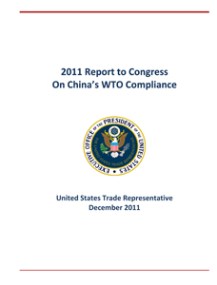
    CoverThe U.S. Trade Representative (USTR) issued a Report on the extent to which China is in compliance with its obligations under the TRIPS provisions of the General Agreement on Tariffs and Trade (GATT), as required for membership in the World Trade Organization (WTO).  The Report acknowledges that China has "put in place a framework of laws and regulations aimed at protecting the intellectual property rights of domestic and foreign right holders" in compliance with its obligations under TRIPS.  However, the report maintains that "some critical changes to China's legal framework are still needed in a few areas, such as further improvement of China's measures for copyright protection on the Internet, and correction of continuing deficiencies in China's criminal IPR enforcement measures."  And enforcement of intellectual property rights remains a "challenge" despite "repeated antipiracy campaigns."  The Report asserts that counterfeiting activities and piracy remain at "unacceptable high levels," harming U.S. interests and businesses.  In this regard, this Report cites the USTR study from last May that estimated a total of $48 billion lost in sales, license fees, and royalties in 2009 alone stemming from Chinese piracy, noting that this is more than 2/3rds (almost 70%) of the total ($69 billion) of goods exported from the U.S. to China in that year.

    The Report also references China's status in the USTR's Special 301 Report, issued earlier this year, that placed China on the Priority Watch List as well as its status as a "Notorious Market" in both virtual (Internet) and physical goods.  Attesting to the efficacy of U.S. efforts in "encouraging" TRIPS compliance, this Report cites the "precedent-setting" licensing agreement between the website Baidu and foreign rights holders regarding music downloads.  The Report also notes that China itself has an incentive for improving enforcement on intellectual property rights, in view of official government efforts at developing innovative technologies.  These incentives were also cited with regard to bilateral "discussions" between the various U.S. agencies and the Chinese government that resulted in "progress" albeit with "much more work remain[ing] to be done."  In addition to such efforts at persuasion, the Report sets forth use of the U.S.-China Joint Commission on Commerce and Trade (JCCT) process to make permanent establishment of a "high level central government [IPR] enforcement structure" at the Vice-Premier level; this initiative includes "increased resources for software audits and inspections" and "further actions to improve the scope, efficiency and accuracy of this work.  U.S. efforts included discussions between President Obama and Chinese President Hu during a state visit in January 2011.  Future prospects include both negotiated agreements and enforcement activities under the auspices of the World Trade Organization and the TRIPS agreement.

    In a more detailed section of the Report, the USTR details both the efforts China has taken to reform its intellectual property laws and the continuing difficulties encountered in enforcement of those rights by both foreign and domestic rights holders.  Citing "little success " in these efforts, the Report states that there continues to be "widespread counterfeiting, piracy and other forms of infringement."  Specific weaknesses in China's IPR protections cited in the Report include "underutilization of deterrent criminal remedies" that creates a "safe harbor" for infringers.  (Alternatively, this complaint may simply illustrate cultural differences between Western practices of using the legal system to enforce rights versus traditional Chinese concepts that emphasize social (not necessarily socialist) solutions to such problems.)  On the other hand, as the Report notes the U.S. obtained a favorable ruling from a WTO panel in 2009 on two of three claims regarding "WTO-inconsistent China's denial of copyright protection to works that do not meet China's content review standards as well as China's handling of border enforcement seizures of counterfeit goods," resulting in changes to Chinese practices that brought the regime into compliance with the relevant TRIPS provisions.  Theatrical releases continue to be an area where Chinese law is not compliant according to the Report, and these issues are the subject of current discussions.

    Regarding the JCCT, the U.S. sought to get China to agree to "(1) increase prosecutions of IPR violators, (2) improve enforcement at the border, (3) counter piracy of movies, audio visual products and software, (4) address Internet-related infringement, (5) ensure that all levels of China's government and Chinese enterprises use only legally authorized software and (6) assist small and medium-sized U.S. companies experiencing China-related IPR problems, among other things."  While some of these goals have been addressed, the Report states that others remain unfulfilled.

    While the majority of the Report is focused on copyright issues and Internet and "real" goods counterfeiting, one section notes that the U.S. also has concerns over patent rights in the pharmaceutical area.  Specifically, the Report states that U.S. trade negotiators have urged China to "provide more effective protection against unfair commercial use for undisclosed information, test data and other data generated to obtain marketing approval for pharmaceutical products" and to "provide an effective system to expeditiously address patent issues in connection with applications to market pharmaceutical products," as well as addressing delays in regulatory approval for pharmaceuticals that create incentives for counterfeiting.

    Finally, despite Chinese efforts acknowledged and detailed in the Report, it characterizes IPR infringement as a "serious problem" and states that IPR enforcement has "not been achieved" in China, detailing these statements with examples of difficulties encountered in enforcing intellectual property rights in China.  Chief among the impediments to enforcing IPR in China enumerated in the Report are "lack of coordination among Chinese government ministries and agencies, lack of training, resource constraints, lack of transparency in the enforcement process and its outcomes, and local protectionism and corruption."  These deficiencies affect seemingly all areas of technology and IPR-based industries' specifically noted are "films, music and sound recordings, publishing, business and entertainment software, pharmaceuticals, chemicals, information technology, apparel, athletic footwear, textile fabrics and floor coverings, consumer goods, food and beverages, electrical equipment, automotive parts and industrial products."  Levels of piracy of copyrighted products (except, oddly, business software) are estimated to be 90-95% of all sales; business software piracy rates were only estimated to be 80%.  Efforts to stem this piracy are characterized in the Report as having only "modest success."  (And piracy extends even to use by the Chinese government as well as state-owned and state-invested industries, according to the Report.)  These statistics are troubling in view of the extensive commitment the Report described by the Chinese government to reduce counterfeiting and IPR infringement, especially in view of estimates in the Report that such activities cost China's domestic economy $3.2 billion in 2002, an amount that should be much higher in view of the last decade's increase in China's domestic economy.

    This section of the Report is perhaps the most relevant to Western companies dependent on IPR to protect their products, particularly in answering the question of whether pursuing intellectual property rights in China is cost effective and likely to provide sufficient protection to warrant the time, effort and expense of obtaining such rights.

  • By Kevin E. Noonan —

    Biosearch TechnologiesThe Federal Circuit's exclusive jurisdiction includes all questions "arising under" the patent laws of the U.S. (among other things).  For all other issues the Court applies the law of the circuit in which the action was brought.  This practice results in the Court deferring to (and applying the law as developed under) principles "arising under" the application of the law to everything other than U.S. patent law.  Often (and perhaps most of the time) this has little effect.  Occasionally, however, this practice does raise the question of whether the Court's application of particular circuit law in the context of patent litigation is appropriate, and whether the law can be (or should be) applied so readily to patent issues.

    These questions are raised by the latest application of the law of forum selection and the role of forum non conveniens principles in deciding the best situs of patent litigation, in In re Biosearch Technologies, Inc.  This question is a little curious, since one of the principal motivations for establishing the Federal Circuit in 1982 was to provide sufficient harmonization of U.S. patent law that so-called "forum shopping" was discouraged to the point of elimination (on the theory that different fora would not matter if the Federal Circuit mandated uniform application of the law in all districts).  However, the penchant for patent litigants (primarily plaintiffs) to file suit in the Eastern District of Texas in Marshall, coupled by the perception that that court was "pro-patent," has raised the profile of this issue significantly (including, inter alia, being the basis of successful attempts to prevent "inappropriate" forum selection by legislation; see the Leahy-Smith America Invents Act).

    The Federal Circuit has addressed this issue, in In re TS Technologies (Fed. Cir. 2008), where the Court applied the 5th Circuit Court of Appeals decision in In re VW to provide the standard for granting petitions to transfer patent litigation from the Marshall courthouse.  The VW case established several factors considered by the 5th Circuit in deciding forum non conveniens questions, including the plaintiff's choice (which the Court cautioned should not be given "inordinate" weight), distance from the defendant's "home," the location of the physical evidence and witnesses and whether the chosen forum was more than 100 miles away from the location of the physical evidence and witnesses (thus impacting the Court's subpoena jurisdiction over both) and the public interest (particularly with regard to the public's interest in having "local" issues decided locally).  The Court's application of these factors varies from case to case, of course, but in applying 5th Circuit precedent on the question it is well to consider the circumstances behind the 5th Circuit court's VW decision.  The facts provide the relevant information regarding the issues considered by the 5th Circuit:

    On the morning of May 21, 2005, a Volkswagen Golf automobile traveling on a freeway in Dallas, Texas, was struck from behind and propelled rear-first into a flat-bed trailer parked on the shoulder of the freeway.  Ruth Singleton was driving the Volkswagen Golf.  Richard Singleton was a passenger.  And Mariana Singleton, Richard and Ruth Singleton's seven-year-old granddaughter, was also a passenger.  Richard Singleton was seriously injured in the accident.  Mariana Singleton was also seriously injured in the accident, and she later died as a result of her injuries.

    [T]he Volkswagen Golf was purchased in Dallas County, Texas; the accident occurred on a freeway in Dallas, Texas; Dallas residents witnessed the accident; Dallas police and paramedics responded and took action; a Dallas doctor performed the autopsy; the third-party defendant lives in Dallas County, Texas; none of the plaintiffs live in the Marshall Division; no known party or non-party witness lives in the Marshall Division; no known source of proof is located in the Marshall Division; and none of the facts giving rise to this suit occurred in the Marshall Division.  These facts are undisputed.

    With this in mind, the following are the circumstances before the Federal Circuit in the Biosearch Technologies case.  Applied Biosystems LLC and Life Technologies Corp. brought suit for patent infringement against Biosearch Technologies, Inc., Eurofins MWG Operon Inc., Midlands Certified Reagent Company, Inc. and Bio-Synthesis, Inc. in the Eastern District of Texas, Marshall Division.  Defendants moved to transfer the case to the Northern District of California on the grounds inter alia that "a substantial number of witnesses and documents" are located with the jurisdiction of the California court.  In denying the petition, the magistrate judge noted that all of defendant Bio-Synthesis's evidence was located in the Eastern District of Texas, and that while plaintiffs' evidence was located in "Austin, Texas, California, Maryland and New York," and that Eurofin was located in Alabama, the Eastern District of Texas was "convenient" to the parties as being a "proper central location" for the suit.  The one factor in favor of transfer noted by the magistrate judge was that certain third party witnesses were located in California and thus the parties would not have access to compulsory process if the suit remained in the Texas court.  However, the magistrate judge balanced this inconvenience against the additional costs that would be incurred "due to the number of Bio-Synthesis witnesses in Texas" and increased travel costs for other witnesses if the action was transferred to California.  The District Court upheld the magistrate's denial of defendants' transfer motion.

    Federal Circuit SealIn granting the requested writ of mandamus transferring the case to the Northern District of California, the Federal Circuit (in an order by Judge Linn, joined by Judge Newman and Judge Reyna) acknowledged both the "case-specific" nature of the transfer question as well as the principle that such a motion should not be granted unless the reviewing court determines that there was a "clear abuse of discretion or usurpation of judicial power" by the district court.  The panel discerned that the 5th Circuit recognized "public" and "private" considerations or interest factors; the private factors including "(1) the relative ease of access to sources of proof; (2) the availability of compulsory process to secure the attendance of witnesses; (3) the cost of attendance for willing witnesses; and (4) all other practical problems that make a trial easy, expeditious and inexpensive," citing In re TS Technologies, 551 F.3d 1315, 1319 (Fed. Cir. 2008); while the "public interest" factors include "(1) the administrative difficulties flowing from court congestion; (2) the local interest in having localized interests decided at home; (3) the familiarity of the forum with the law that will govern the case; and (4) the avoidance of unnecessary problems with conflicts of laws [or in] the application of foreign law."

    The Court noted the following "factors" it considered relevant to its decision to grant the writ:  that both plaintiffs are located in California and one in Northern California, as was defendant Biosearch Technologies, Inc., which locale provides a "strong interest" for courts in that venue to try the case as well as suggesting that Northern California would be "convenient with regard to the location of likely sources of evidence."  With regard to the latter factor, the panel noted the District Court identified "19 potential witnesses" who were located in Northern California (presumably within the subpoena power of that court), and that having to travel to Texas for trial would "likely incur significant expenses" which would be "significantly minimized or avoided" by transfer.  The order also cited that the "large number of witnesses" residing in the "transferee" forum "may be expected to be invaluable in the event process is required to hale the relevant witnesses into court."  In contrast, the only defendant having a significant presence within the jurisdiction of the Texas court, Bio-Synthesis Inc., had entered an agreement with plaintiffs that limited its discovery requests (this portion of the agreement contained a reciprocal limitation on discovery from plaintiffs directed at Bio-Synthesis) and waived its right to challenge the validity of the patents-in-suit.  This agreement, and "Bio-Synthesis's behavior" (such as "failing even to participate in the claim construction proceedings that are so critical to the outcome of the infringement determinations") convinced the Court that Bio-Synthesis (and their witnesses) would be unlikely to have sufficient impact on the case and should not be awarded "significant weight" in deciding the transfer petition.

    The Court was also convinced that this was another case where "an invention [that] has no connection with Texas" was before it and that this case should be decided accordingly (i.e., by granting the transfer motion); earlier cases cited in support of this view included In re Genentech, Inc., 566 F.3d 1338 (Fed. Cir. 2009), In re Nintendo Co., 589 F.3d 1194 (Fed. Cir. 2009), and In re Hoffman-La Roche Inc., 587 F.3d 1333 (Fed. Cir. 2009).  Finding that the facts in the pending case were "as compelling" for transfer as the facts supporting its earlier precedent, the Court granted the motion to transfer.

    While this outcome is not surprising in view of the Court's precedent, it is notable that many of the witnesses whose availability vel non and who would incur greater cost burdens were plaintiff's witnesses and evidence.  The plaintiff's choice of venue thus would seem to preclude the need to use the Court's compulsory subpoena power to produce these witnesses or this evidence.  Insofar as the presence of defendants' witnesses or evidence are outside the forum, any difficulties in obtaining such evidence during discovery or by deposition (including under Rule 45) are inconveniences to be borne by plaintiffs, who opposed the motion to transfer.  Thus, in applying the factors identified by the 5th Circuit in the VW case the Court appears to be applying these factors without regard to the positions of the parties and where the inconvenience would lie.  Such an approach may be relevant under the public interest prong of the VW test, but that is where the circumstances behind the rule become important considerations.  It is evident that the public interest is important, and may be paramount, in a case like VW involving public safety and products' liability, with regard to sales of products accused of being defective and hence dangerous.  There may be cases where related considerations are important in patent litigation, for example, where a patent-in-suit may protect an industry having a significant economic impact within the court's jurisdiction.  But in Biosearch there are no such public interest concerns, and the arguments on convenience are apparently not availing as to the inconvenience to the party proffering the motion in contrast to the inconvenience to the party opposing the motion.

    It is difficult to adduce general rules in cases where the decision is based on particular factual circumstances that will be different and have different nuances in each case to be decided.  But the Court might consider that its establishment has not eliminated all benefits associated with forum shopping, and that decisions may be better made with a more skeptical view regarding the motivations behind parties requesting transfer of cases for convenience rather than jurisdictional deficiencies.  After all, gamesmanship over venue can be used as effectively to gain a litigation advantage now as forum shopping did previously, and recognition of its own mandate should motivate the Court to minimize instances where it permits these practices to occur.

    In re Biosearch Technologies, Inc. (Fed. Cir. 2011)
    Nonprecedential order
    Panel: Circuit Judges Newman, Linn, and Reyna
    Order by Circuit Judge Linn

  • By Donald Zuhn —

    USPTO Declines to Extend Patent Application Backlog Reduction Stimulus Plan

    USPTO SealIn a Federal Register notice published earlier this month (76 Fed. Reg. 77979), the U.S. Patent and Trademark Office announced that it had decided not to extend the Patent Application Backlog Reduction Stimulus Plan, which was implemented in November 2009 (see "USPTO Implements Patent Application Backlog Reduction Stimulus Plan").  Under the plan, an applicant would be able to have an application accorded special status for examination after expressly abandoning another copending unexamined application.  In explaining its decision not to extend the program, the Office stated that the "plan has fulfilled its purpose."  While the notice provided no data on the number of applications that were abandoned under the program, the Office stated that "[f]ilings under this plan reached a peak in late 2010 and have since steadily decreased."


    USPTO Begins Delivery of Search Results to EPO

    EPOOn Thursday, the U.S. Patent and Trademark Office announced that it had begun providing the European Patent Office with search results for all publicly available U.S. patent applications.  According to the USPTO, the delivery of search results is intended to assist applicants filing in the EPO to comply with amended Rule 141(1) of the EPO’s implementing regulations to the European Patent Convention (EPC).  The amended rule, which took effect on January 1, 2011 and applies to all European patent applications filed after that date, requires applicants to file a copy of search results from a patent application to which the European patent application claims priority.  The Office noted that it would also deliver search results for unpublished U.S. patent applications to the EPO provided that the U.S. patent application has cleared national security review and the applicant has submitted Form PTO/SB/69 (note: practitioners who attempt to access this form directly from the USPTO Forms page will find that the link for this form is broken; the link above, however, functions properly).  The USPTO has not instituted a fee for delivery of search results to the EPO.


    USPTO Adds Two New ePetitions

    EFS-WebLast week, the U.S. Patent and Trademark Office announced in a Patents Alert e-mail that beta versions of two new ePetitions had been made available via the EFS-Web.  The new ePetitions are a Petition for Revival of an Abandoned Patent Application Abandoned Unintentionally (37 CFR 1.137(b)) (For Cases Abandoned After 1st Action and Prior to Notice of Allowance) and a Petition to Correct Assignee After Payment of Issue Fee (37 CFR 3.81(b)).  The new additions bring the total of ePetitions to ten.  For more information regarding ePetitions, practitioners should consult the Office's ePetitions Resource Page.

  • By Sherri Oslick —

    Gavel About Court Report:  Each week we will report briefly on recently filed biotech and pharma cases.

    Allergan Inc. v. Akorn Inc. et al.
    1:11-cv-01270; filed December 21, 2011 in the District Court of Delaware

    • Plaintiff:  Allergan Inc.
    • Defendants:  Akorn Inc.; Akorn Ophthalmics Inc.

    Infringement of U.S. Patent No. 7,842,714 ("Ketorolac Tromethamine Compositions for Treating Ocular Pain," issued November 30, 2010) following a Paragraph IV certification as part of Akorn's filing of an ANDA to manufacture a generic version of Allergan's Acuvail® (ketorolac tromethamine ophthalmic solution, used to treat pain and inflammation following cataract surgery).  View the complaint here.


    MSD Consumer Products, Inc. et al. v. Zydus Pharmaceuticals (USA) Inc.

    3:11-cv-07437; filed December 21, 2011 in the District Court of New Jersey

    • Plaintiffs:  MSD Consumer Products, Inc.; Santarus, Inc.; Curators of the University of Missouri
    • Defendants:  Zydus Pharmaceuticals (USA) Inc.

    Infringement of U.S. Patent Nos. 6,699,885 ("Substituted Benzimidazole Dosage Forms and Methods of Using Same," issued March 2, 2004), 6,489,346 (same title, issued December 3, 2002), 6,645,988 (same title, issue November 11, 2003), and 7,399,772 (same title, issued July 15, 2008) following a Paragraph IV certification as part of Par's filing of an ANDA to manufacture a generic version of MSD's Zegerid® OTC (omeprazole/sodium bicarbonate, used to treat heartburn and other symptoms associated with gastroesophageal reflux disease).  View the complaint here.


    Roche Palo Alto LLC et al. v. Dr. Reddy's Laboratories Ltd. et al.

    1:11-cv-01264; filed December 20, 2011 in the District Court of Delaware

    • Plaintiffs:  Roche Palo Alto LLC; Genentech Inc.
    • Defendants:  Dr. Reddy's Laboratories Ltd.; Dr. Reddy's Laboratories Inc.

    Infringement of U.S. Patent No. 6,083,953 ("2-(2-amino-1,6-dihydro-6-oxo-purin-9-yl)methoxy-1,3-propanediol Derivative," issued July 4, 2000) following a Paragraph IV certification as part of Dr. Reddy's filing of an ANDA to manufacture a generic version of Roche's Valcyte® (valganciclovir hydrochloride, used to treat cytomegalovirus retinitis and cytomegalovirus disease).  View the complaint here.


    Pfizer Inc. et al. v. Sandoz Inc.

    1:11-cv-01252; filed December 15, 2011 in the District Court of Delaware

    • Plaintiffs:  Pfizer Inc.; Wyeth LLC; Wyeth Pharmaceuticals Inc.
    • Defendant:  Sandoz Inc.

    Pfizer Inc. et al. v. Intas Pharmaceuticals Ltd. et al.
    1:11-cv-01253; filed December 15, 2011 in the District Court of Delaware

    • Plaintiffs:  Pfizer Inc.; Wyeth LLC; Wyeth Pharmaceuticals Inc.
    • Defendants:  Intas Pharmaceuticals Ltd.; Astron Research Ltd.; Accord Healthcare Ltd.; Accord Healthcare Inc. USA

    The complaints in these cases are substantially identical.  Infringement of U.S. Patent No. 5,362,718 ("Rapamycin Hydroxyesters," issued November 8, 1994) following a Paragraph IV certification as part of Sandoz's filing of an ANDA to manufacture a generic version of Pfizer's Torisel® (temsirolimus injection, used to treat advanced renal cell carcinoma).  View the Sandoz complaint here.

  • Calendar

    January 4-8, 2012 – 29th Annual National CLE Conference (Law Education Institute) – Snowmass, CO

    January 25-26, 2012 – Biosimilars Forum 2012 (C5) – London, UK

    January 26, 2012 – Life Under AIA: Anticipating and Surviving Post Grant Challenges (Technology Transfer Tactics) – 1:00 – 2:00 pm (Eastern)

    January 31, 2012 – Obviousness Standard for Patents: Approaches to Withstand USPTO Obviousness Rejections and Attacks on Patent Validity (Strafford) – 1:00 – 2:30 pm (EST)

    January 31 – February 1, 2012 – Patent Reform for Life Sciences Companies*** (American Conference Institute) – New York, NY

    January 31 – February 1, 2012 – Pharma & Biotech Patent Litigation (C5) – Amsterdam, The Netherlands

    February 13-14, 2012 – China IP Counsel Forum (C5) – Shanghai, China

    February 21-22, 2012 – Biotech & Pharmaceutical Patenting (IBC Legal) – Munich, Germany

    February 22-23, 2012 – EU Pharma Law & Regulation*** (C5) – London, England

    February 22-24, 2012 – Intensive Patent Law Training Seminar (Chisum Patent Academy) – New York, NY

    February 27-29, 2012 – Life Sciences Collaborative Agreements and Acquisitions*** (American Conference Institute) – New York, NY

    February 28-29, 2012 – Medical Device Patents*** (American Conference Institute) – Boston, MA

    ***Patent Docs is a media partner of this conference or CLE